Feeds:
Posts
Comments

Posts Tagged ‘march’

Photo: AFP via Getty Images.
Civil rights leader Martin Luther King Jr. addresses the crowd at the Lincoln Memorial in Washington, D.C., where he gave his “I Have a Dream” speech on Aug. 28, 1963, as part of the March on Washington.

On Monday, January 20, we celebrate the birth of civil rights hero Martin Luther King Jr. although his actual date of birth is January 15. Most national holidays in the US get moved to a Monday to create a long weekend. The only two exceptions I can think of are July 4, Independence Day, and November 11, Veterans Day.

I want to tell readers from other countries about MLK Jr. And there are details that many Americans don’t know either. I, for one, had no idea he was originally named Michael! Doesn’t have the same ring to it, does it?

From Wikipedia: “Martin Luther King Jr. (born Michael King Jr.; January 15, 1929 – April 4, 1968) was an American Baptist minister, activist, and political philosopher who was one of the most prominent leaders in the civil rights movement from 1955 until his assassination in 1968. King advanced civil rights for people of color in the United States through the use of nonviolent resistance and nonviolent civil disobedience against Jim Crow laws and other forms of legalized discrimination.

“A black church leader, King participated in and led marches for the right to vote, desegregation, labor rights, and other civil rights. He oversaw the 1955 Montgomery bus boycott and later became the first president of the Southern Christian Leadership Conference (SCLC).

“As president of the SCLC, he led the unsuccessful Albany Movement in Albany, Georgia, and helped organize some of the nonviolent 1963 protests in Birmingham, Alabama. King was one of the leaders of the 1963 March on Washington, where he delivered his ‘I Have a Dream‘ speech on the steps of the Lincoln Memorial, and helped organize two of the three Selma to Montgomery marches during the 1965 Selma voting rights movement. The civil rights movement achieved pivotal legislative gains in the Civil Rights Act of 1964, the Voting Rights Act of 1965 [now dismantled by the Supreme Court], and the Fair Housing Act of 1968. There were several dramatic standoffs with segregationist authorities, who often responded violently.

“King was jailed several times. Federal Bureau of Investigation (FBI) director J. Edgar Hoover considered King a radical and made him an object of the FBI’s COINTELPRO from 1963 forward. FBI agents investigated him for possible communist ties, spied on his personal life, and secretly recorded him. In 1964, the FBI mailed King a threatening anonymous letter, which he interpreted as an attempt to make him commit suicide. On October 14, 1964, King won the Nobel Peace Prize for combating racial inequality through nonviolent resistance. In his final years, he expanded his focus to include opposition towards poverty and the Vietnam War.

“In 1968, King was planning a national occupation of Washington, D.C., to be called the Poor People’s Campaign, when he was assassinated on April 4 in Memphis, TennesseeJames Earl Ray, a fugitive from the Missouri State Penitentiary, was convicted of the assassination.” More.

On that April morning in 1968, I was driving to work in the same town where, three years later, there was an FBI office break-in that uncovered government malfeasance. I was listening to the radio, when I heard King had been assassinated. I was so sad. Scared, too, about what was happening to our country, because political assassinations seemed to be becoming a trend. Maybe we would always have to expect and somehow deal with them.

It was a turbulent time, with Americans against Americans with regard to the Vietnam War. I remember attending community discussions in which the personal vitriol took my breath away.

Nowadays, I try to remember that we got through that and can get through other things.
Read Full Post »

Nineteen years ago, about 500 people, many of whom had lost loved ones to urban tragedy, marched for peace on Mothers Day in Boston.

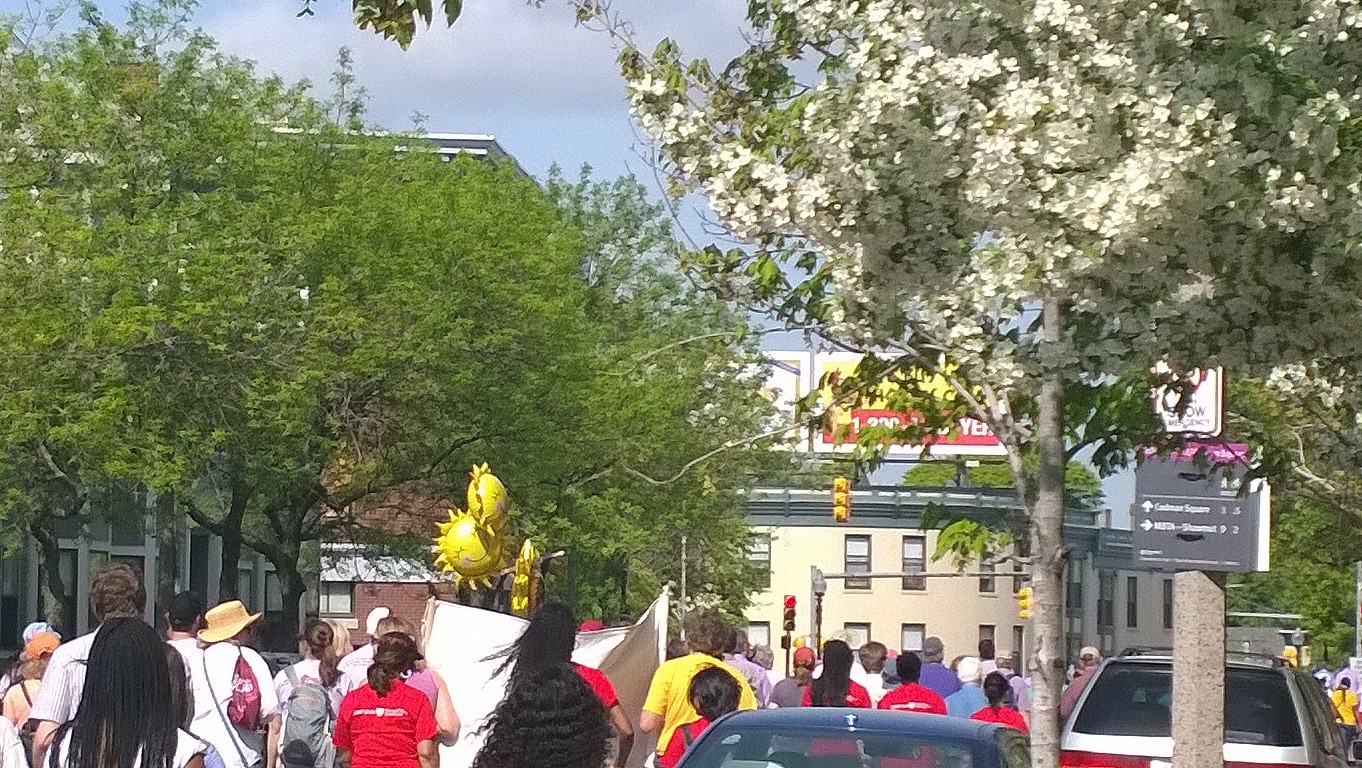
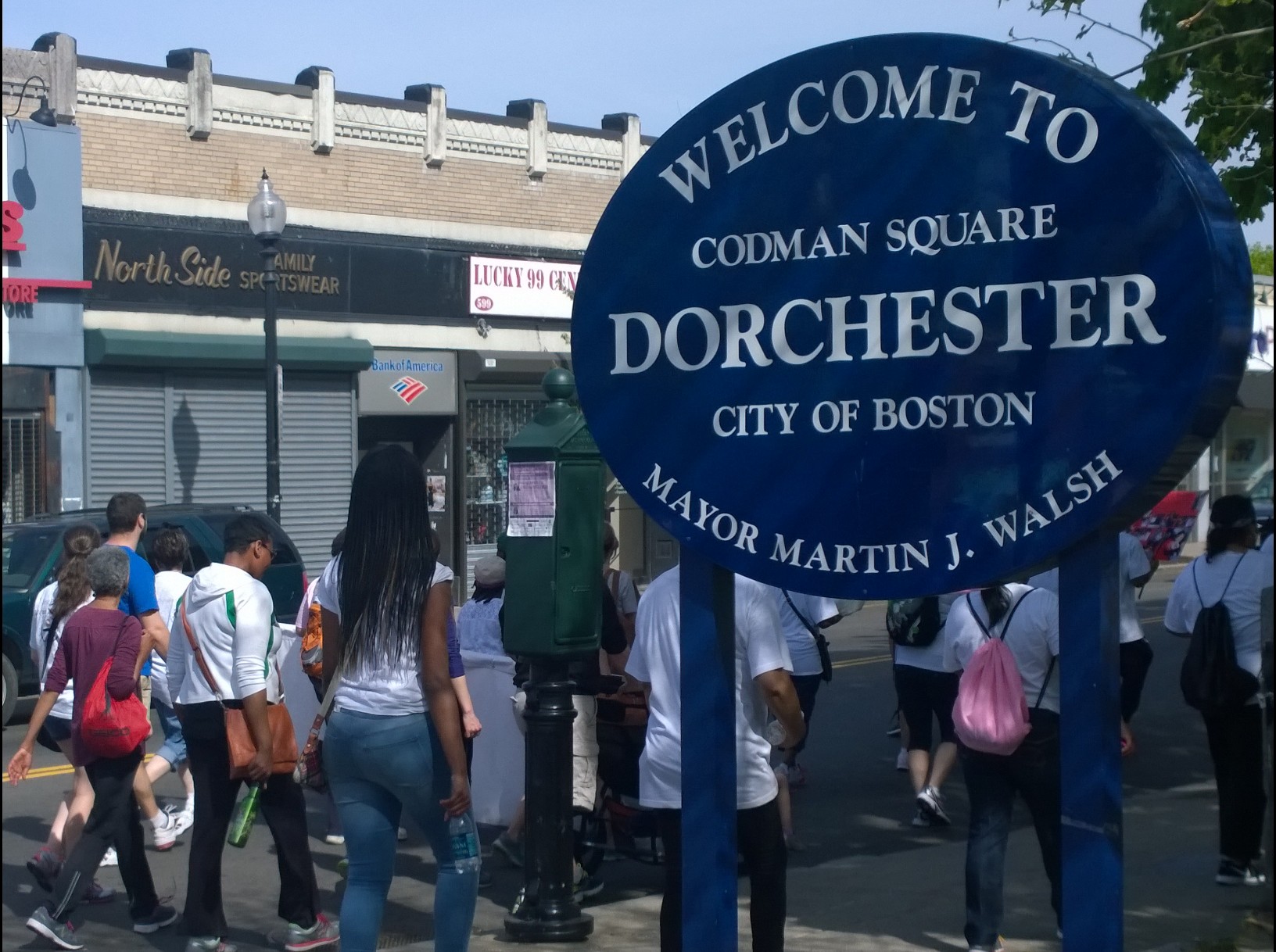
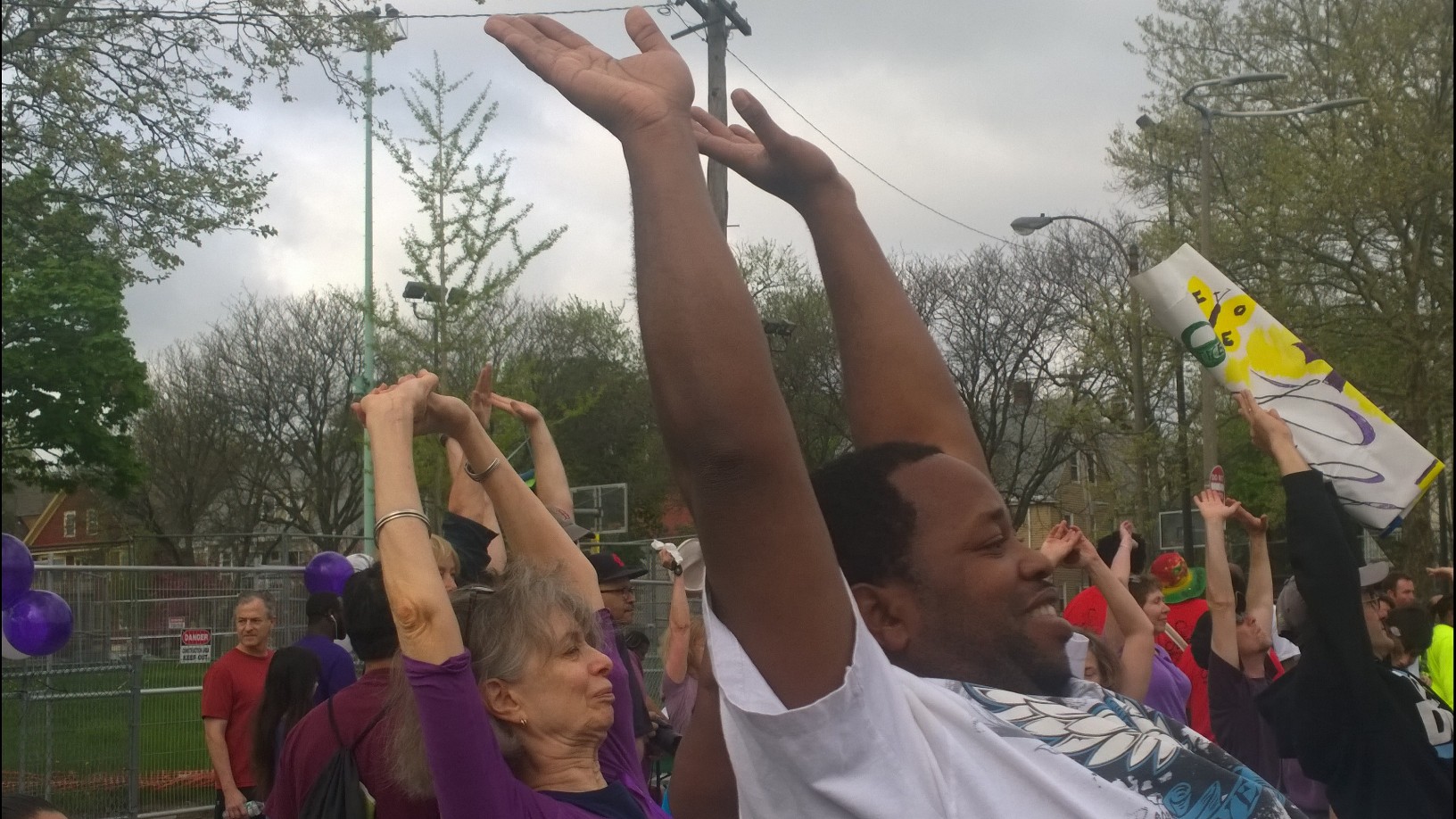
Today there must have been thousands. After the pre-walk warm-up exercises and the children’s choir, the prayers from all the major faith communities, the announcements by media personalities and the words of encouragement from Mayor Walsh and the police commissioner, we set out at a snail’s pace, crowding onto a Dorchester street that was expecting us.

A lot of organizations had banners, and many marchers wore T-shirts that pictured a loved-one. The spirit was upbeat and celebratory of lives. Politicians handed out water bottles, churches provided bathrooms, photographers recorded the event for free. The temperature was in the 80s, so by the end of the 3.5 mile walk, we older folks were ready for a nap.

The funds from the various team and individual contributors go to the Louis D. Brown Peace Institute, a local nonprofit that bases its actions on the belief that “Peace is Possible.” I like that slogan and also their “Seven Principles of Peace”: love, unity, faith, hope, courage, justice, forgiveness.

limbering-up-Mothers-Day-Walk

051015-warming-up-for-walk

observing-the-walk-for-peace

flowering-Dorchester

Mothers-Day-Walk

Read Full Post »

I have blogged before about Sam and Leslie Davol’s library projects, including the Uni, a portable library (here). They were living in Boston’s Chinatown during the economic downturn and got an idea for a temporary library in one of the empty storefronts. Chinatown has not had a branch of the Boston Public Library since the 1950s.

(Read a couple stories about that at the BostonStreetLab, here, and the Boston Globe, here.)

Now it seems some 8-year-olds in Mattapan have become indignant about no-library injustice and have marched on City Hall.

Wesley Lowery writes in the Globe, “The voices were young, but they rang out in a synchronized and forceful chant as the children made their way through the downtown streets. Gloved hands held painted signs as pink and blue bookbags bounced on their backs.

“ ‘Books, access fairness, we’re marching to raise awareness’” the more than 50 second-graders declared as they marched from the Chinatown gate to City Hall Friday afternoon. …

“The youthful protesters were seeking to raise awareness of a campaign to bring a public library to Chinatown, which is the only Boston neighborhood without a library branch. …

“The protest was planned and carried out by students at the Young Achievers School in Mattapan, which as part of its curriculum has recently spent time learning about libraries. Upon hearing that Chinatown does not have a public library, organizers said, the students decided to stage the protest.

“ ‘They asked: “What can we do to help?” ’ said Kim Situ of the Chinese Progressive Association, which helped to organized the march.” Read more here.

And when the Young Achievers from Mattapan have gotten a library for Chinatown, maybe they could work on one for Fort Point. It’s something @FortPointer has been tweeting about for ages.

Maybe he should have been talking to 8-year-olds.

Photo: Jonathan Wiggs/Globe Staff
Luis Pizarro, 8, was one of the students from the Young Achievers School who marched on City Hall.

Read Full Post »

As readers know, I really believe that “one and one and 50 make a million” (a concept articulated by folksinger Pete Seeger). That’s why I can’t resist a recent story from Moscow, where a few writers decided to have a “stroll,” and 10,000 individuals individually decided to follow.

Ellen Barry writes in the NY Times: “It was only four days ago when 12 prominent authors, disturbed by the crackdown on dissent that accompanied President Vladimir V. Putin’s inauguration, announced an experiment. They called it a ‘test stroll’ …

“No one knew quite what to expect on Sunday. But when the 12 writers left Pushkin Square at lunchtime, they were trailed by a crowd that swelled to an estimated 10,000 people, stopping traffic and filling boulevards for 1.2 miles. …  The police did not interfere, although the organizers had not received a permit to march.

“ ‘We see by the number of people that literature still has authority in our society because no one called these people — they came themselves,’ said Lev Rubinstein, 65, a poet and one of the organizers. ‘We thought this would be a modest stroll of several literary colleagues, and this is what happened. You can see it yourself. … I don’t know how this will all end, but I can say that no one will forget it.’ ” Read more.

I can’t help thinking that one and one and 50 have been growing for a long time in Russia and that the 10,000 who joined the march are just the tip of he iceberg.

Photograph: Dmitry Kostyukov for The New York Times

Read Full Post »