Feeds:
Posts
Comments

Posts Tagged ‘medicine’

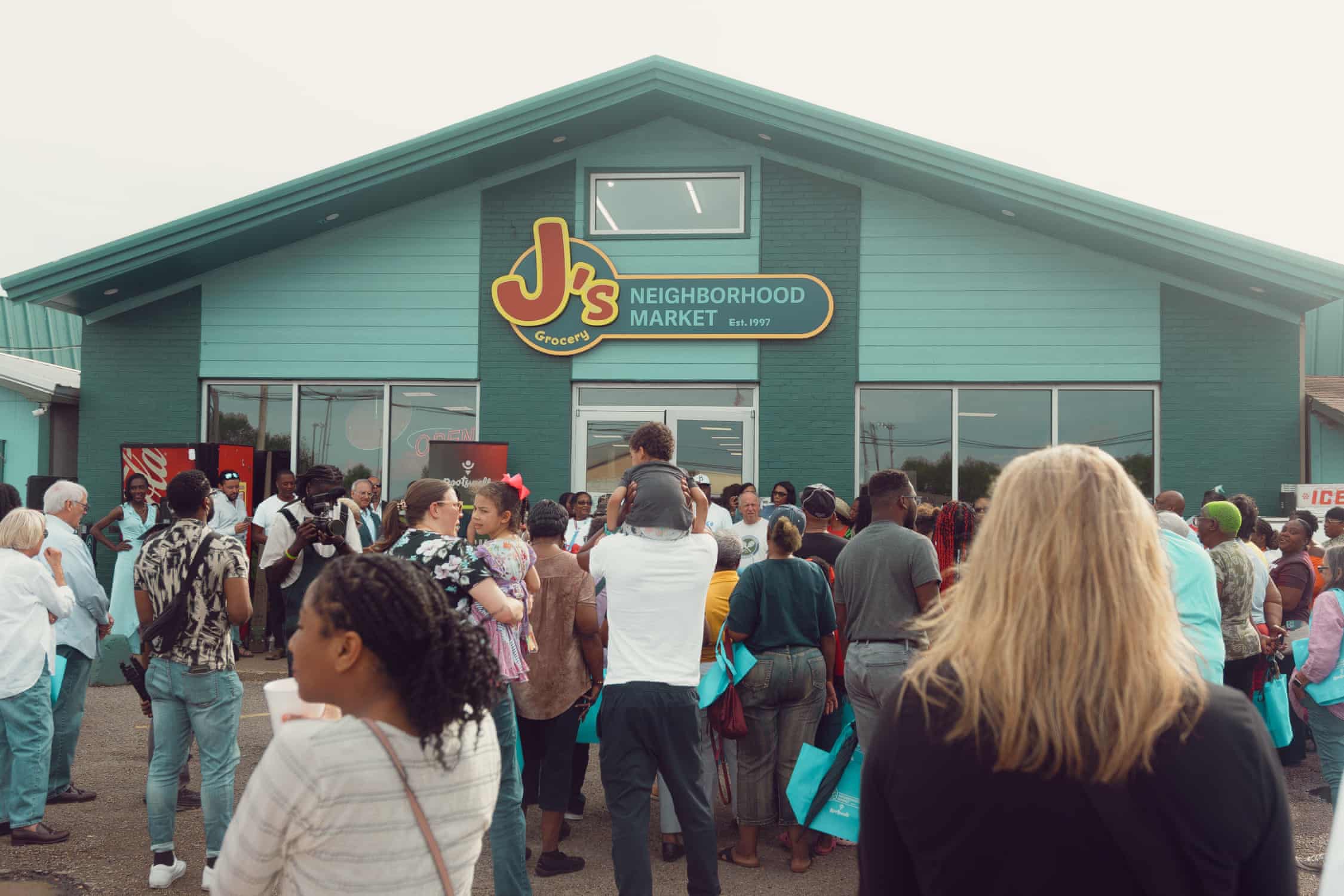
Photo: Noah Stewart.
On 2 May, J’s Grocery in Clarksdale, Mississippi, reopened after a yearlong renovation. Through a new food-access initiative, J’s Grocery provides its mostly Black community with hard-to-come-by fresh produce.

The best medicine is often a healthful diet. But in many communities around the US, nourishing food is hard to access. That’s why a community in Mississippi is rejoicing about a newly renovated grocery store.

Adria R Walker writes at the Guardian about J’s Grocery revitalizing its majority-Black town with fresh produce.

“With the recent release of Ryan Coogler’s Sinners, Clarksdale, Mississippi, known as the home of the blues, has been thrust into the spotlight. But while the nation and world are captivated by a version of Clarksdale from more than 90 years ago, residents today are focused on the future.

“On 2 May, rain and warnings of thunderstorms were not enough to keep people in Clarksdale’s Brickyard neighborhood away from the reopening of J’s Grocery, a local staple since 1997 that had been under renovation for the last year.

“A collaboration between the store owner, Al Jones, and local farmers, J’s, the only Black-owned supermarket in the area, now carries fresh produce. …

“The new stock and collaboration was made possible by a deal among Jones; Partnership for a Healthier America (PHA), a nonprofit that works to provide access to nutritious food; Rootswell, a Mississippi Delta-based group that was formed to ‘shift the paradigm of food apartheid‘; Novo Nordisk, a pharmaceutical company; and other groups.

“ ‘At a time in our country when the federal government is just pulling money back everywhere, we invested in people and community,’ Noreen Springstead, PHA’s president and CEO said at the opening. …

“Jarvis Howard of Tunica, Mississippi, a visual artist who goes by DudeThatDraw, painted a mural, a smaller version of one he is installing at nearby George H Oliver elementary school. ‘Food is medicine,’ the mural reads over vibrantly colored vegetables. …

“Clarksdale, which today has a population of nearly 14,000 people, is primarily Black. The grocery store is in a walkable, mixed-income community, with an elementary school almost right across the street. A middle school, a Head Start center, a nursing home and senior citizen housing, low-income apartments and single-family homes are all in close proximity. In addition to the newly offered produce, the store also features a third space: a seated, shaded area surrounded by raised beds planted with herbs, where residents can gather and chat.

“The Mississippi Delta is abundant in fertile land and crops; agriculture is the state’s No 1 industry. Though some 30% of the state is farmland, most of that land is dedicated to cash crops, which are exported. In 2022, nearly 20% of Mississippians were food-insecure.

“Farms in the region ‘produce a lot of commodity crops, like corn, soybean, cotton. They don’t produce a lot of food that we eat,’ said Robbie Pollard, one of the farmers whose produce is now sold at J’s. ‘We’re trying to change the landscape to start producing more food in the Delta, like converting some of that land that’s used for row-crop production.’ …

“Pollard said that while the Mississippi Delta region is abundant in farmland, there’s a gap in what reaches the community. His initiative, Happy Foods Project, which is part of his farm, Start 2 Finish, is working to remedy that by collaborating with other farmers, and introducing youth to farming through farm visits and farm-to-school programs.

“J’s Grocery reopening will be a gamechanger for the neighborhood, he said. Some residents lack transportation to be able to get to big box stores that sell imported produce. Rural counties in the Mississippi Delta, like Coahoma county in which Clarksdale is the largest town, average one supermarket per 190.5 sq miles . …

“After Clarksdale lost its Kroger in 2017, residents initially pushed for another big box store to move in. But Tyler Yarbrough, the director of Mississippi Delta Programs for PHA, and others wanted the town to be able to return to its locally owned, locally operated roots. …

“Yarbrough said that stories from his grandmother and other older residents of shopping in the 1960s provided inspiration for what they might be able to bring back to the town. At the time, locals didn’t need to leave their communities to procure groceries. Instead, they went to the local grocery stores, which, like J’s, had a butcher who sold chicken, pork, freshly sliced bacon and produce.

“ ‘It is in our food-system history of having these neighborhood corner stores,’ he said, noting that the Brickyard and downtown Clarksdale once had 12 such shops. ‘This project is honoring that legacy and reminding us that we can own our food and the stores that we shop from.’ ”

More at the Guardian, here. No paywall, but donations keep this reliable news source alive. Help if you can.
Read Full Post »

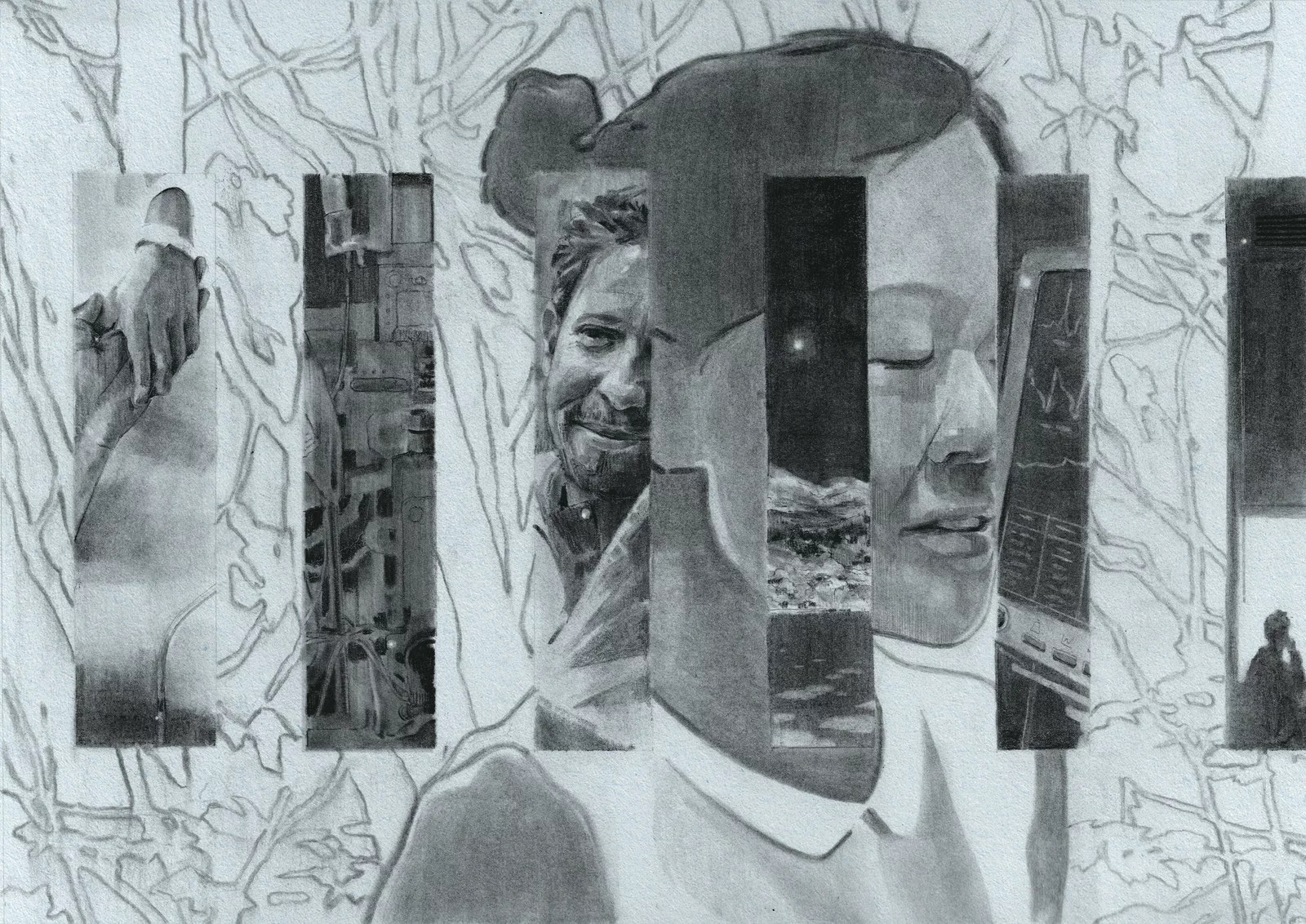
Photo: James Lee Chiahan/Procedure Press.
“Tone Shift,” by James Lee Chiahan. depicts musician Yoko Sen’s journey from being patient in the hospital to working to improve the sounds of ICU alarms around the world. Chiahan is a Taiwanese-Canadian artist currently working out of Montreal, Canada.

Those of us who have ever had a hospital stay know how difficult it is to get any sleep. Part of the reason is noise. Today’s article suggests that since artists started applying their creativity to the challenge, hospitals have new ways they could improve sounds and doctors have new ways to improve patient interactions.

Mara Gordon at NPR (National Public Radio) begins her story with Emily Peters, who had a rough time with the health care system when her daughter was born. “Peters, who works as a health care brand strategist, decided to work to fix some of what’s broken in the American health care system. Her approach is provocative: she believes art can be a tool to transform medicine.

“Medicine has a ‘creativity problem,’ she says, and too many people working in health care are resigned to the status quo, the dehumanizing bureaucracy. That’s why it’s time to call in the artists, she argues, the people with the skills to envision a radically better future.

“In her new book, Artists Remaking Medicine, Peters collaborated with artists, writers and musicians, including some doctors and public health professionals, to share [ideas] about how creativity might make health care more humane. …

“For example, the book profiles electronic musician and sound designer Yoko Sen, who has created new, gentler sounds for medical monitoring devices in the ICU, where patients are often subjected to endless, harsh beeping.

“It also features an avant-garde art collective called MSCHF (pronounced ‘mischief’). The group produced oil paintings made from medical bills, thousands and thousands of sheets of paper charging patients for things like blood draws and laxatives. They sold the paintings and raised over $73,000 to pay off three people’s medical bills.

“It’s similar to a recent performance art project not profiled in the book: A group of self-described ‘gutter-punk pagans, mostly queer dirt bags’ in Philadelphia burned a giant effigy of a medical billing statement and raised money to cancel $1.6 million in medical debt. …

“There’s very little in the way of policy prescription in this book, but that’s part of the point. The artists’ goal is to inject humanity and creativity into a field mired in apparently intractable systemic problems and plagued by financial toxicity. They turn to puppetry, painting, color theory, and music, seeking to start a much-needed dialogue that could spur deeper change.

Mara Gordon: What made you want to create this book?
Emily Peters: I think I’m always very curious why so many people – really the majority of everybody in any way involved in the health care system – feel so powerless. … And so the book came about as thinking about power and change. And then I realized that artists have this unique intersection where they are very powerful, they bring a lot of the things that were missing in health care, trying to build a better future.

MG: What is it about art that feels like a tool to challenge that feeling of powerlessness?
EP: The very first person I interviewed for the book was a photographer, Kathleen [Sheffer], who was a heart-lung transplant survivor. She used her camera in the hospital to try to be seen as more powerful, to be seen as a full person by these very fancy transplant surgeons who are whisking in and out of her room, viewing her as just a body. I saw that she had gained that power through being an artist.

“I had another conversation with a physician out of New York, Dr. [Stella] Safo. … She really highlighted that there’s this crisis of imagination. Everybody feels so demoralized that we can’t even imagine what we want to ask for to make it better.

“That’s a creativity problem. And the people who are creative are artists. They are really good at sitting in complexity and paradox, and not wanting everything to be perfect, but being able to imagine. And so that was the hypothesis: Oh, there’s something really interesting at this intersection between art and medicine. …

“MG: My favorite part of the book was the section where there’s a color palette, named for different medical phenomena: pill bottle orange, Viagra blue.… I think a lot of people in health care worry that too much color somehow distracts from the seriousness of medicine.
EP: So many of these things, somebody chose, and they didn’t do a huge amount of research on it. They just chose it, and we take it as gospel now.

“The white coat ceremony. [I had thought it must have started in] medieval Florence: they were putting white coats on medical students and welcoming them into the guild, it just feels like this ancient tradition. And it’s something that was invented in Chicago in 1989. A professor was complaining that the students weren’t dressing professionally enough. …

We surveyed a couple hundred people [and published the results online]: ‘What colors would you want to see in the hospital?’ I was expecting those soothing pastel tones. And it was totally different: it was neon purples and oranges and reds. Don’t assume what people want. We have the technology and the capability now to build in systems that give people some control and some agency over things like color. …

MG: Has anyone told you that they think that health care is too important for art?
EP: I’ve heard the criticism that this is just about wallpaper on a pig: ‘You’re talking about adding more sculpture gardens and increasing the cost of health care.’

“I did not want it to be a book about creating more luxurious hospitals. We have a crisis of financial toxicity, we have a crisis of outcomes. It’s specifically a book about fighting those things. …

“MG: Do you think medicine takes itself too seriously? Do we need more humor in health care?
“EP: You’re holding somebody’s heart in your hand – this is a very intense job. You’re trying to convince somebody to enter hospice – that is not easy. This is not an easy job. But that seriousness can feel almost like play acting and really inauthentic to people. …

“And that’s such a waste to me, because it is such a beautiful, incredible profession. We, as patients, also want you guys to be humans. We’re on your side.”

More at NPR, here. No paywall.

Read Full Post »

Photo: Lee Allen Photography
Dispensing poetry on prescription: Shropshire’s Emergency Poet, Deborah Alma.

Sometimes poetry can play a role in emotional healing. I think that’s because ordinary sentences often miss the mark but poetry is fluid enough to go where it’s needed. In the UK, a Shropshire poet is putting her faith in this art and opening a “poetry pharmacy.” She notes that a recent report shows “poetry sales were up by more than 12% in 2018, driven largely by younger buyers.”

Alison Flood writes at the Guardian, “Following in the hallowed footsteps of Milton, who wrote in 1671 that ‘apt words have power to swage / The tumours of a troubled mind / And are as balm to festered wounds,’ the poet Deborah Alma is preparing to open the UK’s first poetry pharmacy. Here, instead of sleeping pills and multivitamins, customers will be offered prescriptions of Derek Walcott and Elizabeth Bishop.

“Alma, who as the ‘Emergency Poet’ has prescribed poems as cures from the back of a 1970s ambulance for the last six years, is now setting up a permanent outlet in a shop at Bishop’s Castle in Shropshire. An old Edwardian ironmonger’s, it still has the original fixtures and fittings, and, together with her partner, the TS Eliot prize-shortlisted poet James Sheard, Alma is preparing to turn it into a haven ‘to help ease a variety of maladies with the soothing therapy of Poetry.’

“Dressed in a white coat and stethoscope, Alma says she was invited to appear as the Emergency Poet at ‘schools, hospitals and festivals all over the place, but I’m a middle-aged woman and I’m getting a bit old for driving around.’ …

“The [pharmacy’s] mortgage was approved [in January], and Alma is buzzing with plans for how the shop will be divided like a pharmacy ‘into areas for particular ailments.’ … The sections will be set up along the lines of a poetry anthology she edited in 2016, The Everyday Poet, which was split into poems ‘addressing areas of emotional need’ such as love, ageing, grief and hope. …

“ ‘I think probably more than any other art it speaks directly as though from one person to another,’ says Alma, who published her own first collection, Dirty Laundry, last year. ‘It’s intimate and it’s empathetic. It can be a prayer or a curse, or something just to hang on to.’ ”

More at the Guardian, here. I’m glad to know something more about Shropshire poets beyond “The Shropshire Lad,” which I know only by reputation.

Hat tip: Wisconsin poet Ronnie Hess on Facebook.

Read Full Post »

National Public Radio recently featured a researcher who has figured out a way to help people who can’t talk by matching the sounds they are able to make to someone else’s voice and creating a synthetic voice.

“Speech scientist Rupal Patel creates customized synthetic voices that enable people who can’t speak to communicate in a unique voice that embodies their personality.

“Rupal Patel directs the Communication Analysis and Design Laboratory at Northeastern University. She helped found VocaliD, an organization working to help the millions of people who use computerized devices to communicate in unique voices.

“Patel’s technique to move beyond the usual generic male voice. She samples the tones of those with severe speech disorders and matches them with a surrogate talker. By blending the two, the team can create a synthetic voice to match the person using it.”

Check out the NPR story here.

Read Full Post »

Some years ago, the John Adams family biographer Paul Nagel introduced me to physician/poet Norbert Hirschhorn. Paul told me that Bert was on the team that helped save thousands of lives in Third World countries simply by distributing water to which sugar and electrolytes had been added. (A National Institutes of Health paper references Bert’s 1973 research on “oral glucose electrolyte solution for all children with acute gastroenteritis” here.)

A special NY Times science supplement on Sept. 27, 2011, “Small Fixes,” reminded me of Bert and the notion that small innovations can have a huge impact.

Among the great stories in the supplement. is this one about Thailand’s success fighting cervical cancer with vinegar.

It turns out that precancerous spots on the cervix turn white when brushed with vinegar. “They can then be immediately frozen off with a metal probe cooled by a tank of carbon dioxide, available from any Coca-Cola bottling plant.” The complete procedure, which can be handled by a nurse in one visit, has been used widely in Thailand, where there are a lot of nurses in rural areas.

In Brighton, Massachusetts, Harvard’s George Whitesides founded Diagnositcs for All to commercialize his inventions, including a tiny piece of paper that substitutes for a traditional blood test for liver damage. Costing less than a penny, “it requires a single drop of blood, takes 15 minutes and can be read by an untrained eye: If a round spot the size of a sesame seed on the paper changes to pink from purple, the patient is probably in danger.” Read the Times article.

Amy Smith at MIT is another one who thinks big by thinking small. Read about her Charcoal Project, which saves trees in poor countries by using vegetable waste to make briquettes for fuel.

Read Full Post »

Dr. Paul Farmer, the subject of a great Tracy Kidder book called Mountains Beyond Mountains, has spent many years delivering medical care — and working to alleviate poverty — in remote areas of Haiti. His nonprofit organization, Partners in Health, takes the word “partners” seriously. The teams do not tell the locals what is good for them but makes a point of learning from them and helping them get what they need.

In recent years, Farmer has been in demand in other countries, too. One focus area has been Rwanda. I liked a recent Boston Globe article on the approach to building a Partners in Health hospital there.

“The designers quickly realized that the challenge was not simply to draw up plans, as they had first thought, but rather to understand the spread of airborne disease and design a building that would combat — and in some cases sidestep — the unhealthy conditions common to so many hospitals.

“Learning from health care workers that hospital hallways were known sites of contagion, poorly ventilated, and clogged with patients and visitors, MASS Design decided that the best solution would be to get rid of the hallways. Taking advantage of Rwanda’s temperate climate, they placed the circulation outdoors, designing open verandas running the lengths of the buildings. …

“When it came to building, MASS Design looked at the Partners in Health model of involving local poor communities in health care, and realized that they could apply the same ideas to the construction process. The hospital was built entirely using local labor, providing food and health care for the workers. Unskilled workers received training that would help them get more work; and skilled laborers, notably the Rwandan masons who built the hospital’s exterior from carefully fitted together local volcanic stone, refined their craft and found themselves in demand all over the country. The construction process also beefed up local infrastructure — new roads and a hydroelectric dam — creating more jobs and literally paving the way for future projects.”

To paraphrase what Farmer often says, the biggest challenge to health is poverty. Read more.

Update on the designers from the June 19, 2012, Boston Globe.

Read Full Post »