Feeds:
Posts
Comments

Posts Tagged ‘memorial day’

Photo: Suzanne and John’s Mom.
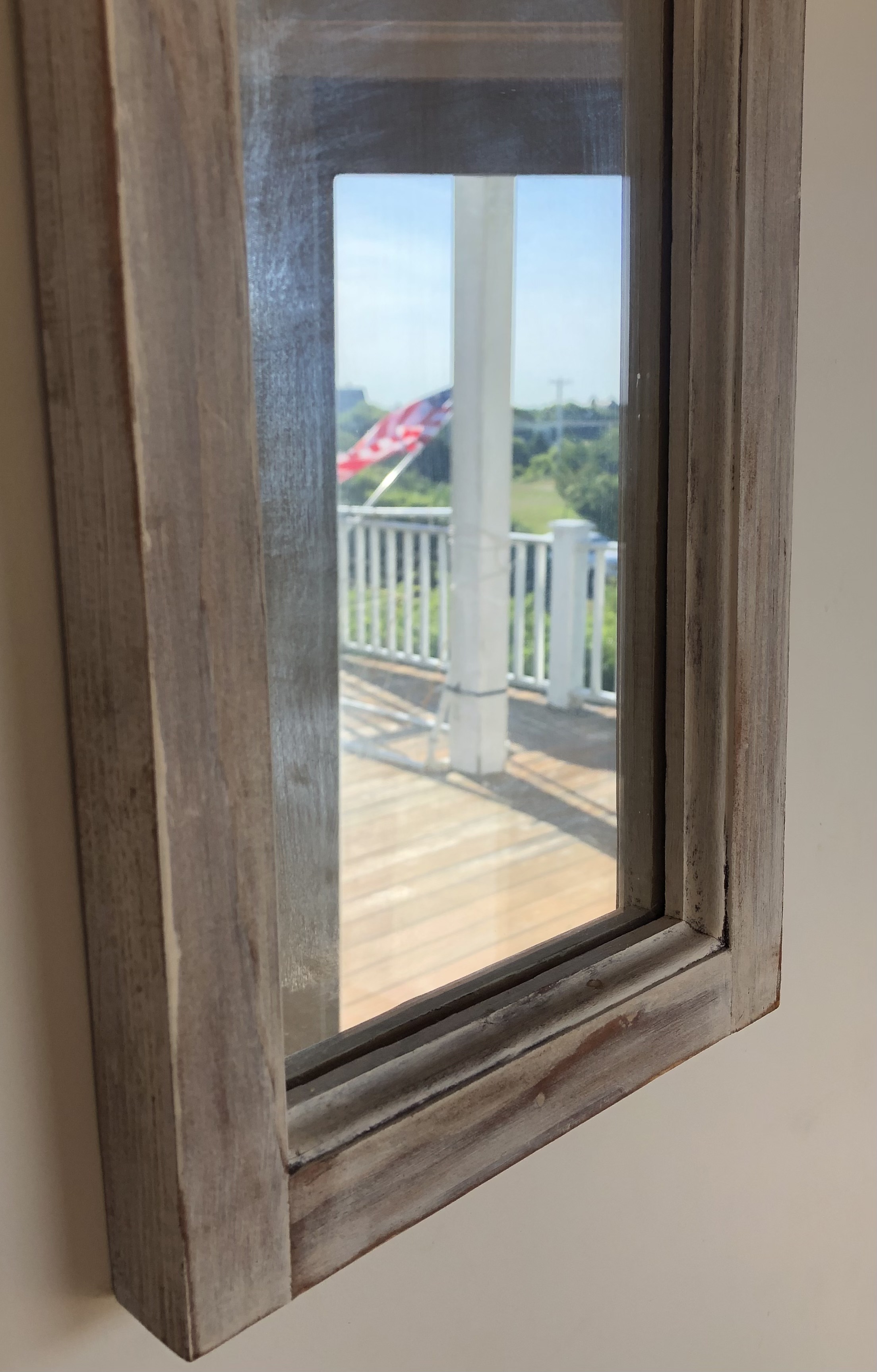
The flag as seen through a window and a mirror.

I may feel ambivalent about the goodness of my country at times, and especially about its wars. But I never feel ambivalent about the people who have died and need to be remembered.

Monday is Memorial Day here, and I thought it would be a good idea to learn more about exactly what we’re memorializing. I know Veterans Day in November specifically honors the sacrifices of veterans, but is Memorial Day different?

Turns out, the details depend on who you talk to. Different groups come at it from different angles. For many years, as I learned from Wikipedia, the commemorations of lives lost during the Civil War were split into those honoring the Confederate soldiers and those honoring the Union dead.

Here are other things I discovered from the entry.

“Memorial Day (originally known as Decoration Day) is a federal holiday in the United States. … It is observed on the last Monday of May. From 1868 to 1970, it was observed on May 30. … Many people visit cemeteries and memorials on Memorial Day to honor and mourn those who died while serving in the U.S. military. Many volunteers place American flags on the graves of military personnel in national cemeteries. …

“The first national observance of Memorial Day occurred on May 30, 1868. Then known as Decoration Day, the holiday was proclaimed by Commander in Chief John A. Logan of the Grand Army of the Republic to honor the Union soldiers who had died in the Civil War. This national observance was preceded by many local ones. …

“Many cities and people have claimed to be the first to observe it. However, in 2022, the National Cemetery Administration, a division of the Department of Veterans Affairs, credited [Southerner] Mary Ann Williams with originating the idea. … The world wars turned it into a day of remembrance for all members of the U.S. military who fought and died in service.  …

“Of documented commemorations occurring after the end of the Civil War and with the same purpose as Logan’s proclamation, the earliest occurred in Charleston, South Carolina.

On May 1, 1865, formerly enslaved Black adults and children held a parade of 10,000 people to honor 257 dead Union soldiers.

“Those soldiers had been buried in a mass grave at the Washington Race Course, having died at the Confederate prison camp located there. After the city fell, recently freed persons unearthed and properly buried the soldiers, placing flowers at their graves. The estimate of 10,000 people comes from contemporaneous reporting,”

Other documented claims of being first, Wikipedia says, come from Virginia, both Jackson and Columbus in Mississippi, and Gettysburg and Boalsburg in Pennsylvania.

Have you ever seen veterans or veterans’ families handing out red paper lapel poppies around this time of year? Here’s the backstory, also from Wikipedia: “In 1915, following the Second Battle of Ypres [in World War I], Lieutenant Colonel John McCrae, a physician with the Canadian Expeditionary Force, wrote the poem, ‘In Flanders Fields.’ Its opening lines refer to the fields of poppies that grew among the soldiers’ graves in Flanders.

“In 1918, inspired by the poem, YWCA worker Moina Michael attended a YWCA Overseas War Secretaries’ conference wearing a silk poppy pinned to her coat and distributed over two dozen more to others present. In 1920, the National American Legion adopted it as its official symbol of remembrance.”

As my neighbors headed off to the annual commemoration at the local Veterans of Foreign Wars, and I just went for my daily walk, I thought about one line from the Wikipedia entry that particularly struck me as a person guilty of neglecting the “memorial” part of Memorial Day: “In 1913, one Indiana veteran complained that younger people born since the war had a ‘tendency … to forget the purpose of Memorial Day and make it a day for games, races, and revelry, instead of a day of memory and tears.’ “

“In Flanders Fields, the poppies blow
“Between the crosses, row on row. …

“We are the dead. Short days ago
“We lived, felt dawn, saw sunset glow,
“Loved and were loved, and now we lie,
 “In Flanders fields.”
Read Full Post »

Photo: U.S. Army.
An Afghan interpreter assists U.S. military personnel trying to locate Taliban weapons.

On Memorial Day, as we honor the men and women of our military, I am thinking in particular of those whose lives have been lost fighting in Afghanistan. Today, many who are leaving that troubled country have a justifiable concern about what will happen to their interpreters and friends when the Taliban reassert control.

I am not one to say we should stay there, but I have learned from Shagufa just how bad things are likely to get, and I wanted to know what our soldiers thought.

Ken Olson writes at Legion.org, “Gerald Keen’s Afghan interpreter is running out of time. One relative was assassinated by the Taliban a month ago. Another was killed by an IED last Sunday. Both also worked as translators for U.S and coalition forces in Afghanistan.

“ ‘It’s like he has a bounty on his head,’ Keen says of the Afghan national he worked closely with during his 2016 deployment. ‘The Taliban has no remorse.’ …

“There are more than 17,000 interpreters and their families mired in the same bureaucratic quagmire of the U.S. Special Immigration Visa application process. Their peril is exponentially greater now that the United States has announced it will withdraw all of its troops from Afghanistan. …  

“It’s a haunting reminder of the situation faced by the Montagnards who risked their lives and their families’ lives to support U.S. operations in the Vietnam War. The American Legion has asked the president and Congress through a 2018 National Security Commission resolution to recognize the crucial contribution Afghan and Iraqi interpreters have made and ensure they are able to come to the United States. ‘Our wartime allies saved countless American lives and directly contributed to every level of tactical, operational and strategic success during the mission is Iraq and Afghanistan,’ according to Resolution No. 16, passed by Legion’s National Executive Committee in October 2018.

“The International Refugee Assistance Project also called for the mass evacuation of Afghans at risk to Guam or another location while they slog through the lengthy visa process, much like what was done for Iraqi Kurds as part of Operation Pacific Haven in 1996. …

“The Special Immigrant Visa program most Afghan nationals are using was established in 2009 when Congress created the Afghan Allies Protection Act, says Julie Kornfeld, an attorney with the International Refugee Assistance Project who represents several Afghan interpreters. The statute calls for visa applications to be processed in nine months. The reality is far worse. Kornfeld has clients who have been waiting as long as 10 years.

“ ‘The U.S. mission in Afghanistan recruited Afghan nationals with a promise of safety, but we’ve made it bureaucratically impossible for them to access safety,’ she says. ‘It sends a message to them that we aren’t fulfilling our promise to protect them.’ …

“ ‘It’s very frustrating,’ Keen adds. ‘We couldn’t have made it through this without these interpreters.’ ”   

So today, as we honor military personnel who have died serving in wars at the behest of a series of presidents, let’s spare a thought for those who are in danger because they helped us, and let’s support any elected representatives who may be trying to rescue those people.

More here.

Read Full Post »

032020-will-country-beat-back-extra-deaths?

No one gets to avoid death, but whether death occurs in war or in peace, some happen too soon and too cruelly for the survivors. Let’s do what we can to prevent untimely loss.

This poem is by Wilfred Owen, who died young in World War I.

Move him into the sun—
Gently its touch awoke him once,
At home, whispering of fields half-sown.
Always it woke him, even in France,
Until this morning and this snow.
If anything might rouse him now
The kind old sun will know.

Think how it wakes the seeds—
Woke once the clays of a cold star.
Are limbs, so dear-achieved, are sides
Full-nerved, still warm, too hard to stir?
Was it for this the clay grew tall?
—O what made fatuous sunbeams toil
To break earth’s sleep at all?

Read Full Post »

Move him into the sun —
Gently its touch awoke him once
At home, whispering of fields unsown.
Always it woke him, even in France
Until this morning and this snow.
If anything might rouse him now
The kind old sun will know …

Wilfred Owen (1893-1918)

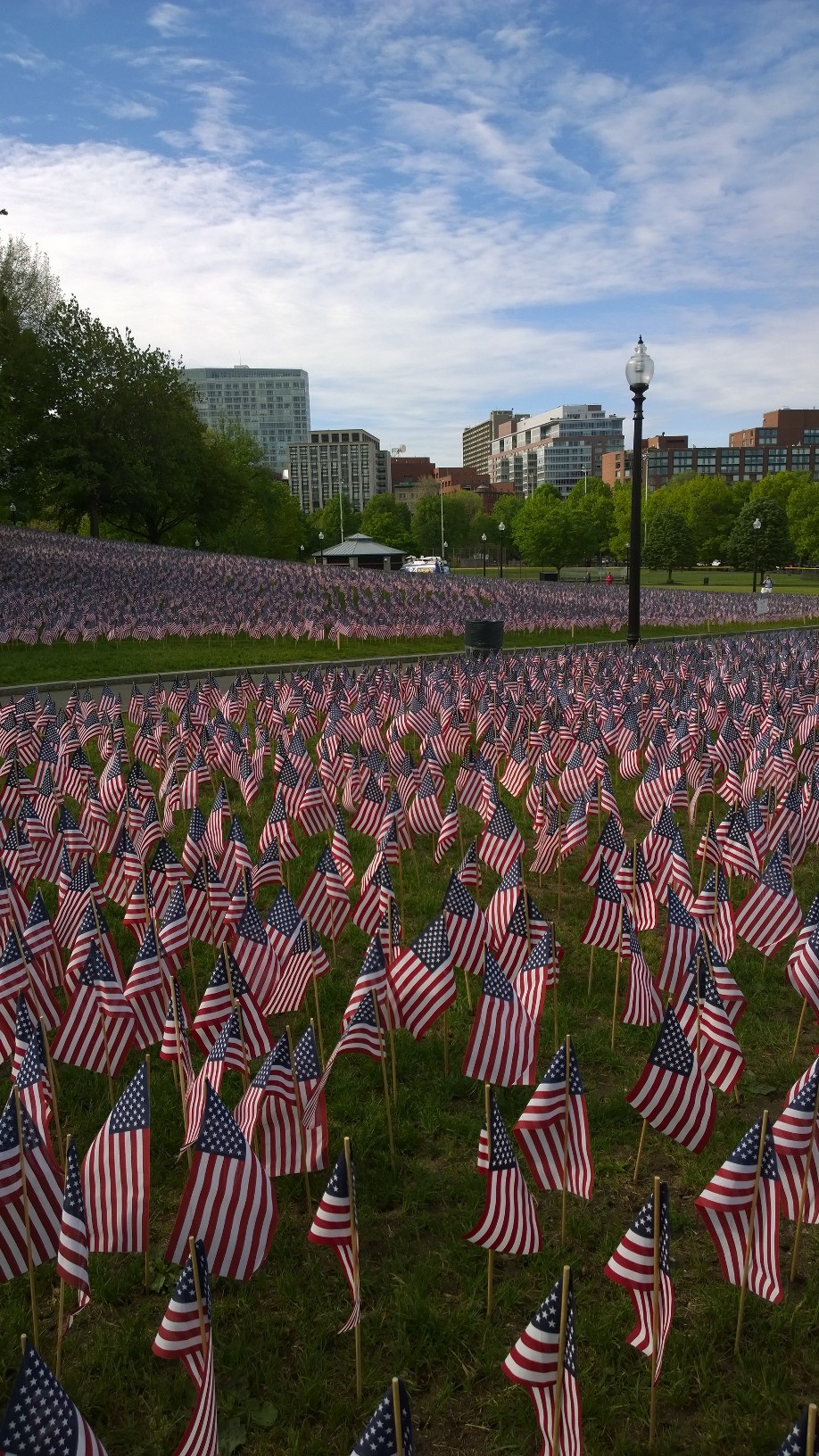
flags-for-the-fallen-since-Civil-War

Read Full Post »

An Imperial Elegy
by Wilfred Owen

Not one corner of a foreign field
But a span as wide as Europe;
An appearance of a titan’s grave,
And the length thereof a thousand miles,
It crossed all Europe like a mystic road,
Or as the Spirits’ Pathway lieth on the night.
And I heard a voice crying
This is the Path of Glory.

@-> @-> @->
Born in Shropshire, England, poet Wilfred Owen is best known for telling the truth of what he saw in World War I, a war joined too lightheartedly by many of his countrymen 100 years ago. He  died at the Sambre-Oise Canal a week before the Armistice was signed.

Read more about Owen here.

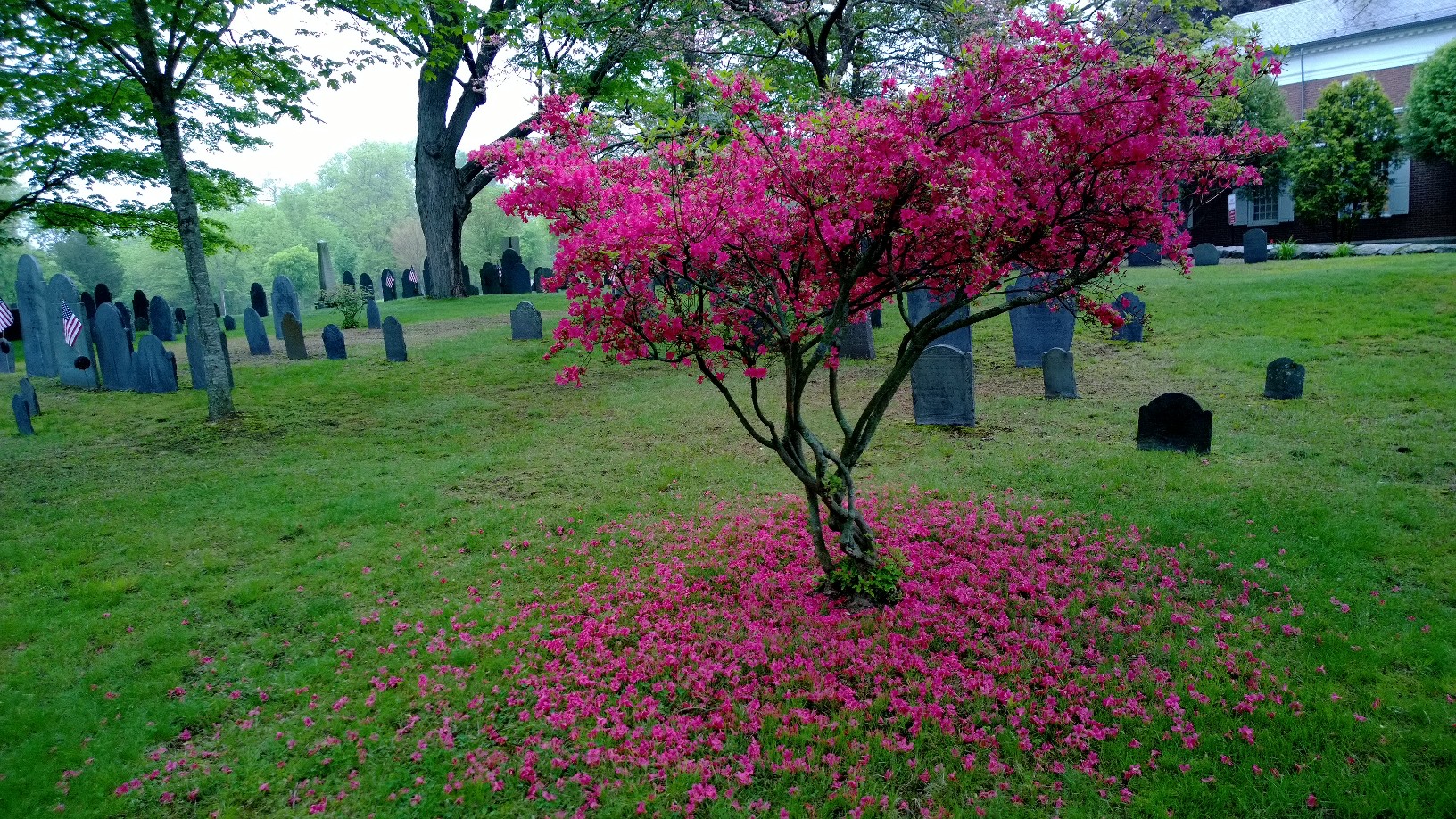
Photo: Suzanne’s Mom
Azalea moving to the next phase

azalea-moving-to-next-stage

Read Full Post »

On the Tuesday after Memorial Day I ran into a woman I know who works in another department. She grew up in New York City, where her father worked at the United Nations. Her family is from Pakistan. After inquiring about her weekend, I learned that she had cooked for 80 by herself, serving everyone in her backyard! The meal sounded amazing, so I asked her to e-mail the menu to me.

hi, here was my menu, enjoy!

mixed vegetable pilaf, BBQ chicken with various spices, beef kabobs, fenugreek and potatoes, samosas filled with ground chicken, corn, cow’s feet, naan, yogurt, Pakistani bread pudding

Cow’s feet/trotters are considered a delicacy in Pakistan.  Mine took 7 hours to make of which 6 hours were cooked on the regular stove and one hour was in the pressure cooker.  Ideally, you should be able to cook them for about 75 minutes in the pressure cooker.  However, since I was making such a large quantity I decided to cook them on the stove.  After six hours, I gave up and cooked a few batches separately in the pressure cooker 🙂

So I got to thinking, I wonder how many different kinds of banquets prepared by people from different countries of origin are being cooked for backyard parties on Memorial Day. Or July 4. What a recipe book that would make!

Do you publish cookbooks? You may take the idea and run with it. This book will surely be too heavy to carry, given all the different groups that make up America. You may have to make it an online e-book.


Reader Asakiyune writes, “The woman who cooked for 80 TOTALLY INTIMIDATES ME. Cooking for 10 is about all I want to ever try managing! … maybe 15 or 20. 80? 80?? Yowza. And I liked your earlier entry, on the group doing mild ecumenicism for Jews, Christians, and Muslims. I hope you can interest your religious ed director in hosting a lecture by the organizing woman.

Read Full Post »