Feeds:
Posts
Comments

Posts Tagged ‘middle school’

Photo: Marvin Joseph/The Washington Post.
Cursive club at Holmes Middle School in Alexandria, Virginia, has been surprisingly popular. Halle O’Brien, 12, has taken cursive back to her regular classroom.

Many adults have forgotten the cursive writing they learned in school. They felt no need to keep it going when it felt easier just to print or type. Nowadays, those of us who help out with PostcardsToVoters are told to print the messages because so many people don’t read cursive.

Today’s story is about kids who think learning cursive is a hoot. It also suggests how writing in script is good for the brain.

Karina Elwood writes at the Washington Post, “The group of preteens uncapped their markers and began practicing how to capitalize two new letters: ‘B’ and ‘Q.’ The lesson felt like a return to the basics. Only this time, the middle-schoolers were learning to write, many for the first time, in cursive.

“Sherisse Kenerson, a multilingual teacher at Holmes Middle Schoolin Alexandria, Virginia, leads a club of sixth- through eighth-graders who want to know the art of looping and curving their letters together.

“The attention her small club has attracted surprised Kenerson. Local news stories, thousands of social media comments. Teachers from as far as Oklahoma asking how they could bring something similar to their classrooms.

“If boomers and Gen X are puzzled that many youngsters are not required to endure the same painstaking labor of mastering cursive that they were, they might be even more surprised — perhaps, even delighted — to hear that some are learning the craft entirely for fun. …

“In the early 2000s, as technology picked up, cursive was declared all but dead. By 2006, only 15 percent of SAT essays were written in cursive. The Common Core standards released in 2010 did not include cursive as a required curriculum, leading to states around the country to drop the requirement.

“But in the years since, there has been a steady effort to preserve the art by historians and educators like Kenerson. Clubs, camps and optional classes like hers have popped up around the country. …

Research suggests handwriting is a key tool for learning and memory. It activates brain activity like motor, sensory and cognitive processing better than typing does.

“ ‘Even in the age of technology, I think that handwriting is here to stay,’ said Shawn Datchuk, a professor of special education at the University of Iowa who has written about the benefits of handwriting for teaching literacy. …

“Datchuk said he suspects research about the cognitive benefits of handwriting, paired with the affordability of teaching it, are key drivers behind the resurgence. But another factor could be how personal and emotionally resonant cursive is, especially for older generations. …

“[Datchuk said,] ‘It really becomes kind of a thumbprint or fingerprint of our entire development.’

“That’s the appeal to Kenerson, who launched the cursive club four years ago when her students couldn’t read a word she had written in flowing script on the whiteboard. In her after-school program, she reminds students that cursive is personal. It’s their own handwriting and can have its own flair.

“Halle O’Brien, 12, had never learned cursive before the club. Her grandfather, who was set on helping her improve her handwriting, had tried to teach it to her, but she found it too hard, she said.

“But something about cursive club just clicked. She finds herself writing in the script for class assignments. It’s easier for her than printing. It’s quicker than typing.

“ ‘People who know cursive can read and can write it so smoothly without needing to concentrate on the letters,’ Halle said. …

“Halle sees practical value in her new skills beyond bragging rights to her friends. She recalled a history field trip where none of the students could read the Declaration of Independence.

“ ‘I tried to read it, but I had no idea how to do it,’ Halle said. ‘I actually heard some people doing cursive clubs so that they could learn how to read the Declaration.’

“The need for cursive readers led the National Archives to put out a call for volunteers to help transcribe historical documents and artifacts. …

“Datchuk said there are also links between writing in cursive and better spelling skills. You have to know how to spell a word entirely before writing it in cursive, he said. That was evident in Kenerson’s classroom. Before writing the word “spectacular” in cursive, Sarah Stephens, 11, carefully spelled it out in print at the top of her paper. …

“The sixth-grader came into the club ahead of some of her peers. She first learned cursive in second grade while enrolled in private school. There, she said, students were expected to write completely in cursive by fourth grade. The school even held an annual cursive competition. …

“For all of the benefits she sees in cursive, Kenerson guesses that students are drawn to the club for the same reason she was eager to learn cursive as a child: It made her finally feel grown up. …

“ ‘I think it empowers them, because they know that everyone cannot write it.’ ”

More at the Post, here.
Read Full Post »

ylzbpavkn4i6vjb7nn4knyfwne

Photo: Samsung
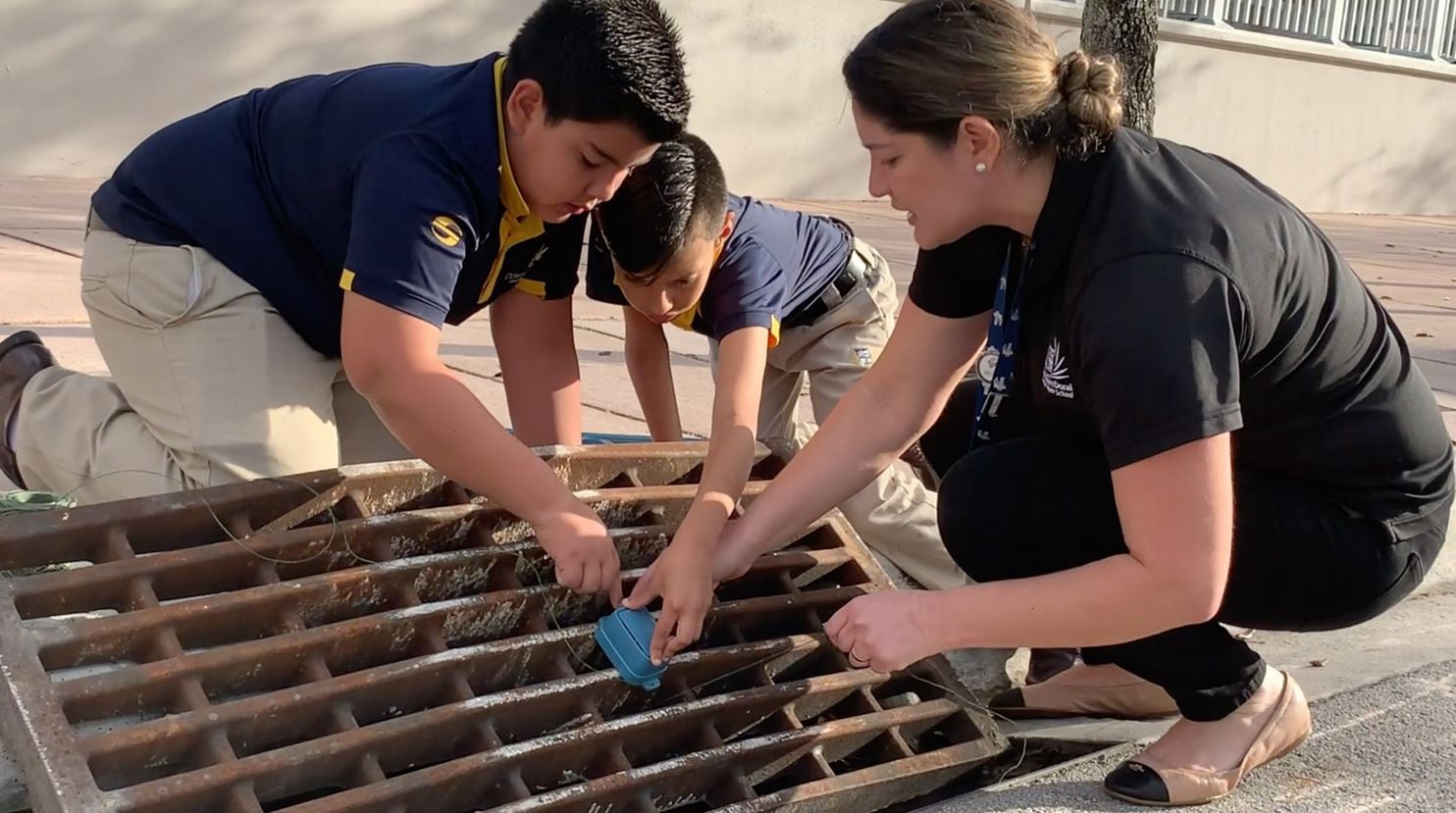
Sixth-graders at the Downtown Doral Charter Upper School in Florida worked with teacher Rebeca Martinez on a device to detect sediment buildup in a storm drain. The students’ project, which aims to stop flash floods, was among five grand-prize winners in the Samsung Solve for Tomorrow Contest.

To my way of thinking, no amount of money is too much to pay teachers like those guiding the middle school students in today’s story to tackle a science competition. Whether in public or private school, teachers build the future, but since most students are in public schools, the type of education there is the most critical and most in need of funding. Every child should have opportunities to stretch themselves.

Lela Nargi reports at the Washington Post, “In late May, storms flooded streets in Miami-Dade County in Florida. The floods made cars sink and turned roads into brown rivers.

“A team of local middle school students has a plan to stop this ongoing problem.

“Alyssa Neuber, Bianca Verri and Jose Pirela are sixth-graders at Downtown Doral Charter Upper School. They designed a device to warn city workers when and where there is a danger of flooding. The team is one of five grand-prize winners of the Samsung Solve for Tomorrow Contest. The contest asked for science, technology, engineering and math (STEM) solutions to the biggest challenge facing a school community.

‘I’ve been living here my entire life, and all of us have encountered problems with flooding,’ says Bianca. ‘We knew that was the problem we were going to tackle.’

“Flash flooding can happen when storm drains get plugged up and, especially during hurricanes, overflow into streets. It’s the leading cause of weather-related deaths in the United States.

“The students’ device uses a laser system called lidar, which stands for ‘light detection and ranging.’ The device, if approved by the city government, could be attached to Doral’s 2,575 storm and manhole drains — one device per drain. If a drain gets clogged with sediment, the device could send a computer alert to the city’s stormwater management office. Then the stormwater manager could send someone to clean the drain.

“ ‘We had our class help us in the beginning to find information about how we were going to use lidar,’ says Jose.

“The three STEM whizzes then started to work more closely with their science teacher, Rebeca Martinez. They figured out what each of them is good at. … Class parents who were engineers and website coders helped them figure out the details.

“Starting in March, the school was closed, so team meetings went virtual. Luckily, says Bianca, ‘We already had a prototype device, and we just had to tweak it some more.’

“They also had to pitch their idea virtually to contest judges. …

“A team from Dougherty Valley High School in San Ramon, California, made a wildfire alert. At Fairfield Senior High School in Fairfield, Ohio, students designed an app to prevent deaths of kids left in hot cars. Students at the North Carolina School of Science and Mathematics in Durham invented an app that helps people recycle. And in Wisconsin, kids at Omro High School created a sensor that lets ice fishers know when it’s safe to walk on frozen lakes.

“Each of the five teams won $100,000 for technology and supplies for their science classrooms.” More at the Washington Post, here.

Read Full Post »

3894533f-02e4-45fb-98b4-9f06e777c4e7_360x203

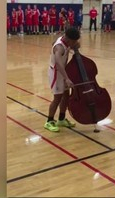
Gavin Hardy is good at both the bass and basketball. For a bigger image, watch the video at WFMY.

Our niece teaches orchestra at a middle school in North Carolina. Teaching orchestra is a job she loves, and she has often said she thinks she was born to do it. Sometimes she gets notes from long ago students telling her things like, “I always looked forward to your class. It was the time I felt best in school.”

She encourages students of every ability, and when she sees exceptional talent, she likes to spread the word. Here’s a story about a young bass player.

Maddie Gardner at television station WFMY in Clemmons has the report.

“You might say basketball is like music. The ball hitting the court: resonance. A shoe squeaking against the hardwood: pitch. The perfect shot: crescendo. And then there’s the discipline.

” ‘I think both go hand in hand. You have to be very disciplined to be a musician – same thing with an athlete. You have to practice it. You have to do it when nobody is looking. You have to be able to work hard when nobody is watching you do it.’

“Coach Tommy Witt says 8th grader Gavin Hardy brings a certain harmony to the Clemmons Middle School gym.

” ‘I hope to play at a division one school. My dream is to play in the NBA, but I know it’s going to take a lot of hard work, but I’m willing to put in the work,’ Gavin said. …

” ‘Just keeping the tunnel vision, staying focused, you gotta block out all of the distractions that get in your mind, know what you want and attack it. Strive to be the best,’ he said. …

“For 10 years Gavin’s been on the court. … But playing the National Anthem on his bass was something he’d never done before.

” ‘It’s funny – we want to get people to play the national anthem and I went to [his orchestra teacher] Barbara and said, “Do you think he can play the national anthem in his uniform?” ‘ Witt said.

‘It was just a no brainier; he can do anything,’ Gavin’s orchestra teacher, Barbara Bell said. ‘Whatever he puts his mind to he can do.’ …

” ‘I’ve been listening to classical music ever since I was four. I just like the string family and I like the dark tone of the bass,’ Gavin said.

Gavin says he usually listens to string music to get pumped up for a game but before the team played Winston-Salem Prep he decided he’d be the string music before tip off. …

” ‘He’s always interested in more. He keeps working harder to get to the next level,’ [said Bell]. …

” ‘When your best player is also your hardest worker you have a chance to be really good and that’s what Gavin has done for us,’ [Coach] Witt said.” More here.

Barbara tells me that her student learned the National Anthem on the bass in two days and that the publicity brought him wider attention.

“The National Bass Society has contacted Gavin,” she said in a text. “They want him and they’re offering a playing opportunity. The assistant principal bassist from the Philadelphia Orchestra contacted him. He teaches at Juilliard and he is very interested in helping him. I am beyond excited for him. I was screaming and jumping up and down when he told me.

“The Philadelphia Orchestra bassist loved his playing and was especially excited about his work ethic and attitude. I told Gavin he had to give me tickets to wherever he lands.”

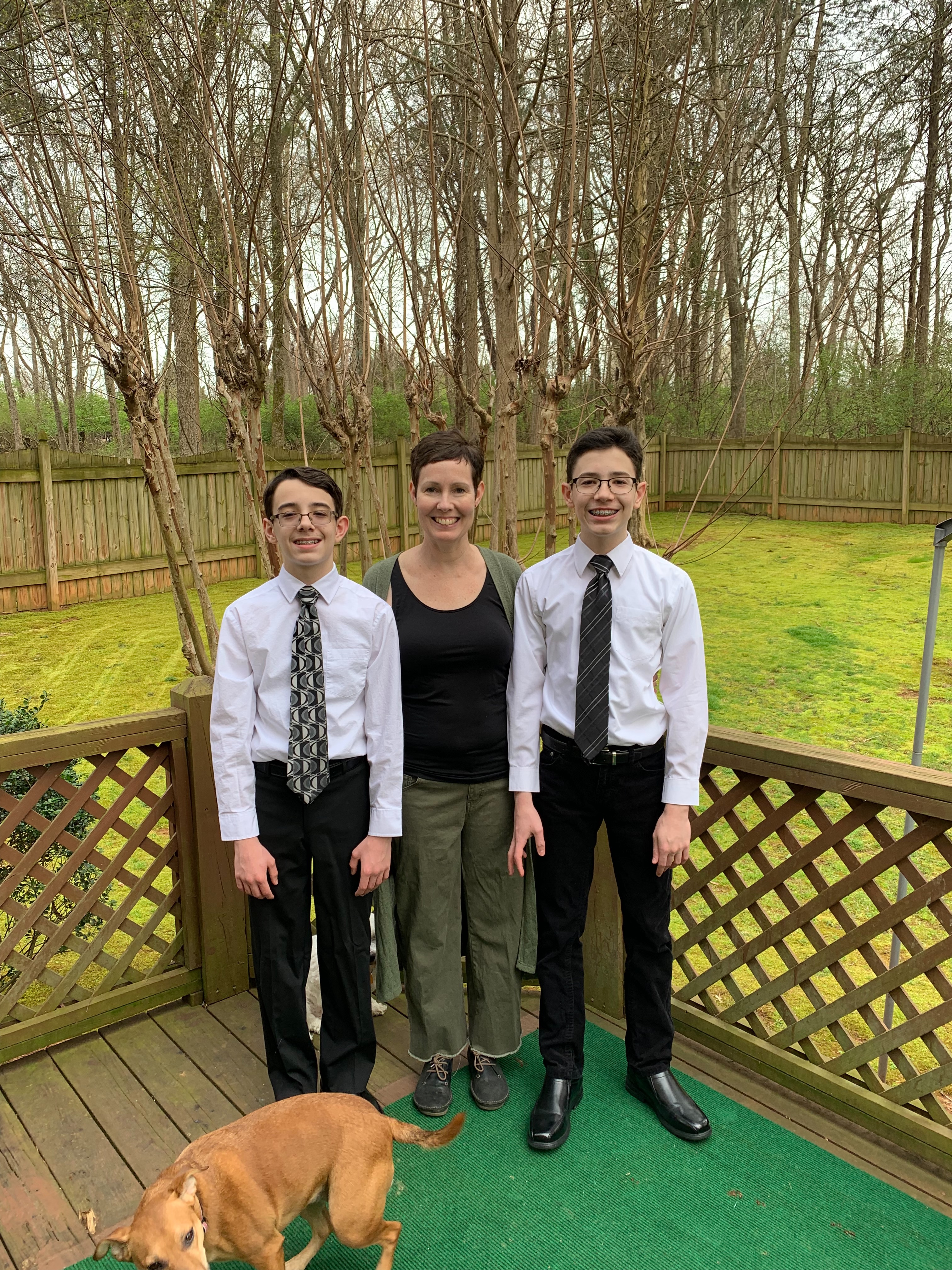
Gavin’s teacher with her twins. All three are string musicians.

032519-Bell-string-players

Read Full Post »

Some schools are taking the current push for STEM skills (science, technology, engineering and math) a step further and putting kids on project teams with students from around the world. While you are learning science, you are getting to know what life is like somewhere else.

Dugan Arnett writes at the Boston Globe, “In just a few weeks’ time, the students in Kathy Wright’s Richard J. Murphy K-8 School STEM class have developed a keen grasp of Costa Rican culture.

“ ‘They don’t get snow there,’ said Jayd’n Washington, a 12-year-old seventh grader at the Dorchester school. Added fellow 12-year-old Fabian Riascos, ‘They have their own currency.’

“Their burgeoning interest in the Central American country stems not from a recent geography lesson plan — it’s the result, instead, of a program called Design Squad Global, which pairs American middle-school classes with students from other countries in a kind of virtual pen-pal relationship.

“Created by WGBH Boston as a spinoff of the old PBS television series ‘Design Squad,’ the program serves, at its core, as a way to introduce young students across the globe to the importance of engineering-related projects.

“But another goal — and one that organizers seem to value as much as anything — is the program’s ability to connect children from various locations, backgrounds, and cultures. …

“The DSG program connects kids ages 10-13. Currently, it operates in 25 American cities — including Boston, Chicago, and New York — and eight countries, from Brazil to Jordan to South Africa.

“At the start of the program, which can run either six or 12 weeks, two classes from different countries are paired together. In online correspondence, they tick off their names, nicknames, and interests — and as they tackle a collection of weekly projects, a virtual relationship blossoms. …

“The focus is on real-world problem-solving. Participants are charged with designing and constructing scaled-down versions of a number of projects: a structure that can withstand an earthquake, an emergency shelter, an adaptive device for someone with disabilities.

“ ‘Middle school kids can come up with some amazing solutions,’ said Mary Haggerty, who oversees educational outreach at WGBH. ‘It makes you feel very hopeful for the future.’ ”

More here.

Photo: Jonathan Wiggs/Globe staff
Jhondell Smith-Young tested his STEM project for a Dorchester class that assigns him to an international team.

Read Full Post »