Feeds:
Posts
Comments

Posts Tagged ‘moscow’

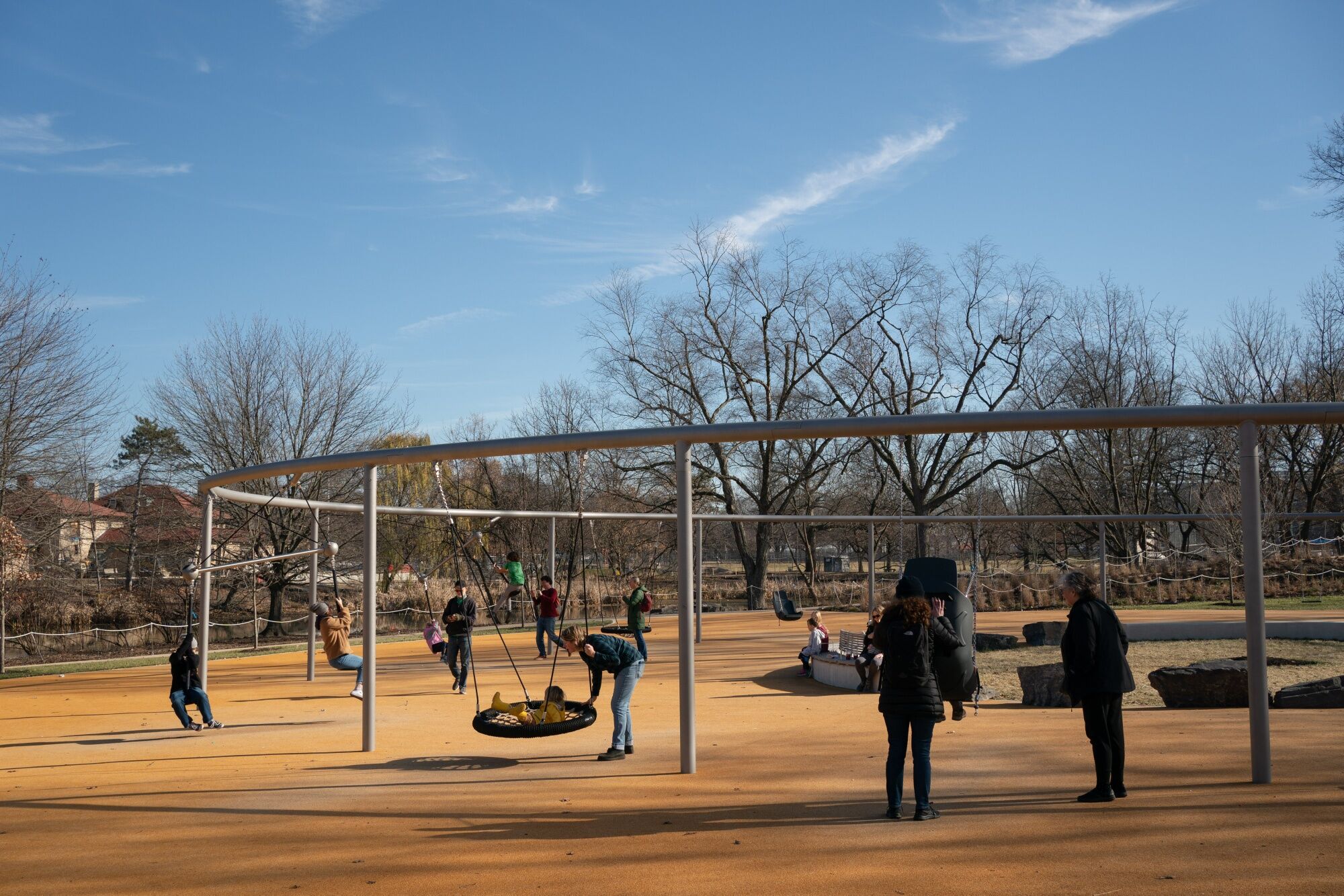
Photo: Caroline Gutman/Bloomberg.
A 20-swing structure for visitors of all ages at the Anna C. Verna playground in Philadelphia. 

In the Swedish retirement community where reader Stuga40 lives, there’s a playground for adults. Of course, the Swedes are always ahead of the rest of the world on quality-of-life things, but the idea of all-ages playgrounds is catching on in other countries, too.

Alexandra Lange reports at Bloomberg, “A swing can be the simplest thing: two chains attached to a board, a rope knotted through a disc, a chair suspended from above. Swings appear on ancient Greek vases as instruments of leisure, and in eighteenth century Thailand as vehicles for competition.

“That’s the thing about swings: They can be sociable, but they are also physical. This inviting duality has often been undermined by public safety standards, which discourage swings for more than one person and mandate that they be far apart. After a certain age, swinging solo loses its thrill.

“But at Anna C. Verna Playground at Philadelphia’s FDR Park, on the south side of the city, the largest swing set in North America was designed to test those limits. Not by creating unsafe play, but by transforming those standards into something challenging, unusual, beautiful and rewarding for swingers of all ages.

“The playground, which opened in October and was designed by WRT Design with Studio Ludo as play consultant, features two acres of nature-based play, including seven slides of increasing height and speed, two steel-and-rope ‘birdhouses’ ascended by climbing nets, three log climbers, and assorted shady picnic tables, rock circles and sit-able logs.

“The centerpiece, however, is the 120-by-100-foot elliptical ‘megaswing’ from which 20 different swings of five different types hang in invitation to all the users of the park — from homeschool moms to tailgating Eagles fans, teenagers on a half-day to grandparents with toddlers, all of whom can train, bus, cycle or drive to the park.

“ ‘We are social animals, and play fosters social relationships,’ says landscape architect Meghan Talarowski, executive director of Studio Ludo, who is also a certified playground safety inspector. …

“At a time when many cities and business owners seem to want nothing to do with teenagers, it is refreshing to see a brand new public space issue them an invitation — and to go there and see that happening. Toronto urbanist Gil Penelosa, founder of 8 80 Cities, has long argued that designing a city that works for eight-year-olds and 80-year olds is a city that works for everyone. …

“Talarowski [got] her shot at the Anna C. Verna Playground in Philly, where she nestled a smaller ellipse — still equivalent to the size of a baseball infield — into FDR Park’s existing lagoon, like the thrust stage in a Shakespearean theater.

“ ‘There was this natural curve in the lagoon, and we were trying to connect the play design to the site conditions, without taking down any trees,’ says Allison Schapker, chief operations and projects officer for the Fairmount Park Conservancy, which is working with Philadelphia Parks & Recreation on the multi-phase, climate-sensitive $250 million dollar FDR Park Plan. ‘This is the point, if you are swinging high, you get views back to center city Philadelphia, so we are connected with both nature and the city.’ …

“The Anna C. Verna Playground is phase one in the restoration of FDR Park; the master plan is also by WRT. As part of their commitment to keeping things natural, WRT specified very little paint and plastic: The slides and climbing structures are stainless steel and rope, much of the seating is rocks and logs, the swings themselves are black plastic, plus more metal and rope. The big swing and the playground’s other custom pieces were designed in collaboration with equipment manufacturer Berliner Seilfabrik. Underfoot, the springy safety surface is not the flip-flop colored rubber of most playgrounds, or high-maintenance and inaccessible woodchips, but a permeable and recyclable cork product that comes in a subtle, toasted brown. ‘We feel strongly playgrounds should be sophisticated,’ says Talarowski.

“Sophistication [signals] to users that this equipment isn’t just for kids. As part of their two-year community process, the conservancy ‘did engagement activities on site with kids and their families,’ says Schapker. ‘Overwhelmingly, across every age group, they said they wanted to swing.’ ”

More at Bloomberg, here. Long article. Great pictures. No firewall.
Read Full Post »

2704a953a69d47e498ef6496f7fc748f

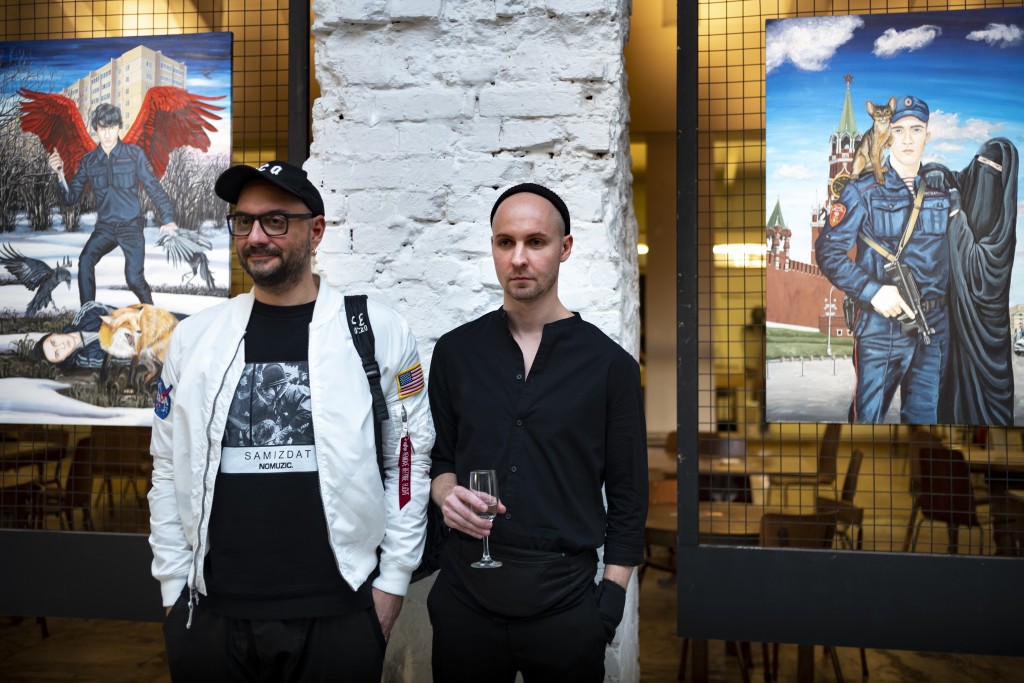
Photo: Taiwan News
There’s an edgy vibe among artists in and around Moscow. The Associated Press
describes one painter:  “Hailing from southern Russia, self-taught painter Pasmur Rachuiko [right] offers an extreme outsider’s view of Moscow reality.”

Speaking of authoritarian governments that label art and architecture they don’t understand “degenerate,” we turn now to a free-spirited movement that is rising up in Moscow, mostly in the suburbs.

Kate de Pury of the Associated Press says that one self-taught artist’s “paintings sparked disapproval from Moscow’s culture department.” Sounds good to me.

“As sleet falls on a cold November day, communist-era apartment blocks dominating Moscow’s suburban skyline look bleak and forbidding,” writes de Pury. “But it’s precisely these sprawling city outskirts that are the focus of a major international art exhibition.

“ ‘Beyond the Center’ is staging art events across Moscow’s vast urban space [culminating] in March 2020. With the participation of the Museum of Vienna and the Austrian Cultural Forum, the exhibit uses contemporary art to explore the many hidden facets of life outside the Russian capital’s nucleus.

“Simon Mraz, Austria’s cultural attache to Russia and director of the Austrian Cultural Forum in Russia, says the ‘real’ Moscow, where most of the city’s 12.6 million people live, is outside the center.

“ ‘They all come to Moscow with some dreams, facing struggles, hoping for a better future. They won’t find it in Red Square and definitely not in the Kremlin,’ Mraz, curator of the exhibition, told The Associated Press. …

“Hailing from southern Russia, self-taught painter Pasmur Rachuiko offers an extreme outsider’s view of Moscow reality. Burka-clad figures, policemen and wolves pose in the suburbs, gangsters have angels’ wings and young women carrying AK-47 rifles stare out of his canvases. Rachuiko depicts himself as ‘everyman’ among this cast of new Russian archetypes. …

“The paintings sparked disapproval from Moscow’s culture department, but Rachuiko found support from the arts establishment, including theater director Kirill Serebrennikov, himself still under threat from the authorities after a long term of house arrest. …

“The urban renewal project aimed at impressing World Cup visitors to Moscow in 2018 didn’t reach Liublino, a working-class suburb. In this dilapidated industrial zone, the ‘Museum of Industrial Culture’ houses a private collection of discarded objects, amassed by former auto engineer Lev Zheleznyov. It’s a social history of more than 70 years of communism, told through ordinary things people recognize from a shared past.

“ ‘It’s a museum of memory. We are not so interested in how a lamp works, more that it was in someone’s home,’ Zheleznyov said. …

“In ‘Polly wants a cracker,’ Austrian artist Michele Pagel sees a darker side of Moscow – domestic abuse. Her visceral sculptures, on show in Mraz’s apartment, located opposite the Kremlin, seek to bring violence against women back from the peripheral vision of Russian society to its central focus.

“Attending the opening, lawyer Alyona Popova campaigns to reverse a 2017 law decriminalizing certain types of domestic abuse in Russia. According to the advocacy group ‘You Are Not Alone,’ an estimated 16 million Russian women suffer domestic violence each year.

“A residential complex called Novo-Molokovo, just outside Moscow and still under construction, houses the newest generation of Muscovites. A studio apartment here costs $95,500. Curator Elena Ishchenko set art installations inside [one].

“ ‘We got used to viewing the suburbs as strange, remote areas we don’t want to visit,’ she said. ‘But when you get out here, thanks to the artist, you see something you wouldn’t expect.’…

“[Sociologist Natalia Zubarevich] hopes a grassroots civil society will grow in Moscow’s residential districts, but it’s a social trend the Kremlin watches carefully and any political activism brings repression. ‘This city shows what Russia could be,’ she said. ‘It’s our hope of modernization.’ ”

More at AP via the Seattle Times, here.

Read Full Post »

2gxhvxhxpndc3cv6ftxdqmleue

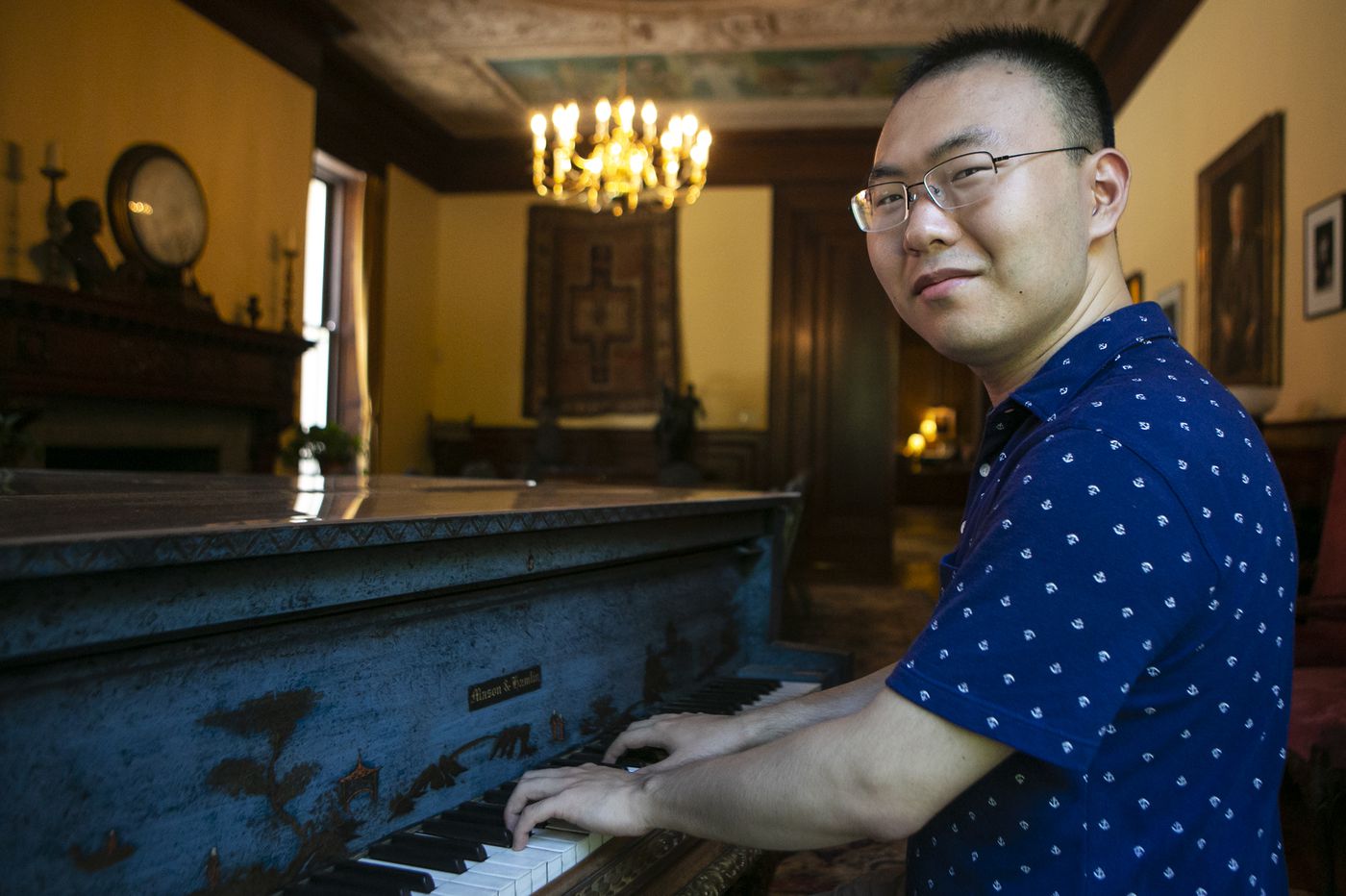
Photo: Heather Khalifa / Philadelphia Inquirer
Pianist Tianxu An lived through every performer’s worst nightmare when he suddenly had to play the wrong piece.

I don’t know about you, but I have often had what might be called the Performer’s Nightmare. Sometimes it takes the form of the Teacher’s Nightmare (a classroom full of utterly uncontrollable kids) or the Actor’s Nightmare (onstage in a big role with no idea of my lines). Maybe you have had it for a PowerPoint presentation at work. I don’t even want to imagine what a Surgeon’s Nightmare might be like, but I believe we’ve all had one of these scary dreams.

For the pianist in this story, nightmare became reality.

As Peter Dobrin reported at the Philadelphia Inquirer, “It sounds like the musical version of a classic anxiety nightmare. You walk out on stage, sit down at the piano for a concerto, and the orchestra starts playing a different piece than the one you were prepared to perform.

“And yet a few weeks ago it was all very real to Tianxu An, who lived through the strange episode in the finals of one of the most prestigious competitions anywhere.

“The Curtis Institute of Music student, just 20, was ready to play the Tchaikovsky Piano Concerto No. 1 at the International Tchaikovsky Competition in Moscow in June. When conductor Vasily Petrenko brought in the orchestra for its brief introduction, the sound that came at An was that of Rachmaninoff’s ‘Rhapsody on a Theme of Paganini.’

‘I was really surprised,’ said An. ‘The problem was I needed to react in that kind of fast way, so there was no time for me to begin with some kind of emotion.’

“Rather, it was pure muscle memory, he said.

“Now [that is, in July 2019] the Philadelphia-based pianist is getting ready to play the same Rachmaninoff piece with considerably more intentionality. He is soloist in the work Tuesday at the Mann Center with the Philadelphia Orchestra in an all-Rachmaninoff program led by conductor Elim Chan.

“In Moscow, An was a full beat late in his entrance, but caught on fast and says he soon felt at ease in the Rachmaninoff, which he had prepared but did not expect to come until after the Tchaikovsky, in the final round of the competition. …

“Competition officials apologized for the mix-up, which they called a ‘gross error’ on the part of an employee. In the end, An was awarded fourth place plus a special prize for ‘courage and self-possession.’ …

“ ‘I really feel thankful for this competition,’ says An, ‘because for me to be in the round of the 25 people going to Moscow, that for me has already been luck.’ …

“Competitions, he says, can challenge him to ‘play better and in a more complete way. I think the nature of human beings is we tend to relax, we don’t want to challenge ourselves. Competition is a way to objectively push, to force us to play better. …

” ‘I think I projected and played the emotions I wanted. That’s the good part. But for maybe the bad part, because the order was switched, my physical strength was not equally distributed. Because maybe I put too much strength in the first piece.’

“Next time, at the Mann, when the conductor begins with a gust of four 16th notes, both the character and piece may come across differently. For one thing, the pianist will be expecting it.”

This is what my husband calls Type Two Fun: fun to talk about later, not so much fun at the time. More at the Inquirer, here.

Note the pianist’s astonishment when the conductor started the wrong music at the International Tchaikovsky Competition in Moscow.

Read Full Post »

The world’s oldest working actor has died at age 101. And good for him to have worked at something he loved for so long!

Shaun Walker wrote recently at the Guardian, “Vladimir Zeldin, believed to have been the world’s oldest working actor, has died aged 101, after appearing for 71 years at the same Moscow theatre.

“The Russian actor appeared on stage as recently as [September], using a walking stick due to a broken hip, to appear in the play The Dance Teacher by the Spanish playwright Lope de Vega.

“He had appeared in the play more than 1,000 times, Tass reported. The theatre had planned for him to appear again next February, to mark his 102nd birthday. …

“Zeldin was born in 1915, when Tsar Nicholas II was on the Russian throne. He shot to fame when he appeared in the film They Met in Moscow, on which shooting began shortly before the Nazi invasion of the Soviet Union in 1941. …

“When the war finished, Zeldin joined Moscow’s Red Army Theatre, where he was part of the troupe from 1945 until his death. The theatre is now known as the Russian Army Theatre. Fellow actors at the theatre described him as full of energy until the very last.” More.

I think the actress who played 104-year-old Great-Great-Grandmaw in All the Way Home (the stage version of James Agee’s A Death in the Family) must have been nearly as old as Zeldin. I remember her voice came out as kind of a croak. But that may have been because she was acting.

Photo: Alexander Zemlianichenko Jr/AP  
Vladimir Zeldin on stage in Moscow.

Read Full Post »

As readers know, I really believe that “one and one and 50 make a million” (a concept articulated by folksinger Pete Seeger). That’s why I can’t resist a recent story from Moscow, where a few writers decided to have a “stroll,” and 10,000 individuals individually decided to follow.

Ellen Barry writes in the NY Times: “It was only four days ago when 12 prominent authors, disturbed by the crackdown on dissent that accompanied President Vladimir V. Putin’s inauguration, announced an experiment. They called it a ‘test stroll’ …

“No one knew quite what to expect on Sunday. But when the 12 writers left Pushkin Square at lunchtime, they were trailed by a crowd that swelled to an estimated 10,000 people, stopping traffic and filling boulevards for 1.2 miles. …  The police did not interfere, although the organizers had not received a permit to march.

“ ‘We see by the number of people that literature still has authority in our society because no one called these people — they came themselves,’ said Lev Rubinstein, 65, a poet and one of the organizers. ‘We thought this would be a modest stroll of several literary colleagues, and this is what happened. You can see it yourself. … I don’t know how this will all end, but I can say that no one will forget it.’ ” Read more.

I can’t help thinking that one and one and 50 have been growing for a long time in Russia and that the 10,000 who joined the march are just the tip of he iceberg.

Photograph: Dmitry Kostyukov for The New York Times

Read Full Post »