Feeds:
Posts
Comments

Posts Tagged ‘mountain lion’

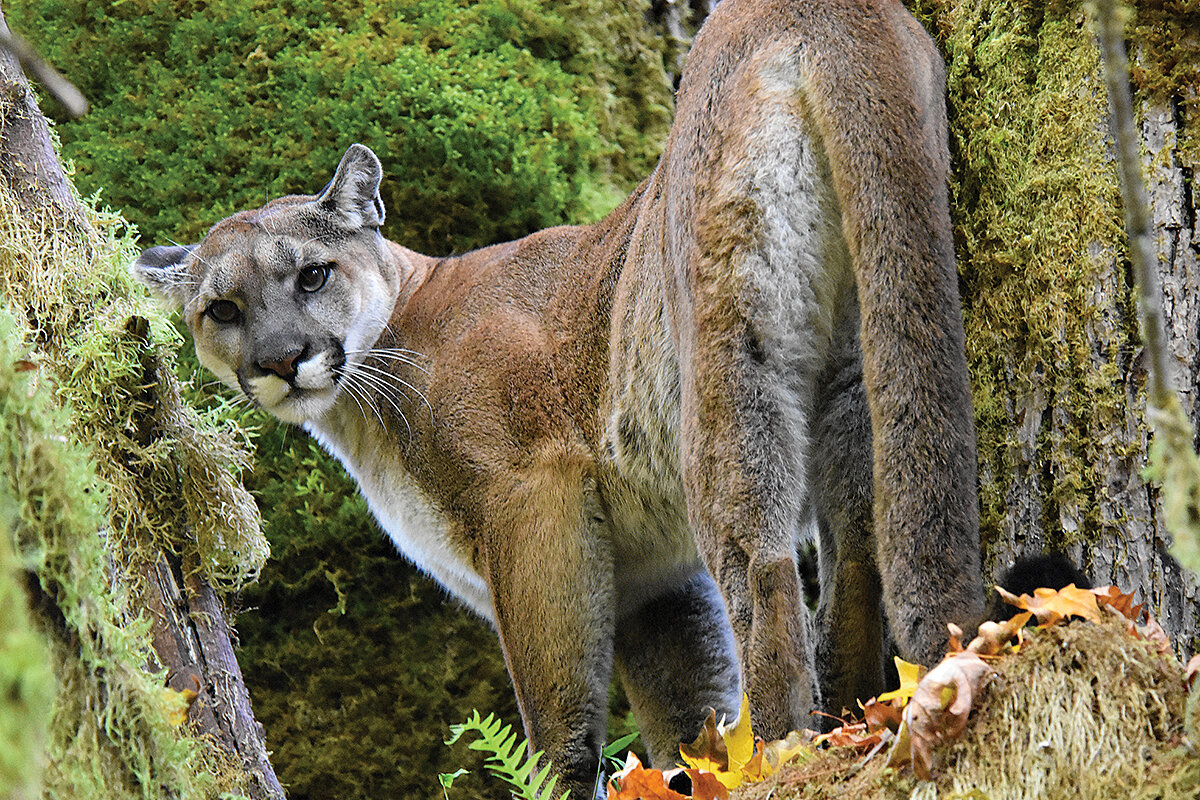
Photo: Mark Elbroch.
Since 2018, the collaborative Olympic Cougar Project has tagged 111 individual pumas, including Charlotte, above.

How many names do you know for the animal in the picture above? I learned four from today’s article.

Stephen Humphries writes at the Christian Science Monitor, “If Kim Sager-Fradkin didn’t have to write a grant proposal, she’d be spending her afternoon on the trail of a killer. 

“The biologist leads a team that’s researching cougars in Washington’s Olympic Peninsula. (The big cat is also referred to as a puma or a mountain lion. Not to mention wild cat, or panthera.]) Today, the team is tracking a cougar named James. It suspects he recently hunted an animal in a nearby forest. 

“ ‘Visiting cougar kill sites is really fun and like being sort of a forensic scientist,’ says Ms. Sager-Fradkin … wildlife program manager for the Lower Elwha Klallam Tribe. She’s overseeing the Olympic Cougar Project in partnership with Panthera … and five other Native American tribes. They’ve pooled their talents and resources to help an apex predator that has become effectively imprisoned in the westernmost part of Washington. 

“The region’s cougars are penned inside a geographical island roughly shaped like a square. Three sides are bordered by the ocean and bays. To the south there’s the expansive Columbia River as well as Interstate 5. The barriers on all four sides collectively form a de facto fence. Unable to easily connect with other big cats in the Pacific Northwest, cougars in the Olympic Peninsula are inbreeding. The lack of genetic diversity poses health challenges for them, scientists say. By collecting data on the big cats, the Olympic Cougar Project is bolstering the case for constructing a wildlife overpass over I-5 so that the species is less confined.

“ ‘Humans love wildlife stories, and humans love wildlife movements,’ says biologist Jim Williams, author of Path of the Puma: The Remarkable Resilience of the Mountain Lion. ‘What’s really neat about this project is it’s going to create information that will be translated through story that will keep humans excited and caring about the species.’ …

“When Ms. Sager-Fradkin began working for the tribe in 2007, her primary role was to plan sustainable subsistence hunting and fishing for current and future generations. A year later, she initiated a small-scale study of cougars in the region. She called in cougar expert Mark Elbroch. In 2018, they expanded the scope and scale, incorporating the five other tribes in the region and adopting the Olympic Cougar Project name. 

“ ‘The tribes on the peninsula aren’t always working together on a lot of things,’ says Ms. Sager-Fradkin, adding that there are sometimes disagreements over issues such as hunting jurisdictions. ‘So it’s really amazing that we’ve all come together and are working on a big project like this.’  To get all the partners on board, she had to get them to see the big picture. …

“The cougars are considered an ‘umbrella species’ because so many other creatures in the ecosystem depend on them. ‘Where there are frequent kills, the grass is literally more nutrient rich,’ explains Ms. Sager-Fradkin. …

“It was this fact that helped her persuade the region’s tribes that it was in their common interest to study the feline carnivore. 

“For his part, Dr. Elbroch, director of the puma program at Panthera, adds that Ms. Sager-Fradkin used her natural skill of engaging with people. …

“Working in concert, the Skokomish, Makah, Quinault, Jamestown S’Klallam, and Lower Elwha Klallam tribes have created a grid consisting of 550 cameras. Artificial intelligence catalogs animals photographed in the peninsula – including bobcats, bears, coyotes, deer, and elk – and helps estimate their populations. Research technicians, such as Lower Elwha Klallam tribe member Vanessa Castle, analyze the patterns of 127 individual cougars. There’s also the less glamorous task of analyzing animal scat. 

“ ‘A lot of our ancestral knowledge was lost,’ says Ms. Castle, who praises how Ms. Sager-Fradkin has mentored her and other employees in the project. ‘So we’re having to relearn those things. Like how wildlife all is intertwined with each other. … I had no idea the role that mountain lions played in the system as a whole.’ …

“ ‘The first thing that is needed is to protect the habitat on either side, because you can’t spend all the money on a wildlife bridge and then end up with a Walmart parking lot right on one side,’ says Ms. Sager-Fradkin. 

“The Olympic Cougar Project is not just liberating the big cats, she adds, but also creating a sustainable ecosystem for the tribes for the next seven generations.”

More at the Monitor, here. No paywall. Subscriptions encouraged.
Read Full Post »

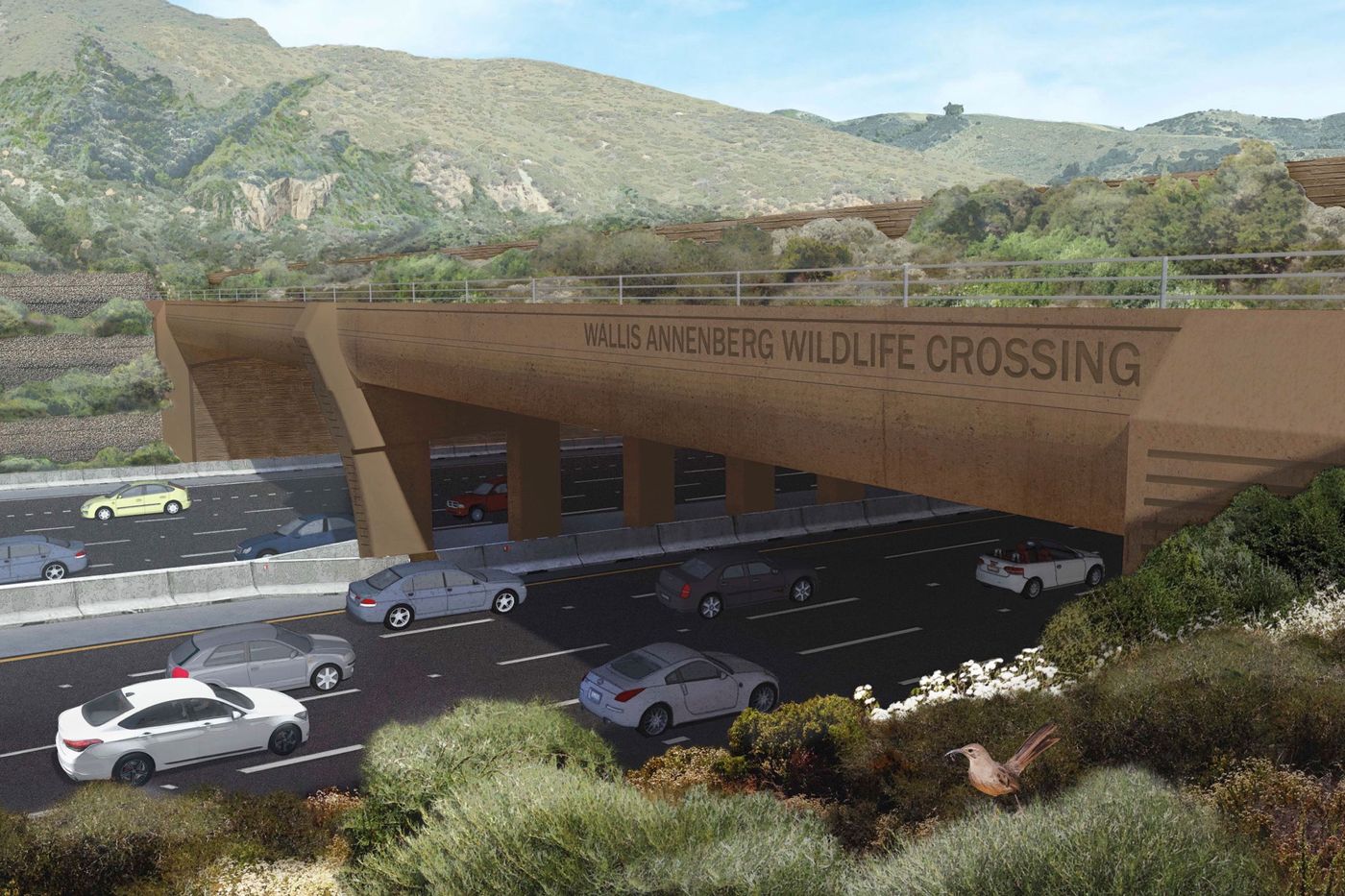
Photo: Living Habitats and National Wildlife Federation.
The Wallis Annenberg Wildlife Crossing should be completed over the Route 101 freeway on the western side of Los Angeles County by 2023, allowing mountain lions to easily cross eight lanes of traffic.

As the human species userps habitat from other species, there are at least a few efforts to mitigate the damage. At Curbed, Alissa Walker reports on California’s plans to build a freeway overpass that by 2023 should substantially expand the habitat of local mountain lions. It will be the largest animal crossing anywhere.

At the Guardian, Patrick Greenfield has an overview of safe passages around the world for elephants, tigers, sloths, and more.

Greenfield writes, “From a tiny railway bridge for dormice in the UK to elk, deer and bears benefiting from a slew of new animal crossings in Colorado, wildlife bridges are having a moment. …

“In January [2021], we reported on Sweden’s plans to build a series of ‘renoducts‘ to help reindeer traverse the country’s main roads. … In southern California, work is due to begin on the largest wildlife bridge in the world in 2022, to connect isolated mountain lion populations north of Los Angeles that are becoming dangerously inbred. [And there’s $350m of the] $1.2tn infrastructure package for wildlife bridges to lessen the multibillion annual cost of collisions.

” ‘Ten years ago, wildlife bridges were experimental. We didn’t know whether they would work or not. Now they’ve shown they get huge reductions in collisions. In some cases, 85% to 99% reductions,’ says Rob Ament, a road ecology expert at Montana State University. ‘You can design them for many species. Even out in the plains, we’re getting moose crossings in North Dakota.’

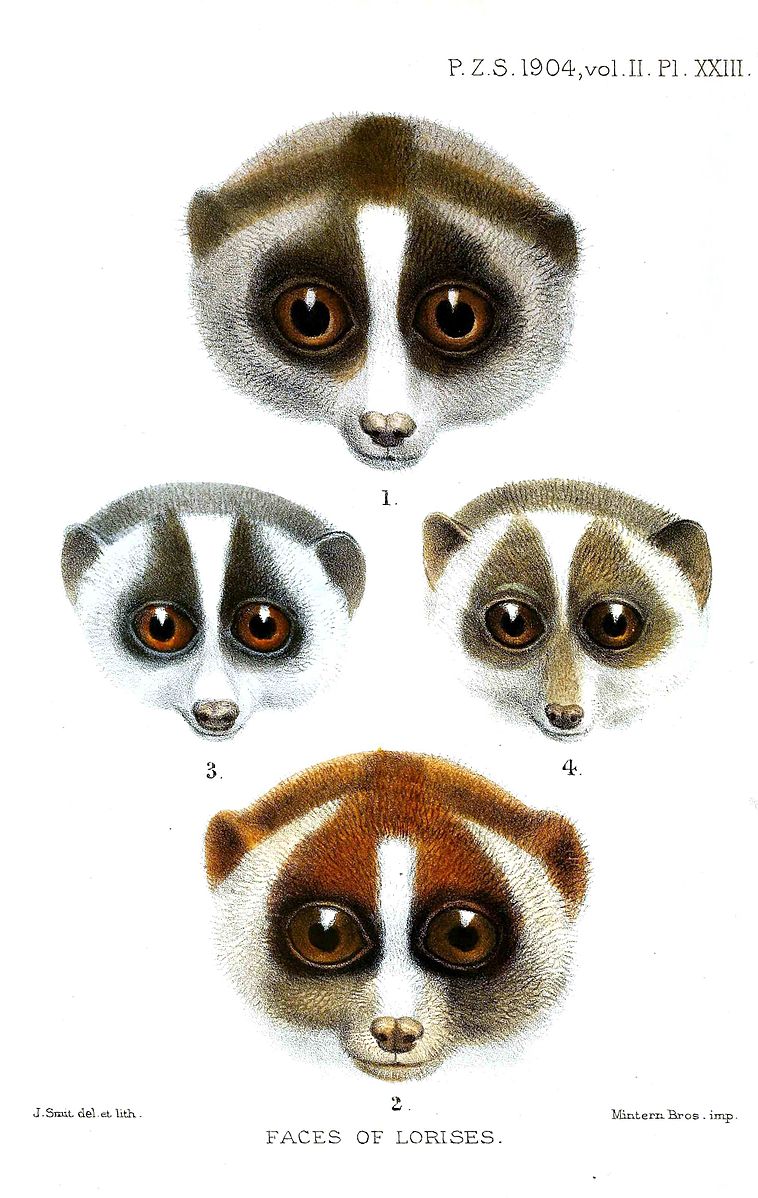
“Wildlife bridges are found on every continent: there is an elephant underpass near Mount Kenya; the Netherlands has a network of ecoducts that may help the country’s first wolf pack in more than 140 years gain a foothold across the densely populated country; suspended water pipes are helping Java’s endangered lorises; [below]; and a bison bridge may help the animals cross the Mississippi.

“Here are five projects from around the world helping animals make their way.

“Alligator Alley, Florida. The 129km (80-mile) stretch of road between Naples and Fort Lauderdale bisects the Everglades, an enormous wetland that is home to thousands of alligators, deer and the endangered Florida panther. … Dozens of underpasses and fencing help wildlife navigate the road.

A camera trapping exercise found panthers, black bears, skunks, deer, bats, birds and even fish use the crossings. …

” ‘Fencing is critical along Alligator Alley. It is a 10ft-high chain link fence with three-strand barbed wire on top. That’s to keep the wildlife off the roadway and on the crossing,’ says Brent Setchell, a design engineer at Florida Department of Transportation, who identifies potential crossing sites by monitoring road collisions with panthers and bears. ‘The fascinating thing is we just started monitoring the crossings four or five years ago. We found an abundance of wildlife.’

‘The tunnel of love’ on the Great Alpine Road, Australia. Stretching through the Victorian Alps in south-east Australia, the Great Alpine Road posed an existential threat to a colony of critically endangered mountain pygmy possums. Even though there are only about 150 of the marsupials on Mount Little Higginbotham, testing revealed genetic differences between sub-groups separated by the road, which are also threatened by fire, disappearing food sources and invasive species. Conservationists decided to build a ‘tunnel of love’ between the isolated groups to improve mixing and strengthen their chances of survival. …

“India’s tiger corridor. India’s first dedicated wildlife underpasses were a hard-fought victory for environmental campaigners. The nine crossings in the Pench tiger reserve were a court-ordered mitigation measure on the country’s longest road, the 4,112km National Highway 44, which runs down the middle of the country. Collisions with big cats still happen on the multi-lane motorway, but environmentalists say the underpasses have highlighted the need for more wildlife crossings on India’s road network. A 2019 camera trapping exercise found at least 18 species use the crossings, including tigers, wild dogs, sloth bears, civets and leopards. …

“Bhutan’s elephant crossing. Nearly 700 Asian elephants roam Bhutan’s forest on the eastern edge of the Himalayas. The small Buddhist country sandwiched between China and India is known for its dramatic landscapes and environmental leadership, as one of the few carbon negative countries in the world. On the 183km east-west motorway, Bhutan’s first elephant underpasses were constructed to help the threatened animals move through the landscape. Monitoring from 2015 to 2017 found that 70 groups of elephants were recorded near the passes, with three-quarters passing through the structures.

“Sloth bridges in Costa Rica. Wildlife passes are not always bridges or underpasses. In Costa Rica, canopy bridges are used to help sloths, monkeys and other wildlife cross roads to combat collisions, dog attacks and electrocutions on power lines. The rope bridges, which cost about [$200], are installed by the Sloth Conservation Foundation in areas where rainforest has been interrupted by human development on the country’s Caribbean coast. Crossing roads is often deadly for the slow-moving creatures and the canopy bridges also help combat inbreeding. ‘People look at them and think that they’re so poorly equipped to survive because you see them crossing roads and trying to move around and they look so awkward and useless,’ Rebecca Cliffe, head of the Sloth Conservation Foundation, told Bloomberg earlier this year. ‘But if you put them in a well-connected rainforest, then they are masters of survival.’ ”

Read the Guardian story here. Want more? The article at Curbed on the world’s longest animal bridge is here. Both of these publications are free although donations are encouraged.

Read Full Post »