Feeds:
Posts
Comments

Posts Tagged ‘museum of fine arts’

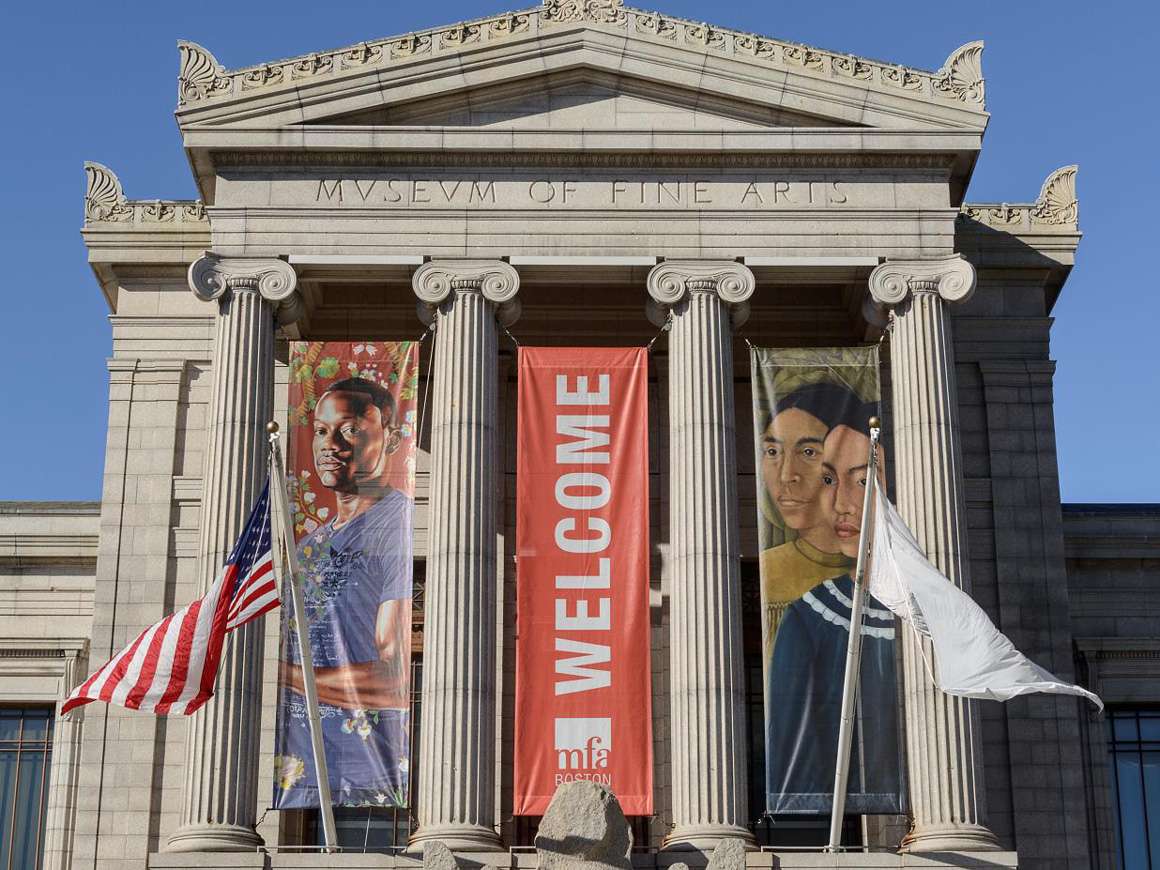
Photo: Museum of Fine Arts, Boston.
Descendants of potter David Drake, seen at the Museum of Fine Arts with one of the artist’s works

If we are in a hurry for the many evils we see to be defeated, we’re likely be disappointed. But in time, even a foundering ship can right itself. The growth of initiatives to return artifacts stolen in the past is an example.

Jori Finkel writes at CNN that in a “likely precedent-setting agreement, the Museum of Fine Arts (MFA) Boston has agreed to return two works from 1857 by the Black potter David Drake, who made his ambitious jars while enslaved, to his present-day descendants.

“By the terms of the contract, one of those vessels will remain on loan to the museum for at least two years, according to the lawyer George Fatheree, who is representing Drake’s descendants. The other vessel — a masterpiece known as the ‘Poem Jar’ — has been purchased back by the museum from the heirs for an undisclosed sum. Now the work comes with ‘a certificate of ethical ownership.’

“ ‘In achieving this resolution, the MFA recognizes that Drake was deprived of his creations involuntarily and without compensation,’ a museum spokesperson said in a statement. ‘This marks the first time that the museum has resolved an ownership claim for works of art that were wrongfully taken under the conditions of slavery in the 19th-century US.’ …

‘Ethan Lasser, chair of the art of Americas at the MFA, said the museum has learned from its work restituting Nazi-looted art. ‘We’ve become very expert in Holocaust restitution. We’re dealing with (repatriation) issues in our African collections and Native American collections,’ he said over the phone. …

“He considers Drake’s work an example of ‘stolen property,’ too, ‘since the artist is always the first owner of his work and he never got to make the call about where it went or what he was paid for it.’

“Born enslaved around 1800 in Edgefield, South Carolina, a region known for its rich clay, Drake (who was also known as Dave the Potter) was one of relatively few African American potters to sign his work. He also dared — despite punitive anti-literacy laws for enslaved people in the state — to etch short sayings or poems on the jars, making them powerful acts of resistance. Some inscriptions boast of the jar’s intended contents or enormous capacity; others remark more poignantly on his own life or working conditions.

“The ‘Poem Jar,’ which the MFA originally bought in 1997 from a dealer in South Carolina, features a couplet that hints at Drake’s financial exploitation. The inscription reads: ‘I made this Jar = for cash/Though its called Lucre trash.’ Currently in a gallery for self-taught and outsider art at the museum, it will assume a more prominent spot at the entrance of the Art of Americas wing once renovated in June 2026. …

“Another jar made the same year, 1857, has a particularly wrenching inscription in light of Drake’s forced separation from a woman believed to be his wife and her two sons. That vessel, at the Greenville County Museum of Art in South Carolina, reads: ‘I wonder where is all my relation.’

“One of Drake’s great-great-great-great grandsons, the children’s book author and producer Yaba Baker, said he feels the restitution process offers one answer to that question. ‘It’s been exciting, overwhelming and feels full circle,’ he said in a video call. He praised the MFA for ‘showing integrity and leadership’ in ‘allowing us to connect to Dave’s legacy,’ noting that ‘to go from being slaves to having a family of engineers and doctors and people in executive positions is a testament to Dave’s legacy in a different way.’

‘These descendants began talking about getting involved in Drake’s legacy in 2022, upon the opening of ‘Hear Me Now: The Black Potters of Old Edgefield, South Carolina,’ an exhibition jointly organized by the MFA and the Metropolitan Museum of Art in New York. The family soon hired Fatheree, fresh from his win in the Bruce’s Beach land reparation case. Earlier this year they established the David Drake Legacy Trust, governed by five of the oldest heirs.

“So far there are about 15 family members involved, according to Fatheree, but they have created a website so that other descendants of Drake can be identified and join the efforts — what Fatheree calls ‘a big tent approach.’ …

“There are thought to be around 250 pots by Drake still in existence, and over the past five years the market for his work has exploded, driven mainly by American museums competing for pieces in the hopes of telling a more complex story about the history of slavery in the US. Several have paid six figures for his work, and in 2021 the Crystal Bridges Museum of American Art in Arkansas paid a record-setting $1.56 million for a 25-gallon stoneware jar at auction.

“Other museums that own Drake’s work include the Met, the Philadelphia Art Museum, the De Young Museum in San Francisco, the Art Institute of Chicago, Harvard Art Museums, the St Louis Art Museum and the Smithsonian American Art Museum in Washington, DC, as well as smaller venues in the American South.

“Fatheree confirmed he has begun to reach out to some of these other art institutions on behalf of the family. ‘Our approach has been one of collaboration and invitation. I am not a litigator; we did not go to the museum and file a lawsuit (or) threaten to sue them. But our hope and frankly our expectation is that other institutions’ — and private collectors of Drake’s work, he added — ‘will follow the Boston museum’s lead here.’ ”

More at CNN, here.
Read Full Post »

Photo: Lane Turner/Globe Staff.
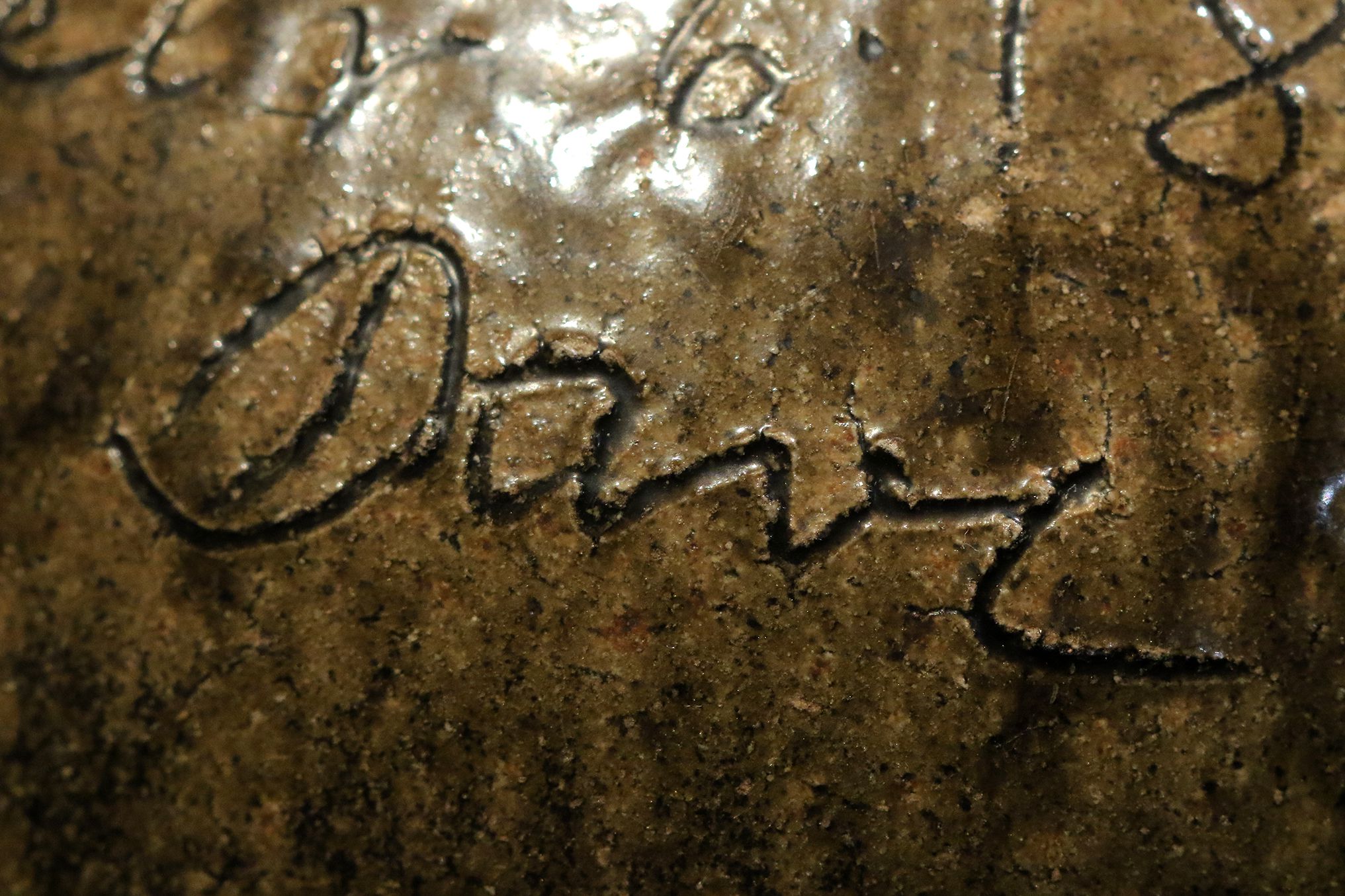
“Hear Me Now: The Black Potters of Old Edgefield, South Carolina,” an exhibition at Boston’s Museum of Fine Arts, presents 12 works by enslaved potter David Drake. Above, David Drake’s signature, “Dave,” on a storage jar from 1858. 

Today’s story is about an enslaved potter and the descendants who found him 150 years later. It is so painful to read about him being “bought.” You really have to wonder about the depths to which humanity sometimes descends.

Malcolm Gay reports at the Boston Globe, “In 1857, an enslaved potter in South Carolina’s Old Edgefield district carved a brief poem into a pot he’d turned in the mid-August heat.

“The potter had been bought and sold by a series of owners by then. He’d lost a leg, but his gifted hands won him local renown: His expert work with clay ensured he would be kept in the district known for its stoneware, even as his family was torn from him at auction.

“Using a sharpened tool, he etched into the jar’s shoulder: ‘I wonder where is all my relation/Friendship to all — and every nation.’ The potter then added his enslaver’s initials, the date, and, finally, his own name: ‘Dave.’

“In that simple act, the man, long known as Dave the Potter, and later David Drake, was not only wondering about his lost family: He was committing an extraordinary act of defiance in pre-Civil War South Carolina, indelibly asserting his existence in an age that sought to obliterate the humanity of Black people.

“Originally created to store meats and other foods, Drake’s 40 or so poem jars are today highly sought after by museums. His inscribed vessels routinely fetch six figures at auction, and his stoneware features prominently in ‘Hear Me Now: The Black Potters of Old Edgefield, South Carolina,’ an exhibition featuring enslaved potters [at Boston’s] Museum of Fine Arts.

“Perhaps most significantly: More than 150 years after Drake composed his mournful verse, researchers appear finally to have found his direct descendants.

“ ‘He was sending these messages,” said Daisy Whitner, 84, whom genealogists have identified as Drake’s great-great-great-granddaughter. ‘He wanted people to know: I’m a human being; treat me as such.’

“Now in their mid-70s and 80s, Whitner and her three siblings, Pauline Baker, John N. Williams, and Priscilla Ann Carolina, believed for most of their lives that their known family tree began in Aiken, S.C. They hadn’t known they’d had family in Edgefield. They’d certainly never heard of David Drake.

“But that changed in 2016, when April Hynes, an independent genealogist and researcher who’s been tracking down descendants of enslaved people from the area, cold-called Whitner. By pairing historical research with publicly available documents, Hynes had determined that Whitner and her siblings were the potter’s direct descendants. …

“ ‘I don’t have a word to describe him,’ said Baker, 75, seated on a sofa in her niece’s tidy home outside Washington, D.C., a replica Drake pot placed prominently on the dining room table. …

“Seated to her right, Whitner grew emotional as she described touching one of Drake’s pots during a trip to New York’s Metropolitan Museum of Art, which organized the exhibition with the MFA.

“ ‘It just tore me to pieces,’ she said. ‘I can’t stop reading and reading, trying to dig more and more.’

“The family has read nearly everything published about their ancestor, as they puzzle over his poems, searching for possible meanings and seeking clues about his life.

“Whitner is haunted by a particular jar Drake created and inscribed in 1836. It reads: ‘horses mules and hogs —/all our cows is in the bogs —/there they shall ever stay/till the buzzards take them away.’ ‘He’s using farm animals rather than to say slave,’ she said. …

“The [family] had mixed emotions when Hynes first called them with the news about Drake, but soon they were traveling down to Edgefield with around 30 family members to take part in celebrations to honor the potter.

“ ‘It’s a joyous feeling,’ said John N. Williams, 81. ‘But then there was a sadness about it, because you thought about the atrocities that happened.’

“They appreciate how rare it is, as the descendants of slaves, to be able to read their ancestor’s thoughts — particularly while he was still in bondage. But discovering a forebear who spent most of his life enslaved has also personalized their perception of the era, wrestling as they do with the scant details, and many unknowns, of Drake’s life.

“Whitner said she’d previously avoided looking at movies about slavery because ‘my heart couldn’t take it.’

“ ‘It hurt me to my core,’ she said. ‘And I will look now.’ ”

More at the Globe, here.

Read Full Post »


Photo: Museum of Fine Arts, Boston
The museum now offers free family admission to new citizens.

The magnificent collections of Boston’s Museum of Fine Arts have gotten out of reach for many people as admission on most days has escalated. So it was with great interest that I read at the MFA website about a generous program for one deserving group of people: New Americans.

“Starting July 1, the Museum of Fine Arts, Boston (MFA), [began welcoming] newly naturalized U.S. citizens living in Massachusetts with complimentary one-year family memberships through a new program called MFA Citizens — the first of its kind in the country. …

“Engaging new citizens is part of the MFA’s ongoing efforts to build a more inclusive community of visitors, volunteers, staff and supporters, fostering the next generation of museum-goers and professionals that reflects the region’s changing demographics. …

“New citizens can sign up for the program by showing a copy or photo of their naturalization certificates at any MFA ticket desk within one year of their ceremony.

“In addition to free admission to the MFA for one year for two adults and unlimited children (ages 17 and under), discounts on programs, shopping, parking and dining, and invitations to member events, the MFA Citizens membership includes a special in-person welcome packet in a custom-designed tote bag. Included in the packet [is] information about upcoming exhibitions and programs — available in Spanish, Chinese, Haitian Creole and Portuguese, the most common non-English languages spoken at home in Boston. On-site signage in these languages will also be placed at the MFA’s Huntington, Fenway, and Schools and Groups entrances to encourage enrollment. …

“The Museum will work with Project Citizenship, the Mayor’s Office for Immigrant Advancement and Boston Public Library to raise awareness of the MFA Citizens program among the approximately 25,000 immigrants who are expected to go through the naturalization process across the Commonwealth within the next year. …

“In addition to hosting ESL classes and conversation groups, Boston Public Library’s Central Library in Copley Square and 24 neighborhood branches house Immigrant Information Corners, which provide information about resources and services available to help advance the well-being of the city’s immigrant residents.”

They don’t put this initiative in terms of the current controversies swirling around immigration, but to me it feels like an institution taking a positive stand in a troubling climate. I hope it will catch on.

Read Full Post »

I went to the Museum of Fine Arts to see an exhibition on 100 years of American ceramics. It was a lovely show, but I would have liked to see an example of the late Anne Kraus’s mysterious tea cups there. If Warren McKenzie could give her a whole show at the Northern Clay Center when I was living in Minneapolis, I know it’s not just the gal on the street who thinks Kraus is major.

The MFA ceramics show was a very small show, tucked away in a corner. It hardly seemed enough to justify the admission fee and parking.

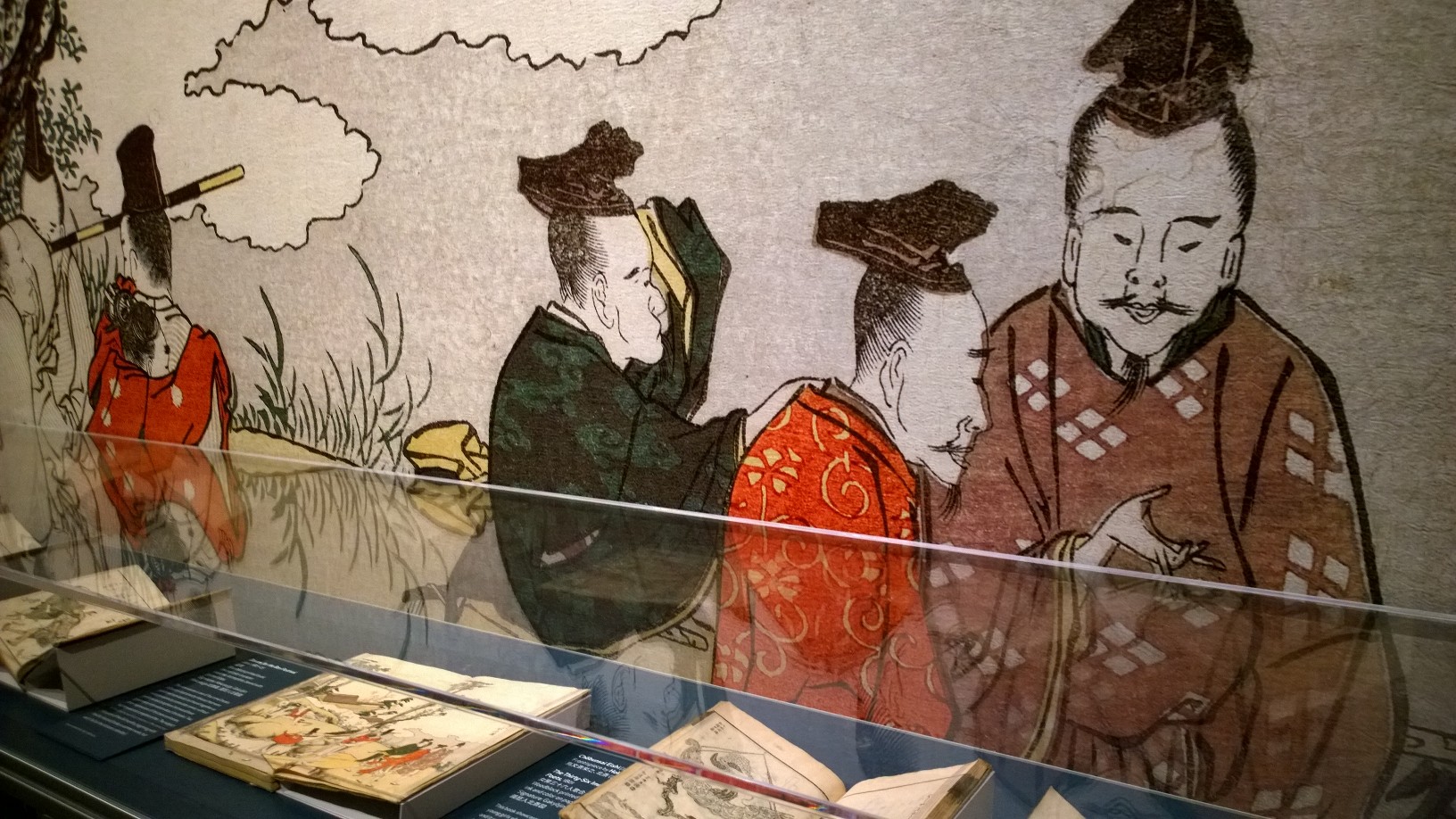
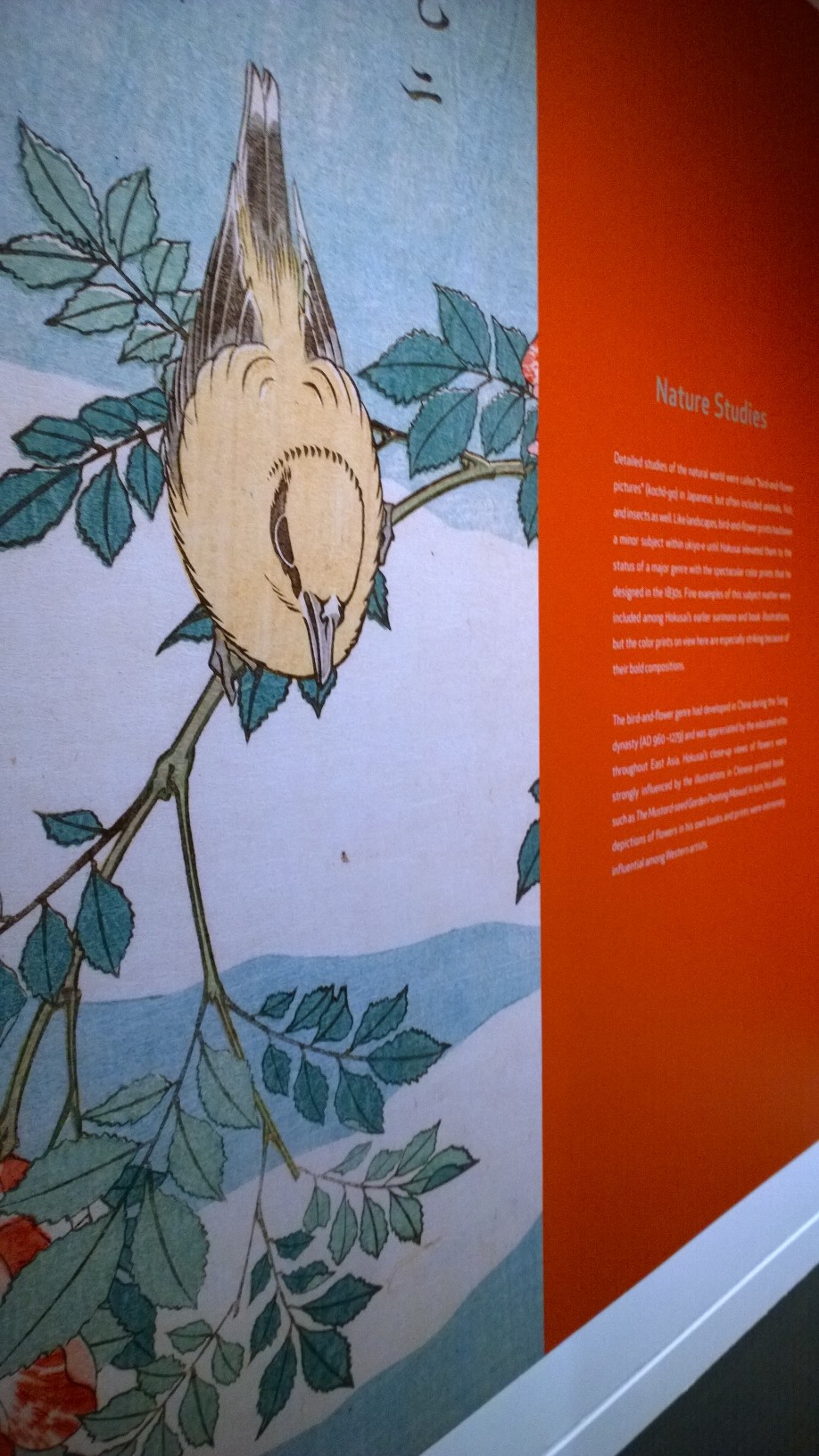
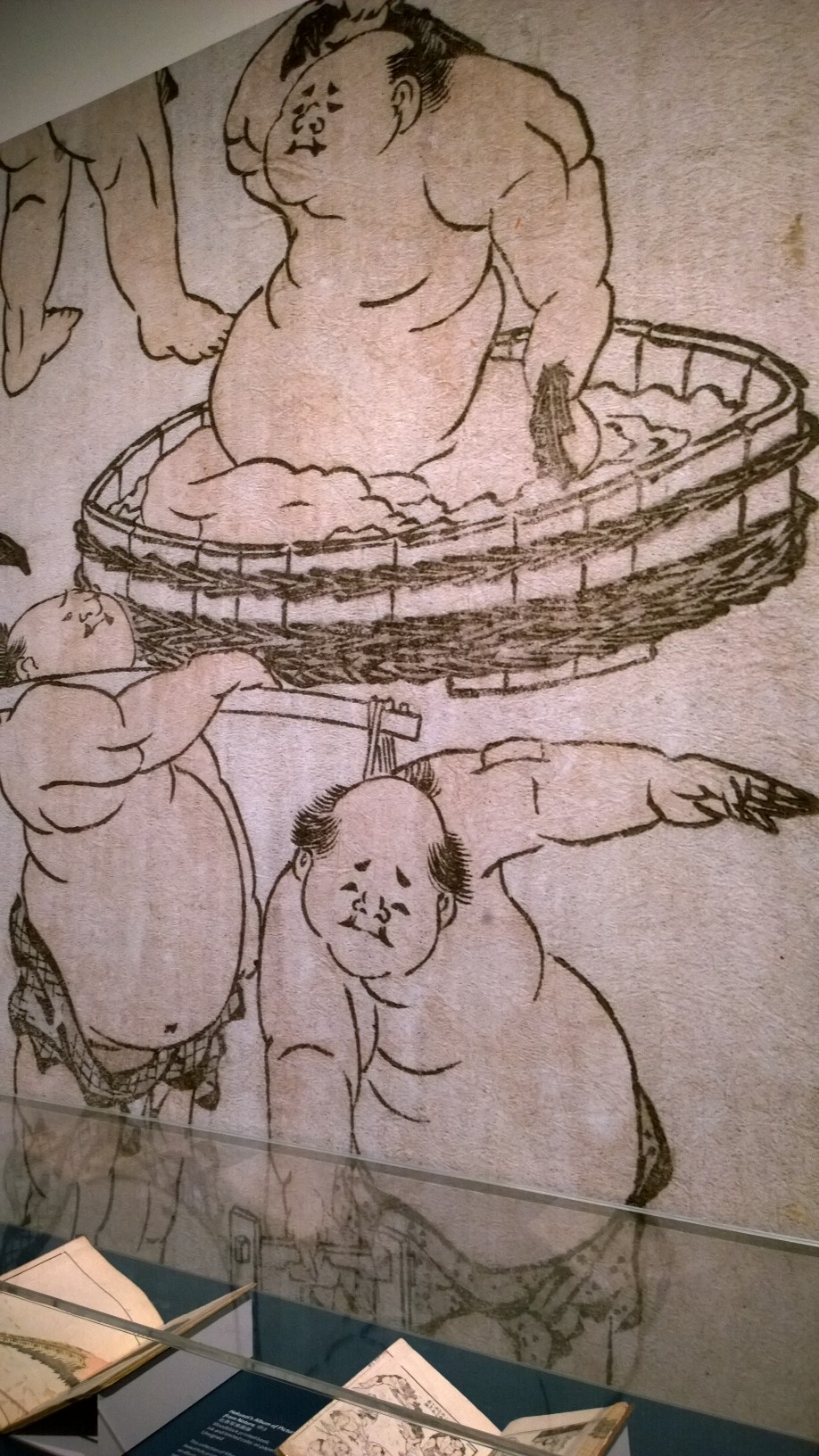
So I took a walk through a really big show there, one on the Japanese artist Hokusai (you know: “The Wave”). Unlike the ceramics show, this one was crowded and almost too extensive to take in, but I enjoyed what I saw — especially some colorful wall hangings.

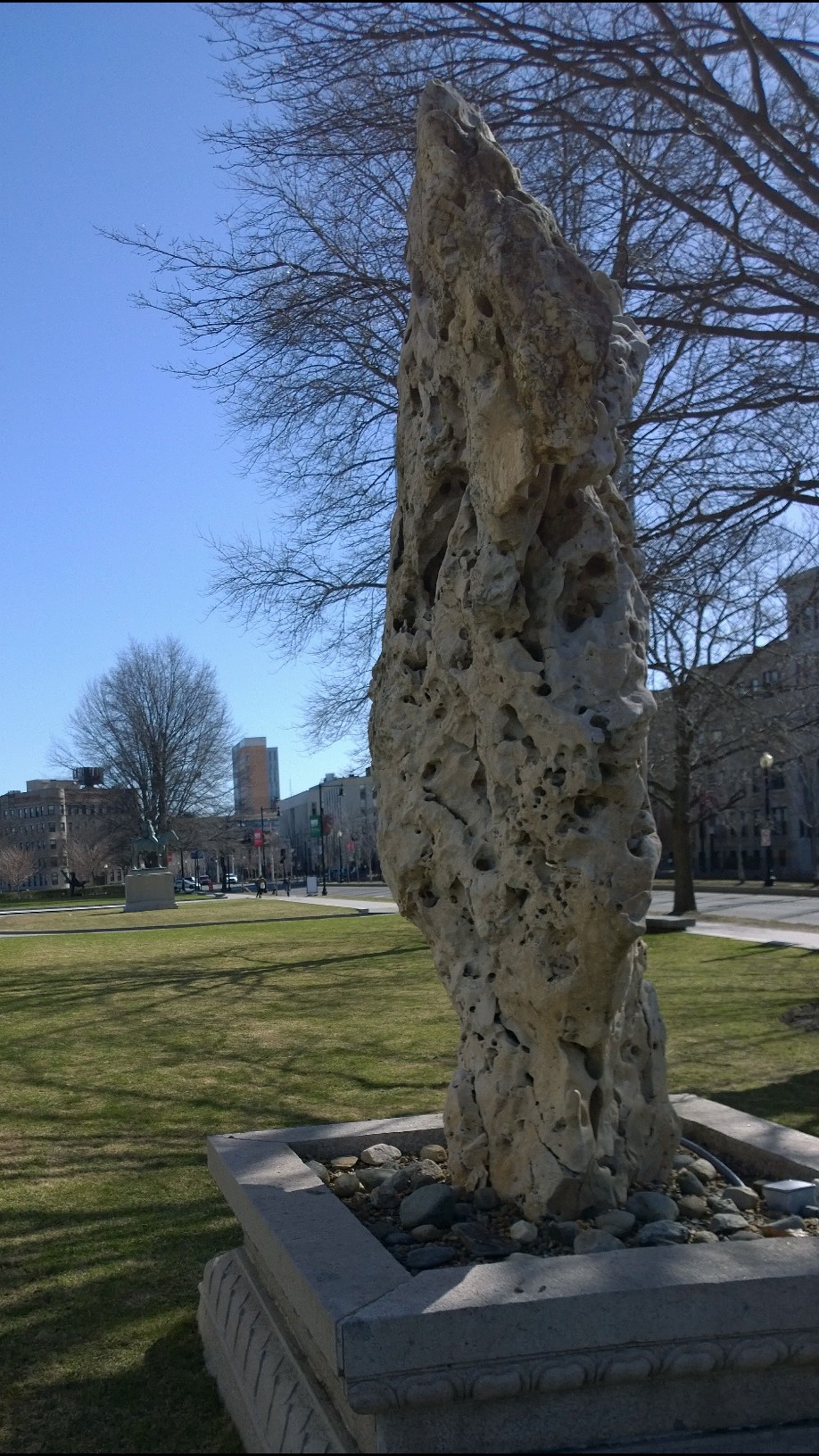
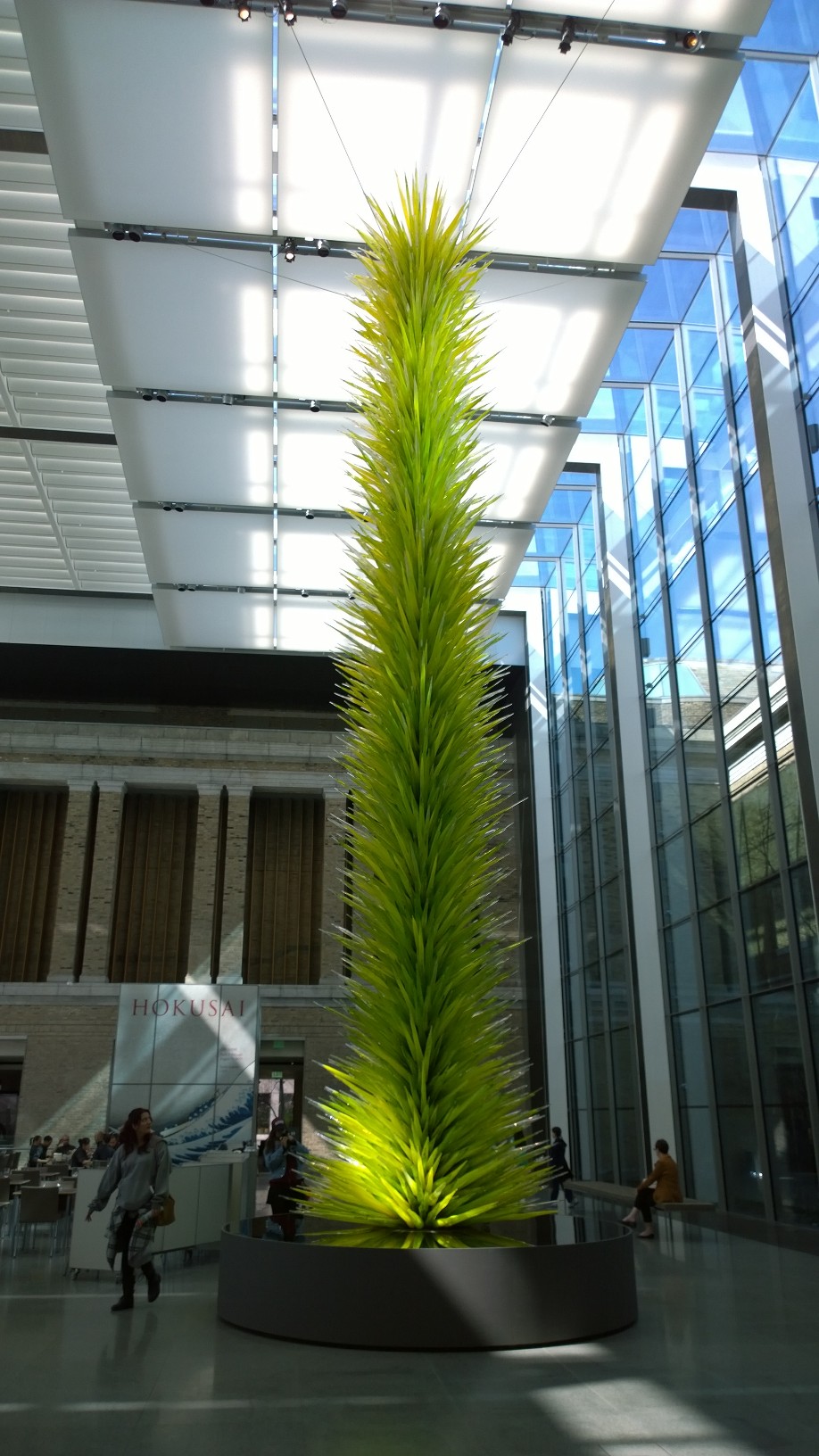
I took photos both outside the museum and inside (a sign said it was OK — just not to use a flash). My Hokusai photos are mostly of large-scale reproductions. The originals were small and harder to shoot through glass.

The show is running until August 9, and if you go, I recommend that you pause for the wall of slides at the entrance, which is delightful and gives one a sensation of watching the art coming into being, like a waterfall swishing down a landscape.

natural-water-pitted-stone

Indian-outside-the-MFA-by-Dallin

MFA-dining-room-glass sculpture

Hokusai-at-MFA-Boston

Hokusai-bird

tubby-time-Hokusai-style

Read Full Post »

This story at WBUR radio was fun.

Reporter Andrea Shea says, “It starts off kind-of guerilla with its hand-held camera shots of people in the Museum of Fine Arts’ Shapiro Family Courtyard. But soon the now-trending video captures the swift bloom of a holiday-spirited ‘flash mob.’ At least that’s what the MFA is calling it. It’s actually more of a ‘pop-up’ performance by 50 or so students from Berklee College of Music.

“Music stands appear, followed by a posse of string players and a choir. Their rendition of ‘O Holy Night’ peaks with soloist Mark Joseph. This surprise concert came together on last Saturday. The video was posted Wednesday.”

As of this posting had nearly 182,550 views.

Shea continues, “What’s being dubbed the ‘XMAS flash mob’ was 25-year-old Berklee grad Evan Chapman’s idea. He’s in charge of an organization called the Loft Sessions that showcases up-and-coming artists. …

” ‘It’s a little surreal to be honest,’ he said, ‘I mean, in the back of my head I think I was hoping it would do this well — but I never thought that it would.’ ” More.

A commenter on YouTube says of the video, “OK, so maybe this is a sort of poser version of a flash mob in that it was so incredibly well organized with microphones and folks bringing their instruments and music and such…but it ROCKS nonetheless! Why didn’t I go to Berklee when I had the chance?!?!”

Read Full Post »

I love looking out the upper level of a parking garage at rooftops and chimneys. It makes me think of Dickens novels. And I’ve always been interested in art that shows a view from a window or someone looking out a window.

The Metropolitan Museum of Art must like windows, too, given that it mounted a whole show called Rooms with a View: The Open Window in the 19th Century. I’m told that the exhibit’s focus was on how a window can frame a subject, but I’m more interested in what the person at the window is feeling.

There is a lovely painting at Boston’s Museum of Fine Arts showing a young woman working at a sewing machine and gazing out a window through which a soft, dreamy light is falling. What is she thinking? “The Open Window,” painted by Elizabeth Okie Paxton in 1922, gives me the feeling that the woman is thinking about what other people are doing out in the world or what she might want to do someday.

I got a new insight into gazing-out-windows art from a review of the movie Hugo in the NY Times.

Manohla Dargis writes, “Mr. Scorsese caps this busy introductory section with Hugo looking wistfully at the world from a window high in the station. The image mirrors a stunning shot in his film Kundun, in which the young, isolated Dalai Lama looks out across the city, and it also evokes Mr. Scorsese’s well-known recollections about being an asthmatic child who watched life from windows — windows that of course put a frame around the world. This is a story shared by all children, who begin as observers and turn (if all goes well) into participants. But ‘Hugo’ is specifically about those observers of life who, perhaps out of loneliness and with desire, explore reality through its moving images, which is why it’s also about the creation of a cinematic imagination — Hugo’s, … Mr. Scorsese’s, ours.”

I had not thought about that before — that we all start out as observers.

Read Full Post »

My workplace closes down on Veterans Day, so today my husband and I finally got a chance to visit the new Art of the Americas wing at the Museum of Fine Arts.

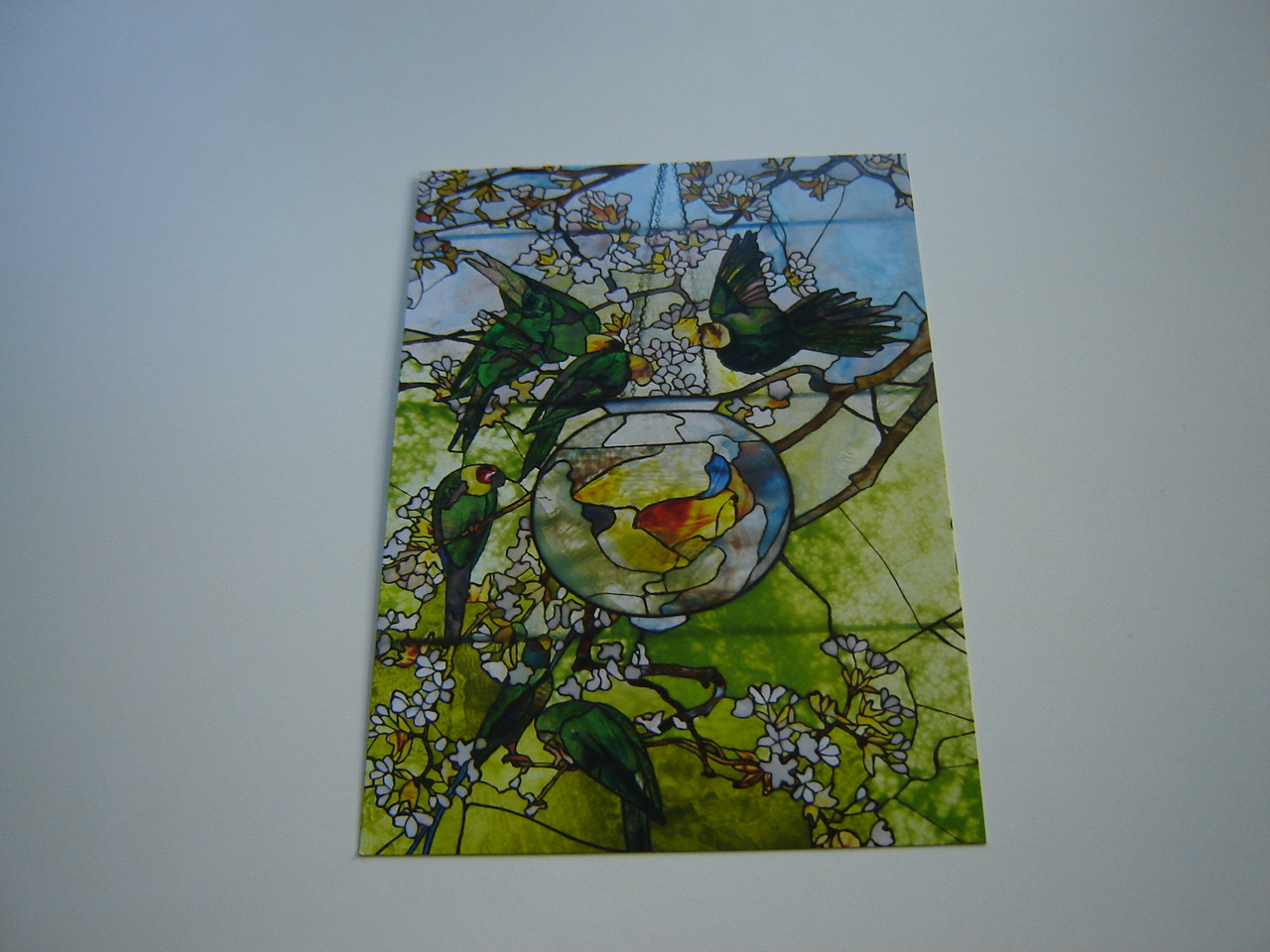
I didn’t realize that people bring cameras to museums now and take pictures of whatever they like. Is that allowed? For this post, I wanted to use a particular painting I saw today, but after trying the MFA site and searching the Internet, all I could find was a bootlegged photo for sale at Flickr. Fortunately, I did buy an MFA postcard that I was able to photograph at home.

This is a Louis Comfort Tiffany-designed stained glass window of parakeets and a goldfish bowl.

My favorite floor was the third, though. There we saw some great 20th Century art: Calder mobiles, a Jackson Pollock, works by Charles Sheeler, Georgia O’Keeffe, Arthur Dove, Marsden Hartley, the photographer Weegie, and more. Although the MFA also has a new gallery of contemporary art in a different part of the building, I liked the selections on the third floor of the Americas wing best.

At lunch we ate in the new dining area, a large, beautiful space that combines both classical and modern styles comfortably and features a tall, green, glass sculpture by Dale Chihuly.

The food was very good.

Read Full Post »