Feeds:
Posts
Comments

Posts Tagged ‘neighborhood’

Photo: Sonja Dümpelmann, CC BY-SA.
Window-box gardening has been a Philly tradition since the 1800s. 

Although not a gardener myself, I love looking at other people’s gardens. Who doesn’t? It’s not surprising that landscaping plays a big role in quality of life, even in urban renewal.

That’s why Sonja Dümpelmann, Professor of Environmental Humanities, Ludwig Maximilian University of Munich, decided to research the role of Philadelphia’s flower boxes. She was interviewed at the Conversation.

“How did you become interested in window boxes?
When I first moved to Philadelphia from Cambridge, Massachusetts, in August 2019, I was immediately struck by the window boxes. The lushness and freshness of the plants in many of the boxes, and sometimes in sidewalk planters, made walking more pleasant and interesting. ….

“I noticed that there were three categories of window boxes. Many were visibly cared for, often freshly planted and decorated several times a year in accordance with the changing seasons. Some were derelict and had spontaneous growth of saplings and different grasses. And a third category were boxes outfitted with plastic plants, perhaps signaling absentee owners or landlords who seek to simulate care.

What makes them landscape architecture?
“Window boxes – especially the planted boxes, but also painted boxes that are empty – change outdoor space and building exteriors. They make them more colorful and interesting, and they break up plain vertical walls by protruding from the facade.

“You could say that the window boxes ‘greet’ passersby. They connect private indoor space with the public realm of the street. … ‘Gardens in a box,’ as they were also referred to by early promoters, can make homes and entire neighborhoods look and feel different. They forge distinct identities with their plant selection and the style and color of the boxes.

“Window gardening became popular in Victorian England and continental Europe in the 19th century. It began as an indoor activity and was practiced especially by women, but it soon also moved outdoors. …

“Window gardening became a means of female social reform during the Progressive Era. During this period in the late 19th and early 20th centuries, when industries and cities were growing fast, women sought to improve education, public health and living conditions, especially for poor and immigrant communities. By offering plants, flowers and entire window boxes, the women supported homemakers of lesser means.

“However, these boxes were also a way to make sure that order in and outside of homes was maintained. Window gardens became cultural symbols of cleanliness and good housekeeping. …

When did it become political?
“In Philadelphia there were two big window-gardening movements. The first occurred in the late 19th and early 20th centuries, and I describe it as ‘window-box charity.’ The second, which I call ‘window-box activism,’ began in the 1950s.

“Window-box charity was carried out primarily by white philanthropists and social workers who would distribute plants and goods sent from outside the city to the urban poor and sick, especially immigrants and Black Americans. Sometimes the window boxes were ready to be installed outside the windows. Other times recipients built and planted boxes themselves.

“Several decades later, in the mid-20th-century, plants became a vehicle for white suburban garden club ladies and Black inner-city residents to counter urban decay resulting from racism and public disinvestment. On annual planting days, the garden club ladies brought plants into the city and joined residents in planting and installing window boxes to brighten up their neighborhood blocks.

“Plants were key in both window-box charity and window-box activism. People came together to care for plants, creating friendships among neighbors and ties between low-income and wealthy neighborhoods. The women used plants and window boxes to protect private space and increase the safety of public space. In the 1960s, the Philadelphia police reported less crime on streets with window boxes.

“Of course, window boxes and plants alone could not solve larger urban social problems such as poor housing conditions and racial discrimination. So while they could be catalysts of neighborhood change, they also helped to camouflage and quite literally naturalize larger social problems that required political responses.

“Like a smaller version of public parks, community gardens and street trees, window gardens can contribute to green gentrification. This occurs when the construction of parks or the planting of trees contributes to an increase in property values that leads to the displacement of long-term residents in low-income neighborhoods.

“Window gardening did help save some of Philly’s old row house neighborhoods from demolition during urban renewal beginning in the 1950s. However, quite a few of these neighborhoods – such as Washington Square West and Graduate Hospital – have since been gentrified. …

“The 20th century window-box activism drew the attention of sociologists and other national and international observers, especially because it brought white and Black residents together during the tensions of the Civil Rights Movement. It also raised public awareness about unequal access to urban green spaces. Yet despite the movement’s good intentions and positive effects, racial segregation remains a persistent problem in Philadelphia.”

Read more at the Conversation, here. No paywall. Lovely pictures. Tip of the Hat to radio show Living on Earth for the lead.
Read Full Post »

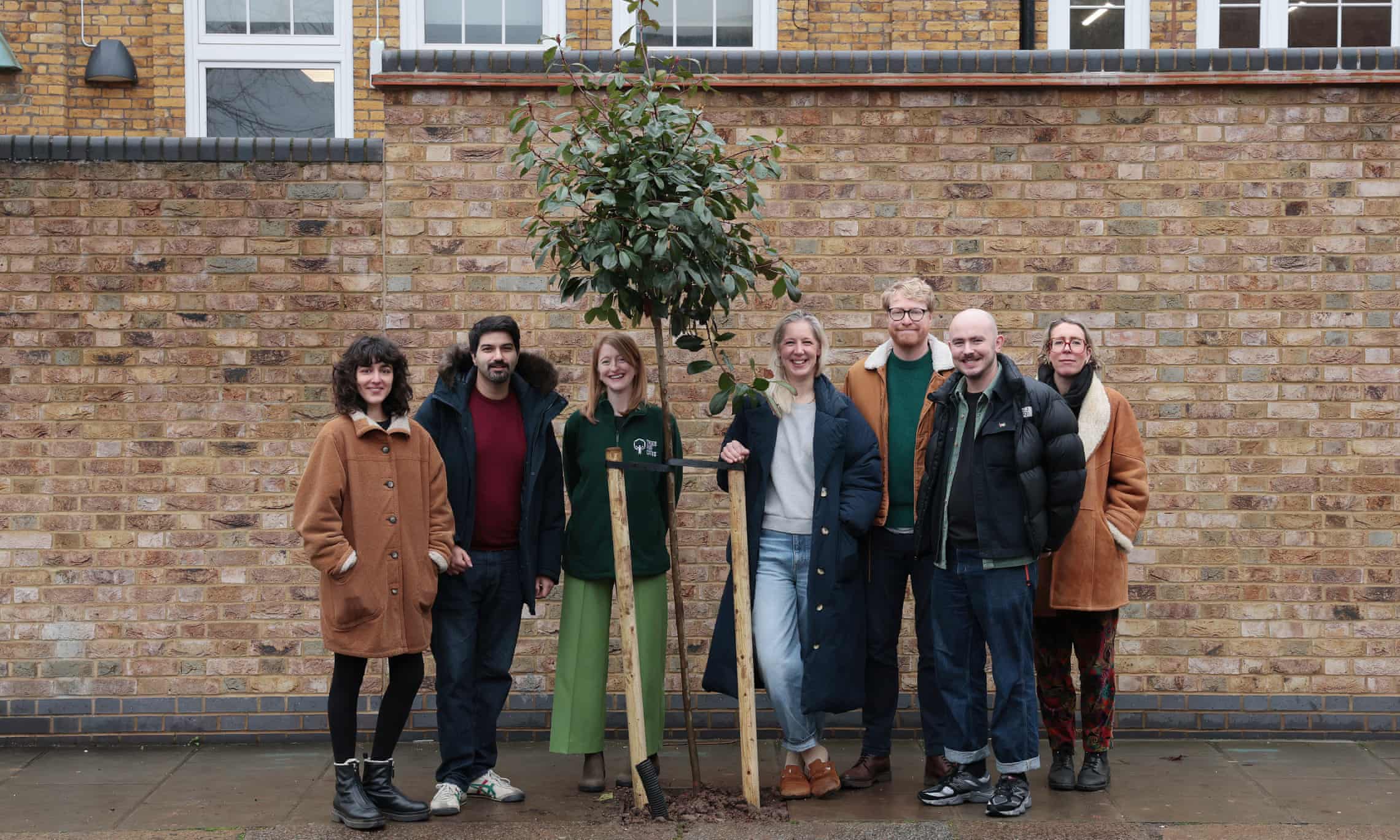
Photo: Martin Godwin/The Guardian.
Residents in Tottenham, north London, with a tree sponsored through Trees for Streets. “City residents are working out how to fill their streets with trees as evidence grows of their benefits,” says the Guardian.

Can you bear another story about planting trees to beautify and bring warming temperatures down in neighborhoods?

Although really in-depth biodiversity efforts go further (read about Miyawaki urban forests here), street plantings are important, too. Each time I read about another community organizing to plant trees, I want to share the news.

Olivia Lee writes at the Guardian, ” ‘I wanted to do something that would benefit as many people from the community as possible,’ says Chloe Straw, pointing at a small but promising sapling visible through the window of her local cafe.

“In 2023, Chloe began chatting to her neighbors in Haringey, north London, about trees. ‘I thought it’d be really nice to raise some money for trees on the main road. Everyone uses West Green Road, regardless of whether you have a lot of money or not, regardless of your background.’

“After getting in touch with Trees for Streets, a sponsorship scheme that guides communities across England on how to plant trees in their local areas with support from local councils, a small group was formed to work out how to do it. As a first step, Straw and friends were provided with an interactive map to choose the location of the trees, and that was passed along to Haringey council.

“Then they got help to set up a crowdfunding campaign, which was shared in local WhatsApp groups and community forums, secured 168 backers and raised more than £6,000 [$8,000] in one month.

“Mohamed Eljaouhari, a co-chair of Haringey Living Streets, said [of WhatsApp], ‘It is a very powerful tool for getting a very simple message out very quickly to a lot of people. I got in contact with, like, a thousand people in a few minutes, because I forwarded on the message with a bit of an explanation to a local group here, a local group there, people who were interested in the environment and maybe wanted to help West Green.’

“The remaining costs were covered by Haringey council. The result? Twenty beautiful trees planted across the neighborhood. …

“Around the world, city residents are working out how to fill their streets with trees as evidence grows of their benefits. As temperatures rise, research has shown that urban trees can play a fundamental role in keeping cities cool, evaporating water to provide a natural form of air-conditioning, cooling air temperatures and reducing the urban heat island effect. Work by Friends of the Earth in five English cities in 2023 showed that areas with more trees and greenery were up to 5C cooler. …

“Public funds are stretched everywhere, and the community model followed by Trees for Streets empowers local people to take their own action without waiting for a government plan.

“The Pennsylvania Horticultural Society (PHS) is a non-profit organization in Philadelphia that trains individuals to lead community groups to plant trees across the US city. So far their program, Tree Tenders, has trained more than 6,500 people, who have led volunteers in planting more than 3,000 trees each year.

“[Andrew Conboy, an urban forester in Philadelphia, says,] ‘There’s a heavy emphasis on native species here in the Philadelphia area, which is good thing because the native species are ultimately better for our wildlife and for our ecosystems, because those are the species that evolved here.’ …

“The Garden City Fund, a charity in Singapore, runs a similar initiative, the Plant-a-Tree program. Individuals and organizations can donate to the cost of a young tree and then plant it in one of their managed green spaces.

“Tree People, an environmental advocacy organization, runs a forestry program that supports communities to plant and care for trees in cities in southern California. The organization also runs the School Greening program, which provides training to parents, students, teachers and district leaders to plant and maintain trees in schools. …

“As the West Green residents take turns discussing their local initiative over cups of coffee, it’s clear that one of the most significant impacts the project has had is in strengthening connections within the community. …

“[Says Dan Snell, an urban forest officer at Haringey council,] ‘There was another tree scheme on my mum’s street who lives in Haringey … suddenly there were all these new street trees and my mum had met a load of neighbors that she hadn’t really met before, even though she’s been there for 30 years. It’s had this really lovely long-term effect on bringing the street together.’ It’s such a wonderful thing to connect over.’ “

Plant a tree, make a friend. More at the Guardian, here. No paywall.

Read Full Post »

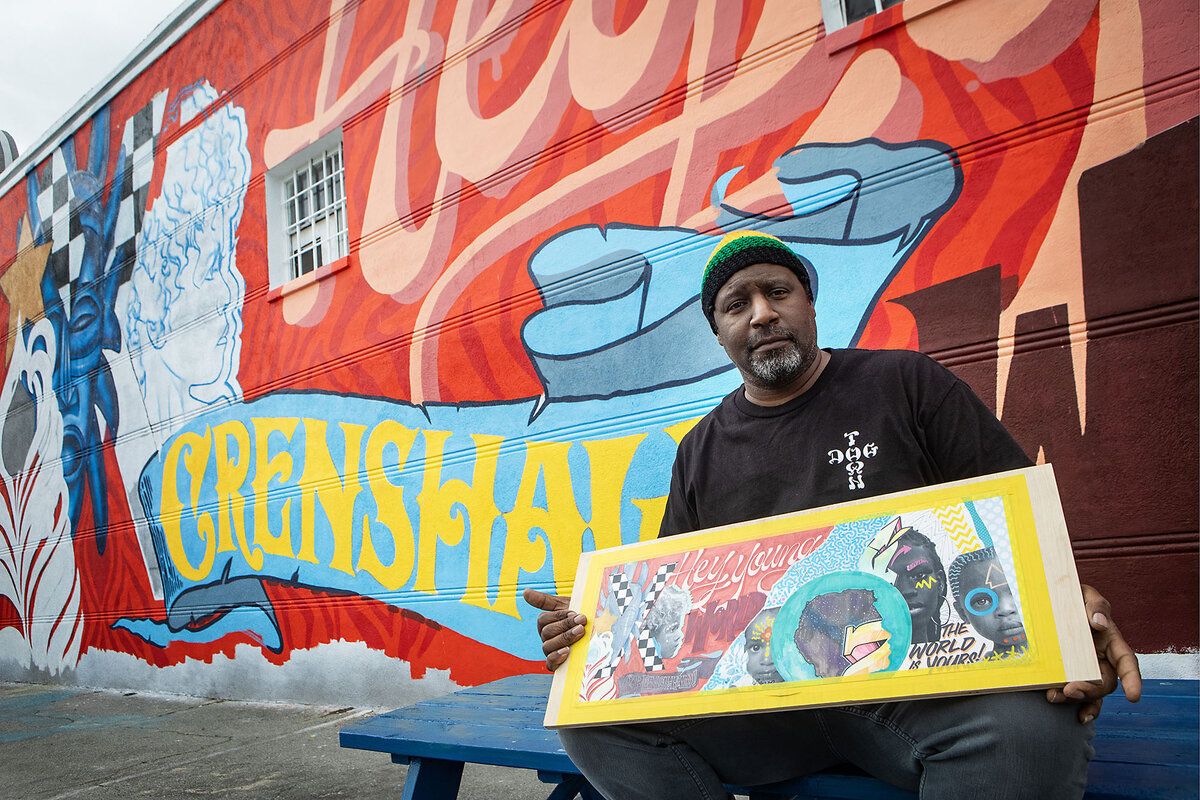
Photo: Melanie Stetson Freeman/CSM Staff.
Anthony “Toons One” Martin created this mural as part of a $100 million art-focused initiative in South Los Angeles called Destination Crenshaw.

To bring out the beauty inherent in a marginalized community, you need to get everyone on board. Because the beauty is there.

Ali Martin writes at the Christian Science Monitor about Destination Crenshaw, a part of Los Angeles that used to be known as South Central.

“Growing up in South Los Angeles, Anthony Fagan was ‘very much part of all of the problems that take place in this community,’ he says. Today, he’s overseeing construction on a park that is at the heart of efforts to make the Crenshaw District a must-visit stretch of LA.   

“ ‘We’re going to change lives with this park on so many different levels,’ says Mr. Fagan, an assistant superintendent with PCL Construction. 

“The $100 million initiative has drawn public and private funding to transform a 1.3-mile stretch of Crenshaw Boulevard into the largest Black-centered public art display in the United States. Destination Crenshaw is a holistic plan that weaves economic and community development together with cultural celebration to recast this neighborhood as a tourism center and create economic stability for those who live here – and for generations to come. …

“Destination Crenshaw runs north-south through the Hyde Park neighborhood – part of South LA, known as South-Central Los Angeles until 2003, when the LA City Council changed the name, hoping to dissociate the 16-square-mile area from a reputation for gang violence and race riots. 

“Destination Crenshaw touches three census tracts that fall in California’s highest quartile for poverty and unemployment. On average, about three-fourths of the residents who live in these neighborhoods are Black.

“In the 1950s, South LA had the highest concentration of Japanese Americans in the country. … African American families soon followed, and by the late 1960s, Crenshaw Boulevard was a corridor of flourishing Black-owned businesses. Leimert Park, capping the northern end of the district, was a center of artistic expression.

“Rosemary Williams moved here from Chicago in 1968. She opened Dog Lovers Pet Grooming on Crenshaw Boulevard in 1980. … Ms. Williams’ daughter convinced her to participate in Destination Crenshaw’s mural program, which pairs artists with storefronts. Her reluctance gave way, she said, because of the organizers’ efforts to support small businesses and to clean up the area. …

“Anthony ‘Toons One‘ Martin answered the call. He grew up in South LA in the ’70s, and remembers it as vibrant. He turned a talent for graffiti art into a career and worked around the world as a muralist. … His design is titled ‘Hey Young World,’ inspired by the hip-hop song with the same name. He hopes, in turn, to inspire the youth who live here to take pride in their neighborhood and themselves – and dream big about their futures. … He says, ‘If we want to see [solutions], we have to be a part of that process.’  

“Nobody knows that better than Marqueece Harris-Dawson, City Council member representing the 8th District and a driving force behind Destination Crenshaw. The South LA native came into office as plans were underway to build a light rail station at Leimert Park.

“Residents were upset that the line would be built at street level, instead of below or above ground, bisecting their main throughway and disrupting foot traffic. But Mr. Harris-Dawson took a cue from Beverly Hills, which lobbied to have its light rail at grade to showcase the world-famous shopping district around Rodeo Drive, where palm trees punctuate power lunches and luxury stores.

“He enlisted the Crenshaw community for ideas about building on the city’s investment. … What emerged was a plan to capitalize on the art and culture that radiate from this district, stimulate economic development, and strengthen community ties. …

“People associate Black culture with Harlem, Chicago, or Atlanta, ‘but they don’t think of LA. And it’s because we just don’t put it forward,’ says Mr. Harris-Dawson. … Organizers describe Destination Crenshaw as ‘unapologetically Black.’ Sankofa Park showcases that spirit. The triangle-shaped plot sits across from Leimert Park Station, one of a half dozen pocket parks. …

“Every detail is intentional: The park name – Sankofa – is for the African bird that represents moving forward while learning from the past.”

More at the Monitor, here. No firewall. Subscriptions are reasonable.

Read Full Post »

To have the kind of cities we want, we can always rethink what’s there. But the space right outside our front door may be the place to start.

Feargus O’Sullivan at Bloomberg CityLab reports about an idea from Sweden.

“In 2020, as pandemic lockdowns forced billions of people around the world to become intimately familiar with their neighborhoods, one of the hottest ideas in urban planning was the ‘15-minute city.’ A vision for a decentralized urban area that allows residents to meet their daily needs within a quarter-hour walk or bike from their homes, the concept has been pursued as a means of cutting greenhouse emissions and boosting livability in a host of global cities — especially Paris, where Mayor Anne Hidalgo has embraced the model as a blueprint for the French capital’s post-Covid recovery

“Now Sweden is pursuing a hyperlocal variation, on a national scale. A plan piloted by Swedish national innovation body Vinnova and design think tank ArkDes focuses attention on what Dan Hill, Vinnova’s director of strategic design, calls the ‘one-minute city.’ … Sweden’s project operates at the single street level, paying attention to ‘the space outside your front door — and that of your neighbors adjacent and opposite,’ Hill says.

“Called Street Moves, the initiative allows local communities to become co-architects of their own streets’ layouts. Via workshops and consultations, residents can control how much street space is used for parking, or for other public uses. It’s already rolled out experimentally at four sites in Stockholm, with three more cities about to join up. The ultimate goal is hugely ambitious: a rethink and makeover of every street in the country over this decade. …

“Unlike the 15-minute city concept, Sweden’s one-minute city model is not about meeting the needs of all city residents at a hyperlocal level — that would overlook fundamentals like public transit, job access, or specialist health care. Instead, the spaces just beyond the doorstep are ideal places for cities to start developing new, more direct ways of engaging with the public, Hill suggests. They are a filter and a portal to the wider world; the atmosphere they generate and the amenities they contain speak volumes about how a community operates and what it values. …

The project seeks to break through assumptions — as prevalent in Sweden as elsewhere — that address streets primarily as places to move and store cars. …

“Though Street Moves’ first steps predate 2020, its choice of focus seems doubly relevant in the wake of a year when stay-at-home orders and street demonstrations reinforced a sense that our immediate neighborhoods are platforms where we must tackle and overcome the most fundamental of social hurdles. While its mix of removing car space and increasing community consultation may sound too utopian to be imitable in the U.S. or elsewhere, the basic tools Street Moves uses are American in inspiration — street furniture units based on the ‘parklet’ model.

“Vinnova’s plan works like this. With design firm Lundberg Design, the project has developed a kit of street furniture, designed to fit the dimensions of a standard parking space and built on hard-wearing pine decks. These units, inserted into the curb space, can be fitted depending on need with seating planters, bike or scooter racks, children’s play spaces or electric car charging stations attached. Easily connectable, the deck panels can either be stand-alone units, or configured to flank an entire street. …

“While municipalities may provide their own versions of this toolkit, the design of each street is based on workshops and conversations with local residents — including schoolchildren. Streets near transit stops might favor more bike parking, while those with cafés could opt for more seating. Some units might emphasize tree-filled planters, others play spaces. Piece by piece, these installations can transform streets into sites of sociability and mixing, joining up steadily into neighborhoods where the space used daily by residents extends little by little out into the open air. …

“The community design process matters as much as the street elements themselves, the project’s leaders emphasize. The installations are easily replaced, adapted or removed, making them provisional propositions instead of one-size-fits-all permanent solutions. Some could be experiments that eventually lead to more extensive redesigns; others might be seasonal. ‘The most important things about these prototypes we’ve made is that they could all be the wrong thing,’ says Kieran Long, director of Arkdes. …

“None of this direct engagement and transformation can happen, however, if cities themselves don’t have concrete ways to carry it out. Right now, many cities charged with the daily business of trying to collect garbage and keep schools running don’t, with some good reasons, necessarily have the firing of a new political imagination high on their agenda. In Sweden, where the government’s early reluctance to institute coronavirus lockdowns proved disastrous, the pandemic is further complicating this challenge — but it could also be contributing to a willingness to press the reset button.”

More at CityLab, here.

Read Full Post »

I’m finding a surprising number of stories about people who have been successful — not in a Bezos way, but in a way that makes them feel financially secure — who want to do what they can for others.

But if like Anne Frank, who despite everything believed that people are basically good at heart, I guess I shouldn’t say it’s surprising.

Dorany Pineda has a representative article at the Los Angeles Times. “On a Tuesday morning in September, Raymond Wurwand was in his Southern California home sipping tea and reading the newspaper when he happened upon a story about struggling independent bookstores. The print headline read: ‘Spine-tingling bookstore woes: Some shops, including Diesel, are turning to fundraising to survive. Shelve 2020 as horror.’

“He turned to his wife, Jane Wurwand, and said: ‘We’ve got to do something.’

“In partnership with Pacific Community Ventures and TMC Community Capital, the owners of skin-care company Dermalogica decided to launch Found/L.A. Small Business Recovery Fund, a $1-million grant program to help small minority-owned businesses in Los Angeles County stay open during the pandemic. Among the eligibility requirements: Applicants must own at least 50% of a brick-and-mortar shop, employ fewer than 20 people, and provide evidence of profitability before the pandemic.

“The Wurwands received 2,430 applications for the first round of grants — from restaurants, salons and cafes as well as gyms, retail stores and day-care centers. Ten were randomly selected. Applications for the second cycle open Jan. 11.

“ ‘We built Dermalogica through selling to small salons, so we built our business through selling to small entrepreneurs who have been devastated by COVID-19,’ said Jane in a recent Zoom interview. … ‘Our salons were exactly like Diesel,’ she said. … ‘That’s who employs the neighborhood.’

“The longtime philanthropists typically offer minority businesses micro-loans through their Wurwand Foundation, but Diesel’s pandemic struggle put into sharp focus the need for direct, no-strings assistance — some small businesses just can’t take on any more debt. …

“Stores and restaurants represent the bulk of [recent] closures, with owners of color disproportionally affected. A university study published in May found that 41% of Black-owned businesses across the country shut down between February and April. The number of shops owned by Latinos, Asians, immigrants and women dropped 32%, 26%, 36% and 25%, respectively.

“These closures are what worry Jane Wurwand.

‘The thing I’m fearful the most of after this is, when we lift our heads and look around our communities and neighborhoods, I think we’re going to see a lot missing. … I want to live near the local bookstore and the local salon. I don’t want to live next door to the Amazon warehouse.’

“One new beneficiary, Rice and Noodle, has been holding on by a thread this year.

“Lunch sales at the tiny Thai and Vietnamese restaurant fell by more than 60% after offices in the area closed. Owner Kwan Chotikulthanachai, 43, was forced to lay off all her employees. She hasn’t been able to pay full rent since May, and she didn’t qualify for Paycheck Protection Program or economic injury disaster loans. Cleaning and sanitizing supplies have added more costs. But with her partner and chef, Son Ongjampa, she’s managed to hang on, her 8-year-old son, Hugo, and 6-month-old baby, Ethan, at her side.

“When she found out Monday night via email that she would receive a $5,000 grant, she cried. … Hugo joyously jumped and screamed. She called her mother in Thailand — who cried, too.

“ ‘I’m working so hard,’ she said. ‘This time has been incredibly difficult, but I cannot give up. I don’t want to close my restaurant.’ “

Read, here, about another overjoyed small business owner who got a grant, a woman who was determined to keep staff employed. These are the people who actually are “good at heart.”

Read Full Post »

tiep8r0mct2xnjxb7w8tntetqtbkuyah6hj-zgw637s

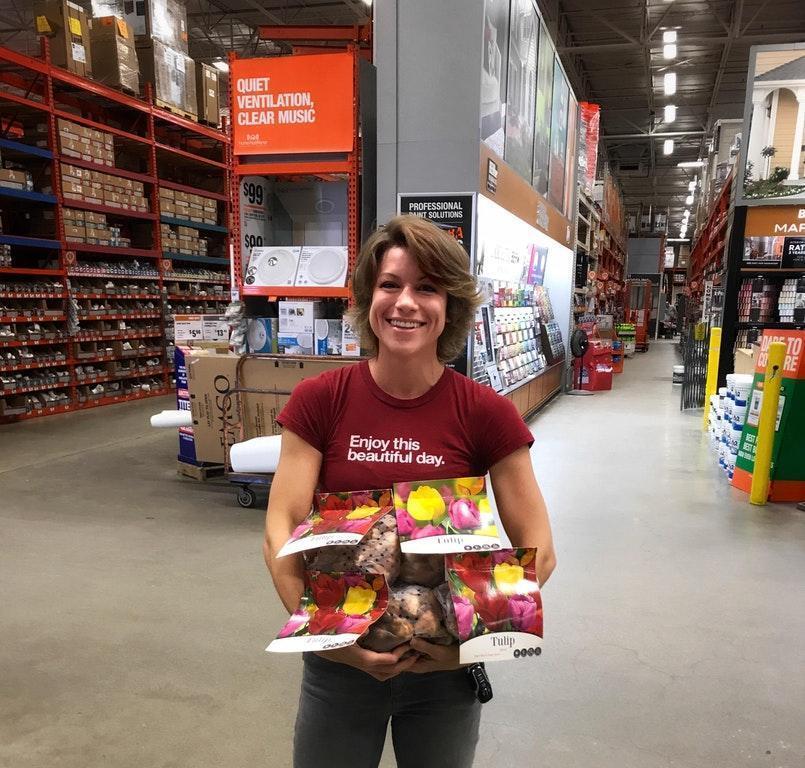
Photo: Amy Sterling
Amy Sterling’s guerrilla-gardening campaign means tulips will be blooming in unexpected places come spring. You could do this in your neighborhood.

Boston Globe reporter Steve Annear gets all the fun stories. Here is one that John knew at once was made for this blog. I do love public-spirited projects that people organize just for the heck of it.

“Amy Sterling had tulips on the brain,” writes Annear. “After returning from a recent trip to Amsterdam, where she served on a panel about artificial intelligence, the Cambridge resident went to a home improvement store and picked up a bag of bulbs so she could plant the spring-blooming flowers in her yard.

“When she was finished gardening, Sterling and her husband, Will, realized they had about 50 bulbs left over. In a moment of spontaneity, they decided to bury them in random places around their neighborhood near Inman Square.

“Now Sterling wants others to do likewise and participate in this act of so-called ‘guerrilla gardening.’ …

“ ‘It’s just a way to cheer people up,’ Sterling said. ‘Get outside, it’s super nice out, go plant some stuff, and then sit back and relax — and when spring comes, you can enjoy the spoils.’ …

“After burying bulbs beneath public trees in Cambridge Sunday, she posted a picture of herself, shovel in hand, to the Boston Reddit page, as a way to spread some happiness, [and] others quickly latched on to the concept. …

“Sterling started calling around to Home Depot stores in the area, asking if they’d be willing to donate to the cause. In the days since sharing her impromptu project with others online, Sterling has collected hundreds of additional bulbs, she said. …

“Sterling said she chose tulips because they’re ‘a signifier of the death throes of winter’ and require very little maintenance. You dig a hole, plop the bulb in the ground, cover it up, and then just wait, she said. …

“She has also started a Google signup sheet for the ‘Boston Tulip Takeover,’ where people can get a free bag of tulips to plant around their neighborhood.

“ ‘We need some actions to bring us together,’ she said, noting that the news has been particularly hard to swallow lately. ‘And remind us that people are generally pretty nice and want to do well for their neighbors.’ ”

More at the Boston Globe, here.

Read Full Post »

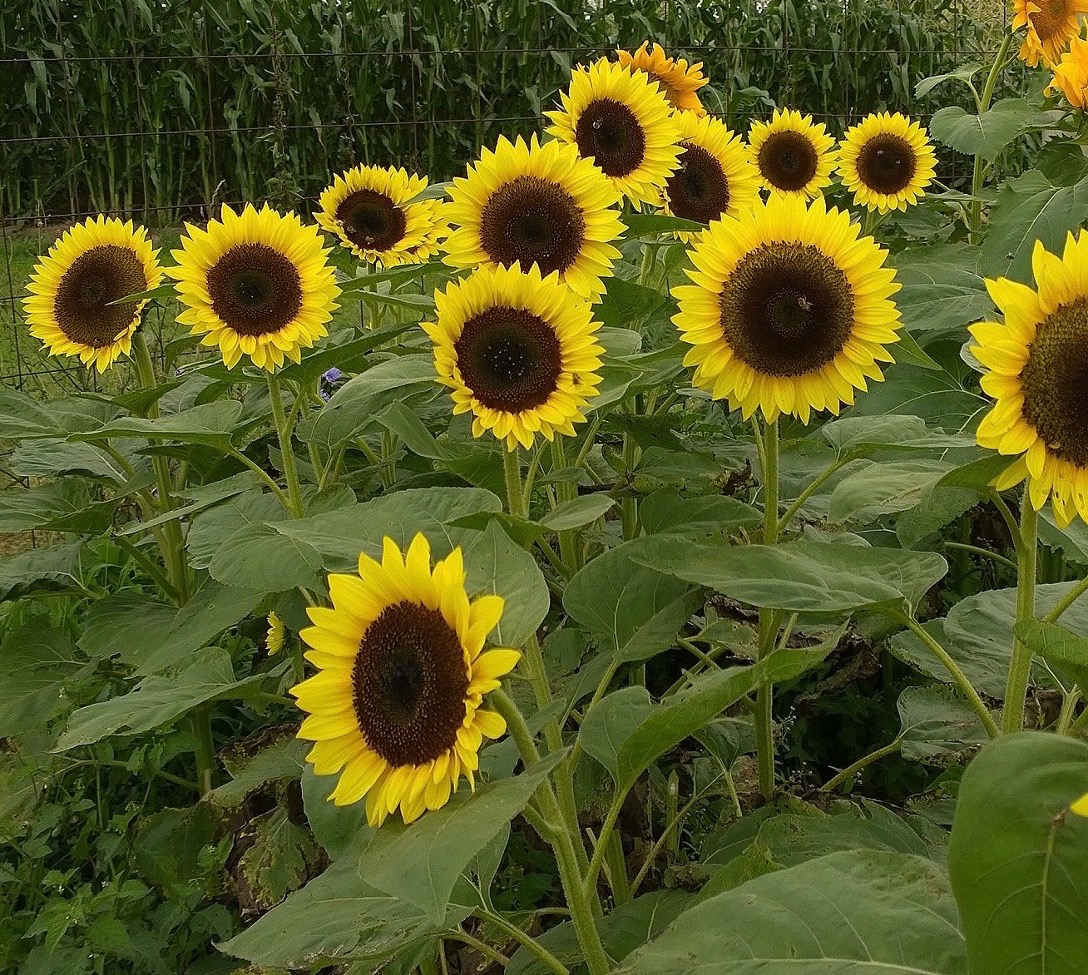
080517-never-enough-sunflowers

I love stories about people who get a good idea and just go do it. In this one by Deborah Allard at Fall River’s Herald News, a man who enjoys gardening is sharing beauty in his own way.

“Del Thurston examined the earth oblivious to the traffic rolling up and down busy Bedford Street.

“The drivers probably didn’t notice the gardener either, but it would be hard to miss the wall of yellow blooms that sprouted up this summer like a centerpiece in the middle of this cement-heavy city neighborhood.

“ ‘I wanted something to brighten up the corner,’ Thurston said.

“And, he found it in the form of sunflowers. The lemon queen variety flowers stretch across the front of the empty property on Bedford Street, and along the corner of Oak Grove Avenue. …

“A gardener who came to the literal field later in life, he approached the property owner in the spring and asked if he could plant sunflowers. With the go-ahead, Thurston nurtured the flowers from seedlings and has watched them stretch toward the sun all season long. …

“He said he used to drive by the vacant lot and noticed the raised flower beds on the property, formerly used by the YMCA.

“ ‘I would see these beds,’ Thurston said. ‘It had good soil. I’ve always wanted to try this with sunflowers. …

“ ‘I’ve met some absolutely phenomenal people in the neighborhood,’ he said

“The fat and happy bees seemed OK with his work, too. They buzzed around the blooms, paying no attention to the humans keeping watch on them, doing what bees do. …

“Gardening has become a favorite hobby for Thurston, who has been involved with the Bristol Community College community garden. … He said he started gardening when he was in his 50s, but Thurston’s knowledge of plants and seedlings seems more mature than a mere decade or so.

“He pointed to the center of the property where herbs and perennials, including sage, sprouted up on a mound of dirt.

“ ‘The rabbits jumped on my pineapple sage,’ he said, extending a leaf that emitted a nice scent of the fruit that bears its name. …

“ ‘This has been very empowering for me,’ Thurston said. ‘I like the positive feedback from the neighborhood.’ ”

More here. Hat tip: @FallRiverRising posted this on twitter.

Read Full Post »

Upscale housing developers used to advertise tennis courts, pools, or golf courses as desirable amenities. Today they are increasingly likely to tout farmland.

Amy Hoak writes at MarketWatch about a family in suburban Chicago, where neighbors’ lawn chemicals have killed off pollinators. She reports that the Faheys are moving to a community that offers more opportunity for growing vegetables.

“Set in Hampshire, Ill., about 50 miles from downtown Chicago, Serosun Farms is a new home-conservation development, restoring wetlands, woodlands and prairie, and preserving farmland throughout. Already, the frog population has grown exponentially from the conservation work done onsite, and monarch butterflies are also on the rebound, said Jane Stickland, who is working on the project with her brother, developer John DeWald. Their efforts also are boosting the bee population. …

“Serosun plans to incorporate about 160 acres of working farmland, making farm-to-table a way of life for residents through regular farmer’s markets. The community also offers eight miles of trails, an equestrian center and fishing ponds: 75% of the development will be reserved for farming and open space. …

“The concept isn’t new, but ‘agrihoods’ are gaining in popularity, said Ed McMahon, senior resident fellow for the Urban Land Institute, an organization that focuses on land-use issues. He tracks about 200 agrihoods, where residential development coexists with farmland. …

“ ‘We started to realize you could cluster houses on a small portion of a farm and keep the farm working,’ he said. People were often drawn to the open spaces. More recently, however, there has been a huge interest in locally grown food. ‘All of a sudden, agrihoods have become a hot commodity in residential development,’ McMahon said.” More here.

This concept is not only for upscale developments. In urban neighborhoods without access to a local grocery or healthful food, affordable housing combined with community gardens and sales outlets are moving along without much fanfare. In Providence, for example, West Elmwood Housing Development Corporation‘s new Sankofa Apartments partner with the Sankofa Initiative, an outlet for homegrown food and handmade crafts from many countries. The initiative is satisfying to residents on a personal-development level and as a way to meet neighbors and build community.

Photo: J. Ashley Photography
Serenbe farmers’ market.

Read Full Post »

Gaia Pianigiani wrote recently at the NY Times about an effort by new residents of a town in Italy to get to know neighbors through social media.

“When Laurell Boyers, 34, and her husband, Federico Bastiani, 37, moved in together in Bologna in 2012, they did not know any of their neighbors. It was a lonely feeling. …

“So Mr. Bastiani took a chance and posted a flier along his street, Via Fondazza, explaining that he had created a closed group on Facebook just for the people who lived there. He was merely looking to make some new friends.

“In three or four days, the group had about 20 followers. Almost two years later, the residents say, walking along Via Fondazza does not feel like strolling in a big city neighborhood anymore. Rather, it is more like exploring a small town, where everyone knows one another, as the group now has 1,100 members.

“The idea, Italy’s first ‘social street,’ has been such a success that it has caught on beyond Bologna and the narrow confines of Via Fondazza. There are 393 social streets in Europe, Brazil and New Zealand, inspired by Mr. Bastiani’s idea, according to the Social Street Italia website, which was created out of the Facebook group to help others replicate the project.”

The original meet-and-greet concept has evolved into neighbors helping neighbors in many ways.

“A few months back, Caterina Salvadori, a screenwriter and filmmaker who moved to Via Fondazza last March, posted on Facebook that her sink was clogged. Within five minutes, she said, she had three different messages.

“One neighbor offered a plunger, then another a more efficient plunger, and a third offered to unblock the sink himself. …

“Nothing comes at a cost in the Via Fondazza group. Some of the community’s facilities are donated, but most of the benefits stem from the members’ willingness to help, share and live better.” More here.

Photo: Nadia Shira Cohen/New York Times
Residents of Via Fondazza in Bologna, Italy, at a neighborhood bar. The street’s Facebook page has grown to 1,100 members.

Read Full Post »

We’ve been speaking of public transit and well-planned cities of late. Here’s a story from the radio show Living on Earth about a Boston neighborhood that is fed up with streets built to keep cars and trucks happy and is demanding a more human focus.

“JAKE LUCAS: On a bright Tuesday morning, in Boston’s western neighborhood of Allston, a small group of locals with picket signs crowds onto a little wedge of concrete. They’re standing on Cambridge Street, right where a highway on-ramp splits off from the fiercely busy six-lane road that has been a sore point for years.

“HARRY MATTISON: Cambridge Street is a street that’s a crucial link in our neighborhood, and it’s also an incredibly unsafe, dangerous street.

“LUCAS: That’s Harry Mattison, a 31-year-old software developer who’s a longtime advocate for pedestrian and cyclist rights in the area. Since Cambridge Street was last redesigned 50 years ago, it’s been high on the list of residents’ complaints, and with good reason.

“Two pedestrians were killed here in the last two years. And one of those accidents happened just a few weeks before this rally, when a car hit a man as he tried to cross from the on-ramp to where the protesters are standing now.

“They’re holding signs with messages like ‘My kids walk here,’ and they’re demanding a safer Cambridge Street. Mattison has three kids, and laments not feeling safe on a street that cuts through the heart of his own neighborhood. …

“The city is already working on a short-term fix to make Cambridge Street safer. But in the long term, the transportation department has bigger plans. It’s going to bring the street into the modern day and transform it using the principles of what’s called a ‘complete street.’ Complete streets look different in different places, but the idea’s simple – make transportation systems about people, so there’s equal access for all forms of travel and all people.

“Boston’s Transportation Department has its own complete street guidelines. The head of policy and planning, Vineet Gupta, says that in Boston, every street redesign will include a handful of features from a menu of possibilities.

“GUPTA: Any street that’s going through a redesign process will have some elements of complete streets in it based on its size, based on what the community wants and based on where it’s located.

“LUCAS: In some places that’s as simple as narrowing the road by adding a bike lane. Projects with more room and better funding, like Cambridge Street, might also allow for things like new bike sharing stations, more trees along the street or smart parking meters that direct drivers to open spaces. The final design will be tailored toward the wants and needs of the people who use it.” More here.

Photo: Jake Lucas
Harry Mattison and residents of Boston’s Allston neighborhood march at the Rally for a Safer Cambridge Street on July 28, 2014.

Read Full Post »

Ron Finley is a man of humble ambitions. He aims to save the planet, beginning with urban gardeners. I heard an interview with him on America’s Test Kitchen as I was driving home today.

From his website: “Let’s grow this seed of urban guerrilla gardening into a school of nourishment and change. Help spread his dream of edible gardens, one city at a time. …

“In part of this effort, Ron is planning to build an urban garden in South Central LA that will serve as an example of a well-balanced, fruit-and-veggie oasis – called ‘HQ.’ Inspired by the idea of turning unused space such as parkways and vacant lots into fruitful endeavors, this garden and gathering place will be a community hub, where people learn about nutrition and join together to plant, work and unwind. HQ will create a myriad of jobs for local residents, and this plot of land will be a self-sufficient ecosystem.”

It all started, according to Ron, when he “wanted a carrot without toxic ingredients I didn’t know how to spell.” He began to plant food near his house, on a strip by a road.

“The City of Los Angeles owns the ‘parkways,’ the neglected dirt areas next to roads where Ron was planting. He was cited for gardening without a permit.”

After Ron “started a petition with fellow green activists, demanding the right to garden and grow food in his neighborhood … the city backed off.” More here.

When asked on America’s Test Kitchen if his gardens were not just about obesity and healthful eating but also about making neighborhoods more livable, Ron said he wanted to do that for the whole planet.

Read Full Post »

In the spirit of the Season, I thought I would share this community-building story from Boston. It shows what can happen when you give the gift of time. It started it out as a one-shot practical thing, shoveling out a neighbor who can’t do shoveling.

And then it grew.

Billy Baker writes at the Globe, “Michael Iceland showed up in front of a stranger’s house in West Roxbury, put his shovel into the snow, and made someone’s day.

“Inside the house was an older woman, and she was stuck, unable to get out of her door, worried she could not get to her mailbox to pay her bills.

“Iceland, 36, a Jamaica Plain resident, cleared that path for her, made a new friend, and felt great about himself in the process.

“It is a common story in the Snow Crew. The brainchild of Joseph Porcelli, the Snow Crew is an online tool to connect the elderly, the ill, and the disabled to people with willing backs. …

“The Snow Crew, Porcelli quickly realized, was about more than snow.

“ ‘Originally, I thought I was addressing a problem, that people needed to be shoveled out,’ he said. ‘It turns out that was a symptom of a larger problem of people not knowing each other and not being connected to their neighbors.’

“That small gesture, helping a stranger, made them no longer strangers. From it, many have reported developing ‘extremely profound relationships on both sides of the equation,’ said Dale Mitchell, executive director of Ethos, a nonprofit in West Roxbury that became a partner in the Snow Crew.”

I wonder what comparable community-building activity happens in places without snow. In spite of all the problems snow causes, I do love it, not least because a neighbor you hardly know may see you are stuck and come over with the snow blower.

More here.

Photo: Joanne Rathe/ Globe staff

Read Full Post »

Jay Walljasper appeared recently in the Christian Science Monitor (by way of Shareable). Designated one of The Monitor‘s “change agents,” he has written about ways to build a sense of community in a book called The Great Neighborhood Book.

Walljasper believes that “providing people with ways to come together as friends, neighbors, and citizens creates a firm foundation that enables a neighborhood to solve problems and seize opportunities.

“The neighborhood is the basic building block of human civilization, whether in a big city, small town, or suburban community. It’s also the place where you can have the most influence in making a better world.”

Tips are provided here.

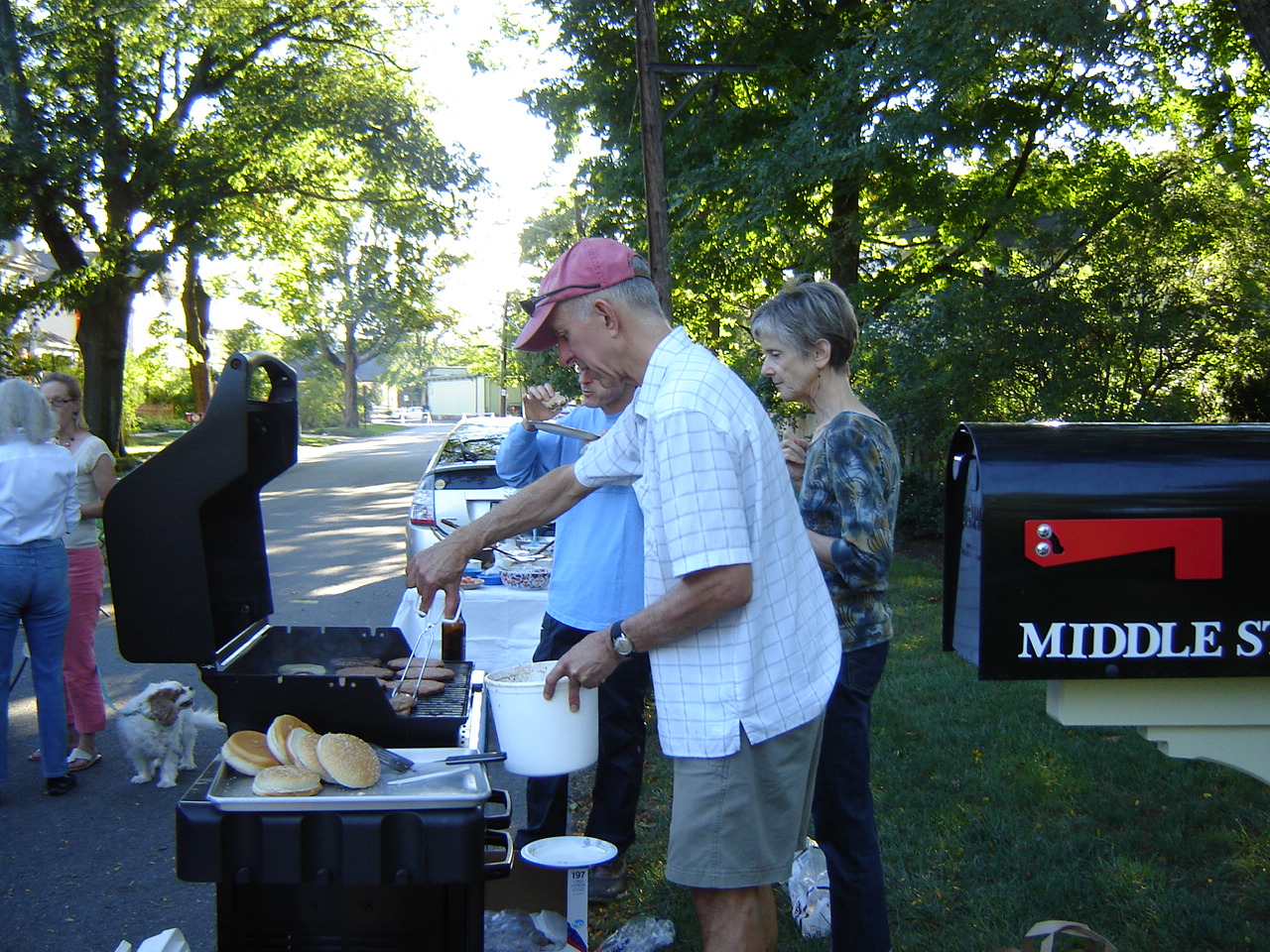
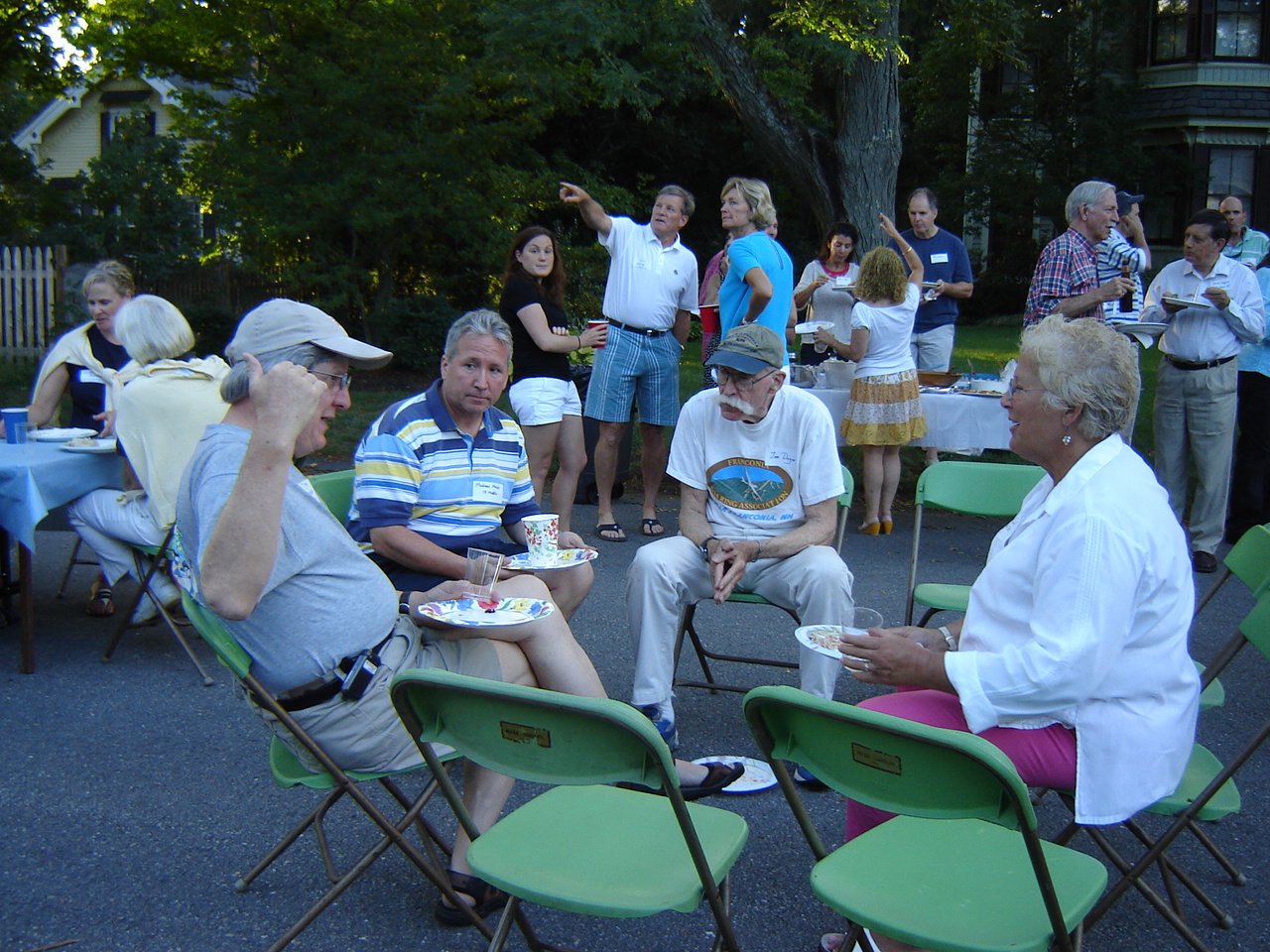
My own neighborhood has block parties on an annual basis. It hasn’t led to solving any major problems, although we did manage to get a rabid raccoon carted away not long ago. Even though most of us meet only once a year, I think we would help one anther if there was a disaster.

Pictures of Sunday’s convivial block party are below, followed by a photo of neighbors somewhere else actually working together on a project. That kind of collaboration probably produces deeper bonding.


Photograph below by Manuel Valdes/AP/File
Two volunteers hold the top of a spiral slide being installed at a neighborhood park in Kent, Wash., in 2011.

Read Full Post »

You remember the advice at the end of Voltaire’s Candide? “Il faut cultiver ton jardin”? Increasing numbers of people are finding the advice to cultivate a garden a good idea for our times. But the implication of minding one’s own business is not part of it as people become more neighborly and create better communities through gardening.

“In 2002,” writes Katherine Gustafson at YES! Magazine, “two neighbors armed with spades and seeds changed everything for crime-addled Quesada Avenue in San Francisco’s Bayview-Hunters Point area.

“The street had been ground zero for the area’s drug trade and its attendant violence. But when Annette Smith and Karl Paige began planting flowers on a small section of the trash-filled median strip, Quesada Gardens Initiative was born. Over the course of the next decade, the community-enrichment project profoundly altered the face of this once-blighted neighborhood.

“Jeffrey Betcher is the initiative’s unlikely spokesperson. A gay white man driven to the majority-black area by the high cost of housing elsewhere, he moved into a house on Quesada Avenue in 1998 to find drug dealers selling from his front stoop and addicts sleeping beneath his stairs. He told me about the day that he returned home from work to discover that his neighbor Annette had planted a little corner of his yard.

“ ‘Even though there was a throng of people – drug dealers who were carrying guns, pretty scary folks – she had planted flowers on this little strip of dirt by my driveway,’ he told me. ‘I was so moved by that … I thought, that’s what life is about. That’s what community development is about. That’s what’s going to change this block faster than any public investment or outside strategy. And in fact it did.’ ” More here.

If you like this sort of thing, please read a little book called Seedfolks. You will love it.

Photograph: Katherine Gustafson

Read Full Post »

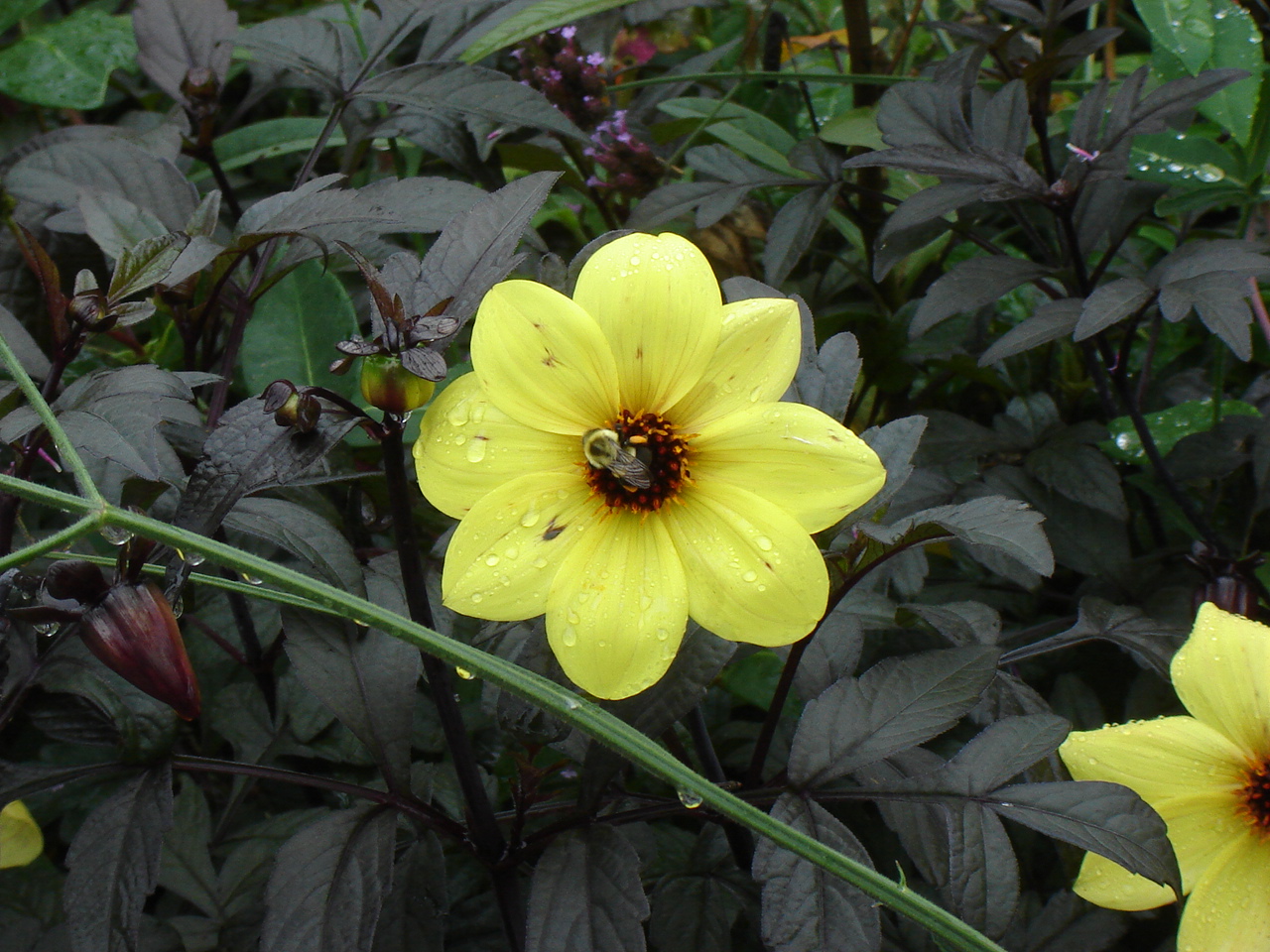
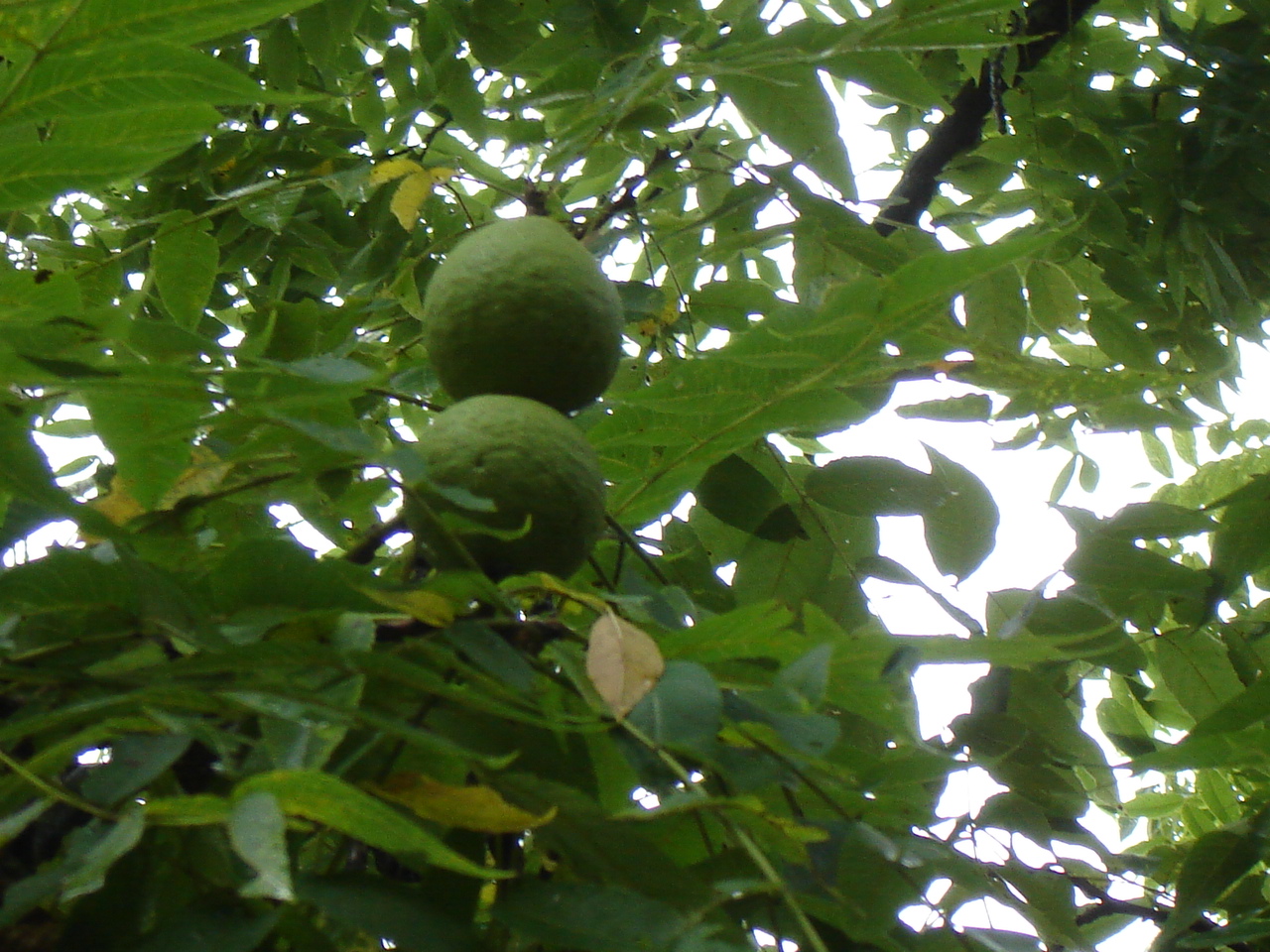
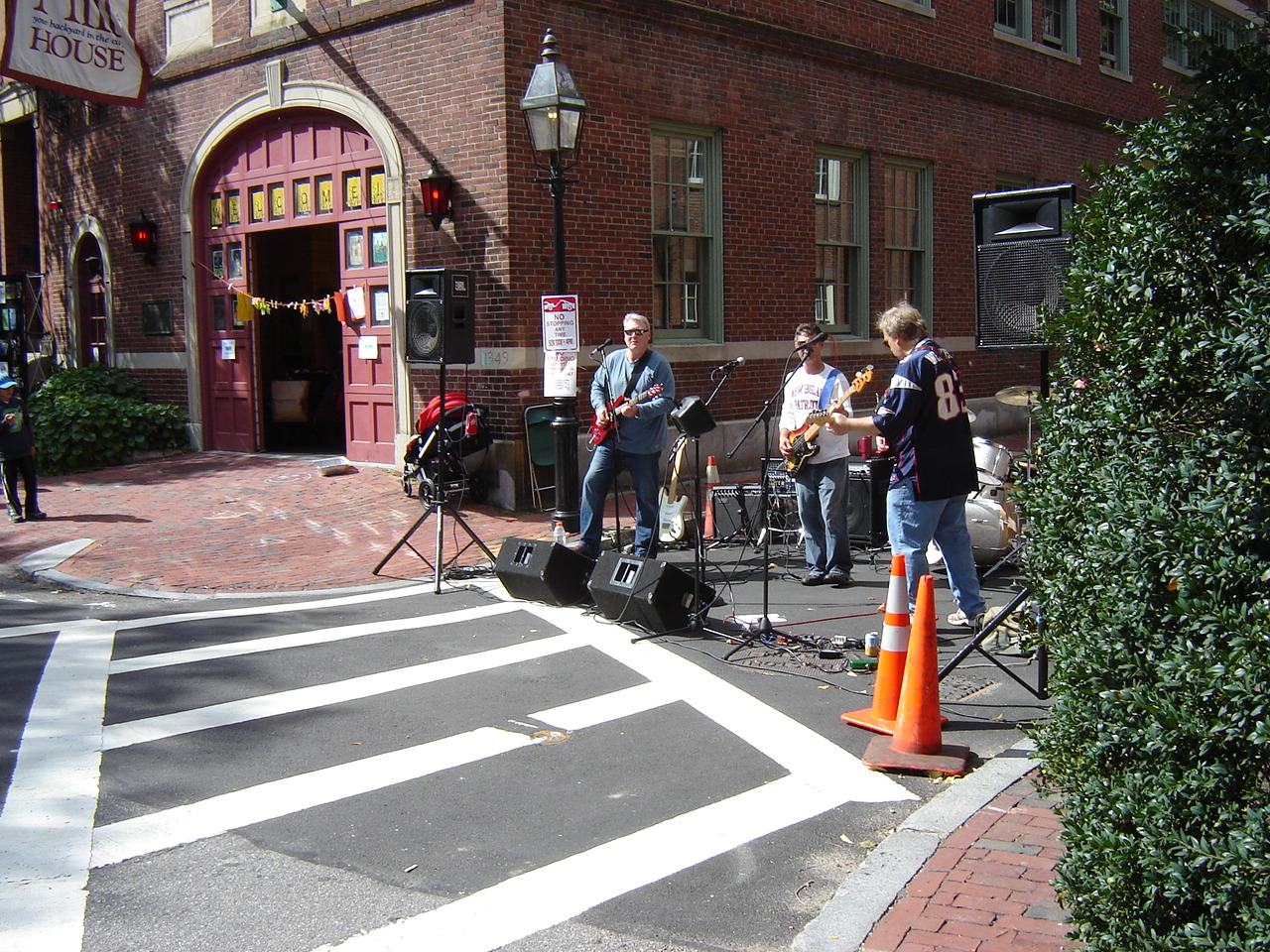
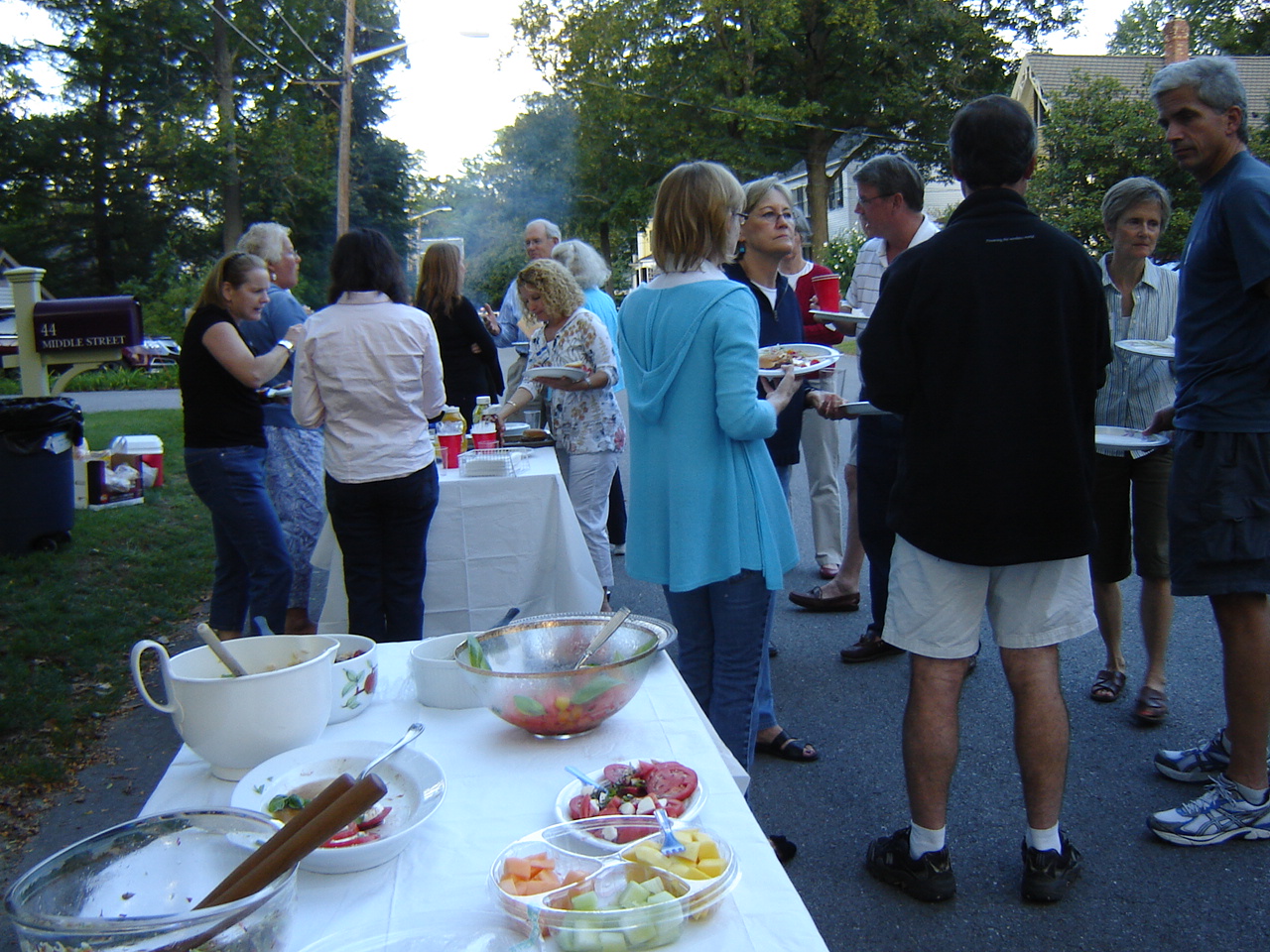
This is the time of year for walnut trees to bear fruit, for bees to bring in the last of the wine, and for block parties. Beacon Hill’s party is way more elaborate than any block party in Concord and is considered a time to raise funds for a cause. See if you can guess which party is which.

Orchard
by H. D.

I saw the first pear
as it fell—
the honey-seeking, golden-banded,
the yellow swarm
was not more fleet than I,
(spare us from loveliness)
and I fell prostrate
crying:
you have flayed us
with your blossoms,
spare us the beauty
of fruit-trees.

The honey-seeking
paused not,
the air thundered their song,
and I alone was prostrate.

O rough-hewn
god of the orchard,
I bring you an offering—
do you, alone unbeautiful,
son of the god,
spare us from loveliness:

these fallen hazel-nuts,
stripped late of their green sheaths,
grapes, red-purple,
their berries
dripping with wine,
pomegranates already broken,
and shrunken figs
and quinces untouched,
I bring you as offering.

Read Full Post »

Older Posts »