Feeds:
Posts
Comments

Posts Tagged ‘new zealand’

Photo: Neil Reid at the New Zealand Herald.
Former All Blacks coach Mike Cron integrated techniques from ballet and sumo wrestling into the team’s workouts.

Today, I share an article from New Zealand about using creative techniques in rugby training. Since I personally don’t know the first thing about rugby, please correct me if I use the terminology incorrectly.

Neil Reid has the story at the New Zeland Herald.

“Mike Cron has looked far and wide to make his [rugby] forward packs better – including adopting techniques from slender, tights-wearing ballet dancers and borderline-obese sumo wrestlers. Regarded by many as the rugby world’s leading scrum and forwards coach, the former police detective has never been afraid to look in less traditional places to get the best out of his players – and himself.

“In his upcoming autobiography – Coach – Lessons from an All Blacks Legend – the 70-year-old opens up on his 210-test tenure with the All Blacks, including Rugby World Cup triumphs in 2011 and 2015 – and his current role with the Wallabies.

“He writes about the All Blacks pack benefiting from techniques he observed in dancers at the Royal New Zealand Ballet and at a sumo wrestling gym in Japan.

“Cron spent time with both during a period when a variety of All Blacks – most notably front rowers – were battling a condition dubbed ‘turf toe’ involving pain at the base of the big toe when bent. Jumping, landing or pushing off when running could all exacerbate the sometimes career-ending ligament injury.

“In an interview with the Herald … Cron said his first travels in search of ways to prevent turf toe saw him visit NFL franchise the New York Giants. NFL athletes are susceptible to the condition from hard artificial turf surfaces.

“He was then allowed access to the Royal New Zealand Ballet as it prepared for a performance of The Mikado; including a meeting with the group’s Italian artistic director and talking to the dancers.

“ ‘At the end of training, we were invited up on stage,’ Cron told the Herald. ‘And I had two questions, one was about turf toe.’

“Cron was told ballet dancers were able to limit the risk of turf toe because of their landings. They had ways of landing that put less impact on the big toe. It was something Cron passed on to the All Blacks medical team and their lineout jumpers.

“Cron’s other question was to the Kiwi male lead of The Mikado production after he had watched him … lifting above the head’ of his dance partner.

Cron likened it to the process of forwards lifting a teammate in the air to snare an opposition kickoff. …

“ ‘He tells me about how you lock out and how you breathe, how you fill your belly up with the air and push your guts out and down, and I go … “same as powerlifters.” ‘ …

“Another nugget of knowledge was learned from spending time observing a sumo wrestling school in Japan. Cron spent several days there before returning to his base in Canterbury still contemplating what he’d seen, and wondering whether any of the lessons could be applied to rugby.

“Three months later, he reviewed video footage, and it clicked. ‘The last thing they do before they explode, these big guys, is with their toes . . . they hold the ground to get power and then release the power through into [their] opponent,’ Cron said.

‘I came back and started teaching that. With the sprigs in our boots, we push into the ground and hold the ground like a parrot in a bird cage.

“ ‘You get far more grip, far more purchase because power comes from the ground through your feet and through your body,’ …

“Cron said while top rugby players, ballet dancers and sumo wrestlers excel in very different arenas, they’re all still athletes who had insights others could learn from.

“ ‘If you go and see Cirque Soleil train, you will pick something up.’ ”

More at the New Zealand Herald, here.
Read Full Post »

Photo: Shanti Mathias.
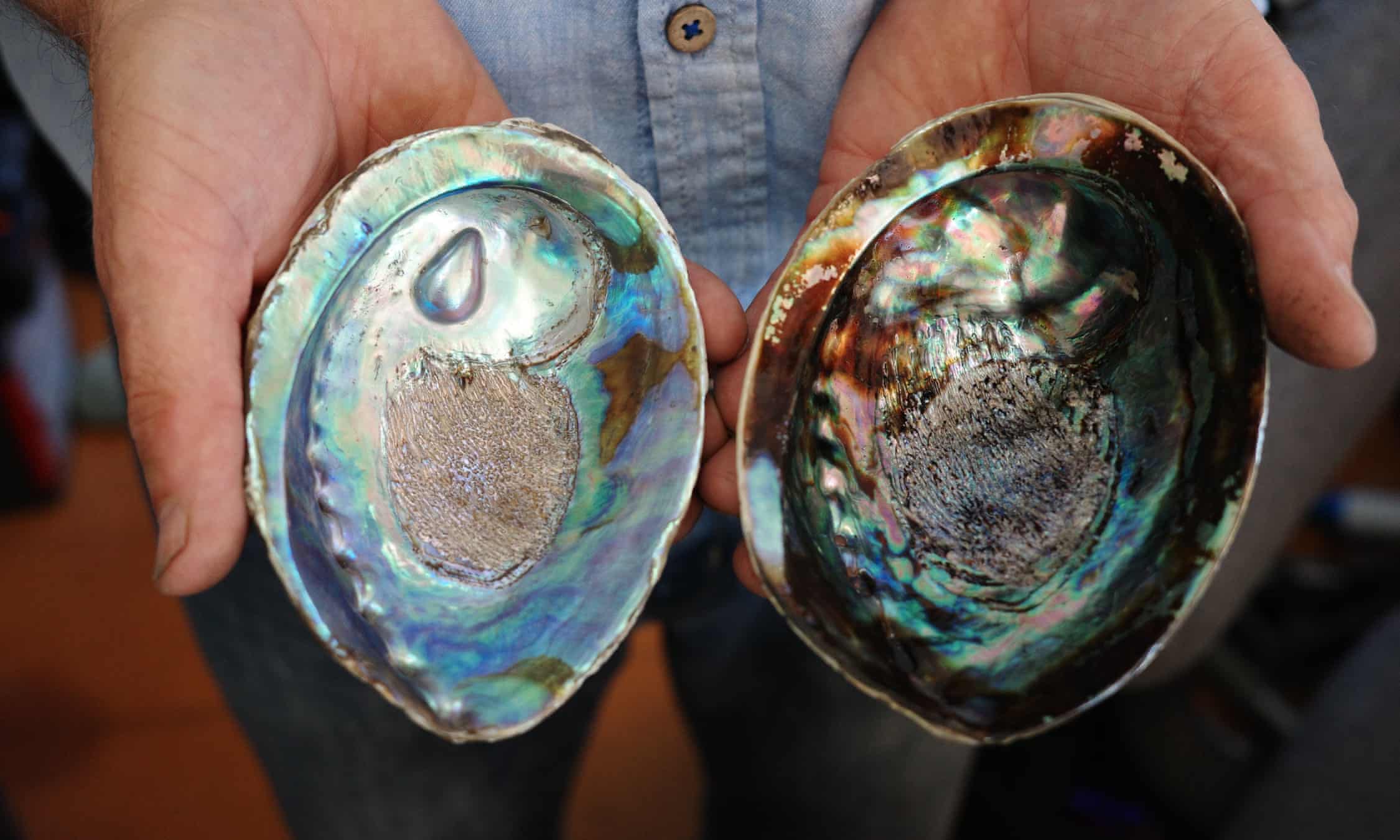
A farmed pāua shell with a pearl inside (L) held next to a wild pāua shell in New Zealand.

During the pandemic lockdown, there didn’t seem to be much point in dressing up or wearing jewelry. I certainly got comfortable with being casual all the time, and even now I mostly wear jeans. Except for funerals.

But the other day, I noticed my grandmother’s pearl necklace in a box and felt a little sorry that I hardly ever wear jewelry (unless from Suzanne’s company). I always liked pearls.

In today’s story, we learn about unusual blue pearls and how the reality of global warming suggests we better enjoy them now, while abalone can still make them.

Shanti Mathias writes at the Guardian, “Roger Beattie was diving off the Chatham Islands, about 800km [~500 miles] east of New Zealand, when he saw his first pāua pearl. Beattie was familiar with pāua, the Māori word for abalone, and their iridescent shells of shimmering purples and greens. But the pearl that had formed inside was unlike anything he had ever seen, gleaming with layers of the pāua’s natural colors. …

“That was in the early 1990s, and Beattie soon started experimenting ways of farming pāua, and creating pearls in the shell. A decade later, he began selling the so-called blue pearls commercially.

“Now a small industry exists in New Zealand cultivating the unique gems. They are rare, with only a handful of companies running farms, each producing only a few thousand pāua pearls each year. But the delicate operations are being made more complicated as changing conditions and warming seas alter the environments pāua need to survive.

“ ‘Warm waters cause physiological stress to the pāua,’ says Shawn Gerrity, an ecologist at the University of Canterbury who has studied the pāua.

“There are four species of pāua endemic to New Zealand. The blackfoot pāua is the biggest species, known for its vibrant shell and succulent flesh. All cultivated pāua pearls come from the blackfoot pāua. The pearls appear shades of blue, turquoise, purple and green.

“ ‘Only this abalone, in this water, produces such an unusual color of pearl,’ says Jacek Pawlowski, a jeweler in Akaroa, a seaside town southeast of Christchurch on New Zealand’s South Island. … ‘They have that rainbow, opal shine.’ …

“As juveniles, pāua are taken out of the water, where their flesh is pried up and a small implant placed under their shell for a pearl to form on. If their soft bodies are nicked, the pāua will bleed to death, so the process must be gentle. Only one in five pāua will create a jewelery-grade gem, Beattie says.

“Each mollusk needs to be fed vast quantities of kelp and live in water about 16 degrees for the three to four years it takes for a pearl to form. …

“But rising ocean temperatures pose a threat to their survival. … Marine heatwaves have dramatically increased in frequency around New Zealand, with a particularly severe event in 2017/18 causing thousands of sea creatures to die.

“Increased marine temperatures have caused mass die-offs of abalone species in other areas of the world, like California, where warming water has reduced abalone’s access to food and sped up the transmission of a withering disease. Beattie has had an algal bloom – which is more likely in warm water – kill a harvest of pāua by depriving them of oxygen.

“Gerrity says marine heatwaves ‘destroy habitats.’ …

“Gerrity has researched the recovery of pāua in Kaikōura, on the north-east coast of the South Island, where thousands of pāua died after the sea floor was lifted six metres [~20 feet] in a 2016 earthquake. Nine years later, with careful management, the population is healthy again. …

“Dr Norman Ragg, senior shellfish scientist at science organization Cawthron Institute, says pāua are a ‘really interesting quirk of nature’ that have remained unchanged for millennia. While New Zealand’s populations are still healthy, there is no room for complacency. … Ragg believes cultivating blue pearls could go some way to bolstering appreciation for pāua and securing its future in the face of climate change.”

More at the Guardian, here. With no paywall at the Guardian, donations are vital.

Read Full Post »

Photo: Shawn Henry via Unsplash.
Skateboarding in New Zealand has a culture all its own.

At a certain age, we start getting the same question at the beginning of every medical appointment: “Any falls?”

For a few years, that question seemed silly. Why would I have any falls? But after a while, it starts to make sense because we start to feel unsteady or because so many people we know have bad falls. A dear friend even died of one last year.

So I am in awe of people like those in today’s story who seem impervious to fear of falling: skateboarders.

Becki Moss and Lauren Bulbin write at the Washington Post, “If you venture past a skate park on any given day in the center of New Zealand’s capital, look for the skaters with neon hair. There’s a good chance they’re members of Wozer, an ever-evolving collective of young, diverse skaters, musicians and artists that has revolutionized the skate scene in Wellington in part by making it more welcoming to women and gender minorities.

“The group has blossomed in this city of approximately 200,000 residents, known for its abundance of native birds, must-visit coffee shops and notoriously strong winds. … Becki Moss, a photographer and artist based in New Zealand, followed the Wozer collective for two years, capturing their lives, their athleticism and their creativity.

“The first Wozer meeting was held in June 2022 by a group of friends who loved the sport, an effort to take their group chat offline and into the real world. Two years later, the collective has released two print magazines and become an increasingly visible force within the scene, teaching workshops at festivals and collaborating with clothing brands, including Converse.

“The point is to show skaters who feel left out of the sport’s cis-male-dominated spaces that there’s a hub for them, too. As the group writes in its 2022 zine: ‘Skating is infamous for its community, when you find a skate community you love, you become part of an instant family. Unfortunately, in amongst a battle of male egos, there wasn’t much room for us in our own local skate communities.’

“Clare Milne is a 23-year-old visual communications design student who moved from Gisborne to Wellington to study. She created the first version of Wozer magazine in May 2022 for a school assignment. Five months later, backed by a sponsorship from Kingsbeer Architecture, the first issue was officially released the same weekend as Bowlzilla, a national skateboard championship.

“ ‘It’s given a lot of people confidence in their identity,’ Milne said. ‘Just meeting like-minded people, it really made me feel comfortable in my own skin. I think the reason I’m so passionate about this is because I saw how these people influenced my life.’

“While the city-run Waitangi skate park features impressive bowls and ramps, Milne said enthusiasts might wish to venture out of the central business district and up a hill behind Wellington city hospital. There you’ll find ‘Hospital DIY’ — a skate park created by the skating community over the years. …

“Here, Gala Baumfield, 22, [who uses they/them] showed where the handprint of their mother, Pearl, is set in the concrete. Their hands are the same size. Pearl died in April 2023 after fighting lung cancer. The Wozer community supported Baumfield as a young caregiver and after their mother’s death continued as their found family, they said. …

“Wozer is continuing to grow. Initially, the group identified itself as a hub for women and gender minorities, but it has since expanded to include cis men. Baumfield says this was because it just felt really exclusionary to a lot of trans whanau’ — a Maori term for extended family or community — ‘especially if you’re not open about being trans, and you don’t really want to broadcast it to the whole world.’ “

Great photos at the Post, here.

Read Full Post »

Photo: Team Hood via the Guardian.
New Zealand curling skip Anton Hood with fan and Chartwell Colonel Belcher resident Bill Dench. The New Zealand team found a good place to live while in training — a retirement community in Calgary, Canada.

This is a story about a retirement community, a team from the other side of the world, and the unexpected benefits of co-housing.

Scott Cacciola reported at the New York Times early this year, “Ben Smith never could have imagined spending the winter at a retirement home in Calgary, Alberta, sipping Caesar cocktails with three of his best friends — Anton Hood, Brett Sargon and Hunter Walker — while their octogenarian neighbors play bridge and tabletop shuffleboard.

“In fact, the four men, who are professional curlers from New Zealand working on their Olympic aspirations in one of the world’s most celebrated curling hotbeds, have made themselves at home since moving into the Chartwell Colonel Belcher Retirement Residence, a senior living community on Calgary’s west side. They are the building’s newest tenants — and its youngest. …

“The story of how a team of young men wound up occupying two suites at a Canadian retirement home … involves luck, economics and word-of-mouth generosity among Calgary-area curlers. In the process, the arrangement has showcased the virtues of intergenerational living.

“ ‘Oh, we really were just shocked,’ said Bertha Esplen, 97. ‘We really were. Because all of a sudden we get curlers from New Zealand in our building. Man, that was great. We couldn’t wait for them to come.’

“Since arriving in September [2022], the team has financed its curling dreams by landing day jobs — Mr. Smith, 24, for example, works as a plumber four days a week — while acclimating to life in a sprawling community of surrogate grandparents and well-intentioned back-seat curlers.

“At least one resident has asked for a practice schedule so that he can taxi over to the Calgary Curling Club, where the team trains and Mr. Hood, 23, moonlights as an assistant ice technician, and offer advice. …

“They nitpick because they care. That became clear to Mr. Sargon a few weeks ago when he joined Mr. Hood at a curling tournament in Okotoks, about 25 miles south of Calgary. As soon as their match began, Mr. Sargon and Mr. Hood realized that they had their own fan club. Fourteen residents, armed with bag lunches and homemade signs, had made the trip via charter bus to cheer them on in a loss to a team led by Mike McEwen, one of the top curlers in Canada.

“For those unfamiliar: Curling is a winter sport that involves pushing heavy granite rocks down a long sheet of ice toward a target. And while it is hugely popular in Canada, curling does have some historical ties to New Zealand. Miners from Scotland brought an outdoor version of the game with them to the country during the gold rush of the 19th century, and it has persisted as a popular activity whenever the ponds on New Zealand’s South Island are cold enough to form a thick slab of ice at the surface. …

“Finding the game was easy enough for Mr. Hood, Mr. Smith and Mr. Walker, 21, all of whom grew up in Naseby, New Zealand, a small resort town that, for many years, was home to the Southern Hemisphere’s only dedicated indoor curling rink. Mr. Sargon, who is from Auckland, learned the game on hockey ice. …

“Mr. Sargon soon met the others through curling circles and formed a team. But to truly grasp the sport’s many nuances and reach their long-term goal of qualifying for the 2026 Winter Olympics in Italy — a process largely based on results at the world championships — Mr. Sargon and his teammates knew that they would need to immerse themselves in the game. That meant training in Canada. …

“The team spent several weeks training in Calgary last year ahead of the inaugural Pan Continental Curling Championships, which the city hosted. … Over the summer, Mr. Hood was chatting with Kim Forge, who sits on the board of the World Curling Federation, when he mentioned the team’s plans. The challenge, he told her, was finding affordable short-term housing in Calgary. …

“She posted a message on Facebook soliciting help from the Calgary curling community in locating ‘very cheap rent’ for Team Hood. …

“The post soon found its way to Cassandra Murray, a retirement living consultant at Chartwell Colonel Belcher who is a former competitive curler. She was brainstorming with Christine Taylor, a colleague, when they came up with a potential solution.

“ ‘You probably won’t want to do this, but we do have a couple of spare rooms,’ Ms. Murray wrote the team via Facebook Messenger.

“It should be noted that while Team Hood has a couple of sponsorships … curling is not an especially lucrative profession. … So when Ms. Murray offered them a place to stay for free, aside from a few dollars a month for utilities, they were thrilled. They also were glad to find a situation where they could blend more easily with the fabric of the city than they had last winter. What better way to do that than to share a roof with some of Calgary’s most esteemed residents? …

“Karl Berg, a director of regional operations and sales for Chartwell, endorsed the idea, citing a renewed emphasis on ‘socialization’ among its residents in the wake of the pandemic. He also was aware of a successful intergenerational living experiment in the Netherlands, where the presence of a few college students in a nursing home gave their older neighbors a greater sense of connection to the outside world and increased their mental stimulation.

“ ‘It’s been awesome watching people’s faces light up when we talk to them,’ Mr. Sargon said, ‘and now we’re really starting to get know more of them. Everyone buys into what we’re trying to do as well, which is cool. Everyone wants to tell us their curling story.’ ”

More at the Times, here, the CBC, here, and the Guardian, here.

Read Full Post »

Photo: Bostock Brothers via the Guardian.
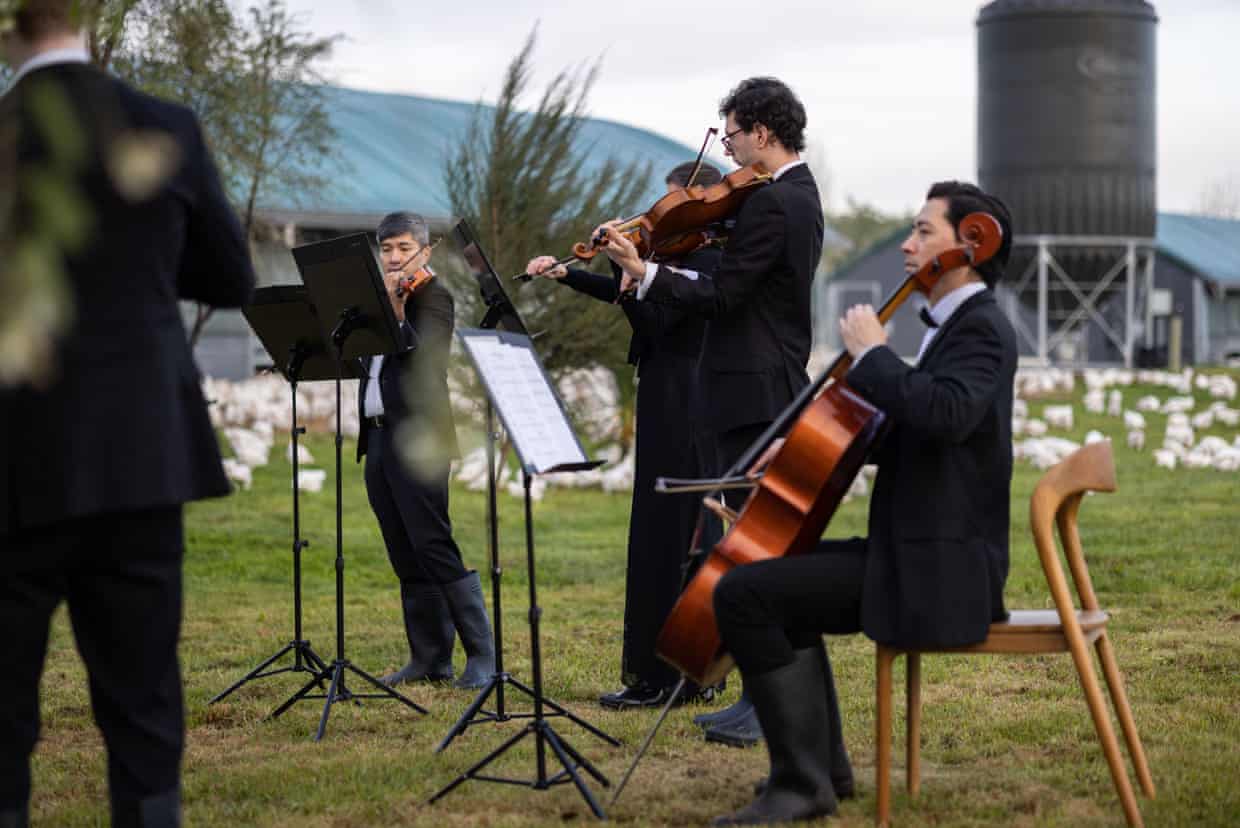
A live orchestral performance at the Bostock Brothers’ farm in Hawke’s Bay New Zealand. 

The media really knows how to have fun with a story that is susceptible to wordplay: “New Zealand Symphony Gives World Premiere for Hen-tastic Audience”; “Beethov-hen’s first symphony”; “NZ Symphony Orchestra members perform for thousands”; “im-peck-able.”

Mitchell Hageman at the New Zealand Herald wrote one of several delightful reports you can find online.

“Do chickens like classical music?” Hageman asks. “A Friday morning stunt in Hawke’s Bay proved they most certainly do.Members of the esteemed New Zealand Symphony Orchestra have performed for the likes of Dame Kiri Te Kanawa [and Sir Howard Morrison] but on Friday they faced some of their toughest critics yet: a hungry flock of thousands of Ross chickens.

“It was all part of a collaboration between Bostock Brothers Farm and the NZSO to promote ethical farming.

While slightly hesitant at first, the concert-going [chickens] eventually crowded around the clearly delighted musicians as they performed the world premiere of Chook Symphony No 1, created by composer and sound designer Hamish Oliver.

“ ‘Never could we have imagined producing a composition especially for a flock of chooks, let alone performing for them, but the opportunity was too good to pass up,’ NZSO chief executive Peter Biggs said. ‘The NZSO, like Bostock, is about being world-class and about wellbeing, so the two organizations have combined to create something very different and very new, and we hope it catches on.’

“The orchestra did some research and found instances where chickens responded particularly well to baroque music, which became the basis for the roughly two-minute symphony.

” ‘That’s strings, oboe, bassoon and harpsichord,’ Biggs said.

“After the composition was created, a sound recording was sent so it could be tested on the chickens. ‘They loved it,’ Biggs said. …

“For Bostock Brothers free-range chicken owners Ben and George Bostock, the collaboration was also a way to showcase the organic nature of chicken farming.

“ ‘Chicken farming is incredibly complex and organic farming even more so, and we’re constantly looking for ways to better our practices, ensuring our chickens are happy, healthy and organic,’ Ben Bostock said. ‘[We] know investing in a quality environment for our birds will only further yield quality results.’ …

“[George] said the response so far from the chickens had been great, and they would continue to play classical music in the sheds in future. ‘There’s lots of science that says classical music is really good for animal welfare and the response from our chickens has been really, really good.’ “

More at the Herald, here, at the Guardian, here, and at Symphony.org (the League of American Orchestras), here. No firewalls.

(And speaking of chickens, the Washington Post, here, reports that in Maine, chickens are now permitted as emotional support animals. Not that you asked.)

Read Full Post »

Photo: Patrick Reynolds.
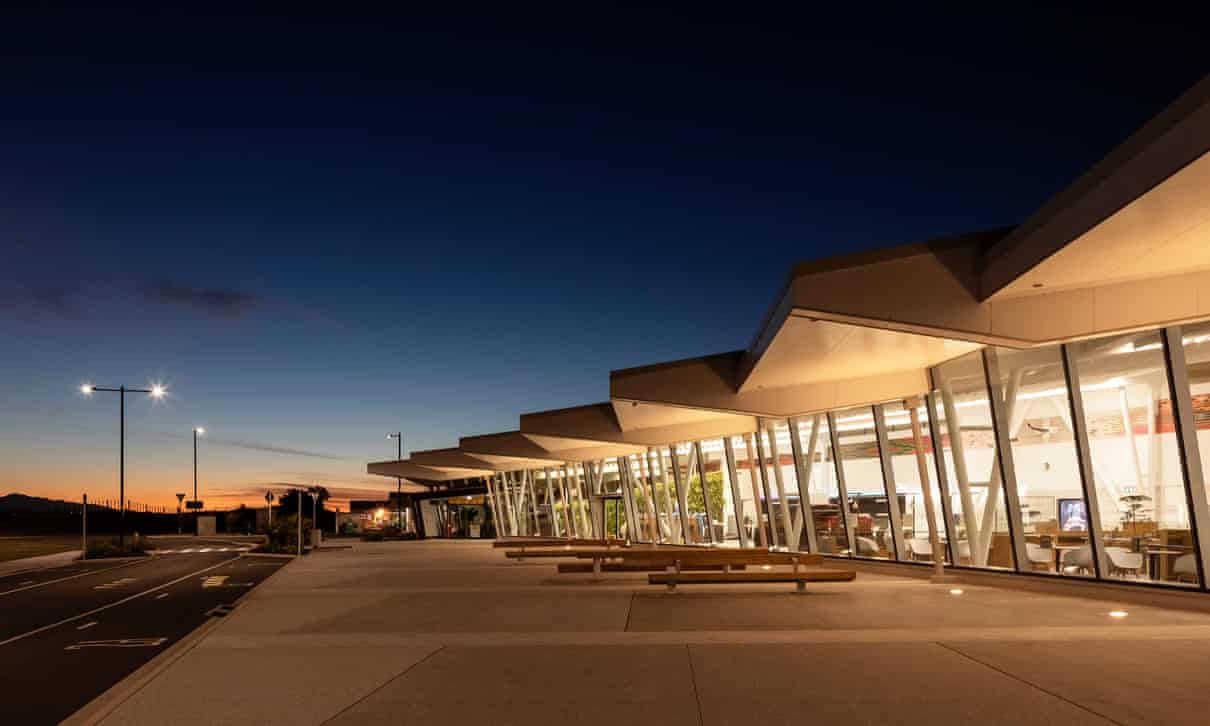
The Maori-designed “redevelopment of New Zealand’s New Plymouth regional airport is a finalist in the Prix Versailles Airports 2021 awards,” the Guardian reports.

A modicum of justice is seen in an unlikely place: the redesign of an airport by indigenous people from whom the airport land was stolen as recently as 1960.

Eva Corlett reports for the Guardian, “A tiny regional airport in New Zealand that weaves a Māori story of love and longing into its architecture is in the running for a prestigious design award, up against international heavyweights including New York’s LaGuardia.

“Unesco’s Prix Versailles recognizes architecture that fosters a better interaction between economy and culture, and includes a range of categories from airports to shopping malls. The finalists for the airport category include the New York LaGuardia upgrade, Berlin’s Brandenburg airport and international airports in Athens, Kazakhstan and the Philippines.

“The sixth airport finalist is Te Hono – meaning ‘to connect’ – and is found in New Plymouth, a town with a population of 85,000, on the western shoulder of the North Island.

“After six design options were floated, Rangi Kipa – a member of the local Puketapu hapū (subtribe) and lead figure on cultural design, settled upon a story. ‘The Ascension from the Earth, Descending from the Sky,’ tells the story of Tamarau, a celestial being, who was so captivated by the earthly beauty of Rongo-ue-roa, a terrestrial being, that he came down to meet her.

“ ‘This story aligns closely with the creation narrative of Te Ātiawa iwi [tribe],’ said Rangi. …

“The spine of the building is oriented to represent the journey from the mountain to the river – the main ancestral walking track in this area, and while visitors may notice these aspects of the architecture first, there are many subtle stories told through the details.

“Manaakitanga – the Māori concept of hospitality – also influences the design. Campbell Craig, the project’s architect and associate for design at firm Beca, said the project attempted to challenge western architectural practices that do not bear any relationship to Māori design.

“ ‘It was important for Puketapu to welcome and take care of guests in a place that is in many ways the gateway to the region,’ said Craig. ‘The faceted curved forms of the building at the entrance and airside “embrace” travelers, to shelter them from the elements.’

“In 1960, the land the airport sits on was confiscated from Māori, under the Public Works Act to build an aerodrome. This was a major source of grievance for the hapū, who had urupā [burial grounds] on the site. …

“Kipa said: ‘For the most part, we have been invisible in our own landscape for 160 years, so it’s amazing to have the chance to influence, and give life to, some of the things that make us who we are.’

“For Craig, the most heartening aspect of the project was the intensive collaboration between Māori, the airport and the architects, which enabled a sense of collective ownership over it.

“ ‘The experience at Te Hono provided a blueprint for working with tāngata whenua [people of the land],’ he said, adding that it would be an approach embedded into all of their future projects.”

More at the Guardian, here.

Read Full Post »

Photo: Stuff.
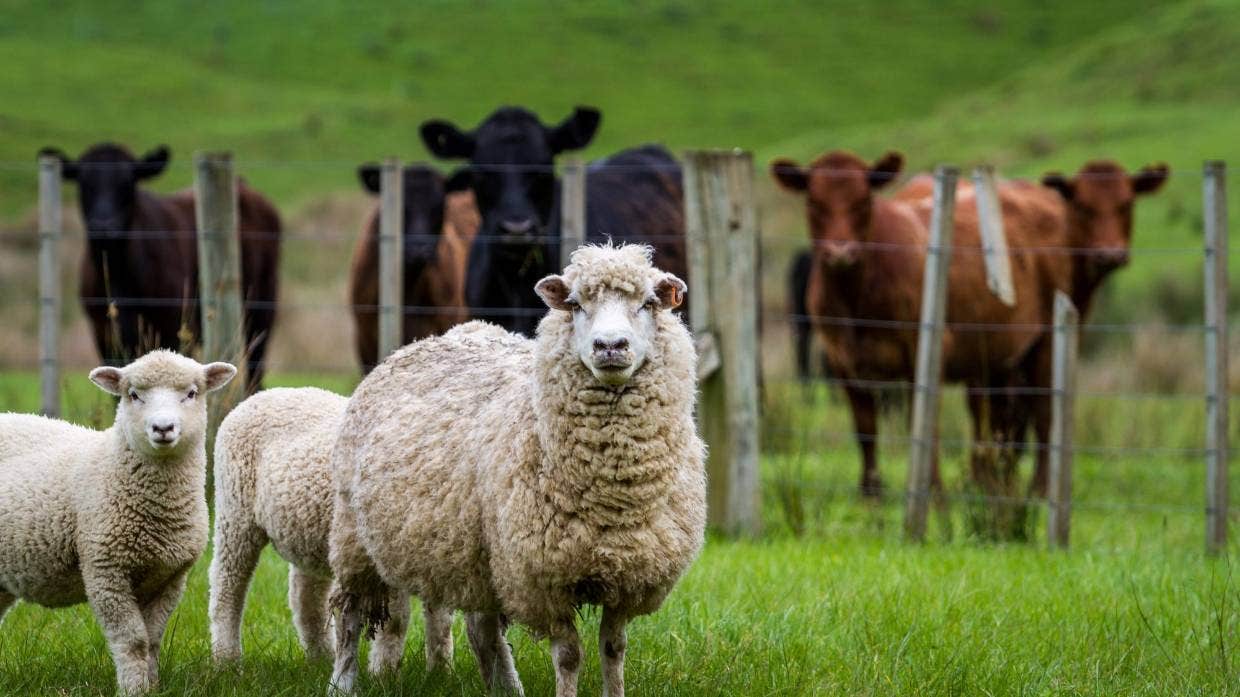
To meet methane goals, New Zealand must cut the number of sheep and cows by 15 per cent, the Climate Change Commission’s decarbonisation blueprint says.

Although I’m eating a vegetarian meal tonight, I’m disappointed in myself for not coming up with lots of interesting vegetarian recipes during lockdown. I had plenty of time to think about it. Part of my problem is that my Covid-era delivery services didn’t offer many prepared vegetarian meals, but it’s a weak excuse. Fortunately, my daughter-in-law knew I was interested in anything vegetarian and often added me to her shopping.

Meanwhile, in New Zealand, they’re way ahead of everyone as usual — not only in terms of trying to cut back on livestock emissions but addressing many other aggressive climate-change goals.

Olivia Wannan writes at Stuff, “Whether you work on the land, in a factory, an office or are still in school, life in 2035 will look significantly different under the Climate Change Commission’s decarbonisation blueprint.

“[If] the Government follows it to the letter., by 2025, you’ll be eligible for a public transport card offering discounted fares until you’re 25, to encourage low-carbon transport habits that may last a lifetime. …

By 2023, the Government’s emissions standards will start to bring lower-carbon cars into the country. The ban on petrol and diesel cars will also be in place as early as 2030. By 2035, both restrictions will also be influencing the second-hand car market, so if you do become an owner, the vehicle will be a lot greener than the cars on the road today. …

“Between now and 2035, you may be one of the thousands of employees that will transition out of carbon-intensive industries and into new jobs. … If you work in an at-risk industry, you’ll be eligible for government support to be re-trained for other roles. If you’re tangata whenua, you’ll be able to opt for education and training developed by Māori. By 2035, many Māori workers will have already transitioned to new industries, with the job gains outweighing losses. …

“The renewable electricity sector will be busy – the country requires one new wind farm to be built almost every year to meet the increased demand for power, plus new transmission lines. …

“By 2035, most truck drivers will be behind the wheel of a low-emissions vehicle, after the battery technology has developed enough to cover longer distances. But there will be fewer trucking jobs, as more freight will travel by rail or sea. … You’ll be twice as likely to head to the office by bike or on public transport, compared to today. If you still want to drive to the CBD, you may have to pay a congestion charge, with your cash helping to fund lower-carbon forms of travel. …

“By 2035, your office must be a pleasant place to be in all seasons, courtesy of energy efficiency standards for new and existing buildings. Building owners will have ditched coal in all heating systems by 2030. Natural gas will be phased out after that. …

“Across the country, dairy and meat farmers will reduce animal numbers by 15 per cent between 2020 and 2030. However, this isn’t an across-the-board cut. The efficiency gains you’ll make on your farm will probably differ to what your neighbours achieve. It’s the collective effort that matters.

“This could mean changing your farm management. You’ll need to use the plans, advice and tools developed by the agricultural industry partnership with Government, He Waka Eke Noa – though this guidance won’t be finalised until 2022. You may require reliable internet to precision-manage your farm, so you should have access to broadband by 2023 at the latest. …

“A farm might take a look at the efficiency gains required and choose to replace its cows and sheep with horticulture. An additional 20,000 hectares of land will grow grain, fruit and vegetables by 2035.

“Farmers staying in the meat or dairy business will carefully manage their use of nitrogen fertiliser (which creates the greenhouse gas nitrous oxide) and supplementary feed, which will cut expenses. Some will try their hand at regenerative farming, which aims to create healthier soil and land.

“Sheep farms will select rams that carry the genes to produce less methane when food is digested. The widespread uptake of low-methane sheep breeds will cut the country’s agricultural methane by 3 per cent by 2035. …

“If you have unproductive land sitting around, you’ll be able to access public funding to plant it with native trees. Nearly 250,000 additional hectares of sheep and beef farmland will be afforested by 2035. Combined with a ban on native deforestation in 2025, you’ll more frequently spot native birds and lizards, particularly if you fence off your bush and undertake pest control.

“Collective action will allow New Zealand to continue to promote the comparatively low-carbon credentials of its dairy and meat to international markets. …

“Buildings will be increasingly constructed using timber, which is less emissions-intensive than concrete and steel. By 2025, new natural gas connections will be banned. A decade after that, remaining gas appliances for cooking or heating will be increasingly costly. Because the domestic carbon price will steadily rise, the average annual gas bill will cost $150 more in 2035 compared to 2020.

“In comparison, the price of electricity will drop during the 2020s, after the Tiwai smelter closes. It’ll gradually rise again towards the end of the decade but should stay lower than today’s costs. …

“Remote and Māori communities will be able to access funds to build their own solar generation.”

It will likely to be hard to achieve all that, even with the less environmentally friendly biomass use and burning of “renewable” wood. But I think they are taking this seriously.

More at Stuff, here. Hat tip: Svein Tveitdal, @tveitdal, on twitter.

Read Full Post »

Photo: University of Canterbury.
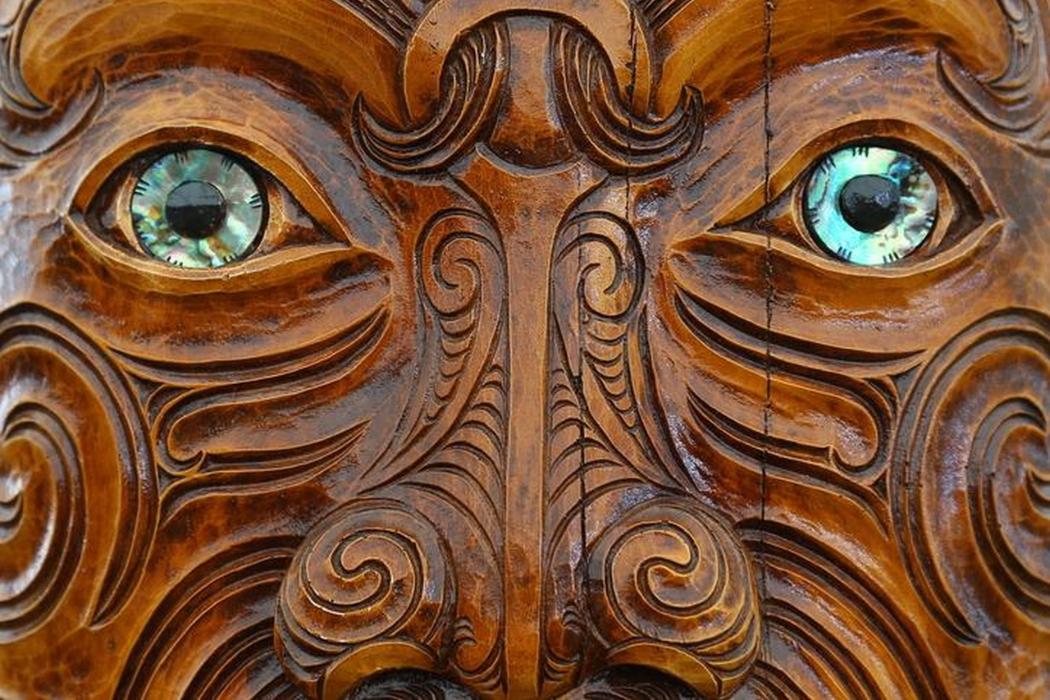
Maoris teach that we’re all in the same canoe, an understanding that enough New Zealanders have absorbed to make Covid restrictions successful there.

I don’t know much about the Maoris of New Zealand (does the Disney movie Moana count?), but having seen how successful New Zealand and its prime minister have been in dealing with Covid, I’m not surprised to learn that the high level of cooperation among the populace relates to absorption of Maori values.

In an opinion piece at the Washington Post, Matthew Milner and Richard Ngata explain.

“Life in New Zealand is almost back to normal. While the United States has seen more than half a million deaths from covid-19 — with a death rate of more than 160 per 100,000 of population — New Zealand has lost only 26 people at a rate of 0.53 per 100,000.

“Two months ago, one of us, Richard, went to a New Year’s festival with more than 12,000 fellow revelers — something barely imaginable in the United States, where most concerts are online-only. Meanwhile, teachers, including Matthew’s parents, have been instructing in person since May [2020] without requiring masks or social distancing measures.

“Why has New Zealand fared so much better? Many people argue that these differences stem from New Zealand’s geographic advantages, and there is no doubt that being an island nation has helped. But … there is a deeper reason: Manaakitanga.

“While New Zealand hasn’t always been great at recognizing or celebrating our indigenous Māori culture, campaigning by Māori advocates has helped to ensure that Māori culture is now well-incorporated into society.

Manaakitanga is one of many customs of the Māori people that are now taught in New Zealand schools. It holds that others have importance equal to, and even greater than, one’s own.

“Manaakitanga is about understanding the power of the collective. It derives from the Māori term ‘mana,’ which is the spiritual life force and energy that every living thing possesses. When you honor the mana of others, your own mana will increase through the respect you have earned. When you acknowledge these connections, you understand that your freedom as an individual is only as strong as your place in the community.

“This community approach underpins many aspects of life in New Zealand. We provide health care to anyone who needs it. Our gun safety laws focus on keeping the community safe. And manaakitanga is one of four key values the Teachers Council for New Zealand wants teachers to focus on in the classroom.

“But never has the importance of manaakitanga to our society been more evident than at the start of the covid-19 pandemic. Last March, when New Zealand went into full lockdown, people were not permitted to see others outside their ‘bubble’ (such as a household); only one person from each bubble could leave at any given time, and not travel farther than five miles from the house.

“This strict lockdown lasted six long weeks, and while there was political pushback, the ‘team of 5 million,’ as Prime Minister Jacinda Ardern calls New Zealanders, stayed home and stamped out the virus.

New Zealanders were willing to give up many of their individual freedoms and face personal hardship for the benefit of the community. …

“Still, people found ways to connect and support each other. The lesson of the coronavirus is that an individual approach is not sufficient and that it takes a team for us all to gain true freedom. The Māori proverb ‘He waka eke noa’ expresses these sentiments clearly: We are all in this canoe together. …

“While [the US president] was playing down the virus, Ardern was running daily broadcasts alongside the nation’s director-general of health to clearly communicate the latest updates and restrictions. The central message: ‘Stay Home, Stay Safe, Be Kind.’ ” More at the Washington Post, here.

If you want to dig deeper, check out research by Diane Ruwhiu and Graham Elkin at the Leadership journal on the “converging pathways of contemporary leadership,” here. The authors describe “two emerging domains in leadership – servant leadership and Indigenous Māori leadership. Both not only have strong resonance with each other,” they say, “but also reflect a common concern with individual and collective morality that draws us to the significance of human relationships.”

Read Full Post »

Sometimes a small, well-networked country or state can do a better job making challenging things happen than the big guys can. I’m thinking, for example, about West Virginia’s remarkable success in getting the Covid vaccine into people’s arms. (NBC has a cool story about Mom & Pop drugstores and the advantage of knowing your community.)

Today’s story comes from a very different part of the world and concerns a very different topic: the struggling print-magazine industry.

Elle Hunt reports at the Guardian, “At 8.31am on a Thursday, Henry Oliver received a text message from his employer, alerting him to a company-wide Zoom call in 29 minutes’ time.

“The day was 2 April 2020, a week into New Zealand’s national lockdown to control the spread of coronavirus. Oliver, who is the editor of Metro magazine, and his team had been scrambling to adjust to remote working and – with magazine publishing not among the ‘essential services’ permitted to continue through the pandemic – a new digital-first operation.

“Within an hour of that text, Oliver and the 300-odd other employees of Bauer Media New Zealand were told they were being made redundant, the titles they worked on would be put up for sale, and the entire company was to close. …

“A privately owned German company operational in 13 countries, including the US, UK and Australia, Bauer had been a pillar of the New Zealand magazine industry since 2012. In particular it was known for its current affairs and long-form features journalism, as the home of the Auckland-centric Metro, North & South and The Listener – titles with steady subscriber bases and some of the most experienced and awarded journalists in the country on staff.

“In its suddenness and its sweep, Bauer’s decision seemed to sound a death knell for an entire industry. … Yet less than a year later, not only have Bauer magazines been brought back to life under new ownership, but also new titles have been launched – reflecting a flurry of investment and innovation in New Zealand media precipitated by the pandemic.

“Sydney private equity firm Mercury Capital purchased Bauer NZ for an unspecified sum in June (later renaming it Are Media) – extending a lifeline to The Listener and four other mastheads.

Metro and North & South were both acquired by independent investors seeking to preserve New Zealand’s tradition of long-form features journalism.

“Meanwhile, four entirely new monthly titles – staffed by former Bauer editors and writers, with former CEO Paul Dykzeul advising – were launched by School Road Publishing in November.

“The recovery, since the dire outlook in April, has exceeded all expectations: testament to the appetite of New Zealanders not just to read magazines, but to make them.

“The day after he was made redundant, Oliver started work on a zine. With a budget procured from property developer Britomart Group, he was able to deploy the talents of many of the journalists and designers who had been let go with him from Bauer. He gave it the tongue-in-cheek title Essential Services, describing it as a ‘small affirmation of life in the face of media industry collapse.’

“Oliver went on to produce two more issues with funding from government agency Creative New Zealand. … ‘I just thought to myself, it’s not really up to a German billionaire whether I get to make magazines or not.’

“Others too had spied opportunity in among the rubble. German-born journalists Konstantin Richter and Verena Friederike Hasel … made a ‘spontaneous’ offer on North & South to ensure its survival, as subscribers themselves. Richter is also a board member of the Swiss media giant TX Group, founded by his family, and splits his time between the two countries. …

“Richter describes their vision as ‘a mix of change and tradition’: retaining North & South’s time-honoured focus on issues that span the length of New Zealand, bridging the urban-rural divide – while injecting news and perspectives from further afield. He sees an opportunity to build on the tradition of investigative and long-form features journalism in a nation that is more receptive than others to the concept.

Metro, meanwhile, was bought by media entrepreneur Simon Chesterman, who retained Oliver as editor and moved the magazine to quarterly publishing. It relaunched with a splash in November with an exclusive essay from Lorde.

“Oliver says they were aligned on the importance of an Auckland-centric title in the age of coronavirus. ‘We’re going to be living in a more local world for the foreseeable future, so a city magazine, an authority on a specific place, can be more relevant than ever.’

“Plus, at a moment of up-to-the-minute, pandemic-driven doom-scrolling, ‘here is space for a slower media,’ says Oliver. ‘That was really what was taken away with the shutdown of the magazines.’

“To [Colin Peacock, host of Radio New Zealand’s Mediawatch programme], the industry’s reinvention suggests a new era of ‘start-up-style media’ in New Zealand. … Peacock points to Shepherdess – a new quarterly magazine for rural women, which launched in mid-March – and the free ‘mountain culture’ publication 1964 as examples of how print might be reinvented to serve a specific, perhaps localised audience. …

“In April, Bauer’s Australia and New Zealand chief executive Brendon Hill had said magazines would be ‘untenable’ in New Zealand through the pandemic: ‘Publishing in New Zealand is very dependent on advertising revenue and it is highly unlikely that demand will ever return to pre-crisis levels.’

“But the industry’s bounceback from catastrophe reflects New Zealand readers’ loyalty to their long-standing magazines – potentially to a fault, Peacock suggests. … The resurrection of The Listener, almost identical in form and focus, suggests there was next to no enthusiasm for a refresh, says Peacock. …

“Richter and Friederike Hasel are hopeful that North & South readers will embrace a new global perspective – especially at this time of transition, not just for New Zealand’s media but New Zealand itself. Bauer’s exit was ‘a shock to many,’ says Friederike Hasel – ‘but I think something good might come out of that.’ ”

More at the Guardian, here.

Read Full Post »

Photo: Etienne Naude
“I felt that I was making something bigger than me,” said Angel Sierra (right) after he and Etienne Naude made the Earth into a sandwich with pieces of bread 8,000 miles apart.

I love any attention-getting gag meant to show we are all part of one world. This story describes a feat that seems silly on the surface, but draws attention to something deep. Eight thousand miles deep.

As Owen Amos reported at the BBC in January, “Two men in New Zealand and Spain have created an ‘Earth sandwich’ — by placing bread on precise points, either side of the planet, at the same time.

“The man behind the sandwich, Etienne Naude from Auckland, told the BBC he wanted to make one for ‘years,’ but had struggled to find someone in Spain, on the other side of the globe. He finally found someone after posting on the online message board, Reddit.

“The men used longitude and latitude to make sure they were precisely opposite. That meant there was around 12,724km (7,917 miles) of Earth packed between the slices — and some 20,000km between the men, for those forced to travel the conventional route.

“The first ‘Earth sandwich’ is credited to the American artist Ze Frank, who organised two slices of baguette to be placed in New Zealand and Spain in 2006. …

“Wanting to create his own, Mr Naude, 19, used an online longitude and latitude tool called ‘tunnel to the other side of the Earth’ to find his exact opposite point. …

“He posted on the Spain section of the online message board Reddit. He got ‘a few replies’ and found one person close to the precise location.

Angel Sierra, a 34-year-old chef, told the BBC he replied to the message because ‘it can help to show how people can work together across the globe … I felt that I was making something bigger than me.’ …

“Once the men were in contact, then came the tricky part — making a sandwich with another person when you are on opposite sides of the planet.

” ‘It was quite hard to organise since it’s 12-hour time difference,’ Mr Naude said. ‘And there’s lots of things to arrange, such as the kind of bread, the time, the [precise] location, et cetera. … It’s quite tough to find a spot which isn’t water on the New Zealand end — and where public roads or paths intersect in both sides.’ …

“Using a ‘near top of the range laser cutter,’ he burnt an ‘Earth sandwich’ design onto 20 slices of bread, then used one slice to mark his exact, tightly defined sandwich spot in New Zealand.

“His counterpart used nine slices of unmarked bread to make sure he covered the exact spot. …

“The scientific name for points opposite each other on the Earth’s surface is antipodes … According to World Atlas, only around 15% of ‘territorial land’ is antipodal to other land. The UK, Australia and most of the US do not have antipodal land points — the other side of the world is water. More at the BBC, here.

Naude was later reported saying, “It’s also quite nice to just know that there is someone at the exact opposite point of the world that has done exactly the same thing as you. In this one particular instance, we’ve got entirely different lives, but we are now connected by this one point.”

Read Full Post »

Photo: Jason Hosking
The kākāpō parrots in New Zealand were suffering from a frequently fatal respiratory disease and needed several months of treatment before being returned to the wild.

There’s a lot of dark news in today’s headlines. I won’t get into it. Looking for a little something positive, I learned about a fat parrot that is no longer on the brink of extinction, thanks to people who are focused on doing good. Such people actually exist, you know.

Kate Evans writes at the Guardian, “Growing up in the north of England, Dr James Chatterton was enthralled by the books of the pioneering zookeeper and conservationist Gerald Durrell and dreamed of saving endangered species. Now, on the other side of the world, Chatterton has done just that, helping to bring the world’s fattest parrot back from the brink.

“Chatterton and his team spent the best part of a year [testing] new treatments on the frontline of a killer disease afflicting New Zealand’s kākāpō. … The respiratory disease aspergillosis began to spread through the endangered kākāpō population [in April 2019], threatening to reverse the gains of the bird’s most successful breeding season in living memory.

“Kākāpo are not just rare, they are also deeply weird: flightless, nocturnal, with fragrant feathers and a comical waddling run. Males ‘boom’ to attract females, and they only breed every three to six years when the native rimu trees [produce] large numbers of seeds. …

“By the end of the southern hemisphere’s summer in February, thanks to intensive intervention by New Zealand’s Department of Conservation (DOC) Kākāpō Recovery Programme, the population of 147 kākāpō had produced more than 80 chicks – a record number. …

“Then one of the chicks died suddenly. It was found to have aspergillosis, a brutal infection in which lumps of fungus form in the birds’ lungs and slowly choke them to death.

“ ‘It’s hard to diagnose, extremely hard to treat, and usually fatal, particularly in wild birds. You usually just find them dead,’ says Chatterton, [manager of veterinary services at Auckland Zoo’s New Zealand Centre for Conservation Medicine]. …

“With aspergillosis, by the time a wild bird begins to display symptoms – or anything unusual shows up in blood tests – it is usually too late to save them. The only way to diagnose the disease in time is using a CT scan or endoscopy to spot fungal growths in the lungs.

“The vets and DOC scientists began mapping which kākāpō had shared a nest with the sick birds and which had been on the same food run. [‘Ahoy! Note the importance of contact tracing,’ says Suzanne and John’s Mom!]

“The 12 deemed at highest risk were evacuated from their home, Codfish Island/Whenua Hou, and taken by helicopter to Auckland. Unfortunately, the city’s veterinary CT scanner was being replaced and was out of action for a crucial five weeks, so the vets took the kākāpō to one of the city’s human hospitals. Though they appeared completely healthy, all 12 were found to have lesions on their lungs.

“That was a stomach-dropping moment, says kākāpō scientist Andrew Digby, who was based on Whenua Hou at the time. …

“Aspergillosis can be treated with oral anti-fungal drugs if you catch it early enough. ‘It’s worked really well with other parrots, but each new species you try needs a different dose,’ says Chatterton. ‘We had birds dying, so we went with a high dose, but worried that in saving some we might kill some.’

“To get the drugs into the birds’ air sacs, the vets also needed to use a nebuliser. Kākāpō may be the world’s fattest parrot, but their airways are still too small for the droplets produced by an adult human nebuliser, so Chatterton tried a paediatric one. It worked – but New Zealand is a small country, and initially only two were available. …

“Volunteer vets arrived to help from around the world. Extra pens were built to house the birds. People brought in sheets and duvets from home to cover the floors, and these had to be washed every day. [People! What does this remind you of?] Others went to the city’s regional parks to gather armfuls of the native plants kākāpō like to eat. Chatterton worked every day for five weeks. …

“Many birds needed months of daily care, but the outbreak was contained. Chicks became juveniles, and while a few died from other causes, most survived and are now counted in the population number: 211, up from just 123 when Chatterton arrived in New Zealand seven years ago. …

” ‘The only chance these endangered species have is if we all work together,’ Chatterton says.”

Amen.

More.

Read Full Post »

1570912830780Photo: Chris McKeen/Stuff
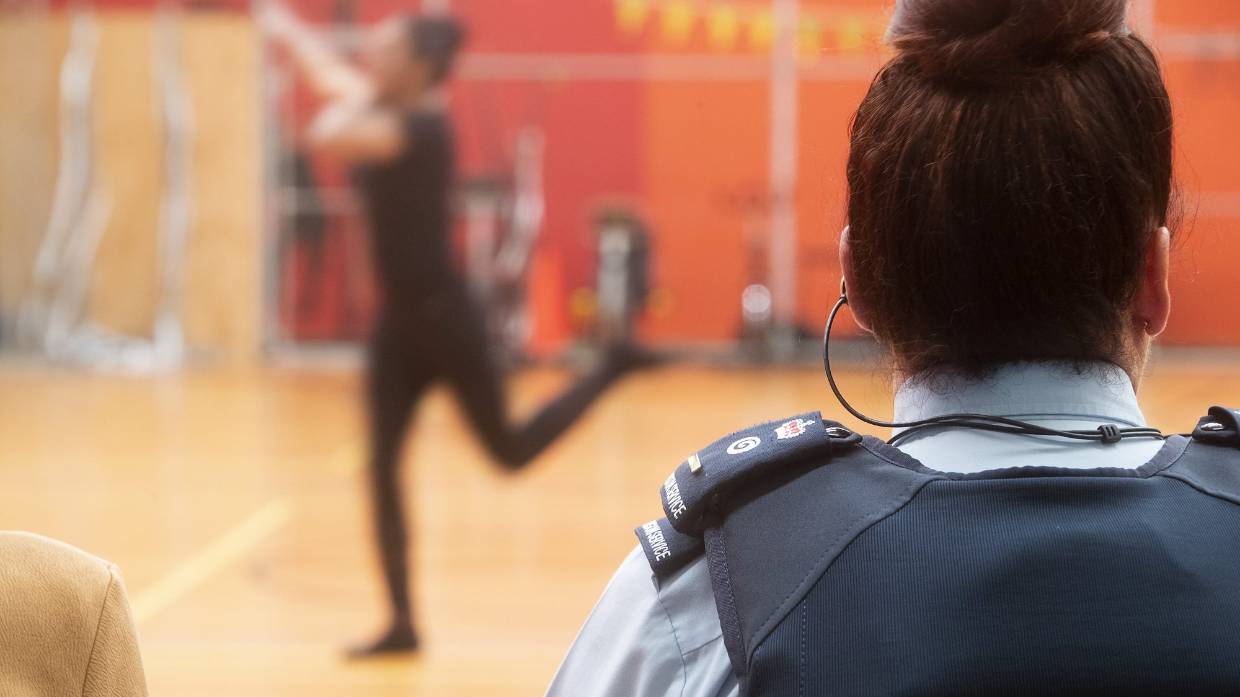
The woman above, who participates in a New Zealand prison’s ballet class, says the dancing made her happy. She says she plans to take some of her new skills into her future on the outside.

In New Zealand, officials in a women’s prison have found that ballet may not only provide structure and discipline to people who need help with self-control: it may also provide happiness.

Caroline Williams writes at Stuff, “Barbed wire fences, concrete cells and a focus on hard punishment are a thing of the past at the Auckland Region Women’s Corrections Facility. Instead, it’s open spaces and restorative rehabilitation in the form of classical music and contemporary ballet.

“Since 2017, inmates at men’s and women’s prisons in Wellington and Christchurch have enjoyed a more refined approach to restorative justice, thanks to a Royal New Zealand Ballet [RNZB] initiative to make the art form more accessible.

“Before prison, some of the women had had to ‘be staunch’ their whole lives, RNZB corporate development manager Diane Field said. The ballet program had allowed them to feel free and feminine.

“[In October], the first group of women to take the course in Auckland graduated in front of an audience of RNZB representatives and prison staff, with choreography including repertoire from past RNZB productions Megalopolis, Cacti, Artemis Rising and Black Swan, White Swan.

“The seven women beamed with pride as they completed the performances with few mistakes — a pretty good effort for only 10 and a half hours of practice spread over eight weeks, with a week lost in the middle due to a measles scare. …

“One said the certificate given to her at a graduation ceremony made her feel like she’d accomplished something. … Another said the classes had shaped her into ‘a totally different person’ after never having engaged in sport or dance before her conviction.

“While the dancing ‘made her happy,’ she accepted it was part of her punishment and would take something from the experience into her future. She hoped to pursue a career in fitness upon her release from the facility. … ‘Little things from outsiders make a big difference for us.’

“All the inmates interviewed by Stuff said they would like to take dance classes again and would encourage other inmates to have a go.

“RNZB senior dance educator Pagan Dorgan taught prison programmes in Wellington and Christchurch, but said the women in Auckland had a particular flair for movement.

‘Every week you can just see them become more confident. With confidence comes the drive to want to get better. They’re very engaged and very present.’

“Dorgan, who usually taught dance in schools, … adjusted her teaching style to accommodate for the inmates, including allowances for chatter and freedom for the women to work in their own groups. But she insisted she hadn’t made it easy for the women.

” ‘The more you see them develop, the more you can push.’

“Prison director Steve Park said … [it’s a credit] to the women to put their name forward for the programme.”

I had thought of “restorative justice” as an effort on the part of a wrongdoer to “restore” what they had taken from someone else in committing a crime. But of course, it’s also about restoring criminals to their better selves. Good to know that ballet can help.

More at Stuff, here.

Read Full Post »


Photo: New Zealand Herald
Royal New Zealand Ballet dance educator Pagan Dorgan said a dance initiative with women prisoners aims to build confidence and cooperation.

I like reading about programs designed to help individuals in prison grow in positive ways. I also like the idea of arts groups that, in addition to giving their art to the world, develop other ways to benefit society.

Consider this Royal New Zealand Ballet pilot for women prisoners. Meghan Lawrence at the New Zealand Herald has the story.

“Pirouettes and pliés are being used to break boundaries in a new initiative run by the Royal New Zealand Ballet (RNZB) Company.

“Best known for its dynamic dancers and eclectic repertoire of dance moves, RNZB has chosen to put accessibility and inclusion at the forefront of its latest project run in partnership with the Department of Corrections.

“Three of RNZB’s artistic staff have decided to put aside the national and international stages for [six weeks starting in November 2017] and spend their time teaching prisoners at Arohata Women’s Prison in Wellington. …

“Community manager Pascale Parenteau … said the initiative fits perfectly with the company’s primary goal of making dance accessible to all New Zealanders.

” ‘It was actually very timely because for some time the education team for RNZB have been working on developing an Accessibility Commitment Policy,’ she said.

“As part of that policy the company have run three other projects; the first sign-language interpreted guided tour of the St James Theatre, a sensory-friendly performance for children and adults with autism and special needs, and NZ’s first audio-described ballet performance for visually impaired children and adults. …

“[Parenteau] said the project aims to enhance prisoners’ confidence, communications skills and ability to work with others. …

” ‘When I was setting the programme up I was told that a lot of the women come from broken or disheartening homes and backgrounds, which means they would have never experienced participating in a high-profile training environment, so this is a bit of a boost for them.

” ‘I think they have been very courageous to put their hand up and have a go, but I think the freedom of expression that it allows them is going to be very beneficial.’

“Dance educator Pagan Dorgan was excited to take on the challenge, having previously run a similar initiative with male prisoners in the UK. …

“Dorgan said the project is run in two phases; six weeks of workshops leading up to the Christmas production, and then further sessions [in 2018] to learn specific RNZB repertoire.

“[The first session] was a little bit of everyone getting to know each other and we also did an aerobics or gym type warm-up’ she said. ‘We then went through some basic dance movements that were a mixture of jazz, contemporary and Latin.’ … There was no resistance at all and there was a nice, positive atmosphere.’

“Participants in the project said the experience gave them hope and inspiration, provided a chance to grow as individuals, and made them appreciate life outside of prison walls. …

“Parenteau said the project was set up as a one-off but she is hoping to get further funding to expand the classes.”

More at the New Zealand Herald, here. And Radio New Zealand has audio, here.

Photo: Radio New Zealand
A dance class in a prison.

Read Full Post »

Photo: Getty
Auckland Libraries in New Zealand figured out why their books were going missing and came up with a win-win solution.

If you know how to read, you want to read, and librarians want you to read. But not everyone has easy access to books. That is why some readers in New Zealand were sneaking books.

Mark Molloy writes at the UK’s Telegraph, “A New Zealand library has finally solved the mystery of why some books were going missing from its shelves.

“Auckland Libraries staff were bewildered after finding some books were being hidden in random places. They initially thought kids playing pranks were to blame, but later discovered it was the city’s rough sleepers who were actually stashing the books so they could return the next day to continue reading.

“ ‘A lot of our street community were wanting to put them underneath the couches or underneath book shelves and kind of hiding them in various places,’ librarian Sean Taylor told TV NZ. … Without a permanent address they were unable to sign up for a library card that would allow them to take the literature away.

“As a solution, Auckland Library created a new section where books can now be left overnight and picked back up again the next morning. …

“ ‘They are really well read. We’ve got a guy who I’ve had a discussion about the meanings of words and we’ll talk about the reference section and it’s the kind of intellectual conversation you’d expect from an academic.’ …

“Auckland Library says it sees itself as a ‘home for the homeless’ and holds regular cinema screenings and a book club for those sleeping rough. …

“ ‘One guy told me he moved to the city several years ago, and that none of his family back home knew he was homeless,” [said Rachel Rivera, manager of Auckland Libraries]. He used our computers to keep in touch with them. It was his lifeline to his family,’ she said.

“ ‘They value our service, like many of our communities do, for different reasons. But they don’t always feel safe and welcome, and that is something we can and should take steps to address.’ ”

More at the Telegraph, here. And look: Everything at the Auckland libraries website is in both English and Maori.

Read Full Post »


Photo: Birgit Krippner for the New York Times
Allan Tipene and his wife, Desiree Tipene, with their children and others in New Zealand. Ms. Tipene called “Moana” a “funny and beautiful” way for her children to connect with their culture.
 

The cartoon film Moana is playing a role in the push to preserve indigenous languages — one language in particular.

Charlotte Graham writes at the New York Times about the Moana translation being shown in New Zealand.

“The families lined up at the theater above a shopping mall here in New Zealand’s biggest city [for] a film unlike any they had ever seen — the Disney hit ‘Moana,’ translated into the indigenous language of New Zealand. …

“About 125,000 of New Zealand’s 4.7 million people speak the Maori language, or ‘te reo Māori,’ as it is widely rendered here. There are concerns that numbers are declining, putting it at risk of dying out. But with one in three Maori people in New Zealand younger than 15, experts said the chance for youth to see a wildly popular movie in their own words could turn the language’s fortunes around after more official efforts faltered. …

“ ‘Moana’ [is] the story of a Polynesian princess, Moana, on an adventure with her chicken, Heihei, and the demigod Maui …

“Many of those attending in Manukau, in southern Auckland, said they had never seen a film at the theater entirely in their language before.

“Several of the families there came from nearby Manurewa, a district usually in the news for unemployment, homelessness and poverty. Parents entering the theater said they relished the chance for their children to see themselves and their language reflected on the big screen, in a different kind of story that they hoped would instill pride in being Maori. …

“ ‘Language is the expression of a culture and a race of people,’ [Haami Piripi, a former head of the government body charged with the promotion of te reo Māori as a living language] said. ‘To retain your language is an emblem of survival through history. If you’ve still got your language now, you have the key to your culture.’ …

“Katarina Edmonds, a senior lecturer in Maori education at the University of Auckland, and one of three people who translated the film, said the team worked not only to find the exact equivalents of words in the Disney script, but also to remain true to the Maori language and tikanga, or cultural values.”

More at the New York Times, here.

Read Full Post »

Older Posts »