Feeds:
Posts
Comments

Posts Tagged ‘paris’

Photo: Rasmus Hjortshoj.
Dortheavej residence in Copenhagen. Social housing accounts for about 20% of all housing stock in Denmark and is available to anyone, regardless of income.

I’m always interested in housing stories, partly because among the issues that the department I worked in at the Fed addressed was housing. After the mortgage meltdown in 2008, I remember, we had a gigantic event at the Patriots’ football stadium to gather borrowers in danger of foreclosure under one roof with organizations that could help them.

Today’s story looks at new ideas in public housing from around the world. Maddie Thomas reports at the Guardan, “The social housing of last century often calls to mind towering blocks of flats, poorly maintained with dark, pokey and cold units. But alongside a rise in community living, the 21st century has brought quality construction, sustainability, and quality of life to the forefront of social housing design.

“Australia’s commitment to and funding for social housing stock is limited. But by 2037, Australia is estimated to have 1.1 million people seeking social housing. Professor of architecture and head of the University of NSW’s school of the built environment, Philip Oldfield, says that for an investment in social housing to match cosmopolitan cities like Paris or Barcelona, more housing of quality needs to be built.

“ ‘Architects are trained in this … so when they’re given the opportunity to do it well, Australian architects will create as good a housing as anywhere else in the world,’ he says. ‘At the moment, the system, with few exceptions, doesn’t give them that creative opportunity to deliver … the kind of world class social housing we would love to see.’

“While Australian not-for-profits are building design-led affordable housing for low to middle income earners, government-funded social housing for those on waitlists is lacking. Oldfield says organizations like Nightingale Housing are pioneers in built-to-rent housing, with 20% of apartments assigned to community housing providers for those most in need. But examples like Sydney’s Sirius building, previously owned by the state government, show that Australia needs more purpose-built social housing to cater to demand and match international standards.

“ ‘In conventional market-led housing, you build for the people who purchase the house … so you don’t consider as much the energy bills that are going to accumulate over time,’ he says. ‘With social housing, you’re not trying to create a profit so you can consider things like the life cycle costs for housing in a much more significant way.’ …

“Social housing in Denmark is available to anyone, regardless of income. Highly regulated to ensure quality construction, social housing accounts for about 20% of all housing stock in Denmark. In 2013, global architecture firm Bjarke Ingels Group was commissioned by Lejerbo, a Danish organization building housing for those in need, to design ‘Dortheavej’ – a social housing block in Copenhagen.

“Bjarke Ingels’ ‘winding wall’ of social housing has 66 units for low-income citizens, with a small balcony and floor-to-ceiling windows in each.

“ ‘The stacking of prefabricated elements consisting of two kinds of stacked modules, which are repeated to create the characteristic checkered pattern,’ says Kai-Uwe Bergmann, partner at Bjarke Ingels. ‘By gently adjusting the modules, the living areas open more towards the courtyard while curving the linear block away from the street to expand the sidewalk into a public square.’

“The stairwells allow for the units to be filled with daylight, and views of the neighboring green space. Pathways through the site give access to the street. The apartments themselves range from 60 to 115 sq m [~646 to ~1200 square feet], but with open plan designs, space within the units themselves is flexible.”

Read housing stories from Mexico City, Paris, Barcelona, Los Angeles, and Vienna at the Guardian, here; no paywall. You’ll appreciate the variety of approaches around the world and enjoy some great photos.

Making Home Home blog, looking at you!

Read Full Post »

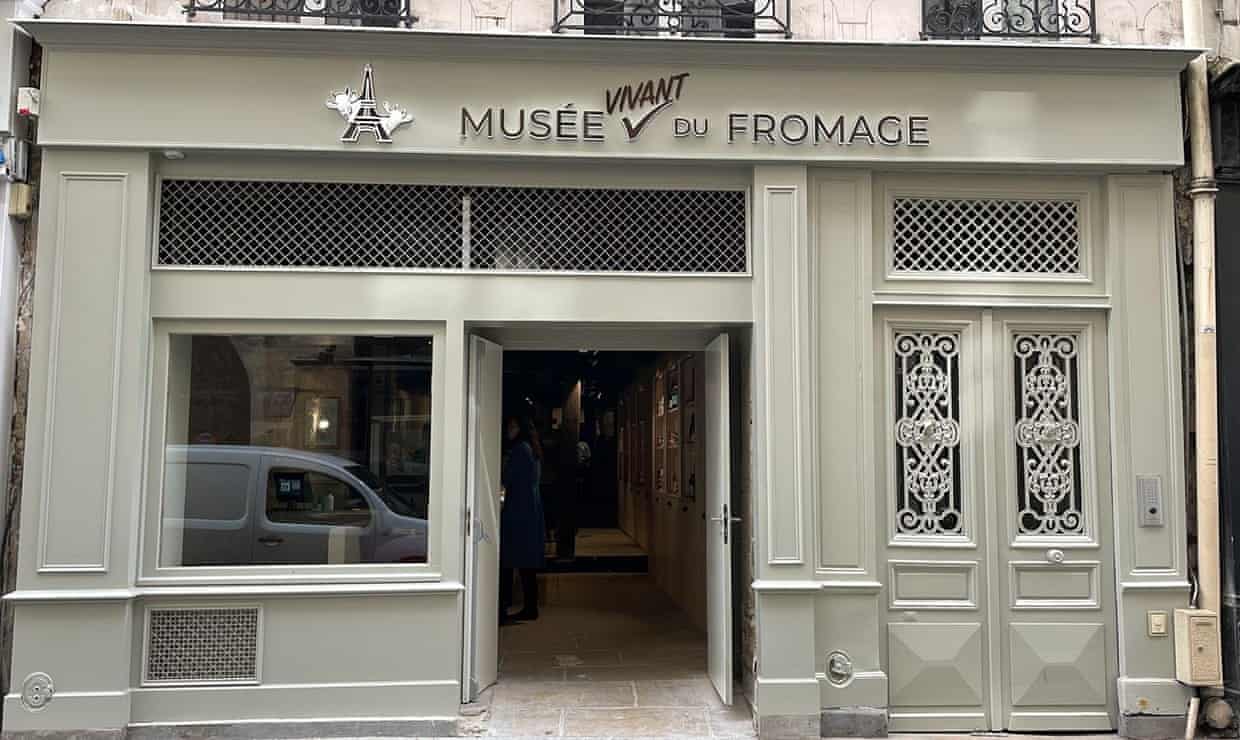
Photo: Capucine Gillier/Musée du Fromage.
The exterior of the newly-opened Musee du Fromage in Paris. The French are estimated to eat about 44 pounds to 60 pounds of cheese per person annually. 

With the eyes of the world on Paris and the summer Olympics just now, it’s a good time to highlight a museum that could only be in Paris: The Museum of Cheese.

Kim Willsher writes at the Guardian, “Say ‘cheese’ and Pierre Brisson is a happy man. The founder of France’s first cheese museum is passionate about the subject – and not just eating it but passing on the traditional skills of cheesemaking to future generations.

“ ‘It’s not an easy job but a marvelous one and there is a real risk that it could disappear,’ he said. … ‘We hear a lot about wines and how they are made and the subtleties of taste and how they are produced and nothing about cheese. Although people like eating it and the demand for cheese is still high, fewer youngsters want to make a career of it.’ …

“Visitors will be charged [~$20] to watch a demonstration of how various cheeses are made, take part in a tasting and learn the history of cheese and regional varieties through interactive displays.

Farmers and agriculture students will be allowed in for free.

“Brisson, 38, the son of Burgundy winemakers, said his passion for cheese developed as a boy. ‘My father would take me to the cheesemonger every Sunday after Mass.’ …

“After studying at the National Dairy Industries School, Brisson set up Paroles de Fromagers to run courses in cheesemaking for the public and training for professionals.

“He chose to locate the museum, which has been a decade in the planning, in Paris to appeal to the French and tourists and to avoid regional rivalries. A plaque reminds visitors of General de Gaulle’s aphorism: ‘How can one govern a country where there are 258 varieties of cheese?’ …

“Brisson said: ‘When I moved to Paris I realized there were lots of places promoting wine, its culture and how it is made and lots of shops selling cheese, but nothing showing people how it is made.’

“He has recruited half a dozen cheesemakers to help visitors understand the art of producing different varieties from live milk, including the role of bacteria, and the animals and the land on which they graze. …

“Agathe de Saint-Exupéry will be one of the experts explaining the process, including how makers ‘read’ the milk and how small details can affect the final product.

“ ‘It’s a very individual process that depends on so many things, even the humor of the animals whose milk is being used. You can make the same good cheese every day, and every day it will taste different. It just cannot be done industrially,’ she said.

“Guillaume Gaubert, a cheesemaker, said the aim was also to remind the French – particularly those living in towns and cities – of their traditional links with the terroir, an untranslatable concept that covers not only the soil, environment and human interactions with it, but a sense of history and geography, and which is a cornerstone of French gastronomy. …

“France has 56 official cheese appellations – registered regional varieties – which is nine more than Italy and more than three times the number in the UK. … The Campagne de France, a cooperative of milk producers, estimates there could be as many as 1,500 different varieties, not including those produced at home in small quantities. …

“Brisson said the museum would be a ‘little window’ on country life in the heart of the capital.

“ ‘My dream is that in 20 years’ time someone will say they decided to become a cheesemaker after visiting the museum.’ ”

More at the Guardian, here.

Read Full Post »

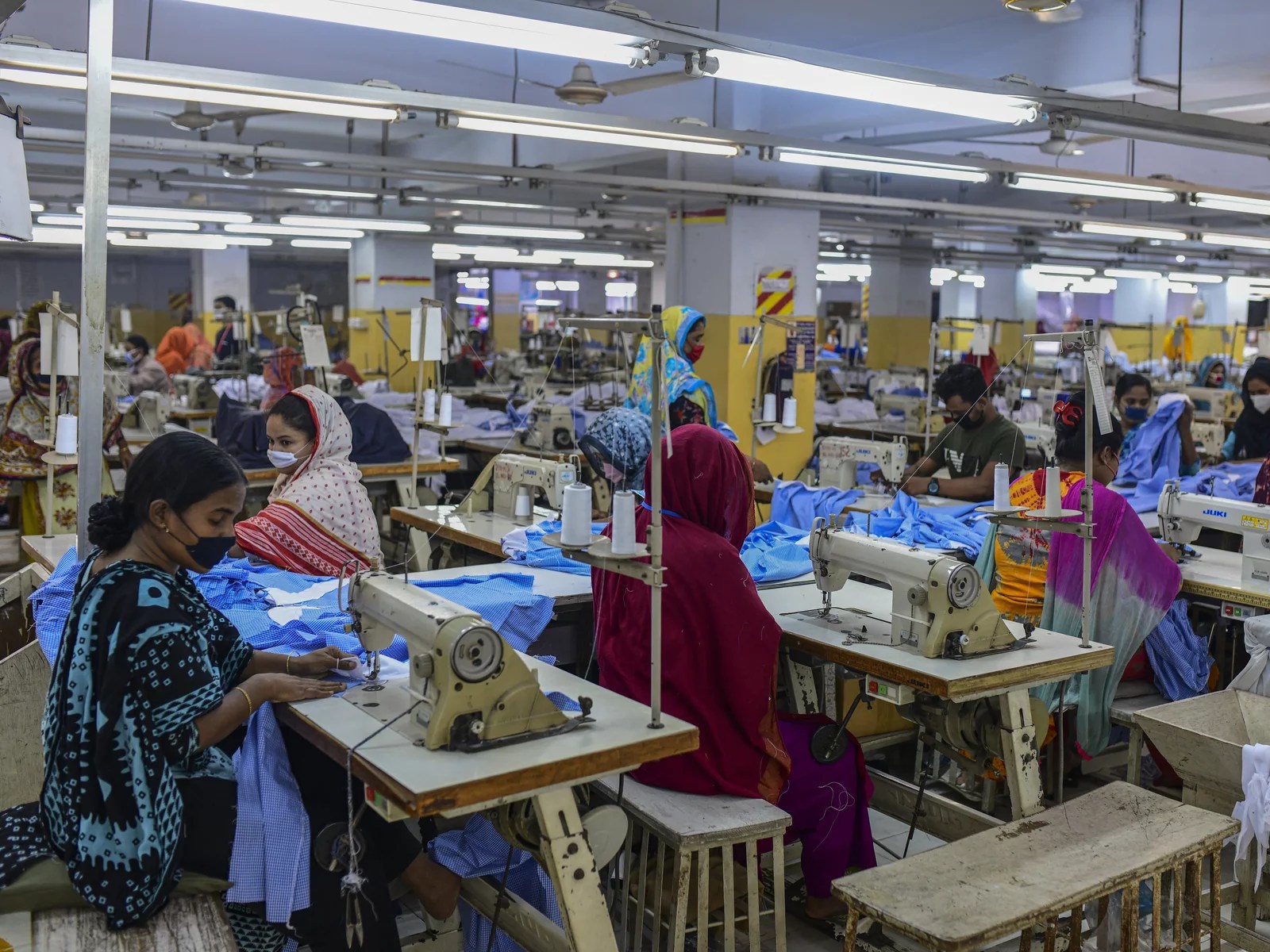
Photo: Zabed Hasnain Chowdhury/SOPA Images/LightRocket via Getty Images.
Garment workers were deemed essential employees during the Covid lockdown in Bangladesh, when workers were more worried about hunger than the pandemic and customers in wealthier places were still demanding new clothes.

Here’s a support group that most of the world needs. It’s one that recognizes capitalism — or at least acquiring more and more “stuff” — as an unhealthy addiction for Spaceship Earth.

Gerry Hadden reports at Public Radio International’s The World, “Twice a month, members of the support group Capitalists Anonymous gather in a small room in Paris, France, beset by chronic buyer’s remorse. 

“Some arrive worried over how much they consume and don’t know how to stop. 

“On a recent night, each of the eight people stood up, introduced themselves, and gave their reasons for coming to the support group. A woman named Claire, who didn’t want to share her last name, said she wants to be with people who share her concerns for the planet and mental health. …

“ ‘Where I live in southwest France’ [said participant Olivier Montegut], ‘it reached 90 degrees one day — in April. We’ve just had a baby, and I am scared for her future,’ he told the group. 

“Most scientists agree extreme weather is being fueled by climate change, which is exacerbated by the burning of fossil fuels. And capitalism is the force behind it all, said the group’s founder, Julien Lamy. 

“He said it’s a global system that pushes unfettered consumption on the rich and poor alike, and virtually everyone, he said, is addicted.

“ ‘To push back, I searched for support groups with a focus on recovery and eventually found Alcoholics Anonymous, with its 12-step method,’ Lamy explained. …

Capitalists Anonymous has just eight steps but starts with the same one — admitting that you have a problem. 

“ ‘It means recognizing that we’re participating in a system that’s destroying life on our planet,’ he said. …

“These steps might sound familiar to people in drug or alcohol programs, but Lamy said in some ways, capitalism is harder to shake because it permeates every part of modern life.

“ ‘I often say that what we’re trying to do is like striving for sobriety,’ he said, ‘but while living inside a bar.’ A planet-sized bar. 

“To avoid feeling overwhelmed, Lamy suggests people take small steps to reduce their impact just to feel better in their personal lives, such as biking to work or cutting back on red meat. …

“Resident Anne-Christelle Beauvois said she heard Lamy on the radio and reached out to learn more.  

“Beauvois worked for years in the fashion industry. She said she became alarmed in the 1990s when so-called fast fashion arrived — that system of mass-producing cheap clothes in sweatshops that then get shipped all over the world.

“ ‘It’s nuts,’ she said. ‘You can wake up in the middle of the night, jump on Instagram to follow some influencer or brand and click, you place an order.’

“Beauvois said she has never ordered anything online in her life. But she’s hardly ‘holier than thou,’ she said as she lit a cigarette and took a puff on another addiction. 

“It may be hard to avoid capitalism when the entire global economy depends on it, but Beauvois said people can still produce differently. 

“ ‘Do we need to make stuff we don’t need?  Must we work 50 hours a week? Is it such a problem to add more pleasure to our lives and less work?’ she said. …

“Lamy, the founder, said people from all over Europe — even Mexico — have written to ask how to start their own chapters.”

So my question is, How do we stop unnecessary acquiring and still ensure that the people who are providing all the “stuff” not only have enough to eat but can have a decent life?

“Houston, we have a problem.”

More at PRI’s The World, here.

Read Full Post »

Photo: Sabine Glaubitz/dpa/picture alliance.
Notre Dame’s spire is visible once again following the partial removal of scaffolding.

After the Notre Dame cathedral in Paris burned, there were many suggestions for rebuilding it with lots of modern features, but tradition mostly won out. Ancient craft processes and materials were used whenever possible. People from all over pitched in.

Stefan Dege writes at DW, “The fire was still raging at the Notre Dame Cathedral on April 15, 2019, when French President Emmanuel Macron vowed to renovate and reconstruct the medieval monument within five years. Since then, work on the Gothic Episcopal church has been in full swing and is apparently on schedule.

” ‘We are meeting deadlines and budget,’ Philippe Jost, the head of reconstruction efforts, told a French Senate committee in late March. …

“The cathedral is officially scheduled to reopen on December 8, 2024. Though it will not be ready in time for the Summer Olympic in Paris, as was initially desired, visitors to the French capital can once again see Notre Dame’s towering spire following the recent removal of the surrounding scaffolding. The lead roof is also currently being installed. Fire-prevention features, such as a sprinkler system and compartmentalized sections, are also part of restoration efforts. …

“Exactly five years have passed since the fire, which partially destroyed the historic building. The Paris fire department fought for four hours before it was able to confine the fire to the wooden roof truss. The west facade with the main towers, the walls of the nave, the buttresses and large parts of the ceiling vault remained stable, along with the side aisles and choir ambulatories. Heat, smoke, soot and extinguishing water affected the church furnishings, but here, too, there was no major damage. …

“The extent of the destruction was not as great as initially feared. ‘Thank God not all the vaults collapsed,’ German cathedral expert Barbara Schock-Werner told DW at the time. Only three vaults fell in the end, and there was a hole in the choir. …

“French donors alone pledged €850 million ($915 million) to help restore the landmark. But money and expertise also came from Germany, with Schock-Werner taking over the coordination of German aid.

Cologne Cathedral’s construction lodge restored four stained glass windows that had been severely damaged by flames and heat. The four clerestory windows with abstract forms are the work of the French glass painter Jacques Le Chevallier (1896-1987), and were produced in the 1960s.

“In the glass workshop in Cologne, they were first freed from toxic lead dust in a decontamination chamber. The restorers then cleaned the window panes, glued cracks in the glass, soldered fractures in the lead mesh, renewed the edge lead and re-cemented the outer sides of the window panels. …

“As dramatic as the fire was, a discovery by French researchers at the fire site was just as sensational: iron clamps hold the stones of the structure together. Dating and metallurgical analyses revealed that these iron reinforcements date back to the first construction phase of the church in the 12th century. This may make Notre Dame the world’s oldest church building with such iron reinforcement.

“But more importantly, the mystery of why the nave was able to reach this height in the first place has also been solved. When construction began in 1163, Notre Dame — with its nave soaring to a height of more than 32 meters (about 105 feet) — was soon the tallest building of the time, thanks to a combination of architectural refinements. The five-nave floor plan, the cross-ribbed vaulting with thin struts and the open buttress arches on the outside of the nave, which transferred the load of the structure from the walls, made the enormous height possible. …

“In a stroke of luck, the cathedral’s showstoppers — the statues of the 12 apostles and four evangelists that architect Eugene Viollet-le-Duc grouped around the ridge turret he designed in the 19th century — survived the fire unscathed because they had been removed from the roof shortly beforehand for restoration.

“Some 2,000 oak trees were cut down for the reconstruction of the medieval roof truss. To work the trunks into beams, the craftsmen used special axes with the cathedral’s facade engraved on the blade. These can be seen in a special exhibition in the Paris Museum of Architecture. The show also details the painstaking work that was required to reinstall stones and wood in their original places to make the reconstruction as true to the original as possible.”

More at DW, here. No firewall.

Read Full Post »

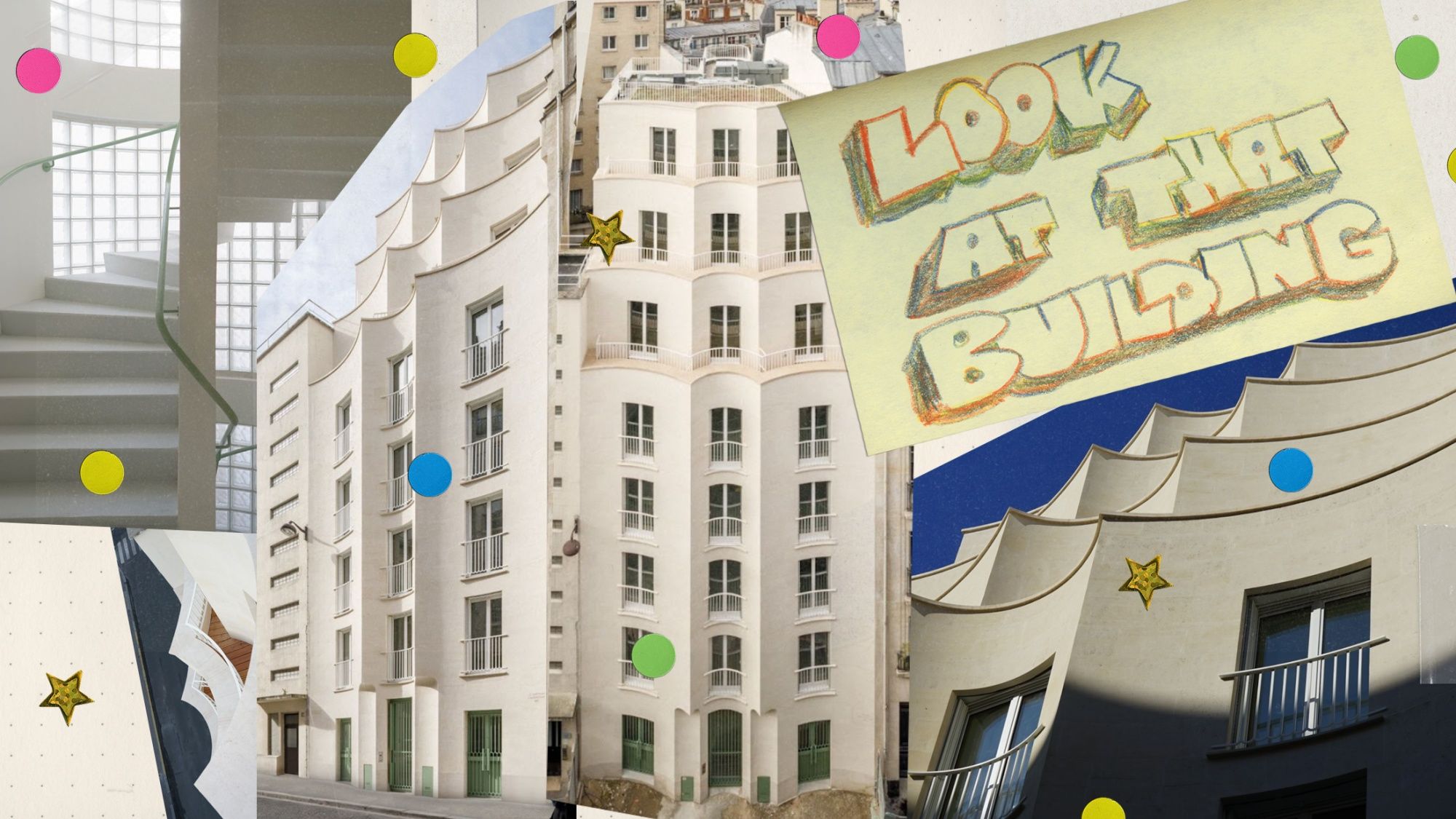
Photo: Jean-Christophe Quinton Architecte. Illustration: Stephanie Davidson.
“At street level,”
CityLab reports, “12 Rue Jean-Bart blends into its neighborhood. At the top, things get a little funky.” 

Blogger Laurie and I exchanged comments the other day about how neighbors with decent housing too often vote against building affordable housing nearby. True, even though we all know that forcing families into homelessness hurts us all.

A recent story about Paris, where the neighbors didn’t get to vote, shows that good architecture can enable what the French call “social” housing to be constructed in the most exclusive neighborhoods.

Marie Patino and Kriston Capps write at CityLab, “The project at 12 Rue Jean-Bart is a modest one, just eight units of affordable housing on a narrow lot in Paris near the Luxembourg Gardens. The social housing project nevertheless caused a stir with neighbors in the 6th arrondissement, one of the city’s more affluent areas.

“When local politicians backing the project came to visit the building during its construction, neighbors shouted from windows across the street that it was a shame to build social housing here, according to Jean-Christophe Quinton, the Paris-based architect who designed the small in-fill development.

“Local resistance was a persistent feature of the project throughout its three-year-long construction, Quinton says; the building regularly faced harsh scrutiny in local newspaper Le Parisien.

“Quinton responded to critics with design. The final building that emerged at 12 Rue Jean-Bart is striking: Its facade features great concave swoops of limestone, like ribbons of frosting atop a particularly elegant slab of cake. Yet in many ways, it’s a traditional project. The architect strived to make the building familiar: It’s finished with the same materials found throughout Paris and built to the same proportions as some of the 19th-century buildings on the street.

“ ‘We need to destigmatize social housing,’ Quinton told Bloomberg CityLab from his Paris design studio, his Zoom background cluttered with building models. ‘That’s also why it’s made out of stone, because it’s totally integrated into the city, to say that you can build social housing in Paris, and that’s a good thing.’

“Quinton says he’s learned that there’s no use trying to compete with the street in Paris, so 12 Rue Jean-Bart does its best to fit in amongst its neighbors, in a way that makes it almost invisible from afar. The design’s most dramatic gestures are reserved for the upper floors. At street level, the building’s curves look almost like classical fluted columns. Twin weight-bearing stone culs de lampe on each side of the front entrance, which support the corners of the building where the curves meet, are hidden feats of engineering. …

“Other details are traditional, too, and as typical of Paris architecture as possible. The white balconies and joinery at 12 Rue Jean-Bart are common in the city. So is the honey limestone, which comes from a quarry in Vassens, not far from the city. The scale of the project is simply driven by local building codes. The setbacks at the top of the building match those built during the mid-19th century. …

“For residents at 12 Rue Jean-Bart, the experience is rather dramatic. The building is narrower at the back than at street level, and each floor fans out from a central staircase column. The layouts of the upper-floor units with balconies shift dramatically from those below in order to maximize light while adhering to strict accessibility standards required by Paris codes — a challenge, given the limited size of the lot. The balconies provide a rhythmic frame for the street.

“The building’s been fully rented for almost a year now. The residents love it, according to the architect. And the neighbors have learned to live with it.

“ ‘From afar, you don’t see it, and up close, it has personality,’ Quinton says. ‘It’s a Parisian personality.’ ”

More at CityLab, here. No firewall.

Fellow bloggers who visit Paris: If you are ever in Rue Jean-Bart, do send us a picture of number 12.

Read Full Post »

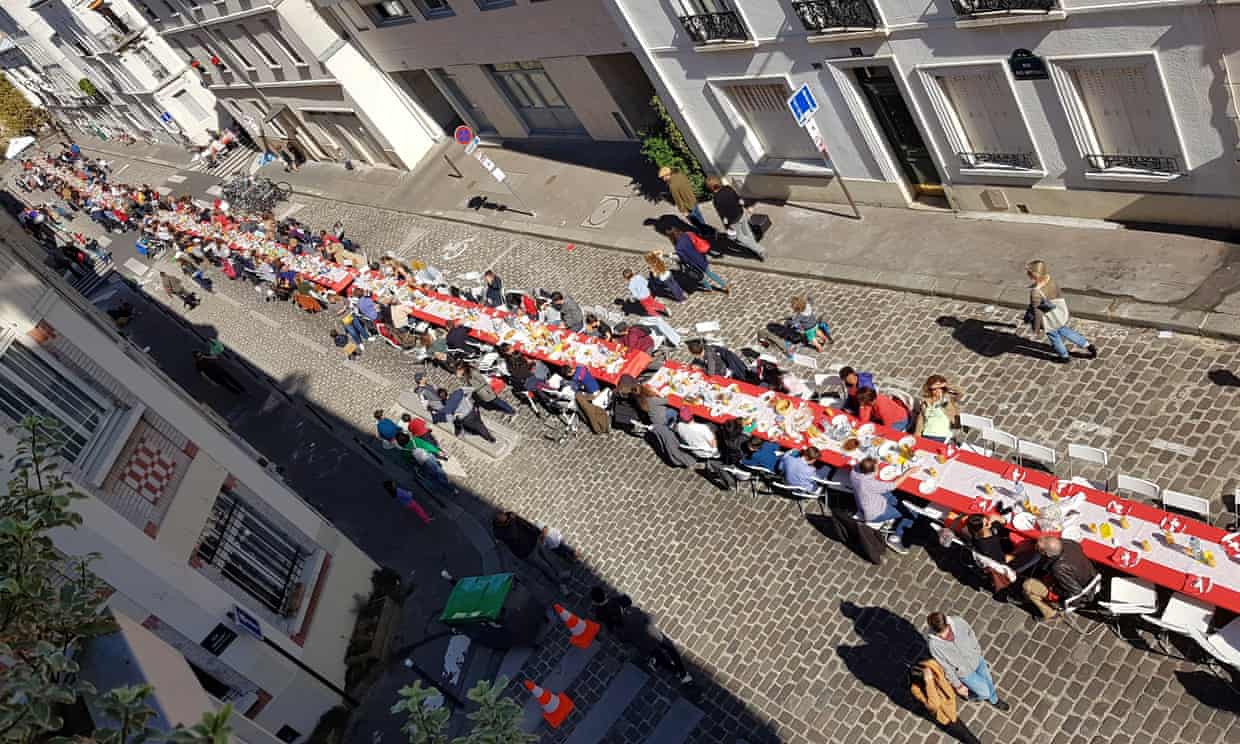
Photo: Hyper Voisins.
A 705-foot banquet table meant to seat 648 people in a Paris neighborhood that’s seeking a more neighborly lifestyle.

It’s that time of year again — time for our valiant but hopeless block party, when we smile and reintroduce ourselves to neighbors that we will look right through when we bump into them in the market in January. If New England can’t make mutual support and cooperation work, how in the world can Paris?

Peter Yeung at the Guardian describes an experiment in France.

“It was a distinctly un-Parisian revolution although it began on an inner city street. No barricades were assembled to block the nearby boulevards and no radical students hurled cobblestones ripped from the pavement. …

“Instead, a 215-meter-long [about 705 feet] banquet table, lined with 648 chairs and laden with a home cooked produce, was set up along the Rue de l’Aude and those in attendance were urged to openly utter the most subversive of words: bonjour.

“For some, that greeting led to the first meaningful exchange between neighbors. ‘I’d never seen anything like it before,’ says Benjamin Zhong who runs a cafe in the area. ‘It felt like the street belonged to me, to all of us.’

“The revolutionaries pledged their allegiance that September day in 2017 to the self-styled République des Hyper Voisins, or Republic of Super Neighbors, a stretch of the 14th arrondissement on the Left Bank, encompassing roughly 50 streets and 15,000 residents. In the five years since, the republic – a ‘laboratory for social experimentation’ – has attempted to address the shortcomings of modern city living, which can be transactional, fast-paced, and lonely.

“The experiment encourages people not just to salute each other more in the street but to interact daily through mutual aid schemes, voluntary skills-sharing and organized meet ups.

“ ‘The stereotype of a Parisian is brusque and unfriendly,’ says Patrick Bernard, the former journalist and local resident who launched the project. ‘But city living doesn’t have to be unpleasant and anonymous. We want to create the atmosphere of a village in an urban space. [Conviviality] can become a powerful asset, an essential economic and social agent in the construction of tomorrow’s cities.’

“Nearly 2,000 people now attend weekly brunches and apéritifs in local restaurants, cultural outings, memory exchanges, children’s activities and more. During the pandemic, residents mobilized to make masks, deliver shopping to vulnerable neighbors and bake cakes to support a local charity. Crucial, too, is the digital aspect: dozens of WhatsApp groups include those dedicated to repairing broken devices, selling second-hand goods, and sharing healthcare resources. …

“Mireille Roberdeau, an 86-year-old widow who moved to the area in 2000, says the scheme has given her a reason to get up in the morning. ‘I was quite timid before,’ she adds. ‘I wouldn’t speak to anyone. I would scowl at people. But now I look forward to going out. It’s good because my doctor says I need to get out.’

“Roberdeau, now a keen user of the WhatsApp groups was hospitalized in March but says neighbors delivered her groceries when she got home. …

“Beyond the ‘eating, drinking and celebrating as social engineering,’ in the words of Bernard, that defined the initial stages of Hyper Voisins, the long-term targets – aimed at transforming the very nature and functioning of an urban neighborhood – come under four pillars: environment, healthcare, public spaces and mobility.

“It has, for example, collaborated with non-profit Les Alchimistes to install organic waste disposal points in former parking spaces and to turn the matter into compost. Perhaps more radically at a time of strained healthcare provision in France, it is launching a health clinic geared towards local needs. [It] will have a staff of 10 and offer extended opening hours, consultations without appointment and home visits. …

“To reduce local car use by residents and traders, Hyper Voisins plans to buy electric bikes with trailers and install a communal electric bike charger. It is also in talks with the mayor to potentially levy a local tax on unwanted businesses such as estate agents, banks and delivery hubs and give residents a vote on whether they can even move in. ‘We want to promote stores that improve our daily life,’ adds Bernard. ‘If not, like a polluter, they should pay.’ …

“A study by sociologist Camille Arnodin found that Hyper Voisins – and two other community volunteer projects in Paris – had reinforced pandemic resilience, transformed weak neighbourly links into strong bonds, improved social mixing and reduced social isolation. …

“[But it] noted issues over inclusion: the scheme could risk leaving out either those who don’t wish to participate in activities or those who ‘don’t feel included or informed.’ ”

What do you think? Several readers are more intimate with Paris than I am, having been there only once, decades ago. So I would love to hear what you think of the experiment. Good idea? Can’t possibly survive?

More at the Guardian, here.

Read Full Post »

Photo: Rebecca Rosman/The World.
Alexandre de Fages de Latour and his son, Raphael, are pictured near the Seine in Paris, where they fish out treasures — and junk. Raphael aims to have a clean river before the Olympics come to Paris.

I am really into kids who lead the way: kids and young adults who lead the fight against US gun violence, for example, or fossil fuels. In fact, yesterday when I saw that kids had written wise messages from the environmental nonprofit Sunrise Movement on sidewalks all over town, I went online and made a donation. At this moment in time, it just seems to me that young leaders are more likely to get things done than their elders.

Rebecca Rosman reports at Public Radio International’s the World about a Parisian kid focused on protecting the Seine.

“Paris Mayor Anne Hidalgo has set a goal of making the Seine swimmable by 2024 when her city will host the Olympic Games. If she succeeds, it will be the first time that bathing in the Seine is legal in over 100 years. To do that, though, the city will have to significantly reduce the levels of toxic bacteria that flow through the river. [Moreover] around 360 tons of plastic are found in the Seine every year.

“Lucky for Hidalgo, 11-year-old Raphael is on the case. For nearly two years now, the scrappy middle schooler has spent nearly every weekend with his dad, fishing debris out of the 450-mile stretch of water.

“ ‘It’s not unusual for us to catch an entire ton in a single day,’ Raphael’s dad, Alexandre de Fages de Latour said. …

‘I always knew there were things at the bottom of the water, but not to the point of scooters and bicycles,’ Raphael said. His biggest find: a 360-pound Yamaha motorcycle that took an entire team to pull out.

“Then, there are the more unusual objects, including a digital single-lens reflex (DSLR) camera, jewelry and even a 19th-century bayonet. Those treasures are stored at a makeshift museum located in his dad’s basement and are also shared on his Instagram account @raf_sur_seine where he now has more than 20,000 subscribers.

“It all started, however, at around Christmas 2019 when Raphael saw a YouTube tutorial from someone doing something similar. So, Raphael asked his parents for several meters of rope, a hook and a powerful magnet that could attract metal objects weighing more than a ton. …

“ ‘At first, it was just meant to be a leisurely weekend activity,’ Raphael said. ‘But once I saw just how much debris there was buried at the bottom of the river, it became like a full-time job … and I wanted other people to know, too.’ Last October, Raphael was even awarded the Medal of Paris for his efforts. …

“ ‘There’s more than 7 billion people on Earth … so, there’s definitely enough of us to clean up and save the planet,’ Raphael said. ‘But when it comes to taking action, hardly anyone does. Even something as simple as picking up cigarette butts from the ground and placing them in the trash could make a huge difference.’ …

“While he’s not sure if he can make the entire Seine glisten by the 2024 Olympics, he hopes to be one of the first to swim in the water once it’s declared safe.”

More at the World, here.

Read Full Post »

Photo: PCA Architecture.
The Champs-Élysées will be returned to the French people with wider pavements, bicycle lanes, and more green spaces,” says PCA Architecture.

This post is about a more pedestrian-friendly vision for Paris, but as far as I can tell, it’s still in the imagining stage. Covid, ironically, has helped move things along.

Tim Gibson at the B1M describes what it would be like.

“Mayor Anne Hidalgo has given the green light for the city’s iconic Champs-Élysées to be transformed into an urban garden.

“Traffic congestion has seen the famous boulevard lose its grandeur over recent decades, and many local Parisians have abandoned it in favour of more pedestrian-friendly avenues. Hidalgo hopes to bring the road back to its people by removing its outer lanes, widening pedestrian areas, planting more trees and greenery, and creating dedicated bicycle lanes.

“Plans were first proposed in 2019 by local community leaders who begged the government to restore the road to its former glory. …

“The massive overhaul is part of a £225M project to regenerate Paris’ streets and make the city greener and more people-friendly. Throughout Paris, 140,000 on-street car parking bays will be removed and replaced with vegetable allotments, food composting, playgrounds, bicycle lock-ups and more trees.

Local residents have been consulted on what they’d prefer the spaces to be used for.

‘We can no longer use 50% of the capital for cars when they represent only 13% of people’s journeys,’ deputy mayor David Belliard told The Times.

“ ‘We have to plant greenery in the city to adapt to the acceleration of climate change. We want to make the air more breathable and give public space to Parisians who often live in cramped flats.’

“While plans for the rejuvenation of Paris pre-date COVID-19, the pandemic has expedited the entire process. City-wide lockdowns have shifted the perspective of many Parisians – and others around the world. There is a newfound emphasis on public transport, green spaces, parks and community.

“Hidalgo has become a major proponent of the ‘fifteen minute city,’ where all residents will be able to reach necessary amenities such as shops, parks and offices within a fifteen minute walk or bike ride. …

“Copenhagen continued with plans to become completely carbon-neutral by 2025 and have 75 percent of all journeys be done by foot, bicycle or public transport. Like Paris, the city has started transforming many of its parking bays into areas for plants and trees.

“During the April lockdown, London also shifted space on its roads over to bicycles, expanding its network of cycling lanes.” More at the B1M, here.

I’m hoping Alison, who blogs about her adventures in Paris, will weigh in. Carol at cas d’intérêt, too.

Read Full Post »

Photo: Charles-Foix Hospital.
At “l’Orbe,” a hospital for the elderly in a suburb of Paris, some patients are getting visits from delightful strangers. Remote visits are offered worldwide.

What a great initiative this is! Free and in many languages. Maybe a poetry-loving Farsi-speaker who misses her family would like me to send her one of these poetic “consultations” sometime when she’s not too busy with work. I need to check.

Laura Cappelle reports at the New York Times, ” ‘I am calling you for a poetic consultation,” said a warm voice on the telephone. ‘It all starts with a very simple question: How are you?’

“Since March [2020], almost 15,000 people around the world have received a call like this. These conversations with actors, who offer a one-on-one chat before reading a poem selected for the recipient, started as a lockdown initiative by a prominent Paris playhouse, the Théâtre de la Ville, in order to keep its artists working while stages remained dark.

“It’s free: Anyone can sign up for a time slot, or make a gift of a call to someone. The exchange generally starts with simple questions about the recipient’s life, then ranges in any direction; after 20 to 25 minutes, the actor introduces the poem.

“As coronavirus restrictions in France stretch on, the program has become such a hit that the Théâtre de la Ville now offers consultations in 23 languages, including Farsi, its latest addition. It has also been expanded to encompass different subjects and formats: Since December, the actors have held consultations at a hospital and at emergency shelters run by the city of Paris.

“When Johanna White, the comedian who called me, asked how I was doing, I answered honestly. We may tell white lies to reassure loved ones, but there is no reason to skirt the truth with a kind stranger. White and I shared our pandemic coping strategies and talked about the ways in which theater has adapted in the past year.

“And then White picked my poem: ‘Incantation,’ by the Polish-American poet Czeslaw Milosz. ‘Human reason is beautiful and invincible,’ she began after a pause. …

“When I hung up the phone, I felt a little lighter. White, who has a rich, deep voice, was adept at putting an audience of one at ease, and Milosz’s words held hope.

“ ‘Through the phone it can be intimate, because generally you’re isolated,’ White, a trilingual voice actor, said in an interview the next day.

“She estimates that in the past year, she has talked to between 400 and 500 people, from places including Wisconsin, Los Angeles, Chile and Niger. A man based in Beirut told her about local riots in which he had lost half of a hand; from Mexico, an 85-year-old woman shared her grief about being separated from her 92-year-old lover by pandemic-mandated rules.

“Consultations involve a great deal of improvisation, White said, including choosing a poem for a person you’ve only just met. ‘Each of us has our own method,’ she added. ‘I file them by emotions, by feelings.’

“For the director of the Théâtre de la Ville, Emmanuel Demarcy-Mota, the idea of individual consultations with actors didn’t come out of the blue. In 2002, when he was at the helm of the northern French theater La Comédie, in Reims, he initiated in-person sessions at a local bar. …

“Other institutions have taken an interest in the program’s popularity. The Théâtre de la Ville has partnered with a handful of European playhouses [to] expand its roster of actors. Additionally, Demarcy-Mota and his team are in the process of holding phone training sessions with around 100 actors from nine African countries, including Benin and Mali, so theaters there can replicate the program.

“Demarcy-Mota acknowledged that the consultation format didn’t suit all stage actors. ‘Some were scared. You’re no longer performing while someone else watches: Instead, you’re in the position of listening to someone.’ It involves a degree of psychology, White said, but ‘we’re not psychologists.’ …

“The Théâtre de la Ville also brought back in-person consultations this winter in partnership with public institutions. The Charles-Foix hospital in Ivry-sur-Seine, a Paris suburb, was the first to allow performers to come for conversations with staff members and patients. …

“For some residents, especially those with dementia, the performances were adapted: Instead of asking questions, Kontou sang to them directly, in a transparent mask so they could see her mouth. Still, the music inspired interaction. At one point, a 97-year-old woman, Simone Gouffe, almost rose from her wheelchair and started singing, her voice powerful despite her slight frame.” More at the New York Times, here.

Photo: Artisanal Paper
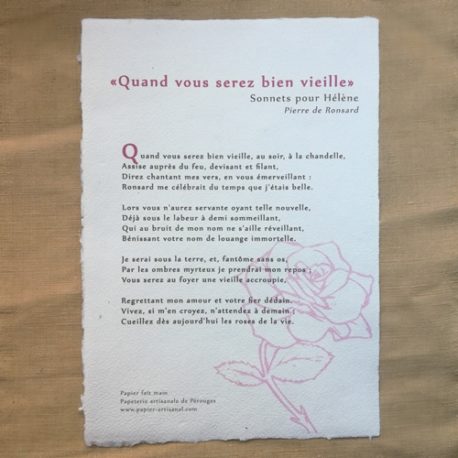
A classic poem that could be read to you by a French actor doing a poetry “consultation.”

Read Full Post »

Photo: Stephanie LeBlanc
Germany has offered to cover the costs of restoring Notre Dame’s upper windows.

Since the horrendous fire at the Notre Dame Cathedral in Paris, lots of ideas for rebuilding have been put forth and numerous groups have volunteered assistance.

This post is about two of those offers: from German glass makers and from Carpenters Without Borders. I’m glad I’m not the one who has to choose among all the ideas. People get emotional about Notre Dame.

In an article at the Art Newspaper, Catherine Hickley wrote, “A year after the devastating fire at Notre-Dame cathedral in Paris, Germany has put forward concrete proposals for its role in the reconstruction including funds from the government and donors and expertise in stained glass and cathedral restoration.

“A fund-raising campaign launched in Germany a day after the fire has raised more than [$51,000 as of April 15] according to a statement issued by Armin Laschet, the prime minister of the state of North Rhine-Westphalia, and Culture Minister Monika Grütters.

‘The reconstruction of Notre-Dame offers an opportunity to become a European symbol of hope,’ Laschet said. ‘For me this reconstruction is also a symbol of German-French friendship.’ …

“The exact scope and nature of Germany’s contribution will be determined in the coming months on the basis of studies on the ground, the statement said, adding that three glass workshops at German cathedrals have the extensive expertise and experience necessary to undertake the restoration of the clerestory windows. Germany would cover the costs of restoring the upper windows, Grütters said.” More.

Meanwhile, in a France24 article, we learn of woodworkers hoping to be allowed to use their traditional techniques in the rebuilding.

“Armed with axes and hand saws, the team of 25 craftsmen and women, who belong to a collective called Carpenters Without Borders, managed to build one of the 25 trusses that made up the wooden roof of Notre-Dame that they say is identical to the original.

” ‘It is a demonstration of traditional techniques on one of the trusses of the framework of the nave of Notre-Dame that serves to show how viable these techniques are from an economic point of view on the one hand and from a technical point of view on the other,’ researcher Frédéric Epaud told AFP.

“Known as ‘the forest’ and built out of vast oak beams, the 800-year-old intricate wooden lattice of Notre-Dame’s knave was completely destroyed in last year’s fire.

“Since then debate has raged over how it should be rebuilt. Some have argued that reconstructing the original roof is impossible as sufficiently old and large enough oak trees no longer exist in France.

“Modern alternatives, such as concrete and steel have been suggested. But Carpenters Without Borders say their work proves the roof can be rebuilt in its original form without huge expense.

” ‘We, in less than a week, with 25 professional carpenters, have entirely built one of the trusses of the nave of Notre-Dame as it was before the fire. One truss, one week,’ the group’s founder and ethnologist at France’s Ministry of Culture, François Calame, told AFP.” More.

An early concept for reconstruction, featuring a glass roof and gardens, is among the many already turned down, and the goal now is to put the cathedral back the way it was. See the Washington Post.

Read Full Post »

Photo: Purple
Jean-Philippe Delhomme, an artist, was hired by the Musée d’Orsay to bring humor to promotion on the museum’s Instagram account.

Back in January, Lanre Bakare wrote at the Guardian about an artist that the Musée d’Orsay in Paris hired to make weekly contributions to its Instagram account. Naturally I wondered how Covid-19 had affected this effort. Answer: Not at all.

Bakare wrote, “One of France’s most celebrated and august art institutions has taken a novel approach to embracing technology while breathing new life into its collection – by installing an Instagram artist-in-residence who imagines the social media accounts of famous artists from history.

“The Paris museum Musée d’Orsay has invited the illustrator Jean-Philippe Delhomme to take over its Instagram account every Monday during 2020. On the account he will post a different drawing each week, depicting an artist as a contemporary social media user. …

“The Orsay president, Laurence des Cars, told Le Figaro that the purpose of the project was to bring more visibility to its artists from centuries ago. ‘The aim [of the residency] is to bring these artists of the second half of the 19th century closer by enrolling them in today’s interactions.’ …

“The idea was not to ‘desecrate works’ but to draw attention to a particular moment in an artist’s biography, and through ‘contemporary commentaries, fictitious or not, to evoke the adhesions or antagonisms aroused.’

“Delhomme released a book last year called Artists’ Instagrams: The Never Seen Instagrams of the Greatest Artists, in which he depicted the social media accounts of Jackson Pollock, Frida Kahlo and Paul Gauguin. ‘If Instagram had existed a century ago, there would be no art criticism today,’ he told the Guardian at the time. ‘Only thumbs-ups and emojis.’ …

“He wanted to focus on artists who were famous to the ‘point of creating mythologies around themselves. … That’s what was fun about it. They’re the gods of art. It’s like doing the Instagram of Mount Olympus. Artists want to be seen – even the most serious ones. Why wouldn’t they show off like everyone else?’ …

“Orsay was widely praised last year for its ground-breaking exhibition Black Models: From Géricault to Matisse, which displayed French masterpieces but renamed them in honour of the black subjects in the pictures but absent from the narratives.”

More at the Guardian.

There’s also a nice interview with Delhomme at ArtNews.

ARTNEWS: “Since you do a weekly post, do you plan out in advance which works to tackle?

DELHOMME: “No, no, no — I don’t plan ahead of time. At the beginning of this collaboration, I took walks in the museum with Sylvie Patry, the museum’s head of collections and conservation. It was wonderful.

“I started looking at the paintings in a much more intimate way. Obviously I can’t go back there for a while, but I have my own memories and I’m reading biographies of artists, trying to deepen my knowledge of nineteenth–century art history.

“I’m reading Michael Fried on Manet. Thinking of the current lockdown situation, one of the posts I did was on Henri Fantin-Latour’s ‘La Liseuse’ [‘The Reader,’ 1861] — and of course it speaks to us today: we’re in our rooms, we can’t go out. It’s a challenge to be absorbed by at-home activities.”

If you’re on Instagram, check out @Jean-Philippe Delhomme and @museeorsay.

Art: Jean-Philippe Delhomme
Delhomme knows that artists must adapt to changing media tastes, like using Instagram to promote their work. What if the Greats had to do that? he asks.

Read Full Post »

a514c2fcd

Photo: Ville de Paris/Apur/Céline Orsingher
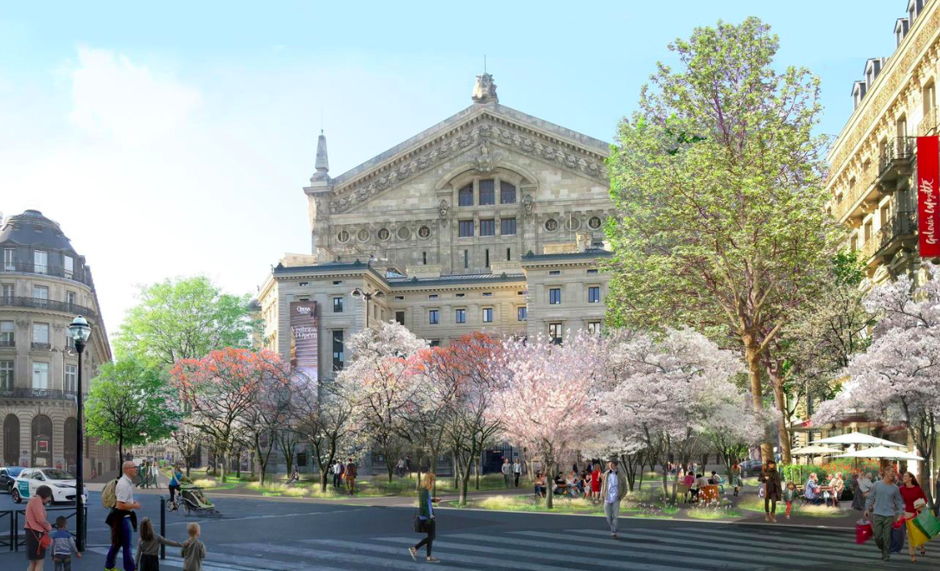
The trees in this rendering of Paris’s Opera Garnier would take the place of an existing bus-parking area. Big ideas are necessary if the city is to meet its ambitious greening goals, part of the international Paris Agreement to tackle global warming.

A January article by Feargus O’Sullivan at CityLab, showed artist renderings like the one above as part of a plan to bring more trees into Paris. The announcement came before Notre Dame burned, so I hope plans are still going forward. Here is the concept.

“Some of Paris’s most treasured landmarks are set to host the city’s new ‘urban forests,’ ” writes O’Sullivan.

“Thickets of trees will soon appear in what today are pockets of concrete next to landmark locations, including the Hôtel de Ville, Paris’s city hall; the Opera Garnier, Paris’s main opera house; the Gare de Lyon; and along the Seine quayside.

“The new plantings are part of a plan to create ‘islands of freshness’—green spaces that moderate the city’s heat island effect. It also falls into an overall drive to convert Paris’s surface ‘from mineral to vegetal,’ introducing soil into architectural set-piece locations that have been kept bare historically. As a result, the plan will not just increase greenery, but may also provoke some modest rethinking of the way Paris frames its architectural heritage. …

“[Such plans] are necessary if Paris is to meet its ambitious greening goals. By 2030, city hall wants to have 50 percent of the city covered by fully porous, planted areas, a category that can include anything from new parkland to green roofs. ..

“The city imagines turning the square in front of city hall into a pine grove, while future springtimes will see the opera house’s back elevation emerge from a sea of cherry blossom. The paved plaza at the side of the Gare de Lyon will become a woodland garden, while one of the two former car lanes running along the now pedestrianized Seine quays will be taken over by grass and shrubs.

“Such plans will require more than sticking saplings in the ground. Creating the new opera house cherry orchard will mean displacing a current parking lot used by tourist buses, a process that the city plans to repeat elsewhere. …

“Intriguingly, the urban forest plans are a slightly different take on the classic Parisian aesthetic. Sites like the areas around the opera and Hôtel de Ville don’t need beautifying — they are already grand, charismatic showcases for the elaborate, even fanciful historic buildings that they host.

“In the past, however, they have been left bare, or at most … fringed with small lines of trees that have been rigorously pruned and trained until they form a narrow, wall-like rampart. …

“Given how charming the designs appear, this seems unlikely to be controversial, but it does suggest a more rustic, quasi-natural approach to greenery than has previously been the rule in Paris.”

There is more information here. And maybe when blogger A Pierman Sister returns to Paris, we will get an eye-witness account of the city’s progress on its plans.


Read Full Post »

5942b901caac9e5b368b456c-640-480

Photo: Associated Press
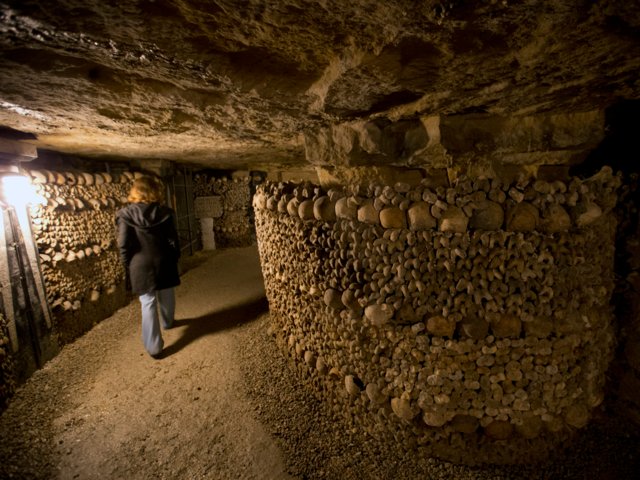
Under the streets of Paris, you can get lost in a whole other world.

I have a friend whose dream is to go to Paris. It has been her goal for decades, and she was all signed up for a trip when she fell and landed in the hospital. But she hasn’t given up, and I expect by this time next year she will have met her goal.

Paris has an irresistible lure for people around the world. If you have already been there, consider discovering the underground version of that city next time you go.

Robert Macfarlane writes at the New Yorker, “The map runs to sixteen laminated foolscap pages, or about ten square feet, when I tile the pages together. I have been given it on the condition that I do not pass it on. It is not like any map I have ever seen, and I have seen some strange maps in my time. The plan of the above-ground city is traced carefully in pale silver-gray ink, such that, if you read only for the gray, you can discern the faint footprints of apartment blocks and embassies, parks and ornamental gardens, boulevards and streets, the churches, the railway lines and the train stations, all hovering there, intricate and immaterial.

“The map’s real content — the topography it inks in black and blue and orange and red — is the invisible city, the realm out of which, over centuries, the upper city has been hewn and drawn, block by block. This invisible city follows different laws of planning to its surface counterpart. …

“The map’s place names traverse a range of cultural registers, from the classical to the surreal to the military-industrial. … Affordance is specified on the map in handwritten cursive words: ‘Low,’ ‘Quite low,’ ‘Very low,’ ‘Tight,’ ‘Flooded,’ ‘Impracticable,’ ‘Impassable.’ More detail is occasionally given: ‘Humid and unstable region (sometimes flooded)’; ‘Beautiful gallery, vaulted and corbelled.’ …

“I have come to the catacombs with two friends — let us call them Lina and Jay. Jay is a caver keen to extend his explorations into city systems. He is droll, unflappable, and strong. Lina is the leader of our group, and she has been here many times. She is passionate about the catacombs, especially about preserving and documenting their swiftly changing features through photography and record-keeping. …

“ ‘We’ll plan to exit by a manhole, whenever we come out.’ She gestures back up the tunnel with a smile, then eases herself feet first into the ragged hole, raises her arms above her head, and disappears.

“All cities are additions to a landscape that require subtraction from elsewhere. Much of Paris was built from its own underland, hewn block by block from the bedrock and hauled up for dressing and placing. Underground stone quarrying began in the thirteenth century, and Lutetian limestone was used in the construction of such iconic buildings as Notre-Dame Cathedral, the Louvre, and Saint-Eustache Church.

“The result of more than six hundred years of quarrying is that beneath the southern portion of the upper city exists its negative image: a network of more than two hundred miles of galleries, rooms and chambers, extending beneath several arrondissements. …

“For centuries, quarrying was ill-regulated and largely unmapped. Then, in the mid-eighteenth century, the extensive undermining began to have consequences for the upper city, causing subsidence sinkholes, known as fontis, that were reputed to be of diabolic origin. The quarry voids had begun to migrate to the surface; the under city had begun to consume its twin. …

“Louis XVI responded, shortly after his accession, by creating an inspection unit for the ‘Quarries Below Paris and Surrounding Plains,’ headed by a general inspector named Charles-Axel Guillaumot, and tasked with regulating the quarries for the purposes of public safety.

“It was Guillaumot who initiated the first mapping of the void network, with a view to consolidating existing spaces and regulating further quarrying activities. A subterranean town-planning system was established whereby chambers and tunnels were named in relation to the streets above them, thus creating a mirror city, with the ground serving as the line of symmetry.”

There’s a long read at the New Yorker, here.

Read Full Post »

Photo: Minot Daily News
Norma Baker-Flying Horse is owner of Red Berry Woman, a fashion designing business that was accepted into Paris Fashion Week.

Yesterday I mentioned that APiermanSister was a blogger whose writing I admired. She says she is shy, but as far as I can tell, one of her personal characteristics is fearlessness.

As a regular visitor to and connoisseur of Paris, she had always wanted to attend Fashion Week. In a recent post, she describes how she wrangled an invitation — finding a publication back in the US that would take an article and help to justify her admission to the show as a writer.

This is from Alison’s February Minot Daily News report on designer Red Berry Woman, an enrolled member of the Mandan Hidatsa Arikara (MHA) Nation and member of the Dakota Sioux and Assiniboine tribes.

“Norma Baker-Flying Horse has been having a whirlwind of fashion success.

“ ‘I recently had a dress walk the red carpet at the Grammy’s earlier this month and I’m also preparing to show in France,’ said Baker-Flying Horse of Mandaree, Oklahoma.

“Baker-Flying Horse said she will be the only Native American who will be showing in a show for the opening of Paris Fashion Week. …

“Baker-Flying Horse’s fashion line, Red Berry Woman, incorporates Native American traditional garment styles into contemporary couture garments for both men and women. She also creates different types of Native American traditional-style garments,’ according to her Red Berry Woman website at redberrywoman.com. …

“Baker-Flying Horse also was an invited designer for the international fashion showing in Vancouver, British Columbia, during Vancouver Fashion Week this past September.

“Another event in past months includes being the designer for a fashion show in Cornwall, Ontario, where actor Adam Beach was a guest. His wife, Summer, was Baker-Flying Horse’s guest runway model. One of Baker-Flying Horse’s creations also was worn by Alice Brownotter, an activist from the Standing Rock Reservation, for an event held by actress Jane Fonda who invited young people to participate who have had leadership rolls in their community. …

“Last March Baker-Flying Horse had the special honor of having one of her fashion designs worn at the Academy Awards show, the Oscars. She was the first contemporary Native American fashion designer to have a gown worn at the Oscars.”

More on Red Berry Woman at the Minot Daily News, here, and at the Smithsonian, here. But the most fun piece to read is Alison’s blog post about crashing Paris Fashion Week, here.

Photo: kfyrtv.com
The 2018 Native American Cultural Celebration closed with a Red Berry Woman Fashion Show.

Read Full Post »

Photo: Aeromate
An urban farm flourishes on a rooftop in the heart of Paris.

I never can resist a story about urban rooftop gardens, which not only bring fresh produce to city dwellers but also make use of empty space and help reduce carbon in the atmosphere.

I have blogged about them a lot. There was the post about a rooftop garden in Montreal, here. Another about Higher Ground in South Boston, here. Suzanne and Erik’s former church in San Francisco, Glide Memorial, made its rooftop garden a community-building activity for Tenderloin residents. And this was an article about a Whole Foods that aimed to harvest 10,000 pounds of food a year from its rooftop in Lynnfield, Mass.

Today’s story comes from Paris.

Freelance blogger Aimee Lutkin writes at the World Economic Forum blog, “The mayor of Paris, Anne Hidalgo, was elected in 2014 with the intention to improve the city’s green spaces as a part of her platform. …

“In 2016, her administration launched Parisculteurs, a campaign that is working to cover 247 acres of rooftops and walls in Paris with greenery by 2020.

“One third of that greenery will specifically be set aside for urban farming. To date, 74 organizations have signed a charter to work with the city on planning this enormous enterprise. The city has already approved 75 projects for development, which are estimated to produce more than 500 tons of vegetation.

“The deputy mayor of Paris, Penelope Komites, [told CNN] … ‘Citizens want new ways to get involved in the city’s invention and be the gardeners.’ …

” ‘Three years ago, people laughed at my plan. Today, citizens are producing [food] on roofs and in basements. We are also asked by numerous cities around the world to present the Parisian approach,’ she said.

“And they already have their success stories. … La Chambeaudie started shortly after Parisculteurs was announced in 2016, but now grows over 40 varieties of plants and herbs using a hydroponic system …

” ‘We’ve seen a real craze among Parisians to participate in making the city more green,’ said Komites. ‘Urban agriculture is a real opportunity for Paris. It contributes to the biodiversity and to the fight against climate change.’

“And it also means jobs. According to Komites, Parisculteurs has created 120 full-time jobs.”

More at World Economic Forum blog, here.

Read Full Post »

Older Posts »