Feeds:
Posts
Comments

Posts Tagged ‘pollution’

Photo: Linda Barrett.
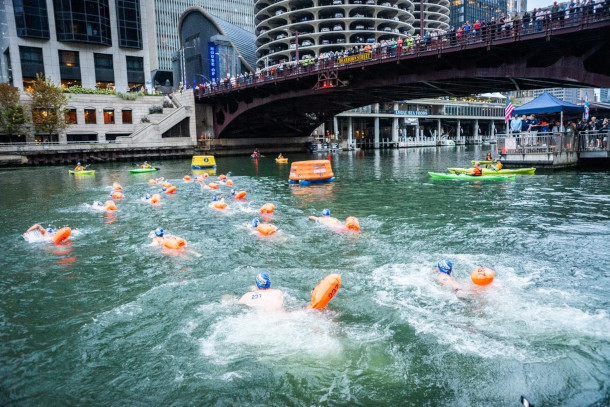
The Chicago River, once badly polluted, has been cleaned up. Above, 265 swimmers participated in a public swim this year.

When humans make up their minds to do something, miracles can happen. Remember the river that caught fire and led to the Clean Water Act? Today’s article points to a more recent river success.

The environmental radio show Living on Earth reports that “on September 21st, hundreds of people leapt into the Chicago River for the first public swimming event since 1927.” Here’s an interview between Friends of the Chicago River Executive Director Margaret Frisbie and Aynsley O’Neill of Living on Earth. (I edited out the verbal pauses.)

Aynsley O’Neill
“This public swimming event was a fundraiser, but its impact actually goes even further than that. What does it mean to you to have public swimming in the Chicago River for the first time in nearly 100 years?

Margaret Frisbie
” ‘I was a magical day that’s hard to describe, seeing hundreds of people in the water swimming so joyfully, really represented all the work that Friends of the Chicago River and so many organizations and agencies have done to improve the health of the river, not only for people, but for wildlife too. The morning of the swim, people just were beyond thrilled. People were watching from the bridges. They were watching from the Riverwalk. … For people who’ve lived here a long time, I think it’s a game-changer. Seeing people in the water makes you believe that it’s possible. …

“We had Olympic athletes. We had … Becca Mann, who’s an Olympic athlete who swims 10Ks in open water, which is really impressive and amazing. She got out and she was just beside herself, and she said, I cannot wait to come back to Chicago and do this again. …

O’Neill
“Give us a sense of the difference between maybe now and maybe 50 years ago in terms of sewage spills into the river.

Frisbie
“When friends of the Chicago River was founded in 1979, on average, there was sewage in the river every three days. Fast Forward 46 years, and basically there’s never sewage in the river ever. …

“The one thing that’s always fun for us to talk about at Friends of the Chicago River is how alive the river is and how different it is. .. We’re seeing our aquatic animal life going up, and that’s because of the work of Friends of the Chicago River, the Metropolitan Water Reclamation District, the forest preserves at Cook County and so many partners. In the 1970s, when friends was founded, there were less than 10 species of fish in the river system. Now there’s nearly 80, and we have beavers and muskrats and turtles, and we’re seeing the return of river otters, who are really an excellent sign of river health, because they depend on clean water to keep their coats clean and their bodies healthy, and then they’re also dependent upon mussels and fish and other aquatic and macro invertebrates to eat. …

O’Neill
“For those who are unfamiliar, how did we get here? …

Frisbie
“Over the last 50 years, Friends of the Chicago River has been chipping away at both the actual water quality through advocating for cleaning up the river system, but also by using the Clean Water Act and building support for a river that was swimmable. And so the water quality has changed since 1979 when we were founded, bit by bit, you know, using the rules of the Clean Water Act and partnering with government agencies like the Metropolitan Water Reclamation District that dug a huge tunnel and reservoir system that’s virtually eliminated sewage from the river system, and then also disinfecting sewage affluent that goes to the river, and just also creating public access so people can get down to and in the water.

O’Neill
“How much of this was from a government level versus a volunteer level? How did that work?

Frisbie
“[It] really it takes both. The Tunnel and Reservoir Plan is 110 miles of tunnel, three enormous reservoirs that can store 17 billion gallons of sewage and storm water and industrial waste. However, it’s not just about building it; it’s having support for that system and also making sure that the government agencies who are working on it are on task, and making sure that they’re getting the work done. … Advocates encouraged and pushed a long way. So while we partner with this agency, the Metropolitan Water Reclamation District, on many, many programs, we also were engaged with forcing a permit that included an enforceable deadline of 2029 so they have to be done and wrap up the project and not say, hey, we ran out of money, we just can’t finish it yet. …

O’Neill
“What would you consider the biggest challenge during this process of cleaning up the Chicago River?

Frisbie
“People got used to the river systems being a place where sewage and waste could go, as opposed to we’re on the shores of Lake Michigan, which everyone fights for. …

“The river comes to us. It flows through communities. It’s a community connector, and it provides access to nature for people who live in an urban area. We also know that with the impact of the climate crisis, heat is the number one killer, and it is incumbent upon all of us to take seriously the fact that people need public open space where they can go and they can get away from the heat. … We know that nature actually improves public health, and, you know, mental wellness. So it plays so many, many, many roles. And then also we have major biodiversity loss, and cities can play a role in protecting biodiversity. … We are getting massive amounts of migratory animals, birds, bats, insects, and they depend on natural areas, and so it’s really important for that too. …

O’Neill
“For many of us, we might hear about the Chicago River once a year, St. Patrick’s Day, when it gets dyed green. What do you think about this tradition? …

Frisbie
“At Friends of the Chicago River, we think that we have outgrown that tradition. It’s really a fun morning. It builds community. … But we think a river that’s alive with wildlife really needs to be treated like a natural resource.”

More at Living on Earth, here.

Read Full Post »

Photo: Zakir Hossain Chowdhury/Anadolu Agency/Getty Images/Anadolu.
In Bangladesh, there’s hope that stacking bricks in a new way in kilns — in a zig-zag pattern that increases airflow — will ensure that coal-fired kilns operate more efficiently and with less pollution.

Too often I think in black and white terms, right and wrong, good and bad. There are plenty of times times when things are that clear, but not always. Life is complicated.

Take the issue of burning coal in a poor country. At this point in its history, Bangladesh, for example, doesn’t have many choices. Bricks house the population, and coal-fired kilns are what’s available. So although coal is bad, just reducing some of the pollution will have to be good enough for now.

Jonathan Lambert reports at National Public Radio, NPR, “During the dry winter months in Bangladesh, thousands of workers shovel millions of tons of coal into kilns across the country. As columns of hand-packed bricks bake and harden, dark plumes of smoke pour out of more than 8,000 smokestacks that mark the skyline of both rural and urban areas.

” ‘It’s a lot of black smoke, impacting the workers and nearby villagers, but also the overall air quality of the region,’ said Sameer Maithel, an engineer with Greentech Knowledge Solutions, a consulting firm in Delhi, India.

“Bangladesh’s air consistently ranks among the most polluted on Earth. Brick kilns contribute anywhere from 10 to 40% of the tiny particles that make up that pollution. Those particles can enter our lungs and even our bloodstream, causing health problems, including respiratory diseases, stroke and even cognitive problems.

“But something as simple as stacking the bricks a different way could put a significant dent in that pollution, according to a new study of over 275 kilns published in Science by Maithel and his colleagues.

” ‘This is wonderful evidence of how simple low cost interventions can have a big impact on energy use,’ said William Checkley, an epidemiologist at Johns Hopkins University who wasn’t involved in the study. ‘If we can implement these, we could have a significant impact in energy use and emissions, improving air quality throughout southeast Asia.’

“Bricks are the main building block for Bangladesh. The densely populated and rapidly urbanizing country produces nearly 30 million bricks a year – more than 90% from loosely regulated, coal-burning kilns.

” ‘It’s quite simple and inexpensive to set up traditional-style brick kilns, so they’ve just proliferated,’ said Nina Brooks, a global health researcher at Boston University.

“The process goes something like this: First, dun-colored clay bricks are molded with a wooden box and stacked in the sun to dry. Next, hundreds of thousands of bricks are stacked in the firing chamber and covered with ash. Then, workers shovel lots and lots of coal as the bricks fire, firming them up.

” ‘The combustion efficiency of these brick kilns is really low,’ said Brooks, meaning they end up burning a lot more coal than they need to, ‘Which is why they’re so heavily polluting here.’

“Each kiln can employ up to 200 workers. They’re the most directly impacted by the smoke, with one study finding nearly 80% report some kind of respiratory problems. But they’re not the only ones. Kilns are often close to densely populated areas, adding to the smog that comes from city life.

“While there are regulations on where kilns can and can’t operate, they’re not always followed, said Brooks. ‘We found that 77% of brick kilns are illegally located too close to a school.’

“Modern, high-tech kilns produce substantially less pollution, but they’re up to 25 times more expensive to build and operate. ‘They’ve not really taken off,’ said Brooks.

“Instead, the team looked for solutions that would be easier and cheaper for the average brick producer to adopt.

“In his decades of working with brick kiln owners in India as a consulting engineer, Maithel has noticed questionable practices.

“Many kiln operators pack too many bricks in the kiln too tightly, he said. That tight spacing chokes out oxygen flow, which is needed for efficient burning. It also means hot coals get stuck at the top of the stack instead of falling to the bottom, leading some bricks to be overbaked and others not fired enough. …

“As an energy systems engineer, Maithel knew that a few simple changes could really help. Simply stacking the bricks in a zig-zag pattern that increases airflow and ensuring coal gets delivered more consistently should help the kilns operate more efficiently, he said. ‘The better you are able to provide fuel and air mixing, the probability of black smoke will be less.’

“To see if such simple interventions could help reduce air pollution and boost profits, the team planned a massive experiment across 276 kilns. One group of kiln owners and workers were taught how to implement these interventions. Another group got the same training plus info on how the changes would save money. The control group got no training.”

Read about results that benefited both the air and the kiln operators at NPR, here.

Learn how to protect NPR and other public media here.

Read Full Post »

Photo: Katie Orlinsky.
“On Long Island [in New York state] a group of Shinnecock women are nursing a bay back to health and, in the process, reclaiming traditions,” writes the magazine Nature.

A couple nonprofits and a few indigenous women are putting into practice one of my favorite principles: “Two and two and 50 make a million.” They are saving their small piece of the ocean from pollution and helping to bring back a better world.

Claudia Geib writes at Nature, “Danielle Hopson Begun stands waist-deep in the waveless expanse of Long Island’s Shinnecock Bay. She reaches into the water and lifts out a heavy rope, which drips with the amber and butterscotch-colored fronds of a marine plant called sugar kelp. It’s early June, and over the past eight months this kelp, anchored here, has grown from millimeter-long seedlings into foot-long golden ribbons, absorbing nitrogen and carbon from the water in the process.

“Tended by Hopson Begun and four other women from the Shinnecock Indian Nation, these lines are part of the first Indigenous-owned kelp farm on the U.S. East Coast. The kelp is harvested each year and sold locally as a natural fertilizer. But for these women, who have formed a nonprofit organization called Shinnecock Kelp Farmers, it has become something more than a crop: It is one piece of a multifront effort to reassert ancestral ties to the lands and waters their community has stewarded for thousands of years.

“Today, though, Shinnecock Bay is drastically different from the waters their ancestors once harvested wild kelp from. It’s more polluted, and the waters have grown warmer and more acidic. And almost every year since starting the farm in 2020, Hopson Begun and her partners have found their lines coated in an alga that suffocates and kills baby kelp. It significantly reduced part of their harvests — until now.

“To combat the algae, the kelp farmers have turned to cutting-edge science and technological solutions — supported by a grant from The Nature Conservancy and industry expertise from aquaculture nonprofit GreenWave — to supplement their long connection to the bay.

“ ‘There is this traditional knowledge that we have — of how the seaweed grows in the bay, and how to nurture it and prepare it for the work that it has to do,’ says Tela Troge, one of the group’s founders. If the Shinnecock Kelp Farmers can successfully grow kelp in the bay — weaving this ancestral understanding with modern science — the plant stands to help restore an ancient link to a cultural practice, while perhaps helping stem the rising tide of pollution that has invaded these waters since the arrival of colonialism.

“Among the challenges of farming kelp is simply finding the time. The kelp farmers and their friends and families — mothers, lawyers, counselors, activists — live and work in the communities of the greater Long Island and New York City area. Today about half of the nearly 1,600 enrolled members of the Shinnecock Indian Nation live on a 900-acre property on the eastern edge of Shinnecock Bay — a property surrounded by wealthy Hamptons enclaves and just a barrier island away from the Atlantic Ocean.

“Life here has always been intertwined with water. For at least 10,000 years, the ‘People of the Stony Shore’ gathered fish, mussels, scallops and clams, and cultivated oyster gardens along a vast stretch of land and waters on and around what is now called Long Island. Skilled seafarers, they relied on the Shinnecock and Peconic Bays — both local inlets — as well as the open sea. They hunted whales and exchanged white and purple wampumpeag beads they carved from the shells of hard clams, or quahog. These beads, known as wampum, remain an important touchstone for the Shinnecock, who continue to carve them as jewelry and cultural symbols.

“When Europeans arrived in the Northeast in the 1600s, they brought diseases that decimated the Shinnecock and their neighbors, razed forests to sow farms and claimed burial grounds to build towns. Over time the Shinnecock Indian Nation lost access to most of their historic hunting and fishing grounds, retaining a territory of about 1,000 acres, including the 900-acre reservation. With the spread of new people, the waters the Shinnecock relied on changed, too.

“Shinnecock Bay, in particular, suffered. The bay spans 9,000 acres, separated from the Atlantic Ocean to the south by a narrow barrier island. Warm and shallow, with an average depth of only about 6 feet, the bay’s connection to the sea has shifted over the centuries as storms alternately carved and filled in cuts through the island. A powerful 1938 hurricane created Shinnecock Inlet, a permanent opening to the Atlantic. Yet, still largely landlocked, the bay’s waters concentrated high levels of nitrogen, which seeped through the ground from cesspools and septic systems as homes and towns sprung up along its shores.

“By the 1980s, annual nitrogen-fed algal blooms turned the water ‘brown like a cup of coffee,’ says Stony Brook University researcher Ellen Pikitch, one of the co-founders of the university’s Shinnecock Bay Restoration Program. These ‘brown tides’ clouded the water, blocking sunlight from reaching eelgrass, killing fish and destroying shellfish habitat. …

“By the mid-2000s the marine life that the Shinnecock people had once relied on was nearly gone. Oyster reefs vanished. Between the 1970s and 2011, the commercial fishery for quahogs, the clams used for Shinnecock wampum and food, collapsed by more than 99%.

“At the same time, members of the Shinnecock Indian Nation had been fighting to assert their ancestral land and water claims. In 2019, an ocean-farming nonprofit called GreenWave reached out to members of the Nation. Inspired by a PBS documentary about the Shinnecock people’s long battle against Southampton’s development, one of the group’s staffers wanted to know if members of the Nation would consider working with GreenWave on a kelp farm.

“The proposal captured the interest of the future Shinnecock Kelp Farmers for multiple reasons. They knew that, historically, the Shinnecock harvested seaweed for home insulation, food and medicine, and that kelp could absorb nitrogen and carbon into its tissues. When harvested and dried for garden fertilizer and used in place of traditional fertilizers, kelp offered a way to pull excess nutrients from the bay. …

“The Sisters of St. Joseph, a Catholic religious order, joined the collaboration by providing water access from their community center along Shinnecock Bay. In 2020, five Shinnecock women — Danielle Hopson Begun, Donna Collins-Smith, Rebecca Genia, Tela Troge and her mother, Darlene Troge — took up waders and began the work of nursing kelp to life.”

There’s a lot more at Nature, here. No paywall. Great photos.

Read Full Post »

Photo: Jules Struck.
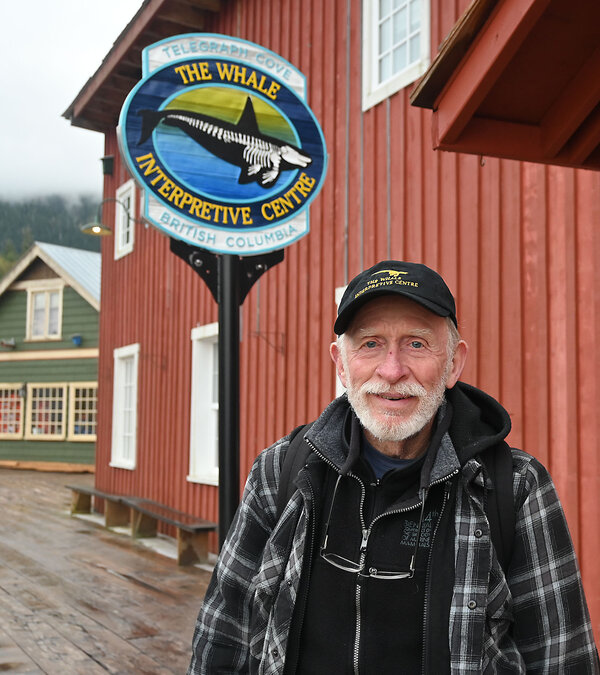
Jim Borrowman was part of a successful lobby to create an ecological reserve in western Canada’s Johnstone Strait in the 1980s.

Today’s story is about a few people whose determination helped to reverse the decline of a group of Orca whales — people who just don’t give up.

At the Christian Science Monitor, Jules Struck wrote recently about their work.

“Jim Borrowman cut the engine of the Nisku in the gray water of the Johnstone Strait, relinquishing his boat to an eastbound tide. He unraveled the line of a hydrophone – a cylindrical, underwater microphone – and dropped it portside.

“On the other end of the cord a pint-size Honeytone speaker in the cabin broadcast a conversation from the deep: the ethereal, two-toned call of an orca whale to her clan.

“ ‘I think they’re what we call “A1s,” ‘ said Mr. Borrowman, browsing a database of local orcas on his phone.

“Mr. Borrowman has been watching, and watching over, these whales for decades. He was one in a band of Vancouver Islanders who successfully lobbied in the early 1980s to set aside a protected area for Northern resident orcas, which lost a third of their population to hunting and capture in the 1950s and ’60s.

“This early act of ocean preservation laid a foundation from which decades of important research – and a deep local allegiance to the whales – have flourished. Galvanized by this data, environmentalists and First Nations just won a battle to evict commercial open-net fish farms from the area, which compete with the orcas’ food supply.

“With early signs of abundant salmon, and a small but decades-long uptick in Northern resident population numbers, it feels to some like nature rallying.

“ ‘You can see the whales coming back,’ says Alexandra Morton, an author and marine biologist who has studied salmon in the Johnstone Strait since the 1980s. She was part of a group that occupied a Vancouver Island fish farm in 2017 in protest of the industry.

“The A1s spotted by Mr. Borrowman from the bow of the Nisku are one pod of one type of orca, called Northern resident killer whales, which number some 400 and live along the coast of British Columbia.

“They’re doing particularly well, and have been growing by a handful of members each year since the ’70s. Northern residents are the most reliable visitors to the Robson Bight (Michael Bigg) Ecological Reserve, where Mr. Borrowman has served as a warden and run a whale-watching tour business with his wife, Mary, for decades until recently retiring.

“ ‘This is a beautiful, sensitive estuary at the terminus of a 100,000-acre watershed, the last untouched one on the east coast of Vancouver Island at the time,’ he says.

“It’s unique for another reason. At two known beaches at the mouth of the Tsitika River, Northern resident orcas rub gracefully along the seafloor pebbles in what scientists have dubbed a unique ‘cultural behavior.’

“It was this behavior, first captured in underwater footage by Robin Morton, Alexandra Morton’s late husband, that convinced the public, the press, and finally the federal government to set aside about 3,000 acres of water plus shore buffer as a protected area closed to boat traffic.

“Today, volunteer wardens with the Cetus Research & Conservation Society Straitwatch program monitor the reserve and gather population data on the whales and their pods. …

“Today, the whales’ major issues are food scarcity, noise, and chemicals in the water. But if the threats to orcas have become more complex, the responses have grown increasingly well-informed by a bedrock of research, much of which has come out of the ecological reserve and its orbit. …

“Decades of research have since shown that major pathogens and lice leak from [salmon] farms’ huge, suspended net pens straight into the paths of migrating salmon, ravaging their thin-skinned young and immobilizing the adults.

“Pacific salmon are also an important food source and cultural pillar for First Nations. They are intricately linked to the ecosystem, and scientists have even tracked nutrients from decomposed salmon high into the mountains.

“Ms. Morton campaigned for decades to close the fish farms. Nothing changed until she and Hereditary Chief Ernest Alexander Alfred, with a group of other First Nations people, peacefully occupied a Vancouver Island salmon farm owned by Marine Harvest.

“That protest led to a 2018 agreement with the British Columbia government requiring the consent of three First Nations – ‘Namgis, Kwikwasut’inuxw Haxwa’mis, and Mamalilikulla – for fish farms to operate around Vancouver Island.

“First Nations closed more than a dozen salmon farms in and near the strait. Then, the federal government announced it would ban all open-net farms in British Columbia by 2029.

“The decision is not universally supported by First Nations along the coast: 17 have agreements with salmon farming companies, which collectively employ around 270 Indigenous people, according to the Coalition of First Nations for Finfish Stewardship. Overall, open-net salmon farming accounts for 4,690 jobs and $447 million in gross domestic product across Canada, according to the BC Salmon Farmers Association.

“But for many, it was a turning point. Coho and especially Chinook salmon stocks spiked this year in Vancouver Island and its inlets, according to the Pacific Salmon Foundation, after years of downturn.”

Read more at the Monitor, here.

Read Full Post »

Photo: Lee Hedgepeth, Inside Climate News via Living on Earth.
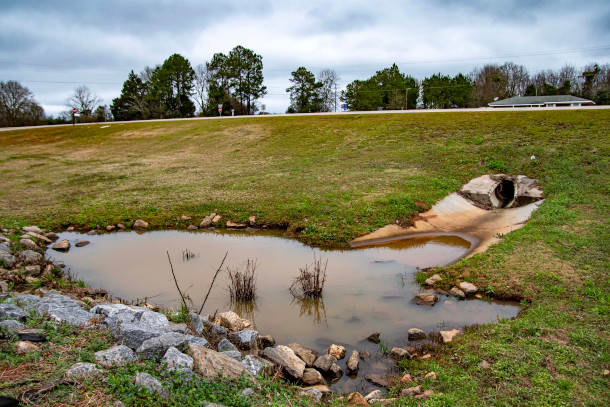
These highway drainage pipes send water directly toward homes in Shiloh, Alabama — homes  that Black landowners have maintained since the Reconstruction era. Other neighborhoods benefit from drainage that runs parallel to roadways.

“Climate injustice” is not a term favored by the billionaire class, but removing out-of-favor words doesn’t make the realities they represent go away. Whether injustices occur on purpose or by accident, they happen. But around the world, ordinary people do what they can to fight back.

Paloma Beltran, associate producer of environmental radio show Living on Earth, has written that recent government decisions “will have a ripple effect across communities that have been pushing back against the impacts of industrial pollution for years. On this week’s show, we spoke with Patrice Simms, the Vice President of Litigation for Healthy Communities at Earthjustice, about the federal government’s role in protecting people from environmental discrimination. … Here’s some of what he said:

“ ‘Really significantly for me, what continues to motivate me is my tremendous respect and appreciation for the people on the front lines of pollution and exposures. I work really closely with communities across the country who are in very real ways, fighting for their lives, fighting for their families, fighting for their well-being, and fighting for their communities. And these aren’t people who are getting paid to do this. These are people who are doing this because they have to. They’re doing this because they’re watching their children get sick. They’re doing this because they’re watching their communities die. And there’s nothing more motivating than understanding and knowing the members of these communities. … It’s an honor and a privilege to get to work with them and beside them and for them, and that keeps me going every day.’

“So it feels like an opportune time to highlight a few environmental justice leaders who have shared their stories with us:

  • “Sharon Lavigne is a former school teacher who has become a fierce environmental defender out of love for her community. She’s from Cancer Alley, an eighty-five-mile stretch of the Mississippi River, from Baton Rouge to New Orleans. Slave plantations once lined this part of the river, and many descendants of former slaves still reside in that area. In the 1960s, petrochemical plants began flooding the area, in part due to the river allowing trade, transportation and the disposal of waste in an unseen and cheap way. Most of these plants are in close proximity to predominantly Black communities, exposing them to toxic emissions. According to a 2023 study published in Environmental Challenges, toxic emissions in Louisiana are 7 to 21 times higher in communities of color compared to white communities, and chemical manufacturing is the largest contributor to this disparity. Sharon Lavigne … co-founded Rise St. James, a faith-based grassroots organization fighting against the proliferation of chemical industries in St. James Parish, Louisiana. In 2021, Sharon won the prestigious Goldman Environmental Prize for her activism. For more, take a listen to our conversation. ….
     
  • “Nalleli Cobo grew up within 30 feet of an oil well — one of more than 5,000 oil and gas wells across Los Angeles, California, 700 of which are currently active. Like much of her community, Nalleli suffered from chronic headaches, nosebleeds, stomach pain, and asthma, and at the age of 19, she was diagnosed with cancer. Following treatment, Nalleli is now cancer free, but unable to have children. In March 2020, she joined a coalition of environmental justice organizations and successfully sued the city of Los Angeles for environmental racism and violation of CEQA, which is the California Environmental Quality Act. AllenCo Energy was forced to close down its well located near Nalleli’s home. … Tune into my interview with her here.
     
  • “Andrea Viduarre is another environmental justice advocate who organized her community and convinced the California Air Resources Board to adopt transportation regulations that limit trucking and rail emissions. (However, the state withdrew these rules [after the 2024 presidential election.] Southern California’s Inland Empire serves as a the hub for logistical infrastructure and is home to a predominantly Latino population. A staggering 40% of all US goods move through the area, a lot of which is transported through diesel trucks which emit toxic pollutants linked to cancer, asthma and premature death. Andrea Viduarre’s work has made huge strides in getting pollution out of her community. … You can learn more about in our discussion here.
     
  • “Robert Bullard is known to many as the father of environmental justice. He ran the first study on eco racism in 1979, and found that toxic facilities in Texas were disproportionately located in Black communities. His research was used in the Bean v. Southwestern Waste Management Corporation lawsuit, the first case to use civil rights law to challenge environmental racism. He’s the founding director of the Bullard Center for Environmental and Climate Justice, as well as Distinguished Professor of Urban Planning and Environmental Policy at Texas Southern University. He’s been advocating on behalf of the predominantly Black community of Shiloh, Alabama, whose homes have been repeatedly flooded since a nearby highway was widened in 2018. Dr. Bullard joined us back in 2024 to talk about this case.”

It has always lifted my spirits to see everyday people doing what they can where they are. Public radio’s environmental show Living on Earth will lift your spirits.

PS. Join me on Mastodon? @DudeShoes.

Read Full Post »

Photo: Axel Schmidt.
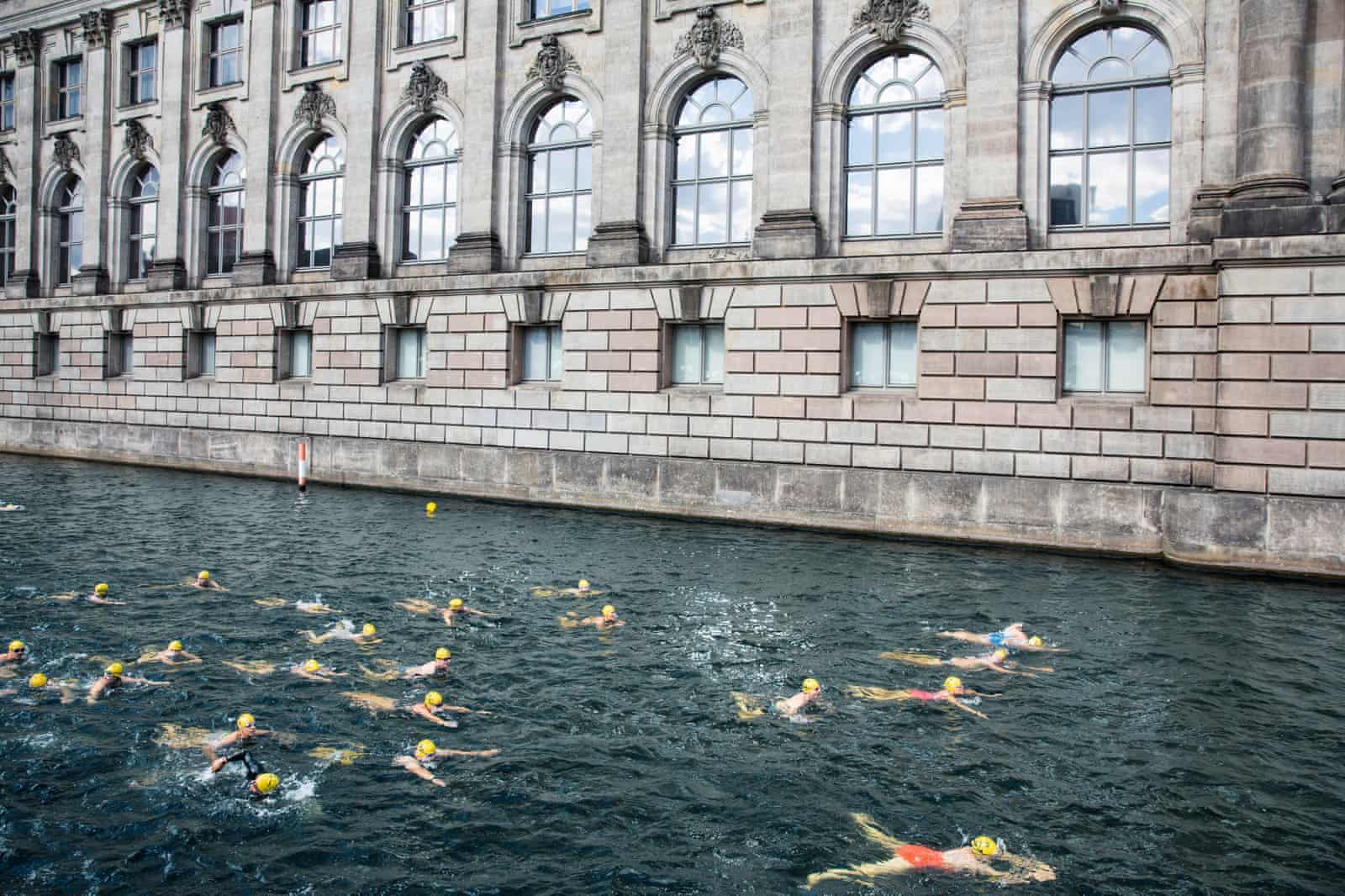
The Fluss Bad swim in the Spree canal, Berlin, is part of a campaign to change bylaws against swimming. 

How many lovely, tinkling waterways have we forced through metal pipes and covered over with roads and buildings?

For some years now, cities have started daylighting them. And in the countryside, dams have been removed to bring back fish, often in collaboration with the tribes that always knew better. (See the Penobscot report.)

Last summer, it was touch ‘n go about what days the Seine would be clean enough for Olympic meets, bringing renewed attention to the issue.

At the Guardian, Oliver Wainright writes. “After a century of ignoring the very arteries that allowed them to grow in the first place, cities are learning to love their rivers again. Around the world, as global heating causes summer temperatures to soar, people are flocking to urban waterways and reclaiming these once polluted, poisoned gutters as indispensable places to cool off and unwind.

“[In the summer] the urban swimming movement made its biggest splash yet, when 110 athletes dived into the River Seine for the Olympic triathlon. The televised spectacle of swimmers front-crawling their way through Paris, flanked by beaux-arts bridges, offered a glimpse of what all our urban waterways could look like. Might these dangerous arteries of cargo and sewage be reborn as the great free public spaces that they could be? …

“ ‘What’s happening in Paris represents a generational baton change,’ says Matt Sykes, an Australian landscape architect and the convener of the Swimmable Cities Alliance, a global network of urban swimming campaigners pushing to make the scenes in the Seine an everyday reality for us all. …

“To coincide with this summer’s Olympics, the alliance published a charter, signed by a host of municipalities, government agencies, community groups and cultural institutions from 31 cities around the world, in a bid to create safe, healthy and swimmable waterways, accessible to all. The hope is to have 300 new cities starting their journey towards ‘swimmability’ by 2030.

“The alliance is already making headway. In the Dutch city of Rotterdam, a masterplan for the Rijnhaven dock includes a new permanent beach and a tidal park. In Sydney, the Urban Plunge program has plans that include floating pools, and riverside ladders and lockers. By next summer, if all goes according to plan, New Yorkers will be swimming beneath skyscrapers in the safe surrounds of a floating, filtered pool in the East River.

“ ‘This is going to be the cleanest water anyone ever swims in,’ says Kara Meyer, the managing director of Plus Pool, a project which began in 2010 as a Kickstarter campaign by four young designers. Fourteen years on, New York State and New York City have announced changes to regulations that finally make the project possible, and committed [$16m] to see a prototype pool realized by 2025.

“ ‘The original idea was: “What if you just dropped a big strainer in the river?” ‘ says Meyer. ‘Now, we’re essentially building a floating wastewater treatment facility.’ Engineered by Arup, the pool will pass the river water through a series of filtration membranes and blast it with UV disinfectant, in order to meet stringent water quality standards. …

“The Clean Water Act, passed in 1972 with the ambitious goal of making all US rivers and lakes swimmable by 1983, set the wheels in motion, but that target is still a way off.

“ ‘The pandemic was a real catalyst,’ says Meyer. ‘There’s been a realization that we need far more public space, and much better access to our natural environment.’ She says a recent rise in drowning deaths, after decades of decline, underlines the importance of access to water and basic swimming skills – a need exacerbated by a shortage of lifeguards, after decades of pool closures. …

“Along with Switzerland – where Rheinschwimmen has been a tradition since the 1980s, after wastewater treatment reforms – Denmark is leading the way. Thirty years ago, Copenhagen’s harbor was a polluted mess of sewage and industrial waste. Now Danes are spoilt for choice of architect-designed bathing structures, and water quality is constantly monitored on a dedicated app. …

“Elsewhere in Europe, the Fluss Bad campaign in Berlin organizes an annual swim in the Spree canal, seeing swimmers splashing past the cultural palaces of museum island. The group is pushing for local bylaws to be changed to permit swimming, and has launched a water quality monitoring website to show the canal is clean enough to swim in 90% of the time. In Brussels, a city without a single outdoor swimming pool, the Pool Is Cool campaign operates a temporary pool each summer, as a prelude to future plans for swimming in the canal. In the bathing capital of Budapest, the Valyo group wants to see the city’s history of floating wooden pools return to the Danube. Swim fever is rampaging across the continent.”

More at the Guardian, here. No firewall.
Read Full Post »

Photo: Naja Bertolt Jensen/Unsplash.
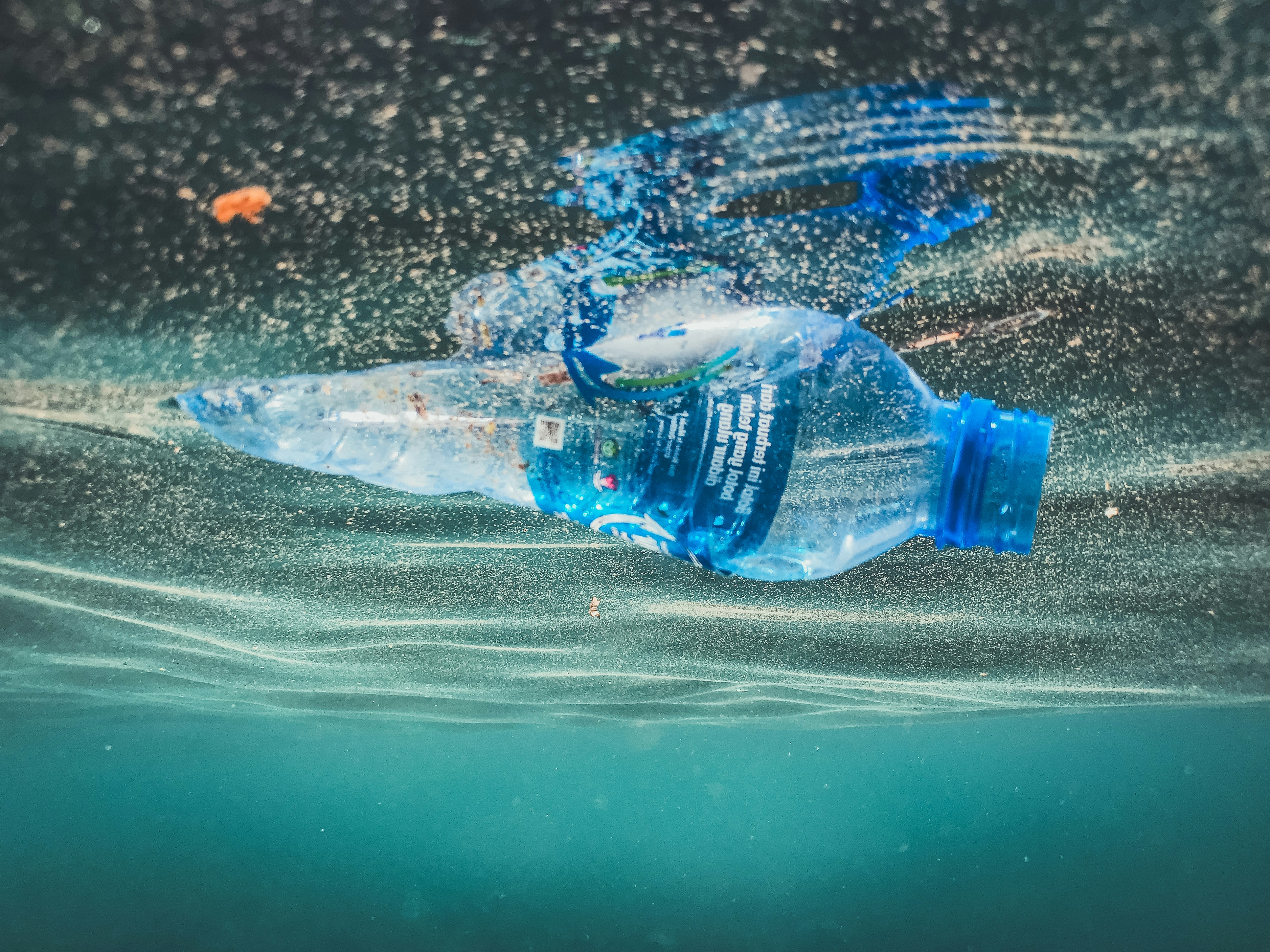
Can we ever escape plastic?

When I think about all the plastic we have created and put into our landfills and oceans, I am close to despair about ever cleaning it up.

Still, there are always people willing to fight the odds. Consider the initiative called Plastic Free July. Jacob Fenston has the story at the Washington Post.

“The idea took root in Australia more than a decade ago, and in recent years it has been gaining popularity in the United States. It all began when Rebecca Prince-Ruiz visited her local recycling sorting center in Perth, Australia, in 2011. She had always thought of herself as being eco-conscious, but after looking around at the heavy machinery sorting an endless stream of bottles, tubs, jars, cans and boxes, she had an aha moment.

“ ‘I suddenly realized that filling my recycling bin each fortnight didn’t make me the great green citizen I thought I was,’ Prince-Ruiz says. ‘The most important thing I should be doing was actually reducing my waste in the first place.’

“She decided to try to avoid single-use plastic for an entire month. The next month happened to be July. So Plastic Free July was born.

“Since then, the idea has spread around the globe. According to the Plastic Free Foundation, the nonprofit that Prince-Ruiz founded, 89 million people in 190 countries pledged to reduce their plastic use during July last year. The countries with the most participants are China and India.

“Over the last five years, participants have avoided more than 1.5 million tons of plastic waste, according to the campaign. That’s enough to fill about 80,000 garbage trucks. …

“Sending anything to the landfill or incinerator has a negative impact on the environment. But plastic is particularly problematic, experts say.

“ ‘Plastics are one of the greatest threats facing our planet today,’ says Melissa Valliant, a spokesperson for Beyond Plastics, a plastic-pollution-fighting nonprofit. … ‘We are not going to recycle our way out of this problem,’ Valliant says.

“Plastic waste chokes oceans and the creatures who live there. And plastic production is a major contributor to climate change: The industry emits four times the planet-warming emissions as the airline industry, according to a recent U.S. Energy Department report.

“But from the beginning, the Plastic Free July campaign has focused on solutions rather than the problem. In fact, the campaign’s website contains almost nothing about the harms of plastic, other than its sea turtle logo — a reference to one of the animals most at risk from ocean plastic.

The website offers ideas for plastic-free beginners — small changes like using reusable shopping bags. There are also suggestions for those further along the journey, including making your own toothpaste, sans plastic tube.

“Prince-Ruiz says that first plastic-free month was harder than she’d thought it would be. … Her best advice for newbies: Don’t try to quit plastic cold turkey. Instead, start with a quick inventory of your plastic use — go through your fridge and pantry and trash — and choose one or two places to work on eliminating or reducing your consumption. …

“Freweyni Asress, a D.C. resident who has written about living a zero-waste lifestyle, recommends finding a buddy or two to do the plastic-free challenge with.

“ ‘When there’s a community of people participating in something like Plastic Free July, it really reinvigorates you,’ Asress says. …

“Of course, going plastic-free can be more challenging depending on your circumstances. In the Midwest, for example, store clerks are not always receptive to the idea of skipping plastic bags, Harper says. On one shopping trip where he was only buying a few things and didn’t need a bag, the checker forced one on him, citing concerns about shoplifting.

“ ‘She would not let me leave without a bag,’ Harper says.

“When Asress started her zero-waste journey in 2016, she was working at a food co-op that had a large bulk section and many plastic-free products. But she found not all plastic-free products worked for her.

“ ‘A lot of the hair products that were sustainably packaged or provided in bulk bins were specifically for White people’s hair,’ says Asress, who is Black. … ‘It has to be practical, and we have to be able to figure out ways to be able to include everybody.’ …

“Valliant says the key is to move away from disposable containers and packages and go with materials that can be used over and over. Refundable deposit systems can make this economical.

“Travel to Latin America, Africa or Asia, for example, and you’ll find refillable soda and beer bottles are still common — each one can be filled, purchased and returned as many as 30 times before it breaks or is worn out.”

More at the Post, here.

Read Full Post »

Photo: Marek Lumi via Unsplash.
Barcelona, 2023.

How do you get people to change behavior? Even if they know something is good for the world and good for themselves (driving less, for instance), how do you get them to do it? Often people won’t change until they feel the reality of disaster.

But as Andrew Kersley reports at Wired magazine, “people hate the idea of car-free cities — until they live in one.” He notes that one of the best ways to get them started is “from the ground up.” Read on.

“London had a problem,” he begins. “In 2016, more than 2 million of the city’s residents—roughly a quarter of its population — lived in areas with illegal levels of air pollution; areas that also contained nearly 500 of the city’s schools. That same air pollution was prematurely killing as many as 36,000 people a year. Much of it was coming from transport: a quarter of the city’s carbon emissions were from moving people and goods, with three-quarters of that emitted by road traffic.

“But in the years since, carbon emissions have fallen. There’s also been a 94 percent reduction in the number of people living in areas with illegal levels of nitrogen dioxide, a pollutant that causes lung damage. The reason? London has spent years and millions of pounds reducing the number of motorists in the city.

“It’s far from alone. From Oslo to Hamburg and Ljubljana to Helsinki, cities across Europe have started working to reduce their road traffic in an effort to curb air pollution and climate change.

“But while it’s certainly having an impact (Ljubljana, one of the earliest places to transition away from cars, has seen sizable reductions in carbon emissions and air pollution), going car-free is a lot harder than it seems. Not only has it led to politicians and urban planners facing death threats and being doxxed, it has forced them to rethink the entire basis of city life.

“London’s car-reduction policies come in a variety of forms. There are charges for dirtier vehicles and for driving into the city center. Road layouts in residential areas have been redesigned, with one-way systems and bollards, barriers, and planters used to reduce through-traffic (creating what are known as ‘low-traffic neighborhoods’ — or LTNs). And schemes to get more people cycling and using public transport have been introduced. The city has avoided the kind of outright car bans seen elsewhere in Europe, such as in Copenhagen, but nevertheless things have changed.

“ ‘The level of traffic reduction is transformative, and it’s throughout the whole day,’ says Claire Holland, leader of the council in Lambeth, a borough in south London. Lambeth now sees 25,000 fewer daily car journeys than before its LTN scheme was put in place in 2020, even after adjusting for the impact of the pandemic. Meanwhile, there was a 40 percent increase in cycling and similar rises in walking and scooting over that same period.

“What seems to work best is a carrot-and-stick approach — creating positive reasons to take a bus or to cycle rather than just making driving harder. ‘In crowded urban areas, you can’t just make buses better if those buses are still always stuck in car traffic,’ says Rachel Aldred, professor of transport at the University of Westminster and director of its Active Travel Academy. ‘The academic evidence suggests that a mixture of positive and negative characteristics is more effective than either on their own.’ …

“Urban driving doesn’t make up the majority of a country’s car use, but the kind of short journeys taken when driving in the city are some of the most obviously wasteful, making cities an ideal place to start if you’re looking to get people out from behind the wheel. That, and the fact that many city residents are already car-less (just 40 percent of people in Lambeth own cars, for example) and that cities tend to have better public transport alternatives than elsewhere. …

“But as effective as policies to end or reduce urban car use have been, they’ve almost universally faced huge opposition. When Oslo proposed in 2017 that its city center should be car-free, the backlash saw the idea branded as a ‘Berlin Wall against motorists.’ The plan ended up being downgraded into a less ambitious scheme consisting of smaller changes, like removing car parking and building cycle lanes to try to lower the number of vehicles.

“In London, the introduction of LTNs has also led to a massive backlash. In the east London borough of Hackney, one councilor and his family were sent death threats due to their support for the programme. Bollards were regularly graffitied, while pro-LTN activists were accused of ‘social cleansing.’ It was suggested that low-traffic areas would drive up house prices and leave the only affordable accommodation on unprotected roads. ‘It became very intimidating,’ says Holland. ‘I had my address tweeted out twice, with sort of veiled threats from people who didn’t even live in the borough saying that we knew they knew where I lived.’ …

“Any attempts to reduce urban car use tend to do better when designed from the bottom up. Barcelona’s superblocks program, which takes sets of nine blocks within its grid system and limits cars to the roads around the outside of the set (as well as reducing speed limits and removing on-street parking) was shaped by having resident input on every stage of the process, from design to implementation. Early indicators suggest the policy has been wildly popular with residents, has seen nitrogen dioxide air pollution fall by 25 percent in some areas, and will prevent an estimated 667 premature deaths each year, saving an estimated 1.7 billion euros.” More at Wired, here.

What local policies for helping you use your car less would you welcome?

Read Full Post »

Photo: Adri Salido.
From the Christian Science Monitor: “Elsa Cerda (with spear) leads Yuturi Warmi, a group of Indigenous women who guard against illegal mining in the community of Serena in the Ecuadorian Amazon.”

As a group of indigenous women in the Ecuadorian Amazon have shown, when something is wrong in your neighborhood, it pays to join with others and fight.

Al Jazeera wrote a good report on this last year.

“As a child, Leo Cerda would spend his mornings helping his family cultivate cassava, plantains and other fruits and vegetables in their chakra, a traditional garden in Kichwa communities.

“In the Ecuadorian village of Napo, traditions form a large part of family and spiritual life. At around 3 am each morning, before heading to their chakras, many families take part in a traditional tea ceremony. Once freed from his farming duties at around midday, Cerda recalled running to the river to swim and fish with friends. Fish would later be grilled on an open fire and eaten with large amounts of fruit.

“ ‘As a kid, I got to enjoy nature,’ Cerda told Al Jazeera.

“These days, however, the 34-year-old spends his days chasing gold miners from his community and campaigning against those who threaten to destroy his ancestral lands. …

“ ‘Within three years, everything changed,’ Cerda said. ‘The land has been poisoned. There are no more fish, except ones that are contaminated. People eat them, and they get sicker and sicker.’

“A recent study carried out in mining areas of the northeastern Andean foothills of the Ecuadorian Amazon, close to where Cerda lives, revealed high concentrations of toxic metals. They are up to 352 times above permissible limits established by environmental guidelines. …

“Mariana Capparelli, a researcher who contributed to the study, told Al Jazeera it was ‘very sad to see the conditions these communities are exposed to as well as the total degradation of an ecosystem that is so important for the entire planet.’ …

“Due to what critics say is an absence of sufficient government regulation, mining in Ecuador has led to environmental pollution and adverse effects on the health of Indigenous communities. In recent months, authorities have carried out several raids against illegal miners.

But with widespread state corruption and tip-offs given to miners, machinery is sometimes withdrawn immediately before police operations take place, activists say. …

“Ecuador has a national system of protected areas that aims to safeguard biodiversity and local ecosystems in national parks, wildlife refuges, marine reserves and other designated areas throughout the country. Although the government has taken some steps to protect local water systems, rivers have traditionally not been included in this system. …

“According to Andres Tapia, a spokesperson for the Confederation of Indigenous Nationalities of the Ecuadorian Amazon, illegal mining has become ‘uncontrollable’ in parts of the country. …

“ ‘I thought I would always be able to drink from this river,’ Eli Virkina, a member of an Indigenous Kichwa community in Napo, told Al Jazeera. ‘Now I’m at this point where maybe I shouldn’t even swim in the water. That is really heartbreaking for me.’ …

“Across Napo, Indigenous communities and organizations have been monitoring, mobilizing and resisting mining activities. To defend their land, they have formed alliances and connections across riverine communities, including the Amazon’s first women-led Indigenous guard.

“In February 2022, a landmark Constitutional Court ruling recognized the rights of Indigenous communities to have a final say over extractive projects that affect their territories. The ruling ‘offers one of the strongest legal precedents in the world, which upholds the rights of Indigenous peoples to decide on the futures of their ancestral territories,’ according to the Amazon Frontlines advocacy group.

“But in December [2022], the ruling was disregarded when the government approved a mining project in Las Naves in Bolivar province without gaining the consent of affected communities.

“In the meantime, Napo has installed four alarm systems around the village to signal when miners are close by.

“ ‘In our territory, spears were not used anymore, but now we have one in at least every house because it’s part of the way we have to defend ourselves,’ said Majo Andrade, a member of the female-led Indigenous guard Yuturi Warmi. …

“Virkina says Indigenous resistance is vital to the region’s future. ‘Once [Indigenous people] disappear, it is way easier for miners and people to come in and access the river,’ she said. ‘When we have stronger Indigenous communities, we have stronger forests and a stronger river.’ More at Al Jazeera, here.

Adri Salido has a collection of beautiful pictures at the Christian Science Monitor and adds a few more comments to the story of Yuturi Warmi: “Yuturi Warmi refers to a type of ant (Paraponera clavata) that will attack when an enemy enters its territory.

“The group, which formed in 2020, joined with other Ecuadorian and international organizations to urge the government to enforce laws against illegal extraction and to restore habitat. But officials have not acted, according to Yuturi Warmi. Since then, the group has worked to ensure that no illegal mining takes place in its community. It patrols the riverbank, conducts canoe inspections, and maintains constant surveillance. So far, it has kept intruders out of Serena. 

“The situation is far different upstream, in Yutzupino, where illegal extraction has destroyed the basin of the Jatunyacu River, a tributary of the Amazon River.”

More at the Monitor, here. No firewall. Great collection of photos.

Read Full Post »

Photo: NOAA [National Oceanic and Atmospheric Administration].
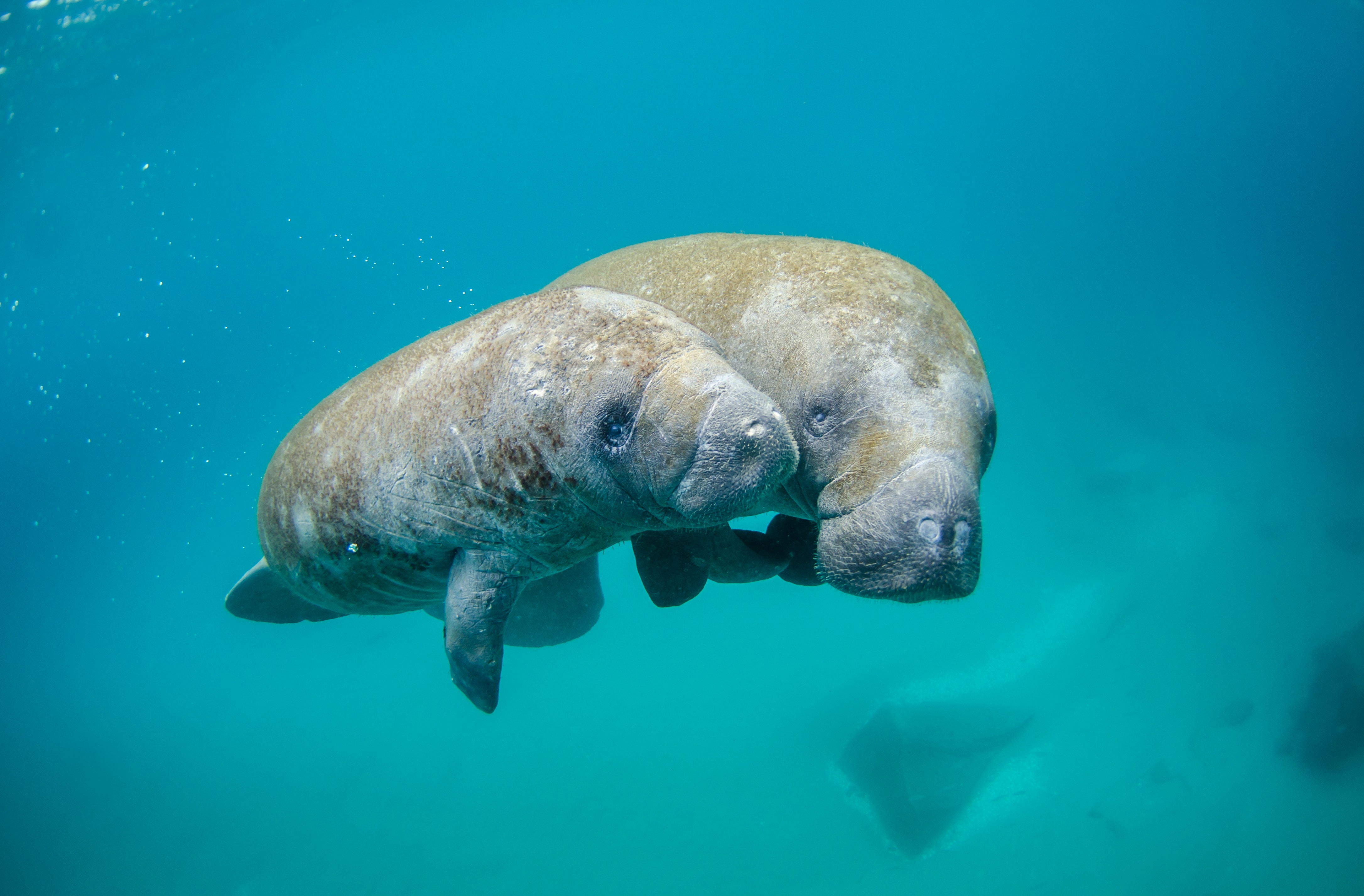
The return of seagrass in Florida is a hopeful sign for the embattled manatee.

One doesn’t normally think of Florida politicians as being big environmentalists, but whatever their motivations for supporting cleaner water, one has to cheer them for putting some funding behind it. Florida treasures like the manatee need the help.

Richard Luscombe reports for the Guardian, “A picturesque expanse of water along Florida’s space coast is offering a modicum of hope for the state’s embattled manatees as wildlife officials review whether to restore the beloved sea cows to the endangered species list.

“The recovery of seagrass, the manatees’ favorite food, in Mosquito Lagoon means that an emergency hand-feeding program that has kept many of the starving aquatic animals alive over the last two winters can be discontinued, at least temporarily.

“While scientists say this might be only a small step in the wider fight to rescue a species that has seen a record die-off in recent years from water pollution and habitat loss, what’s happened at Mosquito Lagoon offers signposts to how the manatees’ battle for survival might ultimately be won.

“ ‘At least in a portion of the lagoon, we are seeing a rather rapid resurgence of the Halodule variety of seagrass that, even if we don’t know exactly how it happened, does tell us that it’s much more resilient than we might have been thinking,’ said Dennis Hanisak, a professor of marine botany at Florida Atlantic University’s Harbor Branch Oceanographic Institute, and director of its seagrass nursery. …

“Hanisak and his team, in partnership with the Florida fish and wildlife commission (FWC), have focused their restoration efforts on the lagoon in northern Brevard county, one of the most popular feeding grounds for manatees during the colder winter months.

“That’s where the majority of manatee deaths, an unprecedented 1,100 in Florida in 2021, 10% of the population, and another 800 in 2022, occurred. They were part of what federal and state authorities classify as an ongoing unusual mortality event (UME) with the majority of fatalities through malnutrition and starvation, a reflection of the loss of about 90% of the lagoon’s seagrass to algae blooms and pollutants.

“It’s too early to say exactly what role the seagrass nursery project has had there; Hanisak says it has ramped up in size and resources in recent years as wildlife agencies respond to the disaster with improved funding.

“It’s one of several projects underway in Florida [and] a prominent component of a catalog of FWC manatee habitat restoration schemes, themed mostly around improvements in water quality and aquatic vegetation, that experts believe has potential to turn years of declining numbers into a robust recovery. …

“[In January], Florida’s governor Ron DeSantis announced a $100m award of state funds for water-quality improvements in the Indian River Lagoon, one of North America’s most biologically diverse waterways. The cleaner the water, the better the seagrass. …

“Hanisak and his students have steadily been building the capacity of the seagrass nursery at multiple locations. That seagrass will ultimately be transplanted into the Indian River Lagoon and elsewhere. …

“It remains to be seen if this year’s drop in manatee deaths in Florida is a one-off, or represents the start of a recovery. But more abundant seagrass in Mosquito Lagoon, which led to the welcome suspension of the experimental lettuce-feeding project, bodes well.

“Lawmakers also appear to be at least partly on board. Thompson said the Florida legislature provided an additional $20m in fiscal year 2022-23 to the FWC to enhance captive manatee support facilities and manatee habitat enhancement to supplement the previous year’s $8m. …

Patrick Rose, a veteran aquatic biologist and executive director of the Save the Manatee Club [said] the extra funding, which his group lobbied for, is welcome [but] ‘a drop in the bucket literally to what needs to be done.’ Ultimately, Rose said, manatees need clear, clean water to survive. Without it, seagrass will not flourish. …

“ ‘Nutrients are the direct cause of harmful algal blooms which have been so intense that they literally cut the light off to the seagrasses, and the seagrasses die,’ he said.”

More at the Guardian, here.
Read Full Post »

Photo: John and Suzanne’s Mom.

As everyone knows, it’s hard to avoid plastic. The other day I found on the floor tiny pieces of one of those mesh bags that oranges often come in. I may be overthinking everything, but I was stumped about how to dispose of it. If I flush it, it goes into our water system. If I put it out for the landfill, the result is ultimately the same. And now we’re hearing that plastic particles are even getting into the clouds.

Nicola Jones writes at YaleEnvironment360, “Plastic has become an obvious pollutant over recent decades, choking turtles and seabirds, clogging up our landfills and waterways. But in just the past few years, a less-obvious problem has emerged. Researchers are starting to get concerned about how tiny bits of plastic in the air, lofted into the skies from seafoam bubbles or spinning tires on the highway, might potentially change our future climate.

“ ‘Here’s something that people just didn’t think about — another aspect of plastic pollution,’ says environmental analytical chemist Denise Mitrano of ETH Zürich University, in Switzerland, who co-wrote an article last November highlighting what researchers know — and don’t yet know — about how plastics can change clouds, potentially altering temperature and rainfall patterns.

“Clouds form when water or ice condenses on ‘seeds’ in the air: usually tiny particles of dust, salt, sand, soot, or other material thrown up by burning fossil fuels, forest fires, cooking, or volcanoes. There are plenty of these fine particles, or aerosols, in the skies. …

“Until recently, when chemists thought of the gunk in our air, plastics did not leap to mind. Concentrations were low, they thought, and plastic is often designed to be water repellent for applications like bags or clothing, which presumably made them unlikely to seed cloud droplets. But in recent years, studies have confirmed not only that microscopic pieces of plastic can seed clouds — sometimes powerfully — but they also travel thousands of miles from their source. And there are a lot more particles in the air than scientists originally thought. …

“ ‘The people who invented plastics all those decades ago, who were very proud of inventions that transformed society in many ways — I doubt they envisaged that plastics were going to end up floating around in the atmosphere and potentially influencing the global climate system,’ says Laura Revell, an atmospheric scientist at the University of Canterbury in New Zealand. …

“Global annual production of plastics has skyrocketed from 2 million tons in 1950 to more than 450 million tons today. And despite growing concerns about this waste accumulating in the environment, production is ramping up rather than slowing down — some oil companies are building up their plastic production capacity as the demand for fossil fuel declines. To date, more than 9 billion tons of plastic has been produced, and about half of it has gone to landfills or been otherwise discarded. Some project that by 2025, 11 billion tons of plastic will have accumulated in the environment. …

“In recent years, several studies have suggested that microplastics (pieces less than 5 millimeters in length) and nanoplastics (smaller than approximately 1,000 nanometers) were being transported long distances through the air. In 2019, for example, researchers found microplastics in the Pyrenees that had arrived via rain or snowfall. In 2020, Janice Brahney of Utah State University and four coauthors published a high-profile Science paper revealing high amounts of plastic in federally protected areas of the United States. …

“Brahney’s extensive U.S. dataset also opened the door for modelers to figure out where, exactly, all this plastic was coming from. ‘It’s a really beautiful data set,’ says Cornell University’s Natalie Mahowald, who did the modeling work.

“Mahowald took the plastic concentrations Brahney had cataloged and mapped them against atmospheric patterns and known sources of plastics, including roads, agricultural dust, and oceans. On roadways, tires and brakes hurl microplastics into the air. Plastic winds up in agricultural dust, notes Mahowald, in part from plastics used on farm fields and in part because people toss fleece clothing into washing machines: the wastewater flows to treatment plants that separate solids from liquids, and about half the resulting biosolids get sent to farms for use as fertilizer. As for the ocean, Mahowald says, big globs of plastic in places like the Pacific Gyre degrade into microscopic pieces, which then float to the surface and are whipped up into the air by chopping waters and bursting air bubbles. …

“Exactly how aerosols affect climate has been a critical sticking point in climate models, and many of the details are still unknown. Different aerosols can change the climate by either reflecting or absorbing sunlight, which can depend, in part, on their color. Black soot, for example, tends to have a warming effect, while salt reflects and cools. Aerosols can land on the ground and change the albedo, or reflectivity, of ice and snow.

“Aerosols also affect cloud formation: different bits and pieces can seed more and smaller droplets of water or ice, making for different types of clouds at different elevations that last for different amounts of time. High-altitude, thin, icy clouds tend to warm the Earth’s surface like a blanket, while low-altitude, bright and fluffy clouds tend to reflect sunlight and cool the Earth.”

More at YaleEnvironment360, here. Rebecca of Fake Flamenco was speculating not long ago about clouds and whether they have started looking different. Do 20th century cloud photos from your region look different from those taken recently?

Read Full Post »

Photo: The Guardian.
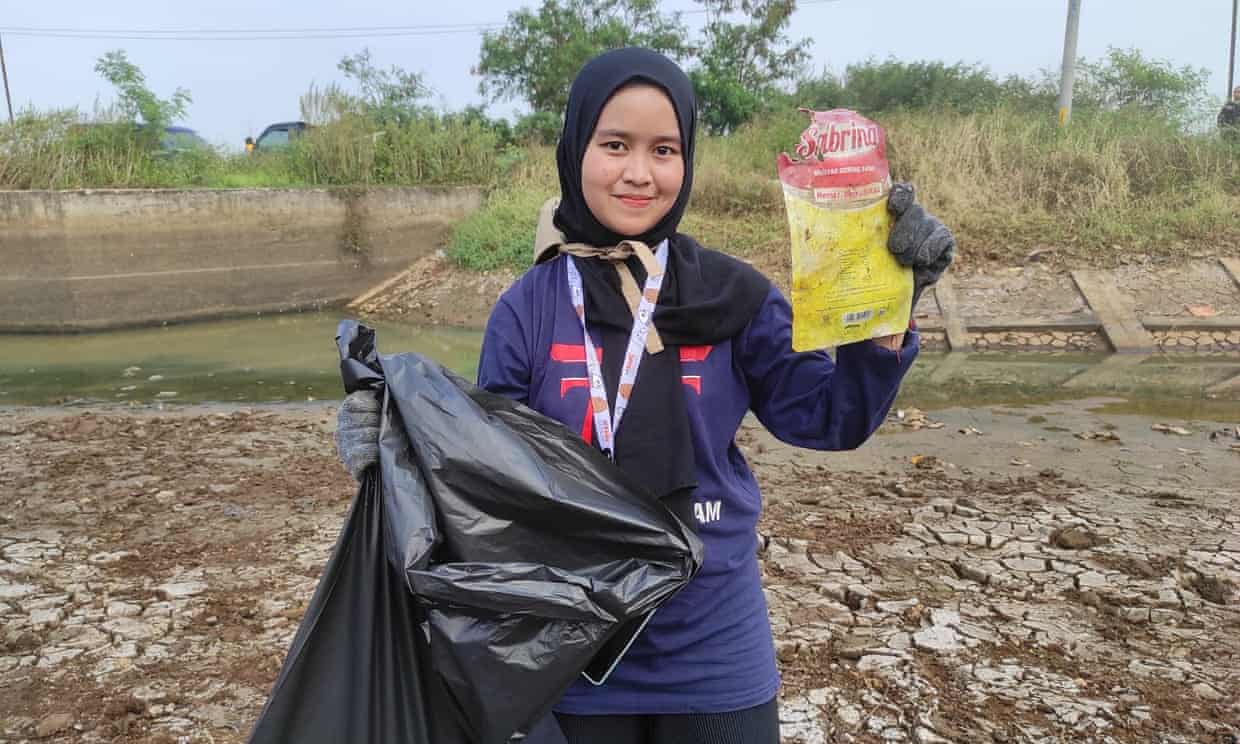
Resti Khairunnisa, 22, is a follower of Pandawara on TikTok. She joins other followers in collecting plastic waste from the Bandung dam in Indonesia. 

The young people will save us all. They certainly shouldn’t have to, but it restores our faith in humanity when we see them taking “arms against a sea of troubles” and not wasting time blaming those of us who deserve blame.

What is the secret of their strength? Perhaps not knowing what’s “impossible” enables people to do it anyway.

Guardian reporter Ardila Syakriah has this story from Indonesia.

“They started as flood victims, now they are touted as local heroes for cleaning up the rivers and beaches of Indonesia’s third largest city, Bandung in West Java, amassing over 9 million followers on TikTok and Instagram in the process and influencing others across the country to join the fight against pollution.

“The Pandawara group is five men in their early twenties and was formed in 2022 after flooding caused by rivers clogged with rubbish damaged their homes. … On TikTok, their profile – @pandawaragroup – contains over 100 short videos of their river and beach clean ups, earning them millions of views and totalling over 100 million likes.

“ ‘We have a team of river hunters who identifies rivers with urgent trash issues, where flooding can happen after rainfall,’ Pandawara member Gilang Rahma told the Guardian.

“The Greater Bandung area where they live produces 2,000 tons of waste each day, 10 to 20% of which doesn’t make it to landfill and often ends up in rivers. The vast mountain of waste produced in the region has exceeded landfill capacity by 800%, according to West Java official Prima Mayaningtyas. …

“Pandawara began modestly in 2022, cleaning up rivers around their neighborhood, protected by rubber hand gloves and boots. As they became full-time online celebrities-slash-activists, they were invited to meet government officials and receive partnership deals. As their popularity grew, so did their cleanups, which spread to other islands in Indonesia. 

TikTok went as far as to deem some videos as sensitive content because the sight of decaying rubbish might be considered disturbing by some viewers. …

“ ‘Sometimes when we call for volunteers, thousands would sign up but we could only select dozens due to limited space. At other times we don’t limit the number. These are for when we can’t clean up by ourselves,’ Gilang said, adding that the group hoped to use the social media platform to raise gen Z’s awareness of pollution.

“Pandawara’s latest call saw 600 people, including local government staff and officials, join the clean up of 17 tons of waste from the Bugel dam in Bandung regency, which is connected to West Java’s longest river, on 27 July.

“One of them was 22-year-old Resti Khairunnisa, who went straight to volunteering after finishing a night shift. Resti, who lives nearby the dam, said she had been inspired by Pandawara’s videos and would not hesitate to jump in even with limited protective gear.

“ ‘I haven’t slept at all. I’ve been concerned about waste pollution, but this is my first time taking action,’ she said after three hours of cleaning up, her sandals fully covered by mud.

“Another volunteer, 21-year-old university student Imam Ahmad Fadhil, himself a victim of floods, said he had been following Pandawara since before they became famous and lauded the group’s consistency. But he maintained that community-based initiatives were not enough.

“ ‘Some people know littering is wrong, but there is no waste facility in their village, nor do they have the tools to transport the waste, so they are left with no other options,’ he said.

“West Java official Prima Mayaningtyas acknowledged the need to improve waste management and people’s behaviors amid growing waste volumes, as the government looks to complete the construction of its estimated [$265 million] waste to energy plants by 2030.”

More at the Guardian, here.
Read Full Post »

Photo: Goldman Environmental Prize.
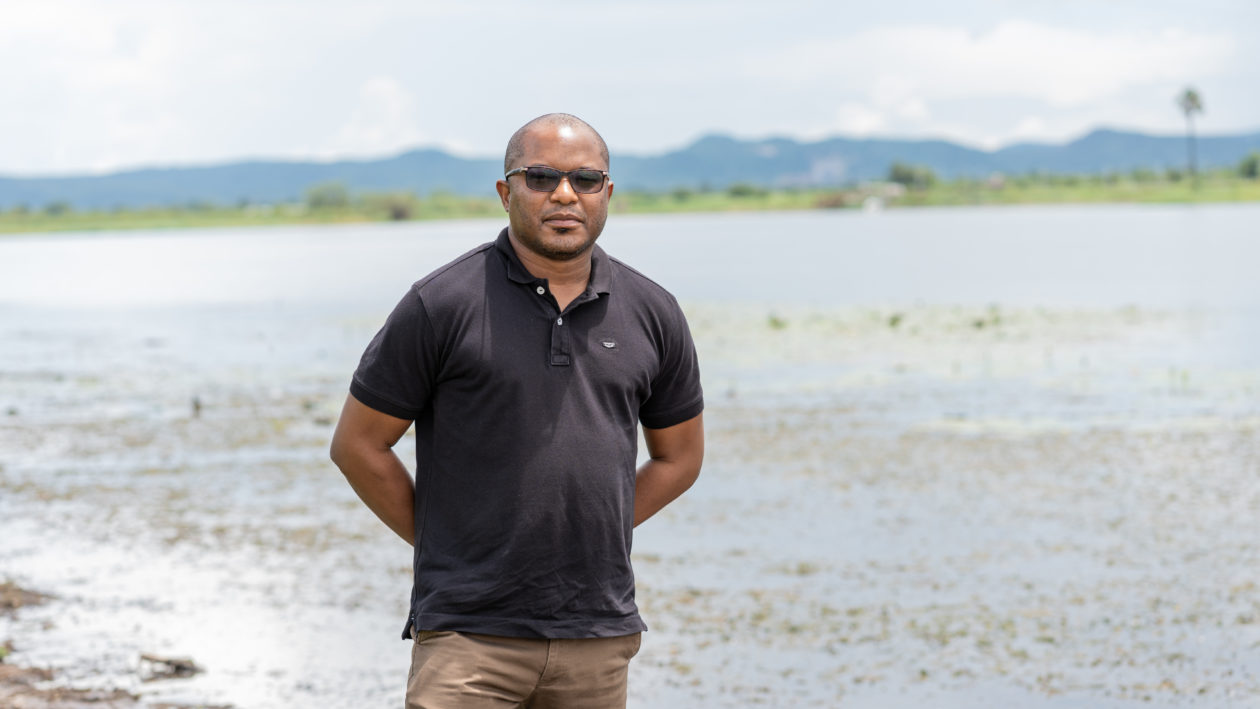
Chilekwa Mumba took on a UK mining giant that was polluting Zambia — and won.

Today’s story shows how one person can make a difference, even when the goal is considered impossible. It’s also a cautionary tale, because you can win the battle and not the war. The irony is that powerful entities can excuse polluting a region in order to meet “green economy” needs.

Jocelyn C. Zuckerman reported at Yale Environment 360, “The southern African nation of Zambia is home to a wealth of minerals — in particular, lots of the copper and cobalt that the world will require to power a green economy. Among its largest operations is the Konkola Copper Mines (KCM), located in the country’s Copperbelt Province.

“In 2004, U.K.-based Vedanta Resources acquired the controlling stake in KCM, whose operations span 11 square miles along the Kafue River. Soon after, residents noticed that the Kafue was emitting foul odors. Fish began dying. Crops began to wither.

Livestock fell ill. And villagers came down with mysterious headaches, nose bleeds, rashes, and burns.

“Chilekwa Mumba, who had grown up in the region but since moved to the Zambian capital, Lusaka, learned of the problem and vowed to do something about it. In an interview with Yale Environment 360, he talks about how he spent the next several years facilitating meetings between the communities and British lawyers, gathering water samples, and convincing former mine workers to provide evidence for a lawsuit that made its way through the British court system. Finally, in 2019, its Supreme Court found that KCM’s parent company could be held accountable in the U.K. for environmental damage from the mine’s operations.

“Not only had Mumba, 38, who was awarded a Goldman Environmental Prize [in April], helped win significant financial compensation for the 2,000 villagers involved, but his case set a legal precedent that British companies can be held accountable for the environmental fallout of their operations overseas. …

Yale Environment 360: KCM was already a presence when you were growing up in the town of Chingola. … You did your primary schooling in Chingola, so you got a good education in part thanks to the mine, which funded the schools? …

Mumba: They had excellent schools. We moved to Lusaka when I was 15, but I still went to school under the mine system. I went to a boarding school that was supported by the mines, including KCM.

e360: In 2004, Vedanta Resources, which is headquartered in the U.K., acquired a controlling stake in KCM. What happened after that?

Mumba: When they took over, there was too much collusion with government. They were not being held to account on many different issues. Based on what I was reading in the media, I started talking to residents in Chingola. We’ve got family and friends there, and my parents still maintain a home there. I used to go back occasionally, but it became almost a permanent home when I started to find out about the reports [of pollution]. I began realizing that what I’d been hearing was correct. And I started to do my own investigation. …

“I went to the same spot I used to go to as a child to fish. … There were basically no fish, and the smell of chemicals was quite evident. The soil makeup was different from what I remembered when I was young.

e360: Did you confront the company? …

Mumba: I had a couple of meetings with a local lawyer representing the villagers, and he was telling me that nothing would happen, that I shouldn’t waste my time. But he did give me quite a bit of information, and I put it in my file.

e360: You wrote letters to something like 100 law firms?

Mumba: A combination of law firms and environmental NGOs, all over the world. I was just randomly sending them out from my Yahoo address. I got a lot of automatic replies. And then there was an automatic reply from [British law firm] Leigh Day, followed up with an actual email from a person, Katie Gonzalez. I can never forget that name. I happened to find it in my email and was surprised. They told me they would be there in two weeks.

e360: How did the community respond to this British lawyer coming in? Did they trust him?

Mumba: Not immediately. But the way he is — Oliver Holland, I have to absolutely mention him — he was a white guy in a remote village, but he has this aura about him where he is very friendly, so they warmed up to him.

e360: What sort of evidence did you bring to court?

Mumba: We gathered water samples and soil samples and found that copper, iron, cobalt, and dissolved sulfates were present far beyond legal limits. We also took in — though we did not put that to the court — blood tests for various clients, to test for the presence of heavy metals. We already had overwhelming evidence from the water and the soil.

e360: Did you have help from anybody inside the company?

Mumba: A former mine manager, who knew the whole process and how there was gross negligence on the part of pollution control, gave us a lot of documents. He, of course, did not want to be named, so we videoed his testimony using certain means where his identity could be withheld. …

“Because of my connection to the case, I would get random calls and they would say, ‘Can we meet you? We want to help you. But protect our identity.’ So I would meet as many as possible. I would talk to everyone. It was part of the investigation, to get all that evidence together. …

“At the time, funnily enough, I was working for a local law firm, as a business development consultant. But I abandoned that work and decided to do this. I honestly didn’t even think that I was doing an investigation per se. It all came together when I was just simply inquiring into all these issues. …

e360: We know that copper and cobalt will be critical to the new green economy. Lots of people, including in the United States, want Zambia’s minerals. How does that help or hinder your position?

Mumba: I see it as a very dangerous position, especially the thirst for cobalt. I feel like the communities around the mines have never gotten a fair share of the deal. America says the end game of mining is they want clean energy. Cobalt is one of the components for that. So right now we need to be more watchful about how these mining operations are taking place and what benefit goes to the community.”

More at Yale Environment 360, here. No firewall.

Read Full Post »

Photo: Nick BanKo/CNN.
No, it’s not a shark. A bystander captured video of dolphins in the Bronx River in January, the first time they had been seen in the once polluted river since 2017.

Whenever I start feeling that saving the environment is hopeless, I remind myself that the Erie River no longer catches fire.

Now I can also think about what has changed at a formerly filthy river in New York’s Bronx borough.

Cathy Free reports at the Washington Post, “Nick Banko paused during a bike ride in New York City’s Starlight Park on a Monday afternoon [in January] when he saw something unusual in the Bronx River.

“Two dorsal fins were circling in the water, not far from where he was standing. They briefly disappeared beneath the river’s surface, then popped up again.

“Banko said he couldn’t believe what he was seeing: dolphins.

“ ‘I told myself, “Hold on, let me go to the dock and get closer,” ‘ said Banko, 22. ‘When I did, it was like they almost sensed my presence. Both of them passed through the surface of the water, showing their fins once more.’

“Banko quickly took a video of the dolphins, then posted it on Instagram with an all caps caption [asking for information.] A few days later, the New York City Department of Parks and Recreation shared his encounter on Twitter, where it has been viewed more than 2 million times.

“ ‘It’s true — dolphins were spotted in the Bronx River this week!’ NYC Parks posted. ‘This is great news — it shows that the decades-long effort to restore the river as a healthy habitat is working.’ …

“A parks spokesperson wrote later in a statement. ‘Make sure that they’re comfortable during their visit by giving them space and not disturbing them.’

“Two days later, there was another sighting of two dolphins in Brooklyn, although no one is certain if they were the same pair. People immediately started sharing videos of them on social media. …

“ ‘There was no wildlife in the Atlantic Ocean off [Long Island] and N.J. when I was a kid,’ posted another Twitter user. ‘Now there are seals, dolphins and yes, sharks, not to mention osprey and other birds. Environmentalism has had enormous successes.’

“One person surmised that New York dolphins probably sound different from other dolphins. ‘FUN FACT: The dolphins communicate with each other using a series of clicks and whistles in a distinctly Bronx accent,’ he wrote. …

“Dolphins occasionally make an appearance to feed on Atlantic bunker fish in New York City’s waterways, according to wildlife experts. They have been more often seen in the New York Harbor, where the Hudson River meets the salt water from the Atlantic off the lower tip of Manhattan. Sightings as far north as the Bronx are less common.

“ ‘It’s not every day you see them, but we did have some sighted in 2017,’ said Adriana Caminero, an urban park ranger with NYC Parks, recalling when students in a youth development program snapped photos of a lone dolphin in the Bronx River. …

“In 2012, a bottlenose dolphin was spotted in the Hudson River near West 120th Street, and in 2013, a couple of dolphins were spotted swimming in the East River. New Yorkers have also seen a humpback whale in the Hudson, and a fisherman caught a shark there in 2015.

“Two days after Banko took a video of the dolphins in the Bronx, several people witnessed two dolphins swimming in Whale Creek, a tributary of Newtown Creek, near the Grand Street Bridge in Brooklyn, prompting the Newtown Creek Alliance to post a photo and short video of the marine mammals on Instagram.

“ ‘It’s a good sign to see dolphins in our waters — it’s a sign that the river is much more healthy now than in the past,’ Caminero said, noting that it took years of activism to clean up the Bronx River after decades of pollution and dumping.

“Most people think of the 23-mile waterway as a freshwater river, she said, but further south it’s more brackish as it becomes part of the Long Island Sound. The river is restocked with fish every year by NYC Parks, Caminero noted. …

“After the dolphins were spotted in Whale Creek, people worried they might be poisoned by toxins, oil and sewage in the water. The adjacent Newtown Creek is a Superfund site that won’t be cleaned up until 2032. …

“Both of the recent dolphin sightings are reminders of the importance of keeping waterways clean to increase wildlife activity, said Willis Elkins, executive director of the Newtown Creek Alliance.

“ ‘Despite the improvements in water quality around New York City in recent decades, we still have a long road ahead to clean up historic toxins and eliminate the billions of gallons of sewage overflow that pose real risk to humans and marine wildlife alike,’ he said.

“While big improvements have been made in the Bronx River, there is still work to be done, added Caminero.

“ ‘Here in New York City, it’s really important that we properly dispose of our litter, because even something small can be washed into our waterways,’ she said. ‘Fishing gear left behind can also be dangerous — fish and other animals can become entangled in fishing lines.’

“She encourages those who want to view wildlife in or out of the water in New York City to keep their distance from the creatures.”

Never doubt that the accumulated efforts of many individuals can make change. “One and two and 50 make a million,” you know.

More at the Post, here.

Read Full Post »

Photo: Dave Burke/SOM.
Floating wetlands along the Chicago River’s Wild Mile.

Here’s an idea whose time has come. Now that we know the role of wetlands in cleaning up pollutants, why not create wetlands where they’re needed most? Having read today’s article, I’m not sure how I feel about the use of phragmites, so often considered an invasive weed. But I’m glad it’s so good at absorbing pollution.

Susan Cosier reports at YaleEnvironment360, “As cities around the world look to rid their waterways of remaining pollution, researchers are installing artificial islands brimming with grasses and sedges. The islands’ surfaces attract wildlife, while the underwater plant roots absorb contaminants and support aquatic life.

“Five small islands roughly the size of backyard swimming pools float next to the concrete riverbank of Bubbly Creek, a stretch of the Chicago River named for the gas that once rose to the surface after stockyards dumped animal waste and byproducts into the waterway. Clumps of short, native grasses and plants, including sedges, swamp milkweed, and queen of the prairie, rise from a gravel-like material spread across each artificial island’s surface.

A few rectangles cut from their middles hold bottomless baskets, structures that will, project designers hope, provide an attachment surface for freshwater mussels that once flourished in the river.

“Three thousand square feet in total, these artificial wetlands are part of an effort to clean up a portion of a river that has long served the interests of industry. This floating wetland project is one of many proliferating around the world as cities increasingly look to green infrastructure to address toxic legacies. …

“Like natural wetlands, floating versions provide a range of ecosystem services. They filter sediment and contaminants from stormwater, and laboratory experiments show that some plants have the ability to lock up some chemicals and metals found in acid mine drainage. These systems take up excess agricultural nutrients that can lead to algal blooms and dead zones, and recent research suggests they could be used to reduce manmade contaminants that persist in the environment. Though it’s difficult to quantify the exact benefits these systems offer, and they have limitations as a tool in remediating polluted waterways, they could provide another option, researchers say.

“Nick Wesley, executive director of Urban Rivers, a nonprofit working with the Shedd Aquarium on the Chicago project, believes floating systems are a natural fit for the urban environment. …. ‘We’re trying to [restore] what the naturalized river would be.’ In many cities, he continues, floating wetlands could provide a low-cost alternative to conventional infrastructure projects because they’re modular and easy to install and to monitor.

“Wesley’s group began, in 2018, with a floating wetlands project on the Chicago River’s North Branch. Called the Wild Mile, the installation aims to improve water quality and has already begun attracting invertebrates, including mollusks and crustaceans. Last month, the group expanded to the shores of Bubbly Creek. Urban Rivers, Shedd employees, and a team of volunteers bolted together polyethylene and metal frames, draped them with matting, dropped them in the water, added plants, and anchored the islands to the river bottom so they stay in place as the roots grow into the water. …

“Floating wetlands ‘are having a bit of a moment,’ says Richard Grosshans, a research scientist with the International Institute for Sustainable Development who works on the floating structures. ‘They function very similarly to a natural wetland: they have the same processes, plants and microorganisms, bacteria and algae.’ …

“Floating wetlands were first tested in retention ponds, the kind often located near developments to hold stormwater, to see if they filtered pollution. ‘The front end of it was, “Will they work? How well do they work? And what plants should we recommend?” ‘ says Sarah White, an environmental toxicologist and horticulturalist at Clemson University who has worked on floating wetlands since 2006. Partnering with researchers at Virginia Tech, White found that the wetland plants she tested not only did well in ponds with lots of nutrient pollution, but the adaptable, resilient plants actually thrived. She did not always choose native plants, opting instead for those that would make the islands more attractive, so that more urban planners would use them.

“In the early 2010s, Chris Walker, a researcher at the University of South Australia, began testing floating wetlands in wastewater, quantifying the pollutants that four species of plants took up in their tissues and improvements to water quality. Two species, twig rush Baumea articulata and the common reed Phragmites australis, showed the highest uptake of nitrogen and phosphorus of any floating wetland research to date. …

“His team also started testing the ability of floating wetlands to filter out emerging contaminants like per- and polyfluoroalkyl substances (PFAS), which are not always filtered by treatment plants and are linked to elevated cholesterol levels, problems with reproductive health, and kidney and testicular cancers. The reed Phragmites australis placed in a floating wetland began absorbing the pollutant into its tissues in less than a month. …

“In Boston, Max Rome, a PhD student at Northeastern University, is attempting to quantify the benefits of wetlands that have been floating since 2020 in the Charles River, another historically degraded waterway. He found that one acre of wetland can absorb the nutrient pollution — usually dumped into the river via stormwater — from seven to 15 acres of dense urban development.

“Rome is also looking into whether floating wetlands can create small pockets of improved water quality or habitat that allow certain native species, like freshwater sponges, to regain a toehold in the river. To do that, he monitored water quality near the wetlands and compared it to other places in the river.

“ ‘The last generation did a really good job of dealing with point source pollution — and it was a huge task,’ he says, referring to the success of the Clean Water Act in reducing effluent from discharge pipes. His generation has a new job, he adds: grappling with ‘ecological restoration of these degraded water bodies at the same time that we do pollution reduction,’ something the wetlands could help address.”

More at YaleEnvironment360, here. Lovely pictures. No firewall.

Read Full Post »

Older Posts »