Feeds:
Posts
Comments

Posts Tagged ‘protect’

Photo: Gianmarco Di Costanzo.
Lek Chailert devoted her life to rescuing abused elephants. Now caring for 120 of them, she fears for their future in Asia.

The stylist at my salon sometimes talks about her love for elephants. She’s the one who opened my eyes to what elephants and other animals suffer from captivity. I had never thought much about it, assuming that zoos were good, helping children to learn about the wild and saving endangered animals from extinction. Those things may be true to some extent, but not always.

Today’s story is about a woman who set up a rescue operation for elephants in her homeland.

Patrick Greenfield writes at the Guardian, “Saengduean Lek Chailert was five years old when she saw an elephant for the first time. It was in chains, lumbering past her home in rural Thailand on its way to help loggers pull trees from the forest. Back then, she saw the giant mammals like everyone else – as animals that served humans. But that changed the day she heard a scream from the forest.

“Chailert was 16 when she heard the terrible noise. She scrambled through the trees until she found the source: a bull elephant scrabbling in the mud as it tried and failed to drag a log out of a ditch. Every failed attempt was met with punishment from the loggers and mahout, the elephant keeper. …

“ ‘The elephant looked at me and I felt the fear and anger. I felt helpless and confused. My heart hurt a lot,” says Chailert. …

“The incident changed the direction of Chailert’s life forever. She was from a poor family – there was no electricity or school in her village – but she vowed to do something for the animals she loved.

“Before a ban on logging in natural forests in Thailand in 1989, elephants were a key part of the industry. In the early 20th century, there were an estimated 100,000 elephants in Thailand. Thousands were worked to death or left with severe injuries. …

“After the ban, many elephants were used by the country’s rapidly growing tourism industry to give performances and rides. …

” ‘Camp owners were competing with each other for tourists,’ she says. ‘They would train their elephants to dance, ride a motorbike, play darts or hula hoop, walk on a rope or play a harmonica. This brought more suffering to elephants.’

“It took Chailert a few attempts to fulfill her dream of finding a way to care for Thailand’s elephants. In 1996, she sold everything she had and borrowed money to set up an elephant sanctuary. She paid $30,000 for four hectares (10 acres) of land to provide a home to nine elephants.

“She insisted that there would be no elephant rides or performances. Her family invested money to help but after disagreements over how to run the park, she left the project, taking the elephants with her.

“Then, Chailert got lucky. National Geographic was filming a documentary with the Hollywood star Meg Ryan about Thailand’s wild elephants, which were estimated to number 4,000 to 4,400 by 2023; Chailert and her newly released elephants featured in it.

“In the US, a Texas couple, Bert and Christine Von Roemer, saw the TV program and contacted Chailert, donating enough money to buy a 20-hectare parcel of land in the Mae Taeng district of northern Thailand, near Chiang Mai. In 2003, Elephant Nature Park was born.

‘Today, about 120 rescue elephants are at the park, which has grown to more than 1,000 hectares, home to a small fraction of the 3,900 or so domesticated elephants in the country. The sanctuary’s work has an enormous social media following on Instagram and Facebook.

“Elephants arrive from all over Thailand. …

” ‘Some arrive with huge mental issues. Some stand like a zombie; some are aggressive, they swing their head back and forth. When they arrive, we do not allow our staff to use any tools or do anything that might make them feel threatened. We are gentle. We have to give them our love to make them trust us. We have to be patient,’ she says.

“New arrivals are almost always put into quarantine and slowly introduced to the herd. Over time, they are accepted. When their ears start to flap and their tails start to whirl, the elephants are happy, says Chailert. …

“Today, the conservation scheme is funded by visitors and volunteers who pay to work on the project. But despite the success of the sanctuary, Chailert fears for the future of Asian elephants, which she believes are decreasing in Thailand, despite official figures showing a steady increase in the population.

“ ‘Throughout Asia, many people are starting to hate elephants. Human-wildlife conflict is a big problem. Many died from being shot and poisoned,’ she says.

“ ‘Many have lost their habitat and water sources so they have to go to golf clubs and rice fields – places that don’t belong to them. So, people get angry and make the elephant into a monster. The future will depend on the government policy to resolve this,’ she says.”

More at the Guardian, here. PS. The Guardian doesn’t have a paywall. Please consider donating to keep their journalism alive.

Read Full Post »

Photo: Navajo Natural Heritage Program via Natural Resources Defense Council.
Diné Native Plants Program members work to restore a headwater stream impacted by livestock grazing.

The more that the US endangers its wetlands, the more we rely on the work that tribes do to protect them. Perhaps today’s article can help us see what the rest of us can do.

At the website for the Natural Resources Defense Council, or NRDC, Claudia Blanco Nuñez and Giulia CS Good Stefani describe how “Tribal Nations protect and manage millions of acres of wetlands, which help improve water quality, curb the risk of floods, recharge groundwater, and store large amounts of carbon.”

“Two years ago,” they report, “the U.S. Supreme Court slashed federal Clean Water Act protection of wetlands [with] harmful repercussions for droughts, wildfires, flooding, wildlife, and the drinking water supply. 

“In the absence of federal protection, the imperative to defend our shared waters falls increasingly on individuals, states, and Native American Tribal Nations. … Tribal Nations protect and manage millions of acres of wetlands in the United States, and with commitments made by the U.S. government to Tribal co-management and co-stewardship of federal lands, the amount of clean water safeguarded by Tribal Nations is growing.

“NRDC’s Science Office mapped the wetlands found within and intersecting the boundaries of Tribal reservation lands in the contiguous United States. Across the 294 federally recognized Tribal reservations mapped in this analysis, our scientists found that Tribes steward more than 3 million acres of wetlands. Even typically arid regions like the American Southwest have significant wetlands on Indigenous reservations. …

“In addition to the 56.2 million acres that are part of the Tribal reservation system, many Tribes have reserved or treaty rights on lands outside reservation boundaries, and most Tribes and their members maintain ongoing physical, cultural, spiritual, and economic relationships with their ancestral homelands. These reciprocal land and water relationships extend far beyond the political boundary of any designated reservation.

“This analysis is limited to federally recognized Tribes in the Lower 48 due to the complex Tribal governance systems in Alaska and Hawai’i. For example, the Alaska Native Claims Settlement Act of 1971 altered the previous Tribal ownership system to one led by Alaska Native Corporations. This system differs from federally recognized Tribes, which have a government-to-government relationship with the United States that includes eligibility for funding and services from the Bureau of Indian Affairs. That is to say, NRDC’s analysis looked at just a fraction of the total wetlands stewarded by and connected to the lives and well-being of Native peoples today.

“To learn more about Tribal wetland conservation, we spoke with leaders in the wetland management programs of the Navajo Nation and Red Lake Band of Ojibwe. …

“Navajo Nation agency staff are engaged in numerous projects to help restore and protect this essential resource. The Diné Native Plants Program recently submitted a grant application to remove invasive plant species along the Little Colorado’s riverbank. This will make space for native vegetation to grow and help with groundwater recharge for nearby Navajo farmers and families. The Diné Native Plants’ seed program also provides seed mixes for restoration projects that are solely sourced from Navajo plants. 

“Jesse Mike, the Diné Native Plants program coordinator, stepped out of the greenhouse to speak with us. He shared about the history of livestock grazing, trampling, and erosion that have impacted not only the health of the headwater streams on Navajo lands but also the underlying water table. His team is currently working to increase groundwater infiltration and improve the overall ecosystem health of three degraded streams in the Chuska Mountains. …

“The Red Lake Band of Ojibwe’s reservation is in northern Minnesota and has the greatest area of wetlands of any reservation in the contiguous United States. Across the Tribe’s more than 835,000 acres of land — all held in common by the Tribe — the Red Lake Band manages an astonishing 541,000 acres of wetlands. ‘So many wetlands,’ says Tyler Orgon, a biologist and the lead wetland specialist for the Red Lake Band Department of Natural Resources, ‘and we’re very fortunate for that.’ 

“A sizable portion of the Tribe’s wetland acreage north of Upper Red Lake is part of the largest expanse of peatlands in the continental United States. Peatlands cover about 3 percent of the earth and store more carbon than all of the planet’s other types of vegetation, including the world’s forests, combined. 

“One of the most important wetland-dependent plant species for the Red Lake Band — as well as other Anishinaabe and Dakota peoples across the Great Lakes region — is manoomin (Zizania palustris and Z. aquatica), the only wild rice native to Turtle Island. According to an Ojibwe prophecy, their ancestors were instructed to move west to the place where ‘the food floats on water.’

“The University of Minnesota research team We Must First Consider Manoomin (Kawe Gidaa-naanaagadawendaamin Manoomin) works to help protect this essential wetland-dependent plant by combining Western science with Indigenous science and learning from Ojibwe stewardship.

“The scientists have found that an increase in extreme weather conditions (like flooding events and record-breaking snowfall) negatively impact manoomin growth by uprooting the plant or drowning it out in its sensitive early stages. These weather events compound the already present settler-colonial impacts on wetlands in the region, including deforestation and conversion of wetlands into agricultural land use.

“Orgon hopes to restore some of the Red Lake Band’s wetlands that have been impacted by past agriculture.” More at NRDC, here.

Read Full Post »

Photo: NOAA/AP file.
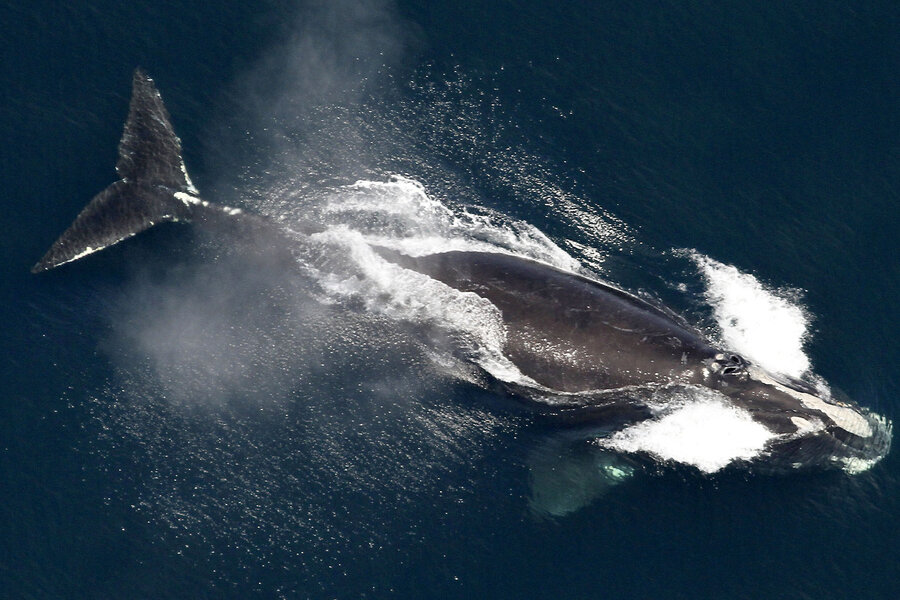
A North Atlantic right whale swims in New England waters.

Can we save treasured wildlife if we try? I can’t help thinking that before we pushed dodos and passenger pigeons to extinction, humans were not as aware. Now that we understand the dangers of losing species, can we put in the extra effort to preserve them?

Some humans are all in on protecting one particular species — the North Atlantic right whale.

Nate Iglehart reports at the Christian Science Monitor, “By the time Herman Melville wrote Moby Dick in 1851, New England was already famous for its whaling industry – hunting the North Atlantic right whale to near extinction. …

“Today, the once-targeted whales are prized conservation targets as New England leads efforts to bring them back from the brink. An emerging linchpin to their survival is taking form in a small but mighty network of coastal signaling devices.

“North Atlantic right whales are one of the most endangered large whale species in the world, with only about 370 left. Although whaling was almost entirely banned worldwide in 1986, the whales’ numbers have not recovered. Eleven new right whales were born this year, far below the 50 per year needed to create a stable population. Some models predict their extinction by 2035. …

“Now, everyone from fishers and marine ecologists to maritime corporations and coastal residents [is] leaning into technology to help stem the decline. …

“Mariners already try to avoid whales to protect the animals and their ships. But they don’t always know when one is around. When a whale is spotted, the National Oceanic and Atmospheric Administration (NOAA) sets up a slow zone, in which mariners are asked to slow their speed to 10 knots (11.5 mph) or less to reduce the likelihood of hitting a whale and the risk of fatally injuring it. The zones are separate from seasonal management areas, which have mandatory speed rules.

“Boaters are mainly alerted through email and text updates, and an app called WhaleAlert, which acts as a database for whale sightings and slow zones, says Greg Reilly, the International Fund for Animal Welfare’s marine campaigner. However, both need an internet connection, which is not required for boaters and is often spotty at sea.

“That’s where Moses Calouro, CEO of Maritime Information Systems, comes in. Over the last two years, Mr. Calouro has partnered with businesses, nonprofits, and coastal towns to install devices called StationKeepers along the entire Atlantic coast. These small 20-pound boxes sit high on coastal buildings and lighthouses. Using an Automated Identification System (AIS), they transmit locations of whales and speed zones directly to the navigation screens of ships. …

“Mr. Calouro’s 2024 pilot program focused on the Stellwagen Bank National Marine Sanctuary, an underwater plateau and feeding ground for right whales off the coast of Cape Cod. Upon entering, over 85% of ships slowed down, with an additional 10% doing so after receiving an automatic message warning.

Pete DeCola, the sanctuary’s superintendent, says the StationKeepers, combined with other efforts already under way to protect right whales, have reduced the risk of ships encountering whales by over 80%. …

“In 2010, NOAA researchers at the sanctuary created a program with the Massachusetts Port Authority and the International Fund for Animal Welfare that grades boaters and companies on their compliance. Last year, 91% of the 104 companies … that passed through slowed their boats appropriately. …

“Vessels that didn’t slow down were mainly new to the area. … That lack of knowledge is another challenge Mr. Calouro’s system aims to address. Mariners are skilled at avoiding hazards; it’s what they do for a living, says Mr. Reilly. But ‘they have to know where the hazard is.’ …

“But perhaps the biggest threat to North Atlantic right whales is entanglements, often in fishing gear. Even if the whale survives the tangle, the damage and stress of thrashing in the lines hurt their ability to give birth, says Courtney Reich, coastal director of the Georgia Conservancy.

“Technological advancements can reduce the need for buoy lines. Mike Lane, a lobsterman based out of Cohasset, Massachusetts, has worked with the underwater technology company EdgeTech to create prototypes of ropeless fishing gear. Typically, rope connects traps with buoys at the surface. But with ropeless gear, the traps use pop-up buoys, lift bags, or buoyant spools that, when remotely triggered, inflate or detach and bring the trap to the surface for collection.

“The gear is not perfect, Mr. Lane says, but it allows lobster fishers to keep working during the months that fisheries close due to the whales’ migration paths. He says that extra work can help lobster fishers financially, and it helps to know their gear is not snagging whales.

“But this gear, compared with a buoy and rope, is costly and can stress the fishers’ thin profit margins. There’s also a learning curve. … One of the biggest issues, he says, is keeping track of the traps so they don’t interfere with other fishers. If you tried to plot hundreds of ropeless traps in the water, the mapping data would be too cluttered to use effectively. Losing the expensive gear would be devastating. …

” ‘I’m not a huge fan of it,’ he says. ‘It’s not the way I prefer it. … The [mapping] technology is there; someone’s just got to package it properly.’ “

More at the Monitor, here. No paywall, but supporting this great news source is reasonable.

Read Full Post »

Photo: Julia Kochetova/The Guardian.
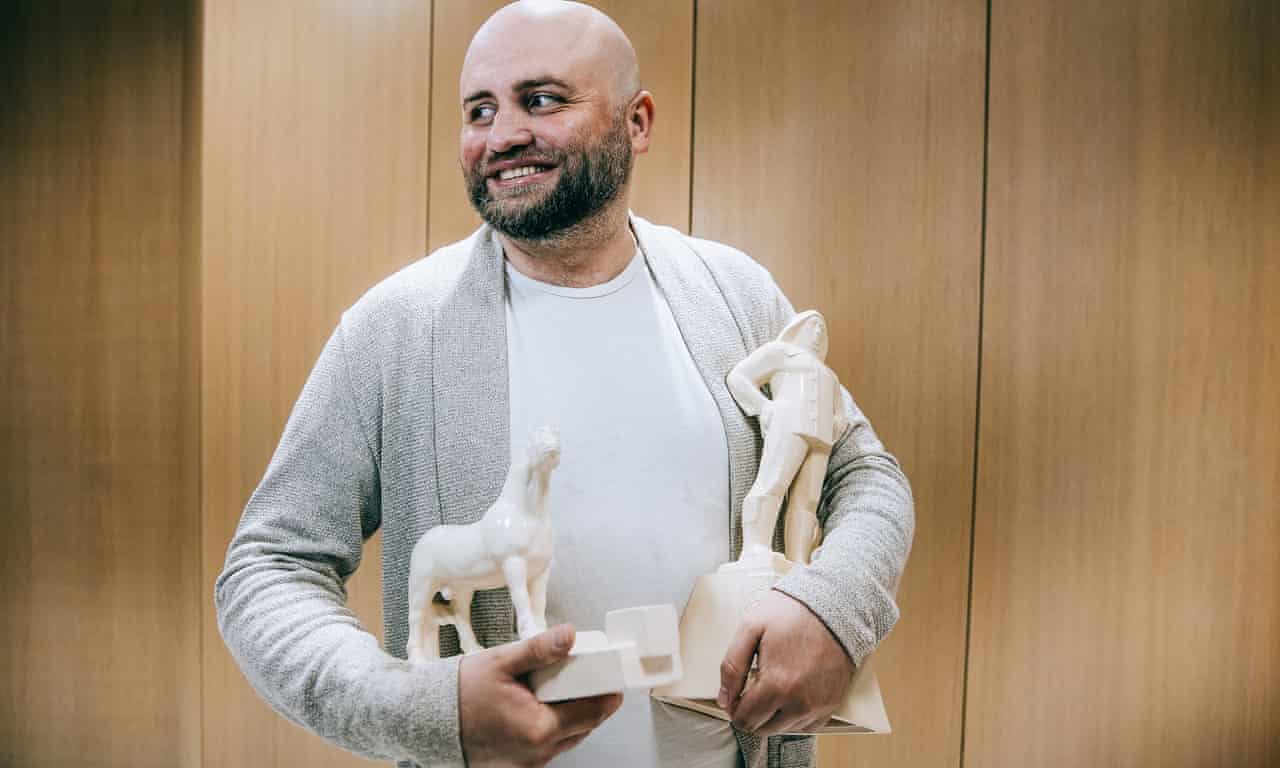
Leonid Marushchak with artworks from his private collection. He launched a death-defying rescue plan to help museums save Ukraine’s art from the invaders.  

You may know about the Monuments Men, charged by President Roosevelt with protecting cultural heritage during World War II. In Ukraine, after the Russian invasion, private individuals took on a similar task. One man especially.

At the Guardian, Charlotte Higgins has a fascinating piece about what historian Leonid Marushchak and his cohorts have accomplished.

“In early March 2022, when his country seemed in danger of falling to the Russians, it occurred to Leonid Marushchak, a historian by training, to call the director of a museum in eastern Ukraine to check that a collection of 20th-century studio pottery was safe.

“He had loved the modernist works by artist Natalya Maksymchenko since he had encountered them almost a decade earlier. There were vessels covered with bold abstract glazes in purple, scarlet and yellow; exuberant figurines of musicians and dancers with swirling skirts; dishes painted with birds in flight. The collection was the radiant highlight of the local history museum in Sloviansk, the ceramicist’s home town.

“It was remarkable that they were in this small museum at all. Though she was born in Ukraine in 1914 and studied in Kharkiv, Maksymchenko had lived the rest of her life in Russia. But, after her death in 1978, her family, fulfilling her wishes, oversaw the transfer of about 400 works from her studio in Moscow to the city of her birth. … Maksymchenko’s final gift to her home town and country seemed like a statement of defiance.

“Now, as the Russian army inched nearer and nearer to the museum, Marushchak worried that these works in delicate porcelain could be destroyed by a missile in a moment – or, if Sloviansk were occupied, taken by the invaders back to Moscow. Had the ceramics been prioritized for the first round of evacuations, Marushchak asked the museum director on the phone.

“ ‘Lyonya, what round?’ came the reply. ‘We still haven’t got the order to evacuate!’

“Marushchak phoned his friend Kateryna Chuyeva, who was then Ukraine’s deputy minister for culture. ‘Katya,’ he asked her, ‘why have you still not given the order for the Sloviansk museum?’ She explained that she couldn’t just authorize it herself – the regional authorities needed to request it first. So he called the region’s culture department. They said that to issue an order, they would first need a full list of items to be evacuated.

“Marushchak was furious. The situation was urgent; there was no time for that kind of paperwork. ‘Let’s just say I have sometimes had to take my time and breathe slowly,’ said Chuyeva, in the face of her friend’s sometimes volcanic passion. She found a way to break the bureaucratic impasse. Before the official order had even arrived, Maruschak was on his way to Sloviansk.

“Marushchak cannot drive. … Without his own means of getting to Sloviansk, Marushchak had his brother-in-law drive him from Kyiv 300 miles east to the city of Dnipro. From there, friends took him a further 50 miles, to the city of Pavlohrad. Then he walked to the last checkpoint in town and hitched a lift for the last 120 miles – this time, on a Soviet-era armored personnel carrier.

“In Sloviansk, artillery boomed alarmingly close; the opposing armies were fighting over a town only 18 miles away. When Marushchak reached the museum, staff were finally packing up the exhibits – though, to his annoyance, the official instructions on what should be prioritized dated from 1970, and stated that what he referred to as ‘an old bucket of medals’ from the second world war should be rescued first. Aside from the Maksymchenko ceramics and the medals, there was also a natural history collection to deal with – AKA, stuffed animals, which, just to add another layer of danger to the enterprise, had probably been preserved with highly toxic arsenic. …

“Since those early days of the war, with the help of a motley group of intrepid friends, Marushchak has achieved something quite extraordinary. He has organized the evacuation of dozens of museums across Ukraine’s frontline – packing, recording, logging and counting each item and sending them to secret, secure locations away from the combat zone. Among the many tens of thousands of artifacts he has rescued are individual drawings and letters in artists’ archives, collections of ancient icons and antique furniture, precious textiles, and even 180 haunting, larger-than-life medieval sculptures known as babas, carved by the Turkic nomads of the steppe.

“ ‘At times,’ said Chuyeva, ‘he has been doing almost unbelievable things’ – putting himself into extreme personal danger for the sake of often humble-seeming regional museum collections on Ukraine’s frontline.

“A nation’s understanding of itself is built on intangible things: stories and music, poems and language, habits and traditions. But it is also held in its artworks and artifacts, fragile objects that human hands have made and treasured. Once lost or destroyed, they are gone for ever, along with the stores of knowledge they contain, and potential knowledge that future generations might harvest from them. For Marushchak, his country’s culture, no less than its territory, is at stake in this war: a culture that Vladimir Putin has repeatedly claimed has no distinct existence, except as an adjunct to Russia’s.

“On that day in Sloviansk, something became clear to him: there was no point relying on official evacuation efforts. If he wanted to see the job done, he was going to have to do it himself. ‘He had to do it with his own hands,’ his friend, the artist Zhanna Kadyrova told me. ‘There was no one else.’

This is a long article. Read it at the Guardian, here. No paywall, but contributions are solicited.

Read Full Post »

Photo: University of the Witwatersrand.
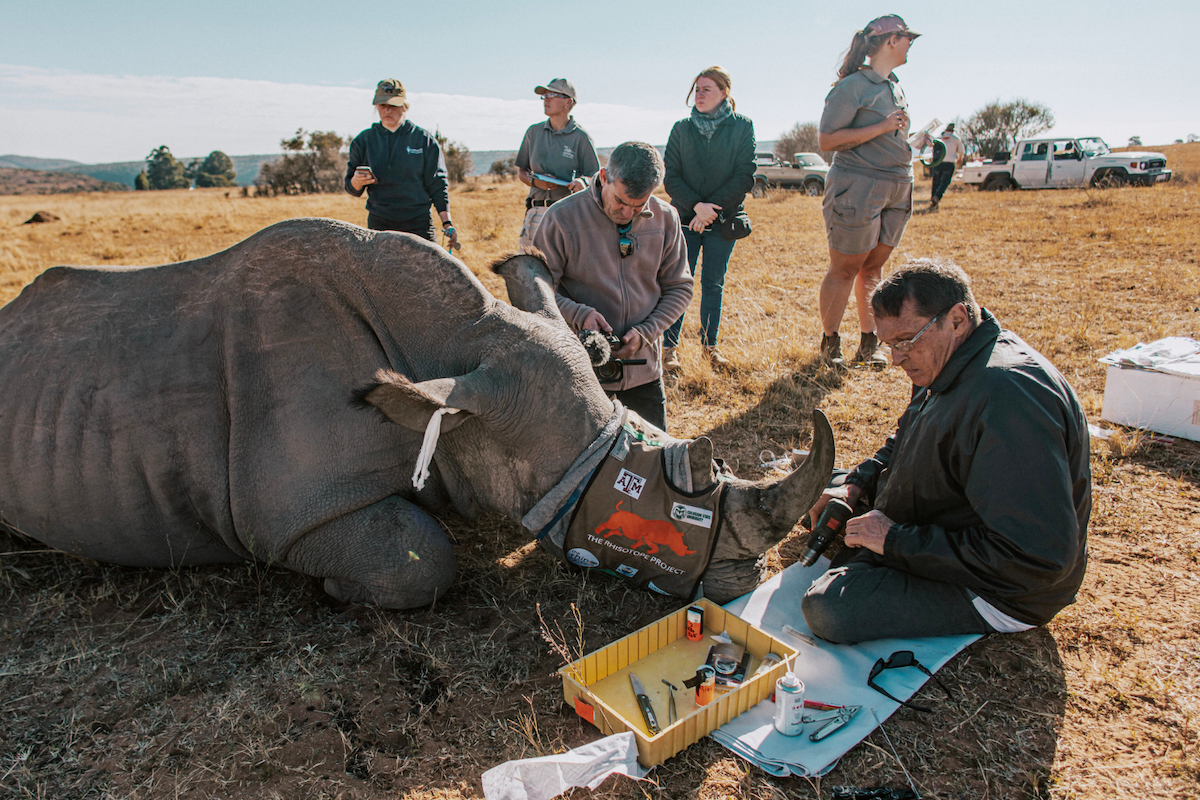
To protect rhinos and scare off poachers, researchers add radioisotopes to a rhino horn at the Waterberg Biosphere Reserve in South Africa. 

Who would think of protecting endangered rhinos by injecting something radioactive into their horns? Researchers in Africa, that’s who.

YaleEnvironment360 reports that “South African researchers have inserted radioactive material into the horns of 20 live rhinos. Their goal: to track horns from rhinos that were hunted illegally.

“Researchers say radioisotopes added to horns would be picked up by radiation detectors at airports, harbors, and border crossings, and so would send up a red flag. There are more than 11,000 such detectors at ports of entry around the globe, part of a vast infrastructure aimed at stemming the flow of illicit nuclear material. And the thousands of security personnel devoted to operating these detectors far outnumber officials working to stem the illegal wildlife trade.

“ ‘Ultimately, the aim is to try to devalue rhinoceros horn in the eyes of the end users, while at the same time making the horns easier to detect as they are being smuggled across borders,’ said project lead James Larkin, of the University of the Witwatersrand in Johannesburg.

“ ‘Every 20 hours in South Africa a rhino dies for its horn. These poached horns are then trafficked across the world and used for traditional medicines, or as status symbols,’ Larkin said. ‘This has led to their horns currently being the most valuable false commodity in the black-market trade, with a higher value even than gold, platinum, diamonds, and cocaine.’ “

The University of the Witwatersrand website adds: “These radioisotopes will provide an affordable, safe and easily applicable method to create long-lasting and detectable horn markers that cause no harm to the animals and environment. At a later stage, the work will expand to elephants, pangolins and other fauna and flora. …

“Starting on Monday, 24 June 2004, Professor Larkin and his team carefully sedated the 20 rhinos  and drilled a small hole into each of their horns to insert the non-toxic radioisotopes. The rhinos were then released under the care of a highly qualified crew that will monitor the animals on a 24-hour basis for the next six months. ‘Each insertion was closely monitored by expert veterinarians and extreme care was taken to prevent any harm to the animals,’ says Larkin. ‘Over months of research and testing we have also ensured that the inserted radioisotopes hold no health or any other risk for the animals or those who care for them.’    

“The development and application of the Rhisotope Project nuclear technology has the capacity to help deter poaching, increase the detection capabilities of smuggled horns, increase prosecution success, reveal smuggling routes and deter end-user markets.

“Rhino poaching reached crisis levels since 2008 where close to 10 000 rhinos were lost to poaching in South Africa, with wildlife trafficking being the third biggest organized crime globally.

“Professor Lynn Morris, the Deputy Vice-Chancellor: Research and Innovation at Wits University says: ‘This is an example of how cross-disciplinary research and innovation makes a real difference. This novel approach pioneered by Prof Larkin and his colleagues has the potential to eradicate the threat of extinction our unique wild-life species, especially in South Africa and on the continent. This is one of many projects at Wits that demonstrates research with impact, and which helps to address some of the local and global challenges of the 21st Century.’

“The Rhisotope Project at Wits was set up by a small team of likeminded individuals as a South African-based conservation initiative in January 2021 with the intention of becoming a global leader in harnessing nuclear technology to protect threatened and endangered species of fauna and flora as well as communities of people.

“Aside from developing a solution to combat the illicit trade and trafficking of wildlife products, the Rhisotope Project seeks to provide education and social upliftment to empower people and local communities. A special focus is aimed at uplifting the girls and women of rural communities, who are often the backbone of these communities in the remote areas where endangered species are found and are the greatest components of success in changing the hearts and minds of local communities thereby creating rhino ambassadors and champions.”

More at Yale e360, here, and at the university’s website, here.

Read Full Post »

Photo: Lenny Rashid Ruvaga.
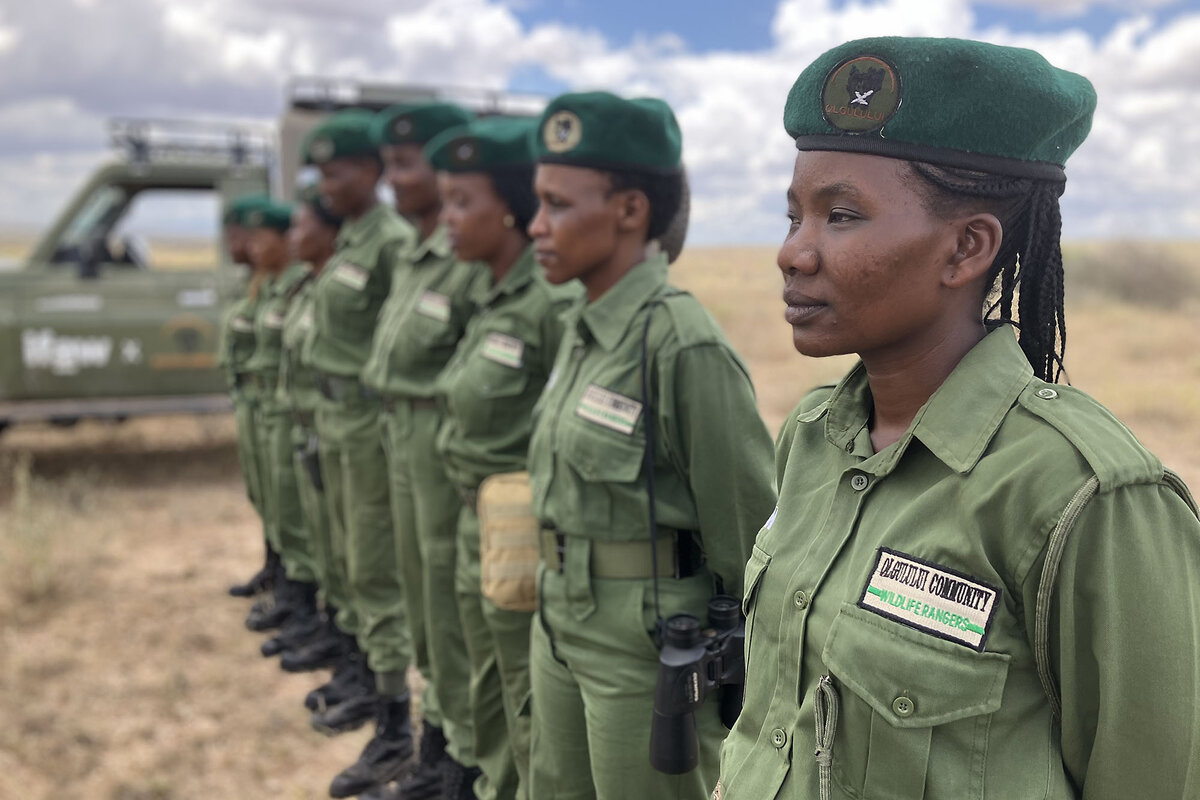
Senior Sgt. Purity Lakara (foreground) stands with members of Team Lioness at the Olgulului-Ololorashi Group Ranch. They make up Kenya’s first all-woman ranger force.

Maasai women are breaking out of traditional subservient roles, with some especially adventurous females deciding to serve as conservation rangers.

Lenny Rashid Ruvaga writes at the Christian Science Monitor, “The breakthrough was a bottle of water. For three days, wildlife ranger Everlyne Merishi had been embedded with a group of Maasai morans, or hunters. It was mid-2023, and they were searching for lions that had killed several of their cattle near this national park at the foot of Mount Kilimanjaro. For the Maasai, cows are sacred and considered members of their families. The men wanted vengeance. 

“Mrs. Merishi understood that feeling, because she is Maasai herself. That is also why she was convinced there could be a less destructive solution. 

“The group had already walked about 25 miles that day when members stopped, exhausted, for a break. Mrs. Merishi and her team began to pass around bottles of water. As the hunters drank, their faces softened and they mustered weak smiles. 

“Mrs. Merishi remembers walking over to a group where one of the leaders sat. ‘I told them that I understood their pain and that an injustice had occurred, but I promised that we would ensure that the authorities would relocate these two lions,’ she says. 

“Mrs. Merishi is part of an all-woman ranger unit working on Maasai lands near Amboseli National Park in southern Kenya. That’s rare: Globally, women account for only 3% to 11% of all park rangers. Team Lioness, as the Kenyan unit is known, was formed in 2019, part of a worldwide movement to increase those numbers. 

“These efforts are important, experts say, because they challenge stereotypes – but also because they help conservation efforts reach a wider audience. In the Amboseli area, for instance, the Lionesses have been particularly effective among the ranger teams at connecting with locals like the Maasai. 

“ ‘It’s astonishing to see the incredibly positive ripple effect of employing women from local communities and the benefits on their lives and their communities at large,’ says Holly Budge, the founder of World Female Ranger Week and a longtime advocate for women in wildlife protection. …

“The commander of Team Lioness, Sgt. Purity Lakara, has dreamed of this life since she was a child. 

“She grew up in a Maasai village approximately 30 miles from here. Her community placed heavy value on living in harmony with both animals and nature. And when she saw wildlife rangers patrolling the area, she was awed by the sense of authority they projected. There was one problem though: ‘They were all men,’ she says. 

“Meanwhile, girls like her were expected to get married young and settle into a domestic life. … But Mrs. Lakara’s parents were determined that she should get an education, and her timing was fortuitous. 

“In 2013, Africa’s first all-woman ranger unit, the Black Mambas, was formed in South Africa, and others soon followed in countries such as Zimbabwe and Congo. Supporters of the trend argued that women were more approachable and were able to communicate more easily with other women in the communities where they worked.  

“The idea to form an all-woman ranger team in Amboseli came up in 2019. It was the brainchild of a female Maasai elder named Kirayian Katamboi and the International Fund for Animal Welfare, a global charity. 

“At the time, Mrs. Lakara had just finished high school. When village elders called a meeting to pitch the new ranger unit, ‘my heart leapt for joy,’ she says. She became one of its founding members.

“Today, Team Lioness is made up of 17 women, each of whom has completed a three-month training in ecology, first aid, and ‘bushcraft’ – or the art of talking to people about conservation. They live for stretches of 21 days at a simple base camp with concrete floors and a sheet iron roof in the Olgulului-Ololorashi Group Ranch, as the Maasai land surrounding Amboseli National Park is known. 

“Each morning, the rangers patrol the surrounding area on foot, walking about 12 miles as they look for signs of poaching and survey the wildlife in the area.  The women are also responsible for managing occasional conflicts between locals and the animals, which usually flare up when lions or cheetahs from Amboseli cross into Maasai villages and kill cattle. 

“In the past, these situations often led to tensions between park rangers, who didn’t take kindly to attempts to kill the offending wildlife, and communities, who often felt authorities wanted to protect animals but didn’t care about the people they harmed. 

“However, the honest communication style of Team Lioness and other ranger units from Maasai communities has helped gain trust. They explain the law and people’s rights – like their right to be compensated for cattle killed by big cats from the park. …

“The rangers also give back to the community in other ways. In April 2022, they started a school outreach program where they hope to inspire students – particularly girls – to stay in school and pursue careers in conservation. 

“ ‘I beam with joy when I hear the students say, “I want to be like Ranger Lakara or Ranger Merishi,” ‘ Mrs. Lakara says. ‘It means that they see us as role models.’”

More at the Monitor, here.

Read Full Post »

Photo: Iain Brown.
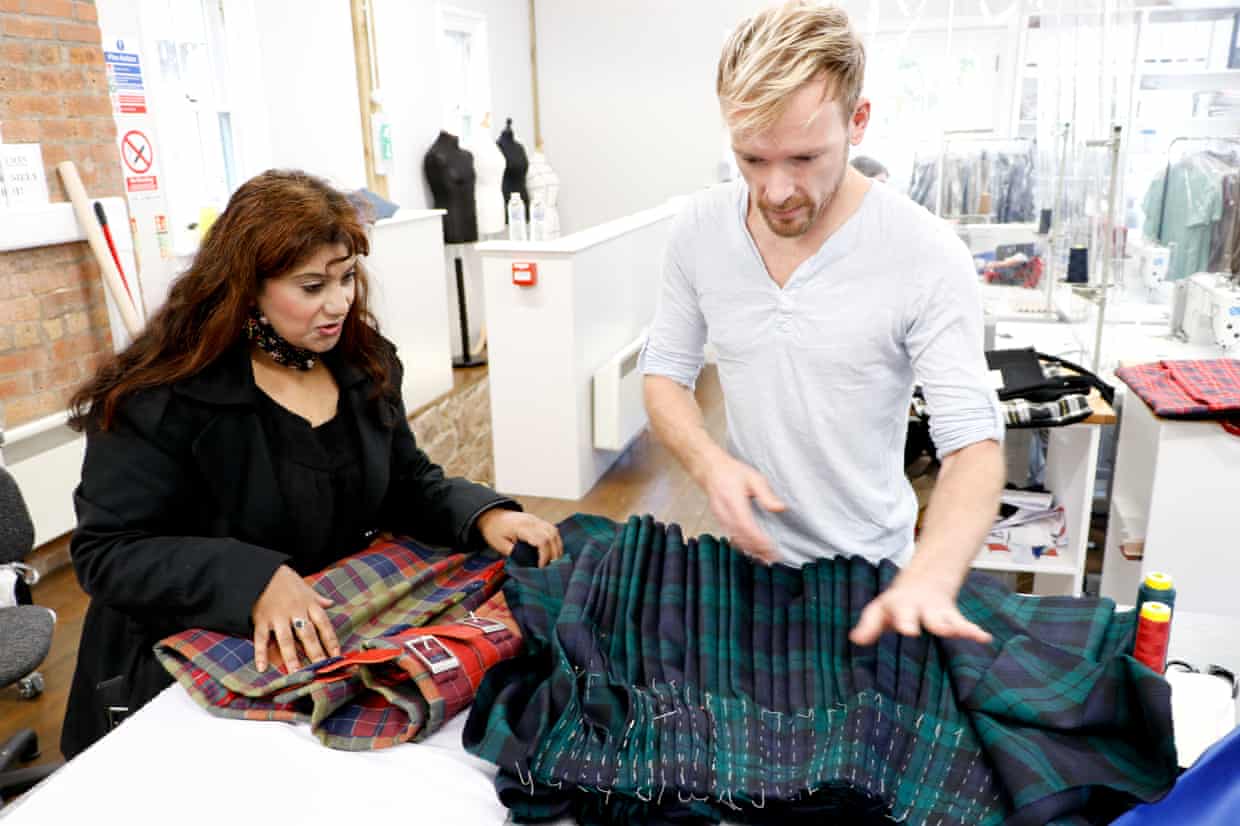
Kilt maker Graeme Bone. A new organization seeks to protect crafts that have fewer and fewer makers.

I don’t think of neon as an ancient craft, but I’m learning that lack of demand for it is endangering its future. It’s right up there with bagpipes.

At the Guardian, Alice Fisher reported recently on efforts to protect and pass along the skills of makers as varied as those who craft neon, kilts, bagpipes, and cricket bats.

“Nick Malyon was seduced by neon lighting at the end of the 1980s while traveling in America,” she writes. …

“ ‘I was introduced to a sign painter and a neon signmaker, and it seemed like an alternative lifestyle to the one I’d left behind. On my return to the UK, I was probably attempting to carry on some American dream by training, but I loved the weird alchemy of illuminating a piece of bent glass tubing – the change from nothing to something.’

“Malyon’s art [was on display in May], during London Craft Week (LCW), at the Vintage Supermarket, a Soho pop-up shop by Merchant & Found that specializes in 20th-century and industrial furniture. His work will represent one of the many endangered crafts on show this year.

“ ‘Over the centuries, crafts have ebbed and flowed; some die out but others grow to replace them,’ says Daniel Carpenter, executive director of Heritage Crafts, the charity that produces the annual red list of endangered skills. ‘But what we’re seeing now is something different – it’s like an extinction-level event.’

“Heritage Crafts’ red list includes gloomy news for British culture. Cricket ball manufacture is extinct in the UK, while cricket bats are on the endangered list alongside kilt- and bagpipe-making. Construction of currach boats and the sporran are also on the critical list.

“Carpenter says that competition from low-wage economies overseas is a key factor. … He says the situation is worse in the UK than in other European countries, but Heritage Crafts has just established a worldwide organization to monitor the situation. ‘There’s less support for training, and government-funded apprenticeships are very hard to access in the UK. They’re not set up for our sector – which is ironic, as apprenticeships were developed by craft guilds in medieval times.’

“Scottish kiltmaker Graeme Bone’s work will appear at LCW’s Craftworks. He retrained with a program offered by the Prince’s Foundation. Previously he was a steelworker: ‘Surprisingly, there are many cross-transferable skills from construction to pattern making – it’s all grids and measurements.’ …

“Rush weaver Felicity Irons, who is also exhibiting at LCW, received a British Empire medal in 2017 for saving the UK’s rush-cutting industry. She was focused on making seating when her rush supplier, Tom Arnold, died. Arnold’s brother was in his 70s and didn’t want to take over the trade, though it had been in his family since the 1500s. He gave Irons a two-hour training session before she took over.

“ ‘But I still get asked if this is my hobby. Though it’s better than it was when I set up – customers would be really rude to me about the prices and I had to stop myself from justifying it. I think it’s staggering that those plants growing in the river are being sent all around the world – our exports are really strong.’

“In June 2024, the UK will ratify Unesco’s Convention for the Safeguarding of the Intangible Cultural Heritage, which means the government commits to protect local crafts, social practices, festive events and rituals. A public register opened in January 2024 for British people to nominate local traditions for our national list. ‘It’s a step forward,’ said Carpenter, ‘but it’s largely symbolic.’ …

“While grants are hard to come by, some awards offer money prizes as well as recognition. The latest winner of the Loewe Foundation Craft prize, an international award, [was] announced in the same week as LCW. [Andrés Anza won.] …

“Abraham Thomas, curator of modern architecture, design and decorative arts at the Metropolitan Museum of Art in New York is one of the Loewe Prize judges this year. He feels some crafts people are adapting to the modern world.

“He says: ‘It’s interesting to note that several artists on this year’s shortlist have subverted traditional techniques and incorporated unexpected, recycled or industrial materials. They appear where other materials might be expected – all with the purpose of challenging craft traditions, legacies and expectations.’”’

“Carpenter also thinks craft is an innate human trait, and the loss of these skills goes beyond being a problem for our manufacturing sector or a waste of talent. ‘We’ve evolved as human beings to be makers,’ he said. ‘So for us to be living 24/7 in the digital world isn’t natural.’ …

“Malyon, though, has resigned himself to the death of his craft in the UK. ‘Since the advent of LED in the 2000s, neon trade worldwide has crashed. Brexit caused a price rise in our materials, all imported from Europe. I’ve never earned much and I work very long hours, but I really enjoy what I do.

“ ‘I just wanted to make neon signs, commercially, for whatever weird reason, so I feel I’ve been lucky. But as far as the UK craft is concerned, I don’t think anyone can stop it from dying.’ ” More at the Guardian, here.

I’m glad to read that someone is still doing work with rushes. A couple of our rush-bottom dining chairs were starting to need attention. Fortunately, the new owners of our house were happy to take them on.

Read Full Post »

Photo: Nick St Oegger/The Guardian.
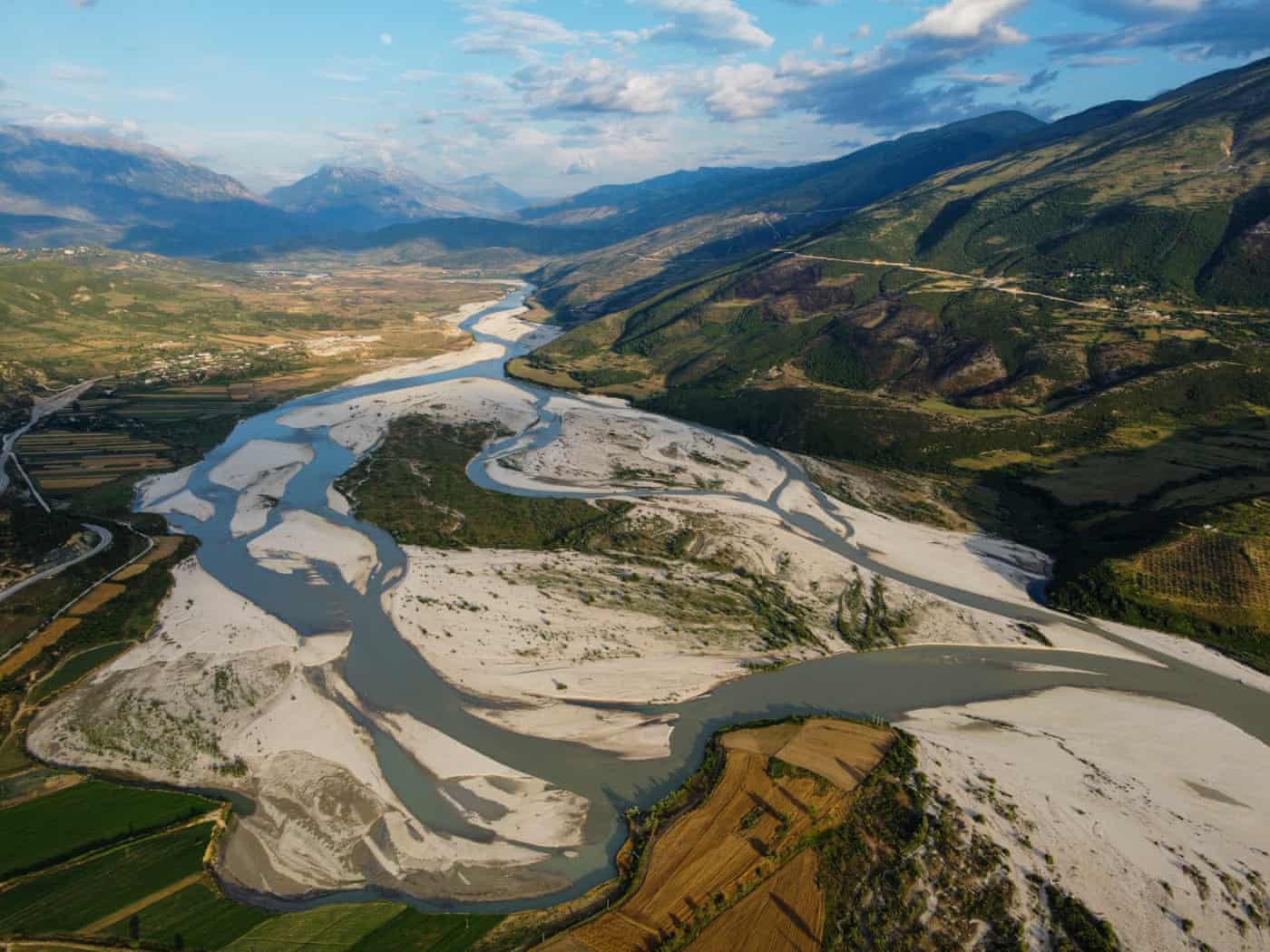
The Vjosa River near Qesarat, southern Albania. The river and its three main tributaries in the country have been declared a national park. 

In the 1980s, when I was active in the Esperanto movement, I managed the New England group’s post office box. One day I took out a letter on flimsy paper with a Tirana postmark. Tirana is the capital of Albania. The Berlin Wall had yet to fall, and Albania was still firmly behind the Iron Curtain. I felt like I had received a message from the other side of the moon.

Nowadays Albania is not so different from the rest of Europe, and today’s story is about its participation in European efforts to save wild rivers.

Karen McVeigh  writes at the Guardian, “One of the last wild rivers in Europe, home to more than 1,000 animal and plant species, has been declared a national park by the Albanian government, making the Vjosa the first of its kind on the continent.

“The Vjosa River flows 168 miles (270kms) from the Pindus mountains in Greece through narrow canyons, plains and forests in Albania to the Adriatic coast. Free from dams or other artificial barriers, it is rich in aquatic species and supports myriad wildlife, including otters, the endangered Egyptian vulture and the critically endangered Balkan lynx, of which only 15 are estimated to remain in Albania.

“For years, the Vjosa’s fragile ecosystem has been under threat: at one point as many as 45 hydropower plants were planned across the region.

“But [in March], after an almost decade-long campaign by environmental NGOs, Vjosa was declared the first wild river national park in Europe. Environmentalists described it as a historic decision that has placed the tiny Balkan nation at the forefront of river protection.

“Albania’s prime minister, Edi Rama … described the creation of the national park as a ‘truly historic moment’ for nature as well as social and economic development. ‘Today we protect once and for all the only wild river in Europe,’ he said. ‘This is about to change a mindset. Protecting an area does not mean that you enshrine it in isolation from the economy.’ …

Mirela Kumbaro Furxhi, Albania’s tourism and environment minister, said the creation of the park was part of the country’s evolution and continuing emancipation three decades on from communist rule. …

“She said, ‘Maybe Albania does not have the power to change the world, but it can create successful models of protecting biodiversity and natural assets, and we are proud to announce the creation of this first national park on one of the last wild rivers in Europe.’ …

“A collaboration between the Albanian government, international experts, NGOs from the Save the Blue Heart of Europe campaign to protect Balkan rivers, the International Union for Conservation of Nature (IUCN) and Patagonia, the outdoor clothing company and environmental organization, the 12,727 hectare (31,500 acre) park aims to ensure the Vjosa and its unique ecosystems are safeguarded. It has been given IUCN category II park status, a high level of protection similar to that of a wilderness. The categorisation covers ‘large-scale ecological processes,’ species and ecosystems, crucial to ensuring dams and gravel extraction are banned. It is expected to be operational in 2024.

“Boris Erg, director of the European office at IUCN, paid tribute to the government of Albania for its leadership and ambition. ‘Today marks a milestone for the people and biodiversity of Albania,’ he said. ‘We invite other governments in the region and beyond to show similar ambition and help reach the vital goal of protecting 30% of the planet by 2030.‘ …

“The Albanian government is starting a joint process with the Greek authorities to create the Aoos-Vjosa transboundary park, aiming to protect the entire river across both countries, who agreed in January to sign a memorandum of understanding specifying the next actions.

Europe has the most obstructed river landscape in the world, with barriers such as dams, weirs and fords, estimated to number more than a million, according to a 2020 EU study in 28 countries. Such fragmenting of rivers affects their ability to support life.

“Ulrich Eichelmann, a conservationist and founder of Riverwatch and part of the Save the Blue Heart of Europe campaign, said: ‘Most people in central Europe have never ever seen a wild, living river, free from the impacts of human interference, that isn’t diverted or dammed or built up with embankments and where biodiversity is low as a result. But here, you have a wild river, full of complexity and without interference.’ …

“Ryan Gellert, Patagonia’s CEO, said the collaboration proved the power of collective action. ‘We hope it will inspire others to come together to protect the wild places we have left, in a meaningful way,’ he said, adding that the park was proof that the ‘destruction of nature did not have to be the price of progress.’ “

Man, I love Patagonia. Did you know the company takes no Chinese cotton from Uighur slave labor? I bought the most luxurious cotton towels at Patagonia, guilt free.

More at the Guardian, here. No firewall.

Read Full Post »

Photo: Elucius/Wikimedia.
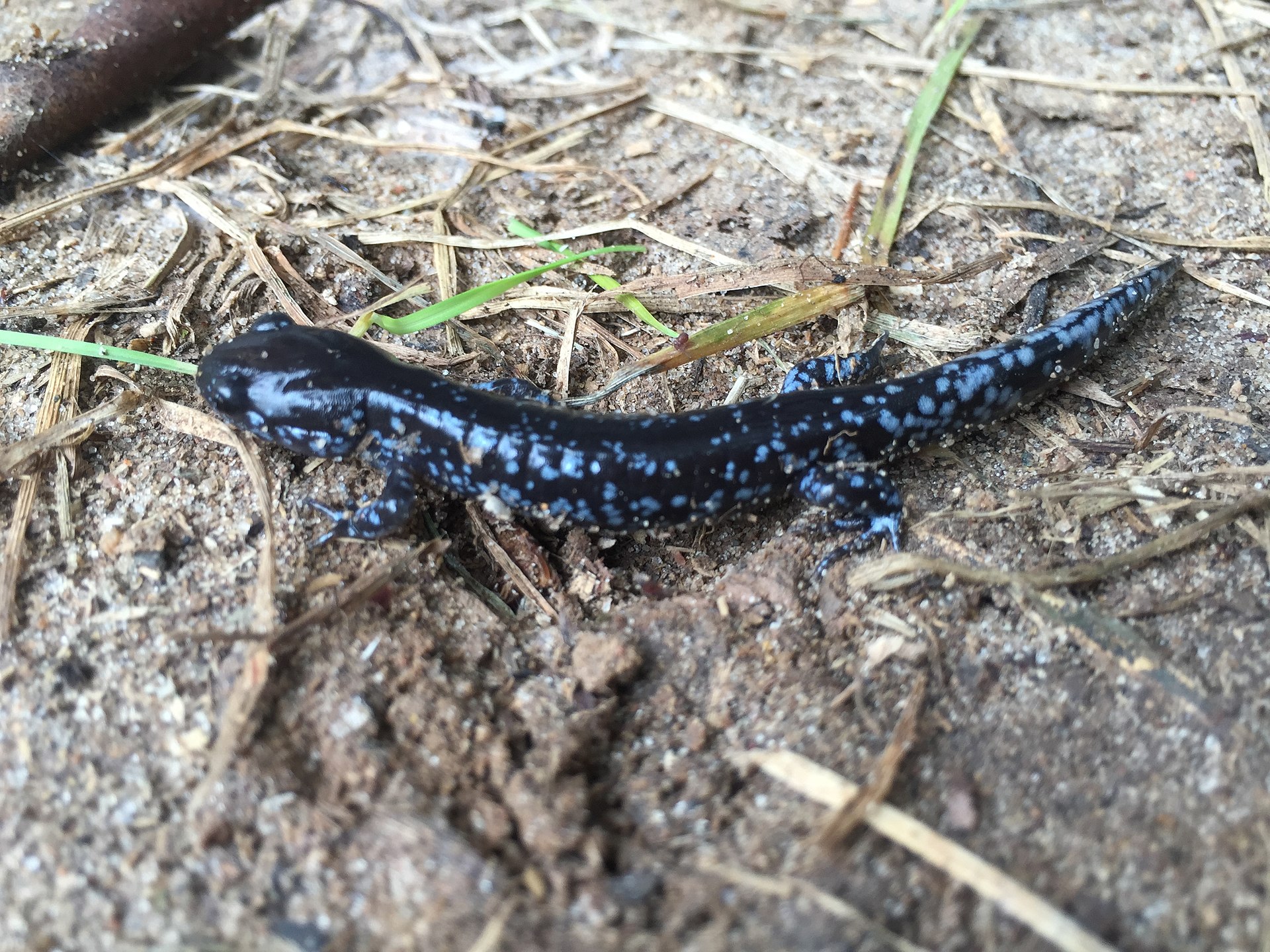
Blue-spotted salamander (Ambystoma laterale).

Anyone can make a difference, as students in Michigan learned when they decided to do something about cars killing salamanders in migration season.

Cathy Free reports at the Washington Post, “Eli Bieri noticed something disturbing as he walked through Presque Isle Park in Marquette, Mich., a few years ago.

“Several dozen blue-spotted salamanders had been smashed by cars while they were crossing from the forest to the wetlands on the other side of the road during their annual migration to breed and lay eggs. …

“ ‘I’ve always loved salamanders, and it really made me sad,’ said Bieri, 23, then a freshman ecology student at Northern Michigan University in the Upper Peninsula, about the 4-inch, bug-eyed amphibians, a common species in east-central North America. …

“ ‘I saw them crossing the road en masse,’ said Bieri, adding that they go to their breeding ponds when the weather is just right — rainy and 30 to 40 degrees.

“The following year, Bieri said he knew he had to do something to help the blue-spotted salamanders that were being crushed by people who drove their cars into the park to stargaze, not knowing any better.

“ ‘I’ve been fascinated by swamps and ponds since I was a kid chasing frogs and turtles, so of course, I was out there,’ he said. … He started a university research project to figure out how many of the salamanders were being killed by tires in Presque Isle Park every year.

“ ‘It’s impossible for a driver to see them at night because they’re black and the asphalt is black,’ said Bieri, explaining that the long-tailed salamanders move slowly, increasing their chance of being squashed.

“Bieri checked the park road every day for several weeks. … He got other students to help with his research, and together they tagged salamanders to get a feel for their numbers, he said.

“They found about 400 dead salamanders on the road that spring, and learned that many of them were getting wiped out on the park’s main thoroughfare every year, Bieri said. He released his findings, and upon seeing them, Marquette decided in 2020 to block a quarter-mile section of the park’s main road during migration season, from 8 p.m. to 8 a.m.

“That year, Bieri found only three salamanders flattened by car tires, a big victory.

“The road closure now happens every year, and other groups joined the city to help let the public know about the salamander’s plight, including the Superior Watershed Partnership and Northern Michigan University.

“Once residents found out about the salamanders, they flocked to the park to see them, leaving their cars in safely designated areas, and searching for the critters on foot, Bieri said. …

“Although blue-spotted salamanders are not endangered, they’re an indicator species that can alert humans to problems in the ecosystem, said Tyler Pendrod, a program manager at Superior Watershed Partnership, a lake protection group in Marquette.

“ ‘What’s really cool about Eli’s research is that a lot of educational programming has come out of it,’ he said. ‘Children are experiencing nature in a way they never did before.’ …

“Blue-spotted salamanders venture out only in full darkness and they’re best viewed with a flashlight on a rainy night, Bieri said. He said he is delighted to see families carefully walking along the roadside at night with flashlights, hoping to catch the beginning of the spring migration, when the salamanders come out in droves. “

More at the Post, here.

Read Full Post »

Photo: Randall Hyman.
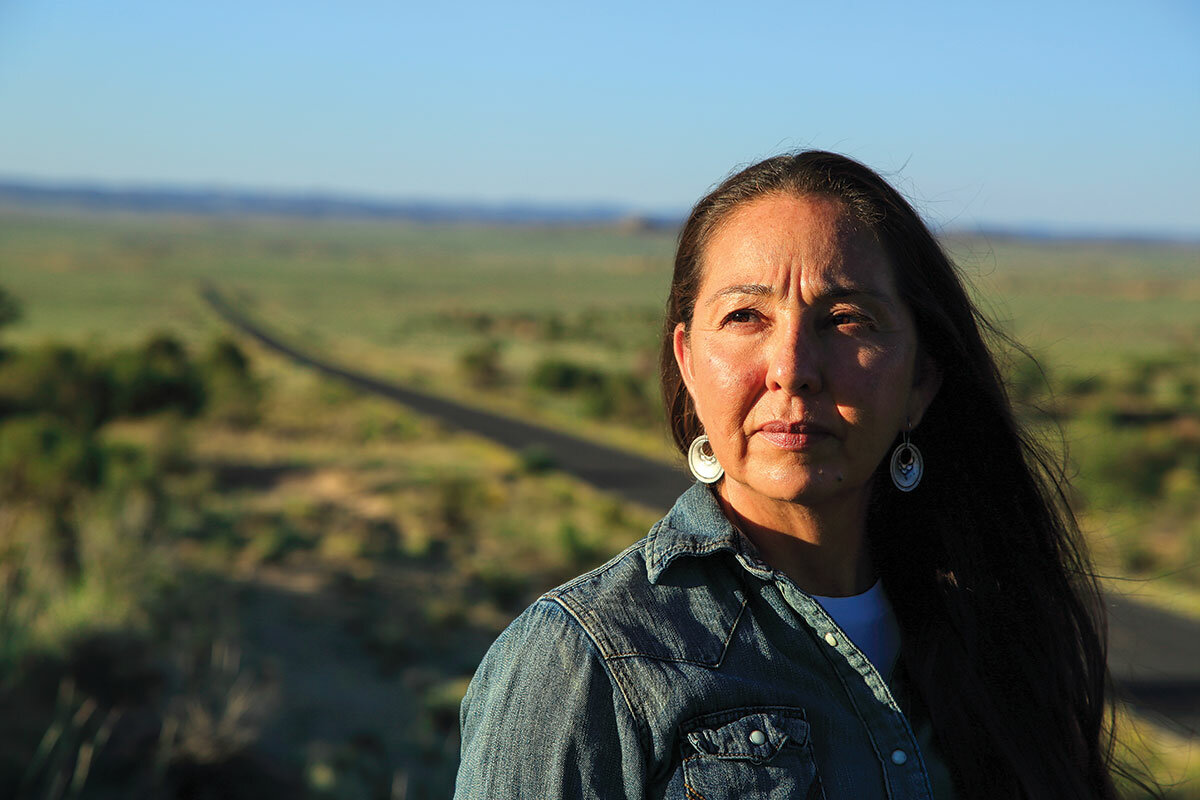
The Christian Science Monitor: “Activist Nicole Horseherder, who heads a nonprofit that seeks to protect water supplies on the reservation, stands on a ridge near Black Mesa in northern Arizona, the site of past disputes over coal mining.”

I’m grateful for the environmental leadership of indigenous people. They were environmentalists centuries before anyone used that word, and I think that paying attention to them will help us learn how to protect our planet.

Randall Hyman reports at the Christian Science Monitor about Navajo women who instinctively understand the importance of the natural world and their community’s place in it — and who don’t give up.

“One who has a master’s degree in linguistics,” Hyman says, “has made green energy a crusade on a reservation where coal, gas, and uranium have reigned supreme for decades, leaving tainted groundwater in their wake.

“Another returned to the Navajo reservation from Chicago to find that fracking had marred large sections of her native land – something she now works to stop in one of the largest methane hot spots in the United States. 

“A third was so distraught by the lack of ballot access on the reservation that she organized getting voters to the polls on horseback – her version of saddle-up democracy. 

“Two others have immersed themselves in politics directly – one as the youngest member of the Arizona State Legislature and the other as one of three women on the 24-member Navajo Nation Council. …

“Their efforts come at a particularly fraught time. Last year, from the vermilion sands bordering the Grand Canyon to the oil-rich scrublands east of Chaco Canyon, the Navajo Nation was hit by a perfect storm – a convergence of soaring pandemic deaths, dwindling energy revenues, and rising unemployment. Amid the chaos, Native women stepped up in what some see as an unprecedented wave. While one COVID-19 relief group raised $18 million in a matter of months, other women redoubled efforts to dismantle policies that have left Navajo (Diné) people vulnerable. 

“ ‘I think that you’re actually seeing a return to the way that Diné society has always been,’ says Nicole Horseherder, executive director of Tó Nizhóní Ání (Sacred Water Speaks), an organization pushing for new energy policies and water protection across the Navajo Nation. ‘Women are coming forward and saying, “I am a leader too. I can make these decisions. I can make better decisions.” ‘ …

“Underneath all the narratives is another factor – the dominant presence of women in Navajo society, where taking charge is rooted in a matrilineal culture. 

“ ‘When you see the destruction in your community, you realize you have to do something,’ says Wendy Greyeyes, assistant professor of Native American studies at the University of New Mexico in Albuquerque. ‘So, women are empowered. A lot of that harks back to our own creation stories. Changing Woman was a very powerful deity who reflected thinking about the longevity of our existence, of the Diné people. This ideology is baked into our DNA as Navajo women – our need to care and nurture and protect our communities, our families.’ …

“A year ago, on a chilly December morning, Nicole Horseherder marked an explosive turning point in her long battle against coal mining. Standing on a slope overlooking the towering smokestacks of the coal-fired Navajo Generating Station in northern Arizona, Ms. Horseherder set her cellphone on livestream and gazed at the 775-foot monoliths glowing in the sunrise a mile away.

“The stacks had been a landmark of the high desert for nearly half a century, symbols of fleeting prosperity and persistent pollution. The power plant serviced major cities of the Southwest and ran the huge Colorado River pumps supplying much of their water, but was among the top 10 carbon emitters in the United States. At precisely 8:30 a.m., a thunderous rumble shattered the clear morning and clouds of smoke mushroomed as 1,500 pounds of dynamite collapsed the stacks. …

“When I caught up with her last August on the Second Mesa of the Hopi reservation deep within the encircling borders of the Navajo reservation, [Horseherder] recalled her journey’s start. Driving to an overlook, she pointed north toward distant Big Mountain. For her, it stirred painful memories. 

“Ownership of the hardscrabble land surrounding Big Mountain, called Black Mesa, had long been an unresolved intertribal treaty issue. It remained in limbo until the 1950s and ’60s, when a Utah lawyer named John Boyden persuaded a minority of Hopi litigants to take it to court.

“True to its name, Black Mesa is underlain by rich coal seams. It is also sacred to the Navajos and Hopis, many of whom opposed outsiders tapping their minerals. But the lawsuit prevailed, eventually forcing the removal of some 10,000 Navajo residents while dividing mineral rights equally between the tribes. Boyden subsequently leased land and mineral rights for Peabody coal company. A half-century of coal mining and environmental controversy ensued. 

“Ms. Horseherder’s epiphany came when she returned home from Vancouver, British Columbia, with a master’s degree in the 1990s and discovered that her dream of leading a pastoral life had turned to dust. The springs that her family’s livestock depended on had run dry. ‘My whole attention and focus shifted,’ says Ms. Horseherder. ‘It became, “How am I going to protect the place where I live – how am I going to bring the water back? And where did the water go in the first place? ” ‘

“Ms. Horseherder became a vocal activist and founded Tó Nizhóní Ání, or Sacred Water Speaks. At the time, Peabody was pumping billions of gallons of water from deep aquifers, mixing it with pulverized coal, and sending the slurry through 273 miles of pipeline to a Nevada power plant. It assured tribal officials that the technology was safe, and many supported the operation because coal mining was a pillar of the Navajo and Hopi economies for nearly 50 years, providing tax revenues and well-paying jobs. 

“But environmentalists contended that depressurizing the aquifer was lowering the water table. While Ms. Horseherder fought Peabody for years – and others lost scores of animals to stock ponds they said were tainted by slurry – the power plant and related activities were only closed when the economics of the operations no longer worked. Wells never recovered, and impacts endure to this day, critics say. ‘What we’d like to see them do first,’ she says, ‘is fully reclaim those lands that they’ve mined, and reclaim the water as well.’ “

More at the Monitor, here.

Read Full Post »