Feeds:
Posts
Comments

Posts Tagged ‘quality of life’

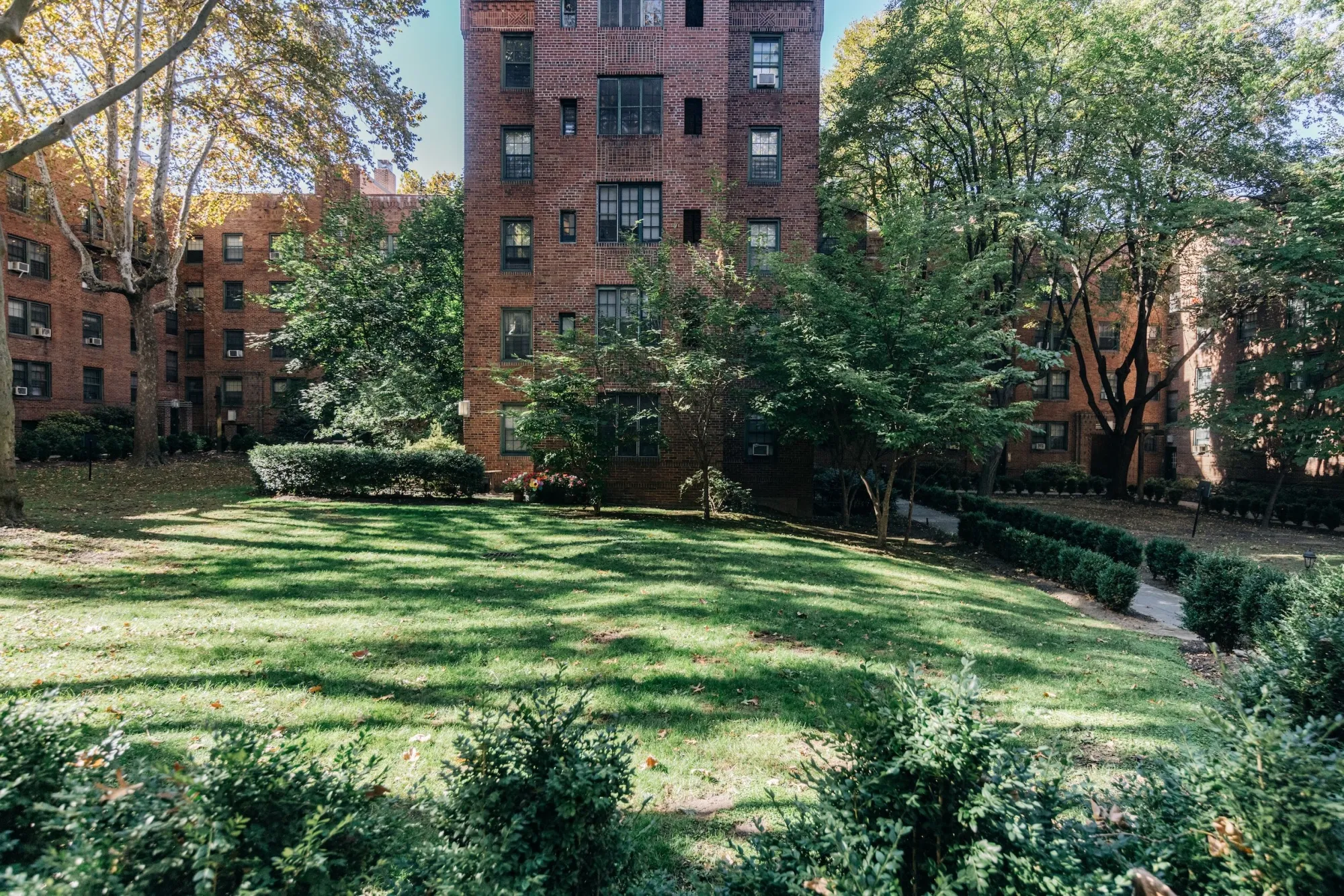
Photo: Jeenah Moon/Bloomberg.
An interior courtyard at the Sunnyside Garden Apartments in Queens, New York. Completed in 1928, it remains a beacon of quality of life.

Growing up on the Copeland Estate in a suburb of New York, I would have been quite isolated from humanity if not for a scattering of nearby homes that had children. Having playmates meant so much to me. But for years, US community designers forgot about the importance of human interaction for both children and adults. One way to build it in, especially in cities, is the classic courtyard.

Alexandra Lange notes at Bloomberg CityLab that the shrinking population of children under five across the US “is bad news for the diversity and stability of cities, which are improved by the amenities that families seek — parks, public libraries, safe streets. It’s also discouraging for families who prefer to live in the city or don’t have the option or desire to move to the car-dominated suburbs. Any effort to retain families has to start with housing, their primary expense.

“That one weird trick for making cities more family-friendly? We’ve known it for decades: It’s the courtyard. …

“While Europe can claim centuries-old courts, America dabbled in them for decades, before the suburbs became the dominant housing type of both government subsidy and political propaganda.

“Courtyards don’t have to belong to the past. While textbook examples in brick and stone are lovely — and still home to thriving communities — contemporary architects are making courts in all sorts of materials, and for all types of housing, from apartments to townhomes.

“One of the first influential figures to advance the idea of the courtyard as the ideal urban type for families was Henry Darbishire, the mid-19th century English architect. His first patron, Angela Burdett-Coutts, was inspired by Charles Dickens and his novels of the urban poor to apply her wealth to reformist housing. ‘Nurturing the family and protecting children from the street was a huge part of the logic — turning the city inward,’ says Matthew G. Lasner, housing historian and the author of High Life: Condo Living in the Suburban Century.

“Architects and philanthropists quickly embraced an easily replicable courtyard model, with a single entrance on the street and interior vertical access off a planted court. The concept came to America in the 1870s via developers like Alfred Treadway White, responsible for the Cobble Hill Towers in Brooklyn. In the 1920s, more reformist developers — including everyone from the Rockefellers to communist unions — constructed many more of these courtyard projects.

“As architecture critic John Taylor Boyd wrote in 1920 of the Linden Court complex in Jackson Heights, the courtyard’s ‘benefits are apparent when it is remembered that the streets are the only playground of New York children, including the children of the rich.’ …

“When you’re talking courtyards in America, it’s hard to avoid Sunnyside Gardens. Not only does the Queens community remain one of New York City’s best neighborhoods, but it was home to one of America’s best critics, who made his affection clear.

“Lewis Mumford was one of the first residents of Sunnyside Gardens, completed in 1928, and constantly returned to its balance of private and public space, building and garden, in his analysis of other lesser New York City housing options. In “The Plight of the Prosperous,” published in the New Yorker in 1950, Mumford takes aim at the new white-brick residential buildings ‘that have sprung up since the war in the wealthy and fashionable parts of the city.’ While new low- and middle-income housing projects like his own ‘provide light and air and walks and sometimes even patches of grass and forsythia,’ these other private buildings, clustered in uptown rich neighborhoods, lack multiple exposures, outdoor space, cross-ventilation and quiet. …

Clarence Stein and Henry Wright were the primary architects and planners behind Sunnyside Gardens, with Marjorie Sewell Cautley the landscape architect; all three would subsequently collaborate on Radburn, New Jersey, the ‘town for the motor age’ that in fact applied these communal principles for a result that we would now call transit-oriented development.

“The planners’ primary insight, in both the city and the suburbs, was to prioritize protected, communal open space over private yards or interior amenities. The courts, or courtyards, could be much larger if not subdivided by owner, and even in areas with public parks, having play space (and play companions) directly outside your door was a huge amenity. …

“On the West Coast, the courtyard evolved a little differently: surrounded by lower density, semi-detached houses with, eventually, a swimming pool in the center instead of a lawn. Irving Gill, considered the father of California modernism, designed prototype bungalow court in Santa Monica in the teens, with parking out of sight in the back and doorstep gardens. On tighter sites, U-shaped buildings with Spanish- and Italian-influenced architecture featured tiled fountains at center court. …

“ ‘When people have families with children, the home is important, but equally important are the people who are there with you,’ says Livable Cities president Meredith Wenskoski. “Your neighborhood is crucial. …

Bay State Cohousing, a 30-unit development outside Boston, has common amenities as part of its charter, including a shared kitchen and activity rooms. But the pastel, clapboard complex, intended to blend in with single-family neighbors, also forms a U around a southwest-facing courtyard, with outdoor circulation providing plenty of opportunities for casual run-ins with the neighbors.

“ ‘The courtyard is a nested boundary that allows interaction with other children, and more importantly, with other adults who become a kind of network,’ says Jenny French, whose firm French 2D designed Bay State. ‘In an urban setting, the barrier that the contemporary parent has to letting their child out the door, thinking about the car-dominated city where they are unable to play in the street – the courtyard is a natural alternative.’

“French, who has also been coordinating the housing studio at the Harvard Graduate School of Design for seven years, can’t help but extend these design observations into the cultural and political spheres. Everyone talks about loneliness in America for people of all ages. For teens and seniors alike, French sees a solution. It’s one we’ve had all along: ‘Could a courtyard house actually be the friendship apparatus we need?’ ”

Lots more at Bloomberg, here.
Read Full Post »

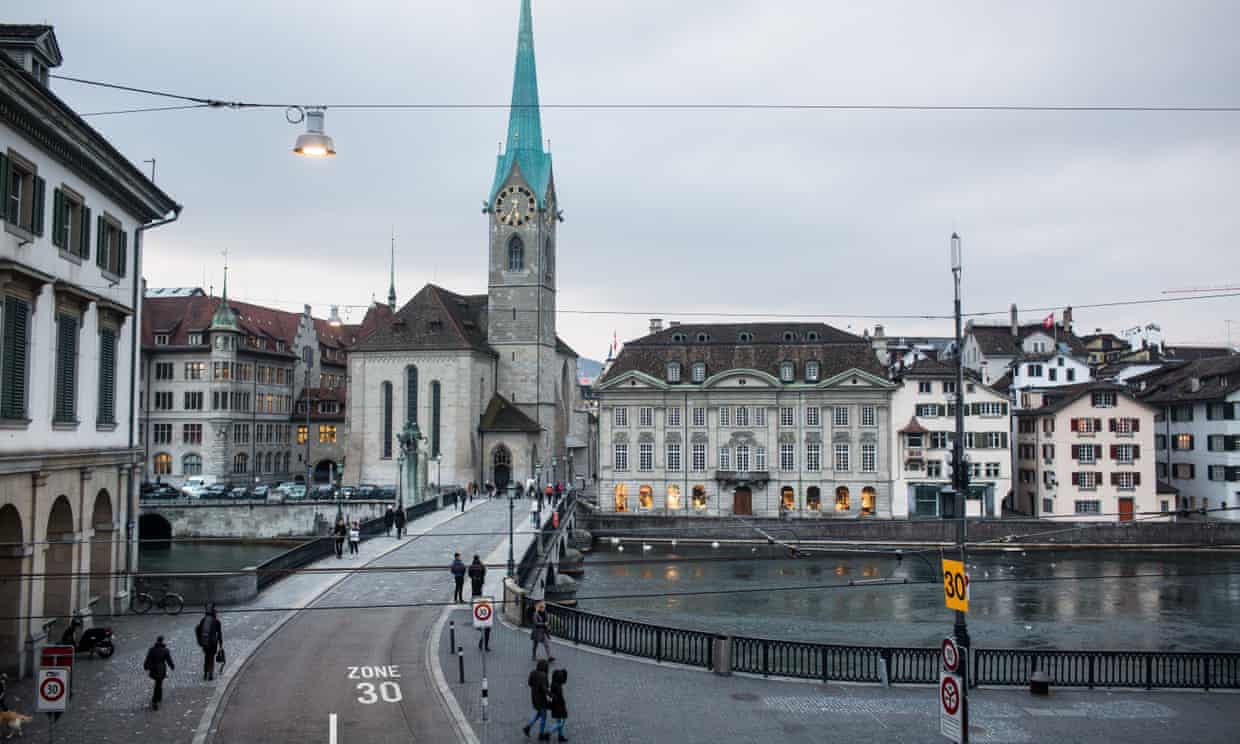
Photo: Robert Ormerod/The Observer.
Zurich city center, where 99.2% of residents live within a 15-minute walk of essential services such as health care and education. 

My parents always preferred homes that were out in the countryside, and as much as I loved my walks in the woods as a child, I knew from car-free summers on Fire Island that being able to walk to everything was pretty great. After marriage, my husband and I always chose homes in walkable communities, whether we were in upstate New York or Massachusetts or Minnesota.

Ajit Niranjan writes at the Guardian on the topic of walkable communities.

“When Luke Harris takes his daughter to the doctor, he strolls down well-kept streets with ‘smooth sidewalks and [ramps] for strollers at every intersection.’ If the weather looks rough or he feels a little lazy, he hops on a tram for a couple of stops.

“Harris’s trips to the pediatrician are pretty unremarkable for fellow residents of Zurich, Switzerland; most Europeans are used to being able to walk from one place to another in their cities. But it will probably sound like fantasy to those living in San Antonio, Texas. That’s because, according to new research, 99.2% of Zurich residents live within a 15-minute walk of essential services such as health care and education, while just 2.5% of San Antonio residents do.

“ ‘Zurich feels extraordinarily walkable to me, coming from the US,’ said Harris, a landscape architect from Portland, Oregon. ‘Most of the things you need are within walking distance – and if they’re not, it’s easy to take public transport.’

“Just a tiny fraction of 10,000 cities around the world can be considered ’15-minute cities,’ according to a study published in the journal Nature Cities [in September]. The researchers used open data to work out the average distance people must walk or bike to reach essential services – such as supermarkets, schools, hospitals and parks – and calculated the proportion of residents who have the necessities at their fingertips.

“ ‘When we looked at the results, we were amazed by how unequal they are,’ said Matteo Bruno, a physicist at Sony Computer Science Laboratories in Rome and lead author of the study.

“The researchers selected 54 cities to explore in detail and found that the most accessible cities were midsize European ones such as Zurich, Milan, Copenhagen and Dublin – all of which had essential services that could be accessed within 15 minutes by more than 95% of residents. At the bottom of the rankings were sprawling North American cities with a high dependency on cars, such as San Antonio, Dallas, Atlanta and Detroit.

“Small cities tended to score better but the researchers found that in some big metropolises, such as Berlin and Paris, more than 90% of residents live within a 15-minute walk of essential services.

“The authors developed an algorithm to explore how much these cities would have to change to become more accessible. They found Atlanta would have to relocate 80% of its amenities to achieve an equal distribution per resident, while Paris would need to relocate just 10%.

“Hygor Piaget, a co-author of the study who grew up in São Paulo, where 32% of people live within a 15-minute walk of essential services, said the study was not a proposal to destroy cities and reallocate their services but a mathematical exercise to get people thinking. ‘We’re searching for ways to make the lives of most people better,’ he said.

“The concept of a 15-minute city has been attacked in recent years by conspiracy theorists who see it as a government plot to control movement and restrict freedom. The vitriol has frustrated scientists, urban planners and doctors. …

“The authors say the study is limited by the quality of the open data, which is patchier in cities outside of Europe and North America, and how practical it is to walk in some cities. Heavy traffic, high crime, bad weather and steep hills may discourage people from walking even geographically short distances. …

“Researchers caution that making a city more accessible is not enough in itself to wean residents away from private cars. The Netherlands boasts some of the best bicycle infrastructure in Europe but has more cars per person than rural countries such as Ireland and Hungary.”

More at the Guardian, here. No firewall, but please donate occasionally. Not owned by US oligarchs!

Read Full Post »

Photo: Ahmad Masood/Reuters.
Working on a salt pan in the western Indian state of Gujarat. The marshes produce 30% of India’s inland salt. 

I’m always up for a little good news from distance places, as I hope you are, too. Today we learn about the benefits of solar energy for one hands-on industry in India.

Suchak Patel writes at the Guardian, “In the expansive salt marshes of the Little Rann of Kutch the bleakness of the sunburnt, treeless landscape is matched only by the drudgery of the salt farmers who toil there for eight months of the year.

“In October, as the monsoon recedes and the flooded salt pans dry out, farmers and their families hop on to trucks and tractors to migrate to the Little Rann of Kutch in Kutch district, Gujarat, where they pitch tarpaulin shelters and begin mining the underground deposits.

“An estimated 10,000 families of farmers, known as agariyas in Gujarati, migrate to the marshes from across the state. They start each season by digging wells to pump out brine using diesel pumps; the brine is then poured into shallow, squarish plots carved on the salt pans and left to evaporate under the sun to produce salt crystals. These marshes produce 30% of India’s inland salt, typically table salt.

“Life in the salt marshes is uniquely challenging. Drinking water comes not from pipes but tankers, children attend schools inside buses not buildings, and the only avenue to healthcare is weekly mobile vans from the health department. Basic amenities such as an electricity grid and toilets are nonexistent.

“ ‘My entire family, including my brother’s two daughters, lives in the desert these eight months, and my nieces attend primary school in a mobile school bus,’ says Bharatbhai Shyamjibhai Mandviya, 45.

“Contracts made with salt traders before each season, where the traders pay an advance to the farmers to buy pumps, diesel, and to meet household expenses mean most farmers start the season in debt, with the harvest income barely enough to cover their costs, let alone allow them to save.

“Diesel constitutes nearly 65% of the input costs in salt farming, and about 1,800 litres [~476 gallons] of the fuel is needed to produce [about] 750 tons of salt, according to Purshottam Sonagra, area manager of nonprofit Vikas Centre for Development that works with salt producers in the region. …

“But the introduction of solar panels to the pans has triggered a significant shift in the lives and lifestyles of the impoverished salt workers. In 2017, the Gujarat government gave solar pumps to salt farmers at nearly 80% subsidy, as part of a larger push to cut emissions and bring down the costs involved in salt production.

“ ‘Solar-powered pumps have reduced the cost of salt farming to one-third of what it was,’ says Sonagra.

“Mandviya has installed three pumps on the salt pan he works on, the savings from which have led to many firsts in his life.

“ ‘We have now built a two-bedroom house with a separate hall and a kitchen in Kharaghoda [his home village],’ says Mandviya. The new home with tiled walls and built-in cupboards which he will share with his brother and family, is a big upgrade from the kuccha [mud and straw] house they lived in before.

“The brothers also bought a motorcycle and a refrigerator from the money they managed to save.

“With more than 5,500 solar-powered pumps now dotting the region, energy costs have fallen [and] the agariyas such as Mandviya are no longer as dependent on the capital from traders, which gives them greater negotiating power over salt prices. …

“Solar pumps and the financial stability they grant have improved access to health, education and mobility, while also offering freedom to salt farmers from an endless work cycle, campaigners say.

“ ‘Steady supply from the solar panels is powering not only pumps but also televisions. Children of salt makers are switching to state-run ‘edutainment’ programs to make up for the loss of education,’ says Bhavna Harchandani, a research scholar at the Indian Institute of Technology Gandhinagar, who has tracked the agariya community as part of her studies. …

“Sonagra says it was difficult to find an office assistant with basic secondary-school education among agariyas until a few years ago.

“ ‘Today, many agariya children attend private schools, complete ITI (vocational) courses, and some manage to go to college. Solar pumps have opened up educational opportunities for the next generation of the community,’ he says.”

More at the Guardian, here.


Read Full Post »