Feeds:
Posts
Comments

Posts Tagged ‘restaurants’

Photo: Pixabay.
Not that you were worried about how rats got along when Covid closed restaurants, but the Post has a story on the reasons rats never run out of options — and what you can do about it.

Few of us are fans of cockroaches, rats, or other durable scourges of the human community, and yet perhaps we owe them grudging respect for an uncanny ability to survive no matter what.

Dana HedgpethTara McCarty and Joe Fox reported at the Washington Post on how the rats of the nation’s capital essentially laughed off Covid and its effect on easy food.

“Rats are a fixture of urban life,” they write, “but early in the pandemic, their populations in urban cores shrank as restaurants, parks and offices shut down — and their access to trash did too. But many adapted, desperate to survive. They ate off the bottom of restaurant doors in search of food … and a large number, to residents’ frustration, migrated.

“ ‘They’ve gotten into places where there were no rats, and now people are calling and saying, “I’ve lived here for 20 years and never seen a rat until now,” ‘ said Gerard Brown, who oversees rodent control at D.C. Health. …

“ ‘There’s a rat resurgence,’ said Bobby Corrigan, among the world’s best-known rodentologists. ‘They may be bouncing back with larger families in both the urban core and in the more residential neighborhoods of D.C.’

“Known formally as Rattus norvegicus, the brown rat is the species found in D.C.’s streets and many major cities. Most people agree that rats are gross and that they can cause health problems and property damage. …

“Orkin, one of the biggest pest control management companies in the country, ranked D.C. fourth in its annual ranking of the top 50 ‘rattiest cities,’ placing it behind Chicago, New York and Los Angeles.

“In D.C., reports of rat sightings are up: The city service hotline has fielded more than 13,300 complaints in the 2022 fiscal year — compared with roughly 6,200 in the 2018 fiscal year, according to the city’s health department. Despite this increase, health officials said they haven’t seen a surge in rat-related illnesses.

“More complaints mean more work for rat catchers: Before the pandemic, Scott Mullaney and his wife, Angie Mullaney — who run a business that uses Patterdale terriers to catch and kill rats — used to average about 25 rats at a job site. Now as people return to life and business as usual, their dogs catch closer to 60 per site some nights. …

“To survive as a rat, you must be clever. Think you have what it takes to scavenge for something to eat or find a safe place to sleep? We built a video game to show you how rats live — and thrive — in the city. You’ll play as Cheddar, a D.C. rat whose name was picked by readers. Try your hand (or paw) at survival by finding food, water and a spot to nest in different environments throughout this story. …

“Rats are smart. They know that they can reliably get food and water from fountains, birdbaths, pet bowls, dripping sprinklers and trash cans and that some decked-out yards offer bigger bounties — including pet poop. …

“Redevelopment creates prime real estate for rats: Home and apartment renovations leave stray pipes that can provide a path from the sewer into buildings and into the walls.

“Jake Rosen was living in Petworth when he repeatedly heard rats inside the walls of his home. He believes they worked their way in through gaps in the concrete under a porch when construction started on a nearby house, where he thinks the rats were probably nesting. It takes only one house on a block to draw rats in, and then suddenly they’re everyone’s problem. …

“Tucked away in an alley off Ward Court NW, in Dupont Circle, rats were scrounging for their meals among a cluster of trash cans and dumpsters by several apartment buildings. They fled pedestrians and their dogs, sprinting under bushes and other plants.

“Michael Beidler has lived on the block for more than three decades and sees rats scavenge in trash bags left outside, often on the ground spilling over from dumpsters. For rats, it’s the perfect setup. They get their food from the dumpsters and then burrow in his yard. Beidler spent about $3,000 on rat traps and had a contractor pour as much concrete as he could to cover up his garden to try to keep out the rats. …

“Apartment buildings offer rats a trash feast. From a dumpster, they can jump onto and scurry up the outside of a trash chute, squeezing into holes behind the brackets to get inside. They also get inside trash rooms through open doors or gnaw through the mortar between bricks in a foundation.

“A rat can fit its head through a hole about the size of a marble. Its rib cage has a ‘collapsibility function,’ and once it gets its head in, a rat uses its vibrissae — long whiskers on its nose and face — to feel to make sure it’s safe. Then it does what Corrigan calls ‘squeeze-wiggle gymnastics’ to get the rest of its body through. …

“Rats will never be eliminated — and play an important role in the ecosystem as food for foxes, coyotes, snakes, hawks and owls. Yet for the D.C. rat-control crew, the end game is to reduce their population in areas where humans live, work and play.” That’s the bottom line.

The Post, here. has a list of what to do if you have rats. And in the interest of helping you outsmart them, the newspaper also offers a game that helps you think like a rat. Check it out.
Read Full Post »

salad-850x478large

Photos: Off Their Plate
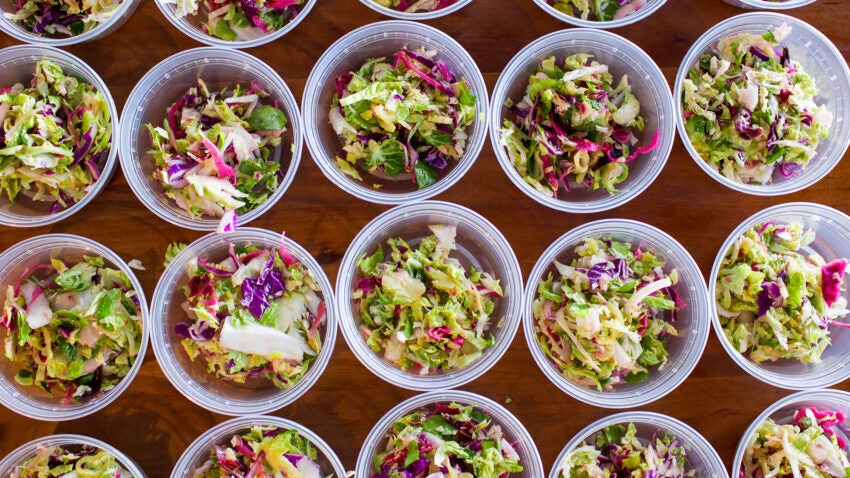
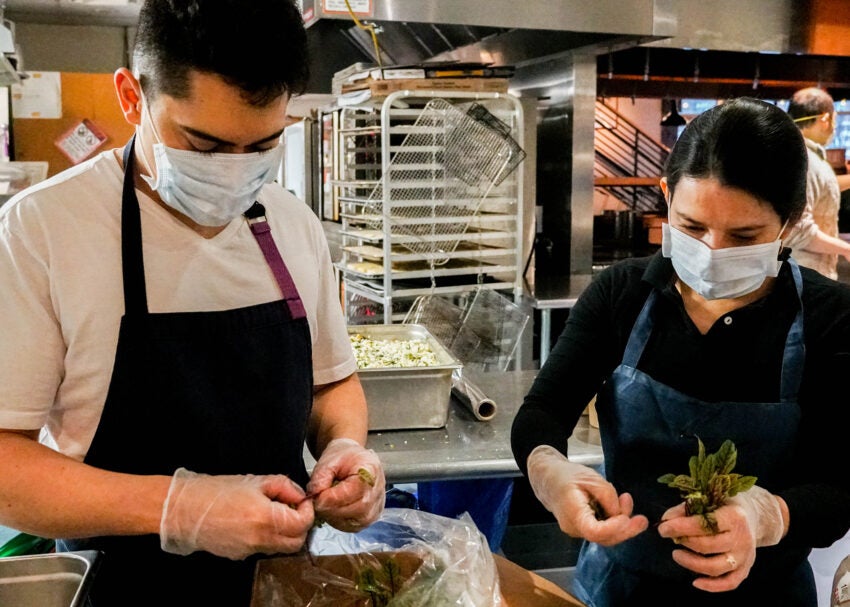
Off Their Plate cooks and delivers healthful meals to healthcare workers.

Amid government failures, can individual efforts ever be enough in a catastrophe like today’s?  I think they can be because feeling good about doing something concrete feeds on itself and simultaneously inspires others. You are probably doing things yourself, like donating to a food bank or calling friends you don’t normally call who are at home alone.

Suzanne, for example, has signed up on Twitter to promote a desperate call from Rhode Island emergency doctors for masks and other personal protection equipment (PPE). Please write in Comments what you are up to. No matter how small, I am interested.

Devra First has a nice story at the Boston Globe, “With restaurants closed for dine-in business, the industry is suffering, and many people have lost their jobs. At the same time, workers on the front lines of the coronavirus don’t have time to prepare nutritious meals to help keep them going. A new organization, Off Their Plate, is working to address both problems.

“It began when Natalie Guo, a medical student at Harvard who previously worked in business, reached out to local chefs Ken Oringer (Little Donkey, Toro, and more) and Tracy Chang (Pagu). The idea: Raise money to provide meals to health care workers, and pay cooks now out of work to make them.

‘In 10 days, we raised something like $80,000,’ Guo says, and the effort has expanded to New York, Pittsburgh, San Francisco, and Los Angeles.

“By [March 26], its fifth day of operation in Boston, Off Their Plate had served close to 1,000 meals in the area — to Massachusetts General Hospital, Brigham and Women’s, Faulkner, Boston Medical Center, and Beth Israel Deaconess, with more coming soon, including Carney Hospital, Boston Health Care for the Homeless, and other federally qualified health centers. Meals go to everyone from nurses to hazmat teams to the people working the front desk. ‘It’s a massive effort here,’ Guo says. ‘It’s not just MDs. Very soon this is going to consume the entire health force.’

One hundred percent of donations go to wages and meal costs. According to a ticker on the website [March 27], Off Their Plate has so far raised enough to cover 6,500 meals, more than 2,000 work hours, and $32,500 in wages. A $100 donation covers the cost of providing 10 meals.

“ ‘It’s been really fortuitous to be able to get a lot of the people who are not able to collect unemployment or people we decided to reach out to … and be able to help them earn some money,’ Oringer says. ‘A lot of them have been with us for more than 10 years. We are trying to take care of our family and our community. We’re getting food from purveyors, from fishermen, who are getting really, really hurt by all of this.’ …

“They are creating recipes and safety protocols that can be passed along to partner chefs in other cities, so they too can join the effort. ‘We want to make sure we are taking the utmost precaution in the health and safety of our own employees and the people they are feeding. The last thing we want to do is be part of the problem,’ Chang says.” More here.

Erin Kuschner has another take on the story at Boston.com, which is separate but related to the Boston Globe. She adds, “Guo, who was doing her clinical rotation at Massachusetts General Hospital before she launched Off Their Plate, is amazed by the charitable actions of everyone involved.

“ ‘Our goal is to serve Boston as well as we can, which means getting to volunteer for the homeless and getting to areas where healthcare workers are really in need,’ she said.”  The unemployed restaurant workers get paid, but not the others involved. Of them Guo says, ‘Not a single person has asked for a single dollar of service, and that’s just really incredible.’ ”

Off Their Plate meals being prepared before delivery.

roberto-andrea-herbs-by-tclarge

Read Full Post »

el-jefes-taqueria-850x478large

Photo: Suzanne Kreiter/Globe Staff
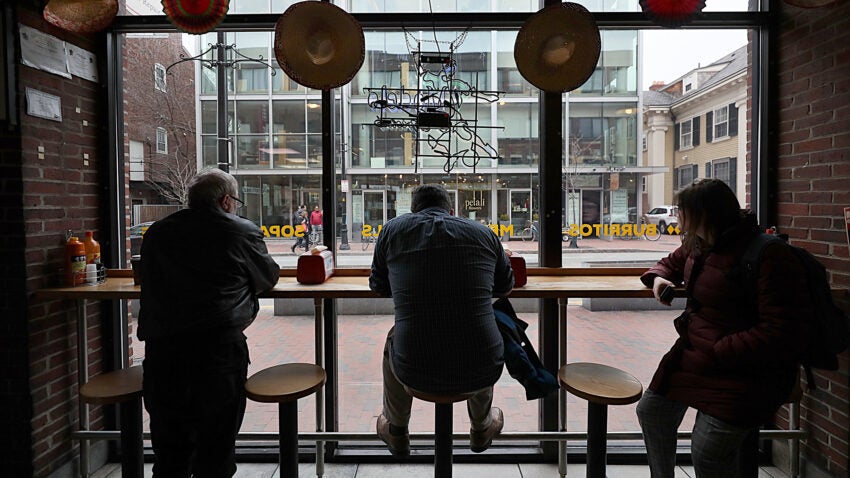
El Jefe’s Taqueria is among the restaurants Cambridge is paying to serve hot and cold meals to homeless shelters.

One of the many interesting aspects of the Situation has been the way leaders in states and municipalities have taken matters into their own hands.

We know that individuals and both for-profit and nonprofit organizations are stepping up, but some government entities are, too. Across-the-board federal efforts would be better, especially if we don’t want to see New York suing Rhode Island and other such anomalies, but we’ll take what we can get.

Here’s a story about Cambridge, Mass., a city that some have called Moscow on the Charles mainly because it tries to help the poor.

Erin Kuschner, writes at the Globe‘s Boston.com, “With restaurants facing a sudden loss of revenue due to Gov. Baker’s mandated dine-in ban, and homeless shelters seeing a drop in volunteers helping to deliver and prepare food, the City of Cambridge came up with a solution to benefit both parties: Paying restaurants to make and deliver food to homeless shelters.

“The program launched Monday after the city reached out to both the Harvard Square Business Association and the Central Square Business Improvement District to help organize the initiative, with a goal of distributing roughly 1,800 to 2,000 meals to various shelters by the end of the week. …

“Denise Jillson, executive director of the Harvard Square Business Association, said that it has already brought roughly 15 restaurants on board to make meals for local shelters like the Harvard Square Homeless Shelter and Y2Y, a youth homeless shelter that has seen many of its student volunteers leave following Harvard’s closure.

“ ‘It just made so much sense,’ Jillson said. ‘We were on board immediately.’ …

“Among the restaurants serving Harvard Square’s homeless shelters are Black Sheep Bagel, Cardullo’s, El Jefe’s Taqueria, Orinoco, Subway, and Veggie Grill. Jillson said that they have tried to provide a range of healthy meal options for breakfast, lunch, and dinner.

“The Central Square Business Improvement District partnered with PAGU to deliver meals to Bay Cove Human Services and the Cambridge YMCA.

‘We made our first delivery [Monday],’ said Michael Monestime, executive director at the Central Square Business Improvement District. ‘It was pretty humbling and sad at the same time. It’s hard enough being homeless on any given day, and then under these circumstances it’s even more difficult.’ …

“In addition to providing hot and cold meals to those experiencing homelessness, the city has set up a Cambridge Community Food Line, available to any resident who is a high risk for food insecurity.

“The delivery service provides a weekly bag of produce and shelf-stable food items to individuals and families who have experienced the following: The food pantry or meal program you used has closed until further notice; you have lost your job or part of your income and cannot afford groceries at this time; you are homebound due to illness, disability, or quarantine and do not have friends or family that can bring you food; you are at high risk for COVID-19 (coronavirus) and do not have access to a regular food source.”

More at the Boston Globe, here. Local readers, try to remember these restaurants and thank them with your business when we come out of the tunnel to the other side of this plague.

Read Full Post »