Feeds:
Posts
Comments

Posts Tagged ‘restore’

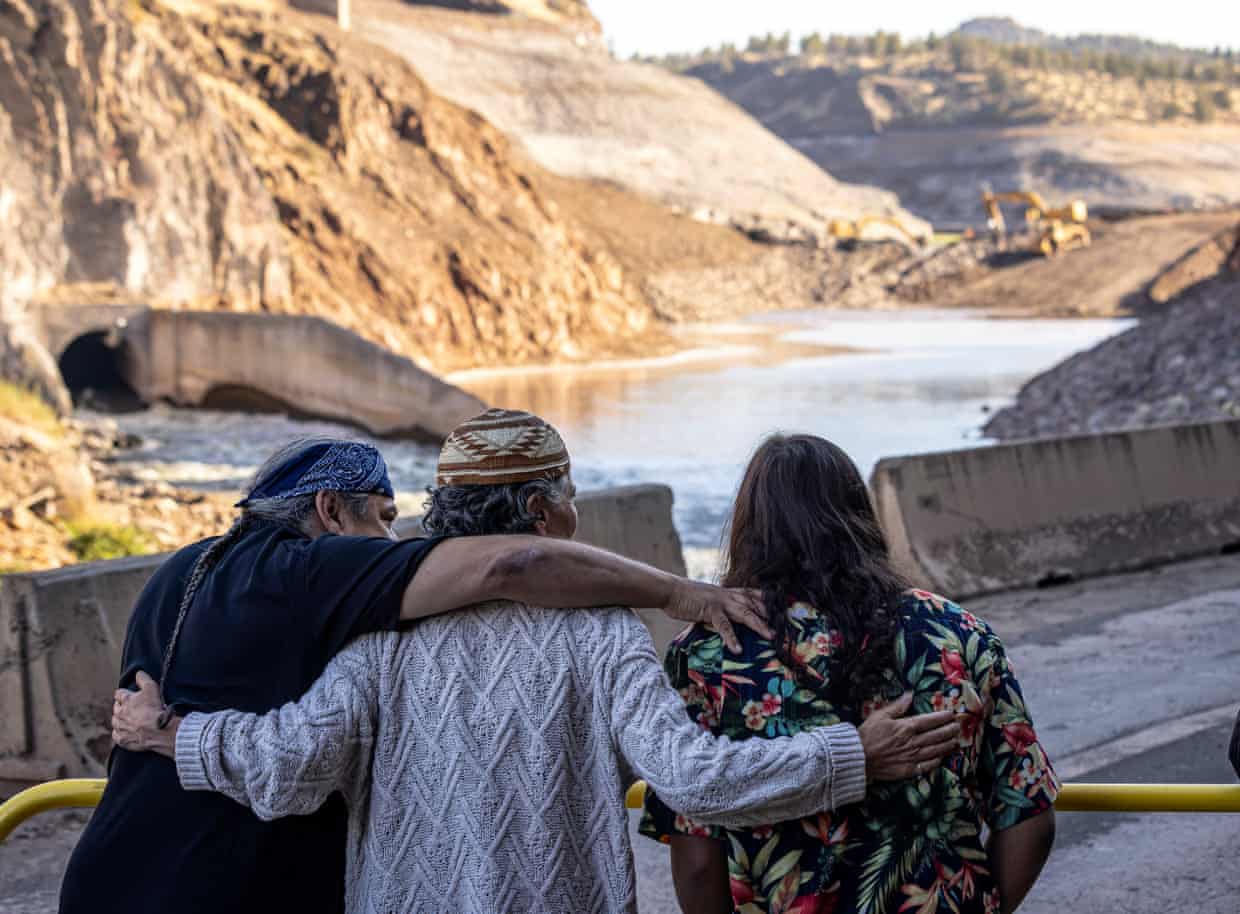
Photo: San Francisco Chronicle/Hearst Newspapers/Getty Images.
Leaf, Lisa and Chaas Hillman look on as construction crews allow the Klamath River to run freely for the first time in nearly a century, near Hornbrook, California, in August. 

Everything done to Nature for human convenience has a downside. We have dammed up many rivers over the years for water reservoirs and electricity, flooding whole ecosystems. In the last couple of decades, though, we’ve been trying our best to restore what was lost, often with the guidance of indigenous tribes that always knew better.

Gabrielle Canon has one story at the Guardian.

“Explosions roared through the canyons lining the Klamath River [in 2024], signaling a new chapter for the region that hugs the Oregon-California border. In October, the removal of four hydroelectric dams built on the river was completed – the largest project of its kind in US history.

“The blast of the final dam was just the beginning. The work to restore the river, which winds 263 miles (423km) from the volcanic Cascade mountain range in Oregon to the Pacific coast in northern California, is now under way. …

” ‘It has been more successful than we ever imagined,’ said Ren Brownell, the spokesperson for the Klamath River Renewal Corporation, a nonprofit created to oversee and implement the removal. …

“The Klamath River was once an ecological powerhouse – the third-largest salmon-producing river in the American west. Its basin covered more than 9.4m acres (3.8m hectares) and its network of wetlands was the largest in the region. The ecosystem was home to millions of migrating birds. Tribes, including the Hoopa, Karuk, Klamath, Modoc and Yurok, thrived in this bountiful and beautiful watershed for thousands of years, with the river providing both sustenance and ritual.

“Over the last hundred years, these landscapes have been drastically altered.

“After the first dam began operating in 1918 – one of four that would eventually be forged in the lower Klamath to provide hydroelectric power to communities nearby – the course of the river was changed. The dams obstructed the migration of salmon and other native species, which help carry nutrients into the systems from the ocean, to cascading effects.

“They also held on to huge stores of sediment that would otherwise have flowed downriver, and created shallow reservoirs that quickly heated when the weather warmed. Increased water temperatures in the river allowed toxic algal blooms to thrive.

“In recent decades, the climate crisis has turned up the dial, deepening droughts and fueling a rise in catastrophic fire as the region grows ever hotter. The impacts only increased as more water was diverted to support the farming and ranching in the region, and more habitat was altered by mining and logging.

“Twenty-eight types of salmon and steelhead trout, seen as indicator species that represent the health of the ecosystems they live in, have been listed as threatened or endangered.

“As the Klamath ecosystem deteriorated, there was growing recognition that removing the dams would be a crucial first step in helping the region recover and build resilience in a warming world.

“But, faced with a strong resistance to change in local communities tucked around the reservoirs and a long history of difficult battles over water in the parched landscapes in the west, dam removal seemed all but impossible. The land for the dams was taken from tribes during the throes of colonization and development and more recently supported energy corporations that had shareholders to answer to.

“Then, in 2002, disaster struck. Algae flourished in the shallow warming waters that year, exacerbated by the dams and decisions from the US Bureau of Reclamation to divert vital flows to farms, leaving little for fish. The event killed 70,000 salmon and thousands of other species, resulting in one of the worst die-offs ever to occur in the US.

“The layers of fish floating belly-up sent an important signal of the horrors that could continue into the future if the dams remained. Forming a coalition, tribes up and down the Klamath launched a fierce campaign to educate the public, inform the shareholders of the companies that owned and operated the dams, and petition their boards. They protested and attended public hearings, and engaged with state and federal officials.

“It took decades of advocacy to convince PacifiCorp, a subsidiary of Berkshire Hathaway Energy, to let go of the aging infrastructure straddling the Oregon-California border. But in the mid-aughts, assured by shifts in public opinion and incentivized by the steep costs to relicense the dams, the company agreed it was time to see them go.

“In November 2020, nearly 20 years after the die-off, an agreement was forged between a long list of stakeholders that included tribal and state governments and federal agencies. The Klamath River Renewal Corporation was created to oversee and implement the removal.

“The organization had to help bring residents near the reservoirs onboard, navigate dozens of species-management plans, and model how outdoor-recreation enthusiasts could continue to enjoy the river. Ranchers and fishers, environmentalists and farmers, and locals and visitors all had connections to the basin, and were eager to weigh in. …

“Brownell, who grew up along the riverbanks, was standing in the canyon as the blast of the first dam released flows and the river that had been held over the last hundred years found its way back to itself. …

“There were moments of trauma along the way. Over the 100 years the dams were standing, they had held back 15m cubic yards of sediment. When the dams were removed, the heavy dead organic matter had to run downriver, soaking up oxygen in the water. Extensive modeling had predicted a severe impact on aquatic life, but no one knew how bad it would get or how long it would take for the river to regain its health. Some models predicted the suffocating conditions could linger for up to a month.

“ ‘I was braced and prepared but it was still tremendously hard,’ said Brownell, recalling how the water, rid of oxygen, looked like oil as it cascaded through its banks. ‘You can easily compare a river’s health to an individual’s health,’ she said. ‘Often when someone is sick, they are going to get worse before they get better. … The whole time everyone was so excited because it felt like the start of something – I just felt sick,’ she said.

“Leaf Hillman, a Karuk tribal ceremonial leader who has dedicated decades to seeing this project come to fruition, helped keep hopes high with assurances that these were signs of healing.

“ ‘For me it was beautiful,’ he said, recalling how he felt even when the rushing waters became clouded by silt. ‘I could envision what it was going to look like – a restored river.’

“In the end, the river lacked oxygen for only two 24-hour periods, a far shorter time than scientists had feared.”

At the Guardian, here, you can read what happened next. No paywall.

Read Full Post »

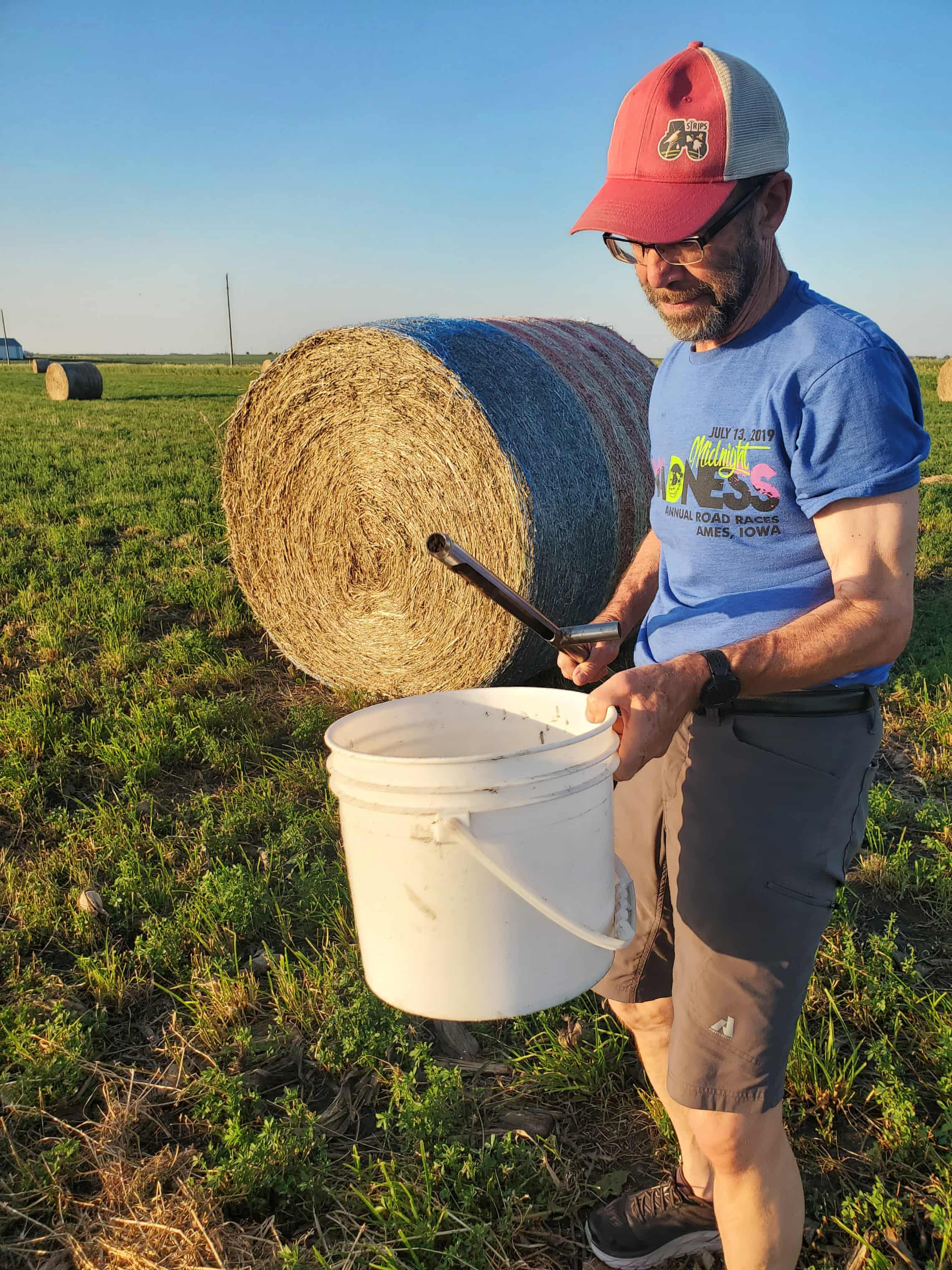
Photo: Lee Tesdell.
Behind farmer Lee Tesdell in the photo are rolled-up strips of prairie sod containing native plants that help improve his land’s resistance to climate change. 

There are so many things we have taken for granted in our natural world. Consider weeds. We might have noticed that various flying things liked their blossoms, but we didn’t like them.

That is, until we started noticing that we wouldn’t have much food if those flying things didn’t pollinate plants.

Now some farmers who used to kill weeds are bringing them back. As Rachel Cramer reports at the Guardian, strips of native plants (weeds) on as little as 10% of farmland can reduce soil erosion by up to 95%.

“Between two corn fields in central Iowa,” she writes, “Lee Tesdell walks through a corridor of native prairie grasses and wildflowers. Crickets trill as dickcissels, small brown birds with yellow chests, pop out of the dewy ground cover. …

“This is a prairie strip. Ranging from 10-40 metres (30-120ft) in width, these bands of native perennials are placed strategically in a row-crop field, often in areas with low yields and high runoff. Tesdell has three on his farm.

“He points out several native plants – big bluestem, wild quinine, milkweed, common evening primrose – that came from a 70-species seed mix he planted here six years ago. These prairie plants help improve the soil while also protecting his more fertile fields from bursts of heavy rain and severe storms, which are becoming more frequent.

“ ‘To a conventional farmer, this looks like a weed patch with a few pretty flowers in it, and I admit it looks odd in the corn and soy landscape in central Iowa,’ … he said. ‘I’m trying to be more climate-change resilient on my farm.’ …

“Prairie strips also help reduce nutrient pollution, store excess carbon underground and provide critical habitat for pollinators and grassland birds. Thanks to federal funding through the USDA’s conservation reserve program, they’ve taken off in recent years.

“But the idea started two decades ago with Iowa State University researchers and Neal Smith National Wildlife Refuge managers. Lisa Schulte Moore, a landscape ecologist and co-director of the Bioeconomy Institute at Iowa State University, who was integral to the research, knows that large patches of restored and reconstructed prairie are vital, especially for wildlife, but she argues that integrating small amounts of native habitat back into the two dominant ecosystems – corn and soya beans – can make a big difference. …

“In north-central Missouri, farmer Doug Doughty has been adding and expanding conservation practices, like no-till, for decades. He also has a few hundred acres of prairie enrolled in the USDA’s conservation reserve program. This past winter, he added prairie strips, as part of a plan to tackle nutrient pollution. High levels of nitrates and phosphorus can wreak havoc on aquatic habitats and the economies that depend on them. There are also health risks for people. Nitrates in drinking water have been associated with methaemoglobinaemia or ‘blue baby syndrome,’ and cancer. …

“During an outreach event in the Iowa Great Lakes region, Matt Helmers uses a rainfall simulator to demonstrate runoff and erosion with different conservation practices. He’s one of the prairie strips researchers and director of the Iowa Nutrient Research Center at Iowa State University. …

“During a big rain storm, each prairie strip in a field acts like a ‘mini speed-bump,’ said Helmers. A thick wall of stems and leaves slows down surface water, which reduces soil erosion and gives the ground more time to soak up water. Below ground, long roots anchor layers of soil while absorbing excess water, along with nitrates and phosphorus.

“Farmer Eric Hoien says he first heard about the conservation practice a decade ago, right around the time he was becoming more concerned about water issues in Iowa. But the final push to add 24 acres of prairie strips came from something Hoien saw in an plane above the Gulf of Mexico.

“ ‘I looked down and for what was probably 20 minutes, it was just like the biggest brown mud puddle I’d ever seen. And so I knew that, that stuff they say about the dead zone, from 30,000 ft, was real,’ Hoien said. …

“Hoien says prairie strips offer other benefits close to home. Neighbors often tell him they appreciate the wildflowers and hearing the ‘cackle’ of pheasants. He also enjoys hunting in the prairie strips and spotting insects he’s never seen before.

“The strips are hugely beneficial for pollinator populations, which have been dropping around the world. Researchers point to a combination of habitat loss, pesticide exposure, parasites and diseases, along with warmer temperatures and more severe weather events due to climate change.

“ ‘If we can help them have a place to live and something to eat, they can be better equipped to cope with those kinds of stress that they’re inevitably going to encounter in their environments,’ says Amy Toth, who is also part of the prairie strips research team and an entomology professor at Iowa State University. Research shows both the diversity of pollinator species and overall numbers are higher in prairie strips compared to field edges without native plants.

“And strips of native plants aren’t just good for pollinators. Researchers, including Schulte Moore, found a nearly threefold higher density of grassland birds on fields with prairie strips. She says that grassland birds have declined more than any other avian group in North America since 1970. …

“Schulte Moore says a group of forward-thinking, innovative farmers and partnerships with non-profits, foundations, universities and agencies in the midwest have helped prairie strips gain traction, but then a ‘monumental shift’ happened with the 2018 Farm Act, when prairie strips became an official practice in the federal conservation reserve program.” More here.

Pray that these federal conservation programs are not already slashed.

And for more on the prairie’s vast potential, read about Buffalo Commons, a movement launched by my husband’s classmate and his wife in the 1980s, here.

Read Full Post »

Photo: Annick Sjobakken/New York Times.
Farmers are restoring the prairie with government help. The aim is to reduce nutrient runoff from cropland, and help birds and bees.

Sometimes we have to go back to the old ways to fix the mistakes of the new ways.

For example, our country’s beloved “bread basket” has used for generations agricultural techniques that have depleted the soil. Maybe we can learn something from the time of Little House on the Prairie.

Cara Buckley reports at the New York Times, “The little tracts of wilderness grow on Maple Edge Farm in southwest Iowa, where the Bakehouse family cultivates 700 acres of corn, soybeans and alfalfa. Set against uniform rows of cropland, the scraps of land look like tiny Edens, colorful and frowzy. Purple bergamot and yellow coneflowers sway alongside big bluestem and other grasses, alive with birdsong and bees.

“The Bakehouses planted the strips of wild land after floodwaters reduced many fields to moonscapes three years ago, prompting the family to embark on a once-unthinkable path.

“They took nearly 11 acres of their fields out of crop production, fragments of farmland that ran alongside fields and in gullies. Instead of crops, they sowed native flowering plants and grasses, all species that once filled the prairie.

“The restored swaths of land are called prairie strips, and they are part of a growing movement to reduce the environmental harms of farming and help draw down greenhouse gas emissions, while giving fauna a much-needed boost and helping to restore the land.

“As the little wildernesses grew, more and more meadowlarks, dickcissels, pheasants and quail showed up, along with beneficial insects. Underground, root networks formed to quietly perform heroic feats, filtering dangerous nutrient runoff from crops, keeping soil in place and bringing new health to the land.

“ ‘We’re thinking about our farm as a small piece of the overall good puzzle,’ said Jon Bakehouse, on a visit to the family’s fields one sunny morning earlier this summer. ‘On a larger scale, we’re all in this together.’

“The fertile soils of America’s vast prairies made the heartland ideal for growing crops. But today in Iowa, less than 0.1 percent of original prairie remains, scattered in fragments around the state.

“Prairie strips are helping to reverse that loss, and are being adopted at an increasing clip. Researchers counted 586 acres of prairie strips on farmland across seven states in 2019. As of last year, they had spread to 14 states, filling 22,972 acres.

“While the acreage accounts for a tiny fraction of the Midwest’s farm fields — Iowa alone has roughly 30 million acres of cropland — researchers said the strips had disproportionately positive impacts.

“ ‘There are a whole suite of dramatic environmental benefits that come with this small intervention,’ said Lisa Schulte Moore, a professor of natural resource ecology and management at Iowa State University, and a founder of its prairie strips project. ‘If you put a bit of prairie back, it makes a big difference.’

“To  be classified as a prairie strip, restored land must adjoin active cropland, reach a width of at least 30 feet and be sown with dozens of native plant species.

“Researchers at Iowa State found that when prairie strips were planted in and around soy and corn fields, they acted as both ‘speed bumps and diapers,’ Professor Schulte Moore said.

“Soil erosion and surface runoff plummeted, as the prairie plants held soil in place and transpired water. Levels of nitrogen and phosphorus carried in surface runoff from adjacent cropland decreased by as much as 70 percent, absorbed instead by the prairie strips, resulting in less water contamination. The prairie strips created better conditions for helpful bacteria, resulting in dramatically lower levels of nitrous oxide, a powerful greenhouse gas generated by chemical fertilizer, compared to cropland without prairie strips. The strips also drew twice as many native grassland birds and three times as many beneficial insects, compared to fields that had not been rewilded.

“While the research did not show that prairie strips affected yields in adjacent cropland, tests found that the strips boosted the health and fertility of the soil where they were sown. …

“Iowa has the most industrialized livestock farms in the country, and tens of millions of pounds of untreated manure that they produce end up fertilizing crops, along with synthetic fertilizer made from fossil fuels. The nitrogen-heavy runoff from agricultural fields threatens drinking water, and is a leading cause of an oxygen-starved dead zone in the Gulf of Mexico that kills marine plant and animal life.

“In 2007, Professor Schulte Moore was part of a team at Iowa State University that began researching the ways in which restoring parts of the prairie could enrich soil, help insects and wildlife, and stanch emissions and fertilizer runoff. They went on to plant prairie strips on commercial farms and at some of the university’s test sites, and found that benefits were consistently achieved when 10 percent of a farm’s cropland is converted into prairie strips, with lower amounts still providing some boons.

“The findings might have sat on a shelf, Professor Schulte Moore said, were it not for her department chair, who rewrote the professor’s job description so she could promote the idea to farmers.

“In late 2018, the prairie strips initiative got perhaps its biggest boost when it was included in the federal Conservation Reserve Program. That meant that farmland owners who converted some of their acreage to prairie strips could collect money from the federal government. According to the Agriculture Department, the average payout for prairie strips is $209 per acre each year.

“ ‘That was monumental,’ Professor Schulte Moore said. ‘It helped align hearts, heads and pocketbooks.’ ” More at the Times, here.

Read Full Post »

Art: Hubert and Jan van Eyck. 
Ghent Altarpiece (completed 1432).

In New England, when we hear about an art thief’s confession, it makes our heart beat a little faster. That’s because we are hoping so much that the Isabella Stewart Gardner Museum heist (see where I wrote about it, here) will be solved in our lifetimes.

Today’s story, however, is about a much older art theft, equally puzzling.

Noah Charney reports at the Guardian, “Just about everything bad that could happen to a painting has happened to Hubert and Jan van Eyck’s Adoration of the Mystic Lamb (also known as the Ghent Altarpiece). It’s almost been destroyed in a fire, was nearly burned by rioting Calvinists, it’s been forged, pillaged, dismembered, censored, stolen by Napoleon, hunted in the first world war, sold by a renegade cleric, then stolen repeatedly during the second world war, before being rescued by The Monuments Men, miners and a team of commando double-agents. …

“In 1934, one of its 12 panels was stolen in a heist that has never been solved, though the case is still open and new leads are followed all the time.

“On 11 April of that year, Ghent police commissioner Antoine Luysterborghs pushed through a crowd at the St Bavo Cathedral that had gathered to gawk at something that was no longer there. One of the panels, depicting The Just (or Righteous) Judges, was gone. …

“The theft was followed quickly by a ransom demand for one million Belgian francs. As a show of good faith, the ransomer returned one of the panel’s two parts (a grisaille painting of St John the Baptist). But police remained baffled.

“Then a stockbroker called Arsène Goedertier had a heart attack at a Catholic political rally. He summoned his lawyer, Georges de Vos, to his deathbed. Just before he died, De Vos claimed, Goedertier whispered: ‘I alone know where the Mystic Lamb is. The information is in the drawer on the right of my writing table, in an envelope marked “mutualité.” ‘

“The lawyer followed the instructions and found carbon copies of the ransom notes, plus a final, unsent note with a tantalizing clue about the stolen panel’s whereabouts: ‘[it] rests in a place where neither I, nor anybody else, can take it away without arousing the attention of the public.’

“But if Goedertier did steal the panel, why? The church has been defensive, and there is an air of cover-up – as well as evidence that other members of the bishopric were involved. One theory goes that a group of church members, Goedertier among them, were involved in a failed investment scheme that lost church money. Rather than admit their failure, they stole the panel and ransomed it to cover the losses. But Goedertier was wealthy and devout; it seems odd he would resort to extorting his beloved diocese. …

“De Vos failed to alert police about Goedertier’s confession for a month. Eventually, after many false leads, police concluded Goedertier had been the thief. The case went cold. …

“The greatest strides in solving the crime have not been made by an active officer, though. Karel Mortier was chief of the Ghent police from 1974 to 1991, and fascinated with the Just Judges theft. It was a huge unsolved mystery, not just for Ghent, for Flanders, for Belgium, but for the art world. Mortier has dedicated his quiet hours to the hobby that drives him to this day: the hunt for the lost panel.

“Now in his 80s, he has done more than anyone to shed light on the case. He was the first to note that Goedertier had an eye problem that meant he could barely see in the dark, much less rob a cathedral at night. He turned up information that Goedertier already had more than the million francs demanded in the ransom in his bank account. What, then, was the motivation for stealing the panel?

“Mortier also suggested Goedertier could not have acted alone: the panel was taken from the altarpiece’s framework, which was so high off the ground that it needed a ladder, and at least two people, to remove it. Surely, Mortier concluded, one of the four church custodians was involved, if only to provide the ladder.

“Mortier’s investigation met many obstacles. The church granted him access to 600 pages of archives relating to the painting – but not the period between 1934-1945. It seemed there was either a conspiracy to hide the truth, or that those involved in the investigation, the police in particular, were wildly inept.”

More at the Guardian, here. No firewall.

Read Full Post »

Photo: Tulsi Rauniyar.
Climate-ravaged monasteries in Lo Manthang, Tibet, have been meticulously restored by the local community with guidance from experts.

Tulsi Rauniyar wrote recently at the BBC about ordinary Tibetans learning to restore Tibetan monasteries, rescuing them from the consequences of climate change.

“Extreme weather is threatening these intricate 15th Century Tibetan monasteries,” Rauniyar reports, “but local people are rising to the challenge to preserve them.

“Tashi Kunga stands before the Kag Choede monastery, built into the Dhaulagiri mountain range on the Tibet-Nepal border. The monk’s carmine robes glint in the rain, as he recounts the ancient legend of Guru Rinpoche’s battle with a demon.

“The legend goes that centuries ago, a demon wreaked havoc on a monastery in Tibet. Guru Rinpoche chased it south to Upper Mustang in Nepal and defeated the demon following a ferocious battle, burying the demon’s remains across the mountain range. The people of Mustang hono The people of Mustang honoured the sacred grounds by building monasteries atop the demon’s body parts.

” ‘And right on the demon’s heart, the capital of Lo Manthang [was built] in 1380,’ says Kunga, pointing towards the narrow alleys, ancient monasteries, and flat roofs adorned with prayer flags of one of the last medieval walled cities in the world.

“For centuries, Lobas, the indigenous people residing here, have thrived in this remote region situated on top of the Tibetan Plateau. One thing that has remained constant is the monasteries, locally known as ‘Gonpas,’ the most treasured heritage of the region. But almost two decades ago, many of these monasteries, which date back to the 15th Century, started crumbling.

Experts sounded the alarm, attributing the collapse to the severe impacts of climate change. Data indicates a significant increase in the intensity of storms and rainfall across the region. Increased rainfall saturates the rammed-earth buildings, as moisture in the soil is drawn upward into the walls, leading to issues such as leaking roofs and rising damp.

” ‘For us, Buddhists, the paintings and the artifacts in the monasteries are embodiments of the gods themselves, and we can’t worship a half-damaged idol,’ says Kanga.

‘There was no one to repair it. Our heritage was slowly decaying away. We thought the deities were angry.’

“Buddhist monasteries have long been revered as the foundation of Tibetan culture, serving as a vital hub for the creation and safeguarding of both tangible artifacts and profound intellectual traditions. But as unprecedented weather patterns pose a threat to their cultural heritage, local community members have stepped up to restore them. Local people have gained diverse skills, from reinforcing walls to crafting metal statues and restoring paintings.

“Over the past 20 years, a team of local Lobas trained by Western art conservationists have replaced the old, leaky roofs of the temples with round timbers, river stones, and local clay for waterproofing, and have restored the wall paintings, statues, sculpted pillars and the ceiling decorations, giving these centuries-old monuments a new life.

“Luigi Fieni, the lead art conservator at Lo Manthang, has spearheaded the restoration project. Transforming a community of farmers into conservators has been challenging, he says. Most of the Lobas had never held a pen or a paint brush before, and undertook extensive training before they began restoring the 15th Century paintings.

” ‘But it all worked out,’ says Fieni. ‘Tourists visiting Mustang were keenly interested in religion. So we felt these sacred artifacts needed preservation not only for their historical significance but also for sustaining livelihoods here.’

“The team, initially made up of 10 members, has grown to 45 conservators, mostly women, although there was initial reluctance to accept any women in the group. According to local tradition, women are prohibited from touching sacred objects. However, women did eventually take part in the Lo Manthang restoration project.

” ‘It took years of discussion and negotiation with the local clergy and community, but we succeeded in including local women in the wall-painting conservation team,’ says Fieni. …

“Tashi Wangmo, 40, used to spend her time herding yak, collecting and selling herbs, and doing various odd jobs, but it never provided much income. When she received the opportunity to pursue new training and earn a daily wage in the restoration project, she jumped at it.

” ‘It enabled many of us [women] to break free from the limits of our homes, expand our skillsets, and find new opportunities,’ she says.”

More at the BBC, here. No paywall.

If you want to learn about Tibet through some wonderful fiction, check out the Tibet mysteries by Eliot Pattison, starting with The Skull Mantra.

Read Full Post »

Art: Artemisia Gentileschi via Wikimedia Commons.
Artemisia Gentileschi, an an Italian Baroque painter, is considered one of the 17th century’s most accomplished artists. Shown here is her “Allegory of Inclination” (1616).

Have you been seeing the name of seventeenth-century painter Artemisia Gentileschi mentioned more these days? I have. Finally the world is coming to grips the astonishing proposition that some female artists are better than many male artists.

Elaine Velie has some thoughts on Gentileschi at Hyperallergic.

“In 1616, the 22-year-old artist Artemisia Gentileschi painted a nude woman perched in the clouds and holding a compass at the Florence home of Michelangelo Buonarroti the Younger, Michaelangelo’s great-nephew. The work was the first in the Buonarroti family’s home gallery dedicated to their famous ancestor, and the impasto ceiling painting, likely a self-portrait, was also one of Gentileschi’s first commissions. ‘Allegory of Inclination’ remained untouched for around 70 years until a descendant of Michelangelo Buonarroti commissioned the Late Baroque painter Baldassarre Franceschini (il Volterrano) to paint draping over the nude figure in the interest of modesty.

“Now, the former Buonarroti residence is the Casa Buonarroti museum, and a team of conservators there is working to ‘virtually restore the original appearance’ of the painting in a project called ‘Artemisia Unveiled.’ Using imaging techniques such as X-rays and raking light to examine the over 400-year-old brush strokes, the team will determine which additions were Gentileschi’s and which were Franceschini’s, and the final result will be an uncensored image.

“Elizabeth Wick, the restorer leading the project, told the Florentine that the team will not physically alter the existing painting for two reasons: Franceschini’s layer is considered a historic addition that contributes to the painting’s story, and since the two layers of paint were applied only 70 years apart, removing Franceschini’s draping would likely damage Gentileschi’s original coat of paint. …

“Gentileschi’s success in the male-dominated art world of 17th-century Italy, and the woman-focused subject matter of her work, have turned her into somewhat of a feminist icon. Although she earned recognition during her lifetime, Gentileschi’s work has been revisited in recent years through museum shows and other conservation projects.”

More at Hyperallergic, here. No firewall, but contributions are sought.

At Wikipedia, we learn that Gentileschi started out working in the style of Caravaggio and “was producing professional work by the age of 15. In an era when women had few opportunities to pursue artistic training or work as professional artists, Gentileschi was the first woman to become a member of the Accademia di Arte del Disegno in Florence, and she had an international clientele.

“Many of Gentileschi’s paintings feature women from myths, allegories, and the Bible, including victims, suicides, and warriors. Some of her best known subjects are Susanna and the Elders (particularly the 1610 version in Pommersfelden), Judith Slaying Holofernes (her 1614–1620 version is in the Uffizi gallery), and Judith and Her Maidservant (her version of 1625 is in the Detroit Institute of Arts).

“Gentileschi was known for being able to depict the female figure with great naturalism and for her skill in handling color to express dimension and drama. … For many years Gentileschi was regarded as a curiosity, but her life and art have been reexamined by scholars in the 20th and 21st centuries. She is now regarded as one of the most progressive and expressive painters of her generation.”

P.S. Check out SJ Bennett’s Queen Elizabeth II murder mystery, All the Queen’s Men, in which the Queen’s Gentileschi painting plays an important role.

Read Full Post »

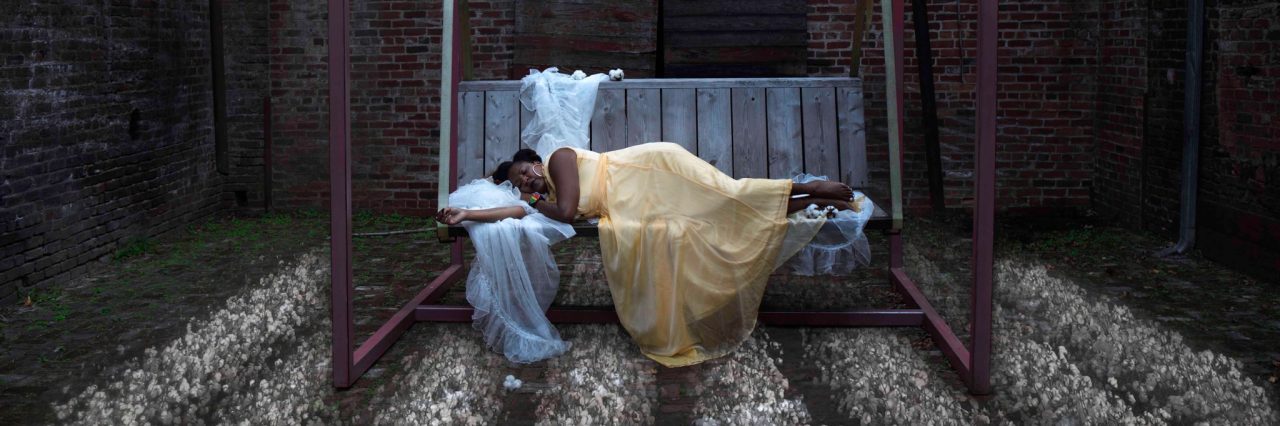
Photo: The Nap Ministry.

Although recent research into the connection between frequent, long naps and dementia has made all of us serious nappers nervous, I remain a big proponent. Sweet sleep “knits up the raveled sleeve of care” and calms us down. It lets us return to our activities with restored energy.

WordPress blogger Tricia Hersey has known this for a long time. And during the stressful summer of 2020, she was moved to spread the word to a wider audience. Napping is not escapism, she believes. Rather, if you’re refreshed, you can fight the good fight another day,

Hannah Good writes at the Washington Post that “years before the pandemic encouraged legions of people to question their relationship with work, Tricia Hersey was preaching the gospel of rest.

“A multidisciplinary artist, writer and community organizer, Hersey began thinking about the importance of rest as a theology graduate student at Emory University in 2013. She’d recently endured some personal trauma and grief, alongside her difficult graduate school research, which dealt with the cultural trauma of slavery. A few states away in Ferguson, Mo., the Black Lives Matter movement was gaining traction in response to a number of police killings of Black people — many of which were captured on video and shared ubiquitously on social media.

“In short, she was exhausted, and it led her to do something radically simple: She took more naps.

“A few years later, Hersey’s philosophy of rest as resistance took shape as an organization. The Nap Ministry, founded in 2016, is an artistic practice and community organization that focuses on the radical power of letting your body rest. …

“Since then, the Atlanta-based organization has hosted hundreds of writing workshops, lectures and communal events. … Hersey’s book, a manifesto on her philosophies called Rest is Resistance, is set to be released this October. …

“The ministry’s signature events are nap sessions: community events where people can rest together. Participants lie on yoga mats as a facilitator reads meditations and poetry; dim lights and soft music, sometimes performed by live musicians, set the tone. This helps assuage what can be a strange and vulnerable experience — falling asleep with strangers. When it comes time to wake up, the music grows louder and changes to something upbeat and joyful: a tone-setter to carry the lessons learned into the day, according to Hersey. …

“We asked Hersey to make our readers a playlist inspired by these themes of rest and resistance. … ‘The energy of this playlist is celebration, ease and leisure,’ she said. ‘It reminds us that we can daydream, wander, imagine and dance. We can just be.’ “

Hersey’s list starts with Duke Ellington’s ‘A New World Coming,’ which she believes is “a piece of magic. This composition is a call for imagining a new world. It opens the playlist because it taps into the expansiveness of dreaming with orchestra sound. To begin the journey of liberation via rest, we must first stay in a ‘DreamSpace.’ ”

“Lullaby” by Tasha, Hersey says, is “a classic lullaby with a specific request for Black girls to do less, dismantle the ‘superwoman’ myth and sleep.”

As for Nina Simone’s “Here Comes the Sun,” Hersey calls it “a joyful moment of ease and hope. The ultimate wake-up call. I have used this song to wake people up from their slumber slowly when they sleep at our collective napping experiences.’ “

Communal napping is weird at first. We had a nap room at my former job. You get over the awkwardness fast if you know you are exhausted and just need about 20 minutes of shut-eye to be good for the rest of the day.

When my sister was in the hospital and I was spending many long, anxious days there, I discovered I actually had quite a gift for taking brief, restorative naps. One time I went to sleep on a bench in a busy, lighted hallway next to an elevator bank, where a maintenance man was operating a huge floor polisher!

More at the Post, here.

Read Full Post »

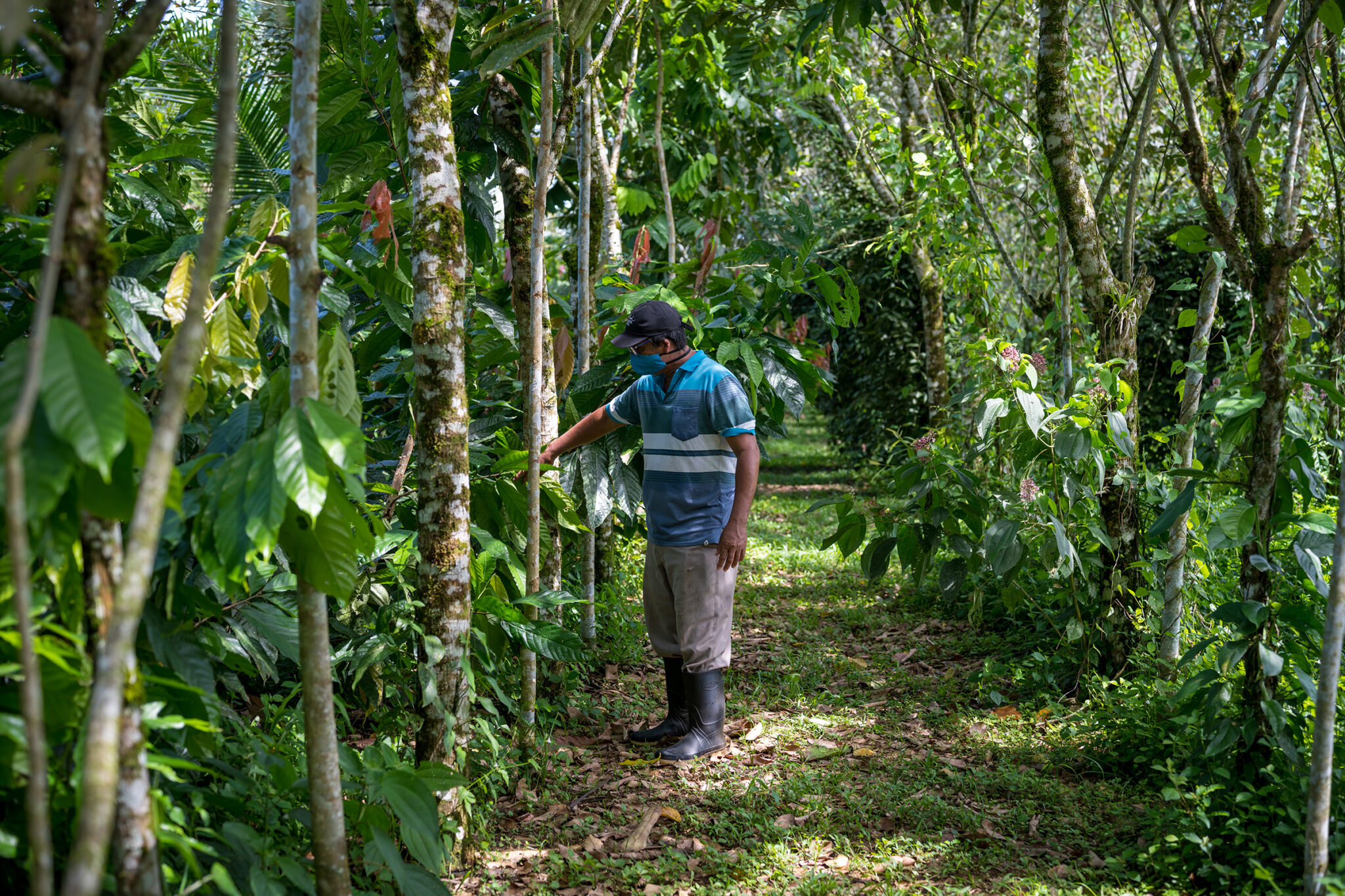
Photo: Earthshot.
Costa Rica won a Earthshot prize for its success reversing damage to tropical forests by incentivizing landowners to leave unused land alone.

I really liked this story about an effort in Costa Rica that is helping restore tropical forests. A study says that although “it’s not a license to kill” forests, they can come back eventually if humans just leave them alone to heal.

Tik Root writes at the Washington Post, “Deforestation is a global and accelerating threat. But new research shows that tropical forests can recover naturally and remarkably quickly on abandoned lands.

“The study, published [in] the journal Science, found that under low-intensity use, soil on previously deforested land can recover its fertility in less than a decade. Characteristics such as the layering of plants and trees in a forest, as well as species diversity, came back in about 25 to 60 years.

“ ‘I was totally surprised how quickly it went,’ said Lourens Poorter, an ecologist at Wageningen University in the Netherlands and lead author on the paper.

‘These forests can recover very fast and they can do it by themselves.’

“Burgeoning secondary forests are good for the climate as well. They are able to sequester more carbon dioxide from the atmosphere than established forests; like the voracious food intake of a sprouting teen compared to that of an older adult.

“ ‘It does provide a glimmer of hope for this process of tropical reforestation,’ said Meg Lowman, a conservation biologist and author of The Arbornaut: A Life Discovering the Eighth Continent in the Trees Above. ‘My only caution is that I don’t think it’s ever a substitute for the importance of saving big trees and old growth forests.’

“Older forests ultimately store more carbon dioxide than young forests, and deforestation releases those stockpiles, which helps drive climate change. The study found that it took more than a century for the overall biomass of tropical forests — and thus their carbon storage ability — to return fully. The recovery of a forest’s species makeup lasted a similar period.

“The longer time frame for the revival of these key benefits is among the reasons that Poorter says maintaining current forest cover is crucial. ‘First, stop deforestation and conserve old growth forests,’ he emphasized. The fact that deforested land can recover ‘is not a license to kill.’

“A 2019 study estimated that some 5.5 million hectares of tropical forest — an area more than twice the size of Belize — is lost each year to expanding commercial cropland, pastures and tree plantations. But cleared land is often abandoned as cultivation shifts, said Poorter, and researchers wanted to know, ‘Can it recover?’

“The answer is yes. … The subsurface soil, for example, often remains relatively vibrant after deforestation, which enables a faster recovery. The warmth and humidity of the tropics also allow trees to grow extremely fast, with some species climbing more than a dozen feet per year.

“And this all happens largely without human intervention, Poorter said. Seeds, roots and stumps embedded in the soil, or the spread of plants from adjacent forests, kick-start the recovery process. … ‘The conditions are that there has to be nearby forests, and the soil can’t be too degraded.’ “

The Post article continues with Daniel Nepstad, a tropical ecologist and president of the San Francisco-based Earth Innovation Institute, who says, ” ‘The research bolsters the policy argument for a nature-based approach to forest restoration. The cheapest way to get forest back on the land is to let nature do the work.’

“He would encourage governments to incentivize farmers and landowners to protect secondary forests and promote regrowth.

“Organizations such as the Natural Capital Project advocate for similar approaches to ecosystem services restoration. Costa Rica recently won Prince William’s Earthshot Prize for a program that helps reverse deforestation by paying farmers to protect and reforest their land. …

“This paper drew on 77 sites in three continents, comprising 2,275 plots and 226,343 stems.”

More at the Post, here.

Read Full Post »

Photo: Kara Holsopple, The Allegheny Front.
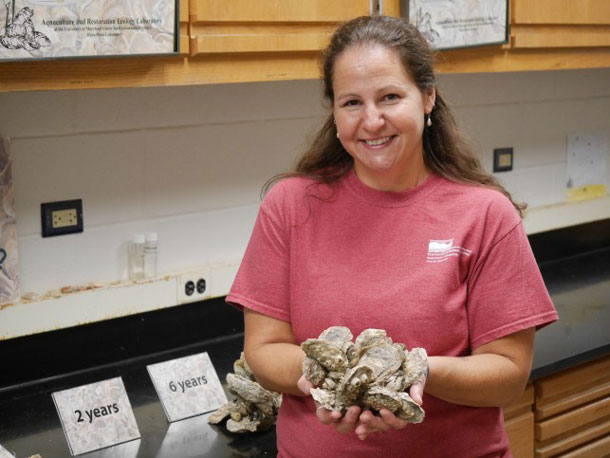
Stephanie Alexander at the Horn Point Lab oyster hatchery. Lawn chemicals pollute Chesapeake Bay. Oysters fight back.

Today I want to expand on my 2019 blog post about New York City’s Billion Oyster Project, which uses restaurants’ discarded oyster shells to fight erosion in the harbor.

According to a July broadcast of Living on Earth [LOE], Pittsburgh restaurants are doing something similar. In this case, it’s to counteract pollution caused by fertilizer that runs into Maryland’s Chesapeake Bay.

LOE’S BOBBY “BASCOMB: The Chesapeake Bay is routinely inundated with fertilizer runoff from the surrounding watershed in parts of Pennsylvania and Maryland. The result is algae blooms that suck up oxygen in the water and create dead zones for most other forms of life in the Bay. Oysters are particularly vulnerable, but as Kara Holsopple of the Allegheny Front reports, some local groups have come up with a novel way to help oysters recover.

“KARA HOLSOPPLE: Jessica Lewis says shucking an oyster is like picking a lock.

“JESSICA LEWIS: You press down and then you just wiggle, pop it open and, the abductor muscle right there. You clean that. …

“HOLSOPPLE: Lewis says they go through about three to four hundred oysters here a week from the East and West coasts. This oyster is from Maryland’s Chesapeake Bay — and its top and bottom shell are going back there… Lewis and her staff toss the spent shells in a 35 gallon barrel with a screw-on lid, located in the trash area on the ground floor of the building. …

“About once a month a truck picks up the old shells from this and six other participating restaurants in Pittsburgh, and drives them more than 250 miles to a staging area just across the Chesapeake Bay Bridge in Maryland. From there, the oyster shells from Pittsburgh and ones collected from Maryland, Virginia and the D.C. area are taken to a site at the University of Maryland’s Horn Point Laboratory in Cambridge, for processing.

“KARIS KING: So here you’re looking at about 7,000 tons of clean shell.

“HOLSOPPLE: Karis King is with Oyster Recovery Partnership, a nonprofit which works to increase oyster numbers in the Chesapeake Bay. We’re standing at the base of a mountain of gray shells. They’ve been dumped into a machine that’s like a modified potato hopper, which sorts the shells. … Smaller fragments of broken shell fall away as a conveyor belt deposits the half shells into wire cages or piles where they’re cured for a year. …

“KING: Even with all the shell that we do recycle, and that we also purchase from shucking houses, we still don’t have enough to do large scale restoration, at the rate that we could.

“HOLSOPPLE: That’s because of the scale of the problem. Stephanie Alexander manages the Horn Point Lab oyster hatchery. …

“ALEXANDER: We’ve pretty much wiped the oyster out to less than 1 percent of historic levels. So we started this restoration effort where we’re using a hatchery to produce spat on shell to put back into the bay so we can kind of help jump start Mother Nature.

“HOLSOPPLE: The concept is pretty simple: Scientists here at the lab produce baby oysters from adults harvested from the bay, nurture the microscopic larvae with a custom algae diet, then get them attach to the recycled, treated oyster shells. That’s the ‘spat on shell.’ In practice, it’s a lot harder than it sounds…

“Ben Malmgren is an intern here, a student from St. Mary’s College of Maryland.

“BEN MALMGREN: Right now we’re placing the oysters out on the spawning table where we are going to simulate river conditions that are ideal for spawning.

“HOLSOPPLE: The saltiness and temperature of the water in the shallow black basins has to be just right. Malmgren places the oysters in a grid formation, so it’s easier to separate the males from the females…

“MALMGREN: Because if we just let them spawn out on the table all these eggs are gonna go down to the into the drain. So once we see a female and we’ll we’ll know she’s a female by she’ll clap her top and bottom shell together and we’ll see a plume of eggs come out. …

“HOLSOPPLE: Even in the lab, nature is in charge. Stephanie Alexander says it was a slow summer…a lot of rain meant the adult oysters have lived with lower salinity levels, and they’re stressed. Out in the bay, the water is warmer, meaning the spat on shell might have a harder time growing that second shell, and over the years, forming the clusters that create oyster reefs.

“STEPHANIE ALEXANDER: When one thing gets out of whack everything else is going to kind of follow. So we’re trying to get the oysters back into balance so then hopefully everything else will follow as well. …

“Oysters are the vacuum cleaners or the kidneys of the bay and they just suck the water in, they decide if it’s food or not food. But no matter what it is that will remove it from the water column and that’s how they vacuum the bay up and clean it.

“HOLSOPPLE: Because of this superpower, oyster aquaculture is a best management practice identified by the regional partnership that oversees cleaning up the Chesapeake Bay. Some of the spat raised at the Horn Point Lab will make its way to oyster farmers, and those are the oysters on a half shell that are served in restaurants. But the majority of the spat will help rebuild oyster reefs, creating habitat for fish, and restoring the ecosystem.”

More at Living on Earth, here.

Read Full Post »

Photo: ArtTrav.
The Medici Chapel in Florence recently got a new kind of cleaning. This is the “before” shot of Michelangelo’s sculptures of Dusk and Dawn. See the New York Times for how they look today.

How do you clean a masterpiece? Carefully, My Friends. Especially if much of the damage was caused by the decomposing body of a long-dead Medici.

Jason Horowitz reports at the New York Times that you may also want to keep any strange method of cleaning a secret until after it actually succeeds.

“As early as 1595, descriptions of stains and discoloration began to appear in accounts of a sarcophagus in the graceful chapel Michelangelo created as the final resting place of the Medicis. In the ensuing centuries, plasters used to incessantly copy the masterpieces he sculpted atop the tombs left discoloring residues. His ornate white walls dimmed.

“Nearly a decade of restorations removed most of the blemishes, but the grime on the tomb and other stubborn stains required special, and clandestine, attention. … Restorers and scientists quietly unleashed microbes with good taste and an enormous appetite on the marbles, intentionally turning the chapel into a bacterial smorgasbord.

“ ‘It was top secret,’ said Daniela Manna, one of the art restorers. …

“ [A team headed by] Monica Bietti, former director of the Medici Chapel’s Museum … used bacteria that fed on glue, oil and apparently [a dead Medici’s] phosphates as a bioweapon against centuries of stains.

“In November 2019, the museum brought in Italy’s National Research Council, which used infrared spectroscopy that revealed calcite, silicate and other, more organic, remnants on the sculptures and two tombs that face one another across the New Sacristy.

“That provided a key blueprint for Anna Rosa Sprocati, a biologist at the Italian National Agency for New Technologies, to choose the most appropriate bacteria from a collection of nearly 1,000 strains, usually used to break down petroleum in oil spills or to reduce the toxicity of heavy metals. …

“Then the restoration team tested the most promising eight strains behind the altar, on a small rectangle palette spotted with rows of squares like a tiny marble bingo board. All of the ones selected, she said, were nonhazardous and without spores.

“ ‘It’s better for our health,’ said Manna, after crawling out from under the sarcophagus. ‘For the environment, and the works of art.’ …

“In February 2020 Covid hit, closing the museum in March and interrupting the project. … The bacteria strains got back to the Medici Chapel, which had reopened with reduced hours, in mid-October. Wearing white lab coats, blue gloves and anti-Covid surgical masks, Sprocati and the restorers spread gels with the SH7 bacteria — from soil contaminated by heavy metals at a mineral site in Sardinia — on the sullied sarcophagus of Lorenzo di Piero, Duke of Urbino, buried with his assassinated son Alessandro.

“ ‘It ate the whole night,’ said Marina Vincenti, another of the restorers. …

“In 2016, [she had] attended a conference held by Sprocati and her biologists. (‘An introduction to the world of microorganisms,’ Sprocati called it.) They showed how bacteria had cleaned up some resin residues on Baroque masterpiece frescoes in the Carracci Gallery at Palazzo Farnese in Rome. Strains isolated from mine drainage waters in Sardinia eliminated corrosive iron stains in the gallery’s Carrara marble.

“When it came time to clean the Michelangelos, Vincenti pushed for a bacterial assist.

“ ‘I said, “OK,” said [Paola D’Agostino, who runs the Bargello Museums]. ‘ “But let’s do a test first.” ‘

“The bacteria passed the exam and did the job.”

More at the Times, here.

Read Full Post »

I don’t know about you, but I really enjoy the verbal style some indigenous people use when speaking of traditional ways or of ancestors. If it is not disrespectful to say so, it transports me to a place in the imagination where wizards and Hobbits reside — different from my own place in a way that feels both magical and close to Nature.

In Vancouver, Adrienne Matei writes for the Guardian, “On winter nights for the past six years, a group of 20 people have rustled through dark, coniferous woods to emerge on a Canadian beach at the lowest possible tide, illuminated by a correspondingly full moon.

“An elder offers a greeting to the place and a prayer, then the team of researchers, volunteers, and First Nations ‘knowledge holders’ lights a warming fire and begins its work. At sites outlined by stones placed hundreds or even thousands of years ago, some begin raking, or ‘fluffing,’ the top three inches of the beach, loosening rocks and mud — and a remarkable number of old clam shells.

“When the tide comes back in, it will flush out any rotting organic matter, changing ‘some places that are compact and smelly into a good clam beach again.’ says Skye Augustine, a member of the Stz’uminus First Nation.

“This spot was once a clam garden, an ancient indigenous form of mariculture that coastal First Nations people have used for millennia. It is estimated that they once numbered in the thousands along the Pacific north-western coast, though ruins are all that’s left of most. In collaboration with the W̱SÁNEĆ and Hul’q’umi’num nations, Augustine has spearheaded the first formal clam garden rehabilitations at two sites in the Gulf Islands, in British Columbia, with dozens more to follow.

‘My elders articulated to me that if we want to bring our beaches back to life again, we need to bring people back on to them to care for them as they have been cared for in the past.

” ‘That became my inspiration for my education and career,’ she says. ‘How do we make this clam garden thing happen?’

“For millennia pre-colonization, clam gardens epitomized sustainable food security for Pacific north-western coastal nations from northern Washington to south-eastern Alaska. Modern studies have found that clam gardens have historically been up to 300% more productive than unmodified beaches, that their clams grew larger and faster than average, and that the clams did not exhibit any signs of resource stress from over-harvesting.

“To create the beaches, indigenous people built rock walls parallel to a beach’s low tide line, which would trap sediment and flatten the slope of the shore. With continuing tending, such as tilling to improve aeration and the removal of predators like sea stars, these gardens increase or create habitat for butter, littleneck, and horse clams, as well as crabs, chitons, seaweeds, and other useful species.

“Recent carbon dating has revealed that the oldest clam garden known to science was built about 3,500 years ago. …

“ ‘It has always been our duty to be the stewards of the land,’ says group member Nicole Norris, a knowledge holder for the Hul’q’umi’num and an aquaculture specialist. ‘It is the exact same land my ancestors walked. … From the work that we’ve done, we’ve seen the greater ecosystem return – some of the people who live in the local communities have talked about the return of certain birds and plants, and that’s been heartwarming,’ she says.

“In addition to providing food, clam gardens have historically provided the opportunity for ‘grandparents, aunties, and uncles to spend time at the beach with their grandchildren and younger generations, not only teaching about how to tend the environment … but sharing stories, language, spiritual ties to the place,’ says Melissa Poe, who specializes in the social and cultural dimensions of ecosystems at the University of Washington.”

More at the Guardian, here.

Read Full Post »

I checked Gwarlingo not long ago to catch up on Michelle Aldredge’s thorough, sensitive meditations on art and literature.

What caught my attention was her review of a movie about restoring an old house in Japan.

“It is rare to find a film that is pitch-perfect in its cinematography, story, pacing, and length,” Aldredge writes, “but Davina Pardo’s short film Minka is such a gem. (I owe writer Craig Mod a thank you for turning me onto this quiet masterpiece.)

“Based on journalist John Roderick’s book Minka: My Farmhouse in Japan, the film is a moving meditation on place, memory, friendship, family, and the meaning of home. Most remarkable, this haunting story plays out in a mere 15 minutes.

Minka is the Japanese name for the dwellings of 18th-century farmers, merchants, and artisans (i.e., the three non samurai-castes), but as Wikipedia explains, this caste-connotation no longer exists in the modern Japanese language, and any traditional Japanese style residence of an appropriate age could be referred to as minka. The word minka literally means ‘a house of the people.’

“The story of how AP foreign correspondent John Roderick and his adopted Japanese son Yoshihiro Takishita met, and then rescued a massive, timber minka by moving it from the Japanese Alps to the Tokyo suburb of Kamakura is full of small surprises and revelations (the biggest one comes at the end of the film).

Minka is a film that celebrates stillness. Pardo’s camera lovingly lingers on sun, shadows, and dust. But the peaceful home is not just a restored space full of beautiful, personal objects, it is also an expression of the deep connection between Roderick and Takishita and of familial love.”

Read about that at Gwarlingo, where the filmmaker will let you watch the entire 15-minute movie.

Photo: Davina Pardo & Birdlings LLC
A still from the film
Minka

Read Full Post »