Feeds:
Posts
Comments

Posts Tagged ‘shareable’

Photo: Shareable
The tiny village in Austin will include tiny houses, mobile homes, teepees, and refurbished RVs,

Housing the homeless is not something that we as a country have done very successfully yet. Some solutions work for some families, but many solutions don’t.

Some communities have tried supportive housing, which provides extra services that some homeless families need. Others build wonderful programs to get people on the road to independence. But I have also read about weird little pods just big enough for one person to sleep in. (That was in a design article. You never hear afterward how these designs work out for actual humans.)

Austin, Texas, has recognized that failing to house the chronically homeless costs the city too much. So it is inaugurating a village of tiny houses that will have a lot of community-building elements and could be just the ticket. My friend Mary Ann put this on Facebook.

Kelly McCartney writes at Shareable, “In Austin, Texas, a project to offer affordable housing to some 200 chronically homeless citizens is on the move. Community First! Village, which has been in the planning stages for nearly 10 years, is set to soon break ground on a 27-acre property sprinkled with tiny houses, mobile homes, teepees, refurbished RVs, a three-acre community garden, a chapel, a medical facility, a workshop, a bed and breakfast, and an Alamo Drafthouse outdoor movie theater.

“Supporter Alan Graham, of Mobile Loaves and Fishes, notes that the price of not housing these folks costs taxpayers about $10 million a year, not to mention the emotional and psychological tolls on the homeless themselves. …

“Graham has been working with the homeless in his community for more than 14 years and cites broken families as the leading cause of homelessness. With Mobile Loaves and Fishes, Graham has not only helped feed the homeless all these years, but he has helped transition them into homes and jobs, as well.” More.

3/2/14 Update: At the Associated Press, Carrie Antlfinger describes how the movement has spread, here.

Read Full Post »

We blogged a while back about tutoring students via distance learning. Kyle Spencer at the NY Times wrote about it here:

“Newly designed software for the tutoring of beginning readers has bridged the gap, allowing volunteers to meet students online from a distance. P.S. 55 is testing the program with students in its four first-grade classes.”

Now it turns out that remote tutoring is not the only kind of remote volunteering possible. In this article by Casey Armstrong at Shareable, we learn more about why “volunteers don’t have to be in the room anymore to physically volunteer.”

“As far as fun volunteering opportunities go, playing with kittens at an animal shelter is probably unequaled. It’s no wonder that the option to do this over the internet is a popular one. The Oregon Humane Society gives volunteers the chance to control robotic arms wielding toys for bored cats waiting to be adopted. This opportunity is not only good for the cats and volunteers, but it’s a great way to encourage donations and adoptions.

“And, if you look beyond the surface, this is more than just a stunt. It proves a concept: Volunteering can be done from anywhere by anyone if you accommodate it with the right technology. … Check out Reach-In.com if you’re interested in setting up your own robot volunteer opportunity.”

Photograph: Librado Romero/The New York Times
Edward Muñoz, a first grader at P.S. 55 in the Bronx, works out tricky words with Jenny Chan, his tutor in Midtown Manhattan.

Read Full Post »

As we have mentioned before, Detroit is finding creative ways to deal with empty buildings and loss of population.

Jay Walljasper at Shareable adds his take.

“Stories of Detroit’s emerging comeback often highlight the city’s attraction to young hipsters. According to plentiful media reports, well-educated twenty-somethings are streaming into the Motor City to test out new ideas, explore art and music projects, or launch D-I-Y revitalization initiatives.

“You can spot a number of once-dormant corners of the city now pulsing with activity thanks to young entrepreneurs. …

“While a new, more positive narrative about Detroit is welcome, there are problems in focusing entirely on idealistic young adventurers swooping in to save the city – it reinforces the stereotype of native Detroiters as hapless, helpless, and hopeless.

“The truth is, locals have been working hard for years to uplift the common good in Detroit, which drew the interest of outsiders. And newcomers aren’t the only ones stirring up excitement around town. Good People Popcorn, for instance, was started by two sisters and a cousin, all of whom grew up here. Sarida Scott Montgomery, one of the founders who is also a lawyer and executive director of the Community Development Advocates of Detroit, says people are often surprised she grew up in the city. ‘Not in the suburbs,’ she says, ‘but in Detroit itself.’ …

“Allyson McLean, who grew up in the Detroit suburbs and has worked on brownfield redevelopment in Pittsburgh’s Urban Redevelopment Authority and on strategic planning for the Department of Homeland Security in Washington D.C, is back in town aiding real estate development in low-income communities with the Community Investment Support Fund.

“ ‘Now that I am back,’ she says, ‘it’s frustrating to hear from friends I grew up with who have no plans to ever return. … They have no idea what they’re missing in their hometown.’ ”

Read more about Detroit’s revitalization here.


Photograph: Melanie Stetson Freeman/The Christian Science Monitor
Dewayne Hurling loves Detroit and is thrilled to have renovated a beautiful old home in the Boston-Edison neighborhood of the city.


Read Full Post »

Jay Walljasper appeared recently in the Christian Science Monitor (by way of Shareable). Designated one of The Monitor‘s “change agents,” he has written about ways to build a sense of community in a book called The Great Neighborhood Book.

Walljasper believes that “providing people with ways to come together as friends, neighbors, and citizens creates a firm foundation that enables a neighborhood to solve problems and seize opportunities.

“The neighborhood is the basic building block of human civilization, whether in a big city, small town, or suburban community. It’s also the place where you can have the most influence in making a better world.”

Tips are provided here.

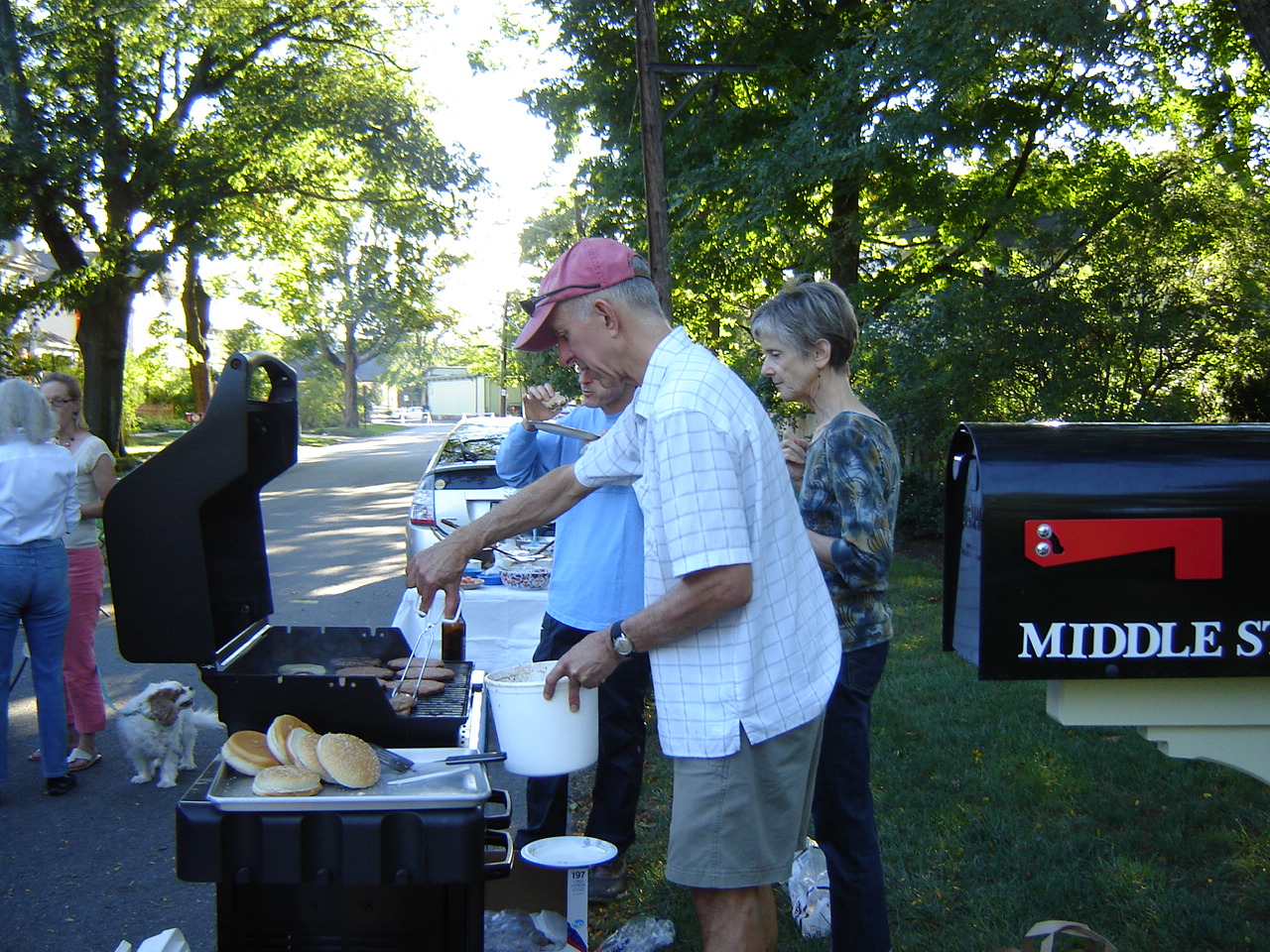
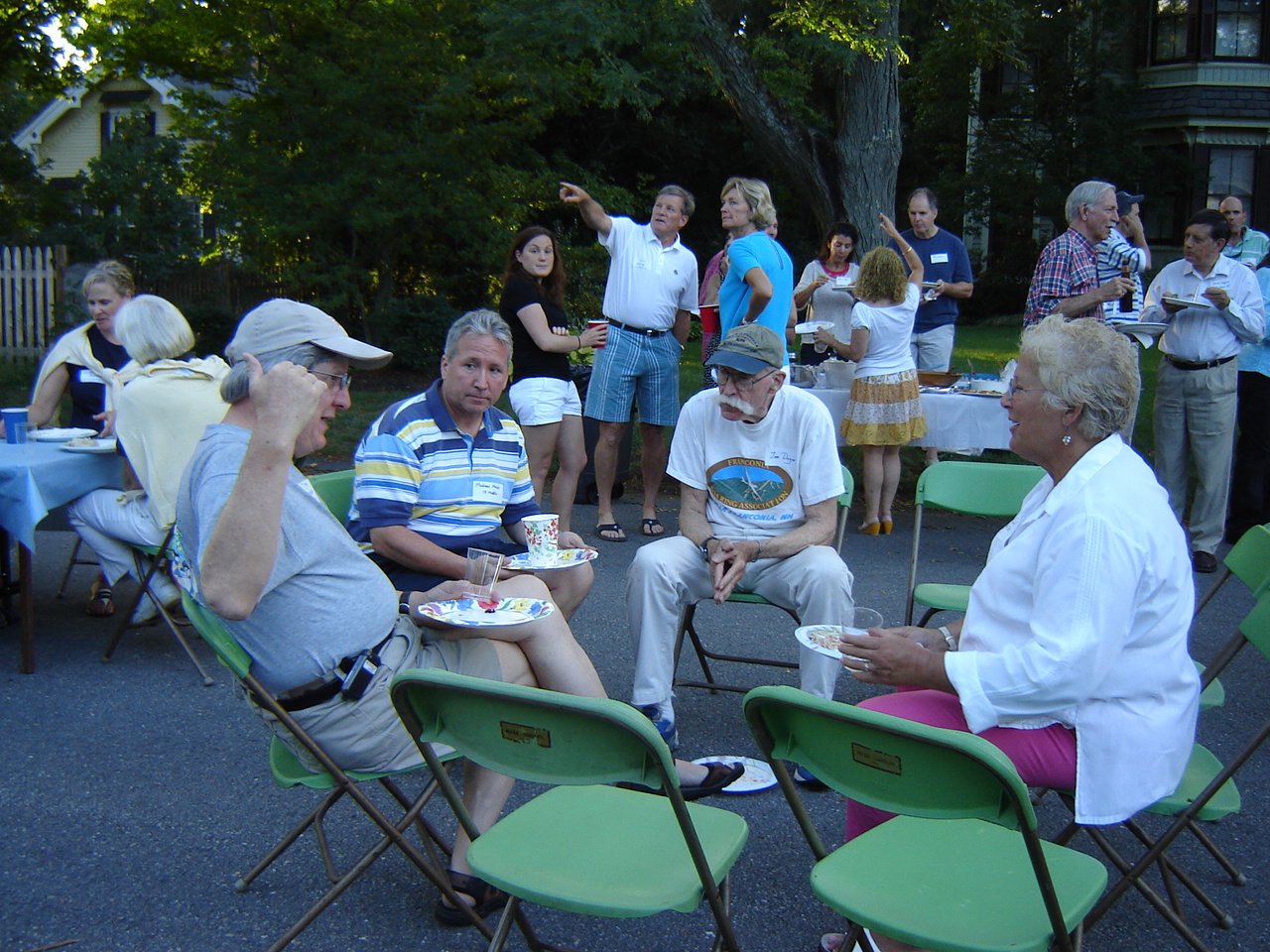
My own neighborhood has block parties on an annual basis. It hasn’t led to solving any major problems, although we did manage to get a rabid raccoon carted away not long ago. Even though most of us meet only once a year, I think we would help one anther if there was a disaster.

Pictures of Sunday’s convivial block party are below, followed by a photo of neighbors somewhere else actually working together on a project. That kind of collaboration probably produces deeper bonding.


Photograph below by Manuel Valdes/AP/File
Two volunteers hold the top of a spiral slide being installed at a neighborhood park in Kent, Wash., in 2011.

Read Full Post »