Feeds:
Posts
Comments

Posts Tagged ‘shark’

Photo: Atlantic Shark Institute.
A Great White shark.

Here I am on the island of New Shoreham reading about a Great White shark that people in Australia actually dared to rescue. Oy! Some sharks are harmless, but keep me away from that particular shark!

In New Shoreham, we know that warming seas are bringing more seals north. And seals, of course, mean lunch to the Great White. Grandchildren are told to keep clear of seals.

Recently, I read an Associated Press article at the Guardian about a different kind of shark adventure down under. A rescue.

“Tourist Nash Core admits he felt some fear when he and his 11-year-old son waded into the ocean off the Australian coast to help rescue a three-meter [10 foot] great white shark stranded in shallow water.

“Three local men managed to return the distressed animal from a sand bank into deeper water after an almost hour-long rescue effort [near] the coastal town of Ardrossan in South Australia.

“ ‘It was either sick or … just tired,’ said Core, who was visiting with his family from the Gold Coast in Queensland. ‘We definitely got it into some deeper water, so hopefully it’s swimming still.’

“Core came across the unusual human-shark interaction while traveling around Australia with his wife, Ash Core, and their sons, Parker, 11, and Lennox, 7.

“Nash Core used his drone to shoot video of the writhing shark before he and Parker decided to help the trio who were struggling to move the shark into deeper water. …

“The three men had used crab rakes – a garden rake-like tool for digging small crabs from sand – to move the shark into deeper water by the time the father and son arrived. …

“ ‘They … got it into deeper water where I thought it’s probably not a good idea to go any further. That’s its territory and I’ll stay back,’ he said. …

“Macquarie University wildlife scientist Vanessa Pirotta said while shark strandings were not common, they were becoming more visible through social media. …

“ ‘If you see something like this, human safety comes first and foremost,’ Pirotta said. ‘You can contact environmental authorities … who will get someone appropriate to come and assist.’ More at the Guardian, here.

Meanwhile, here is a relevant research project being conducted at the Atlantic Shark Institute. It’s called “White Shark and Seal Interaction — Block Island, RI.”

“The focus of this study is the White Shark (Carcharodon carcharias), a growing Gray Seal (Halichoerus grypus) population, and the potential for interaction between the two in the waters off Block Island, RI.

“Through the use of an extensive acoustic array, the tagging of white sharks and seals with acoustic transmitters, the tagging of seals with satellite (SPLASH) tags, and detailed seal counts and assessment using cameras and visual counts, the team hopes to better understand the ecology of white sharks and gray seals in this area, and potential interactions between the two.

“With a wide variety of white sharks being tagged (young-of-the-year [YOY],  juvenile, sub-adult and adult) and little baseline data for either species at Block Island, this is a unique opportunity to investigate if and when predator-prey dynamics are established. The Atlantic Shark Institute, RI Department of Environmental Management, Mystic Aquarium, NOAA Northeast Fisheries Science Center, Dr. Greg Skomal, Atlantic Marine Conservation Society and the Block Island Maritime Institute are collaborating on this study.”

Read about other Atlantic Shark Institute studies here

Read Full Post »

Photo: NOAA Fisheries.
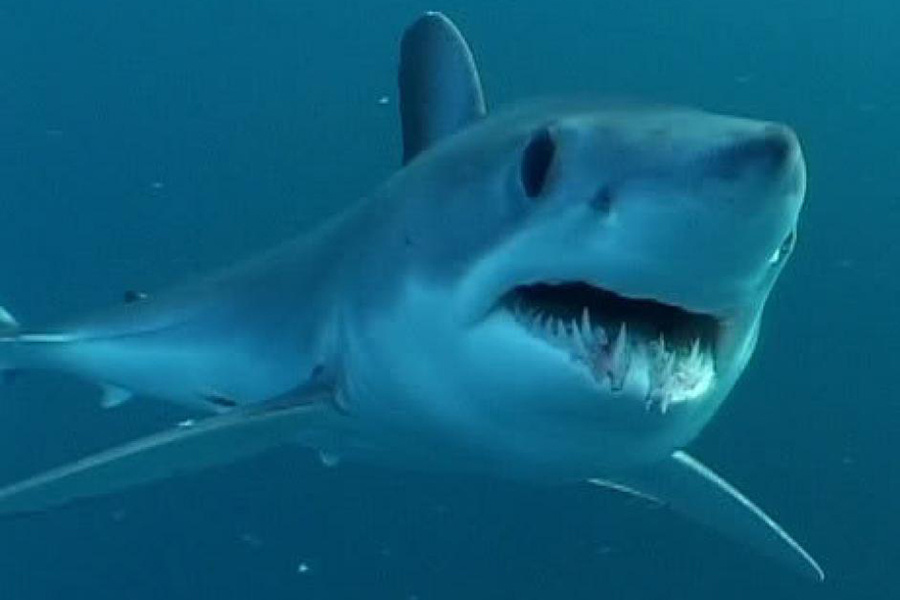
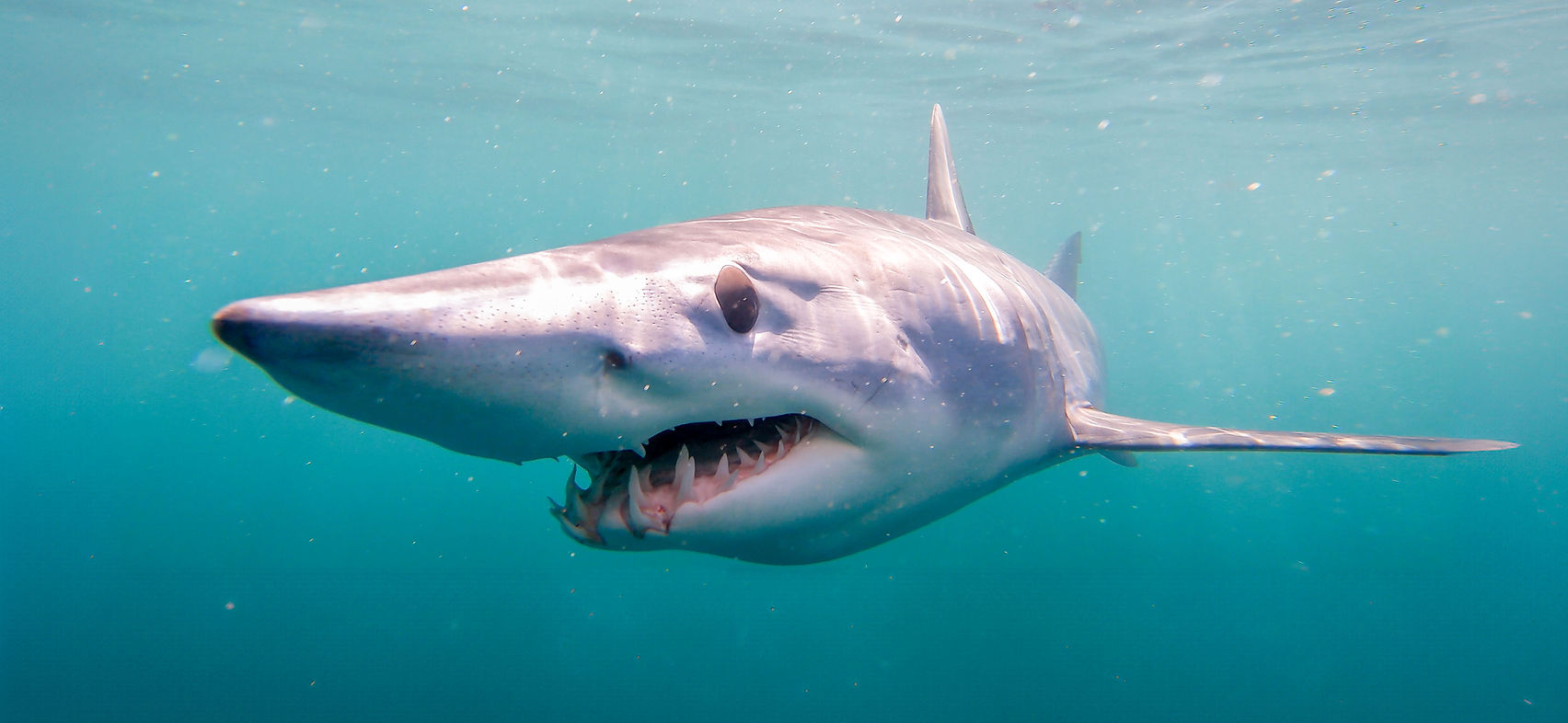
Mako sharks are part of a study involving acoustic tags.

You have to move fast to get a tag on a shark, and you have to throw the shark back, even if you’re not done, if it starts showing any sign of weakness. Frank Carini has the story at ecoRI News.

“A South Kingstown-based nonprofit co-founded by a lifelong Rhode Islander [attaches tags to sharks].

Jon Dodd, the Atlantic Shark Institute’s executive director, said getting an acoustic tag, or any tag, for that matter, onto a shark works like a ‘NASCAR pit stop.’ A crew of four, sometimes six, has a maximum of 12 minutes to get a tag attached and take a blood sample and measurements. If a sharks begins to look lethargic, Dodd said the animal is immediately placed back in the sea, even if all the data hasn’t been collected or the tag fastened.

“A hose is put in the shark’s mouth to flush salt water through its gills, and a towel is often placed over the eyes to keep the animal calm.

“The Atlantic Shark Institute, an all-volunteer nonprofit, partners with other shark scientists and researchers, which allows collaboration to play a critical role in the research, management, and conservation of large predatory sharks in the northwest Atlantic Ocean, according to Dodd.

“ ‘We have to spend wisely to advance science,’ he said. The institute’s budget gets a helping hand from 20 local boat captains who provide their vessels and fuel free of charge for tagging research.

“Dodd noted tagging allows researchers and scientists to track where sharks go and when. … Given the vulnerability of most of the shark species they are tagging, studying, and tracking, Dodd said, they abide by strict protocols regarding the way the sharks are handled when they are being caught, tagged, and measured. He noted that traditional J hooks, which can fatally puncture an organ, have been replaced by circle hooks, which are more likely to lodge in the corner of a shark’s jaw, making removal easier. Fishery regulations also require hooks to be composed of corrodible metals which, unlike stainless steel, degrade faster and increase the chance of a shark’s survival if a hook can’t be removed.

“The type of tag used is determined by the species caught and the study being conducted, according to Dodd.

“The least expensive are national fisheries tags — an index card in a plastic tube attached to the base of the dorsal fin. These cards are provided by NOAA Fisheries for free. A shark swims around and ‘if somebody caught it someday, they say please unscrew the cap and the card rolls out and it says please call the National Fishery Service and tell us where you caught this shark, what size it was, et cetera.’ …

“Acoustic tags, which cost $425 and last about a decade, track a shark’s movement via signals picked up by acoustic receivers, which cost $2,500 each, that have been placed up and down the East Coast. Both the Atlantic Shark Institute and the Rhode Island Department of Environmental Management have placed receivers in local waters.

“Pop-up satellite archival tags — each with a price tag of up to $4,000 — provide even more detailed data beyond location, such as water depth and temperature. They last about two years before the battery dies and the tag corrodes and falls off the shark. …

“The Atlantic Shark Institute’s … mission, and that of its science partners, is ‘to do the highest quality shark research to help manage and conserve these magnificent animals.’ …

“During a recent conversation with ecoRI News, Dodd often used the words ‘beautiful’ or ‘awesome’ to describe a shark species — well, maybe not spiny dogfish.

“Dodd has spent much of the past 45 years, even while working full-time in a totally different field, thinking about, learning about, and studying sharks. He has caught, released, and tagged some 1,000 sharks for various research projects during the past four-plus decades. …

“ ‘When I saw my first shark, I was fascinated, and it just kept rolling,’ Dodd said. ‘But it quickly went from fascination to concern. It was just this realization that Man will take a lot of things out of an ecosystem, and it didn’t feel right.’

“His concern about the species grew during the 1980s and ’90s, especially as he watched the popularity of shark tournaments grow, the number massacred for their fins increase, and the amount killed in bycatch rise.

“ ‘We take over 100 million out of the ocean every year. It’s just too many,’ said the 62-year-old Dodd. ‘And the big problem is that a lot of these sharks are very slow growing and slow maturing. I’ll give you a perfect example. … It takes the female great white 33 years before she’s sexually mature. So we’re talking right now and it’s March 21, 2024, so if a white shark is born while we’re chatting that shark will finally reproduce when I’m 95 years old.

“ ‘For the first time she can finally replace herself, but what’s the chance that her pup [litter sizes range from 4-12 individuals] survives? A lot of things can eat you, you can bite the wrong hook, you can sit on a longline and die because you’ll basically suffocate. You can get dragged up somewhere. You can get caught by a recreational guy that poses with it too long and kills it. What’s the chance that you survived 33 years so you can reproduce?’ …

“Since 1975 the world’s shark populations have declined by 71%, according to the Save Our Seas Foundation. It’s a disturbing trend that Dodd said has major implications beyond the marine environment.

“He likes to tell people, ‘Shark health is ocean health and ocean health is our health. Sharks are the apex predator, and they regulate everything underneath them.’ “

More at ecoRI News, here. No firewall.

Read Full Post »

Photo: Eye Ubiquitous/Rex/Shutterstock
“It is not in dispute that the shark is not in harmony with its surroundings,” a planning inspector wrote in 1992.

This is not a story about a real shark, although sharks are often on my mind as warming seas move the dangerous kinds to the northern beaches that my family frequents. There is certainly plenty to say about real sharks — both about avoiding the places that their food congregates (seals, for example) and about protecting them to live in the wild. (My 4-year-old granddaughter will tell anyone willing to listen that shark fin soup is bad.)

But this story is about shark art.

Aamna Mohdin writes at the Guardian, “One April evening in 1986, Bill Heine was sitting on the steps opposite his newly purchased terraced house in Oxford, drinking a glass of wine, when he turned to his friend and asked a simple question: ‘Can you do something to liven it up?’

“His friend, the sculptor John Buckley, provided an answer in the shape of an eight-metre (25ft) shark which would sit on his roof, perpetually appearing as though it had just crashed into the house from the sky. The fibreglass fish, which became known as the Headington Shark after the Oxford suburb, led Heine, a local journalist and businessman who died last week, into a six-year legal battle with the local council.

“The process turned a relatively unremarkable street into a beloved local landmark and resulted in one of the most notable triumphs of British eccentricity over petty bureaucracy. …

“ ‘You could see the Americans were taking off from Heyford outside of Oxford to bomb Gaddafi in Libya,’ Buckley said. Both Buckley and Heine wanted to make a powerful statement about the barbarity of war and the feeling of vulnerability and utter helplessness when disaster struck. …

“The artist started on the work immediately after his discussion with Heine. He worked with a group of volunteers – largely students and other anti-war activists – to build an artificial roof to hold the shark outside his studio. He didn’t tell any of them where he planned to put the sculpture. …

“ ‘The crane just dropped it straight in and it went in beautifully as the postman was passing,’ Buckley said. ‘That first morning was amazing. By Sunday, it was worldwide and its been like that for 30-odd years.’

“Oxford city council immediately opposed the installation of the shark. At first, they said it was dangerous to the public, but engineers and inspectors pronounced it structurally safe.

“Heine, an American who moved to the UK to study at Oxford University in the 1960s, then submitted a planning application, which was rejected by the council. He appealed to the environment secretary, then Michael Heseltine. …

“Heseltine’s planning inspector, Peter Macdonald, investigated and ultimately came out in favour of keeping the sculpture, with an official ruling that has gained legendary status among town planners for its defence of art.

“ ‘In this case it is not in dispute that the shark is not in harmony with its surroundings, but then it is not intended to be in harmony with them,’ wrote Macdonald in his official ruling. ‘The council is understandably concerned about precedent here.

‘The first concern is simple: proliferation with sharks (and heaven knows what else) crashing through roofs all over the city. This fear is exaggerated.

” ‘In the five years since the shark was erected, no other examples have occurred … any system of control must make some small place for the dynamic, the unexpected, the downright quirky. I therefore recommend that the Headington Shark be allowed to remain.’ …

“After Heine died [in March], tributes came flooding in from many locals, including city councillors.

“[Patrick Gray, an economist who lived his whole life in Oxford], described Heine as a ‘colourful character’ who inspired people. He said: ‘We once had a 12-year-old boy visit from America. He was miserable and unhappy when he arrived, so we took him to see the house. He left with a very big smile on his face.’ ”

More at the Guardian, here. And be sure to check out the shark-girl sculpture in Buffalo, NY, which blog KerryCan old me about. Pretty funny.

Read Full Post »

whales-humpback-watercolor-mom-and-baby-olga-shvartsur

Art: Olga Shvartsur/Fine Art America
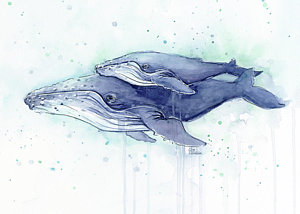
Humpback whale and baby. Recently, a humpback whale appeared to intentionally protect a researcher from a tiger shark.

A scientist who studies whales underwater was astonished and more than a little frightened in September 2017 when a whale kept pushing her toward her boat. After her colleagues pulled her to safety, she saw that in the other direction a dangerous tiger shark was lurking. The researcher believes that the whale was intentionally trying to protect her. Other scientists argue that whales aren’t altruistic.

I say, Who cares? The point is the whale’s action moved the diver away from danger, and she is grateful.

Sarah Gibbens writes at the National Geographic, “For 28 years, Nan Hauser has been researching and diving with whales. The biologist is the president and director of the Center for Cetacean Research and Conservation. … During a trip to look at whales in the Cook Islands in the South Pacific last September, Hauser says she had an encounter unlike any she had experienced before.

“A humpback whale, a marine mammal capable of weighing 40 tons and growing 60 feet long, swam toward Hauser. For ten minutes, it nudged her forward with its closed mouth, tucked her under its pectoral fin, and even maneuvered her out of the water with its back. …

” ‘I was prepared to lose my life,’ she says. ‘I thought he was going to hit me and break my bones.’

“In addition to conducting research, Hauser says she was also in the Cook Islands to work on a nature film, so at the time the whale approached, both she and a fellow diver were armed with cameras. Hauser’s point-of-view footage shows just how persistently the whale nudged her. A second whale can also be seen lurking just behind the first.

“When she finally made it out of the water and up onto her boat — bruised and scratched from the barnacles on the whale — Hauser saw a third tail moving from side-to-side.

” ‘I knew that was a tiger shark,’ she says.

“Now, after viewing the footage and reflecting on the whole harrowing experience, Hauser concludes that the whale who nudged her likely exhibited an extraordinary example of altruism. …

“Hauser’s retelling isn’t the first time scientists have questioned whether humpback whales can show signs of altruism. A 2016 study in the journal Marine Mammal Science looked at 115 instances from the past 62 years in which humpbacks interfered with a pod of hunting orcas.

“Banding together, humpbacks were seen effectively protecting their calves. But there were also examples of humpbacks showing the same behavior to protect other species of whales, seals, and sea lions. …

“Martin Biuw from the Institute of Marine Research in Nowary is skeptical of Hauser’s claim that altruism is at play in the video. Hauser had speculated the whale was male, but Biuw believes it appears to be a female.

” ‘If that is the case, it is possible that she may show protective behavior towards a human (or other animal for that matter) if she has for instance recently lost her calf,’ he says.

“Biuw explained that hormonal changes could have spurred the whale to show protective behavior.” Oh, ha, ha, hormonal changes? Good grief, give me a break.

More at the National Geographic, here.

Read Full Post »

I have been learning all sorts of strange marine facts from Suzanne and Erik’s children. They are hooked on a video series called The Octonauts, which features cartoon characters living in the sea. One piece of wisdom from the grandchildren was about wraith-like creatures called siphonophorae, a word that gives me trouble but rolls right off a child’s tongue. Siphonophorae live even deeper in the ocean than the Octonauts and some are light emitting, which makes for a good storyline.

All this leads me to another light-emitting sea creature recently discovered near Hawaii, a shark.

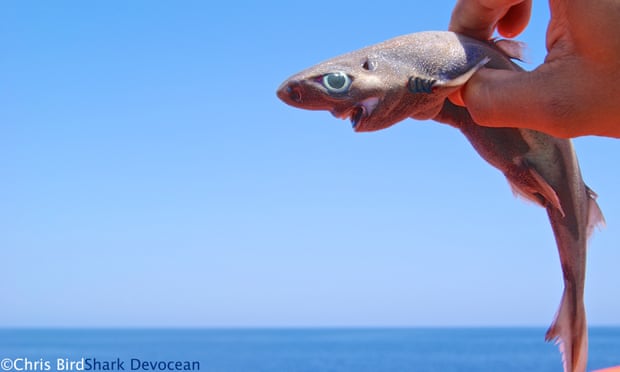
Lauren Smith writes at the Guardian, “Light emitted by a new species of lanternshark, Etmopterus lailae, is camouflage and helps them to hunt, communicate and find partners. Early [in 2017] a new species of deep water shark, Etmopterus lailae, was discovered in waters surrounding the Northwestern Hawaiian Islands in the Pacific Ocean.

“Measurements of external features, teeth, vertebrae and intestines, along with specific external markings and patterns confirmed that it was indeed a new species – a member of the lanternshark family. Lanternsharks (Etmopteridae) are one of the most species-rich shark genera. …

“The lanternsharks are one of two deep sea shark families to possess the ability to bioluminesce – in other words, they are able to glow in the dark. The other shark family with the ability to do this are the kitefin sharks (Dalatiidae). This family houses the infamous cookie cutter shark, which was known for its impressive ability to disable US Navy submarines in the 70s and 80s. …

“Bioluminescence is the emission of light as a result of a biochemical reaction. In contrast to fluorescence and phosphorescence, bioluminescenct reactions do not require the initial absorption of sunlight or other electromagnetic radiation by a molecule or pigment to emit light. …

“Bioluminescence in vertebrates is found exclusively among fishes living in marine environments. At present the only known terrestrial animals capable of bioluminescence are arthropods. …

“It is also worth noting that bioluminescence is not just exhibited by deep sea dwellers existing in perpetual darkness. [One study] analysed 17 years of video footage taken from the sea’s surface down to a depths of almost 4000 metres. Observations showed that the percentage of bioluminescent animals is remarkably uniform regardless of depth.”

More at the Guardian, here.

Read Full Post »