Feeds:
Posts
Comments

Posts Tagged ‘socialization’

Photo: Stefano Giovannini.
Phyllis Bogart discovered the Pacemakers, a dance group for older people, after her beautician recommended them.

They say, “You’re never too old,” but I know from experience that zumba requires a better sense of balance than I have now. Still, there are plenty of people who can not only dance after a certain age but learn new routines.

McKenzie Beard writes at the New York Post, “On the dance floor, Phyllis Bogart moves like she’s made of electricity, not metal. At 78, her pink-and-purple-streaked curls bounce as she shimmies and shakes with the energy of someone half her age, each twirl punctuated by a wide, wild grin. It’s clear that four hip replacements, a mechanical knee and a string of other surgeries haven’t slowed her down — though they did earn her a nickname.

“ ‘With all the titanium in my body, I’ve become known as the bionic babe,’ Bogart told the Post.

“The retired nurse and pharmaceutical rep is a member of the Pacemakers — a precision dance troupe that’s redefining what it means to be a senior, helping people in their 60s, 70s and even 80s stay active both mentally and physically. …

Founded in 2019, the NYC-based Pacemakers sprang to life after founder Susan Avery faced ageist backlash as the oldest dancer for the Brooklyn Cyclones from strangers online. …

“ ‘That is how I learned what it was like to be cyberbullied,’ said Avery, 65, recalling the 2017 incident. … But instead of letting it defeat her, Avery says her daughter urged her to channel the hurt into action.

“So Avery placed an ad in Playbill inviting seniors to audition for a new senior dance team. Sixteen performers answered the call.

“ ‘Our first performance was July 6, 2019,’ she said. ‘I was so nervous, but we ended up getting a standing ovation — and our dance card has been full ever since.’

“Now seven seasons in, the Pacemakers boast 47 members and have won fans around the globe with viral performances that have racked up millions of views online. The team performs for hundreds of thousands of fans each year, appearing frequently at sporting events, community centers, festivals and conferences across the Northeast. …

“While you have to be 60 to join, the group hosts workshops and ‘day discos’ open to all ages.

“Notably, only two members have professional dance training; the rest come from healthcare, education, law enforcement, journalism and a variety of other fields. … But there’s one thing they all share: a fearless approach to aging. … During performances, each member wears their birth year on the back of their jersey, loud and proud. …

“As the Pacemakers embrace their senior status, members say the group helps them stay well as they get older.

“ ‘I never thought at this age that I would be involved in something so exciting, so energizing, so fun and so challenging to my body and my brain,’ Bogart said. …

Studies show that learning choreography is excellent for the brain, engaging memory, focus, coordination, timing, rhythm and movement simultaneously. Research suggests it helps slow cognitive decline and may even reduce the risk of developing dementia.

“The Pacemakers are also getting a full-body workout. Their complex routines require strength, flexibility and balance, helping members stay physically fit. … The group also creates a community, preventing social isolation and loneliness common among older Americans. …

“The group’s choreographer, Marissa Montanez, designs each routine with the dancers’ mobility and physical limits in mind.

“ ‘I want them to look good. I want them to shine. I don’t want to give them something so hard that they can’t handle it,’ said Montanez. … ‘But at the same time, I don’t want to give them a routine that makes people say, “Oh, old people, how cute …” I want people to be like, “Oh damn, they’re really good; I can’t even do that!” ‘ “

More at the Post, here.
Read Full Post »

Photo: Jeenah Moon/Bloomberg.
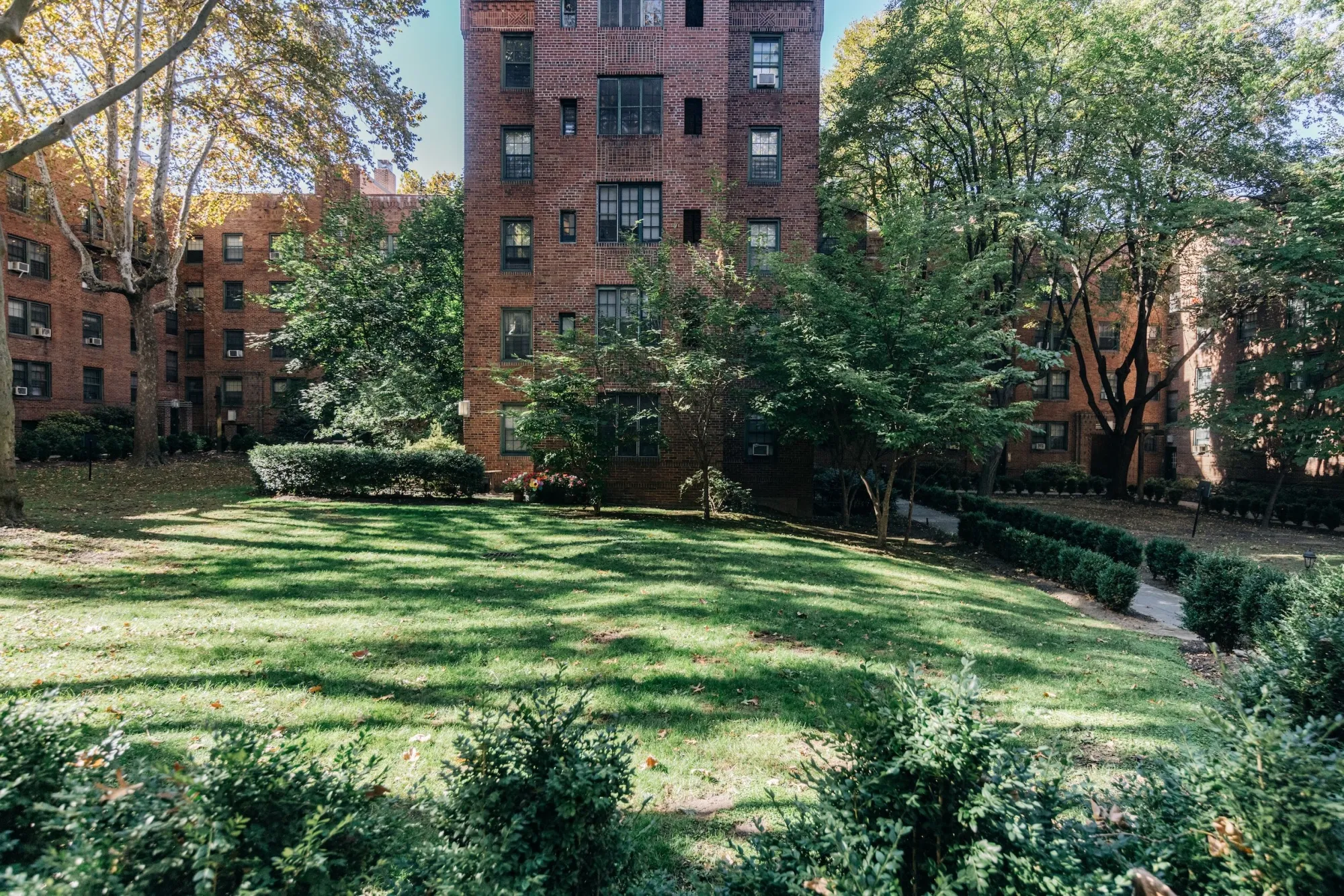
An interior courtyard at the Sunnyside Garden Apartments in Queens, New York. Completed in 1928, it remains a beacon of quality of life.

Growing up on the Copeland Estate in a suburb of New York, I would have been quite isolated from humanity if not for a scattering of nearby homes that had children. Having playmates meant so much to me. But for years, US community designers forgot about the importance of human interaction for both children and adults. One way to build it in, especially in cities, is the classic courtyard.

Alexandra Lange notes at Bloomberg CityLab that the shrinking population of children under five across the US “is bad news for the diversity and stability of cities, which are improved by the amenities that families seek — parks, public libraries, safe streets. It’s also discouraging for families who prefer to live in the city or don’t have the option or desire to move to the car-dominated suburbs. Any effort to retain families has to start with housing, their primary expense.

“That one weird trick for making cities more family-friendly? We’ve known it for decades: It’s the courtyard. …

“While Europe can claim centuries-old courts, America dabbled in them for decades, before the suburbs became the dominant housing type of both government subsidy and political propaganda.

“Courtyards don’t have to belong to the past. While textbook examples in brick and stone are lovely — and still home to thriving communities — contemporary architects are making courts in all sorts of materials, and for all types of housing, from apartments to townhomes.

“One of the first influential figures to advance the idea of the courtyard as the ideal urban type for families was Henry Darbishire, the mid-19th century English architect. His first patron, Angela Burdett-Coutts, was inspired by Charles Dickens and his novels of the urban poor to apply her wealth to reformist housing. ‘Nurturing the family and protecting children from the street was a huge part of the logic — turning the city inward,’ says Matthew G. Lasner, housing historian and the author of High Life: Condo Living in the Suburban Century.

“Architects and philanthropists quickly embraced an easily replicable courtyard model, with a single entrance on the street and interior vertical access off a planted court. The concept came to America in the 1870s via developers like Alfred Treadway White, responsible for the Cobble Hill Towers in Brooklyn. In the 1920s, more reformist developers — including everyone from the Rockefellers to communist unions — constructed many more of these courtyard projects.

“As architecture critic John Taylor Boyd wrote in 1920 of the Linden Court complex in Jackson Heights, the courtyard’s ‘benefits are apparent when it is remembered that the streets are the only playground of New York children, including the children of the rich.’ …

“When you’re talking courtyards in America, it’s hard to avoid Sunnyside Gardens. Not only does the Queens community remain one of New York City’s best neighborhoods, but it was home to one of America’s best critics, who made his affection clear.

“Lewis Mumford was one of the first residents of Sunnyside Gardens, completed in 1928, and constantly returned to its balance of private and public space, building and garden, in his analysis of other lesser New York City housing options. In “The Plight of the Prosperous,” published in the New Yorker in 1950, Mumford takes aim at the new white-brick residential buildings ‘that have sprung up since the war in the wealthy and fashionable parts of the city.’ While new low- and middle-income housing projects like his own ‘provide light and air and walks and sometimes even patches of grass and forsythia,’ these other private buildings, clustered in uptown rich neighborhoods, lack multiple exposures, outdoor space, cross-ventilation and quiet. …

Clarence Stein and Henry Wright were the primary architects and planners behind Sunnyside Gardens, with Marjorie Sewell Cautley the landscape architect; all three would subsequently collaborate on Radburn, New Jersey, the ‘town for the motor age’ that in fact applied these communal principles for a result that we would now call transit-oriented development.

“The planners’ primary insight, in both the city and the suburbs, was to prioritize protected, communal open space over private yards or interior amenities. The courts, or courtyards, could be much larger if not subdivided by owner, and even in areas with public parks, having play space (and play companions) directly outside your door was a huge amenity. …

“On the West Coast, the courtyard evolved a little differently: surrounded by lower density, semi-detached houses with, eventually, a swimming pool in the center instead of a lawn. Irving Gill, considered the father of California modernism, designed prototype bungalow court in Santa Monica in the teens, with parking out of sight in the back and doorstep gardens. On tighter sites, U-shaped buildings with Spanish- and Italian-influenced architecture featured tiled fountains at center court. …

“ ‘When people have families with children, the home is important, but equally important are the people who are there with you,’ says Livable Cities president Meredith Wenskoski. “Your neighborhood is crucial. …

Bay State Cohousing, a 30-unit development outside Boston, has common amenities as part of its charter, including a shared kitchen and activity rooms. But the pastel, clapboard complex, intended to blend in with single-family neighbors, also forms a U around a southwest-facing courtyard, with outdoor circulation providing plenty of opportunities for casual run-ins with the neighbors.

“ ‘The courtyard is a nested boundary that allows interaction with other children, and more importantly, with other adults who become a kind of network,’ says Jenny French, whose firm French 2D designed Bay State. ‘In an urban setting, the barrier that the contemporary parent has to letting their child out the door, thinking about the car-dominated city where they are unable to play in the street – the courtyard is a natural alternative.’

“French, who has also been coordinating the housing studio at the Harvard Graduate School of Design for seven years, can’t help but extend these design observations into the cultural and political spheres. Everyone talks about loneliness in America for people of all ages. For teens and seniors alike, French sees a solution. It’s one we’ve had all along: ‘Could a courtyard house actually be the friendship apparatus we need?’ ”

Lots more at Bloomberg, here.

Read Full Post »