Feeds:
Posts
Comments

Posts Tagged ‘start-up’

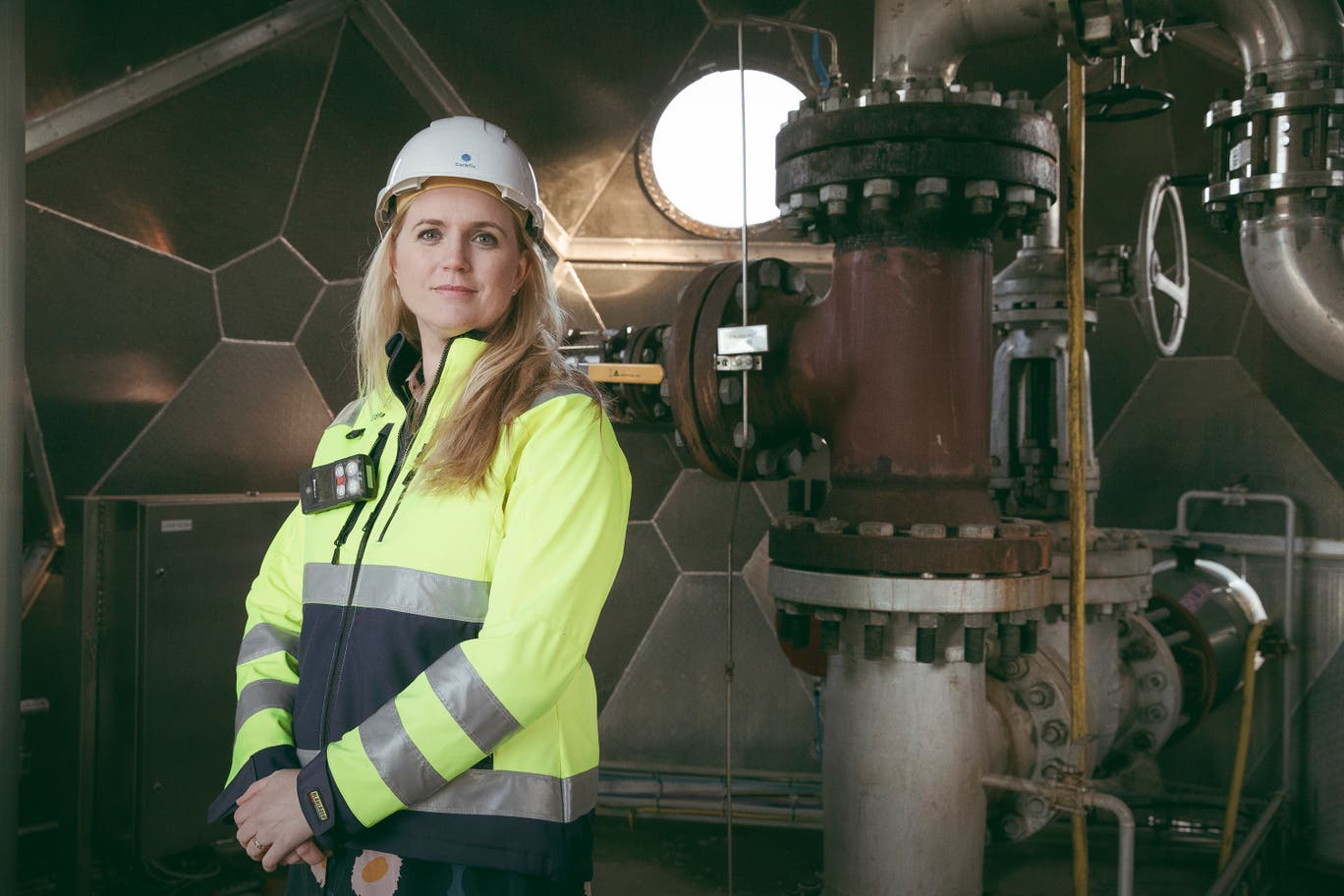
Photo: Heida Helgadottir for the Washington Post via the Independent.
Edda Aradottir is the chief executive of Carbfix, a company that captures CO2 byproduct from the largest geothermal plant in Iceland. Many Icelandic start-ups are tackling climate change.

File this one under Hope. And maybe book a trip to the innovation hub called Iceland.

Hannah Hall has a report at the Washington Post on Icelandic companies that are taking on global environmental challenges.

“The electric red and green glow of the production facility resembles the Icelandic aurora borealis. Algae in their growth stage flow through hundreds of glass tubes that travel from floor to ceiling, all part of a multistep process yielding nutrients for health supplements. Soon, all parts of each alga will be used.

“The facility, operated by Icelandic manufacturer Algalif, is a space of inspiration for Julie Encausse, a 34-year-old bioplastic entrepreneur. During a July summer storm, Svavar Halldorsson, an Algalif executive, was guiding her through a tour of the company’s newest facility on the Reykjanes Peninsula.

“By the end of 2023, this new facility aims to triple its production. After Algalif dries the microalgae and extracts oleoresin, a third of this output then goes toward health supplements. Algalif has traditionally used the rest as a fertilizer. Now Encausse, founder and chief executive of the bioplastic start-up Marea, hopes to use that leftover biomass to create a microalgae spray that can reduce the world’s reliance on plastic packaging.

“Her newest partnership with Algalif is part of a start-up network in Iceland that focuses on inventive and creative technologies to address the climate and sustainability crisis. The Sjavarklasinn (‘Iceland Ocean Cluster’) network includes environmental entrepreneurs working across several industries.

“Thor Sigfusson founded the network in 2012 after conducting research on how partnerships between companies in Iceland’s technology sector helped expand that industry. At the time, he found that the fishing industry was not experiencing the same collaboration or growth.

“ ‘Even though companies were in the same building together, fishing from the same quotas and facing similar challenges, they were closed off,’ said Alexandra Leeper, the Iceland Ocean Cluster’s head of research and innovation.

“Three cod hanging on the wall of the second-floor entryway are the first thing to greet any visitor to the Iceland Ocean Cluster. Lightbulbs shine from their centers, and the dried scales filter the light to fill the space with an amber glow. The precise design is one that underlines the group’s belief that using 100 percent of a fish or natural resource can give rise to innovative technologies. …

“Encausse and Marea co-founder Edda Bjork Bolladottir have partnered with the cluster for 2½ years. Encausse says that involvement was core to their company’s inception.

“ ‘There is a collaborative mind-set when being on an island,’ she said. ‘We need to work together to survive, and this was passed from generation to generation.’

“In a country about the size of Kentucky, the people of Iceland have had to learn how to guard their resources. Encausse has discovered that often means using 100 percent of any material — a lesson she’s now implementing in her work with Algalif. She created a food coating from Algalif’s leftover biomass, a product she’s named Iceborea — in a nod to theaurora borealis.

“ ‘We are repurposing it and making something with value that gives it another life to avoid using more plastic,’ Encausse said. Once Algalif’s factory expands over the next year, it will have 66 tons of microalgae leftovers that Encausse’s company can tap each year.

“When sprayed onto fresh produce, Iceborea becomes a natural thin film and a semipermeable barrier that can protect against microorganisms. Iceborea can either be eaten with produce or washed off, reducing the need for plastic packaging.

“[Edda Aradottir] is the chief executive of Carbfix, a company capturing CO2 byproduct from the largest geothermal plant in Iceland, Hellisheidi, and injecting it into stone to be buried underground.

“Carbfix’s successful trials have marked a global milestone for carbon sequestration. It also has received international recognition — and Aradottir’s leadership has already served as a model for growing start-ups and other founders in the cluster trying to tackle extensive environmental concerns. …

“Another Icelandic company, GeoSilica, harvests silica buildup from the Hellisheidi waste stream to make health supplements.GeoSilica reaches the Icelandic and European markets, and its chief executive, Fida Abu Libdeh, is also working with the Philippines to pilot her silica-removal technology to create similar sustainable factory processes.

“A Palestinian from Jerusalem, Abu Libdeh moved to Iceland in 1995 at age 16, a transition she described as difficult because of the language barrier and the country’s small immigrant population. In 2012, she graduated from the University of Iceland after studying sustainable energy engineering and researching the health benefits of silica. That same year, she and Burkni Palsson co-founded GeoSilica.

“Ever since moving to Iceland, she was impressed with how the country produced electricity through geothermal sources. …

“GeoSilica is not formally part of the Iceland Ocean Cluster, but the network it has fostered reflects the same collaborative approach. Abu Libdeh has worked with cluster companies and held investor meetings at its headquarters. It’s a place that founders want to be, she said, where they want to learn from each other even if they are competitors in their fields.

“While there has been progress over the years, Abu Libdeh said, it’s still a challenge for women to enter this entrepreneurial space. In 2020, less than 1 percent of investment went to women-founded start-ups, according to a recent European Women in Venture Capital report. …

“What began as a dozen start-ups in 2012 has now grown to more than 70 members and associated firms connected to the Iceland Ocean Cluster. … There are now four sister clusters in the United States, as well as one in Denmark and one in the Faroe Islands.

“The Alaska Ocean Cluster, which was the first to follow the Icelandic model, has already accelerated policy change in the United States. Sen. Lisa Murkowski (R-Alaska) proposed legislation last year to create ‘Ocean Innovation Clusters in major U.S. port cities, which would provide grants along the U.S. coastline and the Great Lakes.

“ ‘I’ve learned a great deal from our friends in Iceland who created a roadmap of innovation and public/private partnership when they established the first Oceans Cluster in Reykjavik,’ Murkowski said in an email.”

More at the Post, here.
Read Full Post »

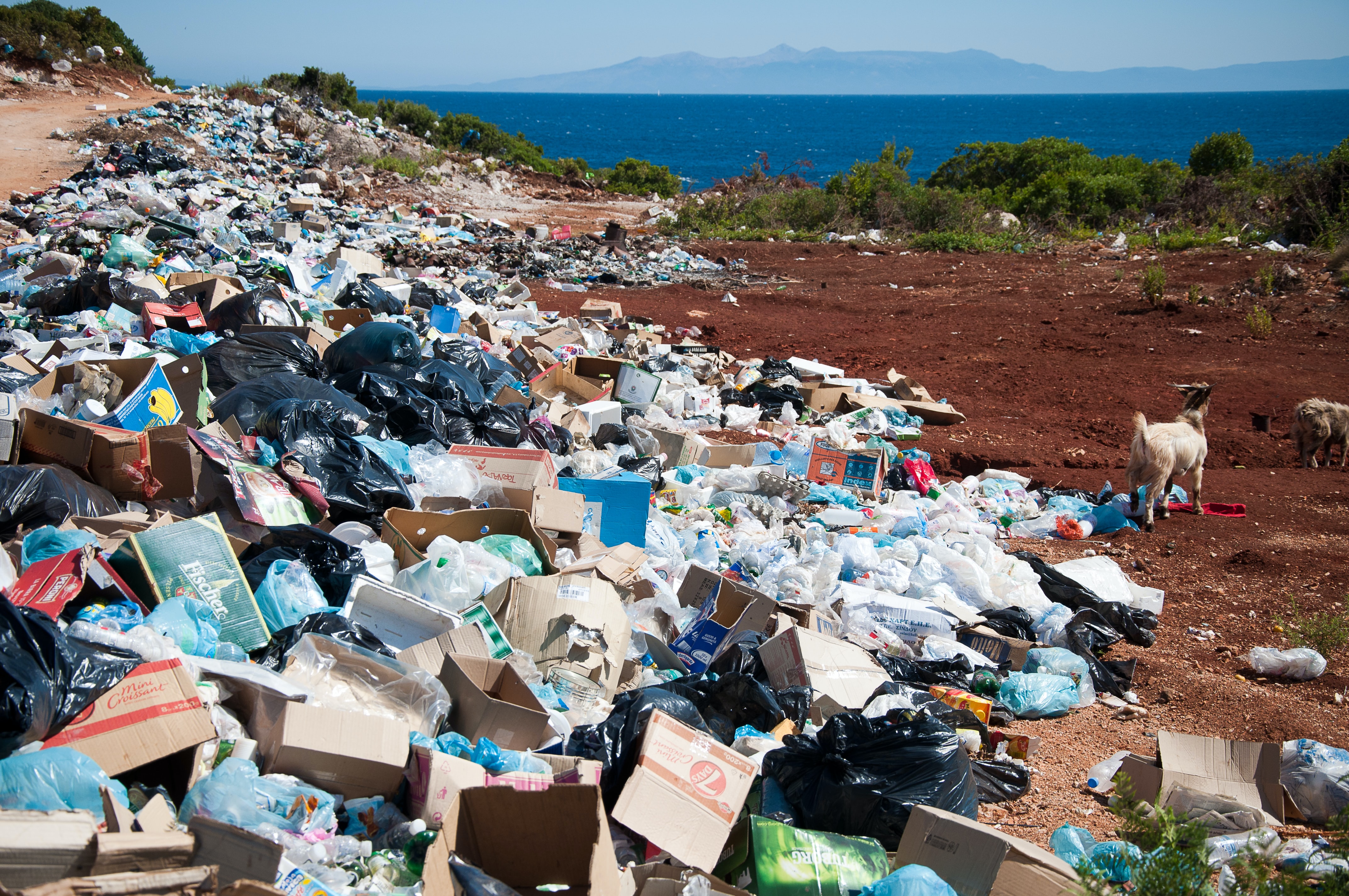
Photo: Antoine Giret via Unsplash.
Are you ready to do something more about plastic?

Not quite sure what to make of the inventions described in today’s post. Another energy-using appliance, this time for dealing with plastics? I’m keeping an open mind.

Chris Velazco writes at the Washington Post that “a new wave of home tech could keep plastics out of landfills. …

“For a pair of start-ups we first met at CES [Consumer Electronics Show] no kitchen would be complete without a new kind of home appliance: one that makes recycling a little easier.

Lasso Loop relocated from the United Kingdom to California to work on its product, a hefty home appliance machine that automatically sorts and breaks down the recyclables you toss inside it. And ClearDrop, founded by a Texas businessman named Ivan Arbouzov, aims to handle single-use plastic bags, one of the most odious artifacts of modern life. …

“And while it might sound a little easier to keep a couple of dedicated recycling bins around, both companies are, in their own way, tackling a flaw in our waste management systems that many people probably aren’t aware of.

As it turns out, much of the material we toss into our recycling bins doesn’t actually ever get recycled.

“That’s for a whole host of reasons: improperly cleaned materials can contaminate others that would have been recyclable otherwise, and some of the items people might just assume are recyclable — say, plastic cutlery — usually aren’t. …

“In 2018 — the last time it published these figures — the Environmental Protection Agency reported that glass accounted for a little over 4 percent (or 12.3 million tons) of our total municipal solid waste. About a quarter of it was recycled. But of the more than 35 million tons of plastics that entered the country’s waste management systems that same year, just 9 percent was recycled or composted.

“Perhaps the only surefire way to reduce plastic waste is for companies to produce less of it in the first place. In the meantime, start-ups like Lasso Loop and ClearDrop hope to make people more mindful of what happens to the materials they don’t need anymore.

“For Lasso Loop, that means removing as much of the guesswork as possible. In its current form, the company’s Lasso machine is bigger than a dishwasher but smaller than a fridge, though the team hopes to be able to squeeze the final model under your countertops.

“What’s more interesting is the stuff inside: Lasso growth manager Dominique Leonard said the machine uses a smattering of sensors, cameras and AI to determine whether the stuff you’ve put inside it can be recycled. (Anything that doesn’t pass muster, like certain kinds of plastic, are summarily rejected.) From there, the remaining plastic, glass and metal products are steam cleaned, broken apart — seriously — and stored separately in a series of bins based on type to prevent contamination. …

“That sophistication will come at a cost, especially at first. The Lasso team plans to sell its machine for $5,000 — or $3,500 with a prelaunch discount — to start, though it hopes incentives from local governments will help lighten the load on potential customers.

“ClearDrop’s Minimizer, a trash can-sized plastics compactor, is much less complicated by comparison. You’re meant to feed all of your soft plastics into a slot onto the top of the machine, and once it has had enough — Arbouzov said that usually takes around a month — the Minimizer heats and compresses the bags to form a slightly squishy brick. If your municipality is one of the rare ones that accepts soft plastics, you should be able to toss those bricks into your recycling bin. …

“Important questions still linger. Leonard and Arbouzov both claim that an important chunk of their future business will require them to partner up with manufacturers and recycling facilities that are equipped to turn those materials back into actual products. … For now, those key partnerships have yet to solidify. It’s also unclear how energy-efficient these appliances are, though Lasso Loop claims that its machine requires roughly the ‘amount of power required for a hot water washing machine cycle’ to function.

“These start-ups face another considerable hurdle: How will they handle all the stuff their machines create, especially if they plan to resell it?

“The Lasso team will find out when it launches a pilot program with customers in the San Francisco Bay area next year. Once those first Lasso machines are live and full of precious glass and plastic bits, their owners are meant to schedule pickups from a smartphone app. But when people come to haul away those materials, they won’t be working from their local municipal recycling crew, but a team of people working on behalf of Lasso itself.

“That means, beyond just building the machines to help people recycle, it must also manage a fleet of people who fetch those recyclables and make sure they go where they’re supposed to. …

“ClearDrop has similar issues to sort out. … For now though, [Arbouzov] seems slightly more concerned with another goal of his: to be able to produce his Minimizers within six months, and sell them for just $150. Whether that’s a realistic forecast or start-up founder bluster is difficult to say, but to Arbouzov, what mostly matters is getting people to think more closely about where their old stuff goes.”

Gotta love inventors — whether they succeed or not. Their thought processes are inspiring. More at the Post, here.

Read Full Post »

Ingenuity can make a business out of almost anything. That’s what you may conclude after reading how a small Maine company is making something useful from lobster shells.

Tom Bell has the story at the Associated Press: “A startup company in Maine is developing a children’s bandage coated with a substance extracted from crushed lobster shells that would promote blood-clotting and is resistant to bacterial infection.

“The company, Lobster Tough LLC, shipped Maine lobster shells to a processor in Iceland for testing, and so far, the results are promising, said Thor Sigfusson, an Icelandic investor in the company. …

“ ‘My dream will be to use the massive amounts of lobster shells that are being thrown into dumpsters,’ he said. …

“The lobster shells must be dehydrated to remove weight and lower shipping costs. Lobster Tough this winter is shipping a portable dehydration machine from Iceland to Maine. The company eventually plans to build a $2 million dehydration plant somewhere on the Maine coast, said Patrick Arnold, an investor who lives in South Portland. …

“The bandages would be the first commercial product developed through the New England Ocean Cluster, a new business incubator in Portland.”

More here.

Photo: Tasty Island

Read Full Post »

At Christmas, Yuriko sent a translated Japan News article about the business she runs with her husband, who retired rather young. She told me the newspaper, called Yomiuri Shinbun in Japan, “has the largest distribution nationwide. We were really busy after that.”

The article mentioned that Japanese retirees starting small businesses or finding work at a reduced rate is a growing phenomenon, so I Googled around to see if I could learn more.

Kanoko Matsuyama writes at Bloomberg Businessweek, “When he retired three years ago, Hirofumi Mishima got right back to work. After aging out of a $77,000-a-year job as an industrial gas analyst, he spent six months trawling the vacancy boards at a Tokyo employment center.

“Fifteen days each month, Mishima, 69, rises at 4 a.m. for an eight-and-a-half-hour shift overseeing the supply of hydrogen gas to buses. His daily commute has risen from three hours to four even as his earnings have dropped by more than a third. ‘Keeping a regular job is the most stimulating thing for me,’ he says. ‘Now, I work for my health. I’m very happy my job gives me mobility and helps me stay active.’

“Though Japan’s retirement age stands at 60, more than 5.7 million Japanese have continued to work past 65, either because they can’t afford to stop working or they’re looking to get out of the house. The nation’s private companies can force employees to retire at 60 if they wish, so workers often accept slashed wages to stay on, sometimes in a reduced capacity as they start collecting public pension benefits. …

“Under the current system, Japanese men exit the labor market on average at 70, and women at 67, according to a 2011 report from the Organization for Economic Cooperation and Development. ‘The pension isn’t enough to live comfortably,’ says Kazuyoshi Hirota, 69, who works 24 hours a week as an apartment building manager and janitor in central Tokyo. Hirota retired seven years ago from his full-time security job at Asahi Group Holdings. His wife, 70, works as a cleaner. It’s not just about the money, though: ‘Life is boring without work,’ he says.”

More here.

My friend Yuriko runs a consignment shop. Her husband does financial consulting in the same storefront, which gives Yuriko flexibility to run out and look after her 90-something mother-in-law.

Photo: Jeremy Sutton-Hibbert

Read Full Post »

Babson College in Wellesley, Mass., is well known as a hub for entrepreneurship. So the school was the logical place to help start-ups offering farmers distribution services, marketing, and the like learn how to grow their business. A training was held at Babson at the end of December, and the New York Times covered it.

Stephanie Strom writes, “In spite of the surging demand for locally and regionally grown foods over the last few years, there is a chasm separating small and midsize farmers from their local markets.

“But a growing number of small businesses are springing up to provide local farmers and their customers with marketing, transportation, logistics and other services, like the Fresh Connection, a trucking business providing services to help farms around New York City make deliveries. …

“The Fair Food Network, a nonprofit organized to improve access to better food, recently held a second ‘business boot camp’ in Wellesley, Mass., for tiny companies working to increase ties between communities and local farmers, which culminated in a contest to win some $10,000. …

“For farmers selling products to a number of customers, there are so-called food hubs like Red Tomato, which connects its network of farms to existing wholesale distribution systems to make deliveries of locally grown fruits and vegetables to groceries, produce distributors, restaurants and schools in the Northeast. …

“Not all ways of improving consumer access to local and regional farm production involve distribution, however. Blue Ox Malthouse, for instance, is making malt from barley grown in Maine as a cover crop. Normally, farmers plow barley under or sell it cheaply for animal feed.  Blue Ox has given them a new and more lucrative market, though, buying up barley and turning it into malt in hopes of selling it to Maine’s thriving craft beer businesses. …

“It’s good for the farmers, who get a better price for a product they often just plowed under, and it’s good for the craft beer business, where brewers are always looking for points of distinction,” [founder Joel] Alex said.”

Read about some other great services for small farms here.

Photo: Michael Appleton for The New York Times
Mark Jaffe of the Fresh Connection picks up fresh eggs from a farmer’s stand in Union Square, Manhattan. He will make deliveries to restaurants and groceries.

Read Full Post »

Erik sent along this lead, and John sent it to him. Both are guys who started tech companies, and I’m learning that requires a certain kind of attire.

To signal you are a laid-back but savvy entrepreneur, wear cool socks.

Claire Cain Miller and Nick Bilton write at the NY Times, “For barristers in 18th-century London, it was shoulder-grazing wigs. For the Mad men of 1950s New York, it was briefcases and fedoras. For the glass-ceiling-shattering women of the 1980s, it was shoulder pads.

“And for today’s tech entrepreneurs in high-flying Silicon Valley, it is flamboyantly colored, audaciously patterned socks.

“In a land where the uniform — jeans, hoodies and flip-flops — is purposefully nonchalant, and where no one would be caught dead in a tie, wearing flashy socks is more than an expression of your personality. It signals that you are part of the in crowd. It’s like a secret handshake for those who have arrived, and for those who want to. …

“Some say the craze took hold because socks are an acceptable shot of flair in a dressed-down, male-dominated culture — and peek out when entrepreneurs present their latest apps onstage at the tech world’s frequent conferences. Others offer a perhaps more universal explanation. ‘Girls notice,’ said Matt Graves, 37 …

“Travis Kalanick, 35, co-founder and chief executive of Uber, the on-demand taxi service, began wearing statement socks at his previous company, which sold software to businesses.

“ ‘I started having to suit up for meetings with Fortune 500 companies,’ said Mr. Kalanick (his favorite: hot pink). ‘I wanted to keep a little of my geeky computer engineering flair without people thinking I was nuts.’  …

“Sometimes I will even browse the women’s section and get the XXL, because they have all the fun colors,” said Andrew Trader, 42, an investor at Maveron who helped found Zynga. (He is partial to wool socks with bright stripes as well as a pair with an American flag pattern.)”

Read more at the NY Times, here, and check out their slide show.

Erik adds, “And here is a Swedish retail start-up (featured in article) that apparently designs and sells them.”

I can’t tell you how happy I am to know about socks. Father’s Day gifts for the men in the family are settled for the foreseeable future.

Now, can I give Suzanne, the Luna & Stella entrepreneur, socks as gifts, too?

Photo: Peter DaSilva for The New York Times

Read Full Post »