Feeds:
Posts
Comments

Posts Tagged ‘Staten Island’

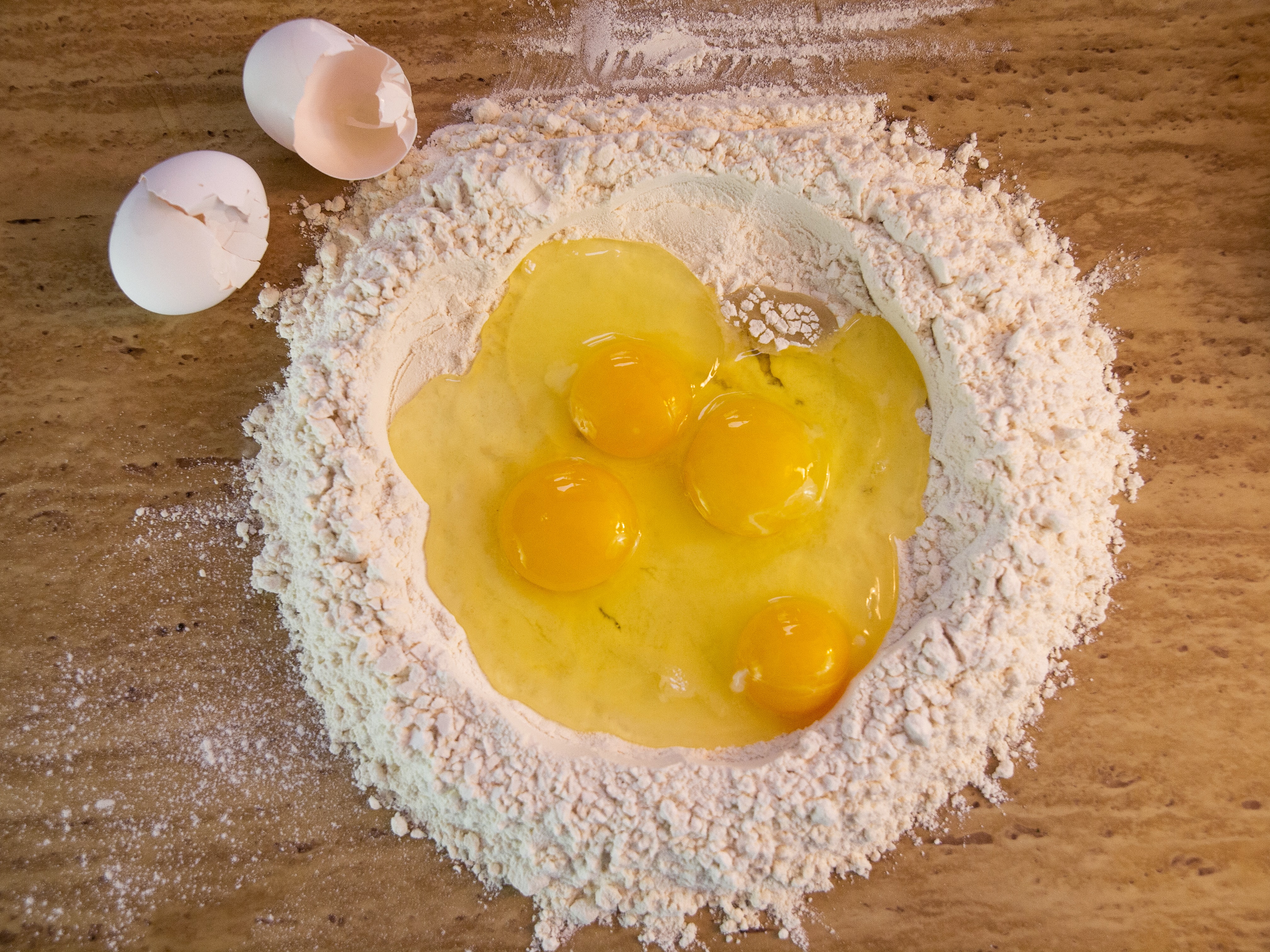
Photo: Teagan Ferraby/ Unsplash.
Making pasta from scratch.

This one is for my friend Sandra, who makes many Italian dishes the way her mother taught her. For example, she makes a labor-intensive pasta at Christmas in quantities that can feed a large extended family, including great great nephews.

Sydney Page writes at the Washington Post, “After all the food is served at this New York restaurant, customers clap for the grandmother who cooked it. It’s not scripted, but it happens every night.

“The Staten Island establishment, run by women known as ‘nonnas of the world,’ is as much a celebration of the people who toil in the kitchen as the places they hail from. …

“There are about a dozen women who cook regularly at Enoteca Maria, a casual 30-seat Italian eatery. Its menu is made and executed by a rotating group of international women, most of whom are matriarchs.

“The nonnas — the Italian word for grandmothers — include Maria Gialanella, 88. She has amassed such a following that some customers come only on nights they know she is in the kitchen. She even has her own Instagram page.

“Seeing strangers taste her culinary creations, she said, gives her immense pleasure and pride.

“ ‘Everybody likes it, so I’m very happy,’ said Gialanella, an Italian immigrant known for making ravioli by hand, rich ragus, soups and other family recipes she learned growing up near Naples.

“Gialanella, who moved to the United States in 1961 and worked as a seamstress, said that 10 years ago, her daughter heard about Enoteca Maria and encouraged her to become a cook there.

“ ‘It’s nice with the other nonnas,’ said Gialanella, who has six grandchildren. ‘I like every food.’

“Restaurant owner Joe Scaravella is a huge fan.

“ ‘She is not even 5 feet tall, but she’s a powerhouse,’ said Scaravella, who opened the eatery in 2007. ‘She goes around and does selfies. She spends the night hugging people.’

“Initially, you had to be an Italian grandmother like Gialanella to join the kitchen staff, but about nine years ago, Scaravella decided to broaden the cooking criteria.

” ‘They just have to be women that can bring their culture forward,’ he explained, adding that the cooks — all of whom are called ‘nonna’ by patrons, regardless of their background — range in age from 50 to 90, and possess a deep knowledge of their culture’s unique cuisine. While most are grandmothers, some are not. …

“In the beginning, the restaurant served only Italian fare — to reflect Scaravella’s roots. He opened the eatery after losing several family members, including his grandmother and his mother, both born in Italy, as well as his sister. They were all excellent cooks, he said. …

“At the time, Scaravella had spent more than 17 years working for the Metropolitan Transportation Authority and had no experience running a restaurant — let alone working in one.

“ ‘I had no idea what I was doing,’ he said. ‘No business plan or anything.’

“On a whim, he used the money his mother, Maria, had left behind to purchase a vacant storefront and decided to name his new restaurant after her. … Scaravella wanted his restaurant to serve the traditional Italian classics that he was desperately missing. It was the women in his family who dominated the kitchen.

“ ‘There were a lot of ladies at home that had all this information,’ said Scaravella. His mother and grandmother, for instance, knew ‘the secret to a good meat ball’ and ‘how to repurpose stale bread.’

“ ‘My whole life, I never wanted to go to an Italian restaurant, because it just never hit the spot,’ he continued. ‘These ladies, they’re the source. They are the vessels that carry this information forward.’

Given that his own matriarchs were gone, Scaravella embarked on a quest to find some nonnas who could prepare authentic, warming meals. …

“Before opening the restaurant, Scaravella put an advertisement in the local Italian American newspaper, seeking nonnas who could cook regional dishes from different parts of Italy. He was stunned by the response.

“ ‘I invited these ladies to my home. They showed up with plates of food,’ said Scaravella. ‘That was really the birthplace of the idea.’

“From there, he opened Enoteca Maria’s doors, staffing the kitchen with genuine nonnas who prepared everything from lasagna to chicken cacciatore. The concept, Scaravella said, was meant to mimic the experience of going to his nonna’s house for a meal.

“ ‘There’s a certain safeness when you go to your grandmother’s house, generally,’ he explained. ‘That is a strong memory and it’s very comforting, and I just really needed to be comforted.’

“The restaurant quickly took off. A few years later, Scaravella began inviting grandmothers from other cultures to cook their classics in his kitchen, and it got even busier.

“ ‘There are so many different people from so many different cultures,’ he said. ‘It just made sense to feature everybody’s grandmother.’ …

“Scaravella and the restaurant manager, Paola Vento, organize the weekly schedule and work with the nonnas to determine the menu. Typically, visiting nonnas are hired to cook at the restaurant about once a month, Scaravella said, though some come more often, and others come only once or twice a year.

“ ‘My favorite part of the job is getting to work with the grandmothers,’ said Vento, adding that the daily highlight is when customers clap for the visiting nonnas at the end of the evening. ‘You have to see the faces of the nonnas. They are so proud and so excited that they were able to share a part of their culture through food.’

“Many of the nonnas, Vento said, have become close friends. Although they speak different languages and come from different places, they have found ways to bond — mainly, through food.

“ ‘There’s a lot of love in the room,’ she said.

“To become a visiting nonna, there is one criteria: ‘They have to have a love for cooking, and that’s it,’ Vento said.

“While there is no required test, many prospective cooks attend a one-on-one free class offered at the restaurant called ‘nonnas in training.‘ …

“While Scaravella misses his own nonna, he said that his heart — and stomach — feel full again. What started as an effort to reconnect with his roots has allowed others to do the same.

“ ‘It’s hundreds of years of culture coming out of those fingertips,’ he said. ‘It’s beautiful stuff.’ ”

More at the Post, here. Can anyone share a picture of their grandmother in the kitchen? One of mine sold jellies, but I don’t have a photo.
Read Full Post »

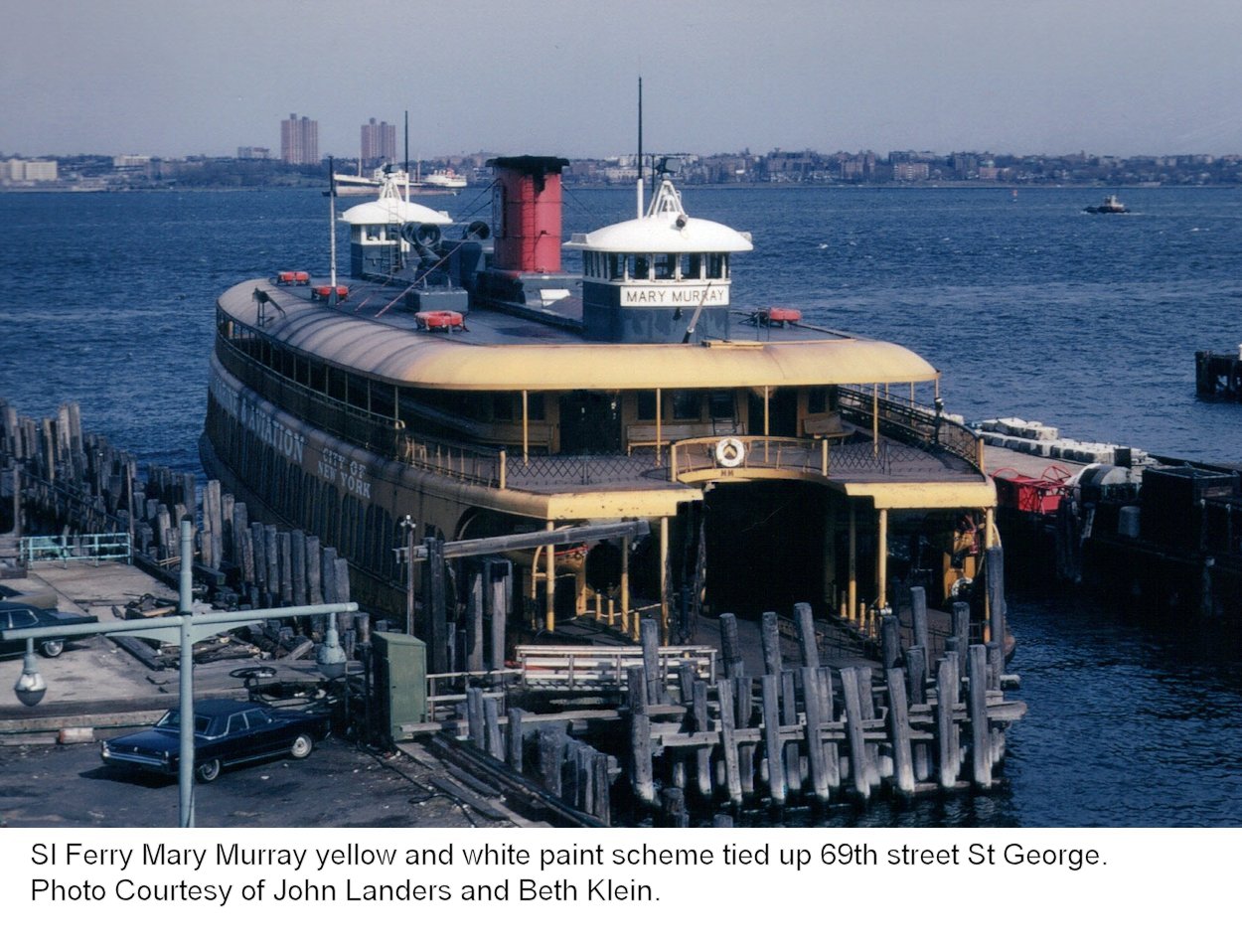
Although the Staten Island of actor Pete Davidson and Saturday Night Live is a running joke, there is more to this borough of New York City than people realize.

Liza Weisstuch at the Washington Post decided to visit as a tourist and found a lot of surprises.

“In 1916, a young woman with dreams of making it big on Broadway lit off from her home in Cincinnati, leaving her young children with their grandparents, and arrived in New York City. She never found success as an actress. Instead, she opened an antiques gallery on Madison Avenue in Manhattan and developed a keen fondness for — rather, obsession with — Tibetan art and took up residence on Lighthouse Hill, a leafy enclave of Staten Island.

“While Jacques Marchais never set foot in Asia, she accrued what remains one of the largest collections of Tibetan art outside Tibet. It’s all housed in the Jacques Marchais Museum of Tibetan Art, which she opened in 1947, next to her home. It took her nine years to build, during which time she collected stones in her pickup truck that were used in the construction of the museum and terraced garden.

“ ‘It’s a wonder there were any stones left on Staten Island after she was done,’ the museum’s executive director, Jeff Gaal, told me, pointing out the flat roof, trapezoidal-trimmed windows and doors with crosscut wood posts, a few of the elements in the style of a Tibetan monastery in the United States. …

“One day last spring, I sat for a while in the garden outside. It was easy to understand why Marchais found it a refuge from Manhattan.

“Staten Island, which sits 5.2 miles south of New York City’s Financial District and measures 58.5 square miles, has been called many things: the greenest borough, the Forgotten Borough, Staten Italy, the Rock, the city’s dump. (It was the site of a noxious 2,000-plus-acre landfill, one of the world’s largest, for more than 50 years. A project to turn it into green space is underway, with some sections now open to the public.) …

“Arguably today’s most famous Staten Islander is SNL prodigy and boyfriend to the stars Pete Davidson, who wrote and starred in Judd Apatow’s The King of Staten Island in 2020. …

“Over the past few months, I’ve made a few trips to the borough to see things I sheepishly and shamefully never knew there were to see. And learning what makes the island so unique has brought my understanding of New York City — and it’s no exaggeration to say other parts of the world, too — into clearer focus.

“Case in point: Tibet. And also, Sri Lanka. A community of Sri Lankans from the South Asian island nation has grown here over the past few decades. Lakruwana [restaurant], which opened its first location in Manhattan in the 1990s and its second here in 2000, is a bedrock of the community. It’s run by Jayantha Wijesinghe and her husband, Lakruwana, who met on the Staten Island Ferry. He oversees the place and decorated it with art, furniture and Buddhist sculptures he shipped over from Sri Lanka. She’s the chef, and her visually arresting dishes emphasize traditional flavor — curries and sambals. Their daughter, Julia, created a Sri Lankan museum, the first outside the country, in the restaurant’s basement in 2017. She was 18. …

“What was fast becoming an Asian-arts-oriented expedition continued a few days later when I returned to visit Snug Harbor Cultural Center & Botanical Garden, an 83-acre campus that encompasses three museums, 14 botanical gardens, two art galleries and a two-acre urban farm where produce is grown for some of New York City’s most famous restaurants. Among the sites is the New York Chinese Scholar’s Garden, an otherworldly … tranquil space, a re-creation of Ming Dynasty Chinese gardens. Sounding like the stuff of fairy tales, the buildings were fabricated in China by 40 artisans, then shipped to New York City and assembled here in the late 1990s in accordance with old-world methods. That’s to say: no nails, screws or glue, just pegs securing the latticework. …

“Snug Harbor is not why people call Staten Island ‘the greenest borough.’ You can chalk that up to the Greenbelt, a 2,800-acre expanse of parks, trails and open spaces that cuts diagonally across the center of the island. (For scale, Central Park is 843 acres.) The park on top of the aforementioned dump nearly doubles the island’s green space. Red foxes, groundhogs, beavers, deer, wild turkeys and great blue herons are just a sampling of the wildlife that roam the woods and wetlands. …

“Going back to the Lenape Indians who lived here when the Dutch arrived, life and commerce revolved around the farmland. And the sea. A visit to the museum at Historic Richmond Town, a collection of 40 structures (including outhouses) on the site of a 17th-century village, offers insight on that, with its display of old local oyster shells, some as large as adult shoes. …

“A visit to the National Lighthouse Museum, located in a former Coast Guard station a few minutes from the ferry terminal, gave me a clearer understanding of the island’s critical role in the evolution of the nation’s lighthouse network.”

More at the Post, here.

Read Full Post »

Today would have been Shakespeare’s 451st birthday, and I am seeing testimonials all over Facebook and twitter. So it seems like a good day to write about the Sonnet Project in New York City.

Stuart Miller wrote at the New York Times about “an ambitious project to create a short film for each of Shakespeare’s 154 sonnets, with each movie shot at a different New York City location.

“ ‘It brings Shakespeare to people who might not be in touch with it, and we can use social media like Twitter and Instagram to spread the word,’ [actor Billy] Magnussen said. The endeavor, called the Sonnet Project, grew from the work of the New York Shakespeare Exchange, a local theater group.

“The group, which started the project in 2013, just completed its 100th film: Sonnet 27, starring Carrie Preston, an Emmy award-winning actress, and filmed on the Verrazano-Narrows Bridge [and premiering] April 8 on the Sonnet Project website and app. …

“Some directors found inspiration at the location where the films were shot. At Leidy’s Shore Inn, a 110-year-old bar on Staten Island, Daniel Finley, who was making Sonnet 19, filmed Laurie Birmingham, an actress who works mostly in regional theater, as a world-weary regular musing over her drink.

“ ‘We walked in at 10 a.m. and the regulars were there watching OTB and scratching their lotto tickets,’ he said. ‘We learned some of their stories and Laurie based her character on those impressions.’ ” More at the New York Times, here.

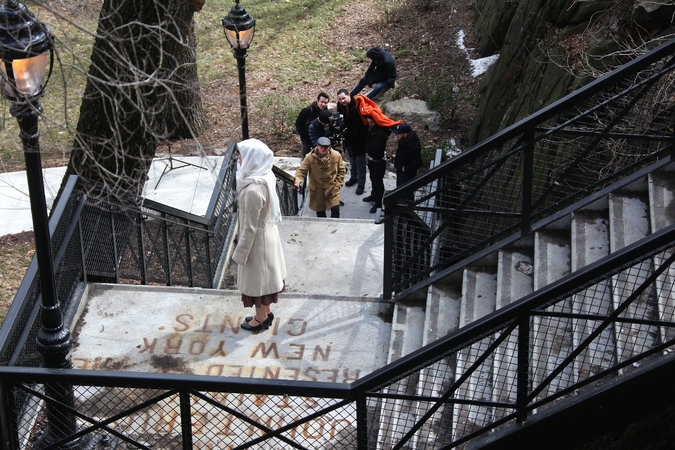
Photo: Chang W. Lee/The New York Times
A crew filming Sonnet 108 at the John T. Brush stairway. 

Read Full Post »

In her comment at my post about artists returning a discarded museum to life, KerryCan wondered if all the old, weird museum collections ended up at the dump. All is not lost if they did, as dumps seem to attract amateur archaeologists with a nose for uncovering treasures.

Eve Kahn wrote recently in the NY Times about collectors who look for terra cotta shards in the Staten Island landfill and poke around promising demolition sites.

“This summer, true shard collectors [led] me into the weedier parts of the Northeast, where slag heaps and demolition debris survive from the long vanished factories that once thrived.

“These particular experts are interested in manufacturers of windowpanes and architectural ornament. They write books and lead tours, but they also pack their homes and workplaces with excavated artifacts from what seems to be a limitless supply. Anyone can follow in their trail and gain an understanding of American ingenuity as well as accumulate booty for gardens and windowsills or even more ambitious art projects.

“You must stay off private property, of course, but I also recommend that you avoid the comical errors that I made on my early expeditions. … I was so bedazzled by glass that I was about to sit down with shards in my front pockets.”

More on Kahn’s scavenging adventures, here. You might also like the blog “Tiles in New York,” here.

Photo: Agaton Strom for The New York Times
Tina Kaasman-Dunn searching for terra cotta shards on Staten Island.

Read Full Post »