Feeds:
Posts
Comments

Posts Tagged ‘stolen art’

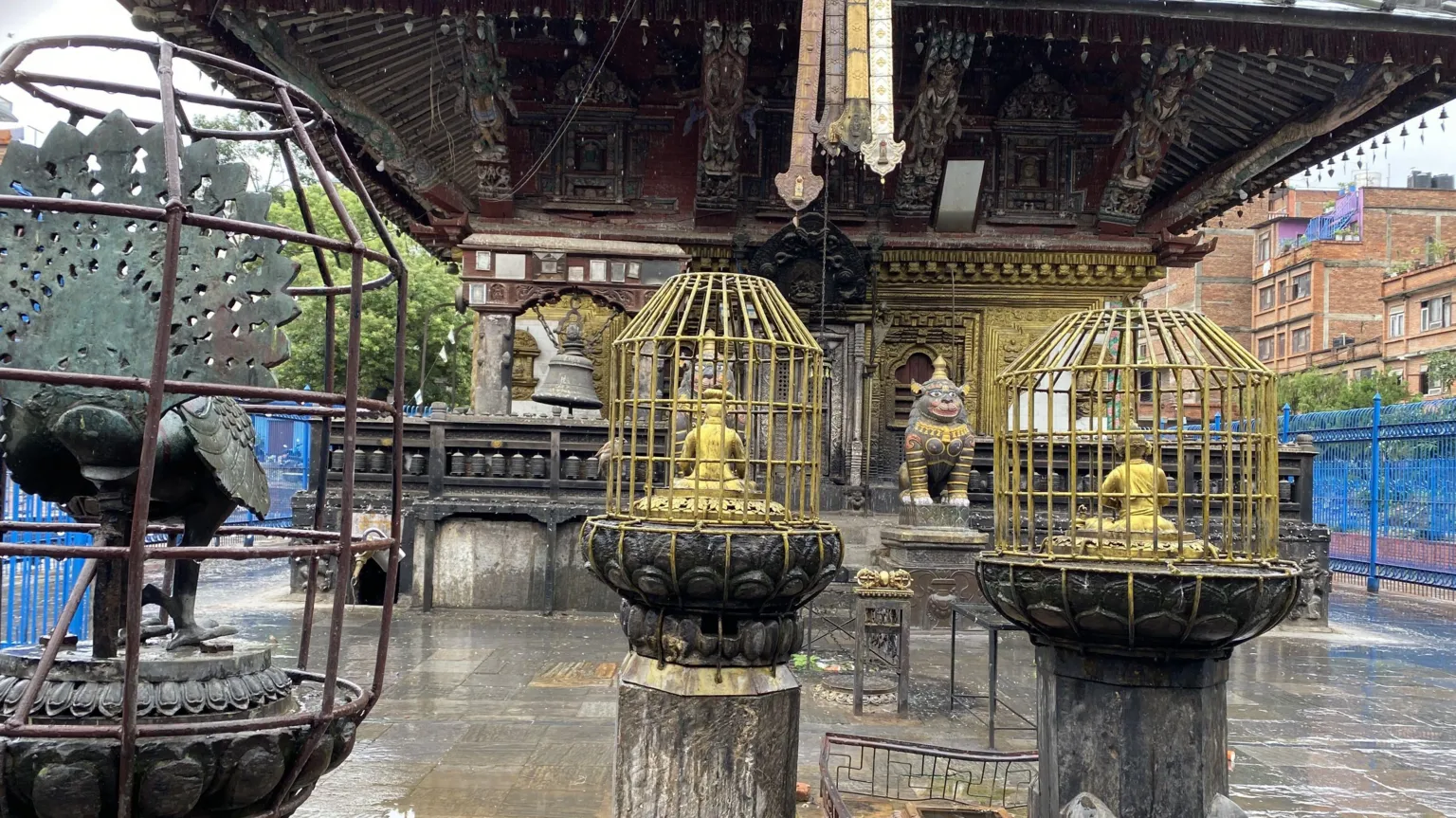
Photo: Sanjaya Dhakal/BBC Nepali.
In Nepal, some communities have put their recovered idols in iron cages for security.

Who does art belong to? For centuries, looters have justified their thefts by asserting that they aim to protect the stolen art for posterity. That no longer holds up, and now art is getting returned to the plundered countries.

And if you play nice and return Nepali idols, you may be given an accurate replica.

Sanjaya Dhakal writes at The Guardian, “Along a small street in Nepal’s Bhaktapur city stands an unassuming building with a strange name — the Museum of Stolen Art. Inside it are rooms filled with statues of Nepal’s sacred gods and goddesses.

“Among them is the Saraswati sculpture. Sitting atop a lotus, the Hindu goddess of wisdom holds a book, prayer beads and a classical instrument called a veena in her four hands.

“But like all the other sculptures in the room, the statue is a fake. The Saraswati is one of 45 replicas in the museum, which will have an official site in Panauti, set to open to the public in 2026.

“The museum is the brainchild of Nepalese conservationist Rabindra Puri, who is spearheading a mission to secure the return of dozens of Nepal’s stolen artifacts, many of which are scattered across museums, auction houses or private collections in countries like the US, UK and France.

“In the past five years, he has hired half a dozen craftsmen to create replicas of these statues, each taking between three months and a year to finish. The museum has not received any government funding. His mission is to secure the return of these stolen artifacts – in exchange for the replicas he has created.

“In Nepal, such statues reside in temples all across the country and are regarded as part of the country’s ‘living culture,’ rather than mere showpieces, says Sanjay Adhikari, the secretary of the Nepal Heritage Recovery Campaign. Many are worshipped by locals every day, with some followers offering food and flowers to the gods. …

“It is also common for followers to touch these statues for blessings — meaning they are also rarely guarded — leaving them wide open for thieves.

“Nepal has categorized more than 400 artifacts missing from temples and monasteries across the country, but the number is highly likely to be an underestimate, says Saubhagya Pradhananga, who heads the official Department of Archaeology.

“From the 1960s to the 1980s, hundreds of artifacts were looted from Nepal as the isolated country was opening up to the outside world. Many of the country’s most powerful administrators back then were believed to have been behind some of these thefts — responsible for smuggling them abroad to art collectors and pocketing the proceeds.

“For decades, Nepalis were largely unaware about their missing art and where it had gone, but that has been changing, especially since the founding of the National Heritage Recovery Campaign in 2021 – a movement led by citizen activists to reclaim lost treasures. …

“There are many hurdles. The Taleju Necklace, dating back to the 17th century, is a case in point. …

“It’s still unclear how it might have been stolen and many in Nepal had no idea where it might have gone until three years ago, when it was seen in an unlikely place – the Art Institute of Chicago.

“It was spotted by Dr Sweta Gyanu Baniya, a Nepali academic based in the US who said she fell to her knees and started to cry when she saw the necklace.

“According to the Art Institute of Chicago, the necklace is a gift from the Alsdorf Foundation — a private US foundation. The museum told the BBC it has communicated with the Nepali government and is awaiting additional information.

“It’s not just a necklace, it’s a part of our goddess who we worship. I felt like it shouldn’t be here. It’s sacred,” she told the US university Virginia Tech. …

“But [Saubhagya Pradhananga, who heads the official Department of Archaeology] said Nepal’s Department of Archaeology had provided enough evidence, including archival records. On top of that, an inscription on the necklace says it was specifically made for the Goddess of Taleju by King Pratap Malla.

“It’s these ‘tactics of delay’ that often ‘wear down campaigners,’ says one activist, Kanak Mani Dixit. ‘They like to use the word “provenance” whereby they ask for evidence from us. The onus is put on us to prove that it belongs to Nepal, rather than on themselves on how they got hold of them.’ …

“Many worshippers are now a lot more paranoid — putting these idols in iron cages to protect them from going missing.

“Mr Puri however hopes his museum will eventually have its shelves wiped bare.”

More at the BBC, here. No paywall.
Read Full Post »

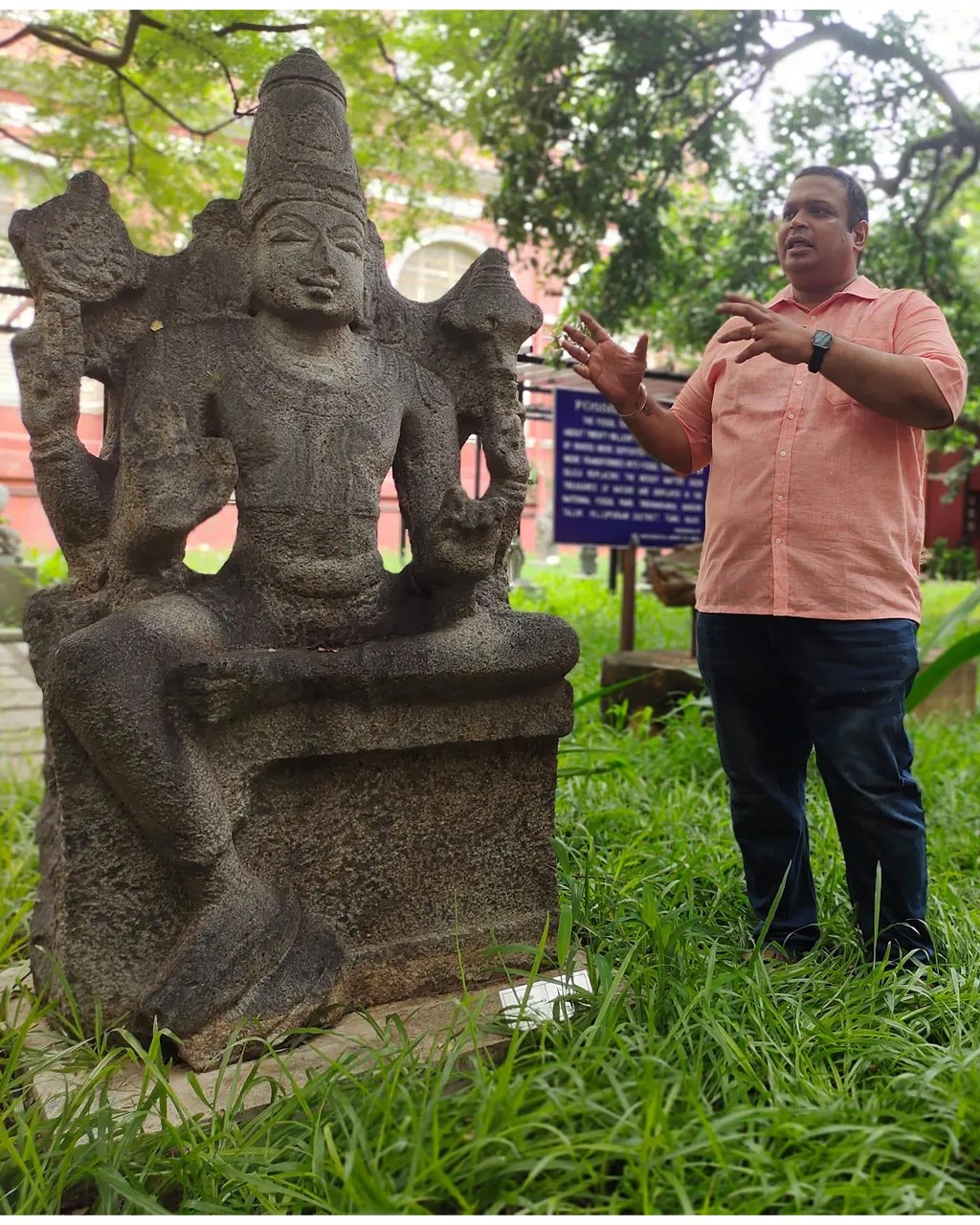
Photo: IPP [India Pride Project].
S Vijay Kumar, above, “travels through India, documenting artifacts and investigating the trail of missing objects online,” says the BBC.

For how many millenia have travelers thought it was perfectly fine to pick up local art objects and take them home, perhaps eventually donating them to museums? Today the looted countries are saying, “Wait a minute–that’s mine.”

Charukesi Ramadurai writes at BBC “Culture” that volunteers in India have started doing something about these thefts.

The story starts with recent speculation concerning the coronation of King Charles III, when many eyes in India were turned toward the Queen Consort and the “the contentious Koh-i-Noor diamond.” Would she wear it? She did not.

“While the palace has not made any official statement about the reason,” Ramadurai reports, “there were worries about it causing diplomatic issues with India, if it had been used, given the country’s claims to be its rightful owner. …

“The Koh-i-Noor, first found in written records in 1628, has long been the subject of acrimony between India and its former colonizer, with a persistent demand by the Indian government and its citizens for its return. As this piece in India’s Mint newspaper explains bluntly, ‘The main controversy around the diamond is that the British give an impression to its younger generation that the Koh-i-Noor was a gift from India and make no official mention of the violent history behind acquiring it.’

“The renewed uproar about the Koh-i-Noor has also led to intensifying questioning of all the other resources – not just the sparkly stones –  taken away from the Global South by western powers over centuries of trading and ruling. ‘Wear the diamond, give back the rest,’ suggests this op-ed piece in The Indian Express.

“Among the ‘rest’ are priceless cultural artifacts – and this is what the India Pride Project concerns itself with. This citizen movement for the restitution of stolen and smuggled antiques (particularly statues) from public museums and private collectors across the world was started in 2013 by shipping executive S Vijay Kumar and public policy expert Anuraag Saxena from Singapore. …

“These sleuths, with the help of a small, anonymous global team of volunteers from various fields – who communicate mostly online – have brought back to India several millions worth of antiquities from countries like Australia, Singapore, Germany, UK and the US.

“Most recently, they made the news when their efforts aided the investigation that prompted the National Gallery of Australia to return antiques worth $2.2 million – stolen by art smuggler Subash Kapoor – to the Indian government. Their targets include both artifacts taken forcibly out of India during the British colonial era, and those more recently stolen and smuggled from temples and public collections.

“Kumar, who is now based in Chennai in south India, and Saxena, who remains in Singapore, talk with ease about field trips to document missing idols and sting operations with auction houses. … This is not to suggest they are some kind of gung-ho art vigilante group, given the amount of plodding through paperwork and complex negotiation work they do. Their work involves advocacy, activism and coordinating between governments and law enforcement agencies such as Customs, Europol and Homeland Security within India and outside. Kumar says, ‘In the past when they reached out to India, nobody replied, so now we are doing that job.’

India Pride project is more of a network than an organization – we have no money, no employees and no authority,’ admits Saxena candidly, even a tad proudly.

“Art expert and former Egyptologist at the British Museum, Lewis McNaught, who now runs Returning Heritage, an online resource about cultural restitution, thinks the IPP model of citizen activism is intriguing. ‘They go out and actively source information using a social network of supporters. And only when they are able to confirm that the object has been stolen, do they approach the government, which in turn applies pressure on the museum or other governments where the object is being held.’

“There has been an established pattern of theft and trafficking of valuable art and artifacts from poorer countries in Asia and Africa to richer nations in the West – either directly by colonizing forces or in more recent times, through a sophisticated network of smugglers.

“In his book The Anarchy: The East India Company, Corporate Violence, and the Pillage of an Empire (and in various other places), writer and historian William Dalrymple has called out the looting of thousands of priceless objects from India to Britain by the employees of the trading East India Company. …

“Long after the colonizers have retired, there still remains a flourishing multi-billion-dollar black market in stolen antiquities. Serendipitous discovery is rare, such as this story from the 2018 Met Gala when Kim Kardashian took a photo in her sparkling gold gown twinning with a resplendent golden mummy. The photo drew attention to, well, the mummy, which was then detected to have been smuggled out of Egypt unnoticed in the chaos of the 2011 Arab Spring, making its way into New York’s august Metropolitan Museum of Art. The ensuing media outcry forced the Met – which had paid $4 million for fake documents – to return said mummy to Egypt.

“And before anyone feels too sorry for this museum’s loss, it is important to know that despite the 1970 Unesco Convention aimed at ending the illicit trade of antiquities, museums including big ones like the Met and The British Museum (the largest receiver of stolen goods, some say) have continued to buy from art thieves such as the now-convicted Subhash Kapoor. Kumar, who has written about his long pursuit of Kapoor in his book The Idol Thief, says this is simply because of the standard market economics of supply and demand. In a 2020 piece for the New Indian Express entitled: ‘When the buying by museums stops, the looting stops,’ Kumar called out museums for turning a blind eye to the origins of coveted antiquities.”

More at the BBC, here. No firewall.

Read Full Post »

Photo: Ibl/REX/Shutterstock.
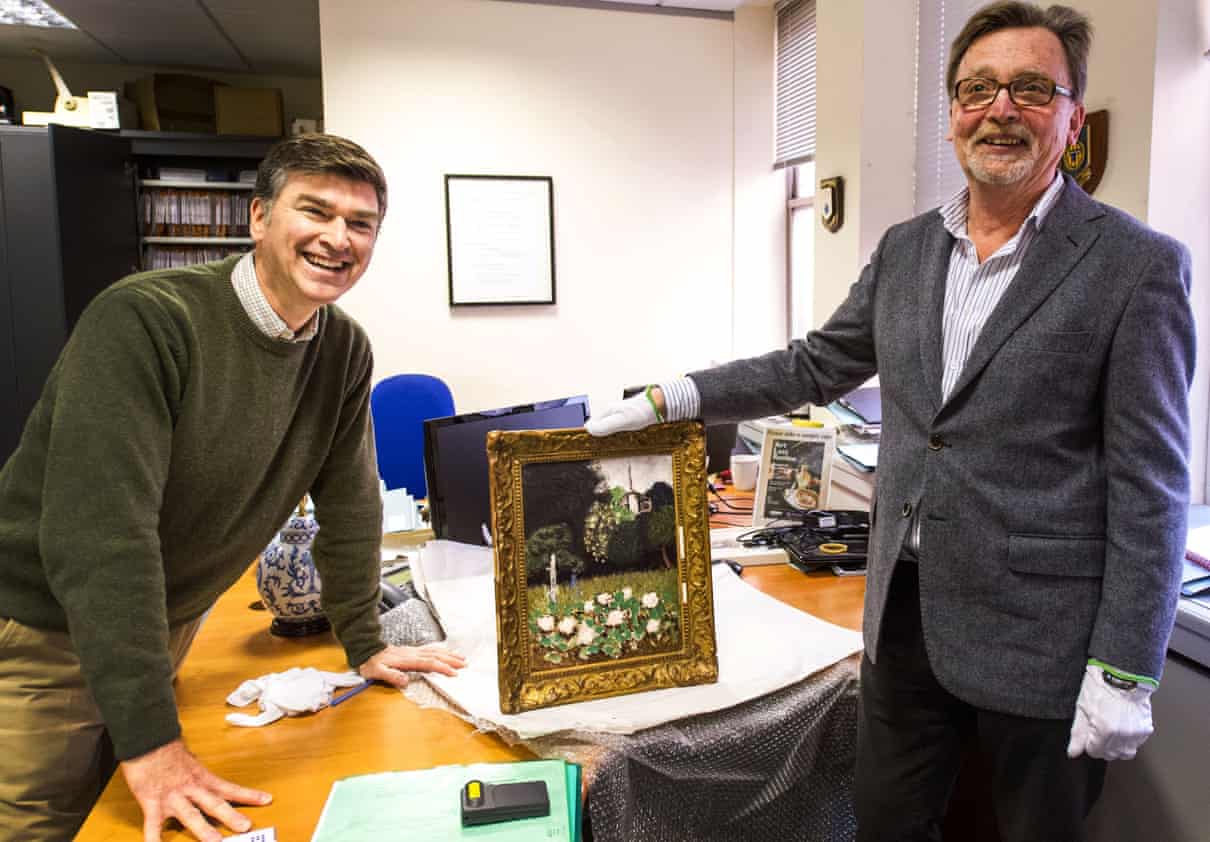
Art detective Christopher Marinello, left, returning the long-lost Le Jardin by Matisse to Lars Bystrom of the Modern Museum in Stockholm in 2013.

Now for something completely different, how about we delve into the life of a lawyer who walks some dangerous paths to recover stolen art?

Alex Daniel writes at the Guardian, “One summer morning in 2008, Christopher Marinello was waiting on 72nd Street in Manhattan, New York. The traffic was busy, but after a few minutes he saw what he was waiting for: a gold Mercedes with blacked-out windows drew near. As it pulled up to the kerb, a man in the passenger seat held a large bin-liner out of the window. ‘Here you go,’ he said. Marinello took the bag and the car sped off. Inside was a rolled-up painting by the Belgian artist Paul Delvaux, Le Rendez-vous d’Ephèse. Its estimated worth was $6m, and at that point it had been missing for 40 years.

“Marinello is one of a handful of people who track down stolen masterpieces for a living. Operating in the grey area between wealthy collectors, private investigators, and high-value thieves, he has spent three decades going after lost works by the likes of Warhol, Picasso and Van Gogh. In that time, he says he has recovered art worth more than half a billion dollars. …

“Cases tend to go the following way. A stolen artwork – in this instance, a bird by the Martin Brothers pottery makers, which was swiped from a London library in 2005 – will often turn up at auction or on social media. It then falls to Marinello to establish whether it is actually the missing work and, sometimes, to get it back. This, he says, is usually relatively simple.

“Stolen works often change hands several times before resurfacing, leaving subsequent possessors in the dark about their provenance. This is most likely what happened with the Delvaux. The painting, completed in 1967, depicts several nude women in a dreamlike landscape that’s part classical architecture, part mid-century tram station. Delvaux himself sold it a year later, but it was stolen before it reached the buyer. In 2008, Marinello got a call from somebody who wanted to return it. What happened to it in the intervening 40 years is unclear, although its final location is known. It was rolled up, says Marinello, in the wardrobe of ‘a very well-heeled celebrity. And their very expensive lawyer made it clear they would never be named.’ …

“A slight, 58-year-old Italian American with a soft Brooklyn accent, Marinello … trained as a lawyer, cutting his teeth as a litigator in New York representing galleries, collectors and dealers in cases involving disputed works. ‘Eventually, it developed into a full-time art recovery practice,’ he says. In 2013, he formed his own company, Art Recovery International, which is based in Venice but has offices in London. …

He says. ‘[I’m] a pretty good negotiator. I can convince people to do the right thing. … The bottom line [is] that if you are trying to sell something that is stolen, you’re the one with a problem, not me.’ …

“He adds: ‘With a lot of art crime, there is nobody to arrest and people rarely go to prison. It’s just a matter of recovering the work.’

“However, sometimes a suspect will refuse to cooperate. Then, things are different. ‘We go after them like pitbulls and never let go,’ he says. ‘And that is when they start getting nasty, when they are concerned they’re going to go to prison.’ “

More at the Guardian, here. If you don’t follow the Guardian online, do check it out. I really love it. It’s free, but grateful readers volunteer to pay what they can.

Read Full Post »