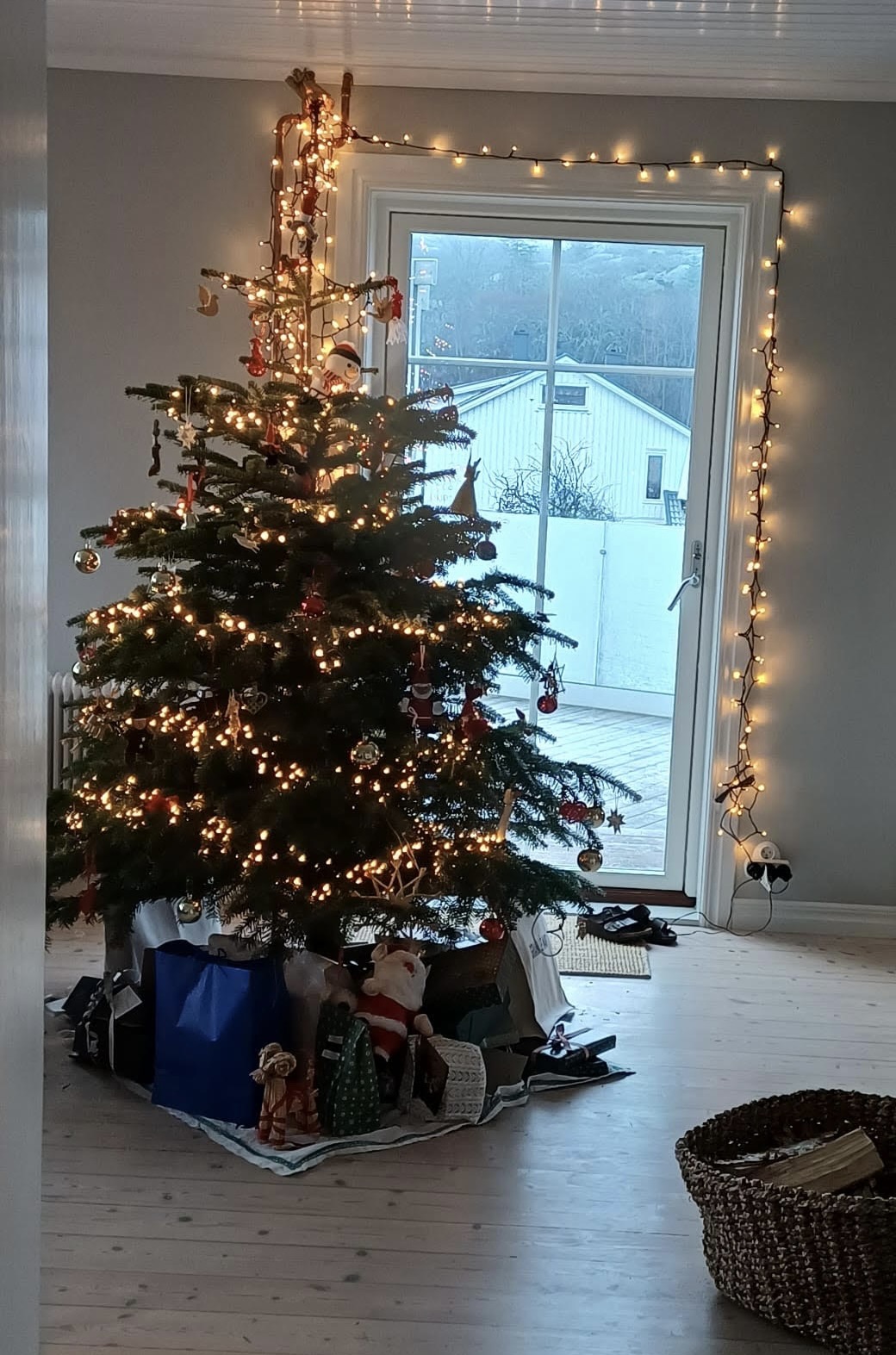
Photo: Stuga4. Suzanne and family are celebrating Christmas in Hamburgön this year with Farmor and Swedish cousins.
I think you may know this poem about the many ways ordinary people show kindness, even to strangers. It’s a good one to reread at Christmas in our beleaguered world.
It’s called “Small Kindnesses” and was written by Danusha Laméris.
“I’ve been thinking about the way, when you walk “down a crowded aisle, people pull in their legs “to let you by. Or how strangers still say ‘bless you’ “when someone sneezes, a leftover “from the Bubonic plague. ‘Don’t die,’ we are saying. “And sometimes, when you spill lemons “from your grocery bag, someone else will help you “pick them up. Mostly, we don’t want to harm each other. “We want to be handed our cup of coffee hot, “and to say thank you to the person handing it. To smile “at them and for them to smile back. For the waitress “to call us honey when she sets down the bowl of clam chowder, “and for the driver in the red pick-up truck to let us pass. “We have so little of each other, now. So far “from tribe and fire. Only these brief moments of exchange. “What if they are the true dwelling of the holy, these “fleeting temples we make together when we say, ‘Here, ” ‘have my seat,’ ‘Go ahead—you first,’ ‘I like your hat.’ “
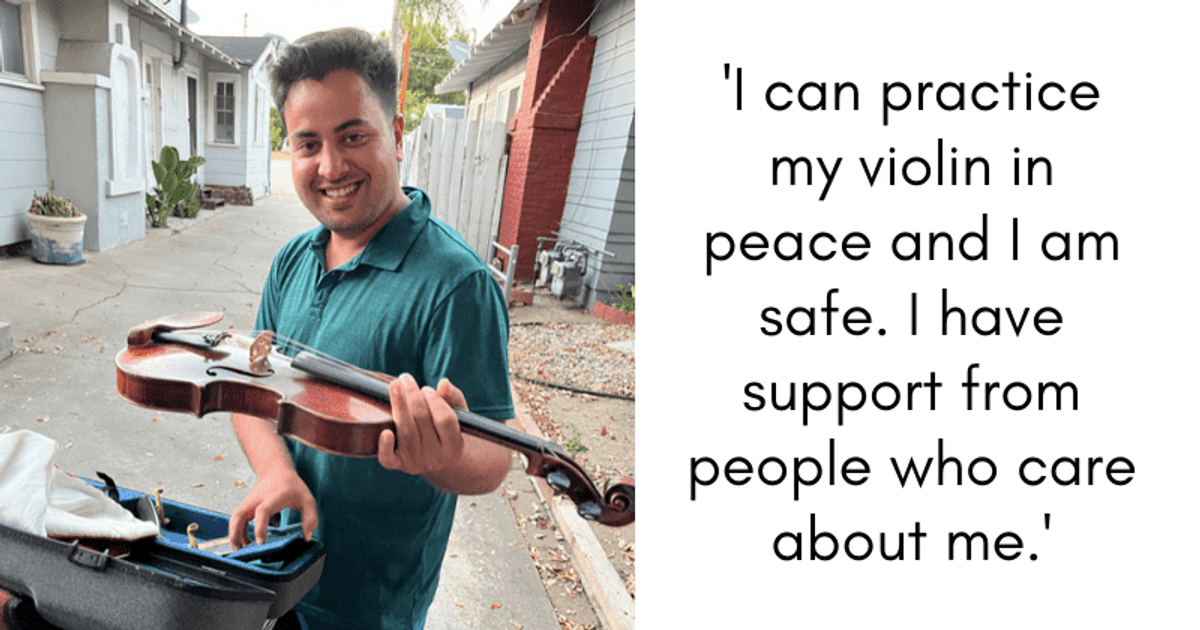
Photo: Twitter | @latifnaseer. Ali Esmahilzada, an Afghan violinist, fled Kabul in 2022 amid the Taliban takeover. He arrived in Los Angeles without a violin. Latif Nasser delivered an antique violin from Jeremy Bloom and found a friend for life.
There are few positive stories about the aftermath of the abrupt 2022 US departure from Afghanistan. So, in sharing today’s article, I don’t want to minimize the suffering that continues there. For example, my friend Shagufa, the youngest of 11 children in a Herat family, was faced with getting her mother and all her sisters out, working with Marilyn Mosley Gordanier at Educate Girls Now. One of Shagufa’s sisters really had a target on her back, having trained as a police officer for the deposed government.
But at the Washington Post, we do find a nice story by Sydney Page about an Afghan who made it to the US.
“On a work trip in Upstate New York last May, Latif Nasser got an unexpected request from a colleague: ‘Can you hand-deliver an antique violin across the country?’ …
“The violin was going to an Afghan violinist who fled Kabul amid the Taliban takeover, and settled in Los Angeles with almost nothing but the clothes on his back. He left his violin behind.
“Nasser, [science journalist and co-host of Radiolab from] Los Angeles, agreed to help. The request came from Jeremy Bloom, a sound designer based in Brooklyn, who had heard about the struggling musician from a friend.
“Bloom happened to have a 110-year-old German-made violin collecting dust in his closet. He decided to offer it to the Afghan musician, who he knew would put it to good use.
“ ‘I was very lucky to be able to play that violin for a while, but I also felt guilty that it was sitting in a closet,’ said Bloom, adding that older violins are sometimes seen as more desirable than newer instruments. …
“The problem was, Bloom had no way of getting the violin to Los Angeles. ‘You do not want to ship an antique violin in the mail,’ he said, because he feared it would get damaged. …
“It took several weeks to get the instrument to the Afghan violinist, Ali Esmahilzada. ‘It felt like it took forever for us to coordinate,’ said Nasser, who — after several failed delivery attempts — became irritated when Esmahilzada asked if he could bring it to a mall. The musician didn’t seem eager to get the instrument, and Nasser began to wonder whether he even really wanted it.
“ ‘In a way, I was being protective of my friend Jeremy. … ‘This is the most beautiful gesture, giving someone this priceless violin for free.’
“After the mall plan didn’t work out, Nasser and Esmahilzada finally found a time to meet, and … it was immediately clear that ‘he wanted this violin so bad,’ Nasser said.
“Esmahilzada said he did not take his treasured violin with him when he left Afghanistan because he feared if the Taliban found his instrument at armed checkpoints throughout the city, they would ‘hurt me.’ …
“The Taliban has prohibited playing music in Afghanistan, and possessing an instrument is considered a crime. Esmahilzada, who has been playing the violin since he was 13, felt he had no choice but to flee his home country — and leave his family behind. ‘I was so scared.’ … He came to the United States on a Special Immigrant Visa with only a few belongings. …
“He was living in a small house with four Spanish-speaking roommates who he had trouble communicating with. He worked in the stockroom of a clothing store — which is why he asked Nasser to meet him at the mall. He ate eggs for every meal because it was the only thing he knew how to cook. …
“Nasser — whose parents immigrated to Canada in the early 1970s from Tanzania — empathized with Esmahilzada.
“ ‘It was so hard for my parents,’ said Nasser, explaining that kind strangers helped them get settled, and likewise, they went on to assist other immigrants.
“ ‘The more I heard his story and how deeply alone he was, I decided I could be that person for him,’ Nasser continued. … He invited Esmahilzada over to have dinner with his wife and two small children — which soon became a weekly invitation.
“ ‘It clearly meant a lot to him. He both needed it and was grateful for it,’ Nasser said. ‘It seemed like it was a gulp of water to a thirsty guy.’
“Nasser’s family started to feel like his own. … Life in America [had been so] difficult. He worked tirelessly to make a meager living, most of which he sent back to his family in Kabul. …
“Nasser and his wife helped him find an immigration lawyer, a laptop, some clothing and groceries. They also supported him as he sought a more stable job, and got himself a car. …
“For the first time in a long while, Esmahilzada said, he is hopeful about the future.
“ ‘I started from zero when I came to the United States,’ he said. ‘Now I’m happy. I have support from people who care about me. We have really kind people in the world.’ ”
More at the Post, here. To read without a firewall, click on Upworthy.
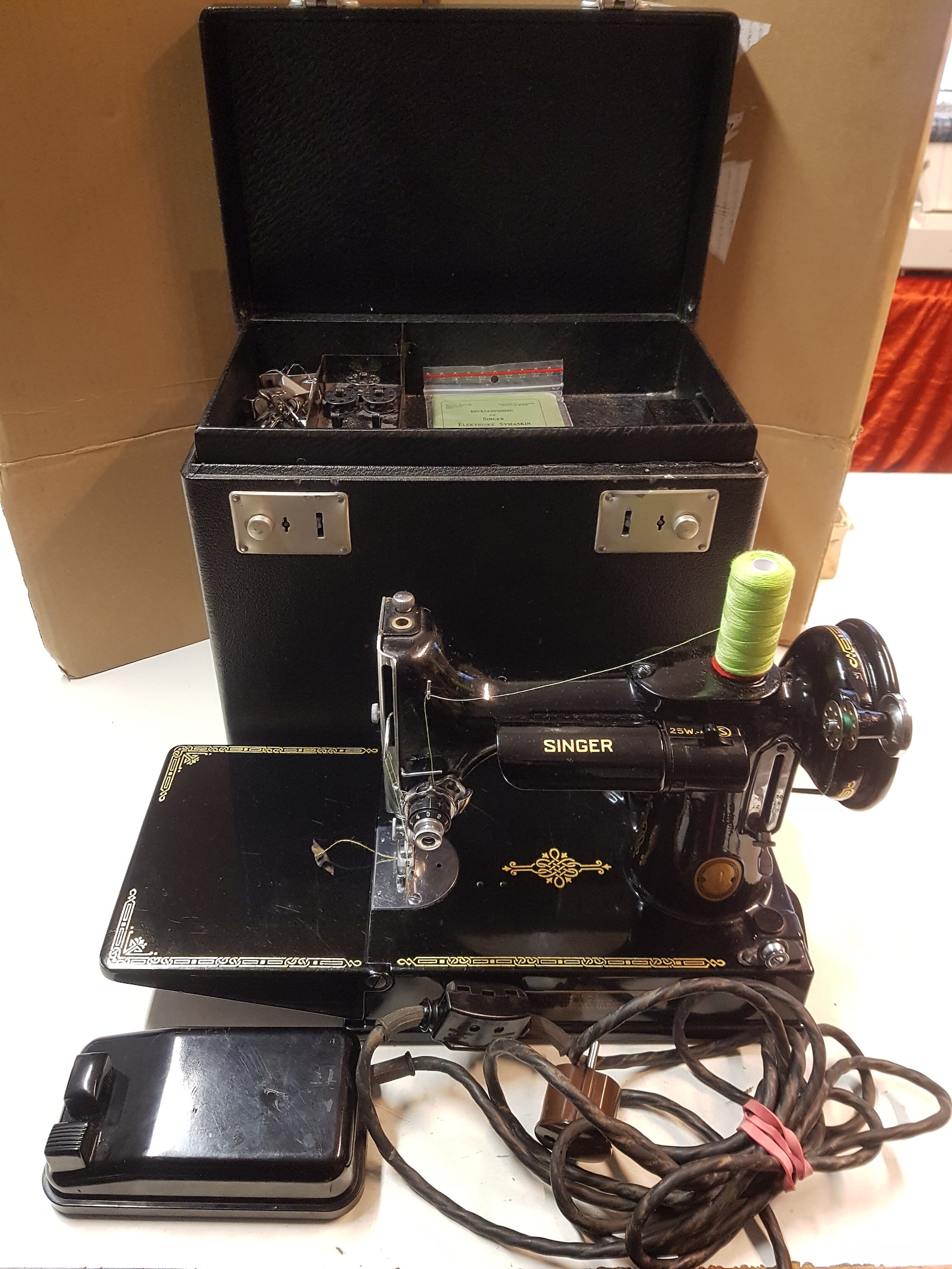
Singer sewing machine just like the one I sold to woman in Oklahoma years ago.
A nice thing happened to me recently. I got a phone call out of the blue from a woman in Oklahoma who had bought my old sewing machine on eBay years ago and kept my contact information. A real surprise.
She responded to my recorded message as if she were talking to me in person. “Yes, Ma’am. This is Margie M—. I had bought a sewing machine around 2014, I’m not sure. But anyway I was just wondering about it. I love the machine and wish I’d a called sooner. [She give her number.] Thank you and have a blessed day.”
I called her back. She was utterly charming. She said she’d wondered if the seller of the machine was even still alive, and she wished she’d called sooner. She’d had a number of sewing machines, but mine was the best. She said either I took very good care of it or I didn’t use it much. (I didn’t use it much.)
We talked a little about what was going on in her life, about ailing family members and how she was caring for them. At the end she wished me a blessed day again.
I think the experience of chatting with someone like Margie, a stranger with a very different life in a very different part of America, made it a blessed day, all right.
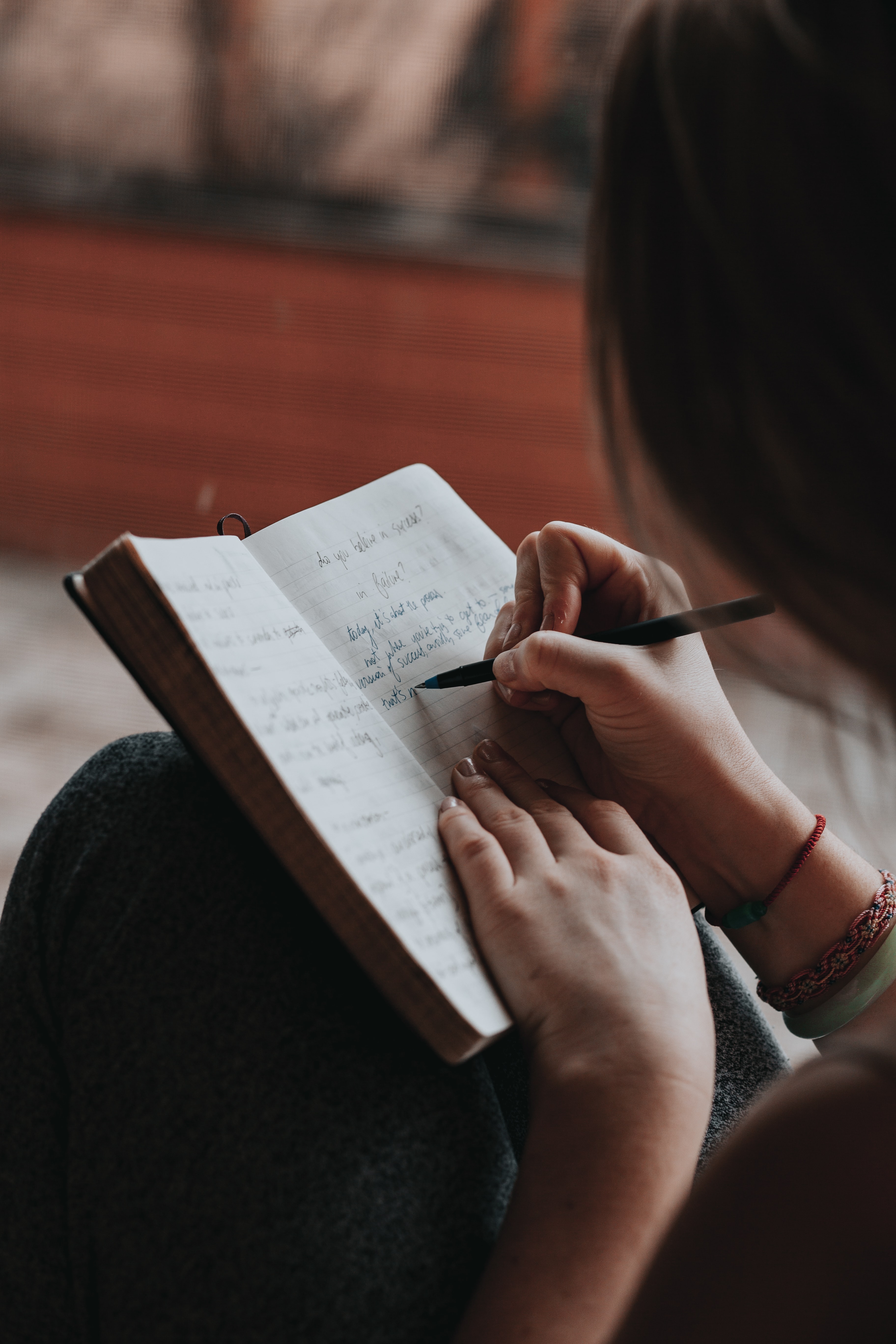
Photo: Marcos Paulo Prado/unsplash. A diary version of the chain letter, begun by Kyra Peralte, comforted participants during the pandemic.
As things are gradually getting back to something resembling normal, people are taking stock of the past 14-plus months and recording how they got through them. A new kind of chain letter, first begun by Kyra Peralte, provided support to 115 strangers around the world.
Sydney Page writes at the Washington Post, “Kyra Peralte thought keeping a diary during the pandemic might help her sort out her tangled feelings. Then she decided to drop her journal in the mail and share it with a stranger.
“Peralte — a mother of two in Montclair, N.J. — started writing candidly last April about the challenges of juggling work, marriage and motherhood during a global crisis. Writing was cathartic, but Peralte, 44, wanted to know how other women were doing. Was she alone in her feelings or were other women experiencing the same overwhelming stress? She craved connection.
“So she made an unusual offer. She invited other women from near and far to fill the remaining lined pages of her black-and-white marbled composition notebook with their own pandemic tales.
‘I wanted an interaction that felt human, and it feels very human to read someone else’s writing,’ said Peralte, a children’s game designer.
“She dreamed up ‘The Traveling Diary’ — a simple notebook that would traverse the globe via snail mail, collecting handwritten stories and, ultimately, creating a community.
“A year later, seven marbled notebooks have circulated in various locations — from the United States to Australia, Canada to South Africa — and a growing group of strangers have formed an unexpected friendship as a result. So far, 115 women have signed up to participate.
“Peralte found her first contributor on a Zoom conference for entrepreneurs, during which she mentioned her diary idea. A woman from North Carolina immediately reached out and said she would like to write in the book.
“From there, Peralte wrote a Medium article, in an effort to recruit more women to get involved. Word spread, and she created a website so participants could easily add their names to the queue. Each person is allowed to keep the diary for up to three days and fill as many pages as they wish, with whatever writing or artwork they choose. Then, they are responsible for mailing it to the next person, whose address Peralte provides. …
“Amy Tingle, 52, sat down with the diary last September, in the wake of civil unrest and ongoing protests, and she decided to focus her entry on America’s racial reckoning.
“ ‘I couldn’t escape the sadness,’ said Tingle, who lives in Maine. ‘I remember being really disappointed in humanity.’ Writing in the communal diary, ‘was definitely a therapeutic thing during that time,’ she said. As an artist, she also included a collage of women, symbolizing the sense of friendship she felt with other participants. While writing her own thoughts was healing, she said, it was equally meaningful to read the words of other women who held the book before her. …
“Kirsty Nicol, 29, who lives in London, heard about the Traveling Diary through a friend. She received the journal two months ago, after it was shipped from New York City.
“ ‘It came to me at a challenging time during lockdown,’ she said. …
“Reading the entries allowed her to escape, transporting her into the lives of others and finding bits of wisdom they left. One woman from Australia had written: ‘Working with the setbacks. Not against them. Patience and gratitude. It’s a dance. Life is moving and we can stomp our feet in rejection, or we can gracefully embrace the mess, tidying as we go.’ …
“When Colleen Martin, 44, received the diary on her doorstep in Florham Park, N.J., last November, ‘I had just recently lost my brother,’ she said. … It helped her look for meaning and ‘the growth and development that occurs in terrible times.’ …
“ ‘It has really evolved into a community,’ Peralte said. She often hosts Zoom events so the women get the chance to get to know one another more, share stories they might have missed and connect more intimately. Some of the women, she said, have actually become close friends.”
Kyra Peralte, below, had the original idea to send a composition notebook with a diary entry to a stranger in April 2020, during the pandemic. “A year later,” says the Washington Post, “seven diaries have circulated, and 115 women have been part of the traveling diary.”
So much anxiety about “the others” these days, anxiety that is seldom based on knowing even one of those others!
That is why I found this story by Steve Annear in the Boston Globe so charming and important.
He wrote, “Mona Haydar knew that when she set up two signs outside a Cambridge library [in December] with the words ”Ask a Muslim’ and ‘Talk to a Muslim,’ she had to be prepared for strong opinions about her faith.
“But the Duxbury resident said the impromptu experiment led to a meaningful series of conversations about religion, politics, history, and sports. It was an experience that, even in a time of prejudice against Muslims, showed Haydar that ‘the community is loving.’
“ ‘We just wanted to talk to people and we didn’t see any harm in doing that,’ said Haydar. ‘We are just normal people. There is definitely fear [in America], and I want to talk about it, because it’s actually misplaced and misguided — I am really nice!’
“Holding a box of doughnuts and cartons of coffee from Dunkin’ Donuts, and wearing a traditional hijab, Haydar last Friday and Saturday planted herself alongside her husband, Sebastian Robins, outside the library for several hours each day.
“Haydar said that over the two days they spoke with more than 100 strangers. The initiative, she said, was inspired by a similar act, called Talk to an Iraqi, that was featured on ‘This American Life’ in 2008.” More here.
I’d say she gave a gift to the Cambridge populace, which although considered open-minded, is not monolithic. And she seems to have received a gift in return: the satisfaction of initiating an important conversation and of confirming that the majority of people are kind.
Photo: Mona Haydar
Mona Haydar and her husband, Sebastian Robins, stood outside of a library in Cambridge.




 Suzanne's Mom's Blog