Feeds:
Posts
Comments

Posts Tagged ‘success’

Photo: BLM.
“The US California Condor Recovery Program, initiated in the 1970s, represented an enormous change in the strategy of species conservation,” writes Knowable Magazine.

They are not as appealing as, say, hummingbirds, but the California condors had a lot of environmentalists worried in the 1970s, including a young boy I knew who grew up to be a respected biologist and scientific photographer.

I remember him talking a lot about condors when we were carpooling. And I thought, “Well, condors. An odd obsession for a child.”

Thank goodness people get obsessed about the least beautiful denizens of our planet.

Iván Carrillo tells the condor story at Knowable Magazine via the Tucson Sentinel.

“The spring morning is cool and bright in the Sierra de San Pedro Mártir National Park in Baja California, Mexico, as a bird takes to the skies. Its 9.8-foot wingspan casts a looming silhouette against the sunlight; the sound of its flight is like that of a light aircraft cutting through the wind. In this forest thick with trees up to 600 years old lives the southernmost population of the California condor (Gymnogyps californianus), the only one outside the United States. Dozens of the scavenging birds have been reintroduced here, to live and breed once again in the wild.

“Their return has been captained for more than 20 years by biologist Juan Vargas Velasco and his partner María Catalina Porras Peña, a couple who long ago moved away from the comforts of the city to endure extreme winters living in a tent or small trailer, to manage the lives of the 48 condors known to fly over Mexican territory. Together — she as coordinator of the California Condor Conservation Program, and he as field manager — they are the guardians of a project whose origins go back to condor recovery efforts that began in the 1980s in the United States, when populations were decimated, mainly from eating the meat of animals shot by hunters’ lead bullets.

“In Mexico, the species disappeared even earlier, in the late 1930s. Its historic return — the first captive-bred condors were released into Mexican territory in 2002 — is the result of close binational collaboration among zoos and other institutions in the United States and Mexico.

“Beyond the number on the wing that identifies each individual, Porras Peña knows perfectly the history and behavior of the condors under her care. … She captures her knowledge in an Excel log: a database including information such as origin, ID tag, name, sex, age, date of birth, date of arrival, first release and number in the Studbook (an international registry used to track the ancestry and offspring of each individual of a species through a unique number). Also noted is wildlife status, happily marked for most birds with a single word: ‘Free.’ …

“The California condor, North America’s largest bird, has taken flight again. It’s a feat made possible by well-established collaborations between the US and Mexico, economic investment, the dedication of many people and, above all, the scientific understanding of the species — from the decoding of its genome and knowledge of its diseases and reproductive habits to the use of technologies that can closely follow each individual bird.

“But many challenges remain for the California condor, which 10,000 years ago dominated the skies over the Pacific coast of the Americas, from southern Canada to northern Mexico. Researchers need to assemble wild populations that are capable of breeding without human assistance, and with the confidence that more birds are hatched than die. It is a tough battle against extinction, waged day in and day out by teams in California, Arizona and Utah in the United States, and Mexico City and Baja California in Mexico.

“The US California Condor Recovery Program, initiated in the 1970s, represented an enormous change in the strategy of species conservation. After unsuccessful habitat preservation attempts, and as a last-ditch attempt to try to save the scavenger bird from extinction, the United States Fish and Wildlife Service and the California Fish and Game Commission advocated for a decision as bold as it was controversial: to capture the last condors alive in the wild and commit to breeding them in captivity. …

“On April 19, 1987, the last condor was captured, marking a critical moment for the species: On that day, the California condor became officially extinct in the wild.

“At the same time, a captive breeding program was launched, offering a ray of hope for a species that, beyond its own magnificence, plays an important role in the health of ecosystems — efficiently eliminating the remains of dead animals, thus preventing the proliferation of diseases and environmental pollution.

“This is what is defined as a refaunation project, says Rodolfo Dirzo, a Stanford University biologist. … Refaunation, Dirzo says, involves reintroducing individuals of a species into areas where they once lived but no longer do. He believes that both the term and the practice should be more common. …

“The California Condor Recovery Program produced its first results in a short time. In 1988, just one year after the collection of the last wild condors, researchers at the San Diego Zoo announced the first captive birth of a California condor chick.

“The technique of double or triple clutching followed, to greater success. Condors are monogamous and usually have a single brood every two years, explains Fernando Gual, who until October 2024 was director general of zoos and wildlife conservation in Mexico City. But if for some reason they lose an egg at the beginning of the breeding season — either because it breaks or falls out of the nest, which is usually on a cliff — the pair produces a second egg. If this one is also lost or damaged, they may lay a third. The researchers learned that if they removed the first egg and incubated it under carefully controlled conditions, the condor pair would lay a second egg, which was also removed for care, leaving a third egg for the pair to incubate and rear naturally.

“This innovation was followed by the development of artificial incubation techniques to increase egg survival, as well as puppet rearing, using replicas of adult condors to feed and care for the chicks born in captivity. That way, the birds would not imprint on humans, reducing the difficulties the birds might face when integrating into the wild population.

“Xewe (female) and Chocuyens (male) were the first condors to triumphantly return to the wild. The year was 1992, and the pair returned to freedom accompanied by a pair of Andean condors, natural inhabitants of the Andes Mountains in South America. Andean condors live from Venezuela to Tierra del Fuego and have a wingspan about 12 inches larger than that of California condors. Their mission here was to help to consolidate a social group and aid the birds in adapting to the habitat. The event took place at the Sespe Condor Sanctuary in the Los Padres National Forest in California. In a tiny, tentative way, the California condor had returned.

“By the end of the 1990s, there were other breeding centers, such as the Los Angeles Zoo, the Oregon Zoo, the World Center for Birds of Prey in Boise, Idaho, the San Diego Zoo and the San Diego Zoo Safari Park. Then, in 1999, the first collaboration agreements were established between the United States and Mexico for the reintroduction of the California condor in the Sierra de San Pedro Mártir National Park. The number of existing California condors increased from just over two dozen in 1983 to more than 100 in 1995, some of which had been returned to the wild in the United States. By 2000, there were 172 condors and by 2011, 396.

“By 2023, the global population of California condors reached 561 individuals, 344 of them living in the wild.” Lots more at Knowable Magazine via the Tucson Sentinel, here.

I salute the cleverness and devotion of scientists. May they live long and prosper!
Read Full Post »

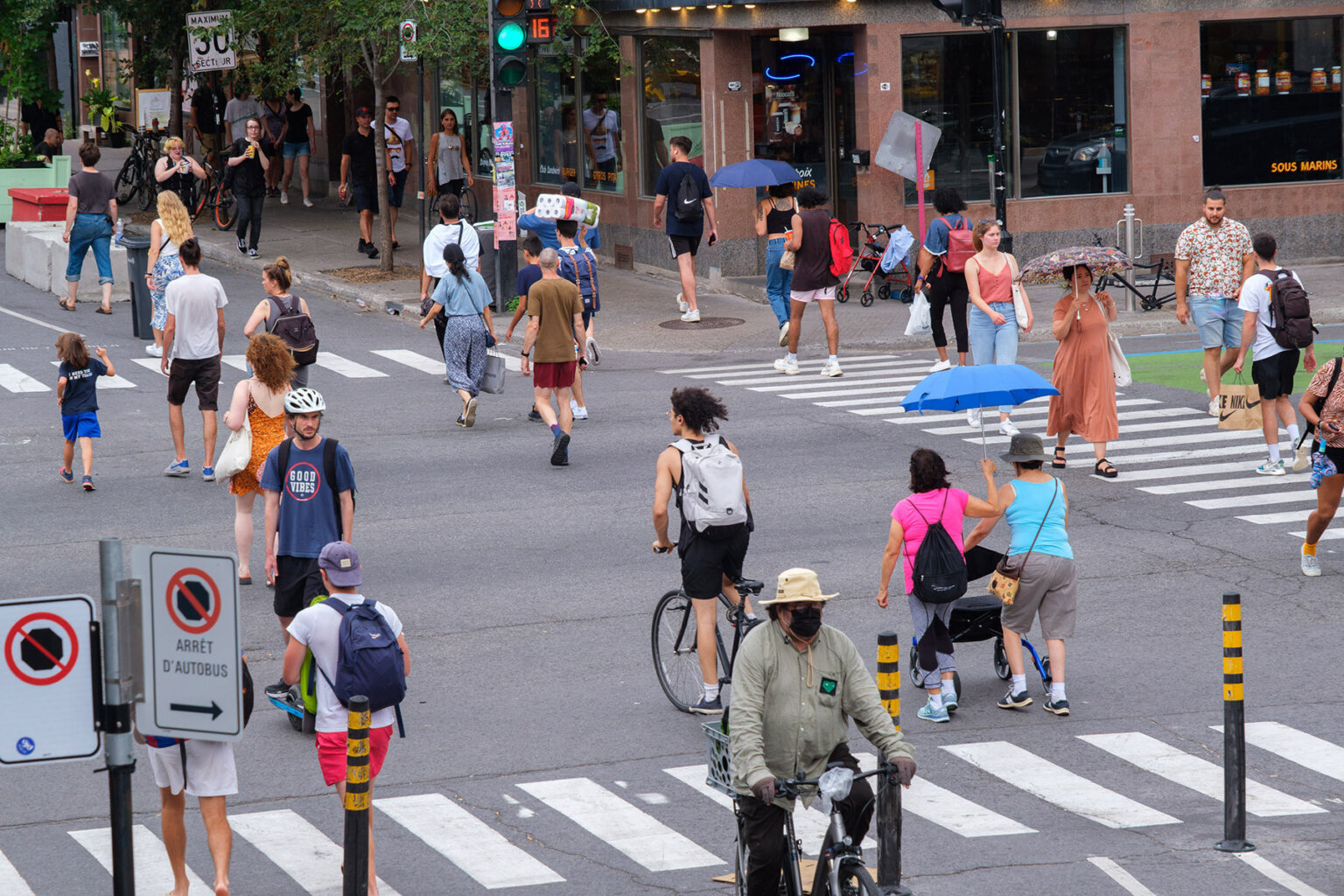
Photo: Marc Bruxelle.
Montreal’s pedestrian revolution has been good for the city.

I like the idea of a walkable city, and often that means a city more friendly to pedestrians than to cars. When a move toward walkability is proposed — even in a small area, even as a pilot — shops on the street expect to lose business. But is that what really happens?

Toula Drimonis reports at the Walrus on a Montreal experiment: “In 2020, during the first pandemic summer, Montreal’s Projet Montréal administration, led by mayor Valérie Plante, closed a two-kilometer stretch of Mont-Royal Avenue to motorists for a few months. The idea was simple: get people out shopping and socializing while also respecting physical distancing guidelines.

“The pilot project faced criticism from business owners concerned that removing cars would deter driving clients and complicate deliveries. But once merchants saw the street fill with milling crowds, they were convinced. The pandemic initiative became an annual event. By 2023, the avenue’s commercial vacancy rate plummeted from 14.5 percent in 2018 to 5.6 percent. A few years earlier, in 2021, the pedestrianization of Wellington Street in the Verdun borough had increased foot traffic and shoppers by 17 percent. A once-drab strip is now lined with restaurants, bars, and cafes. On Fridays, hundreds gather to dance salsa and bachata.

“The pilot kept growing. As of this summer, eleven streets in total have been transformed into seasonal pedestrian-only destinations, creating almost ten kilometers of walkable car-free surfaces across several boroughs. The experiment has proven so popular that it has drawn praise, and not a little astonishment, from visiting urban planners. … Mayor Plante makes no secret of how she feels about the car-free streets, calling them ‘the lifeblood of Montreal’s neighborhoods.’

Flâneur-friendly cities don’t just materialize. It took strategic planning and years of push and pull. A little over a decade ago, then Plateau-Mont-Royal mayor Luc Ferrandez set out to make his borough’s streets safer and reclaim public space. He wanted a neighborhood people could live in and not just drive through. His first move, in 2010, was to convert a two-way ten-block stretch of Laurier Avenue to a one-way to clear more room for pedestrians, cyclists, and community activities. He didn’t stop there: he kept closing roadways that ran through parks and changing the direction of streets to divert traffic.

“Resistance was fierce.”  Find out what happened, here.

Jason Magder at the Montreal Gazette has more: “With summer winding down, Montrealers were walking, cycling and using scooters on Mont-Royal Ave. Thursday afternoon, with the closure of part of the street to all cars extended until October this year.

“The pedestrianization of this street has been a resounding success, borough mayor Luc Rabouin said, with more than 33,000 people flocking to the area between St-Laurent Blvd. and Fullum St. While most of the street was reopened at the end of last month, the portion between St-Laurent and St-Denis St. remains closed to vehicles until Oct. 14 for the first time, as a trial project.

“ ‘The other streets don’t even come close,’ Rabouin said during an interview Thursday while sitting on the terrasse of the bar Bily Kun. … Rabouin said the city wants to go even further on pedestrianization, with more money dedicated to projects and more predictability.

“The Plante administration will announce Friday morning that it will renew the pedestrianization of all nine streets that were closed this year for a three-year period starting next year. … The city is also almost doubling the funding available to the merchants associations to put together the pedestrian-only zones, to $700,000 per year from $375,000.

“Alia Hassan-Cournol, an associate executive committee member handling economic development, said adding predictability, rather than announcing the streets every year, will help businesses. The new money will allow local businesses to hire liaison agents to prepare the streets several months in advance, and will allow the associations to conduct impact studies. The city is also adding $1.1 million per year to support new pedestrian zones on other roads. Overall, the city will spend $12 million for three years for pedestrian streets, up from $10 million for the previous three-year period.”

More at the Gazette, here.

Read Full Post »

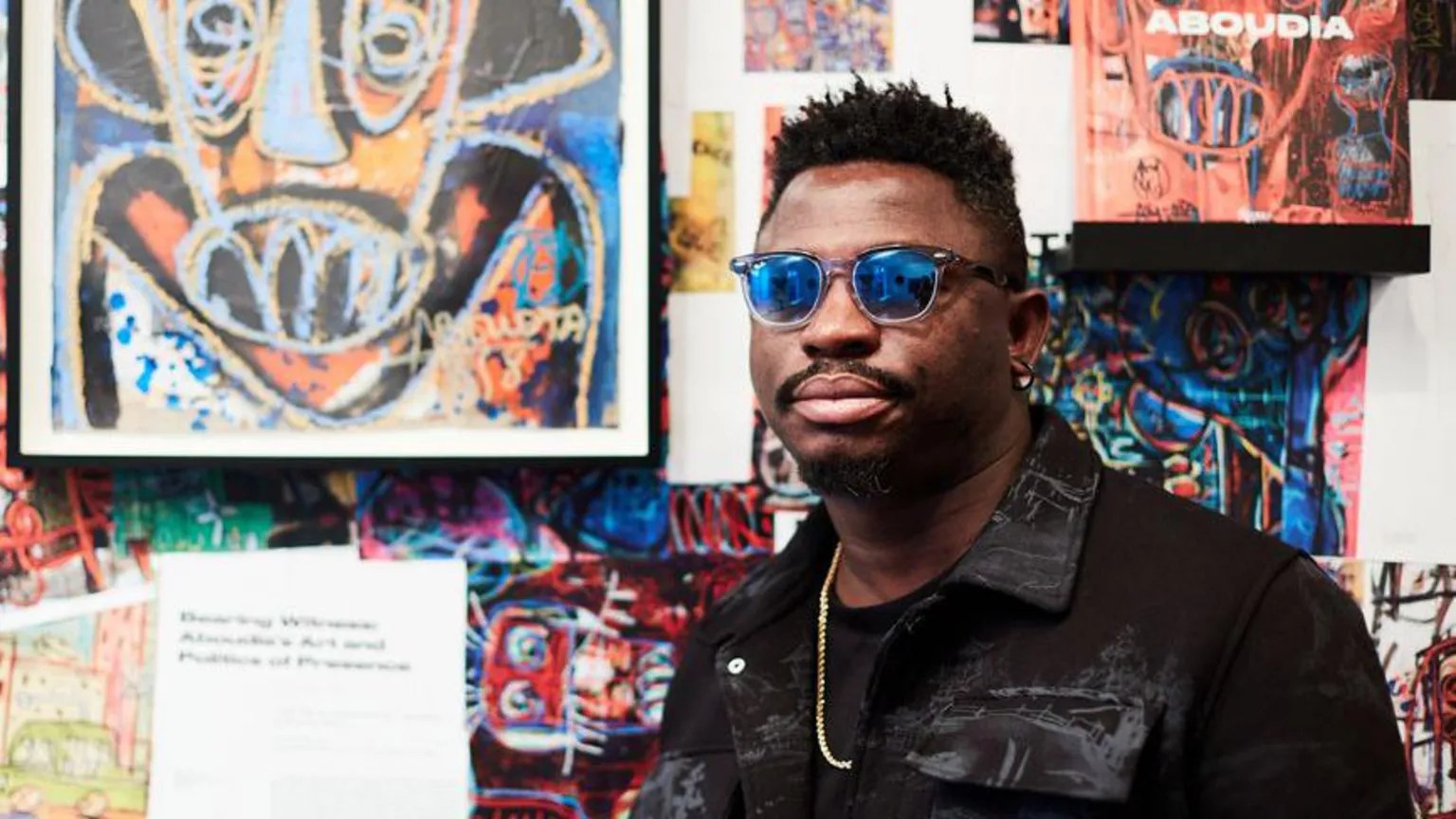
Photo: Larkin Durey.
Aboudia’s work has been shown in exhibitions held in Abidjan, London, New York and Tel Aviv
. Hiscox Artist Top 100 says he sold more than even Banksy in one year.

The art world is becoming more international, and that’s a good thing. For too long, people have used their own world’s cultural references to judge the quality of art. And how can only one culture be the only worthy measure?

Wedaeli Chibelushi reports at the BBC about an African that is currently making a big splash internationally.

“Back in September, global art experts were taken aback by the name topping a fresh list of the world’s best-selling artists.

“Aboudia, a graffiti-inspired artist from Ivory Coast, had beaten well-known names, like Damien Hirst and Banksy, to sell the most pieces at auction the previous year.

“According to the Hiscox Artist Top 100, Aboudia, real name Abdoulaye Diarrassouba, had flogged 75 lots. One of these canvasses had gone for £504,000 ($640,000).

“Leading online marketplace Artsy called Aboudia’s triumph ‘striking,’ while The Guardian said market experts were ‘blindsided by the ranking.

“Months later, sitting in a London gallery plastered with his paintings, Aboudia tells me the survey results were no surprise to him. ‘Because if you work hard, the success is going to come,’ he says. …

“Aboudia’s mellow disposition clashes with the art surrounding him – his vividly colored, heavily layered canvases feature a cast of cartoon-like figures plucked from the streets of Abidjan, Ivory Coast’s largest city. Through a blend of oil sticks, acrylic paints and recycled materials like newspapers, Aboudia depicts the hardships of life in downtown Abidjan.

He particularly focuses on the children who live and work on the city’s streets.

“His eyewitness portrayals of Ivory Coast’s 2011 civil war are equally arresting. Figures gaze at the viewer with vacant eyes, while armed soldiers and skulls crank up the intensity. …

“Aboudia was born in 1983, in Abengourou, a small town around [124 miles] from Abidjan. In a 2012 essay, the artist said he was kicked out of his home aged 15 after telling his father he wanted to paint for a living.

“After being cast out, the young Aboudia pressed on and enrolled in art school. Due to a lack of financial support, he slept in his classroom after the other students went home for the day. These uncomfortable nights paid off — after graduating in 2003 the soon-to-be-star was accepted into Ivory Coast’s leading art school, École des Beaux-Arts.

“Abidjan’s École des Beaux-Arts would expose Aboudia to the Ivorian art icons whose influence can be found in his current work. For instance, Aboudia’s focus on his direct surroundings and his use of recycled materials can be traced back to Vohou Vohou, a modernist collective established in the 1970s by artists like Youssouf Bath, Yacouba Touré and Kra N’Guessan.

“Aboudia began to veer away from traditional styles of art, instead using untamed brushstrokes and earthy colors to recreate graffiti produced by Abidjan’s underprivileged children. In Aboudia’s words, these young, de facto street artists ‘draw their dreams on the world.’

“The children are his main influence, he says. …

“After establishing his core style, Aboudia would lug his paintings around the galleries of central Abidjan, hoping for a way in.

” ‘It was very hard. … They’d say: “Are you crazy? What is this work? You better go to London, to United States or Paris, because this work … here it doesn’t make sense,” ‘ Aboudia recalls.

“The adversity did not end there. In 2010, Laurent Gbagbo, the then president of Ivory Coast, refused to step down after losing an election to rival Alassane Ouattara. A civil war broke out, killing 3,000 people and forcing another 500,000 from their homes.

“Throughout the four-month conflict, Aboudia sought refuge in his basement studio, documenting the horrors he saw when venturing above ground.

“The war ended with Mr Gbagbo’s dramatic capture by UN and French-backed troops — and Aboudia emerged from his haven with 21 disconcerting paintings.

“Art-lovers and journalists from Ivory Coast and beyond lauded his work and Aboudia’s ascent to global success began. He was championed by renowned art collectors Charles Saatchi and Jean Pigozzi — and went on to exhibit his work at prestigious venues like Christie’s New York and the Venice Biennale.

“Aboudia’s first solo exhibition was at the setting for this interview, London’s Larkin Durey (then named the Jack Bell gallery). Owner Oliver Durey, who has now known Aboudia for over a decade, tells the BBC: ‘There is something we can all relate to in his paintings; hiding amidst the uncertainty and horror there are balanced moments of strength and beauty.’

“African art expert Henrika Amoafo [notes] reasons for his success … like his ‘authenticity, the really raw emotional power that he’s able to convey, the way that he speaks to urban life, the way that he speaks about conflict and its impact on children.’ …

“Aboudia’s rise also coincides with that of the African art market. In 2021, art analysis firm ArtTactic reported that the auction sales value of contemporary and modern African art surged by 44% to a record high of $72.4m. …

“Aboudia’s rise has led to him splitting his time between his country of birth and New York. When he is back in Ivory Coast, he pours his efforts into the Aboudia Foundation, an organization he launched to support the country’s children and young artists.

“This is yet another example of the star’s drive — but when I ask him if he has any plans lined up for his career, he … says he takes things one day at a time.”

More at the BBC, here. No paywall.

Read Full Post »

Dan Holin, who used to run a Concord-Lowell volunteer partnership called the Jericho Road Project, is now director of special projects at UTEC in Lowell. (UTEC doesn’t use the longer title its youth founders originally came up with, but since people ask, it was United Teen Equality Center.)

UTEC describes itself as a nonprofit that “helps young people from Lowell and Lawrence, Mass., trade violence and poverty for social and economic success. It works to remove barriers that confront them when they want to turn their lives around and offers young people paid work experience through its social enterprises: mattress recycling, food services and woodworking.”

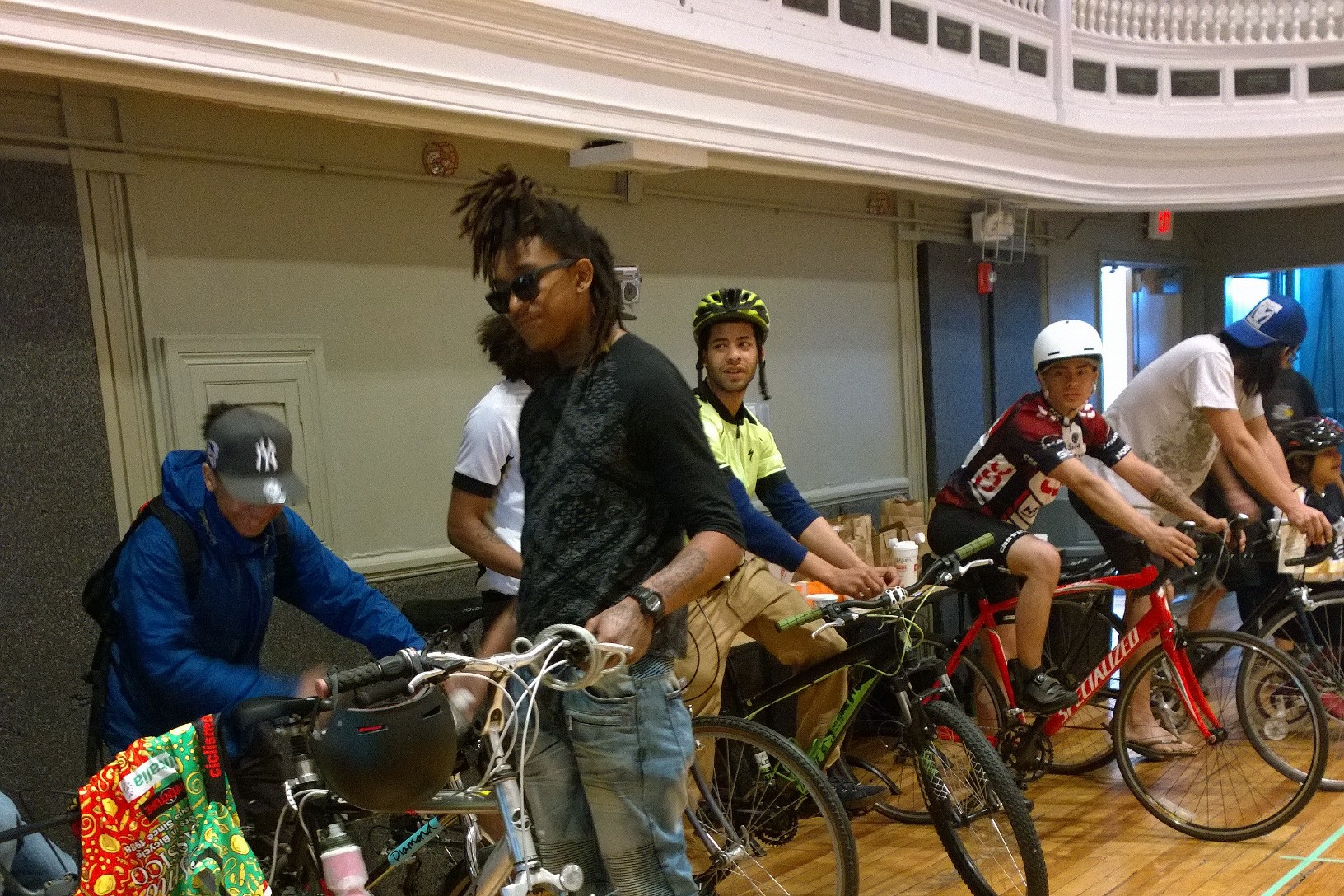
On May 15, Acton’s Pedal Power joined members of the Concord-based Monsters in the Basement bicycling club to share their bike-repair expertise with young people who wanted to acquire bikes and learn to maintain them. Holin, a serious biker himself, organized the event to give UTEC young people two things that he said they normally lack: transportation and fun.

At the event, one of them, Sav, recounted his story of change. Before UTEC I never talked to anyone,” he said. “I was a problem child on the streets. I was hanging around with gangs, selling drugs. I don’t do that now. Seven months ago, I moved from a place with nothing positive. Atlantic City. I let my family know I’m ready to live life. It was hard for me to get into something good: I’ve got a lot of tattoos and a record. But I’m in the culinary program here. It’s a family. They make you feel like you are somebody that has a chance. They give me love like a family. They changed my life for the better. There are so many new things to do here. Yesterday I went kayaking.”

More here.

Sav, in sunglasses, got a good bike at UTEC’s bike event in Lowell on May 15. The bike will provide transportation to his job at UTEC. It will also provide some much needed fun.

051516-UTEC-bike-clinic.jpg

Read Full Post »