Feeds:
Posts
Comments

Posts Tagged ‘tradition’


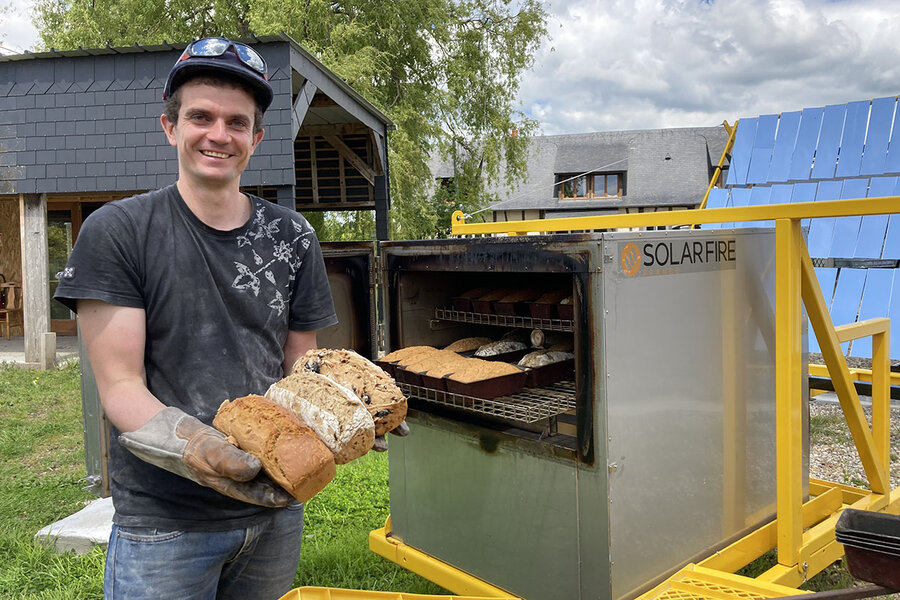
Photo: Colette Davidson.
“Arnaud Crétot holds three varieties of his organic bread, which he bakes using a solar-powered oven,” reports the Christian Science Monitor.He is the first baker in Europe to use the technique.

I was 16 when I went to France and got hooked on café au lait and baguettes. So good! Understandably, the French cherish the purity of such traditional foods, but according to this article at the Christian Science Monitor, even the French can experiment a bit around the edges.

Colette Davidson reports on Arnaud Crétot, the country’s first solar baker.

“Every Thursday, he takes a break from his small business NeoLoco, roasting local grains for snacks and aperitifs, to make bread using solar panels. For the next few hours, he will scuttle back and forth between the makeshift, cabinlike kitchen he’s built in his yard … to his wall of 57 concave mirrors.

“At 10-minute intervals, the 5-square-meter contraption needs to be manually rotated ever so slightly into position, in order for the sun to properly fire up the outdoor oven connected to it. …

“By the end of the day – if the temperamental Normandy weather cooperates – he will have produced 40 loaves of sourdough-fermented, sun-baked bread. …

“Mr. Crétot is part of a burgeoning group of ‘neo-bakers’ around France who are working to incorporate local products and ecologically friendly, ancestral methods into making bread. For some bakers, it’s a question of choosing additive-free wheat or organic ingredients. For others, it’s about method – hand kneading dough or using sourdough fermentation in the place of yeast. …

“ ‘We have to adapt, to constantly re-imagine and renew our products without abandoning traditions,’ says Patrick Rambourg, a French historian and specialist in gastronomy. ‘The French aren’t against innovation. They like new things – but based on something they know and love already.’ …

“Over time, [French bread] grew to be synonymous with French gastronomy, and this past March, France’s culture minister nominated the French baguette for UNESCO cultural heritage status. … But in recent decades, the role of bread has diminished. …

“While around 10 billion baguettes are consumed each year in France, some 20,000 bakeries have closed since the 1970s. Shoppers are more likely than in previous decades to buy their bread at the supermarket, where it’s generally made on assembly lines instead of using artisanal methods. 

“ ‘When you look at what the French are eating commonly as bread, it’s an awful product of really mediocre quality,’ says Steven Kaplan, professor emeritus at Cornell University who has written 15 books on bread, trained as a baker in 1969, and lives in southern France. ‘The everyday, white baguette is an insipid, denatured bread – tasteless, not properly fermented, and full of additives.’ 

“That’s created an opening for new techniques and ingredients for those hoping to revitalize this French staple. Among them is Paris baker Benoît Castel’s pioneering pain d’hier et de demain – ‘yesterday and tomorrow’s bread.’ It’s the culmination of a year’s worth of meticulous work to find the right combination of ingredients and method to create a sourdough-based loaf using pieces of leftover, already-baked bread. 

“At the outset, Mr. Castel set off on this baking journey to fight food waste. France wastes approximately 10 million tons of food each year, equivalent to 3% of its gas emissions. The government has passed a handful of bills in the last decade to address the problem. 

“ ‘I’m lucky to have grandparents who were farmers and it’s made me realize how much we take raw materials for granted,’ says Mr. Castel. His pain d’hier et de demain is a hearty round loaf with a crusty outer layer and airy, light body, and lasts up to five days – as opposed to one day for a typical baguette. 

“ ‘That means respecting the land as well as the hard work others put in to grow wheat, cocoa, etc. We throw away a lot of food before utilizing all the energy and resources it can offer us.’

“Local initiatives in bread-making move in the same direction as trends in France’s agriculture sector. Over 10% of French farmers work with organic products and in 2018, around 7,000 farmers registered to convert to organic farming, according to national organic agricultural agency Agence Bio. Approximately 13% of French people eat organic products everyday, according to the same agency. 

“But neo-baking remains niche, and most baking schools continue to teach primarily based on dominant techniques. Thomas Teffri-Chambelland, who founded the International Bakery School in southern France in 2005, is hoping to shake up modern-day teaching. The school focuses entirely on using organic ingredients and offers the only high school-level diploma in Europe dedicated to organic and sourdough baking. Since its launch, 80% of graduates have opened their own bakeries, and none have closed since. 

” ‘Most of our students have recently changed careers and are looking for something more concrete and meaningful,’ says Mr. Teffri-Chambelland. ‘Working with organic materials or sourdough isn’t just about being trendy. It’s raising awareness about the benefits they have for health, conservation, and the environment.’ 

“[Mr. Crétot] learned about Solar Fire – the company that developed his solar oven – as well as the solar tech nonprofit Go Sol during a trip to India in 2014. He went on to work on developmental projects across Africa with them, teaching sustainable baking. Now, every month he gives training to those looking to learn more about his technique. … [He] plans to start delivering his bread to sales points by bike to further reduce his environmental impact.”

More at the Monitor, here.
Read Full Post »

Photo: Henrik Montgomery / TT

The history of the Christmas market at Gamla Stan in Stockholm is described in a newspaper’s Swedish Advent calendar series.

This year I started following on twitter a newspaper called The Local. It covers Sweden, which is nice for me because my son-in-law is Swedish. Today’s post is on a series the paper has featured this month.

“Every day until Christmas Eve, The Local explains the unique history behind Swedish Christmas traditions in our own Advent calendar. …

“For centuries, Swedish Christmas markets have brought warmth and light to the darkest time of the year. Visiting a Swedish Christmas market (julmarknad) isn’t just a great way of becoming truly immersed in Sweden’s Christmas traditions, it may also be one of the best ways, short of a time machine, to experience what life was like in the past.

“The history of the festive markets goes back to 14th century Germany, and Sweden appears to have adopted the Christmas market not long afterward. Much like today, the earliest Christmas markets were typically held in town squares throughout the month of December, and featured small stalls where merchants and craftspeople could sell their wares.

“At Stortorget, Stockholm’s oldest square located in what is now known as Gamla Stan, markets were held at different times throughout the year as early as the 1300s, and there is evidence that one of these was held in connection with the feast day of St. Thomas the Apostle on December 21st.

“In 1523, during the first year of his reign, King Gustav Vasa established a permanent Christmas market at Stortorget. Though there have been periods over the centuries when the Stortorget julmarknad has not operated, it is still the oldest such market in Sweden and one of the oldest in Europe.

“When the Stortorget julmarknad was established, the king took care to stipulate that only Swedish goods were sold, a tradition carried on today by Stockholms-Gillet, which has organized the market since 1915. …

“Scents from traditional Swedish favourites like warm glögg, brända mandlar (candied almonds), and julgodis like knäck permeate the air just as they have in the past.

“The traditional foods and handicrafts offered for sale give a glimpse of life in the past, as well as the opportunity to incorporate them into modern life. The sense of stepping back in time is enhanced when attending a julmarknad at a historic location, or at one of Sweden’s fantastic open-air museums, such as Skansen in Stockholm. …

“Each day until Christmas Eve, we’re looking at the story behind one Swedish festive tradition. Find the rest of our #SwedishChristmas series here.”

Other topics covered: How one Swedish woman influenced the candy cane, Sweden’s favourite Christmas film, how a folklore tomte became Sweden’s Santa, and how glögg sends Swedish wine consumption through the roof.

Erik has been known to warm our insides with glögg at Christmas. But not this year: the Swedish side of the family is celebrating in Guadalupe and keeping warm by the swimming pool.

Read Full Post »

122316-making-xmas-cookies


I like this about traditions: they are always a little the same and a little different. You carry forward the old activities, but you and the people around you are a little different every year and customs get tweaked.

I’m posting a few pictures of holiday doings that are both the same and different in our family.

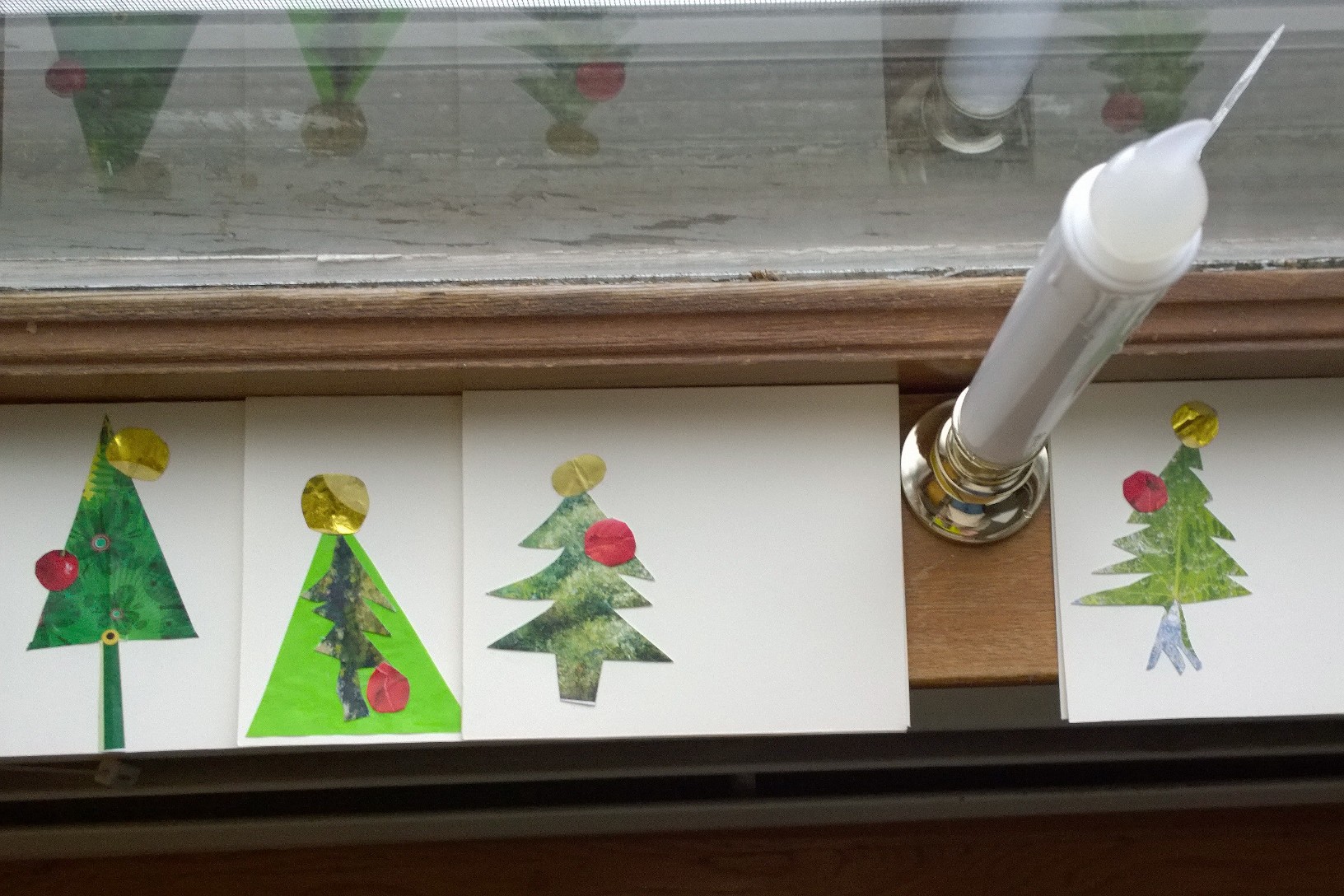
The youngest grandchild decorating a reindeer cookie. My collage gift tags made from scraps. Another grandchild’s Christmas tree watercolors. Luminaria bags with candles. A traditional light display.

My husband and I and Suzanne’s family gathered for a magnificent meal at John’s house, and everyone ended up dancing to Gummy Bears disco videos in the dark.

121716-collage-card-for-family122516-painting-on-xmas-tree


122416-luminarias

122516-teel-st-lights

Read Full Post »

Maria writes, “Some memories from our very traditional midsummer in Dalarna.” That’s in Sweden. Erik or Margareta, care to explain what we see here?

I learned this much on the web:

“Ask a Swede what the most important holiday of the year is and Midsummer will come up as often as Christmas. Get older Swedes talking and their eyes will well up as they reminisce about community spirit, songs, barn dancing and the mystical atmosphere surrounding the Midsummer gatherings of their youth. Sure, there was a lot of drinking, fistfights and frolicking, but everyone shook hands in the end. For younger generations, Midsummer is mainly about heading out to the summer cottage and celebrating with a group of friends or family.” There’s more at the site Sweden.se, here.

Read Full Post »

This is the story of how a song saved a cultural center in the Catskills.

Dennis Gaffney writes for the NY Times that at a recent celebration of success,  “Jay Ungar, a fiddler wearing a black vest and hiking boots, and his wife, Molly Mason, playing guitar, stood on a stage in a barnlike performance hall that did not exist a year ago. ‘Can you stand to hear this tune one more time?’ he asked the audience. …

“The tune is ‘Ashokan Farewell,’ the bittersweet lament familiar to millions as the theme song that the filmmaker Ken Burns used for the emotional crescendos of his Civil War series. But most do not know that Mr. Ungar’s moving hymn helped save the Catskill place that inspired the song, resulting in the Ashokan Center, a $7.25 million campus here dedicated to traditional music, Catskill history, environmental education, and local arts and crafts. …

“Many still assume that Mr. Ungar wrote ‘Ashokan Farewell’ with the Civil War in mind. But he wrote it on a September morning in 1982, after the end of his third Ashokan summer music and dance camp on this property, which the State University of New York at New Paltz owned and had used since 1967 as a field campus for environmental education.

“ ‘I left on a cloud of utopian euphoria,’ Mr. Ungar said of that summer. ‘You try to keep it alive, but it evaporates.’ ”

The song went on to have a life of its own, and Ungar even performed it at the White House. NY Gov. Pataki had heard it, too, and when a dismayed Unger contacted him about the pending sale of the Ashokan Center in Olivebridge,  the governor took action.

Soon a lot of people were on board, with the wistful song always at the heart of their efforts.

Writes Gaffney, “Mr. Ungar has come to believe that his song, like a traditional hymn, evokes much more than loss. In the mid-1990s, he got an e-mail from a man in Africa who said he was driving in his car when he heard ‘Ashokan Farewell’ on the radio. ‘He started crying uncontrollably and he had to pull off the road,’ Mr. Ungar recalled. ‘He said that in his culture, after the age of 10, men don’t cry, but he needed to cry.’ ”

More.

Photo: Nathaniel Brooks for The New York Times
Jay Ungar and Molly Mason playing “Ashokan Farewell” at the Ashokan Center.

Read Full Post »

Today’s mild weather reminds me that May Day and Mother’s Day aren’t far off. Mother’s Day is a highlight of the year at Luna & Stella, Suzanne’s lovely birthstone jewelry company, for which Suzanne’s Mom blogs.

I hope you know about May Day, too. I’d like to see it revived, the ancient custom of leaving flowers at people’s doors in honor of spring. (I don’t begrudge the workers of the world their version of May Day, but they shouldn’t hog the whole thing.)

Why don’t Girl Scout troops do May Day? Why don’t florists? It mystifies me.

I still remember a May basket I made as a kid from a punch-out book. I thought it was a thing of beauty and kept asking my mother to get me another book like that. But they stopped making them.

Now I work from scratch if I have time. Last year I blogged about one kind of a homemade basket, here.

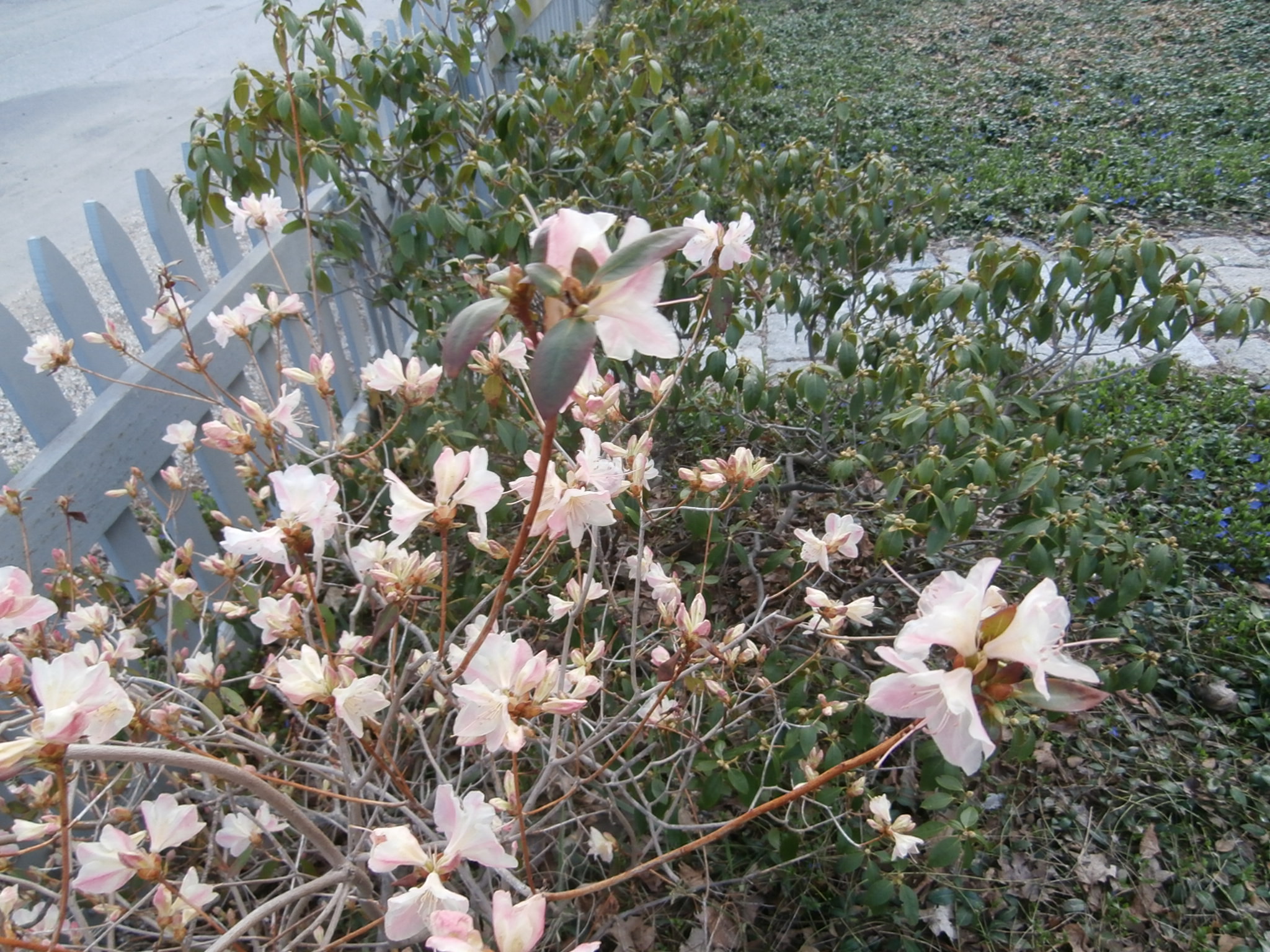
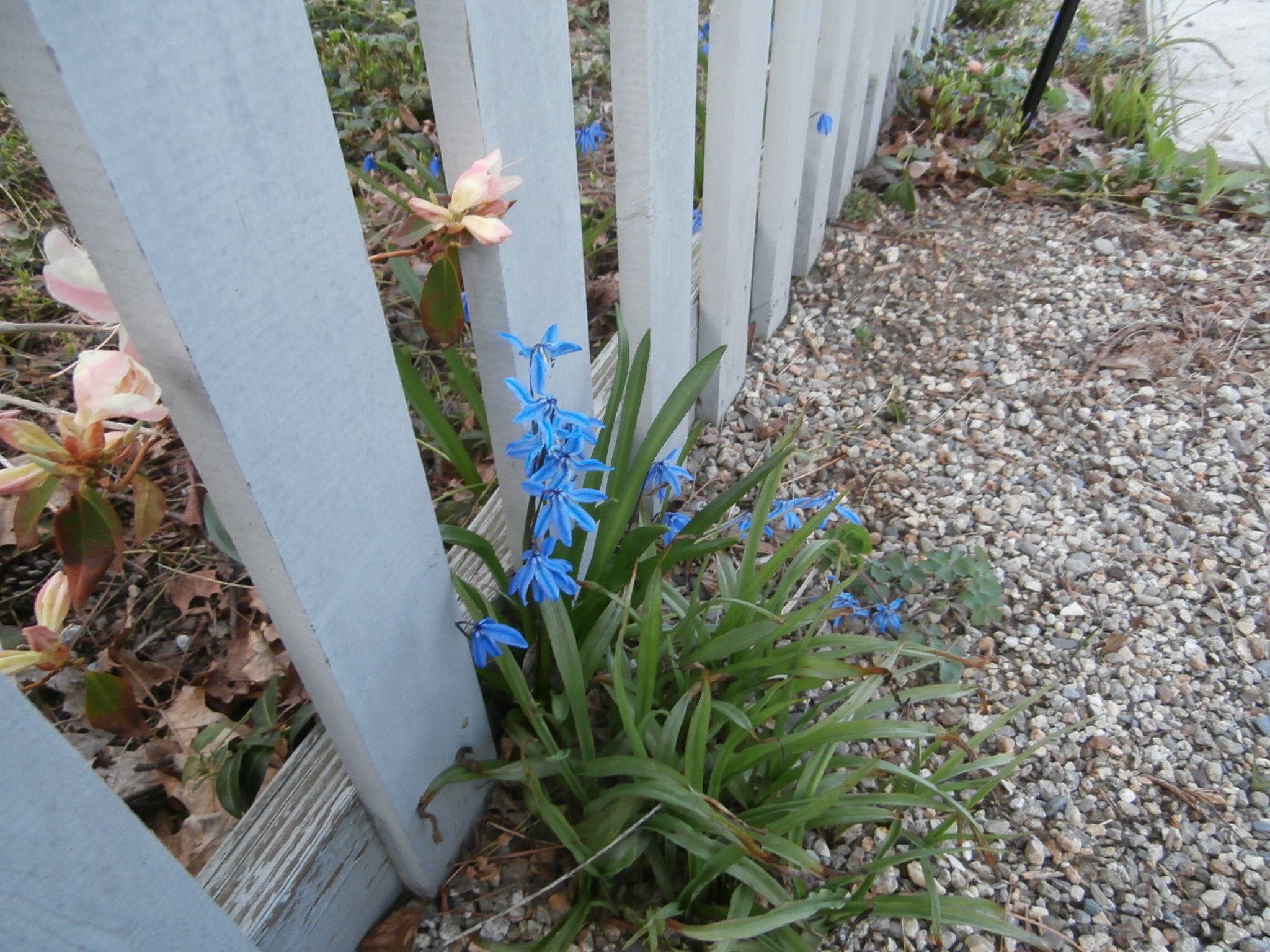
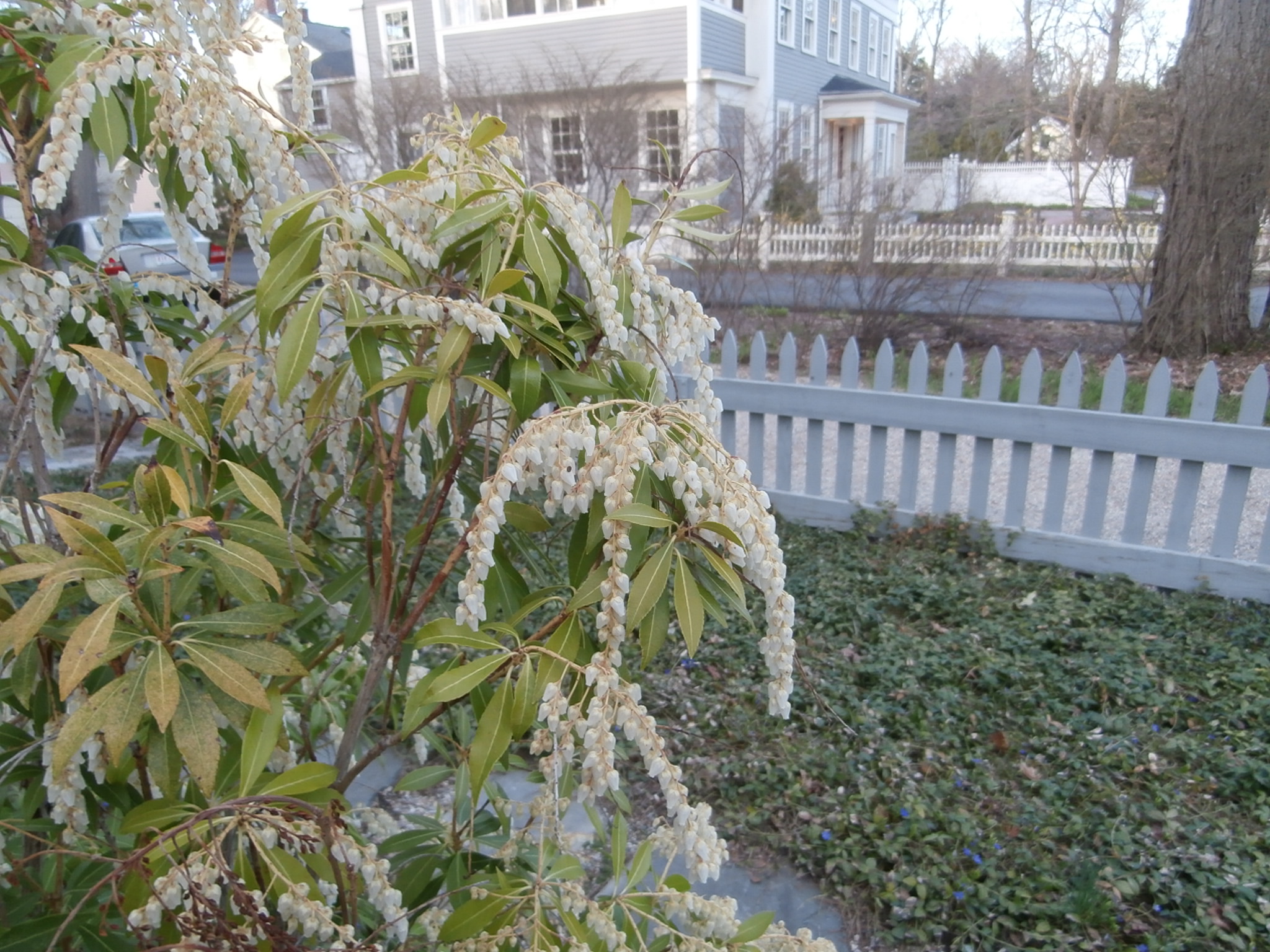
It’s always a surprise to see what flowers are available on May 1 any given year. Since these are in my yard now, I suspect there will be different ones by  May.

small rhodadendron

blue scylla

andromeda

forsythia

Read Full Post »

« Newer Posts