Photo: David Lurvey/Museum of the City of New York.
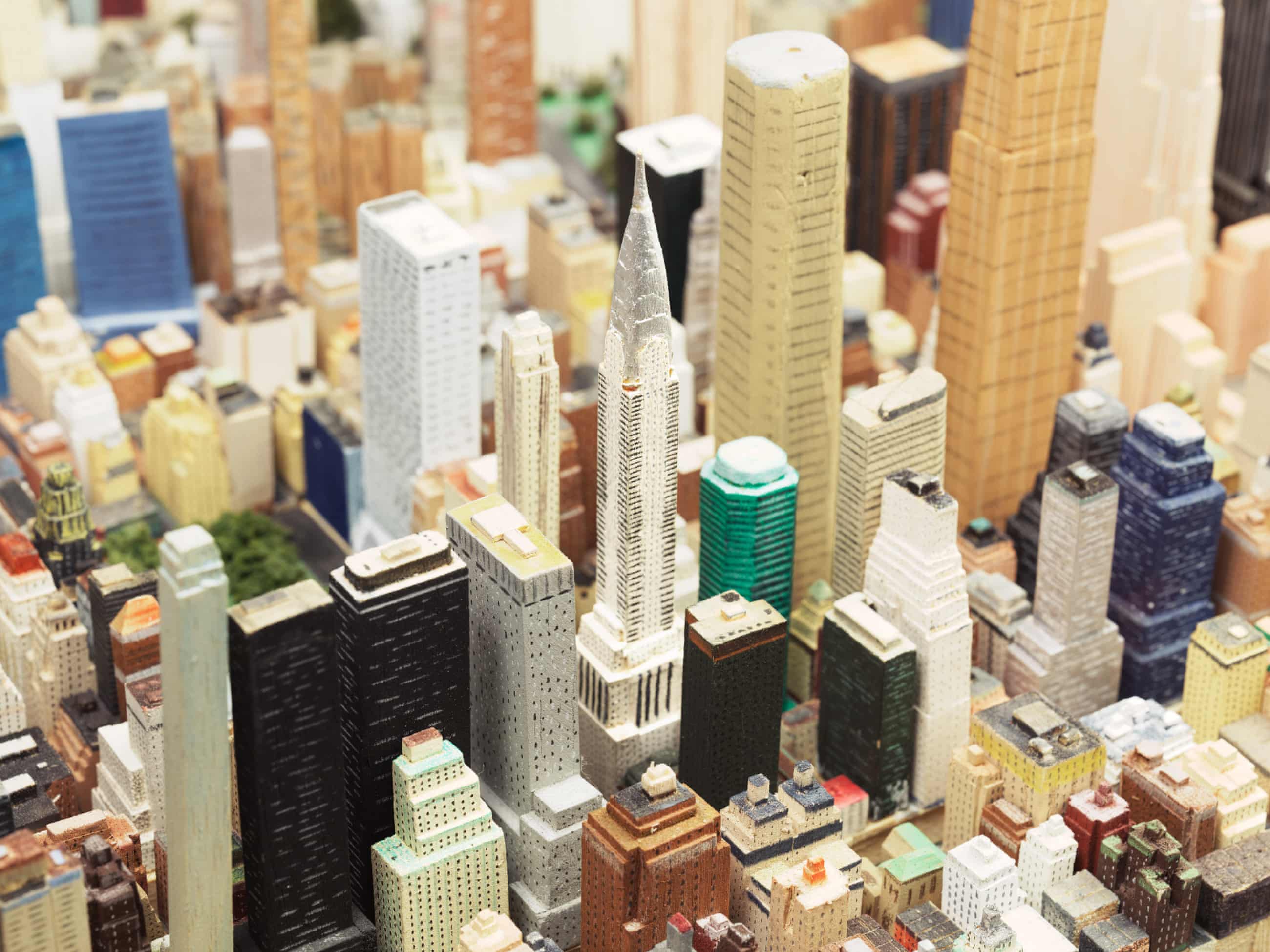
Joe Macken’s “He Built This City” is a 50-by-27 foot piece made of wood and cardboard. It’s on display at the Museum of the City of New York (1220 5th Avenue at 103rd Street) through summer 2026.
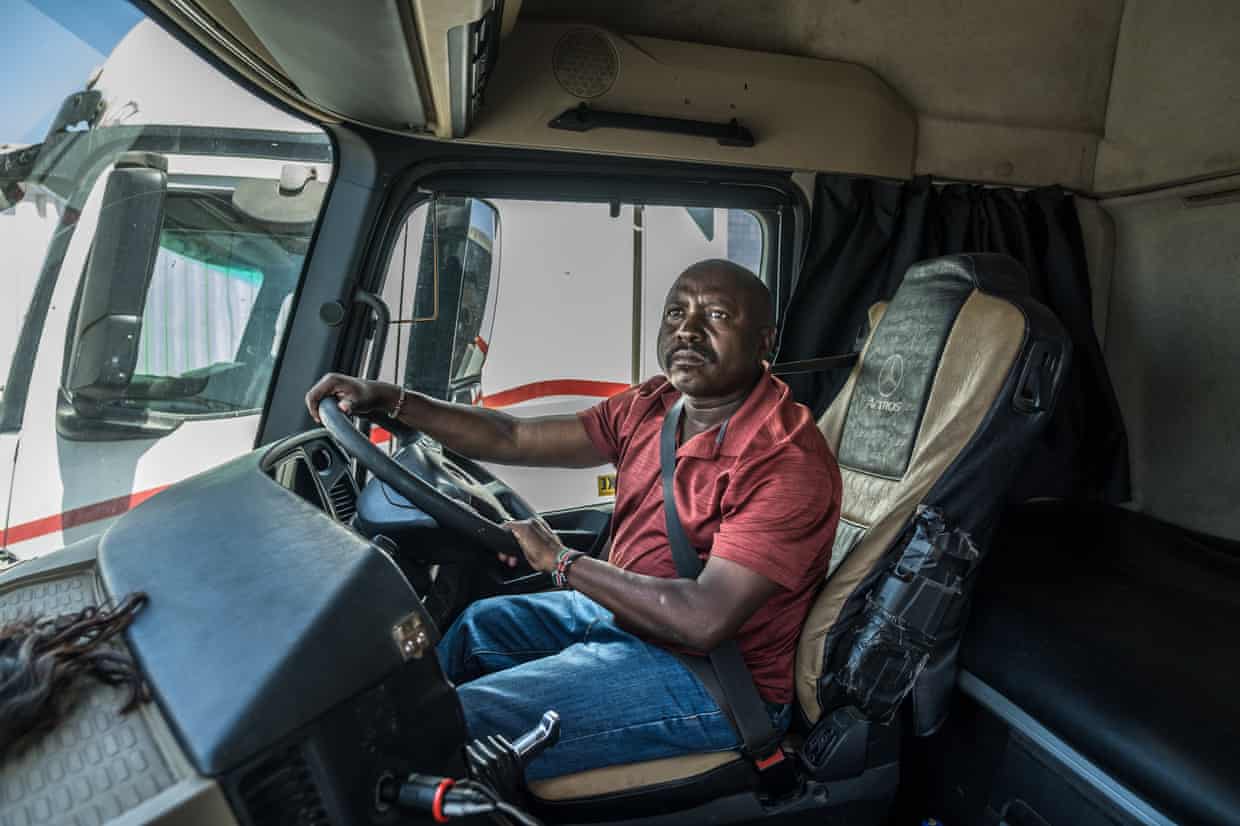
Today’s story is about determination. Specifically, it’s about the determination of a former trucker who spent decades building a replica of the five boroughs of New York City, now displayed at the Museum of the City of New York.
For the Smithsonian, Sonja Anderson wrote, “In 2004, truck driver Joe Macken created a miniature replica of New York City’s 30 Rockefeller Plaza out of balsa wood. Although he had intended to stop there, he realized he was hooked.
” ‘Then the next day, I built another one,’ he tells CBS News’ Steve Hartman. ‘And then I built another one.’
“Macken kept building for more than two decades. He worked his way through Manhattan and began work on the other boroughs. He made 320 sections — each representing about a square mile of New York — with wooden buildings, painted parks and tiny artificial trees. When he ran out of room at home, he rented a storage unit.
“Macken ended up with a 1,350-square-foot model depicting New York City in its entirety. Last summer, his work went viral on TikTok.”
At the Guardian, Alaina Demopoulos adds to the story.
“In 2003, Joe Macken built a miniature model of a bridge out of popsicle sticks [but] ‘It got destroyed, and I was kind of bummed,’ said Macken, who is now 63. ‘So I figured, let me build something better.’
“Twenty-three years later, that ‘something better’ survived another truck drive – this time to the Museum of the City of New York, which now houses the project that spiraled into Macken’s life’s work.
“After the accidental bridge demolition, Macken focused on another New York landmark. He carved a mini replica of 30 Rock, the art deco skyscraper and centerpiece of Rockefeller Center. That went well, so he started adding on, using wood to render the surrounding Midtown neighborhood. His mini Midtown became mini Manhattan. Then, he decided to model all of New York’s five boroughs, block by block.
“The result is a 50-by-27ft piece made of wood and cardboard, held together by glue and the sheer determination Macken needed to get it done. … Macken said, ‘I just started cutting one little house at a time.’ It took him 10 years to cover Manhattan, and then another decade to get through the rest of New York.
“In the late 60s and early 70s, Macken watched the twin towers rise from his childhood bedroom window. He remembers seeing cranes hoist girders into the sky. ‘It was my favorite building,’ Macken said. So he put it in the model, which has replicas of both One World Trade Center, which opened in 2014, and the original towers. ‘No matter what, the [former] World Trade Center was going to be in there,’ he said. ‘That was just a personal thing I wanted to do.’
“Before it arrived at the museum, Macken kept the model in a storage unit near his home. Macken, a former truck driver, stacks the boards into piles when transporting the piece. He tries to avoid another model bridge massacre by ‘driving slow.’ …
“The museum exhibits the model in a large, ground-floor gallery, arranged from due north to south. Manhattan, the borough used to getting all the attention, is dwarfed by the outer boroughs, reminding viewers that much of the city’s magic occurs far away from tourist hubs.
“ ‘I’ve been thinking a lot about how knowable and unknowable New York City is to all of us, whether we’re from here or just have a mental picture of this place,’ said Elisabeth Sherman, MCNY’s deputy director and chief curator. …
“There are binoculars placed on the outside edges of the model, so viewers can take a closer look at specific sections. People who live near landmarks can easily find their blocks – one museum employee pointed out their home on the edge of Brooklyn’s Prospect Park. …
“Sherman said that when museum staff first saw the model, ‘we were all standing around squealing, “Look, there’s our museum!” “There’s the Met, there’s the Guggenheim.” ‘ …
“Sherman first heard of Macken the way many others did: last summer, the project went viral on TikTok, when 8 million people – coincidentally, that’s about the population of New York – turned into his delightfully lo-fi first video. In the clip, Macken stares directly at the camera, holding up downtown Manhattan, making sure to point out his beloved twin towers. It was not his deal – Macken said his daughter egged him on.
“ ‘I’m totally clueless when it comes to that stuff,’ he said. ‘It took me longer to download the app than it did to build this whole thing.’ “
More at the Guardian, here. For Sonja Anderson’s report at the Smithsonian, click here.