Feeds:
Posts
Comments

Posts Tagged ‘university’

Photos: The Literary Cat Co.
Since Literary Cat Co. opened in Kansas about a year and a half ago, 32 of the store’s foster cats have been adopted by bookstore customers.

Today’s story is about a business in Kansas that meets two very different goals at the same time — and makes a lot of people in the community happy.

Sydney Page reports at the Washington Post, “At a bookstore in this Kansas town, three cats are on the full-time staff. Hank, a domestic longhaired cat, is the ‘regional manager.’ His job duties involve keeping track of the computer cursor and ‘sleeping in adorable positions 22 hours a day,’ according to the bookstore website.

“ ‘He’s the boss of this place,’ said Jennifer Mowdy, owner of the Literary Cat Co. in Pittsburg, Kansas — a bookstore that doubles as a cat lounge and feline foster home.

“Scarlett Toe’Hara, a black short-haired cat, who is polydactyl — meaning she has extra toes — is the ‘assistant (to the) regional manager.’ She is the front door guard, plant inspector and treat tester.

“Mike Meowski — a domestic longhaired cat with one eye, named after Mike Wazowski in Monster’s Inc. — is ‘assistant (to the assistant to the) regional manager.’ His role involves cuddling guests and quality control for boxes. …

“Mowdy opened the store in 2023 after 17 years as an educator. While teaching, Mowdy volunteered with animal rescues and fostered cats. She also loved bookstores. …

” ‘I decided I could do it; I could create something,’ Mowdy said.

“There are typically about seven cats — in addition to Hank, Scarlett and Mike — who live in the bookstore as foster cats. They’re ‘temporary staff,’ and Mowdy’s goal is for her customers to adopt them.

“ ‘We partner with a rescue, and when they get a cat that they think has a personality that would fit, or they haven’t been successful in adopting a cat through other means,’ she said. ‘If we have the room, we take them in.’ … The cats come from SEK Animal Advocates, a local rescue network. …

“Lori Seiwert and her husband adopted a brother-sister duo from the Literary Cat Co. shortly after it opened. The cats are named Frog and Toad after the picture book. …

“Frog, who is male, and Toad, who is female, turned 2 in February. Seiwert said she and her husband often stop by the store to visit Mowdy and play with the other cats.

“ ‘It’s a nice thing for such a small community,’ she said. ‘It’s very homey.’

“Most cats are adopted within six months of arriving at the bookstore, though some find homes much faster; others have stayed for up to a year. …

“Mowdy looks after the cats with Caitlin Fanning, a bookseller. They also have a volunteer who visits the store on Sundays and Mondays when it is closed to feed the cats and care for them.

“The bookstore is near Pittsburg State University, so college students often bring their own books to study there and snuggle some cats.

“ ‘We’ve got lots of cozy chairs and reading nooks,’ Mowdy said. ‘Lots of people don’t buy anything, they just come and play with the cats. That’s perfectly okay. We need to get the cats socialized, too.’ …

“The bookstore has become an environment for shy or unsocialized cats to get comfortable around people. …

“Before leaving work for the day, ‘we just make sure everybody is fed and watered, and anybody that needs meds gets them,’ Mowdy said. ‘We tell them goodnight and don’t cause any trouble, and we see them in the morning.’ …

“As far as books go, the Literary Cat Co. carries a wide range of authors and genres.”

This bookstore sounds like a place that “shy or unsocialized” humans could make friends, too, but I can’t help wondering how long a bookshop can last if it doesn’t matter that “lots of people don’t buy anything”!

More at the Post, here. Lots of pictures.

Read Full Post »

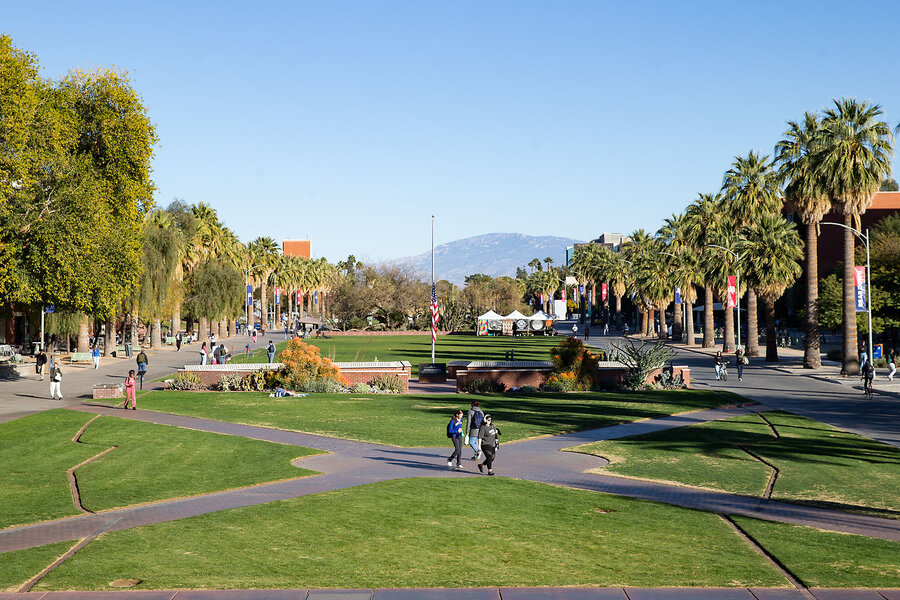
Photo: Mason Kumet/The Hechinger Report.
The University of Arizona campus in Tucson, where the number of undergrads majoring in the humanities has in creased by 76% since 2018, when a bachelor’s in humanities was introduced.

For years, the value of a postsecondary education has been measured by how much money someone can make after graduation, with the result that classes in the humanities were devalued.

Now there’s evidence that in addition to the intrinsic value of the humanities, they can make the difference between getting the job and not getting it.

Jon Marcus wrote at the Hechinger Report (a nonprofit news organization focused on inequality and innovation in education) about what’s going on, and the Christian Science Monitor reprinted the story.

“Olivia Howe was hesitant at first to add French to her major in finance at the University of Arizona. She was afraid it wouldn’t be very useful in the labor market.

“Then her language skills helped her land a job at the multinational technology company Siemens, which will be waiting for her when she graduates this spring.

“ ‘The reason I got the job is because of my French. I didn’t see it as a practical choice, but now I do,’ says Ms. Howe, who, to communicate with colleagues and clients, also plans to take up German. …

“The simple message that majoring in the humanities pays off is being pushed aggressively by this university and a handful of others. They hope to reverse decades of plummeting enrollment in subjects that teach skills employers say they need from graduates but aren’t getting.

“The number of undergraduates majoring in the humanities at the University of Arizona has increased 76% since 2018, when it introduced a bachelor’s degree in applied humanities that connects the humanities with programs in business, engineering, medicine, and other fields. It also hired a humanities recruitment director and marketing team and started training faculty members to enlist students in the major with the promise that an education in the humanities leads to jobs.

“That’s an uncharacteristic role for humanities professors, who have tended to resist suggestions that it’s their role to ready students for the workforce. But it has become an existential one.

“Between 2012 and 2022, the number of undergraduate degrees awarded in the humanities – English, history, languages, literature, philosophy, and related subjects – fell 24%, according to the American Academy of Arts and Sciences. It’s now below 200,000 for the first time in more than two decades.

“In response, universities and colleges nationwide have started eliminating humanities departments and laying off humanities faculty as policymakers, parents, and administrators put a premium on highly specialized subjects they believe lead more directly to jobs. …

“ ‘What we are up against is the constant negative storytelling about how the humanities are useless,’ says Alain-Philippe Durand, dean of the University of Arizona’s College of Humanities and a professor of French. …

“ ‘When you tell them we are teaching the life of the mind, they laugh at you,’ Dr. Durand says over lunch at the student center. ‘You have people saying, “Do we really need this?” ‘ he says. …

“Dr. Durand’s department went so far as to put that declaration on a billboard on Interstate 10 in Phoenix, conveniently near the campus of rival Arizona State University. ‘Humanities = Jobs,’ it said, with the college’s web address. Dr. Durand keeps a model of it on a shelf in his office.

“The skills he’s talking about include how to communicate effectively, think critically, work in teams, and be able to figure out a way to solve complex problems outside of a particular area of expertise. Employers say they want all of those, but aren’t getting them from graduates who major in narrower fields.

“Eight out of 10 executives and hiring managers say it’s very or somewhat important that students emerge from college with these kinds of skills, according to a survey by the American Association of Colleges and Universities. …

“What employers want ‘is people who can make sense of the human experience,’ says Rishi Jaitly, who has developed an executive education program at Virginia Polytechnic Institute that uses the humanities to help mid-career managers be better leaders.

“Along with Arizona, Virginia Tech is among a small group of universities taking steps to change the conversation about the humanities. A surprising number are technology-focused. These include the Georgia Institute of Technology, which has also started drawing a connection between the humanities and good jobs at high pay. That has helped boost undergraduate and graduate enrollment in Georgia Tech’s Ivan Allen College of Liberal Arts by 58% since 2019, to 1,884 students in 2023 – the most recent period for which the figure is available.

“Before then, ‘we were doing almost nothing to explain the value of the humanities,’ says Richard Utz, interim dean. That’s important at a technological institute, he says. …

“A medievalist, Dr. Utz uses the example of assigning his students 15th-century Robin Hood ballads. ‘They read something that is entirely alien to them, that is in late medieval English, so they’re completely out of their comfort zone,’ he says. Then they split into groups and consider the material from various perspectives. It makes them the kind of future workers ‘who are versatile enough to look at a situation from different points of view.’ …

“In the first two years of the humanities-focused executive education program at Virginia Tech, the participants have come from Amazon, Microsoft, Boeing, Zillow, and other companies. They study history, philosophy, religion, classics, literature, and the arts. They use these to consider questions about, and qualities of, leadership, and to see how what they learn can be applied to technology trends including data privacy and artificial intelligence. …

“Says Virginia Tech’s Mr. Jaitly, a former technology entrepreneur and founder of a venture capital firm whose own undergraduate degree was in history. ‘The superpowers of the future emanate from the humanities: introspection and imagination, storytelling and story-listening, critical thinking.’ …

“Some humanities faculty [bristle] at the idea that their work is relevant only when combined with more career-oriented disciplines, says Dr. Durand, at the University of Arizona. ‘But you have to be aligned with your students,’ he says. … ‘We can’t do things the way we always have.’ ”

More at the Hechinger Report via the Monitor, here. No firewall.

Read Full Post »

Even if, like me, you never got into the TV show “The Wire,” you may know that it was about a troubled section of Baltimore. You also may be interested in a new school there, intended to serve as a real community gathering place.

New York Times design critic Michael Kimmelman has the story.

“In many ways, public schools are gated communities, dead zones,” writes Kimmelman. “They’re shuttered after dark and during the summer, open to parents and students while in session but not to the larger community.

“A new public school in one of the poorest neighborhoods in East Baltimore wants to challenge the blueprint. Designed by Rob Rogers, of Rogers Partners in New York, Henderson-Hopkins, as it’s called, aspires to be a campus for the whole area — with a community center, library, auditorium and gym — as well as a hub for economic renewal.

“This is the neighborhood where parts of ‘The Wire’ were filmed. In 2000, when the city’s mayor convened local business leaders, the vacancy rate was 70 percent. Poverty was twice the city average. Crime, infant mortality and unemployment were all through the roof.

“The idea that emerged — of making the school the centerpiece of a major redevelopment project — is a grand urban experiment. Operated by Johns Hopkins University in collaboration with Morgan State University, the school, which opened in January, belongs to a $1.8 billion plan that also includes new science and technology buildings, a park, retail development and mixed-income housing. While gentrification might threaten to displace the poor, the school is to be the glue that helps bind the district together.” Read more here.

Photo: Matt Roth for The New York Times
Henderson-Hopkins, which shares its library, gym, auditorium, and other features with the surrounding area, is designed to catalyze change in a blighted section of Baltimore.
 

Read Full Post »

A lovely, warm day for walking, grandkids, and friends.

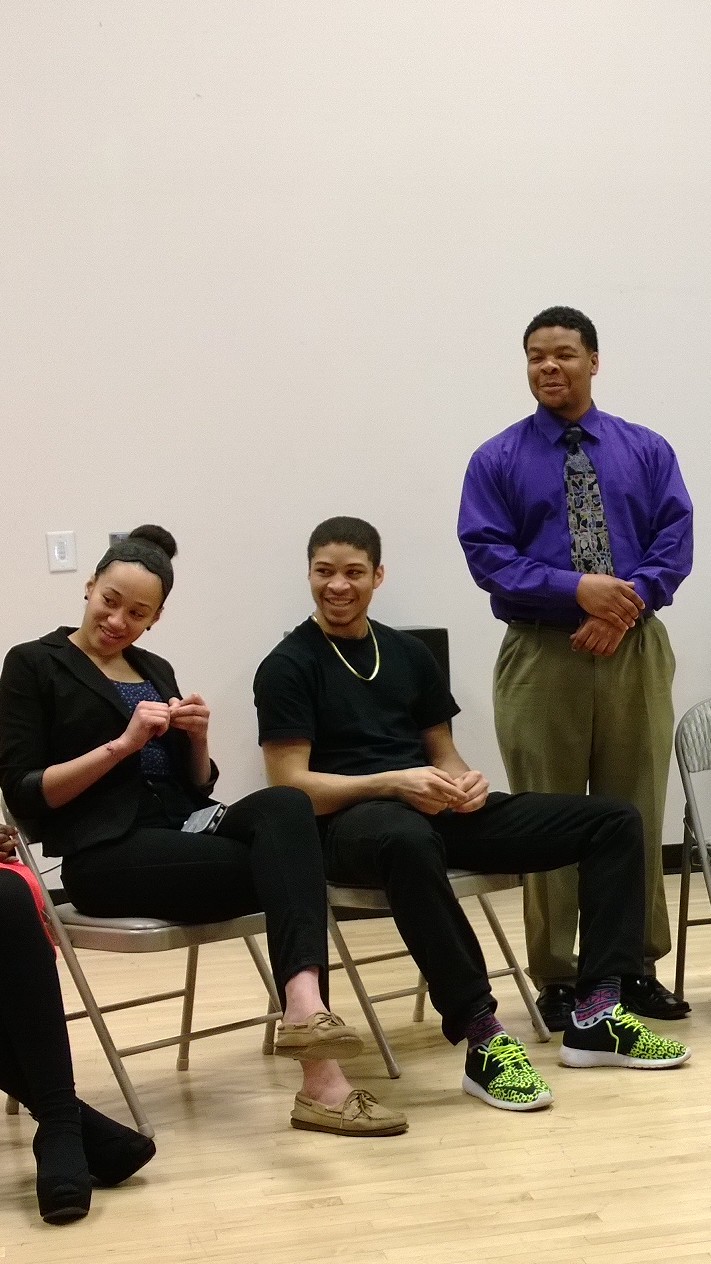
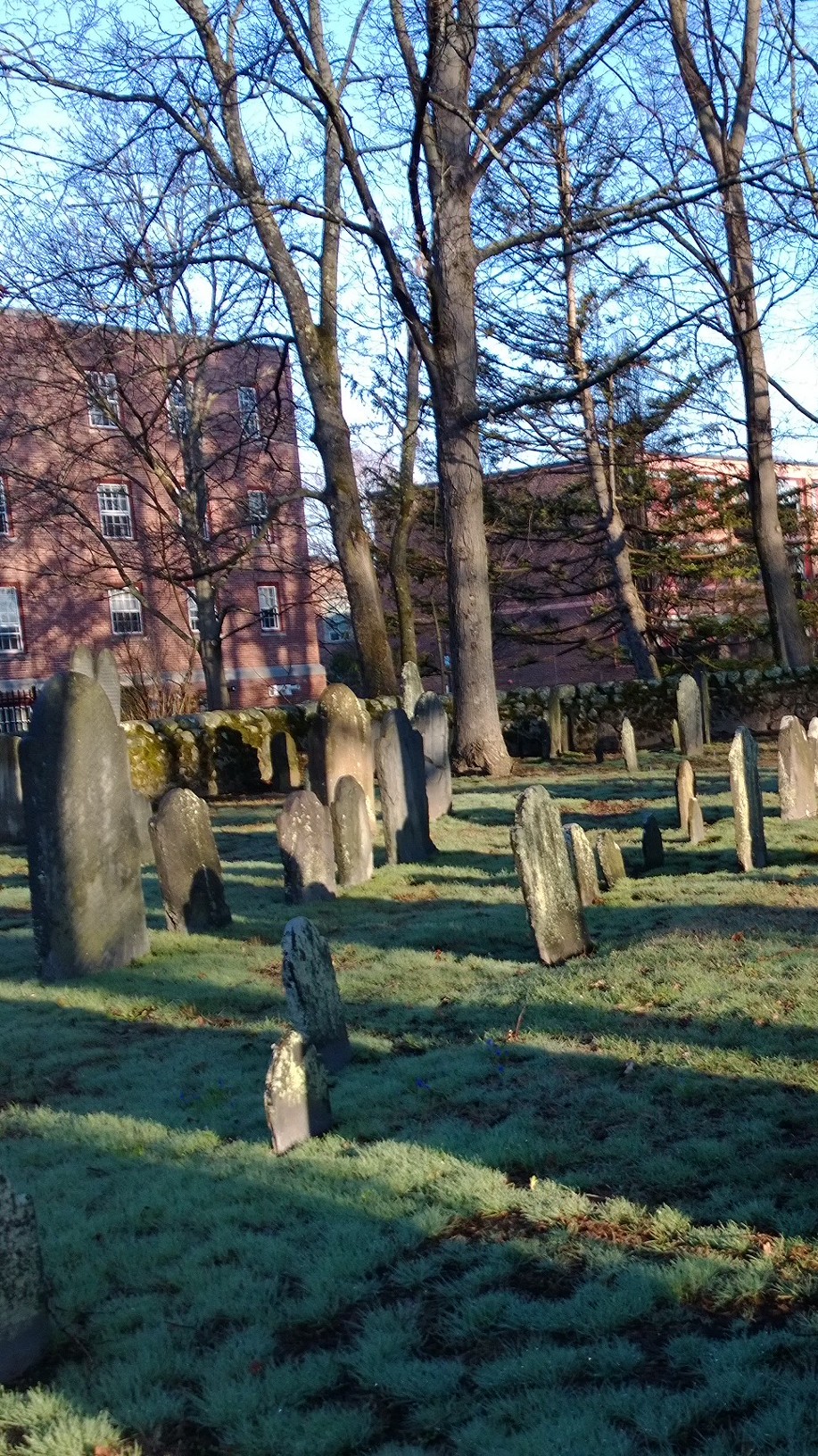
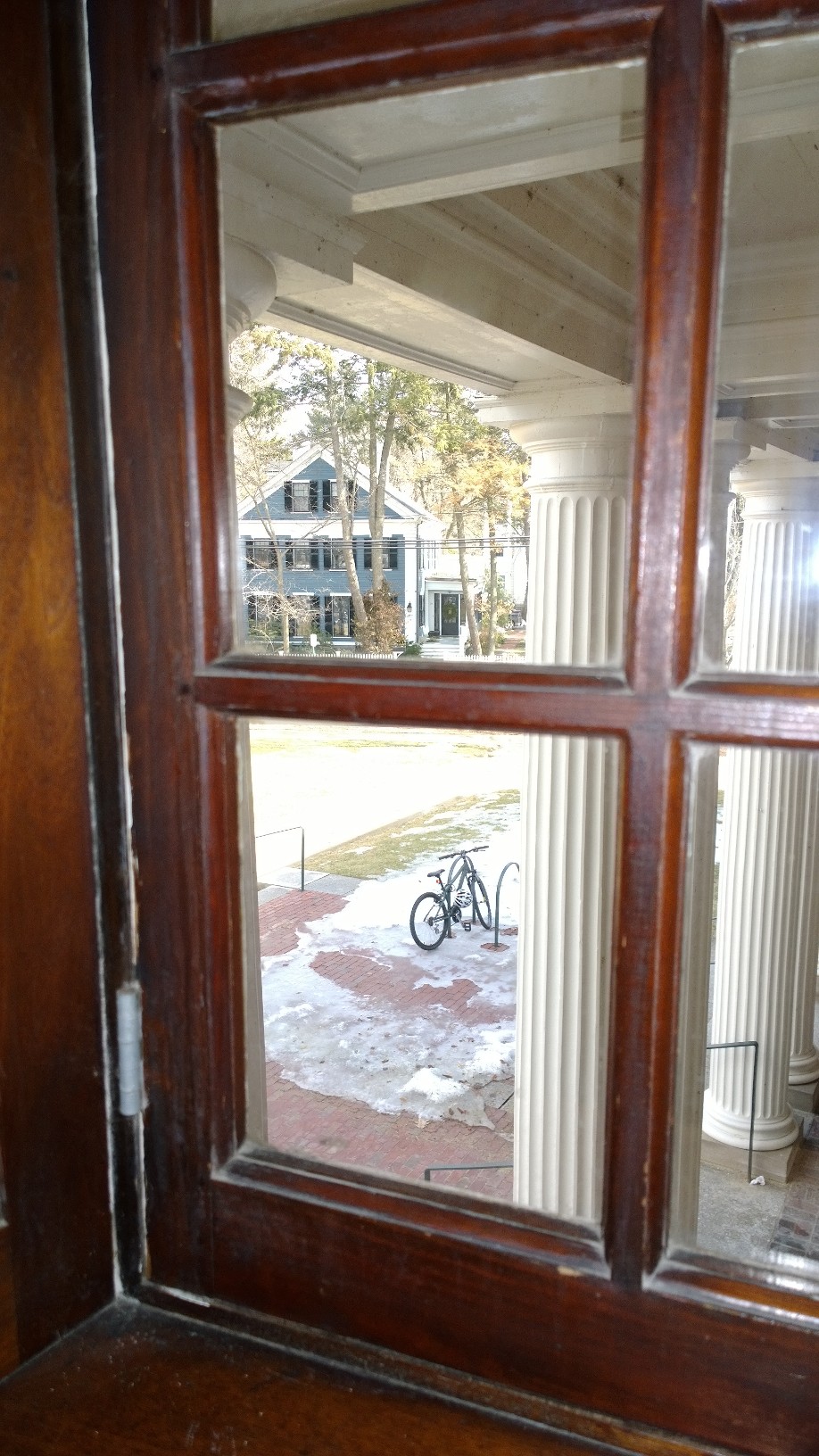
Here are a few photos, including one of director-playwright Jermaine Hamilton with cast members at Brandeis University.

I was so happy I managed to get to Jermaine’s senior-thesis play about inequality of U.S. high schools, Bridging the Gap. What a challenge to make it work for both his social sciences major and his theater minor! A great bunch of natural actors and Jermaine’s lighting and sound collaborators pushed it over the finish line, and judging from the audience comments in the talk-back, the issues that the play presented struck chords.

Jermaine has a teaching job lined up for next year, after graduation. The school is lucky to have him.

Jermaine, standing, joins his cast for a talk-back with the audience. The other pictures are walking-around shots.
Jermaine-Hamilton_with-cast

daffodils


gravestone-shadows

flower-box-april-12-14


032214-library-wndow

tree-face


Read Full Post »