Feeds:
Posts
Comments

Posts Tagged ‘violence’

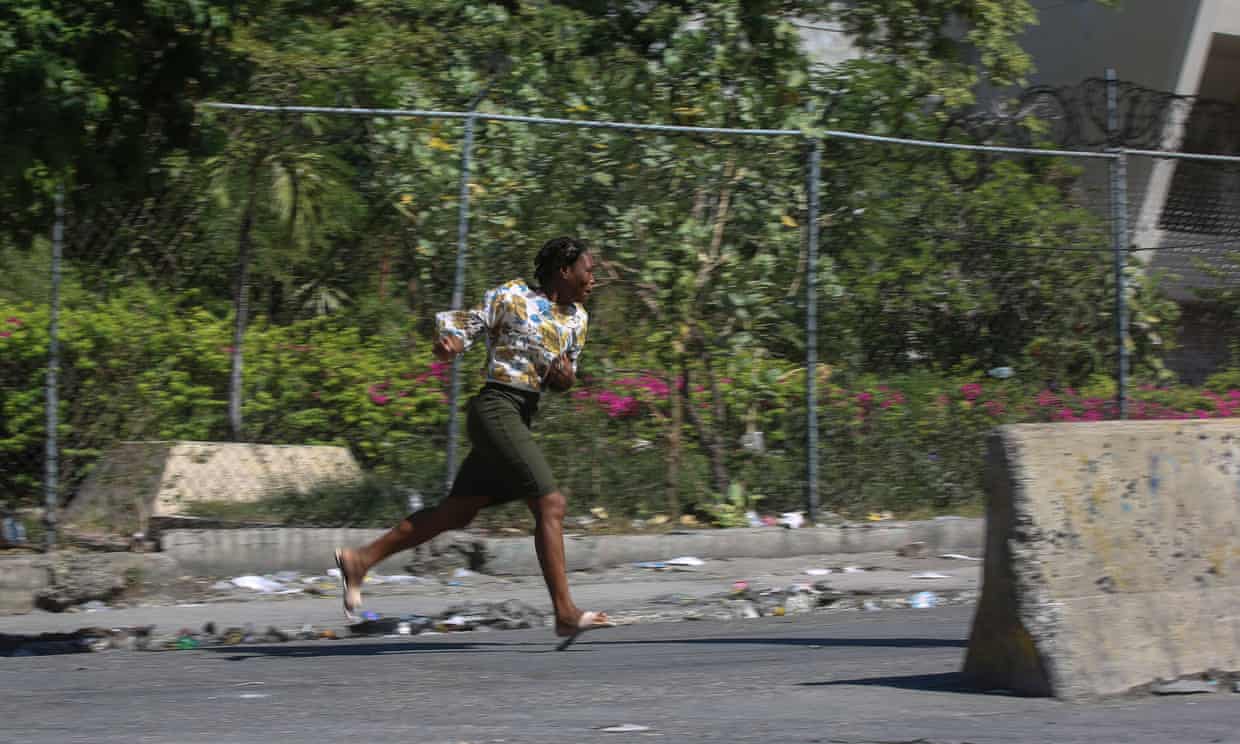
Photo: Odelyn Joseph/AP.
A woman runs to take cover from gunfire during clashes between police and gangs in Port-au-Prince, a city where a theater company perseveres.

There’s something about theater people and defiance. Something that keeps them from giving in to the ways things are when things are bad. I’ve blogged here about the anti-government theater of Belarus and here about Ukrainians offering theater in the subway, away from Russian bombs.

In today’s post, Tom Phillips and Etienne Côté-Paluck report at the Guardian about Haiti.

“In a dimly lit rehearsal room in a city under attack, Jenny Cadet raised an imaginary pistol and fired a single make-believe bullet at her director.

“ ‘Life is a theatre. I am a theatre. We are a theatre. The world is a theatre,’ proclaimed the 31-year-old Haitian actor, turning to the audience as she uttered the tragicomedy’s final lines.

“Moments later, real-life shots rang out outside the stage school in Port-au-Prince – the latest act of violence in an increasingly terrifying drama that has forced tens of thousands of people to flee their homes here in the past fortnight alone.

“ ‘Every day [there’s shooting],’ sighed the play’s director, Eliezer Guérismé, as his company took a break from their read-through to the all-too familiar sound of gunfire. ‘But even with the shooting, we keep on working because that’s our mission. We don’t want to stop.’

As gangs tighten their grip over a city now almost entirely outside of government control, Guérismé, 39, said he saw drama as a key way of interrogating and denouncing the social and political crisis. …

“Theatre was also ‘an act of rebellion and resistance’ and a way of fostering renewal, given the politically charged violence into which Port-au-Prince has been plunged since the 2021 assassination of Haiti’s president Jovenel Moïse.

“ ‘People need to see the reality that they are living up on stage … theatre is the mirror of society … Everything we hear in this city – the sound of the bullets that are very, very present – we try to put on stage,’ the director said. …

“Nearly 4,000 people have been killed since the start of the year, according to the UN, as rifle-carrying gang fighters have advanced across the capital, opening fire on government buildings and burning homes.

“A US-backed policing mission has so far failed to restore order and in recent days the violence has intensified further with gangsters even attacking Pétion-Ville, one of the last supposedly safe enclaves in the hills over Port-au-Prince. … Foreign diplomats and aid workers are fleeing by helicopter amid calls for a UN peacekeeping mission to be deployed.

“ ‘It feels like the end of Port-au-Prince,’ Guérismé admitted this week. “Every day people are leaving their neighborhoods.’

“The Haitian director recognized that continuing to rehearse his latest production was a perilous business in a city where residents’ movements grow more restricted by the day.

“One of his troupe’s actors commutes to the drama school each day from Carrefour, a gang-run area to the city’s south which is effectively off-limits to outsiders. ‘I know he’s taking a risk to come. He’s taking a huge risk… Living in Port-au-Prince today requires a superhuman effort,’ Guérismé said. …

“But Guérismé was determined to fight on. … ‘It’s my country. It’s my homeland. It’s my city’ … and I have responsibilities,’ the director said as his group prepared for Port-au-Prince’s annual ‘En Lisant’ theatre and performing arts event. ….

“Philippe Violanti, the French dramatist who wrote Guérismé’s latest tragicomic play, had planned to fly to Port-au-Prince to see his work staged for the first time. But Violanti was forced to cancel after flights into the capital were suspended because three US aircraft were hit by gunfire while taking off or landing.

“Six of the seven foreign artists invited to the festival – from Guadalupe, French Guiana, France, Belgium and the US – have pulled out. Performances for primary and secondary school children have been dropped from the program. Some rehearsals are being held online.

“Guérismé said the mood was grim, but he believed it was essential Haiti’s acting community did not throw in the towel.

“ ‘The festival will not be postponed. We will go ahead,’ he vowed. ‘This is the time to make a gesture of hope – to affirm that life is here.’ ”

More at the Guardian, here.
Read Full Post »

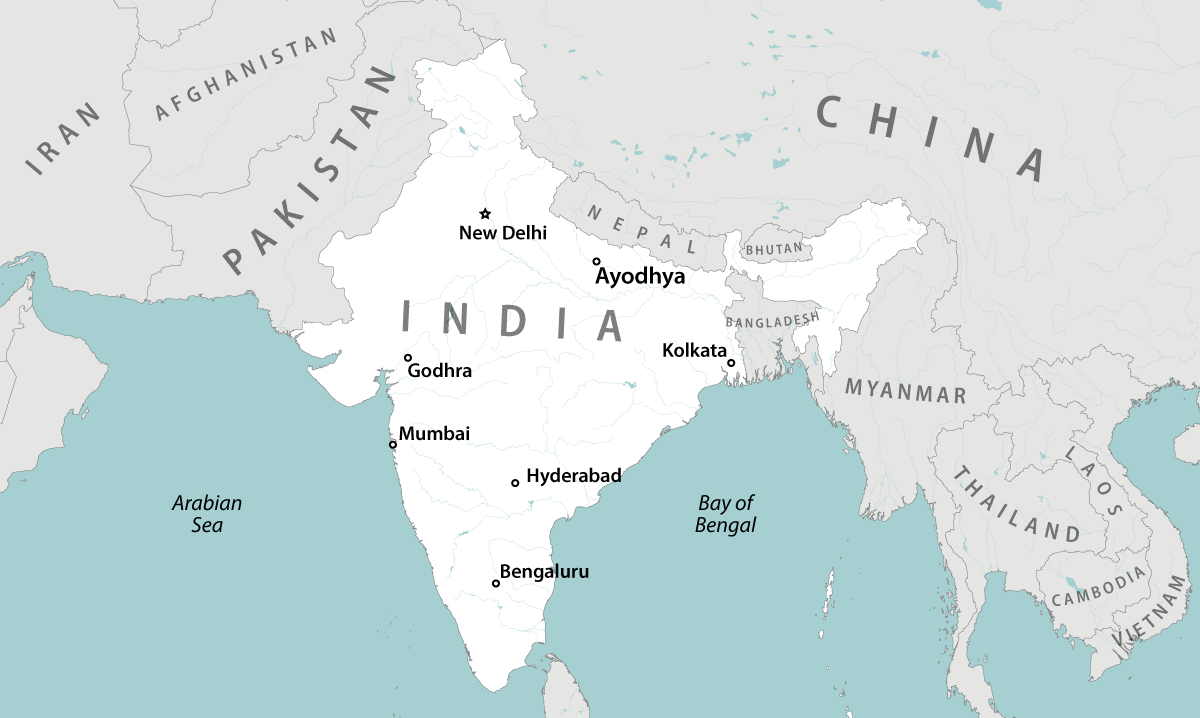
Map: Jacob Turcotte/CSM.
There are still people in India who appreciate having friends from other religions.

There is not much to celebrate about Hindu-Muslim relations in India these days, where the current power structure seems to have turned its back on peaceful coexistence. But trust the Christian Science Monitor to come up with a rare upbeat story! It’s about an interfaith friendship between Sadiq Ali, a Muslim, and Mahant Gyan Das, a Hindu, that has survived many political storms.

Shweta Desai  writes, “The light blue walls of Sadiq Ali’s living room are adorned with photos of Hindu seer Mahant Gyan Das. The two have been friends since the 1980s, when Mr. Ali was a volleyball player and Mr. Gyan Das a wrestler. They bonded over their shared love of sports, and Mr. Gyan Das regularly visited Mr. Ali’s family tailoring shop to get his tunics stitched. 

“About 20 years ago, their friendship took on a new meaning. Days of violent riots had rocked the nation and left more than 700 Muslims dead. It tore open old wounds in Ayodhya, a north Indian city where the Muslim community was still reeling from the destruction of the historic Babri mosque by a Hindu mob in 1992.  

“Sensing the need for an olive branch, Mr. Gyan Das, then head priest of the city’s historic Hanuman Garhi temple, invited 1,000 Muslims to the temple premises during Ramadan to break their daily fast. Mr. Ali helped host the feast, which still fills its organizers with pride and nostalgia – especially as Ayodhya is once again in the spotlight for Hindu-Muslim tensions.

“[Recently] Prime Minister Narendra Modi unveiled an opulent Hindu temple on the site where the Babri mosque once stood. 

“Like the mob which leveled the mosque, Mr. Modi and his supporters in the ruling Bharatiya Janata Party (BJP) claim that Babri was built over the birthplace of Hindu deity Ram, and the construction of the new Ram temple has become a rallying point for India’s growing Hindu nationalist movement. …

“In such polarized times, Mr. Gyan Das and Mr. Ali’s friendship offers a reminder of what Ayodhya could have – and perhaps still can – become: a symbol of multiculturalism and tolerance.

‘Ordinary people here want to live in peace,’ says Valay Singh, author of Ayodhya: City of Faith, City of Discord.

“He argues that the city’s reputation as India’s ‘ground zero’ of communal conflict overshadows its history as a heartland where different religious traditions have long intersected. In fact, he notes, the land for the Hanuman Garhi temple was donated to the region’s Hindu community by Muslim ruler Shuja-ud-Daula in the 18th century.

“ ‘It was a common tradition for the religious establishments to receive patronage from the Muslim rulers,’ he says. …

“[The] religious strife has deep roots – several weaving back toward Ayodhya. The destruction of the Babri mosque, for instance, came after decades of campaigning by right-wing Hindu groups, such as the Vishva Hindu Parishad (VHP), and led to months of communal violence across India. In Ayodhya, Muslims and their properties were singled out. Mr. Ali’s shop was plundered multiple times. …

“Indeed, the mosque’s demolition and resulting chaos left deep fissures between the Hindu majority and Muslim minority throughout the country. 

“Those rifts grew during the 2002 Gujarat riots, which were sparked by a deadly fire on a train carrying Hindu pilgrims from Ayodhya to Godhra, Gujarat. …The following year, Mr. Gyan Das approached Mr. Ali with his idea to organize an interfaith iftar fast-breaking meal at Hanuman Garhi.

“At first, the tailor was baffled. He reminded Ayodhya’s most influential seer that after breaking fast, Muslims must offer the namaz prayers. Will the Hindu seers accept prayers to Allah on the temple’s premises? Mr. Gyan Das was confident they would.

“In November 2003, with fanfare and high security, saffron-robed priests from several local temples welcomed their Muslim guests, serving them fruits and yogurt. Around sunset, calls of ‘Allahu Akbar!’ mingled with the sounds of conch shells and temple bells, as rows of Muslims bowed down to read the namaz. Both sides prayed together for peace and brotherhood to prevail across the country.

“The Muslim community reciprocated. After the iftar, hundreds of seers marched to Mr. Ali’s home to break the Hindu Ekadashi fast with seviyan, a traditional sweet prepared by Muslims on festive occasions. …

“The iftar [inspired] Yugal Kishore Shastri, one of few outspoken Hindu priests who have left the far-right and put their faith in the spirit of Indian secularism. Mr. Shastri says he split from the VHP after discovering that there was ‘no evidence of an ancient Ram temple under the mosque structure.’ …

“Although it’s getting harder for activists to cut through the vitriol and bring communities together … ‘There will always be a place for people who work for Hindu-Muslim peace,’ he says.”

More at the Monitor, here.

Read Full Post »

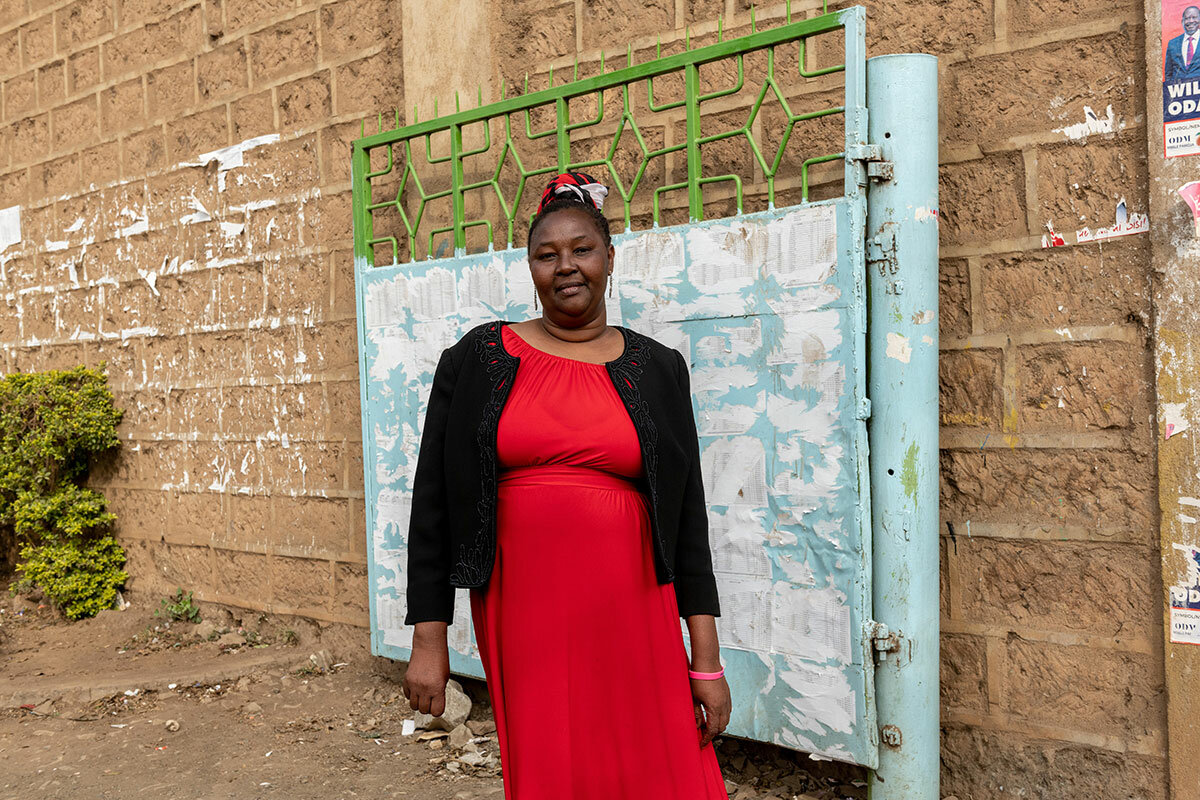
Photo: Paul Stremple.
Beatrice Karore, a community leader involved in peace building during Kenya’s elections, stands outside a local vocational college in Mathare that served as a polling station.

Blessed are the peacemakers.

Often they are women. We know that not all women are peacemakers, but many are. They see where differences of opinion can get out of hand and take action.

Today’s article is about peacemakers in Kenya trying to change the pattern of violent election periods. The story was written before the country’s Supreme Court made its decision on the recount. If you can’t stand suspense, skip to the end.

Mukelwa Hlatshwayo writes at the Christian Science Monitor, “The Kenyan presidential elections are over, but peace campaigner Beatrice Karore’s work is not done.

“One recent cloudy morning in Nairobi, the founder of Wanawake Mashinani – Swahili for Grassroots Women – walks to her office in Mathare, one of the most densely populated slum areas in the Kenyan capital. 

“Sliding a heavy-duty padlock off a thick metal door, Ms. Karore and her team file into the tiny room that serves as their headquarters, and sit on blue plastic chairs. Over loud music blaring from a nearby shop, Ms. Karore begins with a prayer for a good ‘walk for the peace’ ahead.

“Ms. Karore is one of dozens of grassroots peace activists across the country who sprang into action in the months leading up to Kenya’s Aug. 9 presidential elections. Now, as the country waits for a final verdict on disputed results, that work has become increasingly important.

“The Supreme Court is due to hand down a judgment on Sept. 5, after opposition candidate Raila Odinga challenged official results that showed him losing to William Ruto by a margin of 200,000 votes. A former prime minister, Mr. Odinga has blamed five previous presidential election losses on rigging – claims that have sparked deadly riots in the past. 

“For now, an uneasy calm is holding. But some campaigners fear the Supreme Court verdict could yet unleash the violence that followed disputed polls in 2007, when more than 1,200 people were killed, and again in 2017, when more than 100 people died. 

“As her team walk out of their modest office into narrow passageways crammed with shacks, Ms. Karore says she knows the current lull is far from guaranteed. ‘We [are still] doing peace campaigns to empower the community,’ she says.

‘We realized that when there is no peace, everyone loses.’ …

“Some analysts believe that the relatively peaceful election campaign, in which the main candidates ran on social and economic issues, rather than demanding voters’ ethnic loyalty, points to a maturing democracy. 

“Widely touted reforms to the electoral process, including the effective registration of voters in the diaspora, may have given more Kenyans a sense of greater transparency. And battered by two years of COVID-19 lockdowns and rising costs of living, most Kenyans would prefer to accept the Supreme Court verdict than go to an election rerun, analysts say. …

“The manner in which Kenyans navigate the decision by the court will set a precedent for future disputes across Africa. … Even if the fragile peace holds, electoral watchers caution it will take more than one election cycle to show Kenya has left violence in the past. …

“For the past two presidential elections, Ms. Karore’s team has organized the kind of ‘holistic’ monitoring that Kenya’s human rights commission says will transform how communities like Mathare – which typically bear the brunt of any unrest – participate in the post-electoral process. Wanawake Mashinani has held several community meetings at which faith-based leaders have encouraged people to remain calm. It’s given safety tips to residents on election day. 

“And in a neighborhood that’s neglected by officials, where violence, drug abuse, and crime are prevalent, perhaps the group’s most important work is also the simplest: It checks in on residents and listens without judgment. 

“On this August morning ‘peace walk,’ Ms. Karore stops first to talk to a group of women selling hair-care products outside a corrugated iron-roof shack. Speaking in Swahili, she asks them how they are and how things have been since the elections. The discussion is light and jovial; the women laugh at a joke about a fake flour scandal doing the rounds in Mathare. 

“One vendor, a young woman called Kim, says that things have been quiet and business has been slower. She tells the group they are glad major protests didn’t break out after the results were announced, because that would have meant they would have lost everything. 

“ ‘Anything small can trigger violence on the streets,’ Ms. Karore says. ‘Many people leave their homes and go to rural areas at this time, or where people of their same tribe live.’

“Research has shown that when marginalized communities feel that their favorite candidate loses an election due to irregularities, they are more likely to resort to violence. Human rights organizations say the unrest often breaks out along ethnic and identity lines. …

“As Ms. Karore and her team walk deeper into the township, checking in on neighbors and store owners, they are greeted by passersby who recognize them from previous door-to-door visits.

“Buoyed by the work of peace campaigners across Kenya as a whole, the political atmosphere has been significantly calmer than in two previous elections. A range of activists, from artists to religious leaders, have been galvanized into action in recent months. A campaign by artists in Kibera, Kenya’s largest township, displays works that celebrate the country’s ethnic diversity. Another group of activists organized a ‘peace caravan’ across the country, carrying messages urging voters to remain calm during the heated polls.

“Still, violence and intimidation persist. … In Mathare, Reagan Victor Ondigo says he barely escaped with his life when a mob of men tried to burn down his home as he and his family slept. … He blames politicians for whipping up ethnic grievances, but he’s cautiously hopeful that those perceptions are slowly changing.

“ ‘I hope that my daughter will know that freedom is there,’ he says.”

Looks like Kenya’s Supreme Court decision was accepted by both sides. More at the Monitor, here.

Read Full Post »

Photo: Ann Hermes/CSM.
Najari Smith, who founded the bike shop co-op and nonprofit Rich City Rides, stands in front of a mural depicting him on April 9, 2021, in Richmond, California, a town across the bay from San Francisco.

There’s something liberating about riding a bike, as my youngest grandchild learned after taking an REI class in Cranston. She used to be afraid of falling. Now she’s a biking dervish. Today’s post is about another biking enthusiast, who’s been liberating a poor city and making it rich.

Erika Page writes at the Christian Science Monitor, “Najari Smith was down in the dumps the night he first heard the bicycles below his window. He was new to California, lonely, and felt he lacked purpose. On the street below, a costumed parade of cyclists rolled by blasting music. By the time Mr. Smith rushed downstairs to join the party, they were gone.

“Mr. Smith’s journey, though, was just beginning. After that night in 2010, he began riding his bike everywhere and joined every community biking event around. Slowly, his spirits lifted.

‘Shoot, bicycles kind of saved my life,’ he says. He became part of the Bicycle and Pedestrian Advisory Committee of Richmond, California, which improves bicycle infrastructure in the city. During a routine committee meeting, he got his big idea.

“ ‘I thought to myself, “We’re building this infrastructure, but, you know, who are we building it for? Who’s going to use it?” ‘ he recalls. How would he get his community – the Black community – excited about using the bike lanes he was advocating for? And how would he break down the stereotype that Black people don’t bike? He started small – fixing up bikes at the park with local mechanics and giving them out to anyone who wanted one.

“Today, Mr. Smith runs Rich City Rides: a worker-owned cooperative bike shop as well as a bicycle advocacy nonprofit. These two spokes of the organization are distinct, but both serve Mr. Smith’s vision of using bicycles to ‘bring people together for healthy civic change’ in Richmond. Just like the bikes he fixes at the shop, Mr. Smith believes that no one, no matter what they’ve been through, is ever broken beyond repair.

“ ‘He’s the type of leader that seeks out the strength that an individual may have, rather than identifying their weaknesses. … He’ll sit down with folks and try to figure out how to get them involved, no matter what,’ says Robin D. López, who volunteers as a photographer for Rich City Rides and thinks of Richmond as ‘a community of untapped potential.’

“Roshni McGee, the program manager at Rich City Rides and co-founder of the bike shop, agrees. ‘He always tries to, you know, put a little bit of extra pressure on people and make them really be that diamond in the rough,’ he says.

“Rich City Rides is situated on a busy corner of Macdonald Avenue in a neighborhood that locals call the Iron Triangle, notorious for high crime rates and gun violence. Even though they live just across the bay from tony gentrified neighborhoods of San Francisco, many residents struggle to make ends meet. …

“ ‘He leads with love. … He shows that this is what we can do as Black people. We can revitalize our downtown, and we don’t have to be afraid of each other,’ says Jovanka Beckles, a mental health specialist who served on Richmond’s City Council from 2010 to 2018. She says Rich City Rides’ success has inspired other small businesses to open too, helping put the neighborhood on a long-awaited upswing. …

“[The nonprofit arm] plans social and wellness rides, youth programs, and community outreach. Since the nonprofit began in 2012, it has given away more than 1,000 bikes, led hundreds of social bike rides with thousands of participants, and conducted countless youth bicycle workshops. And during the pandemic, Rich City Rides has been distributing grab-and-go meals to families in need – an idea suggested by one of the high schoolers who works at the shop.

“In fact, Mr. Smith says other members of the team, and especially young people, make most of the important decisions. ‘I’m just a connector,’ he says.

“Cameren Howard-Simons is one of those young people who has found purpose through the organization. When he first met the crew at Rich City Rides, he was in middle school, and his mother didn’t want him hanging out in the area because of its reputation.

“Now Cam, a junior in high school, spends most of his free time working at the shop. ‘It’s hard to keep me away from people like this,’ he says with a wide smile, as he tries to get a derailleur to behave on the pink bike that’s hanging from his repair stand. Rich City Rides has kept him out of trouble, he says, adding that it’s one of the few places where kids can be completely themselves, without judgment.

“ ‘You’re wheelieing next to somebody, and they’re clapping, they’re recording you [on their phones], and they’re showing you love – showing you that they actually care about what you do,’ he says. …

“The notion that Richmond is not poor – but rich – guides Rich City Rides. ‘We’re a community that’s really rich in creativity and capacity and ingenuity,’ says Mr. Smith.”

More at the Monitor, here.

Read Full Post »

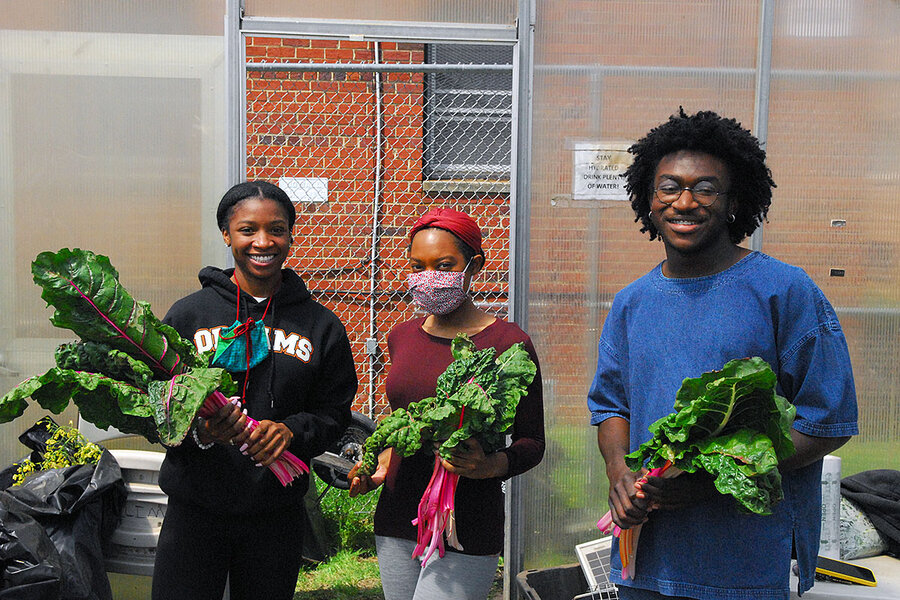
Photo: Noah Robertson/The Christian Science Monitor.
Kwesi Billups (right) and volunteers at Project Eden hold homegrown Swiss chard at the greenhouse in Southeast Washington, DC, April 17, 2021. Project Eden distributes its produce, along with donations from the Capital Area Food Bank, at a nearby church.

As many people learned during the pandemic, small, hopeful things can make a big difference in how a person feels. The same is true of neighborhoods. Even in areas characterized by blight and despair, a bunch Swiss chard that people grow together can make them believe that better days are ahead.

Noah Robertson writes at the Christian Science Monitor, “Three years ago, when Jevael German received his assignment through Washington’s Summer Youth Employment Program, he wanted nothing to do with it. He would be working with Project Eden, a community garden in the city’s troubled Southeast – known for police sirens much more than produce.

“A Washington native himself, Mr. German dreaded the months of labor in the district’s humidity. He didn’t even like vegetables. While meeting his supervisors on his first day, Mr. German laid his head facedown on the desk. 

“ ‘Sir, if you don’t want to be here, you’re welcome to leave,’ he heard back. ‘But you can’t put your head on the desk.’

“Mr. German stayed, and the summer surprised him. He enjoyed the outdoor work, which reminded him of childhood gardening with his grandmother. As an older member of the summer group, he began mentoring some of his younger co-workers. He even started eating greens. 

“At the program’s end, Mr. German asked to continue with Project Eden for another summer.

After returning, he learned that a former summer employee at the garden had died in a shooting. Mr. German, who was still living with one foot in the streets at that time, saw in that tragic death a version of himself if he didn’t change.

“ ‘Right then and there, I was like, I’ve got to leave the streets alone,’ he says. …

“Almost 10 years ago, Cheryl Gaines, a local pastor, started the garden as a response to the South Capitol Street massacre, one of Washington’s worst mass shootings in decades. Her idea then, as now, was that no community chooses violence when it has another option. Since then Ms. Gaines, her son Kwesi Billups, and hundreds of local employees and volunteers have sought to offer such an option.

“While simultaneously addressing challenges of health, food insecurity, and unemployment, Project Eden is at its roots an alternative. The work is rarely convenient, and resources are often low. But the garden’s legacy is that seeds can grow on what may seem like rocky soil – if only there’s a sower.

“ ‘This garden gives back to you what you give to it,’ says Mr. Billups. 

“In 2012, Ms. Gaines was Project Eden’s sower, though an unlikely one at that. She grew up with an abusive, alcoholic father in public housing outside New Orleans, only to trade that past for a career in law, and later the ministry. While at seminary in Rochester, New York, she had a persistent vision that God was calling her to live in Southeast Washington, begin a church, and plant a community garden. In 2010, after having lived in the Washington area for years, she felt the time had come.

“Leaving four dead and six more injured, the South Capitol Street massacre rattled Southeast, and brought the community together to mourn. At a vigil, Ms. Gaines met the owner of an apartment building just blocks away from the the shooting. In that conversation, she eventually shared her vision. Before long, the owner told her she could use her building’s backyard.

“On that land two years later, Project Eden (‘EDEN’ stands for Everyone Deserves to Eat Naturally) began as a 10-by-20-foot patch of dirt, with only rows of tilled soil. The next year Ms. Gaines and her team turned that plot into a 28-by-48-foot greenhouse, complete with aquaponics, and have since expanded to another location at nearby Faith Presbyterian Church.

“A community garden may seem like a boutique project in some areas, but not in Southeast, says Caroline Brewer, director of marketing and communications at the Audubon Naturalist Society, which recently named Mr. Billups its yearly Taking Nature Black youth environmental champion. …

“ ‘When people have opportunities to give back … that allows them to grow and develop and mature and make [an] even greater contribution to their families and their communities,’ says Ms. Brewer.

“Project Eden isn’t just resisting material challenges of nutrition and income, says Ms. Brewer. It’s helping the community resist despair. ‘It’s a constant battle,’ she says, ‘and they’re winning that battle.’ “

More at the Monitor, here.

Read Full Post »

The Louis D. Brown Peace Walk in Boston has been supporting survivors of violent crime for a quarter century.

The nonprofit’s concern is for the people who are left behind after a violent death — the mothers, the fathers, the children, the siblings, the classmates, the communities. Sometimes the ongoing needs of these survivors get lost. In Boston, some of the bereaved families have banded together to help others heal. They have taken the lead in standing against violence and have invited residents of the Greater Boston area to join them. Nonprofit groups, churches, mosques, synagogues, and individuals arrive from the suburbs in droves.

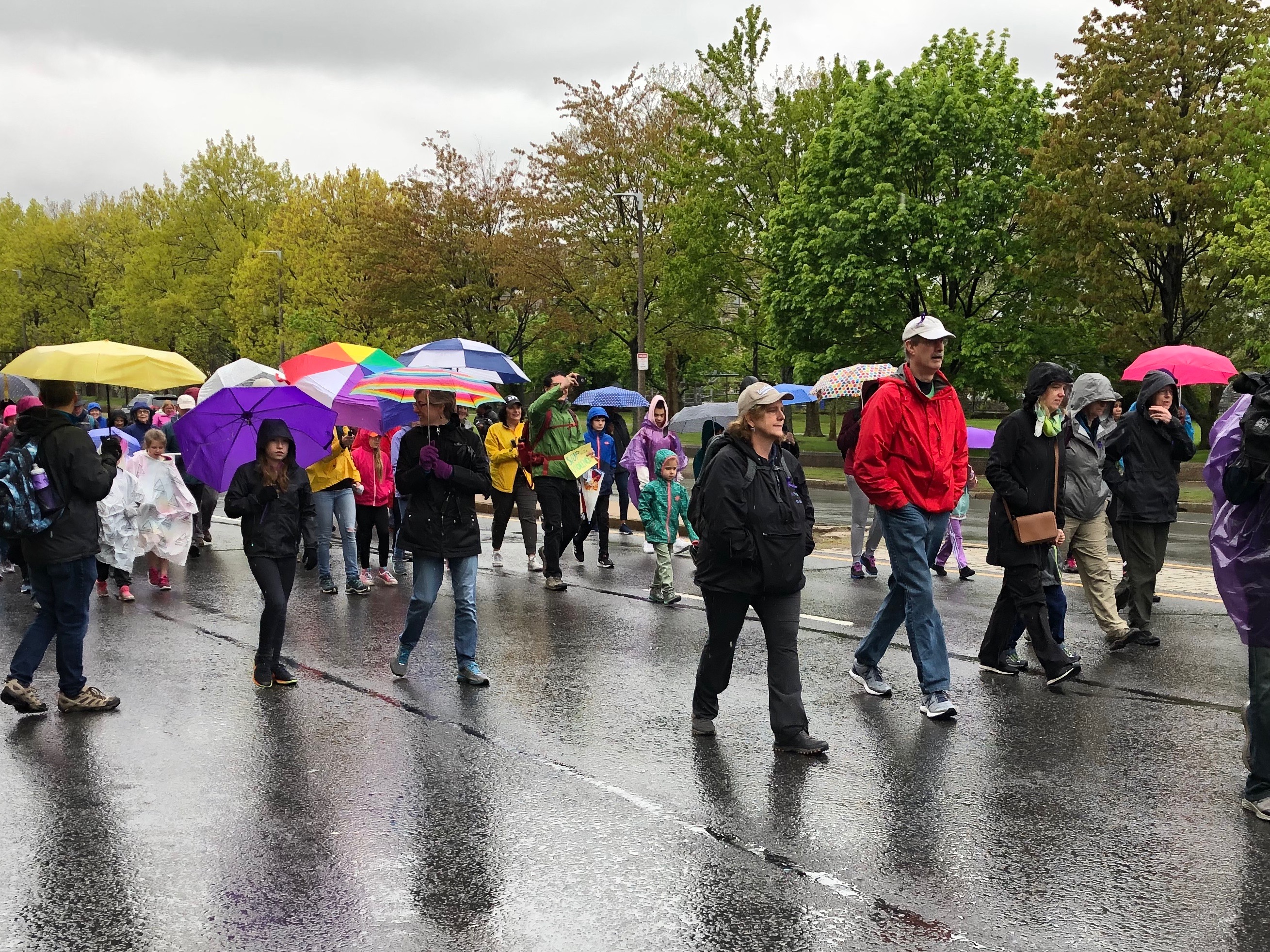
Here are a few photos from this year’s walk, which is always held on Mother’s Day.

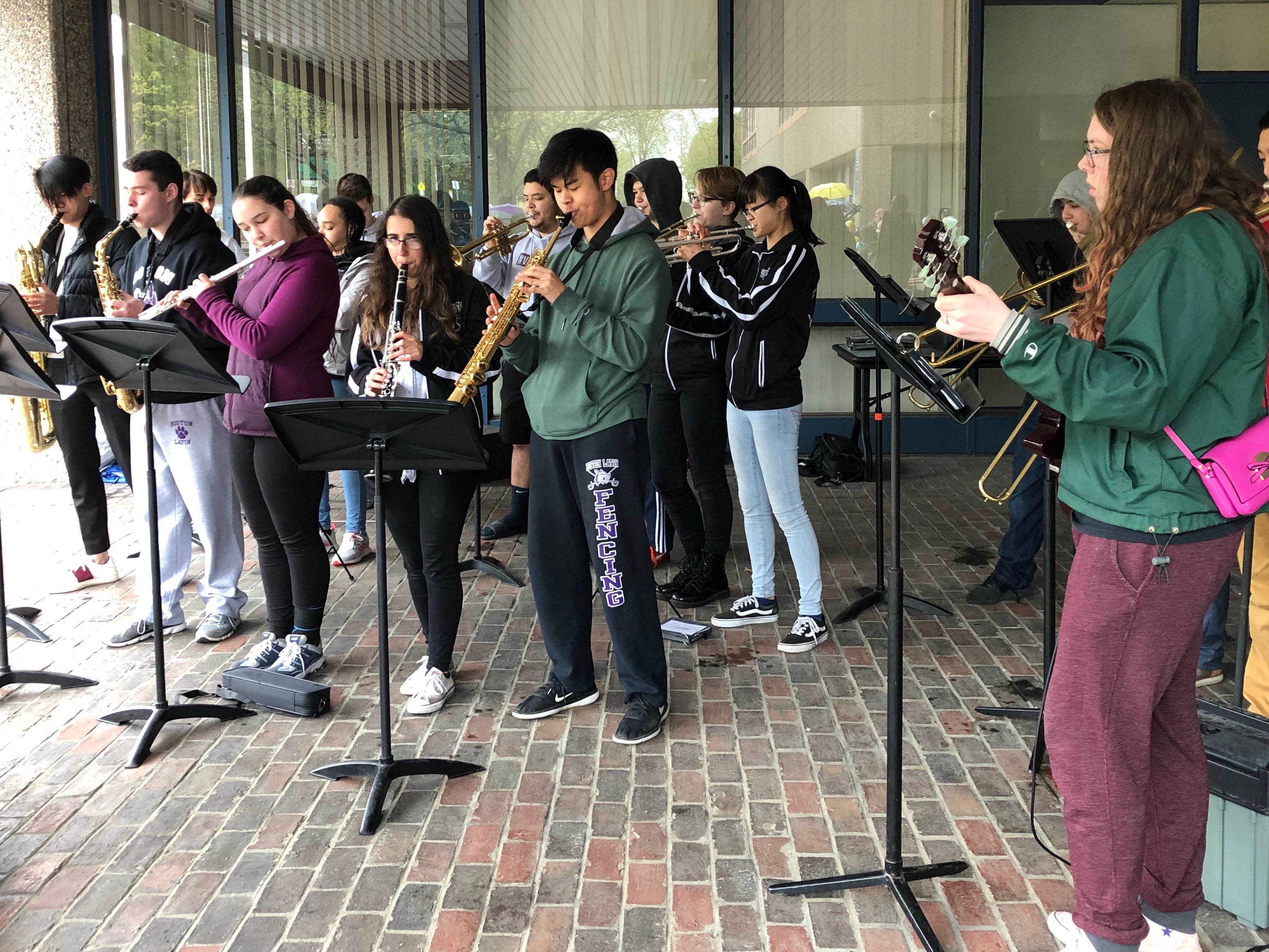
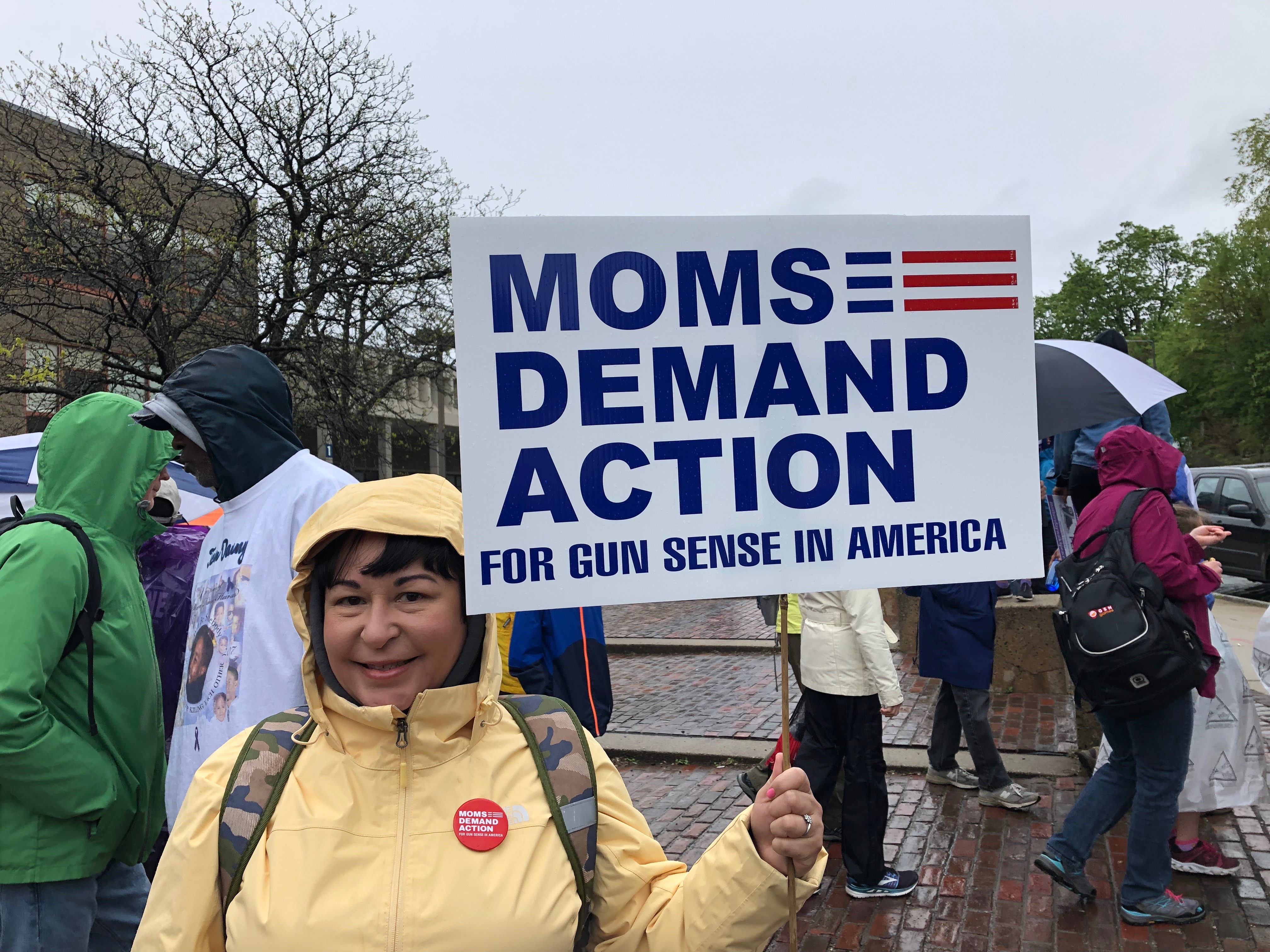
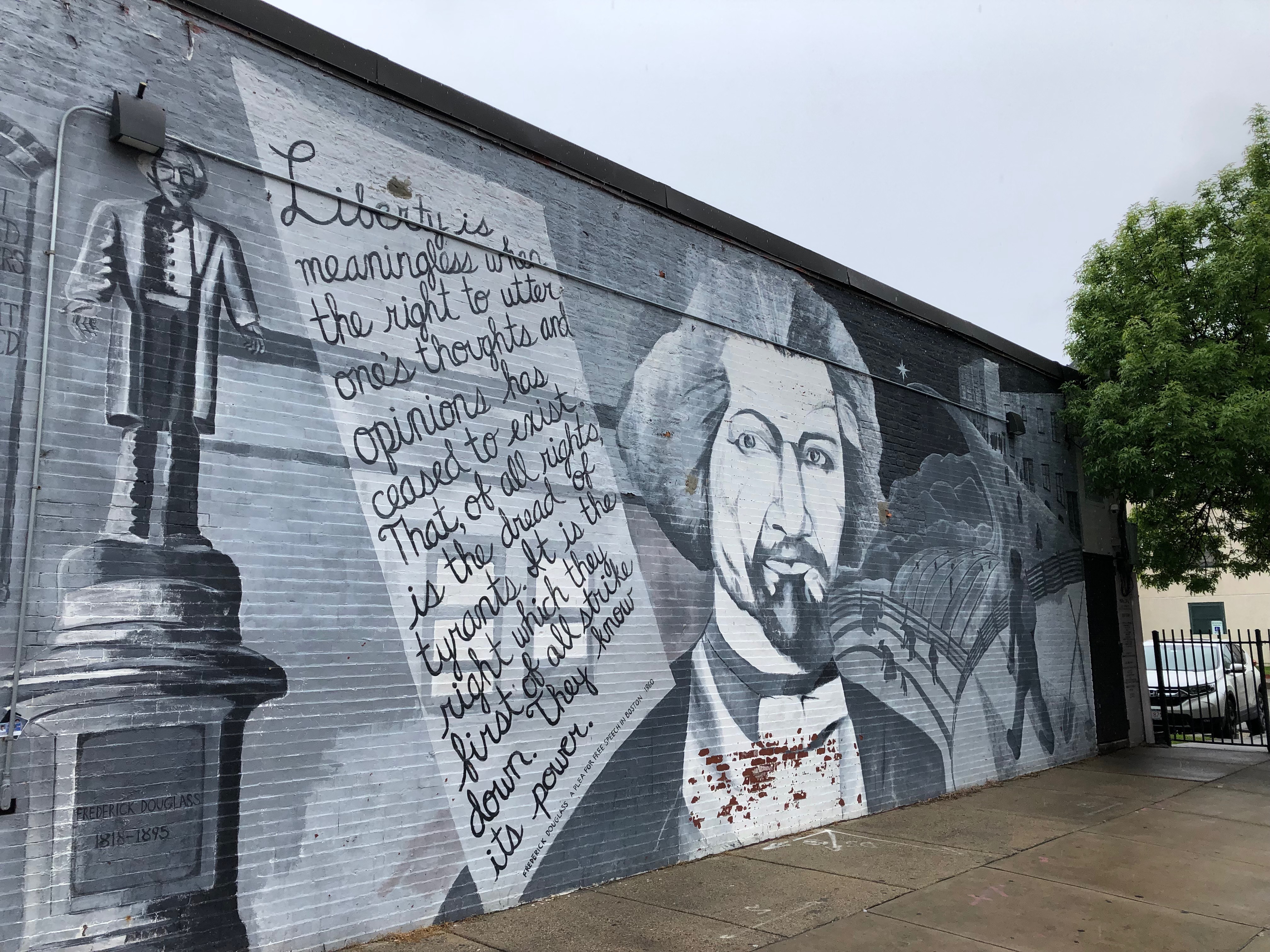
I loved the band that played outside Madison Park High School, where our group joined the walk. Some people carried signs. Lots of people chanted peace slogans. We passed by a mural of the great Frederick Douglass in Roxbury.

If one or two people were to walk down Tremont Street on a rainy Sunday morning, no one would notice. When many hundreds do, it’s an event.

But other than raise funds for the Louis D. Brown Peace Institute outreach, which is valuable, does this help prevent violence? There are still homicides in Boston. But the huge gathering seems to generate an indefinable energy and awareness that sometimes leads individuals to wage peace in their own ways throughout the year.

051219-good-band-at-Peace-March-Boston

051219-good-idea-US-Dept-of-Peace

051219-Peace-Marcher-Boston

051219-Frederick-Douglass-mural-Roxbury-MA

051219-1-and-2-and-50-make-a-million


Read Full Post »

Dan Holin, who used to run a Concord-Lowell volunteer partnership called the Jericho Road Project, is now director of special projects at UTEC in Lowell. (UTEC doesn’t use the longer title its youth founders originally came up with, but since people ask, it was United Teen Equality Center.)

UTEC describes itself as a nonprofit that “helps young people from Lowell and Lawrence, Mass., trade violence and poverty for social and economic success. It works to remove barriers that confront them when they want to turn their lives around and offers young people paid work experience through its social enterprises: mattress recycling, food services and woodworking.”

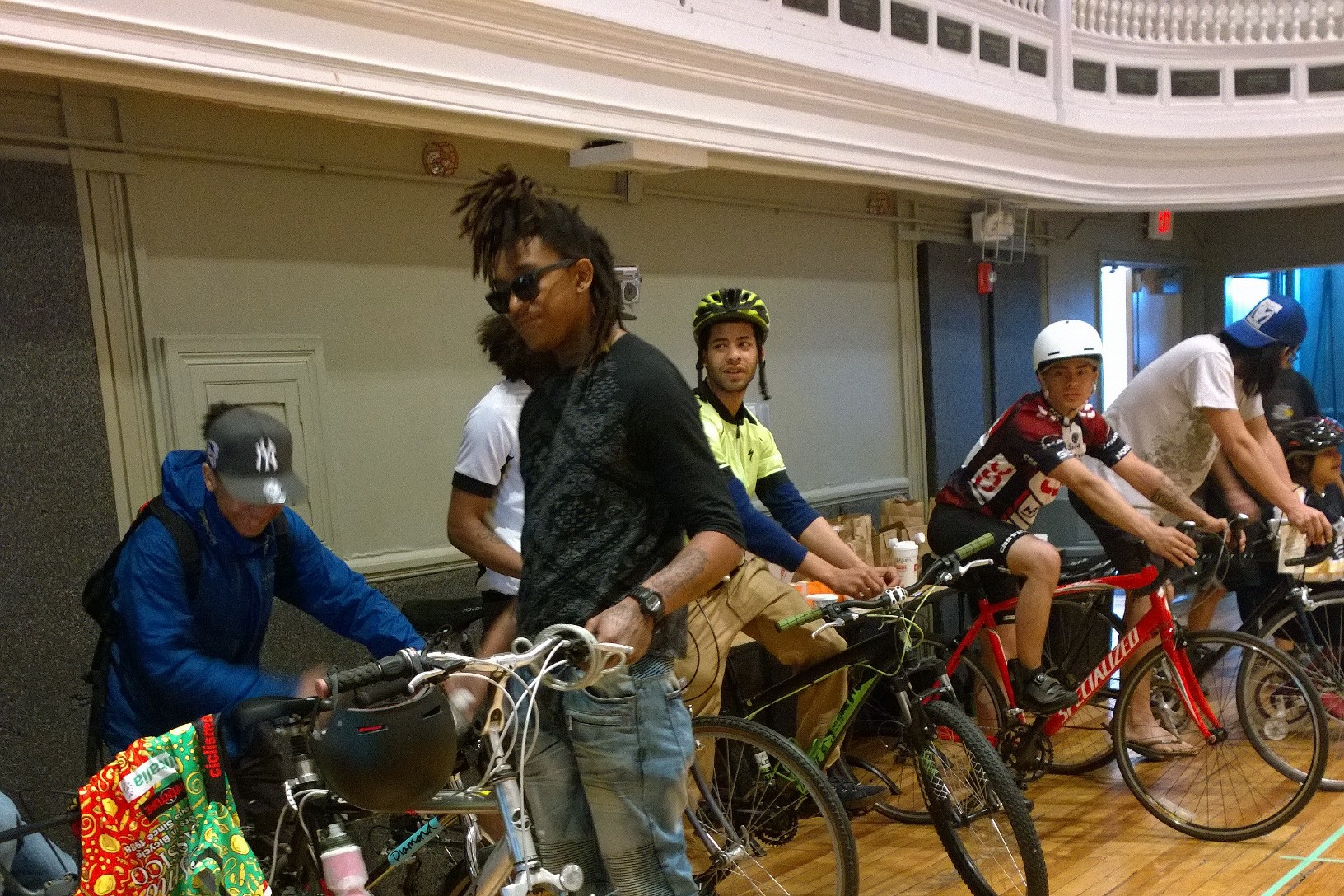
On May 15, Acton’s Pedal Power joined members of the Concord-based Monsters in the Basement bicycling club to share their bike-repair expertise with young people who wanted to acquire bikes and learn to maintain them. Holin, a serious biker himself, organized the event to give UTEC young people two things that he said they normally lack: transportation and fun.

At the event, one of them, Sav, recounted his story of change. Before UTEC I never talked to anyone,” he said. “I was a problem child on the streets. I was hanging around with gangs, selling drugs. I don’t do that now. Seven months ago, I moved from a place with nothing positive. Atlantic City. I let my family know I’m ready to live life. It was hard for me to get into something good: I’ve got a lot of tattoos and a record. But I’m in the culinary program here. It’s a family. They make you feel like you are somebody that has a chance. They give me love like a family. They changed my life for the better. There are so many new things to do here. Yesterday I went kayaking.”

More here.

Sav, in sunglasses, got a good bike at UTEC’s bike event in Lowell on May 15. The bike will provide transportation to his job at UTEC. It will also provide some much needed fun.

051516-UTEC-bike-clinic.jpg

Read Full Post »