Feeds:
Posts
Comments

Posts Tagged ‘worm’

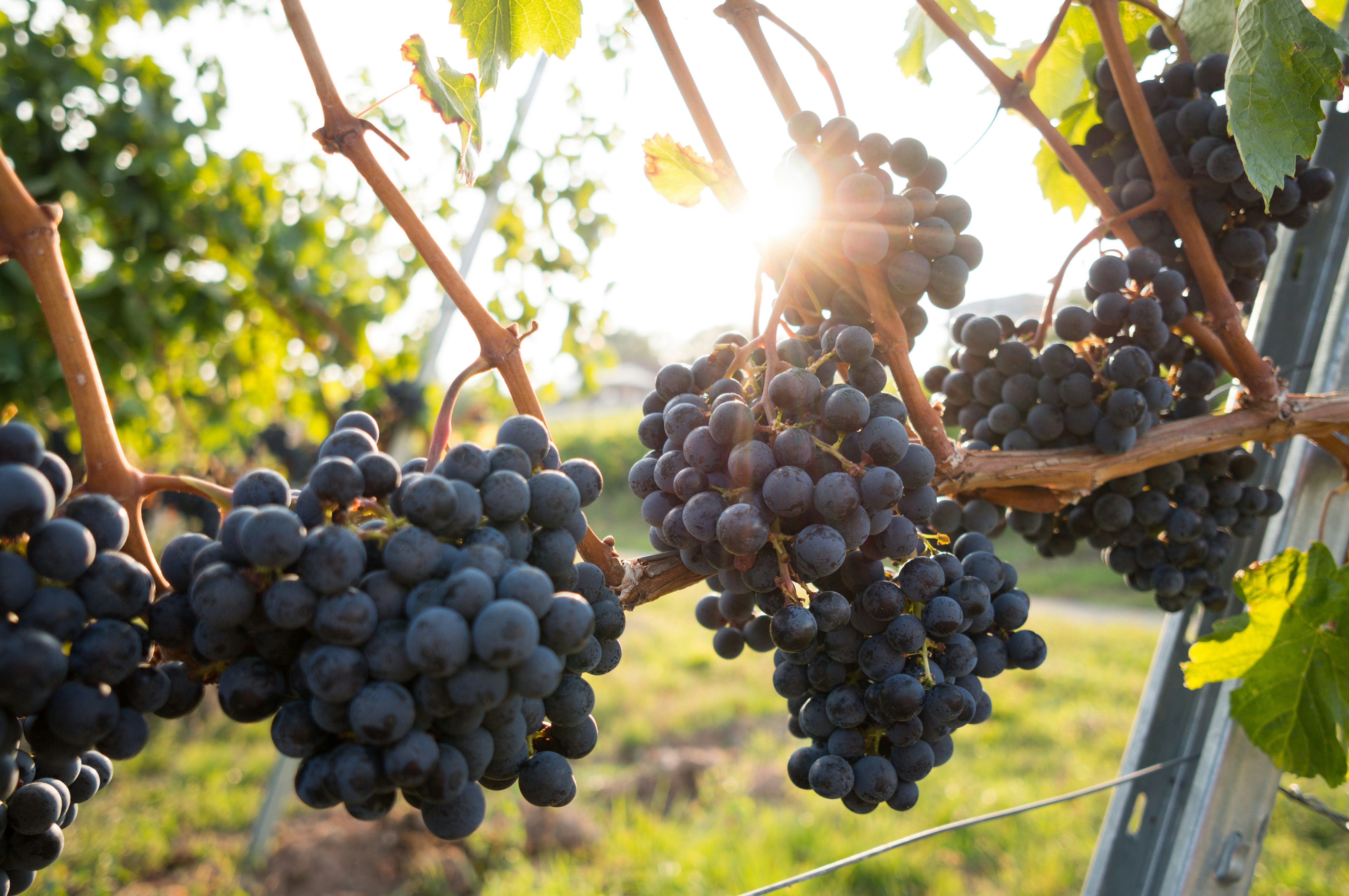
Photo: David Kohler via Unsplash.
Vintners are discovering the importance of bringing back earthworms.

In many parts of the world, growers who have relied on herbicides and pesticides are learning about the benefits of healthier soil, and so they’re getting rid of soil-damaging practices.

In today’s story, we have an example of vintners in the UK who have caught up with recent bio-friendly practices in France. They have not made their changes out of kindness to the planet, although that’s a side effect. They’ve done it to produce a better grape.

Helena Horton writes at the Guardian, “Vineyards are generally the most inhospitable of landscapes for the humble earthworm; the soil beneath vines is usually kept bare and compacted by machinery.

“But scientists and winemakers have been exploring ways to turn vineyards into havens for worms. The bare soil is problematic because worms need vegetation to be broken down by the microorganisms they eat. Pesticides are also highly harmful to the invertebrate, as is the practice of compacting the earth: worms need the soil to be porous so they can move through it.

“Earthworms … aerate soil, and they pull fallen leaves and other organic matter into the earth and recycle them. But their populations have declined by a third in the UK over the past 25 years due to pesticide use and over-tilling of soil.

“Marc-André Selosse, a professor at the National Museum of Natural History in Paris, has been urging vineyards to increase grass and plant cover on their soil, and reduce the amount they till, to save the worms.

“Selosse said: ‘In France, the vineyards are 3% of the agricultural area, and they are using 20% of the chemicals. In vineyards, for the soil there is a lot of treatments, so there’s a lot of compaction, and there is a lot of pesticides used.’ …

“Worms had not yet vanished from the most intensively farmed vineyards, he said, but they did need to be supported with more regenerative practices.

“ ‘I think the worms are at a low level,’ he said. ‘They are just surviving, but they are still there, which means that no one is thinking of buying earthworms for the soil, because they are there. It’s like Sleeping Beauty; they are there at very low level, and we have to wake them. But once again, in soil, we have resilience. It’s one part of biodiversity where they are so numerous that we were not able to kill all of them.’ …

“Selosse said the main thing vineyards could do for worms was to stop tilling the soil – breaking it up and turning it over – even if that means that herbicides such as glyphosate are used instead to remove weeds. … ‘In the future, sooner or later, we’ll have to stop glyphosate also but for now, tilling is the first cause of worm problems.’

“Now some vineyards in the UK are making worm-friendly wine. When Jules and Lucie Phillips, co-owners of Ham Street Wines in Kent, started their vineyard, they were advised to grow conventionally by tilling and using pesticides, but were horrified by the results.

“Jules said: ‘After we did that, we went out and we dug a soil pit immediately after planting, and then also later in the season, and we realized the soil was just dead.’ There were no worms. It was smelling not particularly interesting at all, and the structure was poor.’ …

“The pair had a revelation. ‘We just thought, this is completely the wrong way of farming and we need to do something different. We want life in our soils. And so we began the conversion to organic in that same year, and we’re now certified biodynamic.’

“Rather than using pesticides, they applied herbal teas to the vines to promote plant health, Jules said: ‘For example, horsetail tea has a real high silica content, and that improves the leaf cell wall and means that it’s more resilient.’

“The couple run a no-till system under the vine: ‘We’ve let the cover crop grow really long, and we typically let it grow right up into the canopy up until about flowering, and then we’ll mow it back. And the benefits of that are huge. The cover crop is really growing and really establishing that root structure and getting it to its maximum point. And finally, we put a big mulch on top of the soil that’s going to feed those worms and feed that soil life.’

“This has hugely helped their worm population: ‘We’ve seen our worm counts increase massively from basically none to around 20 or 30 in a spade full. So extrapolate that up to a square metre, and it’s a very decent volume.’

“Rob Poyser, a viticulturist at the regenerative wine consultancy firm Vinescapes, said that growing wildflowers in the vineyards they consult on had also brought great results. ‘We think in between three and five years we can take a bare soil and bring it back to life, into a thriving ecosystem,’ he said. ‘We’ve used things like cover crops to bring this vineyard to life, to build the fertility into this system, and organic matter. We’re bringing life back to these soils we’re using. We’re letting nature do it.’

“Poyser said they allowed wildflowers to grow all over the vineyards, and clients were delighted when clover, for example, sprung up because ‘clovers are great companion plants under the vine for grapevines; they’re also loved by earthworms.’ “

More at the Guardian, here. No paywall.
Read Full Post »

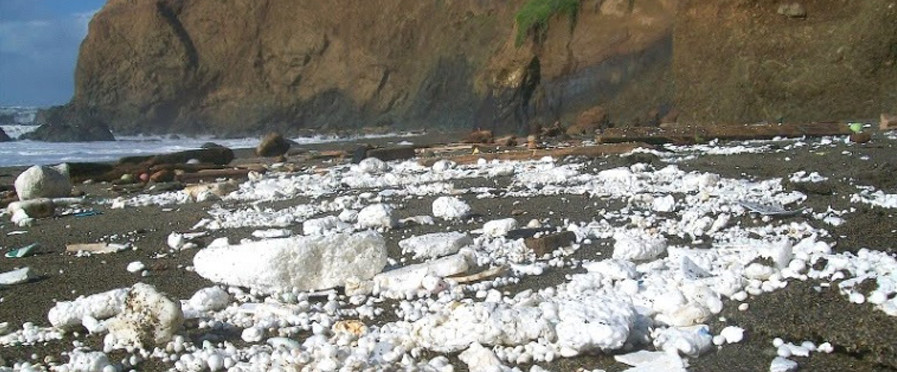
Photo: Pacific Beach Coalition.
Scientists investigate whether a “superworm” can help solve our styrofoam problem.

It’s no secret that plastic has become a huge challenge for our poor old planet. Concerned people are finding solutions where they can. Ploggers of India (and other countries) pick plastic off the ground when they go jogging. Plastic Free Hackney is a UK town that aims to do without. Artists turn plastic waste into sculptures.

In today’s story, we learn about scientists testing a “superworm” that might be able to break down a particular kind of plastic, styrofoam.

Pranshu Verma reports at the Washington Post, “A plump larva the length of a paper clip can survive on the material that makes Styrofoam. The organism, commonly called a ‘superworm,’ could transform the way waste managers dispose of one of the most common components in landfills, researchers said, potentially slowing a mounting garbage crisis that is exacerbating climate change.

“In a paper released [in June] in the journal of Microbial Genomics, scientists from the University of Queensland in Brisbane, Australia, showed that the larvae of a darkling beetle, called zophobas morio, can survive solely on polystyrene, commonly called Styrofoam.

“The findings come amid a flurry of research on ways bacteria and other organisms can consume plastic materials, like Styrofoam and drinking bottles.

“Now, the researchers will study the enzymes that allow the superworm to digest Styrofoam, as they look to find a way to transform the finding into a commercial product. Industrial adoption offers a tantalizing scenario for waste managers: A natural way to dispose and recycle the Styrofoam trash that accounts for as much as 30 percent of landfill space worldwide. …

“The material is dense and takes up a lot of space, making it expensive to store at waste management facilities, industry experts said. The cups, plates and other materials made from it are also often contaminated with food and drink, making it hard to recycle. Polystyrene fills landfills, where it can often take 500 years to break down and decompose, researchers have found. …

“In 2015, researchers from Stanford University revealed that mealworms could also survive on Styrofoam. The next year, Japanese scientists found bacteria that could eat plastic bottles. In April, researchers from the University of Texas found an enzyme which could digest polyethylene terephthalate, a plastic resin found in clothes, liquid and food containers. …

“[The Microbial Genomics study’s coauthor Christian Rinke] said he was excited by his research results but noted it will take time to develop into an industrial solution, estimating somewhere between five to 10 years.

“To conduct the study, his research team in Australia fed the superworms three separate diets. One group was given a ‘healthy’ solution of bran. The second was given polystyrene. The third was put on a starvation diet.

“Ninety percent of the larvae that ate bran became beetles, compared with roughly 66 percent from the group given polystyrene and 10 percent from those forced to starve. This indicated to researchers that superworms have enzymes in their gut that can effectively digest Styrofoam.

“Next, the scientists will study those enzymes to see how well they can digest polystyrene on a large scale — modifying them if necessary to become more effective. ‘We want to not have gigantic superworm farms,’ he said. ‘Rather, we want to focus on the enzyme.’

“If the research proves successful, Rinke said waste managers could collect and grind Styrofoam materials and put them into a liquid solution made with the superworm enzyme. The solution would ideally dispose of the Styrofoam or digest it in a way that allows new plastic products to be created, thereby reducing the need for new plastic materials, Rinke said.

“ ‘If you can go all the way to the end,’ he said, ‘the idea is to use the system and come up with a biological solution to recycle plastic.’

“Despite the findings from Rinke and others, there are reasons that none have successfully translated into industry applications over the past decade, researchers said. Andrew Ellington, a professor of molecular biosciences at the University of Texas at Austin, said it has been difficult to find a plastic-digesting organism or enzyme that can operate in industrial conditions, which often process trash in very hot environments or through the use of organic solvents. … He suggested an alternative solution.

“ ‘I believe that we will be able to offer up, in the not-so-distant future, worm-based composting kits so that individuals can do this themselves,’ he said.

“Jeremy O’Brien, the director of applied research at the Solid Waste Association of North America, said there are other business challenges in putting this type of solution into use. As envisioned, the solution would require waste managers to collect Styrofoam separately from other trash, he said, which makes it cost-prohibitive.

“O’Brien also said it remains unclear what kind of organic waste the enzyme process would generate, and he worries it could harm the microorganisms landfills already use to process trash and reduce odors. He added that a more desirable and cost-effective solution would be to take Styrofoam in landfills and condense them enough so that they can be turned into new plastics.”

More at the Post, here. What do you think of this? Is breaking plastic down to enzymes enough to keep us safe?

Read Full Post »