Feeds:
Posts
Comments

Archive for June, 2015

The New York Times had a story not long ago about friendships between young people and old people in Cleveland. How does it happen? They live in the same retirement home.

John Hanc describes a home’s musical evening: “Janet Hall grimaces as she hits an off note on her violin, one of the few heard here at Judson Manor’s Friday afternoon recital, held in the chandeliered ballroom settings of the first-floor lounge of this residence for older people.

“As an audience of 56 mostly older adults watches expectantly, Ms. Hall, 78, quickly recovers from the miscue. She slides her bow across the strings of her violin, drawing out the sweet and sonorous notes of a Gabriel Fauré suite.

“Looking on and smiling is her accompanist on piano, Daniel Parvin, a 25-year-old doctoral candidate student at the Cleveland Institute of Music.

“Over a half-century apart in age, Ms. Hall and Mr. Parvin share some things in common besides this duet. A home, for one: Both are residents at Judson Manor, formerly a luxury hotel, built in 1923, in Cleveland’s University Circle section. A love of music, for another …

“Here at Judson, young and old play nicely together, part of an intergenerational program that has led to harmonious relationships beyond the concerts. … The artist-in-residence program provides furnished one-bedroom apartments to three graduate students from the Cleveland Institute of Music at no charge, for the duration of their studies. In exchange, the students perform regular concerts at Judson Manor. …

“The students were required to submit a résumé and an essay. ‘Basically, “Why I wouldn’t mind living in a senior residence,” ‘ says [Richard K.] Gardner, a committee member.  …

“Experts say there is much to be learned from an intergenerational living program based around the arts like the Judson program. ‘We’ve heard people talking about doing something like this, but I’ve never seen it at this level, sustained and consistent,’ says Gay Hanna, executive director for the National Center for Creative Aging in Washington, a nonprofit organization designed to promote creative arts programs for older adults. ‘It’s a bellwether for the future.’ ”

More here.

Photo: Michael F. McElroy for The New York Times  
Tiffany Tieu, a violinist and student at the Cleveland Institute, talks with Peggy Kennell. “When I tell people I’m living in a retirement home, they think I’m joking,” Ms. Tieu says.

Read Full Post »

I was charmed by Sy Montgomery’s recent article in the Boston Globe on the intelligence of octopi (she says “octopuses”).

The author of The Soul of an Octopus: A Surprising Exploration into the Wonder of Consciousness, Montgomery describes getting to know a clever and apparently affectionate octopus called Octavia.

“Everyone wanted to pet Octavia,” she writes. “And no wonder. She was beautiful, graceful, and affectionate. The fact that she was boneless, slimy, and living in painfully cold, 47-degree water deterred none of us.

“What thrilled us — me, New England Aquarium volunteer Wilson Menashi, and four visitors from the environmental radio show Living on Earth was the surprising fact that Octavia, who clearly wanted to be petted, was a giant Pacific octopus.

“When her keeper, Bill Murphy, opened the top of her exhibit, Octavia recognized Menashi and me immediately; we’d been working with her for several weeks. Turning red with excitement, she flowed over toward us from the far side of her tank. When we put our hands in the water, her arms rose to meet ours, embracing us with dozens of her strong, sensitive, white suckers. Occasionally Wilson handed her a fish from the plastic bucket perched on the edge of her tank. …

“Then, as Menashi reached for another capelin to feed her, we realized the bucket of fish was gone. While no fewer than six people were watching, and three of us had our arms in her tank, Octavia had stolen the bucket right out from under us.

“ ‘Octopuses are phenomenally smart,’ Menashi says. And he should know: He has worked with them for 20 years, and is expert in keeping these intelligent invertebrates occupied. Otherwise, they become bored. Aquariums design elaborate escape-proof lids for their octopus tanks, and still they are often thwarted. Octopuses not infrequently slip out of their exhibits and turn up in other tanks to eat the inhabitants.

“Many aquariums give their octopuses Legos to dismantle, jars with lids to unscrew, and Mr. Potato Head to play with. Menashi, a retired inventor, designed a series of nesting Plexiglas cubes, each with a different lock, which Boston’s octopuses quickly learned to open to get at a tasty crab inside. And just this spring, New Zealand Sea Life aquarists teamed up with Sony engineers to teach a female octopus named Rambo to press the red shutter button on a waterproof camera to take photos of visitors, which the aquarium sells for $2 each to benefit its conservation programs. Rambo learned in three attempts.”

What a different perspective on the scary beast in the film 20,000 Leagues Under the Sea, which I saw as a child.

I’d love to copy the whole intriguing article, but I’m afraid that would not be “fair use.” So read it all here.

Photo: Tia Strombeck
Sy Montgomery pets Octavia, an octopus at the New England Aquarium in Boston.

Read Full Post »

Three cheers for quirky causes that, at a minimum, don’t do any harm and, at best, make a contribution to the world.

Simon Romero recently covered one such cause in the New York Times: “Shigeru Nakayama, the guardian of this ghost city in the Amazon rain forest, gazes at the Rio Negro, a vast blackwater tributary. From some angles, it looks less like a river than a sea, spurring him to remember Japan.

“ ‘Fukuoka got kind of cold during winter,’ said Mr. Nakayama, 66, who left the island of Kyushu in southern Japan with his parents and three brothers in the mid-1960s for a new life in Brazil. ‘We were farming people, trying to get ahead. Japan was reduced to ashes after the war. Life was still tough.’

“ ‘But Brazil was the land of our dreams,’ said Mr. Nakayama, squinting under the punishing midday sun as he leaned his wiry frame against one of the crumbling stone buildings of Airão Velho — a town so overgrown and forlorn it is now held in a labyrinthine embrace of tree roots and vines.”

He has made it his life’s work to “to care for the abandoned outpost. …

“ ‘I’m glad there’s someone taking care of Airão Velho,’ said Victor Leonardi, a historian of Amazonia at the University of Brasília who explored the ruins here in the 1990s. “It smelled of jaguar urine back then, but it was obviously a place of riches at one point, where people dined on porcelain from England and consumed Cognac from France.’ …

“ ‘Japan has turned into a new kind of prosperous country, and I guess that’s good for the people there,’ Mr. Nakayama said. ‘But that kind of life was never in the cards for me.’

“Mr. Nakayama acknowledged that shielding Airão Velho from the encroachment of the jungle was an uphill struggle. A glance around suggests that the strangler figs have the scales tipped in their favor. Amid the ruins, wasps hover; fire ants march; cicadas sing. …

“Nakayama feels the need to clean the graveyard, hacking away at the growth that threatens to devour the site once and for all. ‘For centuries, people lived and died in Airão Velho,’ he said. ‘They were the true pioneers, and I have to honor their memory by preserving this place. It is a matter of respect.’ ”

More here.

Photo: Mauricio Lima for The New York Times
Shigeru Nakayama has made it his life’s work to care for an abandoned outpost in the Amazon jungle.

Read Full Post »

Early this month, my colleague Bo went to Tennessee with friends to see synchronous fireflies.

The one week of firefly watching is a real happening. Bo told me that, to get tickets, he went online twice at exactly 10 a.m. The first time he missed out. They go fast. He said that these special fireflies (which start flashing together and stop together) were long known in Southeast Asia but thought to exist nowhere in North America.

The way he heard it, one day a woman from Tennessee was chatting with a firefly expert somewhere in the South and happened to mention the behavior of some fireflies she loved to watch back home. And that was the first time the word got out to the scientific community that synchronous fireflies existed in North America. Now it’s practically Disney World out there — controlled, but crowded.

The Great Smoky Mountains National Park website posted this before the great annual event: “The firefly shuttle operating dates for 2015 will be June 2-9. Advance reservations of parking passes have sold out, however an additional 85 passes will be available for each day of the event. These 85 passes will go on sale online at 10:00 a.m. the day before the event and will be available until 3:30 p.m. on the day of the event or until the passes are all reserved. Passes can be purchased at www.recreation.gov or by calling (877) 444-6777.

“During the program operating dates, a parking pass is required for evening access to the Sugarlands parking lot and the firefly shuttle to the Elkmont viewing area. There is a limit of one parking pass per household per season. …

“Synchronous fireflies (Photinus carolinus) are one of at least 19 species of fireflies that live in Great Smoky Mountains National Park. They are the only species in America whose individuals can synchronize their flashing light patterns.

“Fireflies (also called lightning bugs) are beetles. They take from one to two years to mature from larvae, but will live as adults for only about 21 days. …

“Their light patterns are part of their mating display. Each species of firefly has a characteristic flash pattern that helps its male and female individuals recognize each other. … Peak flashing for synchronous fireflies in the park is normally within a two-week period in late May to mid-June.”

More at the great Smoky Mountains National Park.

Personally, I’d be happy to see any kind of firefly at all. There used to be so many. They were like fairies. I’ve read that lawn chemicals are responsible for their decline. The video below covers both the science and the happening. See the fireflies flash.

Read Full Post »

I was in Chinatown today at lunch and was charmed by several paper-and-steel sheep on the Greenway’s  Red  Gate. The Greenway website says, “Korean born, New York based artist Kyu Seok Oh has created Wandering Sheep at the Red Gate in Chinatown Park (corner of Essex St and Surface Road) This is the first of a series of exhibits based on the Chinese Zodiak calendar.” We are currently in the Year of the Ram (or the Goat, or the Sheep; I’m told the Chinese language doesn’t distinguish). I’m posting two pictures.

Also today, I have photos of a sunny treetop, another tree gripping the bank of the Assabet River, early morning light on a Fort Point warehouse, nasturtiums in sunshine, and the new look of the pizza place. John contributed the aspirational kite.

sheep-in-chinatown

public-art-Greenway


tree-top

roots-hold-me-close


early-light-on-a-warehouse

nasturtiium


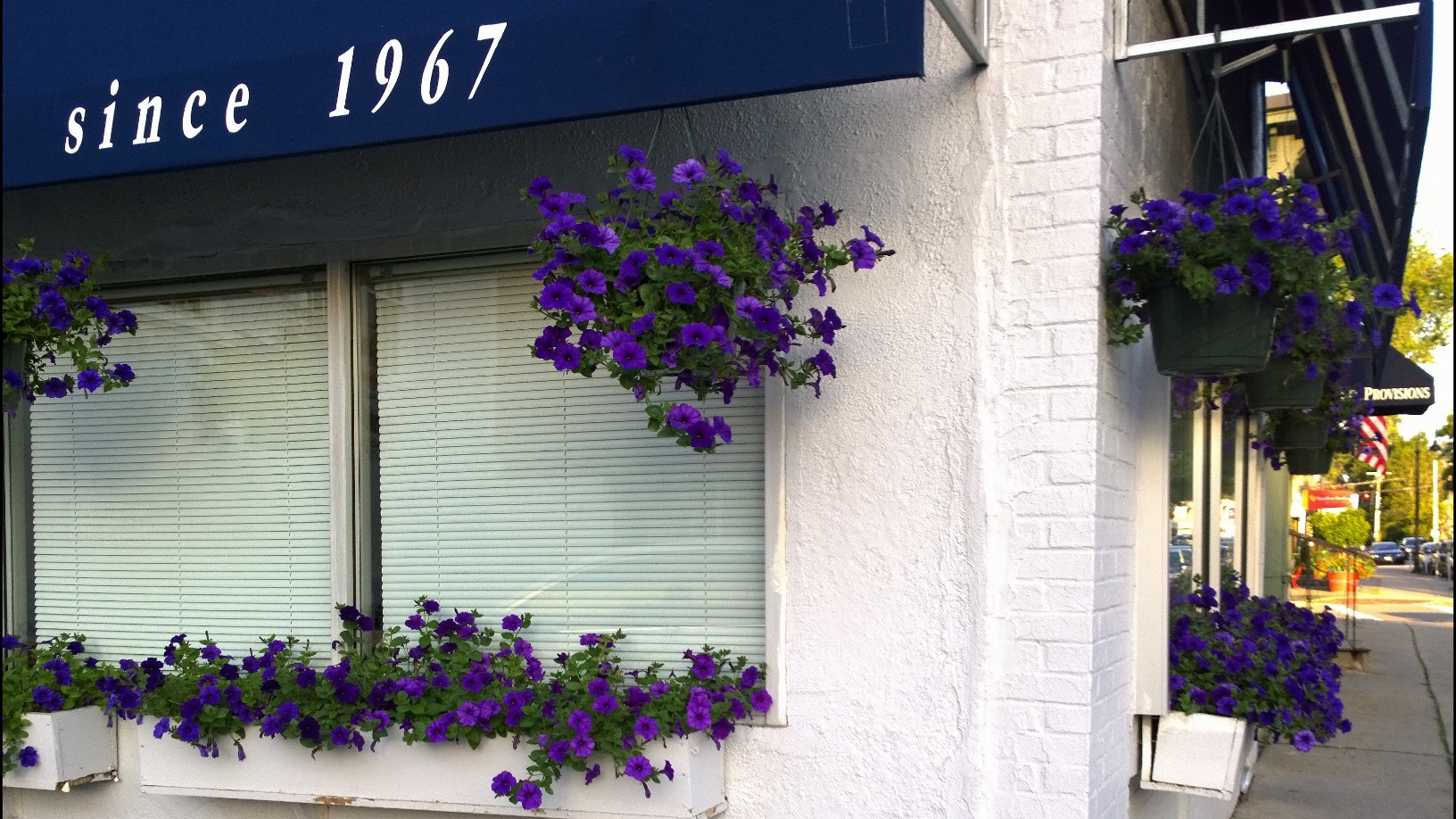
pizza-since-1967

060715-kite-above-new-shoreham


Read Full Post »

I learned from an article in the NY Times last month that Thomas Edison’s first voice recordings were for talking dolls. And until recently, no contemporary person dared listen to them.

Ron Cowen writes, “Though Robin and Joan Rolfs owned two rare talking dolls manufactured by Thomas Edison’s phonograph company in 1890, they did not dare play the wax cylinder records tucked inside each one.

“The Rolfses, longtime collectors of Edison phonographs, knew that if they turned the cranks on the dolls’ backs, the steel phonograph needle might damage or destroy the grooves of the hollow, ring-shaped cylinder. …

“Sound historians say the cylinders were the first entertainment records ever made, and the young girls hired to recite the rhymes were the world’s first recording artists.

“Year after year, the Rolfses asked experts if there might be a safe way to play the recordings. Then a government laboratory developed a method to play fragile records without touching them.

“The technique relies on a microscope to create images of the grooves in exquisite detail. A computer approximates — with great accuracy — the sounds that would have been created by a needle moving through those grooves.”

Read more here.

Artifacts: Collection of Robin and Joan Rolfs
A government laboratory found a way to listen to recordings on fragile wax cylinders inside dolls made by Thomas Edison in 1890. 

Read Full Post »

At the website This Is Colossal, Christopher Jobson writes about time-lapse videos of Joe Mangrum’s spontaneous sand paintings.

“Artist Joe Mangrum (previously) was just in Zuidlaren, Netherlands, where he was commissioned by the Doe Museum to create 8 temporary sand paintings over a period of 11 days. All of Mangrum’s paintings are spontaneous and evolve as he works, a grueling physical process that involves dozens of revolutions around the artwork as he adds new details and flourishes by pouring brightly colored sand. All eight artworks were photographed as he worked and turned into time-lapse videos, three of which are included here. The sand paintings will remain on view through October 30, 2015. You can follow more of Mangrum’s work on Facebook.”

Jobson wrote in a previous post about the work, “Since 2006 artist Joe Mangrum has taken to the streets of New York, Chicago, San Francisco and elsewhere armed with sacks of colored sand that he sprinkles by the handful to create sprawling temporary paintings. Each work is spontaneous in its design and evolves as Mangrum works, spending upwards of 6-8 hours hunched over the ground to complete each piece. The artist estimates he’s completed nearly 550 paintings over the last few years. A graduate of the Art Institute of Chicago, his paintings have appeared at The Corcoran Gallery, the Museum of Arts and Design in NYC, as well as The Asia Society. He also made a recent appearance on Sesame Street. ”

See the videos here. The sand paintings are like berserk mandalas; in the videos, they are alive.

Art: Joe Mangrum

Read Full Post »

Cambridge knows how to make artists feel welcome, even cherished. Recently the city had a poetry contest, and the winners are getting their poems embedded in the sidewalk.

Steve Annear writes at the Boston Globe, “Cambridge officials received hundreds of submissions from residents hoping to make their mark as literary legends through the city’s first-ever ‘Sidewalk Poetry’ contest this spring. In the end, only five scribes emerged victorious.

“In March, the city put out a call for poets to participate in the project. Winners were promised a permanent display space for their musings — the poems would be imprinted in the freshly poured concrete as Department of Public Works crews replaced sidewalk slabs cracked or damaged during the winter.

“The response was great, said Molly Akin, the Cambridge Arts Council’s marketing director. More than 300 submissions flooded in from writers ranging in age from 4 to 95, according to organizers.

“A special committee that included workers from the [Department of Public Works], representatives from the local libraries, members of the Arts Council, and Cambridge’s former Poet Populists helped select the finalists. …

“Below are the names of the winners, and their poems:

Rose Breslin Blake
Children, look up
Cherish those clouds
Ride grey ponies over their hills
Feed the shiny fish
Boo the big bear
Chase the gloomy giant
Giggle with the geese
Sing with the lambs
Cherish those clouds; they cherish you
Rest on their pillows.

Benjamin Grimm
I could not forget you if I tried.
I have tried.

Ty Muto
Your blue-green glances
My heart skips double dutch beats
Caught in your rhythm

Carolyn Russell Stonewell
Sun takes a bite of
mango as it sets.
Its last rays
run down my cheek.

Elissa Warner
A Mother’s Wish
Little boys, little treasures
Shine like lights from above
My son, my only one
My wish for you is that you wake
One day when you are old
And feel raindrops on your cheek
Tears of joy from my heart
For you to keep

More here.

Photo: Cambridge Arts Council

Read Full Post »

I’ve never managed to catch the herring run, but I’d like to see it with grandchildren sometime. The celebration for the Mystic River herring migration offers all sorts of extras, as I learned from the newsletter of the Mystic River Watershed Association, or MyRWA. (I’ve been receiving the newsletter since John’s stint on the board some years back.)

“The annual Herring Run and Paddle includes a 5K run/walk race, three paddling races (3, 9, and 12 miles), educational booths, children’s activities, and more. All events are held at the [Department of Conservation and Recreation] Blessing of the Bay Boathouse in Somerville.”

MyRWA reports, “The Mystic River Watershed supports two species of herring: Alewife (Alosa psuedoharenous) and Blueback Herring (Alosa aestivalis). Both species, collectively called river herring, are anadromous. This means they spend most of their lives at sea and return to rivers—like the Mystic—to spawn, or lay their eggs.

“In colonial times and earlier, herring in the Mystic River were extraordinarily abundant.  But from the 1900’s until today a much smaller population of river herring is present. …

“According to the Herring Alliance some river herring runs on the Atlantic Coast have declined by 95% or more over the past 20 years. In 2006 the National Marine Fisheries Service designated river herring as a species of concern. Population decline may be associated with numerous factors including by-catch [catching them by accident when fishing for something else], habitat loss and degradation, water pollution, poaching, access to spawning habitat, and natural predators.”

Read more here. And remind me next May that I want to visit a fish ladder.

Read Full Post »

I heard about poet Terrance Hayes on the radio show Studio 360. He is the winner of a MacArthur Fellowship, among other honors, and a University of Pittsburgh writing professor. Kurt Andersen interviewed him.

“Hayes grew up in South Carolina, where he was one of the only black students at a very preppy high school. But he says that race didn’t define him as a kid. ‘I was a basketball player, and I ran track, and I was a visual artist.’

“With all his accolades, invisibility hasn’t been too much of an issue for Hayes. But as a theme, it’s certainly present in his work. His poem ‘How to Draw an Invisible Man’ plays with Ralph Ellison’s take on black invisibility in the eyes of white society. ‘The thing that I’ve decided is, I don’t want to be invisible, but I’d like to be transparent. I want people to see what I’m thinking and see through me,’ he says. ‘I’m about 6’6’’. You know, I don’t have trouble walking into a room. I would prefer to be more invisible, in fact, than I am.’ ”

Listen to the interview at Studio 360. And read a review by Jonathan Farmer, at Slate, of his latest book of poems.

Photo: Becky Thurner Braddock
Poet Terrance Hayes. His new book of poems is called How to Be Drawn.

Read Full Post »

I used to write theater reviews, and I was doing a Google search not long ago on the name I used when, lo and behold, I found that I was in a footnote in a book on theater — specifically Portrayals of Americans on the World Stage, by Kevin J. Wetmore.

An essayist in the book had cited a TheaterMania review of Family Stories: A Slapstick Tragedy, by Biljana Srbljanović, a strange, dark play about children surviving in wartime. I saw the footnote at Google Books and couldn’t see the whole chapter, but it looks like it was about Srbljanović’s view of the Ugly American.

I can’t tell you how tickled I was to be footnoted. I had no idea that anyone had wanted to use that review. I have been equally excited and surprised the few times I got an acknowledgment (for doing not much) in friends’ books: Unseen Warhol, Balm in Gilead: Journey of a Healer, and Pen Pal. What a thrill!

Danielle Skraastad and Emma Bowers in Family Stories: A Slapstick Tragedy

Read Full Post »

I thought I would like to learn some Swedish because my grandson is bilingual, and I’m sure his sister will be, too. I figured I could try reading their storybooks, and they could help me.

A co-worker told me about a free online language site called Duolingo. The first time I checked, it didn’t have Swedish, but it keeps adding languages. Now whenever I have little bits of time, I try to do an exercise.

My grandson thinks my pronunciation is pretty hilarious, but I do believe Duolingo is slowly moving me forward. The short lessons are lots of fun. They often include funny explanations of why Swedish has certain forms, and they always lob a few easy questions my way (especially after a series of mistakes) so I feel like I’m getting somewhere. You can click one button to have a voice say the words at a normal speed and another button to have her say it slo-ow. When a lesson is complete, trumpets sound.

John explained the company’s unusual business model to me. I get lessons for free because I am supplying Duolingo with data about the kinds of mistakes people make with language. Duolingo can sell the data to a search engine that wants to refine its guesses about what bad spellers and the like are really looking for.

Here’s a Tedx talk in which a charming 12-year-old boy says learned English in eight months just using his computer. He tells Matt Dalio, CEO and Chief of Product at Endless Mobile that he loves technology, especially creating animations.

Read Full Post »

As a longtime believer in “one and one and 50 make a million,” I am not surprised to learn that some big environmental problems are being successfully tackled through small-dollar grants.

Karen Weintraub writes at the NY Times, “In Pakistan and India, the blind Indus River dolphin, one of the most endangered species, swims a shrinking stretch of water, trapped by development and dams. …

“Overfishing, habitat loss and pollution threaten species in so many places that research and conservation organizations cannot do all that is needed. So, with the aim of making a dent through small, targeted efforts, the New England Aquarium, which sits on Boston’s downtown waterfront, has for 15 years awarded microgrants to projects across the globe. …

“The aquarium’s Marine Conservation Action Fund has paid out $700,000 since 1999, supporting 122 projects in 40 countries on six continents. Elizabeth Stephenson, the fund’s manager, calls these projects ‘stories of hope for the ocean.’

“The grants are modest. One researcher, Rohan Arthur, used his $6,700 payout from the fund to buy a ‘secondhand, beat-up compressor’ to fill his scuba tanks. But the support allowed him to maintain his critical assessment of coral reefs in the Arabian Sea off the west coast of India.

“Dr. Arthur, a senior scientist at the Nature Conservation Foundation in Karnataka, India, said that in some ways, he preferred the scale of the New England Aquarium gifts. …

“Small grants, he said, offer more freedom, but can still be transformative. …

“Gill Braulik, a dolphin expert based in Tanzania, used a … grant in 2011 to teach Pakistani scientists to take over her research on a blind dolphin species that lives only in the Indus River. …

“In 2011, a $6,000 aquarium grant allowed her to train the local researchers in complex survey methods and analysis. Now, two groups of local scientists have led the work. ‘They really don’t need me anymore,’ she said.”

Read more here.

Photo: Gill Braulik
Najam Ul-Huda Khan, left, interviews village elders about sightings of Indus River dolphins. 

Read Full Post »

Paul put something on Facebook today that I had to share: artist Peter Cook’s living chair, eight years in the making.

This takes topiary to a new level. Like people who created rock sculptures from flowing water in China, a process that could take generations, the people who do this kind of tree shaping have to be patient.

No overnight results. We are not talking about boxwood pagodas cut with shears. No elephants rampant. I am reminded, rather, of a bench at my grandfather’s in Beverly Farms. This bench got started when my mother was a child and a board was fastened between two saplings. As time passed, the growing trees drew the board into their thickening trunks until, by the time I was a child, there was a very sturdy seat in the woods.

Wikipedia says, “Tree shaping has been practiced for at least several hundred years, as demonstrated by the living root bridges built and maintained by the Khasi people of India. … Contemporary designers include ‘Pooktre’ artists Peter Cook and Becky Northey, ‘arborsculpture’ artist Richard Reames, and furniture designer Dr Chris Cattle, who grows ‘grownup furniture.’ ” Everything you need to know about the history and practice of tree shaping is at Wikipedia, here. And be sure to check out Pooktre, too.

Photo: Blacklash and www.pooktre.com

Read Full Post »

My husband’s spring visit to the Arnold Arboretum and a guided tour by Andrew Gapinski, manager of horticulture, got us looking up information on witch hazel.

Steve Kemper at Yankee Magazine had this to say: “Witch hazel grows from southern Canada to Florida and from Minnesota to Texas, but it flourishes most densely in the eastern half of Connecticut. Not quite a tree but more than a shrub, witch hazel has speckled gray bark, a slim trunk typically just a few inches in diameter, and a bushy top that ends well shy of 20 feet. For three seasons of the year, it’s inconspicuous in the understory.

“But after all the leaves have fallen and the last aster has succumbed to frost, witch hazel displays its exuberant eccentricity, bursting into festive yellow blossoms that Thoreau compared to ‘furies’ hair, or small ribbon streamers.’ At the same time, the previous year’s blossoms have ripened into hard fruits, which now explode, propelling the small seeds up to 30 feet. …

“The Native Americans called this strange plant ‘winterbloom’ and ascribed special powers to it. They used it as a cure-all, steeping the bark and branches to make a tea … which they put on cuts, bruises, insect bites, pinkeye, hemorrhoids, and sore muscles — maladies for which witch hazel is still used. “

At the Boston Globe, David Filipov adds, “Native Americans used witch hazel as a cure-all. So did the early European settlers. … Because of that, Dickinson Brands Inc., the world’s largest producer of witch hazel, has quietly prospered here, in what is arguably the witch hazel capital of the world.

“Owners and employees say they have avoided the layoffs, furloughs, and pay cuts that have benighted so many companies. And in this season of shrinking sales and mounting losses, the privately owned company says it has experienced double-digit growth. …

“Sometimes the product’s rich history as an all-round remedy intrudes upon the company’s attempt to place the Witch Hazel brand as a gentle skin-care product for the modern woman.

“ ‘Back in the day, they used to use it a lot on the animals’ who had cuts and scrapes,’’ [an employer] recalled. ‘As a matter of fact, most of the race horses of today use it. After they work out, they wipe the horses with it. Yep, cools the horses down.’ ”

Read all about this built-to-last Connecticut industry at Yankee Magazine and the Boston Globe.

(Witch Hazel was a character in the Little Lulu comics of my childhood. Different witch.)

Image: Franz Eugen Köhler

Read Full Post »

Older Posts »