Feeds:
Posts
Comments

Archive for November, 2022

Photo: Pandbambooguy.
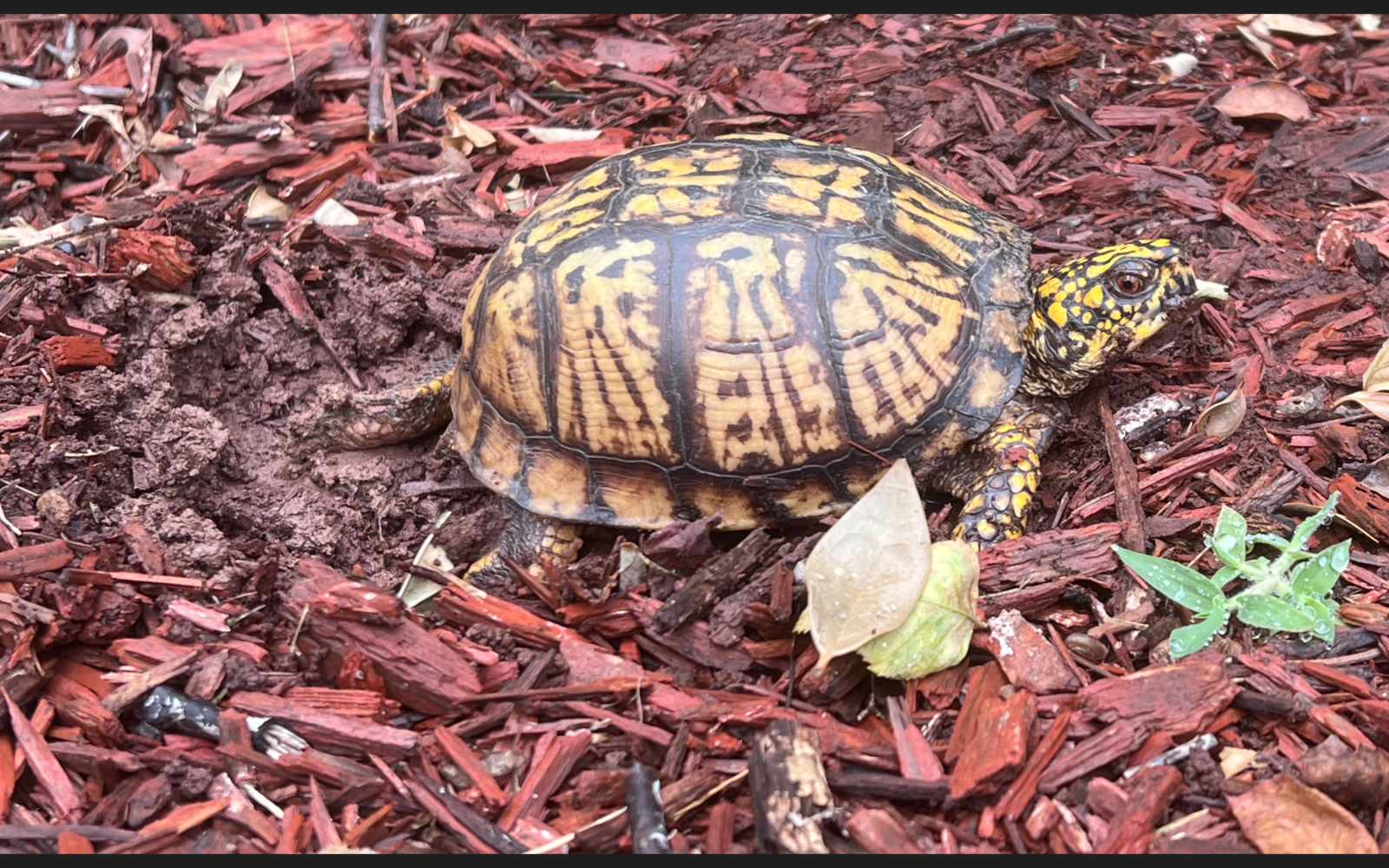
Female box turtle digging a hole with her back legs to lay eggs. Eastern box turtles are a popular species in the illegal world of wildlife poaching. 

Unsurprisingly, Erik couldn’t believe that global criminal gangs selling endangered species had ties to turtle thieves in little old Rhode Island. I know. It sounds pretty implausible — and grandmothers do tend to sensationalize news stories to entertain the kids.

But it’s all true. Just ask the state herpetologist. (Who knew Rhode Island had an official herpetologist?)

As Frank Carini reported at ecoRI News this month, “Rhode Island’s reptiles and amphibians face pressure from numerous threats, and for many species, removal of even a single adult from the wild can lead to local extinction, according to the state’s herpetologist.

“Since the local and/or regional future for many of these species — eastern spadefoot toad, northern leopard frog, northern diamondback terrapin, to name just a few — is in doubt, removing them from nature to keep as a pet or to sell is against the law. It’s illegal to sell, purchase, or own/possess native species in any context, even if acquired through a pet store or online, according to Rhode Island law.

“Turtles are especially vulnerable, according to Scott Buchanan, who became the state’s first full-time herpetologist in 2018, because some species must reproduce for their entire lives to ensure just one hatchling survives to adulthood. The Rhode Island Department of Environmental Management (DEM) staffer said it takes years, sometimes a decade or more, for turtles to reach reproductive age, if they make it at all.

“Buchanan recently told ecoRI News that ‘broadly, across taxa’ the illegal taking, or poaching, of wildlife is a ‘huge issue. … Globally, it’s considered one of the driving forces of population declines and even extinctions,’ he said.

“Wildlife trade experts and conservation biologists such as Buchanan point to poaching — driven by demand in Asia, Europe, and the Unified States — as a contributing factor in the global decline of some freshwater turtles and tortoises. …

‘Before you take a photo of a turtle in the wild, turn off the geolocation on your phone. If you post a turtle photo on social media, don’t include information about where you found it.’ 

“Of the 360 known turtle and tortoise species, 52% are threatened, according to the International Union for Conservation of Nature Red List of Threatened Species.

“A group of global turtle and tortoise experts published a 2020 paper that noted ‘more than half of the 360 living species [187] and 482 total taxa (species and subspecies combined) are threatened with extinction. This places chelonians [turtles, terrapins, and tortoises] among the groups with the highest extinction risk of any sizeable vertebrate group.’

“Turtle populations are ‘declining rapidly’ because of habitat loss, consumption by humans for food and traditional medicines, and collection for the international pet trade, according to the paper’s authors. Many could go extinct this century.

“Buchanan’s involvement in dealing with the impact of poachers is primarily around North American turtles. He noted turtle diversity is high globally and in the eastern United States — in the Southeast more than the Northeast, however.

“But state and federal law enforcement officials and wildlife biologists consider the illegal collection of turtles to be a conservation crisis occurring at an international scale, according to Buchanan, who is the co-chair of the Collaborative to Combat the Illegal Trade in Turtles (CCITT), formed in 2018 within Partners in Amphibian and Reptile Conservation. …

“In Rhode Island, Buchanan said, there are four turtle species of concern: the eastern box turtle; the spotted turtle; the wood turtle; and the northern diamondback terrapin.

Eastern box (species of greatest conservation need): This turtle spends most of its time on land rather than in the water. They favor open woodlands, but can be found in floodplains, near vernal pools, ponds, streams, marshy meadows, and pastures. They reach sexual maturity by about 10 years of age. Females nest in June and lay an average of five eggs in open areas with sandy or loamy soil. Eggs hatch in late summer.

Spotted (species of greatest conservation need): These turtles are sensitive to disturbance. They are usually found in shallow, well-vegetated wetland habitats, such as vernal pools, marshes, swamps, bogs, and fens. …

Wood (species of greatest conservation need): For part of the year they live in streams, slow rivers, shoreline habitats, and vernal pools, but in the summer they roam widely across terrestrial landscapes. …

Northern diamondback (state endangered): Their population has suffered greatly due to poaching and habitat loss. They are found in estuaries, coves, barrier beaches, tidal flats, and coastal marshes. They spend the day feeding and basking in the sun and bury themselves in the mud at night. They reach sexual maturity at about 6. Females lay a clutch consisting of 4-18 eggs. Some females will lay more than one clutch in a season and hatching usually occurs in late August. The young spend the earlier years of life under tidal wrack (seaweed) and are rarely observed. …

“Other turtle species that can be found in Rhode Island include eastern painted, common snapping turtle, and eastern musk. …

“ ‘We have a lot of turtles for a small state,’ Buchanan said. …

“In late September environmental police officers from DEM’s Division of Law Enforcement found 16 eastern musk turtle hatchlings, a species native to Rhode Island and the eastern United States, in the home of a West Warwick man suspected of illegally advertising them for sale on Craigslist and Facebook.

“The case resulted from a week-long investigation, during which the suspect offered two hatchlings to undercover environmental police officers for purchase, according to DEM. The suspect was charged with 16 counts of possession of a protected reptile or amphibian without a permit. The turtles were taken to the Roger Williams Park Zoo, which has a room and equipment dedicated to the care of turtles seized from the illegal turtle trade. The turtles will be released back into the wild after clearing health screenings and disease testing, according to DEM. …

“To help protect Rhode Island’s native species, you can submit observations of amphibians and reptiles to DEM scientists online.”

More at ecoRI News, here. No firewall.

Read Full Post »

Photo: Jessica Rinaldi/Globe.
Janelle Emmanuel, a Watertown resident, opted to rent out her driveway on Spacer, a parking app that’s gaining users around Boston.

When my friend Sara was a professor at Harvard and Stanford tried to lure her to the West Coast, the most irresistible thing that Harvard offered her was a parking space in Cambridge. There was a spot next to her office building that used to change hands every year among the faculty. It could be hers permanently. Sara stayed.

Although I myself always took public transportation when I worked in Boston and Cambridge, I learned that on a day when I needed a car, parking could be a real problem. There are public garages, of course, but the cost is a king’s ransom. No one who commuted to work in a city would want to pay that every day.

A new app makes it easier for someone with an unused parking space to help out someone who needs a space — and make some money at the same time. Today, using a driveway as an income generator is not just for people who live near the beach.

Collin Robisheaux writes at the Boston Globe, “Everything is pricey these days, and a little extra income can go a long way.

“Enter Spacer, an app that strives to be the ‘Airbnb of monthly parking‘ by connecting commuters in need of an empty space with locals who have an unused parking spot or driveway.

“It works like this: Someone with an empty driveway can download Spacer, input some personal information and details about the spot, and list it on the app or website for renters to reserve in month-long periods. Renters can then snag the parking spot for their personal use. …

Spacer Technologies was founded in Australia in 2015, before expanding to North America and acquiring Where I Park Inc. earlier this year. With more commuters returning to the office, parking has become a more pressing need — and Spacer has been a beneficiary, with Boston receiving more booking requests in October than any other city on the app. …

“With snow causing headaches for drivers with outdoor parking, some users may be thinking ahead, with booking requests for covered spots in the Boston area up 77 percent since July.

“Spacer said it has about 300,000 users globally, and hundreds of rentable spots in and around Boston. It makes money by taking 25 percent of transactions; the remaining 75 percent goes to the users who rent out their spaces.

“Daniel Vernick, 25, in Somerville [said,] ‘It was quite straightforward. It definitely took away some of the rent burden.’ …

“Vernick was able to net $220 per month. That kind of extra cash is what sets Spacer apart from other parking apps, according to Jeremy Zuker, chief executive of North America for Spacer Technologies.

“ ‘You can actually take something that you’re not using, like your driveway or your garage, and you can just turn that into a revenue stream,’ Zuker said. …

“Spacer is relatively new to the rental scene and has plenty of competition. Websites like Facebook and Craigslist have long served as platforms for advertising and renting out parking spaces.

“But Janelle Emmanuel, who joined both Spacer and Craigslist to rent out her driveway last year, says she feels more secure on Spacer than she did digging through Craigslist.

“ ‘I feel like with Craigslist, you don’t really always know what’s going on there,’ Emmanuel said. ‘But Spacer, I felt very safe.’

“Emmanuel rented out her driveway in Watertown, capable of fitting up to three cars, after a friend recommended the rental service as a side gig. Emmanuel said the app adds an element of separation between the renter and the host, which made her feel more secure.

“Residential neighborhoods like Allston, Brookline, Somerville, and parts of Cambridge are all popular locations on the app. Spots in the downtown and Seaport areas are fewer and pricier, but executives at Spacer hope the app can help with parking congestion in the city.

“ ‘This whole idea of efficiency is about both the infrastructure and the spaces,’ Zuker said. ‘But also just in getting people where they need to get without wasting time and fuel.’ “

All my friends in rural America must be laughing now. But you know, it’s a good thing that humans can figure out how to do what they have to do. I will say that better even than a rented parking space is an employer that subsidizes your use of public transportation. I sure missed that perk after I left MIT.

More at the Globe, here.

Read Full Post »

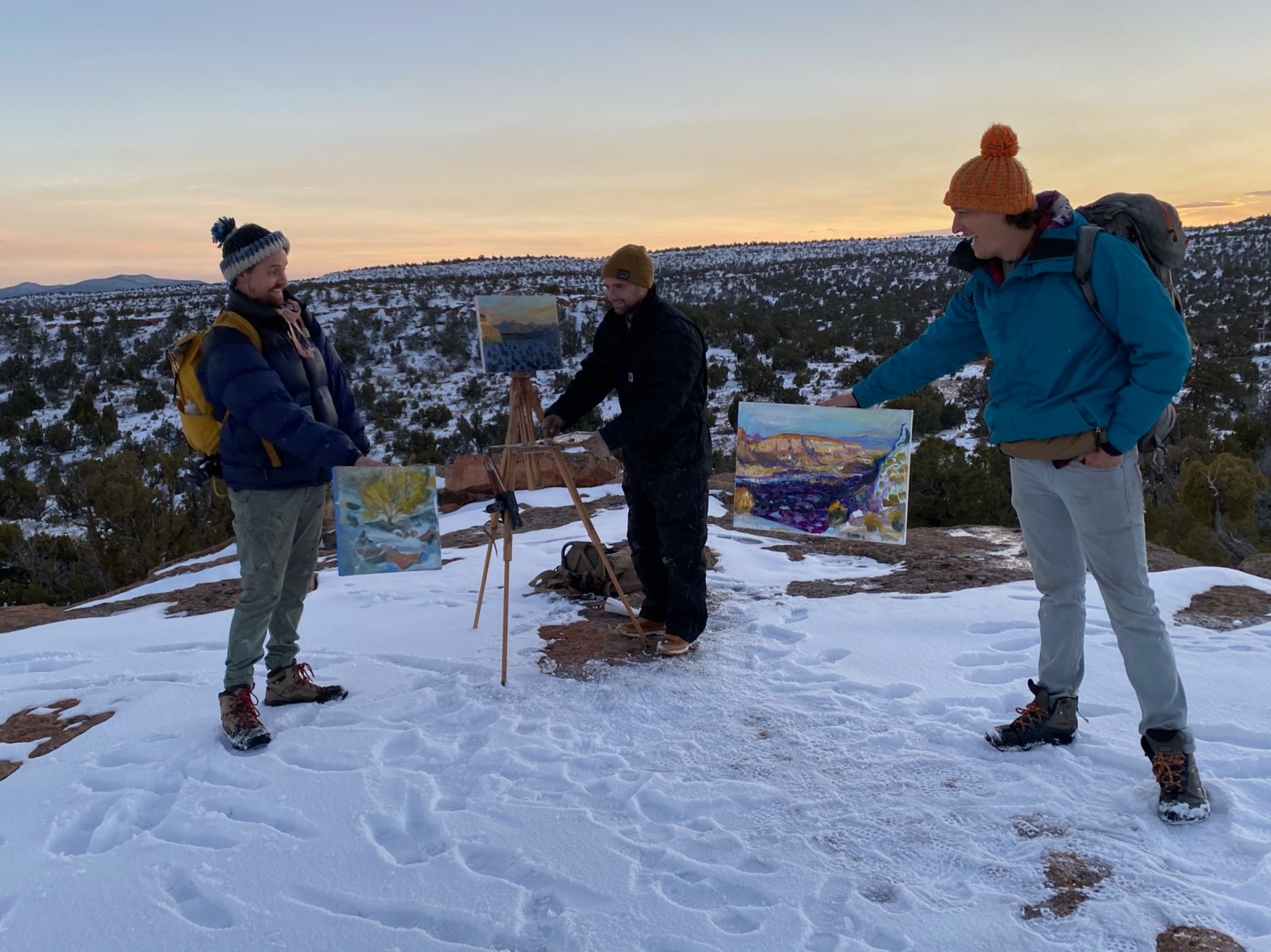
Photo: Sean Hudson, Aaron Zulpo, and Johnny Defeo via Hyperallergic.
Art making at Bandelier National Monument, January 2021.  

I’ve sometimes wondered how landscape painters over the years have dealt with extremes of weather. Think Hudson River School, think storms in the mountains. Even an ordinary person needs a lot of paraphernalia to go outside in bad conditions, let alone someone bringing along an easel, paints, palette, stool …

Susannah Abbey writes at Hyperallergic that in New Mexico, “the rule of the outdoors is that it changes constantly and consistently: sun angles, wind direction and speed, cloud formations, humidity. It is what makes painting outside, en plein air, so maddening and fun.

Johnny DeFeo, co-founder of the Guild of Adventure Painters, has been painting outside since he was a teenager. The challenge of rendering color and light often determines his subjects when he is on the road with his partner in painting, Brooklyn-based artist Aaron Zulpo. Since 2018 they have taken friends on mobile ‘Residency Programs’ and shorter ‘Excursions’ — driving DeFeo’s box truck to Banff, Yosemite, even Brooklyn’s Green-Wood Cemetery, where they led a community painting day. 

“Landscape painting has gone through different iterations in Western art since Claude Lorrain began painting the Italian countryside in the 17th century, yet has remained popular. … Maybe due to COVID lockdowns, or perhaps to a growing fear of losing the natural world, plein air (like other outdoor activities) is enjoying a small resurgence. Being outside, whether in an urban or wild landscape affords benefits; it’s a way to be fully immersed in and aware of the world.

“While its attractions transcend intellectualizing, at the end of a long day on a residency, the Adventure Painters convene to discuss process. ‘We’ll talk about, say, a waterfall — why is a waterfall so hard to paint?’ says DeFeo.

“DeFeo and Zulpo invite a rotating party of like-minded artists to accompany them. In January 2021, they organized a two-week excursion with Raychael StineBeau Carey, and Sean Hudson, then followed it up with a group exhibition at The Valley gallery in Taos, New Mexico.

“Stine teaches, among other courses, Wilderness Studio at the University of New Mexico, an art class in which students make their own pochade boxes and then go camping for two weeks to experiment with working beyond the confines of the Fine Art Department. Painting outside allows her to distill her outdoor observations into new and sometimes surprising palettes. 

“For Sean Hudson, a former student of Stine’s, the attraction to plein air started with the New Mexico sky. ‘I found these ethereal, transcendent spaces for my work in the bright sunsets, gradients, landscape as this whole idea of change, beauty, origin,’”’ he says.

“Beau Carey, also a Wilderness Studio alum, sometimes joins them. … Carey favors remote, icy corners of the world: the mountains of Longervin, Norway, and Denali National Park. He believes that working in the field is a great way to engage with a space, to record a subject with as much accuracy as possible under changing conditions before reinterpreting it in the controlled conditions of the studio. …

“This transformation of total immersion into a two-dimensional picture is rooted in paradox. The word ‘landscape’ in Western culture has been informed by the traditions of painting. It has come to connote, for instance, a sweeping seascape or desert vista, whose details are carefully curated or embellished by the artist’s perceiving eye. But landscapes are complex systems that resist the framing and blocking of two-dimensional composition. … In any given prospect we may choose to interpret on paper, thousands of creatures are born, live and die, rocks and mountains are eroding, forests growing and dying and rotting, rivers meandering, springs drying up. Every moment subtly changes the reality before, behind, above and below us.

“The impossible charge of a plein air painter is to distill this sensory and intuitive knowledge into a single snapshot. …

“ ‘I love it because it’s a game you can’t win,’ says DeFeo. ‘You get locked on a perfect shadow. A few minutes later you turn your brain into recorder mode and [because the light has changed] paint right through that shadow. It’s right on the edge of glory and annihilation.’ “

Some beautiful examples of the art at Hyperallergic, here. No firewall.

Read Full Post »

Art: Charles M. Schulz.
Like many of us, Snoopy does not look kindly on changes in his routine.

I take comfort in routine, a stable place from which to investigate things that are not routine. I don’t like being away from that stable place very long. Whether that’s all about Covid anxiety or just getting older, I don’t know, but I was glad to read in RealSimple that the wish to get my ducks in a row is not unusual. (Lately, I’d settle for getting one duck in a row.)

Lindsay Tigar writes that mundane routines are actually what’s keeping us sane and healthy.

“Ask any doctor, therapist, or wildly successful entrepreneur, and they’ll swear by the myriad benefits of setting and sticking to a routine. Even if you’re a little more spontaneous, you’ve likely experienced the desire to have a set schedule. Say, after a chaotic holiday season, following a gluttonous vacation, or another stressful period in your life. …

“As humans, our bodies — and more to the point, our minds — crave the comfort and mindlessness that routine offers. How so? Routine requires very little conscious thought, freeing our brain to focus on more complex tasks, according to Samantha Dutton, PhD, a licensed clinical social worker and associate dean and social work program director at the University of Phoenix.

“This makes everyday tasks, like commuting to work, brushing our teeth, taking a shower, and so on, second nature. When we aren’t thinking about those necessities, we can pay more attention to other parts of our lives. ‘If we’ve learned anything from the previous year, the unexpected can happen, and it can cause anxiety,’ Dutton says. ‘Having a routine will lower your anxiety because there’s no conscious thought in the everyday details of life.

When you’re not worried about the daily grind, it can help you have more energy and be adaptable to the unexpected.’ …

“We spoke with experts to identify why we should invest in a routine this year.

Healthy Habits. If you’ve set resolutions for yourself that involve better wellness habits, a routine may be the trick to making them happen. As one academic article published in 2019 found, those in good health tend to engage in highly routine health behaviors. In other words: people who drink enough waterexercise regularly, choose balanced meals, and meditate, do so on a schedule.

” ‘Since humans typically choose options that are easier than others, and since routines become automatic and require little decision-making, this study concluded that developing routines within individuals’ current lifestyles will help increase adherence to health care recommendations,’ explains Joan Davidson, a licensed psychologist, co-director of the San Francisco Bay Area Center for Cognitive Therapy, and assistant professor in the Clinical Science Program at the University of California, Berkeley.

Use of Time. Dutton says while many of us believe we’re great at multitasking, chances are we’re not actually maximizing our time. If you were to track your daily actions, you’d likely find that responding to text messages adds an additional half-hour to one work assignment. Or having dozens of tabs open on your computer is more distracting than beneficial. However, when we create routines and time blocks, we can check off every deliverable because we have reserved our time and mental power. … She says, ‘Remember, we all just get 24 hours in the day. Routines will help you maximize your time and lead to an understanding of how you want to spend your time.’

Goals. There’s a reason why entrepreneurs take the guesswork out of their days: They need their genius going directly toward their business and solving problems. … When we create routines, we break down those goals and aspirations into daily stepping stones, which eventually lead to success. ‘Whatever the goal, developing routines paves the way toward achieving them,’ Davidson says.

Depression. If you’ve ever experienced a bout of depression, or you know someone who has, you likely experienced the withdrawal tendency. As Davidson explains, when we are feeling blue, we tend to pull back from activities and people who bring us joy, which can leave us feeling deprived and sadder. [Planning] ‘consistent, concrete and specific practices, often at designated times and places [builds] structure and routines for developing and practicing new behaviors.’ …

Calming. Dutton says familiarity is comforting. ‘Having a routine can have a calming effect and can set the stage for the day,’ she says. Even when the world is unpredictable with the pandemic hanging over everything, having a set morning routine, for example, will keep you feeling more relaxed and ready for whatever the day throws your way.

“So. It’s human nature to enjoy some tasks and to loathe others. Sadly some of the must-dos you dislike, like folding laundry or filing taxes, have to be completed. But if you can create a routine that also includes activities that make you happy — like yoga, reading, or taking a hot bath — you’ll boost your energy instead of draining it.” More at RealSimple, here.

Sometimes I identify with the Dormouse in “The Dormouse and the Doctor,” by A.A. Milne. To preserve his familiar and comforting routine, the Dormouse just curled up in a ball and closed his eyes.

“The Dormouse turned over to shut out the sight
“Of the endless chrysanthemums (yellow and white).
” ‘How lovely,’ he thought, ‘to be back in a bed
” ‘Of delphiniums (blue) and geraniums (red.)’ “

Read Full Post »

Photo: Jorge Sierra/WWF Spain.
“Hundreds of freshwater basins across the world, including the dried-up Santa Olalla permanent freshwater lagoon in Spain’s Doñana National Park, are the most likely to experience social and ecological impacts due to freshwater use,” says Xander Huggins at the Conversation.

I’ve been trying to learn meditation. Doctor recommendation. It seems to be mostly about focusing on breathing — in, out, in, out. I am starting to appreciate what a miracle breathing is. Unless we have asthma or COPD, we are too likely to take that miracle for granted.

Same thing with water.

Xander Huggins, a PhD Candidate in the Department of Civil Engineering, University of Victoria, writes at the Conversation, “When people use freshwater beyond a physically sustainable rate, it sets off a cascade of impacts on ecosystems, people and the planet. These impacts include groundwater wells running dry, fish populations becoming stranded before they are able to spawn and protected wetland ecosystems turning into dry landscapes.

“Developments in computer models and satellites have fostered a new understanding of how freshwater is being redistributed around the planet and have made clear the central role that people play in this change. This human impact is so significant that organizations like the United States Geological Survey are redrawing their water cycle diagram to include the impacts of human actions.

“Equally important to understanding how people affect freshwater availability, is understanding how people and ecosystems will respond to amplified freshwater challenges including drought, water stress and groundwater depletion. While these challenges impact localized sites, their impacts are scattered across the world. To address this global water crisis, global action is urgently needed.

In our recent study, we identified the basins of the world that are most likely to be impacted by two central and interrelated aspects of water scarcity: freshwater stress, which occurs when the consumption of water surpasses renewable water supply, and freshwater storage loss, which is the depletion of freshwater in reservoirs or in groundwater bodies due to persistent overuse.

“We identified 168 basins across the world that are the most likely to experience social and ecological impacts due to insufficient freshwater availability. These hotspot basins are found on every continent — a clear indication of the widespread, global nature of these challenges.

“To identify these hotspot basins, we assessed patterns in freshwater stress and freshwater storage trends and compared these to patterns in societal ability to adapt to environmental hazards and freshwater-based ecological sensitivity indicators.

“The hotspot basins are most vulnerable largely because they are likely to experience social and ecological impacts at the same time. … Hotspot basins are vulnerable as they are likely to face impacts such as low streamflow that harms aquatic biodiversity, reduced food security as agriculture is heavily reliant on freshwater supply, wells running dry and higher potential for social unrest.

“Reducing vulnerability in intertwined societal and environmental systems requires improved policy and management integration across sectors. Integrated Water Resources Management considers and balances social, ecological and hydrological sustainability goals by co-ordinating management across water, land and other related resources. Its inclusion in the United Nations Sustainable Development Goal framework highlights its importance. …

Afghanistan, Algeria, Argentina, Egypt, India, Iraq, Kazakhstan, Mexico, Somalia, Ukraine, Uzbekistan and Yemen have hotspot basins yet low implementation levels of much-needed integrated management practices. …

“While we focus on the identified hotspot basins, this does not mean that impacts cannot occur in basins with lower vulnerabilities. For instance, only a number of Canadian basins — all located in the prairies — are identified with moderate vulnerability in our global study. Yet, dry streams on Vancouver Islandfalling groundwater levels in the Lower Mainlandcrop yields affected by drought throughout the prairies and potential for salt-water intrusion along the East Coast are all instances of freshwater security challenges being faced in Canada. …

“While global studies, such as ours, are helpful at systematically highlighting regions for prioritization, they do not — and should not — provide explicit solutions. Rather, in such intricate social and ecological environments, actions to reduce impacts need to be attuned to place-based social norms, cultural values, hydrological conditions and local knowledge systems.

“Our hotspot basins can help guide such community-driven local action to help conserve freshwater resources that are most under threat and mitigate the ripple effects of these threats on people and ecosystems.”

More at the Conversation, here. See also this Christian Science Monitor post about water drying out in Egypt and all around North Africa and the Middle East. Neither site has a firewall.

Read Full Post »

Photo: Emmanuel Eigege via Unsplash.

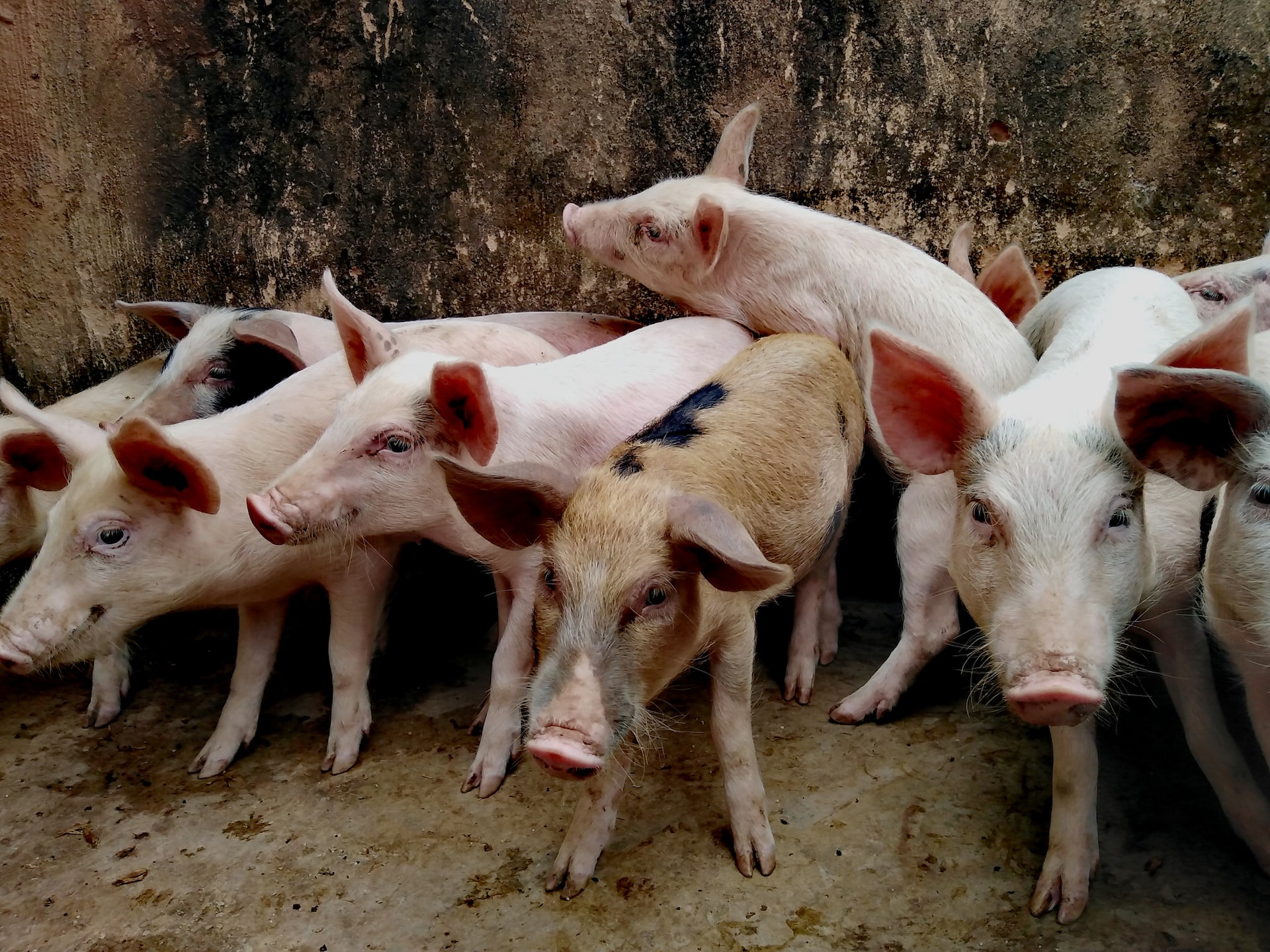
I love hearing author Sy Montgomery talk about her animal friends in her regular visits to Boston Public Radio. She has helped me be more aware of animals as fellow travelers on the planet, beings with personalities most humans don’t bother to see. Her books have intriguing titles: for example, the one about her pig Christopher Hogwood, The Good Good Pig.

Today’s article fits right in with Montgomery’s stories. It’s about how pigs mediate barnyard brawls.

Leo Sands reports at the Washington Post, “When a fight becomes particularly thorny and drawn out, sometimes it takes the involvement of an empathetic, calming third party to lower the temperature in the room.

“Or, it turns out, the farm.

“New research suggests that pigs — like many humans — are smart enough to recognize a conflict between others and defuse the situation.

“According to a study published [recently], the hoofed mammals appear to have the cognitive ability to watch and empathize when two other pigs fight — and then intervene afterward to reduce the levels of aggression or anxiety — a form of social regulation that can benefit the wider group.

“The study observed that bystander pigs sometimes intervene after a conflict by approaching one of the warring parties and initiating physical contact, by applying the calming touch of their snouts, rubbing either of the parties with their ears or simply sitting up against one of the opponents. Occasionally, a pig also placed its entire head over the body one of the combatants, which was also effective.

“ ‘Pigs are highly social, and they have a very complex and high cognitive capacity to recognize familiar individuals,’ Giada Cordoni, one of the study’s authors at the University of Turin, told the Washington Post.

“When a victim is contacted after a fight, its anxiety levels drop, while aggressors that are approached are less likely to attack the victim — or other members of the group — again.

“Cordoni describes this resolution strategy involving a third pig as a ‘triadic conflict mechanism.’ The study marks the first time it has been observed in the species — having previously been identified only in humans, wolves, primates and birds. …

“Louisa Weinstein, a conflict mediation specialist who works with humans [notes that] ‘when a third person comes in, it’s an opportunity for someone to hear you. In a conflict, the other person isn’t understanding your perspective. The third party is going to at least understand your perspective,’ she said in a telephone interview. ‘The third party contains the conflict and the emotions associated with it. … We automatically regulate and behave better when someone else is there.’

“The Italian researchers spent six months in 2018 observing 104 pigs on a farm near Turin, in northern Italy. The pigs were free to forage throughout a 13-hectare woodland area — an environment that let them move and behave naturally. Researchers collected hours of video data to analyze.

“They found that domestic pigs can take part in a wide array of post-conflict strategies in the minutes after a fight. The two fighting pigs can engage in reconciliation — or a third pig not involved in the conflict can make unsolicited physical contact with the aggressor or the victim, often with its snout. …

“Bystander pigs have the cognitive and empathetic skills to detect emotions like anxiety in other pigs. The physical contact — which is not solicited by either of the antagonistic animals — also suggests that the third pig knows when the moment is right to intervene, as well as how to do it, the researches said.

“Another observation made by the scientists, suggesting a further similarity pigs share with humans, was the influence of family dynamics on how fights played out. Bystander pigs were more likely to intervene with pigs they were closely related to, suggesting they recognized and responded to family ties.”

Do you think there is something we humans need to learn from pigs? More at the Post, here.

Read Full Post »

This Thanksgiving, I’m thankful to Ukrainians for showing us that you go to battle when hostile armies invade your borders, not for fanciful geopolitical strategies that change with every new government.

I’m grateful for the example of courage that ordinary Ukrainians are displaying every day and for their being a strong bulwark against totalitarianism.

The Ukrainian translators, writers, and editors I got to know for the four months of the U24 social-media partnership were the salt of the earth. I’m proud to know them. And I’m grateful to fellow editor Francesca Forrest for alerting me to the opportunity. I wrote about that experience here.

Today those Ukrainians and the native-English-speaking editors on our team stay in touch via Facebook, where we share the usual FB things — family photos, travel pictures, birthdays — plus news of Ukraine and ways to help.

To have a chance to use my skills to support the defense of these brave people was an unimaginable privilege. I am grateful.

Read Full Post »

Oh, the ingenuity of our species when we put our minds to a problem! Lack of water in the Canary Islands seems to have inspired problem solvers to pull water from thin air.

Colette Davidson at the Christian Science Monitor writes, “On a clear day, the tiny hamlet of La Vega, stacked up high on the hillsides of northern Tenerife, offers spectacular views of the rugged Atlantic coast. But this afternoon, the thick mist spiraling through Jonay González Pérez and Sara Rodríguez Dorta’s farmland sets an eerie Alfred Hitchcock filmlike scene. Nearly ripe for fog harvesting.

“ ‘There’s almost enough fog to start collecting it,’ says Mr. González Pérez, trudging through ankle-high grass in rubber galoshes as he snaps dead leaves off an artichoke plant. ‘But we need to wait a little longer, until the fog is at the same level as the catcher.’

“Since 2018, Mr. González Pérez and his wife have relied solely on fog collecting to water their 3.7 acres of farmland – which includes lemon and plum trees, artichoke plants, and 50 chickens – when rain is in short supply in the summer months.

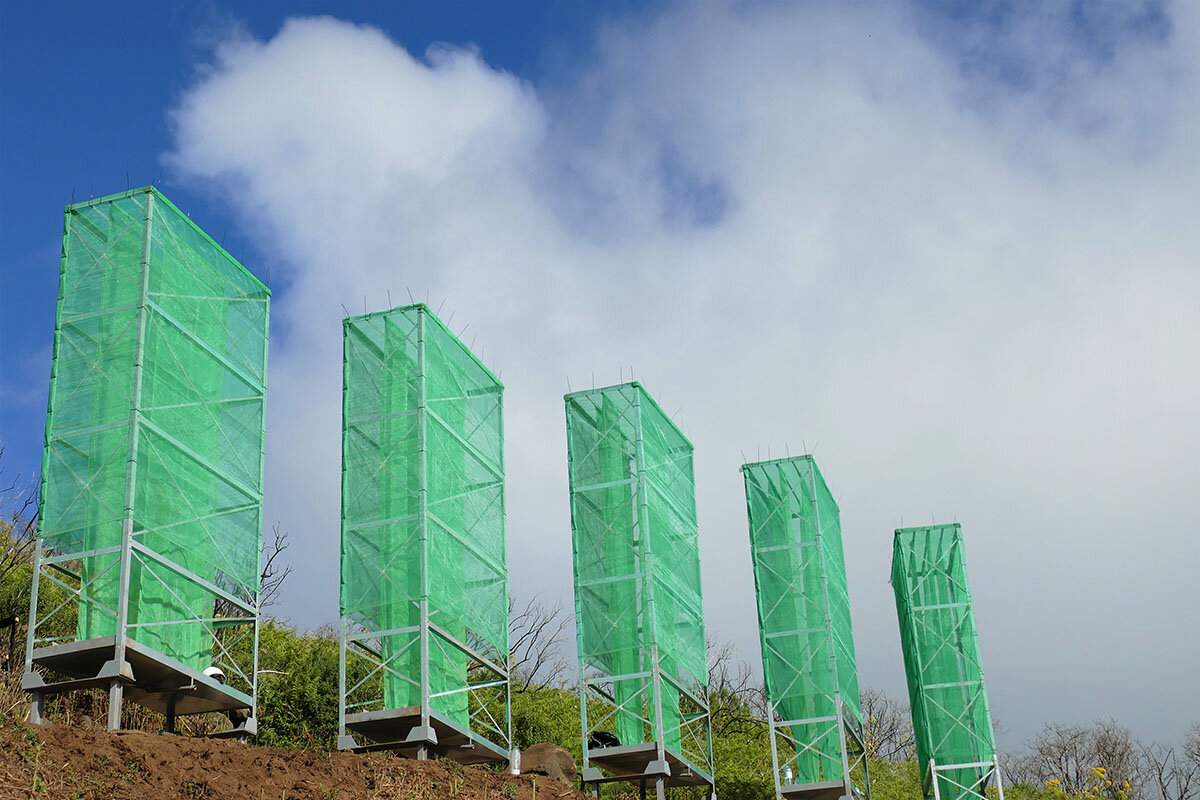
“On a good day, the couple’s 435-yard-long wall of collectors – vertical U-shaped nets cemented into the ground by metal poles – can harvest 475 gallons of water. The suspended fog droplets fall from the nets and flow through 220 yards of black tubing, which snake down the back of their property into a 95,000-gallon storage tank that resembles a giant waterbed.

“Their system – which the couple built with their bare hands over the course of a year – was entirely paid for through government subsidies, after they won a local award for the best initiative in rural farming.

“But this isn’t just a pet project for small-scale farmers. In 2020, the European Commission partnered with the local government in neighboring Gran Canaria to fund the Life Nieblas fog-collecting project, which aims to reforest areas decimated by drought or forest fire. Harvested fog water meets the World Health Organization’s standards on drinking water safety and has provided isolated communities with a much needed resource for decades.

“As the Canary Islands and regions around the world look to combat the effects of climate change, fog collecting is becoming an increasingly viable technology for communities facing soil erosion and water supply challenges.

“ ‘Fundamentally, we depend on our groundwater in the Canary Islands and water is always scarce,’ says María Victoria Marzol Jaén, a retired climate scientist at the University of La Laguna on Tenerife and one of the pioneering researchers into fog collecting in the Canary Islands in the 1990s.

“ ‘Fog water alone can’t supply this, but it can be useful for reforestation purposes, like in the case of forest fires. But for rural zones, where water consumption is much lower, [fog collecting] is more than just helpful. It can be the solution to water problems.’

“The first documented experiments into fog as an alternative water resource can be traced to South Africa in the early 1900s. In 1963, Chilean physicist Carlos Espinosa’s invention of ‘mist traps’ were patented and offered to UNESCO for free use around the world. Since then, researchers have made significant developments into the green technology, and research sites can be found in Chile, Peru, South Africa, Morocco, China, the United States, and the Canary Islands. …

“Apart from the initial materials and building costs, fog collection is a low-energy operation, whose structures, like netting, can blend more seamlessly into natural environments than wind turbines or solar panels. Upkeep involves merely clearing away overgrown plants and cleaning the filters.

“ ‘Fog collecting doesn’t consume any energy and doesn’t affect any other natural resources,’ says Ricardo Gil, a technical architect in Tenerife who runs the Nieblagua company. He has installed around 100 fog collectors across the Canary Islands, mainland Spain, and Portugal. ‘It also takes the pressure off extracting water from aquifers or desalinating ocean water.’

“Each of Nieblagua’s catchers can withstand winds of up to 62 mph, and use four sheets of netting to collect up to 8,000 gallons of water per year in optimum conditions. In several of the Canary Islands, which benefit from around five hours of fog per day, this translates to almost one person’s entire water needs. …

“For thirsty, drought-stricken regions, that can mean the difference between survival and desertification – especially when multiple catchers are set up in one area. In Arafo on Tenerife, 12 of Nieblagua catchers provide an estimated 26,000 gallons annually to new almond tree plantations.

“ ‘It’s not a fantasy. We’re using up our natural resources all around the world,’ says Mr. Gil. … ‘Here we have a natural resource right in front of us. We need to take advantage of it.’ ”

More at the Monitor, here. No firewall.

Read Full Post »

Sending a bonus post this morning.

Longtime readers know that my blog is hosted by my daughter’s jewelry company, Luna & Stella. As it happens, both my children are entrepreneurs!

John’s company is Optics for Hire, and his staff in Ukraine and Belarus have invented many technologies that I haven’t known how to describe. Until now. This time my son’s team in Ukraine has invented LED technology for a knife sharpener that tells you how sharp the knife is, and Farberware is using it in a new product. Check it out here.

It’s really been fun hearing how the technology developed from the germ of an idea about the sharpness of hockey skates. (John’s son and daughter are both ice hockey players.)

Got to love the way inventors think.

Read Full Post »

Emily’s Oysters in Maine, Sun Farm Oysters in Rhode Island, and Cuttyhunk Shellfish Farms in Massachusetts are a few of the hardy crews eager to supply oysters for your Thanksgiving stuffing.

One of Suzanne’s oldest friends runs an oyster business on Cuttyhunk Island, Massachusetts, and Thanksgiving is a big time for her. That’s because, in New England at least, many people see oysters as traditional for Thanksgiving.

The radio show Living on Earth recently did a show on the topic.

“STEVE CURWOOD: In the 19th century, oysters were a popular food item in the US, especially with the advent of commercial food canning, and by 1900, Americans were gobbling down some 160 million pounds of oysters a year. But overconsumption, sanitation concerns about raw oysters and the huge expansion of the beef and pork business that the railroads made possible, led to the oyster’s decline.

“Farmed correctly, oysters can be sustainable and their reefs protect coastal areas, so in recent years the popularity of local foods has spawned new oyster farmers — farmers that were hit hard this year with a drop in demand during the Covid crisis. Not everybody loves them of course, but oysters can be eaten in many ways beyond the half-shell. Celebrity chef Barton Seaver joins us from his kitchen near the harbor of South Freeport, Maine, to show how oysters can even lend flavor to Thanksgiving stuffing. … So tell me, why have the oyster farmers and fishermen been hit so hard by COVID-19?

“BARTON SEAVER: Oysters are, well, they’re so important to the restaurant industry. And that’s where so many of us go to get them. By some anecdotal accounts, in March, April, May, large oyster dealers around the country I’ve talked to lost 98% of their business, who were selling into restaurants; some of that has come back. Massachusetts has some hard data, around about 60 to 70% of their oysters landed, that business was lost. …

“CURWOOD: Where I live in southern New Hampshire near the Great Bay … I noticed that there were folks who actually had set up stands along the side of the road to sell oysters individually to people.

“SEAVER: Yeah! Well, that’s been one of the great success stories. And that’s sort of the inherent nature of oyster farming is that these are small businessmen and -women who are running a farm, and they are entrepreneurs, and they were able to pivot quite quickly. And as, in COVID, we turned our attentions anew to local food systems, oysters are a prominent part of that for those of us on the coasts. There is no food that is of place as much as are oysters, clams, mussels. …

“CURWOOD: Now, we know from history that Native Americans brought shellfish to the pilgrims that came here to the New England area in the 1600s. To what extent do you think oysters and shellfish should regain a place at the Thanksgiving table?

“SEAVER: Well, oysters were one of the foundational foods of this country and long before the white man set foot on this continent, oysters were serving and sustaining native populations for aeons. … But through decimation of local oyster populations in the wild, throughout the United States and our coastlines, we lost access to oysters. …

“CURWOOD: Tell me why you think they’re so important ecologically.

“SEAVER: Oysters, amongst other shellfish, are you know, what was known as a keystone species. They’re fundamental to the health of the ecosystems in which they are prevalent. They provide water quality, they provide habitat for countless other species. They are the bedrock upon which ecosystems’ health and resiliency relies. And in the absence of wild oysters, because we’ve decimated them through overfishing, through disease, etc., habitat loss, oyster farming has stepped into the role of providing those ecosystem services, those vital services.

Every oyster you eat encourages an oyster farmer, a small businessman or -woman, to plant many more, to augment and expand upon those ecosystem services provided by them.

“And in that way, I think it’s our patriotic duty to eat as many farm-raised shellfish as we can.

“CURWOOD: Yeah, in fact, you know, as the storms pick up with climate disruption, oyster reefs are a great way to slow down the storm surge, huh?

“SEAVER: Absolutely. We’ve seen this with Katrina, we saw this with Superstorm Sandy, that these vulnerable civic centers are made more vulnerable by the lack of those natural oyster reefs that naturally stopped those storm surges. …

“CURWOOD: There’s a project going on that the Nature Conservancy is a big part of. They’re [buying up] oysters that are otherwise going unsold to the restaurants during this pandemic, to help farmers who need to have a source of cash, and they’re using those oysters to restore more shellfish reefs. Why is it important to have oysters in local communities? …

“SEAVER: [Sustainable small business.] In my village, there’s a young woman named Emily — ‘Emily’s Oysters.’ She grew up here, and she went to school out in Puget Sound, and she was looking for something to do. [You know there’s a] brain drain in small, rural communities. But oyster farming caught her heart … and now she’s farming 50, 60, 70,000 oysters out in the waters that I can see from my house, pretty much. And she’s selling at local farmers’ markets. [To me, that’s] the quintessential story of success and of human sustainability acting in concert with our ecosystems. …

“CURWOOD: You have some delicious recipes, Barton, on your website. There’s — oh, the oyster risotto, the broiled oysters Rockefeller. And I believe you’re going to show us how to make an oyster stuffing, being that we’re close to Thanksgiving, huh? Now, I must say I never knew the stuffing on my Thanksgiving table could feature shellfish.”

More at Living on Earth, here, where you also can get the recipe for stuffing. Barton Seaver’s book is The Joy of Seafood: The All-Purpose Seafood Cookbook, with almost 1000 recipes.

Read Full Post »

Photo: Siddarth Machado, Flickr, CC BY NC 2.0.
About half of all fish species live in freshwater,” says the environmental radio show Living on Earth. “Pictured above is the bluegill sunfish, commonly found east of the Rocky Mountains.”

As world leaders wrap up the latest climate-change conference, in Egypt — delivering scary messages to us all — I’d like to think stories like today’s are reassuring. But sometimes the discovery of new species means they were there all along and we just didn’t notice. How they are doing is important because they represent an early warning system.

From the environmental radio show Living on Earth we learn that “more than 200 new species of freshwater fish were discovered worldwide in 2021, including a blind eel found in Mumbai and a fish dubbed the Wolverine pleco for its hidden spines.

“Harmony Patricio is conservation program manager at Shoal, which compiled the report and she joins host Bobby Bascomb for details.

“BOBBY BASCOMB: These 212 new freshwater fish species, I mean, these aren’t just tiny little, you know, minnows or little things that you could see how they can easily be overlooked for a long time. Some of these are actually large fish, can you describe a couple of your favorites for us, please?

“HARMONY PATRICIO: One of them is called the Mumbai blind eel, and it has no eyes, fins or scales. It just has smooth skin that is full of blood vessels and gives it this reddish coloration. It’s a subterranean fish. It is from the northwestern Ghats of India. And the genetic analysis, the researchers who described the species have done show that it’s likely it’s split from its closest relative over 1 million years ago. So it’s had a lot of time to evolve very distinct attributes.

And one remarkable thing about this story of this discovery is that this blind eel was found in a 40 foot deep well, on the premises of a school for the blind. …

“BASCOMB: And I understand there’s also something scientists have called a wolverine fish. Can you tell us about that?

“PATRICIO: Yeah, this one has gotten a lot of interest, I think because of the name Wolverine. It’s a wolverine pleco. … It has these lateral spines that can protrude from its gill coverings that it uses to defend itself in a somewhat violent manner. If anything tries to mess with it, they’re gonna be in trouble. The researchers who described this species said in the process of collecting them from the wild, they ended up with bloody fingers. And interestingly enough, other closely related species in this family have never been seen to exhibit this type of behavior, even those that do have these type of spikes. … Apparently, the local fishers in the area where the scientists are working decided to call the fish Buffalo Bill, because it was so aggressive and stabbing everybody with its with its spines. …

“BASCOMB: On the other end of the spectrum, I understand that they found a fish where you can actually see its brain through the skin on its scalp. Can you tell us about that?

“PATRICIO: Yeah, this is a pretty interesting story. So this is an example of a species that was known to science, but had been misidentified for years. It’s native to Myanmar and it’s very tiny, about the size of your thumbnail. And it’s been used by neuroscientists for research for several years. So it’s just sitting under their noses until they did some genetic analyses, and found out it’s a completely different species than they thought it was. … The reason it’s such a great organism for neurophysiological research is because as you said, it has an open skull, and transparent skin on the top of its head. So you can visually observe its brain while it is alive. And you can use that to collect data on brain activity related to different behaviors. The males of these species communicate with each other through sound. And that’s another really interesting thing that they’re able to see is like, what does the brain do when they’re receiving these communicative sounds and how does it process those sounds? …

“BASCOMB: Why are freshwater fish so threatened right now?

“PATRICIO: It’s a combination of factors. A lot of it stems from the fact that humans are, you know, inherently reliant on freshwater ecosystems for our own survival. Part of the issue is for some species, is that they have been over harvested, especially in the cases of mega fish as we call them, which are the world’s biggest freshwater fish. Their populations have collapsed by around 94%. Typically, they do not mature to where they’re able to reproduce until very late age. And so if they’re harvested, you know, when they’re only five or 10 years old, they haven’t had a chance to breed yet, it’s going to really drop down the population very quickly.

“Another big problem is invasive species. About a third of modern freshwater fish extinctions can be traced back to the impacts of invasive species. They change the environmental conditions in the water bodies that they’re introduced too. They often prey upon native species, or compete with them for food sources. Also, pollution has been a huge problem all from agricultural runoff to industrial that can really affect fish’s health and ability to reproduce successfully. The fragmentation of habitats such as damming rivers and reducing fishes ability to complete their life cycles by moving from downstream to upstream has had a significant impact. And climate change is also starting to have a real impact as well. …

“They’re an indicator group of animals that show us what’s happening with the health of aquatic ecosystems that we as humans are highly dependent on. If the fish are not doing well, we can be assured that those systems are not going to be very useful for humans down the road.”

More at Living on Earth, here.

Read Full Post »

Here’s something Suzanne just sent out from her business, Luna & Stella, the company that hosts my blog. Whee!

“We are happy to share our only sitewide sale of the year! 

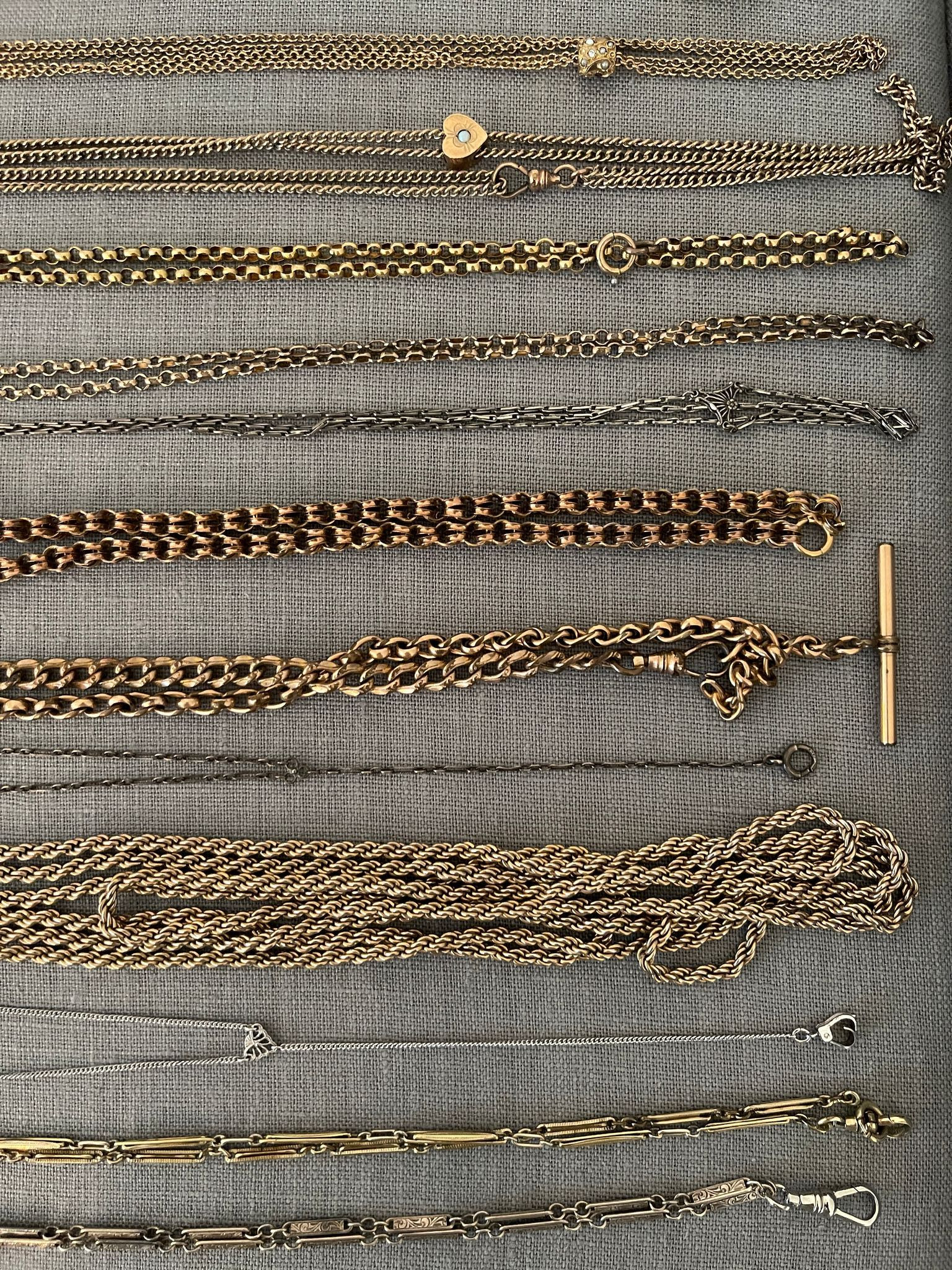
“Save 15% on everything on the website with code SHOPSMALL22, including all our antique locketsvintage charmsvictorian chainsmodern necklacesbirthstone rings, and even our archive sale. Sale ends Cyber Monday, November 28, at midnight EST. 

“P.S. As an antique dealer once told me, you can’t put on old locket on a new chain!  Check out some of the fabulous Victorian chains we have in stock.”

Read Full Post »

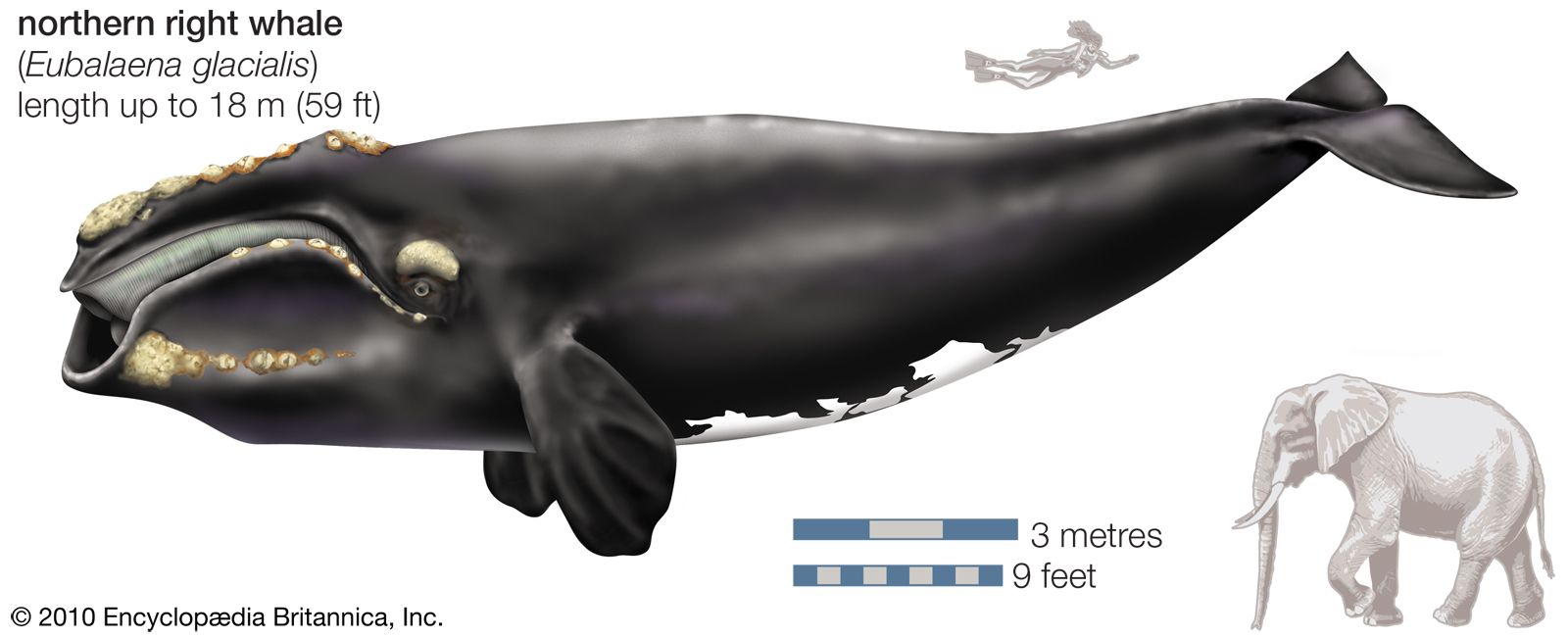
As the website Right Whale Festival notes, “The North Atlantic right whale (Eubalaena glacialis) is a federally protected ​endangered species.” Fewer than 350 exist today. Recovery is hampered by a slow reproduction rate and threats from entanglement in fishing nets and collisions with vessels.

Last week, I was talking to my younger grandson about elephants, and the conversation morphed into the topic of endangered species. He told me that the most endangered marine animal is the vaquita. I mentioned the right whale.

Today’s story is about an ocean scientist who is using drones and satellites to protect whales. Tatiana Schlossberg wrote about him for the Washington Post.

“Just yards from the Fish 1, a 22-foot research vessel, a humpback whale about twice the size of the boat hurled itself out of the water, sending shimmering droplets in a broken necklace of splash. In the other direction, a hulking cargo ship, stacked high with containers, crept closer.

“Aboard the Fish 1 … ocean scientist Douglas McCauley wanted to see whether the near real-time detection system he and his colleagues had developed, Whale Safe, could avert collisions between whales and ships in the Santa Barbara Channel.

“The tool represents one of the ways McCauley, who heads the Benioff Ocean Science Laboratory at the University of California Santa Barbara, is working to protect the ocean even as it becomes more industrialized. By collecting data from several sources — an acoustic monitoring buoy that listens for whale songs, identifies them according to species with an algorithm and sends that information to satellites; a predictive habitat model for blue whales; and sightings logged in an app — Whale Safe forecasts to ships the chances of meeting a whale. Then, it grades shipping companies on whether they actually slow down to 10 knots or less during whale migrations, from May 1 to Dec. 15.

‘We can literally watch all of the ships in California and across the whole ocean; we are better positioned than ever before to try to track damage as it occurs, or before it occurs,’ McCauley said. …

“Humans have worked in the seas for centuries: fishing, seafaring and more recently, drilling for oil and gas and the development of offshore wind farms. Shipping lanes cross almost every surface of the sea, except for shrinking swaths of the Southern and Arctic Ocean. …

“In meetings with corporate executives and political leaders, McCauley has made a consistent argument: Protecting the sea is in our interest, since it already does a lot of the work for us.

“In 2020 McCauley led a report that provided a framework for marine protected areas on the high seas, finding that such refuges could be powerful tools for biodiversity conservation, carbon sequestration and climate resilience. Even port and fishing communities, he argued, depend on an ocean that is still wild and alive. …

“The encounter in late September, amid one of the world’s busiest shipping channels and a vibrant ecosystem, offered a glimpse of how to do just that. Minutes after the container ship had passed McCauley’s boat, the whale — possibly the same one, but it is hard to tell — had found another [whale], and the two sent up exhales of spray.

“It was as if a bulldozer operator had plowed through a herd of elephants without stopping, not too far from a major city’s downtown, hoping to avoid a crash. And it happens many times a day here in the Santa Barbara Channel, even though barely anyone sees it. …

“The ocean is, by far, the world’s largest carbon sink, having absorbed about 40 percent of the excess greenhouse gasses from burning fossil fuels. But it comes at a cost: more acidic and warmer waters, which may not soak up as much carbon going forward. The fact that ocean animals evolved to a narrow range of conditions, McCauley and others found, makes them more vulnerable to climate change. …

“He learned through experience: What is good for the ocean is also good for people, and possibly business too. Slowing down ships means fewer ship strikes, which means more whales. That is good for biodiversity and climate change: Whales themselves are carbon sinks and fertilize plant growth (another carbon sink). …

“Three shipping companies contacted for this article, as well as an industry association, said that they supported such programs. CMA CGM, among the world’s largest shipping container companies, is sending alerts above medium directly to their captains, and Hyundai Heavy Industries is working with Whale Safe to incorporate its data directly onboard new ships.

“But some of the firms tracked by the tool, which has recently expanded its use to include San Francisco, have received F grades. Matson Navigation, for example, only slowed down roughly 18 percent of the time.

“Lee Kindberg, the head of environment and sustainability for Maersk, which received a B for slowing down in about 79 percent of cases, said the company supports Whale Safe. But she added that shippers must balance safety and speed restrictions against weather and demands from companies — and their customers — who want everything faster.”

More at the Post, here.

Read Full Post »

Photo: Barry Chin/Globe.
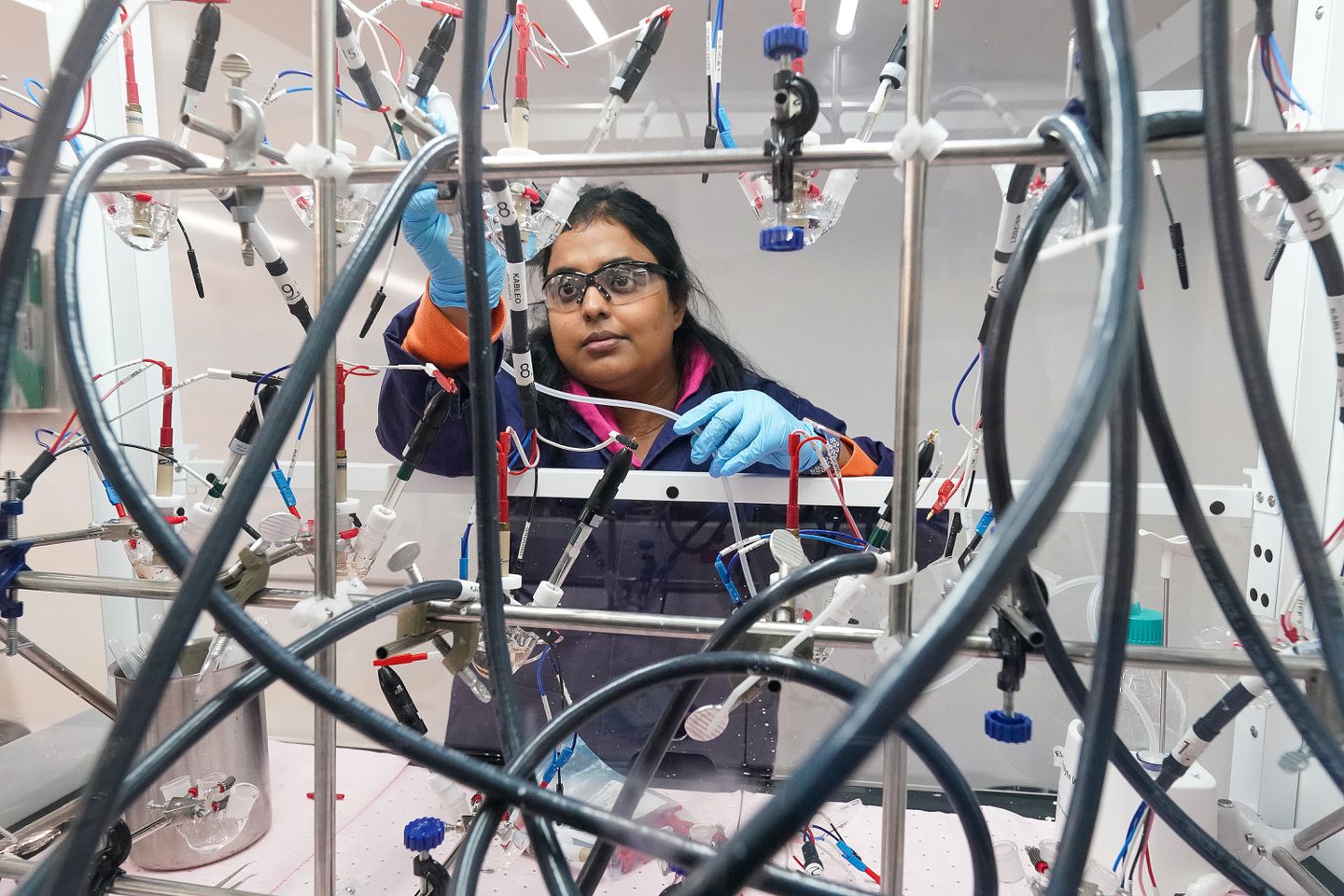
Alolika Mukhopadhyay, senior research scientist at Alsym Energy, validating a battery reaction in a testing room. “Alsym has developed a new kind of rechargeable battery that doesn’t use lithium. Instead it relies on cheap, plentiful minerals,” reports the Boston Globe.

Oh, I wish so much luck to this startup in Massachusetts! Some of you may remember the 1960s line “If you’re not part of the solution, you’re part of the problem.” Right? Well, I am part of the lithium problem, and this startup is trying to obviate the need for that blood mineral in batteries. As we turn more and more to electric, lithium mines are damaging the environment and the human communities nearby. I feel guilty every time I think about it.

But Hiawatha Bray reports at the Boston Globe that “A small startup in Woburn called Alsym Energy is working on one of the world’s biggest problems — the need for better, cheaper batteries for cars, electric utilities, and even seagoing ships.

“Alsym’s founders, veteran entrepreneur Mukesh Chatter and Massachusetts Institute of Technology professor Kripa Varanasi, say they’ve built a new kind of rechargeable battery that delivers the performance of lithium ion cells at half the cost.

“That’s largely because the batteries don’t contain lithium or cobalt — scarce and expensive metals mostly controlled by China. And Alsym says they will never burst into flame like lithium batteries, because none of the ingredients are flammable.

“Now, the 47-person startup is striking deals with shipping companies and an automaker to prove its claims in real-world use. The company is just one of many worldwide that are scrambling to find practical alternatives to lithium ion batteries. …

“Alsym has been in stealth mode since its founding in 2015. In some ways, it still is. The front door of the company’s offices displays the name of a dance academy. And Chatter is extremely secretive about the chemistry that makes his battery work. He hasn’t even tried to patent it, because that would require revealing the formula. Instead, it’s a trade secret, like the recipe for Coca-Cola.

“But Chatter did offer a few hints. The electrolyte — the material that carries energy between the two electrodes — is water mixed with some solvents that Chatter won’t identify. One of the electrodes is mostly made of manganese oxide, but Chatter wouldn’t say anything about the composition of the other — just that there’s no lithium or cobalt involved, and that all the materials are nonflammable, non-toxic and inexpensive.

“The company has gained the trust of investors, who’ve poured $32 million into the project, with Helios Climate Ventures leading the way.

Chatter, who previously founded a pair of networking hardware companies, began Alsym as a way to provide reliable electricity in developing countries.

“ ‘About 2 billion people in the world either don’t have electricity or have it only part of the time,’ said Chatter. … Solar cells and windmills can help, but they must be backed up with batteries to provide consistent power. Lithium cells are too expensive and unstable; Chatter claims his company’s batteries are much safer and cheaper.

“Chatter says he’s landed $2 billion in pre-orders for Alsym batteries. A small factory at the Woburn headquarters has begun cranking out prototypes. Alsym batteries can be made using the same equipment found at any lithium ion battery plant; only the materials inside the batteries are different. That means existing battery plants could quickly switch over if and when the Alsym batteries prove their worth.

“The first buyers will be Singapore-based cargo ship manager Synergy Marine and Japanese cargo ship owner Nissen Kaiun. The two companies plan to equip up to 100 of their seagoing ships with Alsym batteries as an auxiliary power source.

“Alsym has also signed a deal with one of India’s biggest carmakers to provide electric car batteries, though Chatter won’t say which company. It’s a big test for Alsym, because the typical new car in India costs about $10,000. In US electric cars, the battery alone can cost more than that. …

“Alsym is also in negotiations with a utility that’s interested in using batteries to store power from solar and wind farms, and then release the electricity as needed to the local power grid.

“But Shirley Meng, a materials science professor at the University of Chicago, is very dubious. She said that laboratories worldwide are trying to find alternatives to lithium batteries, so far without much success. ‘Lithium has such great performance,’ Meng said. …

“Alternatives to lithium have been invented, Meng said. But so far, they’ve only worked reasonably well on a small scale. In addition, any new battery chemistry would require the development of a new global supply chain for all the chemicals and components needed to make it work, and that could take years. …

“We should find out in a few years. Synergy Marine and Nissen Kaiun plans to conduct three years of real-world testing starting in 2023. Meanwhile, Alsym plans to begin full-scale production of its batteries in 2025.”

More at the Globe, here.

Read Full Post »

Photo: Jean-Christophe Quinton Architecte. Illustration: Stephanie Davidson.
“At street level,”
CityLab reports, “12 Rue Jean-Bart blends into its neighborhood. At the top, things get a little funky.” 

Blogger Laurie and I exchanged comments the other day about how neighbors with decent housing too often vote against building affordable housing nearby. True, even though we all know that forcing families into homelessness hurts us all.

A recent story about Paris, where the neighbors didn’t get to vote, shows that good architecture can enable what the French call “social” housing to be constructed in the most exclusive neighborhoods.

Marie Patino and Kriston Capps write at CityLab, “The project at 12 Rue Jean-Bart is a modest one, just eight units of affordable housing on a narrow lot in Paris near the Luxembourg Gardens. The social housing project nevertheless caused a stir with neighbors in the 6th arrondissement, one of the city’s more affluent areas.

“When local politicians backing the project came to visit the building during its construction, neighbors shouted from windows across the street that it was a shame to build social housing here, according to Jean-Christophe Quinton, the Paris-based architect who designed the small in-fill development.

“Local resistance was a persistent feature of the project throughout its three-year-long construction, Quinton says; the building regularly faced harsh scrutiny in local newspaper Le Parisien.

“Quinton responded to critics with design. The final building that emerged at 12 Rue Jean-Bart is striking: Its facade features great concave swoops of limestone, like ribbons of frosting atop a particularly elegant slab of cake. Yet in many ways, it’s a traditional project. The architect strived to make the building familiar: It’s finished with the same materials found throughout Paris and built to the same proportions as some of the 19th-century buildings on the street.

“ ‘We need to destigmatize social housing,’ Quinton told Bloomberg CityLab from his Paris design studio, his Zoom background cluttered with building models. ‘That’s also why it’s made out of stone, because it’s totally integrated into the city, to say that you can build social housing in Paris, and that’s a good thing.’

“Quinton says he’s learned that there’s no use trying to compete with the street in Paris, so 12 Rue Jean-Bart does its best to fit in amongst its neighbors, in a way that makes it almost invisible from afar. The design’s most dramatic gestures are reserved for the upper floors. At street level, the building’s curves look almost like classical fluted columns. Twin weight-bearing stone culs de lampe on each side of the front entrance, which support the corners of the building where the curves meet, are hidden feats of engineering. …

“Other details are traditional, too, and as typical of Paris architecture as possible. The white balconies and joinery at 12 Rue Jean-Bart are common in the city. So is the honey limestone, which comes from a quarry in Vassens, not far from the city. The scale of the project is simply driven by local building codes. The setbacks at the top of the building match those built during the mid-19th century. …

“For residents at 12 Rue Jean-Bart, the experience is rather dramatic. The building is narrower at the back than at street level, and each floor fans out from a central staircase column. The layouts of the upper-floor units with balconies shift dramatically from those below in order to maximize light while adhering to strict accessibility standards required by Paris codes — a challenge, given the limited size of the lot. The balconies provide a rhythmic frame for the street.

“The building’s been fully rented for almost a year now. The residents love it, according to the architect. And the neighbors have learned to live with it.

“ ‘From afar, you don’t see it, and up close, it has personality,’ Quinton says. ‘It’s a Parisian personality.’ ”

More at CityLab, here. No firewall.

Fellow bloggers who visit Paris: If you are ever in Rue Jean-Bart, do send us a picture of number 12.

Read Full Post »

Older Posts »