Feeds:
Posts
Comments

Posts Tagged ‘kurd’

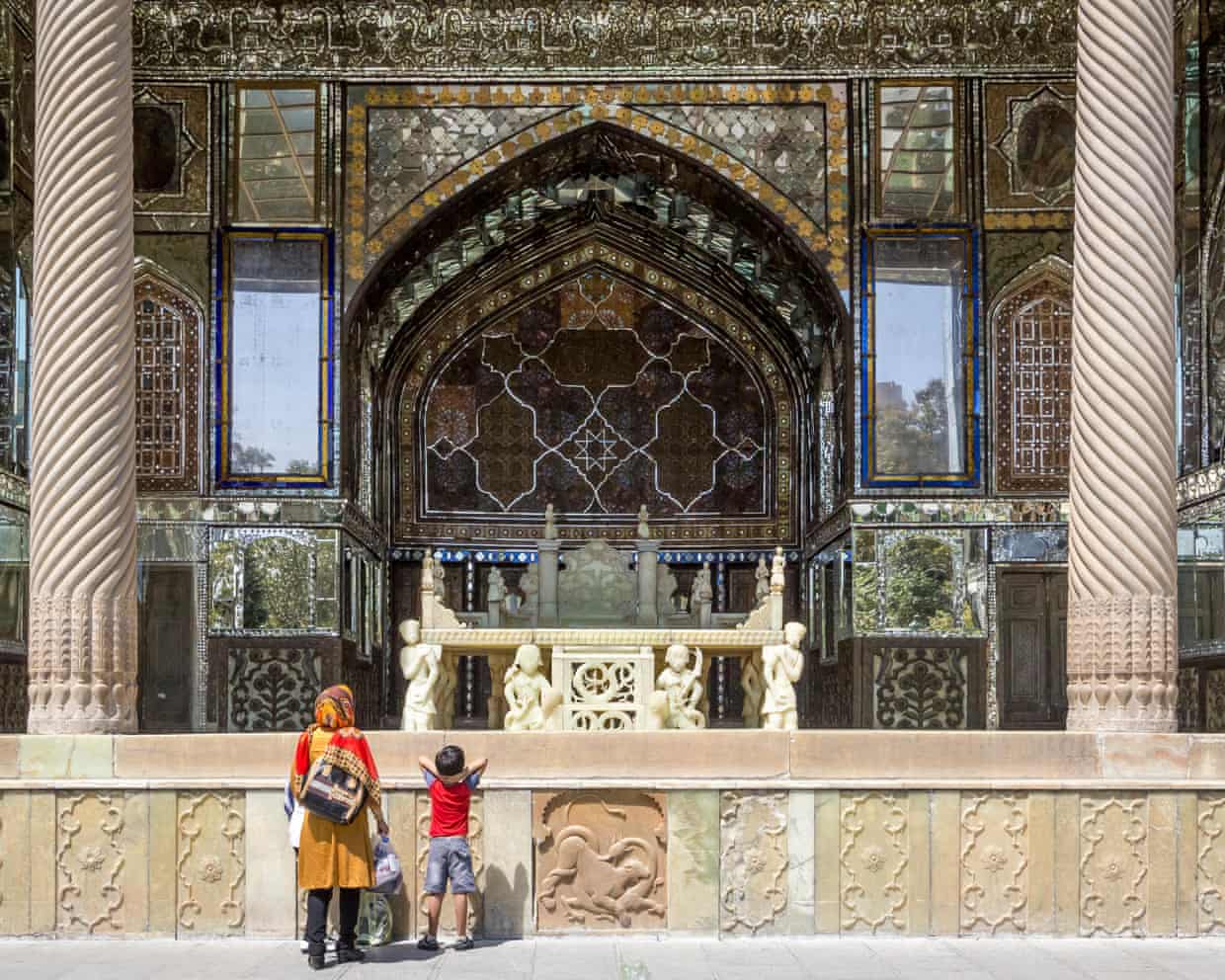
Photo: Nicola Forenza/Alamy.
Iran’s Golestan Palace photographed in 2016. This Unesco World Heritage site has been damaged in the latest war.

I once read a wonderful book by Jason Elliot about his travels in Iran, highlighting the country’s art and architecture. So it makes me sad to read today’s story. How do you protect beauty in wartime?

Julian Borger and Deepa Parent are reporting at the Guardian that Golestan Palace, a world heritage site in Tehran, has been damaged in the new war despite Unesco sending coordinates. A palace in Isfahan also suffered.

“The most serious confirmed damage to date has been to Tehran’s Golestan Palace, dating to the 14th century, and the 17th-century Chehel Sotoon Palace in Isfahan. Judging from videos and public statements, neither historic building was hit by a missile directly but the shock wave from nearby blasts and possibly some missile debris shattered glass and brought down tiles and masonry.

“Video from the scene showed that Golestan Palace’s celebrated hall of mirrors had been shattered, with shards of intricate mirrorwork scattered across its floor.

“The palace is a world heritage site under the protection of the UN’s cultural body, Unesco, which issued a statement of concern after it was damaged on 2 March. …

“Iran’s foreign minister, Abbas Araghchi, criticised Unesco for not being more vociferous. …

“One of the damaged sites was Falak-ol-Aflak Castle in the city of Khorramabad, in Lorestan province. According to the head of the province’s heritage department, Ata Hassanpour, a strike hit the castle’s perimeter on Sunday, destroying his department’s offices as well as adjacent archaeological and anthropological museums, and injuring five members of staff.

“ ‘Fortunately, the main structure of Falak-ol-Aflak Castle was not damaged,’ Hassanpour said in a statement posted on the Telegram messaging platform.

“Cultural treasures in Kurdistan province in north-west Iran were also affected, according to local media. In Sanandaj, the country’s second biggest Kurdish city, reports said the 19th-century Salar Saeed and Asef Vaziri mansions, which serve as Kurdish museums and heritage sites, had suffered damage to their doors and intricate stained-glass windows.

“In the past few days, there have been major explosions in the centre of Isfahan, Iran’s capital in three historical eras, where much of the architecture dates back to the Safavid dynasty era, from the 16th to 18th centuries.

“Chehel Sotoon suffered the worst impact but broken windows and doors, as well as dislodged tilework, have been reported in the Ali Qapu Palace and several mosques around the vast Naqsh-e Jahan Square. Videos filmed by residents from inside the square showed plumes of smoke rising from nearby airstrikes.

“The Isfahan governor, Mehdi Jamalinejad, said the damage had been inflicted even after coordinates of the historic sites had been circulated among the warring parties and after blue shield signs – denoting historical treasures under the 1954 Hague convention for the protection of cultural objects in war – had been put on the roofs of important buildings.

“ ‘Isfahan is not an ordinary city, it’s a museum without a roof,’ Jamalinejad said in a speech posted on social media. ‘In none of the previous eras, not in the Afghan wars, not in the Moghul conquest, not even during [the 1980-88 Iran-Iraq war] was this ever done.’ …

“An Iranian geologist who worked in Isfahan for many years said in a message forwarded to the Guardian that the ancient capital was particularly vulnerable. ‘Isfahan has long been attacked from below, by land subsidence that is destroying the Safavid-era structures, and now from the above, by the Americans,’ the geologist said. ‘Isfahan seems to have fewer friends than ever today.’

“The US Committee of the Blue Shield, a not-for-profit organization dedicated to upholding the Hague convention, issued a statement saying that Iran’s historic sites ‘belong not only to the Iranian people, but to all of humanity.’ The organization said it was ‘disturbed’ by the US defense secretary’s declaration on the third day of the war that there would be no ‘stupid’ rules of engagement.”

Man, who even talks like that? It’s embarrassing.

More at the Guardian, here.
Read Full Post »

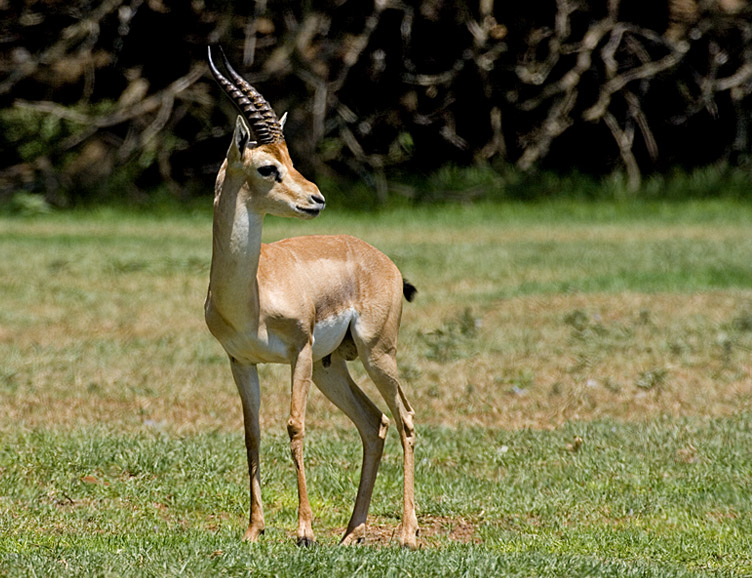
Photo: Bassem18/Wikipedia.
The rare Mountain Gazelle is returning to Turkey.

Today’s story is about both environmental rescue and the power of one individual to make a difference.

Carlotta Gall writes at the New York Times, “Turkey’s southern border with Syria has become a place of hardship and misery, with tented camps for people displaced by a decade of war on the Syrian side and a concrete wall blocking entrance to Turkey for all but the most determined.

“Yet amid the rocky outcrops in one small area on the Turkish side, life is abounding as an endangered species of wild gazelle is recovering its stocks and multiplying.

“The mountain gazelle, a dainty antelope with a striped face and spiraling horns, once roamed widely across the Middle East, and as Roman mosaics reveal, across southern Turkey as well. But by the end of the last century, it was hunted almost to extinction, with only a dwindling population of 2,500 left in Israel, according to the International Union for Conservation of Nature.

“In Turkey, the gazelle was forgotten and thought to no longer exist. The only ones officially recorded were a subspecies, known as goitered gazelles, in Sanliurfa Province in the southeast of the country.

The rediscovery and survival of the mountain gazelle in Turkey has been largely thanks to one man and his love of nature.

“Yasar Ergun, a village teacher who became a veterinarian and professor at Hatay Mustafa Kemal University in the city of Antakya, heard in the mid-1990s from an old hunter that there were wild gazelles in the mountains along the border with Syria.

“A keen hiker, he set out to try to find them. Barely 25 miles from Antakya — the ancient city of Antioch — Kurdish villagers knew about them and shepherds occasionally saw them. The gazelles live on the rocky hillsides, where their markings and coloring make them almost invisible. But they come down in groups to graze and find water on the surrounding agricultural land.

“The professor spotted his first one in 1998 and, after a decade of observing them, estimated that there were about 100 living in the area.

“With a small grant for a teaching project, he bought a camera and telephoto lens, which led to a close encounter and a breakthrough discovery.

” ‘It was the mating season,’ he recalled. ‘I ran to the road, and the male ran toward me to defend his females. It was very unusual.’

“When he examined the photos, he realized the gazelles differed from those in southeastern Turkey.

“ ‘This one was light brown, with some parts white, and the horns were completely different,’ he said. He was sure he was looking at the mountain gazelle, but found little interest in his claims in academic circles, he said.

‘I sent the photographs around — professors just laughed,’ he said.

“He drew on the help of Tolga Kankilic, a biologist, who gathered samples of dung, fur and skin from the remains of dead gazelles for genetic testing, and found that the DNA matched that of mountain gazelles.

“The discovery presented Mr. Ergun with an altogether more important task: to help the gazelles survive. There were several threats to them — lack of water and habitat especially — but by far the greatest danger was illegal hunting. Hunting is allowed only under license in designated areas in Turkey, but illegal hunting is rife.

“The gazelles had disappeared completely from other regions, including Adana, farther west, where American soldiers stationed at Incirlik air base used to hunt them 20 years ago, he said.

“ ‘The end of a genetic source is the same as the collapse of Earth,’ he said. ‘Nature needs biodiversity.’

“He won a grant from the World Wildlife Fund in Turkey for a grass-roots project with local villagers and bought mountain gear and amateur walkie-talkies for several shepherds, who began monitoring the gazelles. They dug basins in the rock to collect water for the gazelles, though it took the animals months to trust the water source.

“With his knowledge of village life, Mr. Ergun began softly, gaining the support of local shepherds, educating children to protect the gazelles and even encouraging a local Kurdish legend of a holy man who lived with the gazelles and milked them.

“With the hunters, Mr. Ergun and his helpers adopted an approach of traditional courtesy and respect, drinking tea with them but never mentioning their hunting.

“ ‘We never tried to use force to stop them,’ he said. ‘We would say, “Hello, we are from the Nature Project.” Sometimes silence is more powerful than talking.’

“The local people were Kurds, a mountain people with their own language and culture — and a history of resistance to the Turkish state.

“ ‘If you make an enemy, just one, in 10 years you will have 10 enemies, and in 100 years you will have 1,000,’ Mr. Ergun said. But as the shepherds began monitoring the gazelles, the hunters got the message.”

More here.

Read Full Post »

pssikk5

Photo: Kurdistan 24
There are many strays in the Kurdistan Region, with few resources available for animal care and protection. In a refugee camp, a young man whose veterinary education was cut off by war does what he can with what he’s got.

Although it’s true that some refugees are crushed by loss and dislocation, others face up cheerfully to the way things are. A story from Kurdistan24, a television station, provides a moving example.

With contributions from Chiman Adil, Nadia Riva reports from Erbil, “A young Syrian Kurdish refugee has been appealing for other animal-lovers to help in bettering the fate of stray animals in the Kurdistan Region while running a veterinary clinic in a camp.

“Ayaz, a Syrian Kurd living in the Kawergosk camp near the Kurdistan Region’s capital of Erbil, fled the civil war which has been plaguing his country for nearly eight years.

“Before popular Syrian protests erupted across Damascus and other cities, Ayaz was a fourth-year student at the Faculty of Veterinary Medicine. The conflict, however, prevented him from completing his studies, with universities closing down and violence spreading. …

“Ayaz sought refuge in the Kurdistan Region, as hundreds of thousands of other Syrian Kurds have done, but did not let his situation affect his care of animals. … He has called for the promotion of animal rights at the camp, hoping to raise awareness and change the culture among the newer generation toward animals. … Ayaz has rescued cats, birds, turtles, and rabbits, which he keeps in his shelter at the Kawergosk camp.”

On twitter, Glenn Greenwald has been trying to raise money for this cash-strapped operation. You may remember that I wrote about Greenwald’s own animal-welfare efforts last month in a post describing how he hires homeless people to care for stray dogs.

More here.

Read Full Post »