Feeds:
Posts
Comments

Posts Tagged ‘world heritage site’

Photo: Nicola Forenza/Alamy.
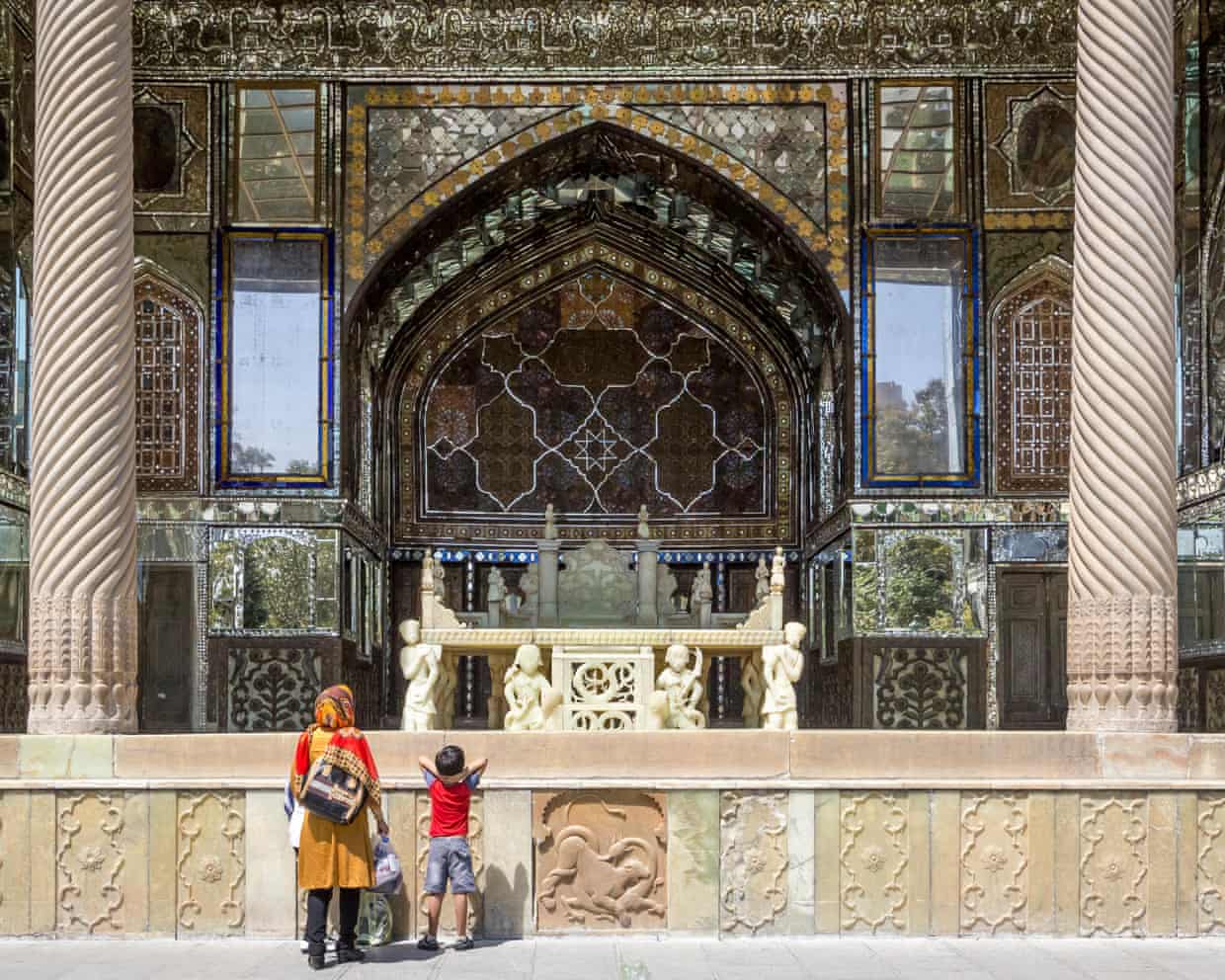
Iran’s Golestan Palace photographed in 2016. This Unesco World Heritage site has been damaged in the latest war.

I once read a wonderful book by Jason Elliot about his travels in Iran, highlighting the country’s art and architecture. So it makes me sad to read today’s story. How do you protect beauty in wartime?

Julian Borger and Deepa Parent are reporting at the Guardian that Golestan Palace, a world heritage site in Tehran, has been damaged in the new war despite Unesco sending coordinates. A palace in Isfahan also suffered.

“The most serious confirmed damage to date has been to Tehran’s Golestan Palace, dating to the 14th century, and the 17th-century Chehel Sotoon Palace in Isfahan. Judging from videos and public statements, neither historic building was hit by a missile directly but the shock wave from nearby blasts and possibly some missile debris shattered glass and brought down tiles and masonry.

“Video from the scene showed that Golestan Palace’s celebrated hall of mirrors had been shattered, with shards of intricate mirrorwork scattered across its floor.

“The palace is a world heritage site under the protection of the UN’s cultural body, Unesco, which issued a statement of concern after it was damaged on 2 March. …

“Iran’s foreign minister, Abbas Araghchi, criticised Unesco for not being more vociferous. …

“One of the damaged sites was Falak-ol-Aflak Castle in the city of Khorramabad, in Lorestan province. According to the head of the province’s heritage department, Ata Hassanpour, a strike hit the castle’s perimeter on Sunday, destroying his department’s offices as well as adjacent archaeological and anthropological museums, and injuring five members of staff.

“ ‘Fortunately, the main structure of Falak-ol-Aflak Castle was not damaged,’ Hassanpour said in a statement posted on the Telegram messaging platform.

“Cultural treasures in Kurdistan province in north-west Iran were also affected, according to local media. In Sanandaj, the country’s second biggest Kurdish city, reports said the 19th-century Salar Saeed and Asef Vaziri mansions, which serve as Kurdish museums and heritage sites, had suffered damage to their doors and intricate stained-glass windows.

“In the past few days, there have been major explosions in the centre of Isfahan, Iran’s capital in three historical eras, where much of the architecture dates back to the Safavid dynasty era, from the 16th to 18th centuries.

“Chehel Sotoon suffered the worst impact but broken windows and doors, as well as dislodged tilework, have been reported in the Ali Qapu Palace and several mosques around the vast Naqsh-e Jahan Square. Videos filmed by residents from inside the square showed plumes of smoke rising from nearby airstrikes.

“The Isfahan governor, Mehdi Jamalinejad, said the damage had been inflicted even after coordinates of the historic sites had been circulated among the warring parties and after blue shield signs – denoting historical treasures under the 1954 Hague convention for the protection of cultural objects in war – had been put on the roofs of important buildings.

“ ‘Isfahan is not an ordinary city, it’s a museum without a roof,’ Jamalinejad said in a speech posted on social media. ‘In none of the previous eras, not in the Afghan wars, not in the Moghul conquest, not even during [the 1980-88 Iran-Iraq war] was this ever done.’ …

“An Iranian geologist who worked in Isfahan for many years said in a message forwarded to the Guardian that the ancient capital was particularly vulnerable. ‘Isfahan has long been attacked from below, by land subsidence that is destroying the Safavid-era structures, and now from the above, by the Americans,’ the geologist said. ‘Isfahan seems to have fewer friends than ever today.’

“The US Committee of the Blue Shield, a not-for-profit organization dedicated to upholding the Hague convention, issued a statement saying that Iran’s historic sites ‘belong not only to the Iranian people, but to all of humanity.’ The organization said it was ‘disturbed’ by the US defense secretary’s declaration on the third day of the war that there would be no ‘stupid’ rules of engagement.”

Man, who even talks like that? It’s embarrassing.

More at the Guardian, here.

Read Full Post »

060217-petroglyphs-by-Stuga40-Sweden

060217-petroglyphs-Tanum-Sweden


Photos: Suzanne’s Mom
My husband and I visited one of Sweden’s World Heritage Sites this time last year — the Bronze Age petroglyphs in Tanum. They aren’t included in the CyArk/Google digitized sites but may be someday.

I remember when Google’s motto was Don’t Be Evil, and even now, when the company is far less high-minded, it does sometimes engage in activities that could benefit humanity, including a new preservation collaboration.

Claire Voon writes at Hyperallergic, “Over the last seven years, Google’s Arts & Culture platform has offered web users a growing library of digitized artworks. [It] has now begun a more ambitious project, collaborating with digital archaeologists to spotlight heritage sites threatened by natural disasters, war, tourism, or urbanization.

“Its latest online collection, ‘Open Heritage,’ features digitized, 3D models of over 25 locations from around the world, from the ancient Mayan metropolis of Chichen Itza in Mexico to the protected Watangi Treaty Grounds in New Zealand. Each was created by CyArk, a nonprofit that has been engineering incredibly detailed 3D versions of heritage sites since 2003 with the intention of archiving and freely sharing the results with the public.

“While CyArk’s own website presents many of these models, it does not have the resources to publish all of its data, although people could request files through somewhat troublesome processes. It has also held the copyright for its digital models until now; on Google Art & Culture, they are available under a CC license. …

“Google’s involvement thrusts these files into a global spotlight, inviting anyone with internet access to examine the painted fauna on cave ceilings in Somaliland, or even virtually enter the Ananda Ok Kyaung temple in Bagan, Myanmar. Placed beside the museum collections on Arts & Culture, Open Heritage also argues that these sites, like priceless and carefully guarded paintings and sculptures, deserve the world’s attention.

“Making available these technically astounding models to raise awareness of at-risk sites is a noble idea, but some scholars are hesitant to praise this mission. …

“For art crime specialist Erin Thompson, Open Heritage raises the question of what these digital models leave out. From an architectural perspective, they are packed with an impressive amount of information. A temple in Bagan, for instance, is reconstructed as it appears before and after a 2016 earthquake damaged the 13th-century structure. A detailed, 3D point cloud scan of El Castillo at Chichen Itza illustrates the millimeter precision of the laser technology (LiDAR) CyArk used to scan the site. Yet, the structures leave out the people who once passed through them, and this absence, for Thompson, erases histories vital to our understanding of these sites.

“There’s no hint of human presence — no reminder that people live near them, care about them, and have different interpretations of them than American viewers might,” Thompson told Hyperallergic.

“CyArk wants people to learn about sites they may not know much about, but it also uses the data it captures to support on-site conservation efforts. …

“After the earthquake shook Myanmar in 2016, its team visited Bagan at the request of UNESCO and the Myanmar Department of Archaeology to document the damage. This information was then used to assist stabilization and restoration efforts.

“CyArk’s spokesperson also clarified that Google did not pay CyArk to provide the data sets on Open Heritage, although Google provided financial support as part of the team’s relief effort at Bagan. In addition, the company supported hosting costs ‘associated with making our datasets downloadable through the platform we created,’ the spokesperson said.

“In its current form, Open Heritage only presents a fraction of the models CyArk has created. (While Google claims the group represents the largest 3D collection of heritage data, Sketchfab actually has a far greater gathering of similar models.) The nonprofit is planning to add more sites overtime, with a goal to publish nine more in a second stage.”

The complete Hyperallergic story is here. And to learn about the ancient rock carvings in Sweden, check this Wikipedia page.

Read Full Post »