Feeds:
Posts
Comments

Posts Tagged ‘remember’

Photo: Matt McClain/Washington Post.
What does dementia look like? To share the reality with others, Samuel A. Simon chronicled his own dementia in a one-man play.

Today I offer a long article from the Washington Post about a man sharing his experience of dementia in a play. The Post writes in the present tense, but I suspect that since the piece was published months ago, the actor may no longer be able to continue his feat.

It’s a sad story and a brave one, reminding us that we have the freedom to deal with life’s challenges however we want.

The Post‘s Michael Brice-Saddler begins, “He props his smartphone against a pile of books and adjusts the settings so the screen won’t go dark. He sets a timer. Then he waits.

“Eyes closed, Samuel A. Simon traces his breath from his ankles up through his chest, checking in with each part of his 80-year-old body before he begins. A purple binder holding a play script rests in his hands; the opening lines come from memory. …

“Simon was diagnosed with early-stage Alzheimer’s disease in 2022. As his memory has grown less reliable, he has turned his experience with the disease into a one-man play, Dementia Man, An Existential Journey, performing it publicly as a way to hold on to a sense of self. …

“Outside of the play, much of Simon’s day is organized around staying present at medical appointments, keeping up with a calendar that includes volunteering at his synagogue and advocacy work in Northern Virginia, and the small conversations he and his wife, Susan, return to again and again as they try to stay ahead of what’s changing.

“After faltering during his latest run-through, Simon tries to recall the name of a doctor he mentions in his script. He pictures circling the name in his mind, then tries again.

“ ‘It’s the first doctor I see,’ he tells Susan. Another pause. ‘God, what do I call him — doctor who?’ After several more beats, the name arrives: Dr. Howard.

“Simon sometimes gestures toward his wife for help during rehearsals, and she quietly feeds him the next line. During the actual performances, while sitting in the front row, she knows not to rush him through these moments. …

“The exchange reflects an undercurrent in the play that pulls audience members without Alzheimer’s into what the disease can feel like from the inside.

“ ‘Vanishing is my worst fear,’ Simon will say onstage.

“Remembering one’s lines before a live audience is daunting — even without a disease that steadily erodes memory. Simon has chosen to take on that challenge anyway. For nearly three years, he has performed Dementia Man in small theaters and public libraries across the country. He has also turned the work into a book, using it as a way to hold on to a sense of who he is and the life he remembers living.

“That life includes his years as a young lawyer working alongside renowned consumer advocate Ralph Nader on property tax reform. It also includes a nearly 60-year-long marriage that sprang from a chance encounter in El Paso when they were dating other people. ….

“Simon has long described himself as a troublemaker — someone wired to push at systems that are dysfunctional and don’t sit right with him. In 2016, the system that stopped functioning properly was his own.

“That year, Simon found himself driving on the wrong side of the road about 10 miles from his home in McLean, Virginia, alerted by a chorus of honking horns. … Several months later, it happened again — this time on the familiar drive home from the local diner where he and a good friend ate lunch every Friday. Simon told no one.

“What finally overwhelmed him were episodes he struggled to describe at the time: moments when his body and mind seemed to separate, when he felt himself slip into what he would later call the ‘Nothingness Place’ — a sensation he has likened to floating, briefly, outside himself. …

“Eventually, Simon spoke up. … In 2018, Simon was diagnosed with mild cognitive impairment, a condition that can precede dementia but does not always progress the same way. The label helped explain some things, including the slips and disorientation, but it offered little clarity about what came next.

“This uncertainty lingered until 2022, when Simon was told his cognitive impairment was caused by early-stage Alzheimer’s. … Encouraged by friends, Simon began to consider bringing the experience to the stage. …

“After performances, Simon says, he is often approached by people who have lost a parent or spouse to dementia — thanking him for offering a lens into what their loved ones might have been going through.

“Susan remembers feeling overwhelmed at first, watching her husband perform Dementia Man. There were nights she sat in the audience with tears in her eyes, watching intimate moments from their shared life take shape onstage.

“Now, she says, the feeling is different. ‘Thank God he has a purpose.’ ”

More at the Post, here.
Read Full Post »

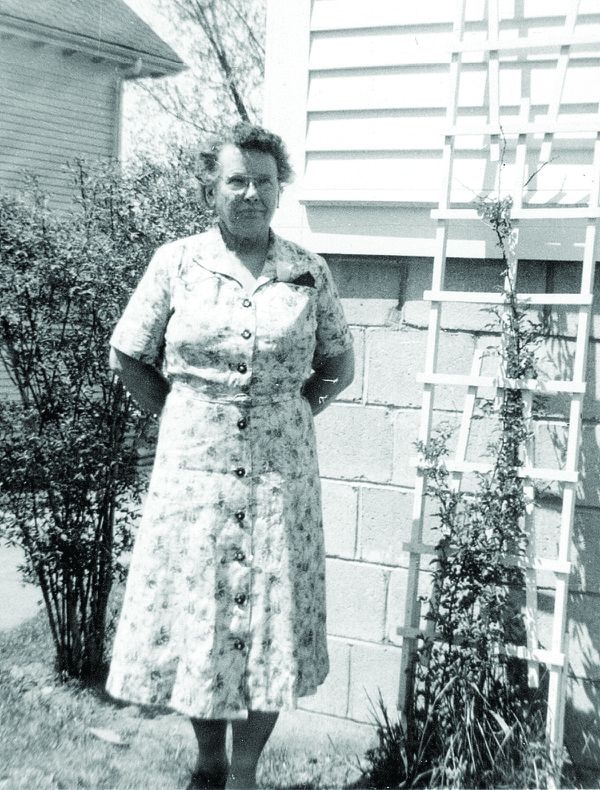
Writer Phil Primack’s baby sitter, Miss Anderson, in 1957.

How important were “other adults” in your life? Adults besides the ones who raised you. I once heard about a little boy whose home life would have marked him for a very troubled future if not for a kind neighbor doing yard work across the fence and engaging in friendly chats.

In another example, at the Boston Globe, Phil Primack gives credit for his love of the natural world to a baby sitter.

“In the late 1950s, back when Republicans liked Ike and I was a third-grader in Haverhill, my parents introduced my older brother and me to Jennie Anderson, our new baby sitter. Her approach today might be considered borderline neglect — but it influenced my life.

“I was short, chubby, and unathletic, always the last kid picked for any team. Happily, Miss Anderson had no interest in bouncing balls. Rather, her plan for productive after-school time was to go over pictures in the nature magazines she would bring, and then to send me off into the nearby woods to find this butterfly or that tadpole. Accompanied only by my dog Caesar (no leash or poop bags then), I’d wander the pine forest and wetlands by Round Pond for hours. Maybe I couldn’t catch a fly ball, but I became a whiz with a butterfly net. At summer camp, bunkmates began to call on me when they needed someone to trap a chipmunk for the scavenger hunt.

“Miss Anderson steered me to bigger things than bugs and critters; in the woods, I also found identity and self-confidence. I still have some of the butterflies she and I framed more than 60 years ago, as well as the brass magnifying glass we used to study markings on beetles and other bugs. …

“Thinking about her recently, I dove into Ancestry.com and found that Jennie F. Anderson was born in 1885 in Kent, Connecticut, to a Swedish father and American mother. I’ve been unable to learn much more. She never married and apparently had few relatives. Through high school and into college, she welcomed my visits to her in the single-room apartment she rented in Haverhill until I left Massachusetts for a newspaper job in eastern Kentucky.

“When I went to visit her on a trip home sometime around 1973, the room was empty. A neighbor told me that Miss Anderson had been committed to Danvers State Hospital, a psychiatric institution built, fittingly, where a Salem Witch Trials judge once lived. I made the trek there. ‘She doesn’t know who you are,’ an aide cautioned me. Still, Miss Anderson beamed when I pulled out some of our framed butterflies.

“Miss Anderson died in 1975 at the age of 89. … My brother and I remember her, but I worry no one else does. Too often, people who quietly imprint our futures just as quietly become anonymous and forgotten. That was Miss Anderson’s likely fate. And that bothered me.

“In almost the same year that she died, the destiny seed she planted in me matured as I bought some mainly wooded land in Epping, New Hampshire, and built a little house deep in the woods. I still maintain the land but I’ve transferred its ownership to the nonprofit Southeast Land Trust of New Hampshire (SELT), thus assuring its undeveloped future for young and old nature wanderers. Recently, SELT asked if I wanted my name on something to acknowledge my donation. Thanks, but no need, I said.

“Then I had an idea. …

“SELT plans to place a kiosk at the entrance to the Pawtuckaway River Reservation, nearly 700 acres of land, including mine, that SELT owns or otherwise controls along that river. The kiosk is supported by Phil Primack, a sign will say, ‘in honor of Jennie Anderson, who sent him out to hunt for tadpoles.’ “

More at the Globe, here. I love that Primack is remembering Anderson in that way. By coincidence on Twitter yesterday, journalist @tednesi remarked on how sad it is when someone dies unnoticed. He wrote, “I always find these death notices placed by the state so sad – the thought of someone dying and nobody around to notice. Who was Geraldine Boucher? What was her story? (via today’s @Projo).” He shared a photo of the state’s request for information.

If you could honor some adult in your life with a marker, where would you put it and what would it say? We had Frieda living with us for a while in my childhood, and I think what I am most grateful for is that her opinions were not the same as my parents’. She never tried to undermine my parents, but sometimes an exasperated huff would burst out and I could tell she thought something was really “off.” It has been important in my life to know that there were many ways to see things.

I would put the marker for Frieda someplace lovely in Switzerland, her homeland, and it would say, “Frieda Plüss. Thank you for the window on common sense.”

Read Full Post »

1956-CAROLINE-BIRTHDAY-no-12

This is a photo from a time when I still liked to celebrate birthdays. I found it while sorting through boxes of old pictures last summer.

I’m the one in the middle with a hat and (typically) eyes closed. The girl to my left in glasses is a blog follower who attended my Sunday School. On her lap is my dear baby sister, who died of glioblastoma last year. To my right is one of two friends from my nursery school days that I keep in touch with on Facebook. The other is standing a bit behind her and to her right, with glasses.

Another of the partygoers has since died. One became a celebrated author and professor. One was ordained and headed a school in Wilmington. Another became an artist. She’s the one sitting next to my sister and wearing a big grin. On her lap is a girl who became a professional weaver. A cousin in the picture taught in inner city schools for years and later went into politics and conservation. I’m not sure what everyone else ending up doing, but I’m enjoying remembering each in turn.

I’ll also mention someone not in the picture, a former neighbor, now known as Caroline, who follows this blog. She helped me one year with writing birthday party invitations. I still remember her line about how the invitee should come “to my humble abode on Haverstraw Road”! Too funny. She thought an invitation should rhyme.

Art: Wayne Thiebaud/ National Gallery of Art

default

Read Full Post »