Feeds:
Posts
Comments

Archive for the ‘Uncategorized’ Category

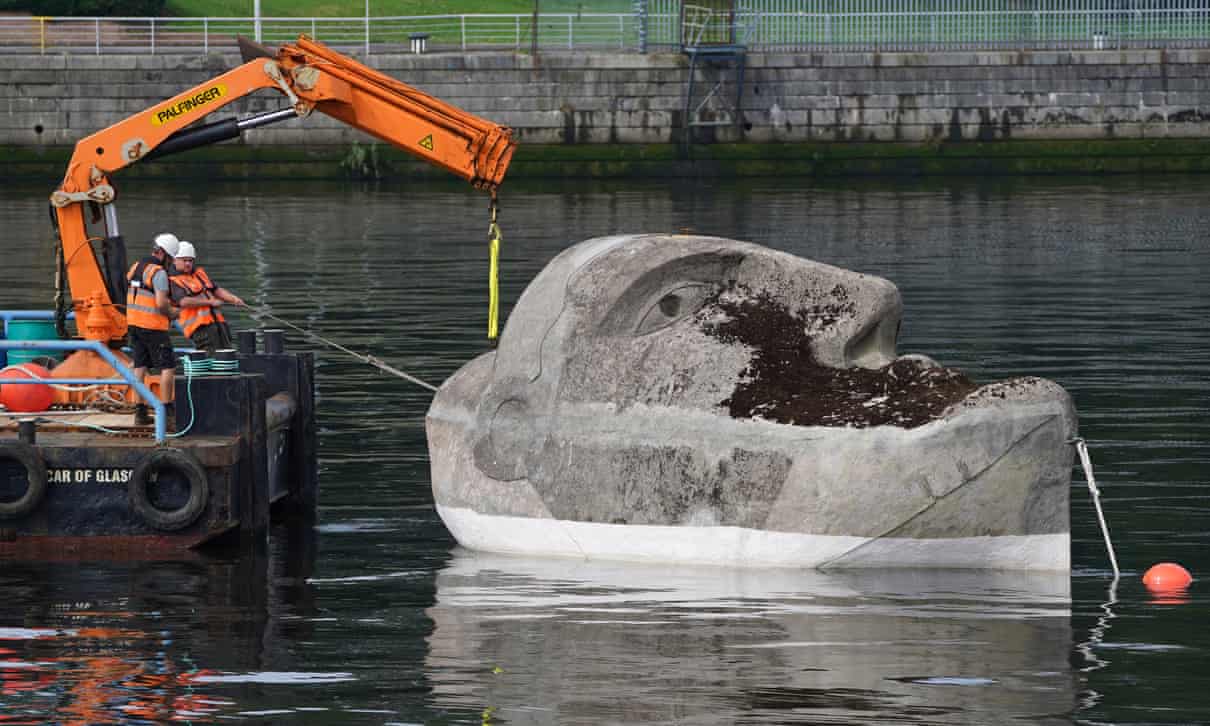
Photo: Andrew Milligan/PA.
The giant head is grafted onto the hull of a boat and made up of a steel framework and cement. Forgotten after a Glasgow festival in the 1980s, it was sought out by sculptor Richard Groom’s family after his death.

Artworks may be forgotten when no one connected to the artist thinks they are worth keeping track of. It wasn’t until mourners at the funeral of UK sculptor Richard Groom told family members how well they remembered the giant floating head he once made that the family decided to find out what happened to it. Libby Brooks has the story at the Guardian.

“Bobbing in the water in the Canting Basin, by the shiny crescent of the Glasgow Science Centre, the Floating Head remains impassive as a seagull lands on its broad forehead. The seven-metre-long, 26-tonne buoyant sculpture could be a refugee from Easter Island, brought to the Clyde by the tide, only to have a bird peck at the moss covering its cheek and chin like a lopsided beard.

“In fact, it was commissioned from the artist Richard Groom as the centrepiece of Glasgow’s 1988 Garden festival, but then lost for decades – forgotten and unclaimed in a boatyard until a dogged relocation and restoration project brought it back to the spot where it started, three decades later.

“It was a conversation at the artist’s funeral in 2019 that inspired his family to seek out the sculpture.

“His brother Andy Groom said: ‘Myself and my family were so touched at Richard’s funeral where so many of his friends and colleagues commented on all of his work, especially the Floating Head. It became apparent very quickly we had to find it, fix it, float it.’

“Working with the Sculpture Placement Group (SPG), an organisation that aims to bring sculpture to different audiences, the family discovered the head had been stored at the Clyde Boat Yard for more than a decade after being rescued from another dock site where it was about to be bulldozed.

‘We had no idea whatsoever where it was,’ said Groom. ‘It was listed as abandoned on the banks of the Clyde, so I started phoning round scrap and storage yards asking: do you happen to know where a 30ft concrete head might be?’

“The head, which is grafted on to the hull of a boat and made up of a steel framework with a concrete render, was then partially restored – some graffiti was removed, but the natural weathering, and the encroaching moss, remains.

“Kate Robertson, the co-director of the SPG, said: ‘People still remember the Garden festival as a big highlight, they were aware of the focus on Glasgow and the visitors, and it also marked a turning point for the city from post-industrial to a cultural destination.’ … The Garden festival site began the redevelopment of the once booming dry docks that had become a symbol of an industry in permanent decline.

“With an official launch later this month, the head will feature at Glasgow Doors Open Days festival, forming part of a sculpture trail through Govan, while Groom’s family and the SPG seek a permanent mooring. …

“ ‘The scale of it is quite intimidating,’ Robertson said. ‘The best way to see the possibilities there are for the sculpture is to bring it out into public view again.’ ” More at the Guardian, here.

Although I don’t know what ideas the artist himself intended to emphasize with the floating head at the festival, it certainly brings home to me that Glasgow is a city on the water. Fort Point Channel features floating art, too (for example, here). It reminds viewers not only that much of Boston was salvaged from the ocean, but that rising seas want it back.
Read Full Post »

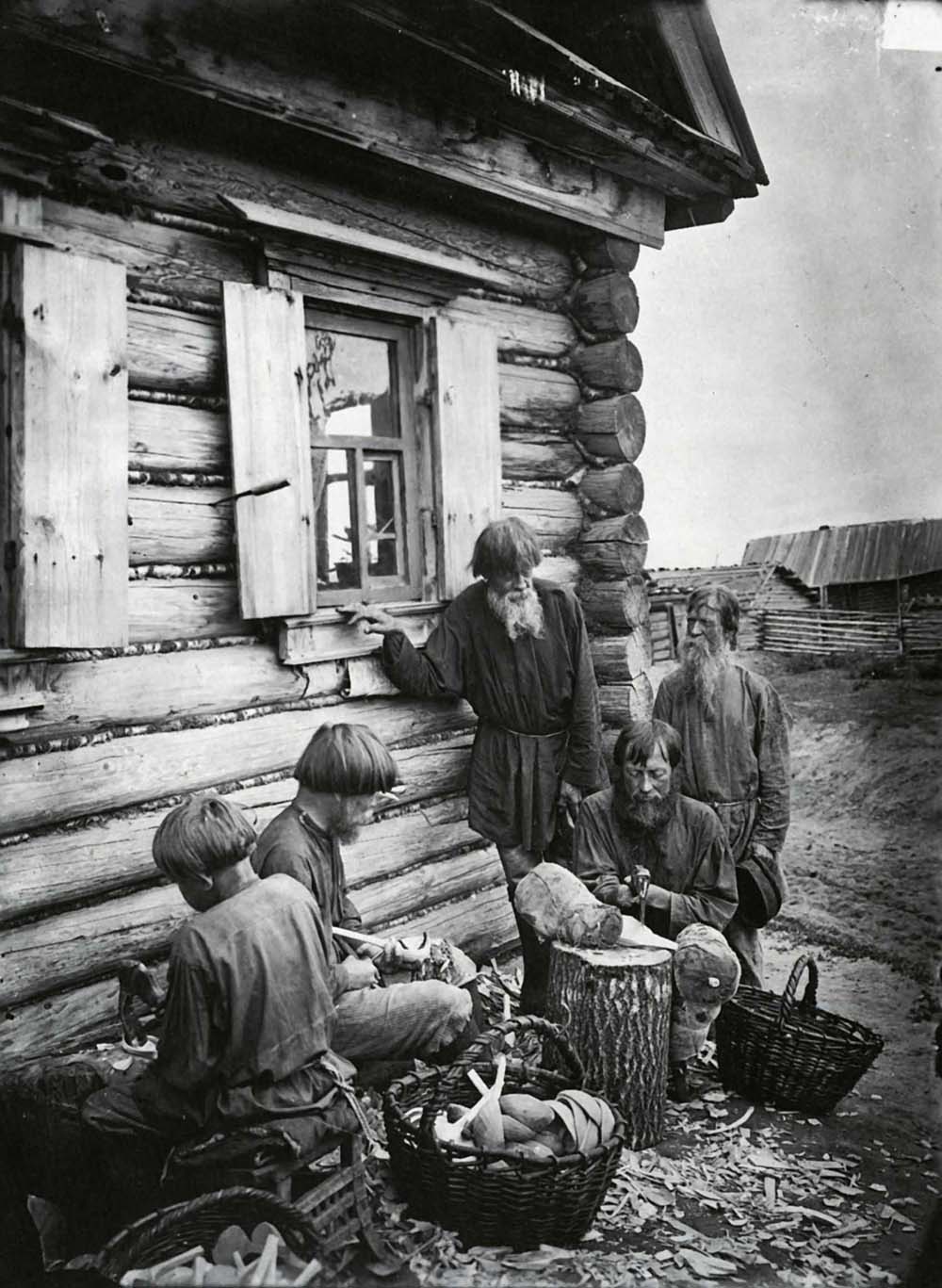
Photo: Maxim Dmitriev.
Men making spoons in the village of Deyanovo, Russia’s Volga region, 1897.

With the extremes of rich and poor we see around the world today, and especially in our own country, I often wonder if we can fix what’s broken before there’s some kind of uprising. Today’s story talks about what life was like in Russia before the revolution of 1917 as seen through the eyes of two photographers — one aristocratic, one not.

Billy Anania has the report at Hyperallergic.

“In the decades leading up to the October Revolution, the Russian Empire was already crumbling. The first 15 years of the 20th century saw two major industrial crises give way to economic collapse as the Romanov Tsar Nicholas II pitched the military into wars with Japan and Germany, slowing production and inflicting food shortages. Two revolutions in 1917 effectively vanquished the monarchy at the climax of World War I, resulting in the dissolution of the empire and the formation of the Soviet Union. 

“Before that upheaval, two Russian photographers, Sergey Prokudin-Gorsky and Maxim Dmitriev, rose to prominence by documenting everyday life under late tsarism. Though they were contemporaries, their work presents very different perspectives on the region. Prokudin-Gorsky’s images are high-definition and undeniably gorgeous, as well as some of the first color photographs in Russia. In contrast, Dmitriev’s pictures of peasant villages lay bare the dismal living conditions for the majority of the empire. The archives of these two men and the disparities in their personal histories exemplify early photography’s use as both imperialist propaganda and documentary journalism.

“Born into a noble family in Murom, Prokudin-Gorsky studied chemistry at the Saint Petersburg State Institute of Technology and art at the Imperial University of Arts. He married the daughter of an industrialist and became director of his father-in-law’s executive board. From there he joined the Imperial Russian Technology Society (IRTS), the preeminent scientific organization of the time, where he gained access to cutting-edge camera technology. Within a few years, he became president of IRTS’s photography section and an editor at Russia’s predominant photo journal, Fotograf-Liubitel (Amateur Photographer).

“These prestigious positions led Prokudin-Gorsky to exhibit his photography for Grand Duke Michael Alexandrovich and Dowager Empress Maria Feodorovna, as well as Nicholas II and his family. The tsar admired his work so much that he commissioned the photographer to document Russia’s vast population and landscapes. From 1909 to 1915, Prokudin-Gorsky created more than 10,000 color photos of the diverse people and places comprising the empire, which at the time covered nearly 23 million square kilometers [8,880,350 square miles] of Europe and Asia.

“Nicholas provided Prokudin-Gorsky with a railroad car darkroom. … Much of his work was intended to educate schoolchildren on Russia’s array of cultures and its burgeoning modernization. The quality of these images, along with their pristine compositions, create a visual leveling effect across class divisions, depicting each walk of life as beautiful in its own way. …

“While Prokudin-Gorsky’s upbringing fast-tracked him to national recognition, Dmitriev’s more humble beginnings led him in a different direction. Born a commoner in Tambov, he worked for his bread from a young age, weaving baskets and reading hymns over the dead. In spite of these time constraints, he excelled in his studies, and at 15 he became an apprentice to acclaimed Russian photographers M.P. Nastyukov and later Andrei Karelin. Working in their studios expanded his knowledge of development techniques like soaking plates, processing, and retouching.

“In 1879, Dmitriev relocated to Nizhny Novgorod and began shooting scenes of everyday life — sea and landscapes, orthodox and Muslim ceremonies, monks on pilgrimage, and workers along the Volga River. After developing a portfolio, he traveled to Paris and participated in a few group exhibitions. His photos of prison construction workers caused a stir among viewers; some were critical of the content, others moved by their honesty. Returning to Russia, he continued to shoot unconventional scenes of suffering. His monograph A Lean Year documented a small village suffering a bad harvest. Starving peasants appear in rags alongside doctors and social workers rationing bread and caring for the sick in rundown houses. 

“The Bolshevik Revolution impacted both photographers’ careers, as the Soviet Union birthed new paradigms around inequality and political art. Dmitriev’s work from the 1890s remains some of the earliest examples of photojournalism in Russia, wherein the visual exposure of inequality shifted public opinion. …

“Dmitriev’s photos predate the Progressive Era in the West, when photography helped usher in robust social reforms necessitated by industrialization. Prokudin-Gorsky avoided these more dismal aspects of peasant life to sell more empire. …

“Today, Prokudin-Gorsky remains a visionary of color photography and checks all the boxes of a Western icon, while Dmitriev has all but faded into obscurity. Incidentally, the US Library of Congress acquired Prokudin-Gorsky’s archives in 1948, and Dmitriev’s work is barely findable online.”

More at Hyperallergic, here.

Read Full Post »

Photo: Kara Holsopple, The Allegheny Front.
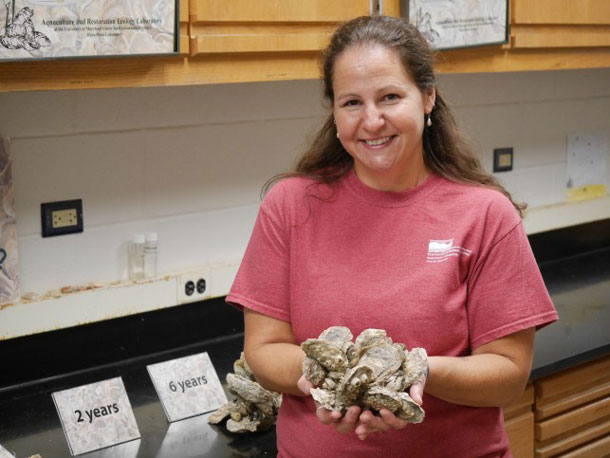
Stephanie Alexander at the Horn Point Lab oyster hatchery. Lawn chemicals pollute Chesapeake Bay. Oysters fight back.

Today I want to expand on my 2019 blog post about New York City’s Billion Oyster Project, which uses restaurants’ discarded oyster shells to fight erosion in the harbor.

According to a July broadcast of Living on Earth [LOE], Pittsburgh restaurants are doing something similar. In this case, it’s to counteract pollution caused by fertilizer that runs into Maryland’s Chesapeake Bay.

LOE’S BOBBY “BASCOMB: The Chesapeake Bay is routinely inundated with fertilizer runoff from the surrounding watershed in parts of Pennsylvania and Maryland. The result is algae blooms that suck up oxygen in the water and create dead zones for most other forms of life in the Bay. Oysters are particularly vulnerable, but as Kara Holsopple of the Allegheny Front reports, some local groups have come up with a novel way to help oysters recover.

“KARA HOLSOPPLE: Jessica Lewis says shucking an oyster is like picking a lock.

“JESSICA LEWIS: You press down and then you just wiggle, pop it open and, the abductor muscle right there. You clean that. …

“HOLSOPPLE: Lewis says they go through about three to four hundred oysters here a week from the East and West coasts. This oyster is from Maryland’s Chesapeake Bay — and its top and bottom shell are going back there… Lewis and her staff toss the spent shells in a 35 gallon barrel with a screw-on lid, located in the trash area on the ground floor of the building. …

“About once a month a truck picks up the old shells from this and six other participating restaurants in Pittsburgh, and drives them more than 250 miles to a staging area just across the Chesapeake Bay Bridge in Maryland. From there, the oyster shells from Pittsburgh and ones collected from Maryland, Virginia and the D.C. area are taken to a site at the University of Maryland’s Horn Point Laboratory in Cambridge, for processing.

“KARIS KING: So here you’re looking at about 7,000 tons of clean shell.

“HOLSOPPLE: Karis King is with Oyster Recovery Partnership, a nonprofit which works to increase oyster numbers in the Chesapeake Bay. We’re standing at the base of a mountain of gray shells. They’ve been dumped into a machine that’s like a modified potato hopper, which sorts the shells. … Smaller fragments of broken shell fall away as a conveyor belt deposits the half shells into wire cages or piles where they’re cured for a year. …

“KING: Even with all the shell that we do recycle, and that we also purchase from shucking houses, we still don’t have enough to do large scale restoration, at the rate that we could.

“HOLSOPPLE: That’s because of the scale of the problem. Stephanie Alexander manages the Horn Point Lab oyster hatchery. …

“ALEXANDER: We’ve pretty much wiped the oyster out to less than 1 percent of historic levels. So we started this restoration effort where we’re using a hatchery to produce spat on shell to put back into the bay so we can kind of help jump start Mother Nature.

“HOLSOPPLE: The concept is pretty simple: Scientists here at the lab produce baby oysters from adults harvested from the bay, nurture the microscopic larvae with a custom algae diet, then get them attach to the recycled, treated oyster shells. That’s the ‘spat on shell.’ In practice, it’s a lot harder than it sounds…

“Ben Malmgren is an intern here, a student from St. Mary’s College of Maryland.

“BEN MALMGREN: Right now we’re placing the oysters out on the spawning table where we are going to simulate river conditions that are ideal for spawning.

“HOLSOPPLE: The saltiness and temperature of the water in the shallow black basins has to be just right. Malmgren places the oysters in a grid formation, so it’s easier to separate the males from the females…

“MALMGREN: Because if we just let them spawn out on the table all these eggs are gonna go down to the into the drain. So once we see a female and we’ll we’ll know she’s a female by she’ll clap her top and bottom shell together and we’ll see a plume of eggs come out. …

“HOLSOPPLE: Even in the lab, nature is in charge. Stephanie Alexander says it was a slow summer…a lot of rain meant the adult oysters have lived with lower salinity levels, and they’re stressed. Out in the bay, the water is warmer, meaning the spat on shell might have a harder time growing that second shell, and over the years, forming the clusters that create oyster reefs.

“STEPHANIE ALEXANDER: When one thing gets out of whack everything else is going to kind of follow. So we’re trying to get the oysters back into balance so then hopefully everything else will follow as well. …

“Oysters are the vacuum cleaners or the kidneys of the bay and they just suck the water in, they decide if it’s food or not food. But no matter what it is that will remove it from the water column and that’s how they vacuum the bay up and clean it.

“HOLSOPPLE: Because of this superpower, oyster aquaculture is a best management practice identified by the regional partnership that oversees cleaning up the Chesapeake Bay. Some of the spat raised at the Horn Point Lab will make its way to oyster farmers, and those are the oysters on a half shell that are served in restaurants. But the majority of the spat will help rebuild oyster reefs, creating habitat for fish, and restoring the ecosystem.”

More at Living on Earth, here.

Read Full Post »

Photos: Chandra McCormick and Keith Calhoun.
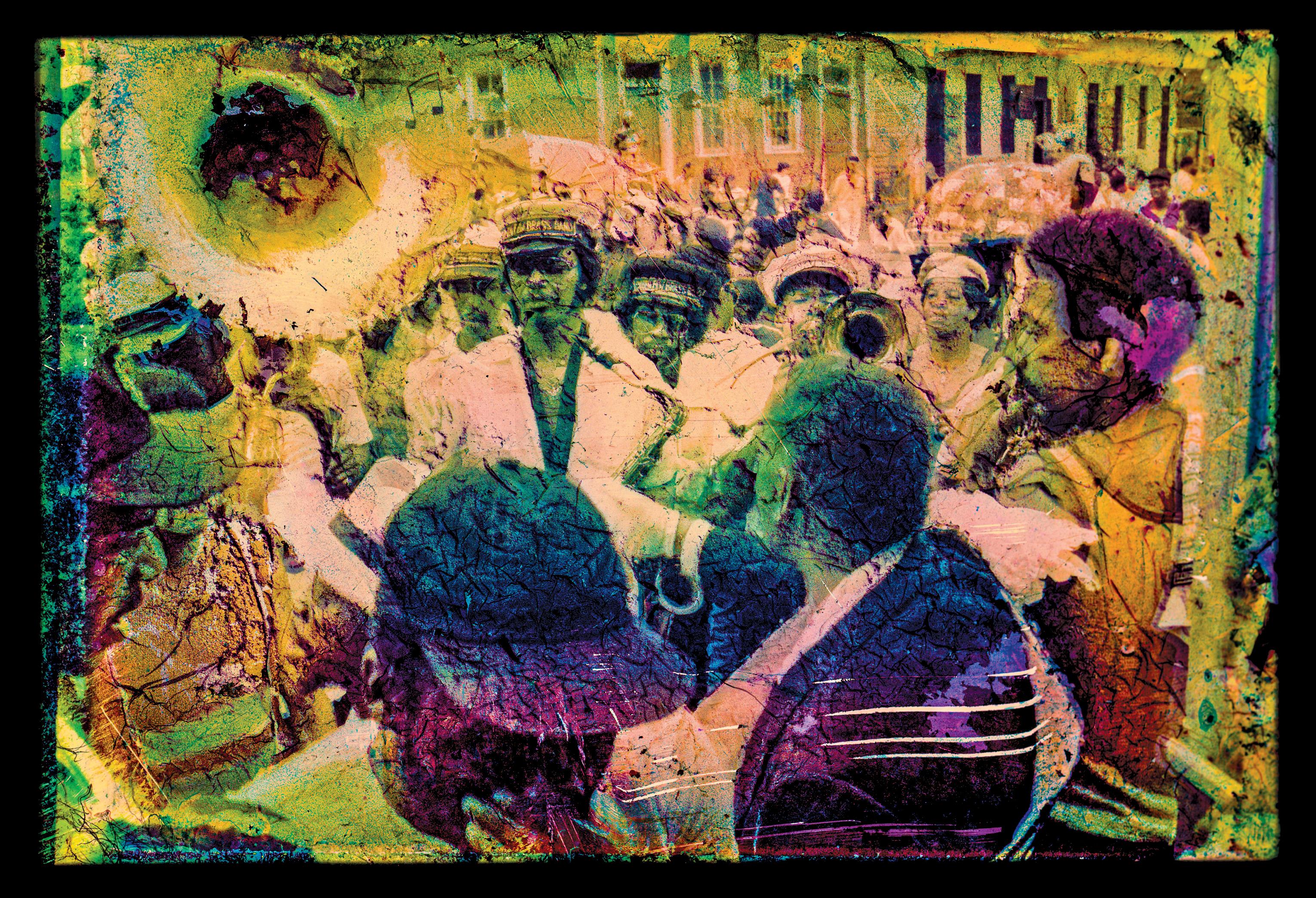
“The Sound of Our Resurrection Is Stronger Than the Silence of Death” is what McCormick and Calhoun call their picture of A Chosen Few Brass Band.

A recent article in Smithsonian magazine about the Louisiana photography duo Chandra McCormick and Keith Calhoun got me interested in learning more about them.

Reporter Amy Crawford focused on something new they were doing with old photographs: working with the Hurricane Katrina water damage to elicit the ghostly spirit of an indomitable city.

Crawford writes that in 2005, “Hurricane Katrina was bearing down on New Orleans, so Chandra McCormick and Keith Calhoun packed their photography archive — thousands of slides, negatives and prints the couple had amassed over three decades documenting African American life in Louisiana. …

“Then they drove to Houston with their two children, planning to be gone for maybe two weeks. Ten weeks later, McCormick and Calhoun returned home to…devastation. ‘All there was, was waterlogged,’ Calhoun says. ‘Imagine the smell — all that stuff had been in that mud and mold.’

“They figured they had lost everything, including the archive, but their teenage son urged them not to throw it away. They put the archive into a freezer, to prevent further deterioration. With an electronic scanner they copied and enlarged the images — at first just searching for anything recognizable. The water, heat and mold had blended colors, creating surreal patterns over ghostly scenes of brass band parades, Mardi Gras celebrations and riverside baptisms.

‘Mother Nature went way beyond my imagination as a photographer,’ Calhoun says of the otherworldly images. McCormick says, ‘We no longer consider them damaged.’

“Today McCormick and Calhoun’s altered photographs are viewed as a metaphor for the city’s resilience. Yet they’re also a memento of a community that is no longer the same. By 2019, New Orleans had lost more than a quarter of its African American population. ‘So much is vanishing now,’ Calhoun says. ‘I think this work serves as a record to validate that we once lived in this city. We were its spiritual backbone.’ ” More at the Smithsonian, here.

From the couple’s website: “Keith Calhoun and Chandra McCormick were born and raised in the lower ninth ward of New Orleans, Louisiana. As husband and wife team, they have been documenting Louisiana and its people for more than 25 years. In New Orleans, they have documented the music culture, which consists of Brass Bands, Jazz Funerals, Social and Pleasure Clubs, Benevolent Societies, and the Black Mardi Gras Indians.

“In addition to documenting New Orleans social and cultural history, Calhoun and McCormick have also covered religious and spiritual ceremonies throughout their community, as well as river baptisms in rural Louisiana. They have created several photographic series, including: Louisiana Laborers; The Dock Worker, Longshoreman, and Freight Handlers on the docks of New Orleans; Sugar Cane Field Scrappers in the river parishes along the Mississippi river; Cotton Gins, and Sweet Potato Workers in East Carrol parish of Lake Providence Louisiana.

“Calhoun and McCormick have documented the soul of New Orleans and a vanishing Louisiana [including] the displacement of African Americans after Katrina … and the cruel conditions of the Louisiana State Penitentiary at Angola, a former slave-breeding plantation named for the African nation from which ‘the most profitable’ slaves, according to slave owners, were kidnapped. …

“[Angola] is an 18,000-acre prison farm where inmates are traded like chattel among wardens of neighboring penitentiaries. Although the 13th Amendment to the United States Constitution abolished slavery in 1865, its prohibition of forced labor does not apply to convicted inmates. … Calhoun and McCormick’s work restores visibility and humanity to a population often forgotten by the public at large.”

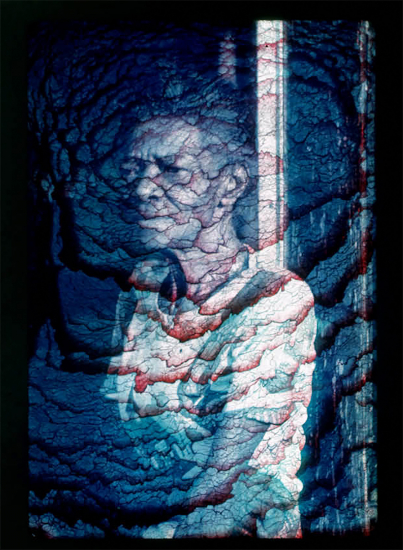
And from the Southbound Project: “The photographic emulsion merging with mold and water sedimentation left interesting patterns and color transformations. … Sometimes the textural quality of the effects even suggests physical markings and scars of trauma. Ida Mae Strickland (1987, ca. 2010), for example, is a portrait of an elderly woman shown from the waist up, seemingly lost in thought with a furrowed brow. She appears contemplative and dignified, as one whose internal strength has carried her through the years. The water damage creates rippling patterns that appear to emanate from her head and evoke wrinkled folds of aged skin. These unintentional effects reinforce qualities of the original image. The photograph, like the original sitter, has quietly weathered the influence of time and nature but still survives.” 

Read Full Post »

Once a year, they close off a block on Main Street.

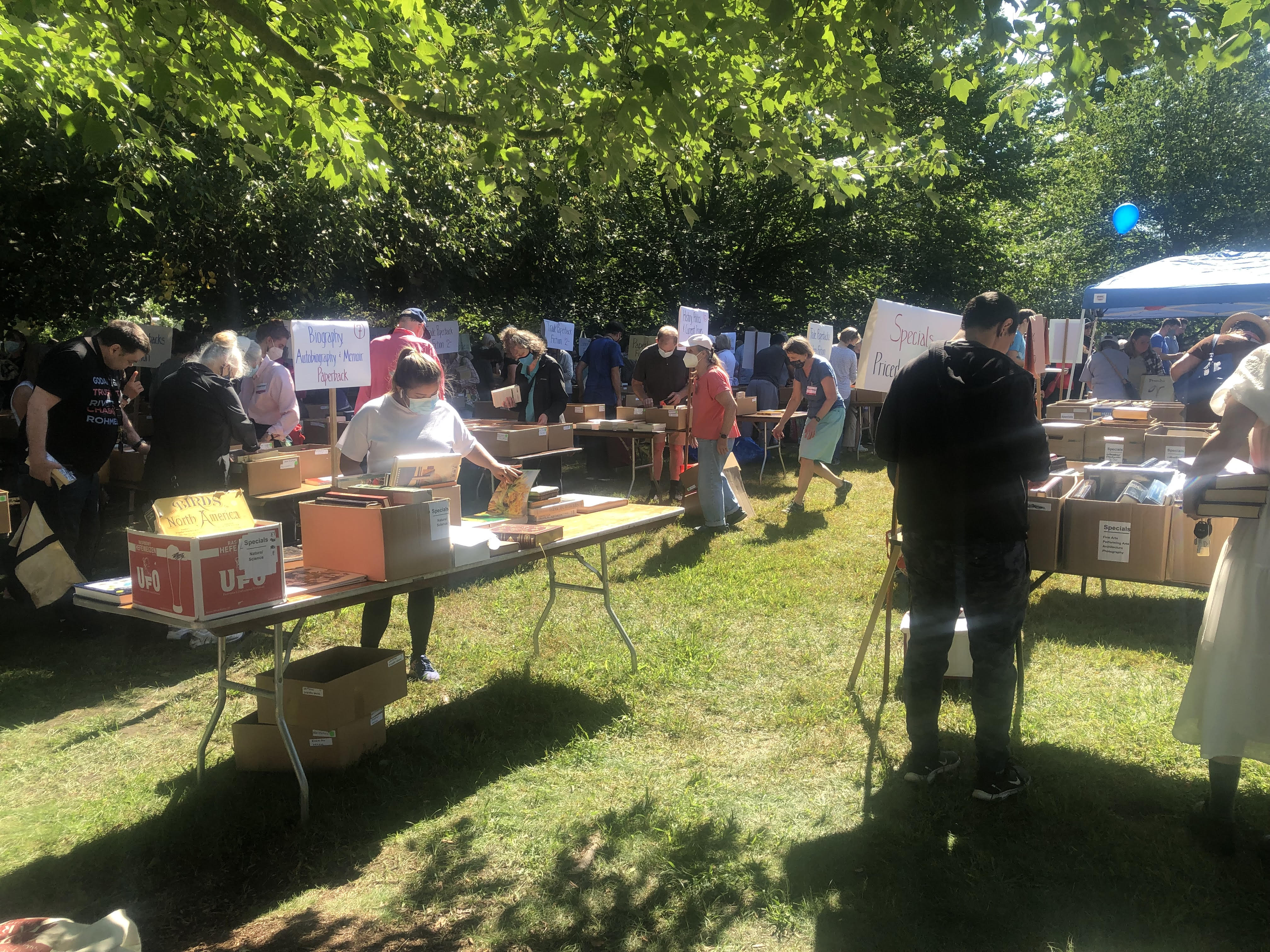
Saturday was quite a joyful day in town. The weather was beautiful (not too humid), the farmers market boasted vegetable car races for kids as well as vegetable stalls for grownups, and the Covid-delayed library book sale made a record haul from book lovers overjoyed to be back.
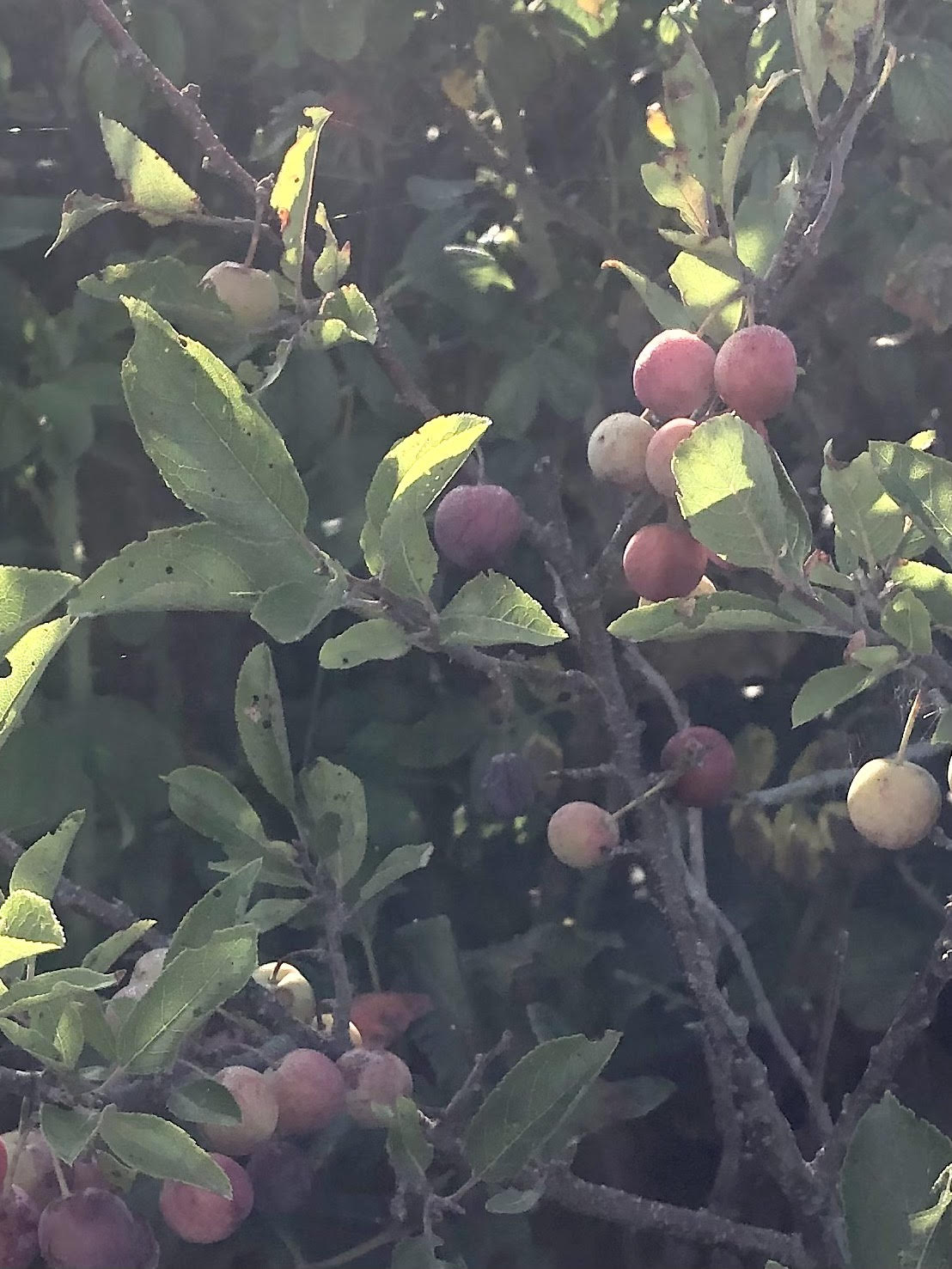
So today seems like a good day to share pictures from those events and also from late summer in general. The beach plums are in New Shoreham. My neighbor knows the secret places for every kind of berry, and he goes out at dawn to pick them so Sandra can make jams and jellies. This year was a bust for blackberries, but Sandra expects to get several batches out of the beach plums.

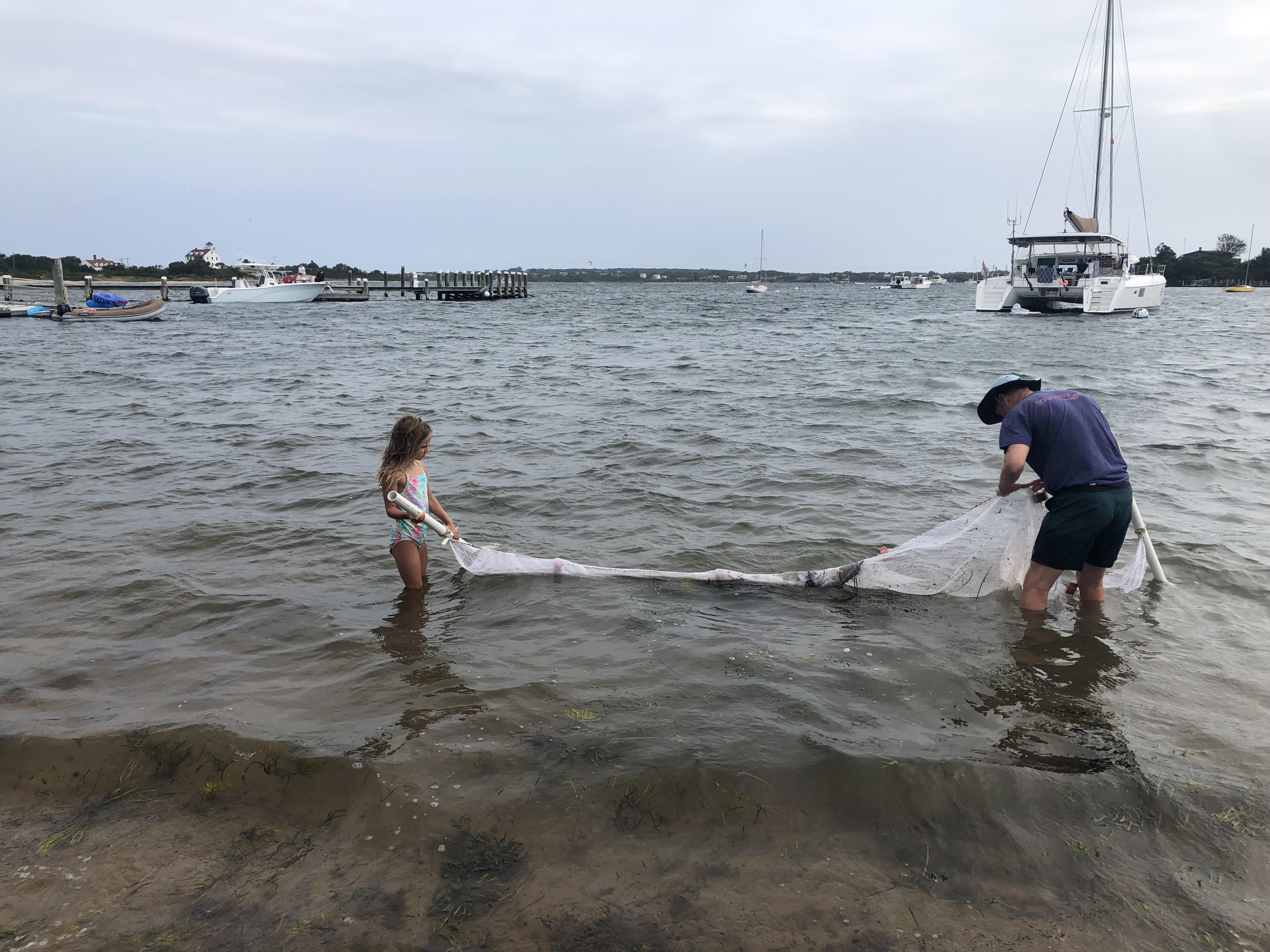
Next comes one of the better Painted Rock designs from 2021, followed by a photo of seining for small fish and shrimp in Great Salt Pond.

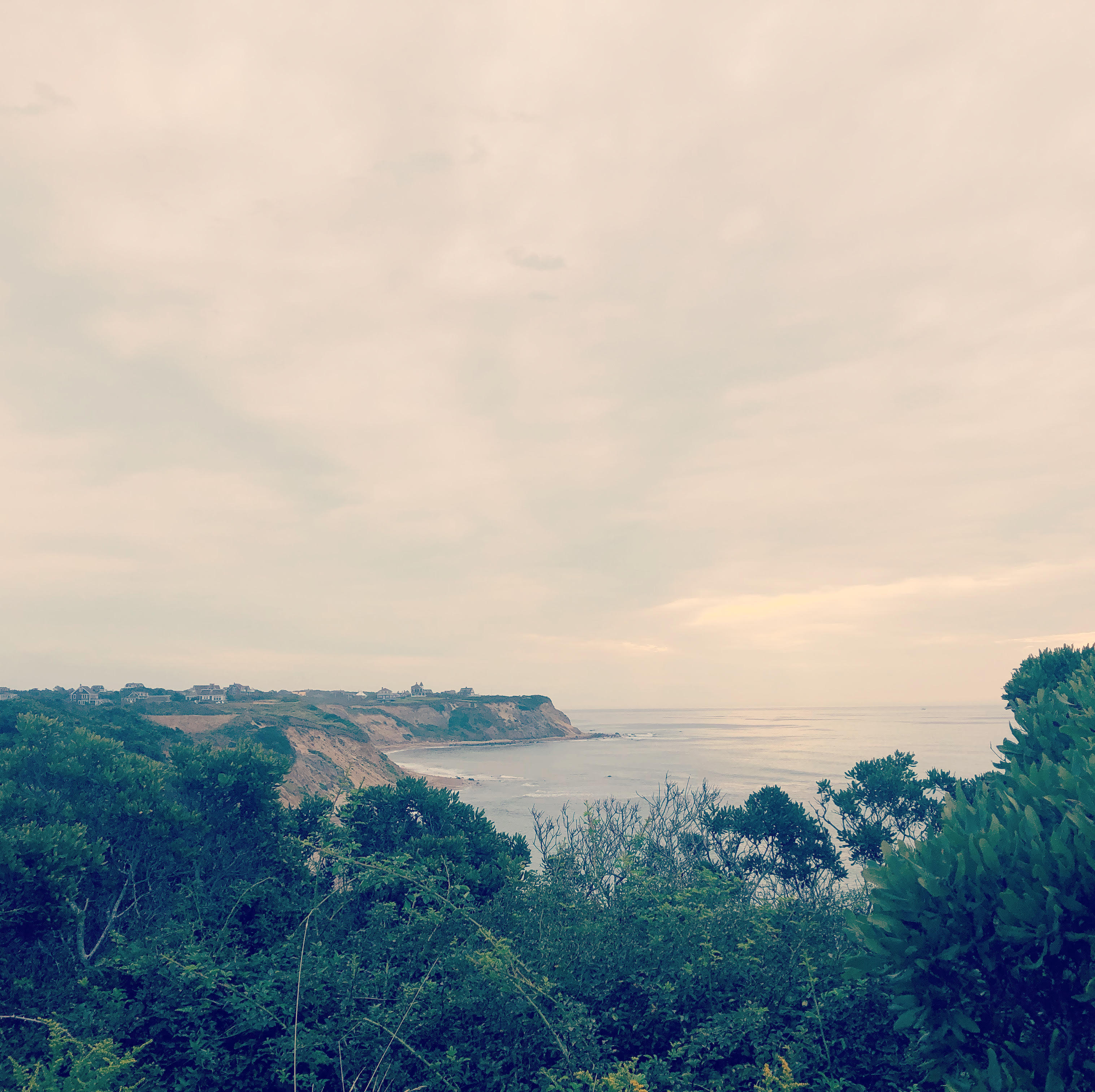
From those scenes we turn to the lobster pots and breathtaking vistas of Lewis Farm. Then a view of Old Harbor boats and the National Hotel.

The windmills did not get much action this summer, partly because of the cost and partly because of repairs. That’s what I was told, anyway.

The fishing boat is docked in the active port of Galilee, the last stop in Rhode Island today.

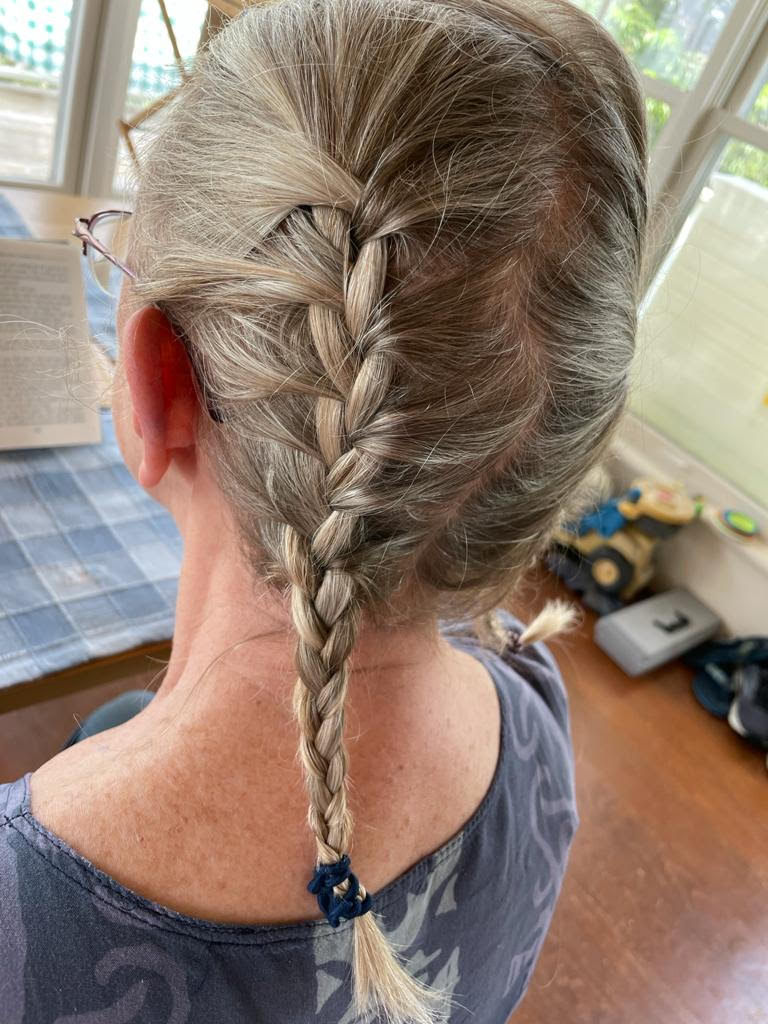
Next we return to Massachusetts, where I want to share a bit regarding post-Covid life. First, a delicious Dutch pancake that I learned to make during the pandemic. Then, the story of my hair. My daughter-in-law loved how it grew out during the year and a half I stayed away from scissors, and she made beautiful braids for me. But in the end, I couldn’t manage long hair and resigned myself to easy care.

I was glad to see the Umbrella arts center still has a lot of opportunities to enjoy art outdoors. The Millbrook farm stand offers a different kind of art. Similarly, the colors of autumn sedum and lily-of-the-valley berries make an unstudied picture. The praying mantis is another work of art, busy going after the less welcome bugs in the yard.

Hello and good-bye, Happy Sunflower.

Read Full Post »

Photo: Lina Malers.
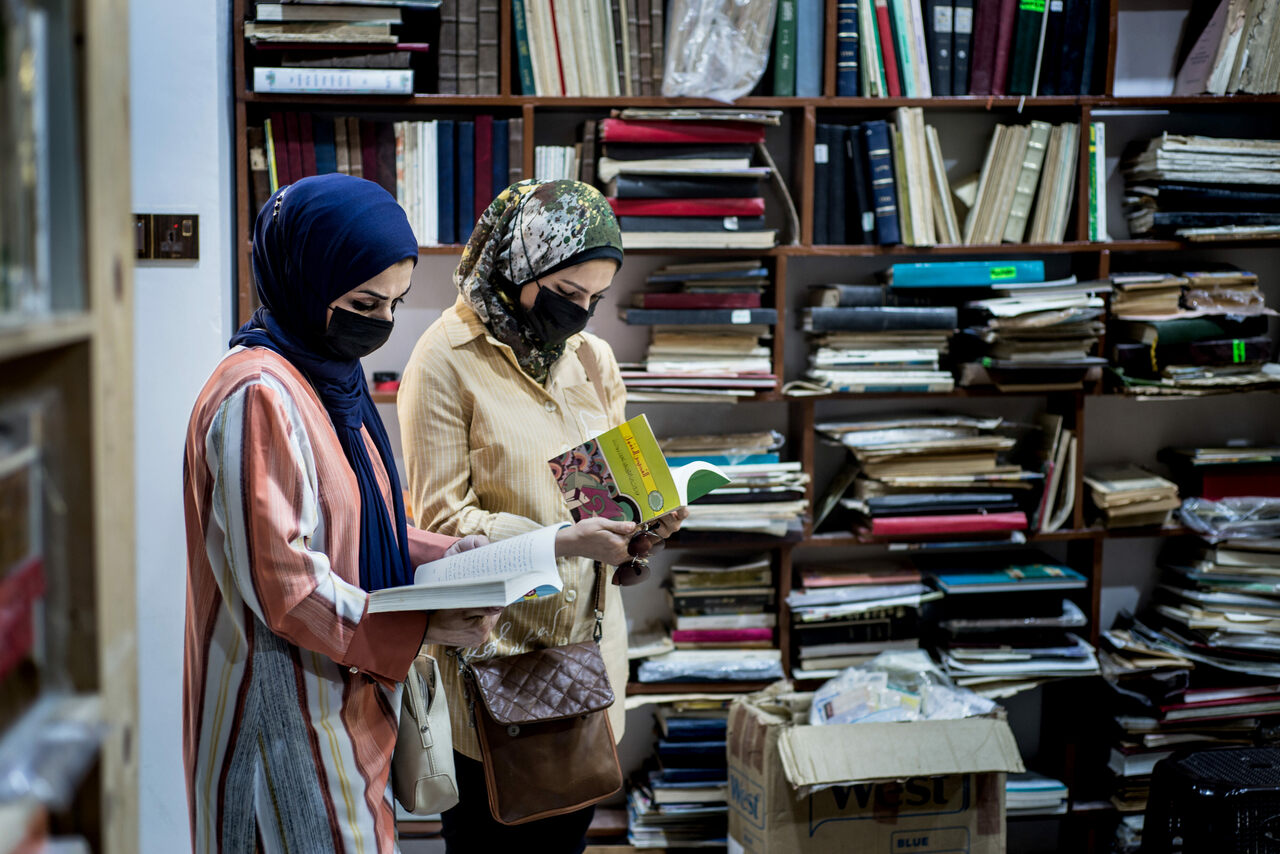
Customers return to Maktaba al-Sham in Mosul’s Old City. Isis kept residents from books, but books won out.

Today’s story honors people who embody the human spirit: rebuilders, booksellers, and book readers. Even in the darkest days of Mosul, Iraq, when Isis believed it could control people’s thoughts, readers hungered for books, and booksellers supplied them. Today one bookseller is rebuilding in the rubble of Mosul’s Old City, on a street once famous for bookshops.

Pesha Magid reports at Atlas Obscura, “Tucked into an alleyway off Najafi Street in Mosul’s Old City is a small red and gold sign advertising a bookstore: Maktaba al-Sham. Not long ago, it was one of countless bookstores along the wide avenue lined with arched windows and doorways. Since the early 1900s the street has been a bustling cultural hub where intellectuals meet to sip tea, debate friends, and buy books.

“But today Najafi Street is in ruins, burned by the ISIS fighters who occupied Mosul and bombed by a United States-led coalition in an effort to liberate the city. The airstrikes destroyed many of the buildings, leaving only pits in the ground. Others are broken, their wire and concrete innards twisted and exposed. The elegant arched building entrances that remain lead to empty, dark spaces. Inside the shell of one former shop, you can still see the outlines of books set aflame by ISIS preserved in ash. Four years after the liberation of Mosul in 2017, Maktaba al-Sham is the first, and so far the only, bookshop to return to the street.

“Daud Salim first opened Maktaba al-Sham around 2001. The now-49-year-old man with silver hair and a hummingbird’s constant energy has loved books since childhood, and he found a natural talent for selling them. He started with used copies of novels by famed authors such as Agatha Christie and Victor Hugo, as well as some history titles.

“Salim kept the store open when ISIS took over in 2014, but on December 5, 2016, as the battle between ISIS fighters and liberation forces began to advance toward the Old City he realized the only way he could survive was by closing the store and sheltering in his home on the other side of the city. During the final battles in 2016 and 2017 ISIS took refuge in the maze-like warren of small streets in the Old City, blowing up the bridges behind them and trapping civilians there as human shields.

“When Salim returned to Najafi Street in March 2018, almost a year after liberation, the Old City was still a dangerous place. The streets were littered with broken pieces of concrete, and ISIS had booby trapped houses with explosives. … Despite the devastation, Salim decided to reopen Maktaba al-Sham. “This bookstore has big memories for me. I spent more than 20 years here. So I remember every place, I remember who went where and who did what, and I longed for it,” he says.

Also, he says the rent was cheaper in the rubble.

“Maktaba al-Sham is a small sliver of a shop, its interior hardly bigger than a closet and its walls fully obscured by books. But this tiny store’s return has outsized meaning to Mosul residents who feel they lost a key part of their city’s heritage in the battle. After the conflict Mosul became like two cities divided by its river. The Left Side of the city, where fighting and airstrikes were less intense, is again full of bustling avenues, restaurants, cafés, and residential neighborhoods, while life has returned more slowly to the Right Side, where the Old City is located. New cafés and markets on the Left Side sell books and attempt to fill the gap that the destruction of Najafi Street left behind, but hundreds of years of history cannot be easily replaced.

“ ‘Any person who loves books in Mosul, if you ask him what street he loves, he will immediately answer Najafi Street,’ says Imad Abdul Azizi, a professor of history at the University of Mosul. … ‘I was so joyful when Maktaba al-Sham came back to Najafi Street.’ …

“ ‘After the fall of [Saddam Hussein’s] regime, people were excited to get to know books,’ [Salim] remembers. ‘It was so open, nothing was forbidden.’ … But when ISIS came to Mosul in 2014, they banned works that did not fit their strict religious guidelines, which Salim says included almost all non-religious books. …

“Books became contraband. Salim hid the majority of his stock in a storage unit near his bookshop and secretly met customers in alleyways.

He would pass [customers] copies of novels in black plastic bags. The most popular works during those years were anti-authoritarian novels like 1984. …

“Bookselling was dangerous. Salim says ISIS kidnapped a bookshop owner named Dhaker Ali for selling law books and they burned his shop on Najafi Street. … ISIS came for Salim’s books as well. In the summer of 2015, during the Muslim holy month of Ramadan, fighters found the storage unit where he had hidden 5,000 books. … ‘They believed the books I brought from Egypt on society and philosophy were a violation…so they started the fire,’ says Salim. …

“But he continued to acquire books. Because he could not travel to get new titles, he bought used books from people’s home libraries and sold them to loyal customers. …

“Coming back to the Old City [after liberation] was a risk to his business. He says when he initially opened he lost money, but the impact he made on the community encouraged him to keep going. Sometimes, people with memories of Najafi Street come to take pictures of him and his shop on the street of bookstores. ‘People gave me the bravery to stay,’ says Salim.”

More at Atlas Obscura, here.

Read Full Post »

Photo: Colin Dutton/The Guardian.
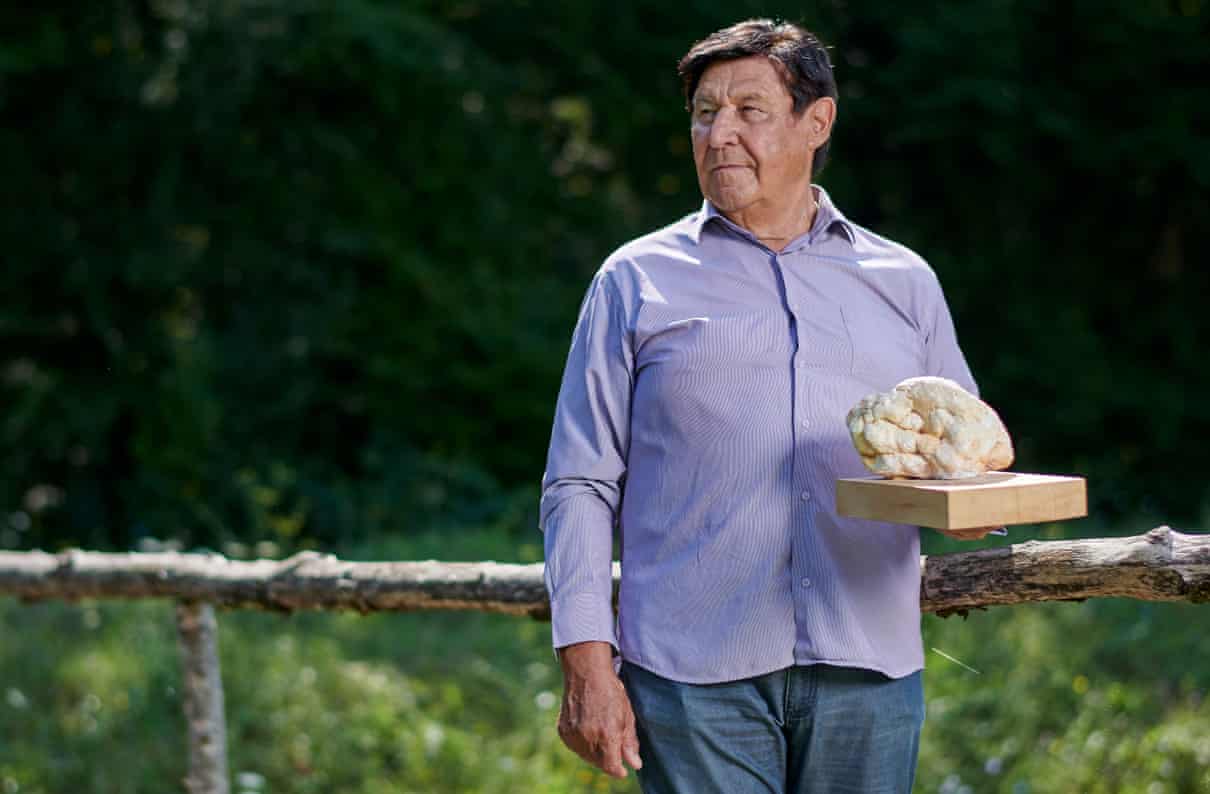
Giancarlo Zigante, of Croatia, with a replica of the giant truffle he found in 1999.

Here’s something fun my husband told me the Guardian had started doing: soliciting interesting stories from readers. Truffle hunter Giancarlo Zigante’s story was told to Sophie Haydock.

“It was 2am when I left the house that night in November 1999. I was heading out into the Motovun forest in Istria, in the north-west of Croatia, to hunt for truffles. Serious truffle hunting is done at night – it’s better for the dogs, as the moisture carries the smell of the truffle better, and also it’s harder to be followed.

“It was a freezing night – the temperatures at that time of year dip below zero. Being a truffle hunter is not an easy job: it’s usually wet and muddy in the forest. You often get scratched and dirty, and can return empty-handed. Still, I had a gut feeling that the night would be a good one, so with Diana, my trusty German pointer, I set off.

“A truffle is an edible fungus that grows underground, often in the roots of oak trees. A good hunter might be able to see subtle signs of a truffle beneath the soil, but it’s down to luck – and, of course, a well-trained dog, who can indicate when you’re at the right spot.

“In Istria, it’s possible to find four types of truffle (one white and three black). But it’s Tuber Magnatum Pico, a white truffle with pale yellow skin and a pungent smell, that is the most precious and expensive. …

“I started truffle hunting in the early ’80s, when I was still in my 20s. I was the first person in my family to do anything with truffles. It started as a hobby, to supplement my income, and it grew from there. I really connected with it. I was a tool-maker for the medical industry before, but fell in love with the truffle-hunting lifestyle.

“My spot was the Motovun forest – I’ll never reveal the exact location. Because of the money that can be made from truffles, rivalries have sprung up, sometimes deadly: people in other countries have been shot. …

“When truffle hunting, you lose track of time – it behaves differently. So I don’t know how long it was, perhaps a few hours, before [Diana] indicated a new patch of earth. I got on my knees and started digging, down to about 20cm [~8 inches]. I could see it was a big one, so I was careful not to damage it. It took 15 minutes to dig it out.

“I weighed the truffle straight away and knew I had something special on my hands. It weighed 1,310g [2.8 pounds]. In the morning I spoke with Guinness World Records, who confirmed that it was the biggest truffle ever recorded. I could have sold it for €1m and made my fortune, but I knew instantly that I didn’t want to do that. It’s great to be rich, but I felt the truffle could have more impact if it was shared. The truffle was found in Istria and should be consumed here, not sold to a rich person abroad.

I invited 200 people from Istria to a feast, on me, and we ate it between us. The night was very special; an amazing atmosphere. Even the president of Croatia was there. Every white truffle tastes amazing – but this one was different. …

“I was like a hero in my community. It put Istrian white truffles on the gastronomic map. Three years after finding the truffle, I decided to start my own restaurant. Now there’s a bronze statue of the truffle at my restaurant in Livade, a village in Istria. It’s a great conversation starter – people think it’s a statue of a brain. They can’t imagine a truffle could be that big. …

“My truffle is no longer the largest ever found: the record was broken in the US in 2014. But that one, weighing 1,786g, was sold to the highest bidder.”

More at the Guardian, here.

Read Full Post »

Photo: Dave Shafer.
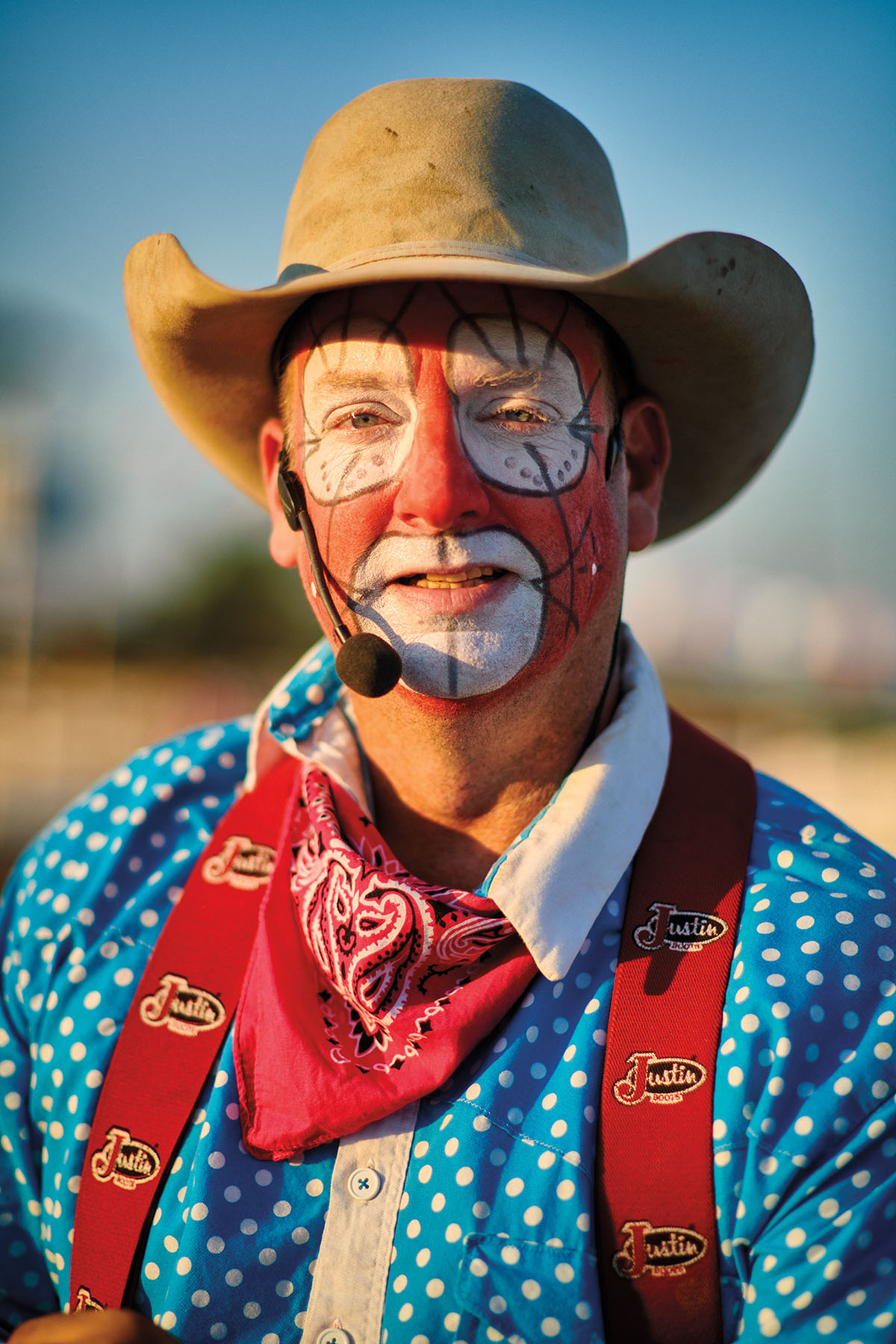
Rodeo clown and “barrelman” Brandon Dunn.

When my husband worked in Minnesota, the colleague who ran manufacturing was in his free time a bull rider. He seemed impervious to danger and injury, but he was young. Eventually, he was obliged to retire.

As dangerous as bull riding is, those in the know might tell you that the role of rodeo clown is more so.

W.K. Stratton says at Texas Highways, “This was one of the rodeo axioms my mother taught me as I was growing up. … Always respect rodeo clowns: They’re the best athletes in the arena, and they save lives.

“[That] perplexed me when I was young. Clowns were the guys who strutted around dusty small-town rodeos in ragged outfits while carrying out groanworthy banter with the event announcer. Sometimes they performed tricks with dancing burros or hoop-jumping dogs. Other times, they might drive around in a tricked-up old car with an exploding muffler and a radiator that could spew water like Old Faithful.

“The athleticism of rodeo clowns was lost on me until I got older and realized their work is just as dangerous and exciting as the bull riders they’re employed to protect. Working in teams, their job is to distract an enraged bull from attacking the rider who’s just been catapulted to the dirt. The clowns working on foot — as opposed to manning a barrel — have come to be known as bullfighters. …

” ‘A human’s instinct is to run away,’ says Weston Rutkowski, of Haskell, one of the best bullfighters in the business. ‘That’s the worst thing you can do in this particular sport. A bull’s got four legs. We’ve got two. So they’re going to run you down in a straight line.

‘You have to be ready to move in the moment a rider starts to fall off. If you don’t come in until they hit the ground, you’re four steps late.’

“While their job has little in common with the matadors of Mexico and Spain who share the ‘bullfighter’ name, rodeo bullfighters must also overcome basic safety impulses. …

“Bullfighting runs in the family for Brandon Dunn, a rodeo clown from the North Texas town of Petrolia. Dunn fought bulls until injuries from a car wreck in 2003 robbed him of his speed. Now he entertains audiences as a clown and barrelman, working in tandem with his 17-year-old son, Brendall Dunn, a bullfighter. The father-son team works about 20 rodeos a year.

“ ‘It got to where I was put together by bailing wire and duct tape, and I just couldn’t fight bulls anymore,’ Dunn says. But that didn’t dissuade Brendall, who worked his first rodeo at age 12. Brandon says he has coached his son carefully.

” ‘There’s a mental maturity you have to reach, no matter how athletic you are,’ he says. ‘We would bring him up with some slower and older bulls and transition him to faster bulls. Now he’s fighting anything that comes out of the chute.’ …

“As a hotbed for rodeos, Texas has produced a prominent line of influential clowns. Ralph Fulkerson, a bull rider from Midlothian, 25 miles southwest of Dallas, changed the game when he switched to bullfighting in the 1920s. He developed a cornball humor act that involved his mule, Elko. After numerous injuries, Fulkerson came up with a way to protect himself by introducing the clown’s barrel to bull riding. His first barrels were made of wood reinforced with metal. Fulkerson would draw the bulls away from the bull riders and toward the barrel. Then he’d hop inside the barrel and allow the bull to bang away at it with its horns. …

“The sport went through a radical change in the early 1990s when [Tuff Hedeman, a four-time world champion bull rider] and other top bull riders broke away from the Professional Rodeo Cowboys Association (PRCA) to form the Professional Bull Riders (PBR). The speed as well as the bucking and spinning ability of the bulls increased dramatically.

“Bullfighters have adapted accordingly. At some rodeos, the trappings of the rodeo clown have disappeared. Bullfighters’ work has become so refined that it developed into a sport itself—freestyle bullfighting, in which bullfighters show their stuff while challenging real fighting bulls. The Bullfighters Only (BFO) tour showcases their skills — no bull riders involved. … Judges score fighters on technique and wow factors, including leaps over the bull.

“The jalopy-driving rodeo clowns of my childhood in the 1960s would be dumbfounded by what occurs at BFO events. These bullfighters practice acrobatics reminiscent of the Minoans: They’ve been known to jump completely over a bull and perform flips. Though some of the participants wear clown makeup in homage to the past, freestyle bullfighting has an X Games vibe.”

See some great photos at Texas Highways, here. And if you are interested in the rodeo life, try getting a copy of the wonderful Chloé Zhao movie The Rider.

Read Full Post »

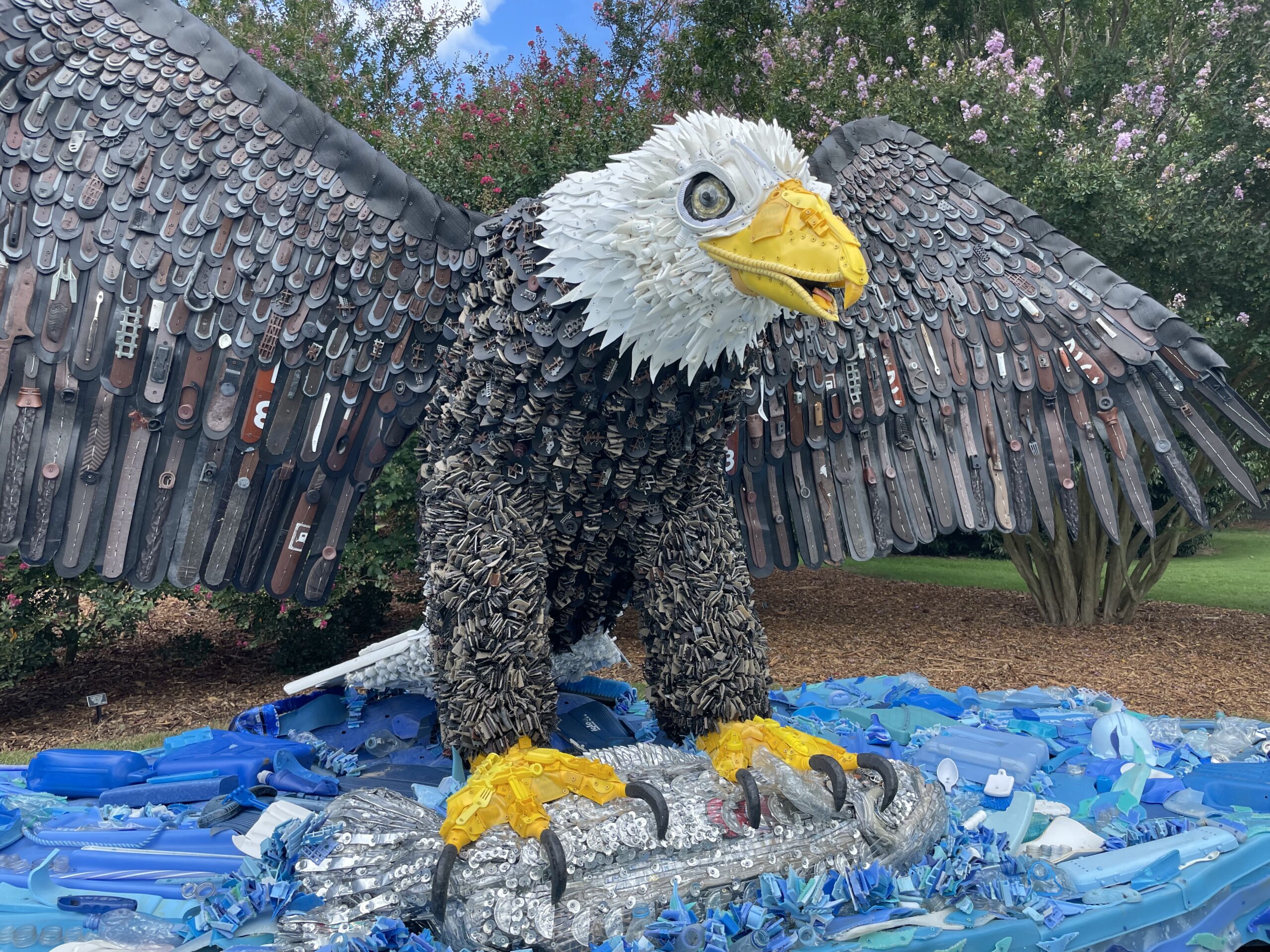
Photo: Washed Ashore.
Rosa, the bald eagle, was created by Washed Ashore volunteers collaborating nationwide despite the pandemic. Washed Ashore is a nonprofit that repurposes ocean plastic to make art and raise awareness.

Having read about Washed Ashore at the New York Times before the pandemic, I wondered how these plastic-waste-fighting artists managed to keep going during lockdown. I should have known: nothing can stop them.

Founder Angela Haseltine Pozzi showed her mettle in an early March 2020 interview with Alex V. Cipolle: “Angela Haseltine Pozzi stands shoulder to shoulder with Cosmo, a six-foot-tall tufted puffin, on a cliff overlooking the blustery Oregon coast. It is January and the deadly king tides have come to Coquille Point, making the shoreline look like a churning root-beer float.

“Cosmo endures the weather just fine, as he is composed of plastic that has washed ashore — flip-flops, bottle caps, toy wheels, cigarette lighters — all mounted to a stainless-steel frame and bolted to concrete. The puffin is a sculpture from Ms. Haseltine Pozzi’s art and education nonprofit, Washed Ashore, whose tagline is ‘Art to Save the Sea.’

‘We’ve cleaned up 26 tons off the beaches, Ms. Haseltine Pozzi said, ‘which isn’t a dent in the actual pollution issue, but we’re doing something by raising awareness and waking people up.’ …

“Washed Ashore has taken those 26 tons of garbage, all debris that washed up on the Oregon coast (the majority within 100 miles of Bandon), and built 70 large-scale sculptures and counting, including Octavia the Octopus, Edward the Leatherback Turtle and Daisy the Polar Bear. …

“[The National Oceanic and Atmospheric Administration] estimates that eight million metric tons of plastic end up in the ocean each year. Marine animals become entangled in it or ingest pieces they mistake for food, such as the whale that recently washed ashore in Scotland with 220 pounds of debris in its belly — the same weight in plastic an American throws away annually.”

So having read about Haseltine Pozzi’s efforts to draw attention to this travesty through art, I wondered what happened to Washed Ashore during the pandemic. Surely, there would have been no more of Pozzi’s in-person workshops, workshops where Washed Ashore invites “the Buddhists and the Baptists, and the rednecks and the hippies, and the Republicans and the Democrats, and they all sit around the table and they all work together.”

The nonprofit’s excellent blog has that piece of the story.

“When the Covid-19 pandemic led to a national lockdown of indoor spaces in early 2020, the Washed Ashore gallery and art studios were affected much like everyone else. Volunteer activity ceased, exhibits were closed, and workshops were emptied. Washed Ashore relies heavily on a steady stream of volunteers to collect and sort debris and build parts of sculptures, accompanying our full-time staff of artists and helpers. But overnight, our doors were closed and volunteers sent home.

“Knowing the problems of plastic ocean pollution were too great to ignore, Washed Ashore looked to find a creative way to continue our mission to create ‘Art to Save the Sea’ and finding a way to still work together, but differently. …

“And so we got to work, calling on supporters and putting together a plan to unite us as the pandemic kept us all apart. [We] opened our determined efforts nationwide with a goal to work together and create a new sculpture, a symbol of unity.

“What better symbol of hope and unity for the people of the United States than a giant American Bald Eagle, the symbol of our democracy?

“The project was named ‘Come Soar With Us,’ by our Executive Director Katie Dougherty, and our team got to work putting together detailed plastic debris construction kits and instructions and mailing them out across America to over 1,550 volunteers across seven states. Their tireless participation stretched well over eight months, creating the feathers for what would be become Rosa’s impressive wingspan. …

“During a time when so much was halted, the momentum and collaboration from creating Rosa with all of our staff and volunteers was inspiring and has given our team an enormous sense of pride and accomplishment. … You can see Rosa in person at Norfolk Botanical Garden in Norfolk, Virginia, from August 21 – November 4, 2021.”

More at the Washed Ashore blog, here, and at the New York Times, here.

Read Full Post »

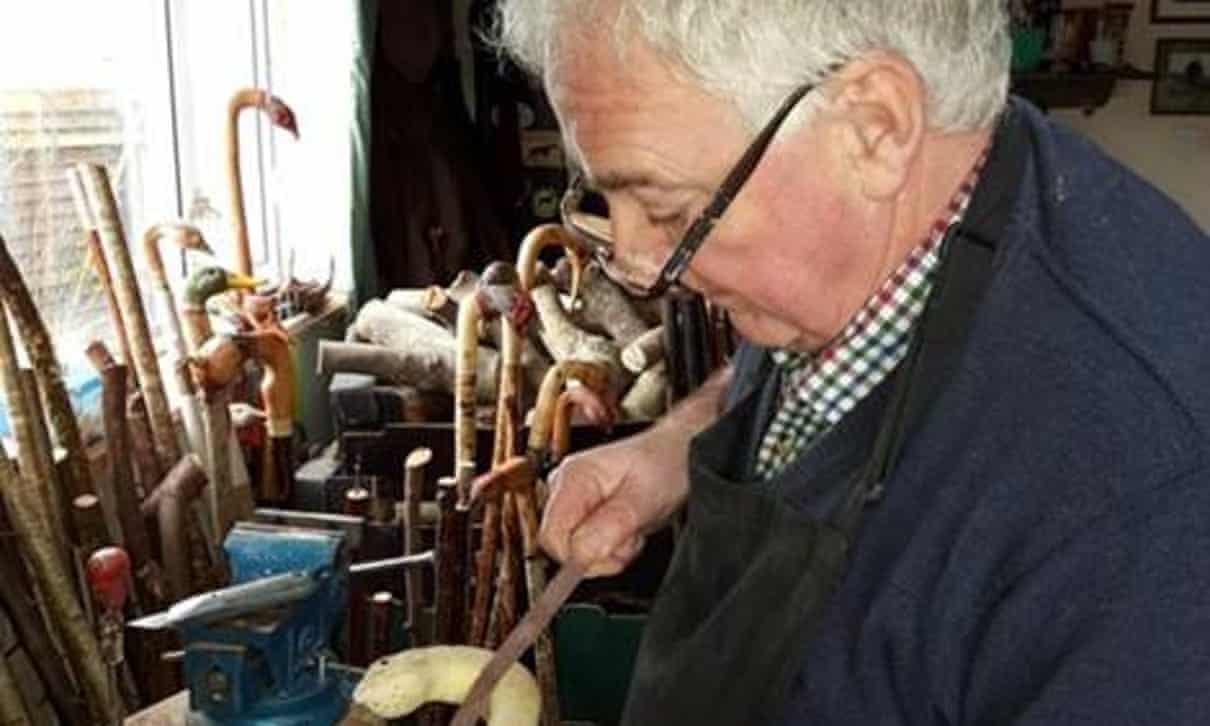
Photo: Robert Mckergan.
Robert Mckergan, 66, is a stick-maker from Portstewart, County Londonderry.

When I saw this story on traditional crafts, I thought of the late, great James Hackett of Moate, Ireland, and the handsome shillelagh he made for John. There was something so special about knowing the maker and knowing that his skill had been handed down through generations. Although his day job was harness making, I suppose James might also have been called a “stick-maker,” like the craftsman in this article.

Vanessa Thorpe wrote at the Guardian in March 2020 about organizations that are working to preserve traditional craft skills like those.

“Clay pipe making, wainwrighting, tanning and making spinning wheels – all are skills of the past that can offer us a sustainable future. This is the message behind a drive, launched this spring, to preserve endangered traditional crafts in Britain.

“With a new award of £3,000 available, together with fresh support from outdoor pursuits company Farlows, the Heritage Crafts Association is calling for a renewed effort to save old skills and pass them down to the next generation.

“The association’s list of ‘critically endangered’ ancient techniques has often been regarded as simply concerned with conserving history. But renewed interest in sustainability, together with a growing dislike of throwaway consumer culture, has prompted a new campaign. …

“The new HCA award was set up this month by Prince Charles, the association’s president: craftspeople are invited to submit a proposal to help secure the survival of a craft ranked either endangered or critically endangered on its official list. …

‘We have a rich heritage of craft skills that can be regarded as just as important as historic buildings and treasured objects,’ [Patricia Lovett, chair of HCA] said. ‘However we are in danger of losing a number of these crafts: our research has found that in some cases there are only one or two makers left.’

“The at-risk list is compiled by combining a conservation status ‘red list’ system used by the International Union for Conservation of Nature and the Rare Breeds Survival Trust watchlist.

“A heritage craft, usually carried out by an individual in small workshops or at home, is considered viable only if there are sufficient makers to hand down their skills to a younger generation. Last year the traditional paper-making skill of ‘mold and deckle’ was judged extinct, and the vanishing of production in turn endangers paper making. Those deemed merely to be endangered are those crafts which are not financially viable as a sole occupation and those which have no clear system for training or passing on skills. Among these are fan making, watch making and walking stick making – all involving the manufacture of items that are still popular with the public, and even regarded as essential by some.

“Farlows, a company closely associated with fields sports and makers of traditional fishing rods, works directly with many artisan manufacturers, in particular tweed makers, and so its management has decided to formalise that arrangement by backing the heritage association, which they see as a key umbrella body.

“ ‘There is a real knack to making something like a split cane rod. People who fish really value it,’ said [Robin Philpott, chief executive of Farlows].

“The danger, according to Farlows, which began trading 180 years ago and in 1942 switched all its manufacturing to support the war effort, lies in widespread mass production. Although the company now has a Russian owner, its management say it still aims to keep alive the key trades it supported when it was owned and run by family members. …

“Robert Mckergan, 66, is a stick-maker from Portstewart, County Londonderry. ‘For me, it started as a hobby, but I feel we need these crafts to go on. I am a retired engineer and while you can teach yourself as I did, not everyone can do it. You need to be competent with your hands.

“ ‘You couldn’t live on this work, I don’t think. Each stick is about 20 hours’ work. But you get a sense of achievement and of purpose. When I see a tree, I see all the potential carvings. And of course the smell that comes from a piece of wood, say cherry, as you work is lovely.’ ”

More at the Guardian, here. An update is at the Heritage Crafts Association, here.

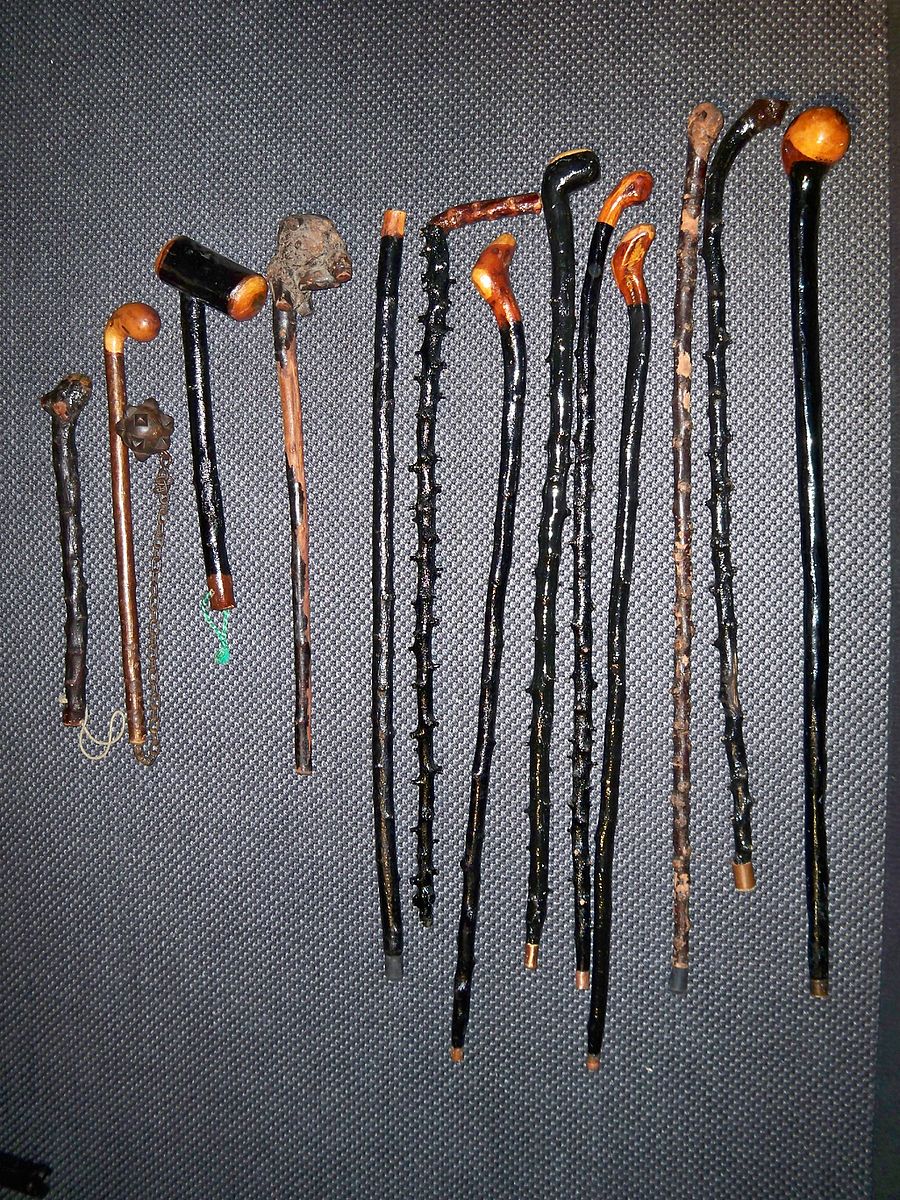
Photo: Wikimedia.
Shillelaghs. See the one James made for himself, here.

Read Full Post »

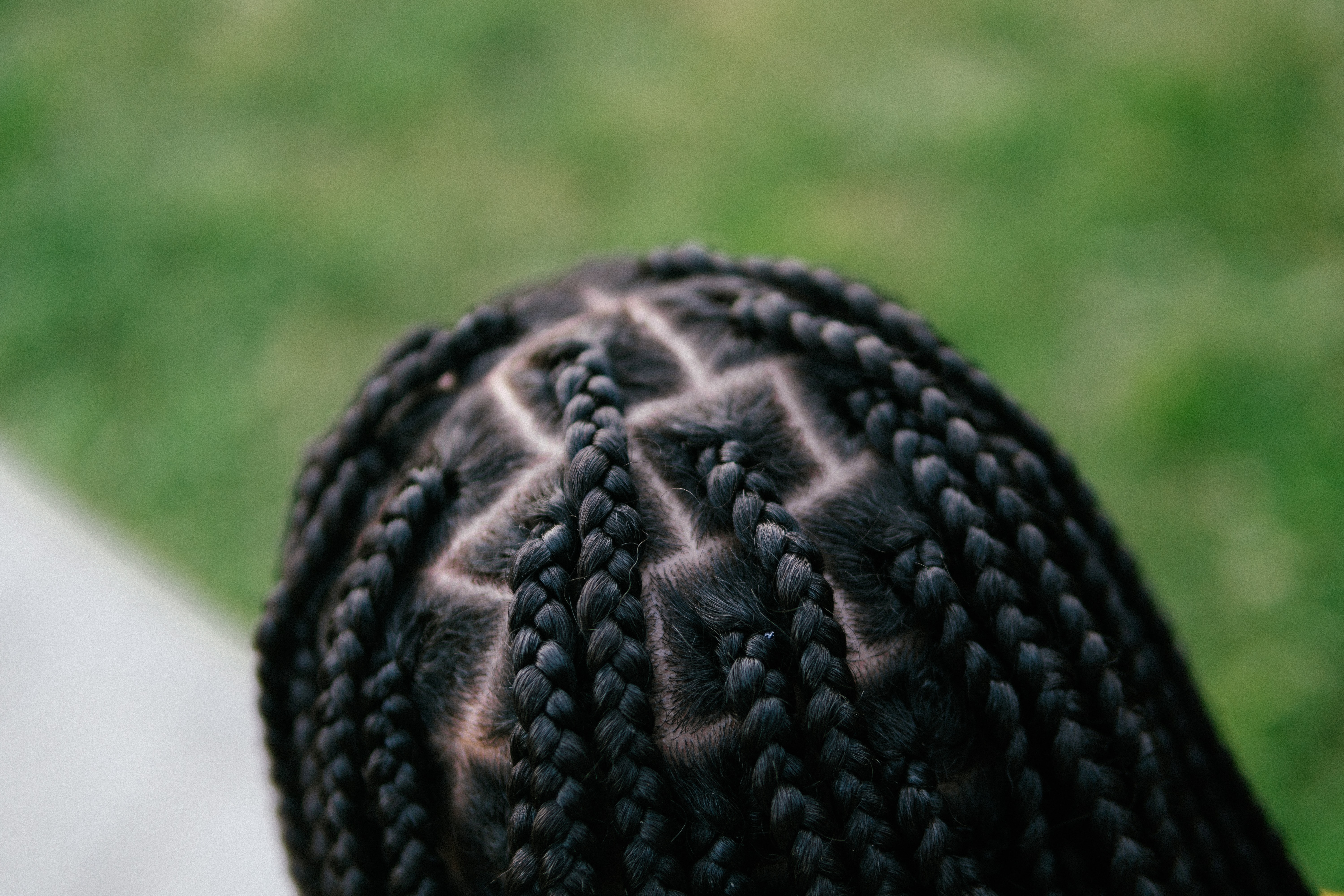
Photo: Alex Robinson/Unsplash.
A single mom in Nashville offered her hair-braiding skills for free to families that couldn’t afford it. Braids can last for one to two months.

What goes ’round, comes ’round. When a family friend of Brittany Starks spontaneously provided her kids with school supplies and clothes, Starks was moved to use her skills to help other single mothers.

Sydney Page has the story at the Washington Post, “Yulanda Norton was in a bind. Her youngest daughter asked to get her hair braided before the start of school, but Norton couldn’t afford it.

“Norton, who is a nursing assistant in Nashville, lost her job during the coronavirus pandemic, and has been out of work for months. She didn’t have the skills herself to create the hair style, which often costs hundreds of dollars at a salon. But she hoped to have her daughter’s hair braided, as it can last for months and is a huge timesaver in the mornings. …

“Her daughter Janae, 12, who just started sixth grade, yearned for the confidence boost the braids would provide. … Fortunately for Norton, she stumbled upon a Facebook post in a local group from a woman she did not know, offering to braid children’s hair free.

“ ‘Anyone know single parents who can’t afford to get their child’s hair done for school? I will braid it for free! Please DM me,’ Brittany Starks wrote on Aug. 4

“Starks, 29, is familiar with the financial strain of being a single mother. She works three jobs to support her two children, Cayden, 7 and Ceniyah, 9.

“She was compelled to offer her hair braiding services after a family friend spontaneously delivered backpacks full of school supplies, clothing and shoes for Cayden and Ceniyah in early August. …

“The unexpected gift made a big difference to Starks and her children, and it propelled her to pay it forward. Starks, who works two receptionist jobs, also braids hair part-time. Knowing how expensive the service can be — and that it dramatically reduces styling time — she decided to offer her skills to single mothers who were struggling to get their children primed for school. …

“When she wrote the Facebook post, she assumed only a handful of people would reach out, but before she knew it, she had 35 appointments booked. … Her Facebook inbox was suddenly full of messages from single parents, whose stories of hardship and financial challenges mirrored her own.

“ ‘I could really relate to a lot of the women who reached out, and it made me realize that what I was doing was truly important,’ said Starks, who has struggled with homelessness and health challenges.

“Given the overwhelming demand, Starks knew she needed to enlist help.

“Hair braiding takes four to six hours per child, she said, and since there was less than two weeks before the start of school, Starks decided to recruit volunteers to ensure that all 35 children could get their hair done in time for the first day of classes.

“She updated her original Facebook post to ask for helpers. When Donna Garcia, 32, saw Starks’s plea, she immediately offered to assist.

“ ‘She can’t do it alone, she’s only got two hands,’ said Garcia, a mother of four who also braids hair professionally. ‘I let her know I’m willing to help.’ …

‘I like to give back to anyone that needs help,’ Garcia said. When a child gets their hair done, ‘they just feel like a brand-new person, which makes me feel good inside.’ …

“The hair-braiding process involves washing, blow-drying, detangling and finally dividing the hair into small sections and braiding it, Starks explained. The results last one to two months.

“Braiding hair is ‘not an easy task,’ Starks said, adding that it also requires numerous supplies — including combs, brushes, shampoo and conditioner, detangler, mousse, hair jam and additional pieces of hair to weave in — which she paid for out of pocket. …

“When Janae Norton’s hair was finally braided and she looked in the mirror, ‘I felt cute,’ she said. …

“On a recent afternoon, ‘my daughter just yelled out: “Mommy, I’m so proud of you,” ‘ Starks said. ‘The tears were just pouring down. Those words meant everything to me.’ ”

More at the Post, here.

Read Full Post »

Image: York Notes.
York Notes, a literature guide, says, “Bob Crachit is Scrooge’s clerk and represents the lower classes. He has to accept poor wages and working conditions because he has a family to support.”

I was thinking about Labor Day and remembering that in many of my favorite novels Dickens wrote with passion about the working conditions of the poor. He had himself worked in a blacking factory as a child when his father was in debt, and few topics were more likely to spark his outrage.

John Broich, an associate professor at Case Western Reserve University, wrote at Time that Dickens decided Scrooge, his hard-working clerk Bob Crachit, and the half-starved Tiny Tim would have more impact on the big issue of the day than the political pamphlet he’d been planning.

“Published 173 years ago this month,” Broich writes, “Charles Dickens’ A Christmas Carol was an instant bestseller, followed by countless print, stage and screen productions. … But A Christmas Carol’s seemingly timeless transcendence hides the fact that it was very much the product of a particular moment in history, its author meaning to weigh in on specific issues of the day.

Dickens first conceived of his project as a pamphlet, which he planned on calling, ‘An Appeal to the People of England on behalf of the Poor Man’s Child.’

“But in less than a week of thinking about it, he decided instead to embody his arguments in a story. … So what might have been a polemic to harangue, instead became a story for which audiences hungered.

“Dickens set out to write his pamphlet-turned-book in spring 1843, having just read a government report on child labor in the United Kingdom. The report took the form of a compilation of interviews with children — compiled by a journalist friend of Dickens — that detailed their crushing labors.

“Dickens read the testimony of girls who sewed dresses for the expanding market of middle class consumers; they regularly worked 16 hours a day, six days a week, rooming — like Martha Cratchit — above the factory floor. He read of 8-year-old children who dragged coal carts through tiny subterranean passages over a standard 11-hour workday. These were not exceptional stories, but ordinary. Dickens wrote to one of the government investigators that the descriptions left him ‘stricken.’

“This new, brutal reality of child labor was the result of revolutionary changes in British society. The population of England had grown 64% between Dickens’ birth in 1812 and the year of the child labor report. Workers were leaving the countryside to crowd into new manufacturing centers and cities. Meanwhile, there was a revolution in the way goods were manufactured: cottage industry was upended by a trend towards workers serving as unskilled cogs laboring in the pre-cursor of the assembly line, hammering the same nail or gluing the same piece — as an 11-year-old Dickens had to do — hour after hour, day after day.

“More and more, employers thought of their workers as tools as interchangeable as any nail or gluepot. Workers were becoming like commodities: not individual humans, but mere resources, their value measured to the ha-penny by how many nails they could hammer in an hour. But in a time of dearth — the 1840s earned the nickname ‘The Hungry ‘40s’ — the poor took what work they could arrange. And who worked for the lowest wages? Children.

“Popular theories about how — or whether — to help the poor often made things worse. The first was the widespread sense that poor people tended to be so because they were lazy and immoral, and that helping them would only encourage their malingering. If they were to be helped, it should be under conditions so awful as to discouraged people from seeking that help. The new workhouses were seen as the perfect solution — where families were split up, food was minimal and work painful. ‘Those who are badly off,’ says the unreformed Scrooge, ‘must go there.’

“Associated with this concept were the ideas of Rev. Thomas Malthus, who cautioned against intervening when people were hungry because it would only lead to an untenable population size. Better that the poor should starve and thus ‘decrease the surplus population.’ …

“Friedrich Engels read the same report on child labor that Dickens did and, with his collaborator Karl Marx, envisioned an eventual revolution. Dickens was very much an anti-revolutionary. In fact, he implied that [revolution] was the fearsome consequence of not solving the problem some other way.

“ ‘This boy is Ignorance. This girl is Want. Beware them both, and all of their degree, but most of all beware this boy, for on his brow I see that written which is Doom, unless the writing be erased.’ …

“Dickens wasn’t a ‘systems’ thinker, nor was he proto-socialist. Yet what Dickens did propose in A Christmas Carol … was that employers are responsible for the well-being of their employees. Their workers are not of value only to the extent to which they contribute to a product for the cheapest possible labor cost. They are of value as ‘fellow-passengers to the grave,’ in the words of Scrooge’s nephew, ‘and not another race of creatures bound on other journeys.’ Employers owe their employees as human beings — no better, but no worse, than themselves.

“And, yes, that might mean ‘a prize Turkey’ at Christmas … but the real salvation that Scrooge gives to the Cratchit family is a raise.

“As Scrooge and the Ghost of Christmas Past watch Tim, his father holding his [hand], the miser pleads, ‘say he will be spared.’ The ghost reminds readers of Scrooge’s Malthusian quote. ‘If he be like to die, he had better do it, and decrease the surplus population.’ ” More at Time.

Today we know that most of the labor benefits we have today, including the Monday holiday in America, were not handed down by benevolent company owners but were wrested from them by workers and unions.

You can read that history at Wikipedia, here. Even so, I do think stories help prepare a population to accept change — to recognize that the way things are is not always the best way.

Read Full Post »

Dance Leaves the Theater

Photo: Brooke Trisolini/Miami City Ballet.
Andrei Chagas of the Miami City Ballet.

One of the things we will keep from the pandemic is spending time outdoors, whether we do more of our exercise in nature or attend performance arts under the open sky. In today’s story, we learn about how ballet went outside, spurred on by Covid.

Sarah L. Kaufman reports at the Washington Post, “Sara Mearns, the New York City Ballet star, whirls through a public park in sneakers and a lime-green bodysuit, all zany glamour with a ’90s vibe.

“In a sly little film simply titled Another Dance Film, Mearns powers uphill past a jogger, reaching the top of an amphitheater’s seating gallery. She doesn’t stop. With the same ferocity, she plunges down the tiers, long hair whipping as she kicks, struts and hops from step to step. Ballerina as all-terrain vehicle.

“The film, directed by Henry Joost and Ariel Schulman, is just five minutes long, but it does a lot of work. It blows apart some key assumptions, shattering the uptight ballet-dancer stereotype and airing weighty artistic differences between Mearns and her creative team, which we hear in voice mails that accompany the film.

“Crucially, it also liberates dance from illusion. Mearns isn’t in the imaginary world of the theater, creating an imaginary character. She’s herself, or a convincing version of herself, navigating the real world of cyclists, people-watchers, concrete and chain-link.

“She’s not alone. Another Dance Film is part of a fascinating trend to strip dance of artifice by cinematizing it in outdoor settings. …

“While Mearns is bouncing down the risers in Another Dance Film, for instance, there’s a conversation going on about vulnerability and risk-taking. Mearns: ‘Look, I told Andrea like five times that I don’t want to dance on stairs!’ Andrea Miller, the choreographer: ‘It’s okay that she feels uncomfortable. Why does everything have to be so perfect?’

“The effect is intentionally droll as we watch Mearns dance the hell out of those stairs. But the point is profound. This piece is about busting out of a fancy theater setting and exposing what’s usually kept away from the public. So much real human drama is hidden behind the polish of conventional performance, but not here.

“Nothing can replace the pleasures of live performance — that’s a given. Yet here’s what surprises me. As new dance works surfaced on my laptop, something beautiful happened to this art form I thought I knew. It gained strength from the natural environment. ‘Natural’ in the fullest sense of the word: unvarnished, even un-marvelous, existing comfortably or uncomfortably in nature. …

“By featuring outdoor environments around the world, dance inserts itself into the urgent global conversation about climate change. These films line up with one of the most pressing human dramas of all time. They recognize that the story is outside, in the weather and the sun.

“It might be in an urban alley, as in Now, a perspective-tilting mini-film shot in the shadowy rubble of Shanghai. Or on a stone-covered English beach in Toke, a meditation on isolation and belonging, performed by Danish dancer Toke Broni Strandby, who was born with one arm. He tells us in a voice-over that he never feels disabled when he’s dancing. These, along with Another Dance Film, can be viewed on films.dance and its social media sites, including Instagram, YouTube and Vimeo. …

“The arrival of these films has been gradual but inevitable. Over the past year, dance companies around the world have pivoted to become media companies. They’re publishing blog posts and interviews. They’re live-streaming and webcasting artist talks and Zoom productions, and offering digital content such as behind-the-scenes shorts and fully staged performances from their archives. As the shutdown restrictions eased, many dance companies also turned to filmmaking.

“In many cases, collaborations sprang up among producers, directors, choreographers and dancers scattered around the globe. They joined virtually, with limited rehearsals.

“The short, atmospheric outdoor films that resulted combine the primal force of dance, the rawness and poignancy of the outdoors, and what filmmaking can do with time, space and sound: slow motion, close-ups, the use of wind and birdsong. The effect can be deeply emotional.

” ‘Filmmaking is such a powerful art form of its own,’ says choreographer Jacob Jonas, who launched Films.dance last January. … ‘In film, you can isolate part of the body, a hand or the head, and use filmmaking to capture what you couldn’t ordinarily see live.’ …

“Jonas, 29, directs a contemporary dance troupe called Jacob Jonas the Company, in Santa Monica, Calif. He’s long worked in film for his troupe and commercial projects, and when the pandemic froze the normal, in-person creative strategies for dance, he saw filmmaking as a solution ‘to keeping the art form alive when the curtain was down.’

“Jonas set a goal of 15 films themed around nontraditional collaborations. He wanted the project to feel global, and ended up with locations around the world — Brazil, Nigeria, Spain — as well as movement artists from more than 25 countries and young, untested choreographers.

“ ‘Theaters often don’t want to take risks on newer artists because of ticket sales,’ Jonas says. ‘With this platform, we can prove that those collaborations are successful.’ ”

More at the Post, here.

Read Full Post »

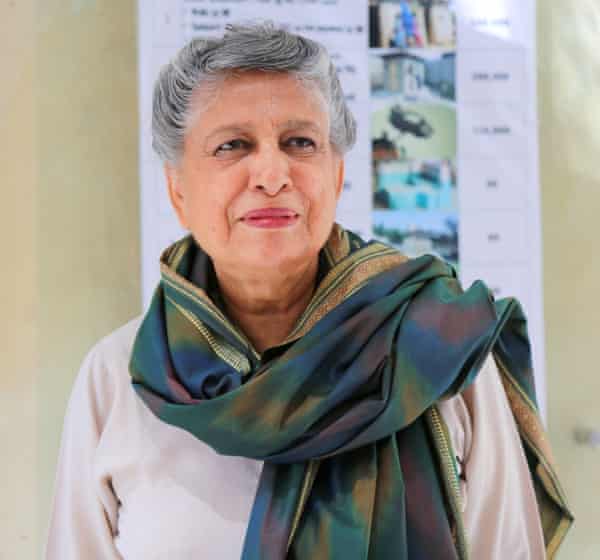
Photo: Heritage Foundation of Pakistan.
Pakistani architect Yasmeen Lari says she wants to atone for past contributions to the world of excess by starting to build good homes for the poor.

A woman in a “man’s profession” wanted to prove she was just as good or better, outdoing other architects in creating over-the-top corporate buildings. Now she wants to be more true to herself and contribute to society.

Oliver Wainwright reports at the Guardian, “A mirrored glass ziggurat stands on a corner in central Karachi, flanked by a pair of polished granite towers. Golden bubble elevators glide up and down behind the tinted windows, shuttling oil executives to their offices through the sparkling five-storey atrium. The Pakistan State Oil House is a power-dressed monument to the petroleum-fuelled excesses of the early 1990s, oozing ostentation from every gilded surface – so it comes as a surprise to learn that its architect is now building mud huts for the poor.

‘I feel like I am atoning for some of what I did,’ says Yasmeen Lari with an embarrassed chuckle. ‘I was a “starchitect” for 36 years, but then my egotistical journey had to come to an end. It’s not only the right of the elite to have good design.’

“The 79-year-old architect was awarded the prestigious Jane Drew prize in London in March, a gong that recognises women’s contribution to architecture, for her tireless humanitarian work over the last two decades. …

“She made her name with a number of prestigious state commissions in the 1980s, including Karachi’s finance and trade centre, a vast hotel and a host of military barracks, as well as a low-income housing project that favoured low-rise high-density over the fashion for concrete-slab blocks. Then, in 2000, she retired, primarily to focus on writing books about Pakistan’s architectural history and put her energies into the Heritage Foundation, which she had founded with her husband in 1980. …

“In 2005, an earthquake of 7.6 magnitude on the Richter scale hit northern Pakistan, killing 80,000 people and leaving 400,000 families displaced. ‘I felt I had to go and help,’ says Lari. ‘I had no idea what I could do as an architect. I’d never done any disaster work, or any projects in the mountains. I had no workforce, I’d given up my practice. But I found that, if you do something beyond your usual comfort zone, then help will always come.’

While international aid agencies busied themselves erecting costly prefab housing with concrete and galvanised iron sheets, Lari worked with dispossessed families to rebuild their homes using mud, stone, lime and wood from the surrounding debris. Working with volunteers, she trained local people how to use whatever materials were to hand to rebuild in a better, safer way.

” ‘I think we often misunderstand what kind of help is needed,’ she says. ‘As an outsider, you do things that you think are appropriate, but the reality here is different. The aid mindset is to think of everyone as helpless victims who need things done for them, but we have to help people to do things for themselves. There’s so much that can be done with what’s already there, using 10 times less money.’

“She says that the process of co-creation can also be a crucial part of healing. ‘Disasters can be truly devastating and people easily fall into deep depression. But if you give them something to do, it really helps with recovery. Something people have helped to make is much more valued than something simply given.’

“Since 2005, a sequence of further earthquakes, floods and conflicts have kept Lari and her team at the Heritage Foundation on their toes, developing agile techniques with bamboo, mud and lime, always following the principles of low cost, zero carbon and zero waste. Severe flooding in Khyber Pakhtunkhwa and Sindh provinces in 2010 saw them develop a design for modular community centres raised on stilts, which safely survived more floods a couple of years later.

“When earthquakes hit Balochistan province in 2013 and Shangla in 2015, Lari designed shelters using a cross-braced bamboo framework, learned from the vernacular dhijji technique. Testing the prototype on a shaking table at NED University in Karachi, they found the structure was capable of withstanding an earthquake more than six times the strength of the 1995 Kobe disaster. If the homes ever did begin to crumble, they could be easily rebuilt using the same organic materials – unlike their concrete and steel counterparts.

“ ‘There’s so much money in disaster relief,’ says Lari, ‘but we need to put much more effort into disaster preparedness.’ She is critical of the ‘universal solutions’ offered by aid agencies and the siloed ways in which they work, as well as the urbanised mindset imposed on rural communities, insisting instead that responses should follow ‘forms based on age-old wisdom.’ “

More at the Guardian, here.

Read Full Post »

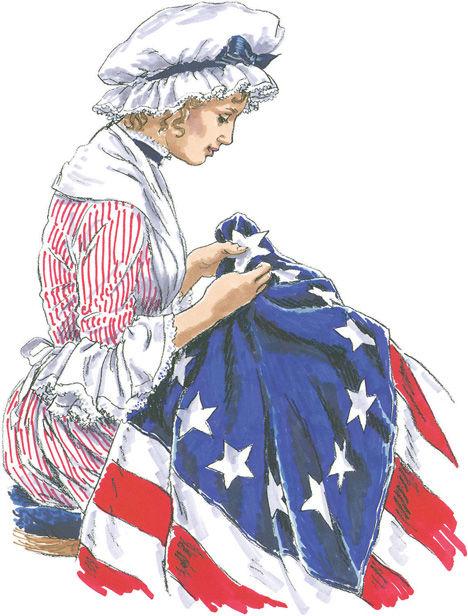
Image: Idaho Mountain Express.

How does our history get made? More often than not through stories. When we get information showing that the stories are not quite accurate, we learn to tell new stories. One of my most squeamish story narrations occurred when I had visitors from China at Thanksgiving and they were asking a lot of questions about what we call the First Thanksgiving. That happened to me nearly 20 years ago. It was a kind of turning point, when I knew I had to start cleaning up my stories.

Today’s article is about finding original documentation that confirms details learned about Betsy Ross years after the flag legend took flight.

Natalie Pompilio writes at the Washington Post, “It began with an unmarked, unremarkable box tucked in a corner of a garage in California. Inside, under miscellaneous letters and old high school yearbooks, was a smaller shoe box. Inside that, under old coins and a numismatist pamphlet, lay the 240-year-old diary of sailor John Claypoole, a Revolutionary War prisoner of war and later the third husband of the flagmaker known as Betsy Ross.

“ ‘It was wrapped in a piece of paper that said, “John Claypoole diary to be handled with great care,” which was sort of funny as we found it in a paper shoe box in a box in this garage,’ recalled Aileen Edge, who with her husband uncovered the priceless item in her mother’s Marin County home in June 2020.

“In the journal, Claypoole describes his capture by the British while a privateer at sea, being charged with high treason for ‘being found in arms and in open rebellion’ against the king, and his time at Old Mill Prison near Plymouth. He wrote about the hardships of life in captivity; about another inmate’s escape attempt that ended with the man being shot; about watching, in March 1782, as ‘M. Joseph Ashburn departed this life after an illness of about a week which he bore with amazing fortitude & resignation.’

“At the time of his death, Joseph Ashburn was married to Betsy Ross. Her first husband, John Ross, had also died during the war.

“The diary predates Claypoole’s relationship with Ross, so she is not mentioned in it. But the document, and a Claypoole family Bible found around the same time, gives perspective to Ross’s place in the nation’s founding, said Philip Mead, chief historian and curator at Philadelphia’s Museum of the American Revolution, which put both items on exhibit during the July Fourth weekend. While a transcription of Claypoole’s diary has existed for years, this is proof that what it contained is correct.

“ ‘This really taps into the profound sacrifices she and her family made to create the United States. Whether she created the first flag or not, she certainly helped create the country,’ Mead said.

‘It’s crucial to have the original documents because they are the only unimpeachable sources. It wasn’t that we didn’t know about these great sacrifices, but this confirms it.’

“Two entries in the Claypoole Bible, which has never been documented before, further emphasize the family’s commitment to the American experiment. The first notes the Ross-Claypoole union: ‘John Claypoole and Elizabeth were married the 8th day of May in the year of our Lord 1783 and in the 8th year of Independence of the United States of America.’

“The second entry records the birth of a son to John Claypoole’s sister: ‘Alexander Trimble son of James and Clarissa Sidney Trimble Born the 20th of March 1783, 12 minutes before ten o’clock PM (being the day that Hostilities ceased between the United States of America and Great Britain, after a long and cruel war.)’

“ ‘The fact that they give Christian year and the years since independence shows how sacred the country had become to them through their many sacrifices,’ Mead said. ‘Betsy Ross herself didn’t leave much in the way of personal testimony so we have to get at her thinking by reading the words of people close to her or learning about her business from the surviving invoices or accounts.’ …

“Edge’s mother, Claire Canby Keleher, was the famous flagmaker’s great-great-great-granddaughter and fiercely proud of her family’s role in the nation’s birth. … Donating the book to the Museum of the American Revolution in the names of Keleher and her late brother, Wilbur Wood Canby, seemed like the natural thing to do. …

“ ‘My brother and I talked about if one of us kept it, we’d just wrap it up and keep it safe and what’s really gained by that?’ Edge asked. …

“Some important details of who Betsy Ross was and what she did during the American Revolution remain murky. The story that appears in elementary school books holds that in 1776, Gen. George Washington, then commander of the Continental Army, went to Ross’s shop in Philadelphia with a sketch for a new flag. …

“Those who doubt the first flag story note there are no diaries, newspaper accounts or letters showing that Washington sought out Ross’s skills or that the pair knew each other. There’s no mention of Ross in founding documents. Her connection to the flag was unknown until her grandson wrote a book about the family’s story in the 1870s.

“Supporters say that Ross’s grandson had no reason to lie and that he presented sworn affidavits from family members testifying they’d grown up hearing the family tale.

“In 2014, curators at Washington’s Mount Vernon estate found a receipt for bed furnishings paid to a Mr. Ross of Philadelphia dated 1774, proving Washington and Ross were acquainted. …

“Pulitzer Prize-winning historian Laurel Thatcher Ulrich, who originated the phrase ‘well-behaved women seldom make history,’ has long dismissed the first flag story, but she’s excited by the information found in the Claypoole Bible and diary.

“ ‘I love the fact that the emphasis now is not on a piece of needlework or an artifact but on the person and the larger context that the American Revolution required sacrifices,’ she said.“

More at the Post, here.

Read Full Post »

« Newer Posts - Older Posts »