Feeds:
Posts
Comments

Archive for the ‘Uncategorized’ Category

081218-crabbing-in-New-Shoreham

I once read a mystery called Tip on a Dead Crab about a gambler. The title refers to the gambler’s decision to place a bet on a crab race after someone gave him a tip that one of the crabs was dead.

Believe it or not, there is such a thing as a crab race, and an annual one has been organized for children in New Shoreham. It is the cutest thing ever.

Here you see people catching the crabs from a dock, a little boy wearing his yellow crab-race hat, crabs marked with different colors (pick your own to cheer, win an ice cream), the wooden. blue race track, and the crabs scattering as fast as they can.

I always wondered whether crabs were somehow supposed to race in a straight line like a horse — crabs being what they are. But no. Here’s how it works. The master of ceremonies dumps a bucket full of crabs on a racing board, and when the starting signal is given, he sweeps the bucket off the crabs, and away they go.

The winning crab in Sunday’s race made a beeline sideways and fell off the edge as everyone urged their own crab to go, go go.

081218-.crab-race-hat

081218-bet-on-a-yellow-crab

081218-red-crab-in-race

081218-crab-race-track

081218-.bucket-lifted-off-crabs

081218-.crabs-racing-away

Read Full Post »

arev_oom_2017_ezerum_close-up

Photo: J. Urban/Smithsonian
Arev Armenian Dance Ensemble

Because I live in the Greater Boston area, where there is a large Armenian population, I was interested to read how how Armenian dance is helping to preserve the culture in the diaspora.

Roger Catlin writes at Smithsonian that Armenian dance has adapted in intriguing ways over time and place.

“Can dancing preserve culture?” he asks. “Those who circle up, link pinkies and swirl to the traditional village dances of Armenia believe they can.

“And as part of the 52nd annual Smithsonian Folklife Festival this summer, scores of dancers from Armenia and across North America will perform, present master classes and share technique. [Note: This took pace in July.] …

“One of the oldest centers of civilization, Armenia once stretched from the Black Sea to the Caspian Sea and between the Mediterranean Sea and Lake Urmia in present-day Iran. Its key location in the South Caucaus region of Eurasia made it a central place for commerce with other cultures, but also a site for constant invasion from neighboring empires, the Ottomans to the west and Iran to the south and Russia to the east.

“Already the dance traditions of individual villages, separated by mountainous topography had been unique to each town. But with the Armenian diaspora, the dancing, which continued as a way to keep connected to the old country, became even more individualistic, [says Carolyn Rapkievian, who is serving as an Armenian dance advisor for this year’s Folklife Festival], noting that the dances were further influenced by the host countries. …

“Gary and Susan Lind-Sinanian, dance historians at the Armenian Museum of America in Watertown, Massachusetts, say traditional western Armenian music and dance remained an important cultural touchstone for the immigrating community.

“ ‘As the Armenian language fell into disuse among many American-born Armenians, the music and dance gained even more importance, as one of the remaining avenues of cultural identity maintenance,’ they have written. ‘Today, this music and dance have developed into a characteristic form unique to the United States, and one of the principal means that today’s Armenian-American youth assert their Armenian identity.’

“ ‘The two means of expression, outside of being a member of the church, to mark you as an Armenian are dance and food,’ Gary Lind-Sinanian says. ‘Those are the two every Armenian family practices to some degree.’ Still, every village seemed to have its own style, he said. ‘When people make their pilgrimages to some monastery for a festival, they could see, when various groups danced to a melody, by the way they danced, you could tell where they came from.’

More at the Smithsonian, here. If you are ever in Watertown, try to get some Armenian food. It’s delicious — a little bit like Middle Eastern cuisines you already know, a little bit not. And you can get an interesting angle on the Ottoman Empire’s relationship with the Armenians from this wonderful book, Destiny Disrupted, by Tamin Ansary.

Read Full Post »

image1

Photo: Martin Lemke
The city of Bassania in Albania is no longer a legend.

There is always more to be discovered. Maybe just under our feet.

That is what some archaeologists found not long ago in Albania.

As Christina Ayele Djossa writes at Atlas Obscura, “Sometimes, rocks are more than crumbled pieces of the earth. Sometimes, they unveil clues about our planet’s ancient past or future. For archaeologists from the Antiquity of Southeastern Europe Research Centre at the University of Warsaw, the rocks in Shkodër, Albania, turned out to be the ruins of the 2,000-year-old lost city of Bassania.

“Back then, Bassania was an economic and military stronghold, part of the Illyrian kingdom, which existed from 400 to 100 B.C. The ancient city contained numerous settlements and fortresses, one of which the archaeologists unearthed.

“What they found were ancient stones of a fortress guarded with large bastions and roughly 10-foot-wide stonewalls and gates. These defensive buildings, according to University of Warsaw professor Piotr Dyczek, are common in Hellenistic architecture. The team confirmed the age of the ruins by analyzing nearby coins and ceramic vessel fragments, which dated back to the time of the Illyrian kingdom. …

“But this city, and the Illyrian kingdom, ultimately fell to a Roman invasion in the beginning of the first century. This may be why it took so long for archaeologists to find Bassania. … The Polish and Albanian archaeologists also speculate that the location’s geological infrastructure has something to do with it. The ruins are found on a ‘hill locally called “lips of viper” in [the village of] Bushat, a few miles from Shkodër,’ wrote Dyczek. After years of erosion, the stone remnants look like a part of the sandstones and conglomerates that make up the hill. So to a passerby, it might look like a bunch of stones, not a structure made by humans.”

Now I want to know why any hill would be called “lips of viper.” Always more discoveries to be made.

More at Atlas Obscura, here.

Read Full Post »
winnipeg-indigenous-accord-signing

Photo: Walther Bernal/CBC
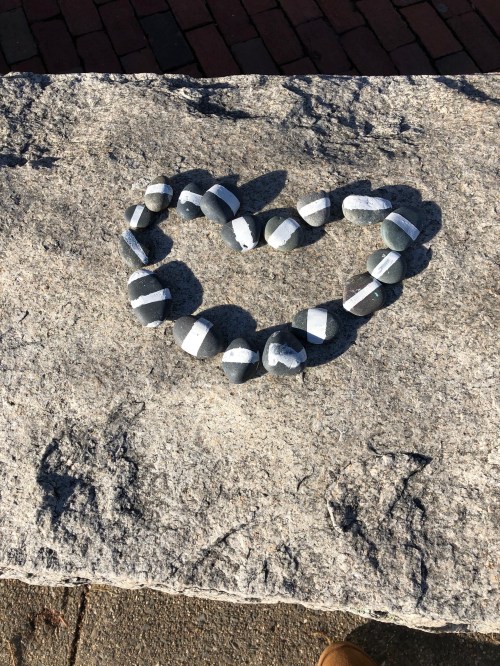
Sandy Bay Ojibway First Nation Chief Lance Roulette signed Winnipeg’s Indigenous Accord in June. The new treaty addresses tribal representation in numerous aspects of life.

The “truth and reconciliation” initiatives in South Africa after Nelson Mandela was released from jail set a kind of standard for healing old wounds — or at least for moving on. The idea was that nations must bring to the light of day all the bad things that were done and give everyone a chance to express their pain. After that, acceptance and reconciliation can begin.

A similar process is happening in Canada to heal the injustices done to tribes. One example is in Winnipeg, where the lung association, an arts organization, and many others are working to make amends for the past and create a better future.

Aidan Geary writes at CBC News, “A Manitoba association created by the agency that once ran segregated ‘Indian hospitals’ in the province is among more than 40 new signatories to Winnipeg’s Indigenous accord. …

“The Lung Association was among dozens of Winnipeg-based groups that added their names to the city’s year-old Indigenous Accord [in June]. Other groups include the Royal Winnipeg Ballet, CentrePort Canada, Investors Group, the Manitoba Museum and the Manitoba College of Social Workers.

“The accord was first signed by more than 80 groups [in March 2017]. Signing on means committing to an ongoing responsibility to reconciliation, the city says. Signatories are required to report yearly on the success of their efforts and their future goals.

“For the Lung Association, it also means addressing a legacy of segregation, substandard care and allegations of mistreatment at the hands of tuberculosis doctors from Indigenous patients, [Neil Johnston, president of the Manitoba Lung Association] said.

” ‘We want to make sure that that … never happens again, and we want to help in the healing of people who have survived that care but also the families and make up for the intergenerational trauma that occurred,’ he said. …

“So far, Johnston said its goals include examining and establishing the association’s own history, and speaking to people who experienced the hospitals themselves. From there, the association will work with Indigenous community members to form a plan for reconciliation and improved health outcomes. …

“Winnipeg Mayor Brian Bowman urged more organizations to sign on, calling the accord an ‘aspirational document’ and an ongoing effort. … ‘We have created a website in which organizations can submit their outcomes on an annual basis and report on what they’re going to work on, and that’s shared publicly so there can be that learning within the community.’ …

“Carol Phillips, executive director of the Winnipeg Arts Council — which signed on in the first year of the accord — said her organization will launch a new Indigenous arts leadership fellowship program this fall, placing two Indigenous fellows into arts organizations to develop management and governance skills.

“She said Indigenous people are underrepresented in leadership positions in arts groups across the country, with the exception of Indigenous-focused arts organizations. She said she’s seen improvement on that front, but not enough.

” ‘There’s no reason why there shouldn’t be Indigenous arts leaders in any arts organization, and that’s ultimately what we want to see happen,’ she said.

“The WAC will also place an Indigenous artist-in-residence in the city’s Indigenous Relations department, she said.

“Values around reconciliation have long been a part of the arts council’s work, she said. But she said it’s important to demonstrate those values and make them clear to the community.

” ‘The city obviously wants an overt demonstration of commitment, and I don’t think there’s anything wrong with that, so we participated,’ she said.

” ‘The thing is, here we are still talking about the sort of exceptionalism of this situation. Our goal is that this is just how things are, and it’s not an exception — it’s how the arts community functions.’ ”

More at CBC, here.

Read Full Post »

urban-foraging

Photo: Pop-Up City
Urban foragers don’t like to see the food in parks go to waste.

Do you pick berries along the side of the road? I am drawn to blackberries. Suzanne loves mulberries. When we graze opportunistically like that, I guess we are foragers.

I have written before about both gleaning (usually picking up edible food after the farmer has finished harvesting) and foraging (usually in urban or suburban areas). This story suggests the practice is gaining adherents, in part because city dwellers feel too divorced from nature.

Jenny Cunningham writes at the Guardian, “According to Langdon Cook, there’s one golden rule of foraging: if you don’t know what it is, don’t eat it. Cook is a leading figure in America’s growing urban foraging movement – in fact he’s written the book on it. As we make our way along a trail through one of his favourite hunting grounds, Seattle’s Seward Park, he mentions some of the poisonous plants out there, such as hemlock. The famous feller of Socrates looks a lot like carrot tops or flat leaf parsley to the uninitiated.

“There’s still plenty of good eating in the city’s parks and green spaces – researchers once identified 450 edible plants in Seattle. Cook enthusiastically points out some ripe thimbleberry. ‘It has a shelf life of about a nanosecond, so you’ll never see it in a farmers market,’ he says. The soft berry slumps off the plant and into the mouth like it’s already been made into a sweet, tannic jam. So yummy, so organic … and so illegal.

“Despite the popularity of foraging in Seattle and cities far beyond the Pacific north-west, municipal parks are generally off limits to foragers in the US. For city authorities, the risk of destruction to plants and wildlife is too great: what if everyone decided they wanted a piece of the park for lunch? Then there’s the potential for overzealous amateurs to make themselves very unwell. …

“While foraging is an ancient art that has taken place in US cities for as long as they’ve existed, the practice has exploded in popularity in recent years.

“There are some who forage because they struggle to afford food, but that is a small percentage, according to a Johns Hopkins study. Mostly, it seems that urban dwellers – starved of light and spending much of their time in virtual environments – crave a stronger connection to nature. Worried parents want their children to have some life experiences unmediated by glowing screens.

” ‘We are drawn to do what our grandparents did,’ says Cook. ‘It’s that “do it yourself” mentality we see in the renaissance of fermenting, pickling, brewing. Foraging fires up all our synapses.’

“Fired up synapses have collided with strict city codes across the US. … But there is fresh hope for foodies as some cities attempt to embrace their foraging communities. After doing away with its ‘molesting vegetation’ rule last autumn, Minneapolis now allows people to pick certain wild nuts, fruits and berries in most city parks. Cities from Boston to Austin encourage the public to harvest in existing park orchards.”

Read more at the Guardian, here. Do you forage?

Read Full Post »

cmyk-albina-ishmasova-as-lady-macbeth

Photo: Kyrgyz Academic State Theatre
Albina Ishmasova as Lady Macbeth. As part of a unique collaboration in Kyrgyzstan, director Sarah Berger created three versions of
Macbeth using the Kyrgyz language, which she doesn’t speak.

Theatrical directors are often up for a challenge, but this challenge takes the cake: directing actors who don’t speak your language in a production of Macbeth.

That is what Sarah Berger did in Kyrgyzstan. She writes about it at The Stage.

“I recently returned from six weeks in Kyrgyzstan directing the first ever Kyrgyz translation of Macbeth, made from Russian into Kyrgyz, at the Kyrgyz Academic State Theatre in Bishkek.

“I worked with 30 Kyrgyz actors who spoke no English. I don’t speak Russian or Kyrgyz.

“To add to the mix, I took two British actors with me, Claire Cartwright and Steve Hay, who performed in English with the rest of the cast speaking Kyrgyz. They played Lady Macbeth and Macbeth respectively. There was also a fully Kyrgyz performance that was filmed and screened on state TV.

“So I had to deliver three different versions of the production in just over three weeks, as we performed four premieres with the cast variations.

“The challenge of that aside, the Kyrgyz state theatre method of working is entirely different to what we’re used to in the UK: the company comprises people who have trained there and are attached to the theatre throughout their working life, which has its advantages and disadvantages.

“The advantages are that they practise their craft every day, and are used to working as a company. They are vocally highly trained and easily fill an 800-seat theatre. They are physically grounded and able to experiment with movement and voice. For example, the Witches and Hecate invented a unique style of delivery, incorporating song and dance.

“The disadvantages are that they are not hungry for work in the same way British actors are. There’s a competitive edge missing. …

“We discovered that the challenge of acting opposite someone speaking a different language was surmountable when the intentions of the scene or particular line were clear. In fact, the particular challenge for the actors wasn’t so much the language but the differing approach to rehearsals and the text. It quickly became apparent that we adhere far more strictly to the verse, and are led by it, whereas for Kyrgyz actors that is just one element of the performance. …

The production itself worked remarkably well given its disparate elements and the lack of rehearsal time. I would recommend the experience of working in such a different arena as it informs our practice.” More.

Read Full Post »

031318-tall-bushes-bent-over-2

Back in March, when I was complaining about a series of heavy spring snows in New England, Deb said, “Save a picture for August, when we really need it.” I think the time has come.

Folks in the Northeast are not used to having temperatures day after day in the 90s combined with crazy-high humidity. Friends my age seem to find it totally enervating. If we can’t get to a bit of shade or find a breeze, we just sit like lumps — or move ve-ery slowly. Not all houses have air conditioning. In the past, it was seldom needed.

So it’s time to stop complaining about the heat and remember how I complained about the cold in March. Deb was right. One’s perspective changes. The picture above was taken on March 13 when I really would have preferred to see spring flowers coming up. Looks quite pleasant to me now.

I also have a few summer pictures to share. The tiny bird on what appears to be a telephone pole is actually a very large, fierce bird called an osprey. Towns along the New England coast construct special nesting platforms to keep osprey from building on telephone poles. You may see many such platforms if you take Amtrak through Connecticut. At this time of year, there may be several young ones — no longer babies — perfecting their new fishing skills.

And I include a bouquet of local wildflowers, the boats in New Shoreham’s Great Salt Pond, and four photos demonstrating how the lotus at a neighbor’s house looks as it opens. I have recorded this other years, but every year, it’s a miracle.

I can’t help noting that even the lotus seemed to take the sweltering summer rather hard. Several blossoms simply bowed over, hiding their faces somewhere among their roots in the pond. I know how they feel.

73118-osprey-Pt-Judith

080118-anniversary-wildflowers

080218-New-Harbor-boats

080118-pink-tip-of-lotus

080418-ready-to-bloom

080318-lotus-Lakeside-Dr

080418-windblown-lotus


Read Full Post »

3024

Photo: The Guardian
North America’s first pay-what-you-can grocer is located in Toronto and aims to keep overstocked but perfectly good food from going to a landfill.

I love stories about efforts to get surplus fresh food into the hands of people who might be going hungry otherwise. And keeping food out of landfills at the same time means killing two birds with one stone. But true confession: I am wasteful. I use the yummy inner parts of celery and lettuce first, and when I get around to the outer parts, they don’t look worth saving. Do I put on my thinking cap and make these leftovers into soup or something? I do not. Sometimes I compost them. I’d be interested in your ideas.

In Canada, a grocery store may have the best solution yet for food that is still good to eat but overstocked.

As Ashifa Kassam writes at the Guardian, “In a bright, airy Toronto market, the shelves are laden with everything from organic produce to pre-made meals and pet food. What shoppers won’t find, however, is price tags. In what is believed to be a North American first, everything in this grocery store is pay-what-you-can.

“The new store aims to tackle food insecurity and wastage by pitting the two issues against each other, said Jagger Gordon, the Toronto chef who launched the venture earlier this month.

“Every provision is donated by a network of partners across the region, and many of them – from blemished or misshapen produce to staples that are nearing their expiry date – would have otherwise ended up in landfills. …

“The store, which also includes a pay-what-you-can bakery and cafe, is the latest initiative to emerge from his non-profit firm, Feed It Forward. The roots of the organisation trace back to 2014, borne out of Gordon’s frustration at the C$31bn (£17.6bn) worth of food that ends up in Canadian landfills and compost sites each year while one in eight Toronto households struggles to put food on the table. …

“Prices are entirely up to the customer. ‘If you can afford to pay more, go right ahead,’ said Gordon. ‘If you can’t pay for what you have, then don’t.

“ ‘What I have noticed is people look into the baskets, try to calculate what it is and then say, “is this acceptable?” And I just say, “are you kidding me? Whatever you can give is fine, but if you are unable to make a donation, we won’t let anyone go hungry.” ‘ …

“Any profits are poured back into the store, covering costs such as rent and the transport of provisions. More than 600 volunteers help to staff the store and Gordon supplements its income with fundraising events, donations and revenue from his catering business. …

“As the store nears its closing time, Gordon surveys its largely empty shelves. ‘I’m a little disappointed that I have food left. … We’re going to the streets and hand it all out. We won’t stop until our food is gone.’ …

“Many have welcomed the initiative, but others question the sustainability of its business model. Gordon is quick to brush aside such concerns, pointing to pay-what-you-can initiatives that have been successful in Europe and noting that his soup bar managed to pay for itself.”

More at the Guardian, here.


Read Full Post »

tlumacki_blindugandanparlimentarian_metro067

Photo: John Tlumacki/Globe Staff
Margaret Baba Diri, a Ugandan legislator who lost her sight, visits the Carroll Center for the Blind in Newton to gather ideas for helping the blind in her own country.

Here is a woman from Africa who refused to let her disability keep her from helping the people of her country.

Emily Williams writes at the Boston Globe, “Margaret Baba Diri is scrolling through her iPhone, even if it doesn’t seem that way at first. The screen is dark, and she holds it at her chest, her finger swiping through the pages as an automated voice calls out the names of her apps until she lands on the one she wants.

“She is practicing ‘flicking,’ a technique she learned during an eight-week training program this spring at the Carroll Center for the Blind in Newton.

“A member of the Ugandan Parliament for more than 20 years, Baba Diri, 64, came to the center to improve her skills and move closer to her goal of opening a center for the blind and visually impaired in Uganda.

“She hopes to model many aspects of the Carroll Center’s program, she said, especially the close relationship instructors build with students. ‘We’re not here for competition,’ she said. ‘We are all growing at our own pace.’ …

“Over time, Baba Diri has developed many ways to compensate for her lack of sight and work independently. She reads braille and, with the use of a special machine, can record, edit, and print notes in braille.

“Over the past several weeks, through the center’s independent living program, Baba Diri practiced a range of everyday tasks, such as crossing streets, washing clothes, and cooking meals. …

“As she learns, she is taking careful note of how those skills are taught and envisioning how she’ll construct her own programs. …

“Baba Diri lost her sight in 1990 from glaucoma. She had been teaching biology and chemistry at a secondary school for 14 years, and when she lost her sight, she also lost her ability to teach.

“ ‘I thought it was the end of my life,’ she said.

“But a friend reminded her that the loss of her sight didn’t diminish her intellect. She could learn braille, practice mobility training, and find a new career.”

Learn more about this indomitable woman at the Globe, here.

Read Full Post »

image

Photo: Sunaina Kumar
Women of Jad tribe spinning wool in Dunda village, Uttarakhand. Their language belongs to the Tibeto-Burman group of languages and is one of 780 (possibly 850) in India.

Here is a heretical thought from someone who loves language: if practically everyone speaks a different language from everyone else, maybe we don’t need language? One must at least ponder the question of whether there is a better way to communicate with others. I’ve no idea what it could be. Even gestures have different meanings in different cultures.

There is always a need to communicate, isn’t there? It’s a puzzle. Even English, despite its frequent role as the bridge language Esperanto was meant to be, suffers from so many Orwellian uses of common words today, you can hardly trust it to convey what you mean.

These thoughts came to me because of an article by Sunaina Kumar at Atlas Obscura on the amazing array of languages in India alone.

Kumar writes, “In 1898, George A. Grierson, an Irish civil servant and philologist, undertook the first ever Linguistic Survey of India. It took Grierson 30 years to gather data on 179 languages and 544 dialects. The survey was published in 19 volumes, spanning 8,000 pages, between 1903 and 1928. …

“Ganesh Devy was frustrated by this lack of contemporary data, especially the discrepancies he saw in the existing numbers. Since the government wasn’t likely to start on a new survey in the near future, Devy, a former professor of English from the western state of Gujarat, launched the People’s Linguistic Survey of India in 2010. The name refers to the fact that it was the people of the country, and not the government, that embarked on this project.

“With single-minded ambition, he put together a team of 3,000 volunteers from all parts of the country. Since 2013, the PLSI has published 37 volumes, featuring detailed profiles of each of India’s languages. The project is expected to be completed by 2020 with 50 volumes. In the linguistic landscape of India, the work done by PLSI is not just pathbreaking, it is crucial in recording and thus preserving the languages of the country for future generations. …

“The challenge of putting a disparate team together with a minuscule budget of 8 million rupees ($1,17,000) — provided by a private trust — to map the languages spoken by 1.3 billion people was enormous.

“ ‘My team was not made of linguists, but people who could speak their own language,’ Devy says. ‘We had writers, school teachers, philosophers, social scientists, some linguists. We also had farmers, daily wagers, car drivers, people who had been in and out of jail. They had an intimacy with their language. Even if it was less scientific, it was authentic.’ These volunteers were asked to record data about the languages they spoke, including the history of the language, its grammatical features, and samples of songs and stories. It was chaotic, Devy admits, but he traveled to every corner of the country to train the team and the final product was vetted with academic rigor.

“So far, the PLSI has recorded 780 languages in India and 68 scripts. When Devy embarked on the mammoth project, even he did not expect to unearth that many. He says that the PLSI could not report on nearly 80 languages for various reasons, including accessibility of a given region due to remoteness or conflict, which brings the estimated total number of languages closer to 850.

“Based on data from the survey, Devy estimates that in the last 50 years, India has lost 220 languages, including some within the last decade. …

“ ‘India has some of the oldest surviving languages,’ says Devy. ‘A language like Tamil has been around for 2,500 years. Some of the tribal languages would be even older.

These languages have survived because they have a philosophical context to them and that philosophy is part of the lived lives of the speakers.’ …

“After mapping India’s languages, Devy, whose spirit is unflagging at 67, has turned his attention to the world at large. His next project is the Global Language Status Report. The UNESCO states that nearly half of the over 6,000 languages spoken in the world may disappear by the end of this century. The GLSR proposes to cover the languages of Africa and South America, two regions where languages are fast disappearing without any trace, and where linguistic diversity has not been mapped. …

“ ‘I have been traveling to Africa for a year now and I am not deterred by the scope of mapping 54 countries,’ Devy says. ‘The experience with PLSI was great fun, and I believe if people decide to do something, they actually can.’ ”

More here, at Atlas Obscura.

Read Full Post »

fogsculpturerenderingoverfranklinparkbostonma

Photo: Emerald Necklace Conservancy
Starting August 11, five “fog sculptures” by artist Fujiko Nakaya will grace the string of Boston parks known as the Emerald Necklace until the end of October. Nakaya uses a system of pumps, pressurized hoses, and ultrafine nozzles to create her sculptures.

You can make art from almost anything, but you need an artist’s imagination to see the possibilities. I notice that in my grandchildren, who take on creative projects that seem impossible to dull adults — like making a necklace with a heavy rock and some paper. In this story, artist Fujika Nakaya saw the possibilities of fog.

As Graham Ambrose reports at the Boston Globe, “The Emerald Necklace, Boston’s 7-mile pendant of parks built in the 19th century, will soon have a new adornment: a string of artworks made from water vapor.

“This summer, artist Fujiko Nakaya will debut ‘fog sculptures’ at five sites along the Necklace. The immersive sculptures — wafting clouds of machine-made mist — will be viewable from dawn to dusk between Aug. 11 and Oct. 31. …

“Mayor Marty Walsh of Boston hailed the project, calling the Emerald Necklace ‘a crown jewel in the City of Boston’ in a statement to the Globe. ‘Similar to the intent of the Emerald Necklace, art has a connecting power, bringing together people from all different backgrounds and all different places.’ …

“Nakaya, born in Japan in 1933, calls fog ‘the most generous of mediums.’ Since 1969 she has built more than 80 fog sculptures across four continents, transforming open spaces into dreamlike landscapes with custom-designed installations. …

Fog is living and dying. It condenses and evaporates simultaneously, with dynamism and vulnerability. It is a positive and negative,” Nakaya told the Globe. …

“To create her sculptures, which emit fog in controlled intervals, Nakaya uses a patented system of pumps, pressurized hoses, and ultrafine nozzles. Computer software receives weather data and alters fog flow to suit wind speeds, dew point, temperature, and humidity.”

Read about the dramatic origins of the sponsoring conservancy at the Boston Globe, here. The Emerald Necklace was the work of landscape visionary Frederick Law Olmsted, who also created designs for New York’s Central Park, the 1893 Chicago World’s Fair, and more.

Read Full Post »

pssikk5

Photo: Kurdistan 24
There are many strays in the Kurdistan Region, with few resources available for animal care and protection. In a refugee camp, a young man whose veterinary education was cut off by war does what he can with what he’s got.

Although it’s true that some refugees are crushed by loss and dislocation, others face up cheerfully to the way things are. A story from Kurdistan24, a television station, provides a moving example.

With contributions from Chiman Adil, Nadia Riva reports from Erbil, “A young Syrian Kurdish refugee has been appealing for other animal-lovers to help in bettering the fate of stray animals in the Kurdistan Region while running a veterinary clinic in a camp.

“Ayaz, a Syrian Kurd living in the Kawergosk camp near the Kurdistan Region’s capital of Erbil, fled the civil war which has been plaguing his country for nearly eight years.

“Before popular Syrian protests erupted across Damascus and other cities, Ayaz was a fourth-year student at the Faculty of Veterinary Medicine. The conflict, however, prevented him from completing his studies, with universities closing down and violence spreading. …

“Ayaz sought refuge in the Kurdistan Region, as hundreds of thousands of other Syrian Kurds have done, but did not let his situation affect his care of animals. … He has called for the promotion of animal rights at the camp, hoping to raise awareness and change the culture among the newer generation toward animals. … Ayaz has rescued cats, birds, turtles, and rabbits, which he keeps in his shelter at the Kawergosk camp.”

On twitter, Glenn Greenwald has been trying to raise money for this cash-strapped operation. You may remember that I wrote about Greenwald’s own animal-welfare efforts last month in a post describing how he hires homeless people to care for stray dogs.

More here.

Read Full Post »

vyc-camryn-jordan-wn-1684w

Photo: Celeste Sloman for The New York Times
Camryn Cowan and Jordan Millar, 11-year-old students in the Philharmonic’s Very Young Composers (VYC) program, received a burst of media attention after being featured along with their compositions in the New York Philharmonic Concerts in the Parks.

The young composers in this story got a boost for their musical talent thanks to a New York Philharmonic program. Just imagine what could be accomplished with similar programs in all areas of the arts — playwriting, painting, poetry, sculpture, etc.! Giving kids an opportunity to blossom benefits us all.

Joshua Barone described the experience of two gifted girls in a New York Times article: “It was the kind of debut most musicians only dream of: a world-class orchestra, tens of thousands of listeners.

“At its outdoor parks concerts [in June], the New York Philharmonic performed works by two 11-year-old girls, Camryn Cowan and Jordan Millar — newcomers to the world of composing. They won over the crowds, who gave standing ovations. Anthony Tommasini of The New York Times gave them an effusive review. …

“Where does a composer go from here? Ms. Cowan and Ms. Millar — two students from Brooklyn who are part of the Philharmonic’s Very Young Composers initiative — followed up on their victorious tour of New York City by, well, returning to class. …

“Both girls … were confident in explaining their works, originally written for a Harlem Renaissance-theme program earlier this year. Ms. Cowan, who was 10 at the time, said that her ‘Harlem Shake’ was an exercise in layering, but with saxophone improvisations that nodded to the neighborhood’s past.

“Ms. Millar’s ‘Boogie Down Uptown’ conjures stepping out of the subway onto the streets of Harlem for the first time, with musical textures inspired by the shadowy movement of Aaron Douglas paintings. (For all this seriousness, they are still children: Ms. Millar said her fascination with Douglas’s art comes from her favorite Disney movie, ‘The Princess and the Frog,’ which borrows its aesthetic from his paintings.) …

“Jon Deak — a composer, the Philharmonic’s longtime associate principal bassist, and the founder of its Very Young Composers initiative — said that … all children are creative. ‘People ask whether I’ve found the next little Mozart, and I say yes, I’ve found dozens of them,’ he said. ‘They’re all over the place. We just need to listen to them.’

“Participants in the program come from about 15 partner schools in New York. … Eventually, they graduate to writing complex scores that they workshop with one another and try out at Young People’s Concerts.

“In the process, Mr. Deak said, the students have to become leaders: ‘Look at a 10-year-old who comes up to a bassoonist’s kneecaps and says “That’s too fast” or “There’s something wrong with that note.” They have to defend their pieces, and boy, do they … do it.’ ”

More at the New York Times, here.

Read Full Post »

kids-with-bins-15-e1417551569689-980x560

Photo: Cornell Lab of Ornithology
Increasing numbers of young people, like boys in Cornell’s BirdSleuth K-12 program, are into birding — developing their observational skills and their inherent love of nature.

One of the most hopeful things around is to see kids get interested in birds, learning to identify them and to spot unusual ones. This summer I’ve been getting a kick out of grandchildren who aim to test my ability (limited) to recognize bird calls. We have a book with buttons that you press for different calls. They press, I identify. I’m getting better.

Penelope Green reported recently at the New York Times about young urban adults who assisted with an international bird count in May.

“On Global Big Day last month, birders around the world counted all the species they could spot in 24 hours. It was a super-birding event in the bonanza that is spring migration — which runs from late April to early June, but peaks for songbirds in May — when millions of birds make their way from parts south to breed in the Northern latitudes.

“In Prospect Park, members of the Feminist Bird Club did their bit for this enormous citizen-scientist data collection effort. Led by Molly Adams, its founder, the group clocked over 80 species in under 10 hours, including one black-billed cuckoo and a cerulean warbler. These were good ‘gets’: The cerulean warbler is at risk of extinction — like so many birds, a casualty of habitat loss — so noting its whereabouts is particularly important for conservation efforts. The cuckoo is not a rare bird, it’s just hard to see and not many of them stop in New York City during their migration; that made its sighting a bit of thrill, Ms. Adams said. …

“Younger urban birders — yubbies? — like those led by Ms. Adams are the new faces in the birding world. They use social media to track their ornithological marks, with digital assists from apps like Ibird or Merlin and websites like ebird — the data collection site run by the Cornell Lab of Ornithology — which have replaced old-fashioned Sibley guides to aid in identification (though Sibley has an app, too). They are drawn in by the visual seductions of Instagram, as well as a desire for community inflected by environmentalism.  …

“Pete Lengyel, a co-founder of the Kings County Brewers Collective, a craft beer brewery and tap room in Bushwick, was hooked by [the movie} ‘Birders’ when he saw it a few years ago. Its filmmaker, Jeffrey Kimball, an urban birding convert, captured four seasons of Central Park’s birding community in an engaging portrait of its singular characters. … Mr. Lengyel, 44, sent the film to all his friends, and convened his own birding group, the Beerders, which includes two brewers, a baker, a butcher and a fashion designer — a nice cross-section of Brooklyn professions. …

“[Meanwhile, Chelsea Lawrence, a software tester for a television company] might spend half of a Saturday in Prospect Park, but if she spots a warbler at lunchtime in the planter in front of her midtown office, ‘that’s birding, too,’ she said. ‘I’m really into citizen science and data collection. It can be as competitive as you want it to be. It’s also really meditative. You have to be very present to be a good birder.’ ”

More at the New York Times, here.

Read Full Post »

nwhi-full_1

Photo: Smithsonian
A surfeit of carbon in the oceans is destroying coral reefs, home to a wide variety of marine life. But a few reefs may offer lessons for survival.

Earlier this month, I posted about an improbably successful coral reef in the busy harbor of Cartagena in South America. Scientists were thinking that if they could figure out why the reef was doing well despite inimical conditions, they might be able to save other reefs.

Now comes a story about scientists finding hopeful reefs in the Pacific Ocean and elsewhere.

Josh Gabbatiss reports at the UK’s Independent, “Sections of coral in the Pacific and the Caribbean are fighting back against the global threats that have decimated reefs worldwide. While the discovery does not allow any room for complacency in the fight to save the world’s reefs from extinction, scientists are tentatively optimistic about what they can learn from these pockets of resistance.

“Climate change, hurricanes and human activities such as intensive fishing have destroyed vast swathes of the planet’s reefs, but in a new study scientists found this destruction was not uniform. …

” ‘There are a number of reasons why one coral reef might survive while its neighbour dies,’ said Dr James Guest, a coral reef researcher at Newcastle University who led the study. ‘It could be that the location is simply better for survival – deeper water that is outside the storm tracks, for example.’

“Coral reefs might also possess certain biological characteristics that make them able to resist damage, or characteristics of their environment may allow them to rebuild themselves effectively following damage. …

“These findings were laid out in a study published in the Journal of Applied Ecology that explored dozens of these cases from tropical regions around the world. …

“The study’s lead author, Professor Peter Edmunds from California State University, Northridge, [says], ‘There are kernels of hope in places where corals are doing better, or where they are doing less badly than elsewhere and these places provide us with a focus of attention that might be used to enhance coral conservation efforts.’ …

“Scientists have voiced the need for ‘radical interventions’ such as genetic modification of corals.”

OK, I’ll let you read the rest at the Independent while I ponder the metaphors here.

Since my sister’s surgery and her diagnosis of a serious kind of cancer, I feel like I’m living in metaphor, by which I mean a couple things. For example, I can’t read about certain reefs that heal themselves because they have unique characteristics (or about scientists racing the clock to figure out how to replicate that) without thinking about how every cancer and every patient’s response to cancer is different and how researchers and physicians are trying to understand all the ways that plays out (sometimes using genetics, like the coral researchers). I also mean that literary metaphor, especially poetry, is among the few things that can help me get my head around what is going on. When you can’t understand, metaphor can be calming and provide a sense that eventually there might be answers.

Read Full Post »

« Newer Posts - Older Posts »