Feeds:
Posts
Comments

Archive for the ‘Uncategorized’ Category

Photo: Yamagata University/ via Reuters.
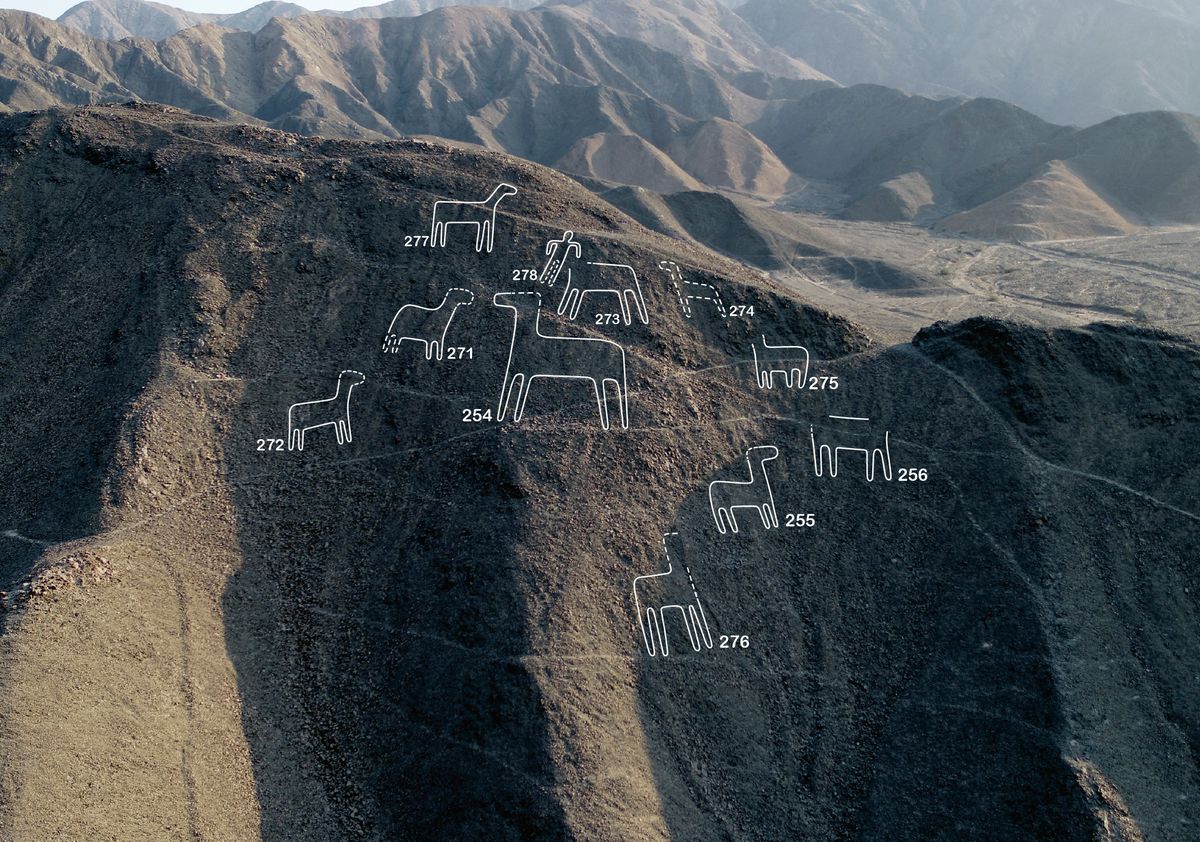
Peruvian and Japanese researchers from Yamagata University recently discovered 168 new designs at the UNESCO World Heritage site, the Nazca, on Peru’s southern Pacific coast.

Although the latest headlines from Peru are all about political upheaval, isn’t it the case that whatever the headlines, there is always more going on in a country than politics?

From today’s story, we learn about the recent discoveries of a team of Peruvian and Japanese archaeologists.

Victoria Bisset writes at the Washington Post, “Researchers have identified more than 150 new designs in Peru’s southern Nazca plain, known for its mysterious large-scale artwork carved into the desert.

“The latest images were discovered by archaeologists from Japan and Peru, who used high-resolution aerial and drone photos taken between June 2019 and February 2020 to identify 168 new geoglyphs of animals and humans, including birds, killer whales and snakes, carved by the region’s pre-Hispanic inhabitants.

“The Nazca Lines, which are part of a UNESCO World Heritage site, cover an area of almost 175 square miles on Peru’s Pacific coast.

“The lines ‘were scratched on the surface of the ground between 500 B.C. and A.D. 500,’ UNESCO says. … Their purpose is still unknown, but UNESCO says they may have served ‘ritual astronomical functions.’

“The latest geoglyphs to be discovered are believed to date back to between 100 B.C. and A.D. 300, researchers from Japan’s Yamagata University said in a statement announcing the find earlier this month.

“While most of the site’s most famous images are so large that they can only be seen from the air, the most recent images are mostly small, measuring less than 10 meters (around 33 feet) in diameter. …

“The findings will be used in shaping future surveys carried out by artificial intelligence to protect the area, according to the university.

“The site faces threats from urban and economic developments, Masato Sakai, the lead researcher and a professor from Japan’s Yamagata University, told Reuters news agency.

‘Some geoglyphs are in danger of being destroyed due to the recent expansion of mining-related workshops in the archaeological park,’ he said.

“The Nazca Lines have also been impacted by smaller-scale incidents: In 2018, a truck driver damaged part of the site after he ignored warning signs and drove over the area.

“In 2014, activists from the environmental group Greenpeace sparked outrage when they left marks at the site while carrying out a protest — although researchers later said that a grant given to help them repair the damage had led to the discovery of 50 new geoglyphs.”

What do you think the indigenous people who made the carvings — before Peru was Peru — intended? What does “ritual astronomical functions” mean? If they were trying to communicate with beings they perceived in the sky, it makes sense: most of the glyphs can be seen only from the sky.

Read more at the Post, here. If you don’t have a Post account, you can see all the carvings at Reuters, here.

Read Full Post »

Art: Cara Despain via the gallery Current Work.
Increasing numbers of artists are addressing climate disasters, as in “test still no. 1 (Upshot-Knothole — Simon)” (2022), graphite on paper, above.

I always feel grateful to artists for the way they make the invisible visible to those of us who lack a second sight.

Hyperallergic recently posted an article about artists using ash and residue from natural disasters to convey their messages about the environmental calamity they perceive.

Reporter Scotti Hill gets a bit sidetracked by other environmental disasters in the Hyperallergic article, but I thought her words on the art itself were worth sharing.

“Many of us recall the haunting early pandemic-era imagery of individuals wandering amid orange, smoke-filled backdrops that synthesized the reoccurring horror of wildfires on the West Coast and beyond. Such images accompanied headlines of widespread home evacuations, wildlife loss, and blankets of smoke covering entire states.

“Now artists on a local and international scale are using their craft to bring attention to this issue, using a novel formal process — cultivating ash and residue from natural disasters, namely fires, as an actual medium of expression.

Cara Despain’s work, which ranges from public installation to video and painting, confronts complex issues of wildfires, nuclear testing, and land use in her native Utah and beyond. Her latest exhibition, Ashes of Her Enemy, [has been] on view at new Salt Lake City gallery Current Work. …

“Upon encountering Despain’s photographs of beautiful landscapes, chosen by the artist for their similarity to famously iconic Western views like Monument Valley, one detects a scarring on the face of each image. Here, Despain devised a frame with a fuse inside that, when lit on one side, ripples across the image, burning the pristine image in its wake. She ignited each of the images at the exhibition opening for an active audience. To Despain, this process is a metaphor for the West’s changing landscape and the fallacy of pristine nature untouched by human intervention. …

“Despain’s wildfire paintings … are made from the soot of the wildfires that share their name. She crafted the works’ scale and composition to work in dialogue with large-scale Thomas Moran-style landscape paintings. …

“Despain is not the first artist to incorporate ash into her creative process. Artist Zhang Huan crafts large-scale paintings made from the ash residue of burned incense used in Buddhist temple ceremonies. By foraging ash from various temples around Shanghai, Huan sees the ash as symbolic of ‘the fulfillment of millions of hopes, dreams, and blessings,’ according to his website.

“In the months preceding the pandemic, Filipino artist Janina Sanico used ash from the active Taal Volcano in her watercolors, while German artist Heide Hatry incorporated cremated remains into darkly meditative portraits. …

“This fall, the Palo Alto Art Center debuted Fire Transforms, an exhibition featuring several Bay Area artists whose work considers the impact of fire in the area of the country most fraught by wildfire devastation. … 

“Artist Andrea Dale forages the burnt remnants of plants and human-made structures left in the aftermath of California wildfires. Her application of ash draws inspiration from East Asian ink wash painting with an application that is at once loose and also sequestered to the bottom quarter of pristine resin-covered panels. New Mexico-based Nina Elder crafts intricately detailed drawings of decimated forests from the incinerated debris of pulp mills to ‘focus the viewer on the textures and scale of deforestation,’ according to her site.

” ‘We often look at big catastrophes, but it’s the small stuff that’s going to get us,’ [Despain] explained in an interview at Current Work of the particulate matter left behind after fires, often invisible yet enormously destructive. Despain emphasizes that fire is a natural part of environmental ecology, yet the increased prevalence and scale of wildfires is unprecedented and follows a decades-long history of nuclear testing. …

“For Despain, the story of the West’s atomic testing is personal — her mother grew up in Southern Utah’s Cedar City. Due to atomic testing, half of her high school class died early of various radiation-related ailments. … After the war, expansive areas of government-owned land north of Las Vegas were designated as optimal sites for domestic nuclear testing. [Residents] of Southern Utah’s Iron County received assurances that atomic testing was being carried out with utmost safety. Yet, in the years to come, those same residents would suffer startlingly high rates of cancer, birth defects, and adverse health issues. …

“Such histories often recede into the realm of whispers, relegated to the annals of history and individual familial tragedy. Yet, they are part of the indelible fabric of the West both past and present that are connected to the environmental calamity unfolding before us. Formally, artistic processes which imbue ash and residue visualize the otherwise infinitesimal markers of this legacy.”

More at Hyperallergic, here. No firewall. Contributions welcome.

Read Full Post »

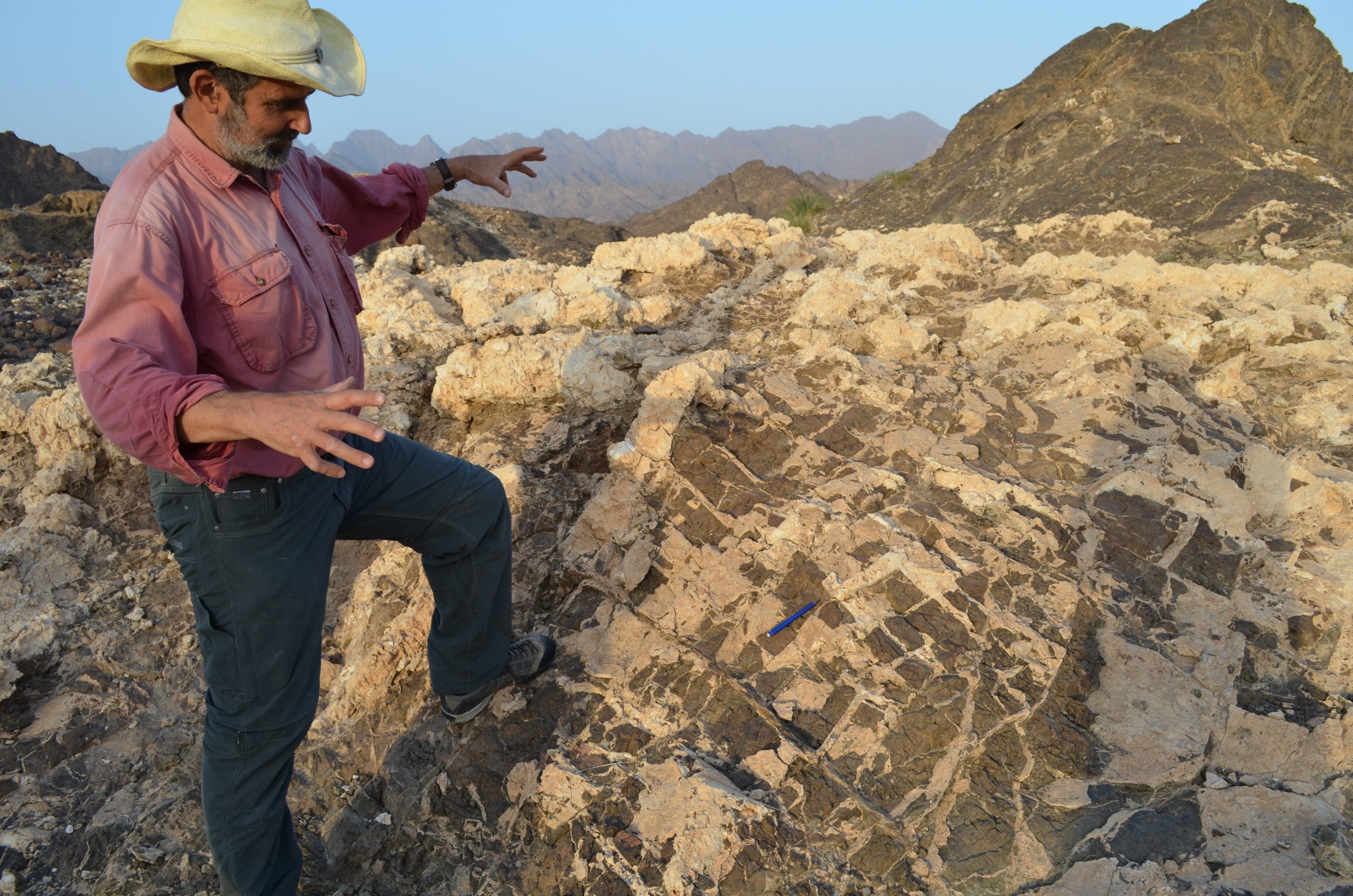
Photo: Kevin Krajick/Earth Institute.
Geologist Peter Kelemen surveys an outcrop of exposed mantle rock in Oman. “The light material is a carbon-based mineral that has reacted with the rock to form a solid deposit,” reports Columbia University.

Scientists from many specialties are working on new angles for dealing with global warming and carbon in the atmosphere. Today’s story features geologists.

Kevin Krajick reports at Columbia Climate School’s State of the Planet, “Geologist Peter Kelemen has been working in the desert of Oman for more than 15 years to study natural chemical reactions within rare deep-earth rocks that pull carbon from the air and lock it into solid mineral form.

“His goal: harnessing and speeding up those reactions to remove carbon on an industrial scale. Based in large part on his research, Omani entrepreneurs recently formed 44.01, a company working to scale up and commercialize the processes. The company was just awarded a $1.2 million Earthshot Prize. … We spoke with Kelemen about the science behind the project, its current state, and its prospects for the future.

Tell me about the rocks in Oman, and what makes them special.
“The mountains of northern Oman and along the coast of the United Arab Emirates host a huge block of oceanic crust and upper mantle that was thrust onto the edge of the Arabian continent. … It is 350 kilometers long, up to 50 kilometers wide, and many kilometers thick. It is tilted, and exposes rocks that formed more than 20 kilometers below the sea floor. Surface exposures of the Earth’s mantle are quite rare, and this is the largest in the world. …

“Rocks like this react rapidly with CO2 in the atmosphere and surface water, and this forms solid carbonate minerals, for example limestone. The process is spontaneous. So we’ve been seeking to understand how it works, and then design methods that accelerate it in order to store significant amounts of CO2 on a human time scale. We are focusing on injecting CO2 dissolved in water underground. It might use a lot of water, and of course water is very valuable in the Middle East, so we look for areas near the coast. …

How did 44.01 start, and what is your involvement?
“I and my colleague Jürg Matter, who was formerly at Columbia, were first approached by on Omani entrepreneur, Talal Hasan, in about 2017, when he was working for Oman’s sovereign wealth fund. Talal hoped to persuade the government to invest in CO2 storage in the mantle rocks. But then he ended up leaving the fund, and he and a childhood friend founded 44.01. Jürg now works with them about half time. I plan to remain in more of an advisory role.

Where would the carbon come from?
“44.01 has obtained a solar-powered device that removes CO2 directly from air, from the Swiss company Climeworks. They’re operating it near Oman’s capital city, Muscat. For pilot studies, we could also use CO2 captured from smokestack sources, like the many gas-fired power plants, water desalination plants and other industrial operations in Oman and the UAE. …

“We’ve obtained government permits and run some small pilot projects at a former scientific drilling site. We are now planning two much larger pilot projects, both expected to take place in 2023. Ideally we would achieve substantial results before the COP28 meeting in the UAE, in 2023. Eventually, we hope, some government or group of governments would pay them to lock up the carbon, at a rate of maybe $30 a ton. Globally, such costs end up being a few percent of GDP, comparable to the current costs of solid waste management.

“The main concern is that the rocks are not very porous. That leads to two difficulties. One, it can be difficult to get fluids to circulate rapidly through the rocks, and two, the pore space might eventually clog up with newly formed carbonate minerals. However, we are inspired by the fact that in some places the rocks have naturally become fully carbonated. That is, every magnesium and calcium atom in them has combined with CO2 to create solid minerals. So we know this can happen, and we have ideas about how it works. We have done theoretical calculations, and conducted experiments at the laboratory scale. But in the end, only field scale experiments will allow us to refine methods to do this at a reasonable cost.

Are there other places with similar rocks?
“Yes, but Oman and the UAE are the best. The next largest outcrops are in New Caledonia and Papua New Guinea. They would be great places to take CO2 from the air, but I think we need to demonstrate that this process works on the Arabian peninsula before trying to get things going on islands in the southwest Pacific. There are other, smaller areas that could work, including parts of California and Oregon. However, those spots are water-limited, and I expect local stakeholders would be concerned about that. …

“In addition to forming solid carbonate minerals, the reaction of surface waters with mantle rocks can form free hydrogen gas. It is widely viewed as a potential replacement for fossil fuels, specifically natural gas and oil, for transportation and home heating. And if derived at low cost from natural sources, it could also be used to generate electricity. We are continuing academic research on the rate of hydrogen formation, and studying ways that could be accelerated.”

More at Columbia Climate School’s State of the Planet, here.

Read Full Post »

Photo: Rachel Rosenkrantz.
Rachel Rosenkrantz, a luthier, uses all-natural materials. For example, to build a bracing structure for the instrument above, she followed a bee blueprint, placed the structure in a hive, and waited for a year.

Now here’s a commitment to using natural materials that I bet you never heard of.

The nonprofit ecoRI News is great at finding stories like this one by Emily Olson on a Rhode Island luthier who makes guitars using mushrooms and honeycomb.

“During the pandemic lockdown,” Olson reports, “local guitar-maker Rachel Rosenkrantz collected shells from her daily two-egg breakfast. They seemed an appropriate — and certainly plentiful — biomaterial to integrate into a USB-chargeable electric guitar she was working on.

“ ‘Calcium is an integral part of violin varnish because it contributes to the sound quality,’ she explains. With this in mind, and inspired by the work of Gaston Suisse, a French art deco artist who worked with eggshell inlay, she used a laser cutter and manicure file to shape her collected shells into tiny triangles. The eggshell guitar was the last in a series of biomaterial-based instruments she completed during the pandemic. …

“Rosenkrantz had a thriving and well-established career as a commercial furniture and lighting designer when, 10 years ago, she had an epiphany.

“ ‘I can always make money,’ she says. ‘But I can’t make time. … I had been daydreaming about being a luthier for too long to not do it.’ …

“Rosenkrantz grew up just outside Paris in Montfermeil, an industrial town she describes as ‘the Fall River of France.’ She is the daughter of a family of tailors; her grandfather lived in an apartment above his small tailoring shop. …

“Rosenkrantz studied at l’ESAG in Paris, and in her college days, crossed the ocean a couple of times, first as an exchange student at the Rhode Island School of Design — ‘I loved the name Providence,’ she recalls. … She now lives just outside Pawtuxet Village in Cranston … above her guitar-making studio, Atelier Rosenkrantz. ‘I guess I’ve come full circle,’ she says, referencing her grandfather’s shop. … ‘This is my happy place.’ …

“Rosenkrantz is well aware of the negative impact guitar-making has on the environment. Though little seems more environmentally conscious than someone sitting outside plucking a guitar, guitars are made from wood. And it isn’t always harvested in a sustainable way. …

“Rosenkrantz relies on timber updates from the Convention on International Trade in Endangered Species of Wild Fauna and Flora, a Switzerland-based organization that, through international agreement, offers a framework to ensure that when plants and animals cross borders, a species’ survival isn’t threatened.

“ ‘Brazilian rosewood is a big no-no because their rainforests were depleted,’ she says. But it isn’t just the type of wood used that she considers; she also considers how a country manages its resources. ‘India, for example, manages their rosewood really well,’ she adds. …

“Replenishment also is important. ‘Every guitar-maker, every woodworker — if we consume wood, we should grow wood,’ she says. The alternative, of course, is to not use wood at all. …

“One afternoon Rosenkrantz was at RISD, where she teaches spatial design, and decided to spend some time in the Nature Lab.

“ ‘RISD has a whole library of natural specimens, including biomaterials,’ she says. … ‘I know that Styrofoam conducts sound because it’s full of air, so I tested RISD’s [imitation Styrofoam] mushroom sample with my sound diffuser and realized that I could make a solid body sound like a hollow body.’

“The thing that excites her most about using farm waste inoculated with mushrooms in her craft is that she can grow her own design — a plastic mold is at her feet, leaning against the bench. ‘It takes about a week to grow a guitar body — four days to grow, then four days to let a crust develop,’ she says. …

“She slides a banjo from a shelf behind her and explains the body is made from kombucha leather. Kombucha home brewers are familiar with a symbiotic culture of bacteria and yeast (SCOBY), a cellulose mat that forms from the basis of kombucha — sweet tea — and houses the cultures that turn sweet tea into more kombucha. To get a SCOBY large enough make adequate leather for a banjo, Rosenkrantz brewed kombucha in a fish tank. ‘It took 11 tries before I made enough leather for one instrument,’ she says. …

“Rosenkrantz began dabbling in beekeeping, and as she researched hive options, quickly discovered the top bar beehive … a horizontal box with bars on top that support honeycomb, and it allows bees to build the way they would in nature. … ‘The bars in a top bar hive reminded me a lot of the bracing that goes in the front of a guitar that provides rigidity and guides sound,’ she says. … ‘I wondered if I provided the bees with bracing, if I could trick them into building a guitar.’

“But bees are not so easily tricked. ‘Bees have their own egress and architectural code,’ Rosenkrantz says, and she had to learn those codes to encourage the bees to collaborate on a design.

“So, after a great deal of research, she built a bracing structure according to the bees’ blueprint, placed it in a hive, and waited for a year. The result was something she never could have anticipated. The bees not only accepted her design and built their comb along her bracing structure, but they maintained the wood.”

More at ecoRI News, here. Amazing pictures. No firewall.

Read Full Post »

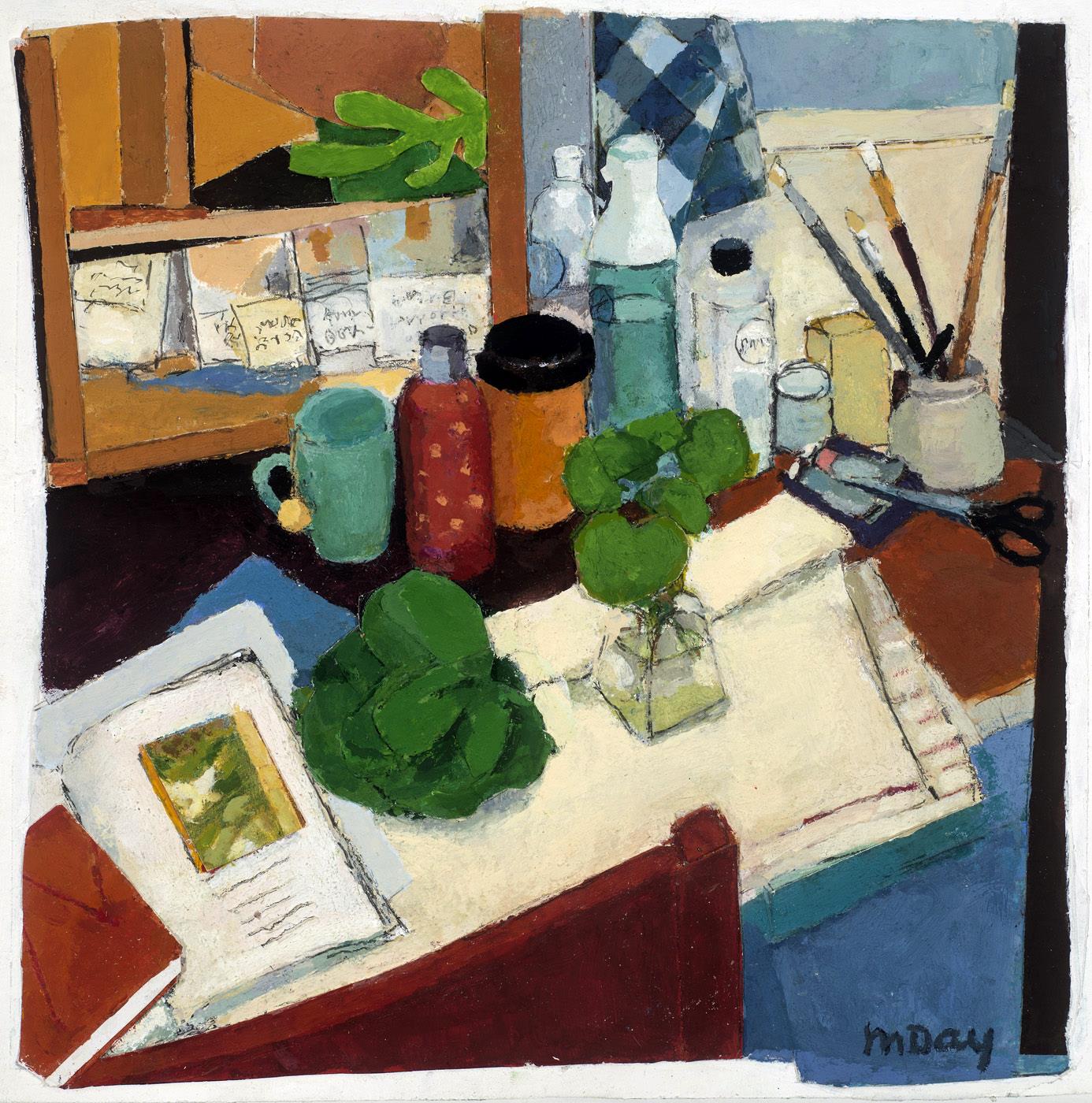
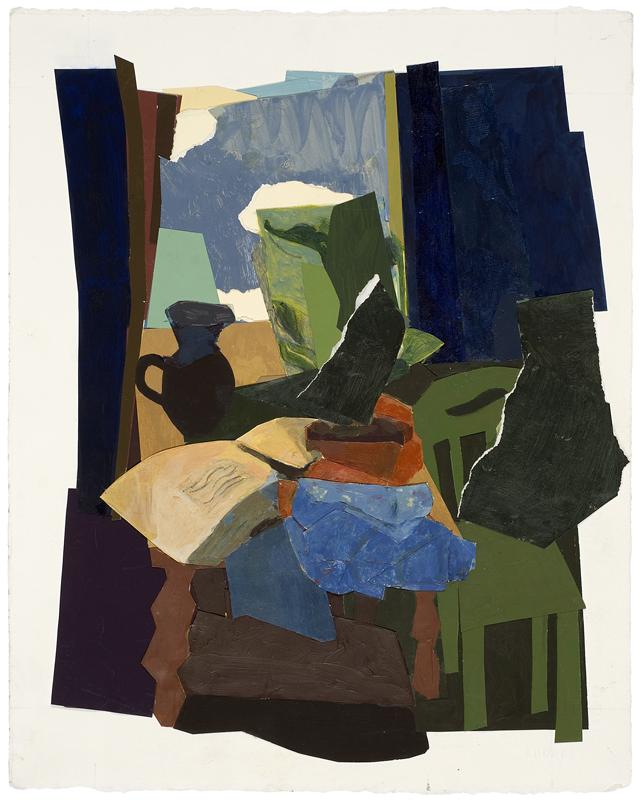
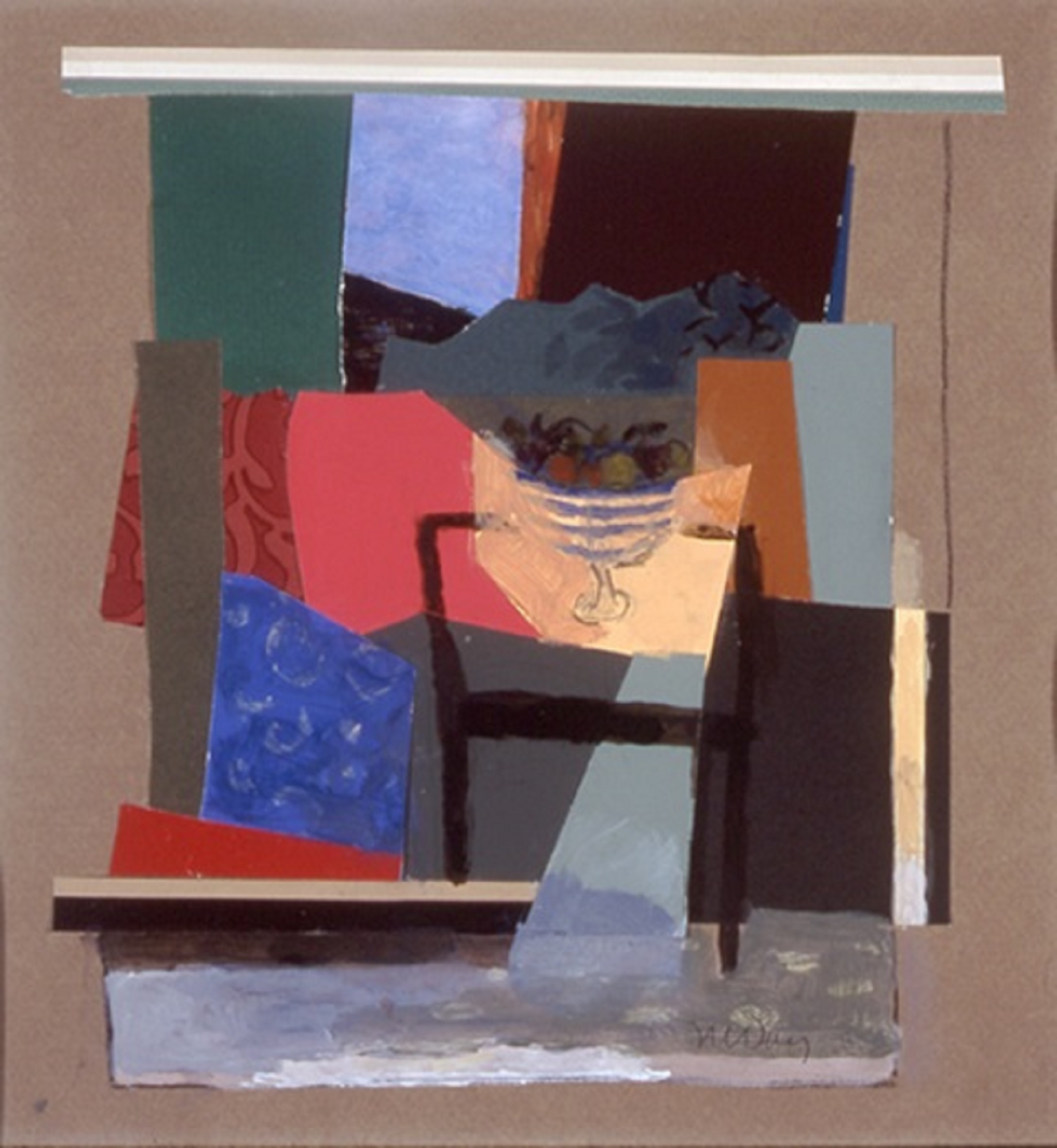
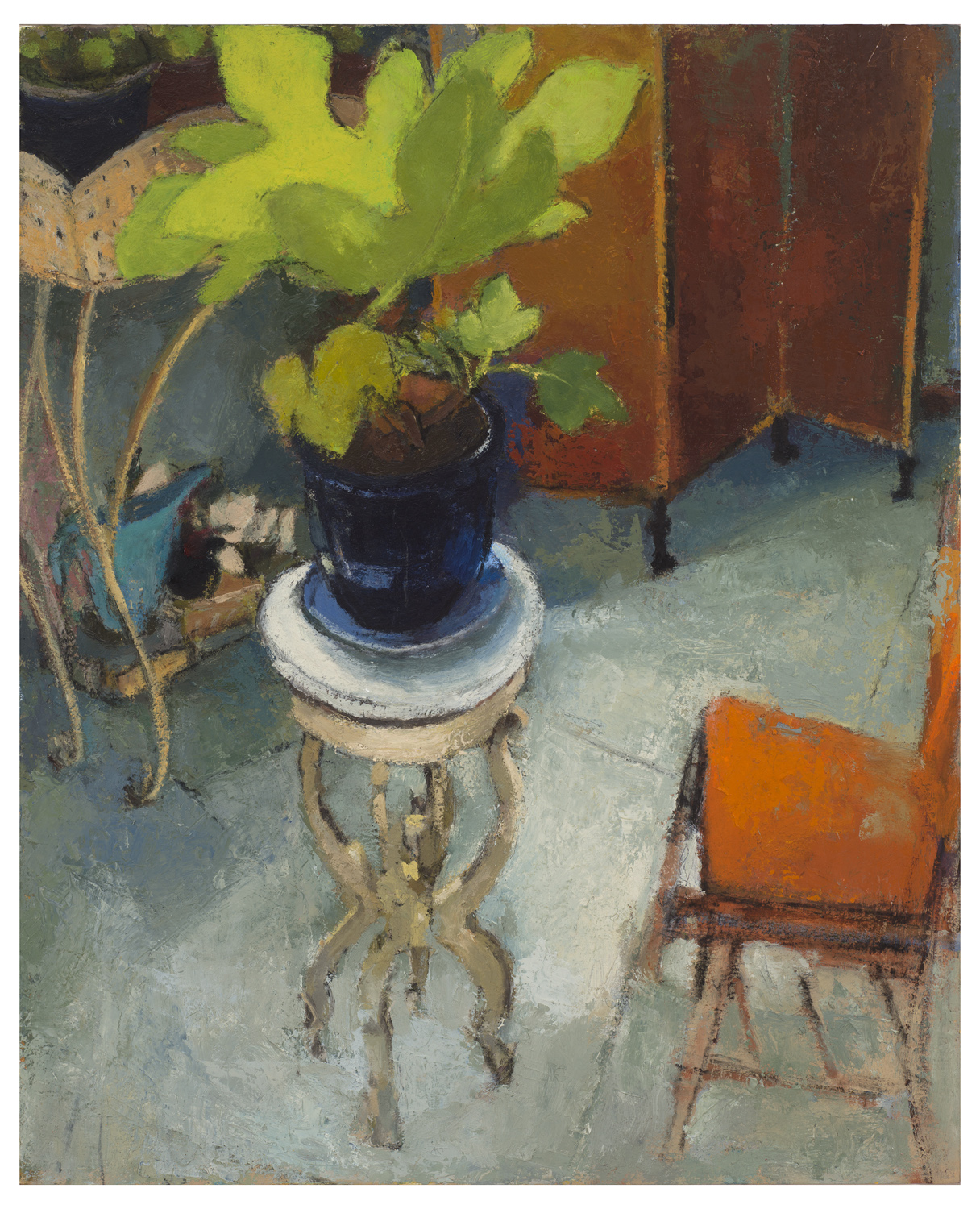
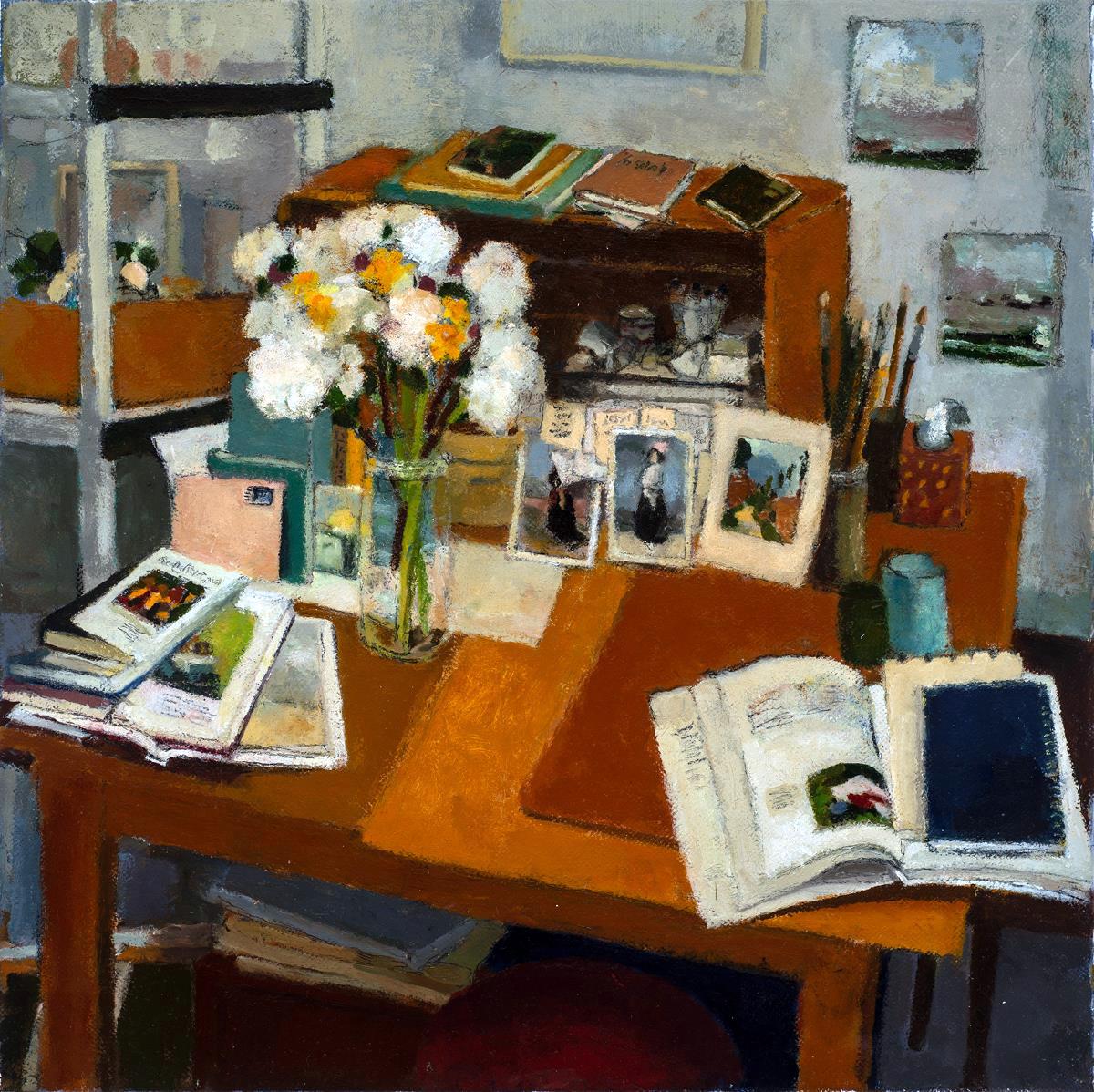
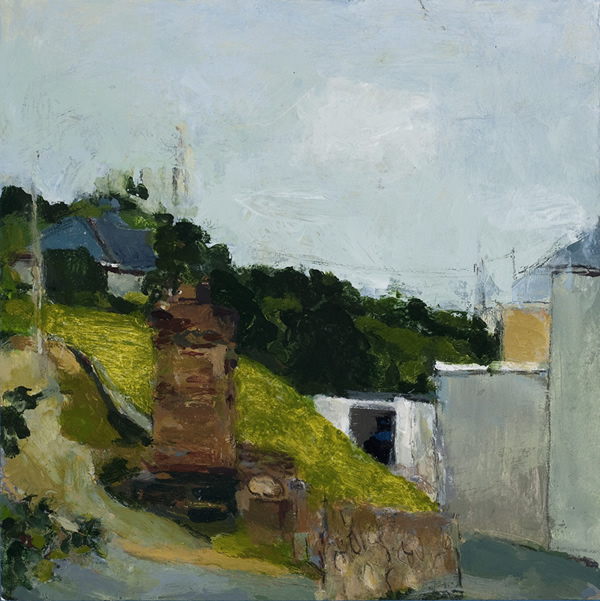
Art: Meredith Fife Day.
Studio Life.

The day job of artist Meredith Fife Day was for many years running a department at a community newspaper chain in Massachusetts. That is where I met her. She was my first boss in publishing. After retiring from the newspaper, Meredith focused on her art while teaching art at a local college during the day and working with the amazing nonprofit she founded, Making Art with Artists (MAwA). MAwA enabled low-income urban kids to practice art under the guidance of working artists. I wrote about the award Meredith received for that work here.

Recently, I asked her if I could do a post on her art, and she sent me these riches.

From her bio: “Her art reviews and essays have appeared in a variety of publications for more than 25 years and she chronicles her days through journaling. She writes poems which, like her paintings, are frequently in homage to observational response, memory and imagination.

“She has exhibited paintings for more than four decades in numerous invitational shows and national competitions. She earned an MFA degree from Boston University after receiving BA and MFA degrees from Louisiana State University in her native Baton Rouge. Meredith has been awarded fellowships at Virginia Center for the Creative Arts in Amherst, Va., and Auvillar, France, and Millay Colony for the Arts in Austerlitz, N.Y.  She has taught at Art New England/Mass Art summer workshops in Vermont and Cullowhee Mountain Arts in North Carolina.” 

Note how much the ficus plant below returns Meredith’s love by modeling for her on repeated occasions. And do you sense the joy the artist takes in homely things lifted to a spiritual level? I love her work.

Read Full Post »

Photo: Wikimedia.
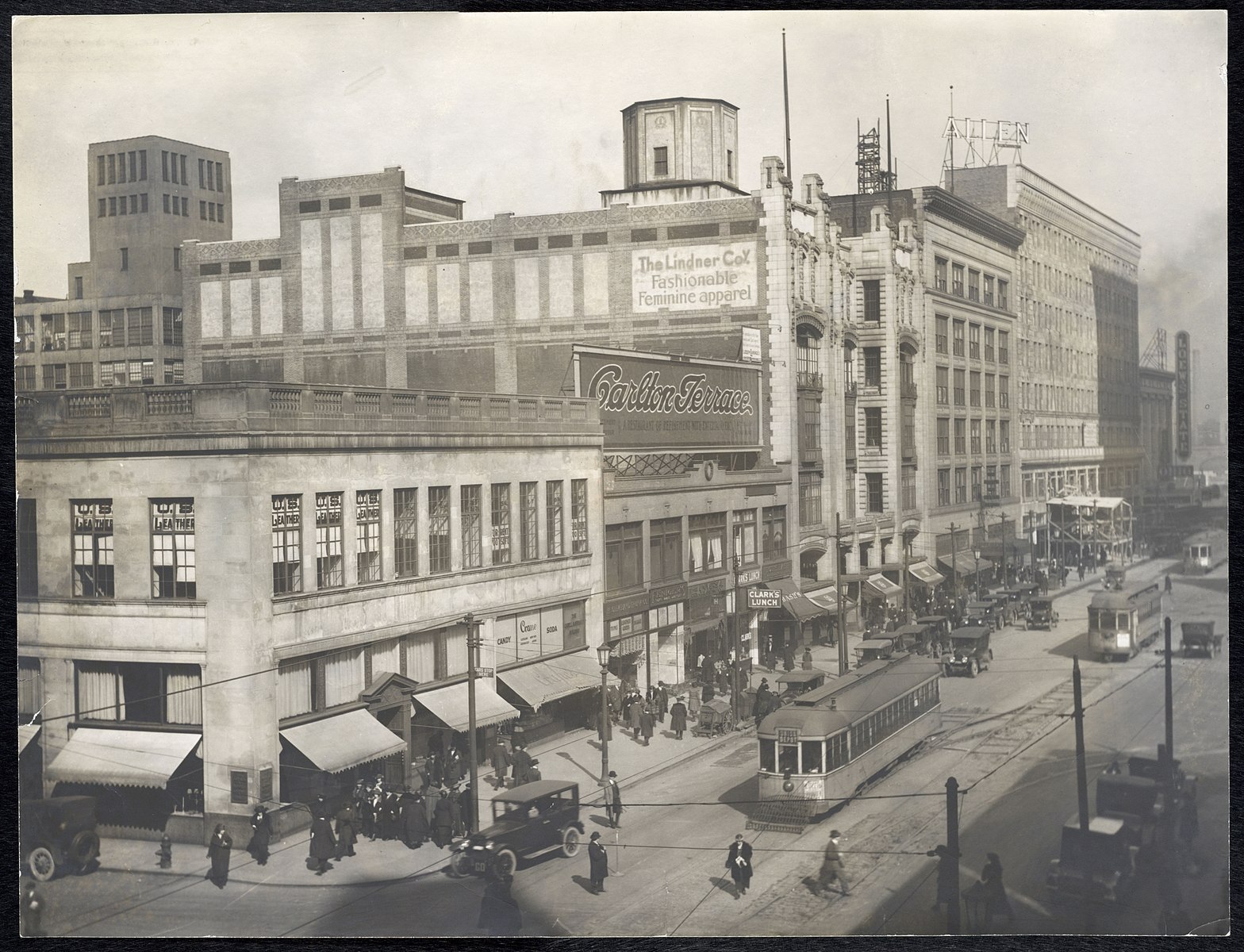
Cleveland in 1922, when the city was more walkable. Note the trolleys, which eventually succumbed to Americans’ love affair with the automobile.

For decades, cities were planned around cars and the convenience of people driving in from the suburbs. Now planners are giving more thought to urban quality of life and the “15-minute city” — even looking back to the Old Days for ideas. How lovely to live in a city and be able to do most of your daily errands within 15 minutes of your home!

Adele Peters writes at Fast Company, “When Paris mayor Anne Hidalgo touted the idea of becoming a 15-minute city — a place where it’s easy to reach work, school, stores, and other destinations on a short walk or bike ride — it didn’t have as far to go as many other cities. Hidalgo has pushed for multiple changes to help cut air pollution and improve quality of life, from making a highway car-free to adding so many bike lanes that the streets now look more like Copenhagen. But Paris was already compact, densely populated, and relatively easy to walk. …

“The goal is a bigger challenge in Cleveland, which currently has a Walk Score of 57 (Paris has a perfect score, 100 out of 100). Cleveland’s 35-year-old mayor [Justin Bibb], who took office earlier this year, still wants to move in the same direction.

“ ‘We’re working toward being the first city in North America to implement a 15-minute city planning framework, where people — not developers, but people — are at the center of urban revitalization, because regardless of where you live, you have access to a good grocery store, vibrant parks, and a job you can get to,’ Bibb said in his first State of the City speech in April. …

“The city was more walkable in the past, and more people lived a short distance from their jobs. ‘We had an industrial heritage, and we had housing very proximate to these plants and factories where people worked,’ says Jeff Epstein, the city’s chief development officer. Corner stores and other neighborhood retail shops were also within walking distance from homes. But as factories closed, and highways helped spawn the growth of suburbs, city neighborhoods became much less dense, and people had to travel farther. …

“Says Jason Kuhn, communications manager at the bike advocacy group Bike Cleveland, [‘You] ended up with this network of roads that are really built for car movement efficiency, and really not for people on bikes. There’s a potential, absolutely, to turn back to the other direction and really make the city work for the people who live there.’

“New protected bike lanes that run through the middle of the city and from east to west are already planned, though the overall bike network needs to improve. ‘You might have a road where there’s a bike lane for a mile, and then maybe it’s gone for two, so it’s kind of broken,’ he says. ‘So it’s still difficult to move around the city by bicycle just because the network is incomplete.’ A new ‘complete streets’ ordinance will help improve planning and deal with challenges like wide streets that are difficult for pedestrians to cross, he says.

The city is also starting to map out assets like parks and stores and identify which neighborhoods have the most potential now to be 15-minute neighborhoods. …

“Planners are also looking at where there are clusters of amenities near transit, and looking for ways to increase the number of people living in those areas. A neighborhood called Detroit Shoreway has the basic assets of a 15-minute city, but needs around 18,000 more housing units strategically located near public transit. There’s plenty of space, they say, to build new housing, from former industrial sites to closed fast-food restaurants, underused parking lots, and land owned by the city itself.

“On the riverfront — where the water was once so polluted that it famously caught on fire, but is now much cleaner — a new 35-acre development plans to add new park space, 2,000 housing units, and new office and retail space, all designed to encourage people to live downtown and easily walk where they need to go.

“ ‘We came in with that as a fundamental objective — planning to create 15-minute neighborhoods, and also to be an essential component of getting downtown Cleveland to be part of an 18-hour city, which in essence means that folks can come downtown and find something to do for at least 18 hours of the day,’ says Kofi Bonner, CEO of Bedrock, the real estate firm developing the site. The firm just completed a master plan for the area; the first steps for construction could begin in 2024, depending on the city permitting process, but the full project will take 15 to 20 years. The development will help connect the riverfront to the rest of downtown.”

My friend Mary Ann bikes Cleveland with her family. I love seeing her photos of nighttime group rides.

More at Fast Company, here.

Read Full Post »

Photo: Holger Rudolph.
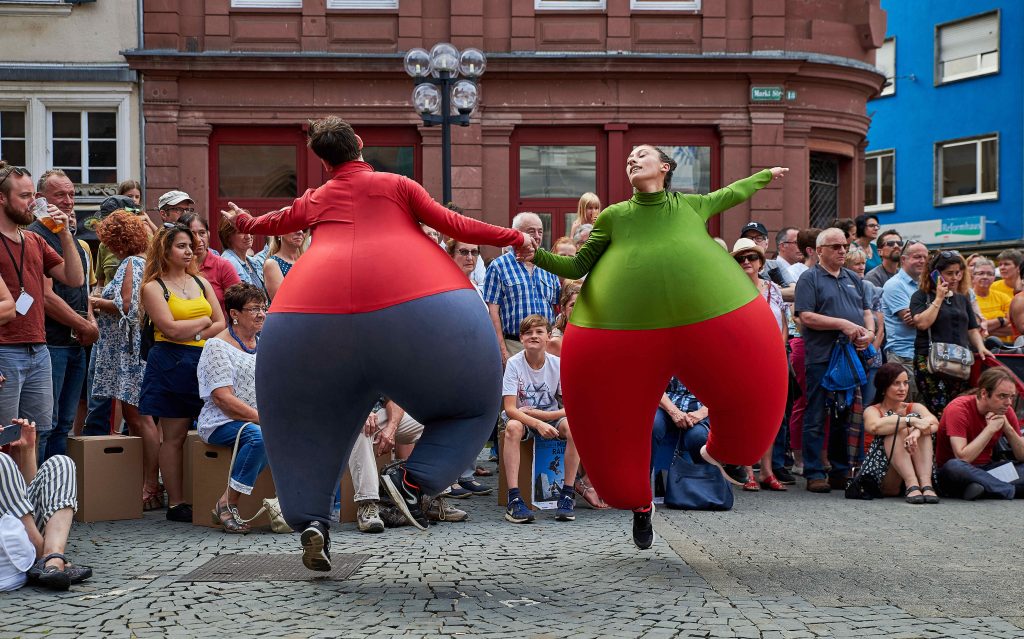
A performance of “La Grande Phrase” by French company Campagnie Didier Théron. The idea is to share the fun of dance and draw in new audiences.

I love reading about serious artists reaching out through humor. But what is going on in the picture above? One kid is watching the playful performance and wearing a big smile. Everyone else is looking in another direction with solemnity. Bad choice of illustration?

Celina Lei reports at Australia’s ArtsHub that the “French dance company Campagnie Didier Théron will soon land in Adelaide to upend expectations of dancers’ bodies with a dash of humor.

” ‘Dance!’ Usually when kids hear this cue,” she writes, “they immediately start wiggling their bottoms and shuffling their feet – circling, hopping and swinging their arms.

“But often as we grow, we grow more hesitant, our movements become more restricted and choreographed in fear of embarrassing ourselves. So what if to dance is to be silly?

“Wearing colorful inflated suits and roaming across streets, parks and city centers, La Grande Phrase (The Big Phrase) is a dance-work series by Montpellier-based Campagnie Didier Théron that explores ways to upend stereotypes of what a dancer should look like or do.

“The self-taught dancer and choreographer Didier Théron tells ArtsHub that the work was born from a journey of experimentation and collaboration with international artists and dance companies, allowing dancers the freedom of movement while wearing suits inflated with air. …

“Théron points to the German artist and choreographer Oskar Schlemmer (1888-1943), as well as Venus figurines of the European Paleolithic period, as inspirations for these dramatic bodily forms. The movement of dance and the flow of air within the suits further activate these forms.

“After touring in cities around Europe and taking out the 2013 Grand Prize of Setouchi Triennale in Japan, the company will bring three dancers to WOMADelaide (SA) this March where ‘any space shared with the audience becomes a performance space.’

“In the same way that contemporary visual artists are continually challenging the notion of a hushed, white-cube gallery, dance with a splash of humor can provide multiple access points for different audiences.

“From the time of Charlie Chaplin, who pulled off every sequence with full comic relief, to more recent contemporary experimentations such as the UK’s New Art Club combining dance with stand-up comedy, there are plenty of examples where humor can support choreographic expression.

“Théron says: ‘This project always surprises me in the reactions of the people and how they receive it. The first time we performed it outside was in a suburb of Montpellier. It was not easy to have a cultural artistic project in this area, but we crossed this line with these characters and everybody was laughing or smiling.’

“Taking this performance [onto] the streets also offers the dancers greater freedom, and the audiences more opportunities to interact, adds Théron. …

“Roving performances were also something that had a great impact on Théron as a child, from the very first time he encountered a ritualistic dance parade in his grandparents’ village in the centre of France.

“He says: ‘That was the first dance I saw and members of my family were also dancing (only men at the time), but it was very powerful and filled with a deep joy. This performance allowed me to reconnect with this memory.’ …

“What the company hopes to bring to the audience is an invitation to think about dance and dancers’ bodies ‘beyond the norm,’ and perhaps at some point share the joy of movement.

‘There is something in being this character that [gives] us permission to do many things. I think it’s a real positive body and filled with possibilities that we can experiment with all the time,’ concludes Théron.”

More at ArtsHub, here. No firewall. Funny pictures.

Read Full Post »

Talking to Houseplants

Photo: John and Suzanne’s Mom.
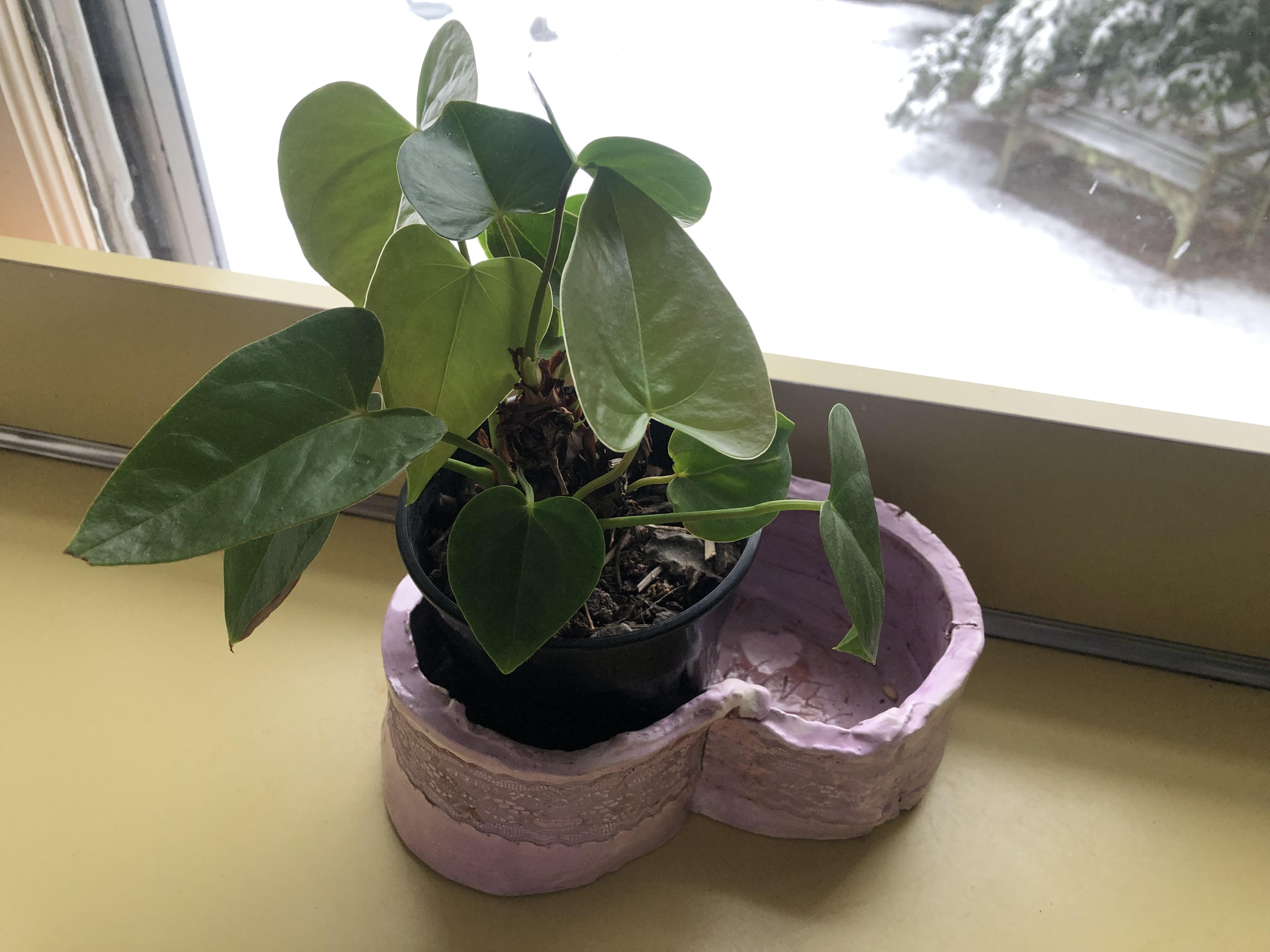
My anthurium is growing on me.

Every week, I look forward to Friday, when I can give six ice cubes to the plant my niece and nephew sent when my sister died. An anthurium.

I mean, I really look forward to it!

I know. Sounds like I don’t have much of a life. But I have become quite attached to this plant. I haven’t been able to get the red leaves to grow, but I do love watching the little green shoots unfurl and reach toward the sun. Now, after reading today’s article, I’m thinking maybe I should start talking to this baby.

Stacey Colino of the Washington Post explains. “Plants don’t interrupt when you’re speaking. They don’t argue or ask difficult questions. And regardless of whether they’re actually listening, research has shown them to be a calming presence. It’s no wonder, then, that so many of us talk to ours.

“In a 2022 survey by trees.com, 50 percent of the 1,250 respondents reported talking to their plants and/or trees. When asked why, 65 percent said they believe it helps them grow. The research, however, isn’t definitive about this point. While studies have found that vibrations caused by sound do affect plants, the jury’s still out on whether the human voice offers any specific benefit.

“For many plant owners, though, the science is beside the point. Marquis Matson, co-founder of the blog the Indoor Nursery, says she talks to her plants every day because ‘it feels nice. … I think plants get a sense of community from my talking to them and that keeps them going.’ …

“A study in a 2003 issue of the journal Ultrasonics investigated the effects of classical music and the sounds of birds, insects and water on the growth of Chinese cabbage and cucumber. The conclusion? Both forms of sound exposure increased the vegetables’ growth.

“In a 2015 study published in the International Journal of Integrative Sciences, Innovation and Technology, researchers exposed marigold and chickpea plants to light Indian music as well as to traffic noise: They found that both types of plants grew and developed better — gaining increased height, a greater number of leaves, and a healthier look — after being exposed to the music for four hours per day, but not to the traffic sounds.

“ ‘Plants definitely respond to vibrations in their environment — which can cause plants to grow differently and become more resistant to falling over,’ says Heidi Appel, a professor of environmental sciences at the University of Toledo in Ohio. ‘Those vibrations can come from airborne sounds or insects moving on the plants themselves. And plants will respond differently to tones and music than to silence [but] we don’t know if talking to them makes them grow differently.’”’

“Despite the lack of studies and evidence about the benefits of talking to your plants, there is at least one theoretical perk: ‘If we identify with a living organism that we’re tasked with taking care of, we’re going to take better care of it,’ Appel says. …

“Regardless of whether talking to the plants helps them, does it help us, as human beings? In that same 2022 trees.com survey, 62 percent of the participants who reported chatting up their greenery said they did so because it helped their own mental health. …

“One study in a 2018 issue of the journal HortScience found that transplanting plants reduced mental stress and anxiety in young adults. And regularly spending an hour gardening has been found to improve mood and reduce stress among healthy women, according to a study in a 2022 issue of PLoS One. …

“While there isn’t published research on whether talking to plants is therapeutic for people, there are plausible reasons it might be, experts say. For one thing, it may come to us naturally. ‘As humans, we often speak to what we’re caring for — it’s built in,’ says Patricia Hasbach, a psychotherapist with Northwest EcoTherapy in Eugene, Ore., and author of Grounded: A Guided Journal to Help You Reconnect With the Power of Nature — and Yourself. 

“For another thing, it can be a way of expressing thoughts and feelings out loud, in an effort to make sense of them. ‘I think of talking to plants as a way of talking to ourselves,’ says Kenneth R. Yeager, a social worker and director of the Stress Trauma and Resilience Program at Ohio State University. ‘As we’re talking to our plants, we’re talking to ourselves — and formalizing our thought process.’

“Talking to your plants is also a relatively low-risk proposition. ‘You might not want to do it in front of someone else,’ says Elizabeth Diehl, director of therapeutic horticulture at the Wilmot Botanical Gardens College of Medicine at the University of Florida. However, when you talk to your plants, they are, quite literally, a captive audience. ‘Plants don’t judge,’ Diehl says.”

I like that plants don’t judge or interrupt — and, presumably, never say, “Keep in mind.” But that could also be said of teapots and hubcaps. There is so much more personality to a plant. Check out the Post article, here.

Do you talk to your plants?

Read Full Post »

Photo: Manitou Productions via Wikipedia.
Bessie Mae Kelley, an early animator and director.

The New York Times has been making an effort to give credit to those who have made important contributions to our culture but have been overlooked. They tend to be women and people of color. If you read the Times, you may have noticed new obits, for example, highlighting the lives of people who died decades ago. Better late than never, I guess.

So after animation scholar Mindy Johnson shared her research on early female cartoonist Bessie Mae Kelly, Brooks Barnes of the Times wrote about it.

“The pioneers of hand-drawn animation were all men,” wrote Barnes last December 13, “or at least that is what historians (men, almost exclusively) have long told us.

“Winsor McCay made the influential short ‘Gertie the Dinosaur’ in 1914. Paul Terry (Farmer Al Falfa), Max and Dave Fleischer (Koko the Clown, Betty Boop) and Walter Lantz (Woody Woodpecker) each made well-documented early contributions. Walt Disney hired a team that became mythologized as the Nine Old Men.

“Earlier this year, however, the animation scholar Mindy Johnson came across an illustration — an old class photo, of a sort, depicting the usual male animators from the early 1920s. In a corner was an unidentified woman with dark hair. Who was she? The owner of the image, another animation historian, ‘presumed she was a cleaning lady or possibly a secretary,’ Johnson said.

“ ‘I said to him, “Did it ever cross your mind that she might also be an animator?” ‘ Johnson recalled. ‘And he said, “No. Not at all.” ‘

“But Johnson wondered if it could be Bessie Mae Kelley, whose name she had discovered years earlier in an obscure article about vaudevillians who became animators.

“As part of an investigation that found Johnson cold-calling people in Minnesota, digging through archives at the University of Iowa and salvaging corroded cans of nitrate film from a San Diego garage, Johnson confirmed her hunch. The woman was Kelley, and she animated and directed alongside many of the men who would later become titans of the art form. According to Johnson’s research, Kelley started her career in 1917 and began to direct and animate shorts that now rank as the earliest-known hand-drawn animated films by a woman.

“So much for that cleaning lady theory.

“ ‘History is recorded, preserved, written about and archived from a male perspective, and so nobody had really examined the level of what women did — their contribution was often just passed off as a single sentence, if at all,’ Johnson said. ‘Finally, we have proof that women have been helming animation from the very beginning.’ …

“Johnson will present her findings on Monday at the Academy Museum of Motion Pictures in Los Angeles. The evening event will include the first public screening of two restored, previously unknown short films by Kelley. One is called ‘Flower Fairies’ and was completed in 1921, Johnson said. It involves composite animation (live footage with hand-drawn animation on top). Sweet-natured, human-looking creatures with wings awaken flowers and dance among them. …

“ ‘Her forms are glorious, especially when you compare it to something like Walt Disney’s “Goddess of Spring,” which was about 15 years later,’ Johnson said. She was referring to a Silly Symphonies short that Disney based on the Greek myth of Persephone. ‘Goddess of Spring’ is viewed as a critical steppingstone for Disney because it was used to develop techniques for the rendering of human forms, with the groundbreaking ‘Snow White and the Seven Dwarfs’ (1937) as a result.

“Kelley’s second film had a Christmas theme and was made in 1922. It includes stop-motion animation and finds a girl reading a book beside a crackling fire, a stocking dangling from the mantel. Santa climbs out of the book and sets about his duties.

“ ‘Mindy has made a significant breakthrough, filling in an important gap in our understanding about the beginnings of this industry and art form,’ said Bernardo Rondeau, the Academy Museum’s senior director of film programs. Johnson’s presentation at the museum is part of a series of screenings and talks dedicated to newly preserved and restored films from the Academy Film Archive.

“The stash of materials that Johnson located in San Diego — in the possession of Kelley’s great-nephew — also included original rice paper drawings used in the creation of the short films; copper prints; a journal and scrapbooks; and photos with notations by Kelley. One of the cans of film included a badly damaged animated short that Kelley directed with characters from ‘Gasoline Alley,’ the comic strip that debuted in 1918.

“Johnson also discovered that Kelley helped design and animate a mouse couple from Paul Terry’s influential ‘Aesop’s Fables’ series (1921 to 1933). Johnson noted that Walt Disney spoke about being inspired by the series. (‘My ambition was to make cartoons as good as “Aesop’s Fables.” ‘) …

“ ‘I want to help Bess reclaim her legacy,’ Johnson said.”

More at the Times, here.

Read Full Post »

Photo: Abelardo Morell.
“2016–Flowers for Lisa #30” (2016) at Edwynn Houk Gallery.

Lauren Moya Ford at Hyperallergic asks, “Can photographers capture the vitality of flowers compellingly, innovatively, and beautifully?” She reviews a new book that answers the question in the affirmative.

“In the late 1830s,” writes Ford, “the Welsh botanist John Dillwyn Llewelyn began making photographs of orchids he’d grown at his home near Swansea. Llewelyn’s pictures are thought to be among the first to use the photographic process to identify plant specimens, though he himself found them lacking. ‘I have amused myself with making Daguerreotype [sic] portraits [of several flowers], and from their exact accuracy they are interesting,’ he wrote in an 1842 letter to the director of London’s Kew Gardens, ‘though the want of color prevents them from being beautiful as pictures.’ …

Flora Photographica: The Flower in Contemporary Photography by William A. Ewing and Danaé Panchaud (Thames & Hudson, 2022), features 200 photos taken over the past 30 years. The lavishly illustrated book follows its 1991 predecessor, which covered the period from 1835 to 1990. The newest edition features more than 120 artists from 30 countries working with digital and analog photography in a variety of modes, including performance, collage, and textiles. 

“Some of the most provocative images come from artists who use flowers to take on today’s pressing political and social issues.

In the book’s first photo, taken at the 2020 Belarus protests by the Polish photojournalist Jędrzej Nowicki, we see the hand of a demonstrator gripping a small bouquet of white flowers tied with white ribbon, the color of the opposition.

“ ‘The Pansy Project’ by Paul Harfleet documents single pansies that the artist plants at the site of homophobic abuse. And Thirza Schaap’s brightly-colored, modern-day vanitas ‘Plastic Ocean Series’ features floral still lifes made of discarded waste. …

“Other photos are personal, documentary, and playful. Some of Ewing and Panchaud’s selections riff on the way flowers have been depicted in the past, while others push in new directions. Flowers are a well-worn subject matter in the history of art, appearing in human production well before Llewelyn’s snaps in the 19th century. This book shows that they remain a powerful springboard for visual experimentation and meaning.”

I have chosen to illustrate this post with Abelardo Morell‘s photo both because I like it and because Abe and his wife were friends of my late sister. Nell knew them decades ago at Columbia University, when as a relatively recent immigrant from Cuba, Abe was doing menial jobs and thinking he might like to take up photography. The rest is history. Now his photographs are collected in museums.

More at Hyperallergic, here. Read about Abe here. He’s an interesting guy.

Read Full Post »

Photo: Nick Roll via CSM.
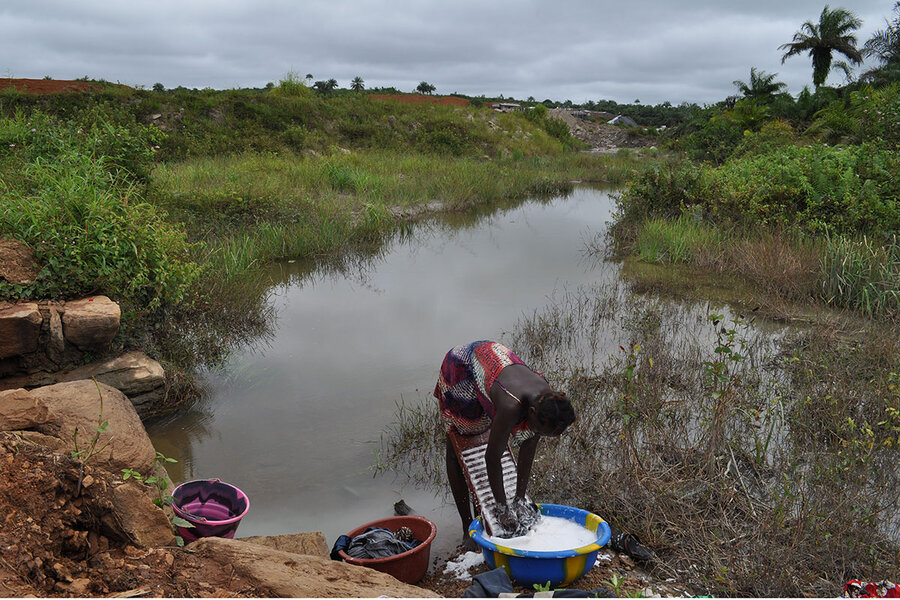
Washing in polluted water. Under new laws, “firms wishing to mine or establish industrial agriculture operations must henceforth strike deals with the ordinary Sierra Leoneans who depend on the land for their survival,” says the Monitor.

I don’t know about you, but I always feel hopeful when ordinary people stick up for themselves. The powerful and selfish don’t always have to win. Capitalism has gotten out of hand and now resembles nothing so much as the monarchies of old.

Meanwhile, in Sierra Leone, folks suffering from the excesses of mining giants and agribusiness are not going to take it anymore.

Nick Roll has the story at the Christian Science Monitor.

“Solomon K. Russell walks down a narrow dirt path, surrounded by teak trees that block out the sunlight and cool the afternoon air. He leaps over a column of fat black ants running across the trail, and the forest suddenly, unnaturally, ends. A denuded strip of beige earth stretches over an area the size of several football fields, pockmarked by pits full of wastewater. 

“Machinery belonging to the Afro-Asia Mining Corp., a Chinese firm, rumbles in the distance. The remnant of a stream, polluted and diverted by the industrial operations, idles underneath a small wooden bridge. 

“ ‘This river really sustained the life of the people,’ says Mr. Russell, who remembers, as a boy, jumping off the bridge into the water just a few feet below. Now, it’s barely ankle-deep. …

“Mr. Russell and his fellow villagers had no say in Afro-Asia’s arrival, nor in its operations. The company signed its lease with the local ‘paramount chief’ who was empowered by a century-old colonial law.

“But a sweeping package of land-rights bills, which went into effect in September, is set to change all that, giving local people who own and live off the land the authority to decide how it is used.

“ ‘Those laws will help,’ says Mary Tommy, a farmer living in this 500-strong farming community made up of brightly painted concrete houses and mud brick homes with traditional high-pitched thatch roofs. ‘For us, the destruction has already been caused, but for other areas that have not witnessed this kind of destruction, I think it will be good.’

“Many parts of Sierra Leone have been ravaged by foreign mining firms seeking gold, diamonds, and bauxite, among other minerals, and by palm oil plantations. Such natural resources accounted for over 75% of Sierra Leone’s exports in 2020, reaping around $400 million in income, according to official figures.

“Yet the wealth has been slow to trickle down. The latest figures on poverty in the country, from 2018, showed that 60% of the rural population was living on less than $1.90 a day.

“People say ‘our land is our bank, our land is our future,’ ” says Eleanor Thompson, deputy director of programs at the Freetown office of Namati, a legal advocacy and land-rights organization. …

“Until last month, only local chiefs and the national government could strike land use and leasing deals with foreign investors. The people whose land was taken could do little about it, and often had to accept rents amounting to only $5 an acre.

“Mr. Russell, for example, says his rent is ‘too meager’ to be able to buy from the market the fish he can no longer catch in the village stream.

“But under the new laws, firms wishing to mine or establish industrial agriculture operations must henceforth strike deals with the ordinary Sierra Leoneans who depend on the land for their survival – and who, for the first time, will have the right to negotiate, or reject, their proposals.

“September’s Customary Land Rights Act and the National Land Commission Act transfer the power to make decisions about land to those actually owning or using it. Companies seeking a lease must win the consent of 60% of a family’s male and female adults.

“Where land is communally held, firms must persuade 60% of the adults in the community to agree to a lease. In the newly created land committees that are supposed to help negotiate those leases, made of local community members, 30% of members are to be women.

“The new laws are not popular with foreign investors, many of whom are especially wary of a provision setting aside shares in international projects for Sierra Leoneans.

‘Nobody will invest in Sierra Leone anymore,’ says Gerben Haringsma, country director for the Luxembourg-based palm oil company Socfin. …

“Ms. Thompson, the land rights activist, says the laws might, however, help investors more than they realize. ‘It’s in the investors’ interest to have the consent of people,’ she says. …

“Acts of sabotage and deadly protests against agribusiness and mining companies have erupted in the past.

“ ‘If people had a say in negotiations they would sell their land for a … value that will enrich them and change their lives, maybe,’ says Emmanuel Saffa Abdulai, executive director of the Freetown-based Society for Democratic Initiatives.

“In Largo, villagers say that Afro-Asia promised to build them a health clinic, a school, and paved roads. Four years after mining operations started, none of that has come to pass, and the locals who have found jobs at the mine earn little more than $50 a month.

“Afro-Asia did not respond to a request for comment. But the company’s lease in Largo is in its final year. To keep operating, it will have to renegotiate – this time with the local community under the new laws.”

More at the Monitor, here. No firewall.

Read Full Post »

Photo: Mrs.
Luke O’Halloran‘s “Eeeeeeeeeee” (2022).

Are you a cat person or a dog person? Both? I’m not sure that I have a preference, but over the years, I’ve cohabited with more cats than dogs mainly because they are so independent and relatively easy to care for.

I know from YouTube that there’s a large segment of the population that can’t get enough of videos featuring cats, and as the gallery in today’s post notes, cats have been subjects of awe throughout history.

“Since ancient Egypt,” the Mrs. gallery’s website notes, “cats have maintained a ubiquitous presence in art. Originally symbolic of an Egyptian idol and guide in the afterlife, during the Middle Ages cats became synonymous with superstition, witchcraft, and paganism — associations that linger to this day. It wasn’t until the 1600s that they became the domestic companions they are known as today. Featuring artists from multiple generations, this exhibition depicts cats in all of their glory, as loving companions, fierce protectors, stubborn rebels, shadows in the dark, mythical shapeshifters, and as vehicles of unabashed comic relief.” 

Today I must apologize to readers who might have been able to get to the Mrs. art gallery in Queens, New York: the cat-art show has ended. Fortunately, you can still enjoy it online at Hyperallergic.

Elaine Velie wrote about it there: “Cats have descended upon Maspeth, Queens, where Mrs. gallery is featuring the work of 39 artists focused on a single theme: furry felines. Cats have been an art historical focus for thousands of years, and the gallery’s latest exhibition, titled ‘Even a Cat Can Look at the Queen,’ suggests they are here to stay.

“From Cait Porter’s loving rendering of a fuzzy tabby’s paw to a Philip Hinge chair sculpture made out of scratching posts, the exhibition includes works by longtime artists of Mrs.’s program as well as some who have never before shown with the gallery.

“Almost all of the works are by living artists, with a few exceptions, including an Andy Warhol print that presents perhaps the exhibition’s most straightforward depiction of a cat. A painting by Renate Druks — movie star, director, and avid painter of cats — titled ‘Male Cat Club’ (1980) evokes the visual language of the Hollywood Golden Age she lived through. … The setting looks like a movie or stage set and the outdoor views visible in the background evoke the dreary exteriors of film noir.

“Other works in the show are decidedly more modern, such as Sophie Vallance’s ‘Tiger Diner’ (2022), which features the checkerboard pattern and rounded aesthetic that has become popularized on social media over the last few years. But like Druks, Vallance places cats in a surprising setting; namely, sitting in a diner.

“In both paintings — and in almost every work in the exhibition — cats display the utmost confidence, a holier-than-thou attitude that any cat parent will likely recognize in their own beloved pet. The animals take up space with dignity, suggesting that the oddity is not their presence but that of a human being.

“Other highlights include Katharine Kuharic’s ‘Long Wait’ (1990), an oil painting with such fine lines it looks like a tapestry. … Elbert Joseph Perez’s ‘Pierrot Greatest Performance’ (2022) is a highly detailed portrayal of a cat presenting an ominous paw toward his toy likeness as an audience of creepy, obscured cats watches the animal from the dark. …

“Johanna Strobel’s sculpture commemorates feline hero Félicette, the first cat in space, and Abby Lloyd’s ‘Enchanted Cat Girl’ (2019), a pink anthropomorphic foam figure, assumes different facial expressions depending on where the viewer stands. Lloyd has impressively managed to keep the sculpture upright despite the figure’s enormous head.

“The show’s title, Even a Cat Can Look at the Queen, comes from an old English proverb implying that even people of the lowest status — as low as a cat — have rights. After gazing at the works in the exhibition, however, the proverb seems too on-the-nose. With their distinguished attitudes and regal postures, it’s quite evident cats can ‘look at the queen.’ As Anna Stothart notes in her essay for the show, perhaps the ancient Egyptians were right: Dogs may be man’s best friends, but cats are humans’ idols, and although they may bless us with companionship, we exist only to serve them.’ “

Do you have a favorite piece of art from the show? For me, it was hard to pick. Click at Hyperallergic, here, to choose from some great pictures. The gallery’s site is here.

Read Full Post »

Photo: Museum of London Archaeology via Hyperallergic.
A necklace found in a UK burial site probably belonged to an “elite woman who wanted to highlight her Christian identity, says Hyperallergic.

Archaeology reminds us that there will always be surprises to uncover no matter how much we think we know. A necklace found in a medieval burial site and considered a “once-in-a-lifetime” discovery is one recent surprise. Michael Levenson wrote about it for the New York Times.

“A 1,300-year-old gold-and-gemstone necklace that was recently discovered in an ancient grave site in England may have belonged to a woman who was an early Christian leader, according to experts involved in the discovery.

“The ancient jewelry was unearthed in Northamptonshire in April [2022] during excavations that took place ahead of a planned housing development. … The 30 pendants and beads that once formed the elaborate necklace were made from Roman coins, gold, garnets, glass and semiprecious stones. The centerpiece of the necklace, a rectangular pendant with a cross motif, was also among the artifacts that were discovered.

“ ‘When the first glints of gold started to emerge from the soil we knew this was something significant,’ Levente-Bence Balázs, a site supervisor at the Museum of London Archaeology, [said in a statement announcing the find]. …

“X-rays of soil blocks lifted from the grave also revealed an elaborately decorated cross featuring unusual depictions of human faces cast in silver, the statement said.

“While the soil is being investigated more closely, ‘this large and ornate piece suggests the woman may have been an early Christian leader,’ the statement said, adding that she might have been an abbess, royalty or both. The site also contained two decorated pots and a shallow copper dish.

“The skeleton itself has decomposed, with only tiny fragments of tooth enamel remaining. But the Museum of London Archaeology said it was almost certain that a woman was buried there because similar necklaces and lavish burial sites were almost exclusively found in female graves in the period.

Scholars said the discovery pointed to the important but often overlooked role of women in the development of early Christianity.

“ ‘The evidence does seem to point to an early female Saxon church leader, perhaps one of the first in this region,’ Helen Bond, a professor of Christian origins and head of the School of Divinity at the University of Edinburgh, in Scotland, wrote in an email. ‘We know from the gospels that women played an important role in the earliest Christian movement, acting as disciples, apostles, teachers and missionaries,’ Professor Bond wrote. ‘While their role was diminished later on at the highest levels, there were always places where women leaders continued (even sometimes as bishops).’

“Amy Brown Hughes, a historical theologian at Gordon College, who studies early Christianity, called the necklace, which has been traced to the years 630 to 670, an ‘absolutely stunning’ artifact from a volatile period when Christianity was becoming established in Anglo-Saxon England.

“Noting that women have often been left out of narratives about Christianity, Professor Hughes said the necklace provides material evidence that ‘helps to reorient our assumptions about who actually had influence and authority.’ …

“Joan E. Taylor, a professor of Christian origins and Second Temple Judaism at King’s College London, said the fact that the woman was apparently buried in a village far from a main population center ‘testifies to the troubled times in this region of Britain in the 7th century.’

“ ‘Perhaps she was on a journey, or fleeing,’ Professor Taylor wrote in an email. ‘It was a tough “Game of Thrones” world with competing royal rulers aiming for supremacy. It was also a time where Christianity was spreading, and abbesses and other high-status women could play an important role in this.’ …

“The artifacts [will] be featured in an installment of the BBC series ‘Digging for Britain.’ “

More at the Times, here. See also Hyperallergic. More photos, no firewall.

Read Full Post »

Photo: Dezeen magazine.
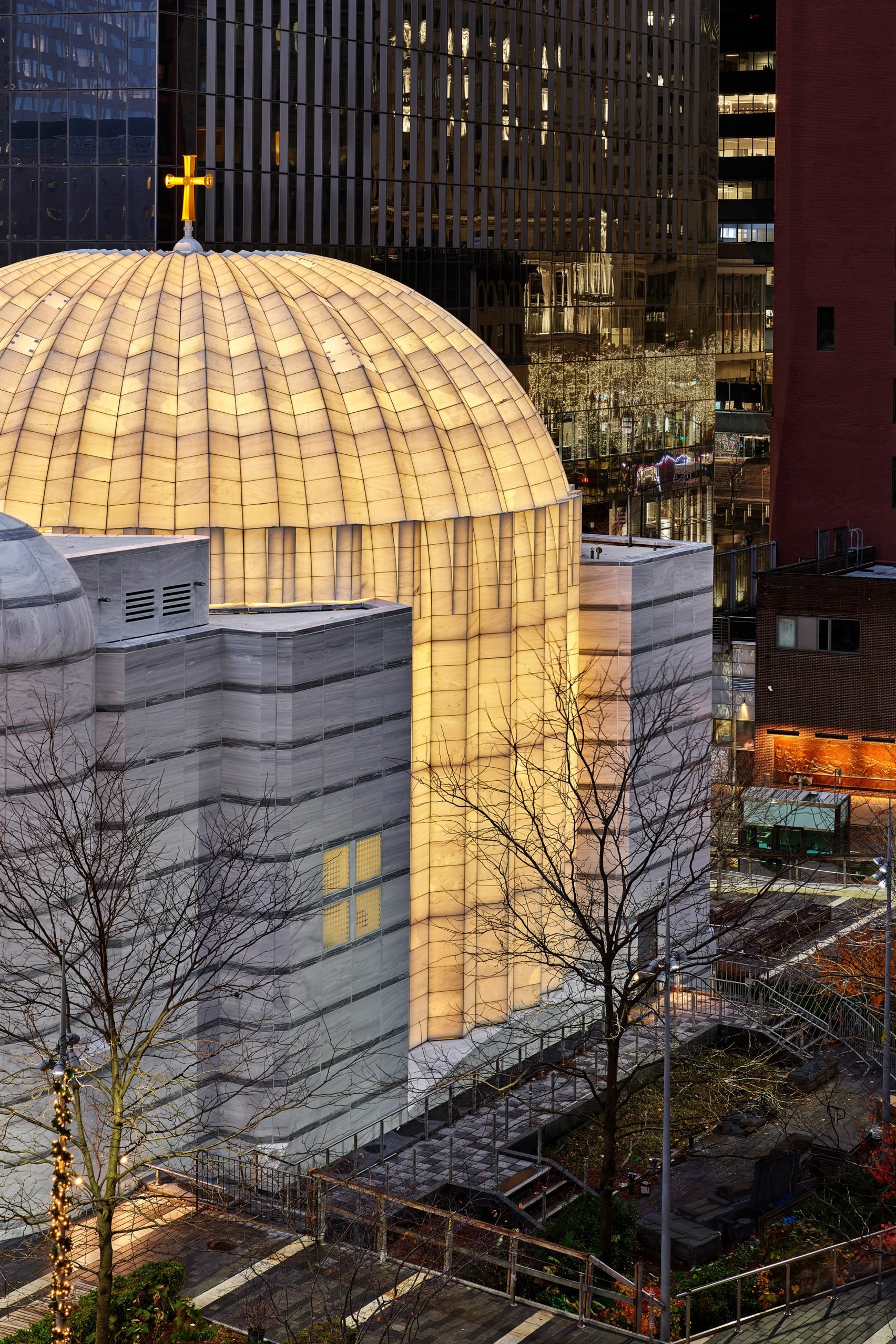
The translucent walls are made of Pentelic marble. So lovely!

You may recall reading about the Greek Orthodox church near the World Trade Center in New York City that was ruined on September 11, 2001. Fortunately, 9/11 was not the end of the story for that church. Tom Ravenscroft reports at Dezeen about Santiago Calatrava’s new illuminated wonder.

“The St Nicholas Greek Orthodox Church, which replaces a church destroyed in the 9/11 attack, has officially opened at the World Trade Center site in New York.

“Designed by Spanish architect Santiago Calatrava, the building replaces a 19th-century church that was destroyed on 11 September 2001. … The church is located alongside the 9/11 memorial that stands on the site of the former twin towers.

“It was designed by Calatrava to be a ‘sanctuary for worship’ but also a reminder of the impact of the terrorist attacks. …

“Said Calatrava, ‘I hope to see this structure serve its purpose as a sanctuary for worship but also as a place for reflection on what the city endured and how it is moving forward. [Architecture] can have an intrinsic symbolic value, which is not written or expressed in a specific way but in an abstract and synthetic manner, sending a message and thus leaving a lasting legacy.’

“Built on top of the World Trade Center Vehicle Security Center, the church is raised around 25 feet above (seven metres) above street level and was designed to be a beacon.

“Informed by Byzantine architecture and the Hagia Sofia in Istanbul in particular, the church is arranged around a central drum-shaped form that is topped by a dome.

“The walls of this central section were made from thin sheets of Pentelic marble so that the building can be illuminated at night.

” ‘This Shrine will be a place for everyone who comes to the sacred ground at the World Trade Center, a place for them to imagine and envision a world where mercy is inevitable, reconciliation is desirable, and forgiveness is possible,’ said Ioannis Lambriniadis archbishop elpidophoros of America.

” ‘We will stand here for the centuries to come, as a light on the hill, a shining beacon to the world of what is possible in the human spirit, if we will only allow our light to shine before all people, as the light of this Shrine for the nation will illuminate every night sky to come in our magnificent city.’

“Surrounding the central domed spaces are four stone-clad towers that give the building an overall square shape.

“The entrance to the church, which faces a large open plaza, was placed between two of these towers and leads directly to the main series of liturgical spaces.

“The altar directly faces the entrance, while the two side niches were completed with translucent arched windows. Above the main space, the domed is surrounded by 40 translucent windows divided by 40 stone ribs, reminiscent of the Hagia Sofia.

“Alongside the main liturgical spaces, several community rooms and offices were placed on the upper floors of the towers.

“To mark the 20th anniversary of the 9/11 attacks last year, Dezeen explored how the site was rebuilt and the numerous buildings created on the site including the World Trade Center Transportation Hub, which was also designed by Calatrava.”

More at Dezeen, here. Lots of beautiful photos by Alan Karchmer. No firewall.

The New York Times and many other publications reported on the reopening of the church, now a national landmark. From the article by Jane Margolies: “Olga Pavlakos grew up going to St. Nicholas Greek Orthodox Church in Lower Manhattan. She was baptized there. Her parents were married there. She has memories of her father, who worked in restaurants, volunteering there on Sundays, and of celebrating Epiphany every January, when parishioners would walk to the Hudson River, toss a gold cross into the frigid water and watch divers plunge in to retrieve it. …

“Her connection to St. Nicholas can be traced to her grandparents, who left Greece in the early 1900s and settled in Lower Manhattan, then a bustling immigrant community. Residents there scraped together money and bought a tavern on Cedar Street that they converted to a place of worship, eventually adding a bell at the top.

“These original parishioners, who had arrived by boat, named their church after the patron saint of seafarers — a saint who fed the hungry and clothed the needy and inspired the character of Santa Claus. … The tiny church was obliterated during the terrorist attacks.

“Twenty-one long and difficult years later, St. Nicholas has reopened. But it is no longer a humble church, exclusively for its parishioners. Its mission is larger, as is its splendor.

“St. Nicholas Greek Orthodox Church & National Shrine, as it’s now called, has become a destination for all. It offers a bereavement center that will serve as a place for meditation and prayer for people of any faith. … The new church is a prominent expression of Orthodox Christianity in the city, and it is a source of great pride for the Greek American community.

“For the few remaining longtime parishioners of St. Nicholas, there is relief that their beloved church has finally reopened. But now, their intimate community hub is a global destination, and some wonder about the future of their once tight-knit parish.” More at the Times here.

Read Full Post »

Photo: Jesse Granger, Duke University.
North American monarch butterflies migrate each winter to just a few mountaintops in central Mexico, with help from an internal compass,” say Duke University. “New computer modeling research offers clues to how migrating animals get to where they need to go, even when their magnetic compass leads them astray.” But as populations decline, so do the mutual-support possibilities.

Continuing the subject of friends (see the post from a few days ago), it seems that associating with others can be beneficial for many life forms. Robin Smith reports on the latest research from Duke University.

“Animals can find their way across vast distances with amazing accuracy,” Smith writes. “Take monarch butterflies, for example. Millions of them fly up to 2,500 miles across the eastern half of North America to the same overwintering grounds each year, using the Earth’s magnetic field to help them reach a small region in central Mexico that’s about the size of Disney World.

“Or sockeye salmon: starting out in the open ocean, they head home each year to spawn. Using geomagnetic cues they manage to identify their home stream from among thousands of possibilities, often returning to within feet of their birthplace.

“Now new research offers clues to how migrating animals get to where they need to go, even when they lose the signal or their inner compass leads them astray. The key, said Duke Ph.D. student Jesse Granger: ‘they can get there faster and more efficiently if they travel with a friend’ [Collective Movement as a Solution to Noisy Navigation and its Vulnerability to Population Loss, Jesse Granger and Sönke Johnsen].

“Many animals can sense the Earth’s magnetic field and use it as a compass. What has puzzled scientists, Granger said, is the magnetic sense is not fail-safe. These signals coming from the planet’s molten core are subtle at the surface. Phenomena such as solar storms and man-made electromagnetic noise can disrupt them or drown them out. … How do some animals manage to chart a course with such a noisy sensory system and still get it right?

“ ‘This is the question that keeps me up at night,’ said Granger, who did the work with her adviser, Duke Biology Professor Sönke Johnsen.

“Multiple hypotheses have been put forward to explain how they do it. Perhaps, some scientists say, migrating animals average multiple measurements taken over time to get more accurate information. Or maybe they switch from consulting their magnetic compass to using other ways of navigating as they near the end of their journey — such as smell, or landmarks — to narrow in on their goal.

“In a paper published Nov. 16 in the journal Proceedings of the Royal Society B, the Duke team wanted to pit these ideas against a third possibility: That some animals still manage to find their way, even when their compass readings are unreliable, simply by sticking together.

“To test the idea, they created a computer model to simulate virtual groups of migrating animals, and analyzed how different navigation tactics affected their performance.

“The animals in the model begin their journey spread out over a wide area, encountering others along the route. The direction an animal takes at each step along the way is a balance between two competing impulses: to band together and stay with the group, or to head towards a specific destination, but with some degree of error in finding their bearings.

“The scientists found that, even when the simulated animals started to make more mistakes in reading their magnetic map, the ones that stuck with their neighbors still reached their destination, whereas those that didn’t care about staying together didn’t make it.

‘We showed that animals are better at navigating in a group than they are at navigating alone,’ Granger said.

“Even when their magnetic compass veered them off course, more than 70% of animals in the model still made it home, simply by joining with others and following their lead. Other ways of compensating didn’t measure up, or would need to guide them perfectly for most of the journey to accomplish the same feat.

“But the strategy breaks down when species decline in number, the researchers found. The team showed that animals who need friends to find their way are more likely to get lost when their population shrinks below a certain density.

“ ‘If the population density starts dropping, it takes them longer and longer along their migratory route before they find anyone else,’ Granger said.

“Previous studies have made similar predictions, but the Duke team’s model could help future researchers quantify the effect for different species. In some runs of the model, for example, they found that if a hypothetical population dropped by 50% — akin to what monarchs have experienced in the last decade, and some salmon in the last century — 37% fewer of the remaining individuals would make it to their destination.”

More at Duke, here. No firewall.

Read Full Post »

« Newer Posts - Older Posts »