Feeds:
Posts
Comments

Photo: Gavin Doran.
“Song of the North” involves 483 puppets, 208 animated backgrounds, 16 masks and costumes and nine performers.

Here’s how an incredibly creative Iranian is showing the world something deeper than the stereotypes about his home country.

Jennifer Schuessler wrote about his puppet epic at the New York Times in March.

“On a recent afternoon on 42nd Street in Manhattan, a mythological bird was preparing to take flight. Backstage at the New Victory Theater, a black-clad puppeteer put on an elaborately stylized mask and stepped into a beam of light, throwing the shadow of fluttering hands onto a large scrim.

“Nearby, two other performers were gearing up to practice a sword fight. Then the music started, and a crew of nine began a full run-through of Song of the North, an elaborate shadow puppet staging of stories from the 10th-century Persian epic the Shahnameh.

“From the audience, the show unfolded like a seamless animation. But backstage, the next 80 minutes were half ballet, half mad scramble, as the performers grabbed hundreds of different puppets, props and masks stacked on tables and, with split-second timing, jumped in and out of the light beams streaming from two projectors.

“Leaning against a backstage wall was the show’s creator, Hamid Rahmanian. His role? ‘Stressing out,’ he said.

“Since premiering in 2022 in Paris, Song of the North (which is intended for audiences 8 and older) has received enthusiastic reviews and played to packed houses on three continents. Its arrival in the heart of Times Square [was] timed for Nowruz, the Persian new year celebration. It also coincides with the release of a new contemporary prose translation of the Shahnameh that Rahmanian produced in collaboration with the scholar Ahmad Sadri — the first complete English version by Iranians, Rahmanian said.

“The show is mind-dizzyingly complex, involving 483 puppets, 208 animated backgrounds, 16 character masks and costumes and nine performers who follow more than 2,300 separate cues.

“But the idea behind it, Rahmanian said, is simple: to bring the richness of Persian culture to young audiences and adults whose views of Iran may be dominated by negative stereotypes.

“ ‘Everything about Iran is seen through the lens of politics,’ he said. ‘Iranian culture is a symphony. But in the West, we only hear the drumbeat.’

“The Shahnameh, or Book of Kings, is said to be the longest poem ever written by a single author — twice as long as the Iliad and the Odyssey combined. It was composed by the Persian poet Abu al-Qasem Ferdowsi, who spent 33 years turning centuries of historical and mythological lore into more than 50,000 couplets.

“In Iran, where many people give their children names of characters (Rostom, Sohrab), it remains a cultural touchstone. But growing up in Tehran, Rahmanian, now 56, was resistant to his father’s admonitions to actually read it.

“He was more drawn to visual art, and by 19, he said, had founded his own graphic design business. In 1994, he moved to New York to study computer animation at the Pratt Institute. In 1996, he was hired by Disney, where he worked on projects like Tarzan … but he felt like he didn’t fit in, and left two years later. …

“In 2008, Hamid pivoted to what has become his life’s work: promoting the Shahnameh. … Rahmanian was inspired to create a theatrical piece after seeing a restored version of Lotte Reiniger’s 1926 silent film The Adventures of Prince Achmed, believed to be the oldest surviving full-length animated film. ‘I thought, “I want to do something like that!” ‘ he said. …

“Nazgol Ansarinia, a visual artist visiting from Tehran who was watching backstage, said she was amazed by both the intricacies of the performance and the immediacy of the storytelling.

“ ‘In Iran, everyone knows the stories and characters from the Shahnameh, but the text itself is not that accessible,’ she said. ‘Hamid has really made it accessible.’ ”

More at the Times, here. Beautiful photos and videos.
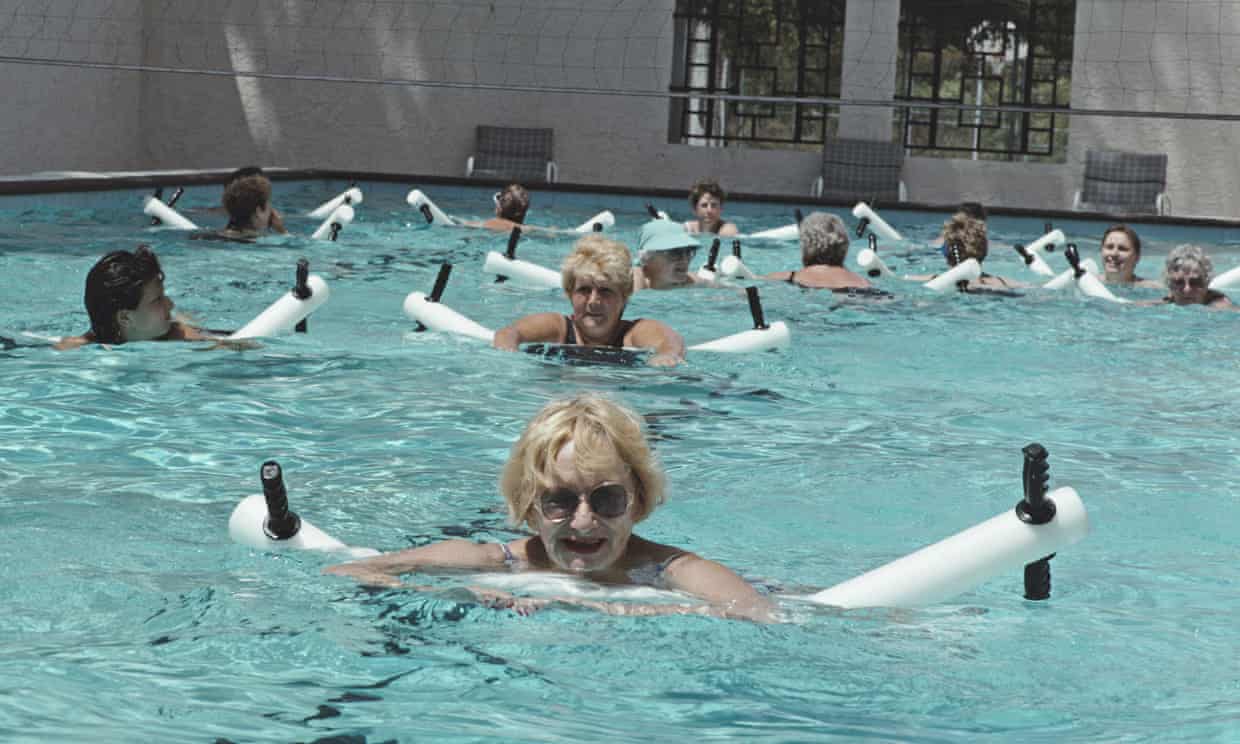
Photo: Barbara Alper/Getty Images.
Aqua aerobics is pitched at those who are ‘young at heart, recovering from pregnancy, or rehabilitating,’ writes Kate Leaver.

Since I moved to a retirement community with many excellent exercise instructors, I’ve been impressed to see how many seniors are really serious about staying in shape — even people close to 100. Today’s story is about a particular kind of class for older people, but not just older people. It comes from Sydney, Australia, via the Guardian.

Kate Leaver writes about her experience with a water aerobics class.

“At my first class, we sang Barbara ‘Happy Birthday.’ She was turning 80, doing fly-kicks underwater with the rest of us. …

“That’s the main demographic for aqua aerobics at the Manly’s Andrew Boy Charlton aquatic center in Sydney: women born in the era of Barbaras, Margarets and Gladyses, many of them wearing a full face of makeup and gold earrings. They keep their faces immaculate by extending their necks and keeping their heads above water (I’ve asked).

“Each week, 30 people turn up for 45 minutes of guided exercise, half-submerged in a heated, chlorinated lap pool. It’s popular: tickets go on sale three days in advance and it’s sold out within hours. …

“Aqua aerobics is pitched at those who are ‘young at heart, recovering from pregnancy, or rehabilitating.’ My mum and I are in that third category: rehab. She, from cancer; me, from long Covid (I contracted the virus at a Harry Styles concert in June 2022 and am yet to fully recover). Having spent a displeasing number of days/months/years lying down, we felt ready for some gentle exercise.

“It’s probably the most fun I’ve ever had in the pursuit of mild fitness. … The vibes are unmatched – it’s all ‘Very nice, Susan’ and ‘Lift those legs, Carol,’ never ‘No pain, no gain.’ One time, a young man with a six-pack walked the length of the pool in Speedos and I watched as a wave of giggles spread across the pool in his wake. …

“It’s a great workout, too, especially for anyone easing back into movement. The buoyancy of the water reduces strain on your joints and makes injuries less likely than routines on dry land. It’s adaptable in that you can glide your limbs for a mobility exercise or you can work up a sweat against the resistance of the water. I have to take it slow, but if you went hell for leather with some of these moves, you could really get your heart pumping.

“We do knee raises, lunges, kicks, punches and bicep curls. We jog back and forth in the water. We hold on to the edge of the pool and kick, kick, kick. We dance underwater to get our heart rates up and alternate between cardio and strengthening. Our leader is a loud, fit, flexible, brilliant middle-aged woman who has a special place in my heart because of the way she speaks to anyone who looks as though they might be struggling with her choreo. ‘You OK there, Maggie?’ she’ll say. ‘Don’t make me come in there and get you.’ She remembers people’s names, gently reminds the gossipers down the shallow end to concentrate, and winks at anyone who needs encouragement.

“She has a Britney microphone and a killer playlist of hits from the 70s and 80s. I don’t think I had truly lived until I’d done a kick-jump-kick sequence underwater while singing ‘There lived a certain man in Russia long ago / He was big and strong, in his eyes a flaming glow’ (Rasputin by Boney M, 1978).

“I will never again take a spin class run by a shouting bodybuilder or think of exercise as punishment. Not when this is an option. It’s a joy from start to finish, a truly adorable mother-daughter activity.” More at the Guardian, here.

I’m zeroing in on the soundtrack. In one of my classes we’ve had the same ’50s-’60s mix twice a week for 10 months. As much as I love music from those decades, would welcome a change to almost anything!

Photo: rkd/Mauritshuis.
Wilhelm Martin, the director of the Mauritshuis museum, quietly resisted by removing artworks from the museum during the Nazi occupation. And he hid people.

Today we go back to WW II to gather new information on the difficult choices that people had to make under Nazi occupation and how some Dutchmen practiced resistance while hiding in plain sight.

The Guardian‘s Senay Boztas reported the story from the Netherlands.

“The 13-year-old boy answered the doorbell,” she begins. “ ‘Tell your dad I’m here,’ said a man, who stored his bicycle and then disappeared upstairs.

“It was 1944, and right under the noses of Nazi command, people were hiding in the attic of The Hague’s Mauritshuis museum from forced labour conscription – Arbeitseinsatz – under which hundreds of thousands of men from the Nazi-occupied Netherlands were conscripted to work in Germany.

“The memories of 93-year-old Menno de Groot – a Dutch-Canadian who was that young boy – form an extraordinary part of a book and an exhibition of the secret history of the Dutch museum during the second world war.

“ ‘He must have gone all the way to the attic,’ De Groot tells his granddaughter Kella Flach in a video for the exhibition, referring to the man who he assumed had arrived to go into hiding. ‘I don’t know how many were up there. I have no idea how they lived up there, how they got there.’

“The chance find of a logbook by De Groot’s father, Mense de Groot, an administrator who from 1942 lived in the Mauritshuis museum with his wife and children, including Menno, inspired researchers to examine the museum’s history.

“ ‘People were hiding in November 1944 because of the Arbeitseinsatz, but hiding in the Mauritshuis was hiding in plain sight,’ Quentin Buvelot, a researcher and curator, said. ‘It was a house in the storm.’

“Art from the museum, including Johannes Vermeer’s Girl With a Pearl Earring, was first hidden in a bomb-proof bunker underneath the building and later stored in locations around the Netherlands. The German-born museum director Wilhelm Martin played a careful role, allowing the Nazis five propaganda exhibitions while also quietly resisting.

“A newly discovered note on Martin’s retirement in 1953 revealed he was involved in supporting people who had gone undercover on Assendelftstraat and in the museum. ‘Martin doesn’t say how many, but he says that on a daily basis, 36 loaves of bread were delivered. …

“Secret concerts were also held in the museum’s basement between 1942 and 1944, according to Frank van Vree, an author and researcher at the NIOD institute for War, Holocaust and Genocide Studies. ‘They were held to support musicians who were cornered by their resistance to German measures, especially compulsory membership of the Nazi Kultuurkamer,’ he said. …

“Mense de Groot, who was hired to work at the museum when the janitor retired, also worked for the resistance. ‘He usually got Trouw, an underground newspaper,’ Menno de Groot says in the exhibition. ‘And my dad, he copied them, made more copies. …

“Life under occupation was a series of difficult choices, according to Eelke Muller, a historian and NIOD specialist in looted art. ‘There was little knowledge [before this research] about how culture could be a political instrument for resistance from the Netherlands but also a strong ideological instrument for the occupier,’ she said. ‘Every museum, every civil servant in times of war was confronted with huge dilemmas: do you choose principled resistance, enthusiastically get behind Nazi ideas, or are you somewhere in the middle?’ More at the Guardian, here. No paywall.

Nina Siegal at the New York Times adds details about the famous Vermeer that Martin also hid.

“At first it went to a bomb shelter in the basement of a museum, then an art bunker built into the dunes on the North Sea in the Netherlands. Toward the end of the war it was hidden in a secured cave in Maastricht, a Dutch city near the Belgian border.

“Starting in 1939, as war in Europe spread and the Nazi invasion of the Netherlands loomed, leaders of the Mauritshuis, the jewel box museum in The Hague, took extraordinary steps to protect Johannes Vermeer’s ‘Girl With a Pearl Earring’ and other works central to its collection.

“Wilhelm Martin, the museum’s director at the time, removed it and other famous works … before the Germans arrived because he understood that they would be in peril, both from bombardments and from potential Nazi looting afterward.

“The survival of these works, through strategic planning, diplomatic appeasement and the German affinity with the conquered Dutch as ethnic brethren, is now the subject of an exhibit at the Mauritshuis. ‘Facing the Storm: A Museum in Wartime,’ which is on view until June 29, coincides with the 80th anniversary of the liberation of the Netherlands in 1945 and is based on extensive new research.”

I hope blogging chefs Michiel and Jeen in the Netherlands get to see this.

Photo: Biodiversity for a Livable Climate.
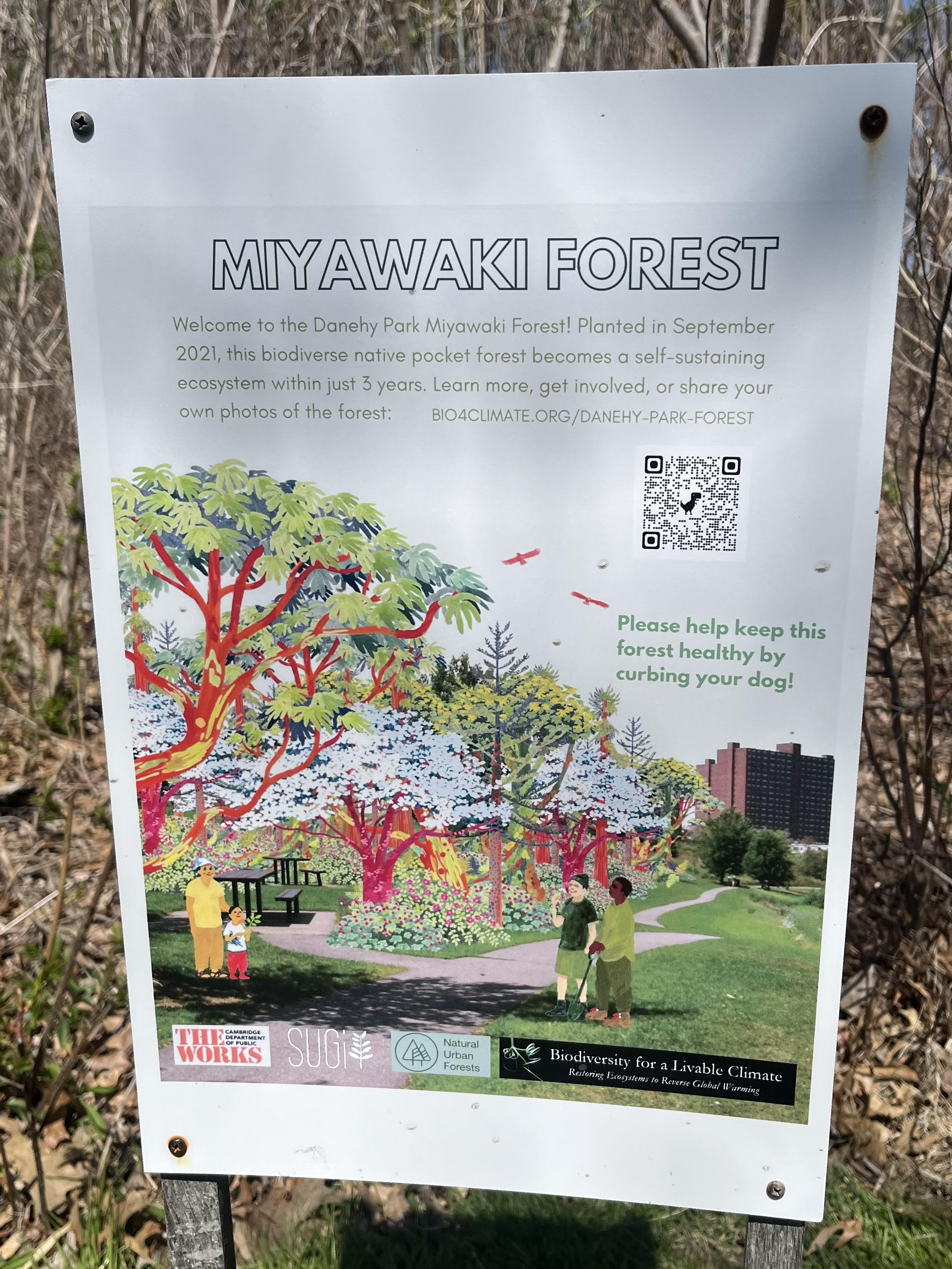
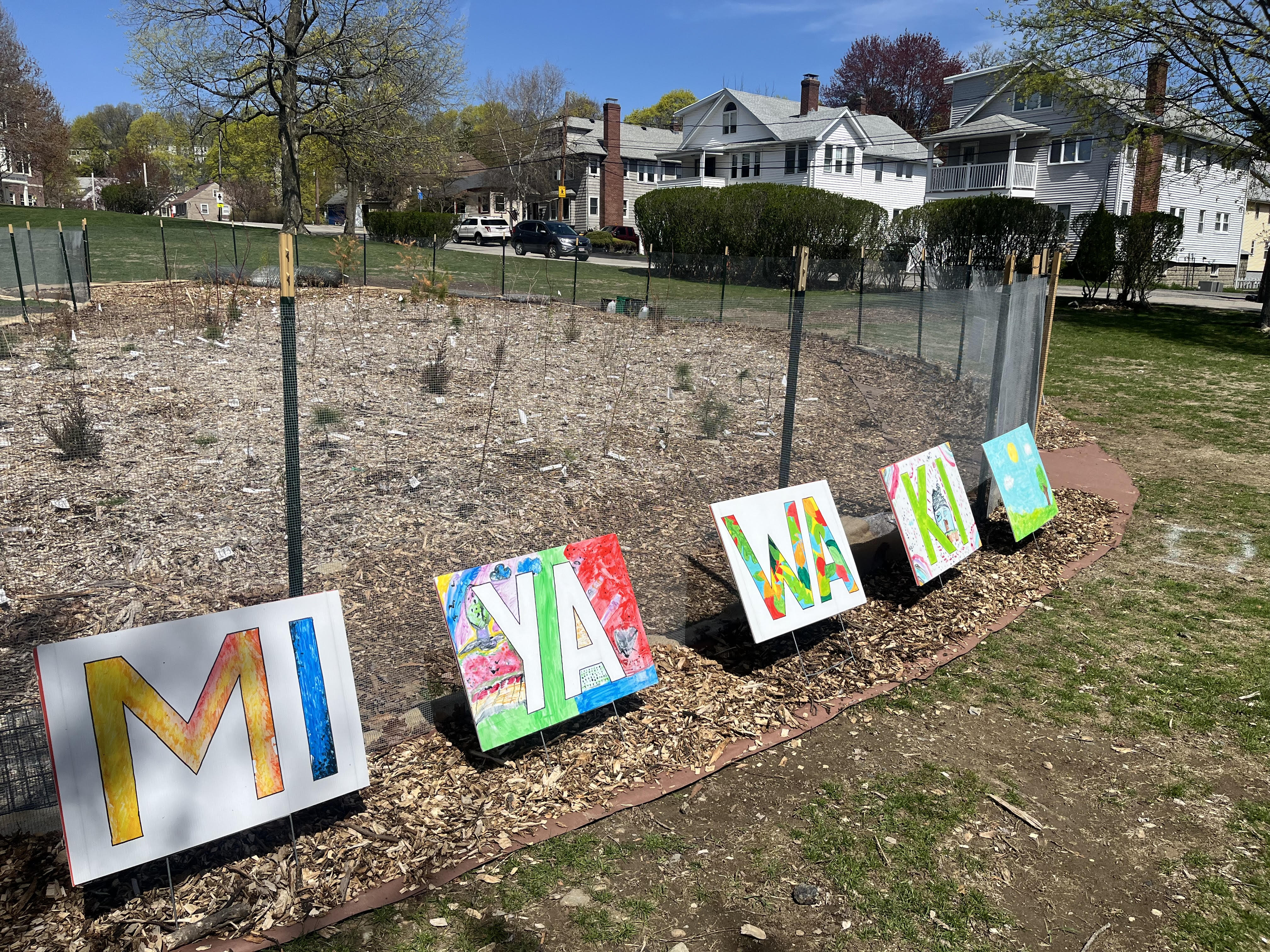
A Miyawaki forest at Danehy Park in North Cambridge, Massachusetts, planted on September 25, 2021 — with the help of enthusiastic volunteers. Other Miyawaki forests don’t look like much in April. But just watch!

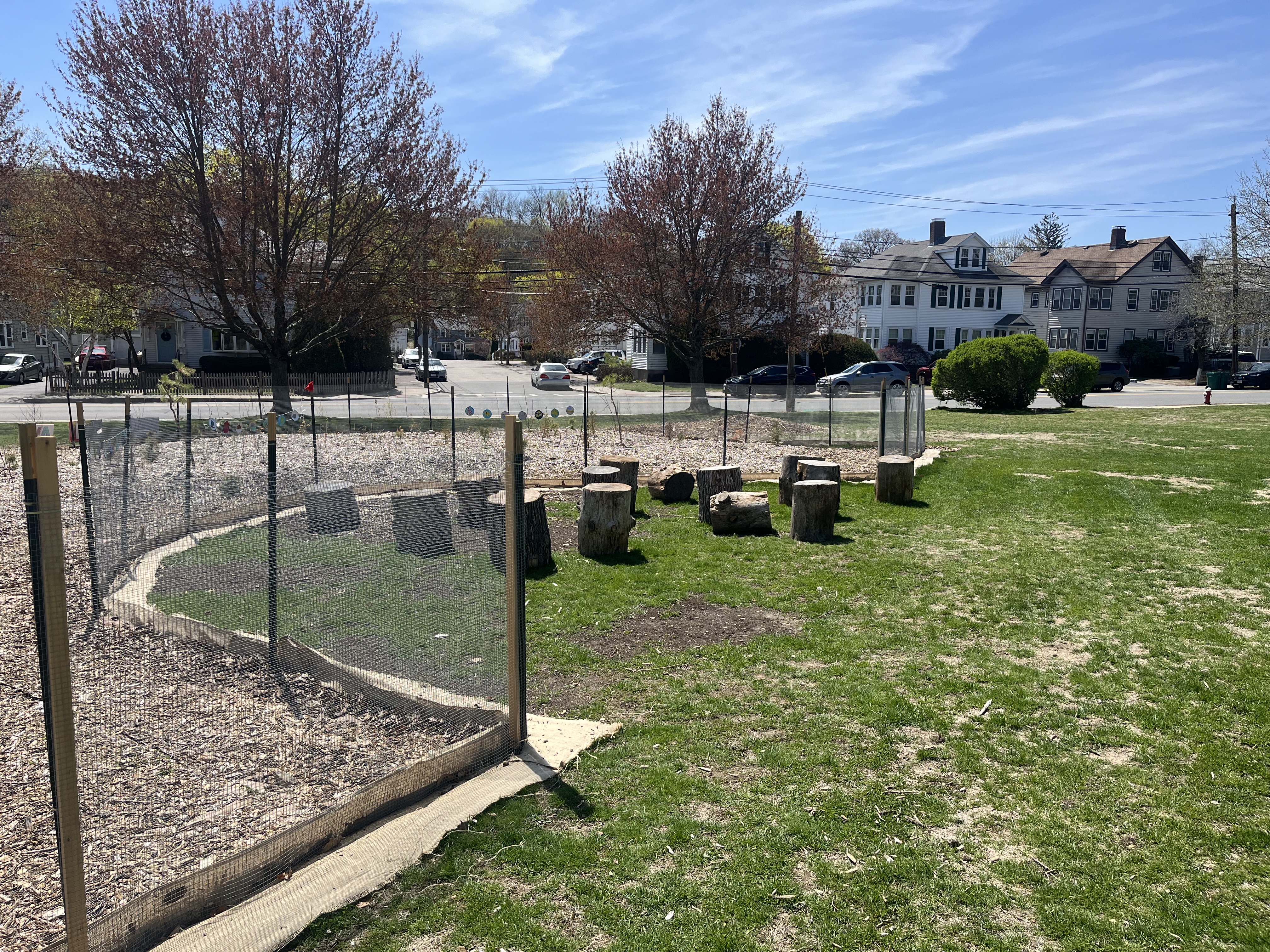
Although I blogged about Miyawaki mini urban forests in 2023, here, and again after a tip from Hannah in Philadelphia, here, I had never seen one in person and didn’t really understand the concept. These are not forests you take a walk in. They are deliberately planted too densely for entering, which is why one elementary school asked for a crescent shape to let kids see the native plants that their teachers were talking about.

On a special day in April, my friend Jean Devine of Biodiversity Builders took two of us on a tour of three Miyawaki Forests and the site for one that she and students at her local high school are building.

Now I think I get it. In order to have a healthy climate, we need a healthy, biodiverse planet. And the effects of even very small sites can spread. Birds, small animals, pollinators, and other critters flourish in these biodiverse pockets.

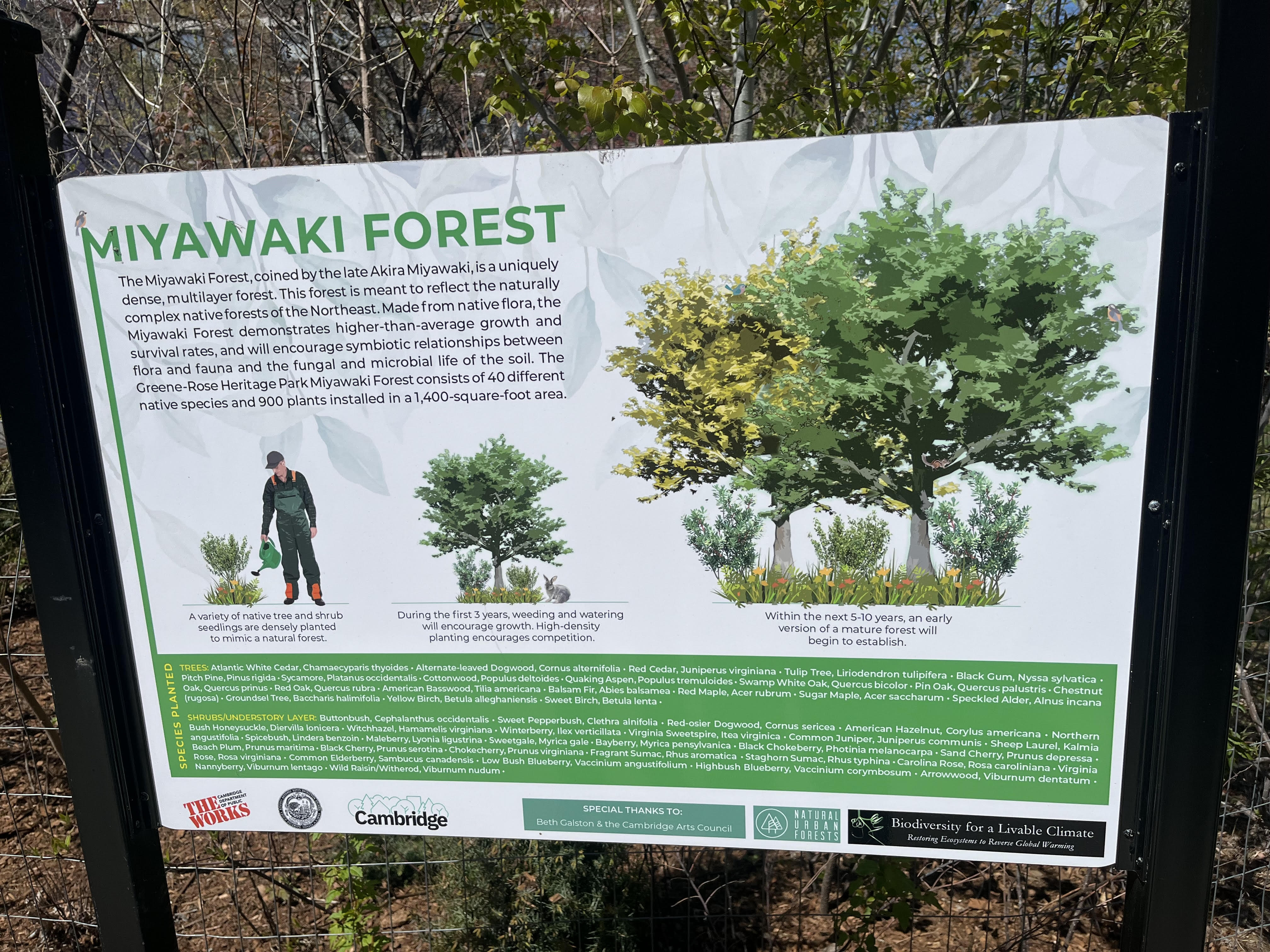
Biodiversity for a Livable Climate: Restoring Ecosystems to Reverse Global Warming says, “The Miyawaki Forest is an ultra dense, biodiverse pocket forest that recreates the complexity of natural forests and the relationships and processes that help them grow strong and resilient. By giving home to a vast array of native species, they boost the biodiversity of the area and nurture pollinators, supporting and restoring ecosystems. They sequester carbon in the soil, reduce air pollution and soil contamination, improve water absorption to buffer against flooding and erosion, and cool the surrounding area to mitigate the urban heat island effect. They also create a living classroom for people and communities to learn about native ecology, engage in stewardship, and experience the interconnectedness of the natural world.”

GBH tv provides a forum on the concept, asking, “What can hold more than 500 species, sequester more than 500 lbs. CO2/year, be 10F cooler than its surroundings, soak up lots of rainwater, and be made by and for children in a space no bigger than a tennis court? A ‘mini-forest’ planted using the Miyawaki Method, of course!

“Biodiversity for a Livable Climate hosts Miyawaki-Method advocates Hannah Lewis (Bio4Climate Compendium editor) and Daan Bleichrodt (The Netherlands’ Tiny Forest initiative leader), as they talk about mini-/tiny-forests and their role in climate resilience, urban beautification, and connecting all of us to nature.” More here.

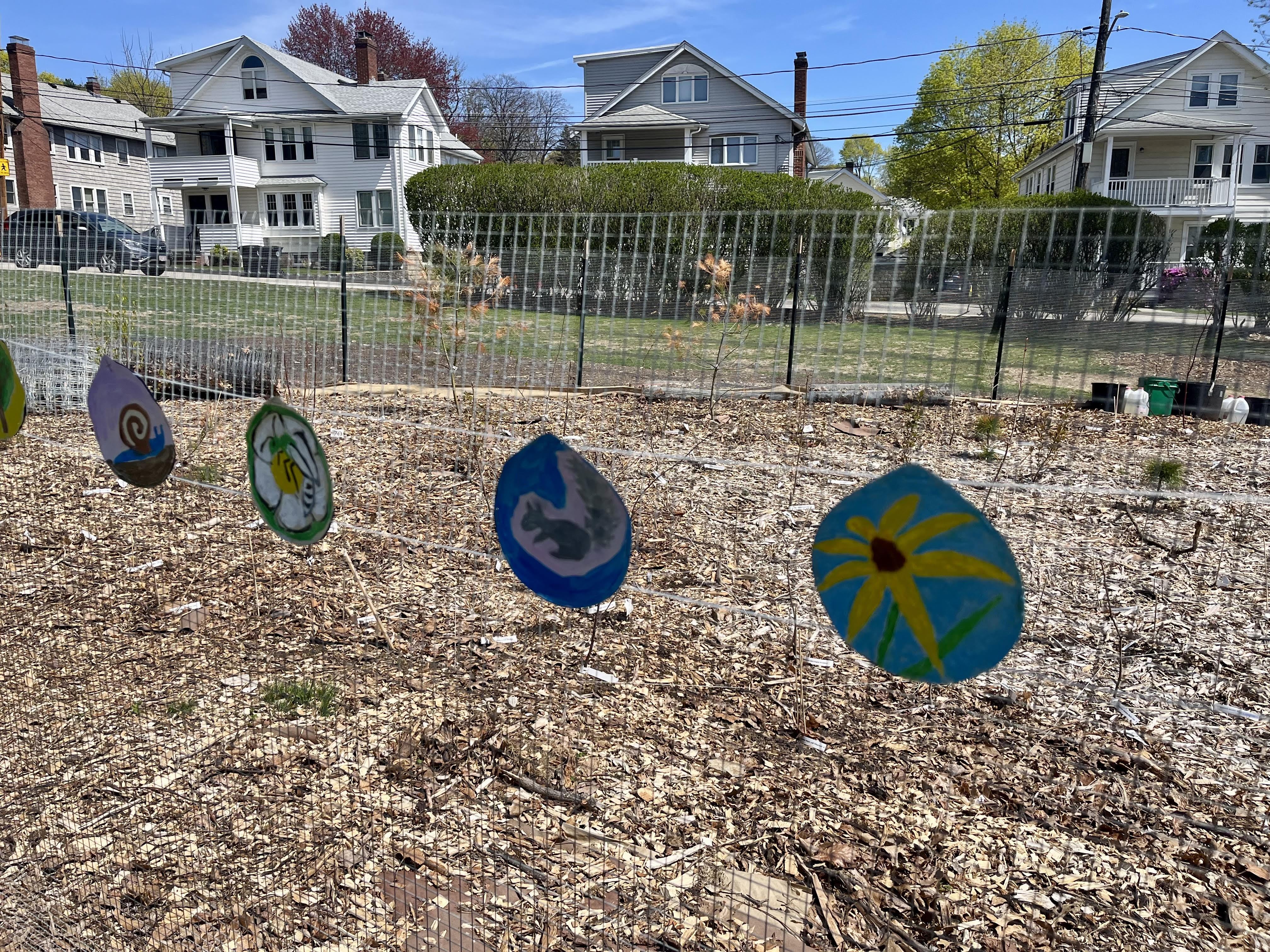
My photos are from mini forests Massachusetts, one in a large park in Cambridge, one in a Cambridge neighborhood’s pocket park, and one at an elementary school in Watertown. At the latter, the children sit on tree stumps for classes. Note the art they created for their forest, too. The forest doesn’t look like much in April, but just wait!

More at Biodiversity for a Livable Climate, here, and here.

April Photos

Photos: Suzanne and John’s Mom. (Erik took the photo of my grandson.)
Where I like to walk these days.

We had some gorgeous days in April, and May is shaping up nicely, too.

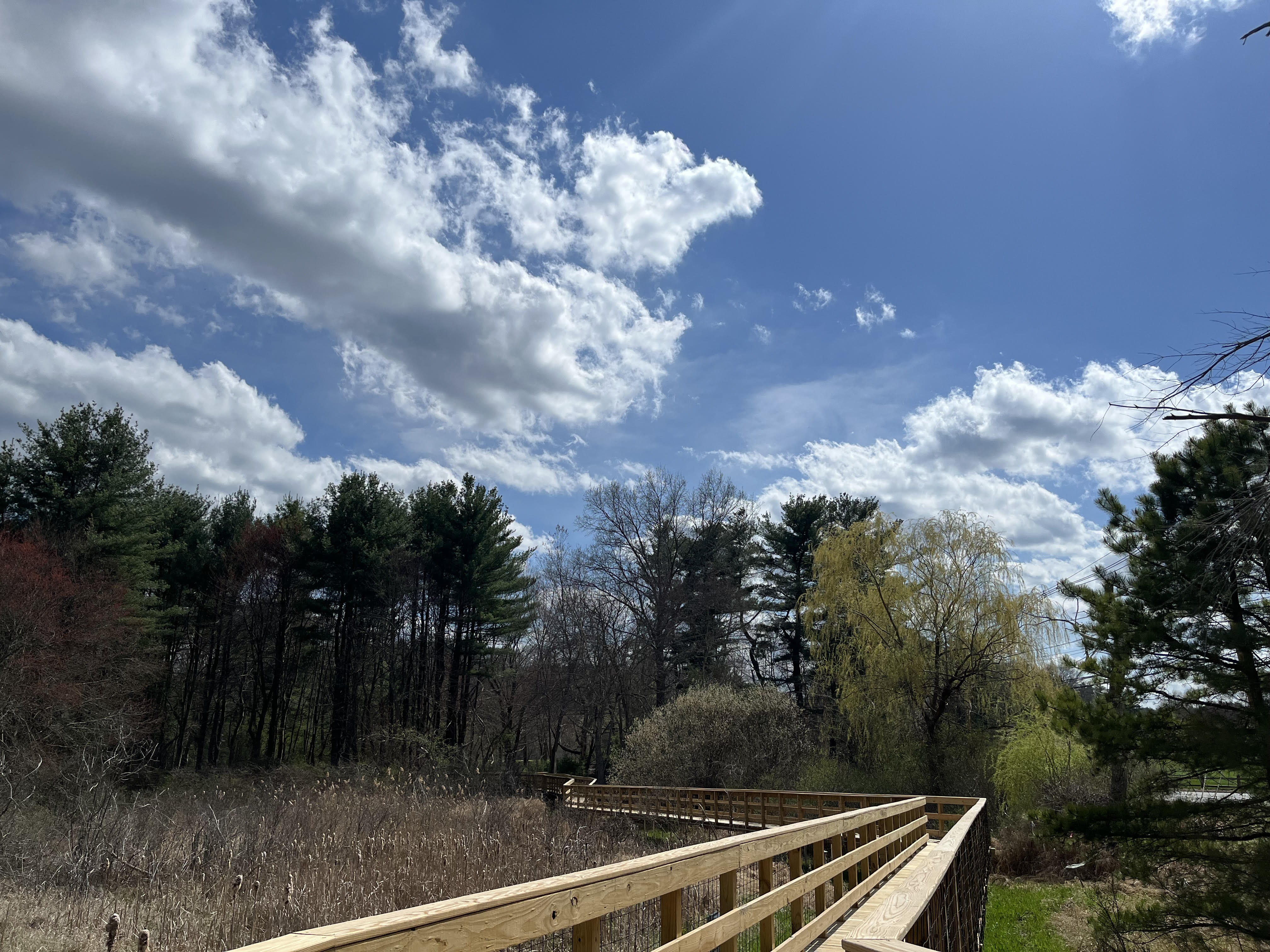
I start my latest photo round-up with the boardwalk my retirement community built according to stringent environmental regulations. I love the feeling of walking in the woods, and right now, wildflowers that were already there are coming up, while residents are planting others with the guidance of a woman specializing in the removal of invasive species.

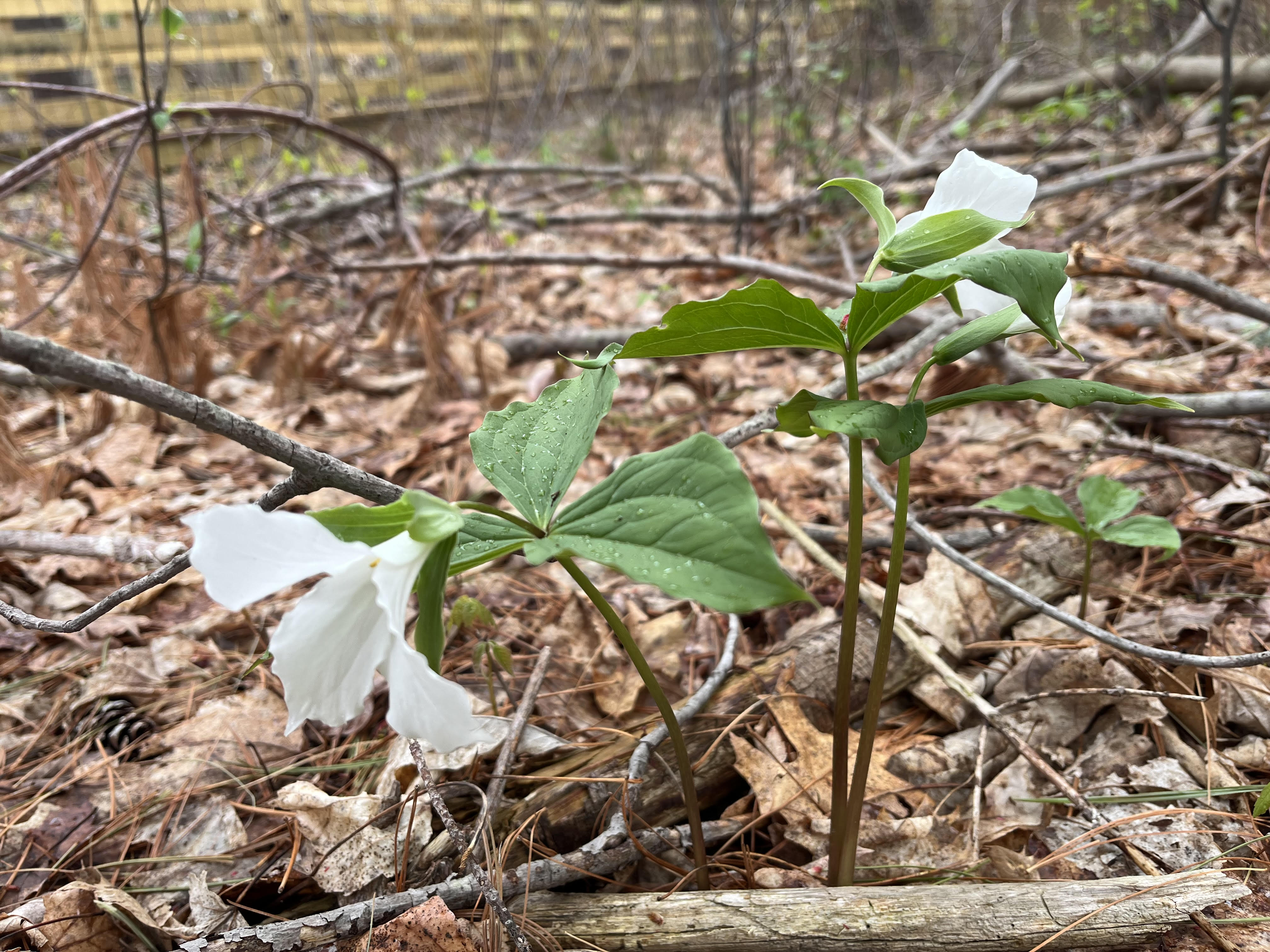
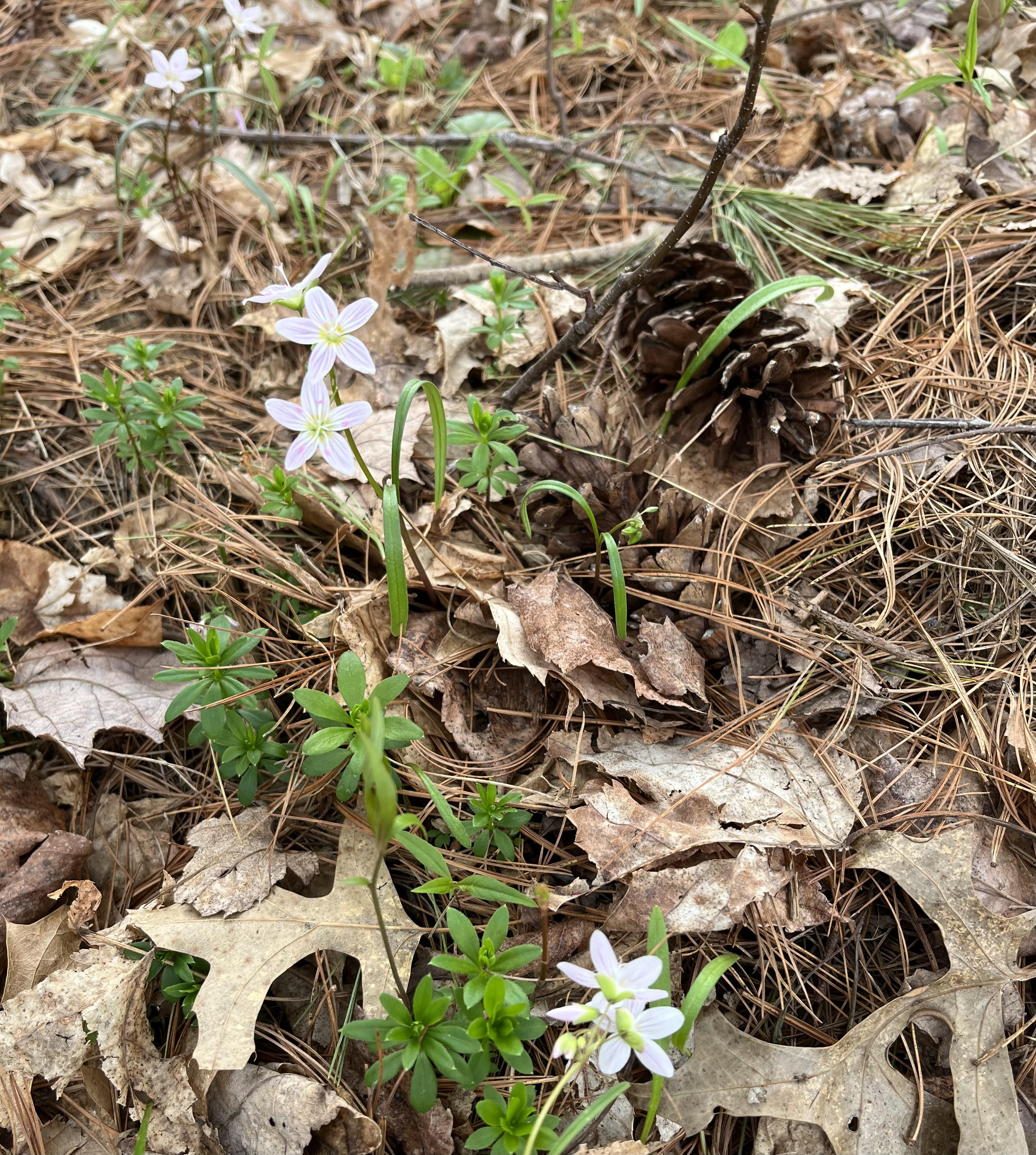
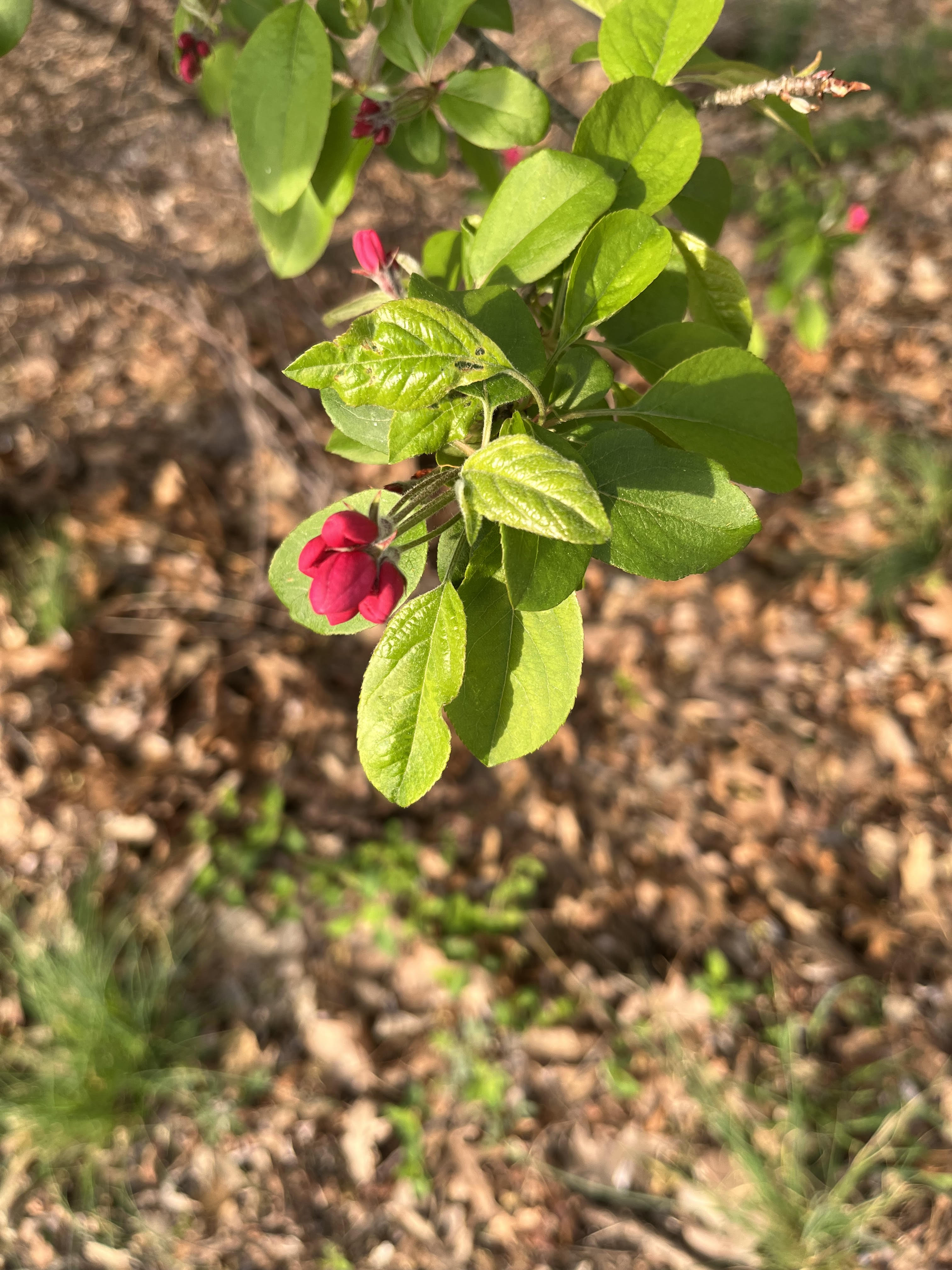
The first photo below is a white trillium. Next in the leaf litter, you see a stand of May apples and a group of Spring beauty wildflowers. The apple tree has buds about to bloom.

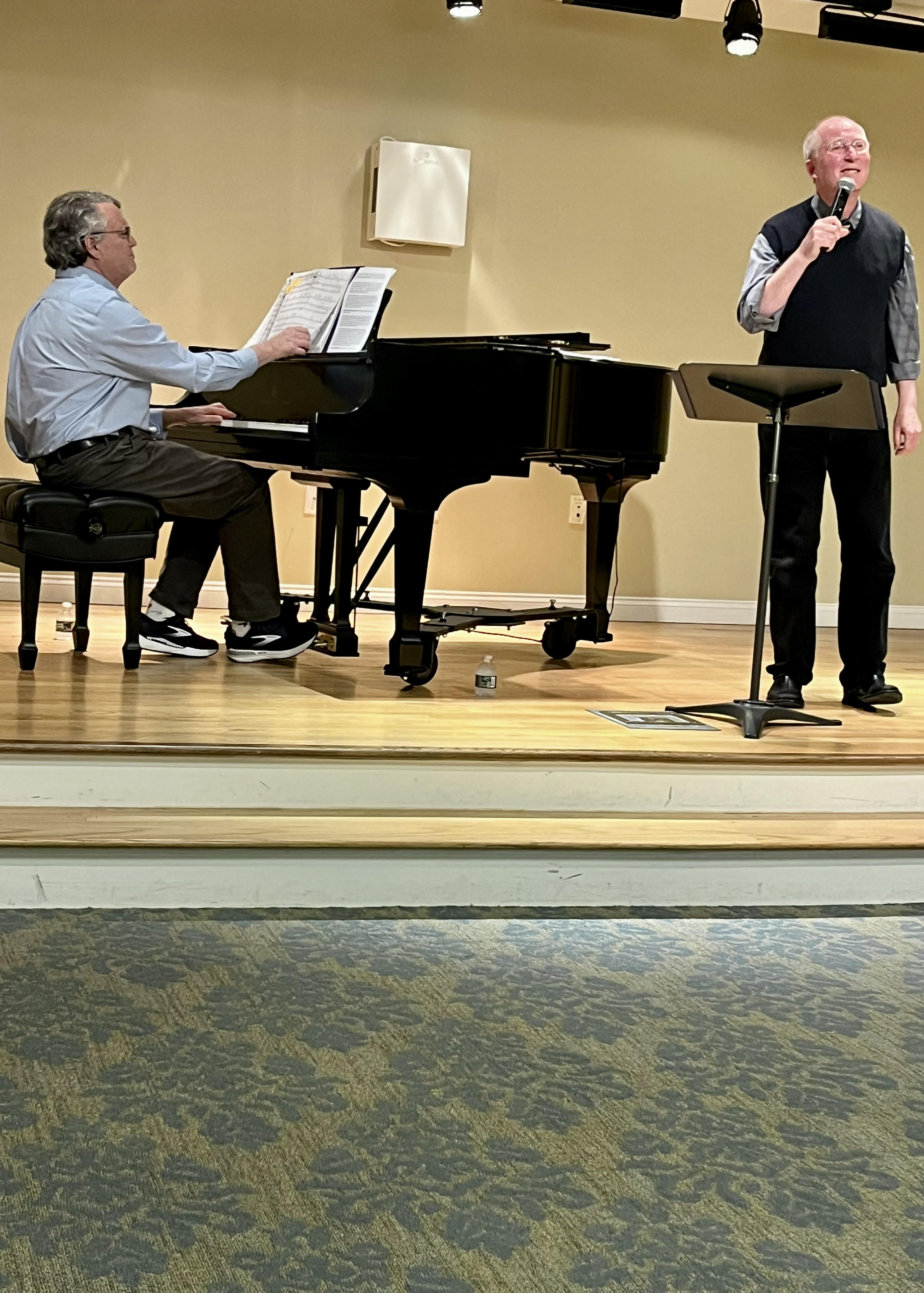
Blogger Will McMillan bloomed at my retirement community the other day with one of his deep dives into the heroes of the American Songbook. This time it was Hoagy Carmichael. It’s amazing the forgotten songs Will digs up for his shows — while also presenting classics like “Skylark” and “Stardust.” There was a funny one about a jazz band in the afterlife, where all Carmichael’s departed friends were playing.

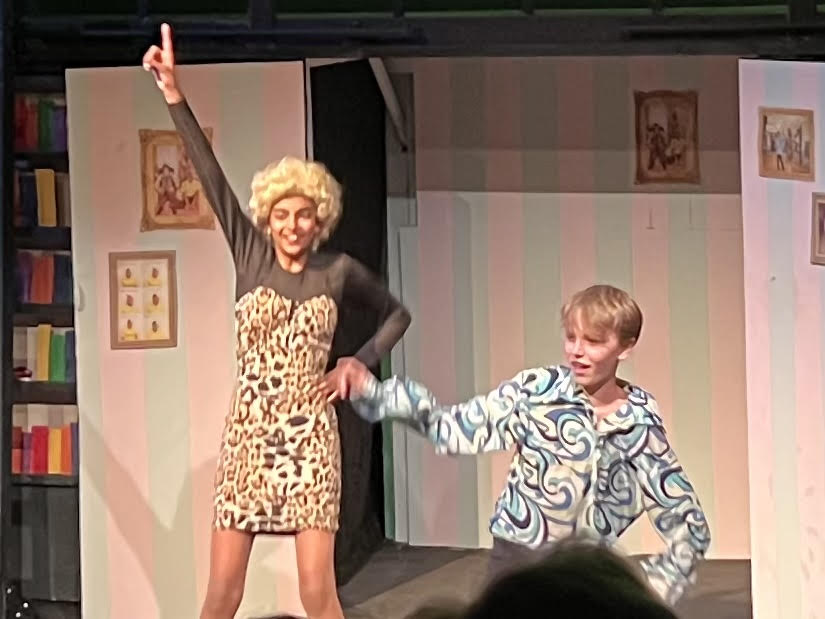
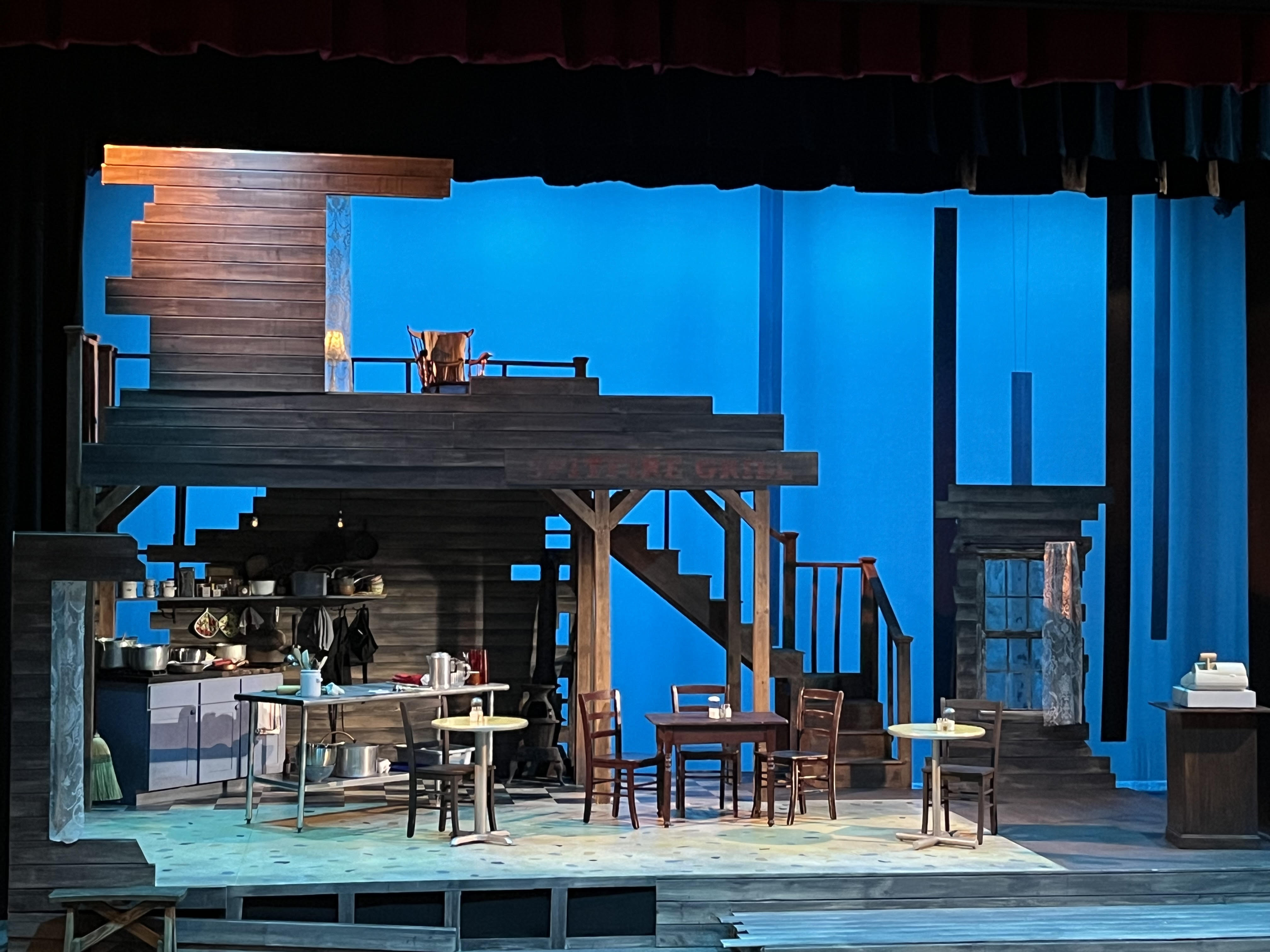
In one week, we went to see a grandson in the musical Matilda, which was polished and lots of fun, and the Spitfire Grille, which did not impress.

I also attended the Edvard Munch exhibit at the Harvard Museums, which I liked very much. It had paintings as well as a lot of prints in different stages of development to demonstrate Munch’s experiments with technique. The exhibit is there until the end of July, so try to catch it if you are ever near Cambridge, Massachusetts.

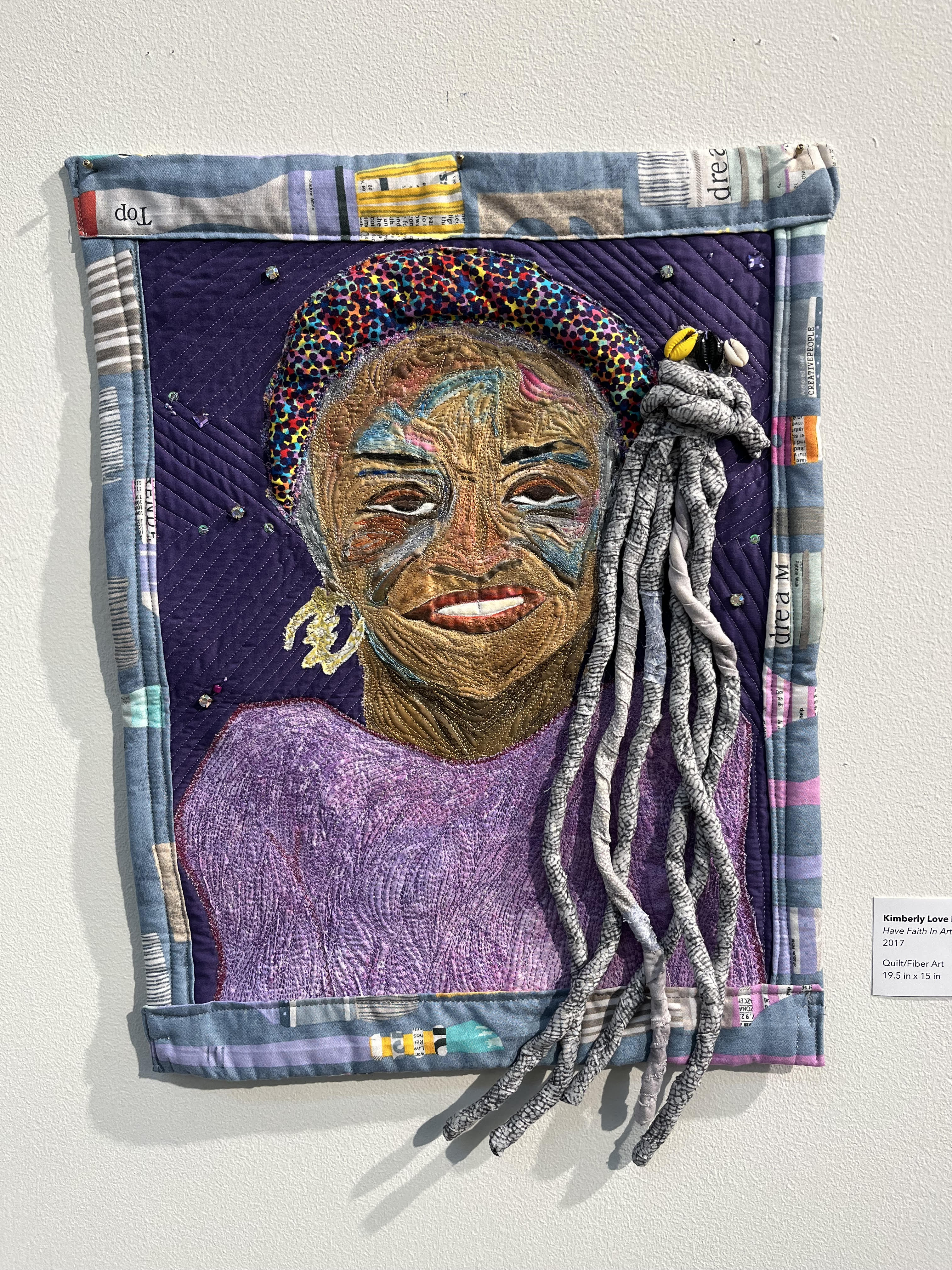
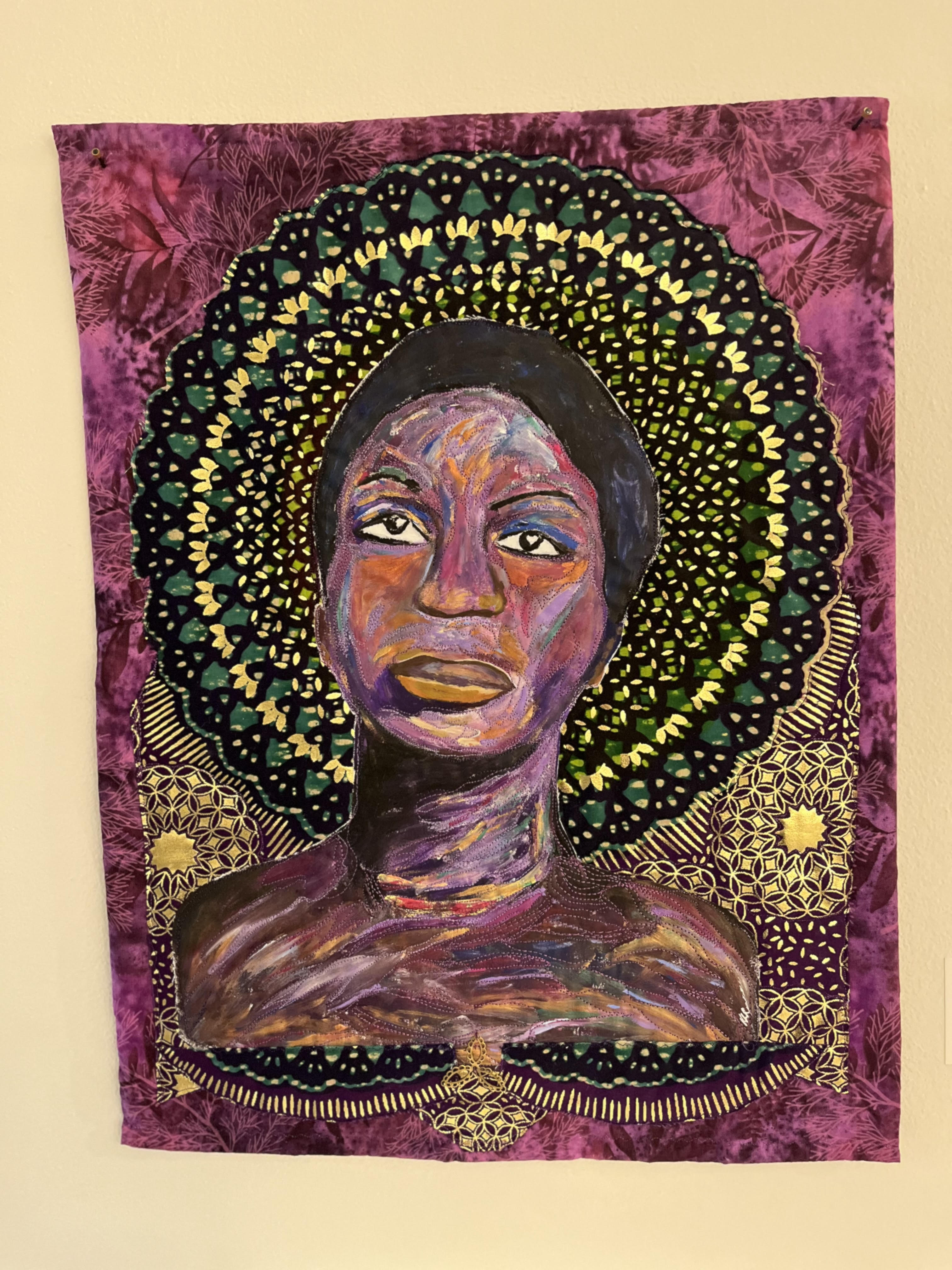
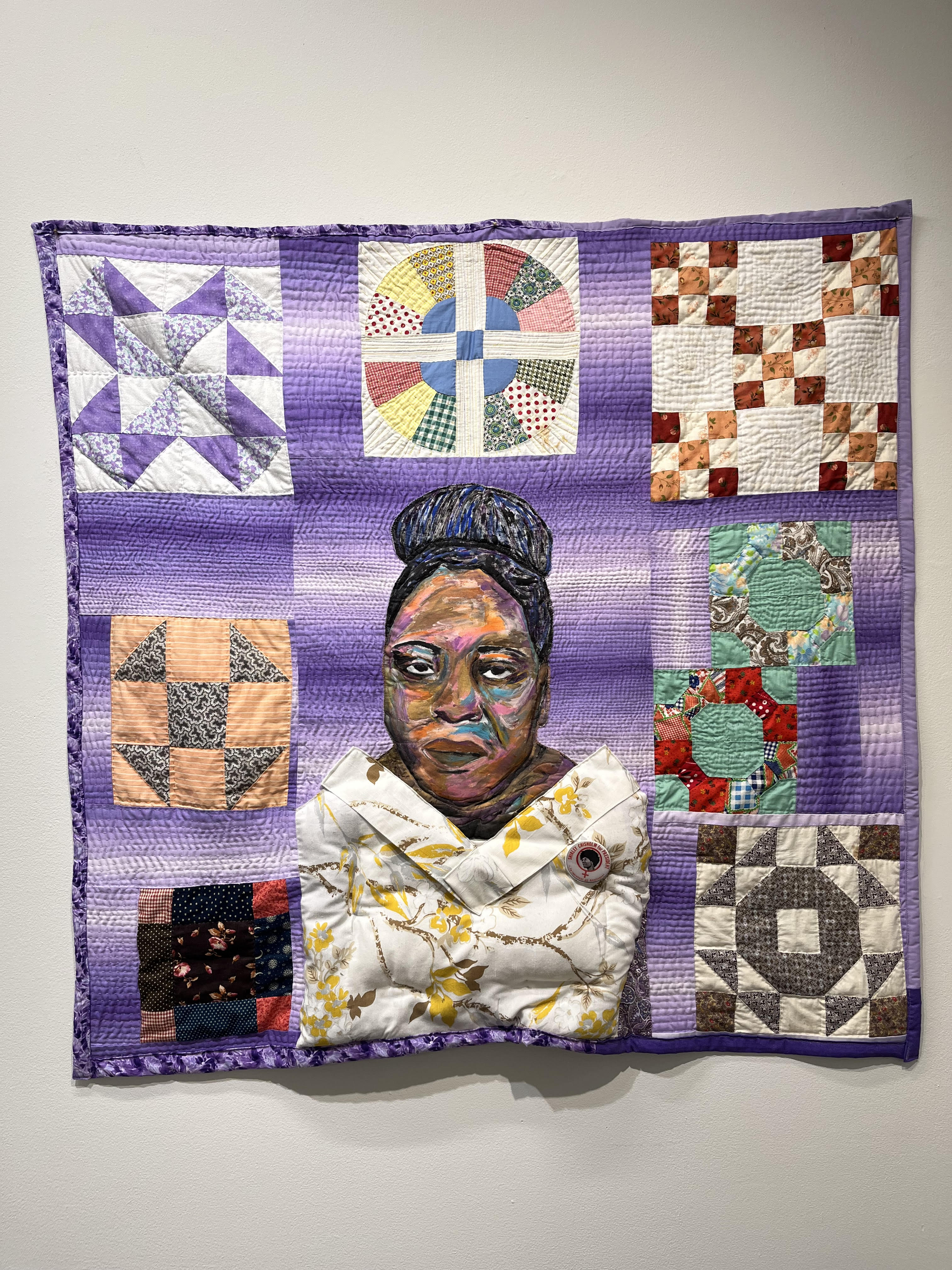
Meanwhile, at Umbrella Arts, there’s a textile show called “Weaving an Address.” The beautiful fiber art here is by Kimberly Love Radcliffe. The first one I photographed she calls “Have Faith in Art.” Then “Ms. Nina God Damn” references singer Nina Simone’s response to the murder of Black Sunday school girls in 1963. And the last Radcliffe I’m showing is a portrait of civil rights icon Fannie Lou Hamer. I just love these works.

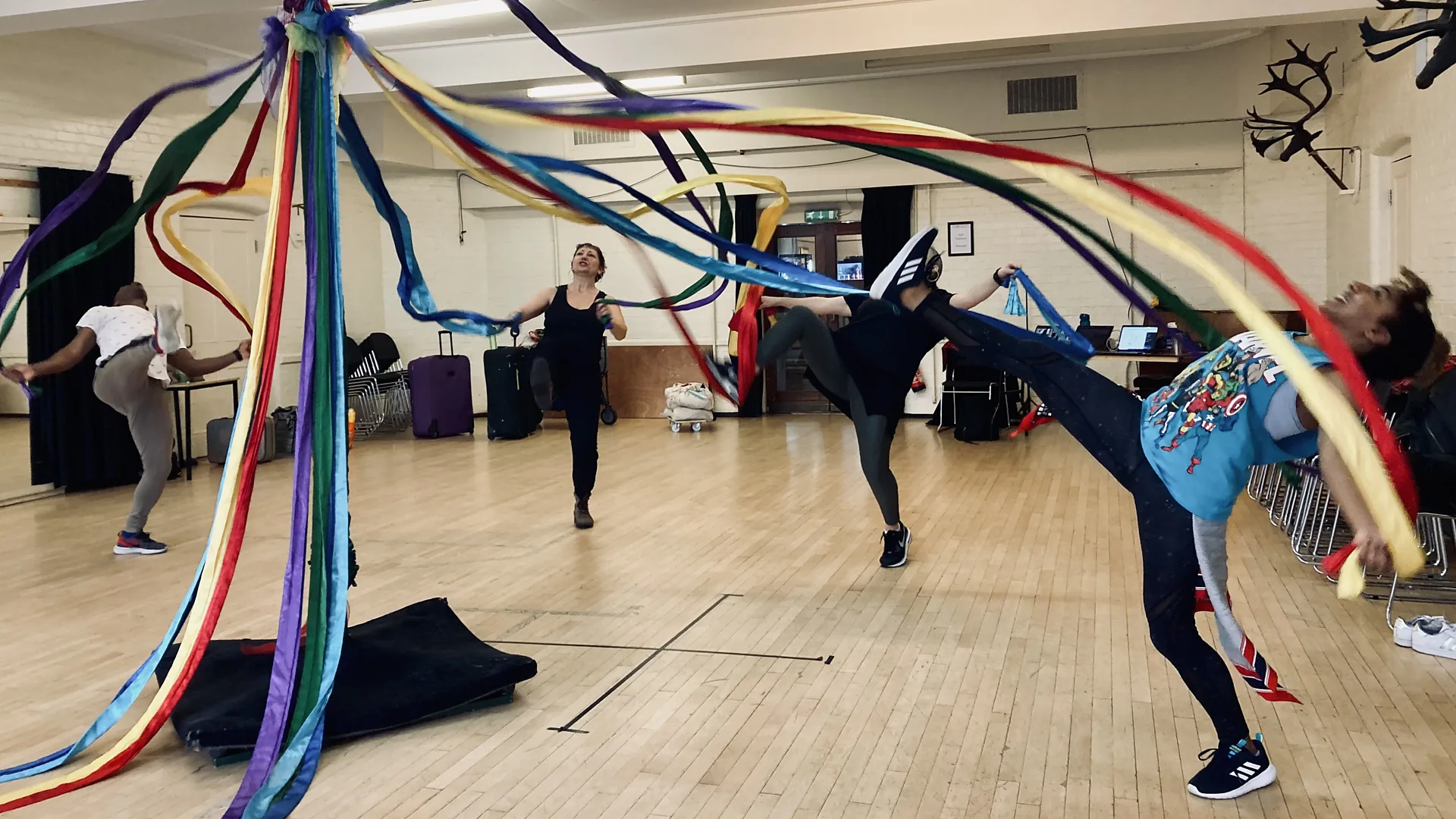
Photo: Zoey Goto.
UK’s Folk Dance Remixed combines traditions like May Day music with contemporary street dance styles.

On May Day, I was telling Diana that I had just received a surprise May Basket from my college’s local club. I have left May baskets of my own off and on since childhood, loving people’s puzzlement. Now it was time for me to wonder who I should thank.

That reminded Diana that for years she went to New York City’s Riverside Park on numerous May firsts to see the Morris dancers perform.

Nowadays, May 1 is associated with the international labor movement, and that’s a fine thing, too. But I am usually conscious of a different, more ancient celebration underneath it all.

Today’s story is about reimagining traditions like the Morris dancing of May Day for a new age.

Zoey Goto wrote at the BBC, “Camden’s Cecil Sharp House has been questioning the very notion of what traditional British music means in the multicultural 21st Century.

” ‘Hip-hop is the folk dance of today,’ said Natasha Khamjani, breathing heavily. They’re both social dances created for crowd participation, both also existing on the fringes of the mainstream, she added. Khamjani was taking a quick break during a rehearsal of a high-energy performance blending Bollywood moves and English country dancing with the unmistakable bounce of hip-hop moves.

“In an unexpected twist, Khamjani and her troupe were also dancing under a rainbow of swirling maypole ribbons – a sight more commonly associated with English village fetes rather than a basement in inner-city London. …

“For Khamjani, artistic director of Folk Dance Remixed, a collective putting a global spin on old-time English dances, a natural synergy exists. These are the dances of the people, bubbling up from the streets, pubs, village greens, dance halls and international communities that birthed them, Khamjani explained. An easy fit between age-old English country dances and house music exists, she pointed out. ‘It sounds weird but the steps are basically the same,’ she laughed. …

“Remixing maypole dancing is just one of the myriad ways that English folk culture is currently having a reboot, thanks to a new wave of switched-on folkies diversifying the scene. At the heart of this progressive movement is the Cecil Sharp House, a music venue and folk arts centre that’s home to the English Folk Dance and Song Society (EFDSS) and where Folk Dance Remixed perform regularly.

“Named after Cecil Sharp, a folk music enthusiast who roamed the countryside of England and the US South collecting folk music and dances in the early 20th Century, this temple to vernacular culture threw open its Arts and Crafts-style doors in 1930. …

“Over the last few years, the EFDSS has ramped up its outreach efforts to engage new audiences, mixing diverse cultural traditions to create new interpretations of ‘Englishness.’ Projects have included teaming up with musician Kuljit Bhamra, pioneer of the British Bhangra sound, an upbeat musical style that mixes traditional Punjabi beats with Western pop, to uncover similarities between 18th-Century traditional Kentish jigs and Bhangra music. There have been sea shanty lessons with rap verses taught to schoolchildren; and feminist-themed pop-up events, including a recording of the podcast Thank Folk for Feminism at the house.

“Certain projects have undeniably chimed easier than others. Take for example Queer Folk’s Queer Ceilidh parties hosted at Cecil Sharp House, where evenings of LGBTQ ceilidh dancing and drag acts have proved a sell-out success. …

“Joining me in the main hall at the Cecil Sharp House beneath a whimsical mural of folkloric creatures and abstract dancing figures, Katy Spicer, the chief executive and artistic director at EFDSS, pointed out that it is, however, a work in progress making the English folk scene truly inclusive. ‘In terms of diversity, ethnicity has been the hardest challenge’ she said. …

” ‘There was perhaps a tunnel vision back then and histories not recorded, which no one questioned until recently. We’re working to set the record straight,’ Spicer said, as a group of teenagers, part of the National Youth Folk Ensemble, shuffled onstage to tune violins ready for the evening’s show. ‘Particularly when you have English in your title, you have to address what it means to be English and whose England is it?’ …

“Exploring some of these overlooked histories and racial crosscurrents is Cohen Braithwaite-Kilcoyne, a singer, musician and rising star of the folk scene, who in 2021 collaborated with the EFDSS on the Black Singers and Folk Ballads project. The work explored links between English folk and music-making among enslaved people in former British colonies in the US Southern states and the Caribbean.

” ‘I’d always been aware that there are songs and ballads that crop up across English folk music traditions and the music of Black America and the Caribbean, but perhaps hadn’t quite realised the extent of the shared repertoire,’ he told me. ‘These songs started life in Britain and migrated with the people to the Americas. It seemed that there was a certain amount of cultural exchange between the white colonizers and Black enslaved people,’ he said of his research, which unearthed examples of similar storytelling and melodies across the three traditions. ‘But the very nature of folk song means that as it’s passed along orally, you get an evolution.’

“Often still viewed as a relic from a dusty, bygone era, folk has also long struggled to attract a younger, hipper crowd. But things look set to change.”

More at the BBC, here. No firewall.

Photo: John and Suzanne’s Mom.

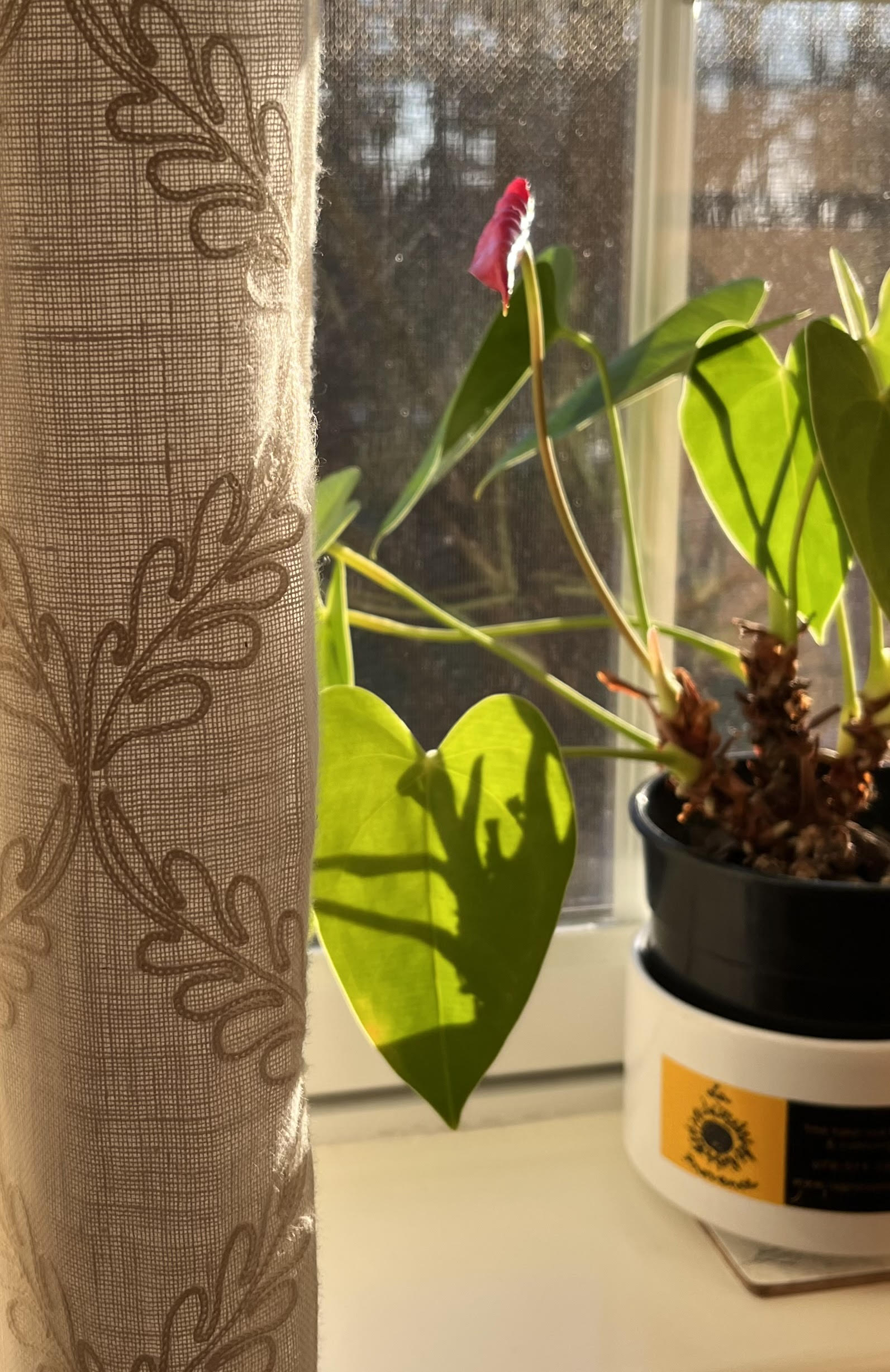
Do you talk to your houseplants? Do you sing to them?

Today’s story suggests that it’s no joke. Music can be the plant “food of love,” so play on.

Kate Morgan at the Washington Post reported the phenomenon.

“Zak Peters’s business began when he realized that the cannabis plants in his Massachusetts basement seemed to grow better when he played music for them. ‘I don’t know why, but they loved Radiohead so much,’ he says. …

“The flora seemed like an enthusiastic audience, so at the start of the pandemic, when most live music performances were canceled and venues closed, Peters started inviting local bands to play to the plants. …

“When Peters relocated to Austin in 2021, the idea grew. Bands and venues across the city have hired his company, Play to the Plants, to cover stages with houseplants of all shapes and sizes. It’s about more than just decoration, he says.

“ ‘People just love the idea of playing to the plants,’ Peters says. ‘It’s calming and it just makes the bands feel good.’ It also makes the plants feel good, at least in Peters’s estimation. ‘We’ve never had a plant die,’ he says. ‘If anything, they’ve had better growth.’

“Even if you’re not toting your plants along to concerts, there may be some benefit to exposing them to music. A number of streaming services now offer curated playlists and channels aimed at improving plant growth, and while scientists can’t say for sure whether it works, it probably can’t hurt.

“Plants do respond to sound. That much, at least, is settled science. Researchers have found that plants feel vibrations and react to them. When Heidi Appel, a chemical ecologist and professor of biology at the University of Houston, and her colleague, Rex Cocroft of the University of Missouri, replicated the sound of a caterpillar chewing, plants sensed those vibrations and increased their chemical defenses. They concluded it was proof that plants respond directly to noises.

“In fact, Appel says, plants (and all living things) are constantly surrounded by sound waves and vibrations. Whether we’re aware of it or not, she says, we all live in a vibroscape, an atmosphere of natural vibrations that humans may not even notice. ‘Plants are so responsive to everything in the environment,’ she says. ‘So what sounds are important to plants? Raindrops, probably. And pollinators, perhaps herbivores.’ …

“One study found that when beach evening-primrose flowers were exposed to the sound of a flying insect, they produced sweeter nectar almost immediately. …

“Research from the past few years suggests plants will lean toward sounds played at certain frequencies, and in a recent study, Japanese scientists exposed some arugula plants to Jimi Hendrix and others to Mozart. While the study didn’t look at which might be ‘better’ for the plants, it did find that the cellular structure of the plants was different depending on which music had been played to them. …

“Regardless of the science behind it, there’s plenty of music being made for plants. Several major streaming services have launched dedicated plant channels, and they all have different vibes, so choosing the right fit might depend a lot on your plants’ personalities. SiriusXM’s Music for Plants channel is heavy on the strings-driven instrumentals, for romantic plants that appreciate a sweeping fantasy film score or an Andrew Lloyd Webber musical. On Apple Music, artists including Hortus Botanist and Audioponics offer ambient synthesizer grooves for plants that just want to, like, chill, you know?

“And then there’s Spotify’s Hardcore Gardening.

“Last year, the streaming service partnered with Chris Beardshaw, a Britain-based horticulturalist and broadcaster who oversaw a study in which plants exposed to hardcore punk grew to be ‘much more robust’ compared to plants grown in silence or exposed to classical music. The plants that were ‘bombarded’ by hardcore, he says, ‘were the shortest but the stockiest and most resilient, with the least incidence of pests or disease.’

“In other words, if you want to grow the toughest plants in the mosh pit, toss on the playlist, which kicks off with Black Flag and keeps up the energy with songs from Bane, Have Heart and all the other loudest bands you can think of.”

More at the Washington Post via MSN, here. No paywall.

Photo: Lindsey McGinnis/The Christian Science Monitor.
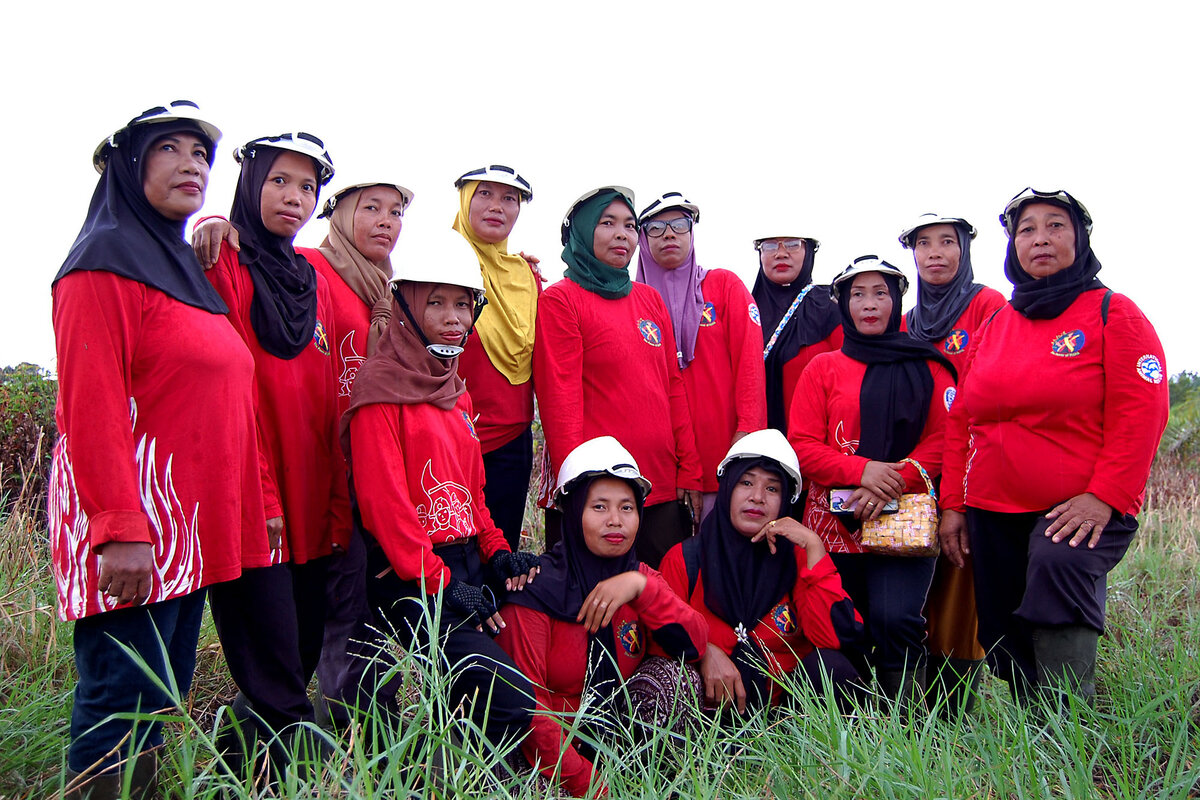
Power of Mama patrollers, who routinely put out palm oil fires in Indonesia.

In Indonesia, women have answered the call to do something about wildfires. Because in Indonesia, careless and illegal palm-oil logging routinely causes fires, endangering orangutans. And not just orangutans.

Lindsey McGinnis and Sara Miller Llana report the story at the Christian Science Monitor.

“The women adjust hard hats over hijabs and pull on knee-high boots. Then they set off into what was once a dense forest of rubber and bamboo trees but is now a patchwork of small-scale palm oil fields. Everyone knows who they are. Their scarlet, elbow-patched uniforms with flames snaking up the torso, and the image of a firefighter emblazoned on the chest, give it away.

“This is the Power of Mama.

“Across Kalimantan, the Indonesian part of the island of Borneo, lush rainforest hosting carbon-rich peatland and one of the country’s most significant populations of orangutans meets illegal logging and palm oil farms. That adds up to wildfires.

“So Power of Mama members have started patrolling for fire risks, urging farmers to follow the rules about slash-and-burn clearing, and challenging stereotypes about women’s roles in rural Indonesian life along the way.

“Female forest rangers in Indonesia are rare, says Eulis Utami, director of a nongovernmental organization called Hutan Itu Indonesia, or Indonesia is Forest, which aims to educate Indonesians about their tropical rainforest, the world’s third-largest. But when women are given training and information, she says, ‘They protect the forest with their whole hearts.’

“In untouched forests of West Kalimantan, orangutans build their nests high up in trees. Hornbills soar through the vines with deep swoops of their wings. The chirps of songbirds mingle with the ‘o-ho!’ calls of gibbons.

“But this habitat is shrinking. West Kalimantan has lost more than a third of its tree cover since 2000.

“Indonesia is the world’s largest producer of palm oil, and nearly all of it comes from either Sumatra or Kalimantan. The farms have wreaked havoc on peatlands, one of the world’s most important carbon sinks. When the bogs are cleared, the water table sinks and soil becomes highly flammable.

“A new consciousness about the risks of fire spread rapidly to this community in 2019, when agricultural burning amid drought conditions sparked fires that raged for months. Millions of acres of peatlands and rainforest burned. And it kept many of the mothers who would eventually form the Power of Mama up at night, worried about the effects of smoke and haze on their children’s health.

“The Power of Mama was launched in 2022 by Yayasan International Animal Rescue Indonesia (YIARI), whose long-term goal is to save the critically endangered orangutan. …

“YIARI intentionally made women part of the solution. Male farmers have been impervious to NGOs trying to convince them to protect the forests, but they listen to their wives, says Anna Desliani from YIARI. ‘Women have influence in their families,’ she says.

“One of the newest branches is in the community of Sungai Putri, which counts 2,000 residents. Farmers here have long tended rice paddies but many switched to more lucrative oil palm trees in 2017.

“ ‘It’s sad because … before it was real forest,’ says Misnati, a patroller who, like many Indonesians, has just one name. She says she misses the sounds of gibbons and the cooler air the forest brought. She also felt more protected from fire and floods when the forest served as a buffer zone.

“The Power of Mama doesn’t aim to stamp out cultivation – in fact, most of its members’ husbands toil in palm oil now. But they have been educated on the risks of clearing land by burning, of overcultivating, and of smoking in a highly flammable field. And that knowledge gives them an authority that many had never known. …

“When it comes to forests, the discussion is always ‘heavy,’ explains Ms. Utami. It’s about deforestation, wildfire, conflict. That’s why Indonesia is Forest, which introduces young town dwellers to the rainforest, focuses on positive narratives that make people want to protect Indonesian biodiversity.

“The Power of Mama is, in its own way, cultivating a similar enthusiasm.

“On this rainy day, the women aren’t on high alert. They walk the land and talk with farmers. Passing a patch of blackened vegetation, Misnati recalls her proudest moment: when she figured out how to connect a hose to a water pump and put out a fire here last year. …

“Before the Power of Mama, ‘I’d never venture this far into the land alone,’ she says. ‘I’ve gotten to know the landscape even though I’ve lived here my whole life.’ …

“ ‘We need to be a role model, to set an example,’ says another patroller, Lita, sporting an upcycled crossbody purse made of plastic detergent sachets she collected from her neighbors. Other women are wearing them, too. ‘If we don’t do this, who will?’ ”

More at the Monitor, here. Nice pictures. No paywall.

Photo: Nilo Merino Recalde.
A visual representation of an audio clip of five different great tit birds singing one song each.

There is so much for humans to learn about other species! The other day, a post on household pets reacting to the animated film Flow inspired Deb in Tennessee to conduct her own experiment with her dog. She learned that Buster, for one, was bored by Flow, failing to replicate the anecdotal evidence of curiosity described at the New York Times — a good example of why studies usually say, “More research is needed.”

Today we learn something new about birds, but maybe it’s only certain birds.

Victoria Craw writes at the Washington Post, “They sound beautiful, herald the start of spring, and even have the power to reduce stress and boost mental health.

“Now it turns out that some birdsongs also contain a hidden world of shared language, with varying local accents and dialects that change depending on the age of the bird and its peers — not unlike human songs.

“ ‘Just as human communities develop distinct dialects and musical traditions, some birds also have local song cultures that evolve over time,’ said Nilo Merino Recalde of the University of Oxford’s biology department, who led the new research published in the journal Current Biology. ‘Our study shows exactly how population dynamics — the comings and goings of individual birds — affect this cultural learning process.’ …

“The study is based on analysis of over 100,000 bird songs from at least 242 birds recorded in 2020, 2021 and 2022 in Wytham Woods in Britain’s Oxfordshire — a sprawling 1,000-acre wood where ecological and environmental research is carried out. For the last 77 years it has been the site of the Wytham Great Tit Study showing how two species of tit — the great tit and blue tit — have changed over time. …

“While some birds learn songs from their fathers and others learn continuously from neighbors, great tits are believed to do most of their learning in the first 10-11 months of life. …

“Merino Recalde said he was inspired by his love of birds and interest in social learning in animals, which creates an evolving shared culture reminiscent of the way humans learn languages and music. Theoretical work indicates that factors such as population turnover, immigration and age can affect the evolution of these cultural traits — so far, however, empirical evidence on the subject has been limited.

“His research team focused on the great tit, a small bird that lives just 1.9 years on average. The team recorded the ‘dawn chorus’ from March to May — coinciding with breeding season — using microphones placed near nesting boxes to gather more than 200,000 hours of the ‘simple yet highly diverse songs’ sung by males. Through a combination of physical capture, microchips and an artificial intelligence model, researchers were able to recognize the songs of individual birds and track how they changed over time, showing each bird had a repertoire ranging from one to more than 10 tunes.

“ ‘One of the main findings was that the distance that these birds travel while they are learning the songs, and also the ages of the other birds they interact with … affect how varied their songs become, collectively,’ Merino Recalde said. …

” ‘Homegrown’ songs in areas where birds stay close to their birthplace tend to stay unique, similar to the way in which isolated human communities can develop distinct local dialects over time, the team found.

“Age also had a significant impact, with birds of a similar age singing similar tunes, whereas mixed-age neighborhoods had ‘higher cultural diversity.’

This shows that the older birds can act as guardians of culture as they ‘continue to sing song types that are becoming less frequent in the population,’ researchers said.

“ ‘In this way, older birds can function as “cultural repositories” of older song types that younger birds may not know, just as grandparents might remember songs that today’s teenagers have never heard.’ …

“Merino Recalde said capturing how population changes are reflected in song could provide a future avenue for less invasive research, eliminating the need for capturing and tagging animals, for instance. …

“Professor Richard Gregory, the head of monitoring conservation science at Britain’s Royal Society for the Protection of Birds (RSPB), who was not involved with the study, praised the ‘herculean’ effort to analyze such a large data sample over a three-year period and said similar research could be used to highlight ‘critical tipping points’ for a population in future.

“While the great tit is not endangered, Gregory said the study could help inform plans to reintroduce or relocate certain animals, as such conservation efforts may be ‘doomed’ if they don’t take their cultural traits into account. ‘This study reminds us that the details of an animal’s life really matter.’

“Gregory, who is also an honorary professor of genetics, evolution and environment at University College London, said the study also showed that ‘methods of wildlife recording and song analysis are developing at break-neck speed,’ and AI is going to ‘revolutionize conservation science’ by allowing patterns in nature to be identified more readily.”

More at the Post, here. You can listen to an audio clip there.

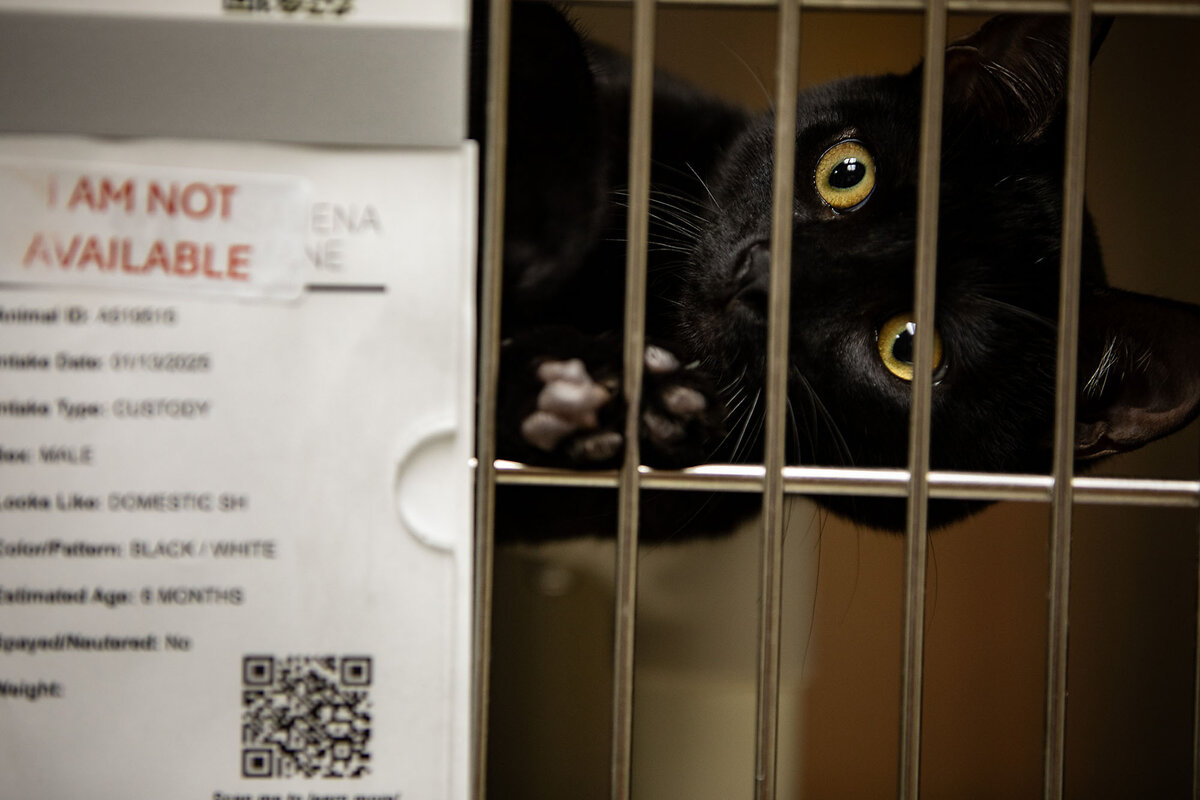
Photo: Melanie Stetson Freeman/CSM Staff.
A sign on the cage of a young black cat boarded at Pasadena Humane indicates that it belongs to someone who lost their home in the Eaton Fire. The organization took in about 500 pets right after the fires. As of March 8, there were about 170 still boarding, free of charge.

Speaking of those pets and other animals in the Latvian animated film Flow, what actually does happen to them in a disaster?

Whether it’s a catastrophic flood as in Flow, or a massive wildfire as in California last January, humane societies and lots of volunteers rise to the challenge.

Ali Martin wrote at the Christian Science Monitor, “Six weeks after the Los Angeles wildfires erupted, Chris Briffett was sifting through 10,000 volunteer applications. The director of volunteer services for Pasadena Humane, a nonprofit, is expected to bring on about 2,000 – giving the organization an ‘unprecedented chance, he says, to respond to the community’s needs. …

“When communities are devastated, people step up to help, often in ways that align with their own skills or interests. But in the past decade, more trained volunteers have been integrated with official disaster response, says Tricia Wachtendorf, co-director of the University of Delaware’s Disaster Research Center. The inclusion of volunteers in the government process of planning for emergencies, she adds, improves coordination in the midst of disaster.

“Christine Quesada, director of volunteer programs for LA County’s Department of Animal Care and Control, says volunteers were vital during the wildfire evacuations at LA Pierce College, which took in horses and other livestock. LA County’s Equine Response Team — volunteers trained to work with large animals — provided food and care; worked with organizations for donations of food and supplies; and cultivated relationships with owners. …

“During the January wildfires, the small staff at Pierce’s equine science center worked around the clock with about 20 volunteers a day, plus officers from the county’s Department of Animal Care and Control. After the first day, Pierce was at capacity with over 200 animals.

“Some belonged to Sarah Kern. She arrived with six horses and two donkeys after watching the glow of flames spread across the oak-covered hills surrounding her home in Topanga. Ms. Kern knew the stakes; she and her family lost a home in the 2018 Woolsey Fire.

“Their animals are a way of life, central to their daily activity and rhythms. With the horses and donkeys safe, she says, she could focus on caring for her family and protecting her property.

“ ‘Yes, you’re supporting animals,’ she says, ‘but you’re really supporting the people. … They’re both important.’

“Back at Pasadena Humane, Skinny Minnie is recovering from severe burns. She is one of nearly 170 animals still boarding here because of the fires.

“Owners Mark Pastor and Lisa De Lange evacuated their home in Altadena and managed to grab their other two cats – Beauregard and Stella – but little else, with flames melting the back of Mr. Pastor’s car as he pulled out of the driveway.

“Someone found Skinny Minnie in the burnt remains of their home and took her to the shelter, which posted her photo on its website, where it was discovered by Mr. Pastor. Either he or Ms. De Lange visit Skinny Minnie nearly every day.

“Skinny Minnie’s care has been extensive, and it’s all covered by Pasadena Humane. When they told him, Mr. Pastor says, he ‘broke down.’

“ ‘It’s like they care as much about us and our feelings as they do about the animals that they’re treating,’ says Mr. Pastor.”

More at the Monitor, here.

Photo: AP Photo/Denes Erdos.
Young people participate in the opening ceremony of the Lawyers’ Ball in Vienna, Austria, March 1, 2025.

Recently, we had Vienna on our minds because Erik and classmates from his high school in Wales were running a marathon there. Erik is a frequent marathoner and managed the course in under three hours, personal best.

Marathons are a longtime tradition in Vienna, but not as long as the activity in today’s story. It’s about the tradition of elegant balls.

Denes Erdos (along with AP journalist Stefanie Dazio in Berlin) submitted a report to the Associated Press.

“The aristocrats of the Habsburg royal court who danced in the first of Vienna’s famed balls in the 18th century could never have imagined how the hallmark of the Austrian capital’s social and cultural scene would evolve. Today, teenagers learn to waltz by watching YouTube videos while ladies shed their elbow-length gloves to better swipe on smartphones.

“More than 450 balls occur annually in Vienna, starting Nov. 11. … Professional guilds throughout the city host their own events, like the Ball of the Viennese Chimney Sweeps that marks the opening of the season.

“The sparkling balls are deeply rooted in Viennese culture, blending history with modern glamour, and the waltz remains an essential part. While the average ticket costs 395 euros ($427) — though VIP boxes at the Opera Ball can go for 25,500 euros ($27,539) — other events have lowered their prices to 40 euros ($43) to attract a wider audience.

“ ‘To be a part of this for me, as an Austrian person, is like taking part in Viennese culture,’ Leander Selmani, 19, said. ‘I was watching all these ball openings on YouTube and I said, “I want to be part of that.” ‘

“Besides YouTube, teens must learn the carefully choreographed dances for each ball’s opening ceremony from places like the Elmayer Dance School, which has been training dancers since 1919. In order to participate in an opening ceremony, dancers must first qualify through a strict regimen. Then they attend multiple lessons at a dance school and receive a stamped certificate of completion after each session. …

“Only once ‘Alles Walzer!’ (‘Let the waltz begin!’) has been declared can the rest of the crowd join in the dancing. This year, many balls honored the 200th anniversary of the birth of Viennese composer and violinist Johann Strauss II, known as the ‘waltz king.’

“While the waltz, the quadrille and other traditional dances are the heart of the Viennese balls, modern events now offer a diverse range of music and entertainment. Most venues feature multiple halls where guests can dance to various styles, including disco and contemporary beats. …

“Dress codes, however, have remained strictly enforced for centuries: gentlemen are required to wear tailcoats or tuxedos, and ladies must don evening gowns. Many attendees rent their attire from Lambert Hofer, a renowned costume workshop founded in 1862 that rents out hundreds of gowns each year.” More at AP via the Seattle Times, here.

Meanwhile in the US, you can take up ballroom dancing, but be prepared: the competition in the championships is fierce. My friend Ronnie’s sister wins them, but after years of work. About the latest competition, Ronnie tells Facebook, “I was in NY recently for the Fred Astaire Cross Country Dance Championships. My sister competed and is now 2025 Fred Astaire National Champion in American Smooth (tango, waltz, fox trot, Viennese waltz) Senior Division.” She is in her 80s.

Photo: Sideshow/JanusFilms.
The movie Flow is all about animals — no humans and no verbal conversation — and it seems that domestic pets are mesmerized.

I had been wanting to see the movie Flow, so at Easter, Suzanne set it up for the kids and me while she attended to Bunny work.

It was fun to figure out with the grandchildren exactly what was happening in the film and to add our own sound track. But in the end, I don’t think they liked it much. I myself have a problem with ambiguous endings, gorgeous as the animation was.

Now I am fascinated to learn what the movie has meant to a different audience: household pets. Esther Zuckerman has a report at the New York Times.

“Search on TikTok and you’ll find a number of videos of dogs and cats alike viewing Flow alongside their owners, appearing to recognize themselves in the gentle saga, which tells the tale of an adorable black kitty who must work with a motley crew of other industrious animals to survive rising sea levels in a surreal landscape. The trend is a particularly cute coda to what was already one of the feel-good stories of awards season in which the dialogue-free indie — made on open-source software and directed by Gints Zilbalodis — triumphed over studio fare like Inside Out 2 and The Wild Robot, to earn Latvia its first ever Oscar.

“Watching Flow in the theater is a wonderfully immersive experience where the spectacle of the movie’s visuals are on full display. … Watching Flow at home (it is streaming on Max) with an animal is an equally delightful experience, but a different one. You may find your attention pulled in two directions as you try to contemplate what this all means to your pet as well as what it means to you.

“I, for one, tried to decipher just what was going on with [my dog] Daisy. Surely, she wasn’t understanding the climate change allegory, but her huge ears stood up straight as she gazed upon the heroic cat, and I caught her running up to the TV for a sequence in which it and its capybara ally go tumbling off their boat. Seeing — or perhaps just hearing — the characters in peril stressed her out on some level.

“Matiss Kaza, who produced and co-wrote the film, said in an email that he suspects that it’s the real animal sounds used in production that attract the attention of our domesticated friends. …

“When I spoke to social media users who posted clips of their household beasts responding to Flow, they explained that their animals aren’t usually this entranced by the screen.

“Chayse Orion, 24, had seen other TikTok posts about the film before he decided to watch it. He thought it was cute but wasn’t paying super close attention. His cat Fishbone was. ‘Fishbone was so engrossed in the movie,’ Orion said. ‘He was just so into it, which was really weird because I’ve never seen him interact with a show like that.’ …

“Orion knew it would make great internet content. Not only did he start to film Fishbone, he moved the cat’s tower closer to the TV for a better view, one that put Fishbone at eye level with his animated brethren. ‘I actually put it on again yesterday for him to watch while I was working,’ he said. ‘It’s definitely his favorite movie now, for sure.’ …

“Celine Orosco, 29, found that her dog Samson, a golden retriever, was also invested in Flow. She said it was the first movie he ever watched all the way through. He was particularly excited, she noticed, whenever the Labrador that joins the cat’s group of travelers came onscreen. ‘He really loved that dog,’ she said.

“Of course, we don’t know what any of our animals are actually thinking when they watch Flow. Did Gao’s black cat actually recognize herself? Hard to say. My boyfriend at first inferred that Daisy liked the lemur who has a basket full of trinkets, then thought perhaps she was upset by it. I know that she didn’t follow the plot — I love her, but she’s not that intuitive. She did, however, hear the so-called voices of the characters, and reacted to whatever they were conveying. …

“We love to watch our pets watching Flow for the same reason we love to watch Flow. The film understands that delicately anthropomorphizing these animals is a powerful tool. Their movements are carefully calibrated to replicate the way the creatures would behave in real life, but their actions are just human enough to make the story feel relatable.

“Would a cat, a dog, a capybara, a large bird and a lemur all team up to save one another should massive floods happen? Hard to say. But it’s a good metaphor about how empathy can be salvation.”

More at the Times, here. If you’ve already seen the movie and can bear a negative review, check Asakiyume’s reservations, here. But be warned: there are spoilers.

Photo: Alexandra Corcode.
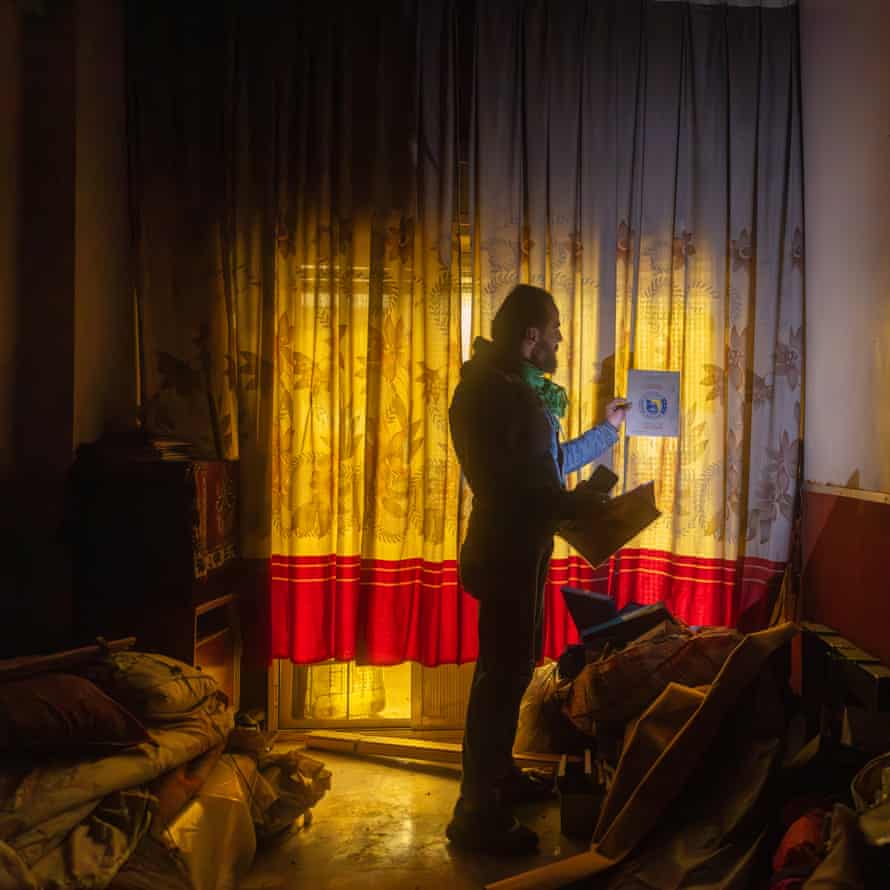
Mohamad searching for memories in a suitcase in Damascus. Their apartment was a stage — until the Assad government arrested them.

In today’s post, we learn more about how people living under repressive regimes keep culture and freedom going.

Andrei Popoviciu writes at the Guardian, “Thick layers of dust shimmer in sunlight as Mohamad and Ahmad Malas sift through old belongings in their Damascus apartment, abandoned for 14 years. …

“On one of the walls portraits of their father and one of their brothers, who have died, hang frozen in time. There’s no electricity so they use their phone torches to light their way as they collect personal artifacts they long forgot about.

“ ‘Looking around brings back so many memories,’ Mohamad says. ‘It’s painful.’

“For the 41-year-old brothers, returning to their flat is bittersweet. Their apartment was more than just a home. It was once a stage, a space where they performed original theatre plays away from the watchful eye of the Bashar al-Assad regime, which tightly controlled and censored artistic expression. In the two years before they left Syria, they performed more than 200 plays in their home.

“But their lives changed in 2011 when they were arrested for participating in the popular movement that started on the heels of the Arab spring and sought to remove Assad from power. Ahmad was wanted by the political police for sharing a revolutionary magazine with a friend, so the day security forces came knocking he fled immediately. Mohamad stayed behind to gather a few belongings before they escaped to Lebanon.

“Life there was uncertain, with Syrians facing the constant threat of deportation. Egypt offered brief stability, despite them feeling they could not continue their work as actors. Europe was where they felt they could freely perform with no censorship or threat. In 2013, they arrived in France as asylum seekers and speaking no French.

“Their first year in France was a struggle, spent moving from city to city, unable to work and battling to learn the language. Eventually, they were granted asylum and settled in Reims, in the country’s north-east. There, they rebuilt their acting careers, landing roles in theatre plays, films, and television.

“As they found their footing, they wrote and performed a play, The Two Refugees, chronicling the experience of refugees in France and inspired by their story. The production was a success and gained international recognition, taking them from Iraq to Japan and Jordan, often with the support of French cultural institutions.

“ ‘France gave us security and a chance to continue our art in a free world,’ said Ahmad. …

“They never imagined they would return to Syria. But as rebel forces were taking city by city, advancing toward Damascus in late 2024, they closely followed events from afar. Mohamad was at a film festival in Jordan; Ahmad was in France.

“On the morning of 8 December, Mohamad sent Ahmad a video. It showed people celebrating in a Damascus square, waving the revolution’s green flag and singing slogans against Assad. Ahmad could hardly believe his eyes. A deep longing stirred within them both. Soon after, Mohamad traveled from Jordan, and Ahmad followed from France.

“ ‘It felt like a dream come true,’ said Mohamad of the moment they entered Syria. ‘We felt like we could fly, it was surreal to walk through the streets and not see Assad’s photos everywhere.’ …

“The brothers knew they had to bring their play home, so they started performing it across the country, from Aleppo in the north to the coastal city of Tartus. They were unsure how an audience that had never left would react to a story of exile.

“ ‘Everyone understood it,’ Mohamad said. ‘I get it now – because even though they never left, they felt trapped in their own country.’ “

More at the Guardian, here. No paywall. Nice pictures.

Photo: Kevin Winter/Getty Images
After a bad year for wildfire, the Oscars gave the Los Angeles firefighters some well-deserved recognition.

After wildfires devastated the Los Angeles area last winter, Hollywood decided to give the firefighters some love. For men and women who are professionally calm in the face of extreme danger, being around celebrities felt a bit scary.

Jada Yuan reported the story for the Washington Post. “When 12 of greater Los Angeles’s firefighters took the stage at the Oscars … they got a standing ovation so big you could hear it the lobby bar. Screams filled the Dolby Theatre, which had been evacuated in early January when one wildfire ripped through the Hollywood Hills.

“Onstage, Los Angeles Fire Department Capt. Erik Scott earned his laughs, joking, ‘Our hearts go out to all of those who have lost their homes … and I’m talking about the producers of “Joker 2.” ‘ He and his fellow firefighters would take Monday off, but after that, it would be back to work — back to 5 a.m. wake-up calls, back to heartbreaking days, back to being on constant alert in a city that has barely recovered from the destruction wrought by the fires this winter. …

“Was Scott tearing up as the crowd cheered? ‘Maybe!’ he told the Washington Post … laughing sheepishly in the Dolby lobby after the bit. ‘I was not expecting for them to have that standing ovation for that long. I put my head down, and they got louder.’ … He kept emphasizing that they’re mere representatives of thousands of firefighters in the L.A. area. …

“This Hollywood awards season has been as Tinseltown-focused as ever, but for good reason. The devastating wildfires that swept through Pacific Palisades and Altadena, destroying tens of thousands of homes and businesses and killing 29, broke out two days after the Golden Globes. At first, it seemed like awards season might have to be put on hold. Every subsequent event was paused, rescheduled or reassessed as organizers tried to figure out how to honor the artistic achievements of an industry that is the lifeblood of this city without seeming indifferent to the struggles of so many.

“Inviting first responders to the awards shows and honoring their hard work and sacrifices — beginning with the Grammys and continuing through the Critics Choice and Screen Actors Guild awards, all the way through to the Oscars — has allowed the Los Angeles music and film communities to give thanks. …

“Many of the firefighters on the Oscars stage had been deployed for 28 days straight after the fires began, either actively fighting fires in the hardest-hit areas or getting information to the public. A month later, they were back out there, responding to life-threatening mudslides from heavy rains that even swept one firefighter’s car into the ocean.

“They’ve got a story to tell while the stage is theirs. Since the fires, Scott says he’s been dealing with a lingering cough and wheezing, as are others, because even a mask can’t protect you from breathing in toxic smoke for 28 days straight. … He has been put on breathing treatments, and researchers from the University of Arizona have given him and many others a full blood panel to test for heavy metals as part of a multiyear cancer study because of all the particles from vehicles with lithium batteries that were floating in the air.

“The immediate dangers are over, but the long-term ones will persist, and they are similar to those faced by first responders on and after 9/11 — something Scott is eager to explain to anyone who will listen, from the Hollywood A-list on down. … Scott said, ‘It’s part of the inherent dangers of our chosen profession.’ …

“ ‘Firefighters in general, we want to come to work, do our job, put the fire out, and we’re there to help people,’ Capt. Adam VanGerpen said. ‘We’re not looking for recognition. We don’t need praise. So we’re not used to that. It’s overwhelming for the amount of recognition that we’re getting, not just by these awards, but by just the general public coming by the fire station.’ They had so many supplies dropped off at various fire stations that they had to get flatbed trucks to spread the love around. …

“In the field, the LAFD had plenty of celebrity encounters, often with no fanfare and no cameras present. Jay Leno brought barbecue on his vintage fire truck to the Palisades base camp multiple times and would spend all night serving food. Gary Sinise did the same. Singer Steven Tyler invited the LAFD members to his Grammys after-party and then showed up at Station 69 in the Palisades and just hung out. VanGerpen’s favorite, though, was ‘J.T.’ — Justin Turner — the former Dodger who came out with his wife to serve firefighters food till 8 p.m. and then just chilled in the kitchen at the station, FaceTiming everyone’s kids. ‘He’s like a hero to these guys. That’s probably the No. 1 guy these guys want to see.’ “

More at the Washington Post via MSN, here.

Photo: SkoolGo.com.

We all use a lot of verbal pauses as we collect our wits to say whatever is on our mind. Lots of “ums” and “uhs.” And I remember that in teenage years, we couldn’t get through a sentence without several “ya knows.” It used to drive the grownups crazy.

Now at Knowable magazine, we learn that these interjections are actually valuable.

“Listen carefully to a spoken conversation,” Bob Holmes writes, “and you’ll notice that the speakers use a lot of little quasi-words — mm-hmmumhuh? and the like — that don’t convey any information about the topic of the conversation itself. For many decades, linguists regarded such utterances as largely irrelevant noise, the flotsam and jetsam that accumulate on the margins of language when speakers aren’t as articulate as they’d like to be.

“But these little words may be much more important than that. A few linguists now think that far from being detritus, they may be crucial traffic signals to regulate the flow of conversation as well as tools to negotiate mutual understanding. That puts them at the heart of language itself and …

… they may be the hardest part of language for artificial intelligence to master.

“ ‘Here is this phenomenon that lives right under our nose, that we barely noticed,’ says Mark Dingemanse, a linguist at Radboud University in the Netherlands, ‘that turns out to upend our ideas of what makes complex language even possible in the first place.’

“For most of the history of linguistics, scholars have tended to focus on written language, in large part because that’s what they had records of. But once recordings of conversation became available, they could begin to analyze spoken language the same way as writing.

“When they did, they observed that interjections — that is, short utterances of just a word or two that are not part of a larger sentence — were ubiquitous in everyday speech. ‘One in every seven utterances are one of these things,’ says Dingemanse, who explores the use of interjections in the 2024 Annual Review of Linguistics. ‘You’re going to find one of those little guys flying by every 12 seconds. Apparently, we need them.’

“Many of these interjections serve to regulate the flow of conversation. ‘Think of it as a tool kit for conducting interactions,’ says Dingemanse. ‘If you want to have streamlined conversations, these are the tools you need.’ An um or uh from the speaker, for example, signals that they’re about to pause, but aren’t finished speaking. A quick huh? or what? from the listener, on the other hand, can signal a failure of communication that the speaker needs to repair.

“That need seems to be universal: In a survey of 31 languages around the world, Dingemanse and his colleagues found that all of them used a short, neutral syllable similar to huh? as a repair signal, probably because it’s quick. …

“Other interjections serve as what some linguists call ‘continuers,’ such as mm-hmm — signals from the listener that they’re paying attention and the speaker should keep going. Once again, the form of the word is well suited to its function: Because mm-hmm is made with a closed mouth, it’s clear that the signaler does not intend to speak.

“Sign languages often handle continuers differently, but then again, two people signing at the same time can be less disruptive than two people speaking, says Carl Börstell, a linguist at the University of Bergen in Norway.

In Swedish Sign Language, for example, listeners often sign yes as a continuer for long stretches, but to keep this continuer unobtrusive, the sender tends to hold their hands lower than usual.

“Different interjections can send slightly different signals. Consider, for example, one person describing to another how to build a piece of IKEA furniture, says Allison Nguyen, a psycholinguist at Illinois State University. In such a conversation, mm-hmm might indicate that the speaker should continue explaining the current step, while yeah or OK would imply that the listener is done with that step and it’s time to move on to the next.

“Continuers aren’t merely for politeness — they really matter to a conversation, says Dingemanse. In one classic experiment from more than two decades ago, 34 undergraduate students listened as another volunteer told them a story. Some of the listeners gave the usual ‘I’m listening’ signals, while others — who had been instructed to count the number of words beginning with the letter t — were too distracted to do so. The lack of normal signals from the listeners led to stories that were less well crafted, the researchers found. …

“Nguyen [says] such words are far from meaningless. ‘They really do a lot for mutual understanding and mutual conversation,’ she says. She’s now working to see if emojis serve similar functions in text conversations.

“The role of interjections goes even deeper than regulating the flow of conversation. Interjections also help in negotiating the ground rules of a conversation. Every time two people converse, they need to establish an understanding of where each is coming from: what each participant knows to begin with, what they think the other person knows and how much detail they want to hear. Much of this work — what linguists call ‘grounding’ — is carried out by interjections.

“ ‘If I’m telling you a story and you say something like “Wow!” I might find that encouraging and add more detail,’ says Nguyen. ‘But if you do something like, “Uh-huh,” I’m going to assume you aren’t interested in more detail.’ “

We all know something about this, although we probably haven’t considered the science of it. Dinner conversations in our house used to have us stepping over each other’s speech, so we had a kind of rule: If you had “your ‘um’ in,” the floor was still yours.

More at Knowable, here. And, ya know, you can read the same article in Spanish at that site.