Feeds:
Posts
Comments
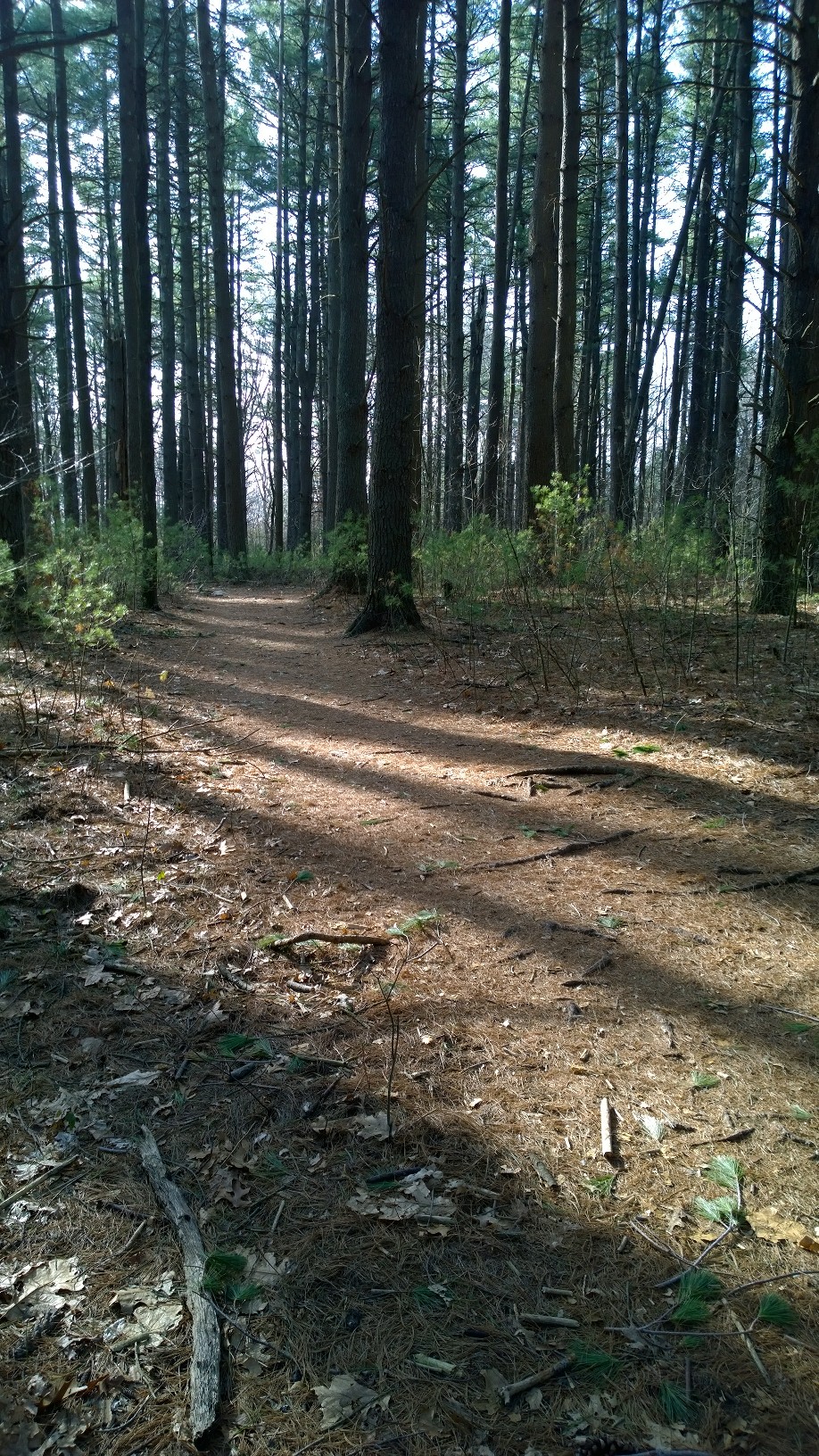
041217-shadows-stripe-forest-floor

Photo: Suzanne and John’s Mom.
Some living things benefit the planet more the older they get.

Those of us who were enthusiastic about planting zillions of trees to store carbon have been learning that the trees need to be part of a healthy ecosystem to do the most good. A collaboration among hundreds of forest ecologists offers keys to what works.

Patrick Greenfield writes at the Guardian, “Forest conservation and restoration could make a major contribution to tackling the climate crisis as long as greenhouse gas emissions are slashed, according to a study.

“By allowing existing trees to grow old in healthy ecosystems and restoring degraded areas, scientists say 226 gigatonnes of carbon could be sequestered, equivalent to nearly 50 years of US emissions for 2022.

But they caution that mass monoculture tree-planting and offsetting will not help forests realize their potential. …

“The research, published [in November] in the journal Nature as part of a collaboration between hundreds of leading forest ecologists, estimates that outside of urban agricultural areas in regions with low human footprints where forests naturally exist, they could draw down large amounts of carbon.

“About 61% of the potential could be realized by protecting standing forests, allowing them to mature into old growth ecosystems like Białowieża forest in Poland [check out the new Polish administration’s environmentalism] and Belarus or California’s sequoia groves, which survived for thousands of years. The remaining 39% could be achieved by restoring fragmented forests and areas that have already been cleared.

“Amid greenwashing concerns around nature’s role in climate crisis mitigation, the researchers underlined the importance of biodiversity helping forests reach their carbon drawdown potential, warning that planting huge numbers of single species would not help and urgent cuts to fossil fuel emissions were needed.

“Rising numbers of forest fires and higher temperatures due to the climate crisis would be likely to reduce the potential, they said. ‘Most of the world’s forests are highly degraded. In fact, many people have never been in one of the few old growth forests that remain on Earth,’ said Lidong Mo, a lead author of the study. ‘To restore global biodiversity, ending deforestation must be a top priority.’

“At Cop26 in 2021, world leaders pledged to halt and reverse deforestation by the end of this decade, although data shows that countries are currently off track. Brazil, Colombia and Indonesia are among nations making progress, however. The researchers said meeting this target, along with making good on UN climate and biodiversity agreements, was crucial to forests reaching their full potential.

“ ‘Conserving forests, ending deforestation and empowering people who live in association with those forests has the power to capture 61% of our potential. That’s huge. It’s potentially reframing forest conservation. It’s no longer avoided emissions, it’s massive carbon drawdown, too,’ said Tom Crowther, the head of the Crowther Lab at ETH Zurich. …

“ ‘It can be achieved by millions of local communities, Indigenous communities, farmers and foresters who promote biodiversity. It could be agroforestry for cacao, coffee or banana, natural regeneration, rewilding or creating habitat corridors. They’re successful when nature becomes the economic choice.’ …

“The research follows a controversial 2019 paper on the potential of forests to mitigate the climate crisis, which was also co-authored by Crowther, that provoked intense scientific debate among forest ecologists. … Several scientists felt that potential for nature to help meet climate goals had been overstated and the paper advocated for the creation of mass tree-planting, driving greenwashing concerns.

“Simon Lewis, a professor of Global Change Science at University College London who was a leading critic of the 2019 paper, said the new estimate was much more reasonable and conservative.

“There is a lot of spin and bluster about what trees can do for the environment. To cut through this always ask: what is the amount of carbon taken up by a hectare of land, and over what time period, he said. … ‘There is still only a finite amount of land to dedicate to forests, and ability of trees to sequester carbon is limited. The reality is that we need to slash fossil fuel emissions, end deforestation, and restore ecosystems to stabilize the climate in line with the Paris agreement.’

“Crowther acknowledged that he had been overzealous in the messaging around the 2019 paper. … ‘The fact that it was so much carbon I think gave people the idea that [the study] was suggesting that tree planting could be an alternative to cutting emissions, which categorically cannot be.’ ”

More at the Guardian, here.

Art: Janet Sobel.
Janet Sobel (1893–1968) was born Jennie Lechovsky in a Jewish settlement in Ukraine. Her contributions to abstract expressionist sensibilities is acknowledged in the book
Brushed Aside: The Untold Story of Women in Art.

Is Jackson Pollock famous because he made drip paintings or because what he made that way speaks to people? I’m inclined to say the results matter more than the technique. But Pollock apparently gets credit for a woman’s discovery that inspired him.

Noah Charney at Literary Hub writes, “We’re supposed to think that Jackson Pollock invented drip painting, and with it the American branch of Abstract Expressionism. … The first drip, or all-around painting — made by the revolutionary technique of splattering and dripping paint on the fly while approaching the canvas from all angles, as it lay on the floor — was Pollock’s 1947 Galaxy. Wasn’t it?

“It makes for a good story. Pollock was the macho, hard-drinking, Wyoming-raised cowboy of postwar American art — Hemingway with a paint bucket. … He remains one of the two most famous American painters, along with Andy Warhol. Americans, especially American men in the 1940s and 1950s, blazed trails and cast their shadows across the globe. …

“That’s [the narrative my book] Brushed Aside: The Untold Story of Women in Art seeks to correct. … Let’s begin by gently bumping Jackson Pollock off his pedestal. …

“Janet Sobel (1893–1968) was born as Jennie Lechovsky in a Jewish settlement in Ukraine. Her father was killed in a pogrom, the trauma of which prompted her to move to the United States, with her mother and three siblings, in 1908. A year later she married and went on to raise five children. It was decades later that she first picked up a paintbrush, when her then nineteen-year-old son passed his art supplies off to her. He’d won a scholarship to the Art Students League but didn’t plan to take it.

“She tried to convince him to do so, to which he replied, ‘If you’re so interested in art, why don’t you paint?’

“So paint she did. She was entirely untrained, and that has often been a good thing. In the sixteenth through the eighteenth centuries, it was considered a feather in one’s cap to be an ‘academic painter,’ as the best artists were emerging from the early days of the academy system. But from the nineteenth century onward, being called an ‘academic painter’ would be more of an insult. …

“Sobel experimented. She would squirt paint directly out of a tube, drip it with an eyedropper, even pull wet paint across the canvas using suction from a vacuum cleaner. She didn’t set her canvases on easels but laid them on the floor so she could attack them from all angles. As art historian Kelly Grovier wrote, ‘she assaulted the surface of canvases laid out on the floor, orchestrating a a liquid lyricism of spills, splashes and spits, the likes of which had never before been seen.’ Sobel’s first drip painting was one she’d call Milky Way and finish in 1945 — two years before Pollock ‘invented’ drip painting.

“One of Sobel’s sons, Sol [had written] to the leading tastemakers of the time, including Marc Chagall, who, like Sobel, had fled antisemitic pogroms of his youth and was among the world’s most famous painters.

“But he also wrote to Sidney Janis, a wealthy clothing manufacturer and art collector who had been an advisor to MoMA (the Museum of Modern Art) since 1934 and who would be described today as an art world influencer. Janis saw Sobel as one of the great Contemporary American artists (along with others who were immigrants to America, including Willem de Kooning and Marko Rothko). …

“Another hugely influential woman, Peggy Guggenheim, also included Sobel in a high-profile exhibition she promoted called ‘The Women.’ But these were all in 1944 and featured Sobel’s work prior to her innovation of the drip technique.

“Guggenheim was so impressed with Sobel that she also put on a solo show for her at her gallery, Art of the Century. That ran in 1946 and did include [drip painting] Milky Way. The leading art critic of the time, Clement Greenberg, wrote about visiting that exhibit with Jackson Pollock in 1946. Greenberg recalled the exhibit with a combination of dismissive misogynism toward Sobel and an admission that she had inspired Pollock.

“He wrote that he and Pollock had ‘noticed one or two curious paintings shown at Peggy Guggenheim’s by a primitive painter, Janet Sobel (who was, and still is, a housewife living in Brooklyn). … Pollock (and I myself) admired these pictures rather furtively. … The effect — and it was the first really “allover” one that I had ever seen — was strangely pleasing. Later on, Pollock admitted that these pictures had made an impression on him.’ “

You can read more at Literary Hub, here.

Photo: Kiva.org.
Ivan provides safe, affordable drinking water to people in Uganda, a country where, according to my grandson, 38 million people are without safe water. Ivan has applied for a loan from Kiva.org.

I was visiting Suzanne’s family yesterday and heard from my grandson about a worthy cause he’s donating some savings to. Actually, not donating. He is lending what he can to an entrepreneur called Ivan to help people in a country he has studied get access to safe drinking water.

How did this interest come about?

My grandson’s sixth-grade class’s research on the UN Global Goal of Eradicating Extreme Poverty involved choosing someone from a poor country who had applied to the lending nonprofit Kiva — and making a loan. After studying the poverty issue, screening a living-on-$1.98-cents-a-day experiment, and researching some of the Kiva offerings, the class voted.

My grandson was disappointed when the majority chose to support a grandmother in Thailand who was selling hammocks to help her care for a sick grandchild. He says that Uganda is a poorer country than Thailand — and he maintains that hammock accidents kill people. (He Googled it.) He also says that the annual income in Thailand is 8 times higher than in Uganda.

I asked him what the class majority’s reasoning was. He said (a) there was no way his favorite would get the extra $10,000 he still needed in the 8 days left in his application and (b) the grandmother still had 30 days left and was doing this for family. (He talks that way — “a and b.”)

He is not taking his defeat lying down, lending some of his own savings to Ivan’s cause, posting the link about Ivan in all the many chat rooms of his chess groups, sending Suzanne to twitter to promote Ivan’s application, and talking to me about a blog post.

Now here’s what Kiva says about Ivan: “Ivan is an experienced and seasoned entrepreneur in the safe water production and distribution sector. He has owned and run a Jibu water franchise for over five years and still counting. With the opportunity to open up a water production in the Munyonyo neighborhood, Ivan is excited at the opportunity to take safe and affordable drinking water to the residents of Munyonyo and also subsequently provide jobs for the youth who will be involved in the production and distribution value chain.

“Ivan is seeking a Kiva loan to open the Munyonyo operations. The loan will facilitate the launch of a water production and storefront facility, ensuring that every corner of Munyonyo has access to clean and affordable water. Please support Ivan so he can provide safe and affordable drinking water closer to the Munyonyo neighborhood.”

Interested? Please go to https://www.kiva.org/lend/2688341. Click on “technology.” Then click on the photo of Ivan and his water bottles. If you like the concept, maybe you or someone you know on social media will be up for helping. The Kiva rule is that Ivan has to get the total amount he applied for within the time allotted.

My grandson admits that this kind of lending is not a money-making proposition. He will get paid back in 39 months — in other words, when he is nearly 15 — without interest. (And I guess Kiva will reach him through Erik’s email, as Papa used a charge card when my grandson handed him the cash.)

But look, my grandson says, water is important — every 10 seconds someone in the world dies of water-borne disease, and 38 million Ugandans are without safe water.

Not a guy to argue with.

For more background on the nonprofit (“100% of every dollar you lend on Kiva goes to funding loans”) click here. It has a very good rating from Charity Navigator.

Photo: Marica S. Tacconi, CC BY-SA.
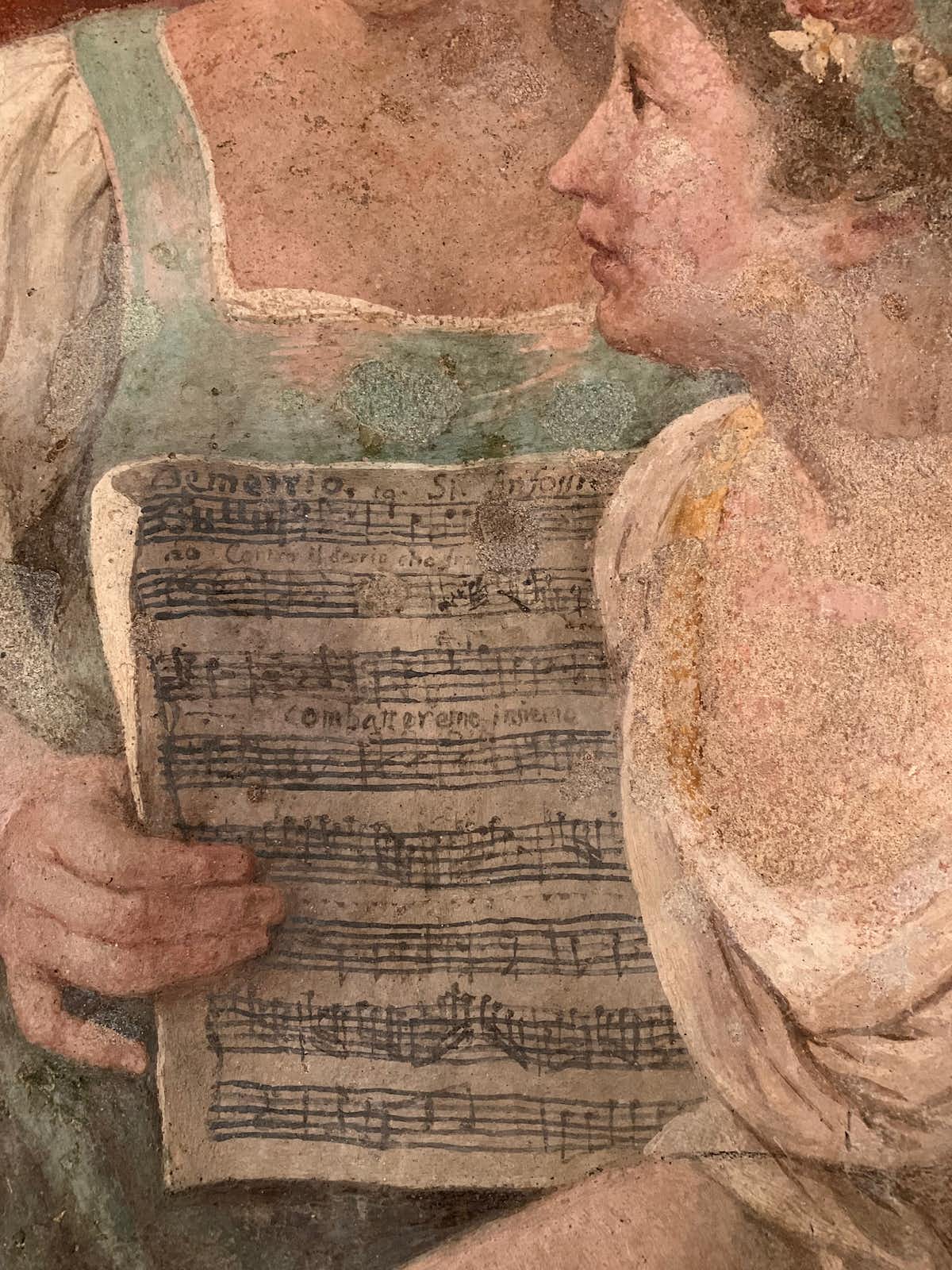
The musical score depicted in Jacopo Guarana’s fresco in a Venetian orphanage. 

I know there is a lot of drudgery in historical research and archaeology, but what fun to discover clues about the past that can be brought to life in the present!

That’s what Marica S. Tacconi, professor of musicology and art history at Penn State, does. At the Conversation, she writes about her determination to bring back music painted on the walls of a Venetian orphanage centuries ago.

She begins by asking the reader to imagine today’s rock stars “teaching at an orphanage or homeless shelter, offering daily music lessons” and says “that’s what took place at Venice’s four Ospedali Grandi, which were charitable institutions that took in the needy – including orphaned and foundling girls – from the 16th century to the turn of the 19th century.

“Remarkably, all four Ospedali hired some of the greatest musicians and composers of the time, such as Antonio Vivaldi and Nicola Porpora, to provide the young women – known as the ‘putte’ – with a superb music education.

“In the summer of 2019, while in Venice on a research trip, I had the opportunity to visit the Ospedale di Santa Maria dei Derelitti, more commonly known as the Ospedaletto, or ‘Little Hospital, because it was the smallest of the four Ospedali Grandi.

“As a musicologist specializing in the music of early modern Venice, I was especially excited to visit one of the hidden gems of the city: the Ospedaletto’s music room, which was built in the mid-1770s. …. Little did I know that I would encounter music that hasn’t been performed in nearly 250 years.

“As we entered the stunning music room, I was immediately struck by its elegance and relatively small size. In my mind, I had envisioned a large concert hall; instead, the space is intimate, ellipse-shaped and richly decorated.

“Overshadowed by the more prominent Ospedale della Pietà, not much is known about the music-making that took place for centuries behind the walls of the Ospedaletto. But one of the greatest clues to its venerable history as a music school is literally on one of its walls.

“A fresco on the far wall of the room, painted in 1776-77 by Jacopo Guarana, depicts a group of female musicians – likely portraits of some of the putte – at the feet of Apollo, the Greek god of music. Some of them play string instruments; one, gazing toward the viewer, holds a page of sheet music. …

“The music notation was quite legible, and the composer’s name was inscribed in the upper-right corner: ‘Sig. Anfossi.’

“I took several photos of the fresco. I wanted to learn as much as I could about that piece of music painted on the wall. …

“Armed with those clues on the wall, I continued my research in the days following the visit to the Ospedaletto. I learned that the music by ‘Signor Anfossi’ shown in the fresco was drawn from the opera Antigono, composed by Pasquale Anfossi (1727-97) on a libretto by Pietro Metastasio. The work premiered in Venice at the Teatro San Benedetto in 1773.

“The text of the [aria] is legible in the excerpt on the wall. It reads, ‘Contro il destin che freme, combatteremo insieme’ – ‘Against quivering destiny, we shall battle together.’

“Like many works from the 17th and 18th centuries, the entire opera is lost. I was determined to find out, however, if that particular aria had survived. … Luck was on my side: To my delight, I found a copy of the aria in a library in Montecassino, a small town southeast of Rome. Why was that particular excerpt chosen to be displayed so prominently on the wall?

“Like other institutions in Venice, the Ospedaletto faced financial hardship in the 1770s. Evidence suggests that the putte of the Ospedaletto were likely involved in raising the funds for the decoration of the music room. The new hall enabled them to give performances for special guests and benefactors, which brought in substantial donations. Together with Pasquale Anfossi, who was their music teacher from 1773 to 1777, they rallied behind their beloved institution, saving it – at least temporarily – from financial destitution. …

“Incidentally, the putte may also have wanted to honor their teacher, as Pasquale Anfossi, too, is portrayed in Guarana’s fresco, directly behind the young woman holding up his music.

“One of the aspects I find most rewarding about the study of older music is the process of discovering a work that has been neglected and unheard for hundreds of years and bringing it back to modern audiences.

“Inspired by the Ospedaletto’s music room, [my colleague] Liesl Odenweller and I have embarked on a collaborative project that brings back not only the aria on the wall but also other music from the institution that has gone unheard for centuries … thanks to a generous grant from the Gladys Krieble Delmas Foundation, the Venice Music Project. …

“Because the music of the past was written in a notation that’s different from that used today, it’s necessary to translate and input every mark of the original score – notes, dynamics and other expressive marks – into a music notation software to produce a modern score that can be easily read by today’s musicians.

“By performing on period instruments and using a historically informed approach, the musicians of the Venice Music Project and I are excited to revive this remarkably beautiful and meaningful music. Its neglect is certainly not a reflection of its artistic quality but rather likely the result of other composers, such as Vivaldi and Mozart, taking over the spotlight and overshadowing the works of other masters.”

More at the Conversation, here. The author has a nice description of her colleague testing the room’s exceptional acoustics.

Photo: Melanie Stetson Freeman/CSM Staff.
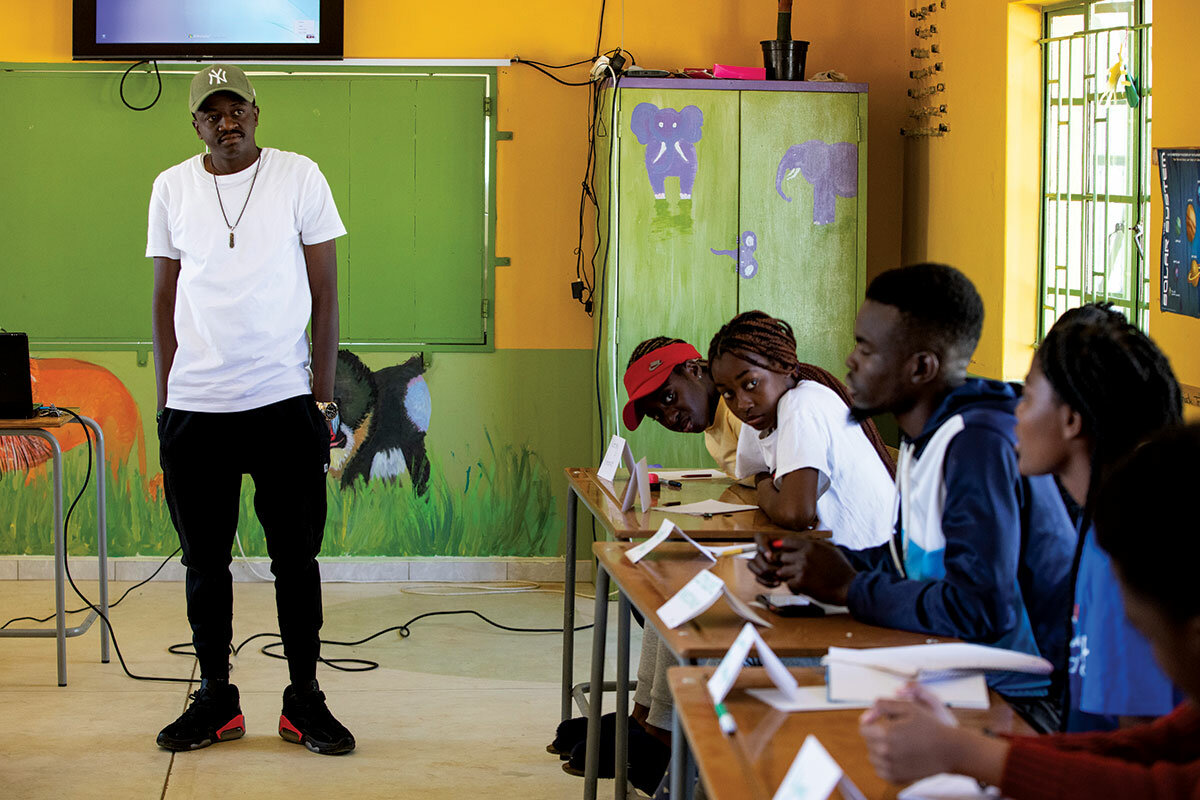
The Christian Science Monitor says, “Deon Shekuza is a peripatetic presence at climate summits as well as at the grassroots – like the class on green hydrogen he taught to young teens in an informal settlement in Windhoek, Namibia, last July.”

Climate activism is no longer mainly the purview of the industrialized Northern Hemisphere or those with enough income and time to worry about it. Now people on the front lines are leading the way. For them it’s a matter of survival.

Sara Miller Llana writes at the Christian Science Monitor about Deon Shekuza, a climate influencer in Namibia, who is “as comfortable proselytizing green energy to youth on the hardscrabble roads and villages of this former German colony as he is in Namibia’s government ministries and the halls of United Nations conferences.

“Paid with respect if not a salary, he’s part of a rising breed of young climate activists across the Global South whose work, suggests one climate expert, may well determine the temperature of your world.

“Africa, which has contributed least to climate warming, is the continent most threatened by the droughts, floods, and heat intensified by climate change. In that extremity, the relentlessly positive Mr. Shekuza sees great opportunity for progress for Namibia.

“In the dusty chaos of an informal settlement on the edge of this capital city one recent morning, he faces his biggest challenge: capturing the imaginations of young teens on a complex topic. The kids have gathered in a bright community center classroom, not for school credit and certainly not for fun on their Saturday off, but to hear Mr. Shekuza teach green hydrogen 101. Namibia has staked its future on this next big solution for a global clean energy transition. …

(The process, simply put, would use solar or wind power to extract hydrogen molecules from desalinated seawater, producing green ammonium that would be used for regional and global fuel markets to power transportation and electricity production.)

“No one here knows what green hydrogen is, let alone how it might be the route to social justice that Namibia’s leaders proclaim.  Grasping for something understandable, Mr. Shekuza gestures out the window at the ancient and humble street scene of women laden with bushels of branches gathered from the forest for heating and cooking fuel. ‘This is exactly what we do not want for our people, right? Some energy sources keep you in the past, and some energy sources move you into the future. This is why we are here talking about green hydrogen.’

“After 90 minutes, Mr. Shekuza is satisfied. These kids might not exactly understand Namibia’s renewable energy policy, but they understand green hydrogen potential: jobs for them in a new economy that could turn Africa’s perpetual sunlight into clean fuel for electricity and transportation here and for export. …

“For activists across Namibia – like the Inuit in the Arctic, or youth from small island nations – caring and conserving is the easy part. These youth grew up living sustainable lives well before it was trendy. Many were born on the land, in the bush, on the coast, with no playgrounds except the natural environment around them. They conserved not for environmentalism, but for survival. …

“Mr. Shekuza and young African activists like him across the continent who are part of the Climate Generation, as we’re calling it, see a chance – the kind Mr. Shekuza tells the children in the informal settlement to seize, the kind he has seized for himself. …

“Mr. Shekuza can barely afford to do the work he has cut out for himself. For all his social confidence, he hesitates at the doorstep of his home before inviting visitors in for the first time ever. Descending from sunny daylight down a step at the side of a large old house, he enters the tiny basement space he shares with his mother.

“With a revealing flourish of humility, he pulls the worn blue curtain separating his mother’s bed from his floor space: ‘This,’ he says, ‘is climate activism in Africa.’

“In his windowless corner lies his bed. … On the chipped yellow paint of a cement wall are dozens of badges from U.N. conferences. A single business suit hangs from the curtain rope.

“This is the headquarters of his nongovernmental organization. With just the grants and fees he cobbles together from government and U.N. funding, the 33-year-old college dropout educates himself, hatches ideas for mentoring youth, and speaks via Zoom to august groups, all on the floor here. For an online speech on climate justice for a British Museum conference, he had no option but to give his speech right there, cross-legged on his sleeping pad, dressed in a traditional African tunic, surrounded by clothes, caps, shoes, and [policy] documents. …

“The environment, he says, was always a part of his interest: Nature was his escape from the noise and dilapidation of poverty in his rural hometown of Grootfontein. … ‘We are people who never look at the environment like something that is separate, because you grew up looking at it as part of you,’ he says. …

“He co-founded the NGO Namibian Youth on Renewable Energy (NAYoRE); gave himself the title ‘youth advocate for sustainable development’; worked with other organizations and networks on biodiversity, farming, and climate change; and started crisscrossing the globe on invitations to attend and address government, U.N., and private conferences. …

” ‘[Young people] may see me with a fancy English up here, but my lifestyle is no different from that kid in the shack. So when I speak for the youth, I’m coming from experience and I’m speaking something solid.’

“He pulls out a binder on agriculture in Namibia and how to use regenerative practices in one of the most water-stressed nations on the planet. It’s the latest document he’s read, and he’s read all of it: ‘I have dedicated hours and hours and hours … like trying to upgrade and up-skill myself. And I did that in and out of school, but I found the most benefit came out of it.’ …

“On a late Friday afternoon, Mr. Shekuza meets at a cafe with Micky Kaapama, whom he has been tutoring to be a climate activist, or, as they put it, a ‘biodiversity enthusiast.’ The glamorous fashion model studied biology and, crucially, has 12,000 Instagram followers. …

“As if trying to convince her of what she has to gain, he pulls out his phone to show an invitation from the Namibian president’s office that he’s just received. Addressed to Deon Shekuza, ‘Youth Advocate for Sustainable Development,’ it’s for a luncheon with Hyphen, a German- and British-financed Namibian company that signed a deal last May with Namibia to build the largest green hydrogen project in the country. It’s an $11 billion agreement.

“But there’s a hitch in the impressive invite. He has no idea how he can even afford to get to the event five hours away in Keetmanshoop.”

Find out what happens at the Monitor, here. No firewall.

Photo: James Lee Chiahan/Procedure Press.
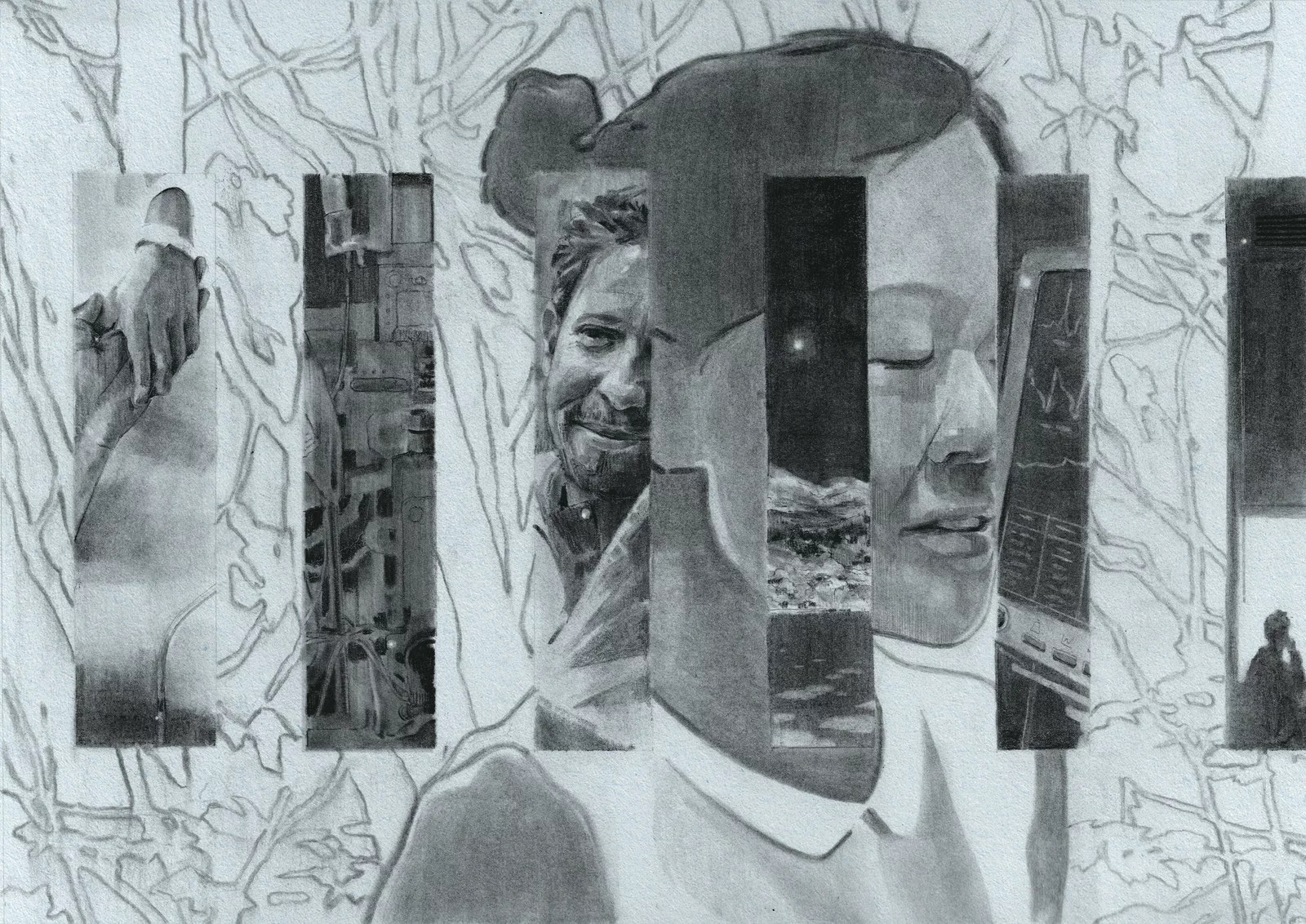
“Tone Shift,” by James Lee Chiahan. depicts musician Yoko Sen’s journey from being patient in the hospital to working to improve the sounds of ICU alarms around the world. Chiahan is a Taiwanese-Canadian artist currently working out of Montreal, Canada.

Those of us who have ever had a hospital stay know how difficult it is to get any sleep. Part of the reason is noise. Today’s article suggests that since artists started applying their creativity to the challenge, hospitals have new ways they could improve sounds and doctors have new ways to improve patient interactions.

Mara Gordon at NPR (National Public Radio) begins her story with Emily Peters, who had a rough time with the health care system when her daughter was born. “Peters, who works as a health care brand strategist, decided to work to fix some of what’s broken in the American health care system. Her approach is provocative: she believes art can be a tool to transform medicine.

“Medicine has a ‘creativity problem,’ she says, and too many people working in health care are resigned to the status quo, the dehumanizing bureaucracy. That’s why it’s time to call in the artists, she argues, the people with the skills to envision a radically better future.

“In her new book, Artists Remaking Medicine, Peters collaborated with artists, writers and musicians, including some doctors and public health professionals, to share [ideas] about how creativity might make health care more humane. …

“For example, the book profiles electronic musician and sound designer Yoko Sen, who has created new, gentler sounds for medical monitoring devices in the ICU, where patients are often subjected to endless, harsh beeping.

“It also features an avant-garde art collective called MSCHF (pronounced ‘mischief’). The group produced oil paintings made from medical bills, thousands and thousands of sheets of paper charging patients for things like blood draws and laxatives. They sold the paintings and raised over $73,000 to pay off three people’s medical bills.

“It’s similar to a recent performance art project not profiled in the book: A group of self-described ‘gutter-punk pagans, mostly queer dirt bags’ in Philadelphia burned a giant effigy of a medical billing statement and raised money to cancel $1.6 million in medical debt. …

“There’s very little in the way of policy prescription in this book, but that’s part of the point. The artists’ goal is to inject humanity and creativity into a field mired in apparently intractable systemic problems and plagued by financial toxicity. They turn to puppetry, painting, color theory, and music, seeking to start a much-needed dialogue that could spur deeper change.

Mara Gordon: What made you want to create this book?
Emily Peters: I think I’m always very curious why so many people – really the majority of everybody in any way involved in the health care system – feel so powerless. … And so the book came about as thinking about power and change. And then I realized that artists have this unique intersection where they are very powerful, they bring a lot of the things that were missing in health care, trying to build a better future.

MG: What is it about art that feels like a tool to challenge that feeling of powerlessness?
EP: The very first person I interviewed for the book was a photographer, Kathleen [Sheffer], who was a heart-lung transplant survivor. She used her camera in the hospital to try to be seen as more powerful, to be seen as a full person by these very fancy transplant surgeons who are whisking in and out of her room, viewing her as just a body. I saw that she had gained that power through being an artist.

“I had another conversation with a physician out of New York, Dr. [Stella] Safo. … She really highlighted that there’s this crisis of imagination. Everybody feels so demoralized that we can’t even imagine what we want to ask for to make it better.

“That’s a creativity problem. And the people who are creative are artists. They are really good at sitting in complexity and paradox, and not wanting everything to be perfect, but being able to imagine. And so that was the hypothesis: Oh, there’s something really interesting at this intersection between art and medicine. …

“MG: My favorite part of the book was the section where there’s a color palette, named for different medical phenomena: pill bottle orange, Viagra blue.… I think a lot of people in health care worry that too much color somehow distracts from the seriousness of medicine.
EP: So many of these things, somebody chose, and they didn’t do a huge amount of research on it. They just chose it, and we take it as gospel now.

“The white coat ceremony. [I had thought it must have started in] medieval Florence: they were putting white coats on medical students and welcoming them into the guild, it just feels like this ancient tradition. And it’s something that was invented in Chicago in 1989. A professor was complaining that the students weren’t dressing professionally enough. …

We surveyed a couple hundred people [and published the results online]: ‘What colors would you want to see in the hospital?’ I was expecting those soothing pastel tones. And it was totally different: it was neon purples and oranges and reds. Don’t assume what people want. We have the technology and the capability now to build in systems that give people some control and some agency over things like color. …

MG: Has anyone told you that they think that health care is too important for art?
EP: I’ve heard the criticism that this is just about wallpaper on a pig: ‘You’re talking about adding more sculpture gardens and increasing the cost of health care.’

“I did not want it to be a book about creating more luxurious hospitals. We have a crisis of financial toxicity, we have a crisis of outcomes. It’s specifically a book about fighting those things. …

“MG: Do you think medicine takes itself too seriously? Do we need more humor in health care?
“EP: You’re holding somebody’s heart in your hand – this is a very intense job. You’re trying to convince somebody to enter hospice – that is not easy. This is not an easy job. But that seriousness can feel almost like play acting and really inauthentic to people. …

“And that’s such a waste to me, because it is such a beautiful, incredible profession. We, as patients, also want you guys to be humans. We’re on your side.”

More at NPR, here. No paywall.

Photo: BBC.
The 2023 version of the game Just Dance includes a routine suitable for people in wheelchairs. Gamer Seth Burke, who has Duchenne Muscular Dystrophy, learns the technique
.

When people talk about “gaming,” I don’t always know what they mean. That’s how far out of it I am. But when I saw a headline about gaming and wheelchairs, I wanted to learn more. It seems that some video-game companies are working to make their products accessible to all, especially games that ask the participants to move certain ways, even dance.

The BBC writes that more than 135 million people have played Just Dance. The network asked teenager Seth Burke to report on how accessible he thinks the game is for people who have a disability.

“Ubisoft’s video game has 500 unique choreographies that users from around the world follow. Seth, 14, from Vale of Glamorgan [in Wales], was invited to the company’s Paris studio to test out the latest version.

“He spoke to designers and choreographers and gave his input on a new routine for people in wheelchairs. This is his story.”

Seth: “Like most teenagers, I love gaming with my friends and brothers, but using a wheelchair means I’m not always able to join in with every video game. I have a disability that affects my muscles. If I play a game that involves me moving a lot, I’m not always very good at it and my arms ache easily.

“Gaming is important to me, so I wanted to know how tech companies are creating new games to suit people with disabilities. I was invited, with Children in Need, to meet the Paris-based team behind the hit game Just Dance.

“The latest version of the game features, for the first time, a routine performed by a dancer in a wheelchair. Players are invited to sit and follow the arm movements whilst holding their phone or console.

” ‘Everyone can get joy from dance,’ Stacey Jenkins, one of Ubisoft’s accessibility design specialists told me. ‘Game development is a really long process, but if you start to think about accessibility right at the beginning, we can make things accessible by design. …

“But is it possible to make all games accessible to all people?

” ‘I think it’s really difficult to make games completely 100% accessible to absolutely everybody at the same time,’ says Stacey. ‘Every game that we release, if it’s more accessible than the last, then we’re making good progress.’

“After chatting to Stacey, I tested Just Dance in the studio with Florent Devlesaver, a Belgian dancer in a wheelchair, who features in the game. He told me how he had to adapt the dance moves to work for him, as well as making sure they still worked in a video game.

“I loved meeting Florent and having a go at the dance routine in the studio. … It was nice to see that even though you have a disability, it doesn’t define you and you can do whatever you want with your life. I think people are making a huge effort to develop more accessible games, but it’s going to take some time. … I definitely think things are changing. I have confidence.”

More at the BBC, here. To learn more about the BBC Children in Need initiative, click here. According to the website, “BBC Children in Need is here to make sure that every child has the childhood they deserve – and the support they need to thrive.

“We are committed to funding the grassroots organizations and project workers across the UK that provide the vital positive relationships children need to help them navigate the challenges in their lives. Our project workers support, inspire and champion them to ensure they have opportunities and can reach their goals. And that will always be our approach.

“We fund thousands of charities and projects in every corner of the UK, that support children and young people to feel and be safer, have improved mental health and well-being, form better, more positive relationships and be given more equal opportunities to flourish.”

Photo: Erika Schultz / The Seattle Times.
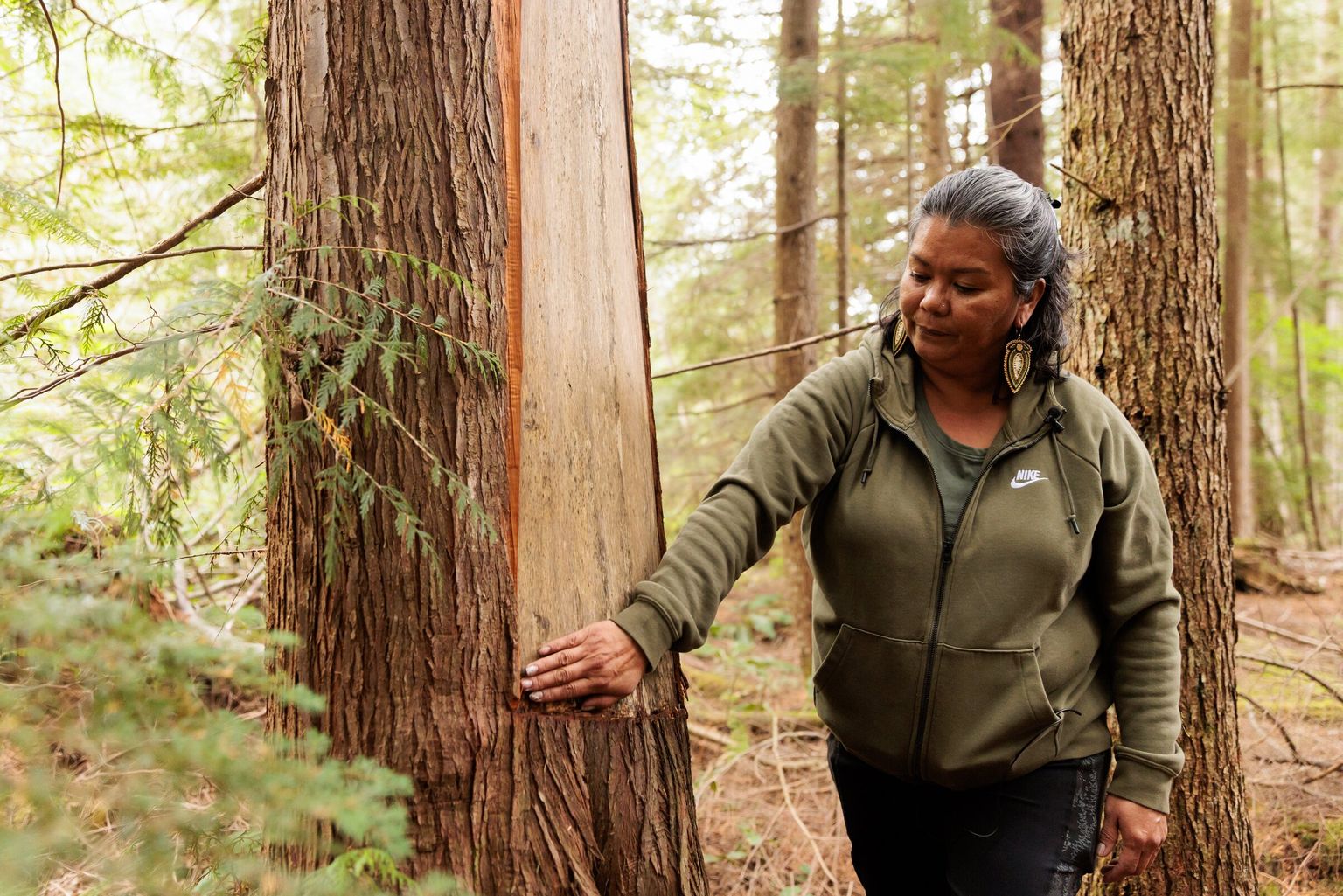
Gail White Eagle, a master cultural traditions specialist and master weaver at Muckleshoot, shows a cedar tree where she has traditionally stripped cedar bark for weaving baskets, hats, and more.

There’s always something more to learn about the generations that inhabited North America before European settlers came. Today’s article explains how indigenous people both used and managed forests, and how some continue to do so today.

Environmental reporter Lynda V. Mapes writes at the Seattle Times, “On a promontory above Puget Sound, a Douglas fir with arms bent at right angles stands above a quiet cove, where shellfish would have been gathered, long before this place was settled by newcomers. This tree was deliberately shaped by generations of hands into its current form, to mark what was here for countless years: rich clam beds, and a gathering site. … Modified trees are a connection interweaving generations of the region’s first people tightly as a cedar basket.

“ ‘It is the sacred fingerprint of the ancestors that shaped this place,’ said Sam Barr, a Samish tribal citizen and tribal historic preservation office supervisor for the Stillaguamish Tribe.

“Another tree, a cedar near the tree on the promontory over the cove, is elaborately trained to grow with branches at 90 degree angles low on its trunk that also were cut and recut so the branches would fork, and then fork again. The result is an elaborate candelabra. This is a marker tree, Barr said, that may have denoted the village that was here — today a housing development. It may also have indicated the direction toward the confluence of the deltas of the Skagit and Stillaguamish rivers that also fork and refork. …

” ‘People don’t think about it much, but we truly are living in an Indigenous garden, from which the gardeners have been forcibly removed,’ Barr said. ‘The entire landscape around the Pacific Northwest was carefully managed and stewarded by Indigenous hands. And there are traces of this everywhere.’

“Trees were stripped for bark for weaving, trees were planked for building materials, trees were made to serve as indicators of everything from trails, to a water source, a rich area for harvest, village or sacred place. …

“Trees are slow growing, and for a marker tree, it takes multiple generations of a family to curate it. … The presence of modified trees all over the landscape today, and continued traditional use of cedar in particular, binds tribes up and down the West Coast. … The Snoqualmie Tribe recently identified — and the state registered as an archaeological site — a modified tree in a lot being cleared for new homes in the Wedgwood neighborhood of Seattle. …

“Gail White Eagle, a Muckleshoot master weaver, said she always looks forward to this moment, as she paused the tribal van at a yellow gate that opens to a forest road in the foothills of Mount Rainier. She was about to enter Tomanamus Forest, 105,000 acres of forest land in King, Pierce and Lewis counties purchased by the Muckleshoot Indian Tribe in 2013. …

“The forest is in part of the territory ceded by the tribe in its treaty with the U.S. in 1855. Taking the forest back into tribal ownership was an act of healing, White Eagle said. Every tribal member can request a key to the gate, unlike at other forests that used to be theirs, now owned by other governments, corporations and individuals.

“A soft misty rain was falling as she walked into the forest, looking for trees from which she had harvested bark the previous spring. … She explained the harvesting process, which always begins with asking permission before taking anything.

She gives an explanation to the tree that its bark will be put to good use. And she often leaves a gift at the tree’s base, such as a bit of tobacco, sage or smoked fish.

“It’s a gesture of thanks and reciprocity in the relationship she holds with this tree, and this forest.

“White Eagle put her hand gently on the healing bark scar, and explained she is careful never to take a piece wider than two hands’ length. She chooses trees only big and robust enough for her to hug. And she pulls bark only in spring, when trees are full of sap, making the harvest easier on her and the tree. A tree can be harvested multiple times over many generations of users, if the harvest is done correctly.

“Tree wounds that penetrate bark damage the cambium layer, vascular tissue that is vital to movement of water and nutrients in a tree. The tree will seal and close the wound, compartmentalizing it with healing lobes to cover it and prevent rot. As long as a tree is not girdled — cut entirely around its circumference, severing all the vascular tissue — it will continue to live.

“Sometimes modified trees are recorded by tribes and government land managers as archaeological sites. But much more often, these trees are known only to the families that use them.

“Jacob Earnshaw is an independent archaeologist based in Victoria, B.C., who works to find and register modified trees as archaeological sites. His work has been entered as evidence in a right and title case in B.C. with the Nuchatlaht First Nation, who are working to prove their long presence on the northern half of Nootka Island on the northwest coast of Vancouver Island, to regain control of lands they never ceded. That case has not yet been resolved.

“Earnshaw has documented more than 1,000 years of cutting and pulling bark for harvest on Vancouver Island. The trees show management of these forests, Earnshaw said, by the island’s first people to protect what was an exhaustible resource. ‘What we are looking at is woodland management by these people who were thought of as hunter-gatherers,’ he said.

“That term is a myth, says Chelsey Geralda Armstrong, assistant professor in the Department of Indigenous Studies and School of Resource and Environmental Management Studies at Simon Fraser University in Burnaby, B.C. The first people didn’t just pick up what they needed here and there; they managed and cultivated their land and waters just as they do today — and evidence of their ancestors’ practices persists in the landscape.

“Armstrong teamed up with Earnshaw and other researchers to publish a 2022 paper that described forest gardens on Vancouver Island with still-evident remnants of cultivation, transplanting and all the other usual horticultural arts. The gardens were just part of the associated archaeological evidence of long prior use, including clam gardens, village sites, shell middens and trees in the nearby forest bearing scars of harvest for bark and other needs.

“Their work shows that far from an unpeopled wilderness, the Northwest Pacific Coast was a managed and stewarded place for thousands of years.” More at the Seattle Times, here.

Photo: Anna Olivella/The Jar via the Boston Globe.
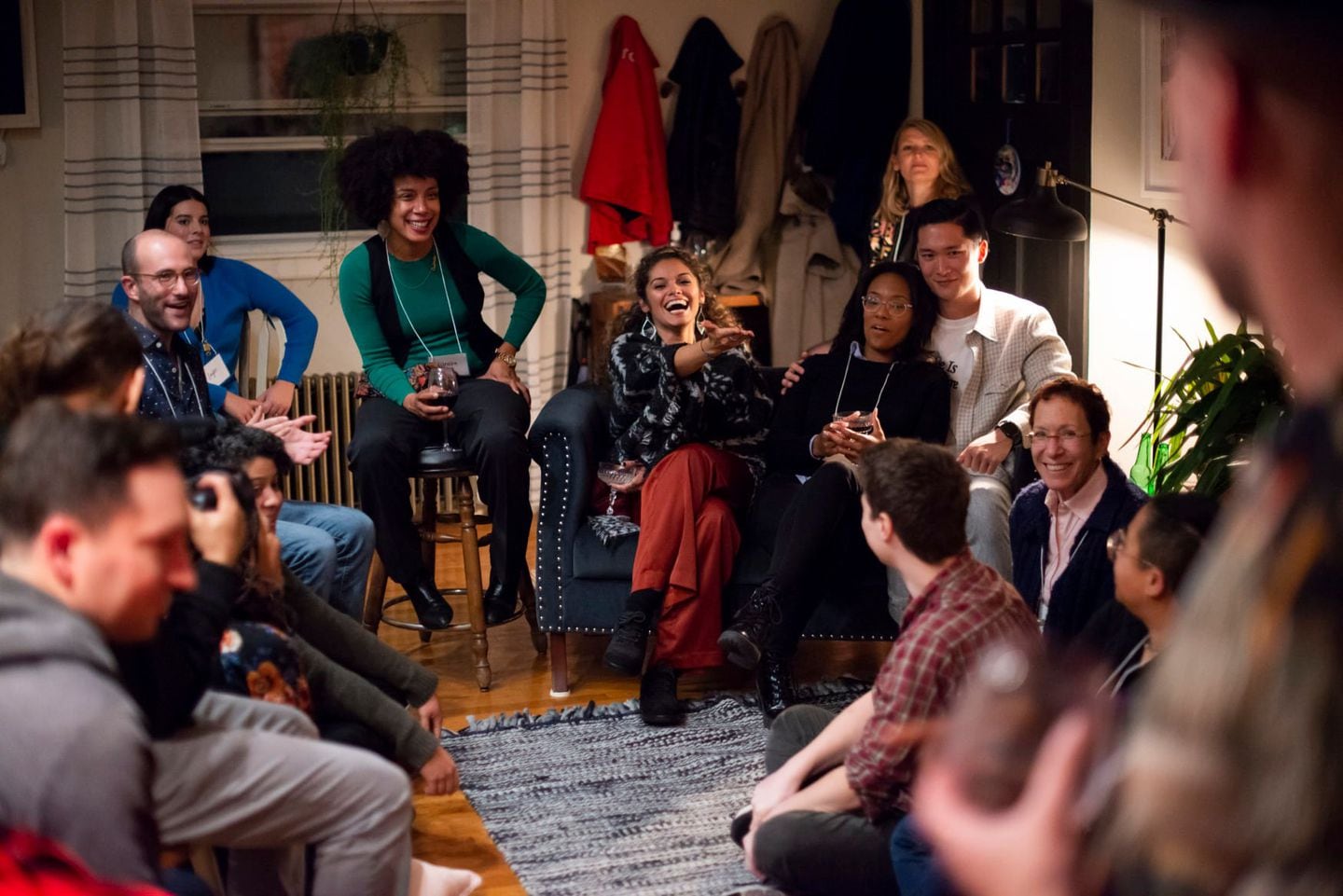
A dinner party “salon” hosted by The Jar, a Boston-based organization that uses works of art to create shared cultural experiences.

Many people who would like to reach across to people who are different from them just don’t know how to get started. It’s a challenge. Today’s story is about a group of artists who decided to tackle the challenge. And to have some fun along the way.

Peter Marks writes at the Washington Post, “On a chilly night in the Roxbury neighborhood, dozens of people — White, Black, Asian American, straight, gay, nonbinary, you name it — gathered for an invitation-only event that was equal parts about making art and making friends. Seated on the stage were Yo-Yo Ma, the celebrated cellist, and Liza Donnelly, the New Yorker cartoonist, who had been paired for the evening by the moderator, Guy Ben-Aharon, to explore how their creative lives might converge.

“As Ma played and Donnelly sketched him on a tablet projected onto a large screen, the audience was treated to a rare intersection — and another installment of The Jar, a pioneering nonprofit that aspires to knit a disparate citizenry together. Founded four years ago by Ben-Aharon, a 33-year-old stage director who previously ran his own Boston-based theater company, Israeli Stage, The Jar has developed a gentler model of social engineering. Its goal is forging comradeship via conversations about artistic experiences among groups that otherwise find few opportunities to commingle.

“ ‘There’s something so invigorating about making friends as an adult,’ said Rokeya Chowdhury, a Boston restaurateur and Jar proponent. …

“Bolstered by a $750,000, three-year grant from the Andrew W. Mellon Foundation, The Jar is in the vanguard of a movement seeking to capitalize on the communal powers of the visual and performing arts. … In a society that feels ever more tribal — even in cities that may have progressive cultures but checkered racial histories — inviting someone demographically unlike you to share a drink and an opinion is sometimes akin to a radical act.

“ ‘If you want to see a diverse and vibrant cultural community come to fruition, you have to build it,’ Ben-Aharon said over breakfast. ‘With The Jar, you’re actively invited to build the world you want to live in.’

“Invitation is the password unlocking the group’s mission. Here’s how The Jar works: Several people of divergent backgrounds agree to be ‘conveners’ for a Jar program or ‘happening,’ centered on a preselected reading, poem, playlet, painting or other work. Each convener agrees to bring five others to the event, at $10 a head, with the goal of an audience capped at 96. 

“One invitee in each ‘jar’ of six people is an intimate of the convener; two are ‘usuals’ — friends or colleagues. But two others must be ‘unusuals,’ people the convener barely or only incidentally knows. Or as Ben-Aharon put it, ‘people who you wouldn’t normally experience culture with.’ …

“ ‘The profoundness of it is that it invites people to do it themselves,’ he added about the process. … ‘They don’t really know what effect it will have on them,’ Ben-Aharon said. ‘Let’s say you go to church, and you’re a White gay man, and you go to this church with your husband, and your normal circle is White gay men. …

“ ‘But suddenly you’re invited to The Jar and you have to think of who are the two “unusuals,” and you invite a Black lesbian couple from that church. And suddenly you create a friendship with them. Suddenly you create a bond — and this actually happened, by the way.’ …

“Unlike, say, a religious community, where faith provides the link, Ben-Aharon and The Jar count on the creative soul as its spiritual source. …

“Ben-Aharon and his handful of staffers have had no trouble finding like-minded Bostonians; the catch is that the gatherings are small by design, and cracking the next challenge — how to grow the project, expand it perhaps to other cities — remains elusive. So does attracting additional capital.

“ ‘What we’re trying to do is scale intimacy,’ said Jeff Kubiatowicz, The Jar’s chief of staff. ‘On one hand, we need to use technology in order to make that happen. On the other hand, we have to keep it really, really personal. And we’re trying to balance those two things as we grow it.’

“The Jar’s participants seem to share a passionate belief in the outstretched hand. ‘The Jar’s model is very radical, very subversive,’ said Samantha Tan, an executive leadership consultant who chairs the board. ‘First of all is joy, right? Come here and enjoy yourself — enjoy meeting people who are not like you.’ …

“A few months ago in Roxbury, long a Black neighborhood that has, like so many enclaves in gentrifying cities, undergone changes in its class and ethnic makeup [a] renovated brick-walled space was donated for the happening by Chowdhury. …

“You could sense the audience’s pleasure, not only in meeting these artists up close, but also in having been asked, individually, to be there. ‘I like the people that I meet; it’s good to have places like this,’ said Cornell Coley, who came to the happening from Mattapan, another Boston neighborhood. ‘They created something that brings you out.’

“For artists, too, the invitation to be part of The Jar can elicit joy. Donnelly, who draws for the New Yorker and has also worked for CBS and had cartoons in publications such as Vanity Fair, said in an interview that she hadn’t been sure what to expect. What struck her was that she was able to make a connection herself. ‘Cartooning is communication, dialogue with other people. … I felt the warmth.’ ”

More at the Post, here. See also an earlier article in the Boston Globe, here.

Photo: Biblioteca Medicea Laurenziana, Florence, and MiBACT.
Disguised Mexica merchants in Tzinacantlan acquiring quetzal feathers.

Thanks to work by the Getty Research Institute and indigenous partners to post an ancient codex online, some mysteries about Aztec hstory are available for all of us to plumb.

Maya Pontone opines at Hyperallergic that “the 16th-century ‘Florentine Codex offers a Mexican Indigenous perspective that is often missing from historical accounts of the period.” So how did this knowledge end up in Italy?

“After centuries of remaining largely inaccessible to the public,” she writes, “a rare manuscript featuring 2,500 pages of detailed illustrations and text documenting the history and culture of 16th-century Mexico is now available online. The Digital Florentine Codex, a seven-year project by Los Angeles’s Getty Research Institute, features new transcriptions and translations, updated summaries, searchable texts and images, and more.

“Modeled after medieval European encyclopedias, the Florentine Codex is a three-volume, 12-book collection written in Spanish and Nahuatl documenting the daily life and customs of the Mexica (Aztec) people, as well as other information including astronomy, flora, and fauna, during the time of Spanish conquest. It was originally created by Bernardino de Sahagún, a Spanish Franciscan friar who began logging information about the Indigenous communities in central Mexico with whom he worked closely.

“Although Sahagún is frequently credited as the primary author, the 12-book manuscript was created with the help of numerous elders, grammarians, artists, and scribes from the Nahua community. As a result, the codex maintains an important Indigenous perspective that is often missing from other historical accounts of the time.

“In 1577, the codex was sent to Spain, where it then somehow traveled to Italy to fall under the ownership of Cardinal Ferdinando I de’ Medici, who brought the work to Florence. The codex was stored away in one of the Medici family libraries and remained forgotten for several centuries. In 2012, a scanned edition of the work was made digitally available through the World Digital Library, and in 2015, it was incorporated into UNESCO’s Memory of the World Register.

“But, as the Digital Florentine Codex’s project manager Alicia Maria Houtrouw told Hyperallergic, the manuscript still remained largely out of reach for the public.

“ ‘Access to codex was partial in that published transcriptions and translations tackle either the Spanish or the Nahuatl column of text or just a selection of the codex,’ Houtrouw said, adding that reading these reproductions often required knowledge of both early and modern Spanish and Nahuatl. Many published versions also didn’t include the manuscript’s crucial illustrations, or if they did, excluded context.

“ ‘The Nahuatl and Spanish texts provide two complementary, though distinct, narratives, and the images go beyond the alphabetic texts, providing unspoken details and communicating yet another layer of knowledge,’ Kim Richter, senior research specialist and the principal lead of the Florentine Codex Initiative, told Hyperallergic.

“Now the public can access the entirety of the codex through an online portal released by the Getty Research Institute last [October], and learn a wide span of subjects including the origin of ancient Aztec deities, theology and philosophy, cooking, and gardening. In Book 11, Sahagún documents the plague of smallpox, writing of the ‘infinite number of people’ who succumbed to the illness.

“The final book in the codex documents the Spanish invasion of Mexico, including the Massacre in the Great Temple of Tenochtitlan that occurred on May 22, 1520, under Spanish conquistador Pedro de Alvarado. …

“The digital codex was created with the help of native Nahuatl speakers out of the Instituto de Docencia e Investigación Etnológica de Zacatecas (IDIEZ), who translated thousands of sections of the codex and wrote the summary of the Spanish conquest of Mexico.

As a result, the Digital Florentine Codex now makes available a historical narrative about Indigenous resistance and heroism in the face of Spanish colonizers that has largely been absent from many educational curricula. …

“ ‘Indigenous people in Mexico, as in the US, face discrimination — so to have access to such important historical sources restores a sense of pride and also supports language revitalization — the primary mission of IDIEZ,’ Richter said.”

See the wonderful pictures at Hyperallergic, here. No paywall.

Wigmaking for Theater

Photo: Antonio Olmos/The Observer.
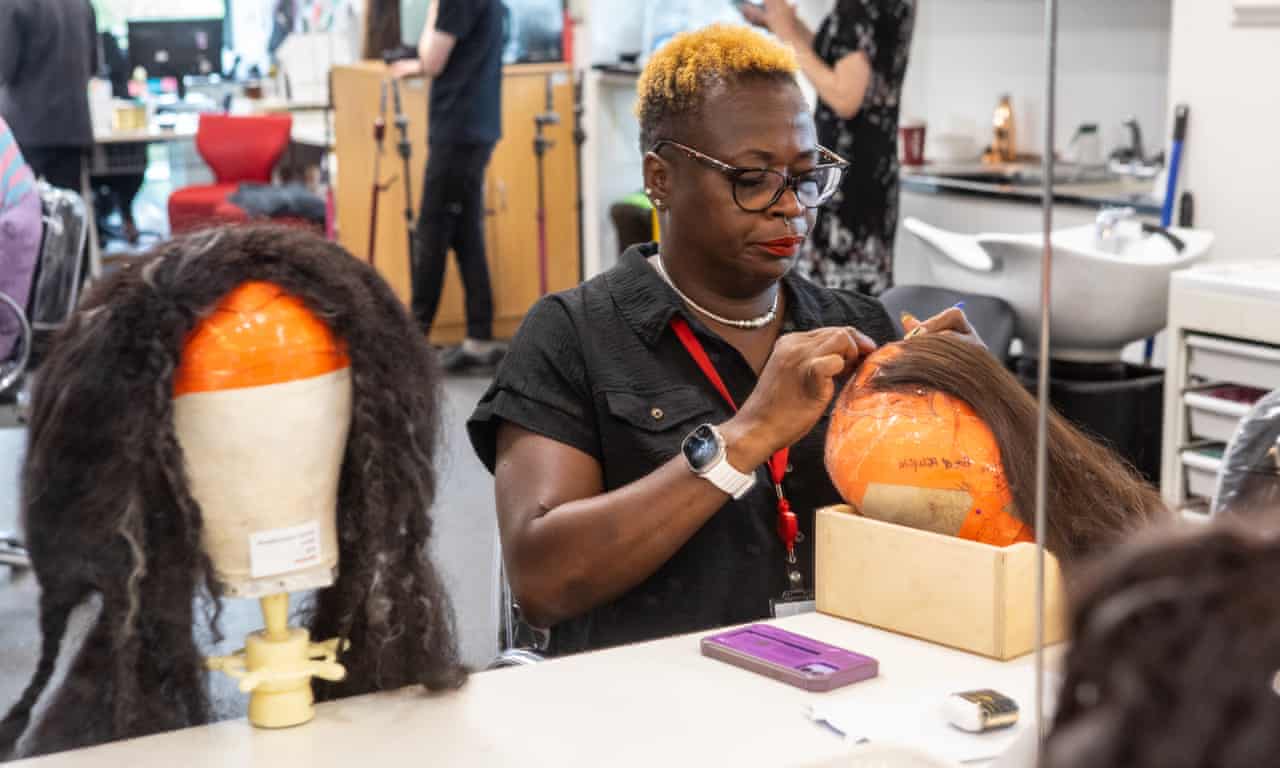
Skilled wigmaker Violet Barrie at England’s RSC [Royal Shakespeare Company].

Although I was in many theatrical productions as a kid, the first time I learned anything about wigs was when I had chemo. I lost my hair and wasn’t brave enough to go to work without any. (John told Suzanne, who was living in Switzerland then, “Mom looks like a little, bald mouse.”) But Dana Farber was known for nice wigs, and I got one there that I liked a lot.

Today’s story from the Guardian is all about wigs for the theater. Which can get complicated.

David Jays writes, “It’s a sunny afternoon in Stratford upon Avon and I’m watching actors become witches. In Georgia McGuinness’s design for Macbeth, the witches seem to be mostly hair. Amber Sylvia Edwards and Dylan Read peer out from mountains of furry locks, each looking as if a yeti has fallen asleep on their shoulders. The tumble of tresses is so heavy, it needs a harness for support. Welcome to the wild world of wigs.

“Some hairpieces are bobby-dazzlers: towers of Restoration foppery, ravishingly long Rapunzels. Others slink by unnoticed, disguised in realism. Who makes them? Who pins them on night after night? To find out, I meet two wig mavens. Sandra Smith is head of wigs at the RSC [Royal Shakespeare Company], and has warmly invited me to spend the day with her team in Stratford. Chris Smyth, meanwhile, only recently began his wig journey: he designed a memorable crimson creation for Jane Asher in The Circle at the Orange Tree in London. …

“The RSC storeroom’s wooden doors conceal mop after mop of blondes, browns and russets. A separate cupboard holds periwigs and judges’ rugs, like a bevy of poodles. This hoard reflects a practice built on sustainability and thrift. Mounds of witchy hair were foraged from the stores, saving thousands of pounds. ‘Nothing goes to waste, even the ratty bits,’ Smith says.

“Wigs, like actors, never retire. ‘We keep them till they die,’ her colleague Lavinia Blackwell says matter-of-factly. … ‘Wigs is an area of theatre that has been drastically cut back,’ designer Tom Piper says. ‘People have disappeared and budgets have gone down. I’m so grateful for somewhere like the RSC, who’ve got the team and a lot of stock.’ …

“Only when I see the foundations for all the team’s creations do I appreciate the challenge of our lumpy, bumpy human variety. Some heads are footballs, some shaped for rugby. The wigs team wrap actors’ heads in clingfilm and wind round sellotape to map the cranium, marking the hairline. …

“Theatrical wigs take quite a bruising, and the hair may be reused, which helps explain why the V&A [Victoria & Albert] collection holds few early wigs – the oldest come from Diaghilev’s Ballets Russes in the early 20th century. Even so, key artifacts indicate their role in nailing character. When Vivien Leigh played Blanche DuBois in the film of A Streetcar Named Desire in 1951, ‘the wig fundamentally made her appear less glamorous,’ [says Simon Sladen, V&A senior curator of theatre and performance] says. Leading theatrical wig-maker Stanley Hall created ‘impoverished, rather thin hair … to point out her highly nervous, worn-out character.’ …

“It’s painstaking work. ‘You tie each hair with a tiny little hook,’ Smyth tells me. How did he acquire the skills? ‘I do drag and I make my own costumes,’ he says. ‘I did a couple of days’ training in wigs and just fell in love, because it’s so difficult. It’s like the dark arts. I will never know everything. Everybody does it differently; it’s a rabbit hole that keeps deepening and deepening.’ …

“Everyone’s route into wig world is different. Smith was studying hairdressing and beauty therapy in Pontypridd when a friend took a job at the RSC, and she visited for work experience. ‘I had a lovely two weeks and I haven’t left since. I’ve been with the RSC for 38 years.’

“I crouch beside Violet Barrie, who ran a salon in Leamington Spa until Covid struck. Hairdressing was a family trade in her Jamaican childhood, so the fascination began early – just as it did when Smith grew up in Wales, watching friends and neighbors who came to get their hair done by her aunt on a Thursday evening. No wonder the wig room feels like a hug. …

“ ‘We invade somebody’s space from the first moment,’ Smith asserts. ‘We’ve got to be really skilled, but equally sophisticated in personal care: 90% of our job is reacting to somebody’s needs.’ The team intuit who is comfortable, who hates to be touched. …

“In the wings, Thérèse Bradley, playing Duncan, rushes up with a huge beam and a hug for Smith. ‘These women!’ she says. However careworn you may be when you sit in the wig room chair, she says, you leave ready for anything. ‘They perform miracles!’ ”

More at the Guardian, here. No firewall. Donations solicited. Check out the wild wigs for the Macbeth witches.
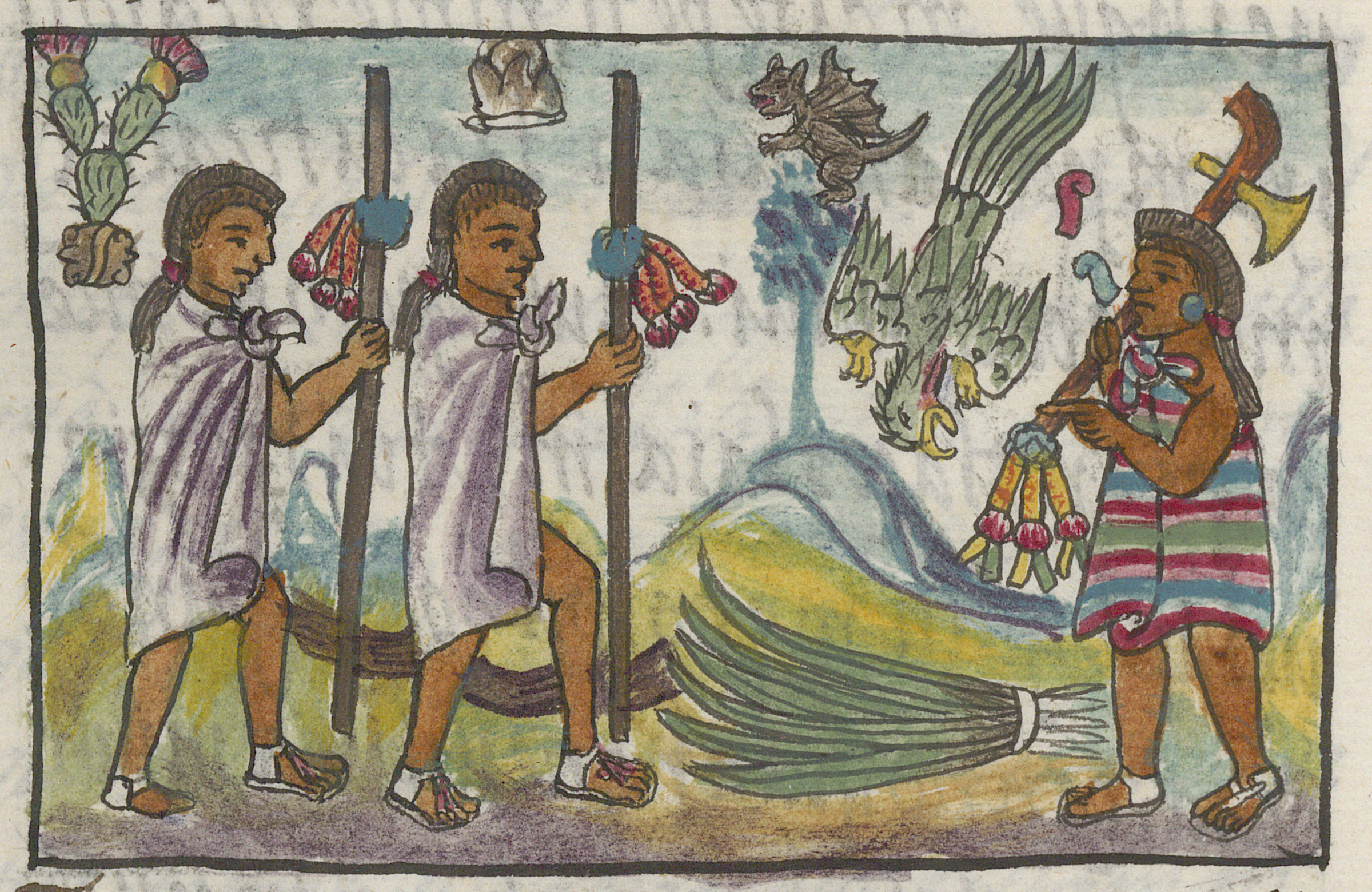
Photo: Juan Rumimpunu via Unsplash.
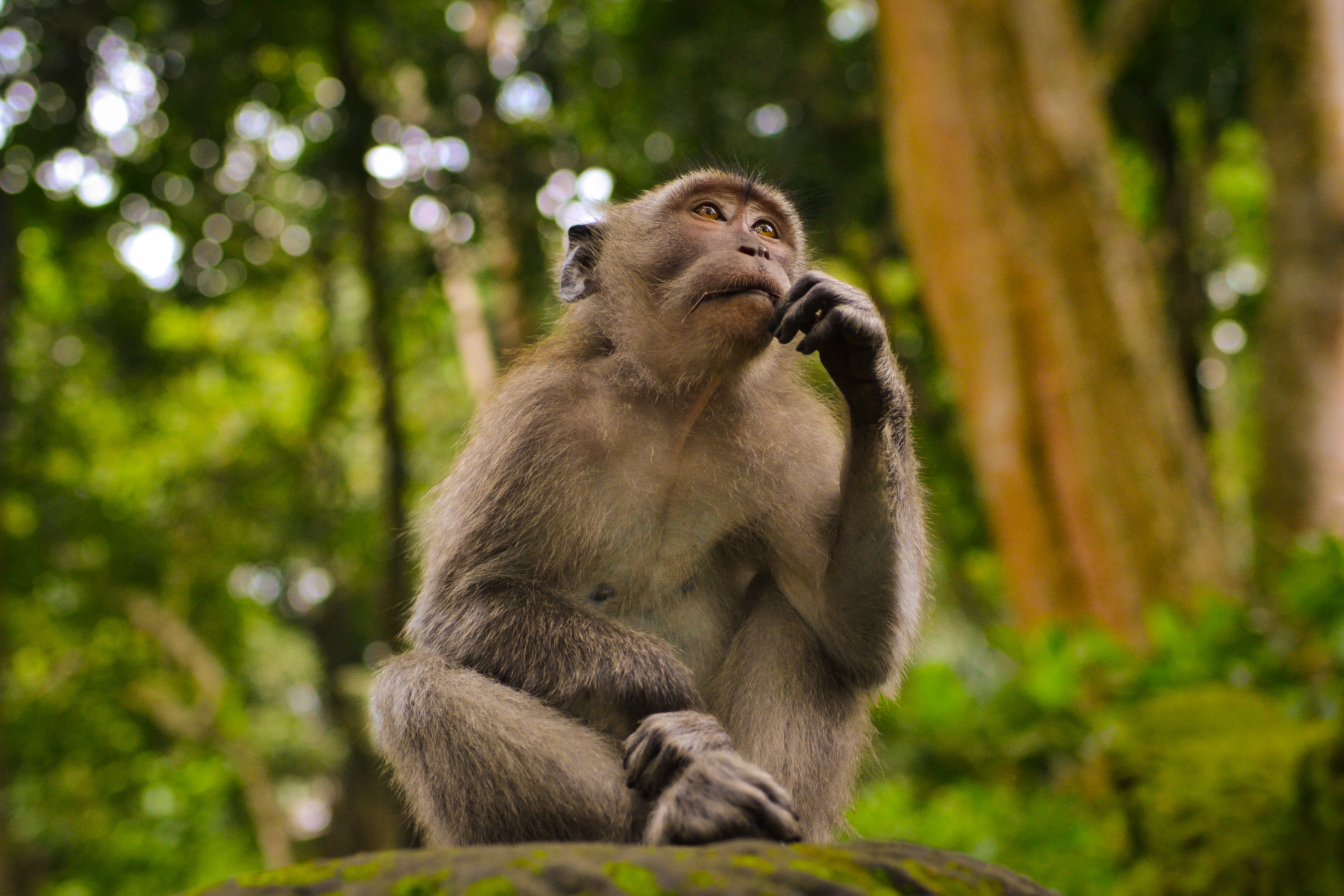
Thinking? This pensive character looks like me when I’m struggling with word retrieval.

With every passing year, most of us take a bit longer to retrieve le not juste. Sometimes a lot longer.

The research of Nichol Castro, assistant professor of communicative disorders and sciences at the State University of New York at Buffalo, looks at “word retrieval in aging adults and adults with language impairments (e.g., aphasia, dementia), with a particular focus on how words are organized in memory.” What I loved about this story is learning that no two people have the same way to retrieve words because no two people have built up exactly the same associations with words.

Castro writes at the Conversation, “Just like a physical dictionary, your mental dictionary contains information about words. This includes the letters, sounds and meaning, or semantics, of words, as well as information about parts of speech and how you can fit words together to form grammatical sentences. Your mental dictionary is also like a thesaurus. It can help you connect words and see how they might be similar in meaning, sound or spelling.

“As a researcher who studies word retrieval … I’m intrigued by how words are organized in our mental dictionaries. Everyone’s mental dictionary is a little bit different. And I’m even more intrigued by how we can restore the content of our mental dictionaries or improve our use of them, particularly for those who have language disorders. …

Your personal mental dictionary is customized based on your individual experiences.

“What words are in my mental dictionary might overlap with the mental dictionary of someone else who also speaks the same language, but there will also be a lot of differences between the content of our dictionaries.

“You add words to your mental dictionary through your educational, occupational, cultural and other life experiences. This customization also means that the size of mental dictionaries is a little bit different from person to person. …

“There is a lot of debate about how mental dictionaries are organized. Many scholars agree that it’s probably not like an alphabetized book.

“One widely rejected theory, the grandmother cell theory, suggests that each concept is encoded by a single neuron. This implies that you would have a neuron for every word that you know, including ‘grandmother.’

“While not accepted as accurate, the aspect of the grandmother cell theory suggesting that certain parts of the brain are more important for some types of information than others is likely true. For example, the left temporal lobe on the side of your brain has many regions that are important for language processing, including word retrieval and production. Rather than a single neuron responsible for processing a concept, a model called parallel distributed processing proposes that large networks of neurons across the brain work together to bring about word knowledge when they fire together.

“For example, when I say the word ‘dog,’ there are lots of different aspects of the word that your brain is retrieving, even if unconsciously. You might be thinking about what a dog smells like after being out in the rain, what a dog sounds like when it barks, or what a dog feels like when you pet it. You might be thinking about a specific dog you grew up with, or you might have a variety of emotions about dogs based on your past experiences with them. All of these different features of ‘dog’ are processed in slightly different parts of your brain. …

“Your mental dictionary can’t be like a physical dictionary [because] it is dynamic and quickly accessed. Your brain’s ability to retrieve a word is very fast. In one study, researchers mapped the time course of word retrieval among 24 college students by recording their brain activity while they named pictures. They found evidence that participants selected words within 200 milliseconds of seeing the image. After word selection, their brain continued to process information about that word, like what sounds are needed to say that chosen word and ignoring related words. This is why you can retrieve words with such speed in real-time conversations. … Until you have a breakdown in word retrieval. One common failure in word retrieval is called the tip-of-the-tongue phenomenon.

It’s the feeling when you know what word you want to use but are unable to find it in that moment.

“You might even know specific details about the word you want, like other words with similar meaning or maybe the first letter or sound of that word. With enough time, the word you wanted might pop into your mind.

“These tip-of-the-tongue experiences are a normal part of human language experience across the life span, and they increase as you grow older. One proposed reason for this increase is that they’re due to an age-related disruption in the ability to turn on the right sounds needed to say the selected word.

“For some people, though, tip-of-the-tongue experiences and other speech errors can be quite impairing. This is commonly seen in aphasia, a language disorder that often occurs after injury to the language centers of the brain, such as stroke, or neurodegeneration, such as dementia. …

“Fortunately, there are treatments available that can help someone improve their word retrieval abilities. For example, semantic feature analysis focuses on strengthening the semantic relationships between words. There are also treatments like phonomotor treatment that focus on strengthening the selection and production of speech sounds needed for word production. There are even apps that remotely provide word retrieval therapy on phones or computers.” Find out more at the Conversation, here.

Photo: TJ Watt/Ancient Forest Alliance.
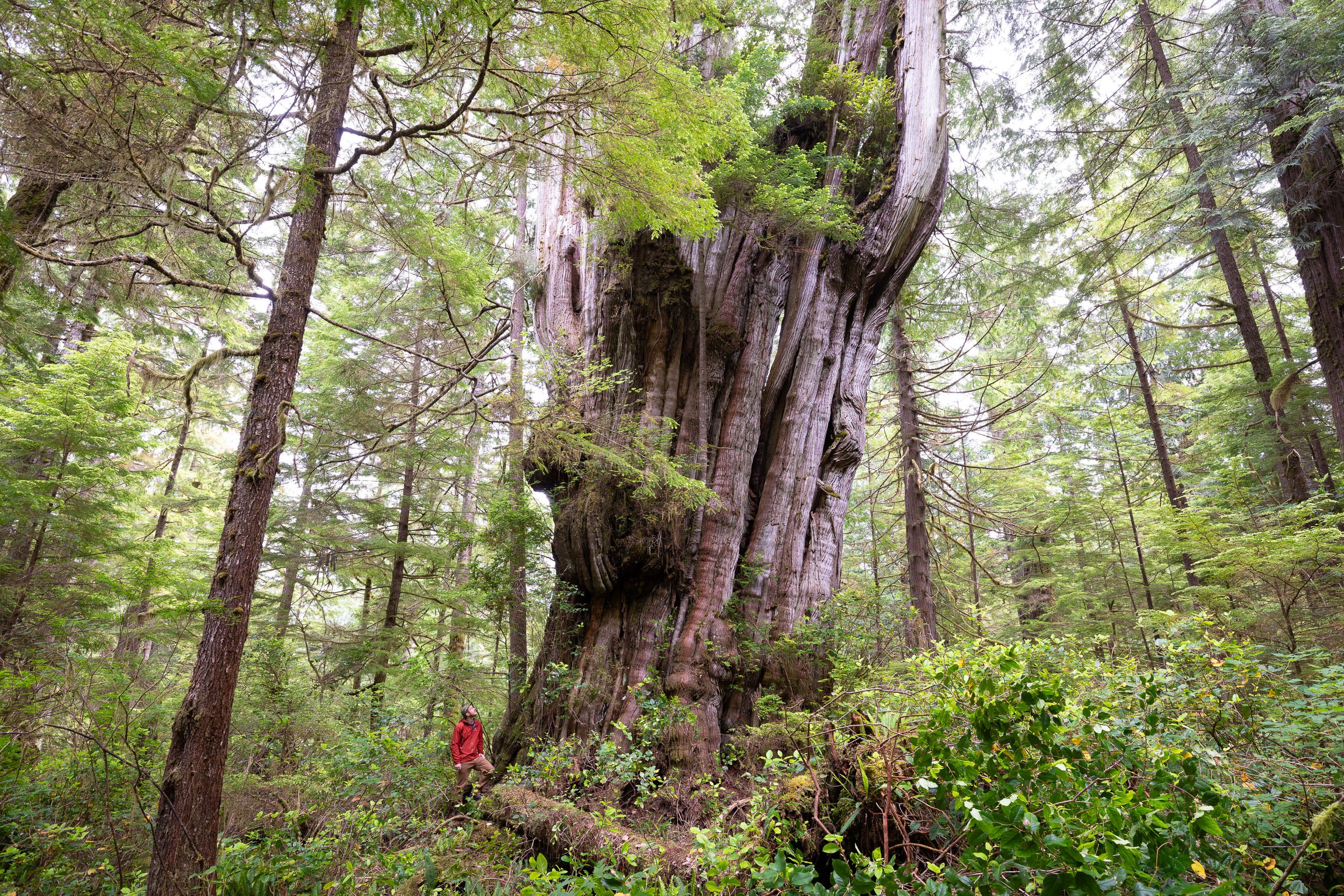
Ancient Forest Alliance photographer TJ Watt and an ancient Western red cedar. The tree is estimated to be 46 metres high [150 feet]. It is located on Flores Island, in Clayoquot Sound off Vancouver Island in the territory of Canada’s Ahousaht tribe. 

I love reading about unusual careers and pursuits people have devoted their lives to. There’s so much to learn!

Chad Pawson reports at Canadian Broadcasting (CBC) about a guy at the Ancient Forest Alliance in Canada who hunts down big, old trees. Although the local indigenous people probably always knew about the tree he calls “The Wall,” it can’t hurt to teach others about why it needs protection.

“For 20 years, Victoria’s TJ Watt, 39, has trekked through the province’s vast and verdant landscape seeking out giant, old trees to document them and make a case for their conservation. Now, at a time when exceptionally large trees have dwindled due to logging, he’s recorded what he calls the tree of his lifetime.

” ‘No tree has blown me away more than this one,’ he said. ‘It literally is a wall of wood.’

“Watt photographed the tree, a Western red cedar, in 2022 on Flores Island in fabled Clayoquot Sound on Ahousaht First Nations territory while on a field trip as a National Geographic and Royal Canadian Geographical Society explorer. (The species is also spelled redcedar because it’s not deemed to be a true cedar.)

“It’s estimated to be 46 metres tall [151 feet] and five metres wide at its base. The old-growth tree, part of forests that store carbon and support many species of plants and animals, is estimated to be at least 1,000 years old, according to Watt.

“Its dimensions put it at the very top of the biggest and oldest trees in the province and across Canada.

” ‘Unlike most other trees, it actually gets wider as it goes up,’ said Watt. …

“Watt and the Ahousaht First Nation have now revealed images and details of the tree to the public — although keeping its location secret — to show it as an example of the importance of the province meeting commitments to overhaul forestry to balance harvesting with ecological values.

” ‘It’s representative of a healthy, intact, coastal, temperate ecosystem,’ said Tyson Atleo, 36, a hereditary representative of the Ahousaht First Nation. ‘We don’t see a lot of trees that size anymore.’

“The tree has been nicknamed ‘The Wall or [a word meaning] ‘big redcedar’ in the Nuu-chah-nulth language. It’s in a type of forest that’s in danger of disappearing from B.C.’s landscape due to a history of intense logging. …

“The tree is not currently in danger of being logged as it’s in an area where old-growth logging is being deferred as part of work between First Nations and the province to protect old-growth forests at risk of permanent biodiversity loss.

“The Ahousaht First Nation, whose territory spans Clayoquot Sound, a globally recognized biosphere reserve, is at the forefront of work to keep significant trees in biodiverse forests standing while finding other ways, such as tourism, to replace lost revenues. …

“Ahous Adventures, an Ahousaht-owned and operated eco-cultural tour company in Tofino, won’t be taking visitors to the tree in order to keep the area protected but does other tours to show off the region’s other impressive trees.

“Nations like the Ahousaht are hoping for more conservation funding from the province to be able to develop [alternatives to logging]. …

“In order to raise funds on its own, the Ahousaht has established a voluntary stewardship fee for its territories, much like B.C. Parks’ day-use passes.

“Meanwhile, others also making careers of trying to locate and document massive old-growth trees that still exist, say coming across trees like The Wall is akin to a religious experience.

” ‘You feel so small, and you realize it is so incredibly important what these things are. They represent so much more than just a tree. It’s an ecosystem unto itself,’ said Colin Spratt, a conservation photographer who takes people on tours of Vancouver’s Stanley Park to show off old-growth trees there.”

More at the CBC, here. Other details at the Washington Post, here.

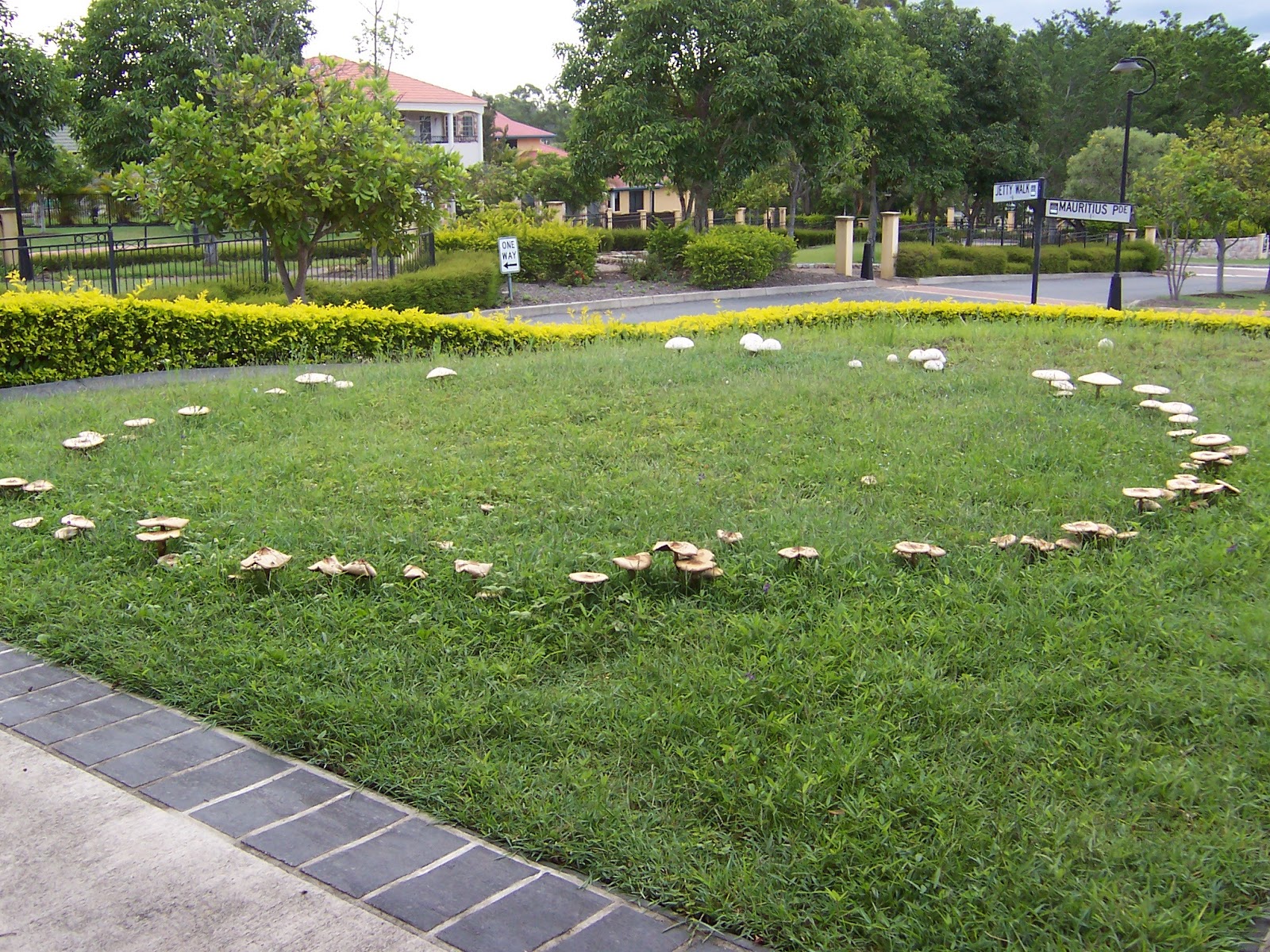
Sometimes called a Fairy Circle, fungi like these tell a story of what is going on underground.

I don’t know as much about about fungi as New Zealand blogger Spores, Moulds, and Fungi — who posts some amazing photos from time to time — but in recent years, I have gotten interested in mushrooms and more.

Part of the reason is that I am noticing that they are beautiful. But also, as Jonathan Moens reports at the Washington Post, a few bags of dirt with the right fungi “could make the planet more resilient to climate change.”

Moens begins his story in Kazakhstan.

“A team of scientists loaded into a gray minivan [earlier] this year and drove for hundreds of miles west through the Kazakh steppe — a vast region marked by endless open plains of grass, abandoned farms and flower-filled meadows.

“It’s a desolate, semiarid landscape, but just a few inches below the ground may lie one of the most diverse fungi ecosystems on Earth.

“Across much of the planet, thin, wildly interconnected filamentous structures — known as ‘mycelium’ — hold the earth together. When these underground fungi come together, they form sophisticated systems known as ‘mycorrhizal networks.’ The Kazakh steppe, which stretches from the north of the Caspian Sea to the Altai Mountains, is one of the largest dry steppes in the world and is predicted to have a wild diversity of mycorrhizal fungi. But as the region becomes increasingly desert-like, many of these fungi may disappear.

” ‘There’s a time limit, 100 percent,’ said Justin Stewart, an evolutionary ecologist who led the mapping expedition. ‘If we collect a sample when it’s already a desert, then we’ve already lost all that diversity.’

“The Kazakhstan mission is part of a worldwide project led by the Society for the Protection of Underground Networks, or SPUN, a scientific research organization dedicated to mapping out underground fungi. The goal is to sample soil in 10,000 biodiversity hot spots across the world to create a global picture of what species of fungi exist and where.

“The team identified these areas using a predictive map based on thousands of observations and environmental data. In it, the Kazakh steppe stood out because of its wide-ranging diversity of ecosystems.

Understanding which mycorrhizal fungi survive in the harsh temperatures there may help scientists determine how these fungal communities might adapt to the climate crisis as droughts, fires and desertification become more prevalent.

“The researchers chose three areas of the steppe, each with a different climate: They began in the southern deserts, then drove out west to an area dominated by vast grasslands, agricultural lands and meadows. They ended north, near the Russian border, where they entered a forest ecosystem.

“At each site they took tens of samples by mapping out a grid with measuring tape, pounding a tube into the ground to extract the soil and storing this soil in a plastic bag for mixing. These samples may help scientists unlock secrets that could one day help ecosystems capture more carbon dioxide and restore soil health — as well as the trees, plants and animal life that rely on it. …

“Mycorrhizal fungi often form mutually beneficial relationships with plants. They trade essential nutrients such as phosphorus and nitrogen in exchange for carbon, and act as an extended root system, allowing plants to access water they can’t reach.

“These networks may also prove to be invaluable for transporting carbon underground, a study published in June found. About 13 gigatons of carbon fixed by vegetation — equivalent to about one-third of all carbon dioxide emissions from fossil fuels in one year — flows through underground fungi, according to an analysis of nearly 200 data sets.

“In the steppe, these plant-fungal benefits may be short-lived, however. While deserts are a natural part of Kazakhstan’s ecosystem, more than half of the country’s vegetation and drylands is at risk of becoming desert as well. The main drivers are large-scale intensive agriculture and increasingly warm and dry temperatures brought by climate change. …

“As the minivan moves northwest toward Kostanay, a city about 100 miles away from Russia’s southern border, the clay-red, barren landscapes give way to endless fields of grass. Herds of horses reared for meat consumption trot along the wide expanse while eagles circle the skies in search of prey.

“For hundreds of years, the steppe was a region of nomadic herders. In the 1950s, under Soviet rule, the government mobilized thousands of young volunteers to produce as much grain as possible in order to alleviate food shortages, an initiative known as the virgin lands campaign.

“The fields were extensively plowed, which degraded the soil, and were later abandoned because they were not productive. ‘It had an impact on vegetation, on steppe species — it’s now very fragmented in the northern part,’ said Alyona Koshkina, a researcher at the Association for the Conservation of Biodiversity of Kazakhstan, a national conservation group.

“The farming damaged the fungi networks, too, by ripping them out of the ground and stripping the soil of nutrients. The researchers hope the samples here give them more information on what kinds of fungi are able to survive in such unfavorable conditions, and compare it to other sites, such as forests and meadows.

“Over the years, the fields have had time to slowly recover, but they face new threats. Since 2021, the Kazakh government has been working on a nine-year project to bolster the livestock sector in the steppe.

“While grazing of the grasslands can help these ecosystems thrive, overgrazing may lead to further desertification, Koshkina said. To restore the steppe would mean winding back the clock to its pre-Soviet era, when the region was largely undisturbed or ‘pristine,’ she said. …

“Conservationists agree that the health of aboveground vegetation is inextricably linked to that of below-ground biodiversity. As such, mycorrhizal fungi may play an important role in shaping the steppe’s future. …

“Studying the steppe’s fungi could help scientists figure out whether they could thrive in other, similar climates. One way to test this would be via inoculation. If, for instance, SPUN’s work revealed that pristine steppes had higher mycorrhizal diversity compared with more degraded land, those same fungi could be transferred elsewhere to test whether they improve soil quality.”

More at the Post, here. A good person to follow at X, formerly known as Twitter, is Sam Knowlton, @samdknowlton, who works with fungi to improve soil health in agriculture.

See also the Guardian, here, where Fiona Harvey has more about mapping the world’s fungi. She quotes Jane Goodall, adviser to the SPUN project: “An understanding of underground fungal networks is essential to our efforts to protect the soil, on which life depends, before it is too late.”

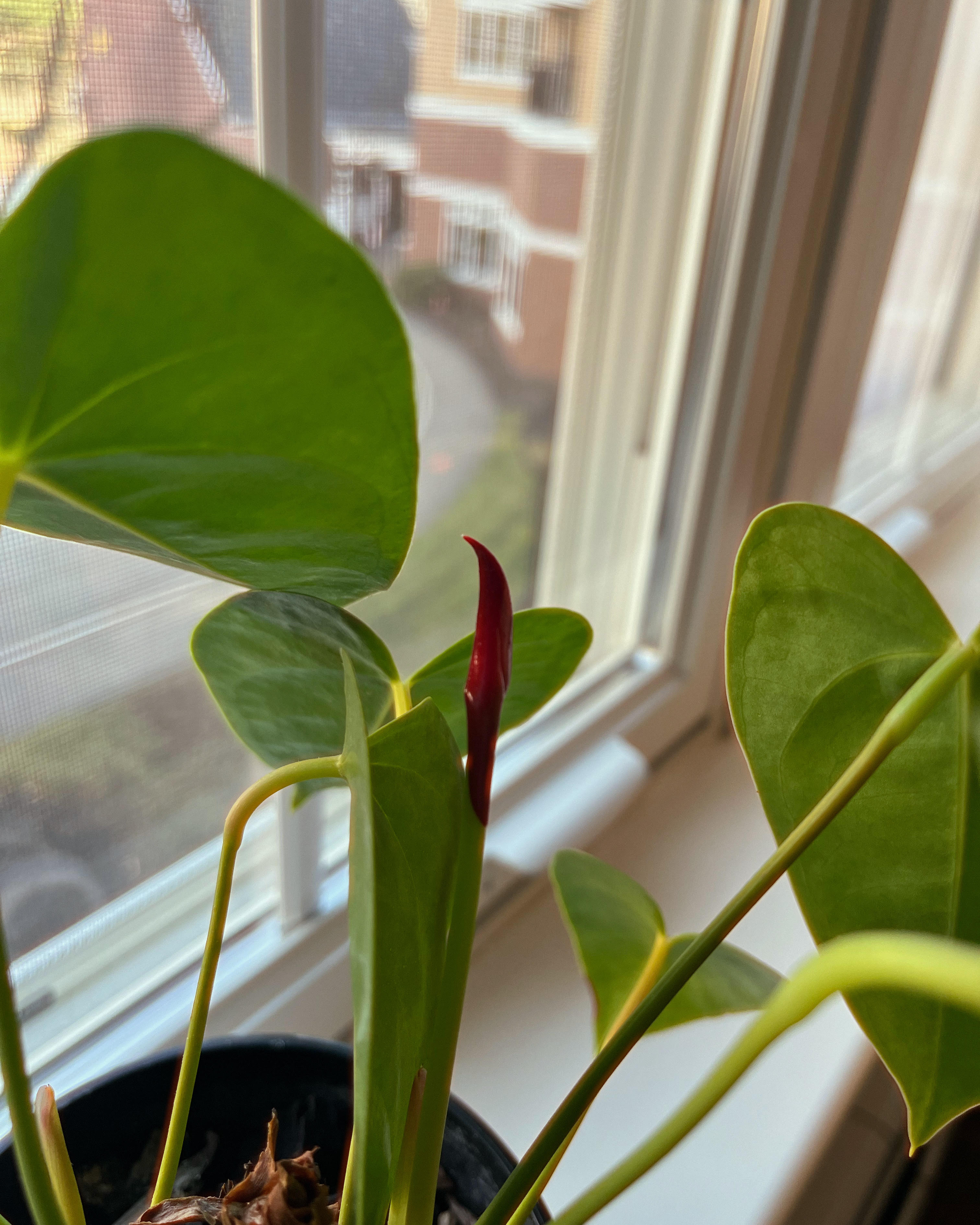
I have a great attachment to my anthurium (above), which my niece and nephew gave me in early 2020 after my sister died. The plant told me her name was Gladys. I like to wish her Good Morning and ask how she’s doing.

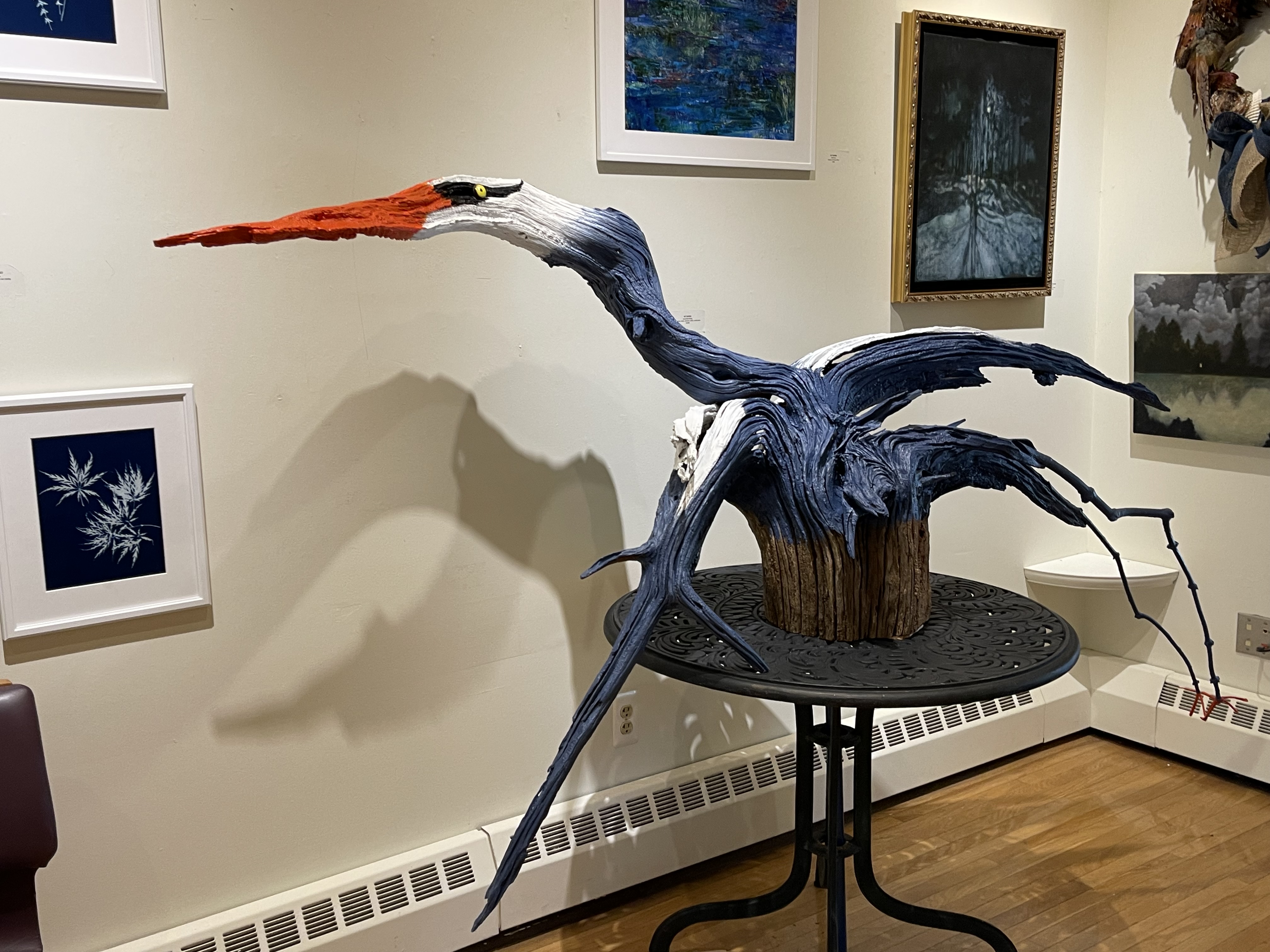
Artist Kit Howard Burns, a college classmate, saw a great blue heron in the root of a fallen tree. Isn’t it great?

Next, you may think you see a bench, but it’s really a story of sun and shadow. I look everywhere for these stories in winter, when they may appear only for a few moments.

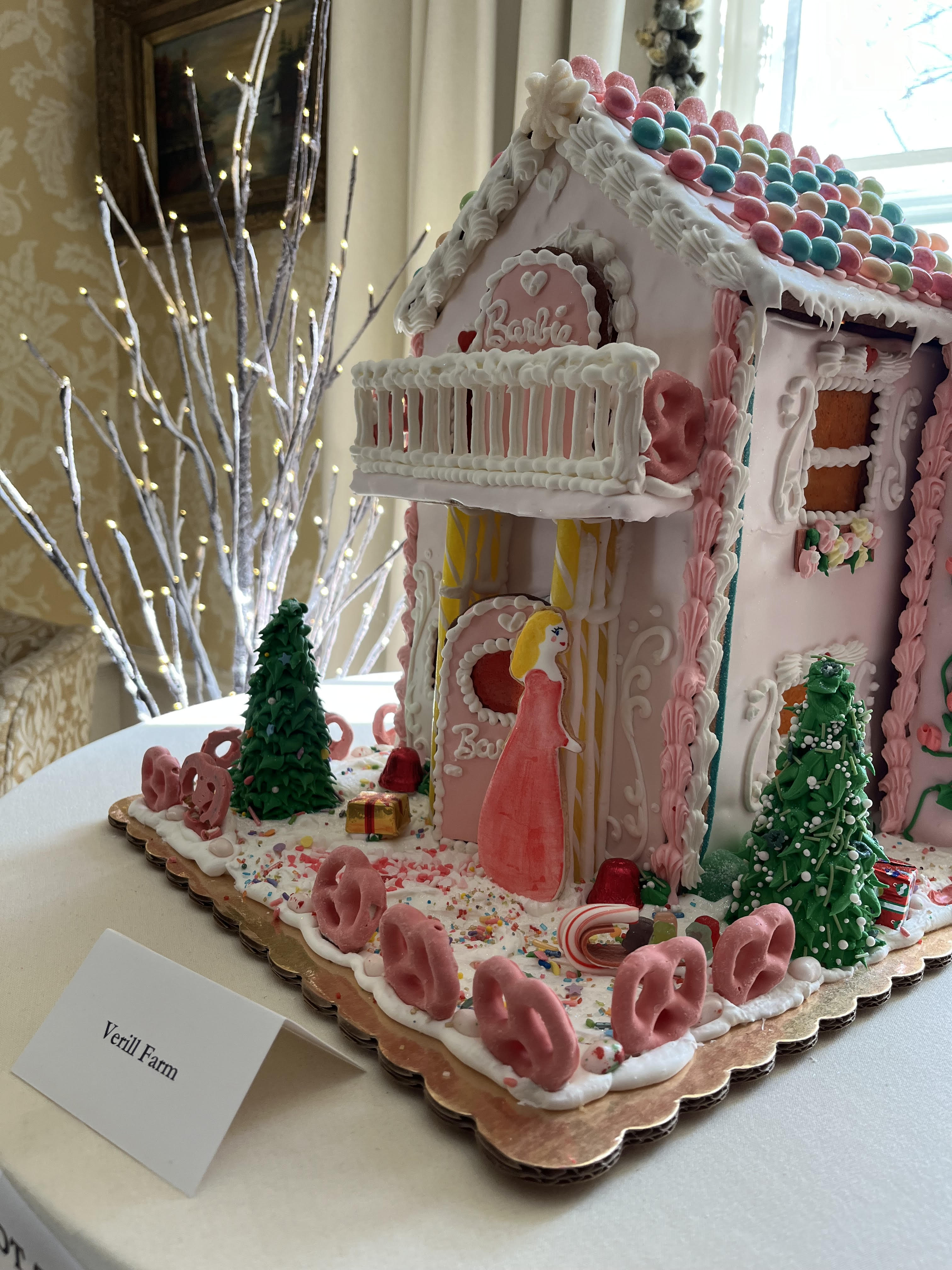
The annual gingerbread competition at the Colonial Inn inspired the next artwork, Verrill Farm’s version of the Barbie movie. My husband pointed out the pretzel fence, which I missed at first.

I’m still trying to figure out the characters I saw in the bushes near Jeanne’s house. Tell me what they are, if you know. The woman looks like a Disney gal, but are those soldiers that I see climbing a nearby branch? They look dangerous.

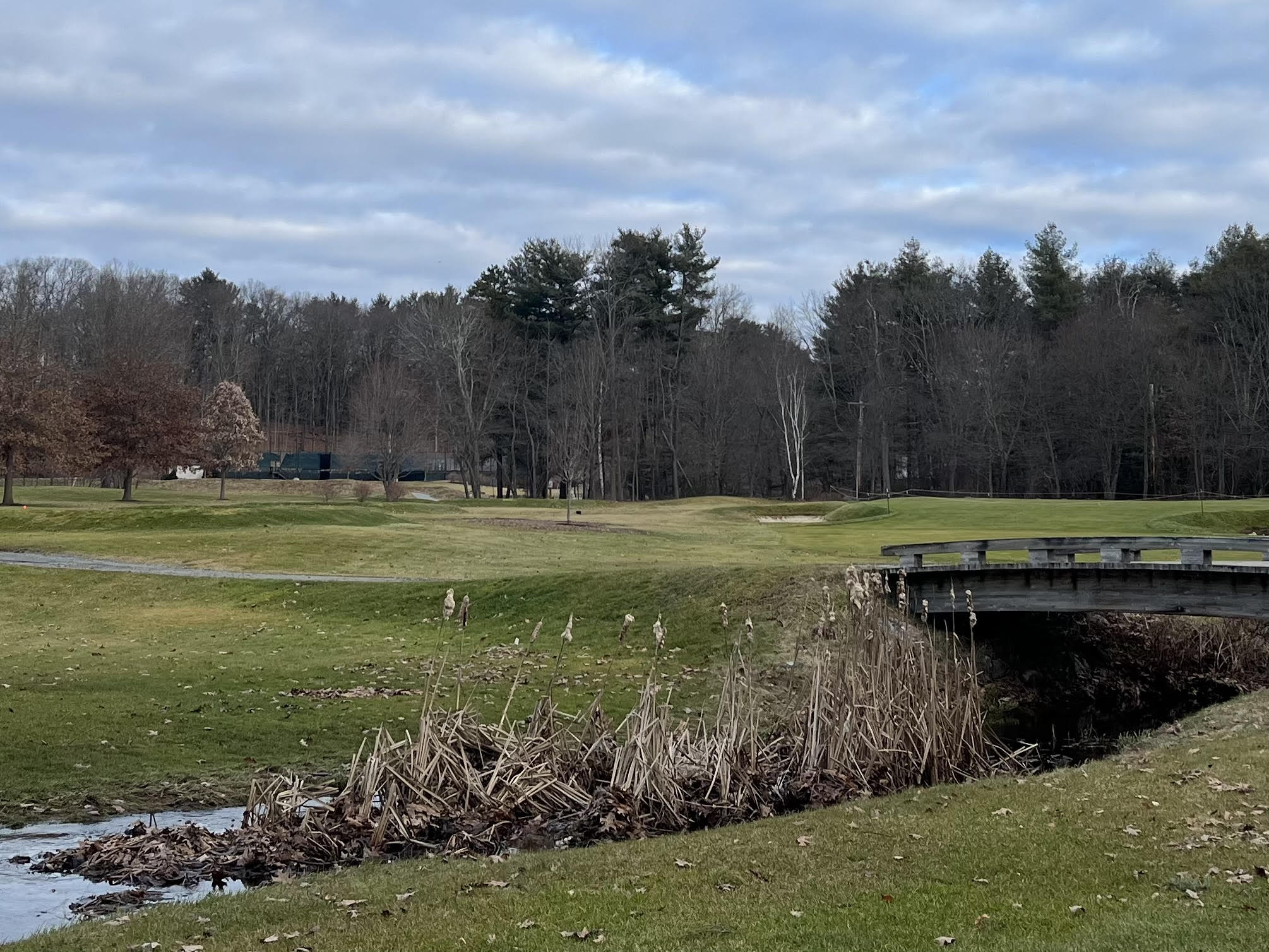
On New Year’s Day, I took advantage of the cold and quiet to trespass on the temporarily unused golf course. Nearly every day I walk along the road that runs beside it, and I always feel tempted to disobey the “No Trespassing” signs. I wonder if 2024 is going to be a year of disobedience.

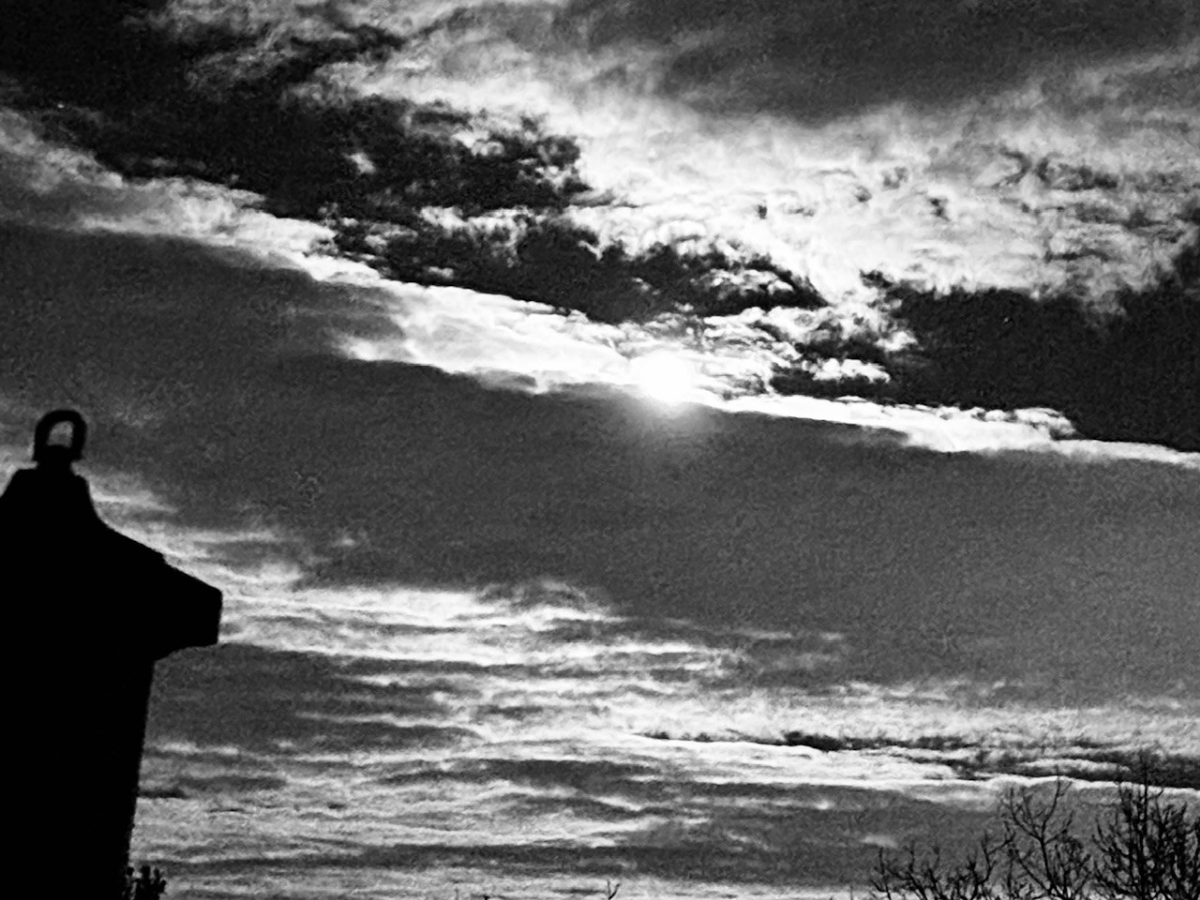
Neighbor Lynne Stinson’s beautiful photo of the moon coming through clouds says to me 2024 could be almost anything.

Finally, here’s a version of “My Way” you may like. I never cared much for the song when it was all about Frank Sinatra doing it his way, but notice how much more meaningful it seems in Spanish. I heard this on the jazz station, wicn.org. Check it out.