Feeds:
Posts
Comments

Posts Tagged ‘aging’

Photo: Nilo Merino Recalde.
A visual representation of an audio clip of five different great tit birds singing one song each.

There is so much for humans to learn about other species! The other day, a post on household pets reacting to the animated film Flow inspired Deb in Tennessee to conduct her own experiment with her dog. She learned that Buster, for one, was bored by Flow, failing to replicate the anecdotal evidence of curiosity described at the New York Times — a good example of why studies usually say, “More research is needed.”

Today we learn something new about birds, but maybe it’s only certain birds.

Victoria Craw writes at the Washington Post, “They sound beautiful, herald the start of spring, and even have the power to reduce stress and boost mental health.

“Now it turns out that some birdsongs also contain a hidden world of shared language, with varying local accents and dialects that change depending on the age of the bird and its peers — not unlike human songs.

“ ‘Just as human communities develop distinct dialects and musical traditions, some birds also have local song cultures that evolve over time,’ said Nilo Merino Recalde of the University of Oxford’s biology department, who led the new research published in the journal Current Biology. ‘Our study shows exactly how population dynamics — the comings and goings of individual birds — affect this cultural learning process.’ …

“The study is based on analysis of over 100,000 bird songs from at least 242 birds recorded in 2020, 2021 and 2022 in Wytham Woods in Britain’s Oxfordshire — a sprawling 1,000-acre wood where ecological and environmental research is carried out. For the last 77 years it has been the site of the Wytham Great Tit Study showing how two species of tit — the great tit and blue tit — have changed over time. …

“While some birds learn songs from their fathers and others learn continuously from neighbors, great tits are believed to do most of their learning in the first 10-11 months of life. …

“Merino Recalde said he was inspired by his love of birds and interest in social learning in animals, which creates an evolving shared culture reminiscent of the way humans learn languages and music. Theoretical work indicates that factors such as population turnover, immigration and age can affect the evolution of these cultural traits — so far, however, empirical evidence on the subject has been limited.

“His research team focused on the great tit, a small bird that lives just 1.9 years on average. The team recorded the ‘dawn chorus’ from March to May — coinciding with breeding season — using microphones placed near nesting boxes to gather more than 200,000 hours of the ‘simple yet highly diverse songs’ sung by males. Through a combination of physical capture, microchips and an artificial intelligence model, researchers were able to recognize the songs of individual birds and track how they changed over time, showing each bird had a repertoire ranging from one to more than 10 tunes.

“ ‘One of the main findings was that the distance that these birds travel while they are learning the songs, and also the ages of the other birds they interact with … affect how varied their songs become, collectively,’ Merino Recalde said. …

” ‘Homegrown’ songs in areas where birds stay close to their birthplace tend to stay unique, similar to the way in which isolated human communities can develop distinct local dialects over time, the team found.

“Age also had a significant impact, with birds of a similar age singing similar tunes, whereas mixed-age neighborhoods had ‘higher cultural diversity.’

This shows that the older birds can act as guardians of culture as they ‘continue to sing song types that are becoming less frequent in the population,’ researchers said.

“ ‘In this way, older birds can function as “cultural repositories” of older song types that younger birds may not know, just as grandparents might remember songs that today’s teenagers have never heard.’ …

“Merino Recalde said capturing how population changes are reflected in song could provide a future avenue for less invasive research, eliminating the need for capturing and tagging animals, for instance. …

“Professor Richard Gregory, the head of monitoring conservation science at Britain’s Royal Society for the Protection of Birds (RSPB), who was not involved with the study, praised the ‘herculean’ effort to analyze such a large data sample over a three-year period and said similar research could be used to highlight ‘critical tipping points’ for a population in future.

“While the great tit is not endangered, Gregory said the study could help inform plans to reintroduce or relocate certain animals, as such conservation efforts may be ‘doomed’ if they don’t take their cultural traits into account. ‘This study reminds us that the details of an animal’s life really matter.’

“Gregory, who is also an honorary professor of genetics, evolution and environment at University College London, said the study also showed that ‘methods of wildlife recording and song analysis are developing at break-neck speed,’ and AI is going to ‘revolutionize conservation science’ by allowing patterns in nature to be identified more readily.”

More at the Post, here. You can listen to an audio clip there.

Read Full Post »

Photo: Jackie Molloy for KFF Health News.
Hilda Jaffe, 102, in her apartment in New York. Jaffe enjoys doing puzzles, reading, volunteering, and attending cultural events.

I have always thought that a city like New York, with many kinds of public transportation and easy walking to whatever you need, is the best kind of place to grow old. The problem for most of us is that we may still need a car to do the simplest things long after we can’t drive.

Here’s a story about a thriving 102-year-old doing her errands without assistance in New York. I’m convinced that part of her good fortune is not having to drive.

Judith Graham writes at the Washington Post, ” ‘The future is here,’ the email announced. Hilda Jaffe, then 88, was letting her children know that she planned to sell the family home in Verona, New Jersey. She’d decided to begin life anew on her own in a one-bedroom apartment in Hell’s Kitchen in Manhattan.

“Fourteen years later, Jaffe, now 102, still lives alone — just a few blocks from the frenetic lights and crowds that course through Times Square.

“She’s the rarest of seniors: a centenarian who is as sharp as a tack, who carries grocery bags in each hand when she walks back from her local market, and who takes city buses to see her physicians or attend a matinee at the Metropolitan Opera.

“Jaffe is an extraordinary example of an older adult living by herself and thriving. She cleans her own house, does her own laundry, manages her own finances, and stays in touch with a far-flung network of family and friends via email, WhatsApp and Zoom. Her 78-year-old son lives in San Jose. Her 75-year-old daughter lives in Tel Aviv.

“I’ve spoken with dozens of seniors this past year for a series of columns on older Americans living alone. Many struggle with health issues. Many are isolated and vulnerable. But a noteworthy slice of this growing group of seniors maintains a high degree of well-being. …

“Sofiya Milman is the director of human longevity studies at the Institute for Aging Research at Albert Einstein College of Medicine. She studies people known as ‘superagers’ age 95 and older. ‘As a group, they have a very positive outlook on life’ and are notably resilient, like Jaffe, she told me.

“Qualities associated with resilience in older adults include optimism, hopefulness, an ability to adapt to changing circumstances, meaningful relationships, community connections and physical activity, according to a growing body of research on this topic.

“Jaffe has those qualities in spades, along with a ‘can-do’ attitude. ‘I never expected to be 102. I’m as surprised as everybody else that I am here.’ …

“She credits her genetic heritage, luck and her commitment to ‘keep moving,’ in that order. … Asked to describe herself, she quickly responded with ‘pragmatic.’ That means having a clear-eyed view of what she can and can’t do and making adjustments as necessary.

“Living alone suits her, she added, because she likes being independent and doing things her way. ‘If a problem comes up, I work it out,’ Jaffe said. …

“There are only some 101,000 centenarians in the United States, according to the most recent Census Bureau data. Of this small group, 15 percent live independently or conduct their lives independently while living with someone, according to Thomas Perls, the founder and director of the New England Centenarian Study, the largest study of centenarians in the world. …

“About 20 percent of centenarians are, like Jaffe, free of physical or cognitive impairments, Perls said. An additional 15 percent have no age-related illnesses, such as arthritis or heart disease. …

“Every day, Jaffe tries to walk 3,000 steps — outside if the weather is good, or inside, making laps in her hallway, if the weather is bad. Her diet is simple: bread, cheese and decaffeinated coffee for breakfast; a sandwich or eggs for lunch; often chicken and a vegetable or restaurant leftovers for dinner. She never smoked, doesn’t drink alcohol and sleeps an average of eight hours each night.

“Even more important, Jaffe remains engaged with other people. She has subscriptions to the Metropolitan Opera, the New York Philharmonic and a chamber music series. She participates in online events and regularly sees new exhibits at four of New York’s premier museums, where she has memberships. She’s in regular contact with family members and friends.

“Jaffe also belongs to a book club at her synagogue on Manhattan’s Upper West Side and serves on the synagogue’s adult education committee. For more than a decade, she has volunteered several times a week as a docent at the New York Public Library’s main branch on Fifth Avenue. …

“When I asked about the future, Jaffe said she doesn’t worry about what comes next. She just lives day to day.

“That change in perspective is common in later life. ‘Focusing on the present and experiencing the here and now becomes more important to older adults,’ said Laura Carstensen, founding director of the Stanford Center on Longevity, who has studied emotional changes that accompany aging for decades. …

“Jaffe certainly understands the value of facing forward and letting go of the past. Losing her husband, Gerald Jaffe, in 2005 after 63 years of marriage was hard, she admitted, but relinquishing her life and most of her belongings in New Jersey five years later was easy. …

“ ‘It was so exciting for me, being in New York,’ she continued. ‘Every day you could do something — or nothing. … In a house in New Jersey, I would be isolated. Here, I look out the window and I see people.’ ”

More at the Post, here.

Read Full Post »

Photo:  Michael Willian.
“I’m a natural person and I’ve never had any surgery,” says Brazilian model Rosa Saito, 73.

In today’s story from the Guardian, Brazilian model Rose Saito looks pretty glam in her 70s, but that is not the point. The point is she never gave up on something she wanted to do. And it wasn’t until she was 69 that the movers and shakers in the fashion world realized they were plum out of beautiful older models. Suddenly she was in demand.

Ammar Kalia writes, “For her 68th birthday in 2019, Rosa Saito decided to give herself an unusual present. Over the past year, she had been approached by photographers and casting agents three times on the streets of her home town in São Paulo, Brazil, each telling her she should consider becoming a model. Initially, she brushed off the flattering advances, but after deliberating for several months, she changed her mind.

“ ‘No one had commented on my appearance until I reached 67, when people suddenly started to notice me,’ she says. ‘It was very strange, but being spotted made me realize I could still achieve something for myself at this stage of my life. I had raised three children and now I wanted to see what I could do alone. If not now, then I never would.’

“Contacting one of the agencies that had previously approached her, she was immediately added to their roster and sent out to castings. ‘At my first casting they asked me to act like I was just getting home from a nightclub, but I have never done that before,’ she laughs. ‘I didn’t get the job, but I started to see how modeling is about inhabiting a character and performing. It was a challenge that began to excite me.’

“It would be another year until Saito booked her first job. Arriving at dozens of castings and routinely turned away with little explanation or feedback, she was determined to see these experiences as an opportunity to practice her posing and walking in front of other professionals. ‘The rejections only made me want to book a job more,’ she says.

‘I was used to facing difficulties in my life and so these were small setbacks compared with everything else I had been through. I was prepared to keep going.’

“Saito learned resilience from an early age after becoming the sole carer, at 22, for her mother, who had a stroke. After the death of her husband, to whom she was married for 20 years, in 2000, she raised her three children alone. She has always been passionate about natural remedies and plant medicine. ‘I think that is the most important thing that has helped me look the way I do today,’ she says. …

“In 2020, at 69 years old, Saito’s persistence paid off and she finally booked her first modeling job for a Brazilian cosmetics brand. … ‘As soon as we began, my experience from all the castings kicked in and I relaxed. The production team asked me where I had been hiding, since they said they had been looking for older women like me for years.’ …

“Saito also found herself unwittingly becoming a role model for the younger women on the shoot. ‘I got so many compliments from the other models and it made me realize that my presence was showing them that you can grow older without fear,’ she says. …

“Now 73, Saito has modeled for clothing brands, cosmetics and magazine editorials, while her highlight has been making her debut at São Paulo fashion week in 2022 as one of the oldest models on the catwalk. … ‘It’s a gift to be doing this in my 70s,’ she says. ‘I love modeling because each job is a unique challenge and it pushes me to give the best I can. It has made me a more confident person in all parts of my life.’ ” More at the Guardian, here.

Say, did you notice that at São Paulo fashion week, she was only one of the older models on the catwalk!?

Read Full Post »

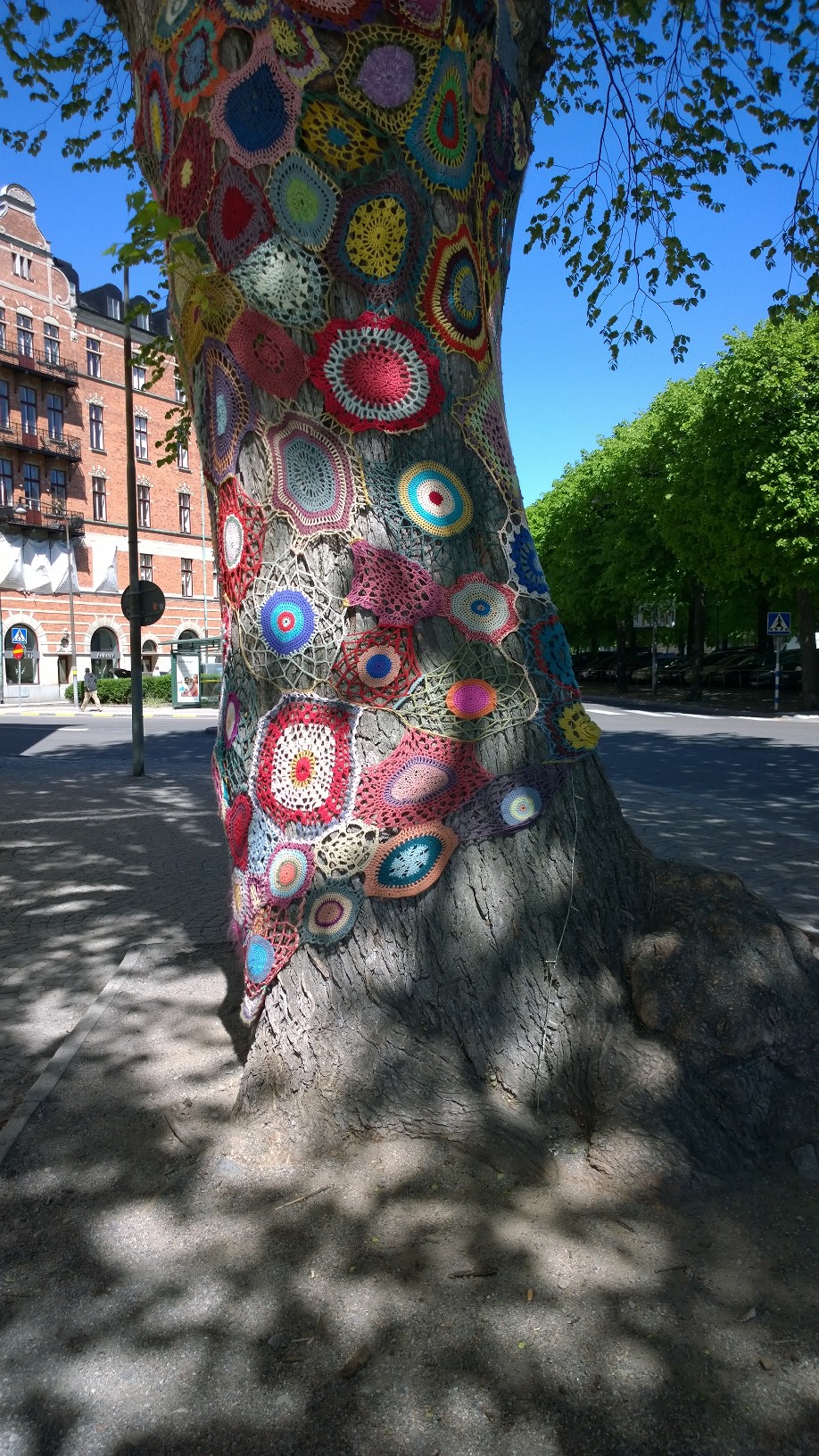
052917--crocheted-tree-Stockholm

Photos: Suzanne and John’s Mom.
Crocheted tree in Stockholm, 2017.

Working with your hands, creating something that is all you — how satisfying that can be! Today’s story is on the latest research showing that that can be good for you and the people around you.

As Nicola Davis wrote at the Guardian, “Winston Churchill had painting, Judi Dench is famous for her rude embroidery and Tom Daley has been known to knit at the Olympics. Now researchers say we could all benefit from creative endeavors and that such pursuits have a bigger influence on life satisfaction than having a job.

“While arts and crafts have long been used to aid mental health, experts said most research has looked at their effect on patients rather than the general population, and tend to look at specific activities.

“However, the researchers have now said such interests could be an important tool for improving public health in general.

“Dr Helen Keyes, a co-author of the research from Anglia Ruskin University, said: ‘It’s quite an affordable, accessible and ultimately popular thing for people to do. And that’s key. You’re not going to be shoving something down people’s throats that they don’t want to do.’

“Writing in the journal Frontiers in Public HealthKeyes and colleagues reported how they analyzed data from more than 7,000 people aged 16 or over who took part in the face-to-face ‘taking part survey’ by the UK Department for Culture, Media and Sport between April 2019 and March 2020.

“As part of the survey participants were asked to rate various aspects of their well-being on 10-point scales, report whether they took part in arts or crafts, and provide demographic details.

“The team found that just over 37% of participants reported taking part in at least one art or craft activity in the past 12 months – ranging from painting to pottery and photography. …

“The results revealed that people who engaged with creating arts and crafting had greater ratings for happiness, life satisfaction and feeling that life was worthwhile than those who did not, even after taking into account other factors known to have an impact – including age, gender, deprivation, poor health, and employment status. …

“Among other results the team found engaging in arts and crafts was associated with an increase in happiness on a par with aging by 20 years (as Keyes notes, well-being goes up slightly with age), while the sense that life was worthwhile was more strongly associated with crafting than being in employment.

“Keyes said [the reults] might reflect that not everybody is in a job they find fulfilling, while people often have a sense of mastery or ‘flow’ when undertaking arts and crafts – experiencing control, achievement and self-expression. …

“Keyes said smaller clinical trials have suggested engaging in arts and crafts can increase well-being. Keyes also acknowledged the increases in well-being associated with creating arts and crafting were very small – on average engaging in such activities was only linked with a 2% higher rating for the feeling that life was worthwhile. But, she said, the results remained meaningful at a population level. …

“Keyes said that backing such activities would offer a simpler route for governments to improve the nation’s well-being than other factors that are known to have a big effect. …

“ ‘But it’s a really quite cheap, easy, accessible thing for us to engage people in.’ ”

What was the last craft you tried your hand at? I made a pottery vase.

More at the Guardian, here. No paywall.

I used to make collage greeting cards.

Read Full Post »

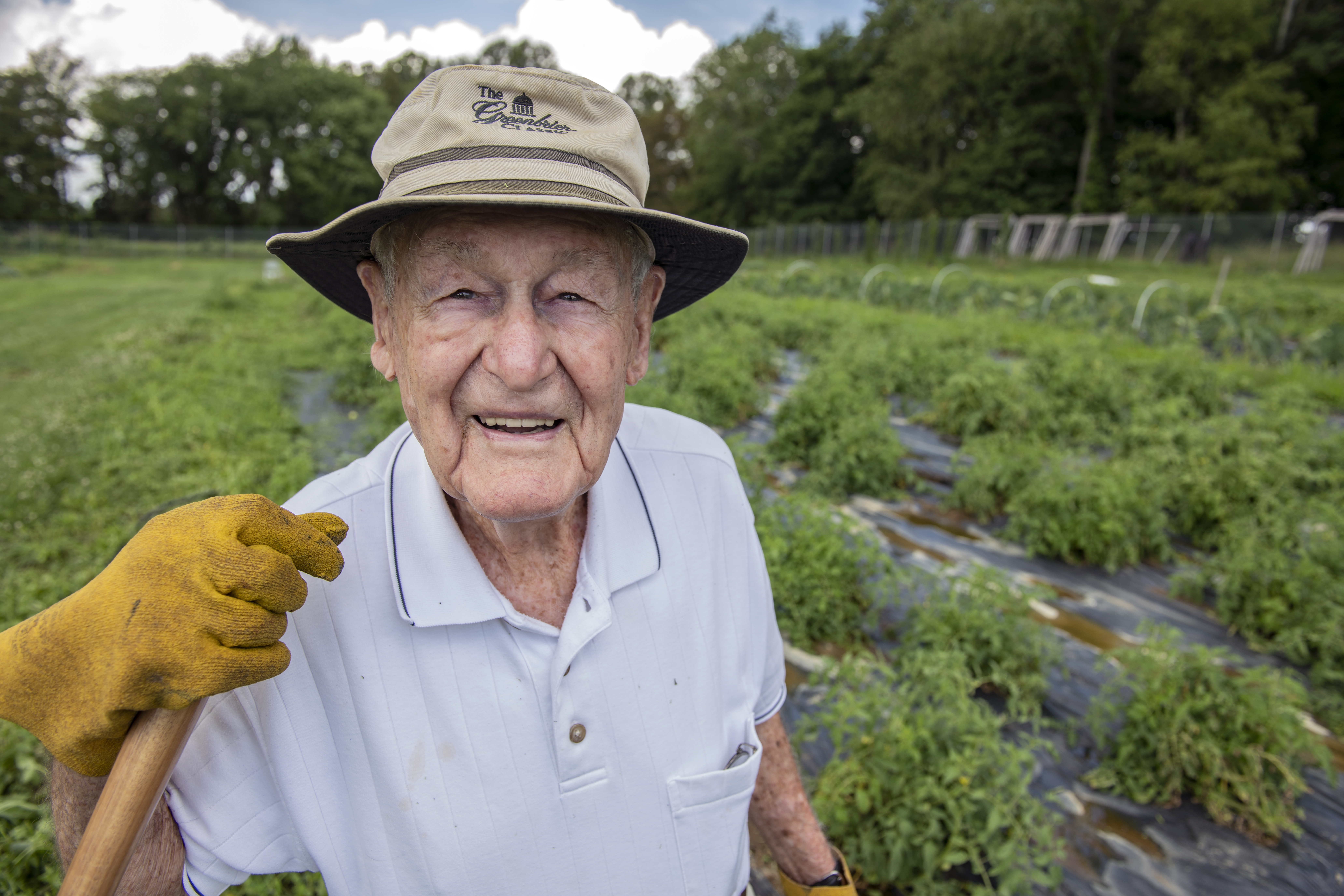
Photo: West Virginia University.
Mannon Gallegly, WVU plant pathology professor emeritus, has created four tomato varieties, including his last, “Mannon’s Majesty,” free to West Virginians.

For a short time in my childhood, I was a member of a 4-H club and won a $0.75 check for a tomato that my father really grew — a check I failed to cash before it expired!

I still love tomatoes. This is the time of year for gorgeous tomatoes. Ashley Stimpson writes at the Washington Post about the 101-year-old West Virginia professor who brought four special varieties into the world, including one he made free to West Virginians.

“You may not have heard of Mannon Gallegly, but chances are you’ve eaten one of his tomatoes, and perhaps even grown one in your garden. More than 60 years ago, Gallegly bred the first tomato that could stand up to Phytophthora infestans, otherwise known as tomato blight. The West Virginia ’63, sometimes called ‘the people’s tomato,’ is still a seed-catalogue superstar and beloved around the world, gracing gardens from Alabama to Africa.

“This year marks the first time since 1949 that Gallegly, who moved into a nursing home after falling ill in the spring, has missed the annual planting. … This morning’s planters are a mix of graduate students from WVU’s Davis College of Agriculture — where Gallegly worked for 38 years — and volunteers who have known the plant pathologist for decades. Gallegly developed three more hardy tomato varieties since 1963, each of which has claimed a spot in this year’s field, including his latest and likely his last.

“After the college publicized the release of the tomato, called Mannon’s Majesty, earlier this year — noting that it was free for any West Virginian who wanted seeds, per Gallegly’s insistence — WVU’s greenhouse manager Whitney Dudding came to work the next Monday morning to find 2,000 email orders waiting in her inbox, a number that far outstripped availability. …

“Until very recently, Dudding held out hope Gallegly might make it to the organic farm for the occasion. … ‘Every year, even last year, he’s been out there on the soft soil, out there in the heat, walking around, right there with us,’ she says. ‘I really don’t know how he does it.’

“The son of a carpenter and a school dietitian, Gallegly grew up in the rural southwest corner of Arkansas. ‘We were pretty poor people,’ he says. During the Great Depression, his parents grew cotton on rented land, where Gallegly logged the first of many hours spent walking between crop rows.

“A teacher from Future Farmers of America inspired Gallegly to attend college, and a Sears Roebuck scholarship made it financially feasible. After graduating from the University of Arkansas with a degree in agriculture, Gallegly went to the University of Wisconsin to get his master’s in plant pathology, working on a rice disease called white tip.

“In June 1949, Gallegly arrived in Morgantown. … ‘That was my favorite month,’ he recalls. ‘I had a new job, I had a new wife, I had a new baby.’ He also had a new three-acre research farm on the grounds of the nearby medium-security prison, where he could conduct trials on plant diseases, including tomato blight.

“By the following summer, Gallegly’s fields swayed with potato and tomato plants of all different varieties. Then disaster struck. ‘The disease farmers and gardeners feared most’ arrived, he says: late blight. The pathogen leaves ugly brown bruises stretching across the leaves, stem and fruit until the plant looks like it’s been blasted with a blow torch.

“That year, Gallegly lost nearly his entire crop of tomatoes to late blight — except for a few wild varieties with tiny fruit that showed a curious resistance to the disease.

“In the 1950s, late blight was more than just an annoyance for the home gardener. In the right conditions, Phytophthora infestans, which is Greek for ‘plant destroyer,’ can wipe out entire food supplies, as it did during the 1840s, when about 1 million people starved during the Irish Potato Famine. …

“For 13 years, Gallegly worked on developing an indestructible tomato, crossing those initial wild varieties that showed genetic resistance to blight with popular commercial tomatoes. …

“Finally, he stumbled upon a variety that was both blight-resistant and delicious. ‘Good things happen sometimes,’ he says.

“Gallegly, who primarily views himself as a public servant, called his creation ‘the people’s tomato.’ When it was released to the public in 1963 as part of the state’s centennial celebration it was given a new name: the West Virginia ’63. …

“Gallegly retired in 1986, but that didn’t stop him from coming into work every day. …

“In addition to writing books and breeding tomatoes, Gallegly has mentored countless plant pathologists getting their start in Morgantown. Dudding, who has helped Gallegly with cultivating diseases (to test for resistance in plants) and crossbreeding, ‘because my hands were smaller and steadier than his,’ says the scientist ‘is never in a hurry. He has always had time to talk to me and teach me.’

“WVU graduate student Inty Hernández, who’s been working with Gallegly on breeding new tomatoes, agrees, saying: ‘He’s very supportive all the time. It has been very inspiring to work with him. Sometimes you feel tired, you know, and then you arrive to the greenhouse and there’s a 100-year-old man hard at work.’ ”

More at the Post, here. Is your garden producing tomatoes right now?

Read Full Post »

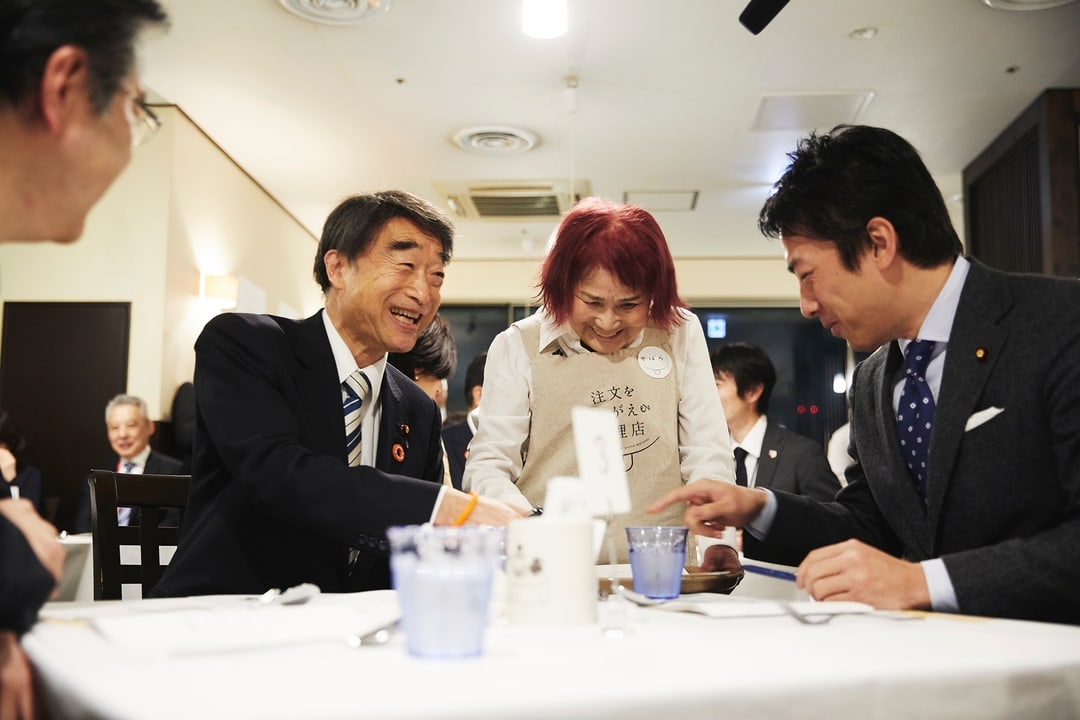
Photo: Restaurant of Mistaken Orders.

Our friend Toshi was lucky to have Yuriko to take care of his aging mother in their home. That was always the custom for daughters-in-law.

Nowadays, Japan has a greater percentage of people over 65 and not enough caregivers. So the Japanese are getting creative. Monthly “dementia cafes,” where elderly people can enjoy working, are a drop in the bucket. But charming.

Michelle Ye Hee Lee and Julia Mio Inuma report at the Washington Post, “The 85-year-old server was eager to kick off his shift, welcoming customers into the restaurant with a hearty greeting: ‘Irasshaimase!’or ‘Welcome!’ But when it came time to take their orders, things got a little complicated.

“He walked up to a table but forgot his clipboard of order forms. He gingerly delivered a piece of cake to the wrong table. One customer waited 16 minutes for a cup of water after being seated.

“But no one complained or made a fuss about it. Each time, patrons embraced his mix-ups and chuckled along with him. That’s the way it goes at the Orange Day Sengawa, also known as the Cafe of Mistaken Orders.

“This 12-seat cafe in Sengawa, a suburb in western Tokyo, hires elderly people with dementia to work as servers once a month. A former owner of the cafe has a parent with dementia, and the new owner agreed to let them rent out the space each month as a dementia cafe. The organizers now work with the local government to get connected to dementia patients in the area. …

“ ‘It’s so much fun here. I feel like I’m getting younger just being here,’ said Toshio Morita, the server, who began showing symptoms of dementia two years ago.

“A condition of unending indignities and financial burdens, dementia is a global phenomenon that every society is confronting. But in Japan, the world’s oldest society, dementia is a pressing national health challenge.

About 30 percent of the Japanese population of about 125.7 million is over 65. More than 6 million Japanese people are estimated to have dementia, and the number is expected to grow as high as 7.3 million — or 1 in 5 people over the age of 65 — by 2025, according to the Health Ministry.

“Japan’s chronic lack of caregivers and the soaring costs of elderly care mean it needs to find creative ways to empower these dementia patients so that they can be mentally and physically active for as long as possible, rather than isolated at home or at a hospital.

“Dementia cafes [were] introduced in Japan in 2017 through pop-up events, but more permanent efforts are now cropping up throughout the country.

“In June, Japan passed legislation to enact a slew of new programs and services to help those with dementia, which Prime Minister Fumio Kishida has identified as an urgent national project. …

“Kazuhiko, a 65-year-old diagnosed with dementia five years ago, has been working at the cafe every month. … At one point, Kazuhiko was heading to a table with an order but became distracted when the construction crew outside made a loud noise. He proceeded to leave the cafe and move toward the sound, and the staff rushed to bring him back in. …

“Kazuhiko rarely talks or shows emotion anymore. He usually doesn’t make eye contact with customers until he sees them multiple times. But that day, he showed a smile.

“The smile was directed at Tomomi Arikawa, 48, and her 16-year-old daughter, Sayaka, who visited around noon for a piece of chiffon cake and a citrus jelly dessert. … Kazuhiko brought them their orders. Sayaka thanked him and smiled, and he smiled back. ‘It felt really special,’ she said. …

“Since April, the Cafe of Mistaken Orders has opened once a month around lunchtime. One dementia patient works as a server per hour, wearing an apron that is bright orange, the color associated with dementia care. There is a chair set aside for them near the kitchen so they can rest in between orders.

“Younger volunteers help the elderly servers as they mark customers’ orders on the order forms, which are simple and color-coded.

“Table numbers were difficult for the elderly to remember, so the staff switched them out for a centerpiece with a single flower, a different color for each table.

“The cafe’s administrators wanted to help the community see that dementia patients can prolong their active years, with a little bit of understanding and patience from those who interact with them. …

“ ‘I hope that our initiative will give people with dementia something to look forward to,’ said Yui Iwata, who helps run the cafe. ‘If people get a deeper understanding, it would become easier for people with dementia to go out, as well.’ ”

More at the Post, here. Or just check out the restaurant’s site, here.

Read Full Post »

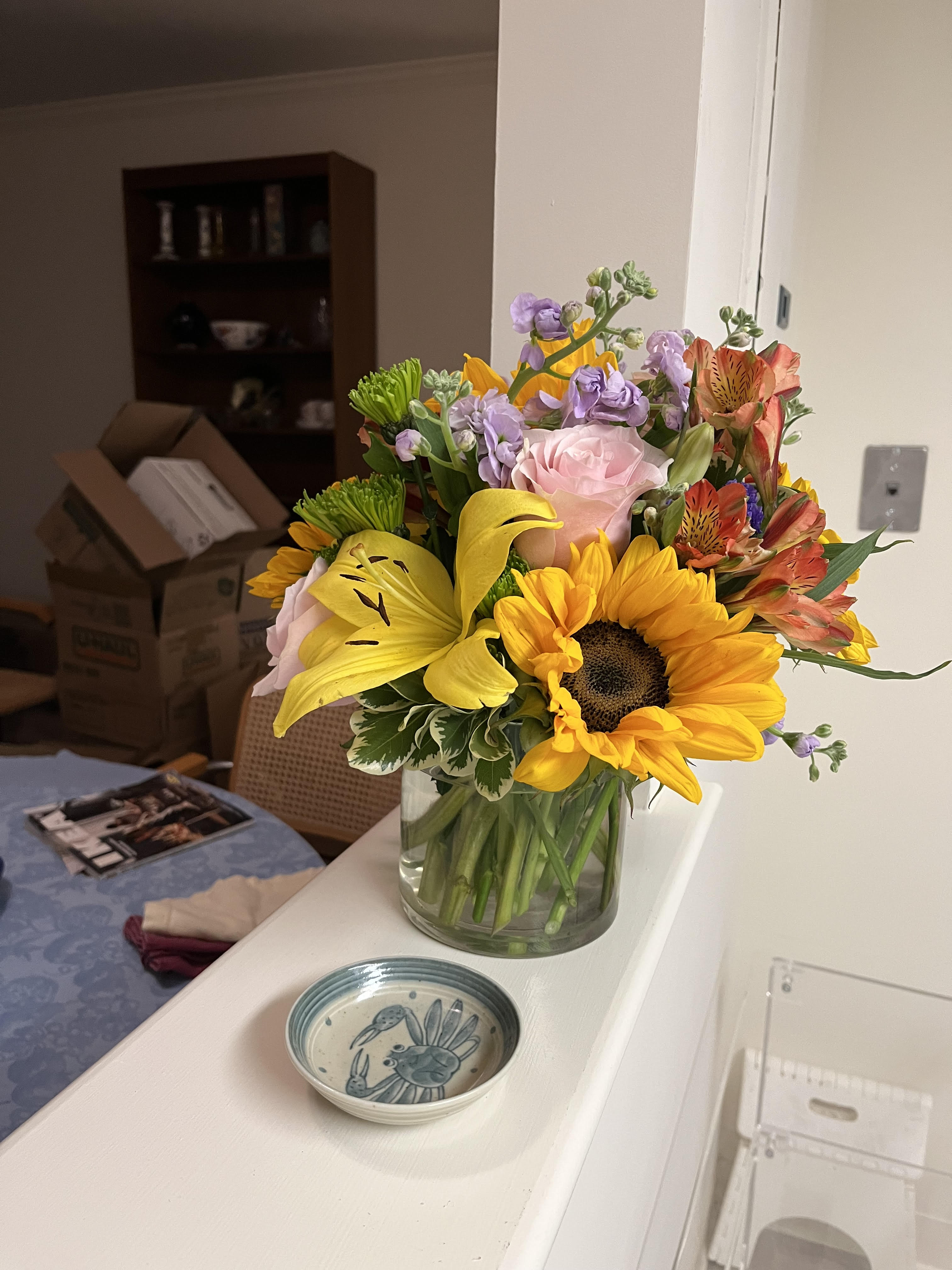
Photo: Suzanne and John’s Mom.
Flowers from some staff to inaugurate our move. Note the packing boxes in the background.

A story could be written about the move to a retirement community. But what kind of story? Richard Osman of Thursday Murder Club fame saw the possibilities of all the aging expertise in such places for solving crimes, so he launched a mystery series.

Maybe something more literary would be in order, along the lines of Katherine Mansfield or the late Edith Pearlman, who sometimes wrote stories about aging.

Some folks might see the Twilight Zone aspect — but in a good way.

I better explain. When you go to a Place, you pretty much know it’s your last stop. It’s the place where you will decline, get more hard of hearing, have trouble walking, break a bone, get it fixed, and eventually die. The look of new people arriving there is invariably both anxious and relieved. The relieved end is more prominent for me right now.

You get introduced at a new-resident party, and longtime residents need no encouragement to step up and welcome you, talking about cool events (and committees), and helping you figure out how things work. I was delighted to find someone who maintains a garden plot and told me where I could compost my vegetable scraps.

These folks have already gotten used to the idea that it’s the last stop, and they are really happy to be in a place with lots of friends, interesting things to be part of, and — when trouble arises — all kinds of help. I observed an impressive level of comfort with infirmities. No one blinks if you have to ask a couple times for someone to repeat, and I saw folks with fairly severe infirmities who are still in charge of various things.

I knew one person here, only slightly, and she was very welcoming. I did see lots of familiar faces as we have lived in the town more than 40 years. Blogger/singer Will McMillan performs at this place several times a year with pianist Joe Reid, and he paved the way for me to make another friend.

Although boxes still aren’t unpacked and lots of things still feel kind of up in the air, we are doing OK. The dinners are very good. I don’t think I will be having to use our new kitchen much, and that is welcome.

PS. I am awkward with using Google photos but want you to see a funny video of our young movers. Can you figure out how this works?

https://photos.app.goo.gl/641cpVKfebMa8TzK7

My move manager took it, so in case it is locked or something, I will tell you that the three moving guys admired a big gong in the house and I told them each to take a turn with the mallet. It was pretty cute.

Read Full Post »

Photo: Alex Halada/AFP via Getty Images.
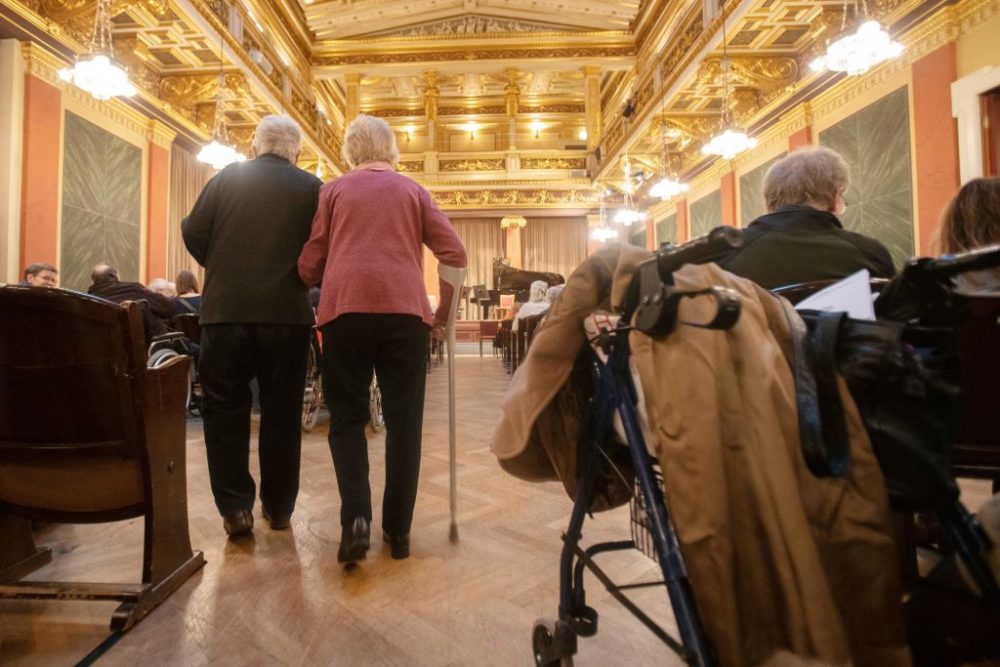
Elderly spectators arrive to attend a concert specifically tailored to people living with dementia at the Wiener Musikverein in Vienna on December 5, 2022.

Meghna Chakrabarti of WBUR’s On Point had a great show recently about enlightened dementia communities in the Netherlands and other parts of Europe.

I came away feeling that the reason we have little like this in the US is because of insurance. We are such a crazily litigious society, we can’t afford to take the slightest risk, even if it means an older person will have a happier aging experience.

Producer Paige Sutherland and host Meghna Chakrabarti shared highlights from the show at the WBUR website.

“Is there a better way to care for dementia patients? And what might that look like?

” ‘I think it really focuses on what’s the day-to-day life and looking at this balance between safety and freedom,’ Dr. Tia Powell [professor of psychiatry and bioethics at Albert Einstein College of Medicine] says.

“And that’s exactly what the Netherlands did when they opened up the first-ever ‘dementia village,’ where residents can live freely despite their memory loss.

” ‘Officially, it’s a nursing home, so we offer highly complex care, skilled nursing. But it does not look anything like a nursing home,’ [advisor at Be Advice] Iris Van Slooten says. …

“On the idea behind a ‘dementia village’

“Iris Van Slooten: It should be about the individual; it should be about the person living in that place and need to deal with dementia. And you want to continue your life even though you are dealing with dementia. And so you want to continue life like you did before and not be hospitalized. I always ask our visitors and the people we work with, would you want to live in a hospital for the rest of your life? And then always the answer, of course, is no.

“So then why did we do that to the people that were living with us? … You can continue with your life, you can stay a human being. And what makes you a human being, for instance, is that you can make your own choices every day. Like … what do I have on my sandwich? Or in what place do I want to be right now? Very, very simple choices we make every day but are taken away from people that live in a nursing home.

“On what the village looks like

“Iris Van Slooten: You will enter through a door and then you will enter the hallway. And that is a safe neighborhood where the outside of the homes are the barrier to the … broader surroundings. And we had a door because there were laws in place back when we designed … we had to keep people inside. But you will find 27 homes in a normal looking community. In a normal neighborhood. The homes look like normal Dutch homes with a normal living room, a kitchen, private bedrooms.

“And when residents also step out of the front door, … they are really outside. And there are many streets and many gardens they can explore. We have a restaurant, a pub, a theater, many club rooms, a supermarket. So, everything you will find in any neighborhood, in any community. So yeah, very normal, and especially on a sunny day and in spring and summer, of course, then you see a lot of people walking around, having conversations, meeting each other, grabbing a chair, enjoying a drink in a restaurant. It’s just life. …

“Every resident that lives there has severe dementia. So, you need to have an indication from the Dutch government saying you have severe dementia. … We have teams in the houses that support the household and really run the household. But we also have a quite extensive medical support team, including a specialist, elderly care, doctor, but also a psychiatrist, an official therapist, a social coach. …

“Say someone left their home, and they wanted to go to the village supermarket, but got lost or forgot the way. How do you help that person get to where they wanted to go?

“Iris Van Slooten: One thing we highly value in the Hogeweyk is having freedom and giving the freedom to these people and not restraining them. … They are free to walk around on their own. A lot of people can find their way because also people with severe dementia, they still have learning abilities, and the place is designed [so that it is] recognizable for them. …

“So also the staff in the restaurant, also the reception, also the technicians, also me when I’m there. … When I look out my office and I see somebody in the rain without a coat on, it might slip to the attention of a staff member in house. But then it’s also my job to go over there and find a jacket for that person. …

“On helping people maintain their independence and humanity in the ‘dementia village’

“Dr. Tia Powell: [As] a bioethicist, really all of our challenges can be summed up by the tension between maintaining freedom, which is part of what all human beings strive for, and safety. And this argument’s been going on forever for hundreds of years.

So I do think that many of the ways in which we provide care today in the U.S. for people with dementia do not focus on care, but they focus on other issues. You know, maintaining regulations, all kinds of other things.

“And we have forgotten about freedom and joy.”

A bit from the transcript on the sad US situation.

“Meghna Chakrabarti: Beth Ounsworth … was living a very rich life full of friends and music. As a member of her choir, she was independent in her own apartment in Philadelphia. And that started changing when Beth was about 69 years old. She began forgetting simple things like what day and time she had scheduled meetings, directions to common places. …

“And so her children finally took her to see a neurologist. And Beth was diagnosed with Alzheimer’s disease. Now, we spoke with her daughter, Meg Ounsworth Steere. Because Meg wanted to care for her mother, but with two young children at home, it just wasn’t possible. So they looked at assisted living centers near where Meg lived in Boston.

“Meg Ounsworth Steere: So she did go and visit a few assisted living centers with me. … We went to lunch, and she just looked around and she was like, Not me, not now. And I was like, okay, you know? And that’s when we had this conversation about she was like, I don’t want to be in a place where I’m just surrounded by old people. I want to be in a place where there are, you know, babies, too, and young families, and I can feel a part of a community. …

Chakrabarti: So Beth stayed in Philadelphia, but it wasn’t easy. Daughter Meg had to find full time aides to take Beth to all of her appointments and to help with all of her daily activities. Meanwhile, the disease progressed.

“Ounsworth Steere: It got to a point when I took her to the neurologist. He would give her a mini mental state exam and 30 is normal. My mom was testing at a four at that point. Partially because she has aphasia and so she doesn’t really understand words. And so he was like, you know, she’s not going to answer the questions that were like, do you know who the president is? …

“Chakrabarti: So the family decided it would be better for Beth to live in a memory care facility. And they found a good one near Boston. Beth moved in in 2018, and ever since then, Meg and the family have been paying about $100,000 out of pocket for the facility every year.

“Ounsworth Steere: What worries me is that I know I’m on the luckier side and it’s still not perfect. So I can’t quite fathom what it’s like when you have to go to a facility that can’t possibly retain the aides that they want. … Or where aides are just less engaged and involved, they’re just kind of physically there. Kind of like the first aides that I had, but not really assisting, you know, and engaging with and kind of trying to love the resident and then the people who can’t afford care at all. I just, I don’t know how that’s possible.

“Chakrabarti: Meg visits her mother often. Beth is nonverbal now, However, Meg gets to communicate with her in a different way: by singing.”

If you click on the arrow at WBUR, here, you can listen to the whole show. PS. I blogged about the Dutch dementia village in 2016, here!

Read Full Post »

Photo: Suzanne and John’s Mom.
Suzanne and Kate on Cape Cod. They laugh a lot.

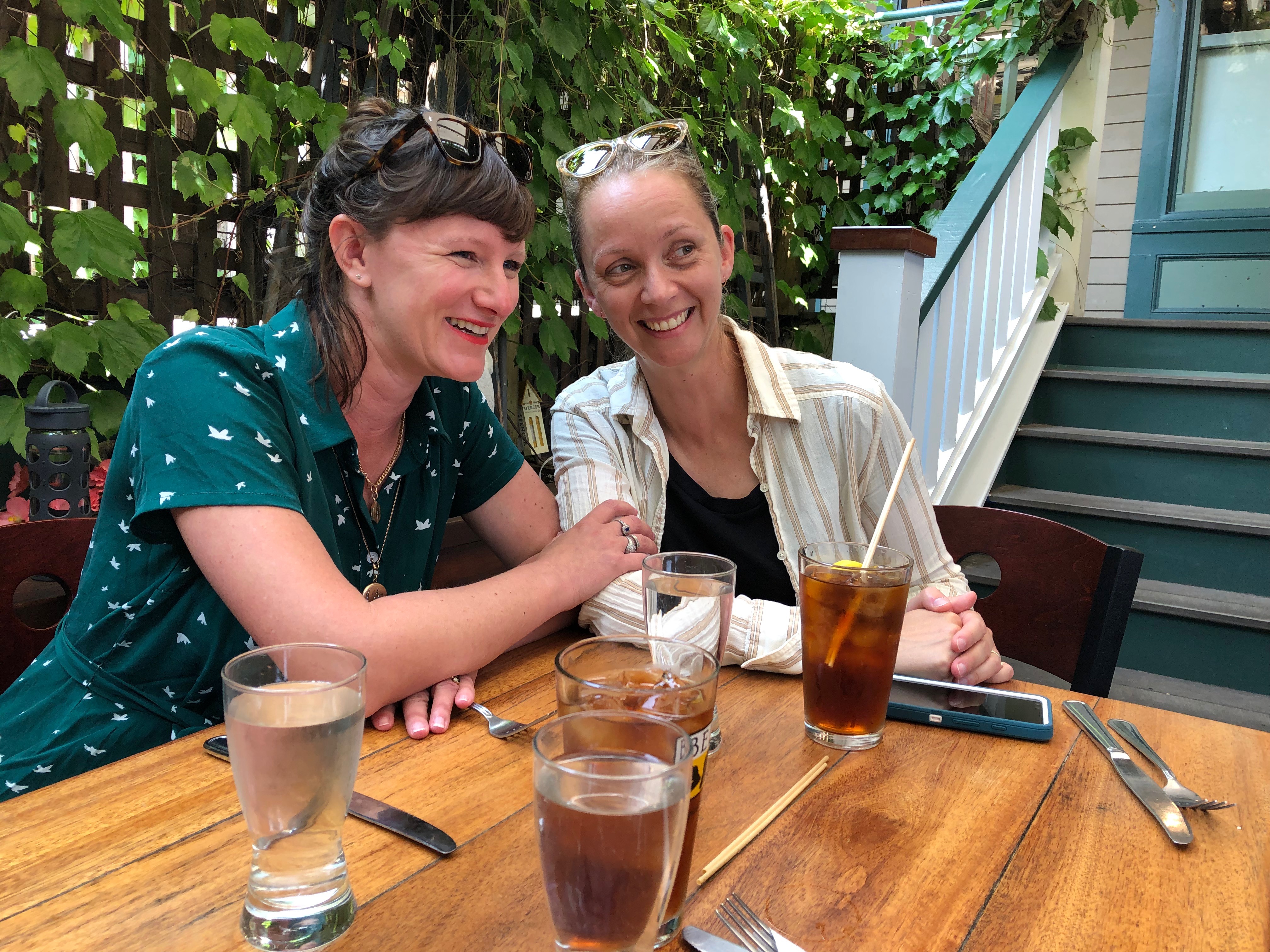
When I saw today’s article by Teddy Amenabar at the Washington Post, I knew it would be blog material. That’s not just because friends have been important to me since childhood (Hello, Hannah!), but because I’ve been learning about the particular virtues that conversation with friends has for older people. There’s the value of relaxing, having fun. But there are also cognitive benefits from focusing on what friends are saying and responding thoughtfully.

Amenabar writes, “One of the more surprising findings in the science of relationships is that both romance and friendship often start the same way — with a spark. … A growing body of research shows friends are essential to a healthy life — and they are just as important for our well-being as healthy eating habits or a good night’s sleep.

“ ‘We’ve always had this hierarchy of love with romantic love at the top and friendship seen as second class,’ said Marisa G. Franco, a professor at the University of Maryland and author of Platonic: How The Science of Attachment Can Help You Make — and Keep — Friends. …

“Platonic love trumps romantic love in a number of ways. People with strong friendships tend to have better mental health and studies suggest they’re in better physical health, as well. Researchers have found large social networks lower our risk of premature death more than exercise or dieting alone.

A six-year study of 736 middle-aged Swedish men found having a life partner didn’t affect the risk of heart attack or fatal coronary heart disease — but having friends did.

“A 10-year Australian study found that older people with a lot of friends were 22 percent less likely to die during the study period than those with few friends. Notably, having a social network of children and relatives did not affect survival rates. …

“There are multiple theories about the association between friendship and better health. Part of the effect may be due to the fact that it’s easier for healthy people to make friends. A strong social network could be an indicator that someone has more access to medical care. And, someone with more friends may just have a better support system to get a ride to the doctor’s office.

“But there is also a psychological effect of friendship that likely plays a role. Friends help us cope with stress. In one study at the University of Virginia, many people were intimidated at the prospect of climbing a steep hill. But researchers found that when people were standing next to a friend, they rated the hill less challenging than those who were alone.

Brain imaging studies suggest that friendship affects brain systems associated with reward, stress and negative emotions, offering an explanation for why social connection benefits mental health and well-being. Friendship even seems to affect our immune response. In one remarkable study, 276 healthy volunteers were given nose drops containing a cold virus. Those with diverse social ties were less likely to develop cold symptoms. …

“Friends don’t just appear out of thin air, Franco said. Here’s her advice for making new connections and maintaining the old ones.

Take the initiative. Trust your gut when you’re meeting new people. We’re particularly good at knowing when someone is a potential new friend (remember that spark). And, you should assume people like you. We often underestimate how positively others think of us, Franco said. …

Start with a text. Start small by scrolling through your phone and shooting a text message to an old friend you’ve been meaning to reconnect with.

Show your gratitude. If a potential friend reaches out to you to grab coffee or pizza, tell them how happy you are they reached out, and that you appreciate the effort, Franco said. In a University of Utah study, researchers asked 70 college freshman to keep a check list of certain interactions — like going to see a movie together or calling just to say hello — they did with new friends. After three months, the researchers found that close friendships were more likely to form when the pairs expressed affection to each other. …

Invite friends to things you’ve already planned. If it’s hard to find time for friends, think of the tasks you already have to accomplish and tag on a friend, Franco said. The next time you workout at the gym, for example, you could invite someone to join. ‘Ask yourself: Are there parts of your day right now that you’re doing anyway that you can just do in community with other people?’ Franco said.

Join a book club, take a class or play a sport. Regular interaction with people who share the same interests as you could lead to friendship. Another University of Maryland study that found cadets who sat next to each other in police academy were more likely to become close friends. …

“While having friends is good for your health, not having them can be detrimental.According to the Centers for Disease Control and Prevention, loneliness has been associated with higher rates of depression, anxiety, and suicide. For older women, loneliness and social isolation can increase the risk of heart disease by as much as 27 percent.

“Loneliness is essentially the perceived gap between the relationships you have and the relationships you want in your life, said Adam Smiley Poswolsky, the author of Friendship in the Age of Loneliness.

“A 2018 study found that loneliness is common across age groups. … Social media can exacerbate our perception of loneliness by bombarding us with photos and videos of friends and acquaintances seemingly spending their time without us, said Poswolsky.

“[Said] Poswolsky, ‘No one feels like they can talk about it because there’s a lot of shame associated with loneliness.’

Billy Baker, the author of We Need to Hang Out, a memoir of his personal journey to find new friends as a middle-aged man, said he realized he needed to build beyond the lifelong friendships he made in high school or college.

“Baker said he didn’t have very many people he could call in the middle of the night if there was an emergency. To remedy this, he started a fraternity for neighborhood dads to meet every Wednesday night, and the group now gets together on other days and on the weekends.

“Baker said he’s spent years ‘checking off so many other boxes,’ to be a good father and husband, but he’s never had ‘hanging out with my buddies’ on the list.

“ ‘We all know how to do this,’ he said. ‘What very often happens in those moments is you feel that spark with someone and you say: “Hey, we should grab a beer some time!” But, how often do you go grab that beer?’ ”

As Suzanne and her fellow Girl Scouts used to sing,

“Make new friends
“But keep the old.
“One is silver
“And the other gold.”

More at the Post, here.

Read Full Post »

default

Image: Wellcome Collection

Loss of hearing has been on my mind lately. I’m getting near the age my mother started to lose her hearing. She made it work for her, though, pretending she didn’t hear you when she didn’t want to answer your question.

I, on the other hand, will look into hearing aids. Jane Brody at the New York Times reported recently that getting a hearing aid before your hearing is really bad is associated with slowing the onset of dementia. I like the sound of that.

Meanwhile, at National Public Radio (NPR), we learn that everyone’s hearing is being adversely affected by our noisy world.

Dave Davies at WHYY’s Fresh Air interviews the author of a new book on the topic.

“Our ears are complicated, delicate instruments that largely evolved in far quieter times than the age we currently inhabit — an early world without rock concerts, loud restaurants, power tools and earbuds.

“Writer David Owen describes our current age as a ‘deafening’ one, and in his new book, Volume Control, he explains how the loud noises we live with are harming our ears.

“Owen warns that even small household appliances like food processors and hair dryers can generate noise at levels that lead to permanent damage. He notes that people who live in places without significant background noises tend to experience less hearing loss.

‘There have been a couple of studies done with populations of indigenous people who live in places where there is very little background noise and elderly people in those populations tend to hear as well as infants do,’ he says.

“Owen recommends that people carry earplugs with them — and not be bashful about using them. Recently he popped in a pair of musician’s earplugs before watching Dunkirk, a movie long on explosions and short on dialogue. …

” ‘People who have trouble hearing tend to have more unrelated health issues of all kinds. It, sort of, overworks our brains. If you can’t quite hear what people are saying, you have to work harder to figure it out, and the brainpower that you use to do that is brainpower that you can’t use for anything else. People who have trouble hearing also tend to withdraw. … If you have trouble seeing things, you get glasses. But people tend to put off getting hearing aids for a long time. …

” ‘The largest single purchaser of hearing aids in the United States is the [Department of Veterans Affairs]. The No. 1 and No. 2 service-related health claims made by military veterans are hearing loss and tinnitus. Exposure to gunfire, especially exposure to blast explosions, but then also just the extraordinarily high sound levels of military service, even on a base outside of combat. One of the loudest work environments in the world is an aircraft carrier. And simply sleeping on an aircraft carrier, you can expose yourself to sound at levels that are sufficient to do permanent damage to your hearing. …

” ‘I learned from reading about tinnitus that there’s basically nothing you can do. You can’t make it go away. There is no known cure for it. The therapy for tinnitus is to learn to accommodate it. …

” ‘Sometimes hearing aids can help you. If you have some hearing loss and you eliminate that, you bring up the sound of everything else. Then this phantom noise becomes less bothersome. You can’t hear it as much. A therapist described it to me as, “You’re in a room with a candle. The candle is the tinnitus. But if you turn on the lights, then the candle is less noticeable.” And that’s what sometimes happens with hearing aids with somebody who has tinnitus. …

“Classical musicians — just like rock musicians — experience hearing loss. ‘The impact on your hearing probably has less to do with the instrument that you play than with the instrument that the person who sits behind you plays. So if you have a loud instrument right behind you, you’re the one who gets the impact. … It’s not only in those performances. Musicians practice, especially nowadays, for hours and hours and in small rooms with loud instruments and it takes a toll on their hearing very definitely. …

” ‘The revolution that’s coming is that it’s going to be increasingly possible to buy over-the-counter, less expensive hearing improvement products — hearing aids and other products. … I have a friend who lost a lot of hearing, wears hearing aids. He wore [Bose] Hearphones to a restaurant and found them much superior to his hearing aids — the quality of the sound, the ability to focus on people that he wanted to listen to.”

More at NPR, here.

Read Full Post »

capable_2_2_pyramid_900x600

Photo: Capable (Community Aging in Place — Advancing Better Living for Elders)
The Community Aging in Place — Advancing Better Living for Elders program sends a nurse, an occupational therapist, and a handyman to modify and improve the home environment of low-income seniors.

Many people I know are thinking about downsizing or signing up for an assisted-living arrangement that could be tapped when needed. It’s tricky though. Most places require a checkup to show you’re healthy when you arrive, but you may not want to use the service until you are routinely forgetting to turn off the oven or until the local building inspector is demanding expensive repairs on your property.

That is why so many new models are emerging.

Amanda Abrams writes at Shelterforce, “Three years ago, Lisa was in trouble. The Minneapolis homeowner had fallen victim to several recent misfortunes, including a divorce and diagnosis of a chronic illness. But it was the attention of a particularly punitive city housing inspections department that almost did her in. …

“Lisa was required to paint the trim around her own house, add handrails to the front steps, and fix the roof. Later, the city also pointed out that two elm trees in her yard were diseased and had to be cut down. The fines she was assessed had a steep interest rate and the total grew rapidly; within a few years, she owed $24,000; plus, she needed another $4,000 to cut down the elm trees.

“Lisa, then 65, didn’t have that kind of money, so the amount was added to her property taxes, putting her ownership of the house at risk. The home, a two-story duplex in an ethnically diverse North Side neighborhood, was paid off, but Lisa was unable to refinance it or otherwise raise the funds. …

“Lisa’s story sounds dramatic, but it’s not a particularly unusual one for low- and moderate-income seniors around the country. According to experts, the United States is about to face a giant wave of aging baby boomers who are hoping to remain in their houses as they age, but who are often one outstanding tax bill, major repair, or medical crisis away from losing their homes altogether.

“The statistics are daunting. According to LeadingAge, a national association of not-for-profit aging services organizations, in a little over 10 years, one in five Americans will be older than 65, and over half of them will need some sort of paid long-term care services. The organization recently released the results of a poll showing that at least 60 percent of seniors hope to remain at home as they age, even if they have a physical disability.

“But elderly Americans tend to have low incomes, as their life spans outstrip their savings. Roughly 20 million senior households pay over 30 percent of their incomes for housing, according to the AARP Foundation; almost 10 million pay over 50 percent. …

“ ‘For younger baby boomers, their economic situation is much worse than the older ones — they got hit in ’08 [by the financial crisis] and were unable to recover. There’s a growing number of baby boomers retiring with mortgages, so they don’t own their houses outright,’ says Robyn Stone, co-director of the LeadingAge LTSS Center @ UMass Boston. …

“Dan Soliman, director of housing impact at the AARP Foundation, agrees with Stone that a crisis is looming, but he’s more optimistic about the options for addressing it. ‘It’s a really, really big math problem.’ …

“There are definitely innovative programs out there, Soliman says. One is the Community Aging in Place — Advancing Better Living for Elders (CAPABLE) initiative run by the Johns Hopkins School of Nursing. The program sends a nurse, an occupational therapist, and a handyman to modify and improve the home environment of low-income seniors who want to age in place. Initially piloted in Baltimore, it’s a modest program that can have a real impact — and save money for Medicare and Medicaid.

“ ‘They get that if we’re able to keep an older adult in their home rather than a facility, there’s significant savings,’ says Soliman. The program is now being expanded to several states.

“AARP Foundation itself has developed a new program called Property Tax-Aide to help older homeowners gain better access to property tax refund and credit programs; currently only about 8 percent of low-income seniors benefit from these initiatives. …

“And many cities have programs that help elderly residents retrofit their houses to make them more user-friendly. Washington, D.C., for example, offers grants of up to $10,000 to low- and moderate-income homeowners and renters for home modifications that reduce the risk of falls and improve mobility.

“But those programs don’t get at some of the bigger issues, like out-of-control tax bills that can eventually lead to foreclosure, major repairs costing tens of thousands of dollars, or medical crisis that interrupt mortgage or tax payments.

“There is a small program currently being implemented in Minneapolis that addresses just about all of the key problems, and then some. It funds housing retrofits and pays off outstanding bills so that seniors can age in place, and could cover some services as well. And it keeps the homes affordable to low- and moderate-income buyers in perpetuity, so that when seniors no longer live there, the houses don’t fall into the hands of investors or negligent landlords.

“The program, called Project Sustained Legacy, was created by Minneapolis’ City of Lakes Community Land Trust. It takes advantage of the land trust model — but tweaks it slightly. Rather than buying the land underneath a house in order to lower the initial purchase price for a new buyer — the traditional CLT approach — the organization takes over the deed to the land belonging to an existing homeowner. In return, City of Lakes addresses outstanding tax liens, mortgage payments, and deferred maintenance.”

There are, of course, challenges to implementing a program like this. You can read about that and about what parts of the country are tackling a land-trust model here.

Read Full Post »

Photo: Foodandmore

Dear Readers, You know that you have been wondering why the taste of cheese changes depending on what music it was exposed to during the aging process. So much more agreeable than wondering who the next president will be or “why the sea is boiling hot,” to quote the prescient Lewis Carroll!

Well, wonder no more. Jason Daley at the Smithsonian has the musical cheese story covered.

The creation of good cheese involves a complex dance between milk and bacteria. In a quite literal sense, playing the right tune while this dance unfolds changes the final product’s taste, a new study shows.

“Denis Balibouse and Cecile Mantovani at Reuters report that hip-hop, for example, gave the cheese an especially funky flavor, while cheese that rocked out to Led Zeppelin or relaxed with Mozart had milder zests.

“Last September, Swiss cheesemaker Beat Wampfler [whose day job is as a veterinarian] and a team of researchers from the Bern University of Arts placed nine 22-pound wheels of Emmental cheese in individual wooden crates in Wampfler’s cheese cellar. Then, for the next six months each cheese was exposed to an endless, 24-hour loop of one song using a mini-transducer, which directed the sound waves directly into the cheese wheels.

“The ‘classical’ cheese mellowed to the sounds of Mozart’s The Magic Flute. The ‘rock’ cheese listened to Led Zeppelin’s ‘Stairway to Heaven.’ An ambient cheese listened to Yello’s ‘Monolith,’ the hip-hop cheese was exposed to A Tribe Called Quest’s ‘Jazz (We’ve Got)’ and the techno fromage raved to Vril’s ‘UV.’ A control cheese aged in silence, while three other wheels were exposed to simple high, medium and low frequency tones.

“According to a press release, the cheese was then examined by food technologists from the ZHAW Food Perception Research Group, which concluded that the cheese exposed to music had a milder flavor compared to the non-musical cheese. They also found that the hip-hop cheese had a stronger aroma and stronger flavor than other samples.

“The cheeses were then sampled by a jury of culinary experts during two rounds of a blind taste test. Their results were similar to the research group’s conclusions and the hip-hop cheese came out on top. …

“Michael Harenberg, director of the music program at Bern University of the Arts says he was skeptical of the whole project when Wampfler first approached him. ‘Then we discovered there is a field called sonochemistry that looks at the influences of sound waves, the effect of sound on solid bodies.’

“It turns out that Wampfler was rooting for the hip-hop cheese to win all along. Now, reports Reuters, he and his collaborators want to expose cheese to five to ten different types of hip-hop to see if it has similar effects.”

More here.

Read Full Post »

I gravitate to stories about older people who keep on truckin’ and don’t let age keep them from doing what they love.

Here’s one about a 102-year-old museum docent, who is being honored with a café in her name.

Chuck Hinman of Rhode Island Public Radio reported, “There’s something new at the Rhode Island School of Design in Providence … . Visitors to the [Rhode Island School of Design] Museum have been unable to use its Benefit St. entrance since mid-April, but that entrance now has been re-opened, as RISD unveils what it’s been working on these past few months: its first café, called Café Pearl, after one of the museum’s most dedicated and long-serving docents, Pearl Nathan.

“RIPR’s Chuck Hinman talked to the 102-year-old Nathan at her home in East Providence, about her long association with the RISD Museum.”

Hinman goes on to say Nathan is bemused by the café and her new fame. She tells him her “emphasis was on my art collection,” not the food.  She graduated with a degree in art history in New York. When she came to Providence, a friend got her involved in “touring with the children,” and she stayed on. For 70 years.

When Hinman asks who Nathan’s favorite artist is, she says she thinks she will surprise him: “I adore Francis Bacon!”

Now, that takes a certain kind of person, I’d say. A person open to experience. Listen to the audio here and see a photo of Nathan leading a tour in 1962.

Photo: Chuck Hinman / RIPR

Pearl Nathan, 102, a guide at the museum of the Rhode Island School of Design.

Read Full Post »

I wouldn’t call them role models, but they have done things in their older years that have given me food for thought.

This week, we heard that Diane Rehm, who has hosted a popular talk show for 37 years despite a speaking disability, will be retiring after the presidential election. She is currently 79.

Jimmy Carter’s mother (remember Miss Lillian?) joined the Peace Corps around the time he became president. She went to India.

My mother ran for Congress in her early 70s.

My friend Dorothy kept going to her editing job in her late 70s. In her late 80s,  she was asked by her former boss to edit a book. (This time she declined politely, reminding him he now knew how to identify a dangling participle.)

Just putting it out there.

Photo: National Endowment for the Humanities
Diane Rehm, popular talk show host for 37 years, plans to retire after the election.

Read Full Post »

Last spring, Sandra and Pat were in Italy, and on one adventure, they toured a company that is very serious about the art of making balsamic vinegar. They learned that a special barrel is started when a new baby is born and ages slowly for years under careful surveillance.

From the website: “Boni’s Acetaia is located, together with its almost 100 years tradition, in the first hills just outside of Modena, in Solignano di Castelvetro. Grandfather Arturo, at the beginning of XX century, started taking lovely care of wooden barrels in which he produced Traditional Balsamic Vinegar in its acetaia in Castelvetro. …

“There are many varieties of Balsamic Vinegars that differ one from the other because of the age and aromas. Boni’s Acetaia apart from Balsamic Vinegars aged in casks made with commonly used woods offers precious products aged in casks made of special local and now rare woods.”

On their next trip, Sandra says, she hopes to get to the new balsamic vinegar museum, also located in Modena.

From the museum site: “The visitor enters a section in which he can see the processing steps for the production of Balsamic vinegar, from the grape harvest … The visitor can see the tools used in the grape collection, the pressing machines and the vats, the copper pot ready for the [cooking] and the barrels under construction. In the attic reconstruction the visitor can smell the balsamic perfume of the vinegar in the barrels, among which the barrels of a very ancient set of vessels belonging to the Fabriani family, which lived here. …

“Finally comes the aging stage, during which the vinegar’s characteristics reach true perfection. These three stages take place in a series of barrels of different woods (cherry, chestnut, mulberry, oak, false acacia, ash tree and juniper) and decreasing size. Each type of wood gives to the vinegar a specific characteristic such as a certain colour, flavour or taste.

“Only after 12 or 25 years of maturing the product reaches that surprising balance of aromas and flavours that allows it to bear the title of ‘protected origin denomination’ (DOP). Walking into the following room the visitor can admire the tools used for the annual operations to carry on in the Acetaia. Here there is a 1785 bottle of Balsamic Vinegar, and its content was tasted a few years ago.” More.

I am learning there is more to vinegar than meets the eye.

Photo: Boni Balsamic Vinegar, Italy

Read Full Post »

Older Posts »