Feeds:
Posts
Comments

Posts Tagged ‘app’

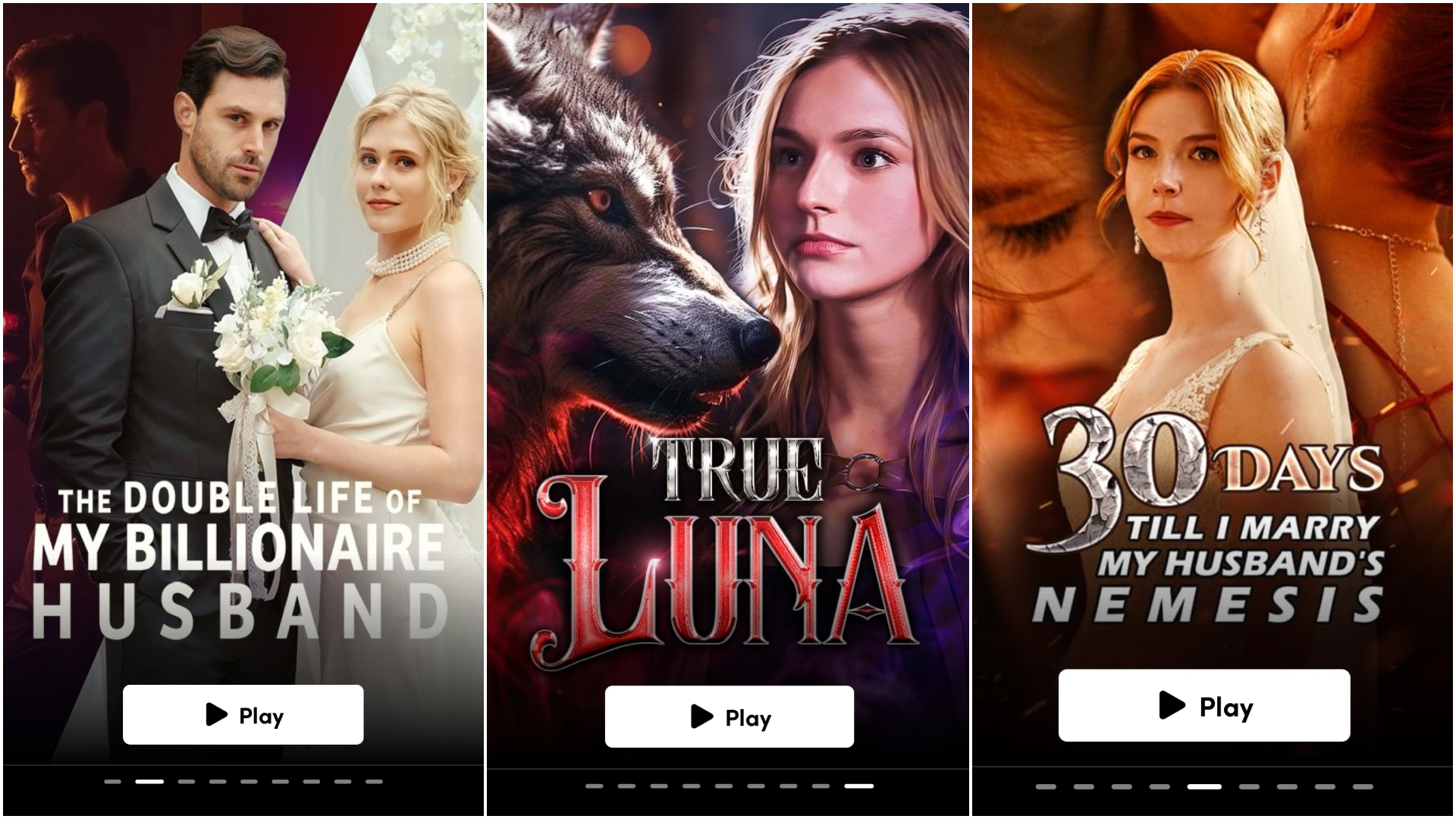
Photos: ReelShort.
From NPR: “Micro drama apps such as ReelShort, FlickReels and DramaBox offer short clips that add up to movie-length stories. They’re filmed vertically, so you can follow the twisty plotlines without turning your phone.”

Here’s a new type of video drama that could work for you when you’re strap-hanging in the subway for a couple stops. That is, if you like soap operas.

Kristian Monroe reports at National Public Radio (NPR), “They are called micro dramas — vertically filmed, under minute-long clips that together are often movie-length soap operas. But instead of waiting weeks to find out if Penny will wake up from her coma, or if Luke and Laura make it down the aisle, it takes just minutes for the plots of series like Fake Married to My Billionaire CEOReturn of the Abandoned Heiress and The Quarterback Next Door to unfold.

“The libraries of micro drama apps like ReelShort, FlickReels and DramaBox contain hundreds of series chopped up into 60-second-long parts, set to play one after the next, continuously. Perfect for the short attention spans of social media users.

“While the first few episodes are typically free to watch, once you want to see more, you’ll have to pay up — purchasing coins or passes from the apps to access additional content. That costs viewers $10 to $20 a week or up to $80 a month.

“Instead of investing in A-list stars or blockbuster franchises, the companies behind these apps bank on little-known actors, tight budgets and accelerated production timelines to churn out content drawing in millions of viewers and dollars.

“Micro dramas initially rose to prominence in China during the COVID pandemic, and by 2023, they grew to a $5 billion industry.

“They also faced increased scrutiny. Chinese media reports that between 2022 and 2023, government officials removed over 25,000 micro dramas for ‘violent, low-style or vulgar content’ in an effort to tighten controls over content published online. Simultaneously, micro drama apps in China experienced a stagnation in growth. …

“Government scrutiny and a crowded market pushed companies investing in micro dramas to expand abroad, where they hoped to duplicate their success in China with new audiences. …

“Women make up a majority of micro dramas’ fanbase. ReelShort’s parent company, Silicon Valley-based Crazy Maple Studio, said women comprise 70% of its 45 million monthly active users, half of whom are based in the U.S.

“This includes 26-year-old writer Britton Copeland, who, after repeatedly seeing TikTok ads for the ReelShort series True Heiress vs. Fake Queen Bee, purchased a pass to finish the 85-part series.

” ‘Despite the cheesy acting, the clip ended on a cliffhanger, and I desperately wanted to see what happened next,’ Copeland said. …

“She said the stories can suck you in. ‘It’s a lot easier to lose track of time when you can consume hundreds of videos in half an hour versus watching essentially a full film.’

“It’s a sentiment shared by actor Marc Herrmann, who’s starred in several micro dramas, including Billionaire CEO’s Secret Obsession and My Sugar-Coated Mafia Boss. He said the experience of watching a micro drama is different from sitting down to commit to watching a long film. …

“With micro dramas taking off in the U.S., the companies behind them are exploring new ways to expand their reach. A spokesperson for Crazy Maple Studio told NPR it’s begun reproducing some of ReelShort’s most popular English-language stories for other countries. The series are shot with different actors, and the scripts are adapted to represent different cultures.

“So far, it’s been a success. The Spanish version of ReelShort’s hit series The Double Life of My Billionaire Husband has gained nearly half the 450 million views of the original English version. The Spanish and Japanese versions of its newest story, Breaking the Ice, have racked up over 10 million views each.

“However, some, including [Caiwei Chen,  a tech reporter covering China for MIT Technology Review] wonder if micro dramas are just a trend. ‘I do worry about how soon people will get tired of it,’ she said. ‘It’s competing with TikTok … It’s competing with Instagram and a lot of other stuff.’

“And those other apps typically do not require users to spend cash or coins on passes to gain access to content.”

Would snippets of drama appeal too you? I think for me, the acting would have to be a lot better than “cheesy.” More at NPR, here.
Read Full Post »

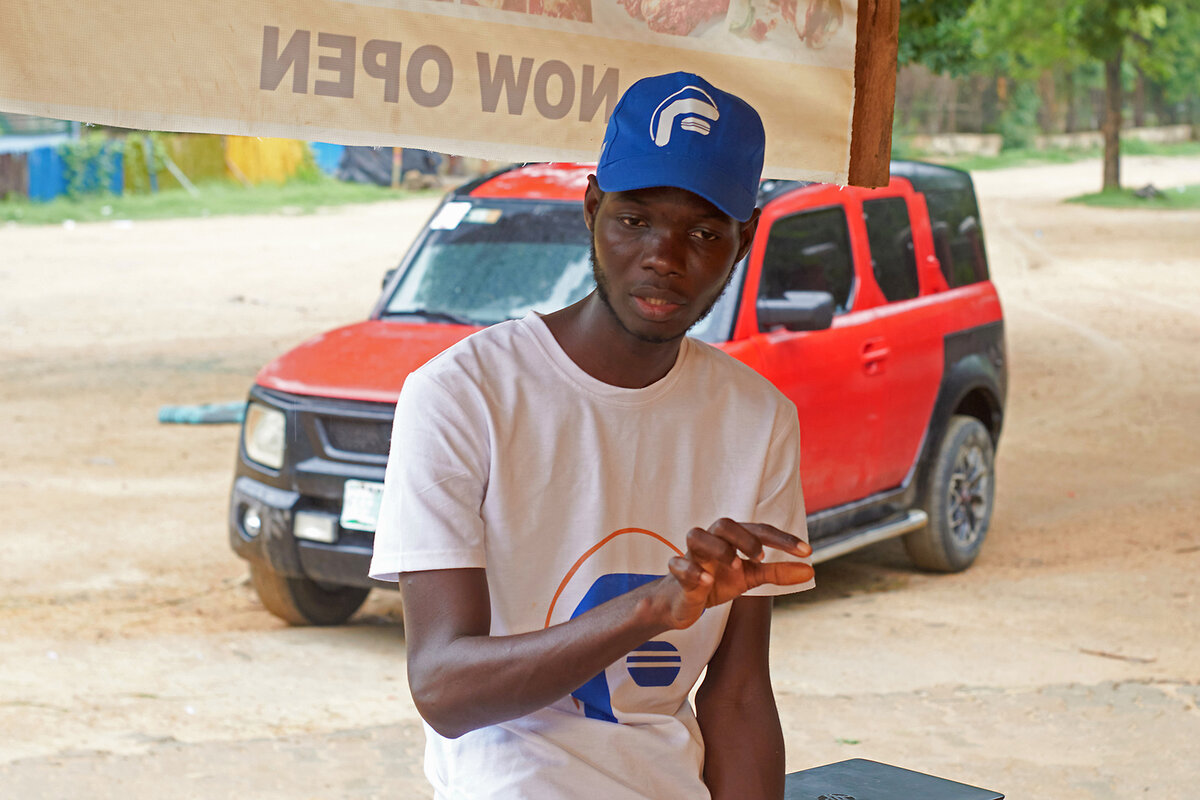
Photo: Nathaniel Bivan.
Muhammad Auwal Ahmad wears a cap and shirt with the Flowdiary logo during a meetup in KanoNigeria with some of his educational app’s tutors and students.

Whenever I used to read about Boko Haram terrorists in Nigeria, all I could think was how horrifying and hopeless the situation seemed. But it’s amazing how the human spirit can work around almost any hopeless situation.

Today’s story is about the young man who invented an app to help displaced Nigerian youth learn skills — despite terrorists and a disrupted education.

Nathaniel Bivan reports at the Christian Science Monitor, “Seventeen-year-old Ahmad Aminu finished secondary school and would like to go to college near his village in Zamfara state. But this region of northwestern Nigeria bears the brunt of attacks by bandits who kidnap students for ransom. …

“The 17-year-old Mr. Aminu [has] been able to take – for free, or at very little cost – courses in various digital skills in Hausa. He is becoming a well-known graphic designer within the community surrounding Dalba.

“ ‘The payment depends,’ says Mr. Aminu, the excitement clear in his voice. Designing an invitation card, for example, earns him about 2,000 Nigerian nairas, about $1.25; doing video editing, up to 3,000 nairas.

“ ‘In a month, I make as much as 30,000 naira,’ he says. ‘I really thank God.’ …

“Mr. Aminu is the sort of student whom Muhammad Auwal Ahmad had in mind when he created Flowdiary two years ago as a 23-year-old attending Federal University Gashua in northeastern Yobe state. He says Flowdiary now has more than 8,000 students enrolled from far-flung, impoverished areas across northern Nigeria; on average, almost one-fifth of those are active weekly users. The platform’s name refers to opportunities flowing to young people who might not normally have them.

“ ‘We have students from regions affected by terrorism and banditry … that we train and mentor,’ Mr. Ahmad says, noting that students who speak only Hausa struggle to find online courses in digital skills in their language.

“Mr. Ahmad’s dream began in Bayamari, a village in Yobe state that has only two small schools, a health center, and a police outpost. As a curious tween growing up there, Mr. Ahmad started researching digital technology when his father brought home a mobile phone and, later, a computer. Gradually, Mr. Ahmad started troubleshooting and soon had ambitious digital goals. …

“After unsuccessful attempts at building a couple of online businesses as an undergraduate computer science student, Mr. Ahmad set up Flowdiary in March 2022. It started as a team of tutors, who included some of his friends, teaching digital skills on Telegram to other young people across northern Nigeria at low cost.

“By that November, students could access the Flowdiary website. In February 2023, the app’s release became official. Paying as little as 1,200 nairas per course, students could register to learn web development, graphic design, and other digital skills. Tutors net half of the proceeds from course fees, and the rest goes toward operational costs such as maintaining the app and helping link Flowdiary students with career opportunities, Mr. Ahmad explains.

“Registered as a business, not as a nonprofit, Flowdiary has struggled to find other funding. … But Mr. Ahmad says he is set to obtain some much-needed funding after winning the 2024 Yobe State Research and Innovation Challenge, a prestigious regional competition organized by the Biomedical Science Research and Training Center of Yobe State University, in partnership with Yobe’s state government. …

“In 2011, Al’amin Dalha Suleiman and his seven family members abandoned their home in Maiduguri, the capital of northeastern Borno state, because of the Boko Haram insurgency there. They fled to Kano, more than 500 kilometers (about 310 miles) away, mourning the deaths of neighbors and friends as well as the loss of the family’s hat shop. But discrimination in Kano against outsiders forced them to return three years later to Maiduguri, where Mr. Suleiman struggled to revive the family business. …

“Through a friend on Facebook, Mr. Suleiman heard last year about Flowdiary. He enrolled in several courses, including video editing, web development, and graphic design. There was a major challenge, though – the need for wireless data and a laptop. For months, Mr. Suleiman struggled to finish the courses over his phone, but the payoff – the skills he has acquired – has been worth it. …

“Mr. Ahmad currently teaches computer science in northwestern Kebbi state as part of his National Youth Service Corps requirement. His vision after the one-year program is to expand the Flowdiary platform to reach more young people and – crucially – to help them grow their skills into careers.

“The end of online training for each student does not necessarily mean goodbye at Flowdiary. The Flowdiary team recently set up a mentoring and internship program; any student who takes a course can apply to work with companies that Flowdiary has forged a relationship with. As of late September, 20 students had secured internships – including two with Abdul Gusau, the owner of Abdoul Shoe Ventures in Zamfara.

“ ‘It is impressive to see how effective Flowdiary is through the work the interns are putting in my store,’ Mr. Gusau says. “ ‘The graphic designer has not yet entered the intermediate class, and yet his work is excellent. The same goes for the social media manager, who runs effective ads.’ “

More at the Monitor, here. No paywall. Subscriptions solicited.

Read Full Post »

Photo: keriliwi via Unsplash.
In Spain these days, a pineapple means you are available.

I’m sharing a funny dating story from September with the caveat that global warming may have upset everything in the short time since then. That’s because the lighthearted craze described here may have been inundated in the recent floods. On the other hand, maybe I should give more credit to the resilience of the human spirit. Especially when it comes to dating.

Guy Hedgecoe writes at the BBC, “A Spanish craze encouraging single people to seek partners in supermarkets by using a fruit-based code has caused some chaotic scenes and even led to the police being called to restore order.

“In recent days, many single Spaniards have been drawn to branches of supermarket chain Mercadona between 7pm-8pm by claims they can find romance at that time, particularly if they put a pineapple upside down in their shopping trolley.

“The phenomenon seems to have been driven in great part by the actor and humorist Vivy Lin, who posted a video on TikTok of her pushing a trolley around a Mercadona store talking about the supposed window. …

“The pineapple maneuver is reportedly completed by pushing your trolley into the wine section of the store and hoping that a person you find attractive responds positively.

“As the story has gone viral, it has led to some unusual and sometimes disorderly sights.

“In Madrid there have been reports of groups of teenagers pushing trolleys around stores in the evening, without buying products.

‘One man was dressed as a giant pineapple by his friends inside a store as part of his bachelor party celebrations.

“In Bilbao, police were called to a branch of Mercadona during the 7pm-8pm time slot because of rowdy scenes inside, although they were not required to intervene.

“A song, circulating online, has further driven the success of the trend, with the words: ‘In the wine section / My heart races / Looking for someone special / That my soul needs.’ …

“While the latest use of the fruit may have proved popular with some, there have been reports that the pineapple mania has not found favor with many Mercadona employees who are left to clear up unpurchased goods.

“One video showed a worker pushing boxes of the fruit away from shelves and towards a storeroom as 7pm approached.”

Meanwhile at the Washington Post, Leo Sands interviews a Malaga resident, ” ‘I think that currently the apps are very monotonous and people are already looking for something different,’ said Gustavo Contreras, a 28-year-old waiter living in Malaga, on Spain’s southern coast. …

“Contreras, who said he knows people who have met by crashing their carts together, said he spent about an hour carting around an upside-down pineapple at his local Mercadona store twice last week, but failed to knock carts with anyone else.

“The first time, ‘I went in and grabbed a pineapple and went around with my cart. I was going to go shopping anyway, but I realized that when I carried a pineapple, there were some knowing glances on 2 occasions,’ he said in a text message Wednesday. ‘I could feel the tension in the stares.’

“When he returned to the store the next day to try again, Contreras said that there were no pineapples left — a shortage he attributed to the popularity of the new dating craze.”

More at the BBC, here, and at the Post, here.

Read Full Post »

Photo: ReelShort App/Crazy Maple Studio.
Want a short soap opera for Valentine’s Day?

Has there ever been a soap opera that wasn’t about romance? Even hospital dramas are mostly about jealousy and staff affairs. But given that typical plots take years to come to a resolution, entrepreneurial geniuses have popped up to meet a need.

Learn about the 60-second soap-opera episodes that are gaining a contemporary audience.

Claire Moses reports at the New York Times, “When Albee Zhang received an offer to produce cheesy short-form features made for phones last spring, she was skeptical, and so, she declined. But the offers kept coming. Finally, Ms. Zhang, who has been a producer for 12 years, realized it could be a profitable new way of storytelling and said yes.

“Since last summer, she has produced two short-form features and is working on four more for several apps that are creating cookie-cutter content aimed at women. Think: Lifetime movie cut up into TikTok videos. Think: soap opera, but for the short attention span of the internet age.

“The biggest player in this new genre is ReelShort, an app that offers melodramatic content in minute-long, vertically shot episodes and is hoping to bring a successful formula established abroad to the United States by hooking millions of people on its short-form content.

“ReelShort is owned by Crazy Maple Studio, a company in Northern California that is backed by the Beijing-based digital publisher COL Group.

“ReelShort’s titles include ‘The Double Life of My Billionaire Husband,’ ‘I Got Married Without You’ and ‘Bound by Vendetta: Sleeping With the Enemy.’ The shows are formulaic: The plotlines include romance and revenge, the characters are archetypical and the dialogues are simple.

“The extremely short genre became popular in the Asia-Pacific region during the pandemic, and Joey Jia, the chief executive of Crazy Maple Studio, took notice.

“ReelShort aims to get people hooked as quickly as possible, with much of the action happening in the first few super short episodes. ‘This is a pay-as-you-go model,’ Mr. Jia said. ‘If people are confused by the story, they leave.’

“The cost of making these features is relatively low, $300,000 or less, according to Crazy Maple Studios. The crews are small and partly made up of recent film graduates in Los Angeles, according to actors who worked on the productions.

“Viewers can watch dozens of minute-long episodes on ReelShort for free via multiple platforms, including YouTube and TikTok. But at some point, they must either pay or watch ads to unlock subsequent episodes. Sometimes people pay as much as $10 or $20 to keep watching, Ms. Zhang, the producer, said. …

“In the United States, ReelShort is trying to succeed where the short-form content company Quibi failed. … While Quibi focused on more highbrow content with A-list stars, ReelShort is doing the opposite: It’s giving people juicy plot points, from werewolves to evil step mothers to secret billionaire husbands to more werewolves.

“ ‘We learned a lot from Quibi,’ said Mr. Jia. … ‘To build a successful mobile app, you need to find out your core audience,’ he said. And that audience is women who love soap operas. …

“In total, more than seven million people downloaded ReelShort in the United States in 2023, on Apple and Android phones combined, according to data.ai. …

“Kasey Esser, a Los Angeles-based actor who has worked on short-form shows for ReelShort and other apps, described the format as this generation’s soap opera. He drew a comparison to channels with made-for-TV content, such as Hallmark.

“ ‘People know exactly the story they’re going to be getting, but they will still watch it,’ Mr. Esser, 34, said. ‘They will still love it.’

“For the actress Samantha Drews, ReelShort was a chance to play different types of characters. ‘I can say now that I’ve been cast in 15 to 16 features in the last few years,’ Ms. Drews, 25, said. ‘That’s not something every actor can say.’ “

More at the Times, here.

Read Full Post »

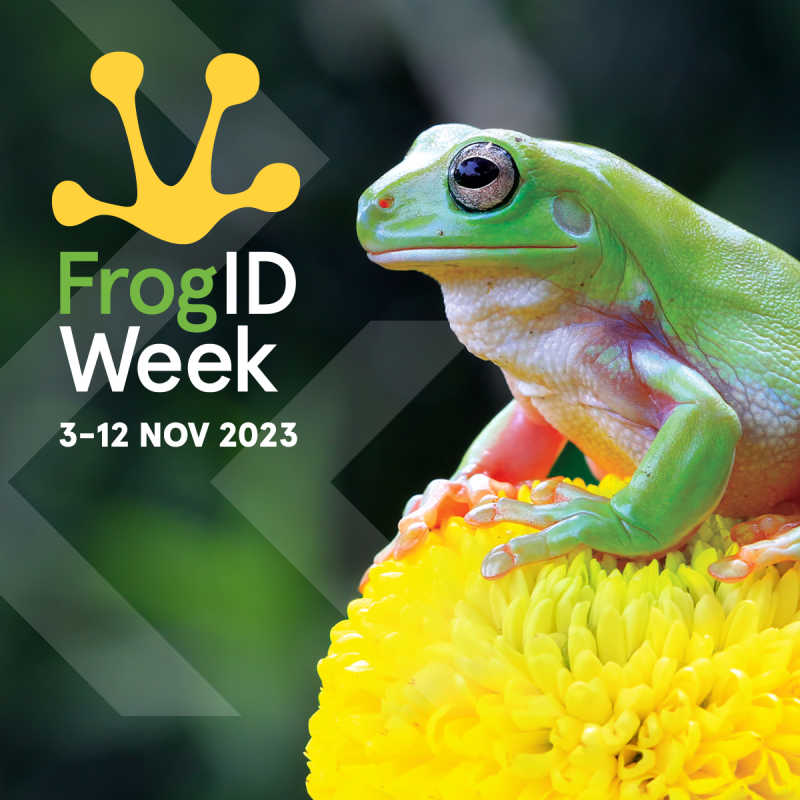
Photo: FrogID.
Sunday is the last day this year to submit your recording of a noisy frog for Australia’s special FrogID Week. But you can send in recordings year round. In southwestern Western Australia, for example, there are frog species that aren’t calling right now.

Crowdsourcing via the internet can be a great thing. In Australia, both children and adults are helping scientists conduct the annual frog census — sometimes discovering new species. This example of citizen science is spearheaded by the Australian Museum.

Ellen Phiddian reports at Cosmos, “People around Australia are once again being urged to head outside and record frog calls for FrogID Week, from 3-12 November 2023. Heralded as Australia’s biggest frog count, it’s an annual push for valuable data on Australia’s amphibians.

“ ‘This is a time of year when most frog species across Australia are breeding and calling,’ Nadiah Roslan, project coordinator of FrogID, tells Cosmos. ‘That call that we hear is actually a male frog calling out for a female frog. A majority of species – over 90% – will be calling now. So it’s a good time for us to get a snapshot of frog health and frog distribution across the continent.’

Launched by the Australian Museum in 2017, FrogID is a free app that people can use to record frog calls. These recordings get uploaded to a Museum database, where trained listeners can identify the frogs.

“It builds on decades of citizen scientist frog recordings, which are a vital tool for ecologists to assess frog populations.

“It’s yielded a trove of data far bigger than any single team of ecologists could collect. Information from FrogID has been used to track declining frog numbers, study deadly chytrid fungus, and learn how frog calls differ.

” ‘We’re not sure how well we will go with it being an El Niño year. Frogs do like it when it’s more wet.’

“Many frog species will only call after rainfall, and they typically need wet conditions to breed. So we are expecting fewer frog calls, but hopefully thousands of submissions across every state and territory of Australia,’ says Roslan.

“Nevertheless, fewer frog calls than the past few wet years is still very valuable data.

“ ‘It’s important to get this year-on-year data and repeat recordings from locations to understand patterns and trends over time,’ says Roslan.

“Roslan says that everyone, even ‘frog novices,’ can contribute to the project. First, download the app on your phone or other smart device.

“ ‘Set up a free account so that our scientists can let you know what frog species you’ve recorded, and then go out at dusk or early evening – that’s when most frog species will call,’ says Roslan. …

“ ‘We do want as many recordings this week as possible, so [record] every day you can. Even if it’s the same frog calling. … Every call counts.’ “

I first heard this story at The World. You can listen here. There’s more information at the FrogID website, here, and at Cosmos magazine, here.

And the Australian Museum adds, “Students can join us for a free virtual excursion during FrogID Week and meet Dr Jodi Rowley online to learn about Australia’s frogs.”

Read Full Post »

Photo: Amr Nabil/AP.
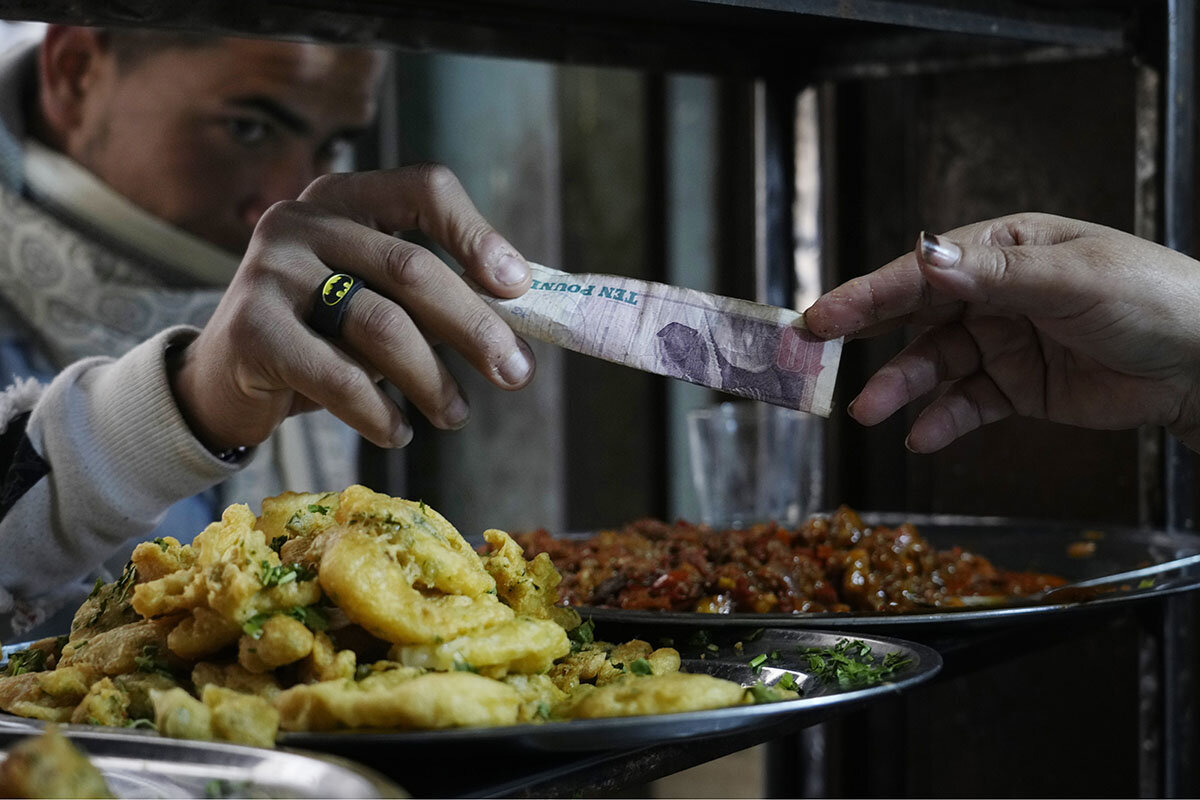
A man buys food at a popular restaurant in Cairo, March 22, 2022. The app Tekeya is working to counter food waste.

In restaurants around the world, especially in the fanciest ones, a lot of perfectly good food goes to waste because of some perceived defect. Can we find a better solution than throwing it out?

Eman Mounir reports at the Christian Science Monitor about a new app in Egypt to deal with food waste.

“Early one morning, servers at the Al-Aseel Al-Dimishqi restaurant began their usual preparations for the day. They laid out rows of baklava, kunafa, and other syrup-drenched, nut-stuffed delectables. But the offerings weren’t for customers who flock to the upscale New Cairo suburb. 

“Instead, within an hour, staff from an organization called Tekeya had arrived to whisk away 135 portions of perfectly edible dishes.

“The reason? The desserts – made a day earlier – weren’t considered fresh enough to dish up. 

“Throughout Egypt, which boasts a rich culinary history, such views aren’t uncommon. … Now, though, amid a global reckoning over the food chain and its role in the climate crisis, attitudes in Egypt are slowly changing. 

“The Al-Aseel restaurant is one of around a dozen across the Egyptian capital that Tekeya staff visits each day in a quest to stop fit-for-consumption food from being dumped. Restaurants pay a small annual fee that allows them to alert Tekeya whenever they have unsold food. Personal users of the app can then buy that food at half-price, or either the restaurant or the user can request Tekeya  deliver the food to a food bank or charity of their choosing. In total, up to 40 plates are saved from going to the trash each day. …

“Tekeya, which was inspired in part by the rituals around Ramadan, is the first such app in Egypt, where poor nutrition and undernourishment account for up to 55% of annual child deaths.  

“ ‘I’ve seen several platforms helping fight food waste across Europe. It’s uplifting to find one that does the same here in Egypt,’ says Al-Aseel’s manager, Ramez Abo Abed, who has been using the app for three years.

“In 2019, Menna Shahin had an idea particularly inspired by Ramadan, the Muslim holiday when the devout give to poor people and fast throughout the day. That prompts both celebration and waste. Since fasts are eventually broken with lavish meals at dusk, demand for food commodities soars by up to a third, and waste, in turn, also multiplies. 

“ ‘I would put so much thought into how to dispose of [food] responsibly without harming the environment, and how to minimize my excess usage,’ Ms. Shahin says. ‘I thought to myself, why not assist everyone to dispose of their excess food wisely?’

“Ms. Shahin ended up co-founding Tekeya along with her husband, Max Hartzen. By Tekeya’s second Ramadan, some 10,000 discounted meals were ordered during the holy month, with users choosing to donate roughly a quarter of those to charities.

“Now a 15-member team, Tekeya continues to face the stigma associated with ‘leftover food,’ says Aya Magdy, the startup’s account manager. ‘People presume that it’s food that has gone bad, making it difficult to convince them to buy or donate it.’

“Traditional Egyptian fare includes delicately spiced falafel served piping hot, while koshary, a staple street food, provides a hearty kick through mixing rice and pasta with fresh onions, tomatoes, garlic, chili, lentils, chickpeas, and a dazzling array of spices – these and other classic dishes almost all require freshly chopped ingredients. 

“But there’s a growing awareness of the impact of food waste on the environment. When food is thrown out, it rots and creates methane, a greenhouse gas that is almost 30 times as potent as carbon dioxide. To date, Tekeya counts at least 45,000 meals it has saved from ending up in landfills – preventing the equivalent of 133,000 kilograms (about 293,000 pounds) of carbon dioxide from being released into the environment, Ms. Shahin says.

“The team also works hard to guarantee the quality of the food it passes on, carrying out regular checkups amid stringent requirements. And because trust is such a big factor, if clients complain that the food from a restaurant is too stale or otherwise unsatisfactory, collaboration is immediately terminated.   

“The number of users has climbed steadily. The app now has more than 50,000 subscribers and 120 food suppliers in Cairo. And users tend to be conscientious themselves. Sara Harfoush, a teaching assistant in Cairo University’s Faculty of Economics and Political Science, was initially skeptical, so she conducted her own trials to gauge quality. After ordering off the app several times – and finding it satisfactory each time – she began buying food cheaply to donate to those in need. …

“The idea is catching on with well-known brands. Alban Khalifa, a dairy shop with multiple branches across Cairo, has been reducing food waste and financial losses through Tekeya for nearly two years. Regulars know they can snap up half-price puddings through the app at the close of day.

“That food would otherwise join the tens of thousands of tons of ingredients overflowing from trash cans on many streets of Cairo. In rural areas, heaps of discarded vegetables and harvests rot in the sun, attracting stray animals.

“There are other draws beyond environmental and sanitation concerns. Soaring inflation and another round of currency devaluation in March have further squeezed citizens in a country where a third of the population is classified as low-income earners. 

“Mohamed Refaat, a pharmacist in Cairo, says he quickly became a regular user after learning about Tekeya. The combination of contributing to saving the environment and getting good food at a discount is, he says, ‘very attractive to any user given the soaring prices and rising inflation rates.’ ”

More at the Monitor, here.

Read Full Post »

Photo: Reuters.
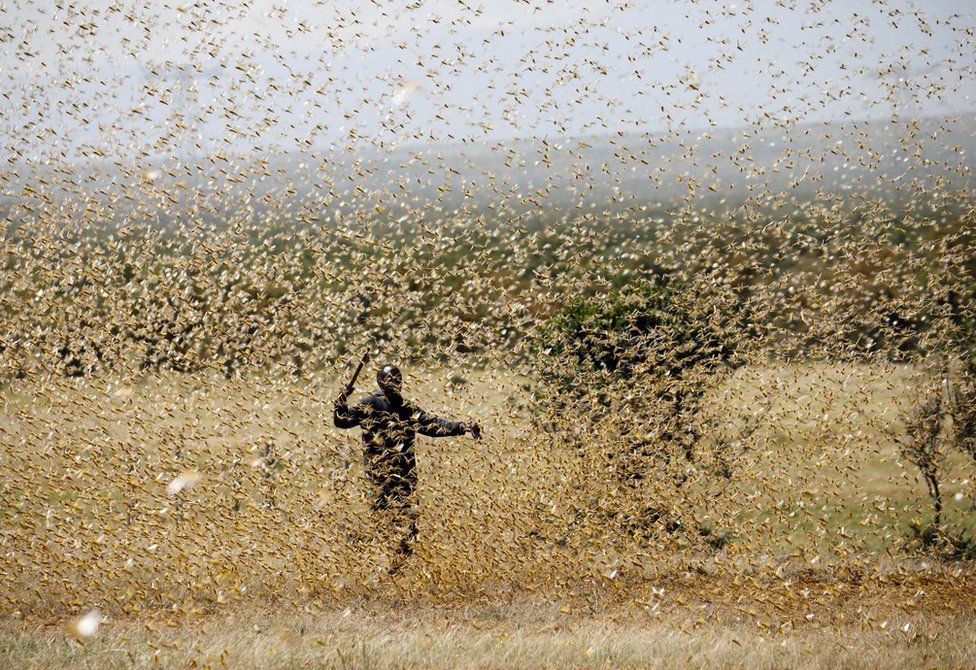
A man attempts to fend off a swarm of desert locusts at a ranch near the town of Nanyuki, in Laikipia county, Kenya.

Talk about citizen scientists! Tribal elders in Africa could teach Westerners a few things about enlisting everyone to solve problems.

Rachel Nuwer reports at the New York Times, “Melodine Jeptoo will never forget the first time she saw a locust swarm. Moving like a dark cloud, the insects blotted out the sky and pelted her like hail.

“ ‘When they’re flying, they really hit you hard,’ said Ms. Jeptoo, who lives in Kenya and works with PlantVillage, a nonprofit group that uses technology to help farmers adapt to climate change.

“In 2020, billions of the insects descended on East African countries that had not seen locusts in decades, fueled by unusual weather connected to climate change. Kenya had last dealt with a plague of this scale more than 70 years ago; Ethiopia and Somalia, more than 30 years ago. Nineteen million farmers and herders across these three countries, which bore the brunt of the damage, saw their livelihoods severely affected. …

“But as bad as 2020’s swarms were, they and their offspring could have caused much worse damage. While the weather has helped slow the insects’ reproduction, the success, [said Keith Cressman, a senior locust forecasting officer at the United Nations Food and Agriculture Organization], has primarily resulted from a technology-driven anti-locust operation that hastily formed in the chaotic months following the insects’ arrival to East Africa. This groundbreaking approach proved so effective at clamping down on the winged invaders in some places that some experts say it could transform management of other natural disasters around the world.

‘We’d better not let this crisis go to waste,’ said David Hughes, an entomologist at Penn State University. ‘We should use this lesson as a way not just to be adapted to the next locust crisis, but to climate change, generally.’ …

“The locust plague that hit East Africa in 2020 was two years in the making. In 2018, two major cyclones dumped rain in a remote area of Saudi Arabia, leading to an 8,000-fold increase in desert locust numbers. By mid-2019, winds had pushed the insects into the Horn of Africa, where a wet autumn further boosted their population. An unusual cyclone in Somalia in early December finally tipped the situation into a true emergency. …

“Countries like Sudan and Eritrea that regularly deal with small, seasonal swarms have teams of locust trackers who are trained to find the insects and recognize which life cycle stage they are in. They use a tablet-based program to transmit locust data by satellite to national and international authorities so experts can design appropriate control strategies.

“But people outside of those frontline locust nations who may want to start using this system today would encounter a typical technology problem. … Even if the hardware were available, in 2020, East Africa lacked experts who could identify locusts.

“ ‘We’d never had a dress rehearsal for the real thing,’ said Alphonse Owuor, a United Nations Food and Agriculture Organization specialist in Somalia. ‘We had people who were very familiar with locusts in theory, but who didn’t have the experience or equipment required to carry out this massive operation.’

“With swarms suddenly covering an area of Kenya larger than New Jersey, officials were tasked with creating a locust-combating operation virtually from scratch. Collecting dependable, detailed data about locusts was the first crucial step.

” ‘Saying “Oh, there’s locusts in northern Kenya” doesn’t help at all,’ Mr. Cressman said. ‘We need longitude and latitude coordinates in real time.’

“Rather than try to rewrite the locust-tracking software for newer tablets, Mr. Cressman thought it would be more efficient to create a simple smartphone app that would allow anyone to collect data like an expert. He reached out to Dr. Hughes, who had already created a similar mobile tool with the Food and Agriculture Organization to track a devastating crop pest, the fall armyworm, through PlantVillage, which he founded.

“PlantVillage’s app uses artificial intelligence and machine learning to help farmers in 60 countries, primarily in Africa, diagnose problems in their fields. Borrowing from this blueprint, Dr. Hughes and his colleagues completed the new app, eLocust3m, in just a month

“Unlike the previous tablet-based program, anyone with a smartphone can use eLocust3m. The app presents photos of locusts at different stages of their life cycles, which helps users diagnose what they see in the field. GPS coordinates are automatically recorded and algorithms double check photos submitted with each entry. Garmin International also helped with another program that worked on satellite-transmitting devices.

“ ‘The app is really easy to use,’ said Ms. Jeptoo of PlantVillage. Last year, she recruited and trained locust trackers in four hard-hit Kenyan regions. ‘We had scouts who were 40- to 50-year-old elders, and even they were able to use it.’ ”

More at the New York Times, here.

I love how many apps there are for identifying things these days. PictureThis has been a great help to me in identifying unfamiliar flowers. Now if I could just get one for birds!

Read Full Post »

The pandemic has hurt my tentative efforts to help the global climate by cutting back on lamb and beef. This sounds lame, but with online ordering, I feel less able to be creative about meatless meals. I need to see the produce up close, not the market’s idealized photo. Guess I better get over that: online shopping looks like being my mode for quite a while yet.

Meanwhile, as Ali Withers reports for the Climate Solutions initiative at the Washington Post, a Danish grocery chain is making it easy for customers to watch their carbon footprint.

A major supermarket chain in Denmark is offering shoppers something extra at checkout: an estimated amount of the carbon dioxide released into the atmosphere from their groceries.

“COOP DK, the Danish cooperative that controls one-third of the country’s grocery market, says it is trying to educate consumers with an eye toward nudging them to cut back on meat and dairy, two categories of food that produce the most greenhouse gasses linked to climate change. …

“Shoppers can use an app that gives them a personalized carbon footprint tracker that displays roughly how much CO2 it took to produce the tomatoes, yogurt or cold cuts in their baskets. The tracker, which rolled out in June, also allows customers to compare their footprint to the average shopper.

“ ‘What people need to understand is just that animal-based products have a higher [climate] impact,’ said Thomas Roland, who leads corporate social responsibility for COOK DK. …

“Animal agriculture is a major source of both carbon dioxide and methane, two greenhouse gasses that are driving the rapid warming of the planet, scientists say. …

“Since the stores stock more than 100,000 items, they took a few shortcuts by selecting a benchmark item — 2.2 pounds of white rice, for example — to be representative of all types of rice because, as Roland explained, the variations in rice production, transportation and packaging are relatively small. Similarly, all pork is counted in the same way, regardless of farming methods. …

“So far, 21 percent of the chain’s 1.2 million app users have checked their carbon footprint, Roland said. …

“When they first discussed the idea of a carbon tracker, top executives at COOP DK were concerned that it could affect the chain’s bottom line. …

“Roland said, ‘Our biggest concern was that we “chased” some customers out of our shops only to find that they buy all their meat at competitors. But that, luckily, doesn’t seem to be the case. Curiosity wins, as customers actually want to see the footprint of their total basket and not “cheat.” ‘

“The average Dane is responsible through his or her food choices for the emission of about 6,614 pounds of CO2, or 18.1 pounds a day, according to COOP DK.

“That’s almost six times the amount recommended by the EAT-Lancet Commission on Food, Planet and Health. The commission’s 2019 peer-reviewed study by 37 scientists found that a person’s nutritional CO2 footprint should be closer to 3.1 pounds per day, if humanity is to prevent the average global temperature from rising more than 1.5 degrees Celsius by 2050. …

Barnemad, a cooking site that displays the CO2 equivalence of a recipe’s ingredients, is among a growing number of ‘climate cookbooks’ that are part of a Danish trend to promote low-carbon eating, organic foods and nutrition. …

“Leading meat and dairy suppliers are cautiously welcoming the footprint tracker, although it could result in a decrease in sales. …

“The pork producer Danish Crown doesn’t oppose climate footprint trackers, its top executive said. ‘It’s early days for these tools,’ said Jais Valeur, CEO of Danish Crown, which also exports meat to China, Japan and Britain. ‘But still, it’s a sign of what’s going to come here on the climate path, and we need to pay attention to this. It’s not like we’re against it. Meat has become so cheap here in Europe and in the Western world, and there you see an overconsumption.’ …

“Both [dairy producer] Arla and Danish Crown are trying to reduce their carbon emissions and position their products as low-carbon.

“Arla is aiming to shrink its CO2 footprint by 30 percent by 2030. And Danish Crown says it will halve CO2 emissions from the 12.5 million pigs it raises and slaughters in Denmark by 2030. The company is setting up baselines and individual climate plans for each of its pig farmers. …

“Farmers, for the most part, are embracing the opportunity to lower their carbon footprint, although, as Valeur notes, there are no financial incentives. …

“Kim Kjær Knudsen is a third-generation pig farmer who is trying to cut carbon emissions from his farm of 100,000 pigs outside Copenhagen. He has invested in biogas projects, reduced the acidity of his slurry, installed new ventilation systems and is buying more local feed.

“ ‘I think this will define my future in the next 10 to 15 years,’ Knudsen said. ‘It’s important to make some steps now [that] will move us in a good direction … if I can put a calculation on my meat to say, “Actually, we can produce meat here in Denmark that is 50 to 80 percent better for the environment than they can do somewhere else in the world.” ‘ “

Gotta love those Danes — ahead of the curve on so many good things! How do they do it? More at the Washington Post, here.

Read Full Post »

Here’s a story from Total Croatia News, which I am not quite sure how I found. Probably a link on ArtsJournal or Facebook or Twitter. I can’t claim to read it regularly.

Daniela Rogulj wrote back in December that with its open digital library, Croatia is the first Free Reading Zone. The top 100,000 digital books from around the world — both bestsellers and academic books — are available without any cost, card, or code.

You do need to be within Croatia’s borders, and you have to download the free “Croatia Reads” app on Android or IOS smartphones and tablets.

The concept was tested early last autumn at Zagreb’s Velvet Café, and it worked. The generous support of sponsors enables publishers and authors to be paid when books are read.

More at Total Croatia News, here, and at Publishing Perspectives, here.

Now I’m wondering what’s on the book list. (Asakiyume: Offer your book?)

Photo: Digital Media Diet
The digitizing of books has enabled Croatia to become the world’s first Free Reading Zone. If you are in Croatia, download the “Croatia Reads” app for access to 100,000 bestselling and academic books.


Read Full Post »

When we were little, my brother had a turntable in a brightly colored “juke box” that lit up and flashed. All the kids came to hear his records. If only he had known he could become a child DJ!

Lynsey Chutel has a story about one in South Africa.

“At first it seems like a fluke – a two-year-old playing with the knobs and buttons of a sophisticated music system. Yet the pint size boy is in control of the beat of the bass-heavy house music. He is South Africa’s youngest disc jokey, DJ AJ. …

“Orarilwe Hlongwane is still learning to put together words but the toddler is already able to select and play music from a laptop and has become a viral phenomenon on South Africa’s social media. …

“His mother, Refiloe Marumo, credits his father’s decision to buy an iPad for his unborn son. Glen Hlongwane planned to download educational apps.”

Read what happened instead.

Photo: Associated Press

Read Full Post »

Today would have been Shakespeare’s 451st birthday, and I am seeing testimonials all over Facebook and twitter. So it seems like a good day to write about the Sonnet Project in New York City.

Stuart Miller wrote at the New York Times about “an ambitious project to create a short film for each of Shakespeare’s 154 sonnets, with each movie shot at a different New York City location.

“ ‘It brings Shakespeare to people who might not be in touch with it, and we can use social media like Twitter and Instagram to spread the word,’ [actor Billy] Magnussen said. The endeavor, called the Sonnet Project, grew from the work of the New York Shakespeare Exchange, a local theater group.

“The group, which started the project in 2013, just completed its 100th film: Sonnet 27, starring Carrie Preston, an Emmy award-winning actress, and filmed on the Verrazano-Narrows Bridge [and premiering] April 8 on the Sonnet Project website and app. …

“Some directors found inspiration at the location where the films were shot. At Leidy’s Shore Inn, a 110-year-old bar on Staten Island, Daniel Finley, who was making Sonnet 19, filmed Laurie Birmingham, an actress who works mostly in regional theater, as a world-weary regular musing over her drink.

“ ‘We walked in at 10 a.m. and the regulars were there watching OTB and scratching their lotto tickets,’ he said. ‘We learned some of their stories and Laurie based her character on those impressions.’ ” More at the New York Times, here.

Photo: Chang W. Lee/The New York Times
A crew filming Sonnet 108 at the John T. Brush stairway. 

Read Full Post »

I have yet to see for myself any marked improvement in Boston traffic resulting from the city’s use of the Waze app, but maybe that’s because I didn’t try to go to the football parade right after the blizzard.

Nick Stockton reported, “Even on a good day, Boston’s roads are more tangled than a Celtic knot. … So the city’s traffic managers decided to call in the apps.

“Specifically, the city reached out to Waze, a driving and directions tool owned by Google. By sharing the [snowy Patriots] parade route on the service, the city helped users steer themselves around traffic, potentially easing the overall road burden.

“That one-time data fling has resulted in a longer term data-sharing relationship. … Boston will give Waze a heads-up about any planned closures, and in return the app’s owners will give the city’s traffic management center access to its profoundly valuable stream of user data. In the short term, this will let the city be more responsive to traffic problems as they arise. But going forward, Boston’s road-runners hope the data will help them fine-tune their traffic light timing and keep congestion from building up in the city’s intestinal road network. …

“Boston isn’t an outlier here, either: Governments all over are using private companies to fill technology gaps. Google’s transit specification—the way it pushes bus and train times to Google Maps users—has become the de facto standard for how cities publish their mass transportation schedules. Entire states are buying cycling data from Strava to build better bike lanes.”  More here.

Maybe the next occasion for Boston to use Waze will be the upcoming marathon, when the three people we’re calling Team Sweden will be running (Erik, his sister, and their cousin), and it’s impossible to drive.

(Thank you, The Fort Pointer, for tweeting this story.)

Photo: Suzanne Kreiter/Boston Globe/Getty Images

Read Full Post »