Feeds:
Posts
Comments

Posts Tagged ‘audio’

Photo: Hannah Goeke/Christian Science Monitor.
One of the National Braille Press’s braille machines operating in Boston’s Fenway neighborhood.

As I read today’s article about braille services losing funding, I am struck particularly by an activist’s comment on the importance to blind children of meeting other blind children in the braille libraries. I remember my own insensitivity to disability as a child. Children sense difference sand sometimes they are not kind. Being with others who share an issue like blindness would be huge.

But opportunities like that are now threatened — at both federal and state levels.

Hannah Goeke writes at the Christian Science Monitor, “Marci Carpenter reconnected with her love of reading through her fingertips. When her vision became more limited, learning braille gave her a new way to experience the world. She still remembers how the words of Robert Frost’s poems came alive again through soft bumps embossed on thick paper.

“But it was the Washington Talking Book & Braille Library in Seattle that gave her a place to connect.

“ ‘That was the first time I had ever experienced being around shelves and shelves of braille books. It was this really liberating experience,’ recalls Ms. Carpenter. Over the next five decades, she returned again and again to browse through the Major League Baseball schedule, check out the Constitution – and science fiction – and discover new volumes.

“Today, Ms. Carpenter, who now serves as president of the National Federation of the Blind of Washington, is facing a new urgent need.

“On July 1, the doors to the Washington Talking Book & Braille Library swung shut to the public for in-person exploration and gathering due to a lack of state funding. As needs increase and revenue growth slows, the state of Washington is facing a budget deficit. Ms. Carpenter, who was among those working with legislators to secure funding for libraries, came up empty-handed. …

“The Seattle library is one of nearly 100 libraries and outreach centers nationwide that form the network of the National Library Service for the Blind and Print Disabled, which provides free braille and audio materials through the Library of Congress.

“A small staff is determined to keep the library running. Since July 1, it has offered services by appointment only. ‘We are getting about our normal number of calls,’ writes Danielle Miller, the library’s director, in an email. ‘We have had to turn away people who wanted to come in and use the library.’ …

“Patrons say they are most saddened by that loss. Through in-person workshops and programming, the library provides a sense of belonging and community. Preserving free access to braille materials and encouraging braille literacy – especially for children – is imperative, according to experts and educators. …

“The vast majority of the 26% of employed blind people are braille readers, according to the National Braille Press in Boston. However, despite reading’s link to higher education and employment in the United States, only 12% of school-age blind children in the U.S. can read braille, the NBP estimates.

“While tape recorders and synthesized speech are useful tools, they do not teach the ability to read, write, and spell, says Kim Charlson, the executive director of the Perkins Library in Watertown, Massachusetts. …

“Braille opens the door to independence, not only on a large scale but also in small ways. What is habitual to sighted people becomes a significant hindrance for blind people, says Ms. Charlson. For example, being able to jot down a telephone number, take a note, or create labels to find the warranty for your new stove.

“Ms. Charlson shares a lesson she learned about the everyday importance of using braille after adding an unconventional ingredient to her chili recipe.

“ ‘I just opened it and tossed it in. I added my tomato sauce,’ she says with a laugh. ‘My husband [who is also blind] took a bite and he said, “This is kind of interesting.” And I said, “What do you mean? It’s chili.” And he goes, “Well, it’s got fruit cocktail in it.” ‘ Ms. Charlson now adds braille labels to her kitchen jars and cans.

“While funding uncertainty has braille libraries on edge, at the National Braille Press, President Brian Mac Donald says the demand for braille books remains high. He expects that to continue. …

“Says Mr. Mac Donald, ‘We have parents that have written testimonials saying, “I wish you could have seen the excitement of my son when he read his first book with us … in braille.” ‘

“On a recent weekday, the NBP presses are humming, business as usual, in a brownstone building in Boston’s Fenway neighborhood. In the basement, Elizabeth Bouvier binds books together with practiced precision as the rhythmic clatter of machines pressing dots into thick paper echoes off concrete walls.

“Ms. Bouvier is blind. So are many of her colleagues at the NBP, where a small staff produces millions of braille pages each year, including children’s books.

“The closure of the Seattle library means the shuttering of its children’s room. It also means the end of introductory braille workshops and story times with children’s books featuring braille pages added that allow blind and sighted kids to read together. …

“Like many, Ms. Carpenter was the only blind child in her public school. The closing of the children’s room ‘is a loss of community,’ she says. ‘It is important for blind children to meet other blind children.’

“Ms. Miller’s and Ms. Carpenter’s inboxes have been flooded with inquiries about how people can help. Ms. Carpenter is telling them to wait for the right moment. When funding talks for the next state budget cycle start in 2026, she has no doubt that the blind community will turn up in big numbers to explain why access to the library’s services is essential to them.

“ ‘You know the most impactful action people have is their story,’ she says. ‘Anyone can request to speak with a legislator.’ ”

More at the Monitor, here.
Read Full Post »

Photo: John.

People absorb information differently, so to each his own. I hope today’s attempt to explain scientific differences between reading a book and listening to one doesn’t make you think reading is necessarily better than listening. We all know the vital importance of being read to as a child.

Let’s see what Stephanie N. Del Tufo, assistant professor of education & human development at the University of Delaware, has to say at Science Alert, via the Conversation.

“As a language scientist, I study how biological factors and social experiences shape language. My work explores how the brain processes spoken and written language, using tools like MRI and EEG.

“Whether reading a book or listening to a recording, the goal is the same: understanding. But these activities aren’t exactly alike. Each supports comprehension in different ways. Listening doesn’t provide all the benefits of reading, and reading doesn’t offer everything listening does. Both are important, but they are not interchangeable.

“Your brain uses some of the same language and cognitive systems for both reading and listening, but it also performs different functions depending on how you’re taking in the information.

“When you read, your brain is working hard behind the scenes. It recognizes the shapes of letters, matches them to speech sounds, connects those sounds to meaning, then links those meanings across words, sentences and even whole books. The text uses visual structure such as punctuation marks, paragraph breaks or bolded words to guide understanding. You can go at your own speed.

“Listening, on the other hand, requires your brain to work at the pace of the speaker. Because spoken language is fleeting, listeners must rely on cognitive processes, including memory to hold onto what they just heard.

“Speech is also a continuous stream, not neatly separated words. When someone speaks, the sounds blend together in a process called coarticulation. This requires the listener’s brain to quickly identify word boundaries and connect sounds to meanings.

“Beyond identifying the words themselves, the listener’s brain must also pay attention to tone, speaker identity and context to understand the speaker’s meaning.

“Many people assume that listening is easier than reading, but this is not usually the case. Research shows that listening can be harder than reading, especially when the material is complex or unfamiliar.

“Listening and reading comprehension are more similar for simple narratives, like fictional stories, than for nonfiction books or essays that explain facts, ideas or how things work. My research shows that genre affects how you read. In fact, different kinds of texts rely on specialized brain networks.

“Fictional stories engage regions of the brain involved in social understanding and storytelling. Nonfiction texts, on the other hand, rely on a brain network that helps with strategic thinking and goal-directed attention.

“Reading difficult material tends to be easier than listening from a practical standpoint, as well. Reading lets you move around within the text easily, rereading particular sections if you’re struggling to understand, or underlining important points to revisit later.

“A listener who is having trouble following a particular point must pause and rewind, which is less precise than scanning a page and can interrupt the flow of listening, impeding understanding.

“Even so, for some people, like those with developmental dyslexia, listening may be easier. Individuals with developmental dyslexia often struggle to apply their knowledge of written language to correctly pronounce written words, a process known as decoding. Listening allows the brain to extract meaning without the difficult process of decoding.

“One last thing to consider is engagement. In this context, engagement refers to being mentally present, actively focusing, processing information and connecting ideas to what you already know.

“People often listen while doing other things, like exercising, cooking or browsing the internet – activities that would be hard to do while reading. When researchers asked college students to either read or listen to a podcast on their own time, students who read the material performed significantly better on a quiz than those who listened.

“Many of the students who listened reported multitasking, such as clicking around on their computers while the podcast played. This is particularly important, as paying attention appears to be more important for listening comprehension than reading comprehension. …

“Each activity offers something different, and they are not interchangeable. The best way to learn is not by treating books and audio recordings as the same, but by knowing how each works and using both to better understand the world.”

More at the Conversation, here.

Read Full Post »

Photo: Nilo Merino Recalde.
A visual representation of an audio clip of five different great tit birds singing one song each.

There is so much for humans to learn about other species! The other day, a post on household pets reacting to the animated film Flow inspired Deb in Tennessee to conduct her own experiment with her dog. She learned that Buster, for one, was bored by Flow, failing to replicate the anecdotal evidence of curiosity described at the New York Times — a good example of why studies usually say, “More research is needed.”

Today we learn something new about birds, but maybe it’s only certain birds.

Victoria Craw writes at the Washington Post, “They sound beautiful, herald the start of spring, and even have the power to reduce stress and boost mental health.

“Now it turns out that some birdsongs also contain a hidden world of shared language, with varying local accents and dialects that change depending on the age of the bird and its peers — not unlike human songs.

“ ‘Just as human communities develop distinct dialects and musical traditions, some birds also have local song cultures that evolve over time,’ said Nilo Merino Recalde of the University of Oxford’s biology department, who led the new research published in the journal Current Biology. ‘Our study shows exactly how population dynamics — the comings and goings of individual birds — affect this cultural learning process.’ …

“The study is based on analysis of over 100,000 bird songs from at least 242 birds recorded in 2020, 2021 and 2022 in Wytham Woods in Britain’s Oxfordshire — a sprawling 1,000-acre wood where ecological and environmental research is carried out. For the last 77 years it has been the site of the Wytham Great Tit Study showing how two species of tit — the great tit and blue tit — have changed over time. …

“While some birds learn songs from their fathers and others learn continuously from neighbors, great tits are believed to do most of their learning in the first 10-11 months of life. …

“Merino Recalde said he was inspired by his love of birds and interest in social learning in animals, which creates an evolving shared culture reminiscent of the way humans learn languages and music. Theoretical work indicates that factors such as population turnover, immigration and age can affect the evolution of these cultural traits — so far, however, empirical evidence on the subject has been limited.

“His research team focused on the great tit, a small bird that lives just 1.9 years on average. The team recorded the ‘dawn chorus’ from March to May — coinciding with breeding season — using microphones placed near nesting boxes to gather more than 200,000 hours of the ‘simple yet highly diverse songs’ sung by males. Through a combination of physical capture, microchips and an artificial intelligence model, researchers were able to recognize the songs of individual birds and track how they changed over time, showing each bird had a repertoire ranging from one to more than 10 tunes.

“ ‘One of the main findings was that the distance that these birds travel while they are learning the songs, and also the ages of the other birds they interact with … affect how varied their songs become, collectively,’ Merino Recalde said. …

” ‘Homegrown’ songs in areas where birds stay close to their birthplace tend to stay unique, similar to the way in which isolated human communities can develop distinct local dialects over time, the team found.

“Age also had a significant impact, with birds of a similar age singing similar tunes, whereas mixed-age neighborhoods had ‘higher cultural diversity.’

This shows that the older birds can act as guardians of culture as they ‘continue to sing song types that are becoming less frequent in the population,’ researchers said.

“ ‘In this way, older birds can function as “cultural repositories” of older song types that younger birds may not know, just as grandparents might remember songs that today’s teenagers have never heard.’ …

“Merino Recalde said capturing how population changes are reflected in song could provide a future avenue for less invasive research, eliminating the need for capturing and tagging animals, for instance. …

“Professor Richard Gregory, the head of monitoring conservation science at Britain’s Royal Society for the Protection of Birds (RSPB), who was not involved with the study, praised the ‘herculean’ effort to analyze such a large data sample over a three-year period and said similar research could be used to highlight ‘critical tipping points’ for a population in future.

“While the great tit is not endangered, Gregory said the study could help inform plans to reintroduce or relocate certain animals, as such conservation efforts may be ‘doomed’ if they don’t take their cultural traits into account. ‘This study reminds us that the details of an animal’s life really matter.’

“Gregory, who is also an honorary professor of genetics, evolution and environment at University College London, said the study also showed that ‘methods of wildlife recording and song analysis are developing at break-neck speed,’ and AI is going to ‘revolutionize conservation science’ by allowing patterns in nature to be identified more readily.”

More at the Post, here. You can listen to an audio clip there.

Read Full Post »

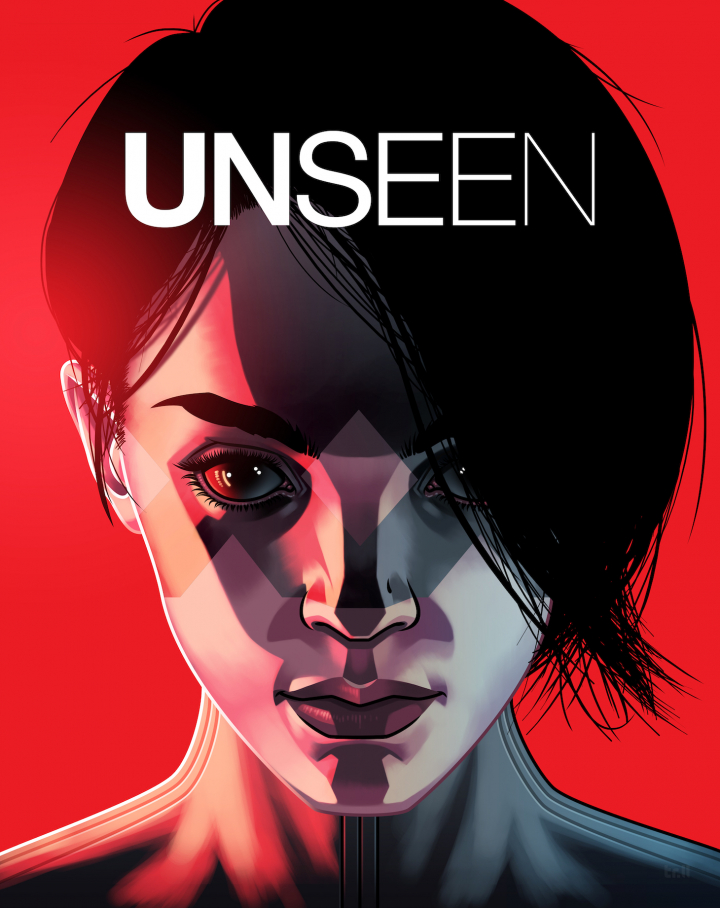
unseen_coverart_final-720x908

Art: Thomas Rodgers
The cover art for Chad Allen’s audio comic,
Unseen, is the only visual feature. The comic was designed for the blind.

Hooray for people who recognize a need and do something about it. In this story, a man who is blind devised a way for other blind people to enjoy an art form usually closed to them.

Jessica Gelt writes at the Los Angeles Times, “Chad Allen was feeling helpless. Not because he happened to be blind. He had a healthy handle on that part of his life. It was the insanely dark news cycle that was dragging him down. The sense that the world was falling apart and he could do nothing about it.

“Mounting anxiety before the 2016 presidential election propelled him to do what he does best: tell stories. He created an audio comic book titled ‘Unseen,’ featuring a blind heroine, an assassin from Afghanistan named Afsana. It is believed to be one of the first audio comic books by a blind author, made for a blind audience.

“Working in a highly visual art form, Allen managed to create an auditory experience that closely mimics the sensation of reading a comic book. A whooshing sound occurs whenever a panel changes; the intentionally stilted delivery of lines, as well as narration that prompts mental images, conjure a feeling of being inside a high-stakes comic book world. Aside from a slick red-and-black graphic image of Afsana created for the cover, ‘Unseen’ has no visual art whatsoever. …

“ ‘Chad’s character is written for a blind audience, but all of us can identify with her because we can identify with the experience of being underestimated,’ says Melissa Alexander, the director of public programs at the Exploratorium [museum of science, art and human perception in San Francisco]. …

“The sense among marginalized groups — people of color, women, LGBTQ people and others — that they have been underestimated has made ‘Unseen’ a popular part of the exhibit. …

“Allen is thrilled to have his work included in ‘Self, Made’ because it validates one of his main objectives in writing ‘Unseen.’

‘You don’t see art with your eyes. You don’t see anything with your eyes. All your eyes do is filter light. You see with your brain, and that’s what I’m trying to teach to people more than anything,’ Allen says. …

“Afsana does not have superpowers like Marvel’s Daredevil. She has a skill. Her skill is to slip in and out of places without being seen. She is not seen because people with disabilities are often not seen. They can feel invisible to society at large, Allen says. …

“The catchphrase for the comic is, ‘Discounting her abilities is her enemies’ gravest mistake.’

“The first installment of Afsana’s journey, which is available for streaming at unseencomic.com, finds her at the American border with Mexico in a not-so-distant future, when a dictatorial president is rounding up immigrants and conducting scientific experiments on disabled people with some very spooky results. …

“Allen, 46, grew up loving comic books. … He was not born blind. He was diagnosed with retinitis pigmentosa, a genetic disorder that causes vision loss, at the age of 15, around the time his parents were divorcing. His world was thrown into turmoil in a way his fragile teen psyche had trouble processing. …

“Twenty years later, Allen is sitting at his dining room table in front of a small Braille keyboard attached to an iPhone that reads emails, books and writing back to him at breakneck speed. It is hard to imagine a time when he lacked confidence in the world. …

“Of all the questions lobbed his way, Allen says one of the most obvious and compelling is often asked by his son’s friends: How do you see in your head? His reply is beautiful in its simplicity.

“ ‘I say to them, “Do you go to bed at night? When you sleep do you dream? When you dream do you see places? Do you see people that you know? Do you see your family and friends?” ‘

“When they answer in the affirmative, he asks, ‘Are your eyes open?’

“They shake their heads.

“ ‘Well, that’s how I see you.’ ”

More here.

Read Full Post »


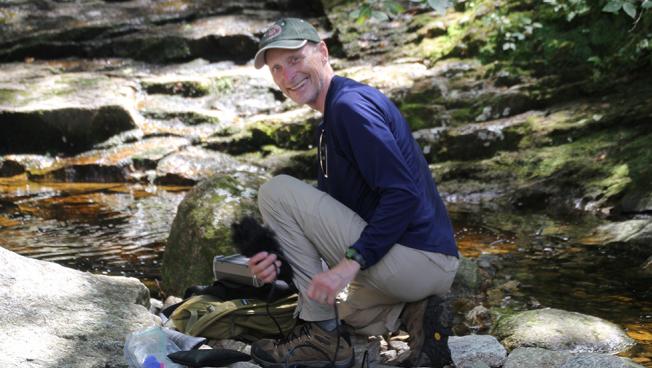
Photo: Ginny Fordham
Berklee professor Steve Wilkes gathers sound at the White Mountain National Forest in New Hampshire. A recent project also captures Cape Cod.

Berklee professor Steve Wilkes and his collaborator David Masher have created some amazing soundscapes that capture the music of the natural world. Their work is described at the Hear the Forest website:

“Hear The Forest is an effort to initiate the process of building an aural-map – essentially, an audio time capsule – of New Hampshire’s White Mountain National Forest.  Supported by the National Forest Service and the Arts Alliance of Northern New Hampshire, this work will be performed by Berklee College of Music Professor, Steve Wilkes, as part of the 2017 Artist-in-residence program. …

“In addition to his field ecology and sound recording work, Wilkes will offer several public programs, including workshops that will provide residents and visitors with information on contributing to the ongoing sound file collection on the White Mountain National Forest. …

“ ‘I hope to be able to express and communicate to others this profound sense of inspiration – and to help everyone slow down a bit, and really listen,’ ” Wilkes says. More here.

You might also like hear an interesting interview with Wilkes that was broadcast at WGBH. The station provides this intro: “Nature is rich with dynamic sounds, like the roaring of waterfalls or the sweetness of birdsong.

“Berklee professor Steve Wilkes … captured the still whispers of buzzing bugs, the martian-like atmosphere at the summit of Mount Washington and the laughter of children enjoying the park — all essential sounds to create a ‘digital aural map’ of the forest, which he calls Hear The Forest. Callie Crossley speaks with Wilkes about his project.” More here.

I like the idea of encouraging others to contribute their own nature recordings to the White Mountains project. It feels like something anyone could do if they just paid attention — and paying attention is the whole idea.

Read Full Post »

Longtime readers may recall I took a playwriting class a couple years ago. One of the assignments — which I blogged about here — was to listen in on a conversation in a public place and write it down word for word. Very awkward, but a good lesson in the random way people really talk.

Now the artist/cabby Daniel J. Wilson has taken the concept to an extreme, recording customers’ conversations and using them in his art.

Matt Flegenheimer writes at the NY Times that while driving a taxi in New York, Wilson “secretly recorded the conversations of his passengers, assembled the highlights into an audio collage of the back-seat musings and installed the final product in his taxi, playing the clips for his riders …

“ ‘It’s this world where people act like you don’t exist, even though you’re three feet away,’ Mr. Wilson, 35, said from the front seat of his cab recently. ‘You get this fragment of a person.’ ” More.

Much has been done with the invisibility theme in literature: Ralph Ellison’s Invisible Man, the powerful Mammy in The Sound and the Fury, the murderer disguised as an “invisible” waiter in an Agatha Christie novel — you can probably come up with more.

The Times article discusses the invasion of privacy. I think invasion of privacy might be the penalty for treating humans as invisible.

Photo: Hiroko Masuike/The New York Times
Victoria Reis, left, called Daniel J. Wilson’s audio collage “the least pretentious and most experimental” work she had seen all week, and tipped him.

Read Full Post »

Manolo, head of audio at SoundCloud, explained to a few of us in the office last week how SoundCloud works.

The way I understand it, SoundCloud is sort of like a YouTube for audio except that you may have to pay. A lot of musicians use it. It’s good for social-networking purposes because it’s fast. You don’t need to download a separate player to hear the audio. It starts playing automatically, as you can see below.

Manolo said something about “two weeks free,” but I’m not sure I understand that part yet. The clip below, from a South African nonprofit is one track that seems to be free at any time. There are other tracks from magazines like the Economist, which I assume the owners want you to use and won’t charge.

But if you want to upload your music, bird calls, or soundbites, I guess that’s where you have only two free weeks.

If anyone understands this better, please let me know. I want to experiment.

Hear kids at the Children’s Radio Foundation in South Africa wish a happy 94th Birthday to Nelson Mandela.

Read Full Post »

Living on Earth, a national radio program produced in Somerville, Massachusetts, has interviewed an interesting guy who makes audio recordings of nature.

He may record, for example, what a woodland sounds like before a logging company comes in and what it sounds like after clear cutting. He may record the sounds of insects in trees. He says it is nearly impossible to get away from man-made sounds when recording nature.

Listening to his recordings early this morning resulted in my listening for the birds more on the walk I took later. (And I turned to see a very jubilant cardinal.)

“Few have heard the world as Bernie Krause has. Originally trained as a musician, he spent years recording the most famous musicians of the 1960s and 70s. Then he left the studio to explore the origins of music in nature. Krause has recorded wild sounds in places few have ever been or even dreamed of. Living on Earth’s Ike Sriskandarajah listens in.” Listen here or read transcript.

Krause calls his field of study soundscape ecology. Here is his new book, The Great Animal Orchestra.

Read Full Post »