Feeds:
Posts
Comments

Posts Tagged ‘australia’

Photo: Barbara Lowing/Common People Dance Project.
Goofing around on stage is the whole point at Australia’s Common People Dance Eisteddfod.

You could pull many different lessons from today’s story, but one that stands out to me is the way that a mother’s insecurity can warp a young child’s self-image, making a revolution necessary. The revolution may turn out playful and silly, a childlike release like a new dance style in Australia.

Dee Jefferson interviews an enthusiast called Bryony Walters, whose mother used to shame her about her weight. Bryony tells Jefferson it “affected her relationship with exercise, and movement in general. ‘It always seemed like a punishment that I was inflicting upon myself. … It wasn’t a thing you were engaging with to have fun or to feel good.’

“But when she saw a post in her community Facebook group about dance classes for a DIY eisteddfod, Bryony’s curiosity was piqued. …

“Neridah Waters and her Facebook post set off the amateur dance revolution known as Common People Dance Eisteddfod. Now in its seventh year, the project invites people of all ages, abilities and bodies to dance together – to 80s and 90s music, while wearing leotards, sequins, sparkles and glitter – culminating in a dance-off as part of the Brisbane festival. ….

“Waters, a stalwart of Brisbane’s alt cabaret scene, describes the project as a mix between Young Talent Time, sports carnivals, 80s gameshow ‘It’s a Knockout’ – and, of course, the Australian Rock Eisteddfod Challenge: a nation-wide high school competition that was popular in the 80s and 90s.

“Bryony, who has performed in five Common People Dance Eisteddfods, says it’s a ‘rare and special’ opportunity to ‘engage in really joyful movement in circumstances where the concern isn’t how you look.’ …

“Like Bryony, Amanda [Dell] came to Common People with an unfulfilled childhood dream of dancing. This year, she is dancing for Southside, one of seven teams of between 30 and 65 people competing in the eisteddfod, each performing their own routine of around five minutes – featuring moves with names like Jazz on Ya Face, Chicken Chicken Pelvis and Aunty Pat’s Christmas Trifle.

“Waters, who came up with the idea for the eisteddfod during a middle-of-the-night burst of inspiration, had no idea it would snowball into an annual juggernaut attracting hundreds of participants. Back in 2019, she was experiencing a lull in her career after becoming a mother. She’d been teaching community dance classes that were attracting middle-aged men and shy people who ‘wanted me to teach them seriously, from scratch, how to dance,’ she says.

“ ‘I wanted to do something more theatrical. I wanted participants who were as silly [as me].’

“As soon as she posted her alternative rock eisteddfod idea ‘it went nuts.’ she says. ‘People understood immediately the sense of humor behind it.’

“Starting off in her local community hall, the project spiraled into classes and teams in different suburbs. Brisbane festival came on board to host the eisteddfod as part of their program, and before the inaugural event the dancers of each team marched through the streets of South Bank to converge in a dance battle outside the festival’s Spiegeltent – set to Survivor’s ‘Eye of the Tiger.’

“Amanda, who was part of the march – wearing a leotard for the first time, not to mention in public – remembers it being nerve-racking. ‘The way that women think about their bodies, that’s a big thing to do,’ she says. ‘But you’ve got the power of the group. And that day is one of the best days of my life – it was just such joy and excitement.’

“Waters says, ‘We had women who were size 20 or 24 in leotards who looked like superhero versions of their suburban selves.’ …

“From the get-go, Common People Dance Eisteddfod has predominantly attracted middle-aged women. … Some are former dancers looking to let their hair down, most are amateurs or people who have never danced. Whatever their reasons for coming, they stay for the sense of community, the confidence boost – and the endorphins.

“Amanda, who describes the last few years of her personal life as ‘a shocker,’ rarely misses a class. ‘I know that no matter how I’m feeling beforehand, I will feel better afterwards,’ she says. ‘Having people that you meet with regularly, who you can rely on for that emotional support and friendship and fun – those things are invaluable.’

“For some, the eisteddfod is life-changing. Waters tells me about Zak, a shy teenage boy who slowly came out of his shell doing Common People’s living-room dance parties during lockdown. When IRL classes resumed, Waters encouraged him to take more of a leading role – culminating in him dancing and lip-syncing to a packed house for the eisteddfod.

“A couple of months later, Zak decided he wanted to run for school captain. ‘His mum said “Are you sure?” and he said, “Mum, look, I stood in front of 1,500 people and did the dance battle. I can do anything now,” ‘ Waters says. ‘And so he did it – and he ended up becoming school captain.’ “

More on the Brisbane Dance Festival at the Guardian, here. The Guardian has no paywall, but please consider donating to them — any amount.

Read Full Post »

Photo: Farmingdale Observer.
Merino sheep are said to show improved wool quality under solar arrays.

Here’s a win-win-win for the environment, sheep grazing, and agrivoltaic farming practices in general. One caveat: you need to place solar arrays on already open land. Cutting down trees to put in solar is actually a loss for the environment as trees are so good at carbon capture.

Bob Rubila writes at the Farmingdale Observer, “In a groundbreaking study that combines renewable energy with traditional farming practices, researchers have observed remarkable changes in 1,700 sheep grazing amidst solar panels. This innovative approach, known as agrivoltaics, is revolutionizing how we think about land use while yielding unexpected benefits for the animals involved.

“A comprehensive three-year study conducted at Wellington Solar Farm in New South Wales, Australia, has revealed fascinating results about sheep and solar panel coexistence. The research team from Lightsourcebp, in partnership with EMM Consulting and Elders Rural Services, monitored 1,700 Merino sheep divided into two groups: one grazing in traditional pastures and another among solar panels.

“The findings challenge conventional assumptions about livestock welfare in modified environments. Sheep grazing between solar arrays showed no negative health impacts. Instead, researchers documented enhanced wool quality with increased fiber strength and growth rates. The solar infrastructure created microhabitats that benefited both the animals and the underlying vegetation.

“ ‘The promising results indicate we’re on the right track,’ explained Brendan Clarke, acting environmental planning manager at Lightsourcebp for Australia and New Zealand. …

“The solar arrays provide critical shelter during extreme weather events, protecting sheep from both intense heat and adverse weather conditions. This protection creates a more stable environment for the animals throughout seasonal variations. The panels’ shade effect helps retain soil moisture, which promotes healthier grass growth and more nutritious forage for the grazing animals.

Interestingly, researchers noted reduced parasite presence in the solar grazing areas, contributing to improved overall animal health.

“This unexpected benefit appears to stem from altered ground conditions beneath the panels, creating an environment less hospitable to [common] parasites. …

“The relationship between energy infrastructure and animal welfare continues evolving as more long-term studies emerge. While some regions face environmental challenges like the dormant volcano showing signs of awakening after 250,000 years, these sheep-solar partnerships represent positive ecological developments.

“The Australian findings align with similar research conducted in France, where INRAE (National Research Institute for Agriculture, Food and Environment) collaborated with renewable energy producers Statkraft and CVE. Their two-year study involving 24 ewes confirmed beneficial effects on flock welfare, improved thermal comfort, and enhanced forage quality.

“ ‘The thermal comfort of the animals improves significantly, and the availability of quality fodder increases, among other benefits,’ noted Véronique Deiss, INRAE researcher. These correlated results across continents suggest universally applicable principles for successful agrivoltaic implementation.

“Beyond animal welfare, agrivoltaics offers economic advantages for both energy and agricultural sectors. Solar farms benefit from reduced vegetation management costs as sheep naturally control grass growth, eliminating the need for mechanical mowing or chemical treatments. For farmers, access to otherwise unused land provides additional grazing opportunities without purchasing or leasing additional property. …

“With these 1,700 sheep demonstrating improved wool quality while maintaining solar farms, agrivoltaics exemplifies how innovation can simultaneously address energy production, land management challenges, and animal welfare – creating sustainable solutions that benefit multiple stakeholders across agricultural and energy sectors.”

More at Farmingdale Observer, here.

Read Full Post »

Photo: Lucinda Gibson and Ken Walker/Museum Victoria.
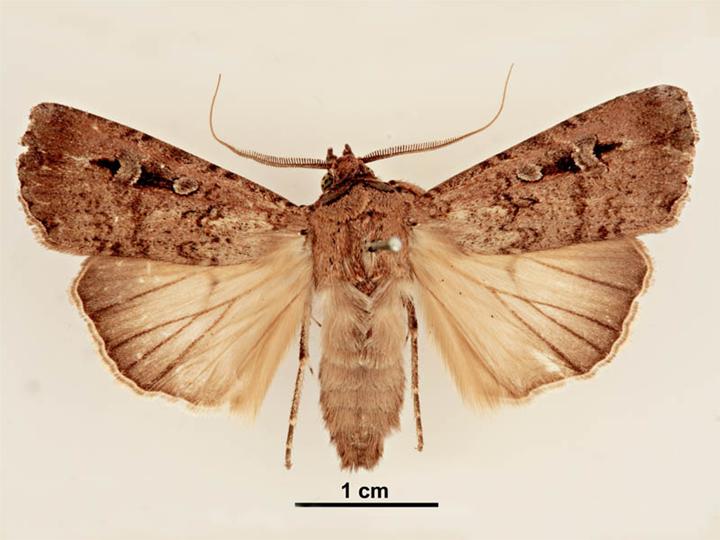
The endangered bogong moth can travel great distances to a place it has never been to before. It uses the stars to navigate.

Some of the least prepossessing critters in nature often have interesting attributes that could teach us a lot if we pay attention.

Ari Daniel reports at National Public Radio (NPR), “The Bogong moths of Australia aren’t much to look at, says Andrea Adden, a neurobiologist at the Francis Crick Institute. ‘They’re small brown moths with arrow-like markings on the wings. They’re pretty nondescript.’

“But these insects undertake an epic migration twice in their lifetime, traveling hundreds of miles in each direction.

“Researchers have shown that the Earth’s magnetic field helps the moths orient, but that alone wasn’t sufficient. ‘They needed something visual to go with it,’ says Adden.

“She wanted to know what that cue might be over such a vast landscape — especially at night when there’s little light.

“In a paper published in the journal Nature, Adden and her colleagues show that the cue comes from the heavens. That is, the starry sky allows the Bogong moths to both orient and navigate.

“Bogong moths follow an annual rhythm. They hatch in their breeding grounds in the spring in southeast Australia where it gets really hot in the summertime. ‘So if they were to reproduce immediately, their larvae would starve because there is not enough food,’ says Adden.

“Instead, the moths migrate over multiple nights more than 600 miles south to the Australian Alps where they settle in cooler caves, entering into a dormant phase called estivation (like hibernation but in the summer), by the millions. …

“In the fall, they return to their breeding grounds, mate, lay their eggs, and die.

” ‘Then the next year, the new moths hatch,’ says Adden. ‘And they’ve never been to the mountains. They have no parents who can tell them how to get there.’ And yet they make it.

“She suspected the stars might offer just the cue they need. To test her theory, Adden, who was doing her Ph.D. at Lund University in Sweden at the time, and her colleagues caught moths in the Australian Alps and ran them through one of two experiments in the dead of night.

“The first was a behavioral test. It involved placing a moth inside what was basically a mini-planetarium that contained a projection of the night sky and no magnetic field. … The result surprised the researchers.

” ‘They didn’t just circle and do twists and turns, but they actually chose a fairly stable direction,’ she said. ‘Not only that, it was their migratory direction.’ In other words, the moths were using the starry sky as a compass cue to orient and navigate.

“Adden’s next question involved what was happening in the moth’s brain. She recorded the electrical activity of individual neurons while rotating a projection of the Milky Way.

“When she looked in the brain regions that process visual information, the majority of neurons were active when the moth was facing south. This specific direction suggests that the moths’ brains encode direction by processing visual cues of the Milky Way. …

“The moths’ ability to use both visual and magnetic information to navigate can be essential for survival — in case it’s cloudy, say, or the magnetic field is unreliable. ‘If one fails, they have a backup system,’ says [biologist Pauline Fleischmann at the University of Oldenburg].

“The Bogong moths are endangered. Adden says her findings could help conserve these insects — and everything that relies on them for food.”

More at NPR, here.

Read Full Post »

Photo: Atlantic Shark Institute.
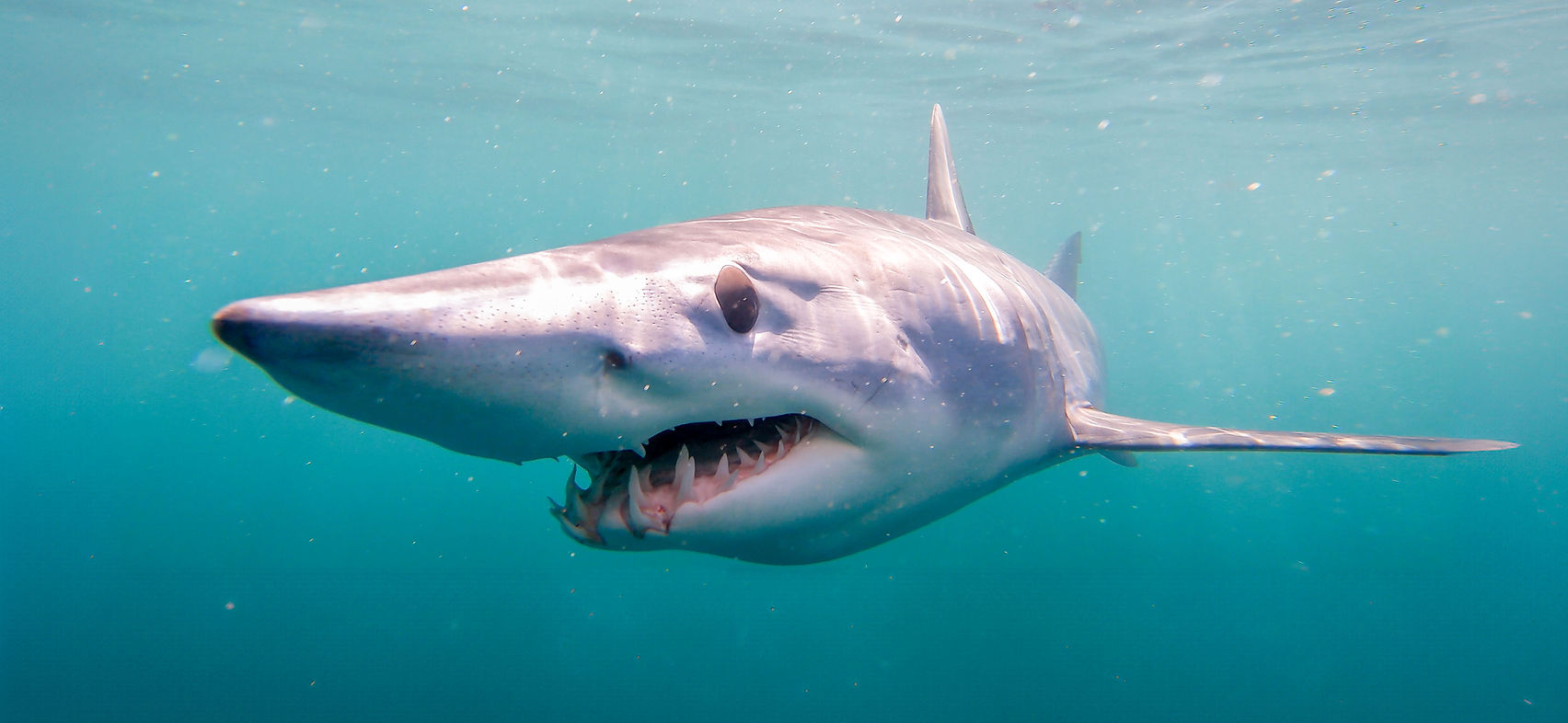
A Great White shark.

Here I am on the island of New Shoreham reading about a Great White shark that people in Australia actually dared to rescue. Oy! Some sharks are harmless, but keep me away from that particular shark!

In New Shoreham, we know that warming seas are bringing more seals north. And seals, of course, mean lunch to the Great White. Grandchildren are told to keep clear of seals.

Recently, I read an Associated Press article at the Guardian about a different kind of shark adventure down under. A rescue.

“Tourist Nash Core admits he felt some fear when he and his 11-year-old son waded into the ocean off the Australian coast to help rescue a three-meter [10 foot] great white shark stranded in shallow water.

“Three local men managed to return the distressed animal from a sand bank into deeper water after an almost hour-long rescue effort [near] the coastal town of Ardrossan in South Australia.

“ ‘It was either sick or … just tired,’ said Core, who was visiting with his family from the Gold Coast in Queensland. ‘We definitely got it into some deeper water, so hopefully it’s swimming still.’

“Core came across the unusual human-shark interaction while traveling around Australia with his wife, Ash Core, and their sons, Parker, 11, and Lennox, 7.

“Nash Core used his drone to shoot video of the writhing shark before he and Parker decided to help the trio who were struggling to move the shark into deeper water. …

“The three men had used crab rakes – a garden rake-like tool for digging small crabs from sand – to move the shark into deeper water by the time the father and son arrived. …

“ ‘They … got it into deeper water where I thought it’s probably not a good idea to go any further. That’s its territory and I’ll stay back,’ he said. …

“Macquarie University wildlife scientist Vanessa Pirotta said while shark strandings were not common, they were becoming more visible through social media. …

“ ‘If you see something like this, human safety comes first and foremost,’ Pirotta said. ‘You can contact environmental authorities … who will get someone appropriate to come and assist.’ More at the Guardian, here.

Meanwhile, here is a relevant research project being conducted at the Atlantic Shark Institute. It’s called “White Shark and Seal Interaction — Block Island, RI.”

“The focus of this study is the White Shark (Carcharodon carcharias), a growing Gray Seal (Halichoerus grypus) population, and the potential for interaction between the two in the waters off Block Island, RI.

“Through the use of an extensive acoustic array, the tagging of white sharks and seals with acoustic transmitters, the tagging of seals with satellite (SPLASH) tags, and detailed seal counts and assessment using cameras and visual counts, the team hopes to better understand the ecology of white sharks and gray seals in this area, and potential interactions between the two.

“With a wide variety of white sharks being tagged (young-of-the-year [YOY],  juvenile, sub-adult and adult) and little baseline data for either species at Block Island, this is a unique opportunity to investigate if and when predator-prey dynamics are established. The Atlantic Shark Institute, RI Department of Environmental Management, Mystic Aquarium, NOAA Northeast Fisheries Science Center, Dr. Greg Skomal, Atlantic Marine Conservation Society and the Block Island Maritime Institute are collaborating on this study.”

Read about other Atlantic Shark Institute studies here

Read Full Post »

Photo: Barbara Alper/Getty Images.
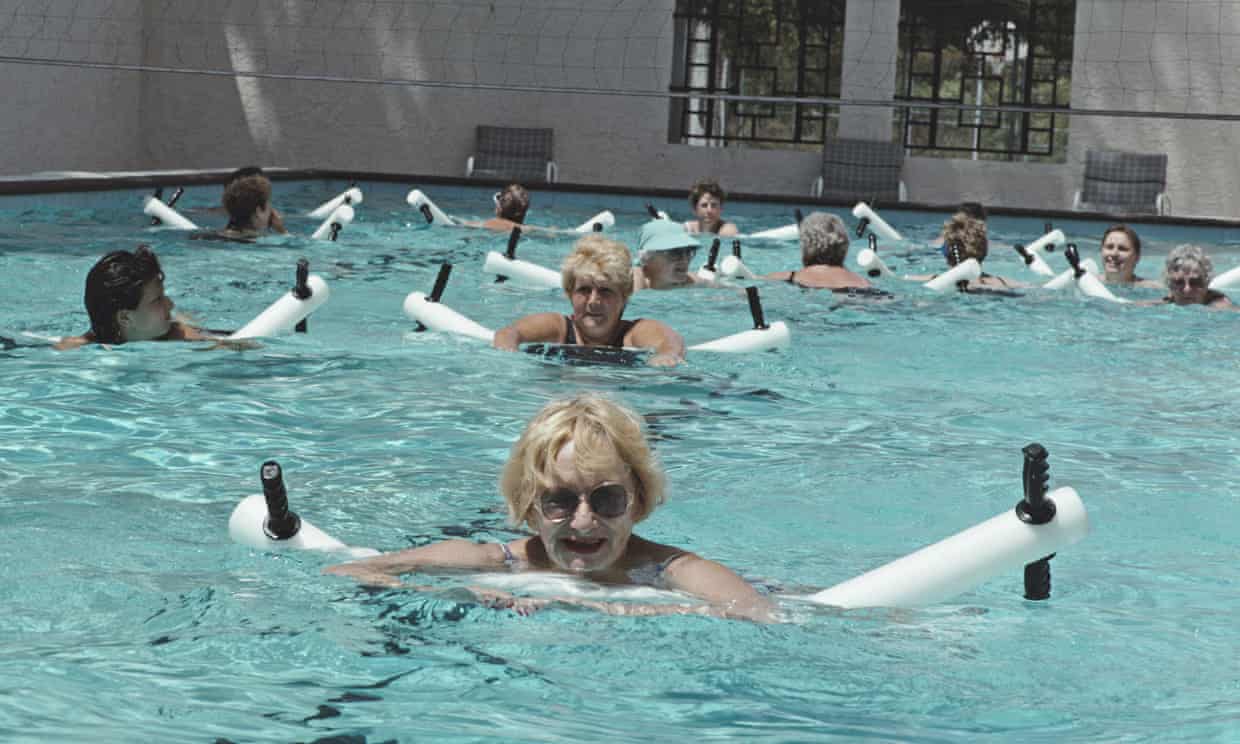
Aqua aerobics is pitched at those who are ‘young at heart, recovering from pregnancy, or rehabilitating,’ writes Kate Leaver.

Since I moved to a retirement community with many excellent exercise instructors, I’ve been impressed to see how many seniors are really serious about staying in shape — even people close to 100. Today’s story is about a particular kind of class for older people, but not just older people. It comes from Sydney, Australia, via the Guardian.

Kate Leaver writes about her experience with a water aerobics class.

“At my first class, we sang Barbara ‘Happy Birthday.’ She was turning 80, doing fly-kicks underwater with the rest of us. …

“That’s the main demographic for aqua aerobics at the Manly’s Andrew Boy Charlton aquatic center in Sydney: women born in the era of Barbaras, Margarets and Gladyses, many of them wearing a full face of makeup and gold earrings. They keep their faces immaculate by extending their necks and keeping their heads above water (I’ve asked).

“Each week, 30 people turn up for 45 minutes of guided exercise, half-submerged in a heated, chlorinated lap pool. It’s popular: tickets go on sale three days in advance and it’s sold out within hours. …

“Aqua aerobics is pitched at those who are ‘young at heart, recovering from pregnancy, or rehabilitating.’ My mum and I are in that third category: rehab. She, from cancer; me, from long Covid (I contracted the virus at a Harry Styles concert in June 2022 and am yet to fully recover). Having spent a displeasing number of days/months/years lying down, we felt ready for some gentle exercise.

“It’s probably the most fun I’ve ever had in the pursuit of mild fitness. … The vibes are unmatched – it’s all ‘Very nice, Susan’ and ‘Lift those legs, Carol,’ never ‘No pain, no gain.’ One time, a young man with a six-pack walked the length of the pool in Speedos and I watched as a wave of giggles spread across the pool in his wake. …

“It’s a great workout, too, especially for anyone easing back into movement. The buoyancy of the water reduces strain on your joints and makes injuries less likely than routines on dry land. It’s adaptable in that you can glide your limbs for a mobility exercise or you can work up a sweat against the resistance of the water. I have to take it slow, but if you went hell for leather with some of these moves, you could really get your heart pumping.

“We do knee raises, lunges, kicks, punches and bicep curls. We jog back and forth in the water. We hold on to the edge of the pool and kick, kick, kick. We dance underwater to get our heart rates up and alternate between cardio and strengthening. Our leader is a loud, fit, flexible, brilliant middle-aged woman who has a special place in my heart because of the way she speaks to anyone who looks as though they might be struggling with her choreo. ‘You OK there, Maggie?’ she’ll say. ‘Don’t make me come in there and get you.’ She remembers people’s names, gently reminds the gossipers down the shallow end to concentrate, and winks at anyone who needs encouragement.

“She has a Britney microphone and a killer playlist of hits from the 70s and 80s. I don’t think I had truly lived until I’d done a kick-jump-kick sequence underwater while singing ‘There lived a certain man in Russia long ago / He was big and strong, in his eyes a flaming glow’ (Rasputin by Boney M, 1978).

“I will never again take a spin class run by a shouting bodybuilder or think of exercise as punishment. Not when this is an option. It’s a joy from start to finish, a truly adorable mother-daughter activity.” More at the Guardian, here.

I’m zeroing in on the soundtrack. In one of my classes we’ve had the same ’50s-’60s mix twice a week for 10 months. As much as I love music from those decades, would welcome a change to almost anything!

Read Full Post »

Photo: Teagan Glenane/The Guardian.
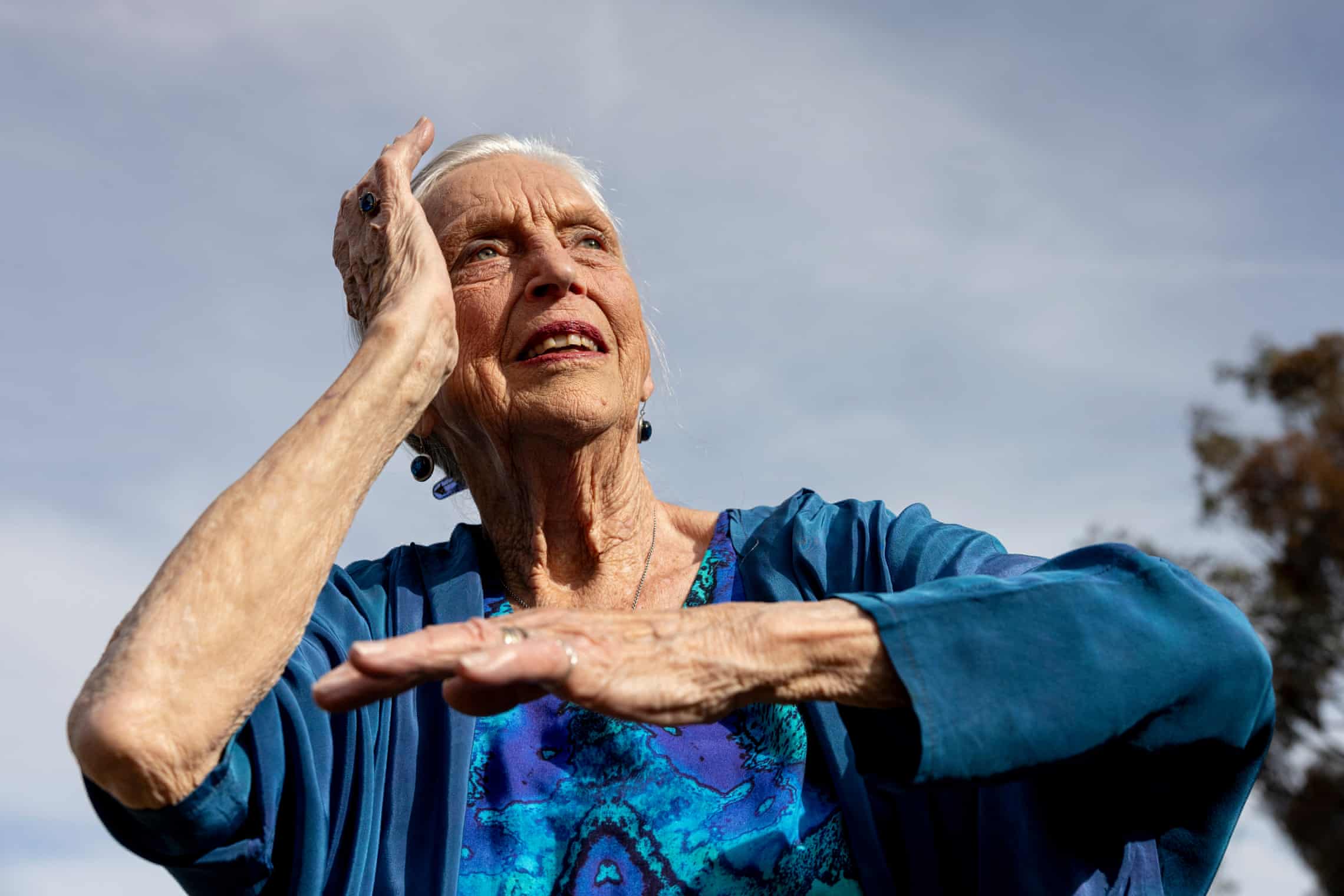
Australian choreographer Elizabeth Cameron Dalman at her property in Bungendore, just outside Canberra. “I’d always been inspired by nature, which I imagined as I was performing.”

As an older citizen who thinks backing up in a parking lot is living life on the edge, I can never resist a story about elderly people who ignore aging.

Steve Dow at the Guardian wrote recently about a dancer in Australia.

“At 91, Elizabeth Cameron Dalman dances in nature at her bushland retreat outside Canberra, Mirramu Creative Arts Centre, surrounded by writers, singers and visual artists. … ‘So many people bring up this age thing,’ she says, ‘and my reply is that in dance we are ageless.’

“A contemporary dance pioneer in Australia, Dalman has just seen the final performance of one of her ‘great inspirations’ and occasional collaborators, dancer Eileen Kramer, in a filmed component of the dance work ‘Afterworld,’ part of Sydney festival. Kramer died in November at 110. ‘I’m going to live to that age,’ Dalman chuckles.

“In Adelaide in 1965, Dalman co-created Australian Dance Theatre, running the company for a decade, confounding the era’s prejudice against modern dance and women artistic directors. …

“She [likes to] talk about what feeds longevity, pointing to medical research showing the health and mobility benefits of dancing for Alzheimer’s and Parkinson’s patients. ‘It’s not just pure exercise, you are adding creative activity,’ she says. ‘You’re engaging the left and right side of the brain.’ …

“Dalman has been consulting with ADT’s current artistic director, Daniel Riley, on the company’s 60th anniversary production ‘A Quiet Language.’ … The show, created by Riley, is billed as an examination of legacy, ‘transmuting the rebellious energy of the company’s early days into an electric new era.’

“Over the past decade, Dalman herself has graced international stages, notably touring for four years as part of the Irish choreographer Michael Keegan-Dolan’s critically acclaimed ‘Swan Lake/Loch na hEala,’ which transposed the classical ballet to the Irish midlands. When Keegan-Dolan posted an international callout for a woman aged 60 with long white hair to play the story’s cranky, arthritic matriarch, Dalman – 82 at the time – emailed saying she had the requisite long white hair. …

“Dalman has always been determined to dance. … She enrolled in dance class at three, learning both classical ballet and modern. Later, she began an arts degree at the University of Adelaide. …

“In 1957, aged 23, Dalman paid her way to London with the hope of launching a dance career. There, she saw a life-changing performance by the Mexican choreographer José Limón. ‘He touched my soul. I thought, “Oh wow, that’s how I want to dance,” ‘ she recalls. In 1960-61 she studied at the Folkwang school in Essen, Germany, where her classmates included Pina Bausch: ‘She was amazing, a technical whiz.’

“In Germany, Dalman met the Colombian American choreographer Eleo Pomare, who rose to prominence in the civil rights era. She created works with Pomare’s company from 1961 to 1963, living in Amsterdam with him and four other dancers. Pomare later remarked that Dalman danced ‘as if she swallows the heat and you feel that the heat is burning from the inside out.’ …

“Dalman returned to Australia in late 1963, and performed in the artist Stan Ostoja-Kotkowski’s experimental theatre show ‘Sound and Image’ at the 1964 Adelaide festival. It inspired her to open a dance school, and in 1965 she took her students on a regional tour, alongside dancers from Royal Ballet alumnus Leslie White’s Adelaide academy.

“Buoyed up by the tour’s success, Dalman and White set up Australian Dance Theatre, but the going was financially tough, and White left in 1967. Dalman put Australian Dance Theatre forward to perform in the 1968 Adelaide festival, but when it turned down her request for financial support she instead bought some half-price cruise ship tickets and took the troupe on its first international tour, sailing to the Netherlands, Switzerland and Italy.

“Back home, Dalman faced discrimination because of her gender: ‘I felt the battle, I had to keep proving myself. Even once we got a little bit of funding later, in 1973, and I’d been running the company since 1965, never in the red, this board member, a man, said, “Oh we have to do something about the finances, they haven’t been run correctly.” Then he took us into the red the next year.’

“Dalman remained artistic director until 1975. Then, having split with her husband, she and [their son] Andreas moved to Ventimiglia, a seaside town in northern Italy. … She founded a dance school and a youth dance theatre there in 1976, and it became ‘a place of healing.’

“In 1986, on a visit home to Australia, Dalman met another mature artist, who became an inspiration: the Japanese butoh dancer Kazuo Ohno, then almost 80. … A decade later, Dalman and Andreas visited Ohno – who was still dancing, and preparing to tour the US – at his Yokohama home. ‘He said, “Oh Elizabeth, it’s so good to talk to a senior, mature artist.” ‘ Dalman, then 60, had been contemplating ending her career. ‘When I met him, I realized I had to keep going.’

“In 1989, Dalman bought a 40-hectare property at Bungendore, near Weereewa/Lake George, outside Canberra. The bush reminded her of Italy, dancing among the olive groves or by the river. She established Mirramu Creative Arts Centre there the same year, followed by Mirramu Dance Company in 2002. …

“ ‘It was hard leaving Adelaide because that was my home, but the pull of this place, the land and the lake, is very powerful.’ “

More at the Guardian, here.

Read Full Post »

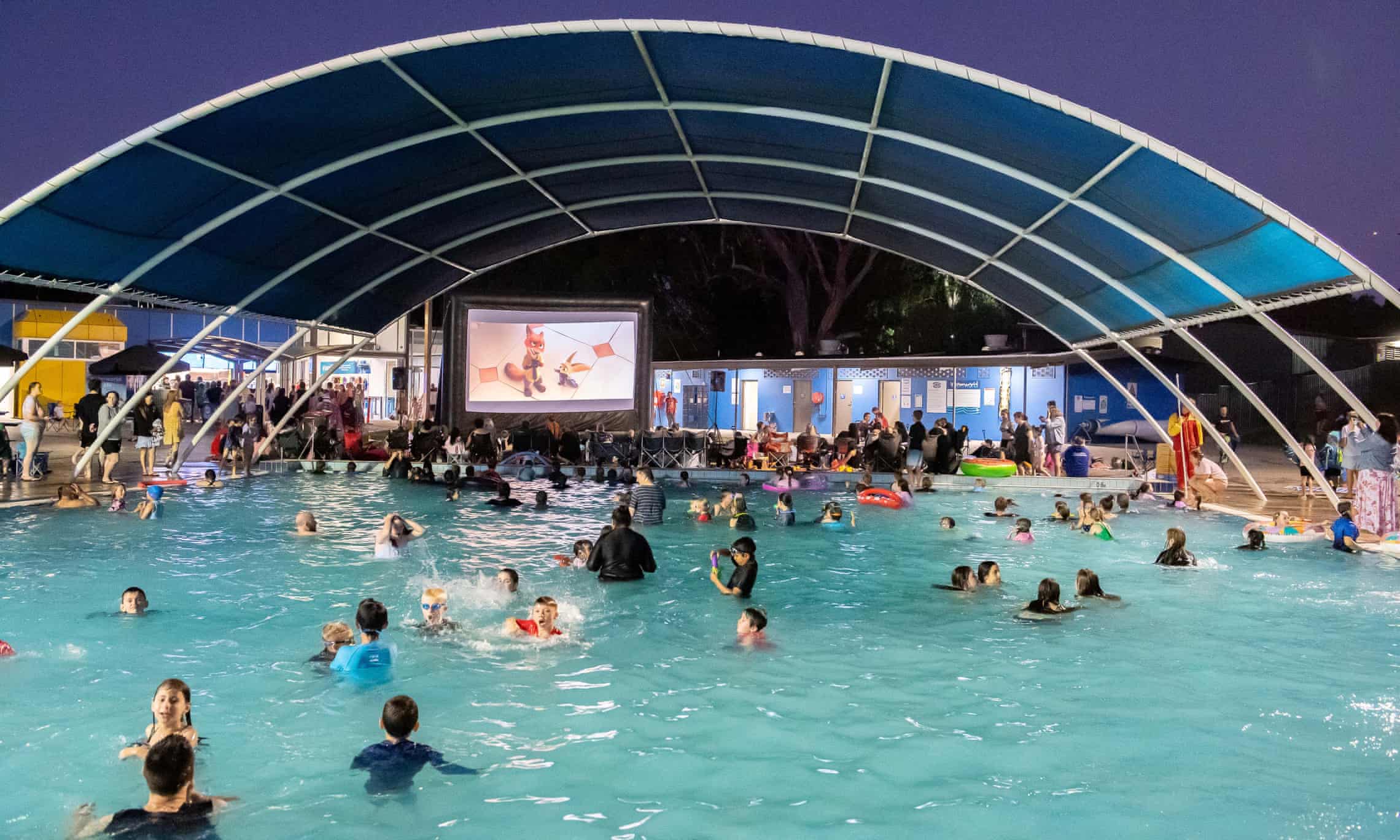
Photo: Waterworld/City of Tea Tree Gully.
Chlorine cinema … Zootopia screens at the “dive-in” cinema at Waterworld Aquatic Centre in South Australia.

Back in the day, drive-in movies were a thing — watching a feature from your parked car, a box for the sound hooked inside, probably ordering food delivered to your window. There are not too many active drive-ins any more, but in Australia, “dive-ins” (you read that right) are a cherished tradition showing no signs of being mothballed.

Chris Baker writes at the Guardian, “Imagine you’re lying on an inflatable [raft], fingers and toes dangling in warm, rippling water. It’s almost dusk and the early evening calm is shattered by a piercing scream. Suddenly a great white shark appears, mouth agape with enormous, monstrous teeth. Nearby swimmers who were quietly chatting a moment ago are now flailing in terror.

“You’re at Aquamoves pool in Shepparton, central Victoria, watching Jaws while paddling in the pool at their dive-in movie night.

“Dive-ins are a time-honoured tradition in landlocked Australia, where residents can’t easily access what much of the nation takes for granted on a hot summer day: proximity to the coast or an air-conditioned cinema. …For a little more than the price of a regular swim, locals get to watch a movie on a screen next to the pool while they splash, bob or float. …

“Often, as in Shepparton, the film screened has some connection to the sea, water or swimming. Think Penguins of Madagascar, Finding Dory or Moana.

“My first experience of a dive-in was as an adult at Mount Druitt in western Sydney during the January school holidays. I had scheduled an evening catch-up with old friends in the area, and their kids had insisted we go to the local pool. As night fell, Lightyear, an origin myth of the Buzz Lightyear character from the Toy Story franchise, was projected on to a large screen. …

“The kids’ excitement, like mine, was apportioned between the pool and Lightyear, and we applauded wildly with pruny fingers as the credits rolled.

“Dive-ins harness many of the best things about Australian summers: balmy evenings, the relief of a refreshing dip, and the novelty (for children) of being able to stay up later than normal because it’s school holidays. …

“Many Australians who experienced dive-ins as kids carry nostalgic memories into adulthood. Thirty-something Angus Roth grew up in Canberra and was a regular at the Big Splash water park dive-ins in the early 90s. He continued the tradition by taking his two kids to wet screenings. He associates some of his favorite Pixar movies with ‘the smell of chlorine’ and says he ‘loved the free-range nature of the evenings where the usual rules of “sit down and be quiet” didn’t apply.’

“A hint of anarchy pervades the best dive-in experiences. The managers of Aquamoves pool in Shepparton recognized this and showed terrifying genius in programming Jaws to a floating audience in 2019. It was such a hit that swimmers plunged back into shark-infested cinematic waters a year later to see Blake Lively pursued by a great white in The Shallows.

“Bikash Randhawa, the chief operating officer at Village Roadshow Theme Parks, agrees the best dive-in evenings combine fun with a sense of occasion. At the Wet’n’Wild water park in Oxenford in Queensland’s Gold Coast, the park’s ‘giant wave pool transforms into a floating cinema featuring a 45 meter [~148 foot] squared screen.’ …

“Dive-ins are also a much-loved institution at Waterworld Aquatic Centre in Ridgehaven, South Australia. They host one screening in January and another in February, often with a theme. When Barbie screenedkids and grownups donned hot pink bathers and lurid accessories to channel their inner Barbie and Ken, while their ‘Splash for a cure’ dive-in for The Incredibles brought staff and patrons out in spandex and capes to raise funds for the Leukemia Foundation. …

“Dive-in sessions don’t always end when summer nights are over. The University of Newcastle’s Students Association holds a free winter dive-in July at the heated pool at its Callaghan campus as part of its midyear welcome back week. …

“Not to be outdone, Griffith University in Queensland presents its dive-in at the Mount Gravatt campus at the start of the academic year. A giant inflatable screen commands pride of place; popcorn, fairy floss and snow cones are on the house, and students are encouraged to come in costume. …. Psychology student Abbie Chen says “watching a Hunger Games movie in a floating inflatable doughnut was fun and pretty surreal, and the silliness of the evening brings people together”.

“For Jen Curtis, a farmer who lives in Victoria’s central highlands wine country, a movie at the local pool brings respite from the summer heat and is a welcome distraction from physical labor. But more importantly, she says: ‘It’s about connection, making our own fun, and looking after each other.’ ”

More at the Guardian, here. Np paywall. Fun pictures.

Read Full Post »

Photo: Landmark Media/Alamy.
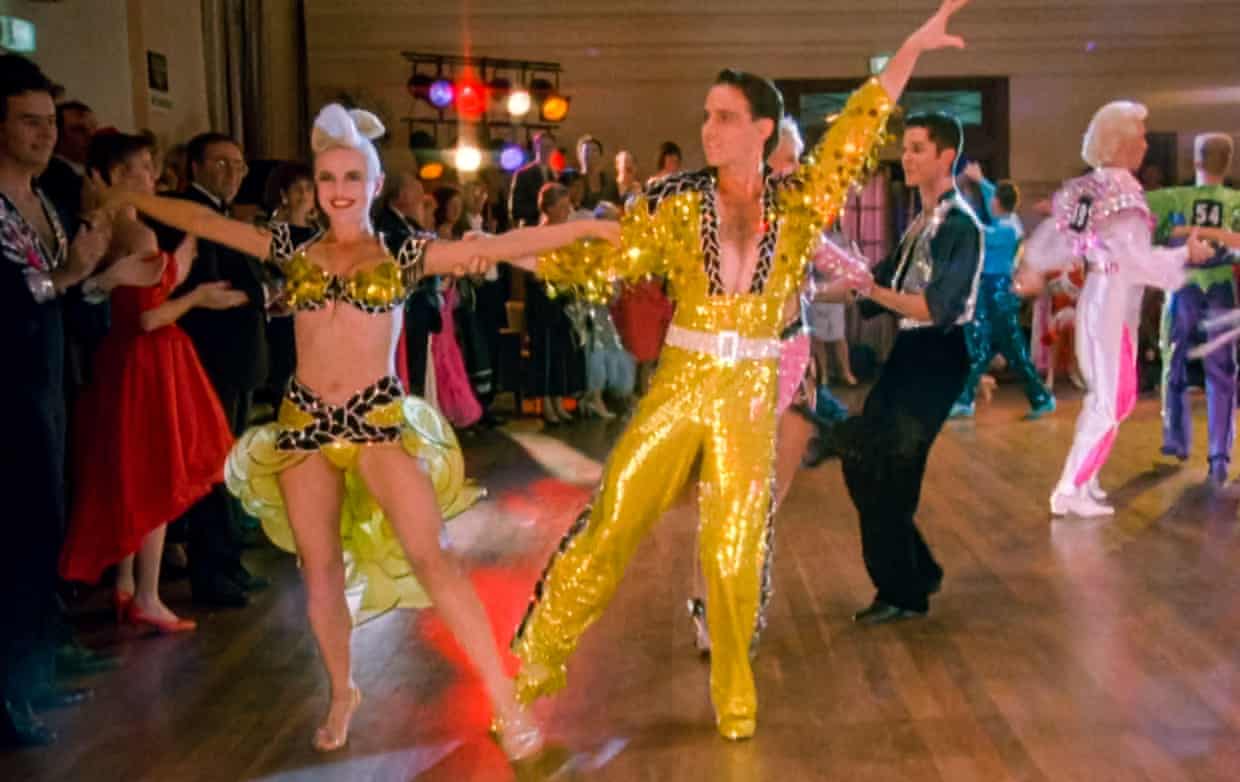
Gia Carides and Paul Mercurio in
Strictly Ballroom in a scene filmed in Australia’s Petersham town hall back in the day. 

This is not a new thought, but we all know of underutilized spaces and worthwhile organizations looking for space. How can we make sure we use extra space productively?

Here’s what Maddie Thomas at the Guardian says some Australian town halls are doing.

“It’s been more than three decades since Baz Luhrmann’s Strictly Ballroom was filmed in Petersham town hall. But earlier this year, the 82-year-old building in Sydney opened its doors to the Inner West Theatre Company’s production of the classic, free of charge.

“Beautiful brick early 20th-century town halls were once venues for council meetings, award nights and country dances. But in recent decades many have been under-used or left entirely empty as modern buildings serve changing community needs.

“Sydney’s Inner West council is the product of repeated amalgamations and, as a result, has an unusually large number of former town halls serving no obvious municipal purpose. Since July it has opened no fewer than seven as arts and culture venues with no hiring fees, hoping both to revive its old buildings and address a crisis in the performing arts sector.

“Since the Covid pandemic about 1,300 live performance venues around Australia have closed, leaving many in the music and arts industries struggling to stay afloat. In Sydney, revered institutions including jazz club 505 have been lost, and the number of people attending popular venues has almost halved.

“The cost of hiring a commercial venue for rehearsals and a final show can be as high as $80,000. In the first three months of the council offering its spaces free of charge, it has had more than 1,100 bookings across Marrickville, Petersham, Leichhardt, Annandale, St Peters, Balmain and Ashfield town halls, 72% of them for independent theatre, music or dance productions.

“Kane Wheatley is the musical director of the Inner West Theatre Company.

“ ‘Being able to have the town hall at no cost means that our money can be spent in putting on great productions and … providing affordable theatre in a cost-of-living crisis for members of the community,’ Wheatley says.

“His company has booked two musicals to run at the Petersham town hall in 2025. Tickets will cost $49, which just covers the costs of bringing in sound and lighting equipment. …

“The council’s mayor, Darcy Byrne, says offering affordable spaces for rehearsal, exhibition and live performance mirrors one of the original functions of town halls.

“ ‘Most town halls in Australia traditionally were used for dances, concerts, major events and so, in a way, by repurposing them as arts and cultural venues, we’re going back to their traditions,’ Byrne says. …

“After the second world war, [Lisa Murray, formerly the historian for City of Sydney council] says, councils began building civic centers to expand their services and in the 1950s there was an ‘explosion’ of municipal libraries. …

“Like many of their counterparts around the country, the Inner West buildings have retained Victorian or early 20th-century heritage features. … They offer large performance spaces with elaborate stages and commercial kitchens, and have been fitted out with live performance and recording equipment. …

“ ‘In a lot of them, the acoustics are challenging because they were designed in the era when people were giving speeches without microphones,’ Byrne says. ‘There’s acoustic treatments that may be necessary but absolutely, in every town across Australia, there is one of these beautiful buildings that’s currently being greatly under-utilized.’ …

“North of Melbourne (which is home to 30-odd town halls), Clunes is the third largest locality in Hepburn shire council. It has recently restored its town hall, built in 1873, after cracks began to appear in the masonry and the symmetrical facade started to rotate.

“The project manager at the council, Sam Hattam, says revitalization of the building gets the community engaged to start using the space.

“Thirty minutes away, the council’s headquarters at Daylesford town hall are also due to undergo restoration and electrical works later this year. Creswick town hall, renovated in 2021, is used for the newly established folk n’ roots music festival CresFest.

“ ‘The councils across Australia are spending millions and millions of dollars every year on the maintenance and repair of town halls because they have enormous heritage and civic value,’ Byrne says. ‘But the truth is most of them are sitting empty, dormant and unused for 80% or 90% of the time, which is just a waste of a great public resource.’

“Byrne hopes the momentum from such efforts will make other council areas think about throwing open their doors as Inner West has done.”

Is your town hall living its best life? What about other buildings — schools, parish halls, etc.?

More at the Guardian, here. No paywall.

Read Full Post »

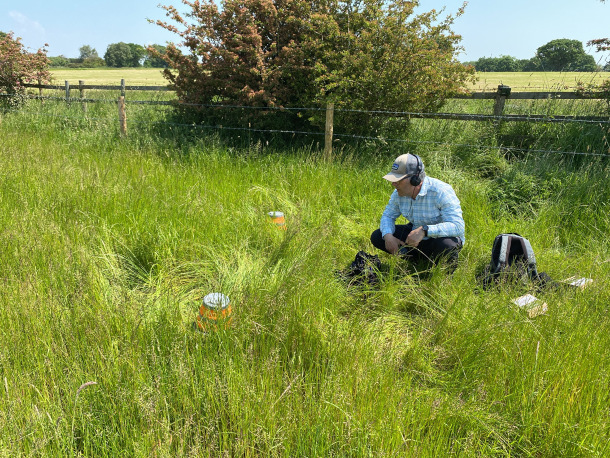
Photo: Baker Consultants Ltd. via Living on Earth.
Listening to sounds in the soil is a minimally invasive way to measure biodiversity underground.

Remember when you were a kid and thought millipedes and bugs in general were icky?

It turns out, those tiny critters in the soil help to make the planet healthy. Just listen to them.

From Luca Ittimani at the Guardian: “Ever wondered what the Earth sounds like? New research suggests healthy soil has a distinctive soundtrack of its own – the crackles, pops and clicks of ants and worms bustling around underground.

“Scientists from Australia’s Flinders University listened to microphones planted in the ground to see if invertebrate instrumentals are a good indicator of biodiversity and soil health. Land filled with plants and tiny animals carried diverse underground sounds, while cleared land only had bland white noise, they found.

“ ‘It’s a bit like going to the doctor,’ the ecologist Dr Jake Robinson said. ‘They put a stethoscope on your chest, take a health check, listen to your beating heart … we’re doing something similar in the soil.’ He said the effectiveness of the microphone method could make it easier for researchers, conservationists and farmers to find and fix soil degradation. …

“Insects and other invertebrates build up soils, improve their nutrient content and prevent erosion, so their presence is a good indication of soil health.

Soil full of worms carries low bubbly sounds, while lighter, six-legged ants make frequent higher-pitched clicks, Robinson said.

“ ‘A millipede has lots of tiny legs and they make little tapping sounds, whereas the snail has a more slimy glide sound,’ he said.

“Because the noises cannot be heard by the human ear, scientists set up microphones that pick up vibrations from contact with the dirt – then amplify the recording by 20 decibels. …

“Robinson and his colleagues reviewed hundreds of hours of recordings from 240 locations around Mount Bold in South Australia, near Adelaide, adding to previous research in the UK. … The new study confirmed the acoustic method worked just as well as traditional methods of checking soil health, which include expensive DNA testing or destructive methods such as digging up the soil or laying traps for invertebrates. …

“Audio tech may even be able to improve soil health. Robinson’s forthcoming research found playing certain sound frequencies can speed up growth of fungi and bacteria that fend off plant diseases.”

At the Guardian, here, you can listen to healthy soil. Similarly, at Living on Earth, here, or at The World, here.

Read Full Post »

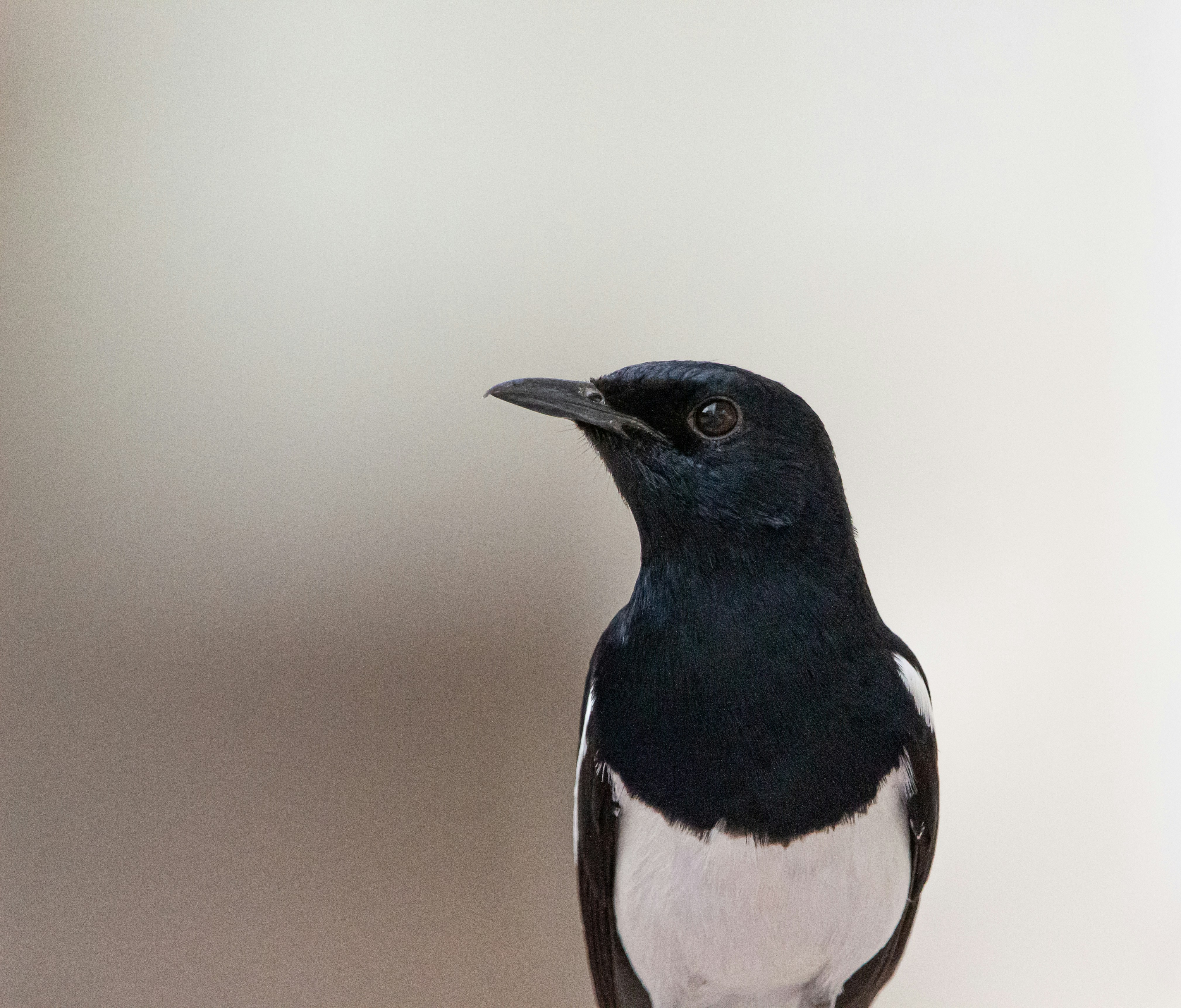
Photo: Vivek Doshi/Unsplash.
A magpie. Magpies in Australia are part of the Artamidae family. 

Covid may have made us more nervous about the interaction between humans and wild animals, but who can resist all the adorable videos suggesting it can work? Here’s what happened when a magpie in Australia got a bit too much attention on social media.

Annabelle Timsit writes at the Washington Post, “Peggy and Molly are typical best friends. They hang out. Play. Sunbathe. But in one important way, they are an unusual pair: Peggy is a dog, and Molly is a magpie.

“A couple in Queensland, Australia, rescued Molly in 2020 after she fell from a nest. The magpie bonded with their Staffordshire terrier, Peggy, and became somewhat of a social media celebrity.

“Through their Instagram account @peggyandmolly, the couple, Juliette Wells and Reece Mortensen, chronicle the dog and magpie’s daily adventures for 813,000 followers. …

“But Peggy and Molly’s rising popularity also attracted the attention of wildlife authorities. The Department of Environment, Science and Innovation (DESI) successfully demanded that Molly be surrendered into its care after receiving complaints from members of the public, saying that Wells and Mortensen did not have the proper permits to look after a wild bird.

“Now, Peggy and Molly could soon be reunited — after fans called for Molly to be sent back, and Queensland Premier Steven Miles said Tuesday that Wells and Mortensen can ‘secure the appropriate license’ to care for the magpie. … The update from Miles, who is the head of government in the northeastern Australian state, comes after Wells and Mortensen mounted a public campaign to regain care of Molly. …

“After the public outcry, Miles had said that wildlife authorities stood ‘ready to train Molly’s parents to be wildlife caregivers, to get them the right certification, so Molly can be reunited with her family.’ …

“Peggy and Molly are the latest animals to get caught up in tensions between pet owners and wildlife authorities. Social media videos of animals exhibiting unusual or humanlike behavior are growing in popularity, but experts say many wild animals are not meant to live in domesticated settings, and they have warned about risks to the animals and their owners because of the spread of disease.

“Wells said she was walking outside in the fall of 2020 when she came across a baby magpie that had fallen from its nest. She rescued it from ‘certain death,’ she said, and brought the magpie home.

“ ‘Peggy needed something to nurture and Molly needed nurturing,’ says a website about their story, and the duo became ‘besties.’

“About a year later, Peggy had five puppies. Molly ‘became very close to all’ of them, and ‘now has an incredible bond’ with one of them, named Ruby, according to the website.

“In the past 3½ years, near-daily videos posted on the @peggyandmolly Instagram account have shown Molly, Peggy and Ruby sharing toys and napping next to each other in the sun — and suggest that the magpie even learned to imitate Peggy and Ruby’s bark. In another video, Molly puts a wing over its friend on a dog bed. …

“Australian authorities have warned the public that some magpies can be ‘aggressive towards people’ when defending their nests, particularly during what’s known as ‘magpie swooping season,’ typically between July and November. Videos of Australians being chased by magpies have gone viral, and the Queensland government has warned the public to ‘stay safe from swooping magpies.’ ”

Molly the Magpie returned home on April 15, according to @SevenJMiles on the bird site.

More at the Post, here.

PS. If you see two Blue-Throated Piping Guans on the loose (Monster and Chip), they escaped from Roger Williams Park Zoo in Providence during a recent storm. Read here.

Read Full Post »

Photo: Weliton Menário Costa via Science.
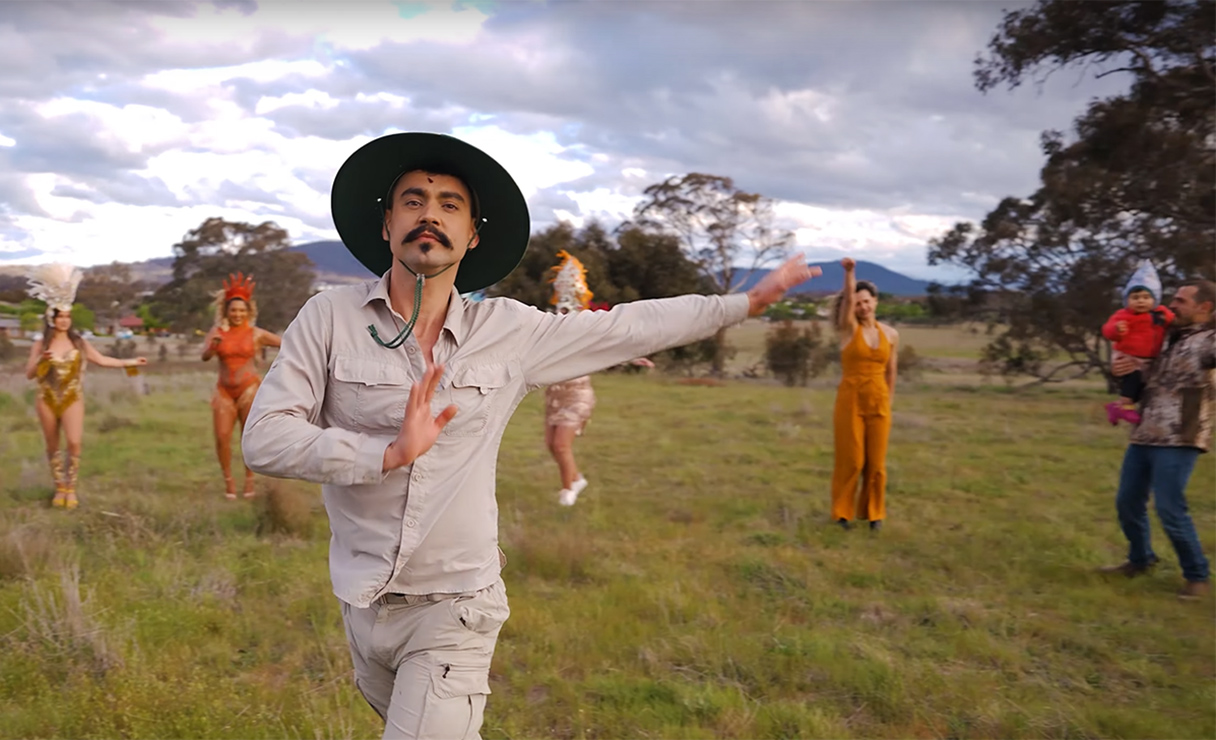
Says Science magazine: “In his winning ‘Dance Your Ph.D.’ video, Weliton Menário Costa shifts his dance style to match other dancers, mimicking how kangaroos adapt their personalities to fit the group.”

This is a story about Science magazine’s annual “Dance Your PhD” competition. The winning video replicates something a researcher studied — kangaroo behavior. Runners up included dances about stream-bank erosion and moth mating.

Sean Cummings writes at Science, “In a broad grassland beneath an Australian sunset, dancers in everything from fishnets to field attire let loose an unchoreographed mishmash of steps, leaps, twirls, and twerks. There’s no unified style to the movement, but the resulting video — this year’s winner of Science’s annual ‘Dance Your Ph.D.’ contest — carries meaning nonetheless in its joyful madness. To Weliton Menário Costa, its creator, this dance mirrors the one between individuality and conformity in kangaroos — and celebrates the value of diversity in all species.

“Menário Costa, who was awarded $2750 in the annual contest now sponsored by the quantum technology-artificial intelligence (AI) company SandboxAQ, earned his ecology Ph.D. in 2021 at the Australian National University, studying eastern gray kangaroos (Macropus giganteus) living at Wilsons Promontory National Park. Even as joeys, he found, individual kangaroos seemed to have distinct personalities. Bolder animals, for instance, would approach a remote-controlled model car driven near them whereas others shied away. These personalities aren’t set in stone, however: The marsupials modify their behavior to conform with those around them, adjusting as they move between groups.

“Menário Costa, who has since transitioned from science into a career as a singer-songwriter under the name WELI, recorded an original song, Kangaroo Time, for the contest. He then recruited a score of dancer friends representing styles from urban to classical, ballet to Brazilian funk. ‘I wanted to showcase the diversity of kangaroo behavior, and the easiest way was to get the diversity of dance we already have. I didn’t choreograph them, they were just being themselves,’ Menário Costa says. The only instruction?

Do as the ’roos do. In other words, mingle with dancers of other styles and adjust your movements in response, gradually unifying into a group effort.

“The result resonated with a judging panel of artists, dancers, and scientists. ‘There was a sense of surprise and delight in it. You could tell they were having fun through the process’ … says judge Alexa Meade, a visual artist who uses optical illusions in her work. She also praised the video’s original songwriting and costumes, as well as the simplicity and accessibility with which it explained the science relating to kangaroo group dynamics.

“Besides finding a whimsical way to teach viewers about kangaroos, Menário Costa hopes to convey the message that diversity — in all its forms — should be celebrated. ‘Kangaroos are different, just like us,’ he says. ‘Differences happen in all species—.’ …

“The project also provided a way for Menário Costa to translate his academic experiences into an accessible form for friends and family in his small Brazilian hometown. Many of them didn’t fully understand what he was doing in Australia, he says — including his grandmother. ‘Once I released Kangaroo Time, she was like, “That’s my grandson! I get it now!” says Menário Costa, who [planned] to release his first EP, Yours Academically, Dr. WELI, at the beginning of March. …

“ ‘This year’s entries did a great job of incorporating art and science to [create something] greater than the sum of their parts,’ Meade says. In the past, she explains, ‘some entries have incredible research but the dance component feels like an afterthought, or we might get some incredible dance performance, but I’m not sure what it has to do with science. It has to be a blending that accentuates both.’ The entries were so strong, the judges noted, that the second-ranked dance in the social science category might have won the whole thing if not up against the kangaroos.” Click on that one: It’s pretty funny.

You can make a dance about anything — as I learned when I was 14 and had to choreograph a dance about oxygen in combustion. You couldn’t just show Antoine Lavoisier mixing chemicals but had to somehow replicate the chemicals themselves!

More at Science, here. Hat tip: ArtsJournal.com.

Read Full Post »

Photo via WDBJ7.
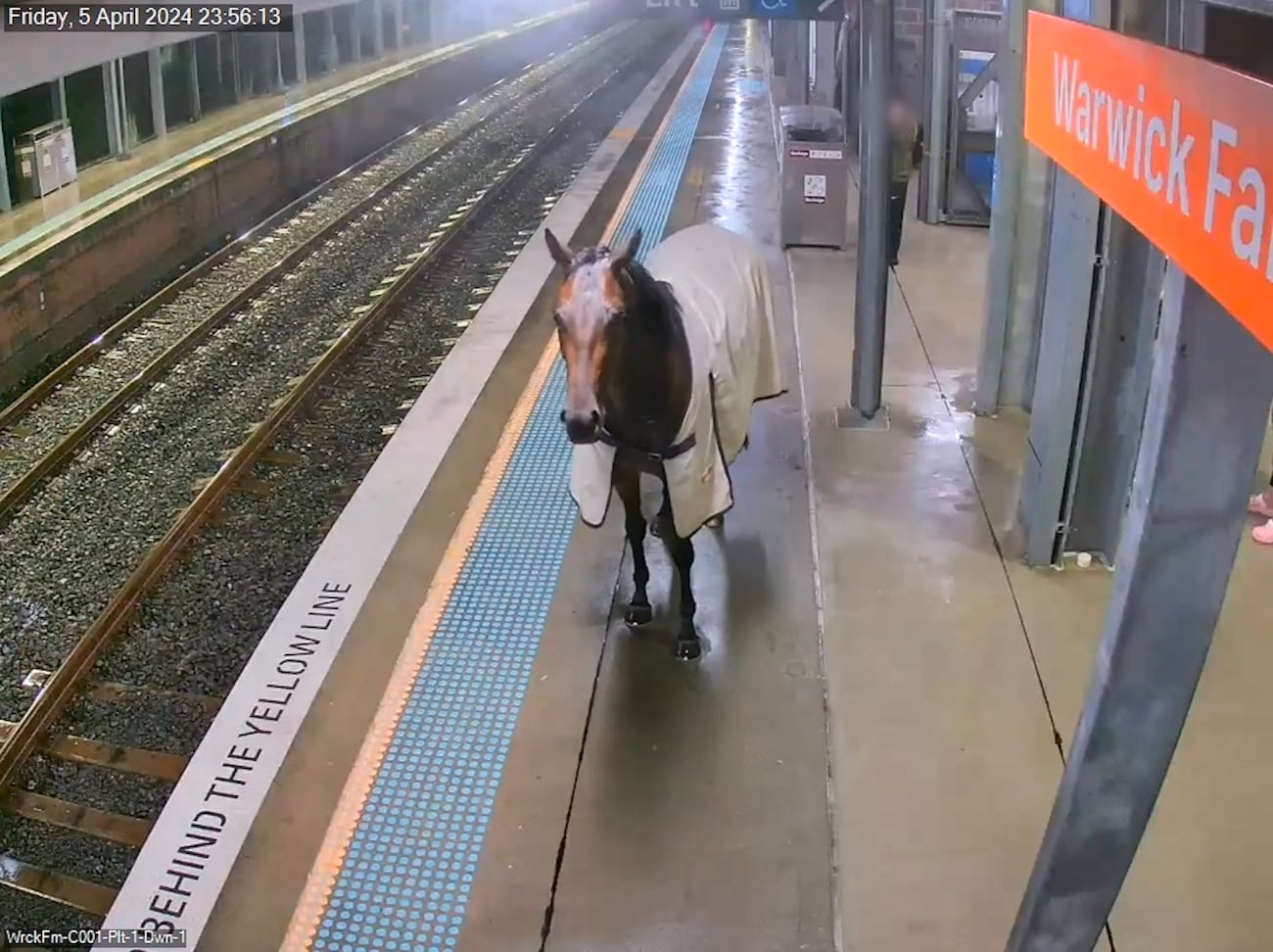
An escaped horse in Australia.

During the years that I took the commuter train to work, I saw some unusual things, but nothing as unusual as this.

Annabelle Timsit writes at the Washington Post about a thoroughbred horse in Australia who tasted a moment of freedom in an environment that to other travelers feels like anything but freedom.

“This commuter was one of the worst kinds,” writes Timsit. “Didn’t pay a fare, took up space on the platform, and caused a ruckus that slowed down trains and called security agents to the station. This particular commuter was also a horse.

“The equine traveler was captured by CCTV cameras wandering into Warwick Farm Station west of Sydney just before midnight on Friday, trotting up and down the platform, prompting other (human) commuters to jump out of its path. …

“ ‘Didn’t realize I needed to say but — horses aren’t allowed on our trains, sorry folks,’ tweeted Chris Minns, premier of Australia’s New South Wales state. …

“Footage shows that after horsing around for a while, it had a choice to make as the train pulled into the station: In or out? Yea or neigh? After staring at the train for a few seconds, the horse turned around and trotted back down the platform … or, as Transport for NSW put it: ‘The horse had planned its journey but got colt feet and decided to hoof it.’

“Security agents from Sydney Trains were alerted, ‘and trains in the vicinity were warned to run at reduced speeds,’ Transport for NSW said. …

“It later emerged that the horse had escaped from the stables of Annabel Neasham Racing, close to Warwick Farm Station, the Sydney Morning Herald reported.

“It’s not clear how it escaped, but Steve Railton, chief steward of Racing NSW, cited Annabel Neasham, a trainer and the owner of the racecourse, as saying that ‘an unknown person released three racehorses and a stable pony from one of her stables on Friday night.’

“ ‘One of the racehorses left the vicinity of the stable complex, while the others were captured,’ said Railton, according to the Herald. …

“ ‘I can confirm the horse has returned home, safe and sound,’ Minns said.

“Though it is not an everyday occurrence, ‘from time to time, we do find animals on tracks, particularly cows,’ said Sydney Trains chief executive Matt Longland, according to the Herald. … Longland said the horse may have gravitated toward the station because of its bright lighting. …

“ ‘Thankfully, we were able to warn our train drivers to look out for animals on the tracks,’ he said. ‘We were able to catch the horse not long after that.’

“Transport for NSW confirmed that the horse ‘was safely reined in and is in a “stable” condition.’ ”

Ouch! People really cannot resist terrible puns whenever there’s a quirky animal story to wrap puns around.

More at the Post, here.

Video: CityNews.
What do you suppose this taste of freedom felt like to the horse? Did it feel good? Scary?
Note the reaction to the train pulling in.

Read Full Post »

Photo: JJ Harrison/Wikimedia Commons.
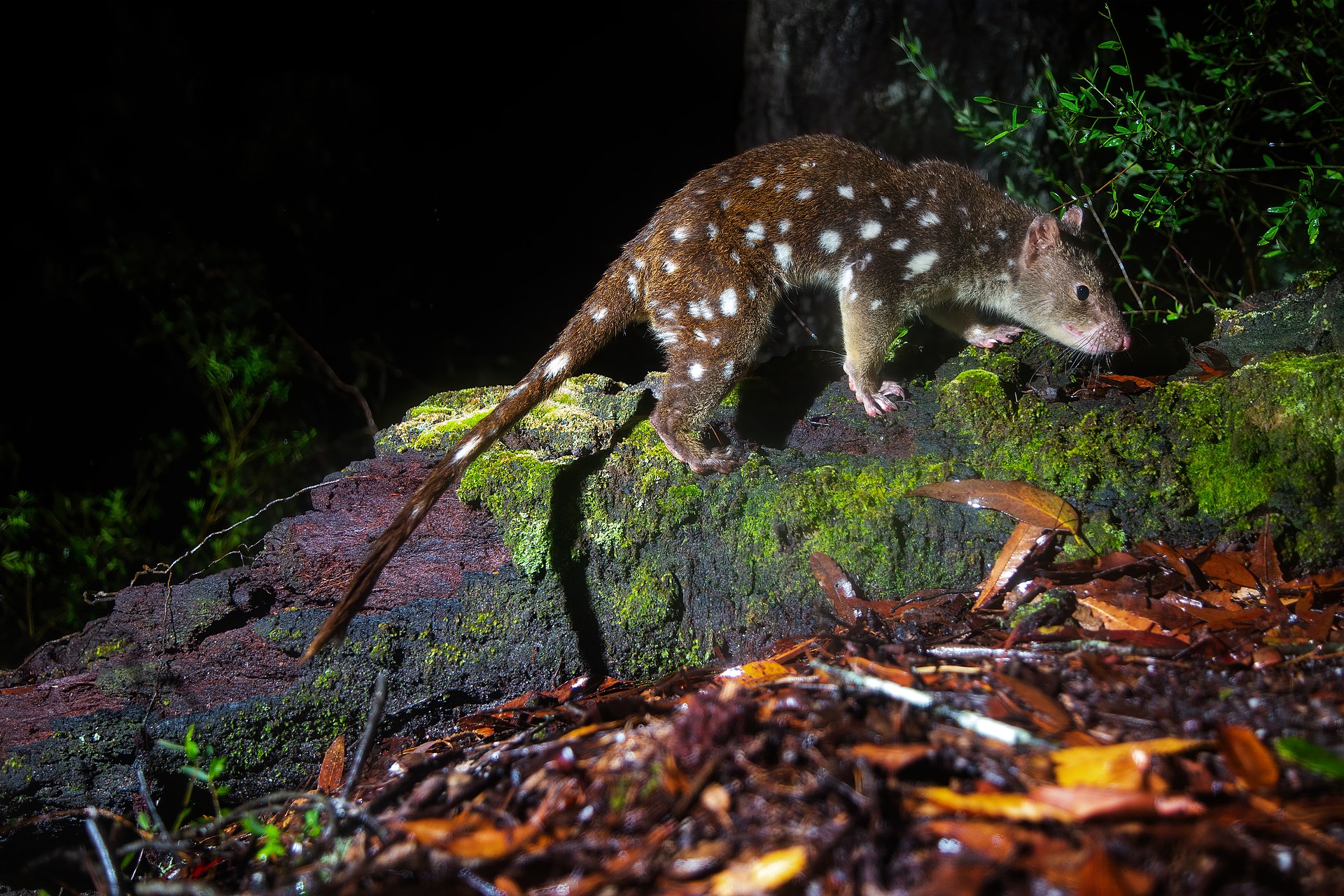
This tiger quoll (or spotted-tailed quoll) at Barren Grounds Nature Reserve, New South Wales, Australia, is similar to one a farmer caught harassing his chickens.

The creature of the day, the spotted-tailed quoll, is not extinct everywhere but was thought to be extinct in southern Australia. That is, until a farmer protecting his chickens caught one. Imagine how your perspective would change if an animal you just wanted to destroy suddenly turned out to be a rare find!

Aspen Pflughoeft reports at the Miami Herald. “A farmer in southern Australia captured an animal considered locally extinct for over a century while trying to protect his chickens. …

“Frank Pao-Ling Tsai, a trout farmer in Beachport, South Australia, heard a ‘panic’ from his chickens and rushed outside early in the morning on Tuesday, Sept. 26, he told McClatchy News in an email.

“Inside the coop, Tsai found a spotted creature and a dead chicken, he said.

“ ‘I had no idea what it was at first,’ Tsai told the Australian Broadcasting Corporation. ‘I expected to find a cat, but I found this little animal instead.’ …

“The captured animal [has] a furry brown body, long tail and smattering of white spots. … Tsai captured the creature in a plastic chicken cage, he told McClatchy News. He took photos and shared them in hopes of identifying the animal.

“Wildlife officials identified the animal as a spotted-tailed quoll, the National Parks and Wildlife Service of South Australia told McClatchy News.

“Quolls are ‘about cat-sized’ marsupials with a ‘cat-like shape but a lot stronger jaws and a lot longer canine teeth,’ Limestone Coast district wildlife ranger Ross Anderson told McClatchy News.

“The spotted-tailed quoll, also known as the tiger quoll, is an endangered quoll species and the ‘largest native carnivore left on the (Australia) mainland,’ according to the Australian Conservation Foundation. An estimated 14,000 spotted-tailed quolls are left in the wild, the organization said.

“The last officially documented sighting of a spotted-tailed quoll in South Australia was in the 1880s, Anderson said. The species has been considered locally extinct for over 130 years.

“ ‘It’s a once-in-a-lifetime event, really,’ Anderson told the Australian Broadcasting Corporation. …

“ ‘We can’t be sure where it’s come from,’ Anderson told the Guardian.

“The quoll Tsai originally captured managed to escape out a damaged corner of the cage, he said. Wildlife officials set up another trap and again captured a spotted-tailed quoll, Anderson said. …

“ ‘It could have been a relic population,’ Anderson told McClatchy News. ‘(Or) it could have been an animal that’s moved from other areas …. (or) it may have escaped from captivity.’

“ ‘We took some DNA to see if we can work out the likely origins,’ he said. ‘It’s a great opportunity for us to get some information and it would be fabulous if it turned out to be a relic population.’

“After being checked by a vet and DNA-tested, the captured quoll was released, Anderson said.

“Wildlife officials will set up cameras and traps to study the rediscovered quoll species and see if there are more quolls around Beachport, he said.”

See Tsai’s photos of a very angry beast at the Miami Herald, here. No firewall.

Read Full Post »

Photo: FrogID.
Sunday is the last day this year to submit your recording of a noisy frog for Australia’s special FrogID Week. But you can send in recordings year round. In southwestern Western Australia, for example, there are frog species that aren’t calling right now.

Crowdsourcing via the internet can be a great thing. In Australia, both children and adults are helping scientists conduct the annual frog census — sometimes discovering new species. This example of citizen science is spearheaded by the Australian Museum.

Ellen Phiddian reports at Cosmos, “People around Australia are once again being urged to head outside and record frog calls for FrogID Week, from 3-12 November 2023. Heralded as Australia’s biggest frog count, it’s an annual push for valuable data on Australia’s amphibians.

“ ‘This is a time of year when most frog species across Australia are breeding and calling,’ Nadiah Roslan, project coordinator of FrogID, tells Cosmos. ‘That call that we hear is actually a male frog calling out for a female frog. A majority of species – over 90% – will be calling now. So it’s a good time for us to get a snapshot of frog health and frog distribution across the continent.’

Launched by the Australian Museum in 2017, FrogID is a free app that people can use to record frog calls. These recordings get uploaded to a Museum database, where trained listeners can identify the frogs.

“It builds on decades of citizen scientist frog recordings, which are a vital tool for ecologists to assess frog populations.

“It’s yielded a trove of data far bigger than any single team of ecologists could collect. Information from FrogID has been used to track declining frog numbers, study deadly chytrid fungus, and learn how frog calls differ.

” ‘We’re not sure how well we will go with it being an El Niño year. Frogs do like it when it’s more wet.’

“Many frog species will only call after rainfall, and they typically need wet conditions to breed. So we are expecting fewer frog calls, but hopefully thousands of submissions across every state and territory of Australia,’ says Roslan.

“Nevertheless, fewer frog calls than the past few wet years is still very valuable data.

“ ‘It’s important to get this year-on-year data and repeat recordings from locations to understand patterns and trends over time,’ says Roslan.

“Roslan says that everyone, even ‘frog novices,’ can contribute to the project. First, download the app on your phone or other smart device.

“ ‘Set up a free account so that our scientists can let you know what frog species you’ve recorded, and then go out at dusk or early evening – that’s when most frog species will call,’ says Roslan. …

“ ‘We do want as many recordings this week as possible, so [record] every day you can. Even if it’s the same frog calling. … Every call counts.’ “

I first heard this story at The World. You can listen here. There’s more information at the FrogID website, here, and at Cosmos magazine, here.

And the Australian Museum adds, “Students can join us for a free virtual excursion during FrogID Week and meet Dr Jodi Rowley online to learn about Australia’s frogs.”

Read Full Post »

Photo: Mata, et al, CC BY 4.0.
Entomology Today says, “City insects need native plants just like country insects do. A new study, conducted in a small greenspace in Melbourne, Australia, found that an increase in the diversity and complexity of plant communities leads to a large increase in insect biodiversity, a greater probability of attracting insects, and a higher number of ecological interactions between plants and insects.”

My friend Jean Devine, founder of Biodiversity Builders and Devine Native Plantings, works with young people to plant native species that nurture beneficial insects. Between her and University of Texas Prof. Alex Wild, @alexwild, I have been learning a lot about bugs and how essential to life they can be. I even work hard to understand some of Alex’s posts, of which the following is not unusual: “A genomic study of a small group of tiger beetles shows that convergent color evolution had misled past morphological taxonomists.” Ha!

Meanwhile, under the title “Every Little Bit Helps,” Entomology Today advises those responsible for plantings in cities thus: “By increasing the diversity of native plants in urban areas, researchers from the University of Melbourne have seen a seven-fold increase in the number of insect species in just three years, confirming the ecological benefits of urban greening projects. The findings were published [in August] in the British Ecological Society journal, Ecological Solutions and Evidence.

“The study, conducted in a small greenspace in Melbourne, Australia, found that an increase in the diversity and complexity of plant communities leads to a large increase in insect biodiversity, a greater probability of attracting insects, and a higher number of ecological interactions between plants and insects.

“Bringing nature into cities has been shown to deliver a host of benefits, from well-being to increased biodiversity and climate change mitigation. Being able to quantify the benefits of greening projects like rooftop gardens or urban wildflower meadows has become a sharp focus for people creating and funding them.

However, prior to this study, little evidence had been documented on how specific greening actions can mitigate the detrimental effects of urbanization through boosting the numbers of indigenous insect species that have become rare or ceased to exist in a particular area.

“ ‘Our findings provide crucial evidence that supports best practice in greenspace design and contributes to re-invigorate policies aimed at mitigating the negative impacts of urbanization on people and other species,’ says Luis Mata, Ph.D., researcher at the University of Melbourne’s School of Agriculture, Food and Ecosystem Sciences, lead research scientist at Cesar Australia, and lead author of the study.

“Prior to the beginning of the study in April 2016, the research team’s chosen greenspace was limited in vegetation: simply a grass lawn and two trees. Across April, the site was substantially transformed through weeding, the addition of new topsoil, soil decompaction and fertilization, organic mulching, and the addition of 12 indigenous plant species.

“Across the four-year length of the study, the researchers conducted 14 insect surveys using entomological nets to sample each plant species for ants, bees, wasps, beetles and more. Overall, 94 insect species were identified, 91 of which were indigenous to Victoria, Australia.

“ ‘Most importantly, the indigenous insect species we documented spanned a diverse array of functional groups: detritivores that recycle nutrients, herbivores that provide food for reptiles and birds, predators and parasitoids that keep pest species in check,’ Mata says.

“The 12 plant species planted at the beginning of the study were found to support an estimated 4.9 times more insect species after only one year than the original two plant species that previously existed in the greenspace where the research took place. …

“ ‘An increase in the diversity and complexity of the plant community led to, after only three years, a large increase in insect species richness, a greater probability of occurrence of insects within the greenspace, and a higher number and diversity of interactions between insects and plant species,’ Mata says. …

“ ‘I’d love to see many more urban greenspaces transformed into habitats for indigenous species,’ Mata says. ‘We hope that our study will serve as a catalyst for a new way to demonstrate how urban greening may effect positive ecological changes.’ ”

More at Entomology Today, here. No firewall.

Read Full Post »

Older Posts »