Feeds:
Posts
Comments

Posts Tagged ‘bars’

Photo: Lectures on Tap.
A new approach to education: academic lectures in bars. For $35, you can hear, for example, an analysis of the horror-film genre by Drew McClellan, an adjunct professor at the USC School of Cinematic Arts.

Here’s a new way to get some learning if traditional postsecondary education feels out of reach or unappealing. Although $35 per lecture might also be out of reach, I imagine that a really great talk could inspire someone to educate themselves.

Yahoo has kindly shared what Kailyn Brown wrote about this at the Los Angeles Times.

“A man wearing a Jason Voorhees T-shirt steps onto a purple-lighted stage and stands next to a drum set. Audience members, seated in neat rows and cradling cocktails, enthusiastically applaud. Then they look toward a glowing projector screen. Some clutch their pens, ready to take notes.

” ‘In cinema, three elements can move: objects, the camera itself and the audience’s point of attention,’ Drew McClellan says to the crowd before showing an example on the projector screen. The clip is a memorable scene from Jordan’s Peele’s 2017 film, Get Out, when the protagonist (Daniel Kaluuya) goes out for a late-night smoke and sees the groundskeeper sprinting toward him — in the direction of the camera and the viewer — before abruptly changing direction at the last second.

” ‘Someone running at you full speed with perfect track form, you can’t tell me that’s not terrifying,’ McClellan says laughing with the audience.

“McClellan is an adjunct professor at the USC School of Cinematic Arts and the cinematic arts department chair at the Los Angeles County High School for the Arts (LACHSA). He’s presenting on two of the seven core visual components of cinema — tone and movement — as part of Lectures on Tap, an event series that turns neighborhood bars and venues into makeshift classrooms.

“Attendees hear thought-provoking talks from experts on wide-ranging topics such as Taylor Swift’s use of storytelling in her music, how AI technology is being used to detect cardiovascular diseases, the psychology of deception and the quest for alien megastructures — all in a fun, low-stakes environment. And rest assured: No grades are given. It’s a formula that’s been working.

” ‘I hunted for these tickets,’ says Noa Kretchmer, 30, who’s attended multiple Lectures on Tap events since it debuted in Los Angeles in August. ‘They sell out within less than an hour.’

“Wife-and-husband duo Felecia and Ty Freely dreamed up Lectures on Tap last summer after moving to New York City where Ty was studying psychology at Columbia University. Hungry to find a community of people who were just as ‘nerdy’ as they are, they decided to create a laidback space where people could enjoy engaging lectures typically reserved for college lecture halls and conferences. …

“Lectures on Tap, which also hosts events in San Francisco, Boston, and Chicago, is the latest iteration of gatherings that pair alcoholic beverages with academic talks. Other similar events include Profs and Pints, which launched in 2017 in Washington, D.C., and Nerd Nite, which came to L.A. in 2011 and takes place at a brewery in Glendale. At a time when the federal government is moving closer to dismantling the U.S. Department of Education, AI is impacting people’s ability to think critically, attention spans are shrinking and literacy rates are down, events like Lectures on Tap are becoming more than just a place to learn about an interesting new topic. …

“During his presentation, McClellan broke down key film concepts in layman’s terms for the diverse audience. … To illustrate his points, he played several movie clips including the 1931 version of Frankenstein and Juan Carlos Fresnadillo’s 28 Weeks Later, both of which made several people in the audience, including myself, jump in fear. …

“Though some patrons like to go to Lectures on Tap events for specific topics they find interesting, others say they would attend regardless of the subject matter.

” ‘I felt really comfortable and I loved the social aspect of it,’ says Andrew Guerrero, 26, in between sips of wine. ‘It felt more like a communal vibe, but at the same time, I miss learning.’

“He adds, ‘I can absorb [the information] more because I’m not pressured to really retain it and because of that, I actually do retain it.’

“The relaxed environment allows the speakers to let their guard down as well.

” ‘I can play with certain elements that I maybe haven’t used in the classroom,’ says McClellan, who made jokes throughout his presentation. ‘It’s definitely looser and getting around people who’ve been drinking, they’ll ask more questions and different types of questions.’ “

More at the Los Angeles Times, thanks to Yahoo, here.
Read Full Post »

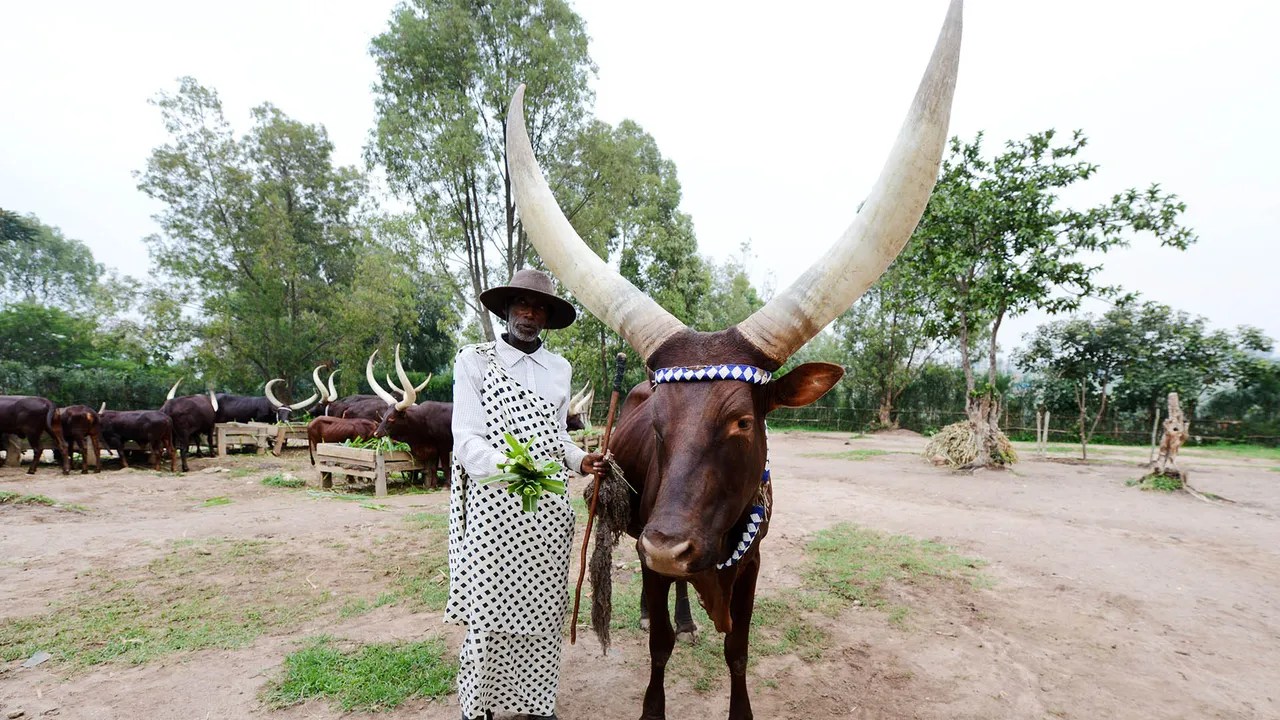
Photo: Boaz Rottem/Alamy.
“For hundreds of years, Rwandans with enough milk would share their supply with those in need,” says the BBC.

You learn something every day. From an article in the New York Times and another at the BBC, I just learned that drinking milk is so popular in Rwanda that milk is the main thing served at the country’s favorite bars.

Abdi Latif Dahir reports at the Times, “As the sun scorched the hilly Rwandan capital on a recent afternoon, a motorcycle taxi driver, two women in matching head scarves and a teenager wearing headphones all separately sauntered into a small roadside kiosk to drink the only thing on tap: milk.

“ ‘I love milk,’ said Jean Bosco Nshimyemukiza, the motorcycle taxi driver, as he sipped from a large glass of fresh milk that left a residual white line on his upper lip. ‘Milk makes you calm,’ he said, smiling. ‘It reduces stress. It heals you.’ …

“Men and women, young and old, sit on benches and plastic chairs throughout the day, glass mugs before them, gulping liters upon liters of fresh milk or fermented, yogurt-like milk, locally known as ‘ikivuguto.’

“Some patrons drink it hot, others like it cold. Some — respecting an old custom of finishing your cup at once — chug it down quickly, while others sip it slowly while eating snacks like cakes, chapatis and bananas. …

“ ‘I come here when I want to relax, but also when I want to think about my future,’ said Mr. Nshimyemukiza, who added that he drinks at least three liters of milk daily.

‘When you drink milk, you always have your head straight and your ideas right.’

“While milk bars have popped up everywhere over the last decade, the drink they sell has long been intrinsic to the country’s culture and history, as well as its modern identity and economy.

“Over the centuries, cows were a source of wealth and status — the most valuable gift to confer on a friend or a new family. Even royalty craved easy access to milk. During the Kingdom of Rwanda, which lasted for hundreds of years until the last king was deposed in 1961, cows’ milk was kept in wooden bottles with conical woven lids right behind the king’s thatched palace.

“Cows were considered so valuable they ended up in children’s names — Munganyinka (valuable as a cow) or Inyamibwa (beautiful cow) — as well as in traditional dances, where women raised their hands to emulate the giant-horned Ankole cows.

“In 1994, Rwanda was the scene of a genocide. … As the country recovered from the genocide, Rwanda’s government looked to cows again as a way to grow the economy and fight malnutrition.

“In 2006, President Paul Kagame introduced the ‘Girinka’ program, which aims to give every poor family one cow. The program has so far distributed over 380,000 cows nationwide, according to the Ministry of Agriculture and Animal Resources — with contributions coming from private companies, aid agencies and foreign leaders including Prime Minister Narendra Modi of India. …

“As milk production increased in this landlocked nation, so did the number of people who moved to urban areas for education and employment. And so were born the milk bars, which allowed farmers to sell their surplus milk and let customers drink copious amounts of it to be reminded of home. Most milk bars are in Kigali, the country’s most-populous city, with 1.2 million people.

“Steven Muvunyi grew up with nine siblings in the Rubavu district in the country’s west. After moving to Kigali to attend university, he said he missed being in the countryside, milking cows and drinking milk without limits.

“I come to the milk bars and I am overcome with nostalgia from my childhood,” he said one evening in late September, as he drank from a big mug of hot, fresh milk in downtown Kigali.

“As he sat at the bar, Mr. Muvunyi, 29, who works in Rwanda’s budding technology sector, showed photos of his 2-year-old son looking at him while he drank a glass of milk at his parents’ farm. He worried, he said, that children growing up in cities would not be as connected to the country’s dairy culture, given the easy access now to pasteurized milk at supermarkets. ‘I want to teach my children early the value of milk and cows,’ he said. …

“No matter the circumstances, Rwandans say the milk bar is here to stay. During the pandemic last year, Ngabo Alexis Karegeya started sharing images and videos on Twitter about the Rwandan attachment to cows and milk — drawing national attention. Mr. Karegeya graduated from university this year with a degree in business administration, but still fondly remembers his days tending cows as a boy. He tweeted a photo of himself in his graduation gown with the caption ‘certified cow-boy y’all.’

“ ‘Rwandans love cows and they love milk,’ said Mr. Karegeya, who owns five cows in the lush hills of his family’s home in western Rwanda and drinks three liters a day.

“ ‘The milk bar brings us together,’ he said. ‘And we will keep coming to the milk bar to drink more milk.’ ”

More at the Times, here, and at the BBC, here.

Read Full Post »