Feeds:
Posts
Comments

Posts Tagged ‘basketball’

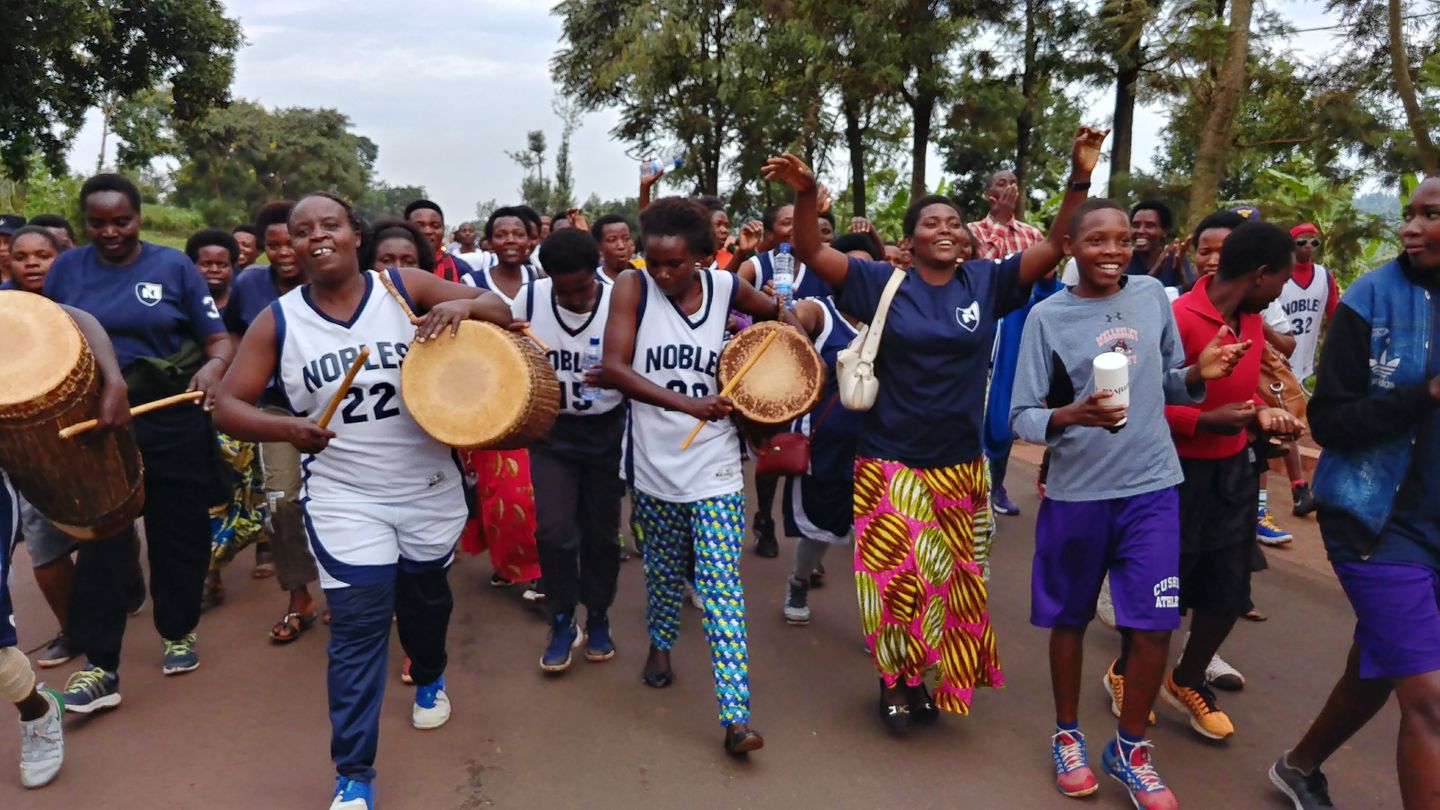
Photo: Noble and Greenough School.
A group of 25 students and faculty from Shooting Touch and the Noble and Greenough School went to Rwanda for a trip to help spread Shooting Touch’s mission of health advocacy for women and children and empowerment through sport.

You may remember my young friend Shagufa Habibi, who escaped an abusive child marriage in Afghanistan through the power of sport. It all started with her taking up golf. In May, she will graduate from Brandeis with a master’s degree.

Today’s article also addresses the power of sport. In this case, basketball.

Tara Sullivan reports at the Boston Globe, “Vin Bui met the initial offer of financial assistance and basketball support with a requisite dose of skepticism, narrowing his eyes just enough to make any self-respecting Dorchester native proud. But since the AAU team he was building for his niece, Christina Pham, and her fellow players was still in its infancy, he figured it couldn’t hurt to listen to a pitch. [So] he took a call from a local organization called Shooting Touch.

“He had no idea it would change his world. …

‘I figured it was a basketball pyramid scheme, too good to be true. Money, enrichment, and education. Come on. But I took the chance and called them up. They ended up being everything they said and more.’ …

“Had Bui heard of Shooting Touch before, he would not have been surprised. The program, which grew from its roots in Rwanda to expand into Boston, defines itself as ‘an international sport-for-development organization whose mission is to use the mobilizing power of basketball to bridge health and opportunity gaps for youth and women facing racial, gender, and economic inequalities.’ …

“From sponsoring an AAU team in the city to sending players on an international relief trip abroad, what you get is an ongoing lesson in how small acts of empowerment for those who have it least but appreciate it most can truly make the world a better place.

“[Seven] years after joining forces with Shooting Touch, Bui, Pham, and Pham’s fellow basketball player Tahira Muhammed are 6,000 miles across the world, completing a circle that Shooting Touch founder Lindsey Kittredge could barely imagine more than a decade ago, when she and her husband started the grassroots program.

“As part of a group of 25 students and faculty from Shooting Touch and the Noble and Greenough School (where both young women go to school and play on the championship-winning basketball team), their current trip to Rwanda connects two chambers of the same charitable heart, with Rwandan Shooting Touch participants and their Boston counterparts meeting for the first time.

“ ‘It is pretty emotional,’ Kittredge said recently. … ‘It’s proving the point and seeing the future potential of this sport and what it can build, how you can reach anybody in any demographic, any environment, any geographic presence or background, and you can make an impact for positive health.’

“To help understand it best, think of Shooting Touch as being built on two primary pillars — basketball and women’s health. See it as living proof of how each pillar can keep the other up, and realize how it can do it in a country once ravaged by genocide with long-standing human rights issues rooted in misogyny and gender-based violence just as faithfully as it does in Boston neighborhoods such as Dorchester and Roxbury. …

“In Rwanda, women’s health clinics run concurrently with basketball skills events, serving women from the youngest to oldest ages, offering vaccinations, malaria and HIV screenings, examinations, and information free for all. The level of empowerment that goes with that is almost impossible to calculate, just as the network of experience, people, and contacts young women in Boston can make through the program. When kids are empowered, when they see opportunities they might have never known existed, they head into an adult world much better prepared for success.”

More at the Globe, here.
Read Full Post »

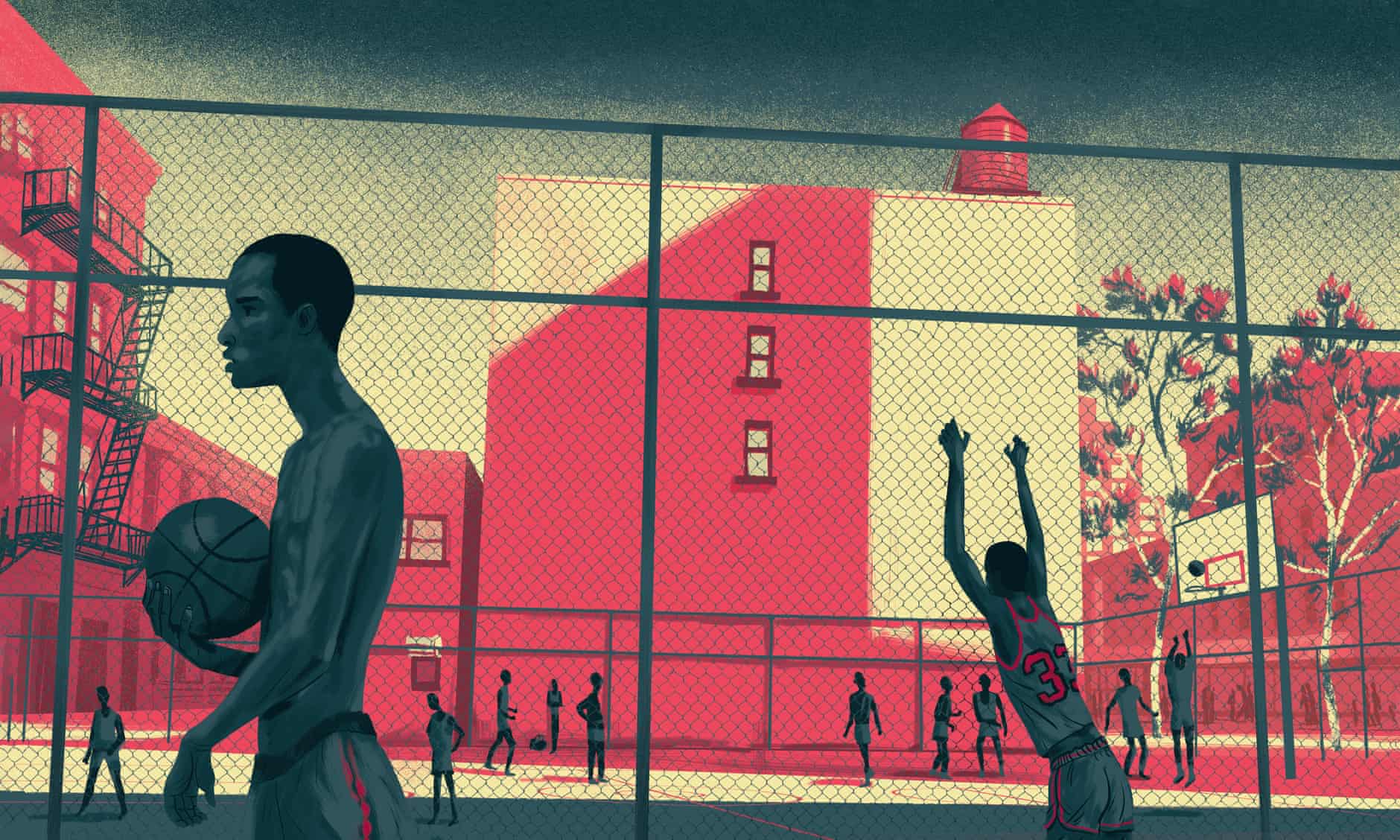
Illustration: Paul Blow/The Guardian.

Summer is coming, and all over America, kids will be seeking out basketball hoops for pickup games or organized sports. Today we know that the recognized stars of the game are often Black, but apparently, that wasn’t always the case.

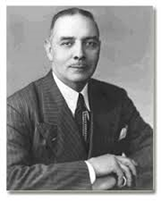
Frederic J. Frommer explains at the Washington Post why Edwin Bancroft Henderson is “known as the ‘father of Black basketball’ (or sometimes the ‘grandfather’). The first Black certified instructor of physical education in the United States, [he] brought the White-dominated sport to Black America. …

“ ‘Henderson and his contemporaries envisioned basketball — and sports in general — as providing a rare opportunity to combat Jim Crow,’ wrote Bob Kuska in Hot Potato: How Washington and New York Gave Birth to Black Basketball and Changed America’s Game Forever.

“[Henderson] learned basketball while studying physical education at Harvard University’s Dudley Sargent School of Physical Training. The school was affiliated with the International YMCA Training School in Springfield, Mass., where James Naismith had invented the sport just a decade earlier. When Henderson returned to Washington, he organized a basketball league for Black players, in a city where only Whites had access to basketball courts or clubs.

“ ‘What’s sad is that more people don’t know the story of E.B. Henderson, who was a pioneer, a trailblazer, someone who was a direct protégé of Dr. Naismith,’ said John Thompson III, the former head men’s basketball coach at Georgetown University, now vice president of player engagement at Monumental Basketball.

“Today, community leaders are taking steps to raise Henderson’s profile. In February, the University of the District of Columbia renamed its athletic complex the Dr. Edwin Bancroft Henderson Sports Complex. The school also launched the Dr. Edwin Bancroft Henderson Memorial Fund, which will help pay for the renaming, a scholarship endowment and the creation of a permanent Henderson memorial on campus. …

“On April 1, the Wizards named forward Anthony Gillthe inaugural winner of the team’s E.B. Henderson Award, which recognizes the Wizards player most philanthropically active in the D.C. community.

“And last year, Virginia honored Henderson with a state historical marker in Falls Church, where he lived from 1910 to 1965 and helped organize the NAACP’s first rural branch. Henderson also served as president of the Virginia NAACP.

After completing his studies at Harvard, Henderson tried to attend a basketball game at a Whites-only YMCA in D.C. in 1907 along with his future brother-in-law, but they were shown the door by the athletic director.

“Undeterred, Henderson started the D.C.-based Basket Ball League, where his 12th Street YMCA team went undefeated in 1909-10 in competition with local rivals and teams from other cities and won the unofficial title of Colored Basketball World Champions.

“His playing days came to an end in 1910 when he was 27 [but] Henderson’s work continued off the court, as he formed the Public Schools Athletic League, the country’s first public school sports league for Black students, which included basketball, track and field, soccer and baseball.

“In 1912, Henderson moved to Falls Church, and soon he was taking on racial discrimination there, helping to challenge a local ordinance that restricted where Black residents could live. After a court ruled the ordinance unconstitutional, the Town Council rescinded it.

“Henderson continued to challenge discriminatory treatment of African Americans, often through the many newspaper articles and letters to the editor he wrote over the years. In a September 1936 letter to the Post titled ‘The Negro in Sports,’ for example, he touted the success of Black athletes such as track star Jesse Owens, who won four gold medals at the 1936 Summer Olympics in Berlin.

“ ‘Right here in Washington, it ought to be possible for a Jesse Owens, or a city-wide marble champion, or a Joe Louis to come up through the lists and tournaments,’ he wrote. ‘When will the Capital of the Nation meet this challenge?’

“In 1939, he wrote a book with the same title, The Negro in Sports, which he updated in 1950. In the intervening decade, Jackie Robinson had broken baseball’s color barrier, and Black players had returned to the NFL after being shut out of the league for a dozen years.

“ ‘Henderson resists what might have been the high temptation to gloat at the sensational success of the Negro boys when finally they got their chance to play in the big leagues,’ Shirley Povich wrote in a Washington Post review of the revised edition. ‘Instead, he pays tribute to the American sportsmanship that sufficed, finally, to provide equal opportunity.’ …

“ ‘I never consciously did anything to be first. I just happened to be on the spot and lived in those days when few people were doing the things I was doing,’ Henderson said a few years before his death in 1977, at the age of 93. ‘But sports was my vehicle. I always claimed sports ranked with music and the theater as a medium for recognition of the colored people, as we termed ourselves in my day. I think the most encouraging thing, living down here in Alabama, is to see how the Black athlete has been integrated in the South.’

“Henderson was inducted into the Naismith Memorial Basketball Hall of Fame in 2013, following a campaign waged by his grandson, Edwin B. Henderson II, a retired educator and local historian.”

More at the Post, here.

Photo: University of the District of Columbia.
Edwin Bancroft Henderson, the “Father of Black Basketball.”

Read Full Post »

3894533f-02e4-45fb-98b4-9f06e777c4e7_360x203

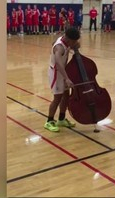
Gavin Hardy is good at both the bass and basketball. For a bigger image, watch the video at WFMY.

Our niece teaches orchestra at a middle school in North Carolina. Teaching orchestra is a job she loves, and she has often said she thinks she was born to do it. Sometimes she gets notes from long ago students telling her things like, “I always looked forward to your class. It was the time I felt best in school.”

She encourages students of every ability, and when she sees exceptional talent, she likes to spread the word. Here’s a story about a young bass player.

Maddie Gardner at television station WFMY in Clemmons has the report.

“You might say basketball is like music. The ball hitting the court: resonance. A shoe squeaking against the hardwood: pitch. The perfect shot: crescendo. And then there’s the discipline.

” ‘I think both go hand in hand. You have to be very disciplined to be a musician – same thing with an athlete. You have to practice it. You have to do it when nobody is looking. You have to be able to work hard when nobody is watching you do it.’

“Coach Tommy Witt says 8th grader Gavin Hardy brings a certain harmony to the Clemmons Middle School gym.

” ‘I hope to play at a division one school. My dream is to play in the NBA, but I know it’s going to take a lot of hard work, but I’m willing to put in the work,’ Gavin said. …

” ‘Just keeping the tunnel vision, staying focused, you gotta block out all of the distractions that get in your mind, know what you want and attack it. Strive to be the best,’ he said. …

“For 10 years Gavin’s been on the court. … But playing the National Anthem on his bass was something he’d never done before.

” ‘It’s funny – we want to get people to play the national anthem and I went to [his orchestra teacher] Barbara and said, “Do you think he can play the national anthem in his uniform?” ‘ Witt said.

‘It was just a no brainier; he can do anything,’ Gavin’s orchestra teacher, Barbara Bell said. ‘Whatever he puts his mind to he can do.’ …

” ‘I’ve been listening to classical music ever since I was four. I just like the string family and I like the dark tone of the bass,’ Gavin said.

Gavin says he usually listens to string music to get pumped up for a game but before the team played Winston-Salem Prep he decided he’d be the string music before tip off. …

” ‘He’s always interested in more. He keeps working harder to get to the next level,’ [said Bell]. …

” ‘When your best player is also your hardest worker you have a chance to be really good and that’s what Gavin has done for us,’ [Coach] Witt said.” More here.

Barbara tells me that her student learned the National Anthem on the bass in two days and that the publicity brought him wider attention.

“The National Bass Society has contacted Gavin,” she said in a text. “They want him and they’re offering a playing opportunity. The assistant principal bassist from the Philadelphia Orchestra contacted him. He teaches at Juilliard and he is very interested in helping him. I am beyond excited for him. I was screaming and jumping up and down when he told me.

“The Philadelphia Orchestra bassist loved his playing and was especially excited about his work ethic and attitude. I told Gavin he had to give me tickets to wherever he lands.”

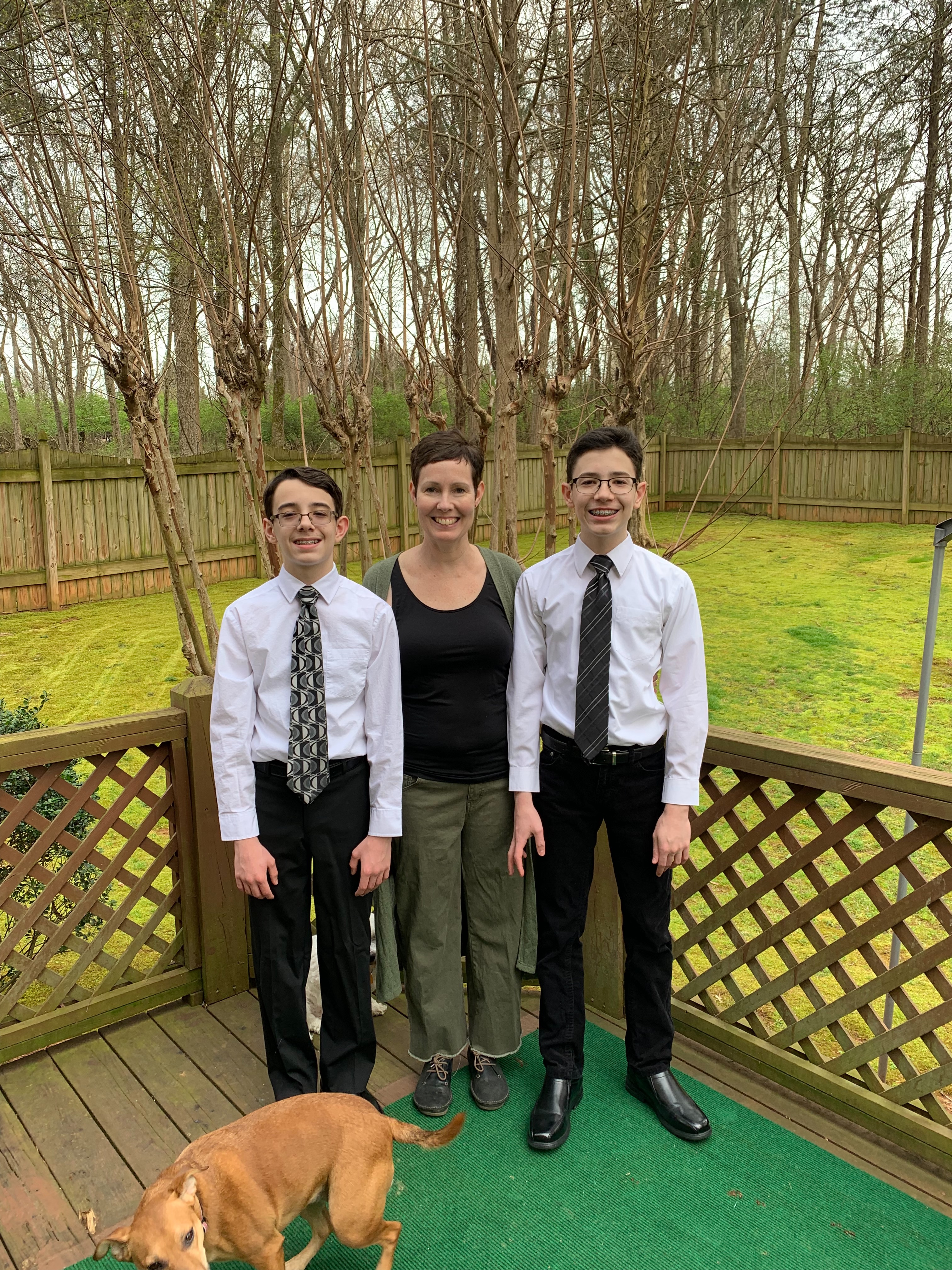
Gavin’s teacher with her twins. All three are string musicians.

032519-Bell-string-players

Read Full Post »

I hardly need to remind readers of this blog that people are people. We are all just living our lives, with more or less the same daily concerns. And the differences are what make things interesting.

Sam Radwany at the radio show Only a Game recently described some youthful experiences in Minneapolis that sound both the same and different. The story is about a group of American Muslim girls who choose to cover themselves in keeping with their kind of Islam but who are also enthusiastic basketball players.

“The Twin Cities are home to one of the largest Somali populations in the world. The community is concentrated in the Cedar-Riverside neighborhood of Minneapolis, where these pre-teen players go to school. … Balancing their cultural and religious standards of modesty with sports can be tricky.

“ ‘Sometimes our hijab, our scarves, got off, and we would have to time out, pause, to fix it,’ Samira said. ‘Our skirts were a problem — they were all the way down to our feet.’ …

“Last season, some of the girls opted to wear long pants instead of dresses. But that still put them at a disadvantage when playing other Minnesota teams. …

“And because the girls’ team didn’t have their own jerseys, they had to share with the boys. Ten-year-old Amal says the experience was unpleasant.

“ ‘Horrible! Very horrible,’ she said. ‘And the boys, their jerseys were all sweaty and yucky and nasty.’ …

“That’s where a local nonprofit dedicated to expanding sports and recreation opportunities for local Muslim girls stepped in. … [They] brought in researchers and designers from the university to help the young athletes find a new solution to the stinky jersey problem.

“Jennifer Weber, the girls’ coach, said the players did most of the work themselves, with guidance from the experts. …

“Chelsey Thul from the university’s Tucker Center for Research on Girls and Women in Sport described some features of the new uniforms: ‘And so this sport uniform has black leggings. It’s longer, probably about to the knees …

“ ‘The biggest change to the hijab is that it’s not a pullover, so that instead, it fastens with Velcro at the neck,’ Weber said. ‘So it’s got some give to it, and it’s forgiving, and it moves as they move.’

“And of course, with the young girls’ input, there’s a bit of color. Samira and Amal said the team had a lot of ideas.” Read about their design ideas and their delight in the uniforms here.

Photo: Jim Mone/AP
Somali American girls in the Cedar-Riverside neighborhood of Minneapolis designed their own uniforms for greater freedom of movement.


Read Full Post »

In Bhutan, the queen is an enthusiastic basketball player. And she has an unusual advantage: no one is allowed to touch royalty without permission.

Today, says Gardiner Harris of the NY Times, Bhutanese royalty has begun sharing their game with the public.

“After decades of being a largely royal preserve, basketball here is about to have its breakout moment.

“A South Korean coach has been hired to cobble together a national team that many hope will someday be able to challenge its neighbors for bragging rights in South Asia and beyond. Bhutan has tried many times to win an international game but, except for a single victory in a three-on-three tournament, has never succeeded. …

“Bhutanese players say their best hope for a win could be against the Maldives, a country with half of Bhutan’s population that is threatened by global warming. As sea levels rise, Maldivians may have trouble finding places to play, players noted. And facing them in Thimphu’s thin air (the city’s altitude is 7,710 feet) could provide a crucial advantage.”

More.

Photo: Kuni Takahashi for the NY Times
Bhutan’s queen, Jetsun Pema Wangchuck, who is a good player

Read Full Post »