Feeds:
Posts
Comments

Posts Tagged ‘negro’

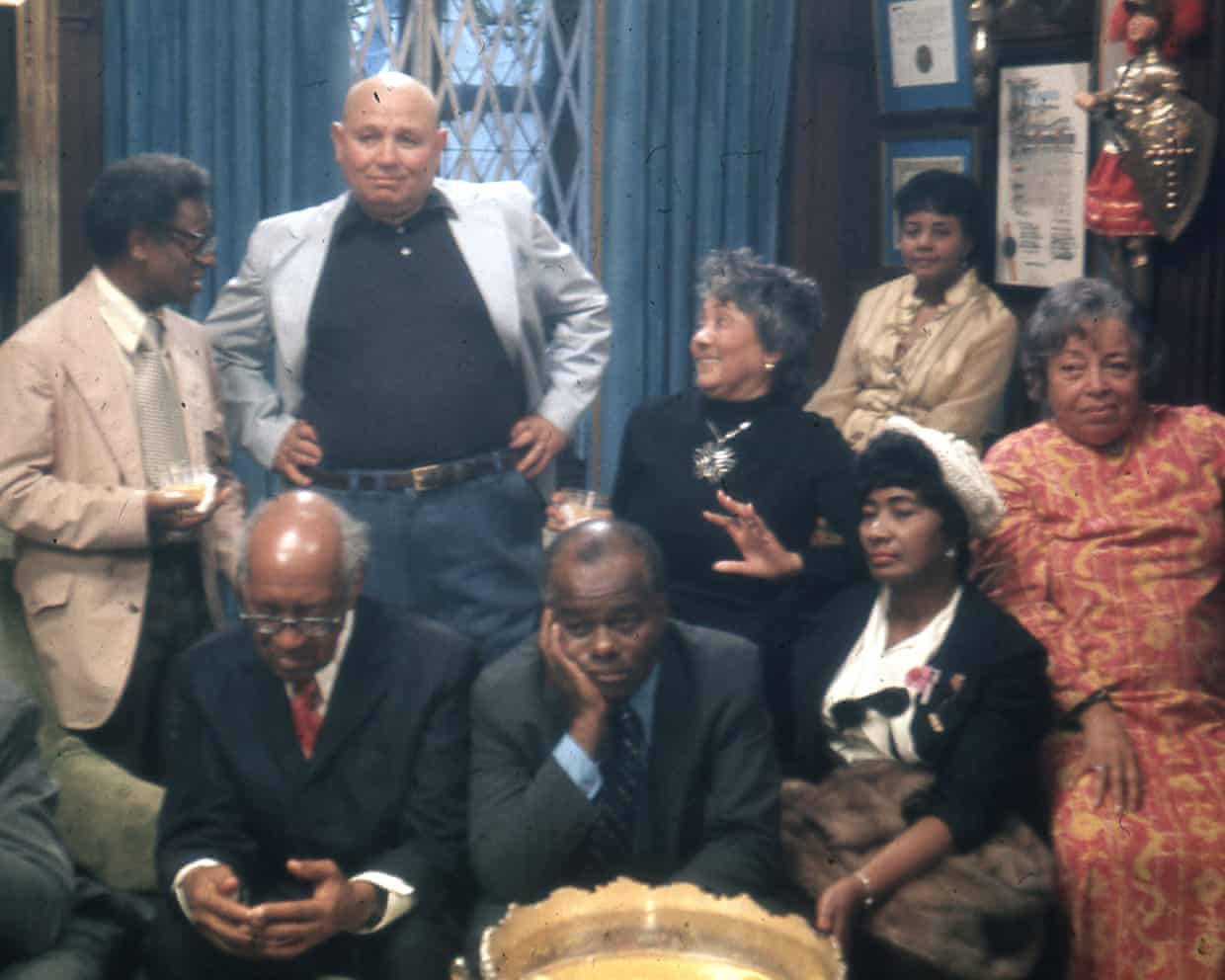
Photo: William Greaves Productions.
The film Once Upon a Time in Harlem centers on a cocktail party William Greaves hosted in August 1972 with men snd women of the Harlem Renaissance who were still living. 

Many Americans know of the Harlem Renaissance as the flourishing of African American arts and culture in New York in the 1920s and 1930s. But a documentary about it was filmed mostly in the 1970s when William Greaves rounded up the remaining members of the movement and had a party.

Nadia Khomami explained recently at the Guardian, “In 1969, the pioneering documentarian William Greaves wrote of his fury over the racially degrading stereotypes that white film producers threw up on American screens. …

“Three years later, Greaves began work on what he considered the most important footage he ever shot: a feature documentary gathering surviving figures of the Harlem Renaissance to reflect on the movement they had built half a century earlier.

“Now, more than 50 years after cameras rolled, Once Upon a Time in Harlem is finally receiving its international premiere in Cannes’ Directors’ Fortnight – completed not by William Greaves, who died in 2014, but by his son David and granddaughter Liani.

“The documentary centers on a cocktail party Greaves hosted at Duke Ellington’s townhouse in Harlem in August 1972 – an attempt to capture the voices of artists, writers, musicians and organisers whose work had transformed Black American culture in the 1920s, but whose stories were already at risk of being sidelined.

“Greaves invited every surviving participant he could locate. Many had not seen one another for decades. They included the painter Aaron Douglas; the queer artist and writer Richard Bruce Nugent; the poet Arna Bontemps; the musicians Eubie Blake and Noble Sissle; the photographer James Van Der Zee; and Ida Mae Cullen, the widow of Countee Cullen.

“For four hours, Greaves filmed them as they laughed, reminisced and debated. The resulting film follows the rhythm of the party itself: tentative greetings and warm memories gradually giving way to animated debates over politics, language and legacy.

“David Greaves, who was there in 1972 aged 22, worked on the shoot as a cameraman under his father. …

“Duke Ellington himself was unwell and did not attend, but his sister Ruth was present. ‘There were four cameras, two crews circulating through the apartment catching conversations, these little moments between them,’ David said. ‘Mostly my father just let them freestyle, it was very fluid.’

“Among the film’s strengths is precisely that looseness. At one point, guests debate whether the term ‘Negro’ should be discarded in favor of ‘Afro-American.’ Elsewhere, they discuss Marcus Garvey and Langston Hughes and the global reverberations of anti-colonial struggle. Aaron Douglas reflects on jazz, telling the room: ‘It would be considered a revolution in relation to other music. It was not a revolution to us.’

“For David Greaves, those conversations feel strikingly current. ‘When they talk about whether to call themselves Black or Negro, that’s a discussion still happening now – you’ve got Black, African American, people of color. And then there is still this question of what the diaspora should do in relation to Africa.’ …

“The film also reminds viewers how recent America’s racial violence remains. David points to footage accompanying the anti-lynching poem ‘The Lynching,’ ending on a young white girl watching with what he calls ‘fiendish glee. … The US is not that far away from that time.’ …

“For him, the film arrives as Black history is once again being fought over in the US. … ‘They’ve been doing everything they can to erase the Black experience in America, even removing signage from park service sites. What this film does is show a group of wonderful people sitting around talking about a time 50 years ago, and about their own present. These giant intellectuals that the media didn’t even realize existed.’ …

“After William’s death, the material passed to his widow Louise, who continued working on it until her own death in 2023. David and Liani then took over, restoring and digitizing 60,000 feet of 16mm film. …

“When shaping the final cut, he followed one of his father’s principles: ‘My dad used to say if there’s something that affects you viscerally, go with it.’ …

“David, who has spent the past three decades publishing Our Time Press, a Brooklyn community newspaper focused on Black civic and cultural life, with his wife, Bernice Green, said he hoped to release the film in time for Greaves’ centenary in October, with retrospectives planned in New York and at the Barbican in London.

“ ‘My dad was appreciated by those who knew documentary film, but he didn’t have the acclaim that he has now,’ he said. ‘This film should cement him as a chronicler of the history of African Americans.’ ”

More at the Guardian, here.
Read Full Post »

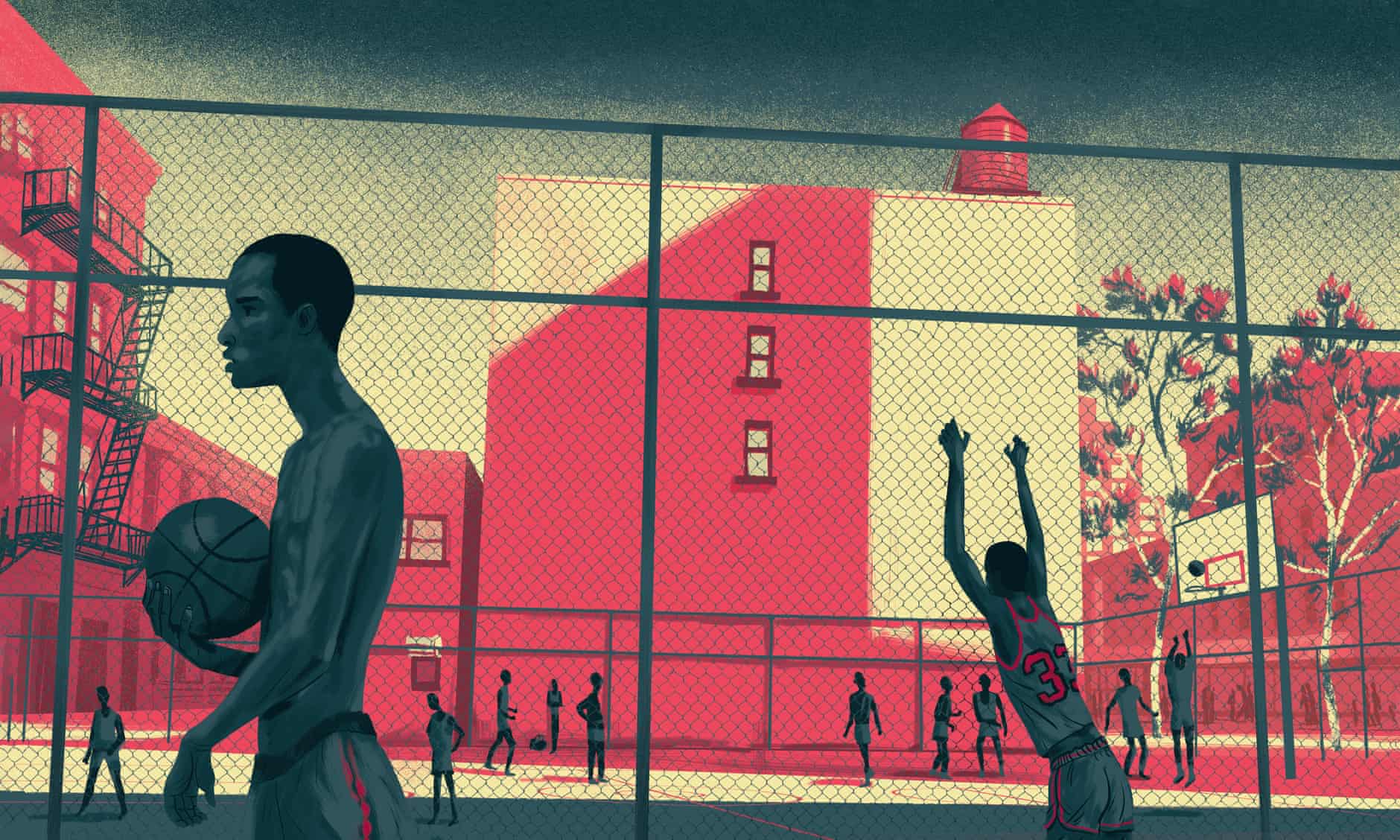
Illustration: Paul Blow/The Guardian.

Summer is coming, and all over America, kids will be seeking out basketball hoops for pickup games or organized sports. Today we know that the recognized stars of the game are often Black, but apparently, that wasn’t always the case.

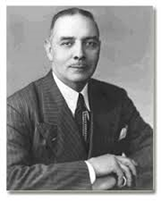
Frederic J. Frommer explains at the Washington Post why Edwin Bancroft Henderson is “known as the ‘father of Black basketball’ (or sometimes the ‘grandfather’). The first Black certified instructor of physical education in the United States, [he] brought the White-dominated sport to Black America. …

“ ‘Henderson and his contemporaries envisioned basketball — and sports in general — as providing a rare opportunity to combat Jim Crow,’ wrote Bob Kuska in Hot Potato: How Washington and New York Gave Birth to Black Basketball and Changed America’s Game Forever.

“[Henderson] learned basketball while studying physical education at Harvard University’s Dudley Sargent School of Physical Training. The school was affiliated with the International YMCA Training School in Springfield, Mass., where James Naismith had invented the sport just a decade earlier. When Henderson returned to Washington, he organized a basketball league for Black players, in a city where only Whites had access to basketball courts or clubs.

“ ‘What’s sad is that more people don’t know the story of E.B. Henderson, who was a pioneer, a trailblazer, someone who was a direct protégé of Dr. Naismith,’ said John Thompson III, the former head men’s basketball coach at Georgetown University, now vice president of player engagement at Monumental Basketball.

“Today, community leaders are taking steps to raise Henderson’s profile. In February, the University of the District of Columbia renamed its athletic complex the Dr. Edwin Bancroft Henderson Sports Complex. The school also launched the Dr. Edwin Bancroft Henderson Memorial Fund, which will help pay for the renaming, a scholarship endowment and the creation of a permanent Henderson memorial on campus. …

“On April 1, the Wizards named forward Anthony Gillthe inaugural winner of the team’s E.B. Henderson Award, which recognizes the Wizards player most philanthropically active in the D.C. community.

“And last year, Virginia honored Henderson with a state historical marker in Falls Church, where he lived from 1910 to 1965 and helped organize the NAACP’s first rural branch. Henderson also served as president of the Virginia NAACP.

After completing his studies at Harvard, Henderson tried to attend a basketball game at a Whites-only YMCA in D.C. in 1907 along with his future brother-in-law, but they were shown the door by the athletic director.

“Undeterred, Henderson started the D.C.-based Basket Ball League, where his 12th Street YMCA team went undefeated in 1909-10 in competition with local rivals and teams from other cities and won the unofficial title of Colored Basketball World Champions.

“His playing days came to an end in 1910 when he was 27 [but] Henderson’s work continued off the court, as he formed the Public Schools Athletic League, the country’s first public school sports league for Black students, which included basketball, track and field, soccer and baseball.

“In 1912, Henderson moved to Falls Church, and soon he was taking on racial discrimination there, helping to challenge a local ordinance that restricted where Black residents could live. After a court ruled the ordinance unconstitutional, the Town Council rescinded it.

“Henderson continued to challenge discriminatory treatment of African Americans, often through the many newspaper articles and letters to the editor he wrote over the years. In a September 1936 letter to the Post titled ‘The Negro in Sports,’ for example, he touted the success of Black athletes such as track star Jesse Owens, who won four gold medals at the 1936 Summer Olympics in Berlin.

“ ‘Right here in Washington, it ought to be possible for a Jesse Owens, or a city-wide marble champion, or a Joe Louis to come up through the lists and tournaments,’ he wrote. ‘When will the Capital of the Nation meet this challenge?’

“In 1939, he wrote a book with the same title, The Negro in Sports, which he updated in 1950. In the intervening decade, Jackie Robinson had broken baseball’s color barrier, and Black players had returned to the NFL after being shut out of the league for a dozen years.

“ ‘Henderson resists what might have been the high temptation to gloat at the sensational success of the Negro boys when finally they got their chance to play in the big leagues,’ Shirley Povich wrote in a Washington Post review of the revised edition. ‘Instead, he pays tribute to the American sportsmanship that sufficed, finally, to provide equal opportunity.’ …

“ ‘I never consciously did anything to be first. I just happened to be on the spot and lived in those days when few people were doing the things I was doing,’ Henderson said a few years before his death in 1977, at the age of 93. ‘But sports was my vehicle. I always claimed sports ranked with music and the theater as a medium for recognition of the colored people, as we termed ourselves in my day. I think the most encouraging thing, living down here in Alabama, is to see how the Black athlete has been integrated in the South.’

“Henderson was inducted into the Naismith Memorial Basketball Hall of Fame in 2013, following a campaign waged by his grandson, Edwin B. Henderson II, a retired educator and local historian.”

More at the Post, here.

Photo: University of the District of Columbia.
Edwin Bancroft Henderson, the “Father of Black Basketball.”

Read Full Post »

Photo: Robert W Kelley/Time Life Pictures/Getty Images
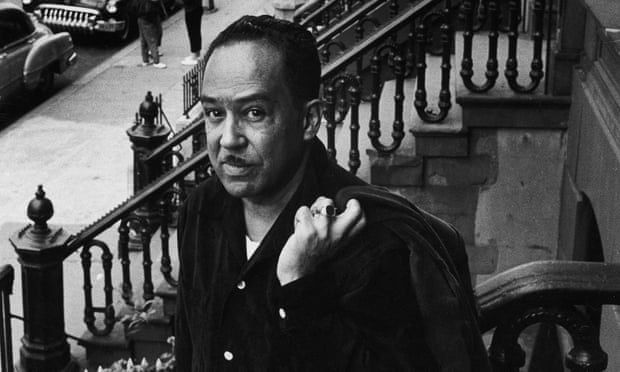
Langston Hughes on the front steps of his house in Harlem, June 1958.

Before Suzanne and Erik moved to Providence, they were living in a lovely renovated brownstone in Harlem.

There’s a fine line between newcomers investing where there’s been too much disinvestment — and gentrification. The early changes seem to benefit a neighborhood and its people, but inevitably rising property values push out many longtime residents and institutions.

Today, a group of Harlem artists from various disciplines are banding together to keep a significant piece of the Harlem Renaissance around to nourish African American arts.

Tom Kutsch writes at the Guardian, “All that signifies the legacy of a house once occupied by the poet laureate of Harlem is a small bronze plaque, partially covered by a cedar tree’s branches and the green ivy that envelops much of the building.

“The onetime home of Langston Hughes has sat largely unoccupied for years, but a new movement is trying to reclaim, for a next generation of artists, the space of a man who is forever intertwined with the Harlem Renaissance.

“Spearheaded by writer, performer and educator Renée Watson, the collective effort is busily trying to raise the necessary funds to purchase a lease and make needed renovations to the house. …

“Watson plans to make the Hughes house the home of the I Too, Arts Collective that she launched alongside the effort, which aims to, in her words, have ‘programming that nurtures, amplifies, and honors work by and about people of color and people from other marginalized communities.’ …

“The collective gets its name from one of Hughes’s most famous poems – I, Too – in which his narrator concludes by intoning:

They’ll see how beautiful I am
And be ashamed—
I, too, am America.

“Watson is using the crowdfunding website Indiegogo to solicit donations for the project, for which they’re hoping to raise at least $150,000 to cover a lease and begin the renovation process. By the time of publication, they had raised more than $54,000, already exceeding the $40,000 Watson says would cover at least a six-month lease. …

“For more than a century, Harlem has been inextricably linked to black life and culture in America; the birthplace of the aforementioned Harlem Renaissance, which fostered a wide array pre-eminent black artists and writers, from Zora Neale Hurston to Claude McKay and Duke Ellington. …

” ‘The erasure of black Harlem may come despite our best efforts …’ said Tracey Baptiste, a local children’s author who is involved with Watson’s collective. ‘But this project is about making sure that gentrification doesn’t also happen in the hearts and minds of our artists.’ ”

More here.

Read Full Post »

Asakiyume writes a blog I enjoy a lot, and this week she had an intriguing post on Jackie Ormes, generally considered the first female African American cartoonist. See examples of work by Ormes at Asakiyume’s blog, here.

According to wikipedia, Ormes (1911 to 1985), “started in journalism as a proofreader for the Pittsburgh Courier, a weekly African American newspaper that came out every Saturday. Her 1937-38 Courier comic strip, Torchy Brown in Dixie to Harlem, starring Torchy Brown, was a humorous depiction of a Mississippi teen who found fame and fortune singing and dancing in the Cotton Club.”

The strip waxed and waned as Ormes pursued her many career interests, bur she always returned to Torchy.

“In 1950, the Courier began an eight-page color comics insert, where Ormes re-invented her Torchy character in a new comic strip, Torchy in Heartbeats. This Torchy was a beautiful, independent woman who finds adventure while seeking true love. …  The strip is probably best known for its last episode in 1954, when Torchy and her doctor boyfriend confront racism and environmental pollution. Torchy presented an image of a black woman who, in contrast to the contemporary stereotypical media portrayals, was confident, intelligent, and brave.”

Being a cartoonist seems harder than writing a blog. You not only need to find daily topics that interest you enough to dwell on, but you have to encapsulate them in a piece of art. Asakiyume sometimes illustrates her posts, but art is one thing you won’t find me doing here. (Unless maybe a collage.)

Read Full Post »