
Photo: Hannah Goeke/Christian Science Monitor.
One of the National Braille Press’s braille machines operating in Boston’s Fenway neighborhood.
As I read today’s article about braille services losing funding, I am struck particularly by an activist’s comment on the importance to blind children of meeting other blind children in the braille libraries. I remember my own insensitivity to disability as a child. Children sense difference sand sometimes they are not kind. Being with others who share an issue like blindness would be huge.
But opportunities like that are now threatened — at both federal and state levels.
Hannah Goeke writes at the Christian Science Monitor, “Marci Carpenter reconnected with her love of reading through her fingertips. When her vision became more limited, learning braille gave her a new way to experience the world. She still remembers how the words of Robert Frost’s poems came alive again through soft bumps embossed on thick paper.
“But it was the Washington Talking Book & Braille Library in Seattle that gave her a place to connect.
“ ‘That was the first time I had ever experienced being around shelves and shelves of braille books. It was this really liberating experience,’ recalls Ms. Carpenter. Over the next five decades, she returned again and again to browse through the Major League Baseball schedule, check out the Constitution – and science fiction – and discover new volumes.
“Today, Ms. Carpenter, who now serves as president of the National Federation of the Blind of Washington, is facing a new urgent need.
“On July 1, the doors to the Washington Talking Book & Braille Library swung shut to the public for in-person exploration and gathering due to a lack of state funding. As needs increase and revenue growth slows, the state of Washington is facing a budget deficit. Ms. Carpenter, who was among those working with legislators to secure funding for libraries, came up empty-handed. …
“The Seattle library is one of nearly 100 libraries and outreach centers nationwide that form the network of the National Library Service for the Blind and Print Disabled, which provides free braille and audio materials through the Library of Congress.
“A small staff is determined to keep the library running. Since July 1, it has offered services by appointment only. ‘We are getting about our normal number of calls,’ writes Danielle Miller, the library’s director, in an email. ‘We have had to turn away people who wanted to come in and use the library.’ …
“Patrons say they are most saddened by that loss. Through in-person workshops and programming, the library provides a sense of belonging and community. Preserving free access to braille materials and encouraging braille literacy – especially for children – is imperative, according to experts and educators. …
“The vast majority of the 26% of employed blind people are braille readers, according to the National Braille Press in Boston. However, despite reading’s link to higher education and employment in the United States, only 12% of school-age blind children in the U.S. can read braille, the NBP estimates.
“While tape recorders and synthesized speech are useful tools, they do not teach the ability to read, write, and spell, says Kim Charlson, the executive director of the Perkins Library in Watertown, Massachusetts. …
“Braille opens the door to independence, not only on a large scale but also in small ways. What is habitual to sighted people becomes a significant hindrance for blind people, says Ms. Charlson. For example, being able to jot down a telephone number, take a note, or create labels to find the warranty for your new stove.
“Ms. Charlson shares a lesson she learned about the everyday importance of using braille after adding an unconventional ingredient to her chili recipe.
“ ‘I just opened it and tossed it in. I added my tomato sauce,’ she says with a laugh. ‘My husband [who is also blind] took a bite and he said, “This is kind of interesting.” And I said, “What do you mean? It’s chili.” And he goes, “Well, it’s got fruit cocktail in it.” ‘ Ms. Charlson now adds braille labels to her kitchen jars and cans.
“While funding uncertainty has braille libraries on edge, at the National Braille Press, President Brian Mac Donald says the demand for braille books remains high. He expects that to continue. …
“Says Mr. Mac Donald, ‘We have parents that have written testimonials saying, “I wish you could have seen the excitement of my son when he read his first book with us … in braille.” ‘
“On a recent weekday, the NBP presses are humming, business as usual, in a brownstone building in Boston’s Fenway neighborhood. In the basement, Elizabeth Bouvier binds books together with practiced precision as the rhythmic clatter of machines pressing dots into thick paper echoes off concrete walls.
“Ms. Bouvier is blind. So are many of her colleagues at the NBP, where a small staff produces millions of braille pages each year, including children’s books.
“The closure of the Seattle library means the shuttering of its children’s room. It also means the end of introductory braille workshops and story times with children’s books featuring braille pages added that allow blind and sighted kids to read together. …
“Like many, Ms. Carpenter was the only blind child in her public school. The closing of the children’s room ‘is a loss of community,’ she says. ‘It is important for blind children to meet other blind children.’
“Ms. Miller’s and Ms. Carpenter’s inboxes have been flooded with inquiries about how people can help. Ms. Carpenter is telling them to wait for the right moment. When funding talks for the next state budget cycle start in 2026, she has no doubt that the blind community will turn up in big numbers to explain why access to the library’s services is essential to them.
“ ‘You know the most impactful action people have is their story,’ she says. ‘Anyone can request to speak with a legislator.’ ”
More at the Monitor, here.


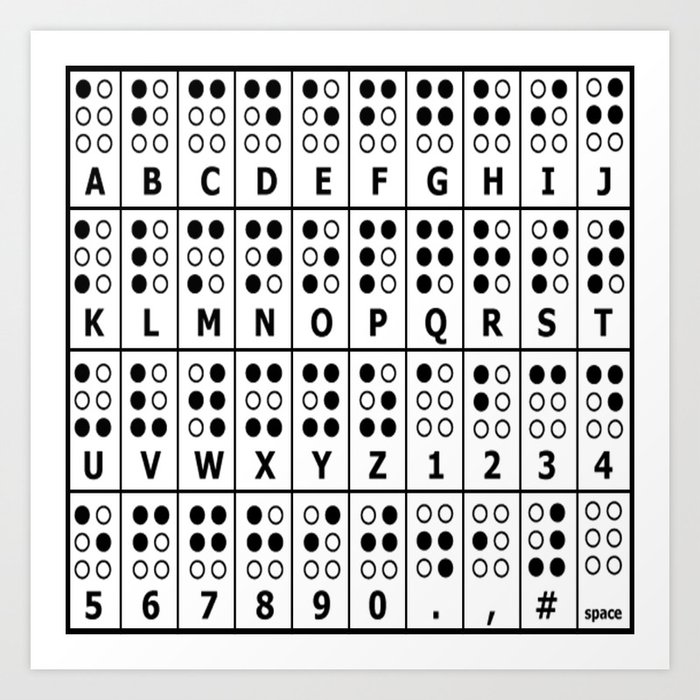



 Photo: Adam Grossberg/KQED




 Suzanne's Mom's Blog
