Feeds:
Posts
Comments

Posts Tagged ‘bsa’

Photo: MCNY via Hyperallergic.
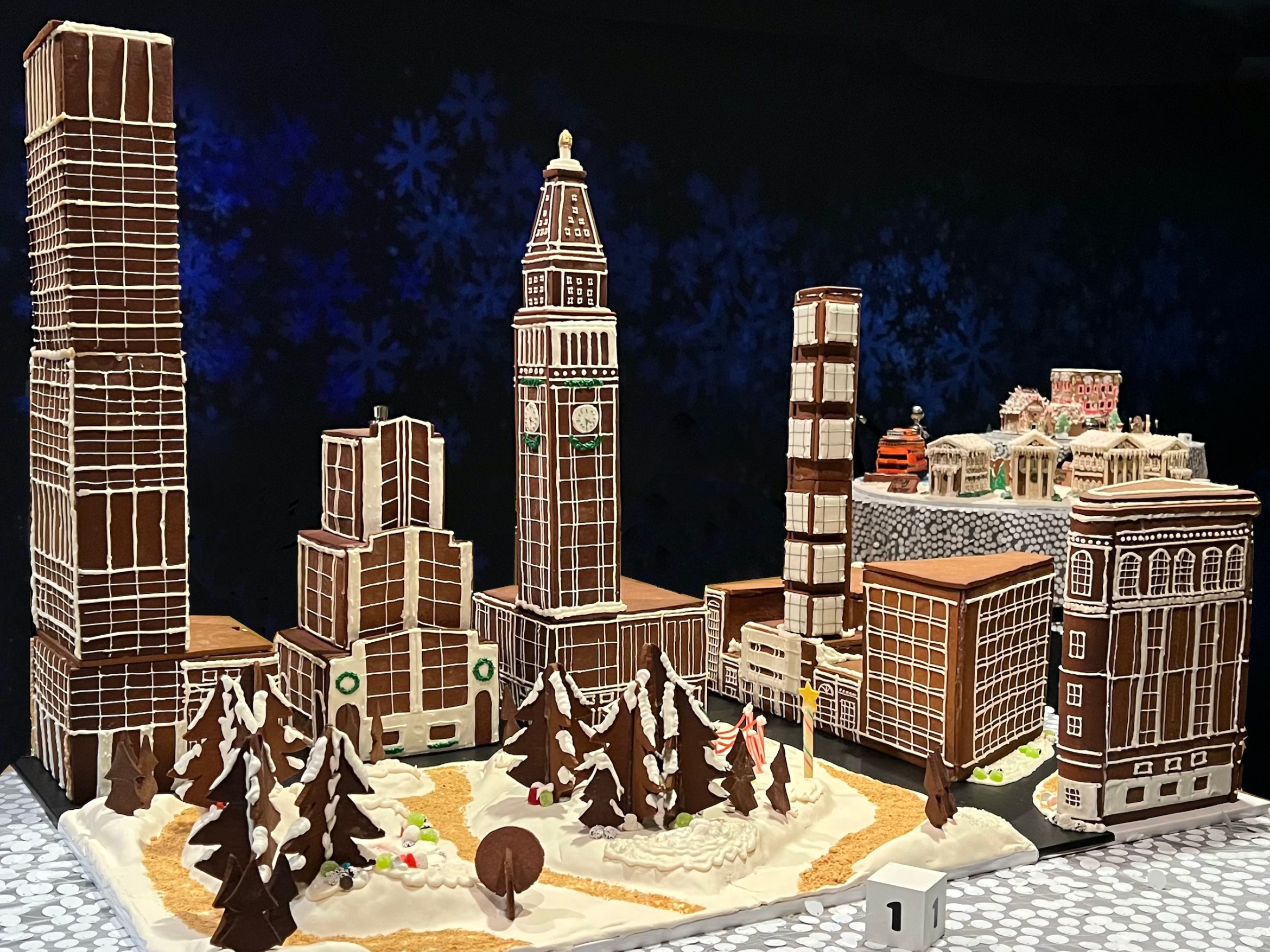
The Museum of the City of New York had a gingerbread display for the first time last year. This is John Keuhn’s gingerbread interpretation of Madison Square Park in Manhattan.

I had a nice little foray into holiday gingerbread early last week, between getting over Covid at the new place and the Paxlovid rebound.

My older granddaughter had a kit that was easy enough for even me to work on. Don’t you love the way the world is going with gingerbread? In Boston, an architectural society located near my old job is on its ninth year of amazing displays. (See BSA, here.)

Today’s story, from Hyperallergic, is about a gingerbread exhibit in New York. Elaine Velie reported in 2022, “The Museum of the City of New York (MCNY) is trying out a different type of exhibition this year, and it looks delicious. Gingerbread NYC: The Great Borough Bake-Off, up through January 16, features seven bakers’ edible replicas of New York City’s five boroughs (the Bronx, Brooklyn, Manhattan, Queens, and Staten Island).

“ ‘I can speak from personal experience about how difficult it is, said Jonah Nigh, one of the competition’s judges and a semifinalist on the reality show Baking It, where he was asked to create a gingerbread house. ‘You can measure everything as much as you want, but when you put it in the oven, you have no control over how much it shrinks and expands.’ …

“Nigh told Hyperallergic he especially enjoyed Sans Bakery’s miniature of Long Island City, Queens. ‘I love really small details,’ Nigh gushed, adding that it was so transformed it no longer looked gingerbread. That project belonged to Erica Fair, who has run the gluten-free bakery since 2010. She wanted to represent the iconic parts of her neighborhood and decided to recreate the seven line subway car, the iconic Silvercup film studio, and the graffiti visible below as people cross the East River from Manhattan.

“The baker explained that weather plays an outsized role in the success of the fickle medium: She initially planned to make her work twice as big, but her original house broke in half during the city’s early November heat wave. For her final product, Fair used Pez candies as bricks and mixed luster with vodka (it evaporates quicker than water) as paint. She also built a few Christmas trees with gummy bears.

“John Kuehn represented Manhattan and won the contest’s ‘grandest’ prize [above]. He had never made a gingerbread house before, but had worked as an architect, and his expertise is evident in the final product, a replica of Midtown’s Madison Square Park. Kuehn’s final version includes carefully constructed miniatures of the Flatiron Building and the Metropolitan Life Insurance Tower. He started working in early October and said that he spent around eight hours a day on the project until it was due before the judges in early November. …

“The bake-off and exhibition are a new initiative for the East Harlem museum, but one that will likely become a tradition, according to MCNY Chief Operating Officer Jerry Gallagher. The museum put out a call for both professional bakers and amateurs across the city and assembled an impressive team of judges. In addition to Nigh, the deciding panel comprised Bobbie Lloyd, who runs Magnolia Bakery; Nadine Orenstein, a drawings and prints curator at the Metropolitan Museum of Art who also serves as a judge for the annual National Gingerbread House Competition; painter-turned-baker Colette Peters, who designs elaborate cakes and teaches decorating with her namesake Colette’s Cakes in New Jersey; Melba Wilson, who owns the popular Melba’s Restaurant in Harlem; and Amy Scherber, at the helm of Manhattan’s beloved Amy’s Bread for 30 years.

“All seven displays won distinctions ranging from ‘most resilient to ‘best overall,’ the first of which was awarded to L’Appartement 4F Bakery’s recreation of a Brooklyn brownstone, which partially collapsed soon before it was set to be judged.”

Great photos at the paywall-free Hyperallergic, here. This year, the same museum invited 23 bakers from across the five boroughs to create gingerbread displays on the theme of “Iconic New York.” Read about that here.

Video: MCNY
This year’s gingerbread display at the museum.

Read Full Post »


031616-canstruction


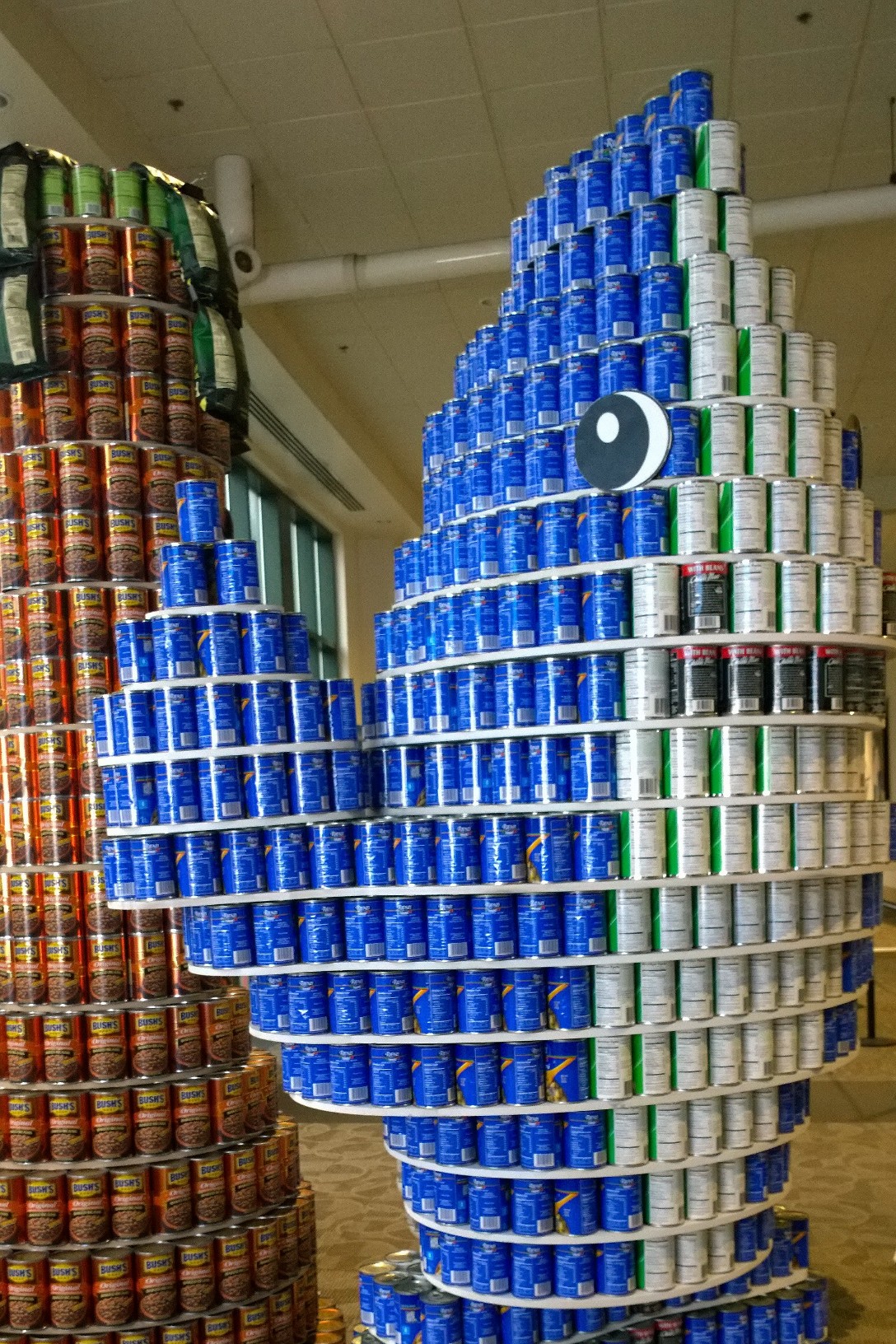
Several civic-minded design and construction businesses have once again entered the Rhode Island Community Food Bank‘s annual Canstruction contest. The display at the Providence Place mall combines fun with a message about hunger in the state and the need for canned goods.

LLB Architects of Pawtucket and Shawmut Design and Construction of Providence are the geniuses behind the display featuring the Left Shark, an Internet celebrity since one of singer Katy Perry’s backup dancers at the 2015 Super Bowl went rogue.

I remember seeing another Canstruction event last year, at the Boston Society of Architects. It’s easy to see why this sort of work needs to be done by designers and builders: it’s really hard to make cans look like anything but cans. The BSA cans were donated to the Merrimack Valley Food Bank in Lowell.

031516-left-shark-recreated-in-cans

Read Full Post »

You have until Jan. 3 to see beloved Boston landmarks in the form of  gingerbread, gumdrops, frosting, and pretzels. The annual competition is put on at the Boston Society of Architects, which has a public exhibit area on Congress Street between Atlantic and Dorchester avenues.

The public is invited to a reception on Monday.

“Please join the Community Design Resource Center (CDRC) for the Gingerbread Reception, where we will view more than 20 gingerbread designs from teams of architecture and landscape architecture firms on exhibit, enjoy light refreshments, announce the winners, celebrate the incredible bakers, and launch CDRC’s first Open Call for Projects.

“Vote for your favorite gingerbread house now!

“At the Gingerbread Reception we will launch our first Open Call for Projects — an open invitation to neighborhood groups and community nonprofits in the greater Boston area to apply for a design assistance grant. Underserved audiences are especially encouraged to apply, as well as projects that otherwise fall between traditional funding cracks but that somehow serve to make communities better. …

“While challenging designers to explore a new medium, this sweet event also raises funds for the CDRC. A special thank you to the Boston Society of Landscape Architects and the BSLA ‘gingerscapes’ for joining us this year!” More here.

The BSA’s photos are on instagram. Look for bsaaia. It’s fun to guess what you are seeing.

121815-BSA-gingerbread-1

121815-BSA-gingerbread-2.


121815-BSA-gingerbread-3.


Read Full Post »

Photo: Boston architecture firm IKD.
Designer Timothy Olson, material supplier Fraserwood/Mack Magee. The wood is cypress. “The presence of natural materials such as wood is associated with lower stress and positive feelings.”

There’s a great exhibit about using wood in construction at the Boston Society of Architects on Congress St. in Boston, but only until Tuesday, September 30.

I was surprised to learn that nowadays it is actually possible — and maybe even safer — to use wood for city buildings.

According to the BSA website, the timber “exhibition celebrates wood as the region’s most sensible and abundant choice of material for urban building, highlighting its flexibility and technical qualities, including timber’s potential to combat climate change.

“Yugon Kim, founding partner of IKD, Associate/Director of TSKP Boston, and co-curator of the exhibition explains, ‘We now know that timber is a superior structural building material that should be considered alongside steel and concrete. The carbon offset and sustainability benefits of wood make it an ever-relevant and timely building material in the urban landscape.’

” ‘Urban Timber: From Seed to City’ shows that recent developments — including numerous successful implementations of timber as primary structural for midrise buildings in Europe — point to a different future.

“The exhibition includes a number of case studies, examples of existing wood technology and recent material innovations in the many kinds of engineered timber available to the building industry today.”

Read more about the exhibit here.

Meanwhile, at Andrew Sullivan’s blog (here), we find a quote from James Hamblin about why trees are good for our health: “It is becoming increasingly clear that trees help people live longer, healthier, happier lives—to the tune of $6.8 billion in averted health costs annually in the U.S., according to research published this [year]. And we’re only beginning to understand the nature and magnitude of their tree-benevolence.

“In the current journal Environmental Pollution, forester Dave Nowak and colleagues found that trees prevented 850 human deaths and 670,000 cases of acute respiratory symptoms in 2010 alone. That was related to 17 tonnes of air pollution removed by trees and forests, which physically intercept particulate matter and absorb gasses through their leave.”

More from Hamblin at the Atlantic.

Read Full Post »

People interested in imaginative uses of space to make cities more livable should get over to the Boston Society of Architects on Congress St. before September 29, when an intriguing exhibit closes.

Eight of us visited at lunch today, and the BSA’s marketing director went around the Reprogramming the City exhibit with us pointing out highlights and answering questions.

We saw photos of a lamppost that doubles as an umbrella, a staircase in Hong Kong (below) made into a public lounge, bus stops in Sweden using sun lamps at night, a “low line” community space under a highway (like New York’s high-line concept but under not over), a repurposed parking machine that spits out “tickets” describing how a nearby problem area has been fixed by the city of Boston, street mosaics in Portugal that have a QR code for accessing tourist information, and a Dutch solution to recycling teddy bears and other usable goods curbside for passerby to pick up. The list goes on.

I tried to round up more people to join the excursion, but business meetings at lunch seem to come first. It always surprises me that folks don’t take advantage of cultural activities at lunch: we are surrounded by really nice ones. At least the farmers market is popular. People always have time for that.

More on Reprogramming the City at the BSA website, where you can take an audio tour.

Update 9/18/13 — See some great pictures from the exhibit at the Boston Globe, here.

Photo: Scott Burnham
The Cascade by Edge Design Institute, 2007, Central Hong Kong.
Right, Urban Air by Stephen Glassman, 2010.

Read Full Post »