Feeds:
Posts
Comments

Posts Tagged ‘cheese’

Photo: Neal’s Yard Dairy/Instagram.
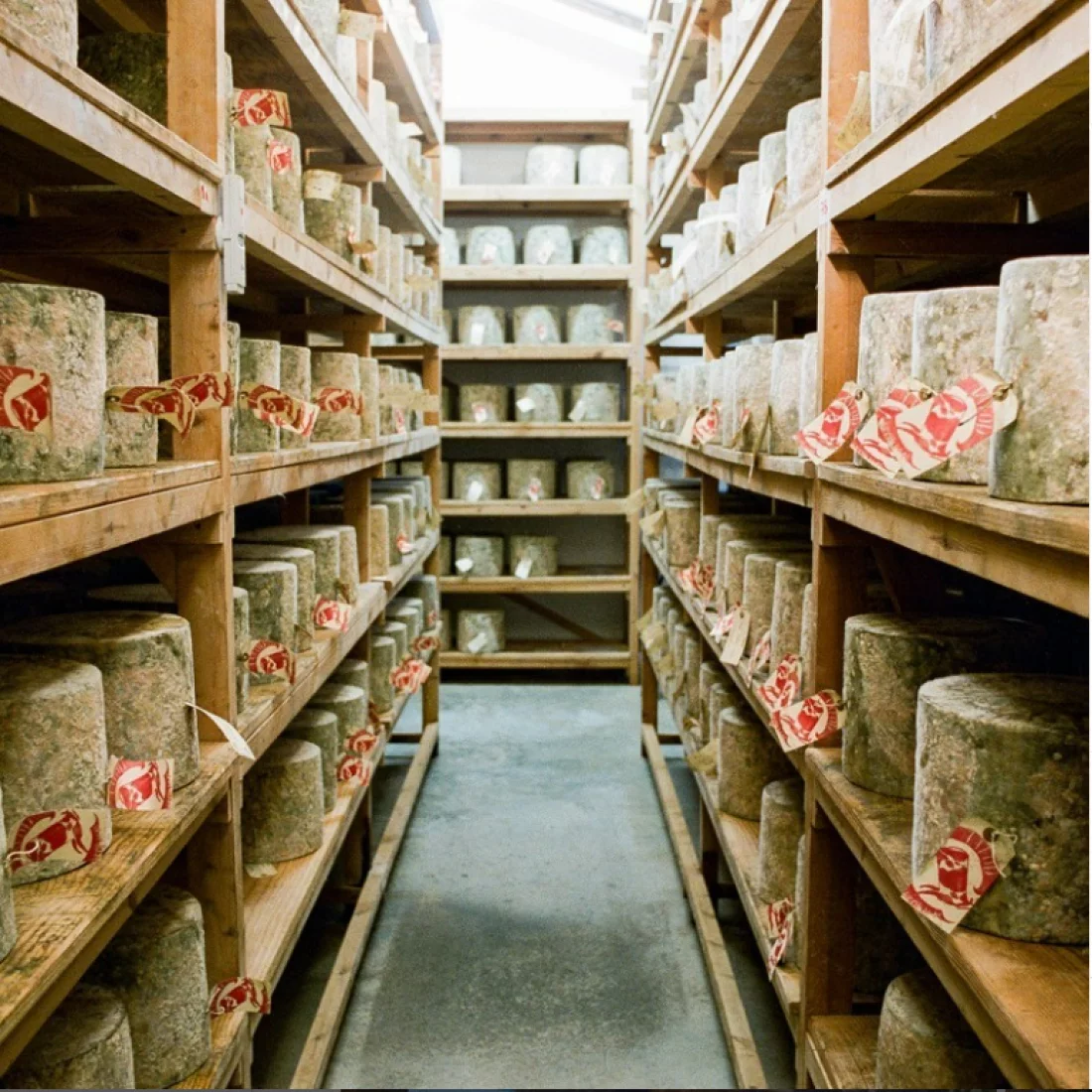
London-based distributor Neal’s Yard Dairy announced recently on Instagram that it was “the victim of a sophisticated fraud” involving high-value cheddar cheese.

You really don’t want to get mixed up with people who are intense about cheese. Years ago, when I was a member of Cheese Lovers International, I crossed knives with the highly emotional founder, whose name I no longer recall. To compensate for something I once complained about, he told me he would give me a discount on every order for my life. Unfortunately, his staff had no way of knowing about my discount. Explaining got to be too much work.

Rachel Treisman and Juliana Kim have a great cheese story at National Public Radio.

“Authorities in London have arrested a 63-year-old man in connection with the cheese heist of 2024, in which tens of thousands of pounds of high-value cheddar were stolen from a major distributor. ..

“ ‘The man was taken to a south London police station where he was questioned. He has since been bailed pending further enquiries,’ a police spokesperson said.

“Over the past week, the British artisanal cheese community has been reeling after Neal’s Yard Dairy announced it had been the ‘victim of a sophisticated fraud resulting in the loss of over £300,000 worth of clothbound Cheddar’ — the equivalent of more than $389,000.

“ ‘The theft involved a fraudulent buyer posing as a legitimate wholesale distributor for a major French retailer, with the cheese delivered before the discovery of the fraudulent identity,’ the company said.

“The thief made off with 950 wheels — over 22 metric tons, or roughly 48,500 pounds — of Hafod, Westcombe and Pitchfork cheddar. … The wheels came from three different artisan suppliers across England and Wales.

“ ‘Between them, these cheeses have won numerous awards and are amongst the most sought-after artisan cheeses in the U.K.,’ Neal’s Yard Dairy said. … The crime cuts deep: Cheddar, which originated in a village by the same name in Somerset, England, is the best-selling cheese in the U.K. and a big source of national pride.

“Last week, British celebrity chef Jamie Oliver explained in an Instagram video that there is ‘only a small handful of real cheddar cheese makers in the world,’ and that’s where the stolen cheese came from. …

“Neal’s Yard Dairy is shouldering the cost of the crime, having already paid the artisan cheesemakers in full. The company says it is now taking steps to ensure its own financial stability. …

“Tom Calver with the cheesemaker Westcombe says they were led to believe they were sending their products to France via Neal’s Yard Dairy.

“ ‘These guys … basically impersonated a wholesaler-slash-customer, quite a large retailer over in France,’ he said in an Instagram video, showing a row of empty shelves and noting he had posted excitedly about the 10-ton order just weeks earlier. ‘It was a hoax, it was theft, it was fraud. I mean, it’s nuts.’

“Patrick Holden, whose Hafod Welsh cheddar was taken, told the BBC … he believes they may be trying to sell it in the Middle East or Russia, ‘because people won’t ask questions there.’

“ ‘I think if they tried to sell it closer to home they’d find it difficult,’ he said, naming North America and Australia as examples. ‘Because the international artisan community is very connected.’ …

“Neal’s Yard Dairy is asking its ‘esteemed community of cheesemongers around the world’ to keep an eye out for the cheese and contact them if they are offered or receive any suspicious deals — especially clothbound cheddars of certain weights (10 kg and 24 kg) with the tags detached. …

“ ‘Because we can potentially trace it back — hopefully, maybe, I don’t know.’ “

I have one more question: Where was Ratatouille at the time of the crime?

More at NPR, here.

Read Full Post »

Photo: Foodandmore

Dear Readers, You know that you have been wondering why the taste of cheese changes depending on what music it was exposed to during the aging process. So much more agreeable than wondering who the next president will be or “why the sea is boiling hot,” to quote the prescient Lewis Carroll!

Well, wonder no more. Jason Daley at the Smithsonian has the musical cheese story covered.

The creation of good cheese involves a complex dance between milk and bacteria. In a quite literal sense, playing the right tune while this dance unfolds changes the final product’s taste, a new study shows.

“Denis Balibouse and Cecile Mantovani at Reuters report that hip-hop, for example, gave the cheese an especially funky flavor, while cheese that rocked out to Led Zeppelin or relaxed with Mozart had milder zests.

“Last September, Swiss cheesemaker Beat Wampfler [whose day job is as a veterinarian] and a team of researchers from the Bern University of Arts placed nine 22-pound wheels of Emmental cheese in individual wooden crates in Wampfler’s cheese cellar. Then, for the next six months each cheese was exposed to an endless, 24-hour loop of one song using a mini-transducer, which directed the sound waves directly into the cheese wheels.

“The ‘classical’ cheese mellowed to the sounds of Mozart’s The Magic Flute. The ‘rock’ cheese listened to Led Zeppelin’s ‘Stairway to Heaven.’ An ambient cheese listened to Yello’s ‘Monolith,’ the hip-hop cheese was exposed to A Tribe Called Quest’s ‘Jazz (We’ve Got)’ and the techno fromage raved to Vril’s ‘UV.’ A control cheese aged in silence, while three other wheels were exposed to simple high, medium and low frequency tones.

“According to a press release, the cheese was then examined by food technologists from the ZHAW Food Perception Research Group, which concluded that the cheese exposed to music had a milder flavor compared to the non-musical cheese. They also found that the hip-hop cheese had a stronger aroma and stronger flavor than other samples.

“The cheeses were then sampled by a jury of culinary experts during two rounds of a blind taste test. Their results were similar to the research group’s conclusions and the hip-hop cheese came out on top. …

“Michael Harenberg, director of the music program at Bern University of the Arts says he was skeptical of the whole project when Wampfler first approached him. ‘Then we discovered there is a field called sonochemistry that looks at the influences of sound waves, the effect of sound on solid bodies.’

“It turns out that Wampfler was rooting for the hip-hop cheese to win all along. Now, reports Reuters, he and his collaborators want to expose cheese to five to ten different types of hip-hop to see if it has similar effects.”

More here.

Read Full Post »

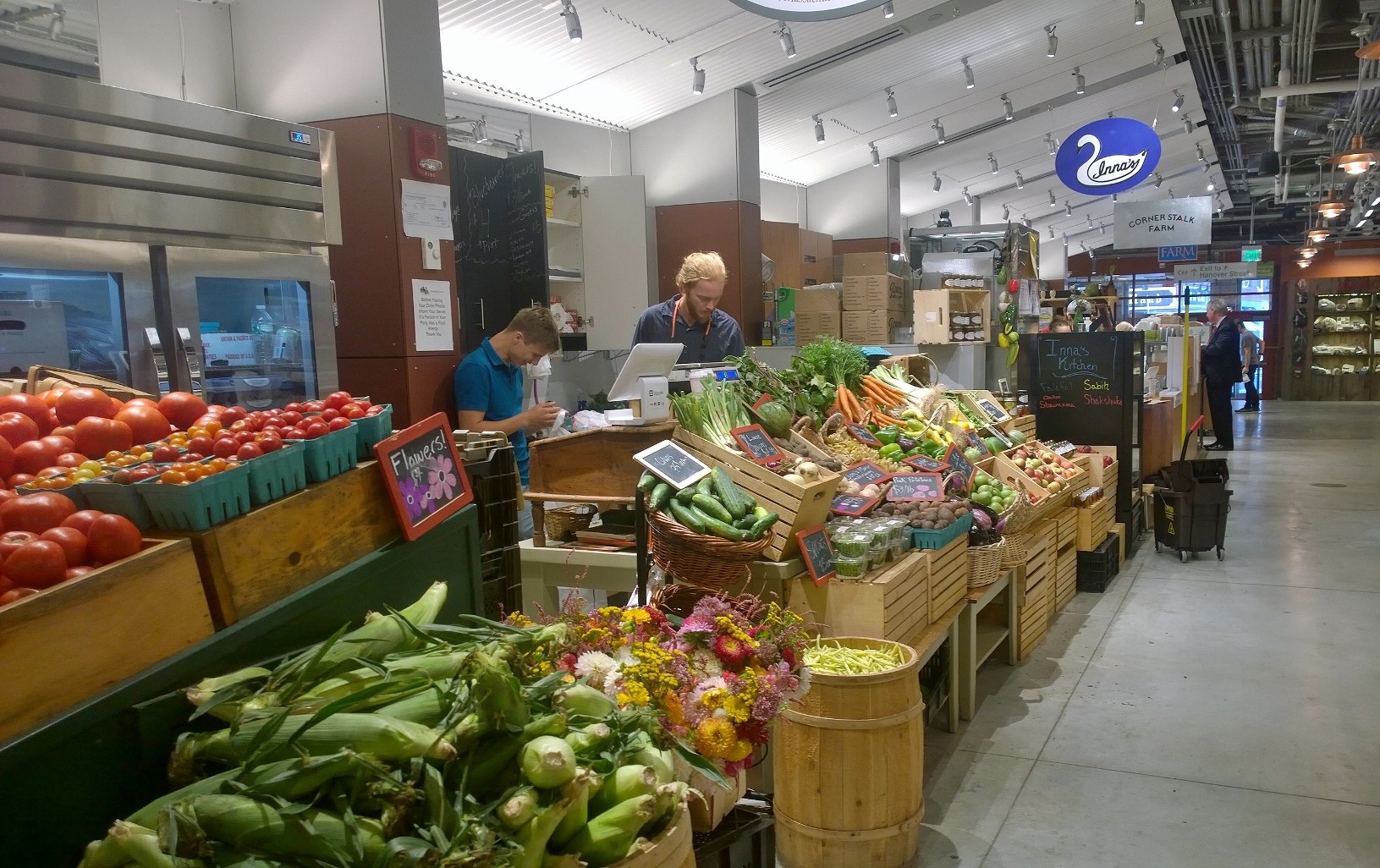
The original idea when the grandchildren visited my workplace was to walk to the new Boston Public Market, but it was too far and there were so many other interesting things along the way.

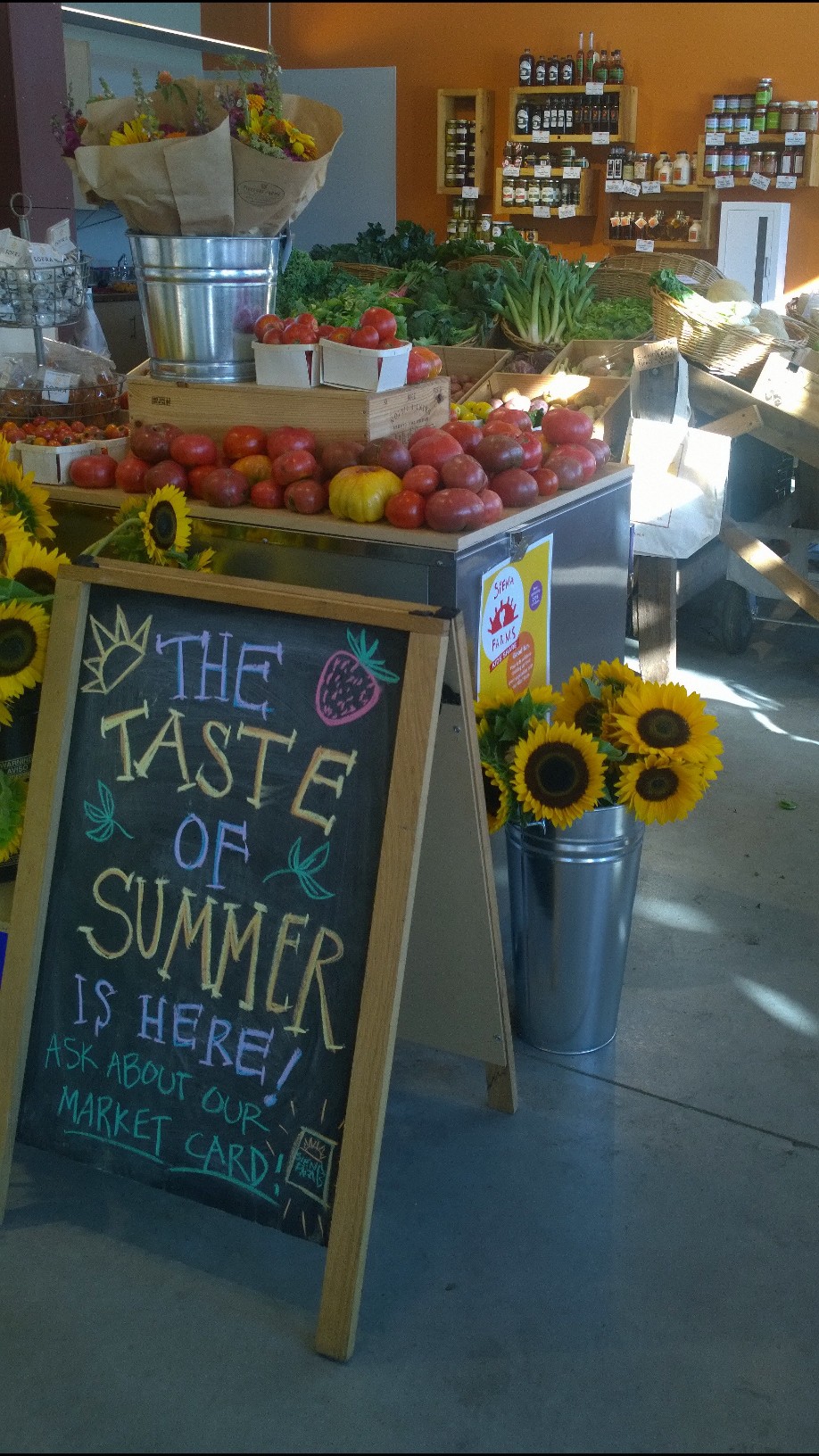
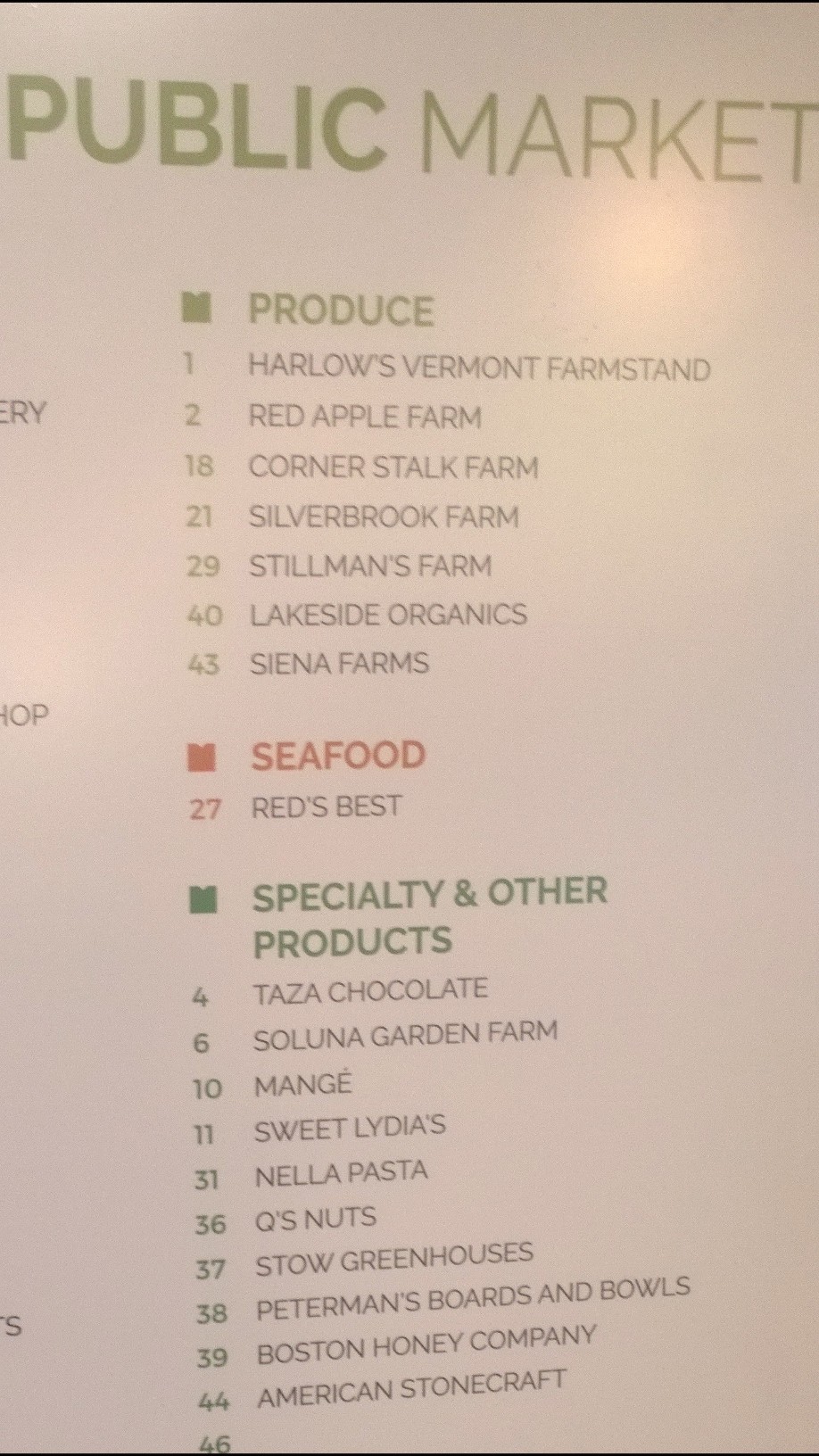
We will go as a family another day, but I thought I would zip over there Thursday and take some pictures. I arrived at 8 a.m. The market is open Wednesdays to Sundays, 8 to 8, and since the activity wasn’t in full swing, it was a good time to look around.

The Boston Public Market is not as big, as noisy, or as messy as the famed Reading Terminal Market in Philadelphia (and there are no Amish), but it shows real promise. Although the market was fairly quiet at 8 a.m., there was already a line at MotherJuice and George Howell’s Coffee — people getting revved up for work at Government Center and environs. At a farmstand, I bought two small squashes. Fifty cents.

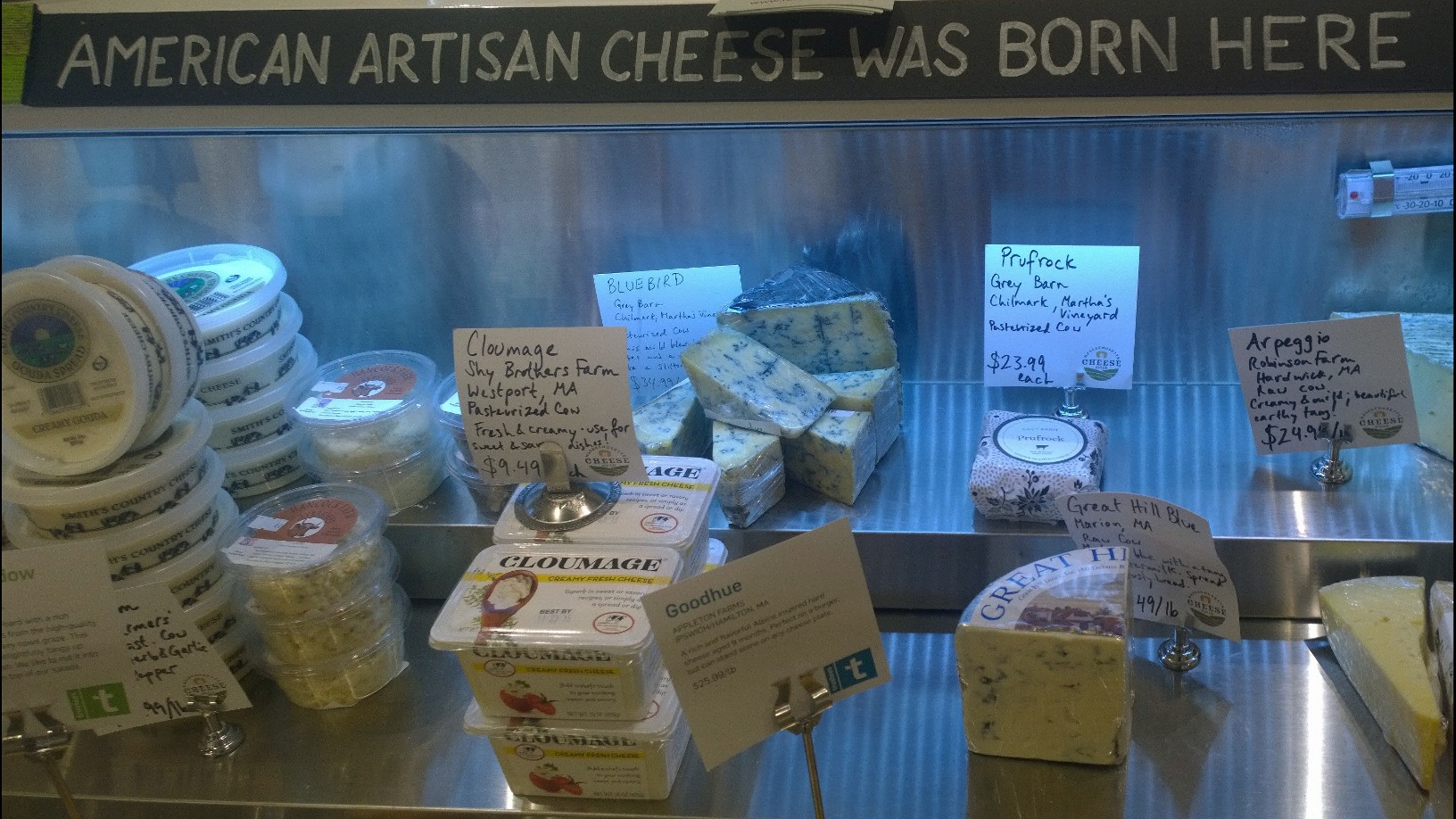
The Vietnamese restaurant Bon Me had a counter, and I saw local honey, fruits, vegetables, artisan cheese, and crafts. The crafts gave me pause as the market is supposed to be mainly an outlet for regional farmers, and much as I love crafts, I have seen them overwhelm another farmers market. As long as there is a good balance, it will be fine.

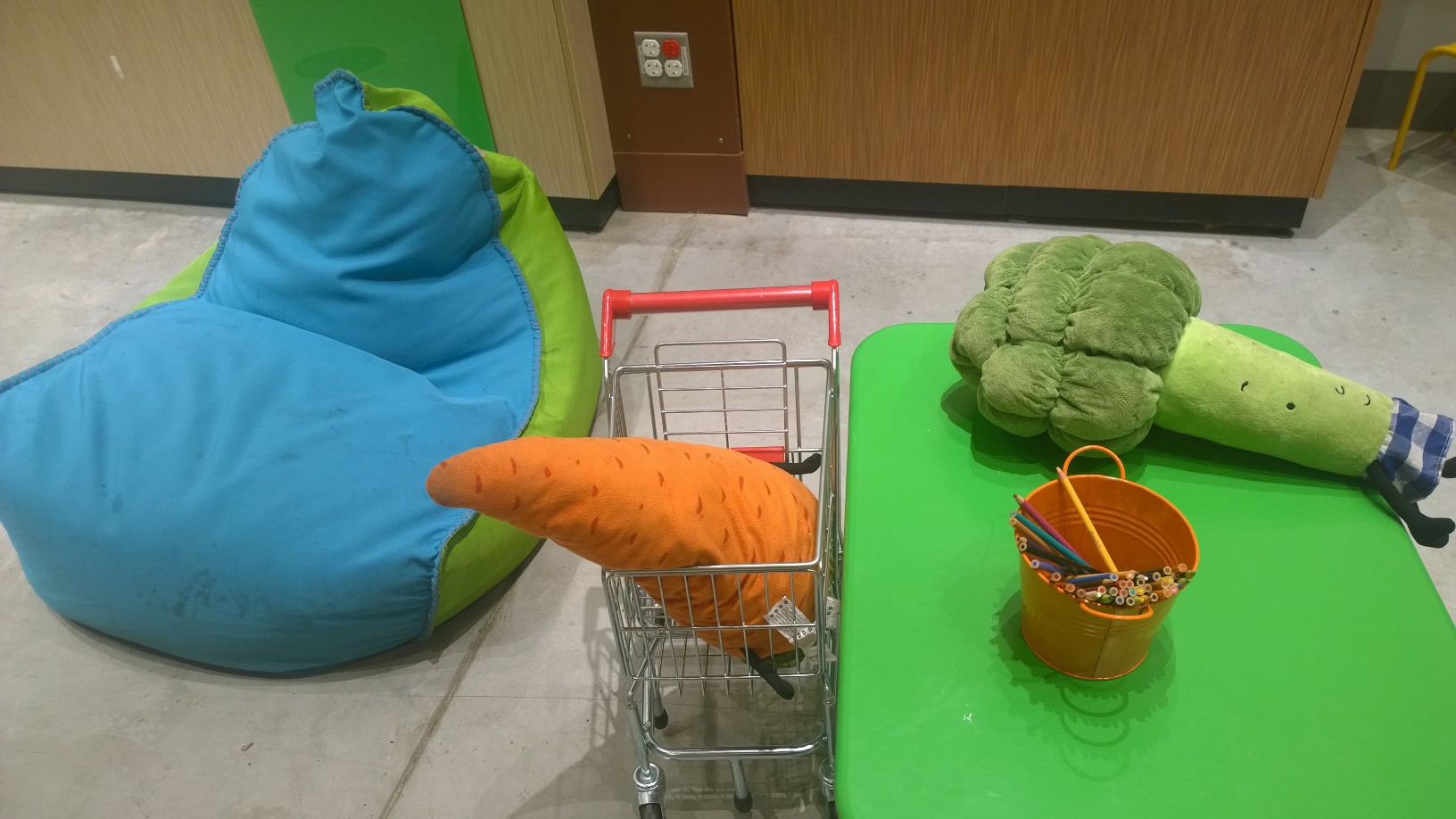
Note the vegetable soft toys in the children’s play area.

081315-market-window

081315-indoor-farmstand

081315-market-overview

081315-public-market-play-area

081315-cheese-at-market

081315-fresh-produce

081315-public-market

Read Full Post »

Looking through a pile of magazines recently, I found a 2011 newspaper article I had cut out about Hardwick, Vermont. It’s about reinventing the local culture around food and food-related businesses.

Dirk Van Susteren wrote at the Boston Globe, “If there were a ‘Locavore Capital of America’ one would expect it to be in sunny California or perhaps somewhere in the heartland … But, surprisingly, in rocky northern New England, just 45 miles from the Canadian border, is a place that could contend for that honor: Hardwick, a former quarrying town that until recently knew more pain than promise.

“In recent years Hardwick, population 3,200, located along a tumbling stretch of the Lamoille River, has seen a half-dozen innovative agricultural enterprises crop up, many with mission statements including such words as ‘community-based,’ ‘sustainable,’ and ‘organic.’

“The town, always a bit scruffy, and with a high jobless rate, might be on a green trajectory. And people are taking notice.

“Among the new operations here or in nearby towns: Jasper Hill Farm, which makes artisanal cheeses and provides aging, distribution, and marketing services to local cheesemakers; High Mowing Seed Co., an organic seed business, whose owner likes traveling around the country to tell the Hardwick farm and food story; Highfields Center for Composting, a soil-making business that collects its raw materials from restaurants, farms, and schools; Pete’s Greens, a CSA (community-support ed agriculture) farm that grows organic vegetables in gardens and greenhouses; and, finally, Vermont Soy, a tofu and soymilk producer.

“The area also has dozens of small-scale producers, from orchardists to maple sugarmakers. Their products sell at farm stands, at the summer farmers’ market, and at Buffalo Mountain Food Co-op and Cafe, a landmark in its 36th year. …

“Monty Fischer, the executive director of the Center for an Agricultural Economy, the nonprofit organization that helped spur these farm efforts, has kept count. ‘People from 40 states and 40 countries have come to ask about our agricultural cluster,’ he reports, from his downtown office.”

Read about the 2011 federal grant for the Vermont Food Venture Center, an incubator facility, the organic North Hardwick Dairy, where sunflowers are grown as a value-added crop, mead maker Caledonia Spirits, and more here.

And if anyone has been up there recently, I sure would love to know if the food culture is still going strong.

Photo: Wikipedia
North Main St., Hardwick, Vermont

Read Full Post »

I’ve been on one of my periodic murder-mystery splurges, with a couple mysteries this month that take place in France.

Books about France should never be read on an empty stomach — there is always wonderful food.

The author of The Crowded Grave actually went overboard, I thought, stopping urgent action to prepare elaborate meals. I think The Bookseller mystery will maintain a better balance. So far the hero has only had pastries and lovely coffees on route to something actually related to the story.

Thinking about France makes me want to point out a website where my friend Ronnie Hess blogs, My French Life. Ronnie lived in France for years working for CBS and more recently wrote a guidebook called Eat Smart in France that taps her her deep knowledge of French food.

Ronnie was already a fine cook as a teenager, when I recall making a Scripture cake at her house:

  • 3/4 cup Genesis 18:8
  • 1 1/2 cup Jeremiah 6:20
  • 5 Isaiah 10:14 (separated)
  • 3 cups sifted Leviticus 24:5
  • 3 teaspoons 2 Kings 2:20
  • 3 teaspoons Amos 4:5
  • 1 teaspoon Exodus 30:23
  • 1/4 teaspoon each 2 Chronicles 9:9
  • 1/2 cup Judges 4:19
  • 3/4 chopped Genesis 43:11
  • 3/4 cup finely cut Jeremiah 24:5
  • 3/4 cup 2 Samuel 16:1
  • Whole Genesis 43:11

Her mother helped us think through what was meant by leavening and certain more arcane references.

Do check out Ronnie at My French Life, here.

Read Full Post »

Vermonters care a lot about their farms. So when a dairy farm in South Woodstock was threatened with development, the neighbors bought it.

“Perched on a hill overlooking a valley,” writes Ann Trieger Kurland at the Boston Globe, “Farmstead Cheese Co. began as a neighborly plan to preserve a dairy farm.

“The bucolic 18-acre site was a former water buffalo farm and creamery that produced mozzarella and yogurt. When its owners moved to Canada and put the land up for sale, locals worried about the loss of jobs and the disappearance of another bit of the Green Mountain State’s rich heritage. They feared that the pastoral landscape might be grabbed by a developer.

“So 14 neighbors banded together to buy the farm and decided cheese making might safeguard its future. Within the year, they rebuilt the creamery, brought in a mixed breed herd — Holstein, Jersey, Ayrshire, and Swiss Brown — to blend milks and make farmstead cheese. They started the first community-owned dairy farm in the state. In two years, the company has won dozens of awards for its cheddar, a harvarti-style tilsit, Edam, and English and French-style cheeses.

“The new owners are not novices. They include seasoned farmers and food industry executives who hired experienced staff. The top cheese maker, Rick Woods, 46, has been plying his craft for 19 years. ‘We’re a new company, but it’s not the first time around the block for these people,’ says Sharon Huntley, who is in charge of marketing.” Read more about the community-owned farm and where you can buy the cheeses.

Photo: Vermont Farmstead Cheese Co.
At the community-owned in South Woodstock, Vt., there are 135 cows.

Read Full Post »