Feeds:
Posts
Comments

Posts Tagged ‘composer’

Photo: Sam Odgden via Chamber Music America.
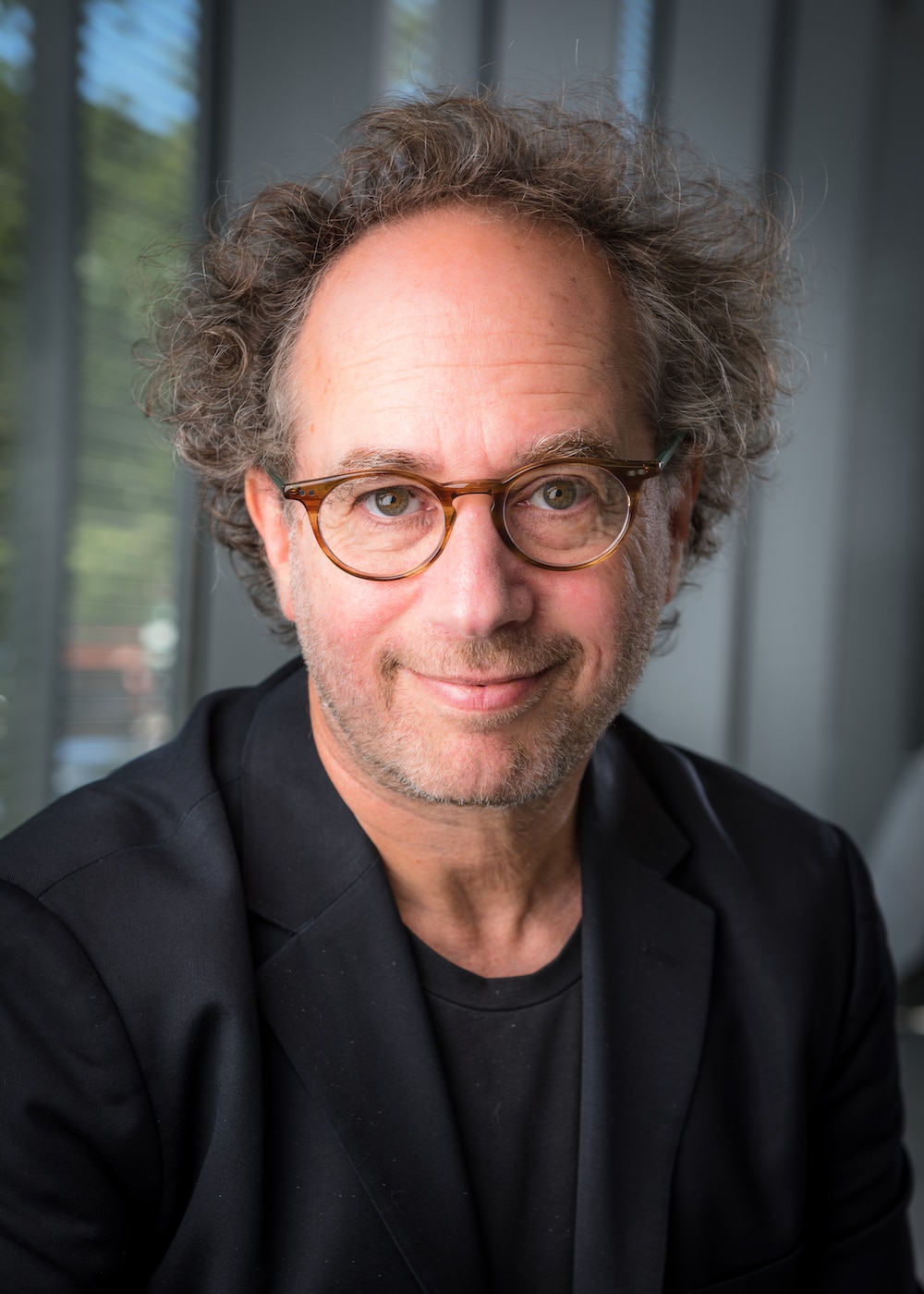
Composer Tod Machover.

With all the furor about artificial intelligence, Rebecca Schmid decided to check in with MIT’s Tod Machover, “a pioneer of the connections between classical music and computers.” Their conversation about how AI applies to music appears on the Chamber Music America website.

“Sitting at his home in Waltham, Massachusetts, the composer Tod Machover speaks with the energy of someone half his 69 years as he reflects on the evolution of digital technology toward the current boom in artificial intelligence.

“ ‘I think the other time when things moved really quickly was 1984,’ he says — the year when the personal computer came out. Yet he sees this moment as distinct. ‘What’s going on in A.I. is like a major, major difference, conceptually, in how we think about music and who can make it.’

“Perhaps no other figure is better poised than Machover to analyze A.I.’s practical and ethical challenges. The son of a pianist and computer graphics pioneer, he has been probing the interface of classical music and computer programming since the 1970s.

“As the first Director of Musical Research at the then freshly opened Institut de Recherche et Coordination Acoustique/Musique (I.R.C.A.M.) in Paris, he was charged with exploring the possibilities of what became the first digital synthesizer while working closely alongside Pierre Boulez.

“In 1987, Machover introduced Hyperinstruments for the first time in his chamber opera VALIS, a commission from the Pompidou Center in Paris. This technology incorporates innovative sensors and A.I. software to analyze the expression of performers, allowing changes in articulation and phrasing to turn, in the case of VALIS, keyboard and percussion soloists into multiple layers of carefully controlled sound.

“Machover had helped to launch the M.I.T. Media Lab two years earlier in 1985, and now serves as both Muriel R. Cooper Professor of Music and Media and director of the Lab’s Opera of the Future group. …

“Machover emphasizes the need to blend the capabilities of [AI] technology with the human hand. For his new stage work, Overstory Overture, which premiered last March at Lincoln Center, he used A.I. as a multiplier of handmade recordings to recreate the sounds of forest trees ‘in underground communication with one another.’

“Machover’s ongoing series of ‘City Symphonies,’ for which he involves the citizens of a given location as he creates a sonic portrait of their hometown, also uses A.I. to organize sound samples. Another recent piece, Resolve Remote, for violin and electronics, deployed specially designed algorithms to create variations on acoustic violin. …

“Machover has long pursued his interest in using technology to involve amateurs in musical processes. His 2002 Toy Symphony allows children to shape a composition, among other things, by means of ‘beat bugs’ that generate rhythms. This work, in turn, spawned the Fisher-Price toy Symphony Painter and has been customized to help the disabled imagine their own compositions. …

“Rebecca Schmid: How is the use of A.I. a natural development from what you began back in the 1970s, and what is different?
“Tod Machover: There are lots of things that could only be done with physical instruments 30 years ago that are now done in software: you can create amazing things on a laptop. But what’s going on in A.I. is like a major, major difference, conceptually, in how we think about music and who can make it.

“One of my mentors and heroes is Marvin Minsky, who was one of the founders of A.I., and a kind of music prodigy. And his dream for A.I. was to really figure out how the mind works. He wrote a famous book called The Society of Mind in the mid-eighties based on an incredibly radical, really beautiful theory: that your mind is a group of committees that get together to solve simple problems, with a very precise description of how that works. He wanted a full explanation of how we feel, how we think, how we create — and to build computers modeled on that.

“Little by little, A.I. moved away from that dream, and instead of actually modeling what people do, started looking for techniques that create what people do without following the processes at all. A lot of systems in the 1980 and 1990s were based on pretty simple rules for a particular kind of problem, like medical diagnosis. You could do a pretty good job of finding out some similarities in pathology in order to diagnose something. But that system could never figure out how to walk across the street without getting hit by a car. It had no general knowledge of the world.

“We spent a lot of time in the seventies, eighties, and nineties trying to figure out how we listen — what goes on in the brain when you hear music, how you can have a machine listen to an instrument — to know how to respond. A lot of the systems which are coming out now don’t do that at all. They don’t pretend to be brains. Some of the most kind of powerful systems right now, especially ones generating really crazy and interesting stuff, look at pictures of the sound — a spectrogram, a kind of image processing. I think it’s going to reach a limit because it doesn’t have any real knowledge of what’s there. So, there’s a question of, what does it mean and how is it making these decisions?

What systems have you used successfully in your work?
“One is R.A.V.E., which comes from I.R.C.A.M. and was originally developed to analyze audio, especially live audio, so that you can reconstruct and manipulate it. The voice is a really good example. Ever since the 1950s, people have been doing live processing of singing. The problem is that it’s really hard to analyze everything that’s in the voice: The pitch and spectrum are changing all the time.

“What you really want to do is be able to understand what’s in the voice, pull it apart and then have all the separate elements so that you can tune and tweak things differently on the other side. And that’s what R.A.V.E. was invented to do. It’s an A.I. analysis of an acoustic signal. It reconstructs it in some form, and then ideally it comes out the other side sounding exactly like it did originally, but now it’s got all these handles so that I can change the pitch without changing the timbre. And it works pretty well for that. You can have it as an accompanist, or your own voice can accompany you. It can change pitch and sing along. And it can sing things that you never sang because it understands your voice. …

“The great thing about A.I. models now is that you can use them not just to make a variation in the sound, but also a variation in what’s being played. So, if you think about early electronic music serving to kind of color a sound — or add a kind of texture around the sound, but being fairly static — with this, if you tweak it properly, it’s a kind of complex variation closely connected to what comes in but not exactly the same. And it changes all the time, because every second the A.I. is trying to figure out, How am I going to match this? How far am I going to go? Where in the space am I? You can think of it as a really rich way of transforming something or creating a kind of dialogue with the performer.” Lots more at Chamber Music America, here. No firewall.

I myself have posted about the composer a few times: for example, here (“Tod Machover,” 2012); here (“Stanford’s Laptop Orchestra,” 2018); and here (“Symphony of the Street,” 2017).

“AI Finished My Story. Does It Matter?” at Wired, here, offers additional insight.

Read Full Post »

Map: Surveyed by Charles Blaskowitz and published by William Faden, 1777.
When the future composer Occramer Marycoo was brought to America as a slave, he landed in Newport, Rhode Island. Today his achievements are getting belated attention.

It isn’t rewriting history to discuss slavery in America or the life of slaves. It’s resurrecting history. As one website admonishes, “To build a more just and equitable future, we must face our history in all its complexity.”

Today’s article, from Early Music America, is about an 18th century African who suffered the horror of slavery and is now being honored as the first published Black composer in America.

Sophie Genevieve Lowe writes, “In January 2023, Sotheby’s held an auction for a Chippendale chest of drawers, estimated to sell for almost $800,000. Part of its unusually high value derived from the original owner, which Sotheby’s advertised as the ‘Important Lieutenant Colonel Caleb Gardner’ — a hero of the American Revolution and friend to George Washington. Sotheby’s omits that Gardner helped enslave some 3,912 human beings, one of whom was Occramer Marycoo, perhaps the first Black African to have music published in America and the first Black musician to be recognized by the white American community as a professional musician.

“Occramer Marycoo’s story commences and concludes in Africa. … Based on the spelling of his name, it is likely that Marycoo was from an Akan language people group from the Gold Coast of Africa, specifically Ghana.

“Marycoo was forcibly transported to the American colonies, possibly on the 1764 voyage of the ship ‘The Elizabeth,’ owned by sea captain Caleb Gardner.  Records from the Transatlantic Slave Database show that the ship left Cape Coast, a prison fort in Ghana, with 120 captives on board. Only 89 survived the crossing.

“Although the majority of enslaved people who were brought to Newport, Rhode Island, were eventually shipped to the Caribbean, Gardner kept Marycoo as his own property, renaming him Newport Gardner. He is thought to have been around 14 years old when brought to America and, throughout his life, he would go by both names. …

“It was not long after arriving in Newport that Marycoo displayed his brilliant intellect. He quickly became fluent in English and French and learned the fundamentals of music. He was said to be composing within four years of his arrival in America. There are several theories as to who taught Marycoo, the most prominent being American composer Andrew Law (1749–1821). Law wrote much about music education. …

“There are numerous references to compositions by Marycoo, but his only known surviving work is the crux of Marycoo’s historical place as the first published musical work by a Black person in the nascent United States. Musicologist Eileen Southern, in her 1997 book The Music of Black Americans: A History, theorized that ‘Crooked Shanks,‘ from a collection called A Number of Original Airs, Duetto’s, and Trio’s [sic], published in 1803, was by Marycoo. The piece is credited to a composer with only the last name given, Gardner.

“However, new research seems to indicate that the music had been composed prior to the 1803 publication date. ‘Crooked Shanks’ was also previously published in London under the title ‘The Sea Side‘ by the publisher Bride in Twenty Four Country Dances for the Year 1768, and in the 1770s, as the ‘The Bill of Rights’ by the publisher Thompson.

John Fitzhugh Millar identified both these melodies in his book Country Dances of Colonial America. He also believes that Marycoo wrote this melody and goes as far to hypothesize that Marycoo also listed the dance instructions that accompany the melody. Marycoo’s status as a slave would have certainly been a deterrent to properly credit him at the time — if he indeed wrote the piece. …

“We can gather clues to some of Marycoo’s musical influences. As a composer and teacher, Law dedicated himself to forging an American musical style based on European traditions. That element is found in Marycoo’s short but delightful ‘Crooked Shanks.’ Although more scholarship may uncover earlier published compositions by Marycoo, as of now ‘Crooked Shanks’ stands as the first attributed published piece of music by a Black composer in the European style in the United States.

“Many sources point to Law as the most likely teacher to Marycoo. The problem is that the first known time that Law went to Rhode Island was in 1783, when Marycoo was already in his late thirties. By then, Marycoo had already composed his first known work, an anthem based on text from the biblical Book of Jeremiah, on or before 1764.

“An earlier teacher could have been the composer Josiah Flagg (1737-1794). Flagg was also a publisher and, in collaboration with Paul Revere, published a collection of psalm tunes in 1764, the same year as Marycoo’s anthem. Marycoo’s anthem was used in worship until at least 1940 at the Union Congregational Church in Newport, though it now appears lost. In all likelihood, Marycoo probably had a variety of musical teachers in America.

“As Marycoo approached his own musical identity, he would no doubt have been influenced by African musical traditions. West Africa had a rich history of musical instruments, for example the lute had been in West Africa since the 14th century. There is also the possibility he was a part of the jilikea or ‘singing men.’ These men were from an aristocratic family who were used by royalty to recall history, perhaps similar to the troubadours of Europe.”

How difficult it is to puzzle out these lost histories! I have to admire the people who are committed to doing it.

More at Early Music America, here. No firewall.

Read Full Post »


Photo: Georges Lentz.

This water tank is also known as the Silver Tank because once upon a time it was painted in silver anti-rust paint. Read about a sound-art installation here that was a collaboration between the composer Georges Lentz and the architect Glenn Murcutt, in Cobar, Australia.

It’s always interesting to learn what inspires an artist. Inspiration from an old, rusted water tank may be unusual, but creative people are like that. It’s not really surprising.

Casey Quackenbush reported the story at the New York Times in January, “Life in Cobar was a delicate thing until the arrival of the Silver Tank.

“In the vast, red-dirt hinterland of Australia, over 400 miles northwest of the shores of Sydney, rainwater is scarce. ​​For thousands of years, the nomadic Aboriginal Ngiyampaa people excelled at the art of survival by creating natural rock reservoirs. But after European settlers discovered copper and gold in the area in the 1870s, enough water was needed to sustain a booming mining town. Reservoirs were dug. Water was trained in from afar. Then, in 1901, a 33-foot-high steel water tank painted silver, hence its nickname, was erected about a mile outside of town. While the threat of drought remained (and remains to this day), it turned dusty Cobar, a freckle at the edge of the Outback, into something of a desert oasis.

“Nowadays, Cobar pipes in its water from the Burrendong Dam, about 233 miles east, and the tank, whose silver finish long ago succumbed to rust and graffiti, is empty of water. It has, however, been filled with something new — music.

“On April 2, after two decades of work, it will be officially reborn as the Cobar Sound Chapel, an audacious sound-art collaboration between Georges Lentz, one of Australia’s leading contemporary composers, and Glenn Murcutt, an Australian Pritzker Prize- and Praemium Imperiale award-winning architect.

“For his reimagining of the roofless tank, Murcutt installed an approximately 16-foot cube within its cylindrical space, in which Lentz’s ‘String Quartet(s)’ (2000-21), a 24-hour-long classical-meets-electronica work, will play on loop via a quadraphonic sound system. Inside the chamber is a concrete bench that seats up to four, from which one can look out through the ceiling’s gold-rimmed oculus. Morning, noon and night, then, the otherworldly sonic stream will reverberate throughout the concrete booth. …

“Lentz has been consumed by questions of cosmology and spirituality ever since he was a child. Born in Echternach, a small town in Luxembourg that formed around a seventh-century abbey, he grew up attending classical music festivals and stargazing with his dad. Later, he studied music in Hanover, Germany. While riding the train to university in the fall of 1988, he happened upon a story in the German science magazine Geo about the creation of the universe. It threw the tininess of humanity into sharp relief for him. …

“Ever since, Lentz has devoted his entire body of work to exploring the questions of the cosmos, transforming his initial fear into a quest for contemplation, one that only intensified following his 1990 move to Australia and exposure to the Outback’s ocean of sky. Both a continuation and culmination of his work, ‘String Quartet(s)’ began as an attempt to translate that sky into a score.

“To do so, he collaborated with the Noise, an experimental string quartet that’s based in Sydney. They used a range of techniques; to mirror a starry night, for example, the musicians invoked the pointillism of the contemporary Aboriginal painter Kathleen Petyarre, plucking their bows at the top of their instruments to create contained bits of sound. …

“They ended up with about six hours’ worth of music, which, through digital editing, Lentz expanded into a 24-hour, techno-infused soundscape of terror, wonder and reverence. …

“Around 2000, Lentz began dreaming of a music box amid a copper landscape, a place where his music could live alongside its muse. But it wasn’t until he played a concert in Cobar in 2008 that he considered the town as a potential site.

“He pitched the idea to the Cobar Shire Council, which later proposed the hilltop bearing the tank, suggesting it be demolished to make room. ‘Absolutely not!’ Lentz said. Soon after, he called Murcutt, 85, who is celebrated for hand-drawn, landscape-specific designs inspired by Australian vernacular architecture. …

“Murcutt has always been drawn to the desert, whose sparseness resonates with the Aboriginal mantra — touch the earth lightly — by which he tries to abide. In keeping with that idea, he set out to design, largely thanks to governmental funding, a simple, solar-powered chapel that would unify sound, site and atmosphere.

“Two large slabs of concrete mark the entrance outside. Inside, the cubic space (which is slightly slanted to optimize acoustics) is stark, just like the desert itself. In the four corners of the ceiling, sunlight streams through windows of Russian blue glass painted by the local Aboriginal artist Sharron Ohlsen, who also employs pointillism in her work. And, over the course of each day, an ellipse of light traverses the floor and concrete walls.”

More at the Times, here.

Read Full Post »

People have so many different sides to them! My friend Ann — retired human resource professional, acclaimed textile artist, and hiker — told me recently about a pianist-composer-hiker who conquered the New England portion of the Appalachian Trail and then wrote a symphony about the experience. As I write, I’m listening to this wonderful piece online.

In a 2018 broadcast, Mary Engisch at Vermont Public Radio (VPR) shared part of Southard’s story in a podcast.

Keane Southard,” writes Engisch, “spent many of his childhood weekends hiking and camping with his family in New Hampshire and Vermont. From that early age, he imagined one day he would hike the legendary Appalachian Trail.

“Southard went on to study [music] composition and theory, and all the while, the idea of hiking the trail and composing a piece about the experience percolated in his mind.

In April [2018], Southard completed ‘An Appalachian Trail Symphony: New England (Symphony No. 1),’ inspired by his 66-day, 734-mile hike of the New England portion of the trail.

” ‘I entered the trip knowing I [would] write this piece afterwards, but kind of having a blank slate to start off, and to have the music and the ideas come out of my experience,’ Southard said.

“In this podcast, learn about … how he transformed the trail sounds of footsteps, buzzing bugs and bird songs that he heard along the way into this composition for orchestra.”

Southard tells Engisch, “I’m really inspired by New England. I grew up in Massachusetts, and my parents took me and my siblings on so many trips up to New Hampshire and Vermont. And it wasn’t until leaving New England and going off to school that I realized how much this region is ingrained in me and how much I love it.” More at VPR, here.

At Southard’s website, he writes about the symphony and some of his other compostions.

“In June, I found out that my orchestral work Titanium and Mercury (which is the first movement of my in-progress second symphony but extracted as a stand-alone work) [won] First Prize in the [Eastern European] 2nd International Michal Kloefas Oginski Symphony Orchestra Contest for Young Composers! I’ve never won first prize in an overseas competition before, so it was great to hear this news! 

“The jury told me that my piece really reminded them of Prokofiev (which is a bit surprising to me) and it looks like the piece will be scheduled to be premiered in Molodechno, Belarus, in spring 2021!

“Just last week, on August 10, I had my first performance since February when the British pianist Maria Marchant gave a beautiful premiere of my Prelude No. 17 (For the Left Hand) in London, UK as part of her ‘7 Notes in 7 Days at 7pm’ project.  

“Back in April, I was fortunate to have pianist Adam Marks record a video of my Prelude No. 18 (On the Day of Penderecki’s Death) as part of his ‘One Page Pieces’ project.  As the title suggests, I wrote this short work (about 30 seconds long) on the day I heard that legendary Polish composer Krzysztof Penderecki passed away at the end of March.  While not a ‘threnody’ for him, I was thinking about him as I wrote the piece.

“In April, I also found out my Missa Brevis for Choir was awarded the Belle S. Gitelman Award from the composition department here at Eastman.

“And way back in February before the pandemic hit, I was lucky to have a reading of my wind ensemble transcription of John Foulds’ wonderful piece April-England with the Eastman Wind Orchestra led by David Baker.”  More here.

You might also like to check out an interview Southard gave to the Claflin Hill Symphony, here.

Read Full Post »

screenshot2-1587647268-30

Photo: VAN

How’s your Latin? It might help in appreciating this post about 16th century classical music. Then again, you don’t need Latin to understand that a black classical composer from that long ago should not be forgotten. Garrett Schumann reports the story at an online magazine called VAN.

” ‘Only then can his creative genius begin redounding, as it should, to the glory of Black music history,’ writes the musicologist Robert Stevenson in his 1982 article, ‘The First Black Published Composer.’

“Stevenson’s subject was Vicente Lusitano (ca. 1520-ca. 1561), an African-Portuguese priest and musician who enjoyed an international career. Stevenson heralds works like the motet ‘Heu me domine”’ (1551), which exemplifies the composer’s unusual embrace of chromatic counterpoint. …

“Of Lusitano’s compositions, ‘Heu me domine’ has received the most attention from modern scholars and performers, but it is not the only example of his remarkable creativity. In a 1962 essay, Stevenson reproduces a passage from Lusitano’s motet ‘Regina coeli’ to highlight its adventurous chromatic writing, and notes that other works in Lusitano’s 1551 motet collection feature extremely uncommon combinations of accidentals. Musicologist Philippe Canguilheim, in a 2011 essay regarding Lusitano’s unpublished counterpoint treatise, writes that Lusitano is ‘particularly tolerant’ of dissonance, a practice he justifies in the text by citing Pythagoras and Boethius.

“The alluring counterpoint and voice leading of ‘Heu me domine’ connect to improvisation techniques which Lusitano outlines in his counterpoint studies. As Canguilheim notes, these works make pioneering arguments regarding canons and the productive interplay between composition, free improvisation, and structured improvisation.

“ ‘Heu me domine’ is one of just two pieces in Lusitano’s output that 20th-century scholars have transcribed into modern notation — until last month, it was the only piece of his to be recorded. The other work, a 1562 madrigal called ‘All’hor ch’ignuda,’ was recently arranged for woodwind trio and recorded by multi-instrumentalist Misty Theisen. …

“Ironically, Lusitano’s obscurity originates in the most famous episode of his career. In 1551, while in Rome, Lusitano was drawn into an aesthetic dispute by fellow composer Nicola Vicentino (1511-ca.1576), an argument which gained so much attention that a Vatican tribunal convened to issue a verdict. Lusitano won, and Vicentino paid a fine, but, for years afterward, Vicentino published egregiously disingenuous descriptions of the proceedings with the aim of damaging Lusitano’s reputation.

“A 17th-century source in Rome attests that Lusitano’s name was scratched off copies of the widely-published introduction to his counterpoint treatise, and it is plausible he faced other reprisals that went undocumented. These developments likely led to Lusitano’s relocation to Germany sometime after 1553,  where he converted to Protestantism, married, and continued his career until his death. …

“Lusitano’s obscurity also shows the influence of collective action on a composer’s legacy. Vicentino worked hard to distort and erase Lusitano’s achievements, but these efforts only retained their impact because other scholars and artists have — perhaps out of convenience or ignorance — uncritically reproduced Vicentino’s version of the facts.

“Whether any of these developments are related to racial bias is difficult to prove. Nevertheless, composers with historically excluded identities, like Lusitano, have been extraordinarily underserved by institutions of classical music performance and scholarship. Reports from Bachtrack.com analyzing programming from more than 160,000 classical performances around the world between 2014 and 2019 show a population of just 15 white men constitute the 10 most-programmed composers in each of those five performance seasons. Recent research by Philip Ewell exploring the intersection of music theory and critical race theory also compellingly asserts that institutionalized music scholarship is structured in a way that ignores the achievements of women and people of color.”

It’s a long article, but interesting. Read it here.

Hat Tip: Arts Journal.

Douglas Lawrence leads the Australian Chamber Choir at St Martin-in-the-Fields in “Heu me domine” (1551), by Vicente Lusitano, the first published Black classical composer.

Read Full Post »

15-macdowellcabin

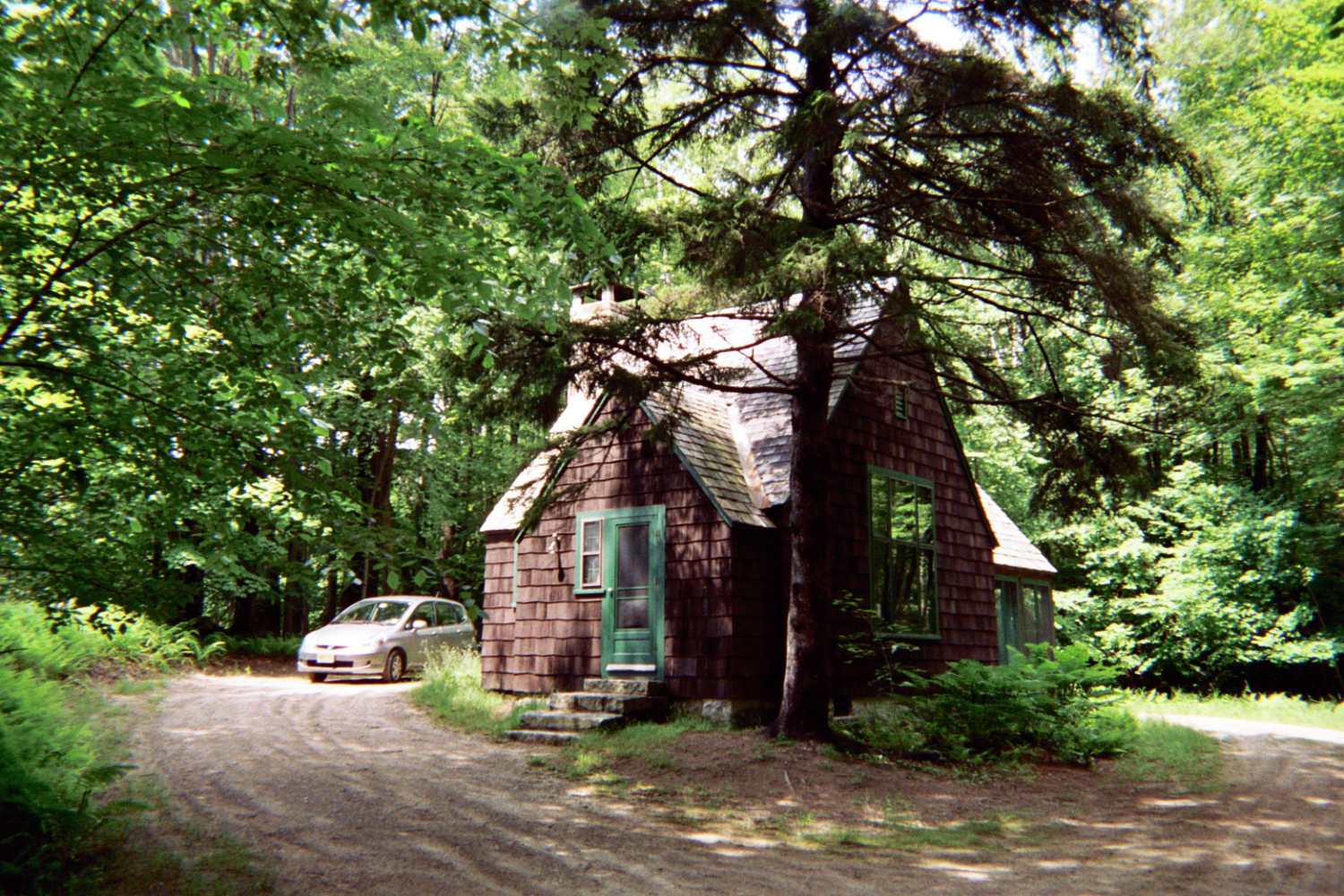
Musician Diane Moser says, “Six of my bird song compositions [were] originally created back in 2008 during a 5-week residency at the MacDowell Colony in Peterborough, New Hampshire.”

The more we lose from nature, the more we’re stunned to discover what we’ve lost. As National Public Radio (NPR) reported recently, “Over the past half-century, North America has lost more than a quarter of its entire bird population, or around 3 billion birds. … Researchers estimate that the population of North American shorebirds alone has fallen by more than a third since 1970.”

Maybe it’s not too late to do something. People are waking up. And artists, as usual, are at the forefront of raising consciousness. In this story, a composer is bringing the music of birds to the attention of concert audiences.

Diane Moser writes at New Music USA, “For the past 11 years, I have been working on incorporating bird songs into my music. When I say ‘my music,’ I am talking about my improvisations, because all of the music I compose starts with improvisation, which I then sculpt into compositions. To me, this is a more ‘natural’ way to go. … Six of my bird song compositions that are currently in my repertoire were originally created back in 2008 during a 5-week residency at The MacDowell Colony in Peterborough, New Hampshire. …

“I was completely seduced by the bird songs around my studio and decided to play around with them for just one afternoon, then get back to work. One afternoon turned into the entire residency; I just had to play with those birds! When would I ever get another chance like this, to have a piano in the middle of the woods, and to play freely? …

“My designated studio was Delta Omicron, and inside was a beautiful Mason and Hamlin grand piano. I had a digital recorder and was able to put the microphone in a small window, covering it with a curtain to have a little separation from the piano, which enabled me to hear the birds clearly through my headphones. In this way I was able to adjust the volume I played on the piano so that the birds and I were balanced. I never saw them, so I was never sure who was singing what.

Every day for five weeks, I improvised with songbirds and any other creatures that made their voices heard, and recorded each session. My goal was to become a member of their band. …

“We had a standing jam session time at around 10 a.m. each morning until lunch. Then they would retreat, and I would do some reading and listen to our recordings. They would come back out to sing with me around 4 p.m. until I left them for a swim in the local pond. …

“The first bird I began improvising with was the American Robin. In fact, the most well known song, Cheerily, Cheerily, seemed to creep into all of my improvisations. I slowed down the song just a bit, and lengthened the motif, and played around with it in Garage Band. …

“Just before sunrise, the first bird I heard singing was the Hermit Thrush. The landscapers at MacDowell referred to the hermit thrush as a deep woods singer, and told me it was the first one singing at the break of day, and first one back into the woods just before sunset. Commonly known as the Nightingale of the Americas, this bird has an amazing set of songs and calls. It’s no wonder that Amy Beach composed two piano pieces based on these songs. …

“The bird I had the most fun with was the chipping sparrow. His dry trill and constant singing at regular intervals of time provided tempo and an ostinato for my improvisations. I used the age old technique of a repetitive note as an imitation of the chipping sparrows dry trill, and that became a “thread” for the composition, tying it together. …

“One of the benefits of being a performer-composer are the ensembles that I lead, and other people’s ensembles that I perform with, where I can arrange the music I compose for any combination of instruments. … Thankfully, the musicians I performed with had a wide range of musical experiences and could untether themselves from the standard go-to licks, as we say in the jazz world.”

More at New Music USA, here. Listen to the birds and the compositions there.

Photo: Dennis Connors
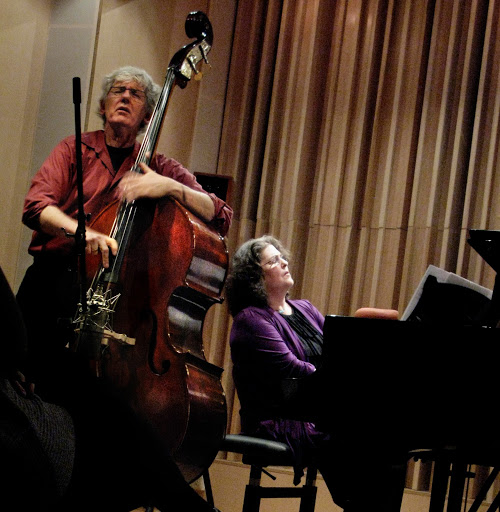
Mark Dresser (bass) and Diane Moser (piano) perform Moser compositions that incorporate birdsong.

15-dressermoserphotobydennisconnors

Read Full Post »

Photo: Diego Rinaldi/Casa di riposo per musicisti, Fondazione Giuseppe Verdi
The exterior of Casa Verdi, founded by famed Italian composer Giuseppe Verdi in the late 1890s.

Facebook has decided I like stories about kind people because I linger over some with spooling captions. It keeps showing me items that are “Similar to Posts You’ve Interacted With.” It may be that I like such stories, but I never click on Facebook’s suggested links because I definitely don’t want Facebook knowing anything about what I like. (OK, I admit that’s a lost cause.) If the site weren’t the best way for me to connect with Carole, who I have known since nursery school and who has Parkinson’s now, I don’t think I’d be there at all.

The following post on the kindness of Giuseppe Verdi didn’t come from Facebook. It came from a site that gives me loads of other ideas for blog posts, ArtsJournal.com.

It’s where I learned about Rebecca Rosman’s National Public Radio [NPR] report on “Casa Verdi, a retirement home for opera singers and musicians founded by the famed Italian composer Giuseppe Verdi more than 100 years ago.

“Soprano Lina Vasta spent her career performing in Italian operas around the world. Twenty years ago, she settled at Casa Verdi. The tiny singer, who uses a cane to get around, won’t reveal her age (through a translator she admits to being ‘over 65’), but she still enjoys singing bits of The Barber of Seville around the home.

“Vasta came to Casa Verdi with her husband when they both retired from singing. Since he died, this is all she has. But with ‘a beautiful house, a piano, a very nice garden, nothing is missing here — it’s perfect. Grazie, Verdi,’ she says. …

” ‘In Italy, Verdi isn’t considered only a composer, only a musician, but kind of a national hero,’ [Biancamaria Longoni, the assistant director of Casa Verdi], says. ‘He used his operas to give voice to people — to humble people, to modest people, to poor people.’

“Many of Verdi’s own former colleagues found themselves living in poverty toward the end of their lives. At that time, there were no pensions for musicians in Italy. …

“Using his own fortune, Verdi built the retirement home for opera singers and musicians, a neo-Gothic structure that opened in 1899. The composer died less than two years later, but he made sure the profits from his music copyrights kept the home running until the early 1960s, when they expired. Today guests pay a portion of their monthly pension to cover basic costs – food and lodging — while the rest comes from donations. …

“Casa Verdi has an extra 20 rooms set aside for conservatory students aged 18 to 24. … Armando Ariostini, a baritone in his early 60s, comes to Casa Verdi every Wednesday to visit the guests, some of whom are his former colleagues. And while Ariostini himself is still several years away from retirement, he says he knows exactly where he’ll be hanging up his hat once he leaves the opera stage for good.”

More at NPR, here.

Read Full Post »

Although black history is not a one-month-a-year-thing, having a dedicated month does seem to turn up stories that might not otherwise be heard. I got this one from the BBC television show Our Classical Century, “a celebration of the most memorable musical moments from 1918 – 2018,” which focused on broadening the audience for classical music.

In this episode, Sir Lenny Henry expressed admiration for forgotten black composer Samuel Coleridge-Taylor.

“I have been enthralled and captivated by the story of a man from Croydon in south London who died more than 100 years ago and who wrote one of the biggest musical hits of the 20th century. He was a total genius – a bit like Prince, but for late 19th-century London rather than 1980s California – and his name was Samuel Coleridge-Taylor. …

“Young Samuel was brought up by his mother and her extended family in Croydon. He never met his doctor father, Daniel Peter Hughes Taylor, who was originally from Sierra Leone and had come here to study medicine in London. …

“The family clubbed together to pay Samuel’s fees at the Royal College of Music, which he entered at 15 as a violin scholar. But the violin was set to one side and composition took centre stage and he was taken under the wing of the composer and conductor Charles Villiers Stanford. … For two years running, Coleridge-Taylor won the RCM’s Lesley Alexander composition prize and was championed by Edward Elgar, who recommended the talented young composer for a major commission – an orchestral work for the Three Choirs festival, his Ballade in A Minor, opus 33.

“The thing I like about Coleridge-Taylor is that he fought adversity to reach the top. He suffered racial abuse at school – apparently he even had his hair set on fire – but remained dignified. His compositions are dynamic, bold, incredibly melodic and immediately accessible. I was blown away. And I wasn’t the only one. He was known as the ‘African Mahler’ and his success stretched far and wide.

“In the US, he was a household name in his lifetime, and travelled there by invitation of the Samuel Coleridge-Taylor Choral Society of Washington DC in 1904, and again in 1906 and 1910. The US marines band were engaged for his first performance and 2,700 people were in the audience, two-thirds of whom were black. He went on to compose Twenty Four Negro Melodies and Five Choral Ballads after that visit. He became interested in interpreting African American melodies, writing: ‘What Brahms has done for the Hungarian folk music, Dvořák for the Bohemian, and Grieg for the Norwegian, I have tried to do for these Negro melodies.’ When success hit, he used it to tell stories about his racial origins in a musical way that might uplift others.

“His best known work, ‘Hiawatha’s Wedding Feast, part of the cantata trilogy ‘The Song of Hiawatha,’ premiered in 1898 to huge acclaim, and went on to play, with the other two parts in a semi-staged version, at the Royal Albert Hall for a fortnight in June every year for almost 30 years in the interwar years. …

“But Coleridge-Taylor never got to enjoy his success – he died tragically young, aged 37, of pneumonia in 1912 – illness said to have been brought on by overwork. Nor did his family enjoy the financial fruits of Hiawatha’s success – the composer had sold the publishing rights to it to Ivor Novello’s company for a low flat fee.

“[My family] never went to a concert hall, and I didn’t see any black musicians. When I finally heard a live orchestra as an adult, it hit me like lightning. … Perhaps it’s time for everyone to take a fresh look at classical music and put aside the stereotypes. … This is our music – it’s music for everyone.”

More here.

Photo: Hulton/Getty
The multitalented 19th-century British composer Samuel Coleridge-Taylor was best known for “Hiawatha’s Wedding Feast.”

Read Full Post »

Photo: Serena McKinney
Ludwig Göransson, composer to the
Black Panther music score, spent a month in Africa, returning home with “a totally different idea of music.”

I’m looking forward to seeing Black Panther when we can get it on DVD. In the meantime, I’m reading a lot about it. This story by Jon Burligame in Variety is on the development of the movie’s musical score.

“Ludwig Göransson, the Swedish-born composer who was charged with scoring Marvel’s ‘Black Panther’ movie and has worked with director Ryan Coogler on all of his films, didn’t just visit a university library or look at YouTube videos: He spent a month in Africa.

“The result was life-changing, he tells Variety: ‘I came back with a totally different idea of music, a different knowledge. The music that I discovered was so unique and special. [The challenge was] how do I use that as the foundation of the entire score, but with an orchestra and modern production techniques — infuse it in a way that it doesn’t lose its African authenticity?’ …

“Nearly all of the unusual sounds in the ‘Black Panther’ score were recorded in the West African nation of Senegal, where Göransson spent two and a half weeks accompanying singer-guitarist Baaba Maal on tour. Maal introduced Göransson to other Senegalese musicians, and many performed on the soundtrack.

“The music that pairs with T’Challa (Chadwick Boseman), monarch of the film’s fictional African kingdom Wakanda, is led by six ‘talking drums,’ which Göransson explains as ‘a small drum you put on your shoulder, one that does what no other percussion instrument does — it breathes.’ The drummer squeezes, then loosens it to change the pitch. …

“For the theme associated with usurper Killmonger (Michael B. Jordan), the composer used another West African instrument, the Fula flute: ‘It sounded sad but also aggressive, energetic and impulsive,’ he says, and with the flutist speaking and even screaming into the flute, ‘it really resonated with the character.’ …

“Having recorded hours of music in Senegal, the composer flew to South Africa, where he spent a week studying at the International Library of African Music in Grahamstown. There he sought out recordings from across the continent and played dozens of instruments.

“At the same time, says Coogler, the score had to work as a superhero movie … ‘Ludwig is so well versed in orchestral composition, he could find a way to merge the two, and know when to go with one or the other.

“After months of writing, Göransson recorded more than two hours of music with a 92-piece London orchestra and a 40-voice choir in October and December, augmenting the African recordings and even using the orchestra to echo the multiple layers of rhythms in some of the complex drumming he first heard in Senegal. The choir sang in Xhosa, a South African language. …

“Says Coogler: ‘Ludwig really set the table for the emotion that we were trying to get across, whether it was excitement or reflection or sadness.’ ” More at Variety, here.

Have you seen Black Panther? If you are knowledgeable about African music, I’d love to hear what you thought of the music. Even if you aren’t that knowledgeable.

Read Full Post »

In this story from radio show Studio 360, we learn that music is intriguing to animals, at the very least arousing their curiosity and perhaps stimulating and soothing them.

“Laurel Braitman is a historian of science and the author of ‘Animal Madness: How Anxious Dogs, Compulsive Parrots, and Elephants in Recovery Help Us Understand Ourselves.’ She’s particularly interested in the mental health of animals in captivity.

“ ‘If their minds aren’t stimulated, they can end up with all sorts of disturbing behaviors,’ she says. Braitman wondered if music — so often soothing to people, but usually foisted on animals without their permission — could help counter their symptoms of anxiety and depression.

“That led Braitman to arrange a series of concerts for all-animal audiences: gorillas in a Boston zoo and a small herd of bison in Golden Gate Park. Recently, the bluegrass band Black Prairie played for the residents of Wolf Haven wolf sanctuary in Tenino, Washington. …

“Can we say that they liked it?

“Researchers are trying to answer this question in controlled experiments where they observe whether animals move toward or away from speakers, depending on the music.

“Dr. Charles Snowdon of the University of Wisconsin collaborates with a composer, David Teie, who writes music tailored for certain species. They base their compositions on sonic frequencies the animals use in nature. Their music for domestic cats features tempos of purring or suckling kittens; small monkeys called cotton-top tamarins, on the other hand, got music that sounds remarkably like nails on a blackboard. ‘It is pretty godawful if you ask me,’ Snowdon says. ‘But the tamarins dig it.’ ”

More here.

Music for Wolves: Black Prairie from Aubree Bernier-Clarke on Vimeo.

Read Full Post »

At WBUR’s The Artery, Andrea Shea has a story about a composer with a penchant for unusual texts: the package blurbs practically everyone reads at breakfast when the newspaper hasn’t arrived.

“Musicians are always searching for inspiration,” writes Shea, “and sometimes they find it in some unlikely places.

“Take Brian Friedland, a prolific Boston composer and jazz pianist who’s discovered a creative goldmine in his cupboards. He takes words on packaging for products such as granola, mouthwash and tea, then sets them to some pretty sophisticated music. Friedland calls the funny-but-serious project ‘Household Items’ and he has a new CD. …

“Friedland is not a singer, but he sees amusing, absurdist potential in labels featuring characters, quests or ‘extreme’ wording. He started foraging for inspiration about eight years ago and had an epiphany when he read a can of carpet cleaner after his cat missed the litter box.

“It read, ‘Do not. Do not puncture. Do not freeze. Do not incinerate. Do not expose to heat above 120 degrees Fahrenheit. Do not inhale.’ He made them into a percussive, vocally complex work where the singer repeats, ‘Do not! Do not! Do not puncture,’ with urgency.”

Percussionist and singer Laura Grill “performed a few songs, including one about a fragrant skin moisturizer.

“ ‘There’s one benefit of having these sort of accessible lyrics,’Grill said, ‘because people are like, “Oh right — Avon Peach Hand Lotion — I can connect with that.” ’

“Grill, also an [New England Conservatory] alum, says Friedland has found a unique solution to an age-old problem.

“ ‘As someone who enjoys composing and arranging, one of the hardest things is trying to write lyrics,’ she said, ‘so Brian finds them on his coffee packages and appliances.’ ”

Listen to Friedland’s SleepyTime tea music with lyrics taken straight from the box at WBUR, here.

Photo: Andrea Shea/WBUR
Brian Friedland, a composer who puts text from product packaging to music.

Read Full Post »

Here’s an idea: music made with a bicycle.

Mario Aguilar writes at Gizmodo, “Riding a bike is a musical experience in more than a metaphorical way: Brakes squeal, spokes click, derailleurs clang. Composer Johnnyrandom sampled himself ‘playing’ his bicycle and the results are positively gorgeous. …

“It’s hard to believe that all of [the] sounds are made by a bicycle. Some of them are strictly the byproduct of the bike’s mechanical operation, like the sound it makes when you release a brake lever. Others are created when you play different parts of the bike with a musical accessory.

“For example, Johnnyrandom records the low-pitched flutter of a pick scratching on a spinning wheel, and tunes the bicycle’s spokes so he could play them with a bow like a string instrument. After capturing the sounds with a portable recorder, the different sounds were arranged and sequenced using software. This two-minute mix gives you a feel for the wide sonic that he was able to create.”

In typical bloggy fashion, I got this from Andrew Sullivan, who got it from Gizmodo (which also has a kinoscope of Frank Zappa, on the old Steve Allen tv show playing a bicycle, and a video of how Johnny Random works), who got it from This Is Colossal. Where will this message in a bottle land next?

(Be sure to check my post on composer Kenneth Kirschner, here, for more contemporary music using unusual instruments.)

Read Full Post »

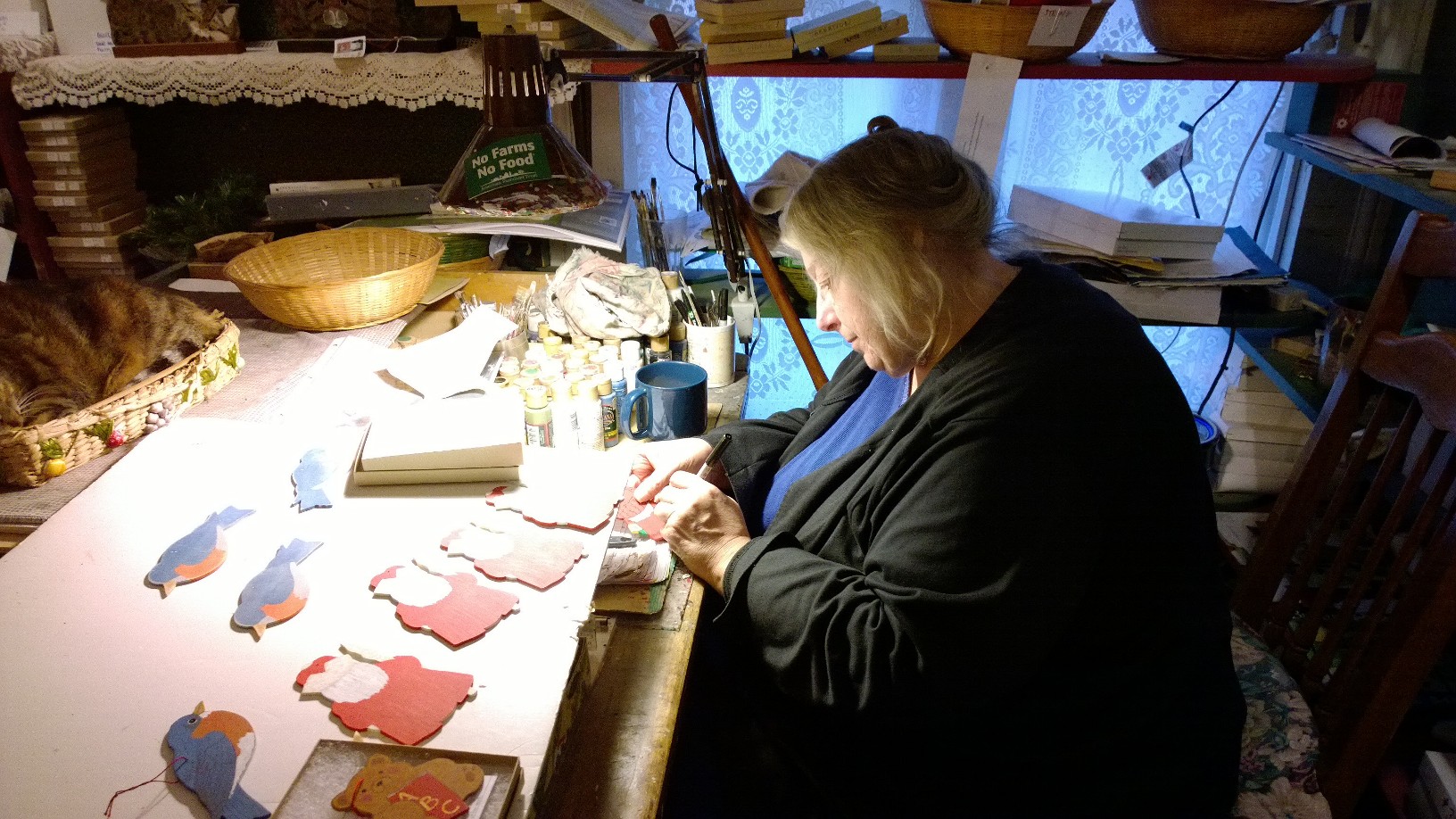
Gaelic McTigue, at All Things Bright and Beautiful in Waitsfield, Vermont, fills orders from around the world to create painted wooden ornaments. Here she is in her shop. Below is a bear ornament that she signed for two of our grandkids. (We got a Swedish elf ornament for our Swedish-American grandson’s tree.)

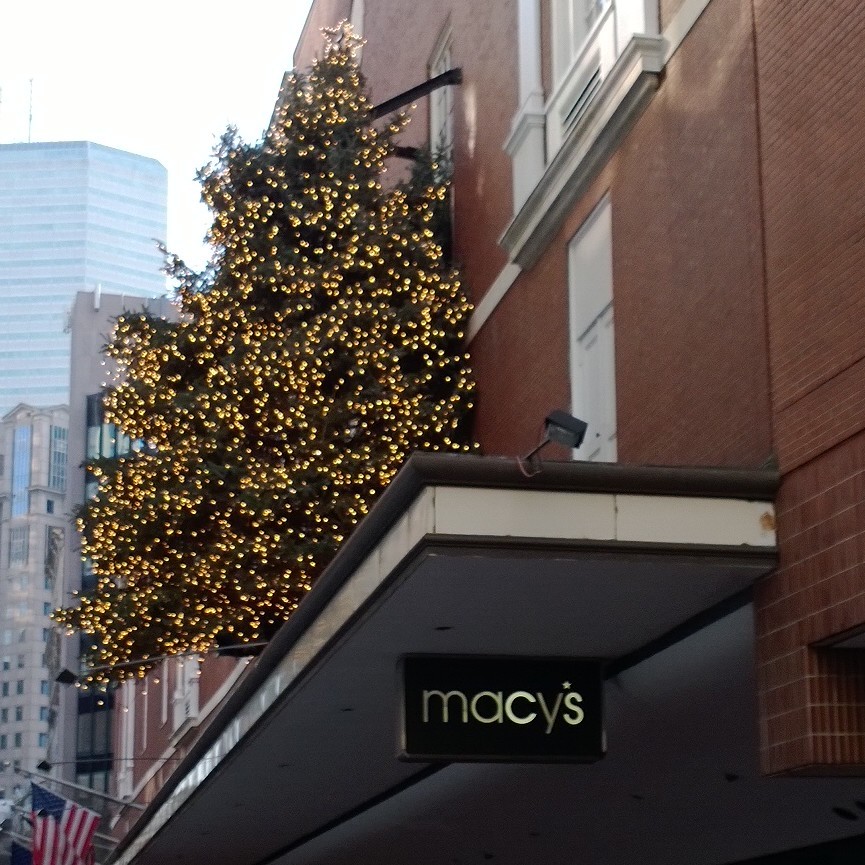
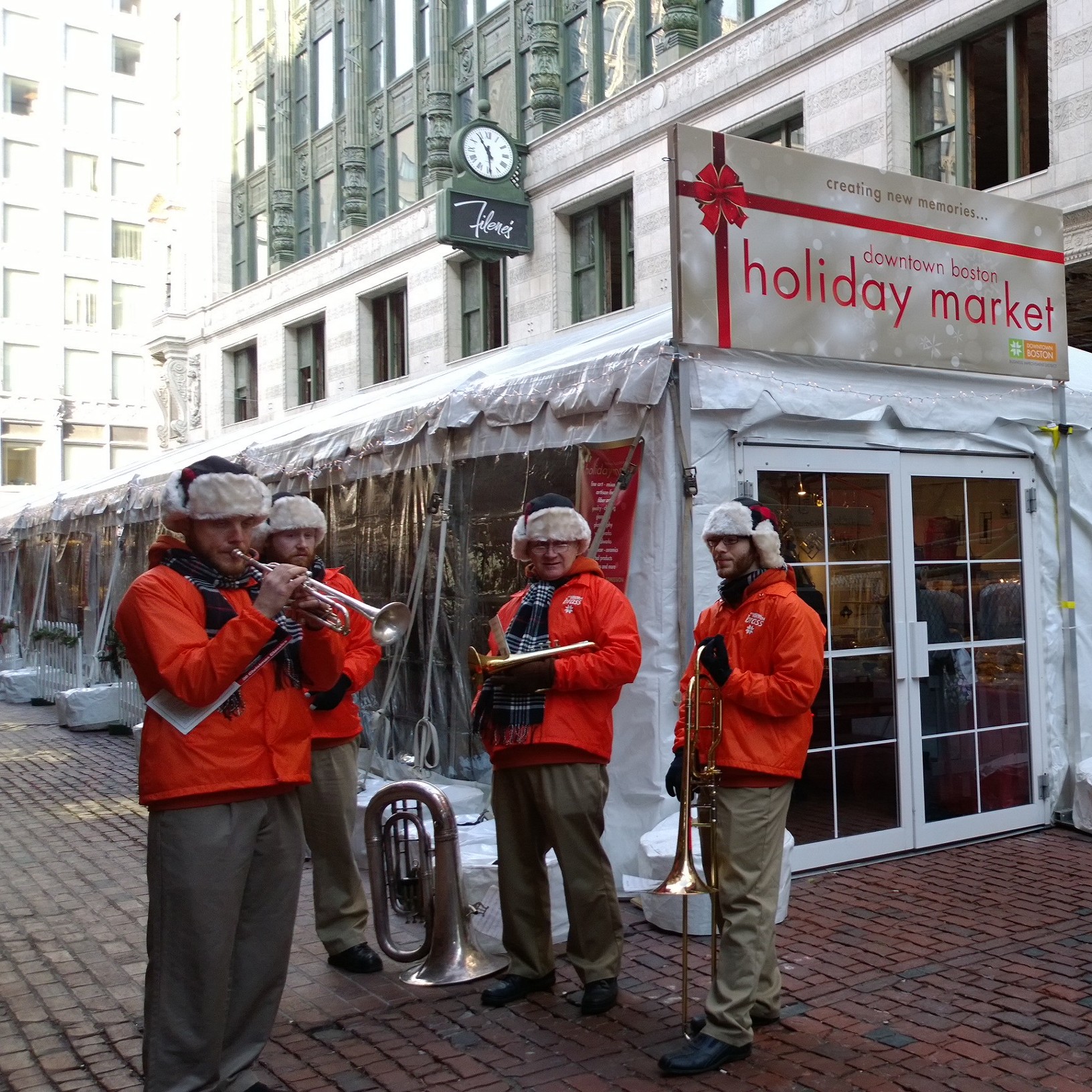
I’ve included a couple other seasonal photos: the Hampton Falls, New Hampshire, tree at Macy’s, the brass band starting to warm up at the craft market.

For a nice Advent carol, check out composer Jeff Fuhrer’s “What Are We Waiting For?” on http://www.soundcloud.com. I tried to upload the MP3 he sent but couldn’t figure out how. Catchy tune.

Gaelic-McTigue-Waitsfield-VT

All-Things-Bright-bear

Macys-tree-Downtown-Crossing

trumpet-warms-up

Read Full Post »

Suzanne is in Denmark at the moment and sent me a website for something unusual she saw there: a modern Stonehenge.

“The idea of creating The DODECALITH arose in 2006 when the composer Gunner M. Pedersen saw sculptor Thomas Kadziola’s land art project Anemarken (Ancestors’ field) … on the island of Lolland.

“The composer suggested that he and the sculptor create a Stonehenge on Lolland, consisting of a circle of twelve huge menhirs with heads in the open countryside.”

The creators write, “On a hill overlooking the sea, we are creating a singing monument … that will give everyone from near and far an experience of greatness, closeness and beauty, of time’s migrations and settlements. It will express pride and humbleness, times gone by, the present, and, importantly, time coming. …

“The stone figures will stand on invisible foundations and they will sing!
Under a circle of natural sitting stones, a 12 channel sound system will be installed. This system will allow spatial electro acoustic song and music specially created for The DODECALITH to sound inside the circle at intervals every day, all year round. …

“The ancestors [came] from afar, from the land to the south where the waters rose 7,500 years ago and sent the Lolers on their long journey. … Along the coast from Ravnsholt to Ravnsby alone, over 70 burial mounds have survived, several of which are passage graves. … There are now only four mounds … It is here we are re-erecting the Ring of the Lolers, The DODECALITH, to let the new Lolers ancestors sing.” More.

Read Full Post »

John’s son has a friend at the beach, a three-year-old musician whose dad is the contemporary composer Kenneth Kirschner.

5against4 has a word on Kirschner’s work, here: “Ken Kirschner’s second longest release to date is a hypnotic exploration of what we might call ‘mobile stasis’. The complex texture, comprising vibes, electronic tones & strings intermingle in ever-changing permutations. Certainly one of Kirschner’s most ambitious texture works &, for those open to its unique type of language, an immersive, rewarding listening experience.” They link to a free download.

Last.fm has more, here: “Composer Kenneth Kirschner was born in 1970 and lives in New York City. He is known for his open source approach to music, his experiments with software-based indeterminate composition, and his interest in adapting the insights and aesthetics of 20th century composers such as Morton Feldman and John Cage to the context of contemporary digital music.

“His work has been released on CDs from record labels such as 12k, Sub Rosa, Sirr, and/OAR and Leerraum, as well as online through a wide variety of netlabels and other sources. A large selection of Kirschner’s music is freely available for download from his website.” See http://www.kennethkirschner.com.

You can also find remixes of Kirschner’s work at Soundcloud.com, but it doesn’t look like he puts his compositions there himself.

Photo: Last.fm. Uploaded by uf_on.

Read Full Post »

Older Posts »