Feeds:
Posts
Comments

Posts Tagged ‘darfur’

I thought you would like this story from the National Deseret News about refugees making a new life for themselves in Arizona.

Lourdes Medrano writes, “In a small field on the outskirts of [a] desert town near the Mexican border, close to 30 women and men stoop over rows of pumpkins, carefully picking the pulpy autumn fruit along with its flowers, stems and leaves.

“The volunteers are part of an innovative program that helps refugees from war-torn countries find work and food. Called the Iskashitaa Refugee Network, the Arizona-based organization consists of a diverse group that harvests donated crops from local farms and people’s backyards to feed displaced populations from Africa, Asia and the Middle East.

“On this recent fall afternoon, Adam Abubakar, a refugee in his early 30s who came to Arizona two years ago from the conflicted Darfur region of Sudan, quickly clips pumpkin leaves and drops them in a tote bag for later distribution to newcomers who eat them. For Abubakar, picking fruits and vegetables comes second nature. Back in his homeland, he grew most of the food his family consumed …

“The government provides refugees limited resettlement assistance and organizations such as Iskashitaa work to help the newcomers become self-sufficient as they adapt to American society. Refugees working in the pumpkin field not only harvest the fruits and vegetables they eat, but they also distribute crops to fellow newcomers, learn about urban gardening, market what they grow, and participate in cross-cultural food exchanges. …

“The number of incoming refugees has fluctuated over time and reflects shifting world conflicts and heightened security concerns. In 1980, for instance, 207,000 refugees — including many displaced by the Vietnam War — resettled within the country.

“Iskashitaa was founded in 2003 by Barbara Eiswerth, an environmental scientist, with help from Somali Bantu refugee students who began harvesting crops no one was picking to boost their diet. The refugees inspired the name of the fledgling group: ‘working cooperatively together.’ …

“By tapping into the agricultural roots of refugees, Iskashitaa aims not just to provide food, but also to empower those they’re helping.”

More here.

Photo: Lourdes Medrano/National Deseret News

Read Full Post »

The Friday NY Times Giving section addressed innovative approaches — large and small — that nonprofits are developing to improve the world. Reporter Ken Belson described one organization that makes a practically indestructible soccer ball for kids who are stuck with playing on rough terrain.

Tim Jahnigen has always followed his heart. whether as a carpenter, a chef, a lyricist or now as an entrepreneur. So in 2006, when he saw a documentary about children in Darfur who found solace playing soccer with balls made out of garbage and string, he was inspired to do something about it.

“The children, he learned, used trash because the balls donated by relief agencies and sporting goods companies quickly ripped or deflated on the rocky dirt that doubled as soccer fields. …

“ ‘The only thing that sustained these kids is play,’ said Mr. Jahnigen of Berkeley, Calif. ‘Yet the millions of balls that are donated go flat within 24 hours.’

“During the next two years, Mr. Jahnigen, who was also working to develop an infrared medical technology, searched for something that could be made into a ball but never wear out, go flat or need a pump. Many engineers he spoke to were dubious of his project. But Mr. Jahnigen eventually discovered PopFoam, a type of hard foam made of ethylene-vinyl acetate, a class of material similar to that used in Crocs, the popular and durable sandals.

“ ‘It’s changed my life,’ he said.

“Figuring out how to shape PopFoam into a sphere, though, might cost hundreds of thousands of dollars and Mr. Jahnigen’s money was tied up in his other business.

“Then he happened to be having breakfast with Sting, a friend from his days in the music business. Mr. Jahnigen told him how soccer helped the children in Darfur cope with their troubles and his efforts to find an indestructible ball. Sting urged Mr. Jahnigen to drop everything and make the ball. Mr. Jahnigen said that developing the ball might cost as much as $300,000. Sting said he would pay for it.” More.

Today the One World Futbol is making a positive difference in the lives of many children.

Photograph:  Nicholas Hammond
The One World Futbol stays inflated, even when used on concrete in El Salvador.

Read Full Post »

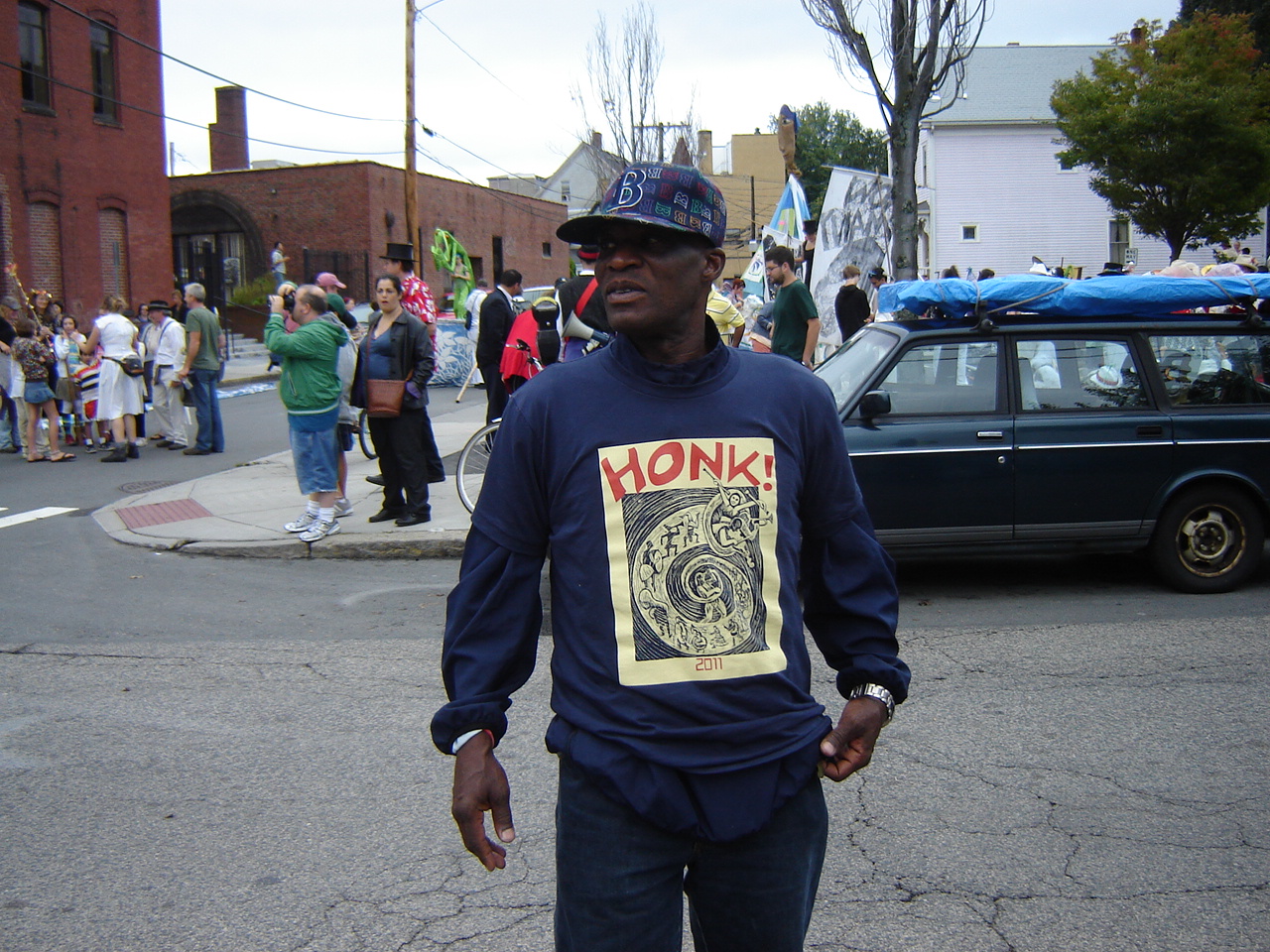
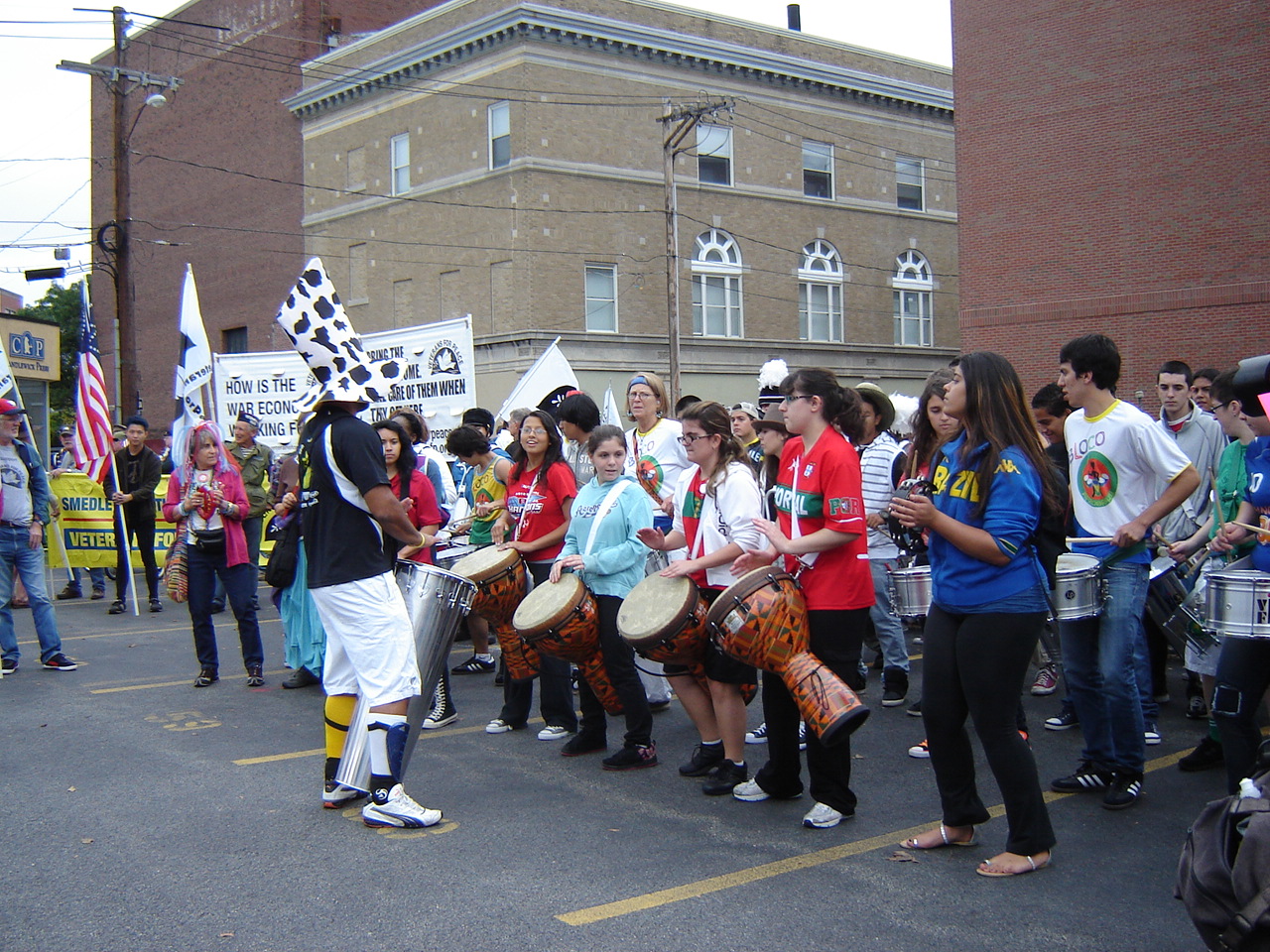
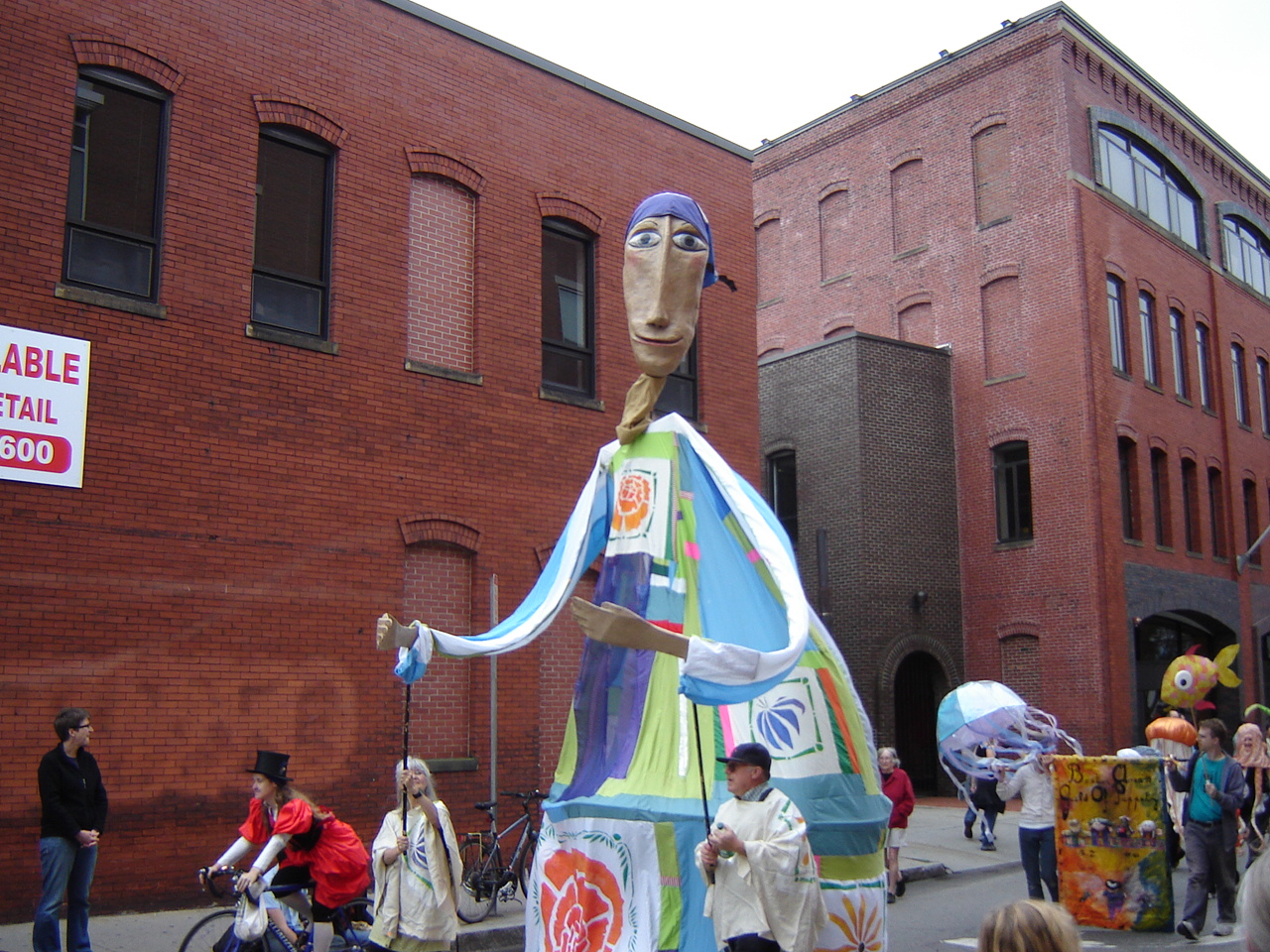
We went to Honk! in Somerville today. A few uncomfortable-looking masons and many counterculture bands marched to Harvard Square. It was a hoot. So nice to see these offbeat ’60s types are still springing up. All is not lost! The name of one band may give you a sense of where they are coming from: The Extraordinary Rendition Band. The Institute for Infinitely Small Things joined forces with the Occupy Boston contingent.

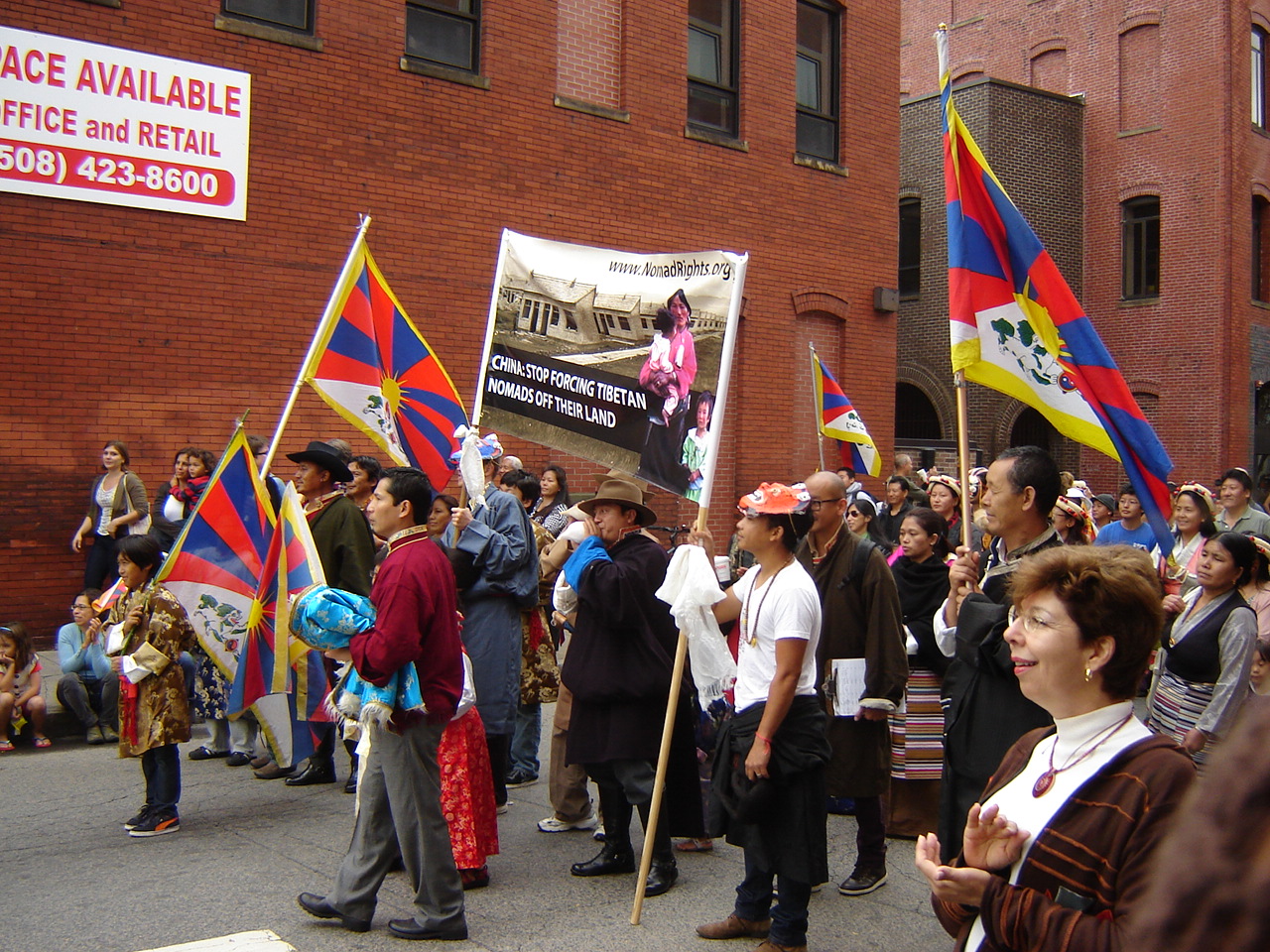
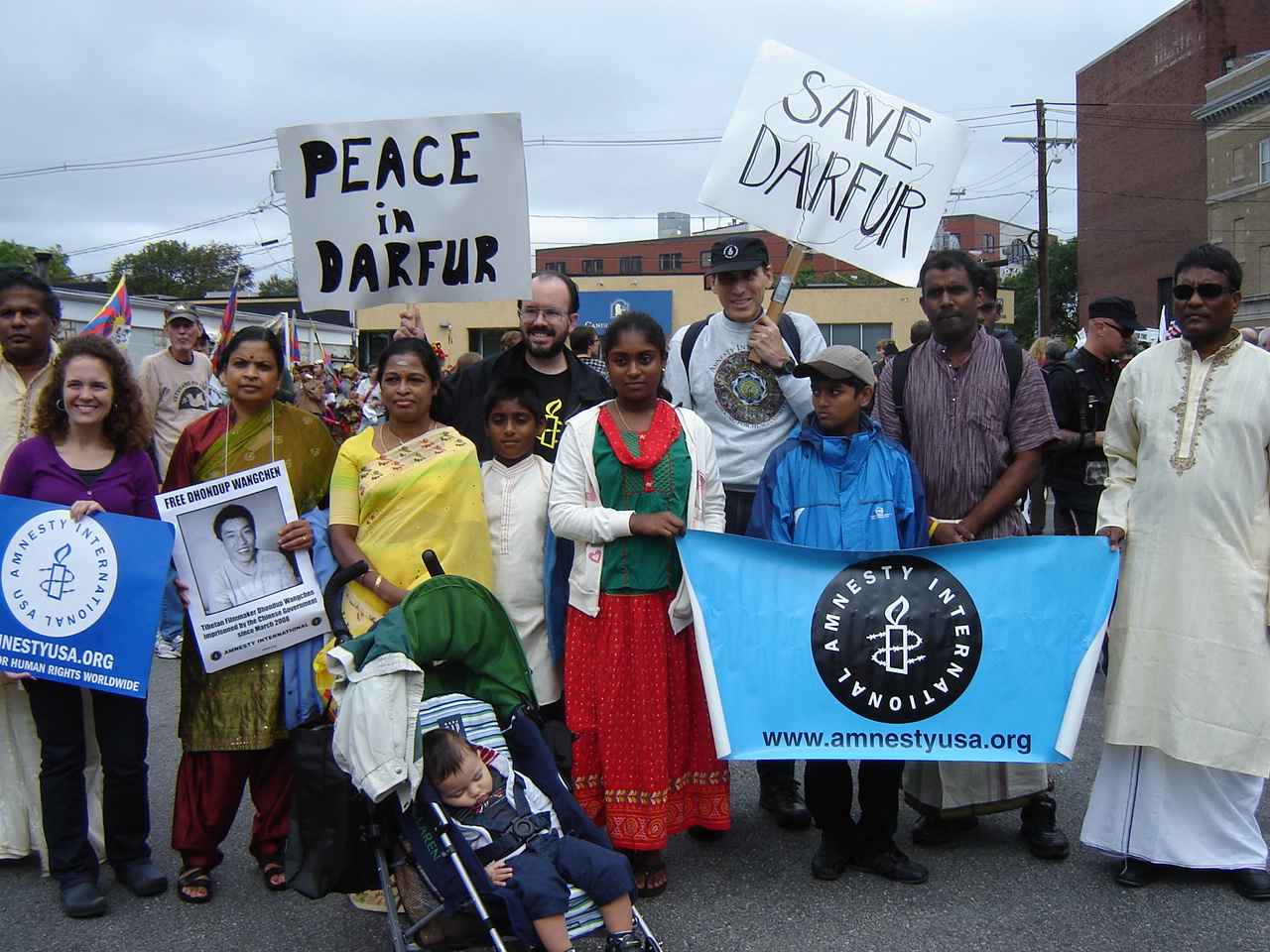
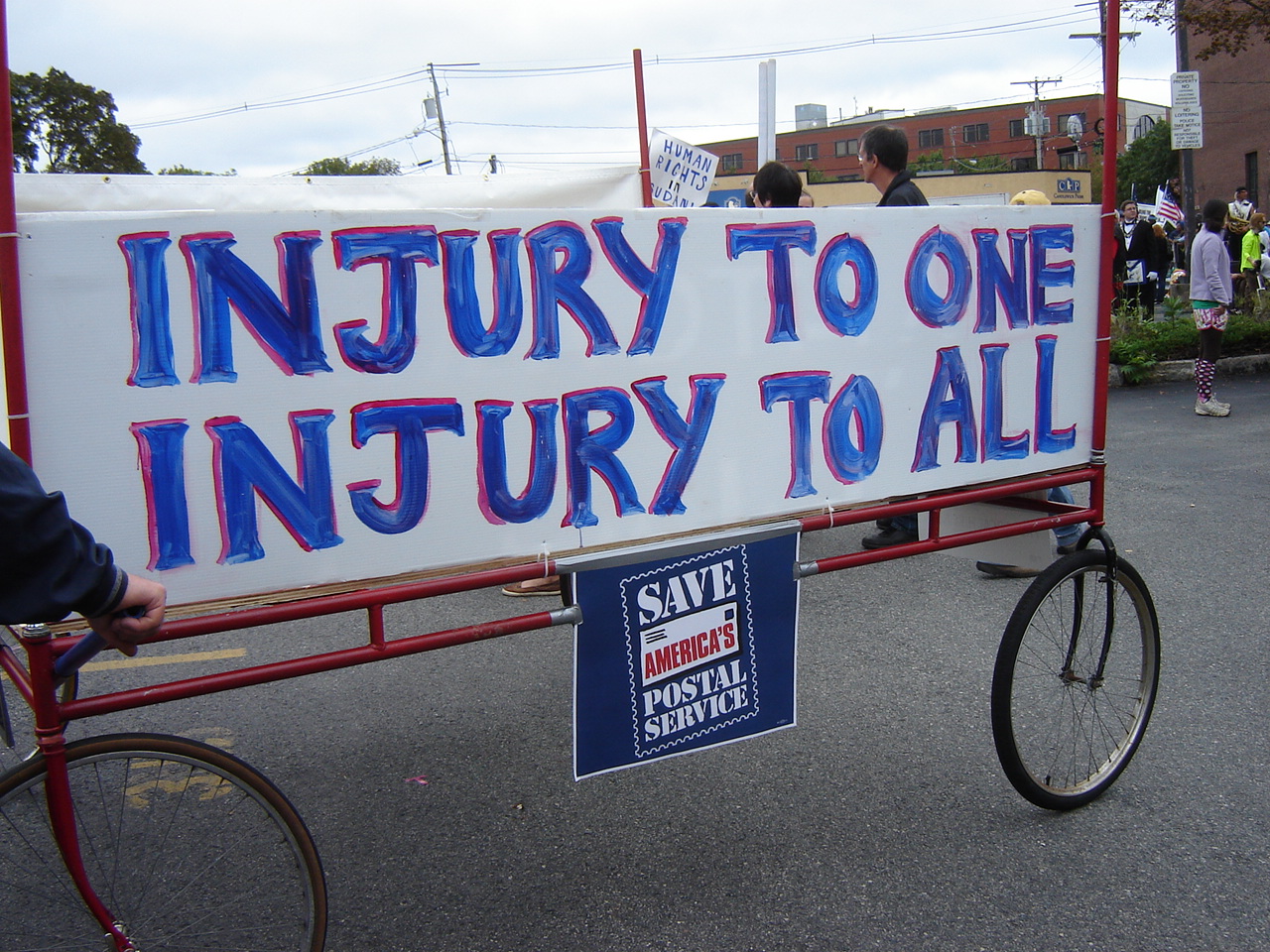
Represented below are Nomad Rights (a Tibetan group), unions (including the Postal Service), Darfur activists, and the Puppeteers Co-operative.


Read Full Post »